The Red House (1947)

the red house 6.png

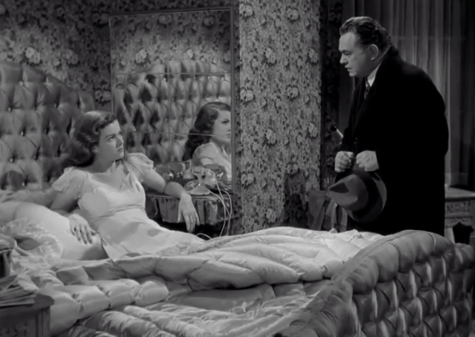
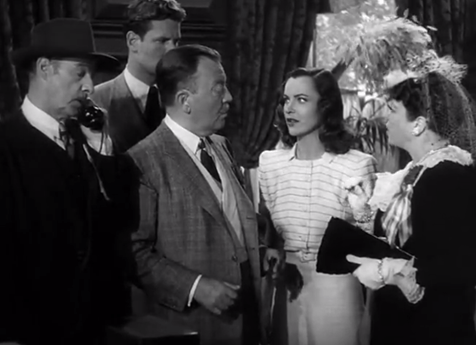
What Delmer Daves has gathered together is an oddly compelling mix of rural drama with undertones of horror somehow merged into what we might be able to pass off as a strain of noir. What I find particularly intriguing is not so much the mysterious Red House at the core of the story, as the impending pandora’s box of doom and personal revelation, but it’s the curious character dynamics that stay with me.

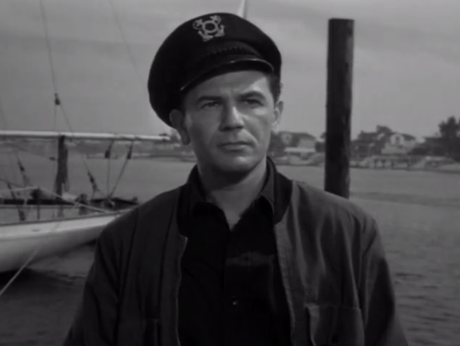
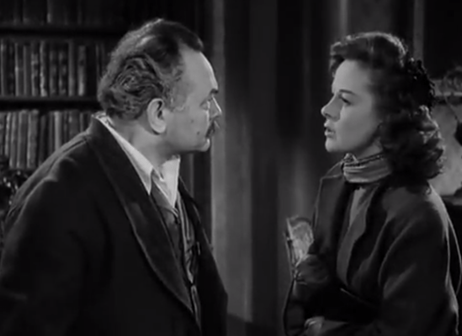
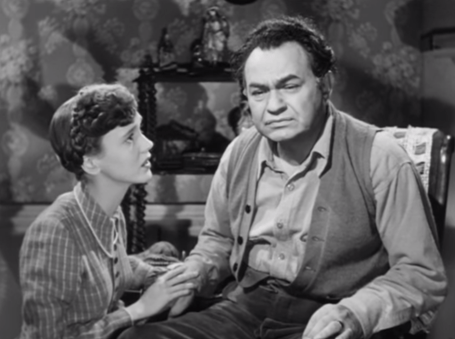
Edward G. Robinson stars as Pete, a man with a wooden leg who has long lived in seclusion with his sister and adopted daughter. He’s been content with this lifestyle remaining self-sufficient and living off the bounty of their farm. He hasn’t needed anyone else for a long time and he’d generally like to keep it that way.

Perhaps by this point, I simply take his skill for granted but it was the performances around Robinson that were the most engaging for me. Judith Anderson plays a surprisingly compassionate and maternal woman who has sacrificed a lot and is more sympathetic than most roles I can recall within her body of work.

But this is a young person’s story as much as it’s about the adults. That’s where much of the heart lies. The local high schoolers ride to and from school on the bus and in the back row is where the story’s main romantic relationship of interest is conceived in one of the most visually awkward setups imaginable. We meet a young man with his girlfriend with another girl sitting in the frame uncomfortably.

the red house 3.png

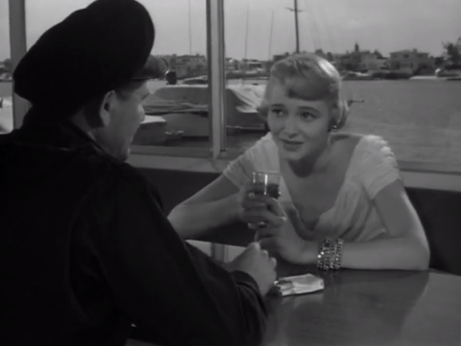
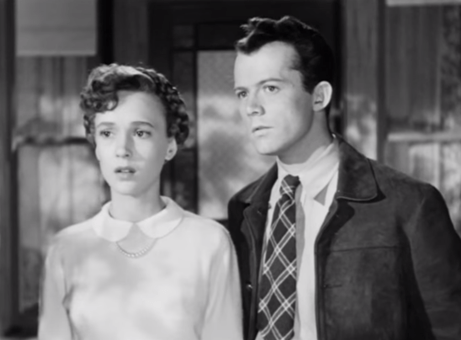
Lon Mcallister returns with the same bright and boyish countenance from Stage Door Canteen bringing a kindly spirit to the screen that’s wholly unassuming and morally upright. Likewise, Allene Roberts proves reminiscent of the demure Cathy O’Donnell while her eyes are imbued with a near doleful innocence. She is the girl who sits on the bus, the awkward third wheel. As Nath and Meg, they are two young folks exuding an utterly sincere candor.

Meg earnestly wants the young man to help her uncle out on his farm. She thinks he will be of great help and she excitedly goes to her aunt to share the good news that he’s accepted the offer. It’s even more curious that Nath so quickly accepts the job offer knowing it will mean long hours, a mile walk out of his way, and time spent in close proximity to this earnest young girl.

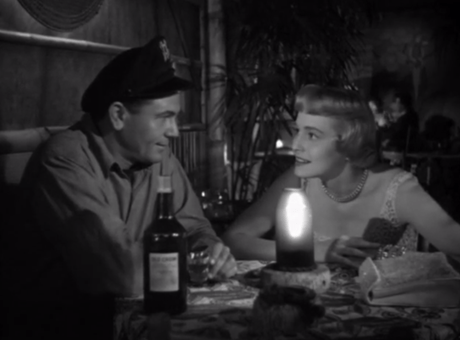
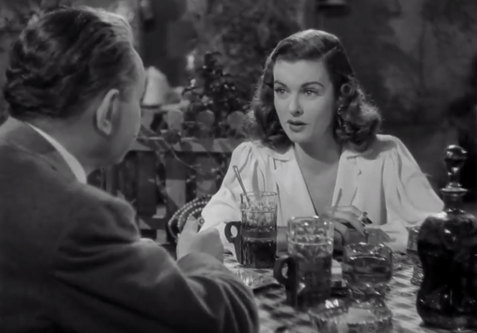
Because they aren’t a couple. This privilege goes to Julie London as his sultry and slightly entitled beau Tibby. Think about it too long and they don’t seem to fit each other but since it is already, we buy into it; she might just like a nice guy like him. Because in this slice of America, the boy-next-door speaks to something desirable still.

However, there’s also Rory Calhoun as Teller, the dark and imposing stud who Pete has made the keeper of the forests near his farmhouse for some undisclosed reason. That in itself is a strange setup but if anything it gives the dashing man free license to lord over the mysterious territory and keep others off the woodlands by any means possible. He’s been sanctioned by Pete to undertake any measures necessary and he does.

Just as we have two kind, innocent people to lend an underlying decency to our picture, we have their foils in two beautiful people who look to be out for themselves. Surely, they must get together and such a scene is instigated when the broodingly handsome fellow waits to intercept Tibby on her way home. He carries her across a stream and snatches a kiss from her as due payment. She doesn’t seem to mind too much.

the red house 2.png

But that is hardly the calamitous heart and soul of the picture, the dark underbelly of Middle America hidden away in isolation. For that, we must look to Robinson harboring a secret bubbling ominously beneath the surface. His niece is intent on finally visiting the house that he has continually forbidden her to see. She wants to know why. She has the right to know even if it hurts her.

But again, I never cared too much about the deep dark secret buried there because I think most of us have a general inclination of what it might be about. The anticipation comes in the created experience, not the forthcoming outcomes.

In some regards, The Red House shares some commonalities with the noirish western thriller Pursued, also released in 1947. Aside from featuring Judith Anderson, the other picture also concerned itself with psychological issues and a murky past laden with all sorts of trauma. But The Red House is more straightforward and clear-cut making the interpersonal relationships between characters paramount over any sequence of action.

The narrative is capped with a picturesque final shot worthy of such a peculiar movie. Framed with its idyllic beginnings and equally peaceful panoramic endings, it’s nearly possible to forget what we’ve just seen. All the rough edges have been smoothed out and the dark recesses of rancor replaced with young love.

It’s this startling dichotomy that gives the film’s its allure; that and the strength of its performances. Everyone plays their types exquisitely from the established stars like Robinson and Anderson to the winsome newcomers. Allene Roberts left a striking impression most of all. To read about her life story is to fall in love with her even more. She seems like a lovely person. God bless her.

3.5/5 Stars

Note: Since originally writing this review, Allene Roberts passed away on May 9th, 2019.

Review: Scarlet Street (1945)

scarlet street 2.png

Scarlet Street is an obvious reunion picture bringing together Fritz Lang, Edward G. Robinson, Joan Bennet and Dan Duryea among others from the prior year. Dudley Nichols’ story, while taking elements from La Chienne, which had already been made into a film by French master Jean Renoir in 1931, is elevated by its own unique elements.

A party is being held for one Christopher Cross (Robinson) in appreciation for his many years of faithful service at his company. As a gift, he is bequeathed a fine watch. That’s what he has to show for the last 25 years. However, he has two unfulfilled dreams from when he was young. The first was to be an artist and well, the second, was to have a beautiful woman look at him with love in her eyes. He’s never experienced that warm sensation before.

It happens the way it always does with a single moment of instantaneous decision. He intervenes when a thug is beating up a lady and he’s pleasantly surprised to find the lady to be quite ravishing. There sits Joan Bennett unlocking her jaw and surveying the damage to make sure she can flaunt her face another day, dolled up in her raincoat. In these initial interludes, she’s playfully provocative and endearingly colloquial (“Jeepers”). In fact, she’s utterly charming when you first get to know her. But that’s not to say she takes her latest conquest too seriously. She’s already got herself a man.

Oblivious and lonely, Chris begins to open up gushing about all the things about art and love that’s he’s always kept bottled up. But Kitty makes him feel like a happy schoolboy again because she seems to take a genuine interest in him as a human being. You see, Chris is a model of that inherently human desire. He is hardwired like all of us to crave some form of intimacy or better still to be fully known by someone else in a way that is complete and vulnerable

Little does he know that not everyone is so trusting and sincere as him. Sometimes people are only looking to get something out of you — to use you — and that’s much of what this story is about. That’s what makes it a noirish film at all. Certainly in the hands of Lang reteamed with cinematographer Norman Krasner they paint enough in darkness and billowing smoke. But anyone will tell you film noir is not just a look but a sensibility, a worldview, and an outlook.

Chris Cross begins so innocent and unperturbed by the world even as he feels something is missing in his life. But, when it’s all said and done, he gets absolutely decimated and crushed into the ground unmercifully.

scarlet street 4.png

She has another love; he’s abusive and knocks her around but she doesn’t seem to mind. He’s got something she likes that her roommate Millie (Margaret Lindsay) rolls her eyes at. They probably deserve each other. At any rate, in Kitty’s eyes, Johnny’s a real man whereas Chris is a piddling old fool, at first a plaything, then a cash cow, and finally a nuisance. Johnny coaxes his “lazy legs” to see how much she can weasel out of him. She’s oh so charming and he’s a light touch. Chris would literally go to the moon and back for her if possible.

His home life is continually suffocating him. Rosalind Ivan is tasked with the same nagging wife role from The Suspect (1944) this time torturing a meek Robinson instead of an angelic Charles Laughton. The results are very much the same. A man can only take so much flack

But the other angle has to do with Chris’s art. He’s maintained the hobby even as his wife considers it a waste of time and threatens to throw away all his work as it clutters up her house. However, Kitty gets ideas that Chris is some bigshot artist. Knowing nothing of painting, she tells Johnny about it and he convinces her to let him try to sell the pieces.

They wind up stumbling on something outstanding rather incredulously. John Decker’s idiosyncratic and still striking compositions fill in for the amateur painter’s style. Soon, Kitty’s fronting for Chris’s work without his knowledge to make a profit and suck him dry. By now she’s even got enough of a reservoir of his monologues to repurpose his sincere words for monetary gain. Soon she has a prestigious art collector interested and a local critic eating out of her hand. Meanwhile, Chris still has nothing simply a lingering devotion to Kitty that will only break his heart.

scarlet street 1.png

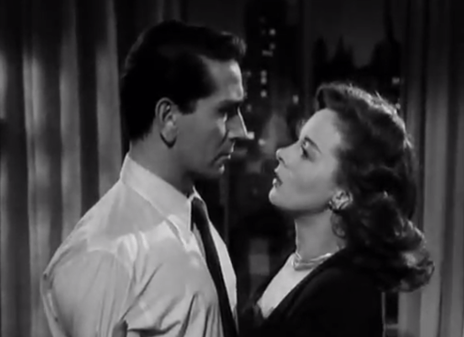
A galvanizing moment, where Chris’s delusion or his innocence comes to bear, occurs during a chance visit to Kitty’s apartment to announce his marriage is terminated and he’s a free man. She turns away from him and he tries to comfort her in her despair. Saying that they’ll go away together, make a new life, and start anew. But then she turns around and those tears instead turn out to be derisive laughter. The one person he thought he could trust betrays his emotions and wounds him to his core. Because this relationship too, proves to be an utter lie as she tears him down in the most humiliating fashion. It’s more than he can bear.

One can gather that everything else happening to Chris is all but a blur as the trajectory of his life soon finds him spiraling into the gutter. As one convenient commuter on the train puts it, “We each have a courtroom in our heart, judge, jury, and executioner.” It’s this sense of conscience that is shown to tear Chris apart in totality. He can never return to be his former self.

Here we see once more thematic elements common to Lang involving the complex and often flawed wheels of justice. But it’s only a mechanism for the most perplexing elements as Chris is haunted by the specters of his tormenters, trapped in his own private hell.

Robinson was probably just as aware as anyone the similarities between this and Woman in The Window (1944) and he was no doubt looking forward to moving on to something different. One could wager a bet that Bennett and Duryea are the real standouts because there sliminess is what makes the picture take.

They linger over its frames and they do so much to ruin Chris. In this day and age, I don’t know if we’re as appalled by their activities as in the 1940s where the picture was even banned locally. Now I think we see it and we’re overly conditioned to what seems mild fare or we’ve come to terms with the fact humanity has much evil within them. You cannot witness something like Scarlet Street, however ludicrous it might seem and think for one moment human beings are inherently good. It just doesn’t work.

What I appreciate about this picture more than anything is how it has the gumption to never pull a punch. Woman in the Window (1944) had a conceit and ending that worked given its psychological underpinnings. The way Scarlet Street resolves itself is no less fitting in choosing to be so very conflicted and ambiguous. If Chris was not a pitiful specimen before, he certainly is now.

4/5 Stars

4 WWII Home Front Movies

World War II gave rise to a whole cottage industry of war films during the conflict and for generations to come. There are, of course, so many facets of the war to explore whether it’s Europe, The Pacific, North Africa, and any number of elements.

However, something that always fascinated me was life on the Home Front. Now wars feel like proxies. They rarely affect us first-hand. During the 1940s the war was a concerted effort on all fronts. It affected not only soldiers but civilians living miles away.

Mrs. Miniver (1942) chronicles the exploits of a fearless mother who holds her family together during The Blitz and the threat of German invasion. More The Merrier (1943) takes a comical look at the housing crisis that plagued Washington D.C. and other metropolis areas. Even the likes of Stage Door Canteen (1943) and Thank Our Lucky Stars (1943) give a picture into the USO and entertainment efforts put on for soldiers.

Here is a list of four other films from the World War II years that function as time capsules giving us some element of what life was like during those impactful years in history.

hail the conquering hero 3.png

Hail The Conquering Hero (1944)

Certainly, The Miracle of Morgan’s Creek is another uproarious wartime comedy from Preston Sturges. But this other offering is equally memorable in how it takes on small-town jingoism and hero worship to outrageous proportions. Whereas most old war pictures look moth-bitten with age and overly saccharine, somehow this effort strikes a phenomenal balance between absurd satire and lucid sentimentality.

It’s not making fun of our war heroes as much as it lampoons how we try to exalt them in our own well-meaning blundering. There’s no doubt some of this was certainly acknowledged during the war although I’m not sure how the general public would have felt about the movie in that context. Now it looks prescient. Eddie Bracken, William Demarest, and company are absolutely hilarious

hollywood canteen 1.png

Hollywood Canteen (1944)

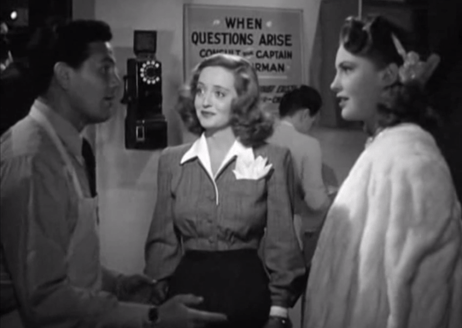
Actors Bette Davis and John Garfield of Warner Bros. famously set up the Hollywood Canteen as a haven for soldiers on leave. The perks were free and included dances with the most beautiful starlets and entertainment provided by the brightest comedic and musical personalities of the day. You could even win a raffle to kiss Hedy Lamarr.

Although the film is slight, sentimental propaganda, it does give at least a hint of what this group endeavor was all about. For old movie aficionados, it also provides a convenient opportunity to see just about every person Warner Bros. had on the lot in 1944. They all come out to the party to pitch in on the morale-boosting effort.

the clock 1.png

The Clock (1945)

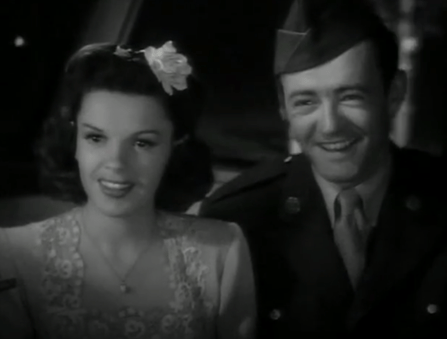
Whirlwind romances feel almost commonplace in the war years. Imagine the scenario. You’re longtime beau or the eligible man or woman you just met is going off to war. Miles will separate you. All you have are letters. There’s an uncertainty of whether or not you will ever see them again. The only thing that does seem permanent (even if it’s not) is love.

The theme would crop up in any number of pictures from The Very Thought of You to I’ll Be Seeing You as the situation undoubtedly resonated with a contemporary audience. However, another favorite is The Clock, starring Judy Garland and Robert Walker. It encapsulates the moment in time so well with heightened emotions, an unceremonious courthouse wedding, and the open ending. We don’t know what the future holds.

best_years_of_our_lives.jpg

The Best Years of Our Lives (1946)

If Since You Went Away was David Selznick’s WWII epic, this was certainly Samuel Goldwyn’s entry. Its title plays with this ironic ambiguity. The best years of our lives would seem to be ahead of us. The war is over. The Allies have won. The soldiers return home victorious. And yet even in their victory, there is so much to navigate in the civilian world.

Wyler’s effort is such a perceptive picture in how it makes us feel the growing pains and relational tribulations of an entire community. It might be the fact you barely know your wife because you’ve been away for the majority of your marriage. Maybe your kids have grown up in a different world and there’s a corporate job waiting for you to reacclimate to. It might be PTSD or tangible physical injuries totally changing your day-to-day existence. As such the movie is indicative of a certain time and place and a tipping point in American society.

What is your favorite WWII film, whether it depicts the war or some aspect of the home front?

Review: The Woman in The Window (1944)

woman in the window 1.png

The first time I ever saw The Woman in The Window it always struck me as odd. Here was the fellow who was known as a gangster through and through and yet he was playing a bookish professor buried in his work and obsessed about psychoanalytic theory. His idea for a fine time is conversing with his intellectual friends (Raymond Massey and Edmund Breon) at the Stork Club. He’s the epitome of middle-aged solidity and stodginess as he so aptly puts it.

But in confronting these very things, you realize Robinson might have enjoyed any opportunity to get away from what everybody seemed to peg him as — to exercise a certain amount of elasticity as an actor — to be the antithesis of his image. This is all mere conjecture, mind you, because as the story progresses, you realize the character is a bit mundane.

Regardless, veteran Hollywood screenwriter Nunnally Johnson spins a story of psychological intrigue as his first showcase for his newly founded production firm International Pictures. This Fritz Lang effort along with a handful of others would instigate the stylistic categorization of “film noir” by French critics in the post-war years. There’s little doubt it fits many of the fluid conventions of noir. Though overshadowed by the even more sinister Scarlet Street from the following year, it is a genre classic in its own right.

As alluded to already, it’s also steeped in psychology. In fact, it gets knee deep in it from the opening moments in such a fashion that we know it will remain all but integral for the entire run of the narrative. Professor Wanley is enraptured by an image, a portrait of a woman to be exact, and it elicits the same spell Gene Tierney would have in Preminger’s Laura (1944). But of course, it is the woman being animated for real that brings true life to the movie and it’s no different here.

This brings us to the part that’s actually the most gratifying and probably would have been the most enjoyable to play. That of the eponymous woman staring back through the window. Joan Bennet is positively bewitching and grouped with Scarlet Street (1945), it remains some of the defining work of her career, which is hardly something to be dismissive of.

As best as it can be described, she has a pair of those coaxing, inviting eyes. Bennett, to a degree, seems to play up her Hedy Lamarr appeal with jet black hair but her looks are her own as is the spellbinding performance and it works wonders starting with the man on the screen opposite her.

He foregoes a burlesque show to engage in some “light” after dinner reading of Song of Songs. Though he’s probably looking at it from a purely academic perspective, one can gather that between his psychological theories and the fairly explicit poeticism of his reading, he’s got quite the cocktail brewing in his mind.

He gives the portrait another look as he’s about to head home, as is his normal tendency. In this particular instance, the woman is present in the flesh and they share some complimentary words. That leads to drinks and then a venture to her apartment to wind down the evening perfectly innocently.

However, instantly his life is transformed into a living nightmare as they are interrupted by a scorned boyfriend with a horrid temper going at Richard who has no recourse but to strike his adversary down in a frantic attempt at preserving his own life. It was self-defense but the damage has been done and the results are not-so-conveniently lying on Ms. Reed’s carpet.

Even with these turn of events, the professor takes them in stride, systematically and semi-rationally coming to a decision that while risky just might be the most beneficial plan of action, at least in theory. There is much that needs to be done. He enlists Alice to clean up the crime scene by both getting rid of blood and incriminating fingerprints. Any evidence that would implicate either of them must be done away with methodically.

He puts it upon himself to dispose of the body, which is no small task as the dead man has a massive frame. It takes up a lot of space and causes him some grief. He gets rid of it but not without incurring a cut and a rash of poison ivy while also leaving behind some clues that indubitably will have a bearing on the case.

However, he also has the rare privilege of being so close to the district attorney and the head of the homicide department to see first hand how they’re getting on with the case. If anything it unnerves him more assuming he will soon incriminate himself with a minor slip of the tongue or worse yet be found out in his clandestine activities due to the thorough investigation underway.

Dan Duryea has a small-time role playing what he was best at, a sleazy enforcer looking for blackmail or any other dishonest way to make a buck. Thankfully his part would be expanded upon in Scarlet Street as he came back for a second helping. His career is composed of an interesting trajectory even earning him a few starring spots in his later efforts like Black Angel. He’s an underrated talent who made classic Hollywood and noir in particular that much more engaging. One could wager it’s Bennett and Duryea who really clean up shop as they would do again the following year.

To mollify the production codes, Fritz Lang settled with the ultimate cop-out ending. While it would normally disgruntle me, the sheer lunacy of it all and the fact the picture is so embroiled with themes of the human psyche makes it marginally okay. If anything, the fact there was a superior followup the next year takes the sting out of it. Still, there’s no downplaying that Woman in The Window was crucial in laying the groundwork of what we now consider film noir, complete with murder, femme fatales, fatalistic heroes, and shadowy extremes courtesy of cinematographer Milton Krasner. What’s not to love? It’s certainly worthy of a second dose.

4/5 Stars

The Sea Wolf (1941)

sea wolf 1.png

“Better to reign in hell than serve in heaven” – John Milton in Paradise Lost

Though some noir film layered in London fog is probably up for contention, otherwise, there’s arguably no movie murkier than this atmospheric sea-faring delight from Michael Curtiz. But what puts it above and beyond some of its contemporaries, especially swashbucklers like a Black Swan, has to do with a variability and surprising depth of characterization for what feels like such a minor vehicle.

From the framework of Jack London’s novel, screenwriter Robert Rossen has cleverly repurposed the material and made it thoroughly well-suited for the cast at hand, expanding the roles for his stars. For most of its running time, in fact, the story is aboard the ominously named vessel, “The Ghost,” while maintaining an unwavering level of intensity.

Certainly the aforementioned climate plays into it because it can exude a level of impending menace. Still, you can only get so far on that. There needs to be legitimate emotional resonance and some amount of real even complex conflict at the core if a glorified chamber piece like this is to stay afloat. Thankfully, due to its characters, it does. At any rate, we are provided several fascinating figures to try and comprehend.

John Garfield is one of them, a fiery sailor named George Leach who is on the run and he doesn’t care where he ends up. In his case, he winds up a lowly cabin boy. Again, he doesn’t care.  Meanwhile, Ida Lupino is escaped from a woman’s reformatory and seeks the corroboration of a fiction writer named (van Weyden) as it ends up, their voyage is ill-fated following a collision that sets off a deluge of water leaving them hopelessly shipwrecked.

In the aftermath, they are picked up by the schooner “The Ghost,”  its tyrannical captain Wolf Larsen (Edward G. Robinson) leading a crew of no-good and hard-bitten seamen. Barry Fitzgerald excites as the knife-toting cook who’s as ornery as you’ve ever seen the plucky Irishman. The writer is brought on as cabin boy given the rude awakening that the captain has no designs to drop him off onshore. His vocation and unwavering monotone are perfect for conveying this impartial point of view for the benefit of the audience. Meanwhile, John Garfield embittered with a chip on his shoulder is forced to take on harder labor and his anger smolders against everyone.

sea wolf 2.png

The girl, Ms. Webster (Lupino) is deathly sick and the swacked and constantly unstable doctor (Gene Lockhart) seems to be of little help. His nerves as a physician look completely shot. By some miracle, he’s able to get sober enough to nurse the lady back to health, of course, when she makes her first public appearance looking to be the picture of propriety, the seafaring men are quick to see through her. She’s another unwanted sea rat just like all of them.

It’s plain to see she’s not about to earn any favors and the same goes for the other newly acquired deckhands. They have few rights as the sea captain runs the ship with a dictatorial hand. In all affairs he controls everything and he can be a ruthless taskmaster with his boys carrying out his every order with a rowdy mania, even turning against their own when given a chance.

However, although Wolf is a tough man, he nevertheless has an inscrutable side well-read in Milton and knowing a past of innumerable hardship. It’s these very traits that make van Weyden crucial as someone who is able to get closer than the others in order to try and tease out who Larsen really is.

A mass of contradictions, with a brain and a need for dignity in a harsh world but he also has a vengeful brother hanging over him, avowing to blow him to smithereens. If there is any regret in Larsen, he’s resolutely set his course and rarely looks back, making sure to maintain his supremacy over his men in all circumstances. His philosophy is purely self-serving.

But even he begins to crack. The film is laden with claustrophobic and seasick-inducing interiors depicting living hell on the waves with Larsen lording over it with an iron fist. Of course, with mutiny afoot instigated by Leach, finally able to exercise his lust for authority, there’s bound to be drama, even as he begins to carry a torch for Ruth.

Because later he, Ms. Webster, and van Weyden look to escape only to have their provisions sabotaged by Larsen, and “The Ghost” is ultimately ambushed by its mortal enemy. The hourglass is running out. But even as the captain goes down with his ship, a near pitiful figure now, he looks to take as many others down with him as he can. In opposition to such selfishness, a contrasting force of sacrifice is called for.

4/5 Stars

Note: The cut I watched was the shortened 1947 cut. The restored cut was reissued in 2017 at its full length of 1 hour and 40 minutes. This was the theatrical cut before it was edited to fit on a double bill with another Curtiz picture The Sea Hawk (1941).


Barbary Coast (1936)

barbary coast 1.png

The production itself was fraught with some turbulence thanks to the contentious relationship between Miriam Hopkins and Edward G. Robinson. The latter actor was irritated how his costar was constantly trying to increase her part and keep him off balance with frequent dialogue changes. Regardless, the talent is too wonderful to resist outright.

How Howard Hawks ended up directing Barbary Coast is anyone’s guess, somehow getting involved as a favor to his screenwriting buddies Ben Hecht and Charles MacArthur who spent numerous rewrites crafting something that the production codes might actually condone, overhauling the original novel’s plot points immensely.

Hawks has no major stake in the production and as such it hardly stands up with his most engaging works. Still, it does hold some merit demonstrating from the outset it’s a fast-moving, thick-on-atmosphere, period adventure set out in 49ers era California. That environment is enough to make a generally engaging yarn even if the narrative threads run fairly thin.

But the world is fully animated. Alive with honky-tonk pianos, crooked roulette wheels, and hazy city streets paved in mud. Just about what you envision gold country to be like, at least viewed through the inspired dream factory of old Hollywood. The blending of genre is a fine attribute as the picture is a mixture of historical drama, romance, comedy, adventure, and western themes sharing some relation to San Francisco (1936) and The Sea Wolf (1940), along with the lawless towns in Destry Rides Again (1939) or even The Far Country (1954).

A ship lands in the notorious San Francisco Bay, among its passengers a strangely out of place lady (Miriam Hopkins) and a gentlemanly journalist, Marcus Aurelius Cobb (Frank Craven). They are met with quite the reception committee of local undesirables.

Walter Brennan is a standout as the scrounging, toothless, eyepatch-wearing Old Atrocity preying on unsuspecting outsiders who happen to make their way to the streets of San Fransisco. Mary Rutledge is in town to join her fiancee who messaged her to come out and meet him as he’s struck it rich. She promptly finds out her man is dead, no doubt knocked off by the crooked Louis Chamalis (Edward G. Robinson).

With his restaurant the Bella Donna and adjoining gambling house, the ruthless businessman rakes in the profits by robbing prospectors of their hard-earned caches and getting tough when they object to his dirty practices.

Miriam Hopkins, both radiant and sharp, isn’t about to snivel about her lost prospects and heads straight away to the Bella Donna to see what business she can dig up for herself. There’s little question she causes quite the stir because everyone is taken with this newly arrived white woman — including Louis. As Robinson’s character puts it, she has a pretty way of holding her head, high falutin but smart. That’s her in a nutshell as she earns the moniker “Swan” and becomes the queenly attraction of the roulette wheels.

It’s there, an ornery and sloshed Irishman (Donald Meek in an uncharacteristic blustering role) gets robbed blind and causes a big stink. Louis snaps his figures and his ever-present saloon heavy Knuckles (Brian Donlevy) makes sure things settle down.

He’s sent off to do other jobs as well. In one such case, he shoots someone in the back but with a mere Chinaman as an eyewitness in a kangaroo court presided over by a drunk judge, there is little to no chance for legitimate justice. Then there’s the manhandling of free speech by forcibly intimating Mr. Cobb in his journalistic endeavors and nearly demolishing his printing press for publishing defamatory remarks about the local despot. Swan is able to intercede on his behalf as Cobb resigns himself to print droll rubbish and it seems Louis has won out yet again.

barbary coast 2.png

Joel McCrea has what feels like minuscule screentime and achieves third billing with a role casting him as the romantic alternative, a good guy and yakety prospector from back east who is as much of an outsider as Ms. Rutledge. He’s eloquent and strangely philosophical for such a grungy place. He’s also surprisingly congenial. It catches just about everyone off guard. First, striking up a serendipitous friendship with the woman and gaining some amount of rapport with Chamalis for his way of conversing.

Though the picture stalls in the latter half and loses a clear focus, the performances are nonetheless gratifying as Robinson begins to get undermined. Vigilantes finally get organized using the press to disseminate the word about Louis and simultaneously battle his own monopoly with an assault of their own.

One man must die for the right of freedom of speech to be exercised while another man is strung up like an animal. Our two lovebirds get over the lies they told each other looking to flee the ever-extending reach of a jealous lover. Chamalis is not about to let them see happiness together. The question remains if they can be rescued in time from his tyrannical clutches. The dramatic beats may well be familiar but Barbara Coast still manages to be diverting entertainment for the accommodating viewer.

3.5/5 Stars

Sorry, Wrong Number (1948)

sorry wrong number.png

“In the tangled networks of a great city, the telephone is the unseen link between a million lives…It is the servant of our common needs — the confidante of our inmost secrets…life and happiness wait upon its ring…and horror…and loneliness…and…death!!!” ~ Opening Prologue

Sorry, Wrong Number is a fairly unique adaptation in that it came into being from a radio play written by Lucille Fletcher, successfully realized for audiences as essentially a one-woman production by Agnes Moorehead — a fine actress in her own right. Director Anatole Litvak does an extraordinary job of making this film version tense and certainly cinematic, as it cannot function in the same ways as a radio show if it is to be similarly effective.

Like Rear Window (1954) or Wait Until Dark (1967), the suspense in the film comes with being constrained in a space with no way of escape from an impending intruder. It’s little surprise Barbara Stanwyck is divine offering her typically captivating performance even if, given her usual predispositions, she hardly fits the helpless wife archetype. Being the professional that she is, there’s no doubting the ferocity of emotion within her. To use a hopelessly corny pun, she hardly phones in her role as Mrs. Stevenson, the bedridden wife of a husband who just cannot seem to be located.

Though still young, Burt Lancaster brings the screen presence that made him a mainstay of early film noir. Still, he and Stanwyck somehow seem ill-paired as husband and wife. One could contend that works nicely into the plot as their marriage is essentially one-way, becoming increasingly loveless as more of the picture is revealed. She wants him and her daddy has the money to make the world spin. It’s not romance. It’s a business transaction.

So although Harry Stevenson (Lancaster) is initially going with another gal (Ann Richards), soon enough Leona’s got him. They get married and he gets a job working under the father-in-law but he feels his hands are tied with no real prospects of making anything of himself. He’s not content with this kind of lifestyle. He has ambitions of his own.

One might suspect he’s finally had enough and left his wife for good. Of course, part of the fun is that the story is pieced together through different characters recounting events, done through voiceover fragments. It becomes a kind of compulsory game we must play along with.

First, it’s Mr. Stevenson’s secretary who recounts the woman who came to his office with something urgent to talk about and it piques Mrs. Stevenson’s suspicions. Then, she gets in contact with the old flame named Sally Hunt Lord who is now happily married to a District Attorney. Nevertheless, she was worried that Henry might have been mixed in something awful, even tailing her husband and trying to get at her old beau to uncover what might be the matter. It’s all very mysterious.

Next Leona breaks up her Doctor’s (Wendell Corey) dinner engagement only to hear more of the story and how her husband kept the doctor’s prognosis from her. By this point, we’ve gotten in so deep that we have layered flashbacks. Only in noir, and we still have yet to stitch the entire convoluted mess together.

The last crucial figure is a specter of a caller named Waldo Evans who actually turns out to be a kindly old man caught up in the racket that Stevenson’s been promoting. The script doesn’t give us much to go on based on the restrictions of the production code but it has to do drug trafficking. That much is almost certain.

By this juncture, we’ve almost forgotten William Conrad was in the picture but he shows up right where you would expect him in the thick of something big. As she’s put through the ringer of psychological duress, trapped in her ominously vacant home, Stanwyck’s absolutely maxed out on the intensity.

Admittedly it does feel like two pictures told in tandem and spliced together. Stanwyck headlines what we might term the “woman’s drama” while her husband is embroiled in a shifty noir replete with the murky shadings of a criminal underworld. Of course, Lancaster is remembered for his early pictures like The Killers (1946), Brute Force (1947), and Criss Cross (1949) which share some nominal similarities.

Sorry, Wrong Number showcases an icy ending that was nearly unexpected for not only how abrupt it is but also how very unsentimental. To say more would give it away outright. Flaws readily acknowledged, Sorry, Wrong Number is a noir worth making time for as it builds tension to a fever pitch and obscures its hand behind minute after minute of methodical voiceover. When we’ve finally caught up with the events rumbling forward in real time, it’s too late to do anything and before we know it, everything’s already come to fruition. One might call that an adequate success in the storytelling department.

Due to its histrionics, the picture was ripe for parody. In fact, Barbara Stanwyck was featured on a segment of The Jack Benny Program in 1948 using extensive recordings from the film only to have Benny wind up in much the same mess. And of course, there’s Carl Reiner’s noir sendup/clip show starring Steve Martin, Dead Men Don’t Wear Plaid (1982). It’s all in good fun.

3.5/5 Stars

Review: Leave Her to Heaven (1945)

leave her to heaven 1.png

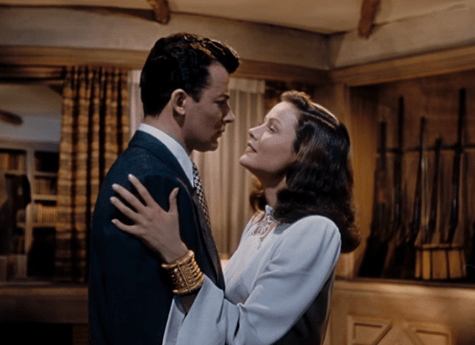
Film Noir is usually synonymous with black and white. Of course, as with everything, especially something as notoriously difficult to categorize as film noir, there are notable exceptions. Obvious outliers are Niagara (1953), Bad Day at Black Rock (1955), House of Bamboo (1955), and this picture from almost a decade earlier, Joseph M. Stahl’s Leave Her to Heaven (1945).

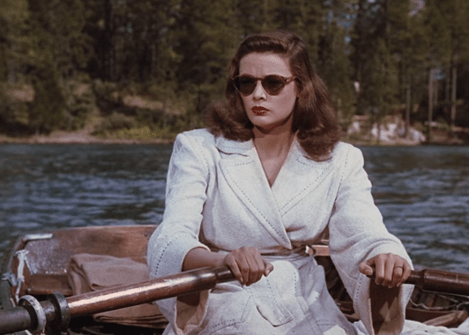
One of the film’s finest assets, in fact, is its highly saturated Technicolor tones which are unequivocally some of the best that Hollywood had to offer during that period. Leon Shamroy, a Hollywood workhorse who seems to have faded in deference to other names, nevertheless makes the picture that much better with his photography.

It’s gorgeous — as pretty as a postcard even — almost too gorgeous. Something cannot be that beautiful without there being a catch or something buried underneath the surface. The same might be said of the film’s female lead, Ellen Harland (Gene Tierney).

The exquisite young lady meets the author (Cornel Wilde) of the book she is reading quite unwittingly. He can’t help but stare at her because she’s very attractive and she can’t help look at him due to the familiarity of his face. More on that later. Anyway, they both end up getting off at the same stop and find out they share some mutual connections. They’ll be seeing a good deal more of each other shortly.

As much as I often disregard Cornel Wilde as an acting talent; he more often than not seems unexpressive and dull, those perceived qualities nevertheless make the beguiling wiles of Gene Tierney all the more prominent as she steals the picture away in one of her greatest performances.

It certainly doesn’t hurt that she is blessed by the gloriously vibrant colors as one of the preeminent beauties of her generation. However, even in a picture as Laura (1944), where she was at the center of the entire plot — this otherworldly beauty — in Leave Her to Heaven she positively commands the screen from the minute she arrives and doesn’t let go until her untimely demise. Even then, she still enacts her will on the narrative but for once her husband is able to have some peace from her stifling displays of affections.

Screenwriter Jo Swerling drops subtle hints of a dubious nature throughout but this is the beauty of it, only in hindsight will you notice them. By that time it’s far too late. One observer notes matter-of-factly, in an early line of dialogue, as she races two children across the lake, “Helen always wins.” Its a metaphor for her entire life thus far.

She simultaneously harbored some twisted father complex, alluded to early on and suggesting Ellen’s rather unhealthy attachment to the man who passed away recently under curious circumstances. That’s why Ellen, her mother, and sister have all convened. To proceed with her father’s wishes of having his body cremated in his favorite place.

It’s no small coincidence that the man who was taken with her on the train and who she takes a liking to reciprocally, shares a striking resemblance to her dear departed dad. It’s almost uncanny. However, even this, while duly noted, only seems like a side note.

Because the spectacular scenery and how deliriously happy they are together, seem to discount any other distractions. This is the key. Everything is so perfect for them you can hardly expect anything might be wrong. They have a whirlwind romance, Ellen ditches her stuffy fiancee (Vincent Price), and practically takes it upon herself to propose marriage to Harland. Her kisses seal the deal.

They are married and she vows to do everything for him. The cooking, the cleaning, everything; she’s the perfect example of doting wifely domesticity. She is the symbol of the ideal 1940s housewife even. Beautiful and caring — making Harland extremely content and do everything in her power to make his crippled but good-natured younger brother (Daryl Hickman) feel cared for. Again, it’s so perfect. Until it’s not…

leave her to heaven 2.png

The signs are there again. Ellen begins to sour, bemoaning the fact that ever since they’ve gotten married she’s never been alone with her husband. There are always other people, whether Danny, or the kindly hand (Chill Wills), or even her own family. She doesn’t want any of them around. She just wants Richard and nothing else. The extent of her jealousy surpasses healthy levels by severe margins. And it becomes all too obvious her outward show of demureness goes only so far. Because, in truth, there have been few femme fatales as homicidally deadly as Ellen Harland. Let this go on record.

While her husband wonders what has come over her, trying to knock out his latest novel, Ellen systematically works to remove everyone from his life currently impeding her road to greater attachment and total control of all his time and affections. It comes in three waves. The films most haunting scene is subsequently one of the most unsettling to come out of Classic Hollywood, solidifying the image of an icy Tierney cloaked in shades as one for the ages. Because you see, she sits there emotionless, with no feeling whatsoever as a boy begins to drown and frantically calls out for help. And still, she sits there and does nothing. Thrown in juxtaposition with the glorious imagery makes the composition all the more jarring.

But that’s only her initial move, next comes a baby that she doesn’t want, and she even pulls a first premeditating on her own death so that she will keep anyone else from ever having her man. So in the end, she readily enters into death just so that she can hold onto Richard one last time. In fact, you could make the case it’s not solely out of malice but a perverted sense of hyper-obsessive love.

Though all but pushed aside in the beginning, it is the acidity of Vincent Price as the once-spurned fiancee who makes the courtroom scenes burn with not uncertain malice. He’s not only the prosecutor but very much a tool for Ellen to utilize even in death. She comes to haunt him from the depths of the grave.

leave her to heaven 3.png

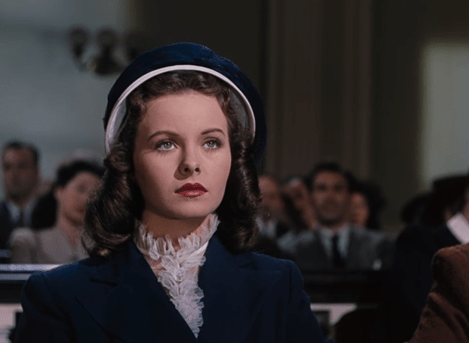
It’s little surprise that there’s almost a conscious effort to make  Jeanne Crain more pure and exquisite by the minute. At first, she’s merely the girl with the hoe, with a green thumb, face smudged with dirt or the model in the playroom. But as she’s more distraught with Ellen and ultimately implicated in her sister’s murder, her saintly qualities, making her the quintessential noir angel, come into sharper relief.

In fact, Leave Her to Heaven is one of the most foremost examples in both the female archetypes. While Tierney chills are bones to their core with that beguiling combination of glamour and obsessive malevolence, Crain gives us nothing but warmth and even in an abrupt ending caps things off in the most satisfying way possible. If anything they both make Cornell Wilde better because this is their picture and not his. As an enduringly contorted psychological drama, the 1940s arguably produced few superior vehicles to Leave Her to Heaven. Gene Tierney burns with bewitching beauty and potent fury.

4/5 Stars

Henry: Cornel Wilde just kissed Gene Tierney.
Hawkeye: On the teeth?
Trapper: Right smack on.
Hawkeye: If he straightens out that overbite, I’ll kill him.
~ M*A*S*H episode House Arrest

Fort Apache (1948)

fort apache 1.png

Fort Apache gives me the opportunity to consider one of John Ford’s most unlikely long-term collaborations with film critic turned screenwriter Frank S. Nugent. As with all Ford partnerships, it was oftentimes prickly but there’s no repudiating the impact. However, even the writer realized how improbable it was he would have such a hand in mythologizing the West alongside one of the great American masters. Nugent noted the following:

“I have often wondered why Ford chose me to write his cavalry films. I had been on a horse but once—and to our mutual humiliation. I had never seen an Indian. My knowledge of the Civil War extended only slightly beyond the fact that there was a North and a South, with West vulnerable and East dealing. I did know a Remington from a Winchester—Remington was the painter. In view of all this, I can only surmise that Ford picked me for Fort Apache as a challenge.”

The picture opens with a particularly acerbic and icy Henry Fonda as Owen Thursday, newly assigned to the cavalry outpost at Fort Apache. One could make a wager each of Fonda’s characterizations in everything from You Only Live Once to The Ox-Bow Incident and even My Darling Clementine all culminate right here. Though he’s dismissive of the assignment, Thursday is nevertheless intent on upholding his duty. He rides along the bumpy roadways with his teenage daughter Philadelphia (an effervescent Shirley Temple) who is simply glad to be by her father’s side.

To understand the picture, it’s useful to know Nugent developed extensive bios for every character to flesh out who they were exactly. We have John Agar in his screen debut starring opposite his new wife in real life (Temple) and playing the newest commissioned officer to the fort, Second Lieutenant Michael O’Rourke.

fort apache 3.png

Life as a cavalryman proves to be a family affair and one clan has an especially substantial presence in the camp. The Lieutenant’s father (Ward Bond) is stationed there too with his mother, the older man serving as a Sergeant Major. Meanwhile, many of the veteran soldiers provide a close-knit community including Sergeant Festus Mulcahy (Victor McLaglen) who has been a lifelong friend to the O’Rourkes. Here we see Irish-American blood flowing through the picture as Ford heralds his own ancestors part in this historical landscape not only during the Civil War but long afterward. The pride in this shared culture is undeniable.

For most of its run, Fort Apache is the epitome of character-driven drama. Nugent’s meticulous character development overlaid by Ford’s own distaste for expositional dialogue provides the groundwork for yet another story operating in vignettes more than anything else. At any rate, the dialogue comes off clunkily at times while the romance between Philadelphia and Michael O’Rourke begins to blossom.

However, with her father adamant against such a union and astringent in all manners of his command, it causes an instant riff in the camp. One of his finest lines comes with inspecting his officers and noting, “The uniform is not a subject for individual whimsical expression.” He expects everyone to abide by the letter of the law and his unswerving personality is glacial on all accounts.

Meanwhile, the old reliable guard has fun with the new recruits. Among their ranks, rather unbelievably, is the veteran character actor Hank Worden. Then, the community of wives and sweethearts led by Mrs. Collingwood (Anna Lee) and Mrs. O’Rourke (Irene Rich) look to help Philadelphia make a home for herself. John Wayne is in the picture as well though he takes a decidedly secondary role as Captain Kirby York, striving to work under Thursday’s guidance with as much obedience as he can muster. However, the final act is Wayne’s as much as it is Fonda’s however.

It hardly needs to be said at this point but Monument Valley is awesome. Watching horses streak across the plains ferociously kicking up storms of dust never grows old. Nor do images of Wayne and Pedro Armendariz perched on a towering rock formation taking in the view. You can’t make this stuff up. The beauty is majestic as only natural topography can be without input by human hands or CGI — the way it was probably meant to be photographed.

There’s the impending threat of Indians making their way south. Telegraph lines are down again. So a visit is paid to the scruffy horse trader who is quite conveniently liaison between the American Indians and the government within the territory. Despite his contempt for Meacham, Thursday will not do anything about him nor does he attempt any diplomacy with the belligerent Cochise. He decides instead on the executive decision to make an all-out charge on the Native Americans forces who are waiting, guns cocked and ready.

fort apache 2.png

In the waning moments, Fort Apache becomes a more fully-realized, even emphatic indictment of recalcitrant and bluntly antagonistic leadership. Thursday holds a very entitled station — whatever he says, he says on behalf of the United States government — and no one else can say anything otherwise. What they do protest he backs up with regulations, honors, and code of conducts that might as well bury everyone.

Instead of addressing any area of compromise as minor as it might be, there is a straight and decisive path cut through any issue. They ride toward their inevitable deaths. The final bugle sounds for charge and yet it’s hardly a battle, target practice is more like it, and the horrifying thing is most everyone knows it going in. But when a man such as Colonel Thursday holds the reins you reluctantly cave to his demands lest you be clapped in irons for insubordination — even when the decisions are near lunacy. York is the one man brave enough to stand against and lives to fight another day. Many others are not so lucky

If Custer’s Last Stand was anything like this, it makes complete sense and simultaneously becomes an even more terrifying piece of history. In what might be called an early precursor to the glorification of a hero’s legend in The Man Who Shot Liberty Valance (1961), much the same treatment is provided here for the far more dubious Owen Thursday. Once more Ford’s picture is able to get at this obvious discrepancy by pulling away and looking at the story from those folks who canonize history for all posterity. It’s oftentimes the newspaper men who are afforded that privilege. Whether their effusive praises are in order is another matter entirely and by the end, Ford Apache is a sobering portrait. It comes so far from seemingly homely even jovial roots within the compound.

So many lives were needlessly sacrificed so one man could be heralded a legend. The frightening thing is that Thursday was not a mere glory seeker; he fervently believed what he was doing was in the right. That kind of dogged methodology proved itself highly pernicious when no thought was given to discretion of any kind. It’s simply blind execution of duty. Whether it evokes Kant or not, I cannot help but think of one of the most famous examples of this in Adolf Eichmann, acting as a lowly Holocaust architect, who nevertheless proved the consequences of such a philosophy.

The dark horse of the Ford pictures, Fort Apache begins as one beast and comes out quite a different animal by the end. It so easily gets sidetracked, distracted, and lulled into different scenarios and there never is a true sense of urgency to keep the picture moving toward an obvious conclusion. Still, in the end, we get the finale and it’s unnerving as both a commentary and another projection of the mythical West. Somehow Ford stitches it together as a two-edged sword of both indictment and a moving paean to those passed.

4/5 Stars

Review: She Wore a Yellow Ribbon (1949)

she wore a yellow ribbon 1.png

“Never apologize, it’s a sign of weakness.” ~ John Wayne as Nathan Brittles

Instigated by one of the cataclysmic massacres of the West, Custer’s Last Stand, the word is sent by telegraph and pony express all across the country. Simultaneously, members of numerous tribes including the Sioux and Cheyenne are on the warpath. They have a new resolve to make war with “The White Man” who has continually lied and cheated them out of their land. It brings deep-seated issues at the core of American’s history to the surface.

However, for what initially appears a heavy drama, Ford’s picture comes off surprisingly light and quite comical in patches. Frank Nugent’s script forges a story about the U.S. Calvary at Fort Stark. Nathan Brittles (John Wayne) is counting down the days until his retirement not so much with anticipation; it’s all but inevitable. Because you see, he’s been in the service of his country for a good many years and it’s about time for him to step down.

John Ford gave Duke the part, realizing after Red River (1948), Wayne was not simply a warm body with an imposing presence; he truly was an actor by this point in his career. Resultingly, he makes Ford’s decision to cast him in a slightly more demanding role pay off handsomely. To his credit, he makes a fine showing imbuing the part with a certain world-weariness that comes with age but also immense good humor.

she wore a yellow ribbon 2.png

Victor McLaglen, as the burly First Sergeant Quincannon, calls on his Colonel every morning taking a nip out of the bottle he has conveniently hidden in the other man’s quarters, as they commiserate about their military careers coming to a close.

Meanwhile, the two hot-blooded young men under his command (John Agar and Harry Carey Jr.) turn foolish in their pursuit of the prettiest (and only) flirt in camp, niece of the commanding officer Allshard, Ms. Olivia Dandridge (Joanne Dru). Brittles observes with mild amusement as they vie for her affection, barking reprimands at them for their undisciplined behavior, while simultaneously stirring them on — noting that she wears a yellow ribbon in her hair denoting a beau. The question remains who she will pick and it becomes one of the film’s running gags as much as it is a source of easy conflict.

Initially, there seems to be little nuance in how the Native Americans are portrayed, prone to indiscriminate violence, yet at least, even for a moment, the film suggests it is not a cultural divide but one defined by generations. Young men are intent on making a name for themselves and finding glory on the battlefield. It is the old man who have gotten past that. They have seen how war ravages the earth and humanity. They are weary of such ordeals.

Nathan Brittles goes to Chief Pony That Walks (Chief John Big Tree) on the eve of his retirement to forge some fragile peace. But his old friend is powerless to do anything so Brittles takes yet another approach to save lives. It’s his one final gift to his men. Mind you, he was not required to take on any of this and yet a man such as Brittles would have nothing less because he cherishes his command and the men who ride beside him. They mean just as much to him as the U.S. Calvary itself has for well nigh 40 years.

What makes all these preceding events genuinely striking is the stunning Technicolor frames. The continuous processions over the plains are breathtaking panoramas with skies as immaculate as the western backgrounds themselves.  The most well-conceived moments come in capturing thunderbolts out on the prairie as Brittles leads his caravan on their mission with their two female cohorts.

In such instances, there’s a scope and grandeur that gives the impression of an intricate painting even more than a film and it’s true Ford and his director of photography purportedly drew inspiration from the works of Frederic Remmington. In this regard — and I’ll try to not overstep my bounds — Winton Hoch’s cinematography stands up to if not surpasses the imagery of The Searchers. Likewise, there are wonderfully decadent period costumes evoking the era nicely but as always John Wayne dons his worn in, one-of-a-kind pride and joy that he would wear until his Rio Bravio (1959) days.

Though relatively forgotten alongside more formidable offerings like The Searchers, Stagecoach, or even The Man Who Shot Liberty Valance, She Wore a Yellow Ribbon might just be one of Wayne’s most fascinating performances in a Ford picture. Not only is he playing a man 20 years his senior — and doing it with surprising credibility — he makes the old calvary man into a figure with true heart and soul. He’s not too hardened or unfeeling to hold onto lifelong friendships, enjoy a good joke, or grin at the young love that besets the hearts of the men under him. They respect him and he cherishes them in return.

she wore a yellow ribbon 4.png

There are numerous poignant moments as his tenure winds down but one of the finest comes when he gives his beloved troops one final inspection. They surprise him with a gift paid for by all of them — a solid silver watch with a remembrance on it. It’s a token of respect to a man they deeply admire. In a move that can’t help but conjure up George Washington himself, Brittles pulls out his granny glasses to read the inscription and we see yet again this great man of strength was, as we always suspected, a man of a certain sensitivity too. He’s deeply touched.

He rides off, a job well done, but as it so happens the cavalry is not done with him as trusty Sergeant Tyree (Ben Johnson) comes to fetch him one final time. Not by a long shot. She Wore a Yellow Ribbon is simultaneously an elegy to those who served and were lost in the line of duty and more specifically to a man who took great pride in his post.

4/5 Stars