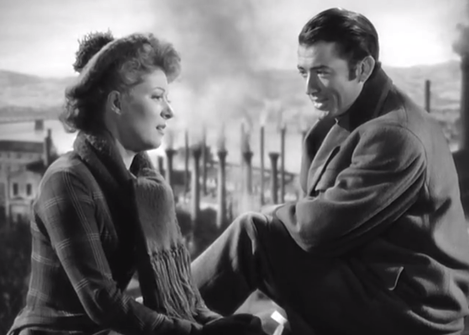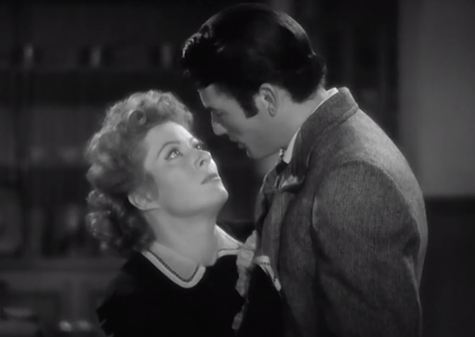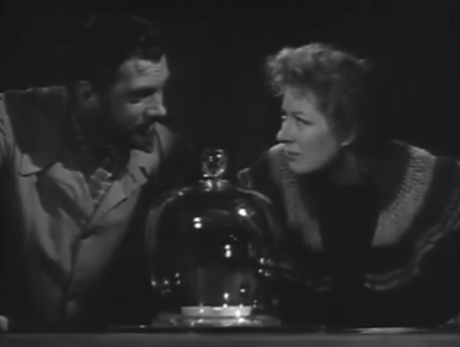
Madame Curie (1943): Starring The Indomitable Greer Garson

madame curie 2

Physics and Mathematics are the two primary focuses of Marie Curie’s life. In the early days, when she was one of the few solitary women in a Parisian sphere of academia, dominated by dismissive men, she still went by her maiden name and took on the rigors of study with ardent relish.

Thus, when her kindly professor (Albert Basserman), the prototypical white wizard with a likable twinkle in his eye, invites her over to his home to meet famed professor Pierre Curie (Walter Pidgeon), she jumps at the opportunity, purely on a professional basis. However, I will not suggest for even one moment Madame Curie takes its material into anything close to unconventional territory.

What looks to be an intimate affair turns out to be a bustling party packed with people. The two academics feel sorely out of place amidst the socializing and gravitate toward one another even more dramatically. There’s nothing concrete at the moment because we must remember these are two people with the utmost sense of dignity. They’re able to counter one another with a certain genteel propriety, not the klutzy screwball meet-cutes of some of their contemporaries. This no doubt plays to their personal advantage.

Time passes and Pierre grants the ambitious woman to set up shop in his laboratory, tucked away in a shabby little corner. Once more she jumps at the chance, seeing the space, completely devoid of any sort of facilities, as the perfect proofing ground for her ideas.

She immediately leaves an impression on the youthful lab assistant (Robert Walker). However, it’s her inexhaustible work in radiation that leads Pierre to revere her. Because over time he grows accustomed to her, at least in a professional sense.  While shrugging off her graduation initially, he finds himself making an appearance all the same. He’s compelled to.

The next course of action is his hesitant invitation on a weekend away, and she gladly accepts, meeting his parents out in the country over croquet, including an uncharacteristically bristly Henry Travers playing the elder Curie. The budding romance is obvious, and it’s convenient for our stars.

Mervyn LeRoy’s film, on the whole, is a lightweight, cordial biography working loosely with facts to draw up the life of Madame Curie and her future husband. It’s just as much a vehicle for the lasting chemistry of Garson and Pidgeon as it is an ode to one of the most renowned scientists of the turn-of-the-century. While I’m not exactly the most gifted empiricist, even I am aware of the substantial shadow the Curie name casts over the discipline. In some small manner, this movie allows them to be appreciated and palatable for a mainstream audience, albeit an audience of wartime viewers.

Even this admission is telling, suggesting this tale of romance and biography functions as a bit of timeless morale boosting. It showcases love and the triumph of the human spirit, even in the face of bitter tragedy. Still, it does not immediately signal propaganda like Mrs. Miniver or other such entries. This might be to its benefit.

madame curie 1.png

Taking everything into account, what makes it rather extraordinary is Garson’s heroine because certainly, Marie Curie is well-deserving of a biographical treatment and in an age where women were kept out of such positions, she provides a paradigmatic example for future generations. (No one can rebuff her two Nobel Prizes!)

Both her work and her career are important to her. The same goes for her future husband. But even with their work as a constant distraction, they realize in between the long lab sessions, living life without one another would leave a void. Beyond this, their work would be far less meaningful. In his rather roundabout manner, Pierre professes his need for her, comparing their marriage to NaCl. It’s not exactly romantic to be table salt, but they work well together, and they do form a solid union.

While the scientific jargon, filled with chemical elements, feels a bit clunky, it’s admittedly difficult to figure out a way to make their regimen of uranium-based experiments riveting. The major takeaway is the uphill push for funding since Curie is dismissed on all sides, not only based on her unprecedented research, but also for the arbitrary fact, she’s the opposite sex of every stodgy member of the scientific board.

Not to be daunted, the couple sets up business in a shack, and the Curies take on the task with their usual tenacity, their sole objective: separating barium from radium. This is Madame Curie in its stagnant phase and yet no one can doubt Greer Garson’s candor. One is reminded of the crushing moment she thinks the radium has all but evaporated and with it four years of toil. She’s nearly inconsolable.

Then, when their success is finally validated, she’s looking into her husband’s eyes and commending him as a great man, not by the standards of the world, but due to his kindness, gentleness, and wisdom. It’s a striking moment because this is no doubt her story, but as with any union, it takes two people to make it work.

But she subsequently has another sublime moment of indescribable vulnerability, pained to her core by the most grievous loss of her life thus far. She is a woman of science and of great intellect, but the service Garson does for Curie (authentic or not) is making her all the more human at her lowest point.

The final verdict remains that Madame Curie is an unimaginative bit of hagiography, but for the faithful fans of Greer Garson and Walter Pidgeon, it is another fitting eulogy to their joint talents. For some, this might be enough to charitably see past what flaws there are.

3/5 Stars

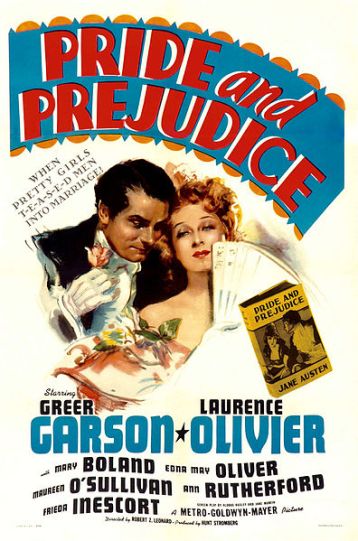
Pride and Prejudice (1940): Laurence Olivier and Greer Garson

Prideandprejudice.jpg

When you grow up with a sister, I imagine most people are aware of books like Pride and Prejudice, Little Women, Anne of Greene Gables, and Little House on The Prairie. However, especially when you’re young, you rarely appreciate them fully or comprehend how notable they are as cultural artifacts.

It’s my ever-growing esteem for Jane Austen’s Pride & Prejudice that makes me hold any adaptation to a higher standard. Otherwise, it would be easy enough to settle. But the coloring of the characters, their tete-a-tetes, the comic orchestrations, and the explorations of themes inherent in British society, make the material that much more sacrosanct. As time grows older, her works seem to draw more audiences, not less.

Thus, I’ve found myself not so much a stickler for out and out faithfulness to the source, although if it’s not broke, why fix it? Still, I desire these adaptations to stay true to the essence of what the author created.

It’s true Hollywood has always had an affection for its literary adaptations, and it was little different in the olden days of the studio system. Because what any book or intellectual property essentially guarantees is some kind of preformed fanbase to pull from. However, these attempts to capitalize always come with widely varied results. This MGM version, helmed by the all but forgotten Robert Z. Leonard, falls somewhere in the middle. It’s hardly forgettable and yet it lacks the required magic to send it in to the pantheon of Austen cinematic transcendence.

For those left unawares, Pride and Prejudice is a story of the Bennett family, consisting of five sisters, their benevolent father, and a hyperbolic mother looking for every opportunity to marry her daughters off to the man with the largest inheritance.

When two eligible young men, a kind-faced Mr. Bingley (Bruce Lester) and the rather more curt and severe Mr. Darcy (Laurence Olivier), rent the grand estate of Netherfield, along with a haughty sister, Ms. Bingley (Frieda Inescourt), it causes quite the stir in town.

The matriarch, Mrs. Bennet (Mary Boland), is the epitome of a fussy busybody who, nevertheless, has draped about her a certain maternal charm. Edmund Gwenn calmly uses his bright-eyed wit to upstage his wife’s blustering. They make a formidable pair of comics.

Among their children, Jane (Maureen O’Sullivan) is the perfectly docile beauty with the richest prospects of marriage. Elizabeth (Greer Garson) is proud and passionate. Mary (Marsha Hunt) is bespectacled and depicted as a bit of an oddball. The two youngest, Lydia (Ann Rutherford) and Kitty (Heather Angel) are tittering adolescents swayed by a dashing manner and a handsome uniform.

The story is conveniently recontextualized for the Victorian-era and the main purpose served is in the costuming department. Not only could the studio save money by repurposing some of their wardrobes, but they could also lean into a greater level of opulence that would not have been available in the actual day of the Bennetts. Except for absolute purists, I see no way in which this historical inaccuracy harms the success of the picture.

It is also the opening ball reinforcing the ensuing conflict by introducing Elizabeth’s genuine distaste that she harbors for Mr. Darcy, perceiving him to be a total supercilious snob. What’s more, her feelings are not entirely unwarranted. This dissension is borne in the title itself: The pride of Elizabeth and the prejudice of someone bearing the breeding of Mr. Darcy. For that matter, it could be the other way around, Elizabeth’s prejudice toward the upper echelon and his own inbred pride.

Every successive encounter between them, Elizabeth does everything to confirm her assumptions about him. It means they are never on amicable terms with one another, no matter the words that might leave their lips. She is hardly reticent about airing her contempt for the man.

Every slight dispensed by those purported to be above her in status is further internationalized and often finds its way out in a barbed attack on Mr. Darcy since he proves to be the easiest target of ridicule. Even as Darcy’s romantic advances continue in earnest, Elizabeth has great relish in embarrassing him over a bout of archery. The consequence is understood, but somehow it feels a bit foreign to the propriety of Austen’s universe.

In parallel and, ultimately, intertwined romances, Jane and Mr. Bingley incur and off and on relationship defined not so much by grating behavior between the two of them but the forces of inertia working around them.

Following her own flight of fancy, Kitty winds up running off with a soldier named Mr. Wickham, who seems charming enough. However, it conveniently shrouds a past of ill-repute that Darcy holds against the man while Elizabeth gives Wickham the benefit of the doubt. It’s yet another grievance she can hold against the stuffy aristocrat.

These paces are all Austen, but similar to the numerous versions of Little Women, it’s the performers who really mold it into their own. I love Greer Garson to death, and she does an amiable job but it’s hard to dismiss her predetermined disposition. She is always one of the most vivacious screen personalities and though she gets to shine in the final act, up to that point, she’s meant to be proud and brazenly forthright in the mode of her literary counterpart. It doesn’t feel quite like her temperament.

On his part, Olivier does well enough as Darcy; he certainly has a presence about him and the repute to make it seem viable. However, the romance is not as vibrant as it might have been. It feels a bit stunted, and it cannot be conveniently attributed to the social context.

Like its successor Jane Eyre (1943), it’s also rather jolting to see Aldous Huxley’s name in the screen credits. My high school days of reading A Brave New World make any period piece feel like a blatant anachronism on his repertoire. Still, this alone can hardly stand as a substantive piece of criticism.

It does feel some of the best and most well-regarded lines are not emphasized enough within the structure of the scenes and while there are certainly considerable elements of the original story, they are never done too many favors.

Mr. Collins feels like a miserable sot and a bore of a man and with the screwball caricature of Melville Cooper, it feels all the more like miscasting. Meanwhile, Mrs. Bingely has a lacerating post to maintain as the picture’s snide gossip. It appears her only function in the plot is to be churlish, making Darcy incrementally more tolerable.

Edna May Oliver for one is always prepared to play a no-nonsense patroness, in this case, Lady Catherine, who orchestrates events so her dear nephew might test the waters of romance.  Because Mr. Darcy and Ms. Bennett are meant to be together and they are both able to cast aside their own issues to recognize just how much they care for one another.

Finally watching Olivier and Garson in a passionate embrace is a dream come true but, as for myself, I couldn’t help but get distracted by fond memories of Wuthering Heights and Random Harvest. How I wish I could same the same of this movie. Still, I’m clouded by my own blind spots and personal hangups. You must make your own judgment.

3.5/5 Stars

Cover Up (1949): A Christmas Crime B Movie

cover up 1.png

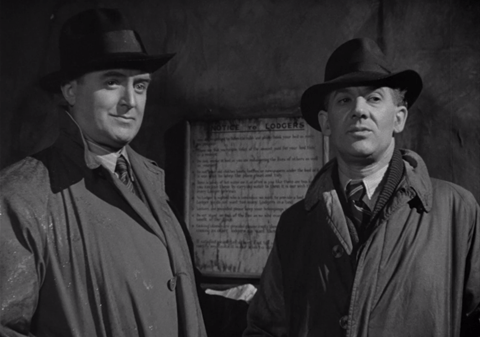
Cover Up is one of the dime a dozen noir titles you have to really dig around for. It’s actually not really a prototypical film noir at all. However, if you’re a fan of forgotten unadorned small-town whodunits, it might just grab you.

Its main assets are in the script department and the presence of a couple old pros like Dennis O’Keefe and William Bendix. They practically eat crime for breakfast, lunch, and dinner so to see them in another one hardly stretches the imagination. Still, they’re as capable as ever and though the context might be pedestrian — a small Midwestern town with a murder mystery — it’s how we get to the reveal that matters most.

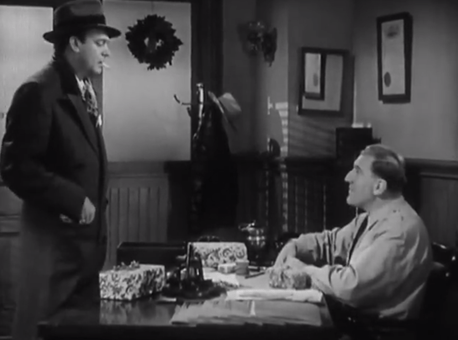
Take, for instance, the first time they meet at the sheriff’s office. O’Keefe is trying to file his report, and the sheriff keeps on getting distracted, telling him he should smoke less, get a pipe, etc. Meanwhile, he fumbles around wrapping Christmas presents. The quirks make the scene that much more enjoyable, though we’ve doubtlessly seen the exposition umpteen times before.

One feather in its cap as far as fleshing out an atmosphere starts with a simple detail like setting the action during Christmas. Shane Black is one to use this technique, but it immediately adds another layer to any story because it’s instantly recognizable, instantly relatable to almost every one of us. It also makes a fine contrast with any of the criminal elements.

Because it’s safe to say two of the things most diametrically opposed to murder are the Midwest and Christmas. At least until now. The out-of-town bus arrives at the local depot and we have our meet-cute over a towering stack of tumbling presents.

Sam Donovan (Dennis O’keefe) offers his services to the radiant Anita Weatherby and she reluctantly concedes. Barbara Britton is only one effulgent face among the plethora of post-war beauties, perfectly epitomizing the traditional values of the time, but she fits this role capably.

In fact, it cannot be summed up better than the moment Donovan comes a calling on the girl at her parents’ home. There’s nothing more quaint and somehow innocent than courting culture involving the entire family in cozy drawing rooms.

Donovan remains an insurance investigator by day poking around about a purported suicide based on an insurance claim. He has other ideas about the cause of death, but seeing as the gun has disappeared and all the locals are quite reticent, little progress can be made. Not unlike Reardon (Edmond O’Brien) in The Killers, he’s trying to get to the bottom of it for his company.

cover up 2.png

Soon it becomes obvious to him this was not simply a suicide as marked in the books, even a passing mention of a double indemnity clause suggests some form of foul play. But again, this is more The Thin Man Goes Home than it is any pernicious strain of crime flick. The token example is the sheriff’s office, which seems more in line with Barney Fife than Sam Spade.

Tired by the dead-ends and the seeming evasiveness of the local authorities, Donovan nevertheless, spends his evenings in the company of the beautiful girl. They go to the movie house where they get gawked at by an inquisitive little boy who’s already seen the picture multiple times.

The next dramatic development is the death of a beloved member of the community, Dr. Giroux, and this year, the Christmas tree lighting normally carried out by him is a little dimmer. The murder weapon also looks to be a German Luger — with at least two different owners having one of the guns in their possession. The town’s own sheriff and Anita’s own father Mr. Weatherby. It starts to make her spine shiver because she’s deathly afraid Donovan’s digging will lead directly to her loved ones. She is split between protecting her family and her new man.

Thematically, Cover Up plays a bit like It’s a Wonderful Life except the two men dueling for the soul of the town are off-screen enigmas. We never know them intimately and of course, murder is at the seat of it all. The fact this humble movie would attempt such themes is to its credit, but since these characters are never witnessed in the flesh, we have little interest in them.

It is the characters in front of us with the most relevance. So while it can’t quite manage to keep up the steam, for what it is, Cover Up is a minor Christmas delight, especially for the Dennis O’Keefe and William Bendix faithful.

3/5 Stars

Dance, Girl, Dance (1940): Lucille Ball and Maureen O’Hara

dance girl dance 1.png

Scanning the opening credits, I noticed two talents on the rise including Russell Metty and Robert Wise, but make no mistake; the focal point in the director’s chair is the criminally-forgotten Dorothy Arzner.

In retrospect, she certainly is a primary draw to this picture because, with the dearth of female personnel actually credited behind the camera within the film industry, she stands as a pioneer for those who are aware. This is a fine starting point.

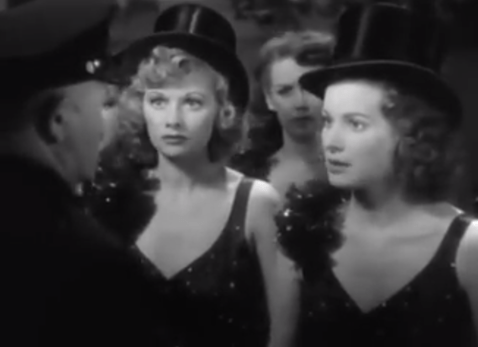
For those drawn to talent more than technicians Dance, Girl, Dance boasts a seemingly disparate pair of heroines in Lucille Ball and Maureen O’Hara, with both women making their living in a chorus line.

In their opening introduction, they are performing in some two-bit, slightly dubious joint only for the place to be raided by the cops mid-routine. It’s a sorry state of affairs as they come to terms with the fact they will not be getting any reimbursement for their night’s work.

In fact, it’s one of their good-hearted, slightly tipsy patrons who puts out his hat to take a collection. It’s not much, but the girls are grateful for his neighborliness. He’s the first of many side characters to drift in and out of their lives.

In the subsequent storyline, our two aspiring performers aptly reflect the two divergent paths with which to tackle a career in such an unstable environment. Bubbles is Ball as a full-on glam girl. She handles the part quite well because with her iconic career in humor, in some fallacious way, it often undermines just how alluring she was as a performer. Here Bubbles is shrewd when it comes to getting ahead and using all her assets to move up the social totem pole — both personally and professionally.

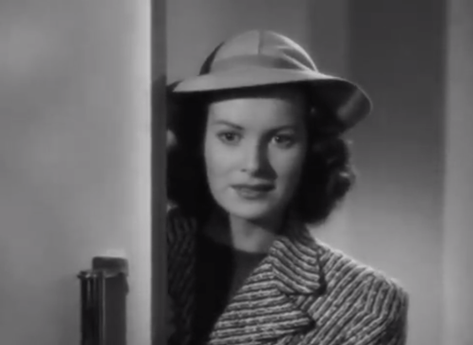
Meanwhile, O’Hara, in only her third Hollywood release (following Jamaica Inn and The Hunchback of Notre Dame), is called upon to exude the radiant exuberance of an ingenue named Judy O’Brien. She’s trying to do dance the right way in a callous world.

As it turns out, Louis Hayward isn’t actually attached to either of them even as they make eyes or have fancies of being with him. He’s currently still connected to Virginia Field. Yes, they are going through a divorce, but there’s still something amicable in their antagonism. Even as they play the field a bit, there’s this ongoing sense they’re still clinging to the thought of salvaging their relationship. It remains to be seen where this separate piece fits in with our two ambitious dancers.

Ralph Bellamy makes his own entrance as a dance impresario, and we also wonder how he figures into the puzzle. Though the man is never quite satisfied with the company’s choreography, he’s still Ralph Bellamy, armed with his usual lanky and unassuming charm. More than anyone else, his perceptive secretary Miss Olmstead (Katharine Alexander) is capable of getting a heartbeat out of him.

As the girls look for work, they are met with the hurdles that come with any profession. They lack transportation, they lack means; no one seems willing to give them a chance unless they degrade themselves in some manner.

Bubbles really starts raking in the dough under her new persona: Tiger Lily White. Of course, she is forced to hold court with a bawdier brand of onlooker, but she more than obliges them a la The Awful Truth’s with a slightly risque “Gone with the Wind” number. It fits her personality because she is, above all else, an opportunist, and this is the easiest, fastest way she can get ahead.  However, running with this personality trait, she also signs O’Hara on to be her stooge to milk the lascivious audience for more.

It’s less an act of goodwill and more so a calculated way to bring Judy down a peg with the rudest of awakenings. It’s the height of indignity for the idealistic girl to be relegated to such a state. Still, she pushes through it with fortitude, throwing aside her initial apprehension only to replace it with renewed determination. It’s in these interludes where our naive heroine matures and comes to terms with the world around her.

dance girl dance 2

One of the most striking elements of Dance, Girl, Dance is how each and every performance reaches out into the audience in some way. It doesn’t necessarily feel like a typical song and dance musical, but it plays up the communal, reactionary elements of film and, especially, the stage.

Even as the plot is strung along and feels flimsy and detached, at times, there’s something rather freeing and appealing about the oddball supporting cast all but drifting in and out of the main narrative as nice as they please. Hayward’s playful feud with his wife Field feels all but an unrelated subplot until it somewhat ties into our main story.

Then, Bellamy and “Ommy” have their own individual, rather serendipitous encounters with the young hopeful Judy, whether in a waiting room, on the lift, or waiting for a bus in the rain. The moments do not mean too much on their own, aside from providing dashes of character. However, as they begin to stack, one on top of another, the interactions create a renewed appreciation for our characters. Even Bubbles, despite her conniving, is a memorable part elevated by Ball’s innate kineticism.

However, the most poignant scene comes to pass when O’Hara does the unexpected. There’s a steely resolve born in her eyes as she walks into no man’s land, into the space of the crowd, and confronts them in their poor, sad little lives. They pay their lousy 50 cents so they can jeer and ogle and go back to their wives and sweethearts and feel like men. There’s no integrity, no strength, nothing worthwhile in them.

The most curious thing is how she wins them over by cutting into the bawdy filth with the sharpest truth anyone’s ever dared to utter in the skeevy burlesque joint. Tiger Lily is instantly out of fashion as she and her stooge have it out because her opener has finally gained her own resolve. She’s not about to roll over and take it anymore. Far from just being a comical image in the wake of this film, it signals a change in the balance of power, as corny as that might sound.

It is the crowning capstone. Our ingenue has grown up. She simmers with fire for the first time, and it feels like we are seeing the real-life fire of Maureen O’Hara. It’s the finest, most definitive moment of the picture, allowing her to finally break out of the demureness initially fashioned for her. Before she had to mask herself. By the end, she realizes her true nature.

In the very same instance, she is able to impress something significant upon her audience, both on the screen and those watching from their theater seats. This continual relationship is Dance, Girl, Dance at its best. It’s not a supernal musical, nor the brightest backstage drama out of the age, but there are some amiable performances fostering a kind of self-reflexive symbiosis. This and its striking perspective on a patriarchal world, brim with a certain agreeable ardor. Lucille Ball and Maureen O’Hara don’t harm its prospects either. I cherish them both dearly.

3.5/5 Stars

Battleground (1949): Bastogne and The Screaming Eagles

battleground 1.png

“We must never again let any force dedicated to a super-race or a super-idea, or super-anything become strong enough to impose itself upon a free world. We must be smart enough and tough enough in the beginning to put out the fire before it starts spreading.”  ~ Leon Ames as the Chaplain

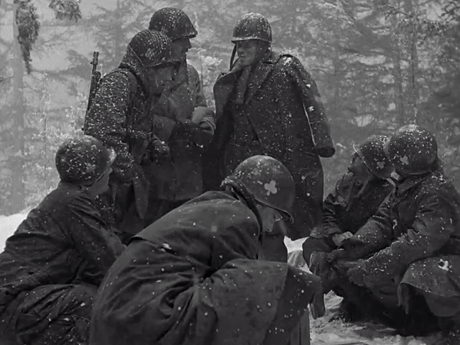
This is the story of Bastogne in 1944 and the renowned Screaming Eagles. Admittedly, if you’re like me, this means very little, but fortunately, we are in good company because the men we get to know over the course of two hours didn’t know anything about the city either when they first arrived. This was not the Battle of the Bulge; it was simply a stepping stone or a weigh station on the road to their future destination. That is until it became, you guessed it, a battleground in its own right.

For the time being, they can be found drilling in smartly executed formations and getting ready for an unnamed assignment ahead. This is our chance to feel them out before they get in the thick of everything.

Director William A. Wellman does them a service in the first full scene together spread out in their cots. There’s barely enough room for the dust to settle but within the close confines, camaraderie is immediately palpable as is each man’s personality.

What a great group of guys they are covering a lot of the bases of humanity. Van Johnson and even a Don Taylor are easy to pin down because of their broad appeal and charm. They make most any armed forces picture a little more affable. Among their finest traits is exuding good old-fashioned Americanism.

There’s old college grad Jarves (John Hodiak), who gets jeered for his presumed stuffiness. There’s the gruff cynic (Douglas Fowley) always playing around with his set of false chompers like his most prized possession. (They kind of are because without them he can’t eat). Squished in with them is the gangly and drawling southern boy (Jerome Courtland), who feels like an easy trope to target in these pictures. The new recruit (Marshall Thompson) can be found nervously bed-hopping from cot to cot trying to find one he can take.

In something genuinely unusual for the period, even a Latino from L.A. (Ricardo Montalban) is represented. His best bud Pops (George Murphy) all but has a ticket home on a hardship discharge. A young Richard Jaeckel rounds out the band along with a chaw chewing James Whitmore, acting as their weathered drill sergeant.

What is meaningful about these relationships is how they reach outside the confines of the film with this inferred history we don’t know explicitly, and yet we can read into it. We know what guys have a bone to pick with the army and the ones who are trying to make the best of it.

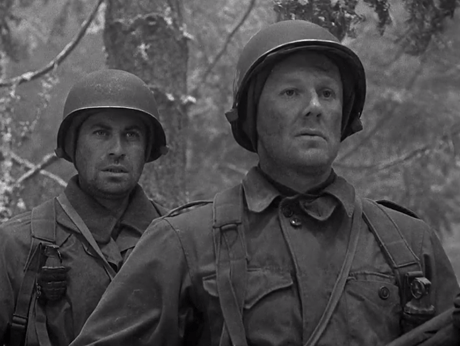
The perilous journey ahead is riddled with enemy planes overhead, and the fog of war is quite literally laid on thick, complimenting the mud the army trucks slog through on the road. One minute they’re diving into ditches at the sound of sniper fire, and the next they are tasked with the backbreaking toil that goes with digging in for the evening, only to be pulled away on revised orders.

battleground 2.png

There’s absolutely nothing permanent aside from the constant patrolling, lack of sleep, and perpetual snow. Battleground is one of the snowiest war movies I can recall, at times, deeply striking and equally relentless

Private Holley scores quite a cache of eggs, dreaming of the scramble he’s whisking up in his helmet time and time again — only to get pulled off for another assignment. Watching the yolk drip from his helmet is one of the defining images of the film for me as is his utter indifference. You’re never clean so why even bother.

As a fitting inflection of the Cold War, we have Germans in G.I. uniforms sneaking behind Allied lines to wreak havoc and sabotage important strategic assets like bridges. More than anything, it continually triggers this terrifying threat of infiltration. Thus, one cannot help but draw a connection to the Chaplain’s stirring speech later on (reference at the top of this page).

Amid the paranoia, it’s almost hilarious to think that the best way of telling friend from foe is baseball terms, idioms, Terry and the Pirates references, and the relationship status of the war’s favorite pinup Betty Grable (Note: Cesar Romero is out for Harry James).

When they do come upon the Krauts, Wellman captures the firefight and the subsequent hand-to-hand combat in a stylized manner to conform to the Hollywood production codes. Regardless, he manages to accentuate the rough-and-tumble brutality through boots pounding on the snow and violent inferences.

Battleground leaves unabashed sentimentality behind and it is not squeamish about death. People get picked off one by one leaving a trail of dead and wounded in their plucky company. This carnage hurts because of the rapport we build up. But even in the face of these micro-tragedies, there is no time to mourn, and their stand against the Germans proves a gutsy one. There’s no other alternative in their minds.

As we bunker down, it’s true the ensemble melds together nicely with no one actor totally upstaging the others. Certainly, Van Johnson is just left of center, if not the undisputed headliner, but even he has to navigate conventional feelings of fear and loathing when it comes to military service. He is by no means impervious to the toils of war.

In a moment of duress, Holly looks all but ready to turn tail ignominiously, but he finds his courage in the urging of another man who looks up to him — as they double back on the German lines and catch them off guard. They’ve girded their loins about them now and when ceasefire agreements and surrender are suggested by the enemy, they unceremoniously scoff at the very idea.

As alluded to already, in the thick of the hard pelting enemy artillery fire, the Chaplain holds an impromptu service. He’s of a certain denomination, but a very succinct point is made of the fact his service and his message is all-inclusive. In fact, it’s hardly a spiritual homily at all but a candid rallying cry against the forces of evil. It’s one of the most blatant examples of the film getting on any sort of didactic soapbox.

In response, each man kneels down to pray in his own way the enemy artillery fire still bursting in the background. The results are a stirring image of solidarity. They have not yet begun to fight.

Even in the simulated soundstage action, there is a compelling commitment to the atmosphere, which aids rather than hinders the story being told. It brims with the elements and forces of nature on all sides. In a last-ditch effort, all the terminally ill are moved out of the makeshift hospital, and the walking wounded are brought in for one final stand of desperation.

There is a slight sense Robert Pirosh’s script skipped over what might have been the most rousing scene. Wellman tackles the counterattack from the rallied forces with their new batch of airlifted ammunition, gasoline, and K rations in only an extended montage.

battleground 3.png

Although the ending of the war is a foregone conclusion, it very nearly could have been a letdown that we don’t get a more pronounced action scene. However, it’s quickly salvaged by the effectiveness of the final scene. It says all the same things and exudes all the same battered but resolute emotion with one simple drill, leading them off toward the rear. The men sound off with a renewed vigor knowing theirs was a job well done.

In my book, James Whitmore is the unsung hero of the picture because his grizzled mug brings so much understood texture to the world of the movie. Van Johnson is the vision of what an idealized American G.I. is and Whitmore is the more likely reality. And in the final minutes, he’s the one who leads them to the finish line. He maintains an unswerving grit and pride as tenacious as anyone.

Battleground is quite the sensational war picture while also holding the distinction of being one of the most high profile WWII films following the conflict’s cessation. It allows for this strange limbo of sorts where the war is still fresh and within grasp of the collective consciousness, but there is enough wiggle room to begin looking back in hindsight.

Surely it’s not a complete portrait, but it does well to blend shades of action with the everyday gumption needed to make it through such a conflict. What a pleasure it is to be reminded each of these soldiers is a singular human being.

It’s refreshing to have their warmth and their fears in plain view along with their courage. It feels like we can look them in the eyes and truly marvel because they are not a whole lot different than us in many ways. Their courage is extraordinary in just how ordinary it appears.

4/5 Stars

It Always Rains on Sunday (1947): Drizzly British Noir

it always rains on sunday 1.png

“Lovely weather for a manhunt.”

Childhood vacations to England have given me a lifelong cache of fond memories of the British Isles. Tea and scones conjure up only good things as do Cathedrals and cobblestone streets. Somehow even the daily drizzle, when it feels quintessentially English, is something I don’t altogether mind. It has to do with it being novel as I always came from sunny California. We romanticize it.

However, It Always Rains on Sunday is nothing like that. It is a film generally for people who have lived in these locales all their lives. The novelty quickly dissipates; it’s always dreary, dismal, and damp. They have their slickers turned up and their Wellington boots on, if they have any. Of course, in a cinematic sense, rain functions as instant atmosphere. It sets a very specific tone while being an evocation of England through and through. It proves to be an ongoing theme.

Furthermore, the picture was produced by Ealing Studios, that British film institution, known for their Alec Guinness comedies of the 1950s and, subsequently, directed by Robert Hamer, most well-remembered for helming one of those Guinness’ comedies, Kind Hearts and Coronets.

But with It Always Rains on Sunday (the title fits the weather and therefore the environs), they found themselves crafting a proto-kitchen sink, day in the life drama that really dug into a community of post-war Britain. We get everything from the daily grind, the mundane activities, and the dodgy dealings playing court with everyday life.

As the rain pours outside, perpetually, men have their papers open. The front pages are plastered with the biggest headline: Dartmoor Escape. Escaped criminal Tommy Swann (John McCallum) is on the run! Coincidentally, three cronies are milling about. Could it be they have something to do with this man or maybe a load of rollerskates that were nicked?

it always rains on sunday 2.png

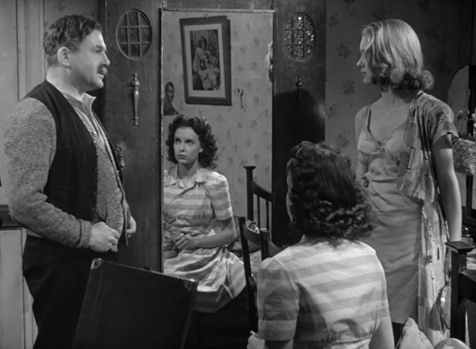
A typical British family becomes our anchor and Hamer is constantly drawing the story back to them. The husband is a generally benevolent chap content with his morning newspaper and the breakfast at the kitchen table. He’s remarried to Rose (Googie Weathers), a former bar hostess, who is not altogether horrid, but there’s an undercurrent of this being a marriage of convenience — at least for her. It becomes most transparent in her sometimes callous dealing with the step-children.

Two daughters, one dutiful the other blonde and bodacious, when it comes to the boys, and a young son bent on getting some extra spending money to buy a new mouth organ. She doesn’t seem to have any maternal concern for them even as she dutifully runs the house.

The question remains how these seemingly disparate strands might possibly be tied together. But this is a day in the life long before the Beatles ever cornered the market. We come to understand It Always Rains on Sunday is this type of story. It readily covers the beats of the city with all its shadings. This is the joy of the picture, especially all these decades later. It envelopes us in the highly colorful world of the East End, with its smells, markets, fish shops, and pubs.

The local policeman, Inspector Fothergill, goes about his usual business, making his rounds, followed by a cheeky journalist ready to pounce on a scoop. He’s looking for any news on Swann that might be of interest to him.

The best human interest story of the movie is actually behind the scenes romance. Because, upon meeting one another on the set of this picture, Googie Weathers and John McCallum would fall in love and get married soon thereafter. Their union lasted over 60 years, well into the 21st century.

The crucial reveal is that the current Mrs. Sandigate knew Thomas Swann in her previous life. Now he comes calling for a favor since he has nowhere else to turn, setting up a chilling reunion. For now, all we have is in front of the camera. It certainly heightens the available stakes as she harbors the wanted man, and he looks to coax her to remember the former life they had together. It’s obvious the situation can only end in some form of tragedy.

Simultaneously, one of the local gangsters, the angular-faced Mr. Hyams, checks in on one of his game parlors and offers a job then flowers to Doris Sandigate — claiming there are no strings attached though she unsure — he’s just feeling charitable.

Coincidentally, he also catches wind of some roller skates on the market, but he’s already had his hand in fixing the local fights. The dirty money is already being siphoned off from somewhere else. His generosity continues when he donates a large sum of money to the local gymnasium to counteract his shady dealings. One questions the state of affairs when we must turn to criminals as a primary source of charity.

In another vignette, a record store shopkeeper is caught kissing with one of his pretty clients, this time Vi Sandigate, who can’t stay away from any handsome face. He dishes out a pair of mouth organs to keep the blackmailing tykes quiet — including Vi’s baby brother Alfie. They proceed to stomp around town to the tune of “Colonel Bogey’s March.”

The music store owner’s wife Sadie is not stupid. She arrives at the local bar one day to let him know definitively, she’s walking out on him. In response, her weak-willed philandering husband goes scampering after her. Far from feeling like a sordid love triangle, it’s a pointless mess with at least two out of the three lives ruined for good (if not all of them).

Implicit to the movie is this context of a Godless nation. At least no one goes to church or has the normal Christian view of the world you half expect in mid-century Britain. However, given the context of the hell they went through during the war (and even after), I’m not sure the change is unwarranted.

One resident yells at the boys to pipe down with their infernal racket because they are desecrating the sabbath. Then, we see the priest running the orphanage in another scene. But these are isolated almost unimportant moments in a broader narrative.

it always rains on sunday 3.png

Otherwise, this world feels devoid of such religiosity. Maybe it’s simply from coming from an American perspective, but in films of the 40s and 50s, there’s a commonplace aspect to God in some way, shape, or form. Here such ritualism feels almost absent, if not done away with altogether. If nothing else, it does speak to something about our characters and the lives they lead.

It’s based on currencies of love and money. But everyone seems dissatisfied and always longing for something better. And to be completely clear, there is reason to gripe with the world set before them. America, more than possibly any nation, could recoup from the war without a physical need to regroup. Britain did not have such a luxury.

And while the police chase after a fugitive across brick-paved streets, train tracks, and train yards, not unlike the pursuit of Harry Lime, it all feels indicative of a broader problem. I’m not sure if we ever get to it. We are left with a climax and a conclusion that’s stirring enough. But the tale nevertheless leaves so many of its narratives in a state of indefinite suspension.

A lot like life, we do not know how or where they will fully resolve themselves. This illusion is powerful. Not only that, the stories extend outside the confines of a film, but also a happy ending, as it were, is not going to be handed to us blithely.

In short, It Always Rains on Sunday deserves to be named among the best of British noir alongside titles like Odd Man Out and Brighton Rock. The key comes with integrating the everyday occurrences with the criminal element. It makes us aware of how closely related they are. It’s pointless to try and pull them apart.

4/5 Stars

A Walk in The Sun (1945) with Dana Andrews and Company

a walk in the sun 1.png

Opening as it does with the cover of its source material, A Walk in The Sun makes itself out to be a bit grand and simultaneously undermines a certain amount of its ethos as a gritty war picture. Is it a fallacy to think a book can never capture all the textures of life? Does the same hold true with film? I’m not sure.

Regardless, the story is set in 1943 in Salerno, and, keeping with this novelistic form, an all-knowing narrator (voicework provided by Burgess Meredith) gives a brief word on each of the soldiers who will walk through the frames of the film. Some of them are quite familiar.

The real opening of the action feels a bit like further delay tactics. We are on the loading dock of a troop transport. The side has yet to go down, and the assault has not started. We are forced to wait in this pervasive dourness fashioned for the soldiers out of the cinematic mise en scene.

It’s our first indication of what this film will be about, and yet it concerns itself with the interims and the in-between-times when men wait for what’s next. The nervous chatter of the men matches the nervous new sergeant who is meant to lead them. Already we have some internal conflict with everyone unsure of what is ahead.

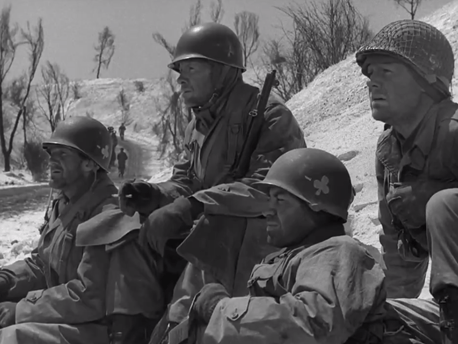
It feels a bit like D-Day, but this is Italy. Instead of meeting steep opposition, they take the beach relatively easily, entrenching themselves and waiting. Their most mettlesome member (Dana Andrews) never said a truer word when he notes, “you can’t fight a vacuum.” All there is to do, for the time being, is dig in.

Their subsequent mission is to blow up a bridge and take a farmhouse. Simple enough. For the conventions of a movie narrative, it makes following the action lines quite efficient. Except, A Walk in The Sun is rarely about its objective, until it finally is. In other words, it takes so many meandering trails and paths, riding conversations to the eventual outcomes.

Robert Rossen’s script is probably too self-aware and witty for a fox hole, but this is Hollywood, after all. At any rate, it ably captures the nervous ticks — the repetitions making up human speech patterns. We have catchphrases. Norman Lloyd comes to mind (“You guys kill me”) as the company’s wry misanthrope, observing the world around him, drolling on about some future battle in Tibet to end all wars.

A jocular Richard Conte seems to relish the chance to run off his mouth as the talkative Italian-American, Private Rivera, always up for razzing his buddy and touting his own exploits as a gunner. There’s the ubiquitous nature of cigarettes or “butts” on the warpath, looking particularly anachronistic in the hands of a G.I. played by Sterling Holloway. Lloyd Bridges is one of the staff sergeants and an imposing fellow but the real center, equal parts cynical and indomitable, is Andrews as Sergeant Tyne.

a walk in the sun 2

Of course, in the army, it’s not always the most capable soldiers who are calling the shots. Between wounded superiors and casualties, this mantle falls on Sergeant Eddie Porter (Herbert Rudley), an indecisive brain with little practical military experience. The prevailing question remains, is he going to crack under pressure?

Certainly, a lot happens in the ensuing scenes, however, what feels most pertinent are the aforementioned lulls because a majority of our time is spent passing time with the soldiers. In these interludes, the narrative is intercut with song and score while being lent an introspective edge thanks to Meredith’s constant omniscient input. Here again, is this trace of self-importance cropping up.

However, A Walk in The Sun settles into something genuinely compelling as we realize we are getting the alternate portrait of war. Lewis Milestone chooses the theatrical nature of all the G.I.s crammed together in the frame just as his lateral shots capture the minimal action setpieces at their most dynamic.

We observe the shades of insubordination and passive aggression in the chain of command, a result of the lack of confidence in superiors. This is further compounded by lapses in judgment and real-world miscues, like forgetting your only pair of field glasses back down the road. It’s not so much atmospheric or authentic as it gives a sense of the personal truths of war. It brings the war picture down to ground-level, to its most intimate and idiosyncratic. In other words, it’s the epitome of human.

They must leave their wounded along the road to be picked up later. The sound of planes overhead is an infantryman’s worst nightmare. And still, they bide their time. Each man’s mind becomes distracted by anything but the war. They reminisce about Norman Rockwell’s paintings and the future of the covers of Time magazine.

Maybe it’s someone recalling their favorite records from Russ Colombo or Bing Crosby. The fat life would be getting The Andrew Sisters autographs and playing music all day long. For his part, Sergeant Ward, a farmer by trade, can’t stop thinking of nice, juicy apples, nowhere to be found in an arid environment like Italy.

During one telling interaction between an Italian-American soldier and two native Italians straggling through the countryside, I couldn’t help thinking this would have never happened with Japanese-Americans in Japan. In fact, the irony is that the all-Nisei 442nd Unit was also stationed in Italy on their way to rescuing The Lost Battalion in 1944.

There might be a single instance of heightened conflict in A Walk in The Sun; it’s when they come upon an Axis armored car and proceed to blow it up. But these types of moments are dealt with quickly, and the film sinks back into tentative homeostasis.

a walk in the sun 3

We can easily condense the narrative by jumping to the final push in realizing their mission. It’s relatively straightforward. We know what they need to accomplish, but the execution and the synchronization are key. It feels unnecessary to expound upon the results in great length. It’s about what you’d expect from an all-out ground assault. Of course, there’s a cost.

More intriguing is a fabled backstory to A Walk in The Sun. Fresh off his own military service and already a prolific journalist and screenwriter in his own right, Sam Fuller brazenly lambasted Milestones’ picture for its fictions even as he praised the earlier All Quiet All The Western Front. Because it is true the film from 1930 is a crowning achievement in pacifist cinema and a tour de force for the director.

Certainly, juxtaposing the final images alone, All Quiet on The Western Front goes out unsparingly. The full brunt of the gut-punch is felt as we see how much war has ravaged humanity. Its successor does not elicit the same guttural response. Then again, to parry Fuller’s point, it might be safe to concede its primary intentions were of a different nature altogether.

It becomes even more compelling to consider a brash young Fuller’s statements in lieu of his own forays into war pictures. He had several actioners of note including The Steel Helmet, which is easy to tie to A Walk in The Sun.

This earlier film perhaps is wordier — the characters mouths are filled with plenty to go on about. However, where I feel they can be linked together is through this sense of utter disillusionment with war. These are not career soldiers driven by dreams of valor and accolades in the service of their country.

Certainly, they are human. They have these kinds of thoughts too. Most of the time it’s idle chatter. It’s the mundane moments in-between where they are just people in a soldier’s uniform. What becomes apparent are their preoccupations, fears, and foibles, cutting through their daily existence. It comes down to survival.

Again, A Walk in The Sun might be a tad verbose and a bit too manicured and manufactured for a wheeling-dealing future maverick like Fuller. What it doesn’t sell us short on is the reality of wartime conflict. It’s not a pretty or mythic business between the gods. It’s brought down to earth into all our messy human concerns.

The message it preaches implicitly feels sharply antithetical to typical propaganda pics. It lives out apathy and levity as much as bare-knuckled heroics. Somewhere in the middle of it all, we’re provided some essence of what war truly is.

3.5/5 Stars

Objective Burma (1945): Errol Flynn During Wartime

objective burma 1.png

It’s nearly ubiquitous for all the old war movies to open with an instructive title card supplying some context and placing us in the scenario at hand. While not the apex of visual storytelling, it does serve a concrete purpose. Objective Burma is, of course, about the Burma campaigns — the toughest road — opening a corridor that had to be opened. It proved to be a combined operation across the spectrum of Allied forces, and the first ones to go in were the paratroopers.

This is where our specific story begins. It must be noted the events have been conveniently recast and, therefore, the history books were rewritten for the sake of Hollywood convenience. At first, you assume Errol Flynn might be a Brit until you realize all his crewmembers are tried and true Americans. And he’s one too.

From then on, we know where our picture stands. In fact, everyone else — aside from a Chinese ally and their native guide — American. Two personal favorites would be the ever-wise-cracking Richard Erdman (who passed away in 2019) and George Tobias, always good for a couple of jabs at his mother-in-law. Look close enough and you’ll even pick out a young Hugh Beaumont while veteran actor Henry Hull plays an Ernie Pyle war correspondent-type.

I find the script, penned by Ranald MacDougall and loaded with witticisms, useful in building unique voices all throughout the company, even offsetting all the typical wartime shop talk. The idiolect of each is conveniently differentiated so even in the melange of personalities, we get a flavor instead of a muddy amalgam of white noise. It serves the picture well, especially due to its substantial running time.

The terrain is fittingly immersive, but sometimes it feels that instead of finding the action within the environment, the story is content in simply being a nature tour, moment by moment. It remains some small comfort having James Wong Howe. His work in transforming Los Angeles County Arboretum and Botanic Garden into the miry underbrush of East Asia is quite the feat. One is reminded how Sam Fuller turned another section of Los Angeles — the grounds of The Griffith Observatory — into Korea for The Steel Helmet. In both cases, it works.

Their first task is to take out an enemy radar tower, and it couldn’t be easier. They quite literally catch the Japanese out to lunch and calmly mow them down after their forces have fanned out into position. It’s a bit like a video game, if not like shooting fish in a barrel.

Surely the rest of the movie cannot be this easy even as it remains flippant toward the enemy, continually referred to pejoratively as “Japs” or “Monkeys. It’s too true. Their subsequent air pickup has to be aborted due to imminent enemy forces, and Captain Nelson (Flynn) splits his unit up to find a new checkpoint. Though disoriented, his command is held together. The other contingent is not so lucky with only a few stragglers making it back unscathed.

One of the mortally wounded, cradled in the arms of his buddy, says he’s never seen anything like it. It was a slaughterhouse. The Japanese were waiting for them in a clearing and mowed them down. Later, when the remnant tries to recover the rest of the dead, they realize the maimed bodies of their comrades carved to pieces, all but unrecognizable, if not for their dog tags.

It’s this brand of sadism that makes antipathy toward the Japanese enemy that much easier. It’s not an out and out lie. We know these types of despicable practices took place in service to the radicalized nationalist ideology. When men become so arrogant and callous, their capability for evil only intensifies.

What is problematic is not that the enemy is all but faceless; it comes down to the same issue of mowing down the Japanese earlier. There is a double standard we often hold ourselves to. It’s another incongruity. Consider the fact that, in real life, prisoners taken by the Allies would have been executed in order to move forward with the operation. It makes pragmatic sense. In the film, they’re conveniently killed off in the opening skirmish so there’s no need to show the messy business. To be clear, it’s not a matter of making allowances for the enemy but realizing the shades of gray in our own conduct.

At the midpoint, one cannot repudiate the fact our covert operatives are no longer the chipper aggressors soaring toward victory. Their ambitions are now forced to become even more elemental. Somewhere around this juncture, Objective Burma ceases to be a war movie and becomes a fraught survival story.

The straits are dire. They’re all but trapped, surrounded by enemy forces patrolling on all sides, and the grind — not to mention the loss of their comrades — is grating on them. Morale begins to crumble as fatigue sets in. The bottom line is that they never cave completely in either regard, despite the hardships in the jungle.

One might chalk it up to their leader, and it’s true Flynn commands with a strong yet compassionate fortitude. He cares deeply about the well-being of his men, even as he stands unswervingly by the orders they’ve been designated with. Upon receiving word to disregard all previous orders, they get ambushed in a clearing over a supply drop and vaguely chart a course north to a destination they don’t know. They’re following orders, clinging to the hope of some deliverance. But even if there is help coming, the enemy knows their position.

In one final stand, they entrench themselves on a hilltop, sweating it out into the wee hours, surrounded by a maze of tripwires to keep the Japanese at bay. They are outnumbered, the enemy cloaked in darkness, looking to overtake their position. I cannot think of anything more terrifying.

Their triumphant stand is made in an instance of clarity, thanks to a flare lighting up the night sky, and a barrage of grenades they’re able to lob at their retreating enemies. The film see-saws back toward one side decimating the other. It’s a pulse-pounding final setpiece still underlined by this sense that the “good guys” won so all is well. Understandably, in 1945, there need not be any ambiguity to the moral gradient.

The story of why Flynn found himself only playing soldiers and never actually being one is a subject of some personal mortification. His laundry list of ailments went beyond his bad heart to purportedly include tuberculosis, malaria, and back problems. True to form, the studio kept it all conveniently on the down-low — quelling any leakage as to maintain the image of their masculine star. Of course, it created a bit of dissonance in the wartime years.

One of the curious results was the observation Flynn was never more malleable and easier to work with than during his wartime cycle of films. Whether it was his embarrassment in not being able to fight himself or his drive to do his part in Hollywood’s propaganda machine is not clear; although it may have been some of both.

Because, in 1945, I hesitate to say Errol Flynn was on the way out, but certainly with the end of WWI,I and the beginning of the post-war years, it was a time meant for a more youthful batch of matinee idols and stagy rebels meant to reflect changing times.

By 1959 Flynn would be dead, his career plummeting to its conclusion due to hard drink and hard living. For now, he still fit the ideals of the generation but even that had to be doctored by Tinsletown to hold onto the last vestiges of one of the 1930s preeminent action icons. The war changed everyone. Even Errol Flynn.

3.5/5 Stars

Quai Des Orfevres (1947): Directed by Henry-Georges Clouzot

Quai Des Orfevres 1.png

Unearthing Quai Des Orfevres is a glorious discovery of post-war French cinema. Because Henry-Georges Clouzot is always a man I heedlessly clump together with Jacques Becker when it comes to French film history. Not because of an immediate connection but, on the contrary, it’s the very thinnest of labels.

They both have a handful of superior films to their names and yet never seem to reach the full-fledged prominence of some of their countrymen as far as their bodies of work are concerned. If we want to oversimplify the situation we have Jean Renoir on one side and then the youthful revolution of the Nouvelle Vague with the dawning of the 60s thereafter.

And yet, to acknowledge Clouzot was considered by Alfred Hitchcock himself as a true rival for the title of “The Master of Suspense” seems a heady admission. On the laurels of Wages of Fear and Les Diaboliques alone, there is some merit in the conversation. Most agree Psycho was a reaction to the latter film (since Hitch could not get the rights).

One area Clouzot can claim primacy over Hitch is the fact he personally wrote most, if not all, of the screenplays he directed. Quai Des Orfevres benefits as much from his writing as anything, yet another robust entry to his filmography. Though it came to fruition only after a substantial ban from the French film ministry.

That is a story worth dissecting on its own because his previous picture, made in occupied France, was all but bankrolled by the Third Reich. You can imagine that this didn’t sit well with people. It’s a fitting anecdote for the very reason that the war no doubt affected his characters as much as it affected him.

The France featured here is not quite the post-war Vienna of The Third Man, but it’s merely a hop, skip, and a jump away. For that matter, it evokes a bit of Carol Reed’s world from Odd Man Out too.

In this case, Clouzot’s focused on a group of performers at some shoddy theater house. It’s hardly glamorous entertainment, but for all those involved, at least it’s a meager living. If nothing else, they look after their own.

Right in the thick of it is vivacious stage talent Jenny Lamour  (Suzy Delair) and her balding husband, Maurice Martineau (Bernard Blier), who can constantly be found accompanying her on the piano. Between her shameless flaunting and flirting and his burning jealousy, it proves to be a highly volatile cocktail.

The conflicts, in this case, are not political or instigated by human avarice. They are of a more personal nature, between a husband and wife in turmoil. We do not know their history, but if the scenes around them are any sign, they are coming off hardship, with the war being indicative of their entire life together.

A local photographer, named Dora (the glamourous Simone Renant), who has some business with Jenny, is also paid a visit by a hunched, beady-eyed creep who happens to have quite the portfolio of financial holdings; it’s the only reason any girls give him the time of day. In this instance, he brings a pretty young thing to pose for him.

In some twisted way, it’s mutually beneficial. They want his influence and he wants pretty girls to dominate. One bystander notes, if Brignon (stage actor Charles Dullin in his final performance) were poor, he would have been in prison long ago.

Despite the generally disquieting nature of these themes, it’s even more sobering to admit, somehow it still remains timely as a portrait of men in power using their capital to lord it over the opposite sex. There is social repugnance, but they label him a “dirty old man” and leave it at that.

What’s more, Jenny Lamour is going to see him; it’s good for her career. Maurice despises the smutty scuzzball and with his anger justified for once, he goes to confront him at his hotel room; the staff and manager catch the tail-end of his outburst.

This only matters in reference to the film’s crucial inciting incident. Brignon is murdered one evening. It’s not unfamiliar or unexpected. Still, keeping the details murky for those unfamiliar with the story is in the best interest of all. But, needless to say, law enforcement gets involved when the body is found — his apartment in disarray.

This, of course, cuts out a large swath of the story. Because it is not a mystery. This is a character study. The man who winds up drawing out the performances and reactions from everyone else happens to be the curious Inspector Antoine (Louis Jourvet). It’s true colorful detectives are a mainstay of the police procedural with Columbo, courtesy of Peter Falk or even Alistair Sim’s Inspector Cockril, from Green for Danger, springing to mind.

In fact, in the preliminary stages, the inspector can be found poking around the musical hall, not unlike a Columbo — unassuming and out of place — and trying to decipher what he has to work with.

Later, in his office, he helpfully summarizes a deposition for Mr. Martineau to save the man time (He’s the most obvious suspect if it’s not apparent already). Bringing in the rest of his person’s of interest takes up the remaining daylight. It’s only a matter of time before a resolution is met. The Inspector’s generally insouciant when it comes to the daily grind, though he’s deceptively astute when it counts most.

Quai Des Orfevres 2.png

To reiterate, the story is not necessarily about the tautness of the plotting. There are too many questions. Not enough answers to loose ends. How does Jenny remain so even-keeled while her husband is the one sweating it? The alibi Maurice makes up is so flimsy. His case lines up so serendipitously with a bank robber who stole his car the same night. Why does Dora involve herself? But all these details are almost beside the point.

We know the perpetrator almost before the case has started — we think — and at any rate, it’s before the inspector comes on the scene. To evoke Columbo again, this is not so much a mystery as much as it is a “How’s he gonna catch them.” But in this version, it’s not an elementary case of fun and games.

Rather, a statement is being made on the state of law and order. Where the police search after a murderer of a despicable man because it is there job. Because these are the working-class folks. Criminals, in one sense of the word, yes, but also victims in another.

The characters and their dynamics become the seat of all the intrigue. The decisions they make. The logic they use. What they choose to disclose and hide from one another. Jenny, Maurice, Dora, they all are involved, but it’s more complicated than surface-level perceptions might suggest.

Even Inspector Antoine, the film’s most splendid creation, as realized by Jouvet, is given the benefit of a personal history outside the context of the film. His beloved son, from his time abroad in the French colonies, is the love of his life. The case almost seems like an unwanted distraction from what he’d really like to be doing. It’s this insightful brand of humanity found within most of the characters transforming Quai Des Orfevres into a truly singular take on the conventional crime thriller. The final shots sum up these ideas in succinct terms.

4/5 Stars

The Story of G.I. Joe (1945): Robert Mitchum Shows His Chops

the story of gi joe.png

Charles M. Schultz was one of the great memorializers of WWII in that he kept events like the D-Day invasion or the art of Bill Maudlin in the public forum for as long as Peanuts was syndicated. If I remember correctly, it was also through his strip I first became aware of the name Ernie Pyle.

It’s not too far of a stretch to think the former Sergeant Schultz (who saw action in Europe) eventually saw this movie because, before he ever penned a frame of Peanuts, this was the first homage, not necessarily just to Pyle, but also to the soldier that he chronicled for the folks at home.

We jump right in with a truck loaded with men being hauled to the front where the action is. Not only do they pick up a furry passenger, they take on a civilian as well because Pyle (Burgess Meredith) is intent on getting as close to the epicenter of the action as possible. He wants material bearing an authentic mark.

The man who agrees to let him aboard is none other than Robert Mitchum, their scraggily and sleepy-eyed leader, who never seems to be perturbed. As a related consideration, it becomes intriguing to chart his early career with all his bit parts as soldiers finally leading to a heftier role. These included his blink and you’ll miss it cameos only a couple years prior, in everything from The Human Comedy to Corvette K-225, and Cry Havoc. What followed were stepping stones like 30 Seconds Over Tokyo and finally, The Story of G.I. Joe.

It doesn’t feel so much as we are seeing Mitchum transformed into his future persona. He appears unflappable as much off-screen as he is on. It’s more so a matter of Hollywood realizing who he was and what compelling qualities he brought to the lead. Certainly, he’s masculine; he has a handsome, distinctive face, but there is something more to him. It’s the suggestion of not caring about any of the distractions around him. This underlying coolness in any manner of situations. It all catered to his future stardom at RKO.

But back to the trenches. Although we get Artie Shaw out on the front, the production also ladles on the dramatic diegetic scoring a little too thickly when they experience their first casualty. We know the import of the moment only to get clubbed over the head with it just to make absolutely certain it didn’t escape us.

Otherwise, the film causes us to brush up against the elements in an immersive even dispiriting manner courtesy of cinematographer Russell Metty. You begin to live vicariously through the platoon and understand their daily struggles. This is The Story of G.I. Joe at its most effectual, succeeding in precisely what Pyle was striving to do. We get a tactile sense of his life’s work as a war correspondent.

Day after day, company C, 18th Infantry makes its way across Italy. All sorts of men, big and small, fill up their ranks. Freddie Steele, coming off his intriguing turn in Hail The Conquering Hero, is no less watchable here as a grizzled soldier intent on finding a victrola so he can hear his son’s voice. It’s the sole shred of home, keeping him sane in the chaotic world he’s subjected to day in and day out. Many of the others aren’t so lucky, more or less lacking his indefatigable brand of grit. The mental toll is high for all parties.

I know it’s set in a different country but with the rubble, bell tower, infantry, and tanks rolling across the grounds I couldn’t help thinking of the midsection of Saving Private Ryan because The Story of G.I. Joe, as one of its precursors, documents the life of the common man as well as the skirmishes he’s subjected to.

They systematically take down a pair of Germans lurking behind the debris to clear the area. Later, one of their company (John R. Reilly) has an impromptu wedding ceremony in the bombed-out premises — Pyle being tapped to give the bride away. A little over a decade later Stanley Kubrick would end up marrying his wife who appeared in his seminal war movie Paths of Glory. William Wellman cut out the middle man, so to speak, by having his wife (Dorothy Noonan Wellman) in an uncredited role as the nurse who weds the G.I.

Without resting on their laurels, they are tasked with taking a new position. It’s ruled over by a monastery — a religious relic the enemy have conveniently fashioned into an impregnable observation post; they won’t give up the ground. What’s worse, the hesitant allies won’t bomb the building. We’ve reached an impasse until human life finally takes precedence over maintaining ancient artifice. As it should.

the story of gi joe 2.png

The holidays come, and it’s a drab affair, men clinging to dreams of the family and food back home — from turkey to cranberry sauce. Of course, they aren’t granted such amenities where they are so all they have are their private memories. In between the barrage of artillery fire, one of the company’s members (Wally Cassell) picks Pyle’s brain about his time in Hollywood. For a brief solitary moment, he drools over starlets like Carole Landis; it removes him from his current reality of muck and mire.

Christmas might be a complete wash if not for their commanding officer scrounging them up some turkey and a bit of wine as they slog through the perpetually miserable conditions. They manage a bit of yuletide cheer in spite of the bleak landscape around them.

It feels less like propaganda in the typical sense or at least it’s all the more effective as an empathy picture, putting us in the boots of the soldier so we get a feel for the lives they lead out on the front. You begin to realize how extraordinary they are in their very ordinariness.

Ernie Pyle winning the Pulitzer is like a drop in the can. It feels so inconsequential in the face of all they have gone through together, but the beauty is Pyle has gone through it with them. They have mutual solidarity in the thick of this continual absurdity.

On Christmas evening, after a typically long day, he sits down with the leader of the pack and pulls out one last turkey leg from under his jacket.  He picks off any fuzz and partakes in the delicacy. It’s a much-appreciated gesture. They trade off taking swigs of Italian moonshine scattered with conversation.

The most revealing revelation is the sergeant’s agitation of having to write the families of every young man who gives his life. In some queer way, he feels like a murderer, and it rankles him to see every new fresh-faced recruit who has no idea what he’s gotten himself into. There’s a helplessness in him and yet it’s his job to keep them together, so he does the best he can under the deplorable conditions.

the story of gi joe 3.png

This scene might be the most meaningful impression we get of Mitchum as a human being because he’s a believable G.I.b but here we see his honest chops as an actor. It’s no coincidence that this is the picture helping him transition to stardom.

The ending continues in this manner, offering up a melancholy denouement that feels like one of the more candid depictions of wartime reality. Where the war rolls on no matter what happens. It cannot wait up for the story of a film to catch up.

Of course, Ernie Pyle would never live to see the finished film, which he actually served as a technical advisor on. He was too busy continuing his work in Okinawa where he was killed by an enemy machine gun. It’s a tragic detail, but it makes The Story of G.I. Joe all the more pertinent. If anything, it gets the truth behind Ernie Pyle’s writing, both his life and his death, right. It is the ultimate tribute to the man who tried to get the stories out of everyday heroes back to the reading public sitting in their living rooms.

3.5/5 Stars

“I hope we can rejoice with victory but humbly. That all together we will try out of the memory of our anguish to reassemble our broken world into a pattern so firm and so fair that a never great war can never again be possible and for those beneath the wooden crosses there is nothing we can do but perhaps murmur: Thanks, pal. Thanks…”

~ Burgess Meredith as Ernie Pyle