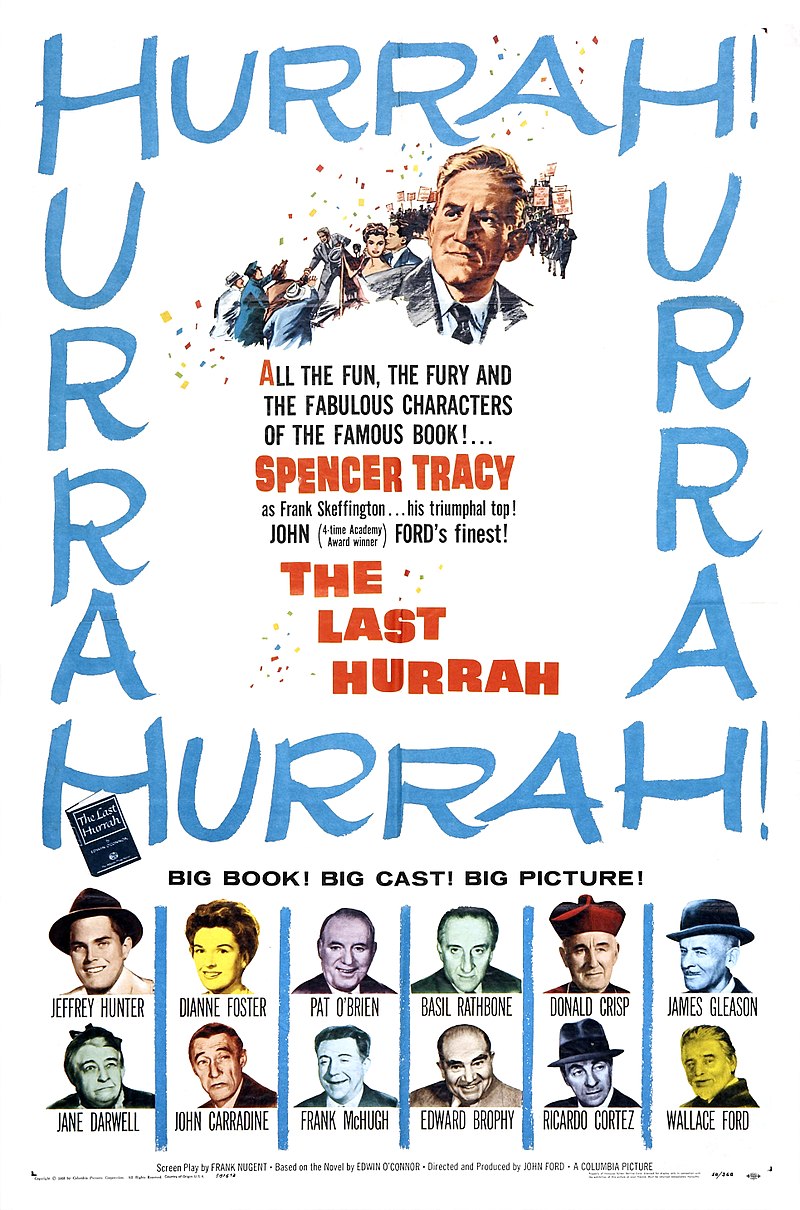
Double Feature: Requiem for a Heavyweight (1956) and (1962)

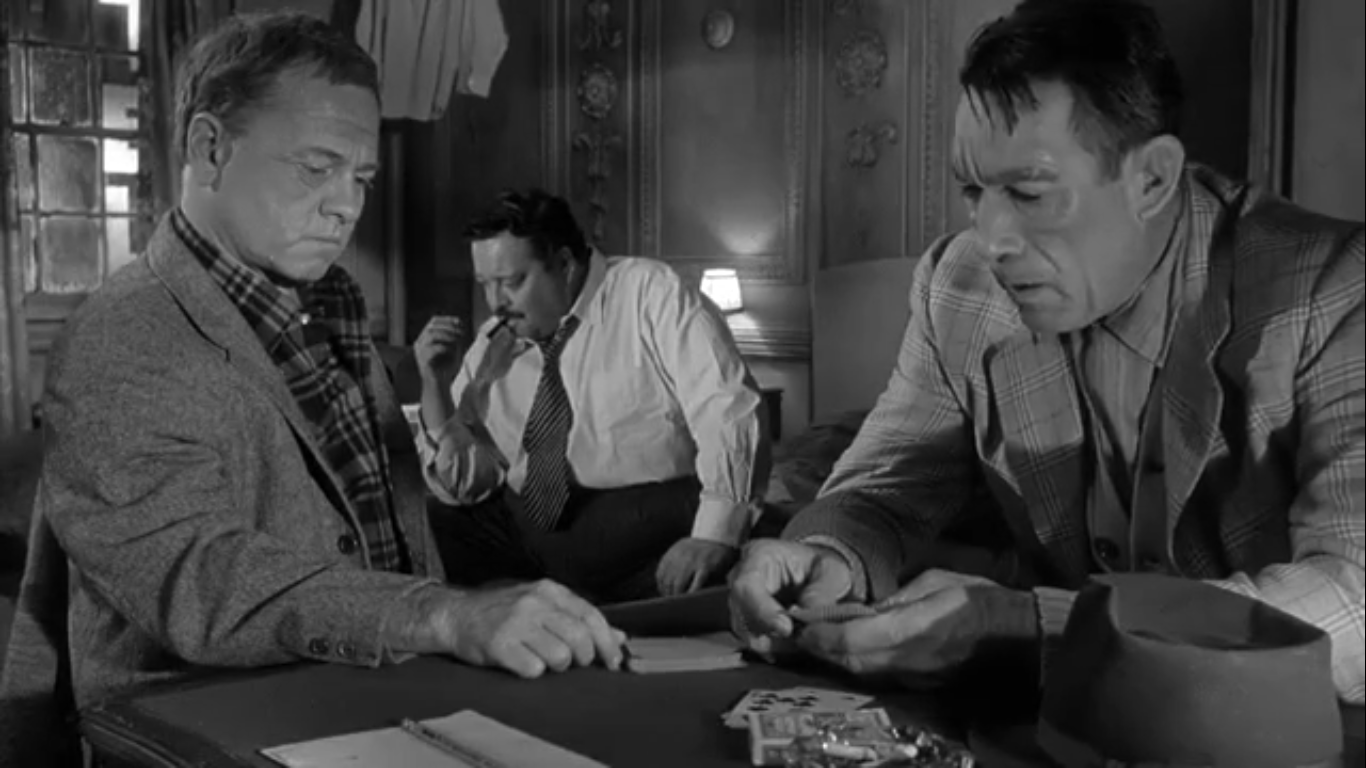
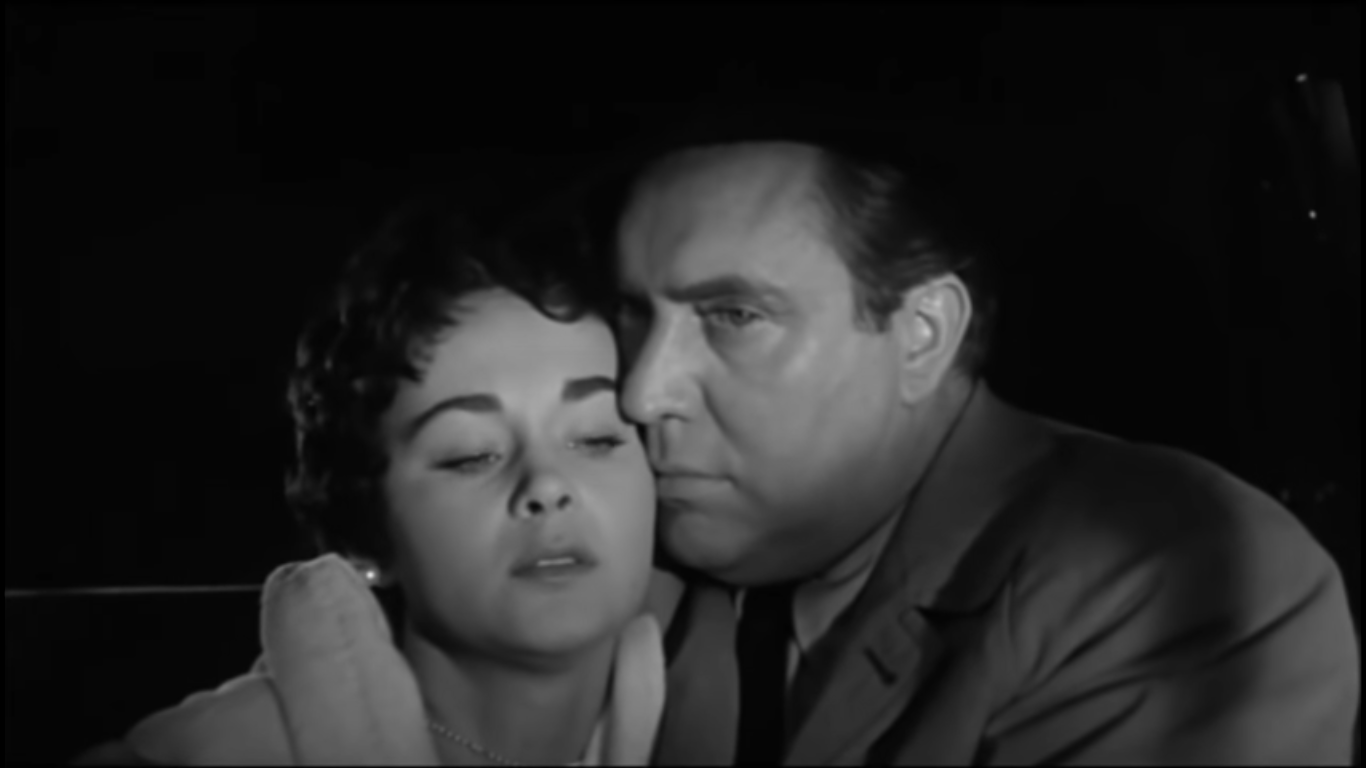
Rooney, Gleason, and Quinn in the film version

Requiem for a Heavyweight was an early live television production that was so popular it garnered a feature-length adaptation a few years later.

It’s relatively easy to see the merits in both because although they enlisted the same director and screenwriter, the actors and the medium do quite a lot to make them feel textured and different. I couldn’t necessarily pick a favorite.

The original is bare-boned but intimate, and there’s a darker more caustic theatricality to the film version. It really comes down to preference. Here are my thoughts on the two versions:

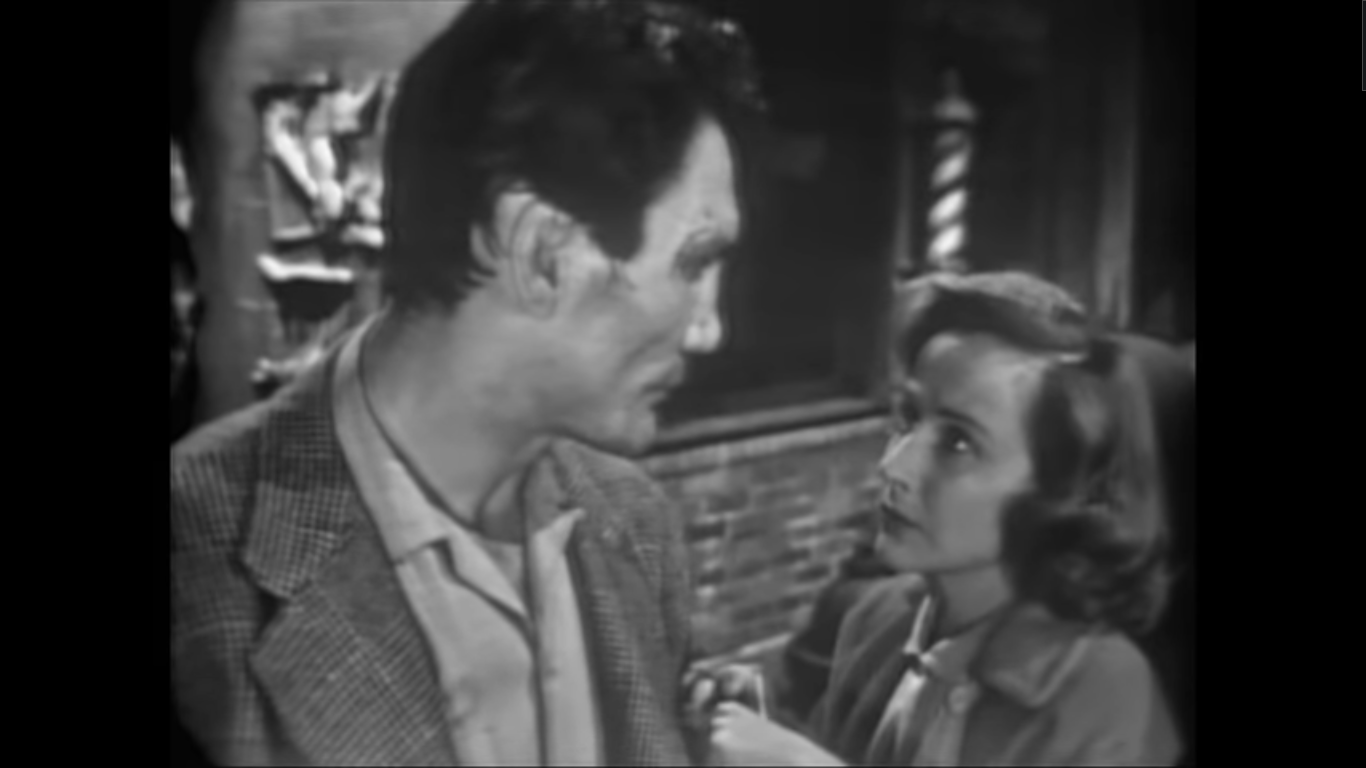
Palance and Hunter on Playhouse 90

Requiem for a Heavyweight (1956)

This early showcase of the Playhouse 90 live TV format introduced the fragile and most sensitive version of Jack Palance. He’s a hoarse and husky-voiced journeyman boxer named Mountain McClintock.

One of his greatest claims to fame was that he was almost heavyweight champion of the world. But he’s most proud of his integrity. In 111 fights, he never took a dive. That includes his most recent bout. He got pulverized and still managed to make it seven rounds.

Between Rod Serling’s script — the writer called upon his own memories as a one-time boxer — and Palance’s endearing performance, you have the emotional heart of the tale. Because Mountain is proud and principled in his own way. He didn’t get into fighting to murder people or make a ton of money. It’s just the only thing he’s ever known — the only thing he was good at — and he took solace in it.

Now he’s on the way out. The Doc says he’d better quit before he earns more permanent damage. Somehow he’s impressionable like Lenny in Of Mice and Men. Despite his physical presence, he needs protectors and others to look after him. There are certain people in his corner he deeply trusts just as all his words and pearls of wisdom come from the mouths of others.

The real-life familial bond of Keenan and Ed Wynn is equally key because they play the two most important people in Mountain’s life. There’s Maish, his manager, who’s currently in a bit of a bind. Then, Army, his cutman, who’s more resigned to the inevitably around him. He’s seen a lot.

Keenan can exhibit a kind of gruff intensity role to role, but since I know Ed Wynn as such a jovial figure, I almost didn’t recognize him. Both of them exhibit an earnestness in their respective parts. Maish has compromised his integrity and now feels bitter toward Mountain, a has-been fighter he sunk so much time and money into. How is he supposed to get any recompense?

Mountain looks a bit pitiful walking into a job agency with no work experience and a kisser as roughed up as his. However, the attendant behind the desk (Kim Hunter) sees his goodness and drops her business spiel for something more personal.

She responds with heart, tracking him down to his favorite watering hole and vowing to try and help him resurrect his life. The bar serves as the graveyard and burial ground for all the hard-up fighters who wither away inside their own heads. Mountain might easily be headed toward this end and worst yet, he might lose his dignity in service of Maish’s debts…

We must remember what the medium of television accorded the makers. Visually, they were working in fuzzy black and white with tiny boxes of composition but also a more familial viewership. This ultimately impacts the creative choices and the film takes on a hopeful final note.

It’s fascinating to watch the production since it was being taped live and throughout I only noticed one flubbed line rushed over by a mother on the train. Otherwise, around all the orchestrating and simple sets, there’s very little taking us out of the story and disrupting the primary performances. Given the restraints, it’s quite a startling achievement.

3.5/5 Stars

Quinn and Gleason

Requiem for a Heavyweight (1962)

Ralph Nelson was the same director who filmed the original TV version. Instantly the big screen is more cinematic thanks to the subjective point of view in the ring. We see a solemn Jackie Gleason, the yelling Mickey Rooney, both standing just outside the ropes.

Then, the announcer calls out the name Cassius Clay, and there he is in all his youthful glory beating back the camera! It does feel like a bit of a gimmick, but then we finally see the face of Anthony Quinn battered and bruised and we have our movie.

I assumed the older Gleason was Army and having just recently been introduced to what Mickey Rooney was capable of in The Comedians, it seemed only too reasonable that he would play the more mercurial Maise. How wrong I was.

Quinn seems especially old for his part, but it’s intriguing to see how his character mythology was altered to fit his own Hollywood legacy. Mountain Rivera came out of New Mexico, he ditched school in the 6th grade (instead of 9th), and he’s been fighting longer than Palance’s counterpart. Still, like Palance, Quinn’s larynx sounds like it’s been beaten out of him positively eviscerated by his years of punishment in the ring.

The movie’s milieu is not too far away from The Hustler (also featuring Gleason) or the sensibilities of a TV-to-film scribe like Paddy Chayefsky. The jump to film also means it owns a sharper even more melancholic edge than its small-screen counterpart.

Maish (Gleason) is tailed and tracked out into the ring reminiscent of The Set-Up, and he’s threatened into paying up on his recently accrued debts. He needs the cash fast. Later, he willfully gets his dwindling prize fighter drunk. It’s all part of a ploy to keep him from getting a real job so he can earn money as a sideshow attraction in some trumped up wrestling showcase.

This time it is Julie Harris, who is tasked with helping Mountain turn a new leaf in his life. Her character never shared consequential time with Maish in the original version, but here they share dialogue on a stairwell adding an alternate dynamic to the picture. He says, “The rich get richer and the poor get drunk.” Mountain’s finished, and he’s skeptical of any do-gooder looking to peddle their charity. The edge of cynicism is deeply entrenched.

Also, in the previous rendition, there’s this happy denouement as we recognize Mountain entering into his post-boxing career. It’s possible for him to make something of himself and gain fulfillment beyond the ring by imparting his knowledge to younger generations.

Here it almost feels like the movie has been shifted and the focal point is Maish. Because he is the person who must come to terms with what he has done by totally denigrating Mountain for his own desperate gain.

When he’s marched out into the ring, totally racialized and trivialized, it sears with a level of pain television would have never dared. And we realize all the self-fulfilling prophesies have come true. Mountain really has become the geek, a kind of carnival show attraction, but it’s not out of his own desperation. He’s doing it for someone else. Mountain willfully subjects himself to the ignominy, but Maish is the one who must live with his conscience. I’m not sure what’s worse.

3.5/5 Stars

The Harder They Fall (1956): Bogey’s Last Film

As the saying goes, the bigger they are, the harder they fall and Toro is a big man. He’s a sculptable Argentinian bumpkin who will quickly be fashioned into a killer in the boxing ring. Rod Steiger plays Nick Benko, a shifty promoter looking to groom his latest talent and set him up for success. It has nothing to do with actual training.

First, he calls in a veteran sportswriter to stir up some good publicity. Things have changed. No one wants to fight anymore when they could go to college. It’s more like playacting than an actual sport. You’ve got to give the audience a show and that means publicity (and staging the results). Eddie Willis (Humphrey Bogart) has long been concerned with holding onto his self-respect in the journalistic profession. Now he’s finally caved to Benko’s racket because he wants to get ahead for once in his life. His coffers aren’t as full as they could be.

It becomes increasingly apparent, in spite of all of Nick’s high words and cajoling, he’s obviously no good. Eddie knows what it all means as he watches a dirty fight and the ensuing repercussions of each subsequent business agreement. Nick’s operation is taken care of by an army of hoodlums. All these faces pop up here and there, making appearances and showing up ringside or in hotel rooms. Bogart joins the king of the creeps by pocketing 10% for himself if he can keep them out of jams.

While Bogart carries the picture, I couldn’t help thinking about some of the intriguing sparring partners he has — not the big names but the likes of Harold Stone and Edward Andrews. Because the movie feels like an analysis of the entire ecosystem and why people do the things they do. An added tinge of realism is given by real-life fighters like Jersey Joe Walcott and Max Baer.

Jan Sterling appears in a role reversal playing the principled wife watching her husband slowly slip away from her as he’s swallowed up by his all-consuming job. At first, I was intrigued until she slowly evaporates in a part that does not avail her the opportunity to do anything substantial.

It’s necessary to take a brief moment to mention screenwriter Budd Schulberg too. Like A Face in the Crowd, it’s a story documenting the perils of television and media in general. Toro is no Lonesome Rhodes; he’s a bit of a stooge, but the men behind him are able to orchestrate everything to easily manipulate a response out of their target audience, and it’s all for monetary gain.

I’ve always heard mention of the collaboration between Schulberg and Spike Lee focusing on the bouts between Joe Louis and Max Schmelling. Although the younger director vowed to get the production made after his friend’s passing, it’s still reassuring to know Schulberg already had a portrait of the boxing world put to the screen. Not surprisingly, The Harder They Fall is unsentimental, and yet it still manages to humanize many of the fighters as victims of a system.

What strikes me about the film is what it decides to spotlight and what it leaves to our imaginations. We know the reason for all these back parlor deals — it’s to prop up the gambling — but the movie rarely pays this much heed. It’s simply understood. And also the movie focuses on the families and the business outside the ring. It’s as if everything between the ropes is already a foregone conclusion, and it is, so we hardly need to focus there.

Instead, it’s the drama beforehand: Chief (Abel Fernandez) won’t take a dive because his family is in the audience. Then, there’s Dundee (Pat Comiskey) an old journeyman dealing with head trauma from his last fight. He’s barely ready to face off against the new challenger, and it doesn’t bode well. Still, each fight paves the way for Toro’s chance at the champion (Max Baer) and some real promising money. This is what Nick has been striving for from the beginning.

There’s an abrasive whininess to Steiger’s whole performance that keeps everyone on edge. I can understand any complaints of the actor being too intense, but he’s also one of the primary attractions because his unscrupulous fixer personifies everything crooked about the racket. It’s always gangsters or businessmen in suits with all the power, but Steiger effectively makes these skeevy mugs into slimy parasites. He feels like a new, different brand of antagonist, and frankly, he makes Bogey and the audience sick. The movie wouldn’t work without him.

It comes off as one of the most bloodthirsty and unsentimental boxing pictures of the era because they let this boy get absolutely butchered in the ring — building him up — only for him to get annihilated. And it’s all for money.

By the end, it’s almost ludicrous. Like A Face in the Crowd or even Network. Toro gets his brains beat out; he’s fully commoditized and then sold like chattel, and he comes out on the other side with nothing and no one to look after his interests. He’s been cast to the pavement as disposable goods.

Eddie holds the only grain of decency left and with his moral character eroding, he must make the decision to finally stand up for something greater. It’s a nervy performance from Bogart because it never resorts to bravado or any grand showing. He’s an older, wearier man now, and it shows.

Cancer would take his life far too soon, but by relinquishing the gangster roles, he offers up a different side of himself that we could not have expected without an earlier movie like In a Lonely Place. He really is a great one. I realized part of the reason I was reluctant to see the picture was that I didn’t want to acknowledge his career actually came to an end. Even if it was well over 70 years ago, I still miss Humphrey Bogart to this day.

4/5 Stars

Touch of Evil (1958): The Mad Genius Orson Welles and Janet Leigh in Hotel Rooms

On even a cursory level Touch of Evil has all the ready hallmarks of Orson Welles the auteur. Working in tandem with veteran Universal cinematographer Russell Metty (they had collaborated before on The Stranger), they develop the director’s preferred mise en scene from claustrophobic Dutch angles to deep focus photography.

It’s no minor coincidence that these all feel like a holdover from his days of Citizen Kane and The Magnificent Ambersons with the late Gregg Toland. Of course, in that time the industry had certainly changed and with it Welles’s place within the establishment.

His most recent film before Evil was the globe-trotting European crime picture Mr. Arkadin and besides the tinges of noir, and an earlier appearance by Akim Tamiroff, it feels closer to the template Welles would have to vie for in the future.

Because Touch of Evil was his last opportunity to make a purely Hollywood picture and he had A-List talent like Charlton Heston and Janet Leigh, and the studio’s technicians, albeit with B-level material. What’s more, he was initially given artistic control over the production which in Welles’s case felt like an utter necessity.

What happened after principal photography was a different story and remains a part of cinema lore up there with the long saga involving the likes of The Magnificent Ambersons director’s cut and the completion of The Other Side of the Wind.

Touch of Evil was altered by the studio and released in 1958. About 40 years later an in-depth memo written by Welles was rediscovered and used to create a cut that purportedly more closely aligned to his artistic vision. Thankfully, we get to see that today. And yet Welles would never work through traditional studio means again.

He would scrounge up joint funding across Europe where his name carried a cachet and in spite of lower budgets, he was able to make a handful of uncompromising films like The Trial and Chimes At Midnight that showcased his skills and gravitas. Touch of Evil is often put up as a convenient sign post to mark the waning of classic film noir. It would also spell a kind of end for Welles also.

Taken in the context of all the Brobdingnagian and Shakespearian heavyweights he played across his career, it’s remarkable to observe what confidence Welles seems to have in himself as a performer. Certainly we marvel at how he could embody Charles Foster Kane at the age of 25 — a man beyond his years — or capture the devilish and brash bravado of Harry Lime in The Third Man.

But Hank Quinlan is yet another iteration of his performative legacy in front of the camera. The man is portly and haggard with Welles taking on ample padding and prosthetics anticipating his future girth. The camera is perfectly angled to make his look all the less appealing, augmenting his size on the screen as he dwarfs the frame.

However, more crucial than that, he is a cruel, racist, and vindictive man in power who feels a need to tip the scales in his favor. In other words, Welles is not squeamish about looking terribly flawed and Quinlan is an iconic example as he looks to plant evidence, frame, and murder all in the name of his perverted sense of truth and justice.

I am always intrigued by this idea that as modern audiences we should come into contact with older cultural texts because they can somehow speak into our present moment and our cultural blind spots. However, we also have the benefit of seeing where our predecessors may have missed something.

Touch of Evil has become more complicated and muddied by its show of inadvertent racism, which was commonplace at the time. It begins with Charlton Heston who plays a stalwart and conscientious Mexican narcotics agent named Miguel Vargas who has married a lovely American woman (Janet Leigh).

The white actor’s complexion and hair are darkened, and he wears a pencil mustache. Meanwhile his wife while no wilting wallflower is slightly patronizing and culturally inept when she comes in contact with anyone else within the Mexican community. One wonders how she fell in love with this man if she doesn’t speak any of his native language and lacks sensitivity. Was he just a pretty face?

Unwittingly it hearkens back to the earliest precedence of the Production Codes forbidding any kind of miscegenation or romance between the races onscreen. Because Leigh and Heston are both white, it proves less disconcerting to a majority white audience. And while Vargas is a harbinger of justice, all the Latino actors who round out the world are characterized as stereotypical thugs and reprobates.

This is not so much a criticism as it is a reality worth noting. Because it potentially clouds the fact Welles fundamentally changed the crux of the source material. By changing Heston’s character from a white lawman and moving the milieu right on the border, his intent is clear. His direct aim is to tackle racism and interracial relationships and tension head on. It creates the soil for much richer thematic ideas and more pointed drama.

Also, the headlining relationship feels less landmark compared to something contemporary like Island in The Sun or The Crimson Kimono; there are also secondary characters who function similarly although they have far less screen time.

Marcia (Joanna Cooke Moore) is the daughter of a local businessman who is killed with his mistress in a car bombing that opens the film so spectacularly. It comes out that she was in the company of a Mexican shoe clerk (Victor Millan) who Quinlan quickly pegs as his primary suspect.

This whole sequence is one of the crucial inflection points of the movie as Vargas recognizes the character of this man he’s dealing with. Because he is meant to be an observer of American tactics — a nation prided on its sense of moral uprightness and democracy in defense of the little guy.

What he sees instead is a man blinded by contempt and prejudice for the Mexican minorities. It’s a terrifying and powerless place to be in as Quinlan’s all but ready to railroad the man. He’s not merely paternalistic or a big brother trying to impart his ideals; he’s unequivocally xenophobic and distrustful.

Behind the scenes the corrupt detective begins sowing lies about Vargas as well using his influence to fabricate his involvement in the local dope racket. Where he goes next is even more incorrigible, but in his own twisted sense of justice he feels completely justified.

One aspect of the film I failed to appreciate before is how it exhibits a precursor to the Bates Motel in Alfred Hitchcock’s Psycho. Leigh’s part is fairly peripheral as she spends the majority of the picture stuck in a half-empty room at the Mirador Motel.

Dennis Weaver behind the desk shows up as a jumpy eccentric — not a prototype for Norman Bates per se — but he has his own paranoia about women. He doesn’t want to be caught making the bed anywhere near her, and he’s easily intimidated.

He’s the least of her worries as some local thugs led by “Pancho” (Val de Vargas) take over the lobby desk and pile into the room next to hers with a certain foreboding. She is alone and isolated as her husband continues with his work; it leaves Mrs. Vargas vulnerable. What ultimately happens to her isn’t as shocking as Psycho, but the danger is palpable as she is ambushed and set-up as part of a broader conspiracy.

The films opening sequence, filmed in Venice, California, is the one for the textbooks, and it rightfully gets its plaudits. There’s an ostentatious bravura around the unbroken 3 minute take that still exemplifies a converging of artfulness and narrative storytelling.

However, this time around I was taken with how Welles’s films his showdown with Akim Tamiroff slimy local crime boss. Not to belabor the comparisons because it’s nothing like the shower sequence, but so much is done through the the impression of images cut together with music, and this juxtaposition between everything in the scene compounding into a stylized and still egregiously violent end.

It galvanizes a drunken, tottering Quinlan as a premeditated embodiment of evil. Opposite Welles the movie has some fairly unexpected cameos from the likes of Zsa Zsa Gabor, Mercedes McCambridge and certainly Marlene Dietrich who plays a prominent role in the picture as a raven-haired Mexican gypsy no less.

Joseph Cotten’s even featured as a misanthropic coroner; I kept on missing him because there’s no vanity to the role. Momentarily I even mistook him and Mort Mills since they both wear glasses, and I misplaced the timber of his voice. No one sound quite like Cotten.

There’s no great substantive thing I can say about all these folks creatively except how evident it is what a vast network of friends and admirers Welles cultivated. True, he had such an inertia around him, drawing other people into his orbit, but as confounding as he was as a person and a maestro, it shows a love of creative people who in turn loved him back.

I’d like to believe this to be true, and I’ll always return to the postscript of The Trial where he lists off all his players as if they’re in a close-knit theater troupe. That’s the energy you get from it.

If I’m to be honest Welles is always larger than life and given the misgivings there are about Heston and Leigh, Joseph Calleia has the most compelling and unsung role in the picture. I don’t recall seeing him this way before and he’s a bit older; he’s not exactly senile, but he’s obviously deferential to others, especially Quinlan.

He likes to be associated with him, to be seen with a man who always gets his mark and who has such a stirling record. Thus, he would never wish to take him down or believe there was any foul play involved.

Still, as much as any of Vargas’s revelations break his heart, he’s not callous or unfeeling. The worst that can be said of him is that he’s pitiful, weak even, and when he’s asked to implicate Quinlan, he’s forced to make a moral judgment.

The corpulent cop goes out as merciless as ever espousing his vitriol against  guardian angels and starry-eyed idealists, who wind up being worse than crooks. At least you can always do something with crooks like put them away to rot in jail.

To the very end he shows his distaste for real democracy, not ruled by fear and white supremacy but rather governed by justice for all and due process of law. One imagines that there are whole treatises here pertaining to the unscrupulous tactics of J. Edgar Hoover and the red scare hysteria during the Cold War, but I’m not the one to write it.

Every time I watch a creative endeavor by Orson Welles his stamp is all over it and whether for good or for ill, his work is inimitable. Try as they might, no studio and no one could take that away from him — at least not in its entirety. The singular, mad genius always bleeds through even when tampered with. He was one for the ages.

4/5 Stars

Orson Welles: Mr. Arkadin (1955) and Compulsion (1959)

Mr. Arkadin (also known as Confidential Report) has the abundance of canted angles and striking visual flourishes one usually attributes to the films of Orson Welles. It also boasts his ever more disorienting sense of space and shot-reverse-shot even as the international cast, financing, and locales outside the prying eyes of Hollywood map his labyrinthian journey to continue making movies.

His entry into this particular story is a small-time smuggler, Guy Van Stratten. There’s something abrasive and unplaceable about Robert Arden. It’s rather like when non-English-speaking filmmakers will cast an American, and it sounds tone-deaf in a picture that otherwise feels normal. Regardless, he receives a tip-off from a dying man, and it sends him in search of something…

Arkadin, an aristocratic Russian, as played by Welles, is really another version of Harry Lime from The Third Man with everyone talking about him and wanting to meet him as he remains just out of reach and hidden behind a mask at a masquerade party.

Stratten has ambitions to get in with the daughter of the enigmatic Arkadin. Welles casts his wife Paola Mori to play his carefree young daughter (albeit dubbed). In the end, the gruff answer-seeker winds up globetrotting after Arkadin, hired by the man himself to see if he can dig up any dirt on him. It feels like the ultimate act of paranoia if in fact a double-cross isn’t in order.

While his accomplice Mily (Patricia Medina) is out on her own, he crosses paths with the likes of Michael Redgrave, an eccentric pawnbroker providing some leads, and then Akim Tamiroff who is also somehow implicated in a web of conspiracy.

Plot notwithstanding, Mr. Arkadin feels increasingly emblematic of what Welles’s cinema became after his earlier successes. He was scrounging around for funding, cobbling together films all across Europe with a cadre of international talent, and increasingly drastic creative choices.

It’s evident in a picture like The Other Side of the Wind generations later, which historically took years to be completed long after Welles’s death. It does feel like every subsequent picture after Kane continued to be a monumental struggle, and it’s some small marvel that each one got made for any number of reasons. Add Mr. Arkadin to the list.

It’s not explicitly Shakespearian, but it has a certain gravitas blended with the cheap smuttiness of noir street corners and pulp novels. We are treated to a Wellesian Christmas party. The focal point is a rather perturbing visual carousel full of jocund gaiety and lurking menace capped off by a band playing “Silent Night.”

Ask me to say exactly what we’ve watched with all the various plot details, and I don’t dare try. But it bears the markers of Welles, full of flourishes and at one time both mystifying and inexorable. It’s easy to criticize the flaws, but Orson Welles hardly makes mediocre pictures. There’s always a gloriously messy vision behind them. It’s the same with Mr. Arkadin.

3.5/5 Stars

Compulsion (1959)

I never thought about it much until his passing but there’s something about Dean Stockwell in his young adult years and even his later roles that’s reminiscent of James Dean. He’s not emotive in the same way as the method actors; he’s a button-upped clean-cut version with his own neuroses.

They have some facial similarities, true, but it comes down to something more difficult to pin down when it comes to actors, whether eccentricities or the bits of business that draw in your gaze so you can’t help but watch them at work. With Stockwell, it’s something he was able to draw upon later in his career when he had a reemergence and a renaissance; acting seemed fun again.

In 1959, James Dean was gone for a few years already and Stockwell was still closer to the beginning of his career than the end. He plays one two young men who have read too much about Nietzsche’s superman believing themselves to be above the law.

Bradford Gilman is his counterpart a disingenuous sociopath who knows how to throw his charisma and influence around. Both Arthur and Judd are different than normal college students, but Arthur knows how to play the game. Then, when they’re alone in each other’s company he’s able to dominate the other boy as they play out their sick fantasies.

In one moment, stirred by his accomplice Judd takes a girl to observe some birds — it happens to be near where a boy was killed — the bird calls in the distance play against the increasingly uncomfortable conversation. He plans to force himself on her, and though he tries he cannot bring himself to go through with it. There’s a sliver of decency still left inside of him.

Soon enough he and Artie are brought in for questioning by E.G. Marshall, a calm and collected beacon of authority. I’ve never seen The Defenders, but I could see him carrying it off with a level of pragmatic stability. Artie’s the one who walks in the room and tries to flip all the power dynamics. He pointedly stays standing as Marshall questions him sitting down. He’s confident enough not to be thrown off his game though he implicates them soon enough. They must vie for their lives in the courtroom.

Jonathan Wilk shows up sooner or later. Orson Welles hardly needs a great deal of time to put his mark on the picture. His haggard magnetism holds its own against anyone as he takes in this most harrowing case defending two privileged boys who were unquestionably implicated in murder.

The ensuing case comes with a myriad of perplexing caveats. Judd was coerced into trying to attack the girl, Ruth Evans. She later takes the stand in his defense. Martin Milner is an up-and-coming newshound who at one time was classmates with the boys and soon desires to watch them hang. His feelings toward Ruth are very protective.

Wilk is a bit of a moral cypher: He’s atheist who has the KKK showing up on his lawn blazing a cross as an act of intimidation. He also flips the case on its head with a rather unorthodox and risky decision.

He looks to appeal to the so-called Christian community of the court reminding them that cruelty breeds cruelty, and charity and love are what they have devoted their lives to. When he admits to a lifetime of doubt and questioning, it doesn’t necessarily mean he’s reached any final conclusions. It makes me appreciate him more for his moral transparency

Given the fact Welles was probably playing his version of Williams Jennings Bryant, a man who was also featured in Inherit The Wind portrayed by Spencer Tracy, it’s hard not to connect the two pictures. Their subject matter is very different and yet they both dwell on these ideas of religious beliefs and how narrow-minded societies can use them to stubbornly maintain their agendas. However, they can also be exploited.

For this reason, Compulsion is a fairly perplexing courtroom drama for the 1950s; between the performances of Stockwell and others it offers up something persistently interesting.

3.5/5 Stars

Crashout (1955): William Bendix and Arthur Kennedy in a Jailbreak Noir

If you wanted to string together a noir cast with the quintessential mélange of rogues who never quite made it to bona fide A-lister status, Crashout more than fits the bill. It’s a different kind of mission movie for a different kind of mission and a different brand of protagonist. They’re all prison convicts.

William Bendix and Arthur Kennedy both have fine pedigree. It’s a bit unfair to Kennedy because the Academy loved him — offering him 5 Oscar nominations — just never enough to ever bequeath him any hardware. Somehow, this snub alone makes him right at home in this company.

For their parts, William Talman, Marshall Thompson, Gene Evans, and Luther Adler are the kind of actors who eat these kinds of crime pictures for breakfast, and it starts with their faces. None of them are classic Hollywood handsome — even Thompson is a bit severe — but they’re invariably interesting to look at.

Cinematographer Russell Metty is more than well equipped to help instill the film’s grungy, sweat-caked aesthetic. We feel like we’re knee deep in all of their stink and squalor.  The crooked preacher among them, sent up for murder (Talman), baptizes a wounded man (Bendix) in the swampy hideaway they’ve staked out while waiting through the hysteria of the prison’s search parties.

It’s hard to know where the picture can go if they’re forced to bide their time for 3 days. Fortunately, the cast carry the picture as they rub up against each other only unified in their pursuit of self-preservation. Ultimately, they form a pact to retrieve Bendix’s dough, an alliance that’s easy enough to doubt the legitimacy of. Still, they don’t have much choice. They need money to live.

Much of the movie going forward is made by these standalone interactions with the general populous because they provide an added layer of humanity and tension to overlay the ongoing search for the fugitives.

Take for instance, when they call in a roadside visit from a rural doctor who gets pressganged into their little posse to service their injured member before being unceremoniously disposed of. Later, they roll into a dinner lodge like Bogart in Petrified Forest ready to terrorize some folks for clothes and sustenance.

There’s an exquisitely executed overhead shot encapsulating the dramatic tension of the scene when a pair of cops unwittingly pay a visit. They don’t know how close they are to their prey…

Between forcing themselves on a man’s wife and steamrolling a man in a car, there’s a level of ruthlessness that might be unanticipated for the era and yet for the initiated it’s not too surprising between genre markers like Dial 1119, The Hitch-Hiker, and Riot in Cell Block 11. Although Bendix had the earliest association with the genre with Alan Ladd in the 40s, his castmates were more than familiar themselves.

However, there are other more sensitive moments too. Thompson is befriended by a young woman on the train (Gloria Talbott). She’s just recently left her music conservatory, and she’s forthcoming and kind. They share her sandwiches and cups of water to go with the conversation. There is a sense we need this scene to diffuse the film momentarily.  Although even this brief hint of relief must be quickly stamped out. It cannot survive in such a picture.

There’s also the addition of Beverly Michaels. She’s featured in a far more angelic role especially if you’ve been conditioned by her eponymous turn in Wicked Woman. She’s not pleased to have her home desecrated by wanted criminals. However, Kennedy is the one man who reasons with her. Because he didn’t murder anyone and he has personality, they build a kind of rapport. Kennedy has his own moments where he feels warm and affectionate, hardly a hardened criminal. It’s like a prelude to his own destruction.

Two of the convicts almost maul each other to death in the living room, but this isn’t what does it. In fact, Gene Evans meets his demise in a manner in which took my breath away. Yet again we’re reminded it’s not a squeamish picture.

Crashout’s snow-powered finale isn’t quite the par de excellence of On Dangerous Ground or Nightfall (1957), but the persistent frankness of the material is something I still can’t quite shake. We often conflate the 1950s with a kind of Leave it to Beaver mentality (whatever that means), and yet watching something like Crashout is to come to terms with something about as unsentimental as they come. The 1950s aren’t always as innocuous as we’re often led to believe. Sometimes the decade seems more than capable of bludgeoning us over the head with a crowbar. Consider this a recommendation.

4/5 Stars

Russell Rouse: Wicked Woman (1953) and New York Confidential (1954)

Wicked Woman (1953)

There’s some instant shorthand at play as the titular woman takes a bus into town to set down some roots for awhile. It’s apropos given the salacious title and the opening ballad looking to capitalize on the first impression.

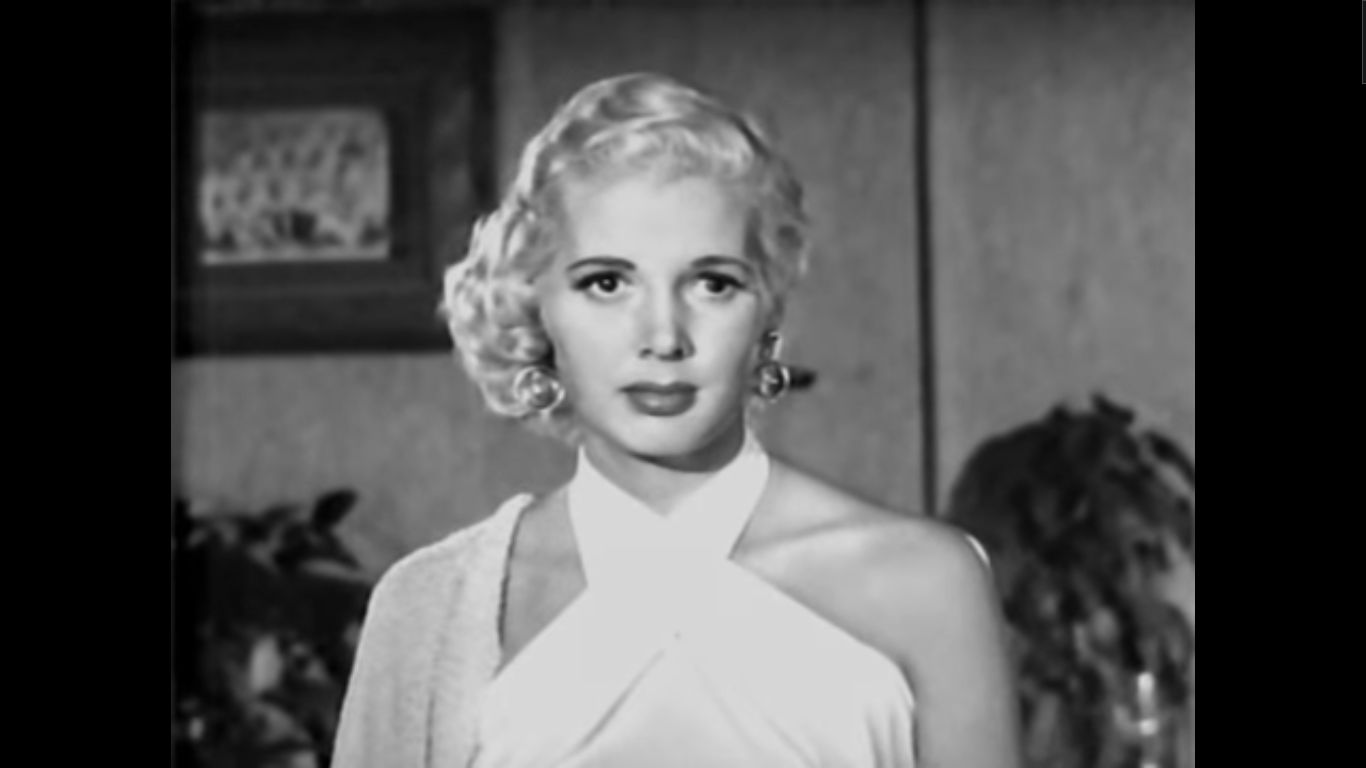
Beverly Michaels steps into view and does the rest, more than holding up her end of the bargain as the eye-catching platinum blonde, Billie Nash, a name made for this kind of trashy downbeat drama.

In truth, she comes out of the heyday of platinum blondes: the Monroes, Mansfields, Van Dorens and all their ilk. Still, there’s little chance of confusing Michaels with the others. For one thing, she only has a sliver of their fame, but also she’s such an individual beauty. Svelte with eyes that are dark at times almost sad and sleepy. They serve her performance well.

She checks into a local dump and with her payroll she’s can’t be too picky about her accommodations so she shovels out the dough to keep a roof over her head. It’s the kind of place where someone as pretty as her turns the heads of all the men. Across the hall is the small-time pipsqueak Charlie (Percy Helton) anxious to make her acquaintance. If she even deigned to address him, it would make his miserable day.

If you’re like me, you remember Helton for a cameo in White Christmas, maybe a stray episode of Get Smart, and of course, that wonderfully iconic hoarse voice of his. It’s almost like taking Mickey Rooney and putting him in Drive the Crooked Road, except this guy was always a bit player. Here he gets one of his biggest showings as a tiny, dismal runt of a man, and even he has pride and desires in life.

If there was any initial reluctance, Wicked Woman more than fits the bill offering up hot jazz and a wily woman who knows how to play the opposite sex like an instrument. It earns her a free meal and a laundry list of other favors. She doesn’t mind because this is the way the world operates. A girl’s got to get ahead any way she knows how.

It happens again when she signs on as a hostess at a local joint. She’s always sashaying and slinking around burning up the local establishments and street corners like red-hot coals. The first moment she sets sights on Matt Bannister (Richard Egan), she gives him the eyes. He runs the place with his hag of a wife. Already we know their marriage is instantly in jeopardy when Billie lands the job.

Later, during business hours, Egan lights a cigarette, takes a puff, and sets it down in her general vicinity. She gets the idea and takes a drag. In Hollywood terms, if this were a geometric proof, it’s basically the transitive property in action. It’s easy enough to put two and two together.

Like Brad Dexter, Egan has a bit of the physique and the piercing eyes perfect for an sleazy drama like this. It borrows liberally from the convention blending shades of Postman Always Rings Twice and Scarlet Street mashed together and made tantalizing thanks to Beverly Michaels.

The man and woman are soon caught up in a plot together and their mark is easy — her faculties all but deluded by alcohol — and she’s getting worse.  All they have to do is cash out on the business without her knowledge, and they can run off below the border, just the two of them.

But these kinds of sordid affairs always ratchet up the tension. That’s part of the expectation — part of the fun — and I wouldn’t dare spoil that. It strikes me that while most of the scenes have a clandestine intimacy, one of the film’s biggest moments turns confrontation into a public affair because everyone is in everyone else’s business. It goes with the communal showers and the nosy landlady.

These are pretty much the expectations of the world. It can only end the way it began with this sultry siren taking the same bus out of town with a one-way ticket to wherever. And the cycle begins again.

On a different note, the film’s star, Michaels, and writer-director, Russell Rouse, would get married soon thereafter and remained so until Rouse’s death. Fortunately, life didn’t imitate art in this regard.

3.5/5 Stars

New York Confidential (1954)

New York Confidential provides a bird’s eye view of the world of “the syndicate.” It’s a Naked City-type perspective with an impartial Voice of God providing us the context of the crime world calling the shots in the urban jungle. It’s not exactly a fresh premise since the decade engendered many such pictures.

What makes it mildly interesting derives wholly from the performances and there are some actors worthy of note. Although the movie itself always feels like it’s playing at a gangster movie — a narrative we’ve seen umpteen times before it was tackled so definitively by The Godfather.

Here we have Broderick Crawford and Mike Mazurki, even J. Carrol Naish, all playing their respective types in this world we’re probably already familiar with. It’s the milieu of the syndicate where organized crime and legitimate business have coalesced with the culture of the old country. Meanwhile, hits are carried out with merciless precision. It’s just another less sentimental side of the business.

When Richard Conte shows up there’s some real promise. The way he so smoothly mows down some thugs at the bar. It’s casual and self-assured for the era. It’s like no one can touch him.

Even as gang wars run rampant in the city, he’s too cool and calculated to get dirtied in the fray. He goes about his business, does his job well, and gains the trust of his superiors because he’s smart and charismatic. He also rebuffs the come-ons of his boss’s moll (a mostly underused Marilyn Maxwell). It’s yet another act of self-preservation.

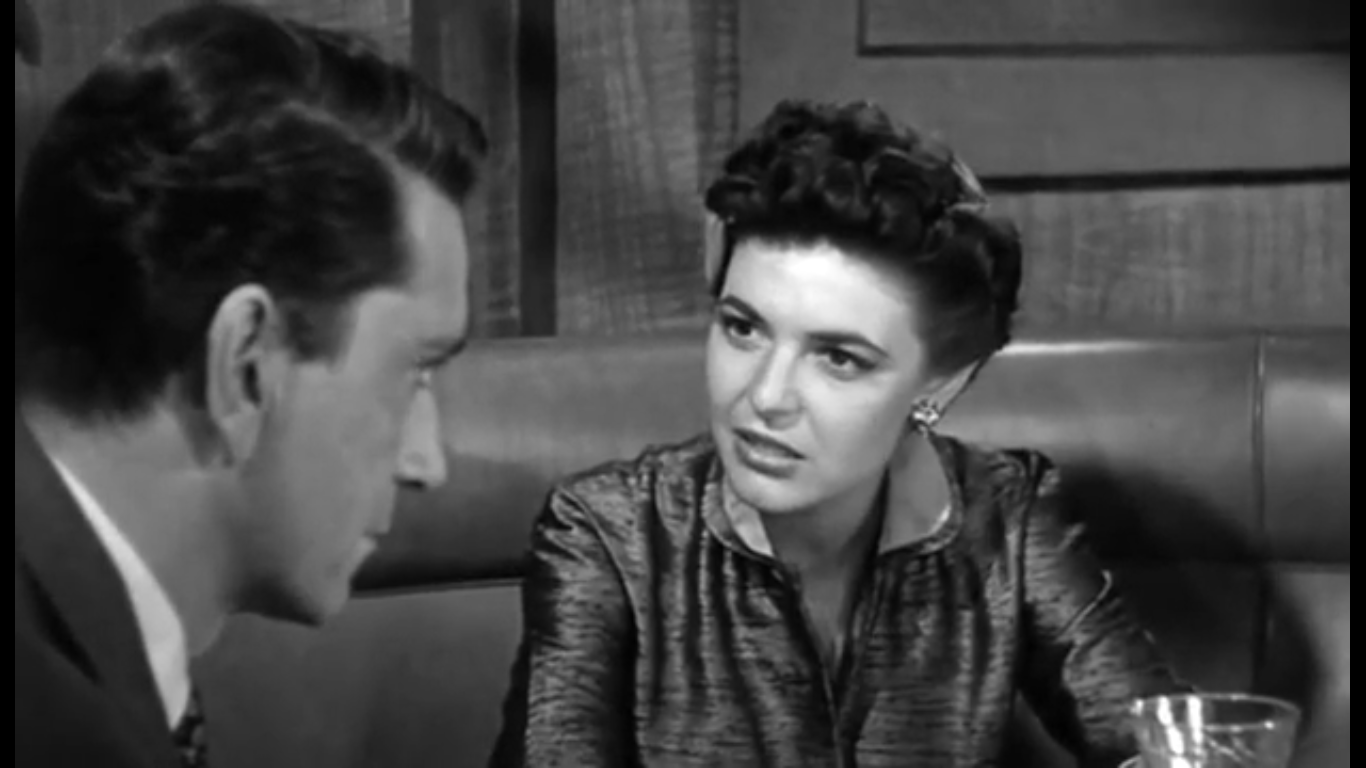
Then, Anne Bancroft shows up. She’s still an ingenue with breeding but also the spirit capable of clashing against her father’s own notoriety. He can never quite become respectable, and she must reconcile her affections for him while still loathing his brand of business.

Piety, decency, and legitimacy. These are the terms the movie must deal in because this is the world at stake. Father and daughter quibbling over blood money and splitting at the seams. Meanwhile, we sit by watching the story escalate. The paces feel mostly rote and all but inevitable. Again, the onus of the film falls on Conte, Crawford, and Bancroft as their dynamics give a human face and motive to a movie that otherwise feels mostly clinical in nature.

3.5/5 Stars

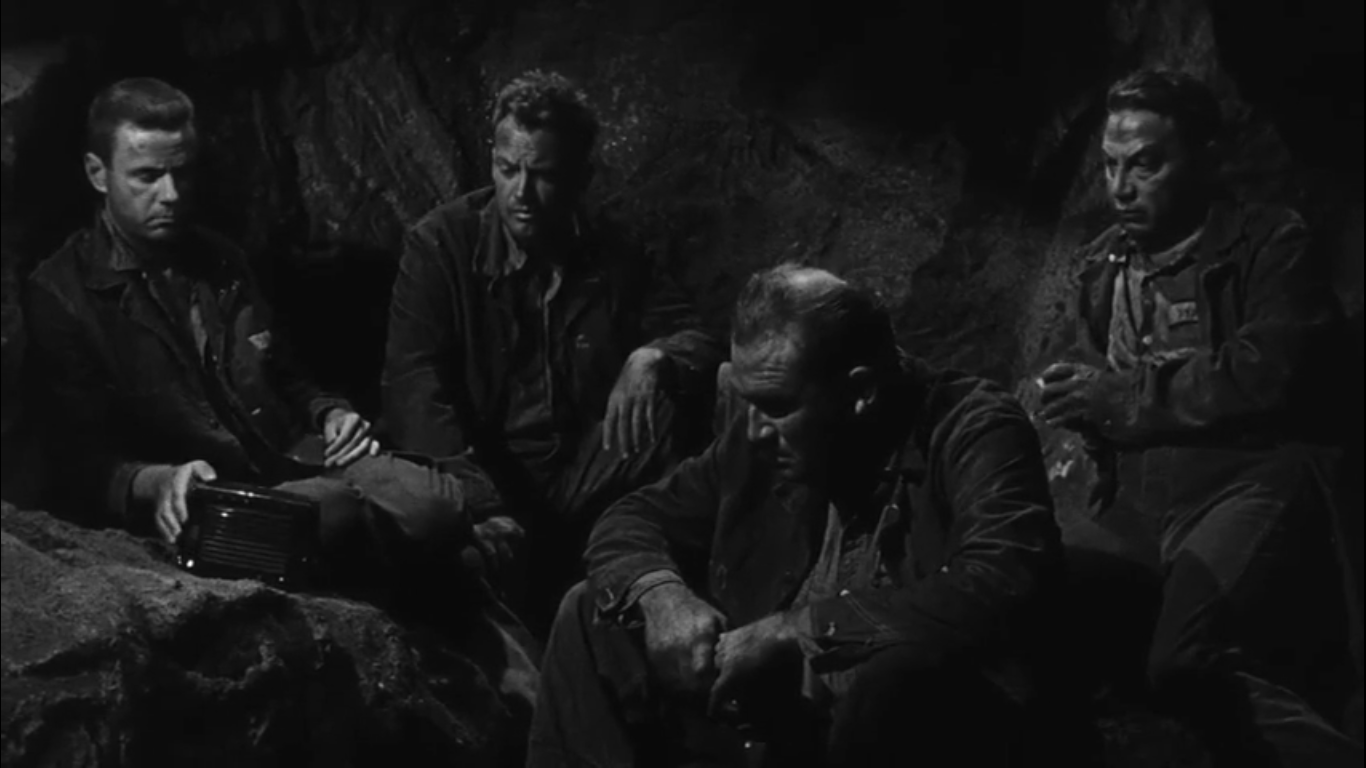
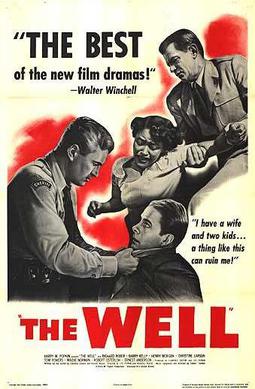
The Well (1951): A Noir about Racial Tension and Resolute Hope

The film opens when a little black girl named Carolyn tumbles into a well buried beneath some weeds. There’s a melodramatic handling of the material, but already we see something rather uncommon with the period noir. Normally black characters live on the periphery of film noir if they exist at all.

Here Martha (Maidie Norman) and Ralph Crawford (Ernest Anderson) reach out to the local Sheriff Ben Kellogg (Richard Rober) when they learn their 5-year-old daughter has gone missing. They become the emotional center of this local drama with greater implications. As an aside, it’s a pleasure to see Ernest Anderson once again.

Those who recall him in This is Our Life (1942) will remember him to be a performer of tremendous intelligence and dignity. It’s only a shame the impediments of prejudice meant he never had a more sterling career. This film acts as a small recompense.

Upon closer inspection, The Well has shades of some other movies like Captive City or Phenix City Story where there is an adherence to faux realism as we kick around the beat meeting people, and getting to know the world they call home.

It’s fascinating to witness how this inciting incident — the disappearance of little Carolyn — sets the story in motion with Russell Rouse and Leo C. Popkin slowly turning the screw. Because it’s true there’s something rather insidious about this movie causing it to wheedle its way into our psyches.

It feels more relevant and more compelling than many of the old procedurals because of the subject of the case. It’s not just about a crime, but it’s complicated and made more tenuous with this added layer of racial tension, a very real issue even today.

Being a lifelong MASH aficionado, there’s something pleasing about Harry Morgan playing a central role as mining engineer Claude Packard. It’s quickly corroborated that he may have been the last person to see the girl; he’s a stranger from out of town, and curiously enough, he bought her a flower before sending her on her way.

It doesn’t take a genius to put all the pieces together and the racial element along with circumstantial evidence quickly brings the out-of-towner under the observation of the police.

The rumors quickly make the rounds throughout the neighborhood. In one brief vignette, a group of black students sits at a library conversing about race prejudice and a white man accused of a crime against a black child. It’s easy to forgive the blatant quality of this scene because it feels entirely unique for the era. I’ve never seen a moment like this before. But it’s not just a matter of the film feeling ahead of its time. After all, a lot can happen in 70 years, and values can change, though many things like racism feel deeply entrenched.

Still, there’s a complexity to the film that feels quite groundbreaking with something to speak to our current moment. Rather like Sam Fuller’s The Crimson Kimono, it’s a film about race, but it takes a somewhat nuanced approach.

The dramatic situation is obvious. Here there’s a white man being held for a crime against a black girl. The added wrinkle is that he didn’t actually commit a crime, but that doesn’t impact how the execution of justice is perceived by all bystanders on both sides of the racial line. It’s so easy to buy the message, “You can get away with murder if you’re the right color” because we’ve seen it play out so many countless times.

It’s also true Claude’s uncle is the highly influential businessman, Sam Packard (Barry Kelley) who runs a local construction company. He’s prepared to pay bail for his relation regardless of guilt or innocence. He doesn’t seem to care what the man did even as Claude vehemently pleads his innocence. If you’ve ever seen Kelly in another picture, he slides so easily into this role accentuated by his corpulent build and a pair of beady eyes.

From the outside looking in it’s so easy to view this as a miscarriage of justice where the authorities are steamrolled and wealth and privilege are able to get a white man out of anything. We’ve seen this before too.

At this point, retribution is all but expected, and it escalates with each successive confrontation between the divisive factions of blacks and whites. Once a tipping point is reached it’s like a never-ending feedback loop descending into chaos and quickly stoking the fires of unrest.

It strikes me how the mob is always going after the individuals in an almost faceless fashion. And both sides do it. There’s never a familiarity. It’s always swift and unfamiliar. But this kind of violence and hatred only breeds in anonymity where others are dehumanized and not dealt with as other human beings. It makes it easier to disassociate and perpetrate acts of malice.

It’s easy to gather the rest of the film is paved with this kind of violence. A full-blown riot is set to blow up the town and overwhelm any semblance of law and order. A movie like this also shows how the borders around language were so contrived. So many words were banned from motion pictures and yet the N-word flies so easily. It always catches me off guard, especially if we’re used to the normally manicured veneer of Classic Hollywood.

There are so many moments I can’t forget, but most of them are small observations. Take for instance, once when a white officer has a black kid up against the wall; he’s battered and bleeding, and he’s one of the perpetrators.

It turns out he was brawling with five white kids who the officer didn’t find a need to bring in. He gets a look from his superior and proceeds to get reassigned to phone duty so another officer can take this battered boy to the hospital. It’s a moment like this encapsulating something damning about law enforcement and the wheels of justice.

Part of me was expecting the film to detonate. With everything we witness, it’s all but inevitable. I’m hesitant to admit it, but I almost wanted it to. Instead, we get something else that’s closer to what we need. It feels like a near-timeless denouement because I need it as much today as audiences did back in 1951.

It shows people trying to help each other and trying to patch things up and figure things out. This is the hard work of reconciliation that’s not glamorous or easily cobbled together in a few solitary moments. And The Well’s also not a cloying feel-good balm to make all the bleeding hearts feel their work is done. It can’t patch over all the lingering wounds and racial tension. Not even time has done that.

Still, even as I mentioned Kelley is so easily identified and cast as a villain, the film uses this to say something more. He’s no saint, but he’s also a human being.

Billy Wilder was apparently interested in bringing the story to the screen in some form. I can see the parallels between Wilder’s Ace in The Hole/Big Carnival and this movie. However, whereas Wilder’s penchant is always toward portraying opportunistic cynicism, here we see something vying for the communal good.

Because of course, someone finally stumbles across Carolyn and that well. The movie switches directions as quickly as it starts. The whole town including mean old Mr. Packard and the accused Claude rally together their resources to rescue that little girl because there’s a chance she’s still alive and that’s all they require to act on.

That little girl becomes so crucial to this story representing so much more than her individual little frame. Forgive me, but I couldn’t help thinking about how George Floyd came to represent something else entirely in June of 2020.

I won’t try to come up with comparisons. All I know is that this movie deeply affected me, and I hope and pray that we might live in a world reflected in the rescue of that little girl. Because it says so much. If that little girl is alive now, over 70 years later (either in the film’s world or ours), I would hope she might stand as a beacon of what can be done.

What would it say about our towns if we were willing to go the extra mile to save the lost, the least of these, and the people who look different than us? It would suggest each of us has innumerable worth regardless of our skin color. It’s part of what makes us unique and individual.

These are not faceless beings lost in the masses but people known and loved. And what if it was not lip service or political PR, but actually lived out in our every day because it was the right thing to do. This feels like the movie I needed right now.

4.5/5 Stars

Note: I originally wrote this review in November 2021

Shield For Murder (1954): Edmond O’Brien Gone Bad

In a movie like 711 Ocean Drive, Edmond O’Brien proved himself capable of being a cad over the course of his performance. With Shield for Murder, there’s no buildup or pretense. He establishes himself as a stone-cold killer right from the outset before we even get a peek at the credits. It’s a tough, uncompromising introduction and to his credit, he sells out to make his role of Barney Nolan one of his most memorable.

Having seen a decent number of his performances, I consider this a compliment because more often than not, he turned in spirited even gamely performances. Whether starring in B-grade features or supporting in A-listers, he had a knack of bringing something enviable to his parts — something you don’t soon forget.

In Shield for Murder, he’s a veteran cop with 16 years on the payroll. One of his colleagues (John Agar) is the first to the crime scene, and he gives Barney the benefit of the doubt because he owes the man his life. In truth, he idolizes him, and for very good reason. Barney’s the man who picked him off the street as a boy and straightened him out. You can’t just overwrite that history in a matter of minutes.

For the time being Barney is in the clear. After all, he’s on the side of law and order. At the police precinct, Emile Meyer brings a level-headed, no-nonsense stability to the role of the police chief. An in-office journalist provides a worm’s eye view of life inside the station’s walls. Being a veteran on the beat, he holds a jaundiced eye and remains skeptical of the crooked cop when everyone else believes in his integrity.

If noirish pictures require corruption and duplicitous activity in the shadow hours, then there also seems to be a prerequisite for female counterparts. The way the camera lingers over a scantily-clad Marla English looking herself over in the mirror almost feels indecent. It’s like another leering face.

What it does do so effectively is create a kind of instant juxtaposition. Because Patty Winters is the picture of innocence. English who was only 19 at the time, has such a warm face and this moment suggests a hint of insecurity more than any amount of vanity.

When we find out that she’s Barney’s girl, suddenly, their attraction fits together, and we can understand how they gravitate toward one another. They both hold something that the other does not. Even as her jealous beau orders her to give up her spot as a cigarette girl, he whisks her away to a model home.

Barney shows it to her proudly. It’s pre-furnished and the kitchen is full of all the latest appliances for modern living. They go to the master bedroom. It’s almost scandalous again, but they are so genuine and happy. This is the very evocation of the 1950s American Dream in suburbia. While he’s not rich, he’s a proud man. The money he acquires and buries on the premises are so he can take care of her. Never mind how he got it.

And yet that’s just it. If the pre-credits are like a violent sock to the gut, providing a first impression of this man, then all the humanizing events that follow cannot totally redeem his character. Surely there is a sliver of good in him. He hasn’t always been this way, but there’s also a sense it cannot make up for his sins.

First, it’s the bookmaker he shoots in the back. Then, it’s the deaf and mute witness left for dead on the stairs. These moments punctuate the story, and they act as staves between Barney and his friends. He’s driven away from them — holding secrets from them out of necessity.

In one memorable extended scene that feels a bit like an aside, Barney sits at the bar downing drinks. There’s a platinum blonde sitting nearby, who doesn’t speak for a moment. Carolyn Jones plays the woman, and she’s an effective foil for Patty — an alternative for the moment. They share a Spaghetti dinner, except Barney isn’t hungry. Instead, he pummels the two tails a local kingpin has set loose on him and leaves the family joint in a shambles.

The final act can only go one direction, and it’s the road of devastation. He becomes a wanted man on the run from his own colleagues, and the man leading the investigation is his best friend; no matter how uncomfortable the current situation , it cannot be any other way. It’s too late. Out of desperation and fear Barney wants to take Patty away. She doesn’t recognize the gravity of the situation. She becomes emotionally traumatized as he flees the scene.

Everything choice going forward only buys him more time. He dons his old policeman duds as a disguise. He seeks refuge with Richard Deacon, who’s hardly the criminal type. He’s busy poring over his academic textbooks as the desperate cop looks to broker a trip out of the country.

I’m pleased to say the finale actually works a bit better than the crescendo of 711 Ocean Drive, if only for the fact it localizes the action and makes it more accessible to all of us. We are able to understand the threat of the gunfight in such an intimate and ordinary setting. He has it out with a gunman at the Union Heights indoor swimming pool in a sea of shrieking bystanders.

But he must make it to his money at all costs. These final solitary moments we have with him totally crush any idealistic notions of the great American dream in post-war society. It blasts a hole right through the entire thing.

While Shield for Murder is blunt in its symbolism, there’s something rather poetic, even fitting, in how it chooses to wrap up the tragic trajectory of a cop who’s gone sour. He’s the good man — formerly a straight arrow — who watched his dream crumble around him. We see it firsthand. It’s brought on by his own aberrant desires.

However, thanks to O’Brien, it has everything you expect, nay demand, in a gritty crime picture totally immersed in murder and corruption. When the end titles come, they feel earned like the movie has delivered on the fatalism we want. There’s little that pretty or polished about it, and in the annals of noir that’s more than a good thing.

The star makes it more than worth the price of admission (especially in the 1950s). There’s probably not a sweatier protagonist, and in a noir film that plays like yet another compliment. He makes us feel his anxiety as well as his deceitfulness.

3.5/5 Stars

711 Ocean Drive (1950): Joanne Dru and Edmond O’Brien

It serves the filmmakers to begin with an opening crawl about how organized crime tried to halt production of the movie, and they would have succeeded too if not for the bravery of the police on set. Whether or not it’s true, it plays as easy publicity for the film to feed off of. Today it feels needlessly trite.

Regardless, there is no movie without Edmond O’Brien. He’s more than up to the task as an electric wiz who works for the local telephone company. Mal Granger is a fairly likable guy; he’s free and easy with his money when a pal needs some help. In fact, he’s maybe a bit too free. His one vice is the horses, and he and his bookie know each other on a first name basis.

It’s Chippy (I wish we had more movies with Sammy White) who gives him big ideas: he can take his know-how and really go places. He’d be in high demand! Soon the connection is made, and he’s doing a lot of electrical work for Vince Wallace. Barry Kelley was made and no doubt typecast for playing seedy, slightly paunchy shysters. In this picture, he has an army of men relaying all the info from the race tracks.

Granger helps amplify their reach as they build a vast network that radiates out across Southern California. As purely a historical lesson, it is intriguing to watch O’Brien as he unfurls the latest technological gadgetry circa 1950.

They get so successful that the gangster’s legitimate business, Liberty Finance, catches the attention of the police. Soon enough one ambitious telephone repairman will be on their radar as well. Because he’s beginning to realize how important he is — he starts getting ideas of his own — he wants his due.

Although he has some faithful stalwarts around him like Chippy and Trudy (Dorothy Parker), it’s not a benevolent business. Because with every stride he makes, there’s always competition. The film’s next invention is an eastern syndicate run by a slyly imperious Otto Kruger. He moves all the chess pieces without taking part in any of the dirty work. He manages it all quite well with Palm Springs business meetings on the West Coast when needed.

For having prominent billing, and why not, Joanne Dru is quite tardy to the picture. We meet her in a nice hotel bar. She’s waiting for her husband (Don Porter), another underling in the syndicate, who has the task of wooing Granger. Their offer to cut him into their operation also comes with a veiled threat.

He’s not dumb, but he also sees the path of least resistance and with it exponential dollar signs. The pretty girl doesn’t hurt his eyes either. It hardly matters to him if she’s married. He starts shouldering in on the territory with his usual tenacity. It’s what sets him apart and simultaneously never leaves him satisfied.

The most sympathetic characters in the movie, Chippie, Trudy, and Gail, all have a threshold for contentment. Mal will never be satiated, and it’s his undoing. I didn’t note the parallel until this very moment, but he’s rather like King David if only for the fact he covets after another man’s wife and looks to end him. There is no going back.

Taking a page from Hitchcock, we are given a climax at a novel location. Granger tries to flee with his woman while the police pin them down near Boulder Dam. It’s a rather run-of-the-mill conclusion with running around, chasing hither and thither, and plenty of gunfire. It’s been done more expressively, but it gets the job done.

More than anything, we can appreciate the movie as a vehicle for O’Brien, as he was always an integral even ubiquitous noir character rather like Richard Conte. Here he’s given a different angle. We see his ambitions, his avarice, and ultimately, the corruption that overtakes him.

He’s still got a geniality about him and Dru surely helps to bring that out. Still, you’ve probably never seen him like this — at least if you were an audience member in the early ’50s. While it’s not top drawer, for those fond of O’Brien and Dru, it’s worth a look. Within the context of a fairly staid framework, you have characterizations drawing out the most enjoyable elements.

3.5/5 Stars

Vincente Minnelli Films (1958-62)

Gigi (1958)

Lerner & Loewe’s adaptation of Colette’s Gigi is a picture accentuating the France of Hollywood’s most opulent dreams and confections frequented by the consummate French people of the movies: Maurice Chevalier, Leslie Caron, and Louis Jordan.

Whether it’s Ernst Lubitsch or Billy Wilder or Vicente Minnelli, Chevalier doesn’t change much. He’s convivial with the audience existing just on the other side of the camera. He gives off his usual cheeky, harmless charm that doesn’t always play the best seeing as his first tune is about the litters of girls who will grow up to be married and unmarried young women in the future.

Gigi (Caron) is one of their ilk, a carefree gamine who lives under the auspices of her Grandmama’s house, a startling domicile touched by Minnelli’s charmed palette of deep red.

In some manner, Gigi seems to represent the worst of Minnelli. Yes, it was wildly popular in its day, but all of its manicured embellishment and immaculate set dressings feel mostly fatuous and merely for their own sake. While one can easily appreciate the pure spectacle of the thing, the director’s best pictures show a deep affection for characters.

Here all manner of songs and tête-à-têtes are cheery and bright, while never amounting to something more substantive. It’s easy to suggest the movie revels in its own frivolity. Gaston (Jordan) is a ridiculously wealthy young man and Eva Gabor is his companion, though the gossips get ahold of them. They’re not in love.

Another primary reservation with the picture is how Leslie Caron is summarily stripped of most of her powers. At times, dubbing feels like an accepted evil of these studio-era musicals or a stylistic choice of European maestros. However, in Caron’s case, not only is she not allowed to sing, she can’t talk for herself either (dubbed by the cutesy Betty Wand). I might be missing something, but this seems like a grave misfortune.

You can add to this fact the further grievance she never really has a traditional dance routine, and there’s nothing that can be appreciated about the picture in comparison to the crowning achievements of An American in Paris. All that’s left is to admire is her posture and how she traipses across the canvasses Minnelli has devised for the picture. This alone is hers to control, and she just about makes it enough.

My favorite scene was relatively simple. Gigi and Gaston are at the table playing cards, and they exude a free-and-easy camaraderie. If it’s love, then it’s more like brother and sister or fast friends who like to tease one another. It isn’t yet treacly with romance. Instead, they break out into a rousing rendition of “The Night They Invented Champagne,” which distills its point through an exuberant melody.

The lingering power of the film is how it does its work and grows on me over time. It considers this not totally original idea of trying to become who you are not in order to please others. Gigi must learn the breeding and the etiquette, acquire the clothes, and in short, turn herself inside out in order to fit into rarefied society.

Gaston doesn’t want her to be like that, attempting to replace all the elements of her character that make her who she is. This is what he likes about her. If it never turns to eros, then at the very least, it’s shared affection. Caron and Jordan make their auspicious entrance at Maxim’s and, it feels like a precursor to Audrey Hepburn’s introduction in My Fair Lady. It’s not a bad comparison since most of the film is filtered through speak-singing.

Does it have a happy ending? In a word, yes, but Chevalier singing about little girls doesn’t make me any less squeamish the second go around. Thankfully, Minnelli is no less of a technical master with Gigi. Still, film was not meant to live on formalistic techniques alone.

3/5 Stars

Bells Are Ringing (1960)

The title credits are so gay and cheery with so many admirable names flashing by on the screen, it almost negates the sorry realization that this is the last go-around for the famed Arthur Freed Unit at MGM. Pick out any of the names and there’s a history.

Say Adolph Green or Betty Comden for instance; they were the architects of some of the era’s finest. Anyone for Singin’ in the Rain or The Band Wagon? The movie spells the end of the era, though there would be a few later holdouts.

Like It’s Always Fair Weather, Will Success Spoil Rock Hunter?, or Pillow Talk, Bells Are Ringing is well aware of its cultural moment, and so it reminds us about the necessity of telephone answering services. Actually, one in particular called Susanswerphone.

It’s easy to love Judy Holliday from the outset as she’s playing crazy gymnastics on the telephone lines because automation hasn’t been created yet. Originally, she was a comedienne best remembered for a squeaky voice and a ditsy brain. Bells Are Ringing, which she originated on the stage, allows us to see a different contour of her movie personality, one that might as well hewn closer to the real person.

She does her work ably only to suffer through a dinner date from hell (with her real-life boyfriend Gerry Mulligan). However, we couldn’t have a movie without a dramatic situation.

The staff are forewarned never to cross the line to “service” their clients. But she breaks the cardinal rule, overstepping the bounds of a passive telephone operator and becoming invested in the lives of those people she communicates with over the wires. Not least among them, one Jeffrey Moss (Dean Martin).

She’s just about lovesick over his voice. It’s no mistake that she puts on her lipstick before ringing him up to remind him about a pressing engagement, as if he can take in her appearance intravenously. Alexander Graham Bell never quite figured out the science behind that.

It’s not much of a mystery to us what Moss looks like. Because if you read the marquee, you know it’s Dino. But she doesn’t know that and scampers up to his room to save him. Surely there’s a Greek tragedy trapped in here somewhere. If it’s not about falling in love with a reflection or her own work of art, then it’s about the sound of a man’s voice. She wants to help him gain confidence in his own abilities as a writer.

But first please allow me one self-indulgent aside. Dean Martin had a point in unhitching himself from Jerry Lewis. Sure, Lewis had a groundbreaking career as an actor-director, but Dino was so much more than The Rat Pack and his TV program.

The string of movies he took on throughout the 50s and 60s never ceases to intrigue me. He could go from The Young Lions, Some Came Running, and Rio Bravo to pictures like Bells Are Ringing and Kiss Me Stupid. For someone with such a distinct professional image, he managed a steady array of parts.

The number “Just in Time” in the park is made by Holliday in striking red and Dino crooning through the night air. There’s a goofy brand of showmanship between them that we were lucky to see in many of the old MGM pictures. It’s their own rendition to complement Astaire and Charisse from Band Wagon showcasing Minnelli at his best and brightest as we are brought into a moment of fluid inspiration where all facets of the production look to be working on high cylinders.

At the nearby party, Holliday becomes overwhelmed by the Hollywood glamour scene, as all the folks jump out of the woodwork and start smooching as Martin descends down a spiral staircase. This only happens in the movies, and yet it’s a summation of her blatant otherness. She doesn’t fit in this crowd where everyone is on first name basis with the biggest names in the business (“Drop That Name”). It seems like their worlds are slowly drifting apart as her secret life is about to totally unravel.

However, Martin joins forces with a musical dentist and Mr. impressionist himself, Frank Gorshin, who puts on his best Brando impression as they bring the movie to a striking conclusion. The same woman has changed all their lives for the better. Now they want tot return the favor. Moral of the story, get yourself an answering service, especially one with someone who cares like Judy Holliday.

3.5/5 Stars

Two Weeks in Another Town (1962)

It might play as unwanted hyperbole, but when I look at Two Weeks in Another Town, it almost feels like a generational predecessor to Heaven’s Gate. Although Vincente Minnelli’s picture is well aware of the old hat and the emerging trends of cinema, it’s raging against the dying of the light, as it were. He subsequently bombed at the box office, and we witnessed the cinematic death knell of an era.

The director makes the transition from b&w to color well enough as you would expect nothing less from him. Kirk Douglas has what feels like a standard-issue role seething with rage thanks to a career hitting the skids. He’s bailed out of his sanitarium by a collaborator from the old days and shipped on-location to Rome.

There we get our first taste of a demonstrative Edward G. Robinson playing the tyrannical old cuss Maurice Kruger. He’s right off the set of the latest Cinecitta Studios big screen epic with George Hamilton, an Italian screen goddess, and Vito Scotti working the action.

But Two Weeks in Another Country is just as much about what is going on behind the scenes of the production. Robinson and Claire Trevor together again have a far from congenial reunion after Key Largo generations before. They’re part of Hollywood’s fading classes, though they’re far from relics.

Minnelli takes the personal nature of the material a step further. In a screening room watching The Bad and The Beautiful, the self-reflexivity has come full tilt as Douglas wrestles with his image onscreen from a decade before.

Meanwhile, Cyd Charisse makes her entrance on a jam-packed road flaunting herself in the traffic. She’s charged with playing Carlotta — Jack’s former wife — she’s bad and if her turn in Singin’ in the Rain is any indication, she’s fairly accomplished in this department. It’s almost a novelty role because she’s rarely the focus of the drama, only a sordid accent.

The pieces are there for a truly enrapturing experience as only the olden days of Hollywood can offer. I’m thinking of the days of Roman Holiday, sword and sandal epics, and La Dolce Vita. The movie is a reaction to all of them in the flourishing TV age with its glossy romance in beautiful cars, glorious rotundas, and luscious beaches.

It’s not bad per se, and yet it seems to reflect the very generational chasm it’s readily trying to comment on. George Hamilton utters the movie’s title and it’s all right there — utterly temporal and disposable in nature.

These moments and themes feel mostly empty and, again, while this might be precisely the point, it goes against our human desires. Either that or the movie is begging the audience to connect the dots. We want the critique wedded with entertainment. Because most of us are not trained to watch movies from a objective distance. Our mental wiring does not work like that especially when it comes to epics.

Jack is taken by a young starlet (Dalia Lavi) he meets by chance, thanks to her proximity to the troubled production. His and Veronica’s relationship becomes one of the focal points and one of the few deeply human connections in the picture.

Later, Jack’s bellicose benefactor, Maurice, falls ill. The added melodrama is to be expected along with raucous slap fights and the scramble to get the picture in under budget before the foreign backers try and pull out. The old has-been comes alive again — momentarily he has a purpose and companionship — until he’s besieged by new pressures.

Although it was purportedly edited down, it’s not too difficult to observe Minnelli doing his own version of Fellini’s earlier movie from 1960 with the dazed-out remnants of an orgy and a young Leslie Uggams singing her torch songs.

The apogee of the entire picture has to be Douglas and Charisse tearing through Rome in a mad fury. It’s the craziest, most chaotic car ride that can only be conceived in Hollywood; it’s so undisciplined and wrenched free of any of the constraints of realism. The back projections up to this point are totally expressionistic.

And as the car lurches and jerks around we realize we are seeing the film crossover: What we see behind the scenes and on the screen are one and the same, merely facades, and little more. It’s the kind of unbridled moment that could easily earn derisive laughter or genuine disbelief. There’s no way to eclipse the moment.

Instead, what follows is a cheery denouement out of a goofball comedy. Jack resolves to put his life back on track opting to leave behind his young leading man on the tarmac with a girl until they meet again. Hollywood, as is, was not totally dead — there was still some light in the tunnel — but if the box office receipts are any indication, tastes were changing.

3/5 Stars