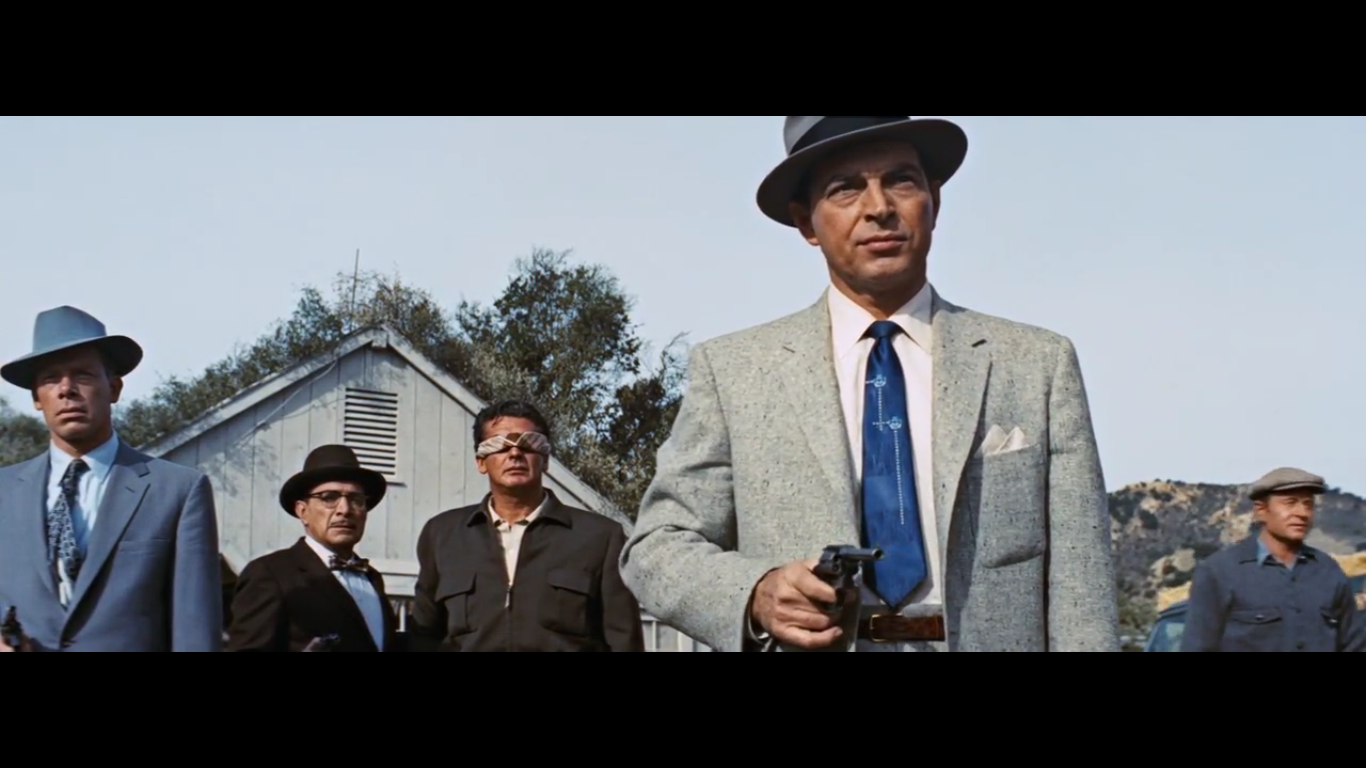
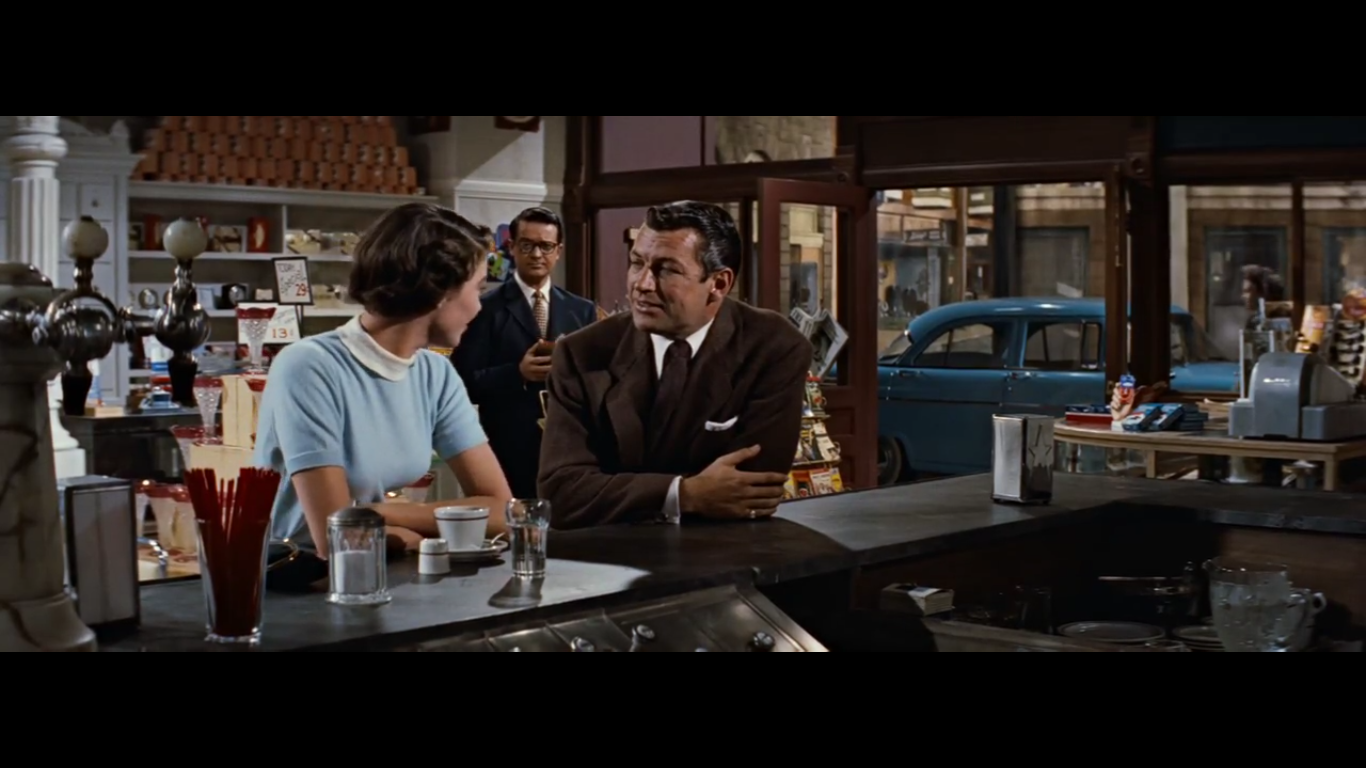
Backlash (1956): Donna Reed and Richard Widmark

Only in a western could we meet our protagonists in a sand trap known as Gila Valley. It says everything you need to know about the Arizona landscape, and then the sweeping Technicolor tones say a bit more.

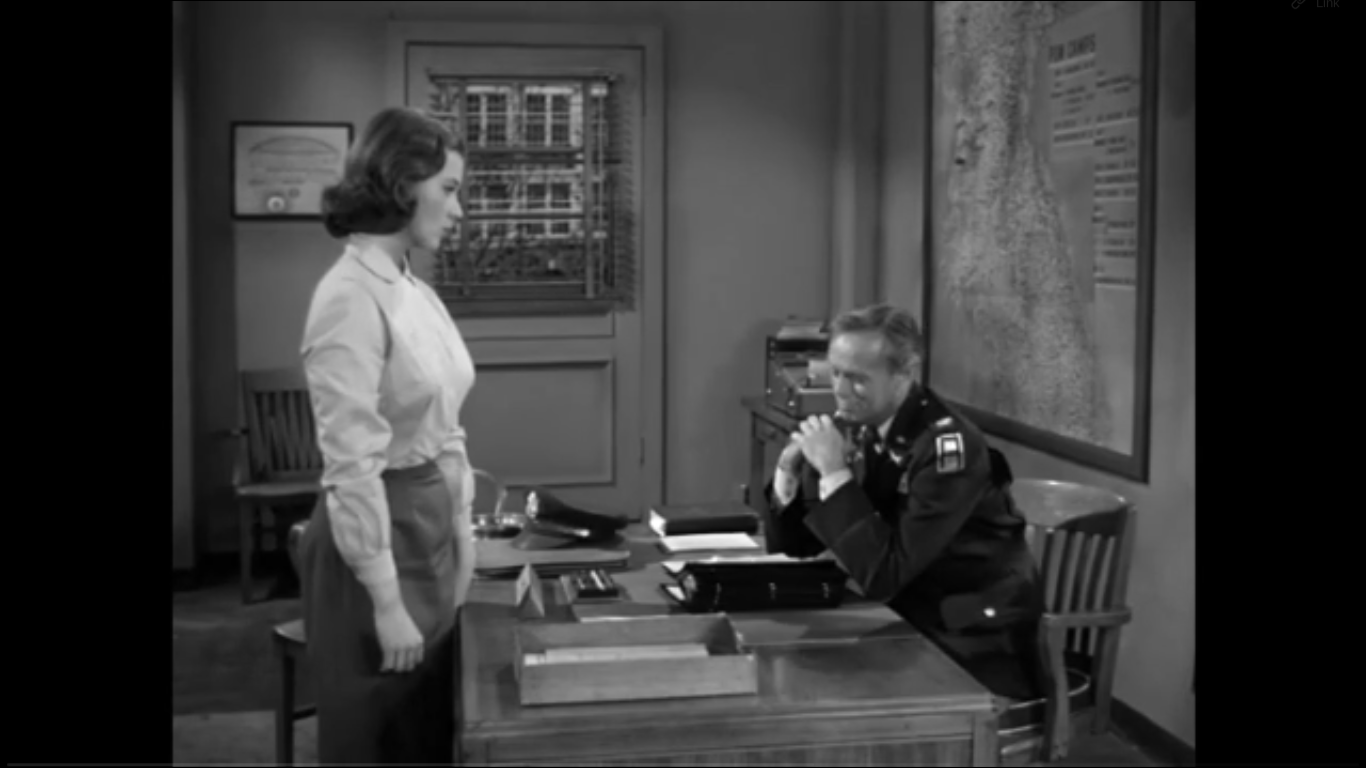
Richard Widmark is easy enough to place as an enigmatic figure. There’s a glint in his eyes, and we know from his pedigree he’s capable of playing shifty. The true pleasure is watching Donna Reed — because she becomes very much his equal — another sturdy customer with her own personal agenda.

It feels so very unaccustomed for the woman who played Mary Bailey and anchored her own family comedy. Then, again, the edges of From Here to Eternity are not too far in the past. It’s hard to forget what she did there across from Monty Clift.

The movie gets its legs when a man takes a shot at Jim Slater (Widmark) from the rocky crags above. He thinks he’s been a mark. The woman, Karyl Orton, was trying to play him, and he nearly fell for it. Leaving her behind, he scurries to the rockface to have it out with his enemy on the high ground.

Backlash is a constant exhibition in deciphering characters’ intentions. Because as an audience we are thrown into the action and asked to follow what’s going on. She’s searching for some gold, and he asks us to believe his interests are purely in his father who disappeared in the territory.

Although it’s adapted from source material, it does feel reminiscent of some of Borden Chase’s other patented efforts with a craggy showdown reminiscent of Winchester 73′ (1950). Thematically, John Sturges’s turn as director also proves a decent facsimile of some of Mann’s best westerns where the blending of psychological duress, perturbing imagery, and in-your-face action strings out the story into a taut state of tension.

It’s easy to become genuinely immersed in the first act with a fleeing stagecoach looking to cut across the open plains with Indians in hot pursuit. As they fall back, they’re forced to hold down an isolated trading post against the onslaught of marauders.

Unfortunately, all this buildup feels a bit too convenient. Because Slater searches for a seasoned soldier named Lake (Barton MacLane), who was a part of the detail that found the dead bodies that were left behind in an earlier massacre. In serendipitous Hollywood fashion, the old man keels over from a battle wound, just before divulging the remnants of what he remembers of a “6th man.” Surely he is the key to the movie, and Slater has been propelled forward.

If we can stop for a moment to acknowledge them, Backlash has a couple doozy bits of casting with the normally maniacal heavy Jack Lambert playing a sniveling Indian trader. Then, Harry Morgan, in a role reversal, takes on the role of a squat, no-nonsense heavy out to hunt Slater with his big brother. Because Slater killed their sibling.

But if there was any doubt in the red-hot chemistry of our primary stars, it sizzles while Reed brandishes a knife to cauterize the gunman’s most recent injury. It is a movie moment made for the big screen audience if there ever was such a thing. This smoldering passion and growing relationship are nearly enough to salvage the picture in its slower ebbs as they continue their search for answers.

In the end, they split the thread pretty thin between the two of them. It can only go one of two ways. Either the man he’s looking to find is her long-lost husband, a corrupt man, or it’s his own father — a man he’s never known a thing about. We must wait to discover the answer.

But the factions in the buildup are interesting. Our protagonists meet a man named Major Carson (Roy Roberts), who runs a local ranch. He seems like a pragmatic, sensible sort of fellow, and he’s got a range war on his hands thanks to a man named Bonniwell (John Mcintire).

One hotheaded sharpshooter (William Campbell) goes turncoat, and there are still thugs looking for Slater to gun him down in an act of retribution. The local sheriff (Robert Foulk) aims to remain impartial in all of this while still maintaining some manner of civility. He’s not concerned with private vendettas, only some semblance of local law and order. Widmark quickly gets tossed into the jailhouse, effectively sidelining him and leaving him incapable of exerting any influence on either side.

I won’t spell out the final act because that’s part of the fun of the picture, watching it unfold. There’s a dog-eat-dog mentality; it’s about family, but it never stops being a picture founded on Richard Widmark and Donna Reed. If you’re curious about seeing them together, that’s a good enough reason as any to invest in this western from an often underrated craftsman.

3.5/5 Stars

Autumn Leaves (1956): Cliff Robertson and Joan Crawford

You might not immediately connect Joan Crawford and Nat King Cole, but his brand of velvet crooning provides a fine backdrop (and namesake) for Autumn Leaves. It presents the consummate leading lady with a lighter more congenial personality — the kind of Joan Crawford who seems easier to connect with.

She’s known for her typing speed, working from home before it was en vogue, and banging out manuscripts for thankful clients. Although she leads a solitary existence alone, she’s buddy-buddy with her landlady and seems generally contented with life. When she goes out to a show or dinner, she’s comfortable going alone — it doesn’t feel foreign to her — and she enjoys her time in solitude.

There’s a moment in Autumn Leaves as Crawford sits in an audience, the lights go out so the spotlight is only on her, and the pianist on the stage takes her back into her memories. It felt so reminiscent of a scene in Penny Serenade where music, whether live or on vinyl somehow fills up the human heart and carries with it so many easily-tapped emotions.

“Autumn Leaves” feels less like a gimmick to cash in on the season’s newest love song, and it starts to pervade and then slowly suffuse throughout the entire movie until it becomes the tactful accent to almost every scene of the ensuing romance.

Because this all feels like a prelude. We have yet to meet our other primary player. Cliff Robertson was from the east coast and an actor forged out of his training at the Actor’s Studio. He’s still fresh-faced and Autumn Leaves was his second truly substantial movie role after the movie adaptation of Picnic with William Holden.

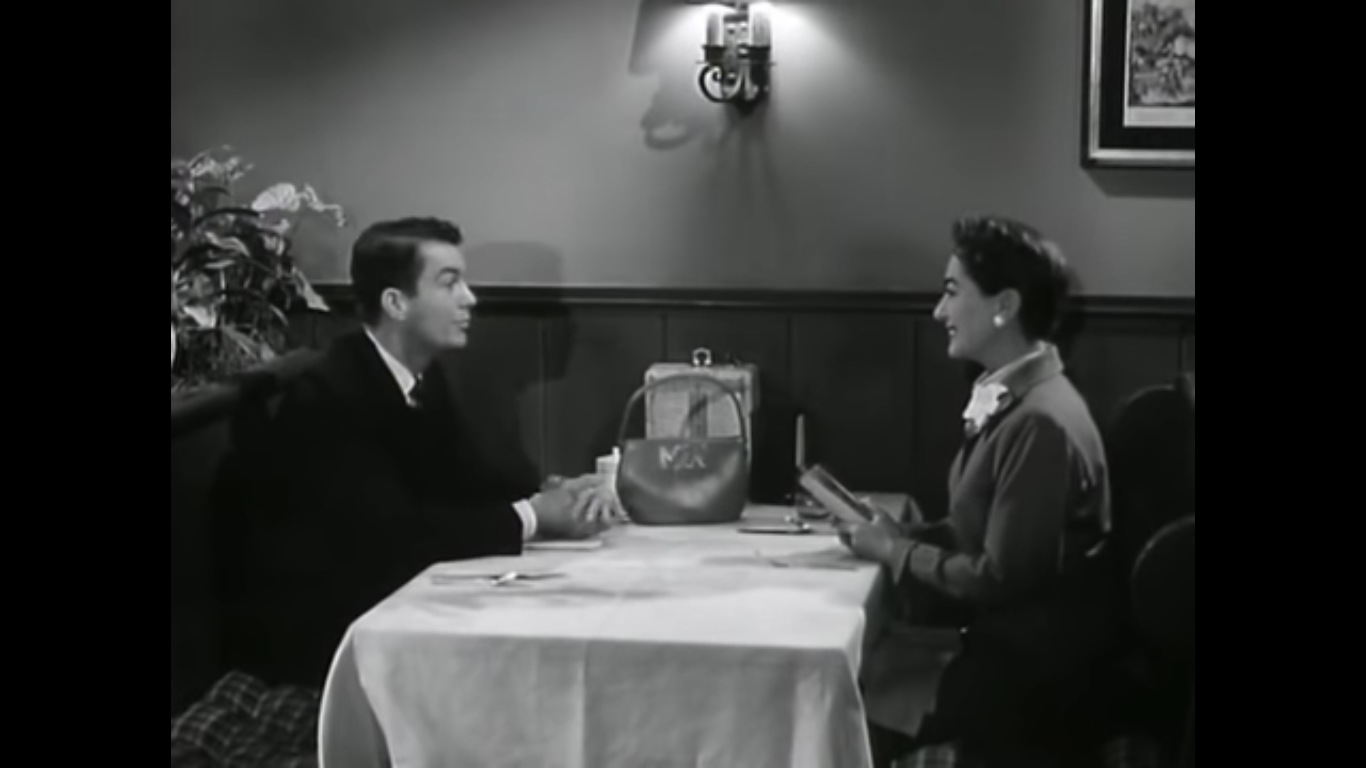
When he steps into the bustling restaurant and eyes Milly in the one booth with an extra seat, he makes his way over. There’s a disarming approachability about him. It starts to melt the ice and break down the barriers between him and his new acquaintance. Partially because there’s no threat to him though he’s still good-looking. Rather you feel like you can get to know the guy and like him. And she does.

They spend time together, going out more and even taking day trips. It’s a mutually beneficial relationship, and yet I hesitate to use these terms because it makes it sound mercenary. In the most innocent ways, they just enjoy one another’s company, and it shows.

The former Army veteran shows off his beach body on one outing chasing Milly into the waves. He feels like a movie creation. Can Joan Crawford have her own version of a 1950s manic pixie dream boy? But this is only a momentary suggestion. He becomes more of a person in the ensuing scenes. When she prods him about his old girlfriends, he shrugs them off. “Young people are too young for me,” he says.

If they do seem like an odd couple, they aren’t totally unprecedented. Because while loneliness is not a foundational reason to get married, it’s true we need each other. Burt believes that sometimes you meet someone and you know; they provide something you are lacking. I’m reluctant to say they complete you. Still, maybe with someone else’s hand to hold, it makes the world just a little less lonely and the pain a little less galling. Milly loves him and after minor reservation, falls into his arms for better or for worse.

They have a bit of marital bliss below the border, and yet something starts happening. Burt lets bits of his biography slip. All very matter-of-factly and there’s nothing guileful about it; it feels innocent enough, but she begins to realize they don’t match up. First his hometown, then his military service, and there are other discrepancies.


Then, Vera Miles shows up on her doorstep as a manifestation of all her sinking fears about Burt. His insinuating father (Lorne Green) is next to appear. There was a time when the movie could have easily been Joan Crawford’s Middle of The Night. Instead, she becomes devastated by the newfound revelations about her husband, and then must become protectorate shielding her love from the unfeeling world all but ready to exacerbate his condition.

She’s ready to battle for him. If it’s not righteous anger then it’s certainly indignant anger. She sees people for who they really are and calls them on it. Whatever Burt’s shortcomings, he has everyday, common decency. Her maledictions against the character of others might seem excessive (“Your filthy souls are too evil for hell itself”), and yet she’s not entirely wrong. If nothing else, she’s lashing out as a defense mechanism.

However, she’s also caught in the most excruciating of conundrums — one of those scenarios where it seems you are required to do something against your nature out of the deepest sense of sacrificial love, even if it’s not perceived as such. Her deepest longings are for Burt to be born again — that he might live a new, better life than he had before. It leaves the door open for another outcome. It’s very possible if he overcomes his illness, he might come out on the other side as a man who wouldn’t need her anymore. It’s either keep him for herself or watch him return to a happy, normal life (without her).

In the meantime, Burt isn’t getting better. In fact, his circumstances are far worse, and so Crawford is stirred to action. One of the film’s more pronounced shots is of Crawford as she reaches for the phone and resolves to make the fateful call. The low angle makes her loom large in the frame, not so much in a threatening way, but expressing just how much magnitude this moment is imbued with. Her eyes flicker slightly, this way and that, before she speaks into the receiver. There is no turning back.

Whether it’s purely a credit to the scenario, the direction, or the winsomeness of Crawford, I’ve never felt so devastated for her before. She’s put through the emotional wringer, not from noir tension or antagonism, but the kind of burden cutting deep and breaking your heart in the most tender of ways. She’s rarely been more sympathetic and her fortitude is easy to admire.

The final moments are quick, but that is not to say they aren’t pregnant with meaning. The couple is reunited, and I will leave the rest up to you to experience. Robertson and Crawford make the movie work, and this whole story hangs in the balance of their rapport. They weather both the mundane and the melodrama together. It’s pleasantly captivating watching them.

4/5 Stars

Sudden Fear (1952): Joan Crawford in Peril

I had no prior knowledge of what Sudden Fear was about, and I was relatively taken aback to see a film set during a stage rehearsal. You have your lead actor in the middle of a passionate soliloquy. This is Jack Palance getting a go at a more substantial role. Then, there’s the writer and authoritative creative mind behind his current material: Myra Hudson (Joan Crawford).

They are immediately at odds because she proposes to give him the axe and being the artistic force that she is, she makes the decision stick. He’s not her idea of a true romantic lead. This level of occupational animosity feels like a portent for something to come — what it is exactly we don’t know yet.

It starts out fairly innocuous when the writer and actor reunite. It’s quite by chance. They get awfully chummy on a train to San Francisco cutting through the awkwardness to play poker and share a drink together. The story trades the New York atmosphere for the West coast and with new geography comes new developments in their story together.

Her rejection of his casting was nothing personal, and she grows fond of him. He in turn gets brought into her life little by little. One moment in her office, he’s caught up in the swells of her poetry and speaks it back to her through a fancy dictaphone.

Crawford’s reaction shots are evocative, on the verge of something as if she’s just about ready to run over to him for an embrace. She’s been moved, but the dividing line between reality and fiction, or at least stage acting, is not something a writer should so easily confuse. Still, emotions get muddled.

What follows are interludes of pure ebullient joy appropriate for a budding couple. It’s hard to describe but amid all of this, there is also a mild sense of unease. The feeling is perfectly encapsulated by the moment when the newlyweds trek down to the water’s edge together only for the man to say just how dangerous the drop below looks to him. It’s something for us to put away for later consideration.

It seems apropos that the introduction of Gloria Grahame would almost instantly act as an augur of total noir. Suddenly, the movie has its twist toward the shady and undesirable. It’s the shift one waits for and relishes just the same. And this is just the beginning.

Some part of me wants to proclaim Sudden Fear the crowning achievement of the woman in peril subgenre or at least the greatest of the San Francisco iterations, though there are others like House on Telegraph Hill (I’m conveniently leaving Vertigo out since it’s mostly from the male perspective). Regardless, it has to do with laying the dramatic groundwork as well as fully utilizing the reputation preceding Joan Crawford.

Because Grahame and the scorned Palance not only know each other, they have a history, and Myra Hudson is a part of their plans. However, it hinges on the dramatic irony. Their target finds out what’s going on.

Voices amplified and booming out into the open space sends her back peddling against the walls in sheer horror. It’s her slice of domestic bliss being totally annihilated in one instant. Then in her distress, she loses her one shred of definitive evidence. From there we’re sucked into her dilemma as all rationality quickly evaporates. We don’t have time to care.

Obviously, everything in the movie is between actors; this is not reality. However, it’s intriguing to think about how the level of performance shifts. Palace is playing an actor, but then Crawford finds out his true intentions, now she must put on a performance of her own and so they are both playing parts within the movie to satisfy one another. The question remains who will break first in this charade. Because it must end at some point.

If you care about spoilers, my discussion of Sudden Fear might be a letdown, but for me, it feels like a picture wrought with tension more than relying on secret keeping. This is how we can make sense of it and appreciate all its mechanisms working on us as an audience. It’s so important for these women in peril movies that there is some level of identification or at least empathy for our lead. In this case, Crawford.

The whole ordeal weighs on her because she’s not trained to be an actor, and yet she takes to her role whether it’s snooping around an apartment or touching up her penmanship. Her final performance is almost as premeditated as any crime might be, and there’s some pleasure in watching it play out.

There are an array of these subtle intricacies executed in front of us for our viewing pleasure. A brief glance. A note left in a glove. The emblematic shot is the shadow of a clock hand swinging like a metronome across Crawford’s incomparable face. There’s an inevitability of what’s coming next…

I’ll double down on my early championing of Sudden Fear as a superlative woman in peril movie. However, my reasoning developed a new layer. What makes this movie particularly thrilling is not the fact Crawford is set up solely as a victim. Actresses whom I admire like Joan Fontaine, Barbara Stanwyck, Audrey Hepburn, and Grace Kelly all faced similar fates in the movies.

The difference here is how Crawford takes matters into her own hands, not just in a last-ditch struggle for survival or a convenient turn of events. She’s prepared to end others just as coolly as they wanted to end her. I’m not sure if it’s believable, but it’s a stunning transformation nonetheless. We must also recognize this is not really who she is. Her core humanity is made very plain.

Only after the fact with some space do we recognize the vortex of this entire story. There are no policemen or your typical authoritative experts. No helpers. Bruce Bennett and Virginia Huston are no use (even future P.I. Mike Connors is negligible).

It’s really a cat-and-mouse game with three characters and no innocent bystanders. Sudden Fear feels lean and gaunt because the thrills are directed very intensely and there’s not a lot of expositional fluff. That’s what the introduction was for. In the end, it’s pure noir drama with a kind of blistering doom.

4/5 Stars

Joan Crawford: Possessed, The Damned Don’t Cry, Harriet Craig

In our ongoing exploration of Joan Crawford and Bette Davis’s filmographies, here are three more films building on Crawford’s renewed critical success in the 1940s after Mildred Pierce (1945) and Humoresque (1946).

Possessed (1947)

Possessed opens with Joan Crawford wandering the city streets past cable cars and hamburger joints with a far-off look in her eyes. Although I should briefly clarify this is Possessed from 1947 (as the actress made an earlier movie with the same title). The unknown woman is searching for a man named David, and instantly we have the pretext for our story.

There’s a  wonderful extended POV shot of Crawford being wheeled into the hospital as she is overtaken by a catatonic stupor, and the doctors try to piece together what to do for her and who she is.

If they’re in the dark, then we at least learn a little bit more about her. David (Van Heflin) was a man in her former life, in love with a piano and a parabola but not ready to marry her. He doesn’t want to be tied down and his ambitions lie in his work and a job up in Canada.

She’s obsessed and crazed with him, and the thought of him leaving her forever. Instead, she resigns herself to a life with her employer (Raymond Massey) who has lost his wife and has sent his kids away to school.  Crawford’s not a villain, but how this relationship blooms, there’s another obvious reference point. It’s apparent how the movie blends and finds itself at the crossroads of Double Indemnity and Mildred Pierce.

As her mental instability takes over, it’s almost as if a scene from Mildred Pierce is playing out in her head as she duels with a vitriolic stepdaughter. However, while this feels more like a facsimile of the prior’s year success, it’s really Hefflin who steals the picture’s other half.

Because Possessed finds Hefllin at his most caddish and cold (“My liver rushes in where angels dare to tread”). He has wit like Johnny Eager, but he’s also willing to run roughshod over Crawford without any amount of remorse. He’s a hedonistic, self-serving creature, and it only becomes more evident when the impressionable Carol (Geraldine Brooks) gets drawn in by his casual wiles.

They get married and Louise becomes more paranoid and hallucinatory by the hour. This movie is bookended by her descent into mental turmoil, and it’s hard not to laud Crawford for her genuine alacrity for the part making the rounds of psych wards and facilities just so she could provide greater authenticity. No matter what feels antiquated to our modern sensibilities, the movie is worthwhile for her performance, which seems to come in sharper relief with each subsequent layer of her ever-shifting personality.

3.5/5 Stars

The Damned Don’t Cry (1950)

The film’s title was ripped from a Eugene O’Neil quote, and it gets at the poetic essence of the movie more than its particulars. When a racketeer’s carcass is found ditched near a desert resort, it sets off alarm bells and triggers a search for a missing oil heiress played by Joan Crawford.

The impetus of her entire existence in the film is summed up in a single scene of definitive exposition.  She lives alongside her husband, parents, and their little boy near the oil fields where her husband works. It’s a meager life. They can’t afford pleasure. And so when she splurges to get their son a bright new bicycle, her agitated husband (Richard Egan) tells her to take it right back.

The bike effectively becomes a vehicle for their marital conflict since they are scrimping and saving just to make ends meet. However, it’s also a token of tragedy in Ethel’s life searing her with wounds she will never forget. She leaves her past behind to make a new life for herself as an individual because her corner of familial bliss looks to be dead.

As the story progresses, it feels like a bit of a throwback for Crawford from the ’30s and her days as a driven working girl making a go of it. She learns quickly how to play the game to get ahead, modeling and then doing some overtime with out-of-town buyers after hours.

Then, she literally meets a man, a CPA (Kent Smith), at the water cooler. She winds up sprawled out on his desk asking for a cigarette and making his acquaintance with her self-assured flirtations. She has some misguided notions about his importance and yearly take-home pay. Either that or she confuses her acronyms.

In other words, he hardly has the money to bankroll the evening he has unwittingly been escorted to. Still, she goes to bat for him putting Martin in contact with some of her other “friends.” It starts out with the men discussing business together behind closed doors with Lorna left in the drawing room withing for their return. It feels oddly uncharacteristic because we know Crawford will get into that room eventually (and most likely dominate it).

George Castleman (David Brian) is the kingpin at the top, an elegant self-made mobster fascinated by art and antiquities. He’s trying to keep his cronies in check, the most headstrong of the bunch being Steve Cochran, who’s running the racket out in California. This is not Martin’s world, but Ethel has gotten him into it, and for the time being it’s lucrative enough.

But with her innate ambitions, Crawford’s character always has her sights set on the next prize. With the help of the society pages, she turns herself into the newly-minted heiress Lorna Hansen Forbes.  Going forward, the movie blends the world of some of Crawford’s Pre-Code working-class drams with that of 711 Ocean Dr., another ’50s film concerned with wires, bookies, mob influence, and of course, California desert getaways.

Here it’s a more hands-on approach. For most of the film, Cochran waits in the wings brooding, but he gets his moment in California with some filming even taking place at Frank Sinatra’s own home made up in mid-century modern. Crawford has them all. The whole crux of the drama is composed of these spokes radiating out of Joan Crawford leading to four men who are attached to her at different times.

It gets so overblown and preposterous, and yet you can’t quite look away because the dilemma is made plain. She’s ingratiated herself with so many people to get what she wants, and since she’s caught between so many options, for the first time in her life, she’s not sure what to choose.

Everything must succumb to a bombastic round of Production Code comeuppance where all retribution is neatly doled out and moral ambiguity is left to languish. It makes for a hearty round of theatrics but also a minor disappointment. Because we’ve seen these tactics used in this kind of forced storytelling so many times before. Still, you can’t take the film’s title away. It’s one for the ages. Moreover, Crawford seems more than worthy of it.

3.5/5 Stars

Harriet Craig (1950)

“How many ways do you lie Harriet?” – Wendell Corey

In Harriet Craig, Joan Crawford plays the quintessential domineering lady of the manor. Before we even see her onscreen she has her whole staff in a tizzy as she rushes off on a last-minute visit to her sickly mother. If we can make an early observation, she’s a bit beastly.

Wendell Corey makes her stand out all the more thanks to his free and easy charm as her husband. He’s rarely been more likable playing gin rummy with the elderly Mrs. Fenwick, a woman of good humor and a light in her eye.

As Crawford’s opening perfectionism slowly burns off or at least is put aside, Harriet Craig somehow gives off the sense of an early sitcom of the era. It has to do with the setting and the world — the way the spouses interplay — and it doesn’t seem like the scenario could possibly boil over into something cataclysmic.

At first, Harriet feels nitpicky and fastidious. These aren’t negative qualities on their own per se, and her husband coaxes out brief moments of good humor. However, it becomes evident how deeply manipulative she really is.

Suddenly Harriet Craig becomes a blatant subversion of the portrait of post-war suburban bliss. Walter is offered a job to work with the company over in Japan. It’s a big promotion, and he’s elated. Harriet finds ways to derail this threatening source of change.

She drops a few intimating remarks to keep her orphaned cousin (K.T. Stevens) and her husband where they can serve her best. She gets snider by the day trying to preserve her life under glass.

One of the few who sees through her is the perceptive housekeeper Mrs. Harold, who has faithfully shared Walter’s family for years, but recognizes just how much Harriet is a canker. Her household is all a sham cultivated by its primary architect: Harriet.

Eventually, her pyramid of well-orchestrated deceit begins to tumble as all her half-lies and casual mistruths are found out. In all her neurotic pride, she’s prepared to rot in that house. The irony of the picture is how she’s tried to control everything — she’s particular about every iota of that place — and now that she’s made her own mausoleum, she has to lie down in it. That home is all she has.

I’ve never ventured to watch Mommie Dearest, and far be it from me to pry the fact from fiction, but part of me wants to know how the core faults of Crawford’s character were indicative of her real self. Part of me likes to believe she intuitively made the role into something that resonated with her, whether she fully recognized it or not.

3/5 Stars

Double Feature: Apartment for Peggy & Take Care of My Little Girl

Recently I was appreciating some films starring Jeanne Crain, an alluring actress who was at the height of her popularity during the ’40s and ’50s. Although she was rarely touted as a preeminent actress, I wanted to highlight two films of hers that more than highlight her appeal.

Both Apartment for Peggy and Please Take Care of My Little Girl are set in the context of college in the post-war years. One has Craine as a newlywed wife tracking down student housing and in the latter film she plays a naive college freshman with sorority aspirations.

Read my thoughts on the two films below:

Apartment for Peggy (1948)

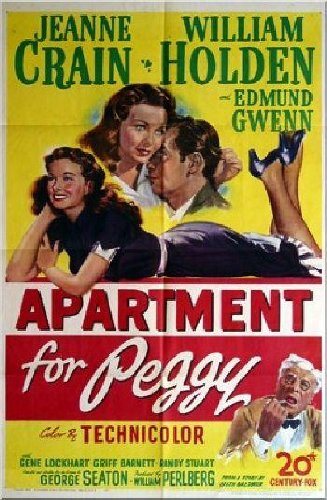
Apartment for Peggy is one of those Classic Hollywood films packed with pleasant surprises. The first of them is Edmund Gwenn. He’s best remembered as Kris Kringle in Miracle on 34th Street. Here he’s directed once more by George Seaton this time playing a listless university professor.

He lives off his pension in his crusty old abode spending his evenings with the same colleagues playing the same music they have for years. However, one evening he quite matter-of-factly announces his aspirations to commit suicide. He’s very rational about it. Still, his doctor won’t give him more than two sleeping pills at a time so he dutifully stores them up for a rainy day.

Then, something else far more momentous happens. He meets a young woman (Jeanne Crain) on a bench. Peggy Taylor motors about 1,000 miles per minute — her mind and conversations leapfrogging all over the place — so her new acquaintance can barely get a word in edgewise. He’s bowled over by her irrepressible zest for life. She’s precisely the person to prickle the professor’s curmudgeonly sensibilities. But she’s also the best equipped to turn Mr. Hypothetical’s life upside down for the better.

Because she tackles just about anything she sets her mind to with this same infectious verve. This is not just the age of the GI Bill (her husband is currently a student), but they are also dealing with a housing crisis. She puts her ear to the ground and manages to scrounge up a space in Pop’s decrepit attic. He’s quite against the imposition and still, Peggy keeps ping-ponging off the walls leaving no room for a rebuttal.

It’s one of many miracles how she spruces up the space and puts it through an astounding transformation. This is just the beginning. With Pop’s begrudging help, she conceives a daytime course for wives and mothers so they can learn about the great philosophers of the modern age (Spinozi included). They want to receive intellectual stimulation on par with their husbands so they can communicate with them.

Pops soon learns his new students are intrinsically driven to learn, and the professor is delighted to serve as their instructor because they seem to intuitively understand his teaching as his most receptive pupils. Their discussions are life-giving. You see already how Peggy single-handedly resurrects the old man so he’s able to see the world with new vim and vigor. Now it’s his turn to return the favor.

William Holden is just about the most innocuous thing about the picture, and that’s not to say he’s bad. Still, this is a picture made by the chemistry of Crain and Gwenn. It acknowledges the generation gap chafing between most any generations with varying perspectives on life with a comic touch. However, any conflict on the part of the elders ultimately engenders mutual affection.

Best of all, it’s a film about ideals and worthwhile pragmatism where the merits of both are made evident. But then again, film is not so much a science as it is a philosophy, an art — concerned with humanities — and the film works in this manner.

It gives off the appearance of a light, inoffensive comedy as we conceive would exist in post-war America. There are many. Certainly, this is true. However, it also sheens with warmth and goodness. Seeing the movie multiple times, the appeal of its brand of geniality just continues to bloom.

3.5/5 Stars

Take Care of My Little Girl (1951)

Sorority movies certainly feel like they’re solely made to meet an audience demand as a convenient cash grab. Take Care of My Little Girl wasn’t the first picture in this genre as I can think of at least a couple predecessors like Sorority House and These Glamour Girls (1939).

However, this movie actually had its origins in the master’s thesis of Peggy Goodin, who eventually turned her research into a novel. She was particularly concerned with how racial and religious discrimination played out in the highly moderated spaces of college sororities. To be clear, 20th Century Fox’s adaptation excises all of this commentary by casting their stable of homogenous Hollywood starlets (Jeanne Crain, Jean Peters, Mitzi Gaynor, Betty Lynn et al.) and a couple of male heartthrobs.

And yet that doesn’t mean the film doesn’t come with any teeth. For its day, it was actually rather controversial if only for its forthright portrayal of the social politics and hazing rituals that have continued to go under scrutiny generations later. The film looks different and yet at its core, it speaks to the very same issues we see today.

Jeanne Crain has such a radiant poise, it’s so easy to like her and not only like her but admire her for how she cares about others. Because she’s a shoo-in as a legacy at Tri-U sorority. Just as importantly, she’s probably the prettiest girl on campus. Not even the resident mean girl Dallas (Peters) can blackball her.

Liz cares deeply for her friends and isn’t totally swayed by the popularity contests even as she strives to make a good impression. She strikes up a rapport with a slightly cynical G.I.-turned-student (Dale Robertson), who helps advise her on classes and thrumbs his nose at the establishment after everything he’s been through. He recognizes something different in her that he likes.

Still, she’s not totally impregnable. Like any young person, she wants to be well-liked helping the class flirt (Jefferey Hunter) with the answers to his French exam. This in turn leads to being pinned. She’s the talk of the sorority house. And yet she’s not easy to categorize.

The picture is surprisingly poignant and perceptive. It’s not some hyperdramatic, superficial portrait of college life even if it’s playing to a specific audience. Also, thanks in part to Crain, there’s a genuine candor to the picture and a visible evolution to this young woman.

It may not be a lot, but it’s something. We do see her change as a human being. Surely college life looks so different now 70 years on from what we’re used to, and yet there are elements that have not changed. We still have fraternities and sororities and social hierarchies. I was aghast to realize even bluebooks have been around for well nigh a century!

This movie doesn’t necessarily suggest these institutions are inherently bad. However, sometimes we believe that tradition is good only because it’s the way things have always been done. But there should be better reasons. There need to be dissenters and people to challenge the status quo. There need to be brave folks who are willing to do what is right compared to what is easy. People who are loyal to their friends rather than simply playing the games for want of status and approval.

Even if the Epstein Brothers’ script forgoes some of the most intriguing aspects of the original story, I appreciate that they explore their topic with something a little bit more involved than superficial exploitation. It actually strives to be about something, however small.

3.5/5 Stars

La Pointe Courte (1955): Agnes Varda and The French New Wave

Agnes Varda became a modern-day cinema celebrity in the 21st century thanks to her immediately recognizable profile and modern incarnations of her work like Vague Visages. Because it’s true she never stopped creating, never ceased exploring this terrestrial sphere.

Watching something like La Pointe Courte (1955), one of her early efforts, one begins to imagine and reconfigure how the movie canon gets forged. Some of it has to do with accessibility (Varda’s Cleo from 5 to 7 seems to gain a resurgence in popularity by the year).

But whereas 400 Blows, Hiroshima Mon Amour, and Breathless became the lodestars for an entire seismic shift in film, Varda is rarely considered in this dialogue. If at all, it’s in tandem with Alain Resnais or her husband Jacques Demy from the Left Bank who were contemporaries of The filmmakers from Cahiers du Cinema. But never is Varda mentioned as a predecessor or the initial pioneer of forthcoming movements and yet she shot a film with little money, passion, and a point of view.

Early on as we glide down the alleyway with the laundry swaying in the breeze I couldn’t help but think how Yasujiro Ozu would have photographed it so differently — stagnant and beautiful — still, Varda makes it feel graceful and alive.

She uses it as a way to get into the house. There’s a man loitering around on the corner, we see boats in the background, and then we’re past the very same laundry through the window into the home of a working-class family.

The stranger by the fig tree has the locals suspicious. They snatch a glance at him, suspecting he’s an inspector come to turn them in. Sure enough, health services show up to pay a house call.

This is a story of the steady degradation of a way of life. These men earn their livelihood through fishing. But with the local bodies of water increasingly polluted, the authorities are quick to come down on them. Young children are tasked with keeping watch and sounding the alarm so the men can rush back to shore and hide their spoils. But the antiquated ways of kids keeping watch don’t stand a chance against newfangled motorboats. Later a man is taken off to prison for such an infraction.

A movie like this looks deceptively simple and yet I’m able to pore over it with such relish. Look at the street, the shape of a tree, some bit of wood, or fishing equipment tossed on the ground. None of this can be fabricated on a green screen. This is a unique and real-world before us that we get to feel and experience in all of its immediate eccentricities.

The way a cat crawls through a hole in a wooden fence. Women crowd in the doorway to acknowledge the death of a child. A man skipping over the train tracks to greet his love. The reunited lovers walking along a stone wall or crouched in the enormous darkened hull of a boat.

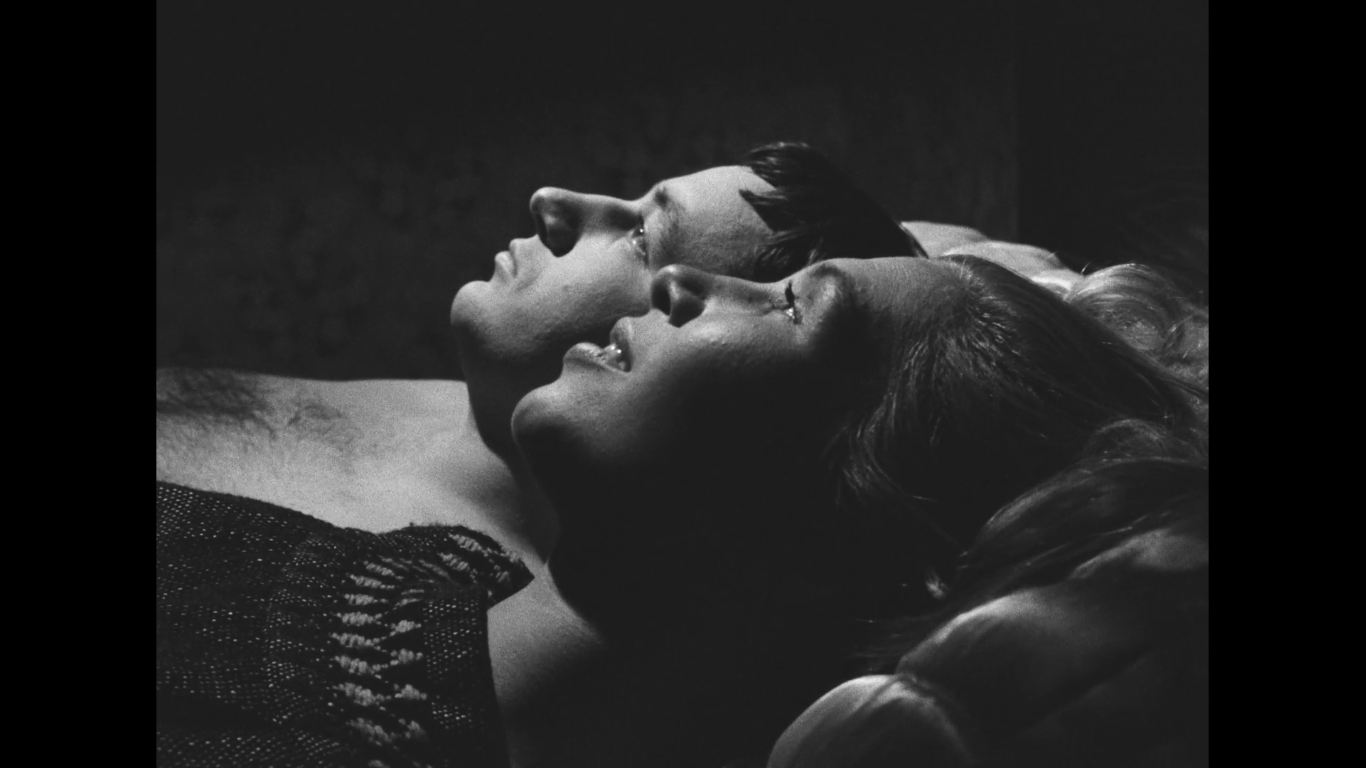
Because La Pointe Courte also tells of a Parisian couple (Silvia Monfort and Philippe Noiret), who have returned to the husband’s childhood home. They have different philosophies. For him, it is simple but the lap of contentment. Just living is a pleasure. He can be satisfied here.

His ambitions lie with the intricate, extraordinary things — the kind of everyday visions that prove plentiful in Varda’s gaze, but his woman wants something else. She wants to travel — to see more than the humble alleyways of his small backwater town.

We might liken her to a connoisseur of Hollywood delicacies. Although they are not a pair of Hollywood faces and Varda’s camera finds them immeasurably interesting. She photographs and frames them in all manner of ways: profiles, from up above, side by side, and walking apart. It makes no difference. They are totally worthy of her close consideration.

I find it easy to reminisce about Roberto Rossellini’s Stromboli another film that ties together the worlds of fishing and apathetic romance. There are even touches of  Ingmar Bergman from the boating of Summer with Monika and the visual melding of two human beings in Persona.

It also features water jousting a generation before Cesar et Rosalie. But one must once again acknowledge the imprint of Resnais — he helped edit the picture — and La Pointe Courte predates such seismic works as Hiroshima Mon Amour or Last Year at Marienbad.

This is not an empirical observation but although both their films share momentarily visible sensibilities — how they glide through space — allowing lovers ample opportunity to quibble poetically if not totally inexplicable, Varda seems more invested in the world around them.

These are still real people to her with real problems, not merely the symbols or totems of countries and generations (ie. Nevers and Hiroshima). And so although Resnais’s characters share some intimacies, Varda’s picture is intimate in a different way, allowing for understanding outside the umbrella of romance alone.

She’s intent on humanity — a little boy licking his ice cream cone — in a way Resnais probably wouldn’t devote time to. The moment develops into something bitter and then sweet. He thinks his woman has left him and then she returns with two ice creams (economy size). He gives his cone to a small child. Rather than a mere act of charity or guilt, he’s probably lost any appetite.

The movie is this constant dance between signs of dissolution — these steps back and apart — and then steps forward leading them together again. It’s romance played out in the moments of conversation and indifference rather than any form of malicious Hollywood tirade.

It’s telling Varda ends her movie, not with her couple pontificating as they wade through a local dance party in the streets. For them, it’s practically a joyous occasion. However, she leads us back to a family as they get in their boat to ride off into the distant night. It never loses this level of familiarity in its humble origins. It relishes them even as it signals the inevitable dwindling of a way of life. Whether Varda recognized it or not, her film remains a presage for coming attractions.

4/5 Stars.

A Kiss Before Dying (1956): Technicolor Noir

A Kiss Before Dying signals its intent with a score befitting a light musical or frothy romantic comedy headlined by youthful heartthrob Robert Wagner. For the uninitiated, the story is based on Ira Levin’s novel and remains all but prepared to plunge into the depths of deceitful drama. This happy pretense only remains for an instant.

The first scene of Gerd Oswald’s picture is between two people we would come to know quite well. Joanne Woodward is turned away from the camera and the handsome profile of Robert Wagner is on full display. They share an intimate conversation as she bawls, and he tries to comfort her. The word “pregnant” was a trigger in 1950s society and so much of the dialogue dances around, but the point gets across clearly enough.

This young woman has gotten pregnant, and she’s not married to her young man. They’re still in school. If you’ll allow me the first of many comparisons, Bud Corliss (Wagner) feels like a less conflicted take on Monty Clift’s protagonist in A Place in the Sun. As a sociopath and a man of ambition, he is an even fiercer aberration of the Horatio Alger archetype. He has no intention of remaining with this girl even as he continues to soothe and placate her.

It’s true that premeditated collegiate crime feels so involved in the 1950s. There’s no worldwide web so Bud nabs a book from the school library on toxicology and sneaks into the chemist supply room to mix a deadly cocktail for his girl. His objectives are explicitly clear.

Mary Astor is almost unrecognizable a generation after her greatest successes as Bud’s mother, but she’s still got spunk. Jeffrey Hunter feels a bit out of place in the picture. It’s true his holding court with a pipe throughout the entire movie is not the most believable bit of business for him. If I’m getting my dates right here he is the same year he was cast as young Martin Pawley in The Searchers.

Whether it’s purely bad casting or the fact he gets shoehorned into a convenient role as a college lecturer and part-time police detective, it’s a shame he was not set up for greater success. Regardless of his handsome face, he usually displays an incisive earnestness propelling him into more interesting territory. It plays rather like the inverse of Wagner’s turn here since Wagner pushes past his outward appearance to give us a brooding performance full of palpable malice.

If there is an element of A Place in the Sun in the movie, then the pessimistic adolescent worldview, specifically in the classroom, feels reminiscent of Rebel Without a Cause‘s Griffith Observatory scene. In a brief classroom discussion of man, reconciling predestination and free will and theological determinism, there’s this same sense of young people having no idea what to make of the philosophy they’re being force-fed. At their worst, they totally disregard its bearing on their lives.

Then, Joanne Woodward’s unceremoniously tossed from the picture. One wonders if it’s her early exit or the fact that it was an early film credit that made her rate the performance lowly.

Regardless, the most obvious touchstone going forward is a bit of Psycho. The intrepid sister (Virginia Leith) of the deceased starts by joining forces with a man to get to the bottom of the death, though she lacks the plucky fire we might easily attribute to Vera Miles.

As a fairly curious filmgoer, I’m always drawn to performers I’ve never been familiar with before. My own viewing habits have a way of fastening onto new faces that intrigue me — often those who I’m unfamiliar with — but they carry the screen in an impressionable manner. Even in a picture like Violent Saturday, Leith turned an eye with a performance that stood out. Here it’s generally amicable but never electrifying.

The film also has two moments that might be considered dramatic “setpieces,” and they both feel generally corny. They lack the Hitchcockian ingenuity, the unrivaled commitment to the vibrant theatricality of Douglas Sirk, or the impassioned emotion of Nicholas Ray. It really is a shame because otherwise, buoyed by a gorgeous palette, the movie suggests all sorts of kinetic energy.

A lot of it flows directly from Wagner, who is delightful front to back as a conniving devil. I only wish there might have been more of Astor and George Macready and that Hunter and Leith were put to better use. The same might be said of Woodward who was on the road to bigger and better things.

We’ve seen this story done better in so many other forms. I’ve listed many of them off quite shamelessly all throughout my discussion; here is part of the core issue. How can you begin to compare A Kiss Before Dying with all these bona fide classics? How do you even begin to compare it with its source material? Instead, if we allow ourselves to remain present, and invested in the individual experience, A Kiss Before Dying is a tantalizing Technicolor noir.

3.5/5 Stars

Violent Saturday (1955): Richard Fleischer Heist Movie

“It’s so stupid and pointless to be alive in the morning and dead in the afternoon.”

There’s a lovely contradiction in crafting a De Luxe noir in Cinemascope. It’s visually luscious and still shot on the kind of cheapo budget Richard Fleischer was able to make sing early in his career. This fits its ambitions as a bit of a genre hybrid.

The town of Bradenville is butted up against the mountains with a prominent mining industry. They also happen to represent everything that’s good and decent about an American town in the 1950s. Stephen McNally appears to be one of their ilk, just returned to town on business by bus. He chats up the desk clerk at the hotel and settles into his room.

However, anyone with any familiarity with McNally, knows he must have an angle. True to form, he will shortly be joined by two accomplices as they plan out their robbery of the local bank. The train goes hurtling down the tracks toward town with Lee Marvin and J. Carroll Naish.

It’s a visual cue that feels rather reminiscent of Bad Day at Black Rock, and in some general sense, the comparison is not too far off base. For one, we have the return of both Marvin and Ernest Borgnine. The former is a sickly thug in gray, who doesn’t go anywhere without his inhaler, while still burning with that typical sadism. Borgnine, for his part, has a rather twee role as the patriarch of an Amish family. It’s true the crucial element of the plot revolves around these three criminals convening in the hotel to case the local bank and lay out their plans to break in.

However, there’s also this sprawling, rather unnerving gravitas to the whole scenario. The story introduces a number of key figures throughout the town, and it does a fine job of building out the world from there to make it feel alive and expansive beyond just a handful of main players.

Bespectacled Mr. Reeves at the bank (Tommy Noonan) holds down a reliable job. Like much of the local male population, Nurse Linda Sherman (Virginia Leith) has his heart all aflutter. It doesn’t matter much what she’s doing. Sylvia Sidney is a librarian who has fallen on hard times with the bank threatening her with punitive action.

Victor Mature is a family man who helps run the copper mines alongside the company manager (Richard Egan), who has a troubled marriage. He spends more time with a bottle than with his wife. She in turn can be found on the golf course with a dashing gigolo (Brad Dexter). It seems ridiculously easy for such a patchwork to feel convoluted and yet it rarely loses itself.

Because the pieces always feel attached and deeply entwined in the town’s buried indiscretions. And I’m not just speaking of the clandestine heist. You have the moment when a thief and a peeping tom out walking his dog meet on the street late at night outing one another.

In another scene, the local siren and the equally alluring wife have it out over the man who now lies in sleepy inebriation on the couch of his gorgeous mansion. These mini-conflicts aren’t the point of the movie in so many terms, but they leave an impression adding up to a kind of tableau that’s ripe with all sorts of sordid bits of drama. It’s a world where children get into fights in the streets and small-town love feels tainted.

In one of its most sublime moments it takes a drugstore, that beacon of Middle America you often see represented in pictures like The Best Years of Our Lives and It’s a Wonderful Life. They’re a local watering hole of sorts and in this film, it serves to tie all the movie’s various strands together in one moment of choreographed synthesis.

From thenceforward we see it all unfold. The tension is a bit like watching all the plates spinning and not wanting them to fall while at the same time realizing a bank robbery is about to take place. The moment arrives and it gives off all the alarms. However, there are other moments built into it. Take how one of the bank robbers — the bookish one — hands a feisty kid a piece of candy, and it quiets him down. He performed the same act on a train with a group of Amish. These are the types of touches allowing you to recognize the humanity and something beyond the mere cookie-cutter objectives of a movie script.

It’s a horrible thing to realize lives we’ve come to understand if not totally appreciate are not sacred. They too can be snuffed out like any of us. Nor does it desist with the violence. In its day, it was probably deemed graphic. Whether or not that remains entirely true now, Violent Saturday is another one of the old movies that actually lives up to its name as much as can be expected.

Victor Mature and the meek Amish patriarch played by Borgnine must hold their own against the three bank robbers after being locked away in a barn silo. In a different time and place, they might throw out the key that the bandits needed and then they would go their separate ways. However, the very sinews of the characters whether its their religious sentiments or moral fibers, make it imperative that they stand up against this evil even if it’s not the devil himself and only a group of man overtaken by avarice and human corruption. In some small way, they redeem or at least preserve the American ideal. They are projected as heroes to the awe of the neighborhood kids.

The only perceivable letdown with the picture might be the way it wraps up. In some sense, it gives us more than we need in terms of denouement. In others, it leaves us guessing, but even in this, there’s something apropos about the movie sinking back into this status quo of post-war America. It gives the illusion of everything being patched back together like all those folks in the hospital, but you never know what future threats will present themselves. Until then, some men get to live as heroes and others have to grieve irreplaceable losses. It doesn’t seem fair.

4/5 Stars

The Long Haul (1956): Diana Dors and Victor Mature

Although it was distributed by Columbia, The Long Haul is a bit unique from your typical Hollywood offerings. Victor Mature is an American G.I., who settled in England with his English wife following the end of the war. He has a cross-cultural marriage in a post-war landscape and since this is a British production, you have an American as the outsider.

While Victor Mature often comes off as a pretty face, even a plastic one, movies like The Long Haul offer him something to work with, and he gives it an earnest turn. There’s also some audience identification for the sole fact he is one of us (I’m speaking as an American), and if you’ve ever lived anywhere where you felt out of place, it’s easy enough to relate.

The Long Haul is also subtly a movie of family favors. Even as his bride is hesitant to leave her home country for the purported prosperity of America, she gets Harry a job with her uncle’s trucking company. There aren’t many prospects and it’s tough work, but he doesn’t have much choice if only to placate his wife.

It also turns out to be a dirty business, run more like a black market operation than a legitimate business and those with the most brazen tenacity are the ones who get ahead. Right at the center of the racket is Joe Easy (Patrick Allen).

As far as characters go, he’s probably the most intriguing with his lascivious, take-no-prisoners mentality. Again, he’s a heavy not unlike what we’re accustomed to seeing. Still, it’s up to the performer to make something out of it, and Allen has a brutal kind of conviction that makes him a worthy adversary. He’s not the kind of man you want to cross.

Harry does it unwittingly and finds himself thrown out of the man’s office in the presence of his sympathetic moll (Diana Dors). She’s with Joe, and also finagled a job for her brother — he’s off a stint in prison.

Sans the interludes of out-and-out melodrama and complementary scoring, there’s a lot to enjoy about the world in a noirish sense. We watch Mature as he is handcuffed, trapped in a life and a world he cannot get out of, and he finds himself doing a deal with the devil.

He tries to do the right thing, but the prevailing forces against him all seem corrupt. At the very least, the most powerful cogs are handled by the most devious hands. Over the course of the movie, he vies for the affections of the blonde draped in furs. She’s treated like a tramp, and Dors, while not given a whole lot that’s novel, tries her best to make the part a bit more fragile. She does garner some sympathy caught between all the loveless shows of affection.

Although it’s probably the weakest of the lot, it comes out of a solid tradition including They Drive By Night, Thieves Highway, and even Wages of Fear. The Long Haul of course offers its own British flair (if not exactly Liverpudlian).

The beginning of the end comes when he agrees to take one final load. They are racing against the clock whether it be creditors or the police, and they are forced to take the road less traveled. Their giant cache of furs rumbles through the woods, the rocky passages until it’s finally derailed in a stream. As the wheels come off, we’ve reached a tipping point. The uneasy alliance between Harry and Joe is terminated for good.

Depending on how you look at it, Harry is either aided or hampered by a conscience. Despite all the chaos, there is light at the end of the tunnel. He has a taxi with Lynn headed to the coast. They can catch a boat to America and begin a new life. But he’s not a selfish man. His heartstrings still tug at him — no matter the state of his home life — he feels compelled to be there for his son. The beautiful blonde watches her own plans crumble around her.

While Mature’s protagonist maintains his own private sense of integrity, it’s crucial in adhering to the tenets of noir. Heartbreak is the only answer, and there’s a dour question mark for an ending. While it’s nothing spectacular nor particularly original, there is some enjoyment gleaned from Mature and Dors being cast as tragic companions. In a cutthroat world, it just wasn’t meant to be.

3.5/5 Stars

Yield to The Night (1957): J. Lee Thompson and Diana Dors

“For the night is already at hand and it is well to yield to the night.”

There’s immediate traction to Yield to The Night’s opening visuals. We look on at pigeons scuttling about, outdoor waterfalls, and Diana Dors’s heels clicking across an open plaza. Of course, we don’t know it’s her.

J. Lee Thompson’s introduction is almost Hitchcockian in how he utilizes the feet as a kind of synecdoche for the whole body distilling the action down to its most basic form. Because soon enough those feet make their way to an apartment belonging to a fashionable woman about to go inside.

In the chaotic sequence that follows, she gets shot in the back as Dors makes plenty sure her victim is dead in her tracks. Her first closeup almost crushes her face or closer still her face overwhelms the screen and she stares down at her handiwork. She’s just murdered a lady in the street. Riddling her in the back with bullets. There’s no doubt that she’s dead as the frenzied onlookers rush to the scene.

What makes the moment so effective is how purposeful it is from the outset, punctuated by this terrifying act of violence. However, what makes it even more startling is the fact we have no context. Is Dors good or evil? Is she on the side of justice or lawlessness?

Surely she has a reason for what she did. We half expect a flashback right about now — this seems like an opportune place if not the most original. Instead, we get the credits and the story keeps on moving forward.

Hilton’s in prison, but whether it’s a sign of the British civility in the prison system or only a result of the movie mills, there’s something rather congenial about the whole set-up. It’s not exactly Buckingham Palace or Balmoral for that matter, and there are bars like any prison, but the wardens, lawyers, and priests who all cycle through seem like generally decent people.

Hollywood alternatives like Caged or even I Want to Live! in one form or another feel like harsher, less forgiving films. The tone of Yield to the Night functions out of its own dissonance. As a fitting development, Mary’s story materializes in fragments, and it actually becomes a fairly absorbing way in which to take in the narrative.

The presumptive flashback actually comes a few minutes later than expected. Mary Hilton formerly worked in a beauty shop. One evening she encounters a particularly jovial client at a club. He’s at the piano when she sees him. His name is Jim, and he gives her the pet name “Christmas Rose.” She became madly devoted to him even as his own demons and self-destructive habits find him dallying with other women.

His primary romantic partner is a rich socialite named Lucy, who remains faceless and nearly unseen throughout the entire movie. For not having an overt showcase, she certainly holds a major sway over the picture as she effectively dominates and cripples Mary and Jim’s relationship. Mary loves him madly, but he can never be tied down to her, preferring the benefits the other woman affords him.

The ensuing bout of voiceover is a bit much, but there’s a pleasant gossamer quality in Dors’s readings — the lightness in her voice — somehow it juxtaposes with her place as a murderess, and in some small way, it humanizes her.

Back in the present, she receives a number of visitors. Her kid brother, a genial lad who is looking to lift her spirits joins their quibbling mother for the visitation. She’s trying to come to terms with how the girl she strove to raise the right way could end up like this.

Mary also gets called on by her husband Fred. He comes faithfully, leaving work to come check on her.  Suddenly it becomes plainly evident the reason they are separated is on account of Mary. He seems like another decent sort of chap, too decent in a way. He bores her and so there is a defined distance between them. It’s depressing to witness.

Finally, there is Mrs. Bligh, who feels like yet another embodiment of all the benevolent souls.  She’s a kindly old lady, a lover of flowers, and a prison reformer. What she also provides is a social conscience. Strangely, all this goodwill from both the attendants and visitors only emphasizes the disconnect between the warmth of all these people and the punishment at the other end of the hallway.

But the final stroke has to be how the movie foregoes any form of serpentine plotting and focuses in on an individual life in torment. It becomes a far more intimate meditation. Mary is caught in a debilitating cycle of unrequited love, watching her man destroy himself for another woman, and it tears her apart. She’s powerless to save him. The only flaw in the picture might be the suspension of disbelief, that is, how likely would someone rebuff Dors for someone else, albeit someone with higher social standing?

Otherwise, as we bide our time alongside of her in the confines of her cell, constant light streaming in, and guards playing chess, we are introduced to her every monotony. It builds a level of sympathy you can attain no other way. Dors is known as a great glamour girl — Britain’s answer to Marilyn Monroe — and yet when we see her stripped of all pretense, it’s a startling and impressive showcase of vulnerability.

In her own words, the actress acknowledged it was “the first time I ever had a chance to play such a part. I was very thankful to Lee J. Thompson for having faith in me. Until then everybody thought I was just a joke, and certainly not an actress to be taken seriously, even though I knew within myself I was capable of playing other roles.”

She exhibited emphatically she was far more than a pretty face by delivering some emotional resonance as well. One is reminded of the telling exchange with the Preacher.

“This day I shall be with thee in paradise. I think those are the most beautiful words in the Bible.”

“If you believe them.”

It sums up her entire experience. He is a man of faith and he burgeons with hope — hope for her, even in death — in spite of her shortcomings in this life. But her conception of the world doesn’t allow her to believe this. All she has is the melancholy and the pain stockpiled from her romantic heartache. Her outlook more than fits the shabby interiors of the film. It’s a dreary world to be privy to, and it’s just as depressing leaving it behind. Yielding is not in her nature. It doesn’t come easy to many of us.

4/5 Stars