Separate Tables (1958)

bdd6d-separate_tablesStarring Burt Lancaster, Rita Hayworth, Deborah Kerr, David Niven, and Wendy Hiller, the films follows the evens at an Inn in England. This relatively simply film is less about plot and more about the interactions between people. Lancaster is a troubled man who is trying to forget his past marriage. Hayworth is the attractive wife he left who has her own insecurities, Kerr is the timid daughter who always obeys her mum, and she takes a fancy for the Major. Niven is the Major, a seemingly kind older gentleman with a less desirable side. Add a few more guests and Wendy Hiller as the sensible owner of the inn and you have this movie. What first begins as separated tables eventually evolves into something else entirely.

4/5 Stars
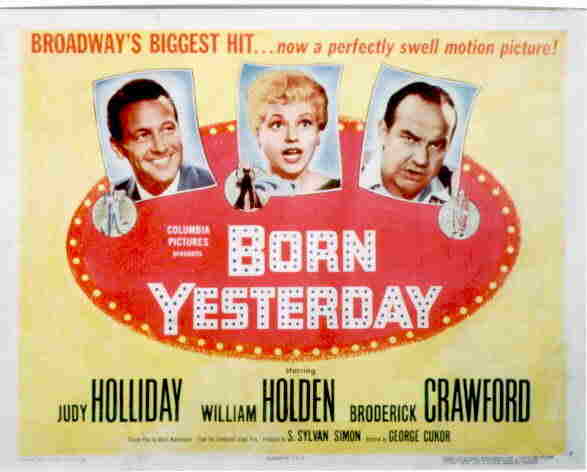
Born Yesterday (1950)

d21aa-bornyesStarring Judy Holliday, William Holden, and Broderick Crawford, this semi-comedy is about a dumb blonde who becomes cultured with the help of a tutor. Billie starts out as the girl of a gruff an who has made a fortune in metal. They are in D.C. together and he is embarrassed because she does not know how to act around well to do people. He brings in a young journalist to tutor her and over time, her mind and outlook on life changes. She is no longer one to be trifled with and she finally sees things for what they are. There is no doubt that Judy Holiday gave a good performance, I just did not find the film all that funny. I would rather watch My Fair Lady or Mr. Smith Goes to Washington which seemed to share similar aspects with this film.

3.5/5 Stars

Umberto D (1952)

ed3e0-umbertod

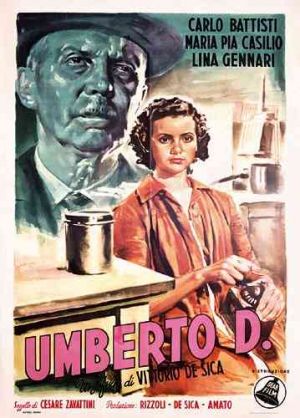
This Italian neo-realist film directed by Vittorio De Sica, with many untrained actors, is about an elderly man scraping by off his pension. His landlady wants to evict him and his only real friends are a maid and his dog Flike. Much of the movie follows him as he tries to pawn belongings for money. He is a very proud man with a respectable past, but now times are tough. We watch as he goes to the hospital, has his home taken out from under him, and then he tries to give away his beloved dog. This film at times can be very bleak but Mr. Umberto is resilient to the end.

4/5 Stars

Cat on a Hot Tin Roof (1958)

671b8-cat_roofAdapted from the Tennessee Williams play, the film stars Elizabeth Taylor, Paul Newman, and Burl Ives, with Jack Carson, and Judith Anderson. The film opens with Brick Pollick (Newman) injuring himself while he is drunk one night. The next day he is still constantly drinking and cold to his wife Maggie (Taylor). We learn this is because of the death of a friend. At the same time Big Daddy (Ives) arrives to celebrate his birthday with his family. The evening is full of angst and conflict over Big Daddy’s health, lies, truth, power, and love. Maggie wants Brick to look out for his interests based upon the conniving actions of his brother’s wife. Brick wants nothing of it and eventually tells his father so. They reconcile and Brick makes up with Maggie ending this film on a positive note. This film was certainly full of unrest and drama showing people struggling in love and figuring out their lives.

4/5 Stars

The Seventh Seal (1957)

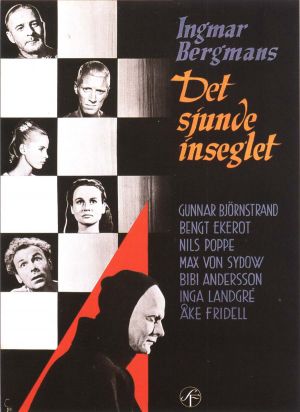
Starring Max Von Sydow and directed by Ingmar Bergman, this Swedish film revolves around a knight who returns from the Crusades with his squire. He begins a chess match with Death which parallels his travels across a land infested with the Black Death. Along the way he is joined by a pair of married actors and a blacksmith. However, he is tired and disillusioned with his life. To make matters worse he witnesses some terrible things and finally loses his game against Death. He returns to his wife with some of his friends and they face their fate when the time comes. This film was an interesting blending of a Medieval setting and modern disillusionment. Besides being very metaphorical, the cinematography is stark, while the title alludes to the events in the biblical book of Revelation.

5/5 Stars

Stalag 17 (1953)

Headlined by William Holden and directed by Billy Wilder, this is a great POW World War II film with its dramatic and comedic moments. Holden is the cynical camp scrounger Sefton and after some men are killed following an elaborate escape. everyone believes he is an informant. Tempers rise when two new prisoners arrive and one is questioned for his part in sabotage. Again the camp believes Sefton squealed and eventually they beat him up for being a traitor. However, Sefton himself finally figures out who the real informant is and tips off the barracks before another escape attempt. Sefton goes along and ironically the spy is used as their diversion so they can escape. This film has a lot of great characters including Cookie, Animal, Harry, and don’t forget Schultz who is reminiscent of To Be or Not to Be and a predecessor to Hogan’s Heroes own. Along with the Great Escape and the Bridge on the River Kwai, this is one of the best POW films.

4.5/5 Stars

Bridge on the River Kwai (1957)

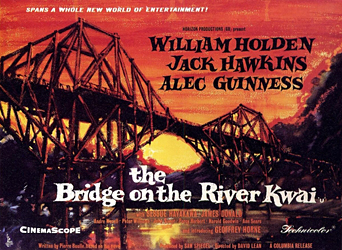
f1d1f-the_bridge_on_the_river_kwai_posterStarring Alec Guinness and William Holden with director David Lean, this is a World War II film that follows the exploits of British POWs and also Allies on a secret mission. Guinness is the proud and principled British Colonel who leads his men in a memorable entrance. With stubbornness he wages a war of wits against the Japanese camp overseer. He inspires his men and eventually reaches his goal of personally leading them in the completion of the bridge. At the same time an American soldier (Holden) attempts escape and somehow winds up alive and safe. However, all too soon he is sent right back with specialized commandos to destroy the bridge. In a chaotic and tragic finale, the British colonel puts a wrench in the plans and the implications are costly even though the objective is achieved. This is a magnificent and enjoyable film with good cinematography, interesting characters, a two-sided story, and of course whistling!

5/5 Stars

Seven Samurai (1954)

fde86-seven_samurai_movie_posterDirected by Akira Kurosawa, this is often considered one of the greatest films of all time. The story begins in a small Japanese village that is constantly being tormented by marauders. The bandits are about to strike again but decide to return after the harvest. The village elder advises the people to find some samurai in the time they have. Although they have no money, several men go to a town to look for help. There they witness the skill of an experienced samurai. He agrees to help them and also gathers five other skilled men who have no allegiance. They are followed by a seventh, wild samurai. The rest of the film follows the difficult relations between the anxious villagers and their protectors. The samurai fortify the village and also train the farmers for combat. Three samurai make a raid on the enemy and then later the bandits attack. They are hindered by the fortifications but still wreak havoc. The following day the climatic battle takes place. After the showdown, the village is safe but only 3 of the 7 are still alive.

4.5/5 Stars

The 400 Blows (1959)

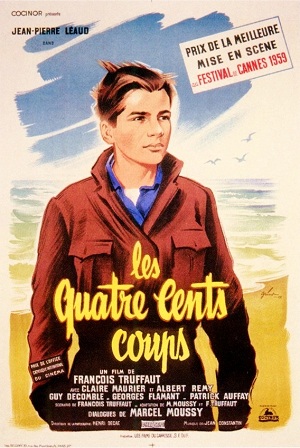
This French New Wave film directed by Francois Truffaut, more aptly titled The Wild One or Raising Hell, is about a young boy named Antoine. He comes from a working class family and his parents are struggling and frustrated. In school he gets poor grades and his teacher often punishes him. Annoyed with his life, he runs off for a time committing petty crimes and exploring the streets with a friend. That ends when he is caught stealing his father’s typewriter. Fed up for the last time his parents send him away to an observation center for boys. After he arrives Antoine escapes and runs to the ocean a sight he has never seen. With that the camera zooms in and we clearly see the face of this troubled, young boy. It is easy to appreciated this film because it does not glamorize the situation but tries to deal with it sensitively. Truffaut made a very good one here reflecting on his own experiences.

5/5 Stars

Anatomy of a Murder (1959)

251e0-anatomymurder2Starring Jimmy Stewart, George C. Scott, Lee Remick, and a cast of others, the film follows a small town lawyer (Stewart) as he defends a man who has committed murder. The whole case is complicated by the fact that the Lieutenant’s beautiful wife was supposedly raped by the murdered man. Now Stewart must battle it out in court using every strategy he knows in order to save his client. With the help of witnesses and evidence both sides have substantial cases. However, Stewart finds the topper in the dead man’s daughter, hoping this will save his client’s life. Despite the valiant effort of the prosecuting attorney and Stewart, everything is in the hands of the jury so now all they can do is wait. With an interesting score, a methodical story, and a great cast, this movie was a good one. The judge especially made this film enjoyable for me and you certainly cannot beat Stewart. It should also be noted that this film has one of the most famous movie posters of all time which was designed by Saul Bass.

4.5/5 Stars