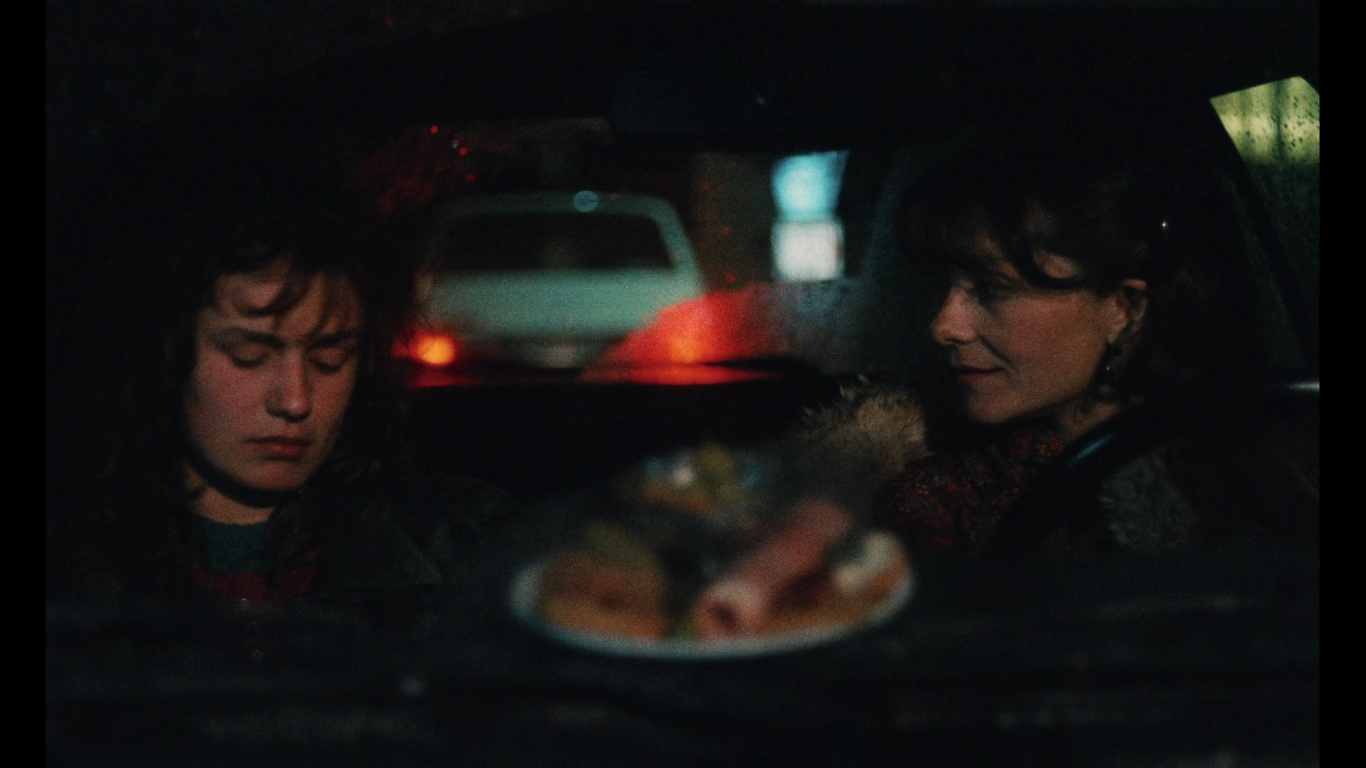
Three O’Clock High (1987)

The introduction of the main character Jerry Mitchell (Casey Siemaszko ) feels fairly standard and in line with Ferris Bueller, Say Anything, or any of its brethren from the ’80s. Late for school. Dirty shirts strewn about. Simultaneously zapping pop tarts and wet clothes in the microwave. Flat tires and your kid sister hands you a diet Coke to gargle the toothpaste you just finished brushing with. It’s quirky enough to give us some sense of who we’ll be following for the next hour and a half without straying too far from genre convention.

Still, all of this handy exposition feels a bit like a misdirect or at least suggests up-and-coming director Phil Joanou started out with one movie in mind and came up with something else along the way. More on that momentarily.

Jerry is a likable, if innocuous, dweeb we can probably imprint ourselves on and his high school, located in Odgen, Utah definitely doesn’t have the Hollywood glam. It lends itself to a different kind of visual milieu we can appreciate. All the adults in the movie for the most part are only totems to hang necessary impressions and sentiments on.

Jefferey Tambor is the closest to an actual character as a teacher who entrusts Jerry to run the student store and marvels at what a profitable business he’s managed. Otherwise, most of the authority figures and even government agents (how they always have time for teenagers is beyond me) feel like caricatures without too much premeditation.

Despite some promising introductions, most of the friends and female characters feel fairly empty no fault of their own. Jerry’s sister Brei has a chatty wit about her but essentially disappears from the movie popping up only when required.

There’s his thoughtful if slightly ethereal girlfriend (Annie Ryan) whose eyes grow luminous as she speaks candidly about spirit animals and her spirit “guide” Ethan. Don’t ask me to explain. And because Franny’s the brunette (yes, her name’s Franny), there’s also the untouchable blonde goddess Karen (Liza Morrow) who exists as a figment rather than a full-bodied character. She’s always ready to induce traffic accidents and seismic heart palpitations in our fearless hero.

Although it is Jerry’s story, it almost feels like it’s too much about Jerry and his inner psychology. He’s not the most intriguing part of the picture though we do need him as a conduit. Perhaps more could have been built out of his relationship and even his alienation from others. But it’s also necessary to take a moment to consider the movie’s tone and inspiration.

I’m not sure how to parse the fact from the fiction (this oral history is the best resource available) but supposedly this is one of the films Steven Spielberg requested to have his name taken off as an executive producer. It probably comes down to how dark it becomes though even this might lack the ring of truth.

Although it’s easy to label Three O’Clock High as a high school rendition of High Noon, it actually stands more in line with Martin Scorsese’s After Hours from a couple years prior. Given this comparison, Spielberg’s purported surprise would make more sense because this premise has all the potential hallmarks of a traditional ’80s teen movie.

Like its predecessor, I find it drags in the middle using time a bit like After Hours to give in to its most absurd and surrealist tendencies as Jerry’s world dissolves and slowly closes in around him.

One could easily say Soho in the prior film has been distilled down to the school corridors and classrooms Jerry is tied to as he sweats the hours ’til his inevitable annihilation. It does make it feel like Gary Cooper’s Will Kane when evoking the limiting factor of ticking clocks.

However, a venture to the principal’s office features the décor and camera angles fit for The Bates Motel. Later Jerry’s chased down by a security guard in the parking lot. Wasn’t the man in After Hours pursued by an angry ice cream truck? Otherwise, there’s a ghoulish school assembly accentuated by Tangerine Dream’s quintessential ’80s synths and any number of preliminary bouts laying the groundwork for his dreaded showdown.

We have yet to mention the movie’s primary villain whose psychotic reputation more than proceeds him, whispered throughout the halls and steps of the school as it is. The only reason there’s even a movie stems from Jerry’s position at the school newspaper. He’s given the unenviable assignment to profile Buddy Reveill (Richard Tyson) and one urinal encounter makes them mortal enemies for life. Nothing he can do can put off the unavoidable.

The ending does deliver on some of its payoffs by casting off any sense of moralism for a good old-fashioned bloody smackdown between good and evil without a ton of didactic consequences. Law and order are thrust aside as the adolescent masses cheer and rage sensing the brass-knuckled fury in the air. I did begin to wonder if in 80s-era America this hulking villain was a stand-in for fascist or authoritarian regimes. It’s of little importance.

Because this is only an afterthought as Jerry faces Goliath and is subsequently saved by the student body in a deus ex machina a la It’s a Wonderful Life. The lesson: It pays to stand up against tyranny and oppression in the school parking lot. More important still, boyish fantasy is kindled and nothing else exists beyond this singular moment in time. It is a kind of wish fulfillment for young males of a certain age.

Whether it was Joanou’s inspiration, screenwriters Richard Christian Matheson & Thomas Szollosi, or more likely a confluence of everything, Three O’Clock High feels more like a cult curio than an unadulterated classic. That’s not meant to be a slight, nor a total dismissal. It’s not Scorsese (it’s not even Speilberg). But it shouldn’t have to be. It deserves to be taken or left on its own terms as another addendum to the ’80s teen movie canon.

3/5 Stars

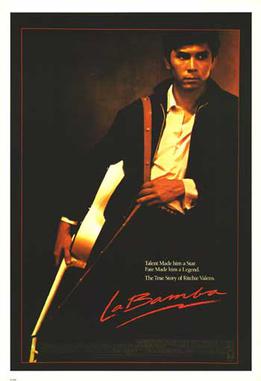
La Bamba (1987)

I must have learned about Ritchie Valens through Don McLean’s “American Pie.” Because there was a time when I was fascinated by all the musical references that seemed so oblique to my young mind. Eventually, the songwriter’s ode leads you to “The Day The Music Died” and if you know about Buddy Holly, you soon learn about The Big Bopper and Ritchie Valens.

The song “La Bamba” feels like a definitive track of a certain rock n roll era, and only now does it become easier to realize what an important cultural milestone it represents. The Mexican language went mainstream blending the rock craze with folk traditions of a people who felt well nigh invisible if no less important in the ’50s.

I do not know much about Luis Valdez, but as an emblematic figure in the Chicano movement of the ’60s and ’70s, he also gave us two of the most noteworthy Chicano movies of the 1980s. He turned his own play into Zoot Suit with Edward James Olmos, a film I was never able to fully connect with, but La Bamba feels like a more straight down-the-line biopic. He effectively brings to life one of the great Chicano heroes of the second half of the 20th century.

Lou Diamond Phillip’s vibrant performance glows with undeniable warmth and vitality. There’s not a disingenuous bone in his body, and he’s able to evoke the joy behind the microphone and the quiet fortitude that comes with his humble migrant background.

This is one of the most moving things about Valdez’s film because even almost 40 years on, these slices of life are still not always prevalent on the big screen. To see them in a period piece seems even more fitting because it’s a way of capturing the cultural moment for us lest we forget.

We see the plight and humble living conditions of migrant workers, there’s instability and broken families, but also the unbreakable bonds of extended families and communities looking out for one another.

La Bamba also has many of the beats of the biopic and since I don’t know the life of Valens intimately, I can only give conjecture on what’s fact and fiction. Part of the story involves his older half-brother (Esai Morales), who exists as the black sheep of the family opposite Ritchie. There’s the blooming of young love with the new girl in class, Donna (Danielle von Zerneck). His family and high school lives run in tandem with his meteoric rise after a record producer, Bob Keane (Joe Pantoliano), agrees to record some of his tracks.

Valens fear of flying, after a midair collision over his school, which killed his childhood friend and left him with recurring nightmares, has the ring of truth stranger than fiction. In keeping with this, the opening interlude of Santo and Johnny’s “Sleepwalk” feels apropos to represent the general mood of the era. What follows is a bit of a dream even as other moments sting with harsh realism.

There are so many narratives that could happen. There’s a bit of a Romeo and Juliet romance as Donna’s father tries to rebuff Ritchie’s sincere advances. Still, Donna remains devoted throughout the picture, and what a lovely thing is to see their euphoric joy together. The images suggest you don’t have to look like one another to fall in love. The fact the movie draws up this star-crossed romance between a 17-year-old and his 15-year-old beau feels of small consideration. It is a movie.

His brother knows how to make an entrance rolling up on his motorcycle, sunglasses on, cigarette between his lips. Or maybe this is only how we imagine him. Still, Bob’s demons could have been their own movie making him into a perturbing, abusive, drunken figure at the movie’s volatile center.

He’s effectively cast as Cain, never good enough or able to find favor in comparison to his thriving little brother. He spends the whole movie self-destructing and coming to terms with his brother’s burgeoning success. Later in life, it seems his real counterpart was able to resurrect his life and became a beloved member of his community.

Likewise, Bob Keane shows up in Ritchie’s life. We don’t really know how he got there or what all his motives are; still, there’s nothing too sinister in it. He helps Ritchie get big by recording and promoting him, and Valens is on top of the world.

It’s easy to see how all of these dynamics might have been either simplified or drawn up in such a way as to streamline the story or punctuate the dramatics. And yet I never begrudge the movie its choices, because it does feel like such a bountiful cultural artifact. The fact Los Lobos provided much of the soundtrack and even show up in a musical cameo is another notable distinction.

And the gutting, sinking feeling in the pit of our stomachs signals the dream cannot last. This talent taking the world by storm and rocking out with Eddie Cochran and Jackie Wilson will be snuffed out far too soon. So if everything else gets resolved in a Hollywood manner, our star is still going to be taken from us in the final reel. There’s no way to get around it.

McLean’s song mourned over it as “The Day The Music Died.” Thankfully, he was wrong. Yes, we no doubt lost out on years of musical output from Holly and Valens. Their young talents were undeniable, and yet their contributions to rock ‘n roll are far from dead. For their relatively short time in the public eye, they’ve cast very large shadows indeed. “La Bamba,” “Come on, Let’s Go,” and “Donna” feel like genre standards by now.

In his own way Valdez has guaranteed Valens won’t be totally disregarded (it was added to the National Film Registry in 2017), and Lou Diamond Phillips, bless his heart, made Valens far more than a hagiography of a deceased icon. He’s a young man with a warm, beating heart, a love for his family’s culture, and a love for rock ‘n roll. I can’t think of a better testament to Ritchie Valens than that.

4/5 Stars

Mystery Train (1989)

I hold an immediate affinity for the images at the core of Mystery Train: A Japanese couple (Youki Kudo and Masatoshi Nagase) riding a train. This is the ’80s so they’ve got a walkman with an audiocassette tape, and it’s blaring Elvis! It becomes apparent they are making a pilgrimage to Graceland so famously immortalized by Paul Simon. The song “Mystery Train” becomes an apropos and uncanny way to enter the story while paying homage to the King.

Jim Jarmusch always strikes me as such an open-minded and curious filmmaker. Modern society speaks in terms of diversity and inclusion, but the beauty of watching a Jarmusch picture, it’s the fact he’s not looking for these things in order to meet some quota. He seems generally interested by the stories and perspectives a whole host of characters can provide him, and his films benefit greatly from this enduring proclivity.

Regardless of where the funding came from, who else would consider making a film about two Japanese youth in search of Elvis Presley in the 1980s? They spend the first several minutes speaking a language that the primary audience probably does not understand. They likewise are bewildered by a upbeat yet motormouthed docent at Sun Records. Still, somehow shared passions for Carl Perkins, Jerry Lee Lewis, Roy Orbison et al., draw them together in inextricable ways.

There’s something perfectly fated about the whole thing with Screaming Jay Hawkins as a rather flamboyant hotel clerk aided by a youthful bellhop (Cinque Lee). I don’t know how to describe it but Hawkins has a command or a sway over the picture rather like Wolfman Jack in American Graffiti. His presence is felt and becomes so indelible in accentuating an aura. He comes to represent a certain era and a place in human form.

Jarmusch’s characters of choice often feel like sojourners, strangers in a strange land and Memphis is such a place. It is a film that features degradation — cracked pavements, garish neon lights, and portions of the world that are not perfectly manicured. What a concept. It’s almost like Jarmusch is giving us the real world albeit composed through his own cinematic lens. It’s no coincidence it has this kind of baked-in glow of Paris, Texas another film of geographical Americana captured so exquisitely by Robby Muller

It’s only a personal observation but my level enjoyment slightly decreased with each descending story. As someone who journeyed in Japan and went to one of the greatest concerts of my life in Yokohama, I feel this kind of kinship with these Japanese youths in their pilgrimage to Elvis and Carl Perkins. Also, on another level, this is a point of view we just don’t often see in movies of the 1980s or even today. Jarmusch is not using them as some kind of stereotypical punchline. He’s genuinely interested in their story and allowing it to play out in front of us.

Then, there’s Nicoletta Braschi in part two. She’s told a ghost story by a dubious stranger and gives him a tip to be left alone. She too seeks asylum for the night at the same hotel and gains a chatty roommate (Elizabeth Bracco) who is linked to our final vignette.

This last interlude with Steve Buscemi feels like it exists in the time capsule moment of a certain era where Tarrantino, the Coens, and others were making these stylized, often grotesque comedies. Elvis (Joe Strummer) gained his nickname inexplicably, but he’s also started to become unhinged because his girlfriend went up and left him. The cocktail of booze and firearms make his buddies Charlie (Buscemi) and Will Robinson (Rick Aviles) uneasy. Although it feels more like an absurd episode of The Twilight Zone than Lost in Space.

Regardless of my own preferences, Jarmusch still gives his world a sense of purposefulness. Again, it’s this serendipitous quality reminiscent of Jacques Demy’s fated films where lives cross paths and intersect in deeply poignant ways.

There’s something somehow elegant about the structure. It’s certainly premeditated and Jarmusch purportedly was inspired by classical literary styles in constructing his triptych, but it’s also a genuine pleasure to watch it unfurl.

The movie revolves on the axis of a few shared moments and places: A hotel, a radio DJ (Tom Waits) playing “Blue Moon,” and a gunshot. But it’s not like they’re all building to some kind of collective crescendo; it’s more so just a passing indication of how lives, whether they mean to be or not, are often interrelated.

Characters orbit each other and interact in these preordained ways that reflect the mind of the maker, in this case, Jarmusch. There’s something oddly compelling and comic about it, but there’s simultaneously a sense of comfort. We have order and a kind of narrative symmetry leading back out from whence we came.

Jarmusch is calling on the poetry of the ages and so in a movie that seems to have a free and laissez-faire attitude, there’s still a very clear order behind it, three distinct threads end-to-end and yet still interwoven into a tapestry that we can appreciate. Mystery Train represents the best in cinematic storytelling — with purposeful composition and aesthetics — but also a sense of aura and inscrutability.

It’s funny and yet when it’s over there’s also satisfaction and a hint of wistfulness. I wish there were more of its ilk today. The movie that’s come the closest is Paterson — another modern jewel from Jim Jarmusch. I see that film in a new light as a much older, wiser, and more forthcoming Masatoshi Nagase sits down on a bench with Adam Driver.

Again, it is a story about the human journey, how we are all travelers in some sense, and what a beautiful thing it is to relish the road because it can lead us to so many beguiling places if we take the time.

4/5 Stars

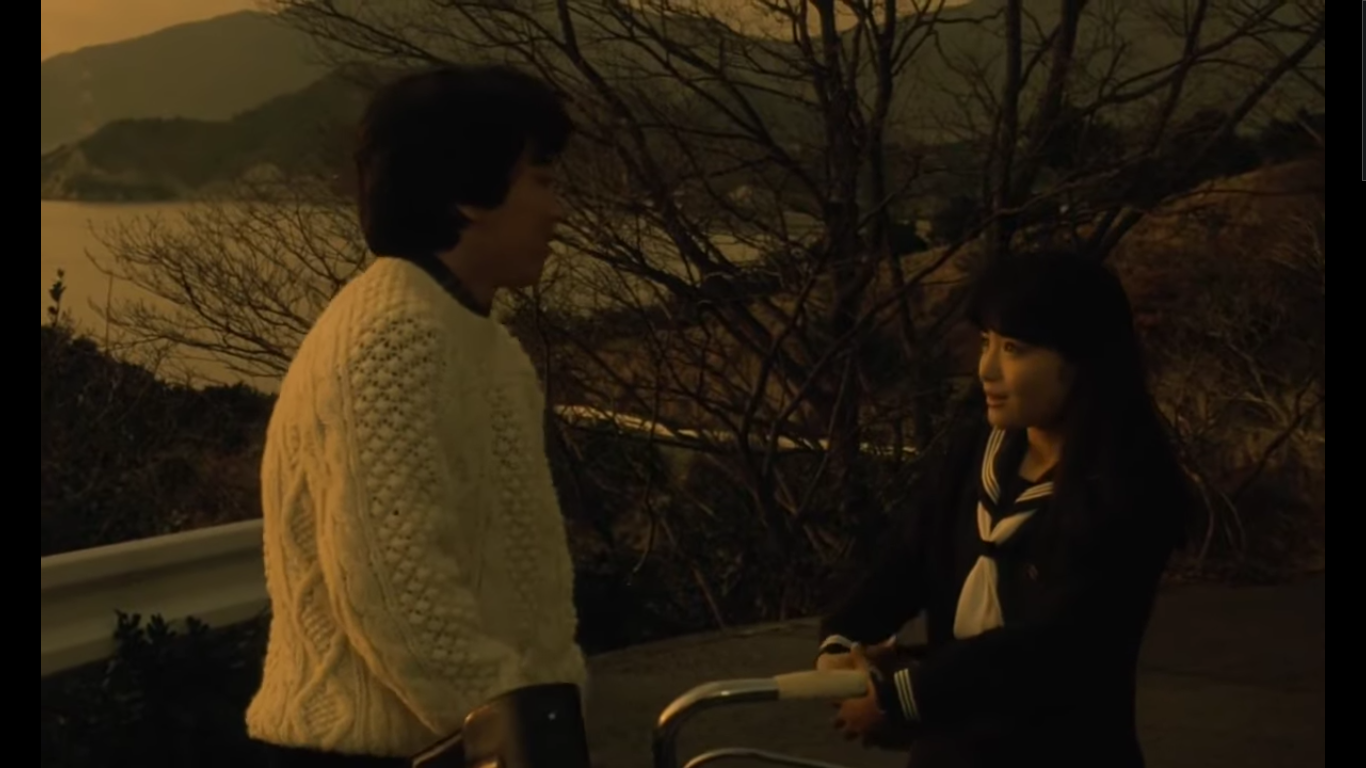
Beijing Watermelon (1989)

Nobuhiko Obayashi is known to a pocket of western moviegoers for his crazy, unhinged haunted house flick Hausu (1977), but as I’ve gotten more familiar with at least some of his filmography, I’ve come to appreciate his more grounded works.

Using this phrase has the danger of giving the wrong impression about him. This doesn’t imply boring or anything of the sort. Still, some of his later works are told with such humanity through relationships, humor, and often a wistful nostalgia that comes on the tails of youthful optimism.

Beijing Watermelon hardly makes a blip on the radar. I consider myself fairly well-versed in film (albeit with many noticeable blind spots), but I had never heard of it.

Still, this film spoke to me through its simple rhythms. It’s easy enough to introduce the premise and still fail to totally articulate what makes this movie such a meaningful experience for the right person. Because it a mundane slice of life tale following a grocery store owner who comes to form a bond with a contingent of Chinese students studying and living in Japan.

It begins inauspiciously enough when a poor Chinese student tries to barter with him. He’s a bit offended by it — his prices are already reasonable — but events cause him to take an interest in the young man’s life and his well-being. He meets Li and a host of local students who are many miles away from home. It feels inexplicable at first, but as time progresses, they form an unalienable connection. I’m not sure if other’s find this cross-cultural relationship to be unbelievable or at the very least somewhat whimsical.

As someone who has lived abroad in Japan of all places and relied on other people’s good graces, there was something so resonant about this scenario. It spoke to me on a profound level, and it was not in spite of the mundane nature but rather because of it.

The comedian “Bengal” who stars as the greengrocer Haruzo Horikoshi, somehow reminds me of the Tora-san character. It’s almost like he’s an extension of the Japanese comic prototype. He’s at times a buffoon and outlandish, and yet he’s imbued with so much heart and by extension pathos. If we stretch the Tora-San metaphor, he feels a bit like the Japanese everyman who brings back nostalgic reminisces of a different era. There’s something hilarious and tragic and warm about him all at the same time.

I must admit that there’s a point where it feels like the Chinese students are taking advantage of Mr. Haruzo. Perhaps it’s just a cultural difference and a way of showing good-humor and affection, but as an outside observer and someone who has a modest appreciation for Japanese courtesy I felt bad for the man.

At the same time, he continues to grow more and more accustomed to providing them discount goods, maintaining letter correspondence with Li when he returns home, and then picking up a new arrival at the airport named Zhang.

As a side note, there are two airport sequences that feel so authentic. The callow student looks downs and realizes his bags are missing! Of course, they are nearby where a thoughtful lady has set them aside out of the way. Also, a local Japanese man brags about his English prowess. Except the moment an English-speaking tourist asks for directions, he has no help to offer and sheepishly walks away.

By this point, we must ask the question: why does Mr. Haruzo feel compelled to do all this? There’s something in his constitution that makes him different, causing him to go against the tide of Japanese convention. Because what he does transcends polite niceties and keeping up appearances. Dare I say, it’s true sacrifice.

Could it be he’s slowly falling in love with the earnest Pingping? A lesser film would have played this up for the sake of drama. But while the affection is evident, it never goes further than that.

Meanwhile, his local neighbors joke that he’s caught the “Chinese disease.” If that’s so I’d probably wish I had it too. Of course, eventually it seems to derail his life. His business isn’t profitable anymore, he’s less present with his family. His long-suffering wife (Masako Motai) is trying to pick up the slack because he feels mostly absent. His kids feel ashamed by how he’s acting. Even his shaggy-haired employee vows to go to a rival supermarket where he won’t be a laughingstock.

It feels like Mr. Haruzo’s ruined — entirely thrown away his life — and soon the tax board comes to impound his belongings while he’s also detained for a hilarious public disturbance while requesting a loan. The heightened blood pressure leads to an extended stay at the hospital. Surely this cannot be the fruit of his troubles? He’s in such a dejected space with his family unsure what to make of him.

It’s a bit on the nose, but I think of that immortal line that “no man is a failure who has friends” and of course, the friends Mr. Haruzo has in his life come to his aid when he needs it most. It’s a beautiful sentiment and something I’m sure many of us recognize if we’ve ever been enmeshed in a close-knit community.

The watermelon becomes one of the substantive cultural metaphors of the film, and as someone who lived in Japan as a westerner and has spent many years working in international spaces, this film speaks to me on a deep level.

Surely you don’t need this in order to appreciate the film, but as I watch this Japanese man build cultural bridges and become a kind of local institution with a spread in the paper and then getting treated like a king by all his grateful beneficiaries, I was fundamentally moved.

I think of the people in my life overseas who watched over me at my most vulnerable or lifelong friends my parents and siblings have made when they were abroad. If we let it, film can be one of the great universal unifiers, a language unto itself that connects us and transcends cultural origins or international borders. That’s what it’s often been for me and Beijing Watermelon is such a winsome portrait of what I aspire to in my life.

I’m not sure if anyone else has made this comparison, but Haruzo Horiko feels a bit like a Japanese Mr. Chips because with his name comes a lasting legacy and impact. It turns out to be an extraordinary life.

There is one last aspect of Beijing Watermelon that deserves some comment. I acknowledged already that this is one of Obayashi’s more formally traditional films, and yet he still breaks out of narrative convention — not for want of ostentatious showmanship — but because it serves the story he wishes to tell.

I could not track down any definitive details, but Beijing Watermelon is supposed to be based off real events that happened. However, Obayashi takes this biography and gives it a Brechtian ending, somehow working with the negative space of the film and what it does not show.

Bengal speaks to us and tells us we are back on a Japanese set in a studio. He and his movie wife journey to China and yet it’s made explicit that they are in the cabin of a plane set and not an actual plane for a reunion with all their Chinese friends.

If you’re like me, you question why have this break with the cinematic reality? The movie was humming along beautifully without the distraction. But then it slowly becomes more apparent the longer you sit with it, especially considering the cultural moment and what was happening in China — the Tiananmen Square massacre of June 4, 1989 being a particular inflection point…

Because even if you are not aware of any of this, there’s something imperceptible and still intuitive about the melancholy that comes over the viewer. It’s all there in the movie both the warm feelings welling up inside of us, but also this inherent sense of sadness carried with those Chinese students as they play and sing their bittersweet song on the beach with the credits rolling against them. The postscript of the movie is what does it for me as a final rallying cry and call for greater cultural understanding:

“We dedicate this film to all our young Chinese friends.”

What an extraordinary film. I hope more people can search it out and enjoy it as much as I did.

4.5/5 Stars

Mask (1985): Eric Stoltz and Cher

Peter Bogdanovich lost his girlfriend Dorothy Stratten to tragedy in 1981 and after the release of their picture together, They All Laughed, it was anyone’s guess if he’d ever be able to return to directing.

I’ve heard an often-repeated anecdote that he ultimately decided to take Mask as his next project as a way to honor Dorothy. The reason isn’t immediately obvious. However, he explains that Dorothy was fascinated by the Elephant Man, who shared the same condition as Rocky in Mask. But she was a highly sought after beautiful woman. How could she relate?

It seems that extreme ugliness and extreme beauty by the world’s standards puts you outside of the normal purview of society. It’s not something individuals asked for. They are born with it or given it by circumstance, and as a result you have the world’s prying eyes looking at you. So both of these films are about this kind of social “others,” who must make an existence for themselves in a world where they’ll never quite fit in.

The greatest epiphany of Mask is how Rocky (Eric Stoltz) does exactly that. We’ve seen movies about people lashing out because of the hand they’ve been dealt. This is a reasonable reaction, but this movie is never about that.

It’s my own human inadequacies making it so I look at him and feel discomfort. But it’s a classic example of not judging a book by its cover. Outward appearance doesn’t define the mark of an individual.

The brilliance of this teenager is how he rewrites the script and subverts the expectations around him. He’s the personification of all our outcast inclinations when we’re in middle school and high school. None of us would have envied him during those formative years. And yet he rarely gets rattled by any of it, even when he might have the most excuse to do so.

Rocky has a level of supreme confidence so in a manner of weeks teachers know he can succeed and look after himself and his fellow students come to appreciate his wit and his near-Encyclopedic knowledge. He has a high view of himself and this allows him to be self-deprecating. I like the idea that we don’t think less of ourselves, but we think of ourselves less often. It makes our lives centered around others.

Part of this is the family unity around him. They support him and love him for who he is even as he does yeoman’s work to look after his mother. It’s almost as if he’s her guardian sometimes with the lifestyle she leads, a holdover from the ’60s with drugs and a conveyor belt of male suitors.

Cher is a powerful force and she always has a natural charisma in front of the camera that suggests so much about her. Although their relationship is the backbone of the whole movie, they have an entire motorcycle gang to watch out for them including the old family friend and Cher’s past lover Sam Elliot.

He’s a quiet enigma of cool, but with his laidback demeanor and a “Moustache Rides” tee, a character who could easily be a vehicle for outside conflict becomes more of a stabilizing force.

Rocky is even granted one of the loveliest adolescent romances of the 80s as he begrudgingly decides to spend his summer volunteering at a camp for the blind meeting Diana Adams (Laura Dern).

It’s reminiscent of City Lights with a love story based on personality and kindness as opposed to superficial appearance. In other words, it is a deeper bond and even as she’s an equestrian girl with an affluent background and he’s been raised on the road with a motorcycle gang, they relate on what’s most important.

I couldn’t help myself and seek out the writing on the wall. Rocky can’t last forever. In real life Roy L. “Rocky” Dennis passed away at 16 years old. If you didn’t know him you might think this was merciful and yet having watched his life play out on screen, we see the tragedy of it. He was such a loving, vibrant, jovial force to behold. He could have accomplished so much. And one can only imagine his mother was devastated. Because her boy was special and the bond they held was incomparable.

Bogdanovich augments the story with his trademark use of dietetic sound to fill out the world on top of some of Bruce Springsteen’s finest tracks. I watched the director’s cut which included a few extra scenes and all I can say is that I’m thankful to Bogdanovich’s conviction to get his version out there without compromise. This included working with Springsteen himself to get the original recordings licensed for the rerelease. It pays heavy dividends.

Regardless of the director’s shortcomings, I will dearly miss his classical sensibilities as a filmmaker. He made films imbued with joy and melancholy. Both speak to me and surely I’m not the only one because life becomes a subtle dance between a panoply of emotions.

Like the masters of old, he was able to take a story and personalize it so the core themes are somehow made manifest and evident in his own life. It’s a lovely brand of storytelling, and it allows Mask to constantly ambush us with some winsome surprises. This is how movies should be.

4/5 Stars

Running on Empty (1988): River Phoenix, Fire and Rain.

I know only very little about River Phoenix’s upbringing but somehow it’s easy for me to make the leap from his real-life existence to his family in this movie. Running on Empty has to do with an unconventional upbringing.

Danny Pope (that’s his real name) has grown up with his little brother and two parents Annie (Christine Lahti) and Arthur (Judd Hirsch), who have lived on the run from the feds since the early 70s. They were implicated in an anti-war protest at a napalm plant that left a janitor dead.

The Popes are a tight-night clan in spite of their unusual circumstances or because of them. Somehow in this environment of constant flux and fresh identities, they’ve managed to raise two boys who are loving and smart.

Danny enrolls in a new school and immediately distinguishes himself on the piano. He seems like an obscure prodigy because no one knows anything about him and his benevolent music instructor (Ed Crowley) gets little information on him. Still, he’s talented and generally considerate. He doesn’t play into the expected stereotypes of a malcontent.

He also makes the acquaintance of the teacher’s daughter (Martha Plimpton) who has a much more jaundiced view of education and musical appreciation. She’s used to a more typical lifestyle and yet she’s drawn to the new boy, not out of an act of rebellion against an overbearing father or anything like that. Danny is genuinely decent and kind. She immediately likes him, and they spend time together. She wants to get to know his family too and so she does.

I was a bit disappointed Jackson Browne’s tune “Running on Empty” has no place in the movie, but they may have done themselves one better with James Taylor’s “Fire and Rain.” Their celebration of Anne’s birthday turns into a dance party in the dining room; there’s something spontaneous and joyous about it.

It encapsulates the best aspects of the movie where we’re suspended in these moments of relational goodness. To be a part of the scene feels organic and the characters become all the more real in front of our eyes. We enjoy their company.

Martha Plimpton has a James Dean Rebel Without a Cause poster in her bedroom and somehow Phoenix carries some of the same ethos. There’s the morbid similarity in that they both died young and yet more than that, it has to do with a palpable emotional investment in their roles. It’s more like music than it is blue-collar craftsmanship and their brand of sensitive masculinity feels off the charts.

Phoenix has an emotional maturity and precociousness that feels wise beyond his years and still wracked with inner demons. Here he must carry the burden of his parents’ life. It also fuels the budding romance that Phoenix and Plimpton were an item in real life.

Christine Lathi still feels mostly underappreciated as an actress. She’s a loving mother, a strong wife, and the scene where she has a teary reunion with her father after many years is lachrymose but never totally saccharine. They supply just the right amount of heartbreak and tenderness.

Judd Hirsch deserves his plaudits as well though if you’re like me you appreciate him for being the stabilizing force on Taxi. He plays the part so well that sometimes you forget he’s an actor’s actor.

I’m reminded of his rapport with Timothy Hutton in Ordinary People and his scenes with Lahti and Phoenix here. He always gives off this aura of street smarts. He’s tough and able to spar, but it’s never totally untethered from his unerring heart. He cares and somehow he’s able to make his audience feel his concern.

What I appreciated most is that Running on Empty never feels over-reliant on its political elements which are often relegated to the background in favor of far more sensitive developments of character. It would be so easy to succumb to drama. Instead, it chooses a more nuanced road as Danny starts to put down roots and gets encouraged to apply to Julliard. Suddenly, his lifelong anonymity is bumping up against his youthful dreams of a normal future.

Director Sidney Lumet was always a fine filmmaker and one of the most enduring because he was a workman and he knew how to rehearse, he was smart, and made compelling movies. Running on Empty is never one of the most high profile mentioned, but it leaves space and feels attuned to the family at its center and their relationships. This is why I go to the movies to be shown people’s humanity up on the screen and then be uplifted by it.

The movie hardly dwells on its ending. Perhaps we could have done with a bit more resolution, but it does itself proud with a refrain of James Taylor’s “Fire and Rain” pulled from an earlier scene. It’s as if the chorus of singing voices — the family all joyful and gay — is a concrete reminder that that bond will never be broken even as they move on.

There’s something satisfying about discretely reaching back and referring to the movie’s most poignant moment. Because it means so much and these are the kind of memories we carry with us wherever we go. Family is forever.

4/5 Stars

Bill Forsyth’s Films: Gregory’s Girl, Local Hero, Etc.

Bill Forsyth is a director who has flown under my radar, and yet only after a week’s time and a handful of films, he’s quietly become a new favorite. Now I heartily understand why he’s one of Scotland’s most beloved directors. Part of his appeal is because he wrote and directed his own projects, but it also comes down to how he imbues his films with a certain sensibility that’s thoroughly disarming.

That Sinking Feeling (1979)

That Sinking Feeling was his debut, a microbudget caper about a pack of eccentric Glasgow youth who alight on a plan to make a buck stealing sinks. It follows the beats of a heist while straining them through a very specific experience.

What Forsyth brings out of his youthful troupe of actors are the lovely idiosyncrasies his films are all utterly replete with. It’s the kind of humor that feels honest in its truth and the good nature behind it. Many of the faces that show up throughout would crop up in some of his later works as well.

Comfort and Joy (1984)

For some, Comfort and Joy might be a new Christmas tradition. It’s a low-key movie finding its footing by focusing on a disc jockey (Bill Patterson) who’s a kind of local celebrity thanks to his good humor, jingles, and the fact he’s in people’s homes just about every day.

There’s a curious streak to the movie as Dicky becomes a kind of mediator between two rival families in the local ice cream racket. I’m not sure where these premonitions come from, but the way Dicky gets caught up in the late-night escapades in the feud between ice cream vendors, I couldn’t help but think of the milieu of After Hours. It’s probably because the situation escalates into this quirky absurdity with a touch of doom.

It has a few fanciful dreams and feels like it could be a sick nightmare. Still, Forsyth never allows any of this to totality derail the prevailing good nature of his characters.

Housekeeping (1987)

In 1987, he alighted on another journey, writing and directing an adaptation of Marilynn Robinson’s Housekeeping. Although it was his first American production, it also brought him together again with his fellow countryman, producer David Putnam.

It’s a film rather reminiscent of Jonathan Demme’s Swing Shift and it’s not simply due to the inclusion of Christina Lathi. It’s the way Forsyth hones in on a story of keenly observed moments and distinct characters rather than a fierce adherence to form and structure. Yet again, there’s a clear-eyed authenticity to it that feels far from being fabricated. It maintains this ethos, and time and time again succumbs to these quietly profound moments that are all too easy to disregard.

I’d like to take the rest of my time to highlight Forsyth’s two most noteworthy films because they all but embody my newfound appreciation for the director.

Gregory’s Girl (1980)

The opening tag immediately feels like the opening moment in any number of cringe coming-of-age films. A group of prepubescent peeping toms gape at a beautiful woman hidden behind glass. Gregory’s Girl looks destined to join the trashy, smutty cadre of ’80s locker room movies. And yet around every turn as I kept expecting the worst, here is a film that constantly surprised and left the dorkiest, most curious, and strangely poignant impressions.

Gregory (John Gordon Sinclair) is one of those iconic coming-of-age protagonists, meaning he’s a spindly dork with the most atrocious head of hair imaginable, and we’re already talking about the ’80s. Still, in a word that could easily be harsh and unfeeling, he makes it genial and a tad innocent.

He doesn’t have a killer instinct out on the football pitch. He loses his coveted striker spot only to bump his best friend, another loser named Andy, out of goal. They hardly seem to mind. Because they’ve made way for the school’s latest talent: the athletic blonde Dorothy (Dee Hepburn).

Again, this brings with it all sorts of potential problems. The male population is quick to rally around her — cheering her on ardently — though it could be a lot worse. It suggests girls can excel in many facets. However, it does run the danger of turning her into a regressive object where the girl is a trophy to be won.

On more than one occasion, it bends away from the expected gauntlet of crude jokes giving us something lighter, more agreeable. It comes with how it conceives of a very particular version of adolescence: small-town Scotland outside the urban decay of the big city. It feels quieter and more hopeful, even if the world itself and the time in life is incredibly transient.

Gregory’s Girl is nothing like what I expected. It was far better. Yes, it’s a slight film, but this plays to its strengths because it gives us these characters and these moments — observations we can appreciate — and then we get to leave them with a wealth of affection. It’s easy to see my estimation of this one rising after future viewings. Even as I ruminate on the title Gregory’s Girl, it has new meaning, and it makes me smile. It’s a pleasure to have expectations subverted and then exceeded.

4/5 Stars

Local Hero (1983)

Local Hero is bolstered by a simple premise being subverted. A colossal American oil company looks to gobble up land in and around an idyllic Scottish village. However, there’s no malevolent corruption and their eccentric benefactor, Mr. Happer (Burt Lancaster), would much rather chart the stars than deal with any amount of oil refineries.

Likewise, it’s never a story of the little guys trying to hold out against progress. The locals are delirious about the money coming their way. Instead, we come to appreciate what this kind of life has to offer as does our stand-in Mac (Peter Riegert).

It hearkens back to an era — the days that made my parents fall in love with the U.K. –where there were still pockets of the world seemingly untouched by modernity and true western influence. The Texas businessman and his Scottish sidekick (Peter Capaldi), pay a visit to the small town and set up shop in the B&B. The local pub is where the whole town pools their funds to make change for an intercontinental phone call.

At first they look rather out of place: two suits walking across the beaches with their briefcases. But then we get a passing sense of who they are as people. They are romantics even friends of passing rabbits. We come to like them. The same might be said of the town and why not? Wow, is the countryside breathtaking. I miss it so.

This is never a movie about board rooms or business, but the bits of business happening in a community. There are all sorts of people, and the quaint elements prove utterly charming.

What a lovely connection between Star Wars and Local Hero to have Wedge Antilles be the town’s main accountant and hotelkeeper prepared to cut a deal with the man from America. Though any amount of haggling or conflict never materializes and they quickly become best buds.

If there was any conflict, it all but evaporates and what is left is warm humor and the forming of lasting relationships. There are the cultural differences, the manifold eccentricities, but there’s also the congeniality. It’s part of what makes this unassuming movie such a pleasure.  Local Hero is gentle cinema, and it’s exactly what we need.

4/5 Stars

Vagabond (1985): Agnes Varda’s Empathetic Kane

Vagabond (or Sans toit ni loi, in French) plays as the sum of a fairly dismal life but not an unworthy one. For those familiar with Agnes Varda’s filmography, whether the penchant for seascapes or her concerted empathy for the discarded, it’s easy to see how this picture fits in with the others. In many ways, it blends her sensibilities for narrative fiction and her later documentary work like The Gleaners and I.

However, from a storytelling perspective, Vagabond also plays as her Citizen Kane, except she sets her sight on someone on the complete opposite end of the human spectrum. It’s curious how the paragon of money and power could somehow share fundamental things in common with a proud, young drifter. They feel so isolated and in some sense unknowable because they rarely allow others in.

Citizen Kane is a veritable jungle gym of technical invention and play. There’s never been anything quite like it, but the qualm I always maintained on early viewings is how there’s no connection. Because this is the point. It feels a bit hollow. We never get to truly know Charles Foster Kane because he never really let anyone know him.

The curious thing is how Varda derives so much concern for her subject. If we don’t end up knowing a great deal about her personal biography, it does feel like we at least appreciate her as a ceaselessly proud and increasingly worn-down human being.

I have so little history with Sandrine Bonaire and know only that she made an auspicious appearance in Maurice Pialat’s A Nos Amour (1983). However, watching her is a pleasure; she looks like a more stoic predecessor to Brie Larson.

In many ways, Bonaire’s character informs the structure of the film and so it functions well. She is an itinerant young woman, free and apparently happy with her lifestyle. It’s easy to label her as a vagrant and a loafer. She never holds down a consistent job and maintains a brusque belligerence in the face of others. It makes her fiercely independent, and skeptical about the prevailing philosophies of life.

Through it all, we don’t know where she will go; she fosters these short, finite relationships that have a definite beginning and end, and then she moves on to her next destination. There’s no goal or visible endpoint. All we have is the frame of the story to give us some reference to make sense of her life.

It’s composed of scenes featuring these kinds of visual ellipsis as people she interacted with recount their meetings. Each person views her in a different light, and we must come to understand her in this piecemeal fashion only through the perspective of others.

There’s a bohemian family of shepherds who used to be a part of the establishment but now live a rural, much simpler life taking care of livestock. The closest thing she has to a friend and a saint is a beautiful academic (Macha Méril), who has spent her life researching a fungus brought over during WWII that is slowly killing the local trees. She has a conscience and a warm spirit. Far from deterring her, the girl’s standoffish nature of cigarettes and glowering glances only seems to bring out greater adulation. There’s a hint her benefactor feels it too.

A Tunisian farmhand with a welcoming spirit is another person of generosity in her life. They seem to have nothing in common, and yet they bond because they have shared a similar experience of the world as perennial outsiders. He’s the only person she actually shares her birth name with: It’s Mona.

But our protagonist opens herself up only to get hurt. He offers to let her stay in their quarters and help take care of the local vineyards. It’s another brief promise of something beyond a drifter’s life, however small. Still, upon his coworkers’ return, they’re not agreeable to having a woman in their midst. She’s forced to push on again. It’s the life she’s used to, and yet the circumstances make the moment a far more painful point of departure.

There are signs that this is not sustainable no matter how romantic it might seem. Mona befriends an old white-haired lady slowly dying in her grand estate after posing as her maid. Would Mona have been a friend of Charles Foster Kane? This is the closest thing we have to answer, although it too becomes a closed door as the woman’s only kin, a young nephew is anxious to get what’s coming to him.

In a bit of serendipity worthy of Varda’s husband Jacques Demy, there is a kind of interwoven fate to these relationships as some of them begin to fold over on one another and interconnect with Mona in the middle. But this must not be mistaken for Providence.

Her lot becomes increasingly bleak, and there’s obvious intent here. There’s no other place to go. Whether Varda failed to show them before or not, I started to notice the makeshift carpet shoes Mona wears on her feet. She feels all the more pitiful falling in with dubious company and beginning to drink more.

She’s also accosted by some local practical jokers who run about town throwing paint bombs in a mad show of anarchy and artistic expression. There’s no rhyme or reason to it per se, although it leaves her more disillusioned and covered in brown paint that makes her look even more feeble than before. Then, a fire takes her belongings, and she must flee in the wake of an angry confrontation. She’s offered no respite.

At once such a proud and independent individual, she looks so dejected when we finally leave her shivering in her blanket trying to stay warm as a dog barks at her from right outside. It does feel as if the window has closed for her. She had glimpses of other lives and yet they all amounted to nothing. And she is left with nothing.

Freedom is such an exhilarating thing, not being totally beholden to the strictures of the world around us. But it’s equally terrifying being cast out into a life where we have no one to care for us, no one there to love or be loved by. Here again, Vagabond and Kane are so closely related. Whether we die in a luxurious bedroom or a ditch by the roadside, it doesn’t much matter. The outcomes are the same. There’s something ultimately deceptive and debilitating about their respective freedoms. It’s not freedom at all.

4.5/5 Stars

Confidentially Yours (1983): Fanny Ardant, Hitchcock, and Truffaut

This is my Entry in the Classic Movie Blog Association’s Fall Blogathon Movies are Murder!

Although no one knew it at the time, Confidentially Yours would become the makeshift curtain call to Francois Truffaut’s career as he died of a brain tumor shortly thereafter. The movie in no way makes up for the works we lost out on, but there are some fitting summations worth appreciating. Truffaut cast his latest muse, Fanny Ardant, in the lead role — subverting the prototypical blonde Hitchocockian heroine.

Like her predecessors, Ardant is winsome and brave, whether in stage garb or a trenchcoat in the tradition of noir working girls like Ella Raines or even Grace Kelly. They’re capable of being both intrepid and alluring on screen as the dauntless motor behind the story.

It’s true the film’s plot, execution, and sense of style owe a debt of gratitude to Truffaut’s cinematic hero. Like Alfred Hitchcock’s film Stage Fright, Confidentially Yours covers murder and the performative aspects surrounding it.

There’s a kind of duality because Ardant is not only a secretary embroiled in a local murder, but also moonlights as a stage performer at night even as she dons various parts throughout the movie to aid in her detective work. Much of this fades away as mere pretense as we get deeper and deeper into the nitty-gritty world of old-fashioned noir.

Confidentially Yours boasts a brisk beginning befitting a more contemporary film: A man is brutally shot out at a pond, and there’s only one obvious suspect. Truffaut implicates his own star through the cut because the first image we see after a bloody murder by a faceless perpetrator is Jean-Louis Trinitnant walking back to his car. He sees a nearby car door left ajar, and he closes it before returning to his own vehicle and driving off. When the police come to question him later, he seems to slip up in his story.

Surely he’s a guilty party. He has motive. His wife was unfaithful, and now one of her many boyfriends is dead. What’s more, Trintignant plays him as a brusque character — he’s not winning any awards for likeability — and yet these are not the metrics for guilt and innocence as we’re probably already all aware of. To use a staid figure of speech, people are often more than meets the eye.

Also, there’s the question about fingerprints. He left them all over the crime scene. Either he’s an incalculable fool or there’s more to the story. Ardant occupies an unenviable position. She seems to be working for a guilty party, she’s given the ax by her embittered employer, and yet she still finds some compulsion to begin poking around.

She starts sleuthing, coming into contact with a melange of lawyers, policemen, and shadowy undesirables. It’s easy to get bogged down by what feels like an incomprehensible cascade of plotting, but isn’t this the point? It’s not the particulars but the means of getting there proving the most important, and Ardent is one of the most supernal vessels we could possibly imagine. Somehow she seems like the predecessor of Hayley Atwood with the poise of Isabella Rossellini thrown in for good measure.

One of the film’s other lasting assets is the gorgeous monochromatic tones of Nestor Almendros. It proves to be an immaculate act of mimesis plucking the movie out of the ’80s and allowing it to drift into that timeless era of yesteryear that only lives in the thoughts and recollections of our elders who experienced the world and dreamed in black and white.

As her employer stays mostly anonymous behind his shuttered-up storefront, Ardant becomes his hands and feet, searching out a ticket taker at a movie house, and then leading to a nightclub. Later, she looks to infiltrate a prostitution ring using all her wiles to spy out the window of the lavatory. Eventually, her tenacity is rewarded, and she does what the police seem incapable of through normal channels.

Truffaut for me will always be one of the most ardent cinephiles with the likes of Martin Scorsese and a handful of others. Men who often made fantastic, exhilarating films, but not out of a debt to mere craftsmanship or technique. It’s so palpable how much they love these things. Their films can’t help but smolder with a boyish fanaticism they were never quite able to shake.

Scorsese still seems to make a young man’s movies with an old man’s themes, and even though we lost Truffaut at 53, hardly in the autumn of his life, he had some of the same proclivities. He loves the genre conventions of old. There’s almost a giddy enthusiasm to do his own Hitchcock movies like Shoot The Piano Player, Mississippi Mermaid, The Bride Wore Black or even this final entry.

And yet on the other end of the spectrum with the likes of Antoine Doinel, The Wild Child, and Pocket Money, he managed to tap into these deep reservoirs of emotional soulfulness. It feels as if adolescence is incarnated and imbued with empathy by someone who never quite left that life behind.

Since Godard still manages to have an influence on cinema culture as one of the revered old guard throughout this century, it remains a shame we lost Truffaut so prematurely. He still lives on through his films and the admiration of others like Steven Spielberg, but I do feel like if he was still alive today, his love of the movies would be equally infectious if not more so. I suppose it makes the catalog he left behind all the more important.

I didn’t consider until this very moment, but with “confidentially yours” the director is leaving us with his final valediction before signing off. It seems fitting his complementary farewell drips with the pulp sentiments he relished starring a lady whom he loved.

4/5 Stars

Note: This review was originally written before the passing of Jean-Luc Godard on September 13, 2022.

Babette’s Feast (1987)

I love fairy tales where we know conspicuously that we are being told a story. They can be delivered by Peter Falk in The Princess Bride, Edward Everett Horton in Fractured Fair Tales, or in this case, Ghita Norby.

Let it be said that there’s something inherently peaceful about the rhythms of Babette’s Feast. We meet two sisters devoted to simple acts of charity and good works generally living a simple life of tranquility.

Years prior they grew up on the right and left hand of their father, who was a local preacher, beloved by all in their little community of thatched roofs and decent folk. They are a world away from French courtesans and the social elite of the age. In this regard, the movie’s set design runs the gamut from a puritan-like asceticism to ornate interiors worthy of 19-century royalty. One of these outsiders is a young soldier (Gudmar Wivesson).

Riding upon his steed, he’s taken by one of the daughters, Martine, so angelic with golden hair and scintillating eyes. He’s never seen someone so glorious. And so he joins their little commune, all gathered around the table. Yet he is not made for their life and so he takes his leave to return to the world he knows — a world less harsh and cruel to the senses. His friends tease him for being defeated by some long-faced sectarians, but if it is a defeat, then it is one that stays with him.

He is not the only one. The Jutlands conquers others too… Next arrives an exuberant barrel-chested French baritone. He’s revered and fawned over by all the literati (including Bibi Andersson), but it is in this little town where he finds someone who makes his heart sing. It’s the minister’s other daughter Filippa.

The jovial Achille Papin (Jean-Philippe Lafont) requests the honor to help train up the young lady and refine her vocal talents. It’s hardly a pretense as his tutelage is inspired and brimming with impassioned vigor. It’s contagious. But he too fades away. The devoted daughter recognizes her father would never approve of anything further.

And so years passed, their father died, and the two women, still unmarried, shepherd and care for their local parish. We can make allowances — time progresses and is condensed so easily because, again, we are working within the parameters of a kind of parable or fairy tale.

Intuitively it becomes a kind of rumination on aging and what that means — not just for to pious spinsters — but also how our joys and the manner in which we conduct our days become affected. Are they injected with renewed vigor or the kind of enervating melancholy that builds up almost imperceptibly so we just come to accept eour plight with passivity?

The population of their community is aging as well, and with it comes a schism of bickering and discord within the ranks of the disciples. The sisters look on with wide-eyed bewilderment. Surely this is not what they worked so hard to cultivate in their father’s absence.

However, the sisters also gained a housekeeper in the form of Babette, a French woman seeking asylum and recommended at the behest of an old friend. Stephane Audran is starkly different than my memories of her in Claude Chabrol’s work or the representation of vacuity of the Discreet Charm of the Bourgeoisie. Here she is a saint gifted with a hand for cooking and a generous heart. She can be a blessing to these people.

It takes some time to recognize what the film is doing — what magic spell it’s casting. The sisters have a meager vision of cobbling together a modest supper to commemorate the 100th anniversary of their little congregation’s founder, but Babette requests to throw a banquet. She’s set on the idea so the sisters acquiesce.

The whole town is agog when her procession of goods comes imported from France: qual, turtle, and wine of all things! They are wary of being exposed to potentially dangerous forces in the form of such decadent food and drink, and so they form a pact with their small clan to not speak a word about these provisions.

It also strikes one as a tactic to avoid any unwanted gossip because suddenly it becomes another arena for “good Christian virtue” to play out. They are too blind to see an alabaster jar of perfume being poured out on the feet of a guest. In other words, they are out of step with the moment.  It’s not hard to detect Biblical underpinnings.

Babette’s Feast is somehow a movie drenched in the rhetoric and messages of Ecclesiastes. A graying soldier (Jarl Kulle), who we know must be vaguely familiar, looks into a mirror solemnly and says, “Vanity, vanity, all is vanity.” It puts words to a life spent striving after things all for naught.

It’s also easy to conjure up the words “Eat drink and be merry for tomorrow we die!” The parishioners don’t live in this manner, and yet if this picture’s ending is any indication maybe a certain amount of uninhibited joy is a balm and not simply a cursed reminder of how transient and finite our lives are. Could it be, if we flip the paradigm, that a feast is not simply a coping tactic, a way to muddle through this life, but it’s actually a sign or a foretaste of something better?

This act of radical extravagance at the hands of Babette is not to be taken only in a literal sense. It’s not a moral prerogative about how to spend one’s funds, but this parable points to something else of vital importance. Because the table setting is so foreign to these folks — it’s so ornate — the food equally rich and extravagant.

Is it a waste — such rich food lavished on people who don’t appreciate it? These are my immediate reactions. I’m no foodie, but this is not the point. For Babette, it is an act of love, and to have even one person — the general — appreciate her toilings is reward enough.

The look of incredulousness and utter admiration for each new course and subsequent drink is something to relish. His face lights up like it hasn’t for a long, long time. Can I state the obvious and say it is a joy to watch these people eat — living vicariously through the experience set before them? And something contagious comes over all of us (audience included). The meal seems to have powers beyond mere food and drink.

Of course, this isn’t the end. It has greater import than she could ever imagine. The memories come flooding out as the gathering becomes a kind of conduit for community. Nothing overtly supernatural occurs, and yet it feels like no less of a miracle all thanks to Babette. The sisters realize it too and marvel at her talents with gratitude. Filippa joyously affirms her, “This is not the end Babette. In paradise, you will be the great artist God meant you to be.”

Her words can’t help but remind me of J.R.R. Tolkien’s “Leaf by Niggle.” Tolkien was of course well-versed in the creation and appreciation of fairy stories, but in this particular short story, he highlights a middling man who spends his whole life painting a leaf. His name just about sums up his existence. He’s never satisfied, never can quite see the whole picture, and never accomplishes enough to finish what he started.

And then he dies…It sounds like a paltry existence, and yet when he gets to the other side, he sees the full glory and the magnificence of the tree his leaf was a part of. Suddenly his preceding life gained more meaning, not less.

If we are to believe Babette’s Feast, Tolkien, and fairy tales, then this is not the end. There is a happy ending still to come. Herein lies one of the lasting potencies of this brand of stories. They tap into our deepest longings in youth and even as we grow older, I would be remiss to say that we didn’t still want them to become true. Let’s hope we’ll get to feast on the plenteous bounty of the likes of Babette someday soon. My mouth waters just thinking about it.

5/5 Stars