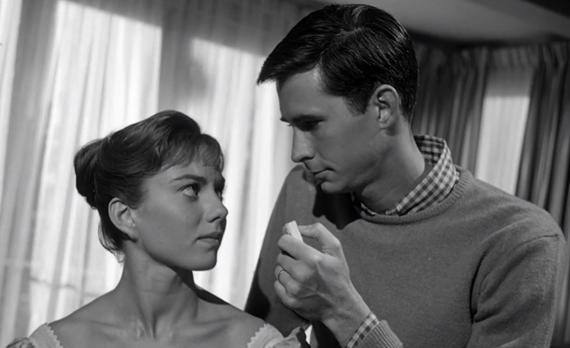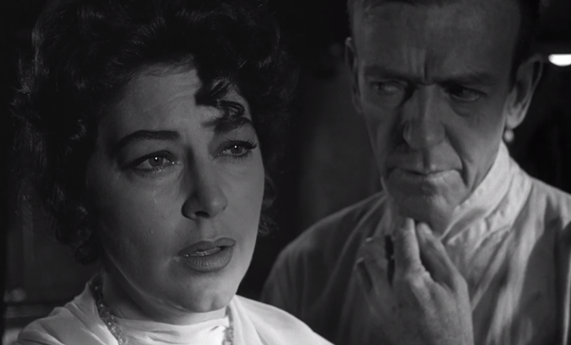
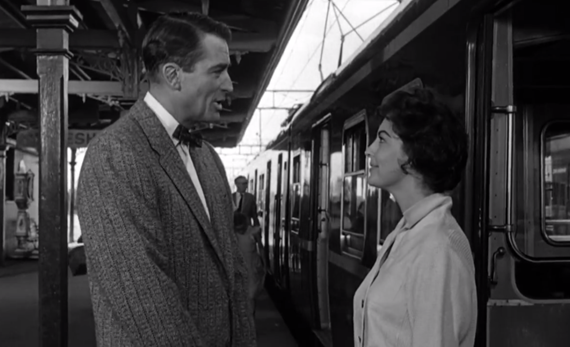
Transit (2018): Casablanca in The Modern Day

Transit_(2018_film)Ever since the days of his James Cain-infused Jerichow, it’s been apparent German writer-director Christian Petzold is indebted to the written word when it comes to his brand of filmmaking. However, this time around he takes an oddly unnerving stroke of brilliance by setting his usual period piece in a version of the present, or is it a version of the present trapped in the past? Regardless, outside police cars — sounding eerily similar to Gestapo automobiles — rush through the streets while a pair of men have a hushed conference at a bar.

The scenario could nearly be mistaken for a dystopia if it weren’t for the cold hard facts the story was adapted from Anna Seghers eponymous wartime novel from 1944. What drives it forward is this compelling simplicity in the manner Petzold always seems so capable of. It’s part of the reason it’s so easy to be drawn into his films once you’re accustomed to the cadence.

The men bandy about talk of a letter and papers giving the hush-hush feel of a Casablanca, but Transit has the same restraint as Barbara (2012) and the wartime malaise of Phoenix (2014), albeit without the inimitable Nina Hoss. Georg (an unadorned yet haunting Franz Rogowski) is our protagonist, and we surmise soon enough he is on the lam from the authorities. Like many others, he has experienced the unknowable horrors of mechanized oppression.

He lives in a constant state of police-fueled paranoia brought on by the occupation, the details of which are kept purposefully murky. What we note are the resulting factors. The hotels are crammed with displaced folks trying to get out of the country, clinging to the faint wisp of hope in escaping to some far off place: the port of Marsellaise then Mexico or maybe America.

He is one of the displaced even as he’s aided in fleeing by cattle car and has a wounded colleague huddled next to him. It gives rise to the kind of pulse-pounding life or death scenarios reliant on both ingenuity and bouts of good fortune. It’s also perturbing to watch them unfold in the present.

His flight leads him to an abandoned roadside where he’s nevertheless invited to play football (soccer) with a precocious neighborhood kid named Driss. They build an instant rapport and their connections run deeper still, as we soon find out.

Whenever Georg stays within the confines of the city limits, he’s subject to the related police raids casing each room. If you don’t have your papers, you’re unceremoniously dragged away. By now it’s a daily occurrence. What becomes apparent is the rising sense of shame among the onlookers who watch and do nothing. What power do they have in such a world?

Georg lends a reluctant ear to fellow sojourners telling him their stories. Everyone seems weighed down by worries and troubles brought on by the tribulations of the times. They’re surprisingly forthcoming or rather they seem vociferous compared to individuals in Petzold’s previous movies. Although another distinction must be made.

His hero is fairly guarded as are a couple of the other central figures. It is the supporting characters who gladly use them as sounding boards to cast their thoughts on in this restless age. Even the narrator — an uncommon device for Petzold’s brand of restrained observational filmmaking — has his own insights to bring to the events.

The key again is how those central characters carry a bit of this pervasive despondency — this enigmatic nature holding us off but not completely alienating us. On the contrary, we want to know more about them as viewers transfixed by the fateful decisions they make and the encounters that befall them.

To begin with, Georg falls into a bit of luck donning the identity of a deceased writer and with it, the coveted opportunity at transit out of the country. The deceased man’s wife (Paula Beer) is a woman who drifts uncannily through his life throwing him glances as she motors on about her dutiful pursuits. What they are we have no idea. Although, with time, it’s easy enough to imagine.

That’s just it. Petzold is always toying with the arcane both in plot and characters because it’s in the ambiguities where his stories seem to come alive. It could be the first glance of the smartly dressed young woman on the street who touches Georg’s shoulder when the whole rest of the passing world seems not to pay him any heed. He’s invisible. And yet for some inexplicable reason — some cinematic kismet — she reaches out to him.

True, for the majority of the picture, it feels like she spends the movie walking in and out of places to build this air of mystique. Is she more of an object than a person? It’s easy to cry foul if only for the comfort of Petzold’s earlier collaborations with Nina Hoss. A mystifying woman put front and center can still stump us. What’s more, in the final act Marie becomes a living, breathing human being of fears and passions that turn strikingly palpable.

After she lost contact with her husband, she never gave up hope checking the consulate every day for any sign of news. Along the road, she was given a kind turn by an altruistic physician (Godehard Giese), and in a bedeviling world, they looked to one another for some amount of solace.

Their Rick’s Cafe becomes a corner pizzeria. Georg would always eat a Margherita there and find Marie stopping by. Later it becomes a meeting place with Richard — so mundane and typical, and yet it fits the context of the story.

As we find out, noble decisions aren’t so cut and dry here; they’re not capable of making our heart swell in the same romantic manner of Casablanca. We are constantly left questioning. What if the matrimonial ties aren’t so strong and beholden to the Hays Codes? What if Ilsa or Laszlo decided to stay behind at the last minute, making a grand sacrificial act null and void. What if the plane crashed en route? After all, the very thing happened to Glenn Miller over the English channel in 1944…

Speaking of music, it’s been so very long since I’ve seen Phoenix. Aside from the Vertiginous thematic elements and this same lingering sense of malaise, it seems I remember very little. It’s the impression that lasts and one scene — the scene where Nina Hoss sings “Speak Low” to her husband — imbued with so much subtext and bewitching power.

Down the road, years from now, the same lapses might happen with Transit. But I will remember the mood, this very concrete Casablanca-like mentality, and then another song. In a similar manner, the normally delphic Georg has a breach in character and shares the lullaby his mother used to sing to him. Hearing it on the radio brings the memory flooding back.

Or perhaps I will recall the other moment when, impersonating another man, he tells the consulate officer he’s done writing after all he’s seen. He wrote too many essays in school about vacations, holidays, and experiences to totally quash and trivialize everything substantive about those times.

To write about the atrocities he faced would be akin to that same sin. He’s not about to write another school essay. Even as the lines are spoken under an assumed identity, the words once more ring with an underlying resonance to denote a shared world.

The chilling edge of Transit is how it brings these obvious markers of the Holocaust into this out of body representation of our certain present. They feel poles apart until that creeping voice whispers doubts in the back of our minds. This is what I will remember. This is what will stay with me.

4/5 Stars

Garden of Evil (1954): Starring Gary Cooper and Richard Widmark

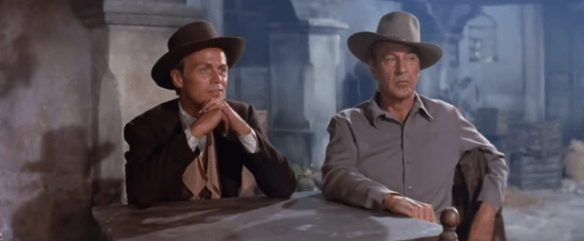
garden of evil 1.png

It does feel like one of the grand old westerns we left behind in more recent years. It’s a big picture in the horizontal majesty of widescreen, Glorious Technicolor, backed by the only score Bernard Hermann would ever arrange for the West. There’s little doubt we are in for a spectacle of the highest order.

Maybe Richard Widmark doesn’t look as good in color as the shrouds of noir, but he can act. Here he’s a poker player who fancies himself a poet on the side. As he gets off at an isolated Mexican outpost, he’s yakking away to the typically taciturn Gary Cooper. The taller fellow plods by his side quietly amused by everything coming out of Widmark’s mouth.

They are joined by a third man (Cameron Mitchell) biding their time en route to the goldfields of California by listening to the floor show (Rita Moreno) at the local cantina. I do relish films that take place in multiple languages; perhaps it humbles me. Because as I’m no longer living near a Latino community and I haven’t studied in a long time, my Spanish is rusty, so I can only pick up bits and pieces. I am at the mercy of others.

But it also means Gary Cooper can pay a major service to the audience. He translates for us and with that comes an added depth to his character. He’s knowledgeable and must have been around. How does he know the language? We don’t know right off so it teases us to stick around in order to find out.

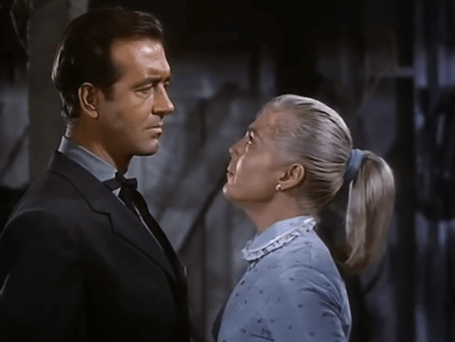
It’s quite relaxing until Susan Hayward bursts in on the men, effectively dropping the whole reason for the picture right in their laps. An adventure is afoot, and they take it up with few reservations. It doesn’t seem to cross their minds to question any of it; the compensation waved in front of them is high enough. Maybe they maintain their own private reasons. Soon they’re journeying through a mountain pass in order to help save the woman’s stranded husband (Hugh Marlowe).

A perfect moment on the road — making sure we’re aware of the stakes — features a dislodged frying pan clattering down below, ricocheting off the rock faces, and echoing through the canyon as it makes its descent.

As things progress, it becomes apparent the fine line between brooding and dull is a difficult one. It certainly is, more often than not, a slow burn with Widmark waxing philosophical and Cooper projecting an air of constant clear-sightedness about the world. He never loses his head. The rest of the time we’re waiting for something.

The confrontation between Hooker (Cooper) and the hothead Daly (Mitchell) is a particular sequence to relish as the young gun not once, but twice, is sent somersaulting on his back — his butt nearly putting out the fire and getting singed as a result. By the end of his drubbing, he’s practically rolling in it, and he’s been made to look terribly foolish.

But like Way of The Gaucho, the on-location shooting is what the movie can boast about the most. The action is middling and dull at best, because it’s a long haul to get a payoff.  We are waiting for things to come to a head and while Indians are said to be brewing up in the hills, they only show themselves briefly.

Oddly, Susan Hayward is thanklessly cast as the villain-turned-hero. Maybe it has to do with the time the picture came out since she hardly gets the delicious part of a femme fatale. More often than not, she feels like a scapegoat, that is until everyone realizes how faithful she is. It’s too little too late.

By the end of the story, the emotions lack resonance, because they haven’t built up into anything truly believable with continuity we can easily trace. It does feel a bit like running through the paces just to get to the marks, and it’s difficult to say given the talent on hand. They are a fine host of actors.

It’s possible to cast a bit of the blame on Frank Fenton’s script, which has fun with some dialogue — getting a bit profound about male avarice and passion — while supplying the actual plot little meat.

Gary Cooper and Richard Widmark too were always men of action, but there’s not enough here for them to accomplish. By the time they have chances to do what is purportedly brave and heroic, the deep recesses of meaning looking to be excavated are hollow — even strangely so, because we truly want there to be more, and there isn’t.

3/5 Stars

Rawhide (1951): Tyrone Power and Susan Hayward

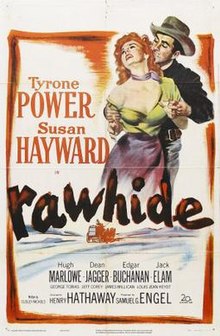
220px-Poster_of_Rawhide_(1951_film).jpgThough it’s easy for this film to be overshadowed by Clint Eastwood’s Rowdy Yates, in retrospect, Rawhide is a spare outpost western nevertheless loaded with tension and talent. It is set against the backdrop of a network of stagecoaches transporting mail across the continental United States.
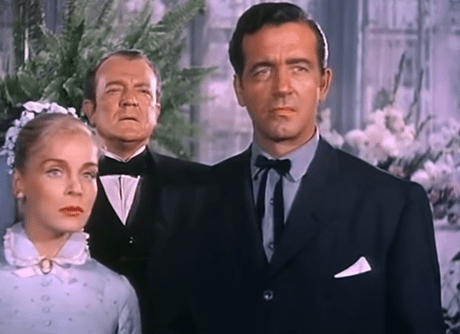
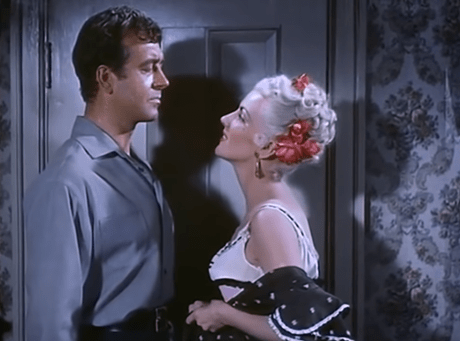
Rawhide Station is one such spot looked after by old-hand stationmaster, Sam Todd (Edgar Buchannan). He has been entrusted with training up young Easterner Tom Owens (Tyrone Power), whose father is division manager of the overland mail. This is a bit of on-the-job training before he moves back to the comfort of the East.

Power is slightly past his matinee idol prime, but he can still pretty nearly fake it with his dashingly handsome good looks. Meanwhile, Buchannan is always ready to be called upon, in a pinch, to play such a scraggly type, aided by his gravel-filled throat. It gives him instant credibility.

For whatever reason, Henry Hathaway is rarely remembered as a director, but when you take stock of his work, both in westerns and noir films, he really does have quite the catalog to his name over a very prodigious career spanning decades. Scriptwriter Dudley Nichols had a prominent career of us own as did cinematographer Milton Krasner. Thus, the technical credentials on the film are quite an impressive array.

But what makes Rawhide actually take as a contentious tale of the West is the rest of the cast. My, oh my, is the cast good. It’s stacked with a steady, reliable group who know their parts and play them handily. It’s tough to choose a standout.

Because Owens finds himself being held hostage by a pack of escaped convicts on the trail for gold. It just so happens a feisty young woman (Susan Hayward), toting a child back east, also has the unpleasant fortune of getting caught in their crosshairs.

This man, still fresh-behind-the-ears, is forced to grow up right quick in the face of such a dubious bunch. Hugh Marlowe plays an exceptionally perceptive bandit calling the shots, saddled by the trio of incompetents he broke out of prison with.

Jack Elam, with that wall-eyed stare of his, made a living for himself as one of the great heavies of all time, right up there with Lee Van Cleef. Because their eyes say it all. He’s the most lascivious of the bunch, prone to violent acts and leering at pretty women. Zimmerman has his hands full because while his other two cronies are older and more obedient, they’re no less dumb. Dean Jagger plays a near grandfatherly old coot while George Tobias is the scruffy foreigner Gratz.

As we settle in for the long hall, Rawhide becomes a game of survival in pursuit of incremental victories like trying to sneak S.O.S. notes to incoming travelers. Then, they manage to swipe a knife from the kitchen to begin chiseling an exit out of their room on the road to escape. All the while, in the back of their mind, they’re thinking about staying alive so they can find the gun dropped out by the corrals. It’s the faintest of hopes

They are further concerned with protecting the young progeny Vinnie has vowed to take care of ever since the passing of her sister in California. It all matters because each individual piece is a single entity in this entire patchwork of cat and mouse — a chess match playing out on all sides. What hangs in the balance are the lives of all those involved. When those are the constant stakes, it’s extremely difficult to have a tedious story.

In a single instance, the tripwires start going off, and the bodies start tumbling. We hold our breath to see who will make it out alive in such a precarious showdown. It plays its hand well. Power readily accepts the challenge at hand with grit and determination, while Susan Hayward has nerves of iron packing a shotgun to finish the job.  The harrowing adventure gives us two stalwart heroes in the end.

In considering our leads, it does feel as if Power is making a concerted effort to maintain his box office pull, while Rawhide feels more like a stepping stone for Susan Hayward as her career progressed to continually more interesting parts in the 50s. But in neither case does it feel like we’re dealing with preening stars. They ably claw and fight for survival with the pack of criminals in their stead.

I will admit the way the story is bookended as just another tale along the “jackass mail” line from San Francisco to St. Louis, “Oh Susannah” playing in the background, somehow cheapens what we’ve witnessed. It seems to momentarily lose its credibility as a grind-it-out western. Maybe we can just say it’s faulty advertising and leave it at that. Otherwise, Rawhide has more in common with the lean constructions of Budd Boetticher than any kind of superficial high-adventure cowboy picture. It comes with real guts.

3.5/5 Stars

Silver Lode (1954): More Noir on The Range

silver lode.png

“It looks like Ballard’s past has come to town!”

A brood of leery guns lumbers into the town of Silver Lode. We have an instant clash of temperaments. Because this outside force is menacing and foreboding. Meanwhile, the townsfolk are getting everything together for their Fourth of July bash. They’re downright neighborly. They don’t hardly think twice when it comes to sharing the whereabouts of one of their locals: Dan Ballard (John Payne).

Though that’s not quite right because Ballard is a relatively recent addition to the community having arrived only two years prior and settled down as a pillar of Silver Lode’s community — well-liked by just about everyone. In fact, when the purported U.S. Marshall Fred McCarty (Dan Duryea) starts asking for him, Dan is in the middle of his marriage ceremony to Rose Evans (Lizabeth Scott) who comes from a highly respected family.

There’s no doubting the gunfighters are out for blood though. Although they are stopped in their stride by the even-keeled, rational-minded sheriff (Emile Meyer), they nevertheless have enough pull to burst into the matrimonial bubble.

Because, of course, Ballard knows this man. He killed his brother in California. It was a fair fight; the other man drew first, but McCarty calls it murder. He’s out for his brand of justice, “An eye for an eye and a tooth for a tooth.” The reverend fires right back with the prerogative to “turn the other cheek.”

silver lode 1.png

The thugs crash the ceremony regardless, the biggest wrinkle is the fact they represent law & order as marshals with a warrant for Ballard’s arrest. Though Dan greatly suspects the validity of the man who knew only as a cattle rustler, he willfully gives himself up. After all, the town is still standing by him. However, that can change.

They begin a grim procession, sullying the cheery proceedings around town, as they make their way to the Judge’s quarters. Dan keeps his buddies at bay even as he voluntarily follows McCarty. The sheriff is put in an uncomfortable position and yet he agrees to form a posse to join the contingent to make sure Dan remains safe in protected custody.

However, things heat up as the decks stack against him. The telegraph lines are conveniently down so there’s no way to verify the marshal’s credentials. There’s also a dichotomy between the respectable, God-fearing hypocrites and other folks, which hasn’t dissipated since the dawning of time.

The saloon matron, Dolly (Dolores Moran), is ever ready to help Ballard — because they had a history once. He doesn’t know who else he can trust. Already the resident Pharisees, with their up-turned noses, are clamoring for Ballard’s removal due to his pedigree as a hardened criminal. They don’t trust him. Dolly’s best retort is aimed at the Reverend, “I think some of your flock needs delousing.”

So she runs interference as Ballard tries to seek a meeting with one of McCarty’s brood. Harry Carey Jr., ever the brittle westerner looks to play the stooge in return for $5,000 and protection. He’s willing to rat, of course. There is a momentary glimmer of light that McCarty promptly snuffs out.

silver lode 3.png

A barn standoff could conceivably tie up the film in a minute if the sheriff wasn’t conveniently gunned down and the stoolie Johnson follows suit. It seems like the whole town is present, witnessing the guns in Ballard’s hands, again, the obvious criminal. Though winged, McCarty lives to fight another day — maintaining his lie in the process — all but damning Ballard for good.

Twists of wicked fate just keep on coming and McCarty now can wield the townsfolk against their former neighbor, turning them against him outright. It gets so bad he feels no recourse but take on the mantle of the hunted fugitive in order to survive and vindicate himself. Circumstances certainly look dire.

One of John Alton’s best setups is probably when Ballard dashes across town crouching and then sprinting a bit further to reach his destination — pursuers scurrying after him as he returns fire — executed in one uninterrupted dolly shot sweeping left to right across the compound.

We also have the ticking clocks of High Noon, metaphorically speaking. If we mention that film, there is no way we cannot mention HUAC and The Hollywood Blacklist. Because the parallels in the allegory are too apparent. We have good men who are turned upon and likened to criminals for past sins or beliefs that diverge from the pack.

It gets ugly when mob-like hysteria takes over, and there is no wisdom to guide the ensuing actions. Everything is dictated by fear and hate.  Mob violence is the death of any town as McCarty (Joseph McCarthy anyone?) plays on the fears of the people.

Ballard ultimately seeks asylum in the church as the horde almost breaks the doors down. In the end, it’s a showdown between the two men who always had a beef to pick. One defenseless, the other armed and ready to get his revenge and if not revenge, then something even better. In the end, it’s another serendipitous moment, worthy of a Mythbusters episode, that closes the action and allows us to breathe again.

silver lode 2.png

With every passing movie, I am always astounded by the obvious overlaps between the West and film noir, and it starts with personnel. John Alton was already mentioned. He is nearly as accomplished in color as black & white. Then, John Payne, not usually a western hero, nevertheless spent plenty of time roughhousing in the underworld. Even Lizabeth Scott and Dan Duryea are given a bit of a reunion after Too Late for Tears.

Duryea unequivocally steals the show again with a blistering, continually conniving performance. He truly has a monopoly on these roles, since he pulls them off with such conviction. Unfortunately, Scott while a  dazzling, toxic femme fatale, has a fairly flat and monotone part to play here.

Both the western and noir are also both innately American genres. They have the opportunity to take elements that ring true about our society and really subject them to scrutiny. What are our ideals? How do we treat one another? What dictates our standards of truth and our sense of good versus evil?

There’s nothing that says you need to consider any of these themes to thoroughly enjoy Silver Lode as an incisive, high-intensity showdown, but it’s a testament to movies that work on multiple levels. It still boggles the mind Allan Dwan made as many films as he did. I haven’t seen many of them. Still, this one shows an indubitable competency in the craft. After all, he had a lot of practice.

3.5/5 Stars

Blood on the Moon (1948): A Robert Mitchum Horse Noir

blood on the moon 1948.png

This is admittedly nitpicky, but the title cards of Blood on the Moon are a bit jarring as the white-lettered names all but disappear into the sliver of light stretching across the otherwise black canvas of the screen. Thus, I missed out on about a fourth of the names in the cast.

Opening credits aside, entering the world itself is an unmitigated pleasure as we are submerged straight into a rainstorm meeting us with a near tactile sense of tone. Against the dark slopes, a solitary rider sits aloft in wet hat and poncho. He’s seeking cover from the downpour.

Though he finds it,  his nice, warming fire essentially gets stampeded by a pack of steers, and a man with a gun comes to oust him. He comes in contact with a not too neighborly outfit led by a man name Lufton who is a part of a longstanding feud between two factions. The age-old animosity kicked up between cattlemen and homesteaders. Lufton is on the side of the cattle.

However, we have yet to know where this stranger — Jim Garry (Robert Mitchum) — falls along the gradient, if anywhere. He has his first run-in with a lady (Barbara Bel Geddes) and sends her packing into the adjoining stream with some nifty shooting. Then, he drifts into a town, which seems cloaked in a dubious conspiracy of its own.

A host of characters sit around a poker table — among them Walter Brennan and Charles McGraw — shooting the bull about the new man. They want to get a read on him through a bit of deception. He reads them like a book, and it still seems like all the thugs are coming out of the woodwork just to take a shot at him.

Finally, he reconnects with his old comrade Tate Riling (Robert Preston). Their past is all but unspoken yet we understand they’ve been through some times together. Thus, it’s no less jolting to learn this man Tate is on the other side of the feud. He has sided with the local ranches and a government agent (Frank Faylen) to push Lufton’s cattle off the land. An awfully crooked Preston is girded by that age-old charisma of his. He somehow still gives off an aura of likability in a not too trustworthy sort of way.

So Garry has been unwittingly been called upon as a de facto gunman to help make the transition stick. He initially goes along with it, because Tate used to be his pal. What makes the story an interesting one relies on the fact Garry has that age-old deficiency — a human conscience.

The plucky rancher he shot at before was one of Lufton’s daughters, Amy, who though sore at him, eventually warms up when his integrity becomes apparent. She realizes he is a different breed than the rest. However, her sister Carol (Phyllis Thaxter), as fearful as Amy is fierce, falls for another man, making for the most intriguing foil in the movie.

Walter Brennan’s place as one of the ranchers taken in by Tate’s promises remains relatively understated and minor next to all the greats he’s played (especially given my last picture of his was The Westerner). Likewise, Charles McGraw isn’t given much to do aside from being gruff though he was still in the nascent stages of his career.

The stakes have been set for a surprisingly complicated interplay even as the cursory beats of Lillie Hayward’s script look all too familiar. It seems Robert Wise has the right pedigree for the material as does cinematographer Nicholas Musuraca because whether deliberate or not, this 40s oater is cloaked by film noir sensibilities through and through.

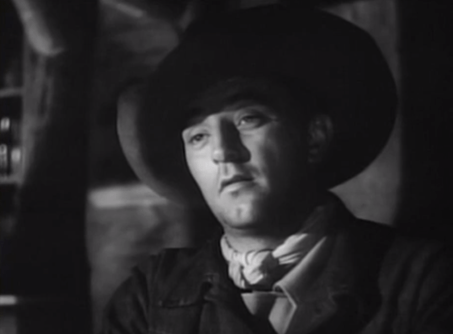
While not the cleanest of prints, there’s no denying the scope of the terrain nor the layers of atmosphere they’re able to draw out of the scenery, between shadows and light. If it sounds familiar, these are the shades of noir embodied as much in the character of Robert Mitchum as any of the mise en scène. The iconic lazy-eyed indifference of Mitchum transfers seamlessly from Out of the Past (1947) — coincidentally, also photographed by Musuraca.

Again and again, we must fall back on Mitchum and in all the RKO pictures he made, the onus usually landed on him because fewer resources meant more was asked of him. Aside from being a workhorse, Mitchum has the gumption and the unflinching enigmatic cool to bear the story upon his shoulders. It relies on precisely this quality dwelling within him, shifting so easily between attributes of self-service and integrity.

As far as psychological westerns go, I find the compact punchiness of Blood on the Moon far more appealing than Pursued (1947), starring Mitchum and Teresa Wright whom I adore. However, this story is not simply an excuse for deep-suited psychological issues. What the picture doesn’t skimp on are fairly complicated human relationships. There it finds a heady weight to carry it through to the end even if it does falter a little.

Mitchum has it out with his old pal in a deserted bar with near Anthony Mann level fighting, verging on the fanatically crazed. It’s a beautiful piece of stylized brutality. There’s disheveled and then there’s Robert Mitchum’s appearance after the altercation.

He was never one to be an untouchable white knight, preferring shades of gray. It’s a brilliant moment of pitch dark adrenaline. The film never quite regains this same energy, but there is still work to be done.

Garry, Amy, and the rancher Kris Barden all have a personal reason for wanting to get rid of Tate for good. The inevitable showdown occurs after a snowcapped chase, leading to a shootout in a forest with a wounded Mitchum and his two compatriots looking to hold down the fort.

I already mentioned this picture heavily relies on Mitchum so what would the final moments be without him going after his adversary systematically, injured though he may be, to finish this business for good? A happy ending lightens the impact, but it’s a small price to pay for this underrated horse noir from Robert Wise. He surely could make a gripping movie.

4/5 Stars

Slightly Scarlet (1956): Starring Arlene Dahl and Rhonda Fleming

slightly scarlet 2.png

It’s a grievous offense, but I must admit to clumping Rhonda Fleming and Arlene Dahl in a category together. They are both redheads of immense beauty, around the same age, and while they both featured in some quality films, they never quite reached the apex of a Maureen O’Hara or a predecessor like Greer Garson. It’s highly unfair I know. Still, in an effort at transparency, it’s inevitably the truth.

However, it’s this very element that makes Slightly Scarlet so enthralling, because it’s as if the very premise is playing with my preconceptions. Maybe I am not the only one who holds these feelings.

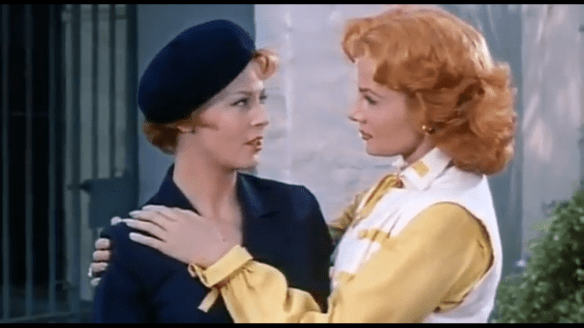
Here we have (Arlene Dahl) coming out of prison after serving a stint thanks to some petty jewel thievery. Her big sister (Rhonda Fleming) is there waiting for her as the fawning, motherly figure resolved to keep her wayward sis out of any more trouble.

Together in the frame, bursting with natural color, they fit so exquisitely opposite one another. This alone has intriguing elements to it, but thankfully there is more. Because Slightly Scarlet is also a film belonging to John Payne, director Allan Dwan, and cinematographer John Alton. At 70 years old, Dwan at this point in his career had logged nearly 400 features — an utterly astounding benchmark.

Payne, meanwhile, had forsaken his clean-cut image, working with the likes of Phil Karlson and Dwan to churn out some truly gritty performances. Look up John Alton and you have one of the finest starting points for film noir imagery, period. Even in color, he manages to make it clouded with shadow.

Because Technicolor noir most certainly exists — albeit with lesser frequency — though Slightly Scarlet also has origins in a James M. Cain short story, lending a certain pedigree for sleazy criminals, even if liberties were taken. The picture simultaneously proves worthy company to the ripe feasts of Douglas Sirk and Nicholas Ray from Written in The Wind (1956) to Party Girl (1958). The obvious discordant nature is a draw.

What looks to already be a lurid woman’s picture is met with an undercurrent of political graft and corruption. John Payne is a bit of a hatchet man for a local mobster (Ted de Corsia), integral in influencing all his local operations. He’s derisively nicknamed ‘Genius’ for his shrewd tactics, and yet his boss thinks he will never get on the top of the heap. He’s always out for himself, selfishly.

However, the words prove prophetic as Ben Grace (Payne) all of a sudden does switch sides. Here our narratives get tied together because Ms. Lyons (Fleming) is secretary to up-and-coming mayoral candidate, Frank Jansen (Kent Taylor). Grace is able to supply the dirt to run the gangster Caspar out of town. He’s conveniently found a tape incriminating his former boss in a murder. It’s a surefire way to win an election, and he’s not above such tactics.

The staging is exaggerated from the outset, and the photography is lush — part Technicolor galore the other old tried and true Alton chiaroscuro, which he somehow manages in a entirely color production. At its best, the movie revels in the sordid details and over-the-top theatrics, milking every bit of drama out of the scenario. There’s nothing half-baked or tactful about it. Still, it’s armed with pizzazz aided by a hammy, ever swirling score.

Dahl, playing the sex-crazed klepto of a younger sister, literally gets dragged out of her house for her latest offense. In another scene, when she’s slapped across the face, she simply purrs at the man with beguiling eyes, “You play rough too!” As her latest companion tries to lay his mitts on the goodies inside a safe, Dorothy lounges around the abandoned beach house before setting her sights on a harpoon gun, which she has a frisky bit of fun with. It’s all a gag to her and played against the relentlessly somber, hard-bitten Payne, it only accentuates the inordinate oddities.

slightly scarlet.png

While Rhonda Fleming holds down the necessary role as the conflicted central figure and Payne is one of the suppliers of the hard-boiled elements, it is Dahl who titillates and has the most gratifying task as she is given range to be saucy, unhinged, and altogether uninhibited. It fits the scenario.

The subsequent developments are manifold. Mainly that Dorothy starts vying for her sister’s new man, even as she skips out on her therapy sessions. The compulsion to steal exerts itself again with dire consequences, especially in the wake of the political election.

However, as it turns out, Payne is not quite as reformed as he might have led everyone to believe. He’s as pragmatic as he is cynical, getting a ‘Yes Man’ installed as the new city sheriff as he moves in on the mob’s old territory, turning the racket into his own.

Our heroine finds herself utterly conflicted. Between the man she’s fallen for who’s no good — and seems to be in company with her sister — and then the white knight who loves her dearly. The final confrontation, returning to the beach house, does not pull its punches, between spear guns, handguns, and sadistic, even masochistic inflictions of pain.

It’s a fitting shot of volatile adrenaline to cap a movie daring to fluctuate wildly all over the spectrum. It’s not a dignified or a particularly measured effort by any stretch of the imagination, but in pushing its melodramatic tendencies to the max, Slightly Scarlet proves itself more than capable of diverting stretches of crimson entertainment.

3.5/5 Stars

Friendly Persuasion (1956): Gary Cooper’s Quaker Clan

220px-Poster_-_Friendly_Persuasion_01The when is 1862. The where is Southern Indiana. We find ourselves in the throes of Quaker country as envisioned by novelist Jessamyn West and brought to the screen by his eminence, William Wyler.

What follows is a lovely opening gambit with a goose about as anthropomorphic as they come without completely shattering the sense of movie realism. He nips our little narrator, a Quaker lad named Jess (Richard Eyer) in the seat of the pants to punctuate our mellow tale on a comical note.

Authenticity, historical, religious, or otherwise, is not what Friendly Persuasion is concerned with. We might call it into question on any number of accounts. Still, it is packed full with enough tweeness for every “thee” uttered by the kindly Quakers who exist within the frames.

The gentle satire is of a certain warmth and unassuming candor, we cannot help but smile at because unadulterated goodness leaves behind a luster. Indeed, it is one of the finest attributes of the picture. Their matriarch (Dorothy McGuire) is zealously religious and abhors violence, but we can hardly label her unkind. Meanwhile, the man of the house (Gary Cooper) is about as genial as they come.

As with most small-town communities, about the most exciting experience you can possibly partake in is a traveling carnival. Imagine you’re a Quaker and then every stray stimulus and forthcoming attraction becomes 10 times more novel.

The ascetic folks pushing the boundaries of their normal sensibilities is played for a bit of humor. It might be dancing a jig gaily with a handsome beau, trying a hand at a musical instrument a salesman is trying to peddle, or a young boy getting the itch for gambling in the form of the ever-dubious shell game.

Cooper winds up winning a pair of sleeve holders, which look eerily similar to a pair of garters, while a stocky Quaker boy gets caught up in a wrestling match only to back down as it begins to impinge on his beliefs. He has vowed like all his brethren never to hurt anyone. From an outsider’s perspective, it is perceived as weakness and worse yet a dereliction of duty when it comes to fighting for your country. Because the Civil War is on everyone’s mind.

Friendly Persuasion becomes a diluted effort due to its length, which, while giving adequate time for many asides and quaint observations, takes away from the import of the material. It’s not quite capable of navigating the straights between social issues and jocularity — it’s never quite assured — settling for a rocky path.

The young soldier, Gard (Peter Mark Richman), is the force tying the family to the war directly as he has eyes for their daughter, while still maintaining his duty toward the Union Army. It stays in the periphery for a time. However, it’s inevitable, with the extent the war is spreading, they must make decisions of their own. This is what is being set up for each individual character, and they must react accordingly.

However, this is not solely about a message of pacifism, but in a society split up of many religious sects and political factions, it is a film with some sense of continued relevance. It even dabbles with the same dichotomy as Sergeant York (1941), having to do with the commandment entreating the adherents not to murder. The question remains: is there a semantic difference between murder and killing? More important still, is there a difference in the hearts of men. The film has to forge its own path.

Separately, Gary Cooper and Dorothy McGuire appear suited for the material as they both bring a certain sensibility and ingrained honesty to nearly every part. Side by side, the chemistry between the two of them seems relatively absent and not simply because of their mundane temperaments. It could do with the fact Coop never wanted the actress to play opposite him, to begin with. Ingrid Bergman was his choice, but she passed on it.

Anthony Perkins’ role is slight in the way all his performances seem to be, and yet their unassuming skittishness somehow imbues them with their own brand of resonance. It’s true, after only his second film, the writing on the wall said he was destined to be a great star. They weren’t wrong; his career just didn’t end up quite as people might have expected. Of course, Norman Bates was a jarring subversion of his image, simultaneously redefining (and typecasting) it for all posterity.

While it’s easy enough to think of them as being on different strata, Perkins feels like he could easily be an earlier version of Tommy Kirk from Old Yeller (1957). Where a boy is put through the gauntlet and must come to terms with harsh realities of life. Of course, McGuire would again play the maternal figure in the latter Disney production.

In this picture, she gets her moment with the homestead being overrun with Rebs. Doing her best to keep her composure through hospitality, she nevertheless lets one of them have it over the head with a broom for going after the family goose. Cooper’s own confrontation with a Rebel soldier occurs in an open clearing, serving as his final test and a bit of a case study the film puts in front of us.

He passes, and it’s not what we usually expect from Cooper. Not only were audience expectations undone, but Cooper himself seemed to think the hero he was, and played on-screen, would have normally acted differently. We can make a judgment call on whether or not he was right.

One is reminded High Noon (1952) succeeded in its storytelling with a lean running time featuring a very concrete progression of scenes. Coop was an archetypal hero, even one of the western greats in Will Kane, but we also know where we will be going when the clock strikes 12. There is not the same urgency to Friendly Persuasion — it’s much looser  — ultimately too good-natured to hammer home its themes with any amount of authority. There’s no fault in a lighter tone per se, but it could have amounted to a whole lot more providing there was tauter plotting.

3/5 Stars

The Holly and The Ivy (1952): More Than a Christmas Tune

holly and the ivy.jpgGrowing up in a household indebted to British everything, you get accustomed to certain things. Numerous everyday knickknacks and antiques imported from The U.K. Muesli Cereal in the pantry with copious amounts of English Breakfast Tea. Beatrix Potter, P.G. Wodehouse, and Postman Pat become household favorites.
Particularly at Christmastime, this meant, no, not figgy pudding, but British Christmas Carols on record. Some of my personal favorites are probably “Sussex Carol,” “Ding Dong Merrily,” “Past Three O’Clock,” and of course, “The Holly and The Ivy.”

This is where the film gets its namesake as it follows the Gregory family during the holidays. It’s that time of year with everyone convening for Christmas at a vicarage in the cozy town of Wyndham, nestled in Norfolk.

It sounds like a delightful experience, and it gains even more prominent meaning for a lonely old matron — airy and grandiose of tone — as she’s grateful for the letter from her brother-in-law confirming she will not have to spend the holidays alone. Cue the swelling music.

At this point, if you assured me The Holly and The Ivy wasn’t a sentimental movie I probably would have disregarded you. This is before the rug is literally pulled out from under us. For now, we still have a ways to go.

Quite by chance, during the pilgrimage aboard a train, she bumps into the other aunt, the acerbic and proud Aunt Lydia a world-class misanthrope. Despite they’re differences, they do well to cancel each other out. You can only imagine what might happen if you put them with others.

Sure enough, there’s a philandering young soldier who is caught by his superior with a girl and winds up in a whole lot of hot water. However, by some curious circumstance, he’s able to worm his way out and get leave to see his family for Christmas. This rapscallion is, of course, Michael Gregory (Denholm Elliot). It is his father who runs the local vicarage in Wyndham.

Jenny Gregory (Celia Johnson) is the devoted daughter who runs her father’s home and takes care of all his affairs. She feels this is her duty while he is still working and his other sister lives away in London all but detached from the rest of her family. The main complication is the man Jenny loves is about to realize his lifelong dream of working in South America. It will be five long years and though Jenny is dying to go with him, her hands are tied.

When we finally meet Reverend Martin Gregory (Ralph Richardson), it becomes apparent he’s a bit absent-minded and quite the chatterbox. He goes on and on about his fascination with the Incas and their ingenuity in using Guano (bird droppings). He, of course, knows nothing about his daughter’s situation because no one has told him anything and so he remains oblivious going off to view the nativity play at his church (a fine precursor to Charlie Brown’s Christmas).

This is one of the great tragedies running through the story. The reverend himself bemoans the fact parsons are set apart and isolated because of their vocation. There is an inherent awkwardness going out into the world as a man of the cloth. People don’t want you around. It makes them feel uncomfortable and yet in the same breath, they hold you to a different standard because you are meant to represent religious piety for all.

But there is also an undercurrent in his home. His children never tell him how they are really doing. They equivocate and keep things hidden in order to not upset him or receive his scorn. Because that is how they see him. He is a killjoy, someone put in their life to chide them and scold them for every one of their individual sins. The fear is if he actually knew what his children were like, he would be unbearable. It certainly is a problem in conservative environments where exteriors don’t mesh with interior issues.

It comes to a head when the sister Margaret straggles in late to the festivities. They made up a lie about why she wouldn’t be able to come and yet the real truth is she did not want to see her father. But the wounds and the hesitance run deeper still. She is an alcoholic and something else happened to her. Those who love her, note she crackles like ice — a frozen ice queen out of a Hans Christian Andersen story.

Reverend Gregory has reason to be dismayed that Christmas in merry ol’ England is now ruled by the boars and the retail traders who have gotten hold of the season. He laments, “It’s all eating and drinking and giving each other nicknacks…No one remembers Jesus Christ.” It teeters along the precipice of righteous indignation.

Because he looks at the same people and sees how little use they seem to have for him even when he sees, what he deems to be, great need. He’s there to marry and bury them only. His church is only an architectural center, not a spiritual one. This right is reserved for the local movie house with all its enticing bells and whistles.

While he might have a point, he is just as implicated in the problem; he has exasperated society. The case study is found in his family. We see it in so many cases. The religious figure is measured by a separate set of principles and yet because of what we place on them, they feel distant and unreachable. They make us feel dirty and ashamed of our improprieties.

David blasts his father telling him, “You can’t be told the truth. That’s the trouble!” It’s films such as these that make me realize how difficult it would be to be a religious leader. Likewise, it’s just as difficult to have to live life alongside them — at least in a case like this.

Where “every conversation goes back to the creation of the world” and our only way to keep up appearances is lies and concealment — a life of false pretenses just in time for the holidays. The holidays only serve to magnify the tensions brooding for so long.

Because sons find the faith and fairy stories antiquated. Fathers are vexed that everything must be seen and touched in this generation before it can be believed (Can you touch the wind?)

The beauty of the exploration is in how both sides are given some credence. How can parsons expect to be told the truth when one can’t even talk to them like ordinary human beings? How can common, everyday people who make mistakes be free from guilt and shame when the most common judgments are full of condemnation?

While not of the same technical prowess, it nevertheless reminded me of Ordet another film based on a stage play with deep recesses of spirituality. There are a myriad of relationships undone by doubts and perceived areas of incompatibility. In fact, it falls somewhere between Ordet and Calvary because it has a dose of empathy for both the parson and his family.

The miracles revealed are ultimately conversational and sweet, reviving family relationships and salvaging the season through reconciliation. Wounds and secrets so long harbored and festering are finally allowed into the light. The extraordinary thing is, far from sowing more discord, the honesty gives way to the first true peace they’ve had for years.

My only qualm is I rather am curious to hear Ralph Richardson’s sermon. Like David Niven in The Bishop’s Wife, there’s a sense it might have been something magical and deeply impactful to behold. More powerful still, his words live on in the imagination.

The ending comes rapidly but it is reassuring to get one final image of the church with the newly minted couple destined to be together — most everything restored. Because filling in the ending, especially under such jocund circumstances, is often one of the greatest gifts that can be extended to the audience.

4/5 Stars

Marriage Story (2019) and Being Alive

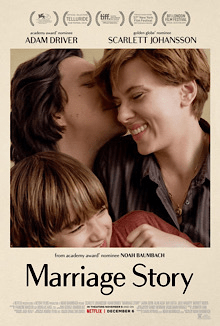
MarriageStoryPoster.pngIn full transparency, I’ve often considered Noah Baumbach as heir apparent to Woody Allen and a lot of this attribution falls on their joint affinity for New York City. It is the hub of their life and therefore their creative work even as the broader art world often finds itself seduced by the decadent riches of Los Angeles.

Allen most famously set up the dichotomy between the two places in Anne Hall (1977), where Annie and Alvy ultimately part ways because the woman he liked decided she likes L.A.; he loathes it above all else.

It’s hard to get these elements out of my head even as this film features two former Allen collaborators in Scarlett Johansson and Alan Alda. And yet, to his credit, Baumbach has allowed for a more robust dialogue between two people. It’s not merely a humorous juxtaposition, it becomes indicative of so much more.

Audiences should be forewarned Marriage Story is about the messiness of divorce full of hurt, troubled communication, and explosive moments of lashing out. It also features some of the most substantive and sustained pieces of fearlessness you’re probably going to see this year in terms of acting.

Scene after scene is carried by one or two performers in tandem. In fact, with the extended takes, fluidity, and intimate interiors, the relationship between film and the stage is close, going so far as to break up sequences with curtain-like fade-outs.

Yes, this makes Marriage Story unwieldy as it ranges all over the place. It somehow strikes this agreeable adherence to Baumbach’s intuitions as both writer and director, while still relying wholeheartedly on what Adam Driver and Johannson bring to their respective roles.

Right at the center of it all are their soulful performances lithely running the gamut from devoted affection to bitter resentment. But it’s the notes in between which become so crucial. Because it goes beyond mere technical ardor; there’s another kind of palpable investment present.

Their story is set up exquisitely by the words they use to recount one another. Perfect trailer fodder in fact. What they provide are observational affirmations of each other’s characteristics. Nicole is an actress. She is a mother who plays. She’s brave, knows how to push her husband, and she’s competitive. Charlie is a theater director. He really likes being a dad. He’s driven, neat, and always energy conscious. He’s also very competitive.

However, they never get to share these words because now they currently sit in the therapist’s office drifting apart. It looks like they’re already too far gone to salvage the thing. What could have been the passionate musings of love letters exchanged in a bygone era, instead find them at the precipice of separation.

The point of no return is dropped in Charlie’s lap in an oddly hilarious scenario of dramatic irony — somehow worthy of a Hitchcockian time bomb — where Nicole enlists the help of her good-natured mother (Julie Haggerty) and sister (Merritt Weaver) to help her serve notice. As can be expected, it unfolds in the most cringe-worthy and somehow the most perfect manner to suit the story.

It’s one showcase among a plethora of long takes supplying a formidable framework for the script to rest on. As such, it relies so heavily on its stars to be up for the task and to any degree we might adjudge as an audience, they come at it with impeccable aplomb.

Soon what looked to be an amicable dialogue between two rational human beings is being overhauled with lawyers. We begin to see how what started as a riff, between two solitary individuals, soon becomes complicated by well-meaning legalese, fees and the aggravation incurred from the middleman now bargaining between the former couple.

It gets to the point the relationship feels so far removed from where it began. You begin to question if any of it was worth it. Words get twisted. Feelings get hurt. They’re doing things because their lawyers say to and they become suspicious of motives. I was reminded of how our language makes it so arguments are literally equated to a war. There are winners and there are losers as the two sides become further alienated. The void in the courtroom never felt greater.

Laura Dern has an impeccable pulse for the kind of cajoling attorney with business acumen and bedside manner to get what she wants. Namely, the best for her clients. She’s ruthless yes, but it’s all within the confines of the game. There’s still a person there who has a life outside the 9 to 5.

Ray Liotta seems equally built for this cutthroat business-minded artificiality. We despise him even as we realize — much like Charlie does — he’s very good at his job. If you want to get out with you’re shirt, you’ve got to put up and buy into the game.

Alan Alda gets a bit as a sagacious saint of a man who plays as the antithesis of a lawyer (or any of his rivals). His spot feels like a hallowed place in a film filled with other prominent names who probably get to do more. He gets to be warm and wise, reminding us why he is such a dear soul to us all.

I came into Marriage Story expecting callbacks to Kramer Vs. Kramer (1979). Certainly, this is a film about parents and divorce and how they must tiptoe around their issues for the sake of their kids. But this is a bit different than the Hoffman picture where Meryl Streep at times feels non-existent. At least I always remember it as a father-son film.

This rendition is meant to provide equal footing two both parents with the onus of victimhood and blame distributed. Because that’s just it. You can’t draw it up so easily. Everyone contributes to the problem in some way.

There are also no clean breaks because time has a curious way of working on the human psyche. When you’re used to spending time with someone, you know all their quirk, and it’s hard to let them go. They drive you up the wall, and they fill you with that electrifying energy sending your heart aflutter. Their family becomes your family. You can’t snap that wishbone without some residual effect. Try as you might, it’s impossible to totally obliterate the memory.

It feels as if Scarlett Johansson has laid herself bare, extending herself like never before, and we see the flaws coursing through Adam Driver to go with his finest everyman attributes. Their urgency and honesty become brutally transparent and that is the utmost of compliments.

I couldn’t stop thinking about Contempt (1963) — Jean-Luc Godard’s film about moviemaking that famously documents the dissolution of a marriage (between Brigitte Bardot and Michel Piccoli), taking place within their house in one extended scene. These are the lengths Baumbach reaches towards in his own way through blocking and the relationship between his stars and the camera.

In one climactic confrontation among so many corkers, Driver and Johansson have it out in a fully ballistic, double-edged assault unearthing every wound and targeting every sore spot imaginable. Hurting each other in ways only they know how because they’ve been so intimate for so long. It ends with them red-eyed and huddled together on the floor totally spent. This is never what they wanted nor what they expected.

Where is the ending exactly? Because the film is substantial; it covers so much territory and the themes are wide-ranging from parental devotion to lingering love under new parameters. But with everything the movie allows us to be privy to, it’s obvious there is no easy resolution. Thus, with so many disparate reference points thanks to 80s icons like Julie Haggerty, Wallace Shawn, and Laura Dern, why not mention something altogether different.

In Hirokazu Koreeda’s After The Storm (2012), you have a vagrant husband trying to win back the affections of his wife even as they figure out how to raise their kid. They’ve entered a new chapter of existence, and sometimes that’s hard to cope with. So when they walk off into the sunset it’s hopeful, but something’s inexplicably altered. There is reconciliation and yet they cannot undo everything. This movie, again, is also about moving forward from the most painful fission imaginable: between two human beings. It’s a work in progress.

To this point, I’m fascinated by the choice to have the movie called Marriage Story. Because if we wanted to, we could look at it purely from the point of view of divorce. After all, surely this is the all-important final outcome. How could we see it any other way? And yet it becomes so difficult to break two human beings apart from one another.

Interrelated is the impassioned statement made by Nora in one of her sole lapses in composure. Within an otherwise irreligious picture, she says the following:

“The basis of our Judeo-Christian whatever is Mary, mother of Jesus, and she’s perfect. She’s a virgin who gives birth, unwaveringly supports her child, and holds his dead body when he’s gone. And the dad isn’t there…God is the father, and God didn’t show up. So you have to be perfect, and Charlie can be an f—-up and it doesn’t matter.”

The misunderstandings in her statement feel immaterial, and I’m not invested in pulling them apart now. Instead, it teases some private hurt we cannot hope to know, but it also triggers ideas some might recall from the Judeo-Christian texts, which are pertinent to the conversation.

In discussing the union of marriage, it says, “A man leaves his father and mother and is united to his wife, and they become one flesh.” This is both mentally, spiritually, emotionally — in every way imaginable. People are meant to be together. But if Marriage Story is a reminder of anything, it’s that pride, pettiness, and imperfection get in the way of our joy.

For Charlie, for Nicole, for all of us. It also cannot completely quell the love we breed in our hearts. Yes, our love is imperfect; still, it can see us through a lot. It can be a beautiful even an extraordinary entity. It’s part of being alive.

4/5 Stars


Someone to hold me too close.
Someone to hurt me too deep.
Someone to sit in my chair,
And ruin my sleep,
And make me aware,
Of being alive.
Being alive.
Somebody needs me too much.
Somebody knows me too well.
Somebody pull me up short,
And put me through hell,
And give me support,
For being alive.
Make me alive.
Make me alive.
– Being Alive

Bigger Than Life (1956): Nicholas Ray and George Mason Fit The Bill

bigger than life 1.png

James Mason gleaned the idea for Bigger Than Life from a contemporary article featured in The New Yorker by a medical writer named Berton Roueché. He detailed the side effects of the drug cortisone featured in real-life horror stories.

The title is certainly far from a misnomer and James Mason gives a performance to fill up the expanses of the screen bursting off it with furious abandon in all sorts of unwonted ways.

If my memory serves me correctly, there’s a shot at the entrance of the school where he’s being dropped off by his wife (Barbara Rush) who demurs that he’s always been 10 feet tall to her. The shot following has to be about the lowest angle conceivable with Mason positively towering over us until he walks forward and things become normalized.

It’s almost playful and still a disconcerting manipulation of the typical visual field. It’s indicative of much of the film. On the top layer, it’s the portrait of 1950s suburbia seen over and over again. There’s even an inadvertent connection to the quintessential nuclear family thanks to a pint-sized cameo from Jerry Mathers. But there’s also something pernicious gnawing away at our protagonist.

The film readily brings back the palette of Rebel Without a Cause we know and love, using the up-and-coming widescreen Cinemascope format, typifying the luscious productions of its era.

Ed Avery (James Mason) is a school teacher, one of those shining beacons of pedagogy and some things certainly have not changed. For such a noble profession, he can’t claim to be affluent. In fact, he’s moonlighting a couple nights a week in a cabbie service to make a bit more money. His wife Lou has a sneaking suspicion he might be cheating but how could he? He’s an utter angel.

His relationship with his best friend is borne in an introductory shot. Wally is played by none other than Walter Matthau. If that’s not enough, we meet him in a school corridor with a catcher’s mask strapped over his head and baseball gear filling up his hands. It’s a fairly slight part but as Matthau had a lengthy pedigree ahead of him, it’s a satisfying morsel to start.

Meanwhile, Barbara Rush gets few laurels as an actress, but she works handily as the loving spouse who Ed returns home to every evening. It feels strangely ironic because I almost unconsciously traced the line between Magnificent Obsession. It lies in their deep abiding roots in medical melodrama.  The first features Rush as a grown daughter and now she has progressed to a maternal figure, but the trauma remains constant.

bigger than life 3.png

Because, as it turns out, Avery is a fairly sick man with the clock ticking away on his life. Thank goodness there’s a miracle drug, “Cortisone,” which while still widely unknown has been used with some success on such cases as his. At first, the unassuming pills seem to be doing the trick.

Riding a generous streak, he takes his wife out to a dress shop to buy her the finest things and then gets his son a shiny new bicycle. James Mason is a riot in the store leaving his family speechless. He’s walking on cloud nine. Positively the picture of good health and yet every bit of heightened euphoria is a hint of something far more ruinous working underneath the surface.

Because the changes are no longer comical or imperceptible for that matter. It comes to tossing the football in the living room chiding his son’s lack of ability and resolve. There are unwarranted mood swings to follow and the broken shards of a mirror blatantly suggest what is to come.

Back to school night is highlighted by an uncharacteristic rant about the woes of childhood and the claptrap of modern education, which has parents in a huff. It’s the most recent sign of coming attractions. Megalomania begins to overtake him with ensuing ravings about new missions and leaving matrimonial shackles behind with increasingly radicalized rhetoric injected with delusions of grandeur.

Now his only resolve is to rear his son in the pursuit of self-efficacy as he begins to enact a dictatorial behavior over all his domain, berating a wayward milkman, turning an uninterested eye on food, sleep, feelings, or anything else that might get in his way. To get psychological, he blatantly disregards Maslow’s hierarchy of needs leaping straight to the pinnacle.

Meanwhile, his wife is scared stiff. Worried for her husband’s well-being as much as she is for her boy. And yet, if it gets around about mental trouble in the family, there will be no reprieve and so she tries to weather the storm. It becomes a suburban horror tiptoeing along an impossibly sickening tightrope. You couldn’t contrive something more calamitous if you tried.

Would you cope living with an utter tyrant if it meant your spouse and father could go on living? If pain was the only issue, then the answer seems ridiculously simple, but sometimes those conundrums are the most devastating to crack. In fact, it makes me sick in the stomach watching the mental breakdown exacerbate.

bigger than life 4.png

Overwhelmed by his psychosis, Ed begins spouting off scripture, one moment contemptuously, the next clearly intent on following Abraham’s lead by sacrificing his son without a second thought, twisting the words into another perverse commitment. He states his sentiments quite bluntly in one sequence as his wife hopelessly pleads in favor of compassion, “God was wrong.”

Turgid melodramas grow tiresome by the minute, and yet that fails to be the case when a film has far more to offer us whether it be artistry, irony, or social commentary. Equally compelling is a stirring dramatic situation at the core of Bigger Than Life.

Like the best films of Douglas Sirk, Nicholas Ray is able to pull off the histrionics of such a derided mode of filmmaking and allow it to remain enduringly interesting — even resonant today — to the extent possible. Far from wearing it thin, the passage of time makes it seem more horrifying by the hour.

However, as comes with the territory of such ludicrous dramaturgy, it easily becomes a hit or miss proposition. It will go too far for some and for others just far enough to make it compelling. I think I fall in the latter category because this is not just a sitcom episode. It surpasses those rhythms for something more substantial.

In its final moments, Bigger Than Life morphs into a frenzied Hitchcock thriller in a weird, insane way as we watch a banister snap like matchwood in the midst of chaos and a deranged man is caught in a frantic confrontation with his best friend.

And as inauspiciously as it began, it comes to an end like the lingering remnants of a bad dream, resolved and forgotten just as quickly. The status quo falls back into place in the culminating shot and wife and son reaffirm faith in their family unit, cradled in the loving arms of the man of the house.

James Mason is generally remembered as a suave villain, but he proves his merits equally so as a family man gone off the rails. His performance seamlessly hits all these beats that are simultaneously heightened, while still ringing with some note of inner truth. He is a tragic hero of the post-war, suburban age.

All of a sudden, evil comes not from within man himself but from outside stimuli. Though one could easily infer that such behavior indicates the perversity lying dormant, just waiting to be unleashed. It simply takes certain chemical triggers to send him hurtling back toward his darkest inclinations. Regardless, it’s a terrifying portrait of instability in technicolor. Often real-world nightmares are the worst of all.

4.5/5 Stars