The Roaring Twenties (1939)

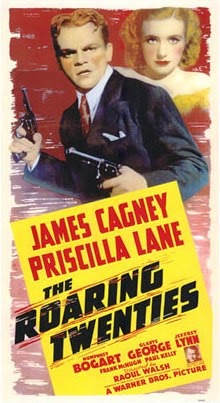
e08f7-the-roaring-twentiesHere is a retrospective gangster film reminiscing about the Jazz Age and Roaring Twenties extending from the post WWI period  of prohibition to the election of FDR.
Two mainstays of the genre including the original gangster James Cagney and hard-boiled Humphrey Bogart star as two men in a group of three soldiers who meet during World War I. In the ensuing years Eddie Bartlett (James Cagney) initially has difficulty getting back into society, but after meeting Speakeasy owner Panama Smith (Gladys George) he finds himself climbing the ranks in the bootlegging business. Soon through grit and a ruthless drive Eddie makes good racketeering by utilizing taxis with booze to make it big. 

Through it all Eddie becomes smitten with a young singer he used to know when she was a young girl (Priscilla Lane), except she does not share his affection. Pretty soon his ol’ buddy George (Bogart) comes back into the picture, with a some shifting dealings of his own. Eddie practically runs the town now but when the Crash happens he gets pushed out by George and now Jean is off and married to her lawyer beau. Eddie is a washed-up taxi driver still hanging around Panama and he has time to do one last favor for Jean.

This is one of the last great gangster films of the 1930s following in the wake of other Cagney classics like The Public Enemy and Angel with Dirty Faces. Raoul Walsh directs this film and it develops as another dynamic, action packed film with a lot of drama and heart thanks to Cagney and George. It is however different from previous gangster flicks in that it plays out as a history although it keeps the nitty-gritty look of the previous films. Like Angel with Dirty Faces especially, there are also some sentimental moments because Cagney is not a complete scoundrel, just mostly. Not wanting to continue being typecast Cagney took a break from the genre not coming back until White Heat in 1949. He did pretty well for himself during the 1940s though with performances in The Stawberry Blonde and Yankee Doodle Dandy. There was another fellow who did not do too bad in that interim period either, new found leading man Humphrey Bogart.

“What was his business?”
“He used to be a big shot.”
 
4/5 Stars

Review: Roman Holiday (1953)

Joe: Today’s gonna be a holiday.
Princess Ann: But you want to do a lot of silly things?
The answer is yes, yes we would!! That is the beauty of this film, which plays out as a lovely jaunt through Italy with two favorites in Audrey Hepburn and Gregory Peck. With Hepburn being practically unknown at this point in time, it made her a wonderful choice to play Princess Ann. She was someone without any prior identifying roles making her young princess seem plausible. William Wyler took a chance on an unknown and he certainly hit the jackpot.
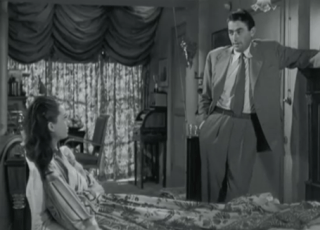
Gregory Peck on his part was always a strong leading man and an All-American type, perfect to play Joe Bradley. However, he also exuded gentlemanliness,s so despite the fact that the princess spent the night in his apartment we know nothing went on.  He had no ulterior motives bringing her to his apartment and even when he arranges to get an article out of her we know that is not who he is.
The film itself consists of wonderfully connected vignettes incorporating the Roman culture and landscape. Princess Ann leaves behind the hospitality of Joe in order to explore a bit before she goes back to her real life. In order to get that major scoop, he tails her and finally invites himself to tag along, so beginning the real fun. Princess Ann gets her beautiful locks cut by a friendly barber and buys some gelato from a street vendor.
 
Soon she takes her first puff of a cigarette, takes in the glory of the Coliseum, rides a Vespa through the hectic streets of Rome, and winds up in police headquarters with some explaining to do.They finish up their afternoon on a more thoughtful note at a wall of wishes originating during World War II.
 
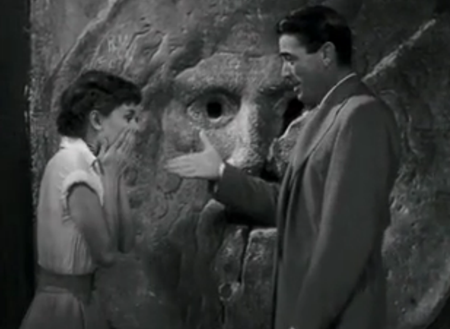
One of the best moments occurs at the mouth of truth, a great stone statue, which you are supposed to stick your hand in before it eats it up. In a moment of sheer fear Princess Ann or Audrey Hepburn, I’m not quite sure who looks on in horror as a screaming Bradley removes his arm and his hand is gone. Up comes the hand from the coat sleeves and the jokes on her. It has absolutely no bearing on the plot but it makes us love Peck and Hepburn even more.
 

To finish off the evening the two companions and Irving (Eddie Albert) cause a ruckus at a dance aboard a barge before swimming away to safety. There Ann finds love and a soaking wet kiss to go with it. But it is at that moment when the laughs stop and the romance begins that everything becomes all too clear. This wonderful day cannot last forever. There is a moment, after one final embrace, when they have to say goodbye for good.

This is not one of those “love at first sight” stories, but it is a different sort of fairy tale where two individuals share an enchanting day together and fall in love. Every Cinderella story must end and so does this one (Anna: At midnight I’ll turn into a pumpkin and drive away in my glass slipper). They must eventually come back down to reality with Princess Ann fulfilling his duties and Joe moving on with his career.
 
Joe’s major newsflash is not a thing anymore. The whole day means too much to him and being the buddy he is, good ol’ Irving understands that. Speaking of Irving, he deserves some discussion. Eddie Albert’s character is spilled on, stepped on, knocked over, tripped, and through it all remains the perfect buddy for Gregory Peck.  Even his little car is a riot, not to mention his inconspicuous tiny cigarette camera and his sly efforts at photography in every type of circumstance. Irving shares a great deal of double talk with Joe which somehow gets past the unsuspecting princess. However, by the end of the film, the princess is also a cohort in their memorable adventure with commemorative photos included! 
 
When Joe Bradley walks out of the grand palace he leaves content knowing that he shared something special. No one else needs to know (aside from Irving) about the fairy tale they shared and that is the beauty of it all. It is just their little secret, their Roman Holiday
 
5/5 Stars

The Women (1939)

6cabb-poster_-_women_the_01Starring a cast including Norma Shearer, Joan Crawford, Rosalind Russell, Paulette Goddard, and Joan Fontaine, this film is all about the lives of these women. Mary is a member of New York high society who is happy with her marriage. However, when her gossipy friends begin to talk about her husband with another women she is hurt. She eventually  files for divorce and while waiting for the conformation in Reno she meets some new friends and is finally able to find a way to get her husband back. Needless to say the ending is happy and a few women get what they deserve. This film had an enjoyable introduction, a sequence in Technicolor, and an all female cast. Most of all it characterizes the various women in this walk of life. Some are kindly, others foolish, and still others are treacherous.

4/5 Stars

Key Largo (1948) – Film-Noir

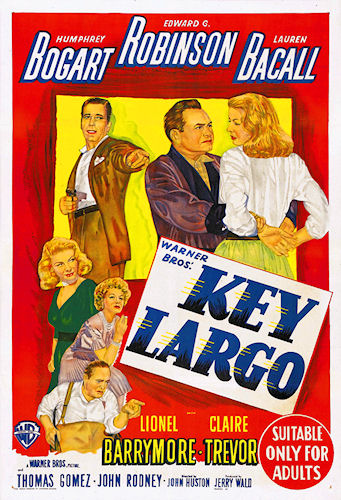
5b446-key_largo432Starring Humphrey Bogart, Edward G. Robinson, Lauren Bacall,  with director John Huston, the film takes place on a sweltering day during the hurricane season. Bogart is passing through Florida to say hello to the relations of a dead war buddy. In the process he and the others at the hotel are held hostage by the mobster Johnny Rocco (Robinson). Bogart seems to back away from conflict but he is only biding his time with the villainous gangster. Through a series of events the war veteran is supposed to pilot the mobsters to Cuba, however he ultimately turns on them and brings justice. This is a fairly good film with Lionel Barrymore, Claire Trevor, and Jay Silverheels in support. It must be mentioned that this was the final film pairing of Bogey and Bacall. Get ready to sweat it out in Key Largo.

4/5 Stars

In honor of Lauren Bacall

To Have and Have Not (1944)

1b537-to_have_and_have_not_1944_film_posterStarring Humphrey Bogart, Lauren Bacall, Walter Brennan, Hoagy Carmichael, and with director Howard Hawks, this film is very reminiscent of Casablanca. On the small Vichy-controlled island of Martinique, a hardened seaman spends his days steering his boat and his nights at the local hotel. The French resistance stir up his life by asking for his help but he refuses. Everything changes however when he meets a mysterious young woman (Bacall). Their playful banter eventually leads them to a mutual affection. Wanting to help his new found girl get home, Harry Morgan finally does agree to help the French and in the process he shows his true colors. Cementing Bogey and Bacall as a star couple, and immortalizing a certain line about how to whistle, this film is a good one. It has everything you come to expect with Bogart and it gives you something special in Bacall.

4/5 Stars

In honor of Lauren Bacall

The Dead Poets Society (1989)

24bb0-dead_poets_societyDirected by Peter Weir and starring Robin Williams in a career-defining role, the film opens with the commencement of a prestigious all-boys school. There the boys say tearful goodbyes to their parents and get reacquainted with their chums. The strict and disciplined class regiment soon starts and everything is business as usual for these driven boys. 

However, their new English professor John Keating (Robin Williams) was a former student of Welton, and his teaching style is far from ordinary. His pupils first find him strange and then come to admire his methods. He instills them with the phrase “carpe diem,” has them rip out the stuffy introduction to their poetry textbooks, gets them to see the world from on top of their desks, and encourages them to call him “O Captain, My Captain.” Above all, he leads his students to seize the day, and think for themselves in the process.

 A group of his students re-launch the illegal Dead Poets Society that Keating himself had been a part of as a lad. There they share their thoughts, feelings, and ideas freely in defiance of the school. Charlie (Gale Hanson) for one puts an illicit article in the paper only to follow it by an audacious act that receives retribution from the Headmaster. Knox (Josh Charles) somewhat accidentally meets a girl who he immediately falls head over heels for. However, she already has a boyfriend, but the undaunted Knox will not be deterred, and he keeps seeing her. Against his father’s wishes, Neil (Robert Sean Leonard) takes up acting in a play only to receive his father’s immense disapproval later on. The outcome of this is tragic, and it ultimately leads to an investigation of Keating. Everything seems bleak for the boys as they either rat on Keating or risk expulsion. 

Keating is released and English returns to the same monotony. However, Keating’s impact cannot be destroyed that easily, and in one last act of the defiance the boys stand up for their Captain led by the formerly timid Todd (Ethan Hawke). I must say that although the film’s ending was inspiring, it left me wondering what the consequences were. Also, I did not really understand the point of The Dead Poets Society. The title would seem to be more aptly Carpe Diem. Putting that aside, there are some good performances here, and Robin Williams is truly a pleasure to watch. He could be my English teacher any day. There are some good lessons to be learned here too. Take note boys. 

4/5 Stars

Review: The Spectacular Now (2013)

Looking back a year later…

The moment Aimee Finicky appears onscreen is perhaps the most remarkable instant out of many great moments in this film. The light must have been exactly perfect and everything seems calm and serene. The only thing we focus on is the initial meeting between two individuals, and that’s all that matters. That anxious face obscured by the light. That voice tinged with worry and relief. As an audience, we have our first encounter with the girl that the same Sutter who is sprawled on the ground, will fall for over the course of the film. However, right now he can’t remember who she is. There could not have been a better meet cute.

Fast forward to the ending of The Spectacular Now. So much has taken place in a short span of 90 minutes, it’s hard to keep track of it all. Just like much of the high school experience. Aimee and Sutter have been on an emotional roller coaster which Sutter has succeeded in derailing, but he has a new resolve and he will not waste this opportunity in the now.

There she is walking down the steps of her new college. Pleasant looking as always, undoubtedly with thoughts of academia swirling around pushing her past memories into the back of her mind. Then, all of a sudden they’re all right in front of her again in the form of Sutter.

There is a look on her face that is almost indescribable and it seems apparent that words are about to form on her lips, and the film cuts away. It is absolutely maddening as an audience who has become so invested in the story of these two high schoolers.

For some reason, this final shot of Aimee reminds me of The Tramp’s final reaction in City Lights. It might be a stretch but in both situations, there is a tinge of hope, but there is still this uncomfortable feeling of the unknown. And yet if we had known the resolution both these films would have lost some of their allure and City Lights is Chaplin’s masterpiece. As of right now The Spectacular Now is a little blimp on the radar in 2013. Shailene Woodley and Miles Teller might change that with the rate they are going. They certainly do not have the weight of the one and only Charlie Chaplin, but I am sure both of them are destined for numerous other great performances.

4.5/5 Stars

A Man For All Seasons (1966)

a4d49-a_man_for_all_seasonsSir Thomas More had the misfortune of getting in the way of perhaps one of the most notorious kings in history, and it proved costly. It is the early 1500s in England, and the Reformation has shaken the world but Henry VIII (Robert Shaw) has his own plans for the church in his country. He is bent on getting his marriage annulled by the pop,e because young Anne Boleyn will be much more likely to give a healthy heir to the throne.

A Man For All Seasons focuses on the position of More who at the time was Lord Chancellor of England. First, in talking with Cardinal Wolsey, More resolves not to sign the letter to the pope on the king’s behalf, because it goes against his conscience. Later, in his dealings with Thomas Cromwell, More resigns rather than to sign an oath making Henry VIII the supreme leader of the church in England.

Except there is more to it than that. More certainly was not a dissident or a rebellious political figure. Far from it. At least in the film, he is portrayed by Paul Scofield as a constantly even-keeled and gracious man in all circumstances. When a young man named Rich (John Hurt) sold More out for a high title, in a Christ-like response More has only pity for the fellow. Selling his soul for the world is worse enough, but Rich did it for Wales.

Not even the pleading of his newly-wedded daughter (Susannah York), or his strong-willed wife (Wendy Hiller) can change More’s conviction as he wastes away in the Tower of London. Sir Thomas went calmly to his death confident that his faith in his Lord would give him eternal peace. He died there for a seemingly trivial reason at the hands of men who used to be his friends. But he died with his conscience intact.

As I acknowledged, Paul Scofield is such a serene force during the storm of this film. The portly Orson Welles and Leo McKern seem to fit their roles well, and Robert Shaw has enough bluster to pull off Henry VIII. A young John Hurt turns in a fine performance as the Judas of the film and Nigel Davenport is commendable as More’s exasperated friend the Duke.

Adapted from a stage play, here is another highly acclaimed film from director Fred Zinnemann. Perhaps it is the period drama, but this film strikes me as very English and it did very well for itself. I suppose because it’s a tale that is universal and audiences love to identify with men such as Sir Thomas More. Zinnemann was always superb at capturing the inner struggles that humanity is often forced to confront, and he did it once again here.

4/5 Stars

Repulsion (1965)

f483d-repulsion
Directed by Roman Polanski and starring Catherine Deneuve, this British Psychological thriller is in the same vain as Psycho. Carol is a manicurist who is often absent-minded at work and she returns home to an apartment that she shares with her older sister. She passively resists the advances of an infatuated young man and at home she must live through her sister and a boyfriend in the next room. 

*May Contain Spoilers
Then, they leave and an attached Carol cannot bear her sister to leave her alone. The next days and weeks she sinks into a unstable state and slowly loses her sanity while losing track of reality at the same time. She is sent home from work, becomes even more preoccupied, and then begins hallucinating back in her home. When Colin comes to speak with her she is still unresponsive and she unexpectedly bludgeons him to death. Then, later on the annoyed landlord comes by for his money, and then makes advances on her, only to be killed by a frightened Carol. Helen and her boyfriend return to find the apartment in disarray and Carol out of sorts and concerned neighbors come to spectate. The camera closes in on a family photo and a young Carol’s perturbing face. 

This low budget documentary grade black and white film still packs a powerful punch and the best word to describe it is probably disconcerting. Unfortunately, I had never heard of the cinematographer Gilbert Taylor, but he had several wonderful films in his catalog including Dr. Strangelove, A Hard Day’s Night, Star Wars, and of course Repulsion.
 
4/5 Stars

The Lion in Winter (1968)

ae367-lion_in_winter1The year is 1183 and the castle of King Henry II is a dark and dank place during the winter months. You would not think so by the opening moments where an energetic King (Peter O’Toole) duels his young boy John (Nigel Terry). His mistress takes in the scene from afar. On first glance, this whole scenario seems pleasant enough, but that would be far from the truth.

Young John is the King’s favorite, but his aged yet cunning wife Eleanor (Katharine Hepburn) has a special affection for the eldest brother Richard (Anthony Hopkins), who she desires to take the throne. Stuck between the two favorites is middle child Geoffrey (John Castle), who has plans of his own. Bring the French King Phillip II (Timothy Dalton) into the equation and the situation becomes even messier than before. What follows is an elaborate web of lies, deceptions, side deals, false motives, eavesdropping, and of course backstabbing. Henry and Eleanor constantly battle back and forth as their sons bicker among themselves. One big unhappy family to be sure.
Henry tries to marry off his mistress (Jane Merrow) to Richard to satisfy King Phillip, but his son will not have it. Next, Henry tries to compromise with Phillip only to learn that his sons were planning to gang up against him. Now he cannot trust any of them, and they find themselves in the dungeon. He makes a new plan to get remarried to his mistress so that he might have another son to be king, but his other sons will be a threat so long as they live. His dilemma is evident, but he cannot bear to kill them. Things seem to go back to the way they always were with Eleanor going back behind bars and Henry playfully barking at her. All’s well that ends well perhaps.

Peter O’Toole and Katharine Hepburn were certainly two titans in this film. O’Toole, whether he is roaring or confiding in his former love, does everything with purpose and bravado. He does show his soft, vulnerable underbelly at times, though, as a man advanced in years. Hepburn on her part is absolutely acerbic, oftentimes governing the tone of the film with her barbs and snide comments. And yet with her, there is also at least a few instances of true humanity. She and Henry seem to be made for each other and their boys are seemingly just as loathsome and underhanded.

4/5 Stars