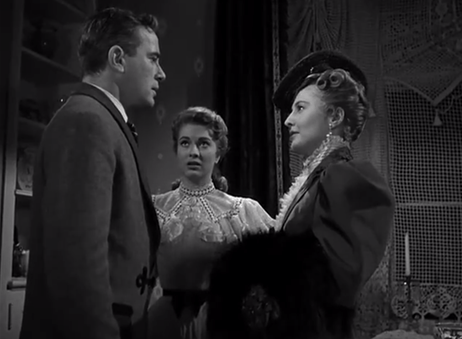
One Way Passage (1932)

one way passage 1.png

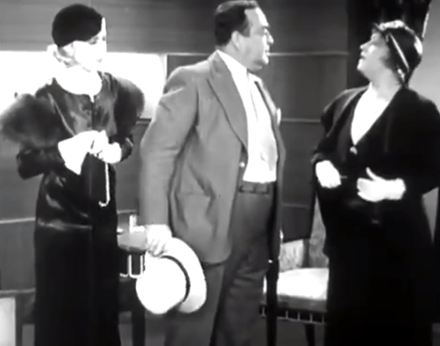
There’s a myth that makes the rounds every so often suggesting films of yore were always stagnant affairs. You only have to look at the opening bar sequence directed by Tay Garnett in this picture to confirm such an assertion is an unequivocal falsity. The camera is alive and well in One Way Passage.

William Powell is beloved by classic movies fans the world over but you genuinely wonder if he’s much remembered outside of that faithful populous. The broader public has more wherewithal than often their given credit for and yet there’s no doubt Powell is less heralded than his gangster compatriots at Warner Bros.

Meanwhile, Kay Francis is an all but forgotten flame of the 1930s who is no less glamorous or alluring today. If you run the numbers, she was one of the highest paid and biggest box office attractions well into the mid-1930s. Although soon Bette Davis would take on the mantle. But this context will seem insignificant 80 years on. That’s why it’s such a charming realization this film is a true gem worthy of the talents involved and certainly worthy of being rediscovered today.

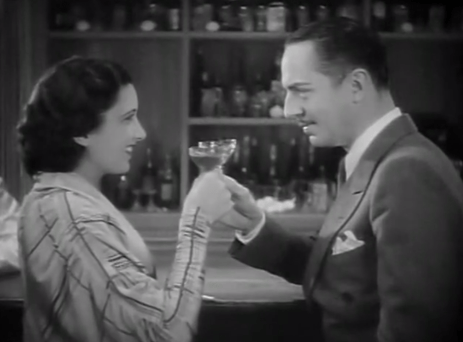
All we need is a bar. It becomes one of the crucial settings in the picture. A pair of memorable bartenders played by Mike Donlin and Roscoe Karns give each some added coloring. People are gay and jovial. Two merrymakers accidentally clip each other but it hardly feels like a clumsy meet-cute or it’s exactly that.

Except there’s a star-crossed undertone to it all. No time is spent piddling around. We look into their eyes and meet the gazes of Joan (Kay Francis) and Dan (William Powell). They share the moment and it’s lovely but they bid adieu and head their separate ways to forego ruining the electricity they achieved.

Little do we know we have been introduced to a debonair criminal. A gentleman scoundrel if you can imagine the prototype.  The shorthand is in place and it’s easy enough to decipher so there’s little to no need to mince words or drag out the exposition.  In fact, Jim’s so charming we don’t even realize he’s on the wrong side of the law until a copper sticks a gun in his back.

That’s the key to this picture because at such a short running time it cuts its story down to the essentials, excising the superfluous information and streamlining the events in such a way that is endowed with a playfulness but moreover a grand passion.

Because the inevitable happens and they pass not like ships in the night but aboard an ocean liner named the S.S. Maloa making its way toward Hawaii and ultimately San Francisco.

Far from sputtering, their initial connection only blooms with each passing day together. Of course, she doesn’t know he’s being sent to San Quentin and he has no idea she is terminally ill even near her deathbed. But in this respect, their obliviousness puts them on equal footing.

one way passage 2.png

Joan says she wants to crowd all the intense beautiful happiness into the life she has left. It’s the perfect aspirations for this picture to deliver on because there’s this heightened intensity and that allows it to provide such a potent story in a matter of a few minutes. As things look that’s all they have.

They are going out in a blaze of glory and there’s no more apt description than that. The picture has no time for realism and so it foregoes that for something far more moving in at least in this particular instance. They are imbued with the poetry of star-crossed lovers aboard a sea vessel with an imminent conclusion already in place.

The cop Steve (Warren Hymer) seems like a real brusque stickler and yet he’s baffled by Dan’s charity. He relents since the man saves his life. It’s the only thing that allows this captured petty thief to maintain some kind of pretense of normality with Joan. Steve has enough pity to allow his prisoner the dignity of playing the role he has been cast in.

Of course, Dan also gets some help from the constantly swacked Skippy (Frank McHugh) a con man with a sore spot for cops and the bane of every bartender he comes in contact with.  Then there’s Betty a fellow con woman masquerading as the “Countess Barihaus” (Aline MacMahon in a glowing performance), who has the entire ship cast under her spell including Steve. Not only do they provide the film with an amiable strain of comedy, but they also buy their friend his few hours in paradise with his constant companion. But the dread comes upon us because we realize even as the film’s minutes tick away so rapidly — this euphoria cannot last. It will not.

one way passage 3.png

They share one last tearful kiss and wave goodbye  with one final “Auf wiedersehen.” But the perfection of it is that the illusion they’ve managed to hold onto isn’t even broken in their final moments together. There’s such an undercurrent to the scene — so many things they could bring up or that they could say — and yet they are content in truly cherishing it. The sequence is wafted over with the epitome of bittersweet emotions. And yet they can hold onto the next dream — a reunion on New Year’s Eve.

When it’s all said and done, it’s a wonderful ending that lets us float away on our doubts clinging to the hopeful ending we want to be true. That’s what the great romances do. They do not quash the sentiment beating inside our hearts but they suggest even if it is folly there still is some insurmountable worth in striving for love. Let that connection between our heart and our emotions never be absolved. Because yes, we are rational beings but what does that do for us if we have not love? This picture will probably rip your heart out but it does so tenderly and with the utmost amount of tact. It deserves to be seen by more people.

4/5 Stars
Girls About Town (1931)

girls about town 1.png

I came to this film for Kay Francis and I stayed because of Kay Francis, George Cukor, Joel McCrea, Eugene Pallette, and Lilyan Tashman. All to say, it is a supreme pleasure to watch this cast in action and already Cukor seems capable of handling the material in a way that intuitively understands the comedy while never losing sight of the romantic heart. That balance seems key.

But we also see another Cukor hallmark with two strong female characters who are central to the film’s integrity. Wanda (Francis) and Marie (Tashman) make a living as girls about town. They are bankrolled to get comfortable with out-of-town businessmen. Because a little female company and a lot of bubbly makes any business transaction go down smoothly.

Marie doesn’t mind the vocation but you can see it in Wanda’s eyes. She’s tired of the same haggard men and droll conversation. She wants something of a little more substance. An actual man and a real relationship.

Yet she concedes to do another gig as part of a yacht excursion that’s looking to schmooze a wealthy whale of a man named Benjamin Thomas (Palette). He also is a self-proclaimed king of practical joking. In fact, he doesn’t know when to quit whether it’s glasses of water or deep sea diving for golf balls. Marie gravitates to him for a laugh.

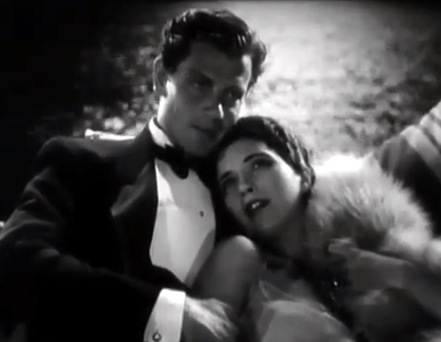
Meanwhile, Wanda has her eyes set on the younger one, Mr. Benjamin’s associate (McCrea) who isn’t much for conversation or any kind of companionship. As hard as she tries there’s nothing doing. But they finally strike up a compromise by playing “pretend.” Their relationship becomes jovial. The only problem is that Wanda is falling for a man who never meant to romance her. Things get a little too real.

But thank goodness, the feelings are mutual and it looks like they will be together for good. A zoo might as well be the tunnel of love as our two euphoric romantics smooch their way through the animals. At this point, the love story is floating on air. Until Jim mentions marriage.

Here Girls About Town earns its keep as a Pre-Code picture due to its subject matter, the flippancy with which it deals with romance, and even fairly radical views on the necessity of the institution of marriage between two people.  None is the focal point per se but they certainly make the picture quite bold even in what it deems to be the status quo when placed up against films that came a mere three or four years later. The inevitable bomb is dropped but it hits like a pin drop. She’s married already. She doesn’t even bat an eye. Divorce is what is called for and there’s no reason her husband would not grant her one. She hasn’t lived with him for a time.

girls about town 2.png

The films secondary narrative involves Benny’s own wife coming back into his life to try and save his reputation only to join forces with the surprisingly reasonable Marie as they scheme to get the old curmudgeon to spend his money and show his affection for his wife.

The final complication just gets better and better and it keeps the picture interesting. At this crucial stage, Wanda’s spineless husband Alex turns an about face and crosses paths with Jim to talk it out.  Now the indignant Jim smells blackmail and lashes out not only at this man but his formerly soon-to-be wife. You can see the heady implications.

But there’s something more to Alex. Perhaps he’s not the villain we assumed him to be. That would have been too easy. So instead of getting the money back from him, Wanda sets her sights on the next best option. An impromptu auction is undertaken as the girls rally to raise $10,000, complete with a heel for a gavel and a wheeling-dealing Marie presiding.

Certainly, it’s not the necessity but the principle of the matter as Wanda wants to pay her man back to show her true character. She was never looking to take advantage of him and she is willing to go to great lengths to renew his trust. It’s made easier by the fact that he’s torn up about what happened. Now she has him where she wants him. Her days as a girl about town are numbered.

Ernest Haller is our cinematographer and there are several setups that are particularly interesting because they trade out our normal frame of reference as the audience by putting us in different places. The first instance comes in the zoo where we find ourselves literally inside different cages with a bear and then some reptiles.

Then, there’s a later sequence where we similarly end up behind the glass of a display case. And of course, we can’t hear the exchange going on outside but the pantomime gets it across just fine. But the creme de la creme is the flurry of close-ups on Palette’s face when he sees all the jewels that he thought he bought for another woman on his wife. Priceless.

3.5/5 Stars

Good News (1947)

good news 1.png

The title Good News means next to nothing to me but it does suggest a certain sunny disposition we tend to equate with MGM musicals of the period. That assumption is fairly well-founded. Furthermore, I am well aware of Adolph Green and Betty Comden, that screenplay dream team, an integral part of Arthur Freed’s unit that had so many quality pictures to their name.

Most obvious inclusions include Singin in the Rain (1952), On the Town (1949), and The Band Wagon (1953). And here they are working in the realm of retro nostalgia pieces, their forte, a light comedy scattered with quips and a substantive lineup of tunes. But the important differentiation here is that this was the first one. This is where it all began, in theory at least, making them into a screenwriting mainstay. While the picture has long since been overshadowed by its successors and was never a huge box office success, there’s no doubting the unassuming charms still present in Good News.

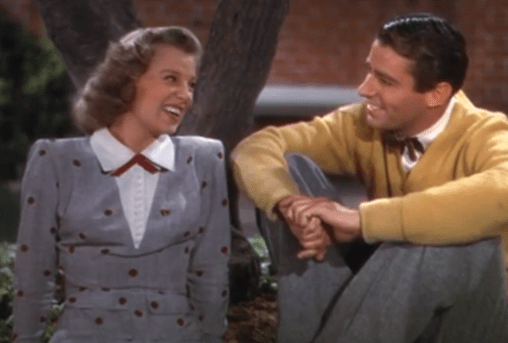
Like Singin in the Rain (1952), the year is 1927 but instead of film sets in a Hollywood back lot, we are met with the world of Flappers and Sheiks — the names for boys and girls on college campuses across Middle America. On this particular campus, good ol’ Tait University, the boys are batty about football and girls and the girls are batty about boys — at least on a very basic level. So nothing is all that different.

And yet for anyone born in the latter half of the 20th-century, you can’t help and look at the depictions and think that everything is different.  Whether its styles of clothing, social rituals, colloquialisms, practically everything. Granted this is a musical.

Still, the school’s All-American running back Tommy Marlowe (Peter Lawford) shimmies, shakes, struts, and sings with his buddies about the necessity of being a ladies’ man on campus. Because when they’re not on the field the subject of utmost importance is girls. Obviously. Thus, when a new girl fresh off of finishing school brings her refined manners, stuffy French vocabulary, and flamboyant dress, all the boys heads start turning including Tommy’s.

But as is often the case, not everyone is so infatuated or completely distracted by the opposite sex. For instance, we meet Connie Lane (June Allyson) as she calls for a wrench to remedy a leaky sink and she’s dressed to the nines. She’s a good student and pays her way through school at the local library. Boys are not her main concern though that’s not to say that romance doesn’t tickle her fancy.

So the film is a frolicking and invariably cheesy examination of the mating rituals of college kids. It’s crazy stuff sometimes but be assured we are in for a light and breezy good time — a squeaky-clean version of what college life is if you will.  It’s also short on plot but what is there proves to be a springboard for song and dance. For the most part, that’s promise enough.

A highlight is the familiar velvety fog of crooner Mel Torme as well as the rather dorky but endearing wiles of Joan McCracken who feels much in the same vein to parts Betty Garret would ultimately play. Of course, this is really the Lawford and Allyson show as they must come to know each other, show genuine feelings, get confused about it all, and fall back together again. That’s the way the story has been told since the dawn of time. This one is little different.

A formative number comes off as a musical French lesson as Tommy goes under the tutelage of Ms. Lane to land the new girl in town who is giving him the cold shoulder. Meanwhile, Allyson imparts her knowledge and delivers a warm rendition of the tune, “All The Best Things in Life Are Free.”

“Pass the Peace Pipe” at the local soda fountain — a song that feels doubly archaic coming from the 1920s through the 1940s to the present day — is no less a lively foot-tapping number to be sure. But be relieved that the football scrimmage is not turned into a giant musical number of its own. Football is football and dance is dance. Each gets its own arena and there are plenty of theatrics in both. The cherry on top is a stellar large-scale dance number, “Varsity Drag,” to sum it all up in a rousing fashion much as it began.

3.5/5 Stars

Diary of a Chambermaid (1964)

diary of a chambermaid 64 1.png

Luis Bunuel made a name for himself ever since his early work on Un Chien Andalou (1929) as king of the surrealist filmmakers. That and bashing the bourgeoisie. Some might be surprised in finding that Diary of a Chambermaid, adapted from the eponymous 1900 novel of Octave Mirbeau, is a fairly straightforward narrative for him.

From what I gather, that’s not to say its fully faithful to its source but more so it does not send the narrative hurtling into surrealistic visions like many of his other prominent works. What’s not missing is his typical acerbic wit that belittles the lifestyle of the upper class partially through the eyes of a Chambermaid named Celestine (Jeanne Moreau).

Before it’s begun we already know it’s charted out a diverging course from that which Jean Renoir’s Hollywood effort tread. That goes without question because not simply the directors but the systems that they were working under prove drastically different. Thus, there’s little reason to label this a remake. It’s an entirely different beast.

Furthermore, their leading ladies, the vivacious Paulette Goddard, and the aloof Jeanne Moreau could not be more different muses. The latter dame of France projects even a mild indifference to the hoops she’s put through.

Moreau actually received the part over Silvia Pinal who was intent on being in the picture (even learning French for the role). Bunuel was no doubt happy to have Pinal aboard as well but ultimately the French backing won out.

While he did not get his initially chosen leading lady, Bunuel nevertheless was blessed with one of his other most prolific collaborators the young French screenwriter Jean-Claude Carriere who would go on to work with the director on many of his most prestigious later works.

Celestine, as portrayed here, is not an altogether awful human being — she does show some amount of heart even — but that does not mean she fails to realize the degree of power she has over people.

Yes, she’s only a chambermaid. There’s an elder gentleman who resides in the manor. His adult daughter who oversees much of their affairs. And we have the upstairs-downstairs drama at hand most certainly with gossip being traded. Especially about the Madame’s husband (Michel Piccoli) whose raging libido means he is just about to pronounce his love for anything that moves.

However, in this particular picture, the Monsieur Monteil also has an ongoing feud with the retired army officer next door who is constantly ridiculing him and tossing refuse onto his property. In fact, there are numerous other exemplary moments of wry humor like when a pronounced animal lover annihilates a butterfly at point-blank range his first time using a shotgun. Or the fact that the same man who turns out to be Lord of the manor finds Celestine far too long a name and christens her Marie; that’s what all his past maids went by.

But as Bunuel pictures are accustomed to doing, this one slowly begins to roll out the carpet of perversity masked under refined sophistication. The master has Celestine read to him in the evenings and quite nonchalantly asks to touch her calf. He says she has nothing to fear and otherwise he might be the most charming individual in the home. He’s simply exercising a few whims, after all, he’s advanced in years. He should be given leeway… That’s how the rationalization goes anyway. However, the moment is as cringe-worthy as it is despicable especially in an age where such acts of sexual harassment are finally being brought to the fore and into the light.

Except in a Bunuel picture these proclivities were never really hidden. He tantalizes and nearly taunts you with them. Because this elderly “gentleman” is not the only one. The perpetually vexed husband keeps inquiring if Celestine has settled in because he wants to have a love affair with her. He promises that he’s not a brute though his past history seems to suggest otherwise.

Then, there’s brusque chauffeur Joseph who initially picked her up at the station. He relishes the opportunity of making the goose for dinner suffer because they taste better that way. And he also brandishes callous statements about killing jews after scanning the newspaper headlines. His anti-semitic sentiments are never in question.

The crass behavior doesn’t end there either. The father dies and on the very same day, a darling little girl that Celestine had taken care of is prematurely pulled from the picture as well. Both have dubious shrouds lingering over them. Amid it all, Celestine nearly leaves her post but comes back and the marriage proposals keep on coming from every man. She finally ends up with probably the nicest of the lot. It turns out hurling insults and garbage is almost docile.

Even the priest while not necessarily a wayward figure provides no type of spiritual guidance. He has no wisdom to impart. Instead entreating his parishioners to give to his church. There is no one righteous, not even one.

One of the few moments Bunuel does stray from normal classical filmmaking comes in the final frames. The first time you see it the immediate assumption is your eyes must be playing a trick on you.

But then we see a mass of protesters jump once, then again, and one final time so that they have all disappeared from the screen with each subsequent cut. One final lightning bolt for good measure and the books close on Bunuel’s rueful indictment of the bourgeoisie. It was very much his favorite pastime.

And yet any neat explanation of the film — even if it is more conventional as a narrative — is soon eviscerated by any number of complications. The contradiction in character, political undertones, and even a finale that indubitably has ties to Bunuel’s early career all spring to mind. His picture L`Age d’Or (1930) was decried with a similar protest. There’s no doubt that with each subsequent picture, the director pushed the cinematic boundaries with schemes of visionary ingenuity. Love him or hate him, there is no denying the skill in his craft.

4/5 Stars

The Woman on the Beach (1947)

woman on the beach.png

The Woman on the Beach is ripe with subject matter that feels akin to Jean Renoir as much as any Hollywood picture possibly could be. Since the beach, in his specific case, initially evokes not the California coasts but the shores that might have so easily cropped up in the paintings of his renowned father Auguste Renoir. Marrying that preconception with the domain of beguiling femme fatales makes it all the more disconcerting.

But this is also a story of what it is to be an artist and you can see Renoir using the materials at his disposal to grapple with such themes which were no doubt ruminating in his own mind.

Like any director of irrefutable substance, Renoir was probably aspiring to do far more with the medium than his American backers would have preferred and that could explain why his movie was cut down from an unspecified length into the version we now have.

It’s true that the film is yet another collision of worlds with a tortured American tough guy like Robert Ryan paired with a French master of composition and commentary like Renoir. But far from being a mere incomprehensible jumble, the results are still revelatory if not quite flawless.

The opening underwater dreamscape proves to be an entrancing interlude as it plays out in Robert Ryan’s subconscious, brought to us by a self-imposed exile like Renoir no doubt with obstacles of his own to do battle with.

If we want to try and be standard in our appraisal of the picture by providing the cadence of the plot, it’s about a Coast Guard officer (Robert Ryan) stationed on the West Coast who is taken with a woman (Joan Bennett) he comes across when she is picking up firewood on the beach.

There’s an almost uncanny lucidity to how she pinpoints his deepest fears in their initial encounter and they come to the conclusion that they’re pretty much alike. How Peggy Butler can be so sure is slightly beyond the point. Certainly, it doesn’t make sense in rational terms.

Here again, we are met with the bewitching gaze of Joan Bennett that first came to my attention in a portrait found within a dream of a film called Woman in the Window (1944). She’s undoubtedly one of the underrated noir sirens out there because she was one of the preeminent talents in casting a spell of enchantment to entangle her male companions. Ryan falters much like Edward G. Robinson did previously, twice over.

Charles Bickford gives a performance of equal import as the blind artist Tod Butler, a man who is as attached to his work — a passion that he can no longer realize — as much as he is to his wife. They want to get rid of him in one moment and they think he’s faking his frailty in another but all these preoccupations fall by the wayside.

Thus, The Woman on the Beach cannot be branded as a pure film-noir but instead a vein of those crime pictures grafted with Renoir’s own sensibilities. Even if the studio knew in part what they were getting, it still makes sense that they were not completely satisfied.

It looks to be one of those sordid love triangles that were always a mainstay of film noir but, again even in its short running time with footage lopped off, it works beyond that and despite Hollywood’s best efforts (whether intentionally or not), Renoir’s going to have a voice.

To a degree, it’s possible to see some sort of progression from Le Bete Humaine (1938) in its stylized atmospherics highlighted by billowing smoke, psychological duress, and oh yes, an alluring gal playing opposite Jean Gabin in Simone Simon.

Aside from the luminescent Bennett, a few other ideas leave a lasting impression whether it’s the turmoil of an artist caught in the throes of obsession or the dreams that overtake a man plagued by post-traumatic stress. This picture has more to offer than you might expect.

It brings to mind John Huston’s Red Badge of Courage (1951) another cannibalized picture that in its present form is about two-thirds of a minor masterpiece. There’s still an exceptional spirit and resonance to what was leftover. It can only lead us to imagine what might have been on both accounts.

This would prove to be Renoir’s last film in the States before he washed his hands of the whole industry and returned to his native land to continue the creation of high-regarded works like he had never left. True, this is a picture that is often neglected but that’s simply because there are other works of great repute. That does not speak entirely to the detriment of The Woman on the Beach.

3.5/5 Stars

The Clock (1945)

the clock 1

May 25th, 1945. That’s when The Clock was originally released. To save you doing all the mental calculations V-E Day was on Tuesday, May 8th and the folks at home were ready for the war to be over. So in such an environment, this is hardly a war film and it can’t even claim to be a post-war picture like The Best Years of Our Lives (1946). It’s floating in limbo.

This is the story of a fresh-faced soldier boy in the big city (Robert Walker) constantly craning his neck in awe of skyscrapers and cowering a little bit under the weight of them all. As such he’s constantly being bumped into, like a tourist perpetually lost. From such a moment springs an almost unforgivable meet-cute we can spy from a mile away. She trips over him and loses a heel.

But our stars are winsome and their persons genuine in nature in the days when that was unequivocally so. Corporal Joe Allen (Walker) proves to be to New York City what Mr. Smith was to Washington D.C. He even rides the very same sightseeing bus. He’s also a bit of an idealistic builder not unlike George Bailey.

The soldier and the gal he asks to follow a piece, end up taking a Central Park stroll together followed by a tour of the local art museum, taking a load off, butt up against an Egyptian sphinx. There’s something inherently refreshing about its meandering wanderings through New York City. It gives this illusion of circumstance where there is no clear-cut agenda. In a moment of decision, he goes pell-mell chasing after her bus because he knows something special is onboard and he sets up a date just like that.

Vincente Minnelli is looking out for his heroine as Judy Garland was his own new romantic interest but his camera setups also reflect a stewardship over the contents of the film with his usual array of fluid shots. Far from just taking care of Garland you always get a sense Minnelli is watching out for all his actors with his camera often walking alongside them. She proves to be a fine performer sans singing and although long remembered for Strangers on a Train (1951) and his tumultuous personal life, Robert Walker undoubtedly exudes a naive candor of his own.

It’s always striking how Hollywood was able to cast a certain vision of the every day while reality was oftentimes so different. One aspect of that was the wartime shortages which made shooting on location highly impractical so everything from train stations to exteriors were created on the MGM lot to closely mirror their real-life counterparts and it, for the most part, takes very well. We feel like we are traveling through the big city with a soldier and a gal. At any rate, the city crowds feel realistically suffocating.

But beyond the simple (or not so simple) realm of sound stages and set design it also extends to the actors themselves. Robert Walker who played opposite his wife in the epic home front drama Since You Went Away (1944), had a horrid time getting through the picture as their marriage was on the rocks.

By the time he got to The Clock he had been overtaken by alcohol addiction and Jennifer Jones was all but on the way to marrying executive David O. Selznick. Judy Garland on her part, that shining beacon of traditional Americana was struggling with an addiction of her own and after some creative differences with Fred Zinnemann, she had her soon-to-be husband Vincente Minnelli brought on to revitalize the production.

In these ways, it becomes obvious how there’s almost a conflicting double life going on in front of and behind the camera and yet there’s no doubting that this picture is brimming with sincerity whether partially made up or perfectly simulated. It still works.

You can undoubtedly see the same fascination with the very conversations and interactions that make up a relationship in everyday environments. The walking and talking we do when we share time together. The silly things we get caught up on or pop into our heads on a whim. And yes, there is a bit of Before Sunrise (1995) and Before Sunset (2004) in Minnelli’s picture for those who wish to draw the parallels but the beauty of it is The Clock is obviously not trying to be anything else. It takes simple joy in its story and the characters it holds in its stead.

It’s a film that dares have a scene where our two leads sit in a park, silent for a solitary moment as they listen to the street noise emanating from the city center and breaking into their tranquility. Take another extended sequence where the two lovebirds catch a ride on a midnight milk wagon driven by that perennial favorite James Gleason.

He’s the local milkman waiting impatiently for his request on the late night radio station and intent on some company along the route. But a flat tire puts him out of commission only to bring about another inspired piece of casting. Keenan Wynn as a drunk appears for mere minutes and earns high billing in the picture. It’s worth it. When our stars are allowed to sink into the periphery, the accents of the real world come into focus.

It’s equally true that those are the exact moments where you see the extent of another person’s character. Because it’s not simply the two of you but you get the opportunity to see them in a context with other people and that’s often very telling about who they are. Depending on the perceptions it can make you fall even more in love with someone and seeing as these two individuals help their new friend with his milk run, you can just imagine what it does for their relationship.

As for James Gleason and Lucille Gleason, they make the quintessential cute old couple and that’s because they truly are spinning their wisdom and bickering like only the most steadfast wedded folks do. The last leg of the film is when it goes for drama turning into a literal race against the clock bookended by one of the most distinct courthouse weddings ever captured. But even this picture doesn’t end there. Further still, it sinks back into this odd shadowland between the drama and the happy ending.

We could venture a guess it settles in on a realistic denouement where life isn’t always as we would like it but we can still love people deeply and do not regret the decisions we have made. As we walk off into the crowd with Judy Garland there is little to no regret only a faint hope for a future and assurance in the institution of marriage as something worth pursuing.

They are traditional values and yet, in this context, there’s something comforting about them. Minnelli has spun his magic on us even as the cinematic in its so-called reality slowly drifts away from the Hollywood marital standards of its stars. It’s both an idealized vision and a genuine one.

4/5 Stars

For Me and My Gal (1942)

for me and my gal 1

Here is a good old-fashioned American musical that effectively acts as an homage to the vaudevillian circuit that saw many performers realize their talents including numerous future Hollywood icons. At the core is a musical dream team in Judy Garland and Gene Kelly.

Behind the camera is the much revered Busby Berkeley who made musicals into gargantuan extravaganzas thanks to how he managed to capture human forms from above like no one before him. Ironically, here he’s working in a somewhat more conventional and dare I say, informal setting where we get to share the mundane spaces with our stars.

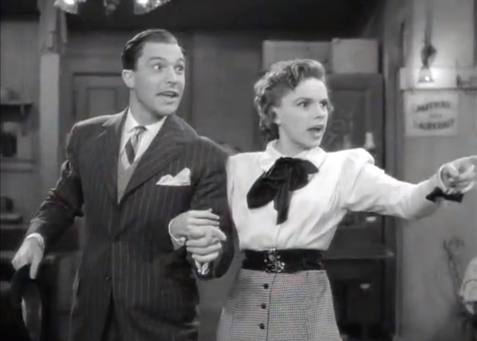
Kelly is Harry Palmer, a man who makes a living clowning around on stage. The arm spinning pirouettes and the athletic moves that defined his style of hoofing are obvious from the outset as are his infectious charm and winning smile. He’s still in the latent stages of his genius but that’s okay. There’s still time.

Judy Garland at this point in her career already had sizable stardom and it was Kelly the Broadway up-and-comer featured in his film debut. But in the ensuing decade, there was no doubt about it whatsoever. They both became quintessential musical stars of a generation along with a select few.

Jo Hayden (Garland) is a song and dance gal who while not having made “The Big Time” yet, still has a noticeable amount of talent. She partners with the good-natured Jimmy Metcalf (George Murphy) who harbors an obvious crush on her. She thinks he’s sweet.

Harry Palmer on the other hand, always seems to be making a fool of himself. A genuine person like her can see right through his come-ons. While her gangly brother (Richard Quine) agrees to finish up his med school, Jo is following her ambitions to get somewhere. She subsequently realizes she does have a bit of chemistry with Palmer on stage after an impromptu performance, if not for the fact that she is already a part of an act.

Jimmy does the noble thing and lets her go as they all have their sights on the Palace Theater in New York City.  You see, it’s the holy grail for vaudeville performers. It means you’ve made it. Palmer is ecstatic when he meets a singer (Martha Eggerth) who already performs there, thinking she might be his in. But he remains true to what he has going with Jo. Still, time and time again they’re playing small towns and their aspirations never seem in reach.

Even when it is right there in front of them and their manager (Keenan Wynn) has seemingly pulled through, Harry is torn up to find that he’s been drafted to head over to France to help the doughboys in putting the Kaiser to rest. He’s no draft dodger but he wants his dream so much and they are so close to being realized. He takes a plan of action that Jo misconstrues as cowardice. She’s ashamed that he would do such a thing especially since her brother is overseas fighting already.

Thankfully that is not the final word. Life sometimes has a curious way of bringing people back together and in the case of this cinematic world, we get a cheering finale courtesy of the MGM dream factory. While For Me and My Gal revels in its star power and the intimate chemistry built between them on the stage and in dressing rooms or in train compartments, we are soon reminded that this film has an ulterior motive. It’s a musical, it’s a romance, but it’s also a product of the American homefront.

Like a Sergeant York (1941) or a Yankee Doodle Dandy (1942) this effort was made with a higher purpose to act as a kindling rallying cry for nationalistic fervor going into WWII. However, just like its contemporaries, the reason we’re still watching it today isn’t necessarily due to those aspirations but the emotional connection elicited from its stars. This is what makes For Me and My Gal truly swell with sentiment. Thankfully Judy Garland and Gene Kelly got together on two more musical efforts to keep it going. Because they help elevate this above the spectrum of a run-of-the-mill propaganda musical with their palpable charisma that transcends any maudlin patches.

4/5 Stars

The Strawberry Blonde (1941)

the strawberry blonde 1.png

The opening shots of The Strawberry Blonde are not unlike Easter gatherings at my family’s house. Croquet in the backyard…well, that’s about it. But that’s precisely the distinction that’s being made as Raoul Walsh develops a dichotomy between two societies on either side of a brick wall.

On one side the Yale college boys play guitar as their gals all gussied up sing “Meet Me in St. Louis” after a rousing game of croquet. They are eye-catching and the frivolously well-off members of the elite. We think of them and their gayly prim and proper ways when we conjure up archetypal mental pictures of the so-called “Naughty Nineties.”

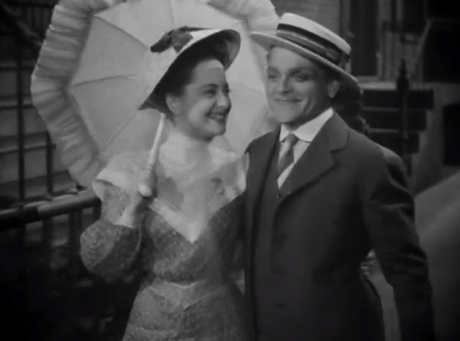
On the other end, two working men play a good old-fashioned game of horseshoes. They’re a different type of folk. A Greek barber (George Tobias hidden behind an accent and a mustache) and our pugnacious protagonist Biff Grimes. It’s not a typical Cagney picture but it’s still a typical hard-nosed Cagney and that’s the joy of it.

To use his vernacular, he’s a real hairpin. The kind of guy who never takes nothin’ from nobody but has made a habit of getting stepped on his entire life. Whether it’s the girls he’s missed out on or the fights he’s lost or any number of other footfalls. A 5-year stint in prison springs to mind.

Still, he can’t believe he missed out on the flirtatious, bodacious strawberry blonde Virginia Bush (Rita Hayworth), what seems like so many years ago now. But as was his habit, Biff’s friendly rival Hugo Barnstead (Jack Carson) ended up the lucky man.

Following their fateful first encounter, Biff gets continually saddled with Amy Lind (Olivia De Havilland) which obviously would be far from a disappointment with any sensible man. That doesn’t stop Biff from being sore. He needs a house call to get it through his thick skull that he really has a life to be grateful for.

This is the Epstein Brothers’ glorious revamping of a failed Gary Cooper vehicle from 1933, in this case, made to tailor fit James Cagney. The actor returned to his old studio, Warner Bros., looking for a change of pace to get him as far away from gangster fare as possible. Likewise, director Raoul Walsh was looking for a change after the riveting but tragic drama High Sierra (1941).

Given the results, it’s little surprise that the director considered it one of his personal favorites among the many pictures he helmed over the years. The quality cast starts with Cagney but we really have four superb talents at its core rounded out by Olivia De Havilland, a vivacious Rita Hayworth, and that old happy-go-lucky jokester Jack Carson. Alan Hale fills in as Cagney’s derelict father who’s always finding himself getting thrown out of the local saloon by the ear.

By now I all but take James Wong Howe’s photography for granted but as per usual, The Strawberry Blonde looks two-tone drop dead gorgeous as it lights a world with nostalgic hues of turn-of-the-century New York. Whether moonlight, streetlights, or candlelight, it is a film that is totally evocative of a bygone era.

Where men removed their coats to partake in fisticuffs. The same men humored their best girls with Sunday walks in the afternoon while local bands paraded through the park their brassy tunes wafting through the air. The barbershop subculture was in full bloom, quartets and all. Likewise, modernity was coming into its own with nitrous oxide, horseless carriages, electric lights, women’s suffrage, and the art of spaghetti imported from Italy.

In some paradoxical way while being nostalgic it still finds a way to feel surprisingly progressive particularly through the character of Olivia De Havilland with all her so-called improprieties. A nurse who winks, smokes, and whose mother was a bloomer girl and her aunt was an actress. At least on the surface. Maybe she’s not quite like that.

Meanwhile, Biff is always trying to save face his entire life and as a married man, he’s trying to save face with his concerned wife. He lives with discontentedness instead of satisfaction but just as the times keep on changing, Biff does too, realizing how lucky he is.

What makes the film itself a charming change of pace is the fact that it’s not concerned so much with one singular defining moment of drama but an entire life and it elicits a connection with a time and place even as we feel a sense of pity for Biff. It’s not a bleak film, more of a wistful one, and with wistfulness, a lighter more nostalgic tone can still be evoked.

Even to the end when Cagney takes on the masses it’s great sporting fun and he gets in his licks like any of his gangster pictures but he does it with a loving wife and a life to be wholly satiated by.

4/5 Stars

“Don’t be a hypocrite Virginia. Spiritually you winked.” ~ Olivia De Havilland as Amy Lind

All I Desire (1953)

all i desire 2.png

Douglas Sirk films almost by design seem to always revolve around the most uncomfortable thematic ideas that you can think of. Whether that is Sirk’s own wry sense of irony or more so the material that was provided him, there’s always something to be gleaned from what he does.

With every story, there must be a hook that reels us in and an event to establish the premise. Has-been actress and glorified showgirl Naomi Murdoch (Barbara Stanwyck) is sitting in the dressing room after one of her middling shows only to receive a letter from her teenage daughter. It catches her off guard because you see, she left home many years ago abandoning her husband and their three children. She had her reasons certainly but she was hardly expecting this.

But in a moment she decides to get dressed up and make her triumphant return to Riverdale, Wisconsin. What draws her there is the letter from Lily (Lori Nelson) entreating her to see her role on the high school stage. She just can’t resist the opportunity and as advertised she thoroughly enjoys her daughter’s performance. It captivates her beyond words.

Naomi unwittingly makes the play a major attraction in the small town not so much for the content of the production but due to her own attendance. They want to see the beautiful scandal maker returning to the scene of the crime after so many years. Among them is the local shop owner Dutch (Lyle Bettger) who once had a thing for Naomi that’s still steadily burning.

It’s true that she throws her former husband (Richard Carlson) for a shock and her disapproving eldest daughter (Marcia Henderson) still resents their mother for leaving them — rightfully so I might add. And yet Naomi didn’t come back to humiliate them. On the contrary, she’s ready to leave on the midnight train and she’s well aware of the need to make a good impression and consider what others will think around town. She hardly cares and yet she does care for the sake of her family. That’s part of the reason she stayed away for so long. People can be ruthless; it’s true.

Still, Lily in her winning way begs her mother to stay for the festivities and conveniently aids in her missing the outbound train. As the housekeeper Lena (Lotte Stein) puts it, Naomi is a woman with “sense enough to enjoy a party when there’s a party.” And everyone loves her for it, not because she’s a sideshow attraction but a truly genial personality.

First, it’s Joyce’s beau Russ Underwood (Richard Long) who asks her for a dance. Another highlight involves the future Yale boy summing up the courage to ask Ms. Naomi to dance and she takes him up on it without hesitation. Above all, it is her impassioned interpretation of Elizabeth Barret Browning that leaves the whole house mesmerized. It’s true that in only her few hours in town she’s already left a new indelible impression on the younger generations.

The entire town, her former husband, even her daughters and son all must grapple with their feelings toward her now. Henry is slowly realizing he is still in love with her and Joyce still harbors a bit of anger toward her mother when they go out riding with Russ.

But the character of Dutch seemingly transforms into an animal for the sake of creating a repeated scandal which looks like little more than fodder for the plotline. However, that’s not the true scandal or at least the true embarrassment. It replays itself in a different way this time. That cannot destroy someone as resilient as Naomi. She fights against it.

Barbara Stanwyck wins me over in every film I see her in each time anew because when words come off her lips they cease to be dialogue torn from a script but actually develop a life of their own as living breathing emotions coming out of her. She gives every performance an authenticity and charisma that’s forever disarming and the same goes for this picture. If any other actor might be flat or uninteresting there’s little else to do but let her command the scene and enjoy it.

There are so many moments we could note where she draws us in. One that spoke to me is during a tearful goodbye to her son (Billy Gray) who is hurt by what she did and she, in turn, tells him in all sincerity that people do bad things and they hurt people that they never meant to. Continuing to hate only leads to more hurt.

A darker Sirkian ending as he was set to make would have been more realistic but no matter. How can we hate All I Desire? Barbara Stanwyck and Douglas Sirk do wonders with it and they would do it again a few years later with There’s Always Tomorrow (1956).

3.5/5 Stars

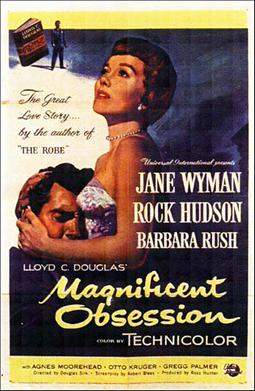
Magnificent Obsession (1954)

Magnificent_obsession.jpeg

This is the type of film that when the inevitable happens and a character mentions the title phrase a swell of angels voices begin to murmur and in one sense Magnificent Obsession is a sentimental even spiritual endeavor wrapped up in a soapy melodramatic morality tale.

But the key is that if you know anything about Douglas Sirk, you easily get a sense that this is not the director getting on his soapbox unabashedly. He is using the very material he is given and finding some of the ironies within it.

The story unfurls rather like a modern age parable. There were two men. One man died — a good man — so that another might live and that other man is Bob Merrick (Rock Hudson) a conceited, frivolous playboy only out for a good time.

The unseen, deceased Dr. Phillips left behind a recently wedded wife Helen (Jane Wyman) who was madly in love with him and a grown daughter Joyce (Barbara Rush) who was equally delighted with her new mother.

All of that was torn away from them by the selfish jerk of a man who unwittingly left Dr. Phillips without a resuscitator because the foolhardy Merrick got in a boating accident.

The film begins the long winding road of a soap opera as Merrick begins to change. First, he wants to buy Mrs. Phillip’s sympathy which he will never acquire that way. But he feels like wherever he goes he is somehow haunted by the sacrificial love and anonymous charity which seemed to dictate Dr. Phillips life. He can’t seem to get away from it. It makes him feel awful.

Of all places, he gleans wisdom from one of Phillip’s closest friends a sagacious artist (Otto Kruger) who imparts him with knowledge on how to pursue a life of true purpose. He’s warned by Randolph in one moment, “This is dangerous stuff, one man who used it went to the cross, died at the age of 33” but Merrick begins to go through a radical transformation — to take on this so-called magnificent obsession. Hudson gets the situation which allows him to exhibit his changing attitudes toward his fellow human beings and ultimately his own change in heart.

Anyways the plot spins and jumps in the most inconceivable and unlikely ways that have no other purpose but to set up the dramatic moments that fail to take heed of how absurd everything seems. It’s laid on slightly thick even for me with a few eye-rolling moments no less. Absolute poppycock if I might be so bold.

Still, there’s no doubting the potential impact of this emotional manipulation. You might suspect a crescendo courtesy of the Little Tramp except in lieu of Chaplin we have Rock Hudson in his first leading role. There’s no comparison but he and Wyman do prove to be a compelling romantic team.

I had never quite thought of it like this but sometimes it’s truly a joy to watch some visionary directors work cinematic magic in spite of the material they’ve been given. Currently, if you make a movie it’s usually on your own volition. Either you wrote it or you signed on knowing full well what you are getting involved with (at least in most cases).

But in Classic Hollywood you have so many more examples of great or at least interesting directors saddled with mediocre material. But the truly great ones took that material and made something fascinating out of it whether it was through mise-en-scene, shot selection, or simple choice of tone.

After seeing the works of Douglas Sirk it’s easy to wager that he was such a filmmaker. Originally from Germany and only transplanted to Hollywood in the 1940s, very late compared to many of his contemporaries, he was a very intellectual man and it bleeds into how he approaches his films.

Sometimes to grasp what he is getting at is an exercise in near extrasensory perception. Because he works in irony but very often it gives the pretense of mere melodrama if taken at face value. And that’s what he did, taking that standard so-called women’s picture of the 1950s and giving it a further dimension that allows it depth even today.

So is Magnificent Obsession a masterpiece? Not necessarily. But should that even matter and what does that subjective label mean anyway? Might we just be happy that there are directors like Douglas Sirk who made enduringly riveting films that we can go back to again and again? The idyllic shots of Lake Tahoe would easily make nostalgic souls yearn for the images found in this film alone.

3.5/5 Stars