Midnight (1939)

midnight 1939.png

“You’re in a fine mess! You got to get a divorce from a man you’re not even married to!”

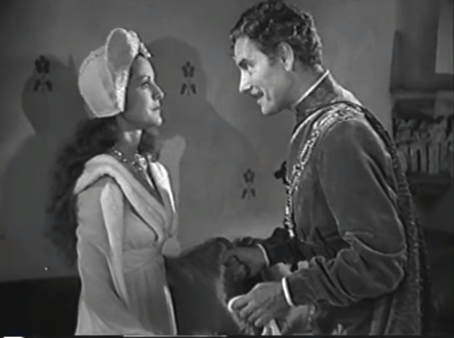
It was only a recent revelation that Claudette Colbert at times feels far too sophisticated to be playing beautiful hitchhikers or penniless taxi passengers as she does in It Happened One Night (1934) and this film, Midnight. Though it’s easy enough to explain away.

The screwball comedy has always thrived on incongruities as much as it did on the class divides between the rich and the poor. Where the extravagance is almost laughable in its boorish decadence and the little men still have lives seemingly worth living because they are free from societal pressures. After all, making just enough money to scrape by is nothing short of paradise.

In this way, Claudette Colbert was the perfect person to tiptoe this line because she could be cosmopolitan and was glamorous with all those other snooty folks. But she’s also a comedienne like the normal folks, seeing the humor and working it for the laughs just as much as she’s willing to do things that seem normal. A walking enigma she might be but she also makes Midnight a sublime comic fairy tale as our uproarious modern-day Cinderella.

One of her cohorts and romantic partners is Don Ameche, the Parisian cab driver Tibor Czerny who begrudgingly opens up his livelihood on wheels for her as a random act of kindness. As we mentioned before the smartly dressed Eve Peabody has no penny to her name or a franc for that matter.

But what she does have is audacity and it buys her a ticket into a lavish gathering as one Madame Czerny put on by some rich somebody or other. It doesn’t much matter since it’s all only a pretense anyway. Billy Wilder and Charles Brackett’s script unwittingly created the original party crasher plot.

Eve finds herself at a snobby patronage of the arts where the impassioned man at the piano plays either Chopin’s 12th Prelude or his 11th Etude. Again, it doesn’t much matter but it’s hilarious all the same.

What happens subsequently subverts expectations nicely. Instead of getting tossed out of the proceedings she winds up the fourth in a bridge game of rebels warring against tepid entertainment.

There’s the debonair Jacques Picot (Francis Lederer), Marcel (Rex O’Malley) the man who nearly gave Eve a fright by fetching her, and Helene Flammarion (Marry Astor) a married socialite who is more than a little buddy-buddy with the dashing Monsieur Picot.

The charade becomes increasingly awkward the longer it keeps going and going and going. Every Cinderella has her midnight. The real joke comes when the fanciful game finally ends only to be replaced with a new reality as a true to life Baroness. She has no idea how it happened and that’s where our last important party comes in — her fairy godmother so to speak.

Mr. Georges Flammard (John Barrymore) witnessed Eve putting on a nervous floorshow and was intrigued. Now he watches her masquerade continue and he sees how they can help each other out. It has nothing to do with a desire to fool around. On the contrary, in an attempt to undermine his wife’s philandering he wants to bankroll Eve’s little white lie a while longer until she can win Jacques over and pull him away from Mrs. Flammard. It works quite well too.

Meanwhile, the entire cabbie population of France looks for the mysterious girl at Tibor’s behest. It proves to be equivalent to any missing persons agency in town and it comes with made to order traffic jams to boot.

Midnight turns into a magnificent floorshow as all parties collide in an immaculate perfectly timed collision. Eve and Mr. Flammard’s joint ruse looks like it might soon be ousted by Marcel and Mrs. Flammard who are intent on finding the truth about this curious baroness. But the whole fantasy is saved by a dazzling entrance by one well-tailored gentleman, Baron Czerny.

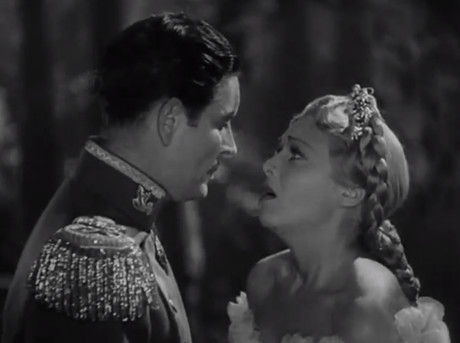
Now a new round of sparring back and forth begins. It’s full of glorious escapades, riotous telephone conversations with fictitious daughters, and Eve and Tibor trying to one-up each other with tall tale after tall tale. One thing Eve has going for her is Mr. Flammard still in her corner working his magic and John Barrymore puts on a fine showing in the film’s latter moments — his devilish eyes still gleaming as bright as ever.

Monty Wooley is introduced into the plotline in the ultimate piece of pitch-perfect casting as an opinionated but easily swayed judge. Thanks be to Classic Hollywood where pompous Americans can preside over a Parisian divorce court. But what matters is the right people get together. So screwball and fairy tales can still coexist. Wilder would prove it once more with Balls of Fire.

John Barrymore has always struck me as the tortured talent of the silver screen. One could contend that he was the most prominent member of the Barrymore dynasty except whereas his siblings Lionel and Ethel aged gracefully he burned out. Midnight came a little too soon for him.

It’s been a longheld fact that Billy Wilder and his writing partner Charles Bracket gifted two quality scripts that were ultimately directed by Mitchell Leisen. The integrity of the work was compromised to the point that Billy Wilder vowed to become a director himself so no one could mess with his material and when the material being messed with was Midnight and Hold Back the Dawn (1941) it begs the question how would the same magnificent films have ended up in Wilder’s hands?

Nevertheless, the actors are a fine gathering of talent while the script does wonders with the typical Wilder-Brackett combination that squeezes innumerable wit out of its wonky plotline. Billy Wilder must always get the last word in and his scripts always do. This one is no exception.

4/5 Stars

Kings Row (1942)

kings row 1.png

Kings Row is apparently a good place to live. The billboard in town says as much. It’s the goings-on in the community that tells a different story — providing a conflicting more subversive view of small-town America.

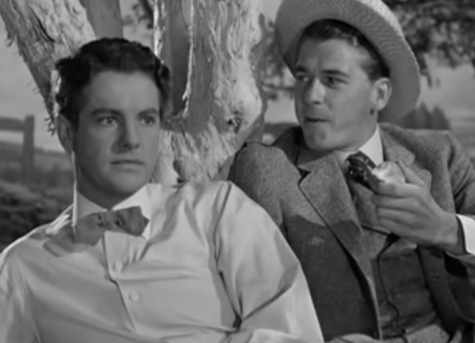
The story starts out with 5 children. It feels like we hardly get to know them before they are already grown. For some, it feels like we hardly get to know them, period. Robert Cummings is Parris, a fresh-faced polite young man who still exudes a naive innocence and he manages it at 31 years of age. He certainly doesn’t look it.

Those qualities are precisely what is called for in Kings Row, a film directed by Sam Wood (The Devil and Miss Jones) that feels like an enigma — a sprawling coming-of-age drama that dares to show the dark underbelly of society in a very patriotic time.

Despite being hampered by the Hays Codes and its gatekeeper Joseph Breen, Casey Robinson’s script is still a fairly adequate adaption. It comes off surprisingly frank for a mainstream success during the war years even if it can’t quite cover all the vast territory the book undoubtedly expounded upon. But it was a notable forerunner of such pictures as Peyton Place (1957) or even Blue Velvet (1986) years later. It does not shy away from cancer, death, suicide, psychological duress, and all sorts of malice.

Cummings is joined by Ronald Reagan playing his best buddy Drake McHugh, an affable straight shooter with that winning Reagan charisma. Reagan and Ann Sheridan prove to be a great delight with undeniable chemistry if not for the fact that they don’t actually share a scene until well into the picture. In normal circumstances, you would say they’d make a happy couple.

Meanwhile, Cassandra Towers (Betty Field) and Lousie Gordon (Nancy Coleman) seem at the fringes of the narrative if not all but forgotten. Cassandra was formerly Parrises sweetheart when they were kids. But her family is ostracized in town because her unseen mother has mental problems and her father (Claude Rains) pulls his daughter out of school. Parris doesn’t get to see her until years later when he’s under the doctor’s tutelage. He learns to admire the man but that doesn’t make the family dynamic any less disconcerting.

Likewise, before setting his sights on Randy Monaghan (Sheridan) from the other side of the railroad tracks, Drake had his eye on Louise but her parents, Dr. Gordon (Charles Coburn) and his wife (Judith Anderson), were vehemently against such a union. They believe Drake to be unscrupulous, fearing what others will say about his nighttime buggy rides.

Not to be outdone, Drake gets over his first love and moves on with his life. It’s one of the most satisfying parts of the picture. He seems genuinely content. Though he is miles away in Vienna, Parris is continuing his aspirations of becoming the first psychiatrist in his hometown.

But Kings Row remains a coiled spring of melodrama quickly catapulting from romance to drama back to passion then darkness and romance again. Drake’s life back home turns morosely tragic giving rise to the line that would define Reagan’s career, “Where’s the rest of me!”

James Wong Howes’ photography is A-grade as per usual. The shades of melodrama are his to dictate and he does it exquisitely suggesting tonalities with every composition. The well-remembered score by Erich Wolfgang Korngold has an undisputed majesty which seems to be echoed in some of John Williams most resplendent works from Superman to Star Wars.

There is so much that goes as unspoken subtext in the movie, simultaneously helping and hindering the final outcome. Easily forgotten are the troubling parent-daughter relationships with brokenness at the seams. Claude Rains appears in a very severe role as Dr. Towers who seems like a good man but in the same breath, he still has some lifelong demons he cannot contend with.

Charles Coburn is positively acerbic, channeling every bit of malevolence he can muster. It’s another small but markedly different role than his usual cantankerous or avuncular comics. The trifecta of supporting talent is rounded out by Judith Anderson who only has a couple scenes but they paint a picture of yet another strained mother-daughter dynamic. These issues provide an alternative unnerving layer to the drama but there are so many other subjects to be broached so these feel muddled.

Kings Row barrels towards a lightning fast conclusion that looks to resolve the film’s entire length in a matter of a few moments and that proves to be a heady proposition. An almost unnaturally joyous ending cannot quite tie up all the loose ends and the questions we may still have as outsiders trying to come to grips with this world. But there is one that does become evident and one thread of morality that shows itself.

Humanity was not made to live paralyzed by gossip, hearsay, and secrets that can never be completely rectified. Instead, what we can do is bring all that is in the darkness into the light and do our best to hold on dearly to our relationships.

Because strains of hypocrisy, sickness, and pernicious intent will look to undermine our happiness until the end of time. One of the keys is striving for a life that takes the hardship and comes out of it with a continued zeal for life. Battling all that is depressed and despondent with a spirit of pure integrity.

So while there’s still something unspeakably unsatisfying about Kings Row that’s not to take away from its positive outcomes. Just seeing a smile cross Ronald Reagan’s face once more almost feels like it’s enough. I still remember going to the Reagan Library and watching some clips from Kings Row, a film he likened to his best work. Now many years later I can finally say I’ve seen it for myself.

3.5/5 Stars

Three Smart Girls Grow Up (1939)

Three_Smart_Girls_Grow_Up_poster.jpgThe Universal dream team of Deanna Durbin, producer Joe Pasternak, and director Henry Koster are back at it again in this follow up to the wildly popular comedy that propelled Durbin to international stardom.
The Craig sisters are back too and this one begins with a unique and rather hilarious opening title sequence as our three girls now grown up, as the title suggests, prepare their salutations for meeting the governor.

Most things haven’t changed as Penny (Durbin) is precocious as ever. The family seems joyous given the previous film reunited their estranged parents once more. But for some reason, it seems the men they were engaged to didn’t remain (conveniently for the sake of the sequel).

So the film proposes another slightly maudlin very straightforward problem that Penny puts it upon herself to solve: Her big sister is in love with one man, the young man who is just recently engaged to be married to their other sister. There’s nothing for it but to find another man who will be a distraction. Never one to be outwitted, Penny introduces an eligible man into the equation, an older musician (Robert Cummings) from the conservatory she practices at under her teacher (Felix Bressart).  But her concerned parents get the wrong idea with her bringing an older man around the house for dinner.

They forbid their daughter from going to her music lessons now. By the time she figures out what has happened, the fateful day of the wedding is almost upon them and so she does the only thing she can think of — go to her father — the same father who has been drowning in work as of late. Like any good father, he comes in clutch when it counts. The happy ending kept fully intact.

Ironically, Robert Cummings makes a passing remark about how he has no girlfriend and he’s waiting for Penny to grow up. Funny because he and Durbin would be paired in It Started With Eve (1941) just two years later as romantic interests.

Durban, on her part, was christened “Little Miss Fix-It” for these roles and though she was beloved for such fare there’s no begrudging her for wanting more meatier and mature parts. By and large, she wasn’t all that successful in getting the type of roles she wanted and it led to her retirement from acting in 1949. She would never make another picture after that and proceeded to live a life of relative seclusion with her husband in France.

It’s easy in this specific instance to make parallels with Greta Garbo’s own trajectory from top of the world to self-prescribed anonymity.  Except Durbin did it at an even younger age. There’s no overstating her importance to an entire generation of filmgoers. There’s no greater compliment than the attributed fact that Winston Churchill so loved Durbin’s films he would play them following British victories during the war years. She certainly does give you something to stand up and cheer about with her voice and a sparkling countenance alone.

3/5 Stars

Imitation of Life (1959)

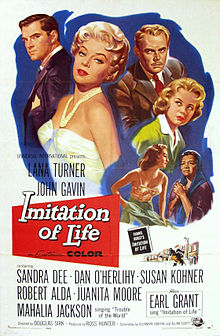
220px-Imitation_of_Life_1959_posterWhen I was watching the film I distinctly remember one instance I threw my head back in the air and just smiled to myself. How I love Douglas Sirk. He gives us something seemingly so superficial and decadent that plays so perfectly into those expectations and simultaneously steamrolls them with a not-so-veiled indictment unfurled on multiple fronts.
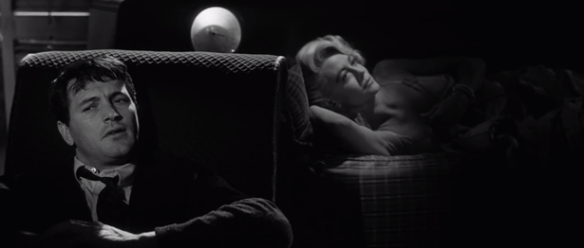

This was Douglas Sirk’s final film in his U.S. career. It’s another gorgeously rendered picture. A harsh social satire of the ambitions of an American Dreamer but also the inherent fissures that run through our society to its very roots. These issues have hardly changed with time or if they have changed, it’s simply the same problems given a facelift. The core wounds remain the same.

Imitation of Life is a story that starts in New York, of all places, at the beach. For the first time, Lora Meredith (Lana Turner) crosses paths with the kindly, God-fearing Annie Johnson (Juanita Moore) who looked after Lora’s daughter when she got lost in the crowd of vacationers.

In less than a comfortable position herself, Lora nevertheless offers her home up to Annie and her fair-skinned daughter Sarah Jane who strikes up a fast friendship with Susie while showing early signs of vehemently despising her African-American identity.

Those are the core aspects of the story as the glamorous single mother follows her aspirations to star on Broadway first with commercials and then small parts that lead her to something more. She finds an agent (Robert Alda) and ultimately earns the respect of a noted playwright (Dan O’Herlihy) who soon writes all her roles. The demands on her time mean that a fledgling romance with a photographer  (John Gavin) falls to the wayside and she hardly sees Susie.

Meanwhile, Annie remains a faithful friend by her side who keeps her house in order and looks after the girls as they slowly begin to mature into womanhood. And as they grow into women their own personal crises come to fruition. Sarah Jane (Susan Kohner) continues to try and pass as white while denouncing her mother. It gets so bad that she leaves home and changes her name to perform at dive bars where her mother hopefully won’t follow.

Susie’s (Sandra Dee) problems are of a different nature. She feels so alienated from her mother, the lady so often absent in her life, that she decides to attend college far away in Colorado. When Steve Archer (Gavin) drifts back into Lora’s life things are complicated by Susie’s obvious crush on him.

On both fronts of mother-daughter relationships, the film showcases its many themes playing out in vivid fashion. In fact, Imitation of Life feels all too resonate given the state of affairs in Hollywood and our world right now.

There’s this ongoing temptation to cheapen who you are for the sake of success. In this case, it applies to the theater and the career of Lora Meredith (Turner) but it could be in, let’s say, Hollywood or the corporate sector or any other endeavors. The jobs change but the people do not. Where you are forced to feel awful for not lowering yourself to other people’s level of sleaze and impropriety.

It’s a film about the fame monster and the industry dominated by a patriarchy where you are coaxed into making certain concessions so that people will like you and give you what you want. Just to maintain a career and your ambitions, your familial relationship, in this case, with a daughter is led to the point of deterioration. To this day, money and opulence, nice things and social standing, do not make up for an actual relationship. There’s no contest.

Ironically, only after the good fortune strikes and you have years of success do you begin to realize amidst the rush that the pinnacle has been reached and still something is missing.  That’s Lora’s realization. But just as fervently this can be a film of idealism and dreams. Seeing things the way they are and making them more and more into what you want them to be. Being the change. That’s Annie’s part.

It is also a film about racism — a fixture of society — and a troubling one that is still opening up innumerable wounds in the fabric of our society and they are wounds that must be acknowledged. There is a painful scene that while a girl is being berated and slapped by her alleged boyfriend a playfully jazzy score dances in the background and it’s this disconcerting contradiction — the kind of contradictions that are often easy to pick up on if you’re willing to see them.

People loathe themselves for the color of their skin and the stigma society puts on their personal identity. Someone’s life is driven by shame instead of an unswerving pride in who they were created to be. And whether we like to admit it or not, we’re all part of the problem where being white is seen as being normal or the status quo or what have you.

One of the most striking moments in the film for me is when Annie is recounting the Christmas story to the girls and they ask a very honest question. “Was Jesus White?” or “Was Jesus Black?” Because it seems like a question that devises some way of relating to this historical figure. But it also forces you to see the astronomical error in such ideologies of a  “white savior” or a “white man’s burden.” It simply cannot work. Nor does it work the other way.

Of course, as Annie sees so clearly, neither of these distinctions matter or any type of distinction because this was not a figure concerned with race or wealth or gender or respectability or any of that, at least in the sense that it holds importance to us. For him, as she sees it, it seems to have no negative effect on the relationship you could have with him. It doesn’t seem to matter and yet simultaneously it does immensely. Because it reflects our unique human identity.

Annie reflects those same types of ideals all throughout the film. You might take aim at her for being subservient or have qualms with something she does but it’s hard to question her sincerity or goodness. She has a prodigal daughter but just like the parable her maternal arms are always open and her daughter is never too far away for her to love Sarah Jane unconditionally even unto death.

I must admit it rubbed me the wrong way because Annie felt like yet another iteration of the mammy stereotype. One of Sarah Jane’s colleague even notes, “You had a mammy,” led to believe that the woman was simply an old housekeeper. But that’s the key. Annie Johnson is actually her mother. Aside from adding a searing undercurrent to the scene, it confirms she is not just a sideshow attraction for some southern charm. She is a parent and a friend and a person. In fact, the best scenes in the entire film belong unequivocally to Juanita Moore and Susan Kohner.

The original story the film is based on came out of a very different time in American history during the 1930s. Here it is updated and aware of the changing mores and difficult roads still to traverse thanks to the likes of Thurgood Marshall and his landmark case Brown v. Board in 1954 and the increased rumblings of the Civil Right Movement with the Bus Boycott and other peaceful initiatives spearheaded by Dr. King.

In the film’s closing moments Mahalia Jackson brings down the Lord’s house with her mournful dirge for Annie. And it is a bitter, heartwrenching moment of agony but that is not the final word. Because Annie was a tremendous person with an extravagant capacity for love.

Like Dr. King once orated in vivid Biblical imagery, “[I have gone] up to the mountain. And I’ve looked over. And I’ve seen the Promised Land. I may not get there with you. But I want you to know tonight, that we, as a people, will get to the promised land!” That is the hope. Even in this embittered world of ours there is still something to be longed for.

4.5/5 Stars

Tarnished Angels (1957)

tarnished angels 1.png

With the name Douglas Sirk, Technicolor opulence no doubt springs to mind but his black and white pictures are no less diverting and still extremely attractive to look at with photography once more courtesy of longtime collaborator Russell Metty.

The cinematography is crisp monochrome filmed in voluptuous cinemascope. It’s hardly as flamboyant as we are accustomed to but then again, The Great Depression was far from a decadent time and the visuals suggest that malaise especially in the film’s latter half when the cracks and the dirt begin to show a little more.

The inspiration for the narrative’s morality play comes from a William Faulkner story, Pylons, an aptly chosen title if it weren’t true that “Tarnished Angels” is more in line with Sirk’s oeuvre and the director glides forward with his usual flair.

The year is 1932 and Mardi Gras festivities seem to be taking over the town as a traveling airshow makes its latest pitstop headlined by those intrepid barnstormers WWI flying ace Roger Shumann (Robert Stack) and his wife LaVerne (Dorothy Malone). Subsequently, the stars involved make this picture a reunion of the previous year’s success Written on the Wind (1956).

Tarnished Angels is a picture that documents the morbid curiosity that often overcomes humanity with such feats of insanity as Shumann does crazy eights in the sky and his wife performs perilous stunts as a daredevil parachuter. The locals eat it up until it all goes terribly awry and then they want nothing to do with it.

A horrendous crash during the gripping race sequence is captured in surprisingly graphic fashion as the planes zoom around the course and from that point on the film goes into a tailspin that the characters can never really recover from.

The sheer pandemonium is underscored by the fact that the announcer continues to entreat the viewing audience to stay off the field and yet in the mayhem no one pays him any heed. It’s their gut emotions that are driving them now, not their rationality.

But despite the tragedy, Shumann is desperate to have his wings back and he reluctantly goes to veteran backer Matt Ord to pilot his plane. His wife agrees to go to the man’s apartment. Although it’s never explicitly stated, we know what it is for. It’s written on the faces of every man who is complicit or privy to the incident and stands by complacently.

Newsman Burke Devlin (Rock Hudson) finds himself enthralled by Roger’s story as a fallen man while faithful mechanic Jiggs (Jack Carson) is about fed up with all that Roger puts LaVerne through and yet she goes to Ord and they do little to stop her.

But it’s true that Devlin also finds himself falling for the other man’s wife after she gives him insight into her life thus far. An intimate moment is burst in upon by a drunkard in a skeleton mask. You have to see it to understand the utter tension that is felt and the collected sigh of relief because we are part of this.

But this is far more than a film about an illicit affair or a man who doesn’t know how to love his family. It gets far more tragic than that and Sirk dramatizes it with a pair of images. A boy helplessly trapped on a carnival ride, a mother restrained by local bystanders, one disconcertingly still wearing a mardi gras mask. And tragedy strikes again with a second crash landing.

Shumann was a  man so obsessive with flying that it literally drives his entire life. He cannot love his wife and child as much as he relishes being in the air performing daring feats of aerial acrobatics. Take away his wings and it’s like a man addicted needing his fix. Driven to such levels of indelicacy he willingly sacrifices family or, more specifically, his wife for a flying machine. But in his final moments for a brief instant perhaps he rises above his past failings to shed his former self and show something else.

Rock Hudson gives a drunken monologue in the newsroom that silences any dissenters and naysayers at least for a minute because he developed an almost intimate relationship with this man’s life.

I can’t help but draw up comparisons between this picture and Billy Wilder’s Ace in the Hole (1951). Distinctively both films use journalism and a member of the profession to get at the material but their actions couldn’t be different.

Certainly, both are interested in stories. They are drawn to the spectacle. In the earlier film a miner is trapped in a mine shaft and in this picture Devlin is intrigued by that crummy carnival of death as it is so eloquently christened. But Hudson character hardly seems to be taking advantage of the situation because he offers up his home and proves himself a stalwart defender of children and women.

If he’s interested in a mere story at first, ultimately the whole ordeal takes hold of him so personally that it transcends any of that and proceeds to overshadow everything else. Kirk Douglas in his role might provide a harsher indictment of journalism’s capacity for creating a media circus. Sirk’s film is an equally telling portrait of human frailty as much as it chronicles callous indiscretion.

4/5 Stars

Review: Written on the Wind (1956)

written on the wind.png

Douglas Sirk’s films are always lovely to look at, almost to the point of making you sick. The panoramas swell with color. They’re too perfect. The sets are gaudy — the cars the same — to the point of almost being unsightly in their over the top artificiality. Try to find any amount of authenticity and you will most likely fail.

The people within the frames are even more glamorous than the rooms they fill and arguably more colorful.  Namely the dashing Rock Hudson, a Sirkian mainstay and then Lauren Bacall, Dorothy Malone, and Robert Stack, all Hollywood talents playing character types with names and dialogue straight out of a trashy romance novella. We wouldn’t have it any other way. It’s exquisite.

Because everything is played with the utmost of seriousness from starting credits to the closing shot and yet it just doesn’t take. Sirk seems to be working against his material and that’s where the enjoyment of this picture really lies. It makes Written on the Wind the zenith of the soap opera tradition.

Like any good melodrama, it begins with a shooting, it ends with a murder inquest and the in between is filled in with drunkenness, romantic interplay, familial strife, impotence, fist fights, childhood dynamics, and anything else you can imagine in such a sleazy affair. Still, when everything has run its course, our leading man and his leading lady are able to drive through the pearly mansion gates off on a perfect life together.

Though Rock Huson and Lauren Bacall are arguably our stars, it is their fairly typical and straightforward roles lay the groundwork for the true show put on by Malone and Stack as the Hadley siblings.

Malone sheds her librarian role in The Big Sleep (1946) for the performance of her career as the uninhibited, diabolical, sex-crazed platinum blonde. And Stack is a far cry from Elliot Ness. He lives like he’s never even heard of prohibition as he lets his characterization go completely off the rails in a fantastic manner.

Their father (Robert Keith) is one of the richest oilmen around and they’ve grown up as brats accustomed to wealth and yet their lives are an utter shambles with flings, booze, and personal demons leaving a wake of tumult that rips through the tabloids.

Mitch Wayne (Hudson) and Lucy Moore (Bacall) meet in a boardroom as nice as you please. You would guess that romance is kindling except that the impetuous Kyle (Stack) inserts himself in the situation trying to win her over with jet flights and a steady stream of charm. Somehow it works and they are wedded soon thereafter. It has all the signs of a trainwreck given Kyle’s track record but miraculously it works for a while. But he’s devastated by some news from his local doctor (Ed Platt) which drives him back into a constant stupor and drunken tirades.

Meanwhile, his sister relishes watching him falter because they’ve never seen eye-to-eye on anything. Her main focus is seducing Mitch their lifelong friend who has never allowed himself to fall prey to her wiles. In retaliation, she looks to search out any man who can show her a decent time. She doesn’t much care who it is. But Mitch is hardly jealous for her, only protective, and his eyes are set on Lucy nee Moore anyways. If the entanglements aren’t clear already they present themselves obviously enough.  It’s gloriously sensationalized nonsense.

Still, so many others owe an undying debt to this film and those like it. Fassbinder came from here as did Todd Haynes. Dallas, Dynasty, or any other 80s soaps found their roots right here too. After all, this is the original version of “Who Shot J.R.” Thus, the debt must be paid to Sirk’s films and people have.

Because his style is very easy to admire. Contemporary audiences undoubtedly ate it up and we do now years later. The artificial interiors and the airbrushed Technicolor palette helps define what many people deem to be 1950s Hollywood. It’s luscious, easy on the eyes, decadent, all those apt superlatives. But if that was all that he had to offer, Sirk wouldn’t be as interesting to a great many people now.

It’s the very fact that he seems highly self-aware and he’s so wonderful at staging and creating this environment, beautifully photographed by his longtime collaborator Russell Metty, that the whole composition tells us something more. It’s rear projections and painted backdrops. Sets and stages that accentuate this piece of drama. It’s all sending us a collective wink to see if we get the joke. Those who do will be greatly rewarded.

4.5/5 Stars


There’s Always Tomorrow (1956)

aatheres8

The film begins with that old storytelling standard, Once upon a time in sunny California…and it’s raining outside. Not a minute has gone by and the tone of the picture has already been set with this opening taste of irony. It unravels on a smaller, less grandiose scale than other Sirk pictures but it’s no less potent.

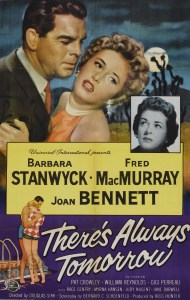
It brings to mind one of the other great masters of such films in Billy Wilder also from Germany and yet you would never get either of their pictures confused because how they go about it so so vastly different. This is, of course, another Double Indemnity (1944) reunion (a film directed by Wilder) bringing Barbara Stanwyck and Fred MacMurray back together.

I did some digging and besides the underrated Christmas classic Remember the Night (1940), the memorable screen couple appeared in a  minor western called The Moonlighter (1953). This would be their last pairing.

But back to Wilder and Sirk. The way this film looks and the subject matter strikes no exact resemblance to the former’s more caustic work and there’s also the fact that Wilder wrote all his material. While Sirk had often cohesive themes running through his stories, I’m fairly certain he could not claim script credit on any.

The true connection point and the aspect of these two emigre filmmakers that is so crucial to appreciate what they are doing is how they both managed to critique their adopted country through both comedy and drama and they do it in such inventive ways.

Here Fred MacMurray is the owner of a toy shop and a stockroom full of hobby horses and pinafores as they look to roll out their latest pride and joy Rex the Walkie-Talkie Robot. Meanwhile, after a hard day at work, he comes home to ungrateful and preoccupied kids who constantly tie up the phone lines with girlfriends and take up their mother’s time with their numerous extracurriculars.

It’s akin to All That Heaven Allows (1955) in that it places a camera to the mores of Middle-Class America. While that film was about a mother and her children’s reactions to her romantic life, this is a picture about a father and what he does with what he deems to be an unfulfilling life. He has a similar outcome. This is by no means a My Three Sons episode.

He’s feeling that age-old suffocation of suburban life, work, kids, wife, and no satisfaction with any of the things that are supposed to be the pinnacles of the American Dream. What do you do with said disillusionment? You look for an outlet.

Two tickets to the theater just about look as if they’ll be wasted when rather fortuitously an old friend shows up on his doorstep or more correctly an old flame. And on a whim, they make an outing out of it to the theater. Leaving early they end up touring the toy shop and dancing together to “Blue Moon,” a song that conjures up reminiscences and nostalgia and subsequently can be heard in refrain after refrain from that point forward.

The following weekend it happens again when Mr. Groves is looking forward to a weekend getaway with his wife although he must admittedly mix business with pleasure. In the end, his wife stays behind with their histrionic daughter and the work meetings fall through. But coincidentally he runs into Norma again and they have a lovely time talking, horseback riding, and the like.

But the wrinkle we come to expect is a surprise visit by his eldest son who takes a detour from Los Angeles to Palm Beach. It’s so very cringe-worthy and aggravated by the fact that he overhears his father and Ms. Vale talking but proceeds to leave the tourist trap without even a word to his father. He’s too vexed.

Still, MacMurray comes back from the invigorating weekend refreshed and explains everything to everyone all perfectly innocent and this works against our preconceived notions of what might happen.

The film goes further by folding over yet another layer. His son when hearing his explanation far from confirming his faith in his dad, only causes him to sink deeper into distrust. In one sense, it’s absolutely absurd (he quotes An American Tragedy for goodness sakes) and yet it’s a perfect development. Here we have the planting of seeds of resentment and doubt even in things that aren’t the truth.

Stacked upon this is the final irony that it’s the so-called “other woman” who talks MacMurray’s character out of an affair that ironically he slowly evolves into wanting. That’s a new one but also a very honest outcome.

And being the strong individual that she is, Stanwyck not only weathers the difficult conversations with her old beau with dignity but she’s equally strong when it comes to scolding his children for their treatment of him. She is the one who points out the error in their ways. Again, it’s yet another ironic development.

So yes, this is no doubt a weepie; it’s a contrived set-up with a wife who is conveniently busy and children who seem so quick to turn on the man they’ve known all their lives, but putting those preoccupations aside for a moment, what we do have is a beloved pair of stars and a director who made a living off of such fare. If you ask me that’s a quality combination and though it’s a less heralded film, There’s Always Tomorrow is still very much a worthwhile affair.

4/5 Stars

Summertime (1955)


summertime 1.png

It’s summertime and the living is easy. It makes me think of sultry summer days and cool summer nights and George Gershwin. But summertime also means travel. It did for my family when we were growing up as kids and it took us to many places near and far off. That’s what this film gives us license to do. Venture into another world for a picturesque vacation.

News that Summertime was supposedly David Lean’s favorite picture of his own work is not all that surprising when put into the context of his career. When I think of him I am quick to reference monumental epics or British narratives out of Charles Dickens but here is a picture that feels strikingly different. It’s intimate and small yet still gorgeously photographed and affecting. It’s no Lawrence of Arabia (1962) or even Great Expectations (1946) but it has no aims to be. That’s what makes it a delightful change of pace.

Katharine Hepburn plays an American school secretary from Akron Ohio, one Jane Hudson, who has always had a dream to travel and get out of Middle America to see the world. We see her aboard a train bound for Venice and she’s beyond ecstatic chatting up her fellow traveler and snapping pictures on her camera that’s already logged rolls and rolls of film undoubtedly, capturing the most mundane things for the simple fact that they come from a foreign land.

But there are even more stereotypical American tourists who are hilariously ignorant and subsequently stick out like a sore thumb wherever they wind up. To say the McIlhennys are slightly insufferable is kind of the point. Still, they’re hardly to be taken seriously. It’s people like them that cause Jane to want to venture to Italy to get away and allow herself to be wrapped up in the throes of another culture. I can certainly resonate with that sentiment. I feel that way now.

So, in one sense, she still maintains the awe of a tourist but manages to experience the life as if she were a local and that’s the key, boarding in a pensione and trying to get a taste of everyday life.

First, she is befriended by a spunky little boy who tries to sell her his goods and out of that grows a mutual affection for one another. She also wanders into an antique shop to buy what she deems to be a precious goblet and strikes up a conversation with the proprietor (Rossano Brazzi) who she had unwittingly crossed paths with before. This is the first of many meetings.

In a film such as this where the sets are left behind for a foreign locale, a place like Venice very easily becomes almost another character in the film because being there alone creates a dimension you would never get otherwise. Without Venice, those layers of history, accents, and textures, something magical would be lost. But with it, Lean makes something that rings with gentle passion.

The sumptuous visuals capture both the immense character and quaint waterways with their gondolas drifting lazily by. Tailor-made for romance especially between an American school teacher and a handsome Italian shopkeeper, bringing them so close together over the course of the film. The Piazza San Marco is showcased front and center in numerous sequences but even with its presence this still exists on a smaller scale than the parade through Rome that is Roman Holiday (1953). Because it readily occupies itself with many smaller scenes too.

Lean even preceded Hitchcock’s To Catch a Thief (1955) with a very similar fireworks show. In both cases, the moment signifies the strides made in the relationship and just how splendorous they are.

Summertime also features one of the most striking endings because it’s not quite as cathartic as we are used to in a love story and yet it hardly can be considered downbeat or melancholy. A lot like life, it simply is and how can you be glum anyway? It’s summertime. Venice is immaculate. Love is afoot.

It so enraptured David Lean that he would make it his home away from home. At that point, it doesn’t matter if we like this movie because as its director Lean was taken with it. That’s praise enough.

3.5/5 Stars

Broadway Melody of 1940 (1940)

Broadway_Melody_of_1940_Poster.jpg“The more you know about women the less you know about women.” It’s the story of my life and also a marvelous entry point for this film because it really is a throwaway line. It’s referred to several times thenceforward but really means nothing more. Anyways, if we came to this film simply for the plot it would have been buried under heaps of other more elegant or frenetic comedies over the years. But the reason to revisit this one for all those eager thespians out there is solely for the dancing and what dancing it is.

Don’t get me wrong. It would be tantamount to cinematic blasphemy to say that Fred Astaire belonged beside anyone else rather than Ginger Rogers on the dance floor but maybe it’s the novelty of the situation that makes me quite thoroughly enjoy this effort that paired him with his contemporary, the premiere dancing star Eleanor Powell.

Though working at a different studio now  (MGM instead of RKO), the plotline could have easily followed in the footsteps of many of Astaire’s earlier pictures. It’s pure cotton candy fluff about mistaken identity since he gives the name of his best buddy to a man he thinks is a collector. Is he surprised when he finds out days later that the man actually had connections with a big stage production starring the one and only Clare Bennett?  By throwing out the name of his chum King (George Murphy), he unwittingly paid his best friend the biggest favor of his life and he takes it in stride willing to sink into the background.

Still, he can’t help but harbor a crush for the divine Ms. Bennett and he starts getting a little peeved with how the fame is going to King’s head which leads him to get pig-headed and worse yet completely swacked before his grand opening. Obviously, someone else needs to fill in and wouldn’t you know it, we just happen to have Fred Astaire waiting behind the curtain to step in. The rest you can probably figure out for yourself. Meanwhile, Frank Morgan and Florence Rice appear intermittently providing a bit of comic background noise to fill in the idle moments with some mild buffoonery.

But the dancing, the dancing is as sublime as it’s ever been and it’s breathtaking watching Powell’s solo numbers as well as some of the other stunts, some comical and others mindboggling for their precision (Plate throwing and ball balancing come to mind). A few Cole Porter tunes still have their allure namely the famed “Begin the Beguine” number as well as the peppy “I’ve Got My Eyes on You” elevated still further by the dancing that goes with them.

Watching Astaire and Powell is enough. Because dancing done well by Astaire, Rogers, Kelly, Cagney, Powell, O’Connor, Charisse, any of those names, transcends the plotlines they find themselves in and captures us in a moment of sheer euphoric joy. This is coming from a man with two feet so far left that they’re practically right, so perhaps I’m too easily impressed, but I’d like to believe that every time they thrill me with their taps I’m getting my socks blown off by something sensational. Others can judge it as they may but I’ve said my peace.

3.5/5 Stars

The Stratton Story (1949)

stratton story 1.png

If you’ve never heard of the baseball player Monty Stratton, you’re not alone. In my days of wanting to be a ballplayer myself, I knew quite a bit about baseball Hall of Famers going back to the genesis of the game. But Stratton was not a Hall of Famer like Honus Wagner or Ty Cobb, George Sisler or Rogers Hornsby or even the members of the Bronx Bombers including Lou Gehrig and Joe Dimaggio. Though famed Yankee Bill Dickey does makes a cameo in this one.

Stratton was not in the same category as these men and there is a reason for that. Tragedy struck his life. Interestingly enough, Hollywood looked to make a movie out of it calling on the talents of Jimmy Stewart as well as director Sam Wood. It’s Wood’s association with the picture which causes me to surmise it was meant to be another Pride of the Yankees (1942) with Wood taking up duties again and one All-American in Gary Cooper being traded out for another in Jimmy Stewart.

No disrespect to Monty Stratton or anything that he went through but at face value, his story is hardly that of Lou Gehrig. Still, maybe that’s the point and we can learn something from that. Generalizing and putting all baseball biopics together is in error and in this case, it feels callous. This is a film that makes Monty Stratton’s story into his own and it’s at times winsome in its simplicity and still equally moving.

Watching this picture anchored by James Stewart in another everyman role is as charming as ever. Equally enjoyable is Frank Morgan or even the budding romance with June Allyson coming to fruition within its frames. His brusque mother (Agnes Moorehead) who only knows the tough life of a farm woman even has her affectionate side; you simply need to get to know her. Also, having an old pro like Jimmy Dyke playing the big league manager is yet another touch of authenticity that might be easily overlooked in the modern day.

Through and through, this is Stewart and Allyson’s film as we watch Monty make a name for himself going from being an indefatigable farm boy with a cannon to the minors in Omaha, and finally to the big leagues where dreams are made. Equally important to his career trajectory is the parallel story of how a potentially disastrous first date turned into a lifelong romance with his girl Ethel.

She sees him through a great deal both the highs like the birth of their son to the lows, a fatal event that will change Stratton’s life forever. It’s in this portion where we could criticize the film for stalling but it does rightfully so as Stewart must make a decision whether or not he’s going to fight back to regain his life.

Eventually, he does, going further than any naysayer might give him credit for. Then again, you get the sense that Monty Stratton was the kind of ballplayer that most folks found it in their heart to cheer for. Part of that appeal is Stewart’s typical geniality certainly but the man he was portraying had to be fairly special too.

The spectator in the movie theater might remark Gable and Turner are better kissers on screen but I’d truthfully rather watch Stewart and Allyson. They’re more my type of people.  In fact, I’m pretty sure I would have liked Monty Stratton too. He seemed like a humble fellow who lived his life with everyday dignity. They don’t always make them like that now. The same could be said for this movie.

The film closes with the prototypical “The End” credit but that really was not quite right. Because Monty Stratton was still pitching and had a long life ahead of him just waiting to be lived. That’s the power of this story. It recognizes a man who did not let circumstance deter him from continuing to live a full life.

Stratton died on September 29th, 1982 and within that time he made a second comeback to baseball, moved back to Texas to start a farm team, and was deeply invested in his community until his final days both in promoting Little League and attending his local church.

3.5/5 Stars