Jaws (1975) at 50

I remember my dad telling a story about the first time he saw Jaws back in 1975, now 50 years ago. He was on a road trip visiting a childhood friend in the Midwest, and though he had spent all his life in California, he was grateful to be in a place that was landlocked when the movie came out. 

If my dad was representative of the general populous, this reaction was not unusual, and for any number of reasons, Jaws was a true cultural phenomenon. It changed the playbook of what a movie could be as a summer blockbuster, even as Steven Spielberg willfully built off the formula of Alfred Hitchcock while bringing his own youth and flair for storytelling to the fore.

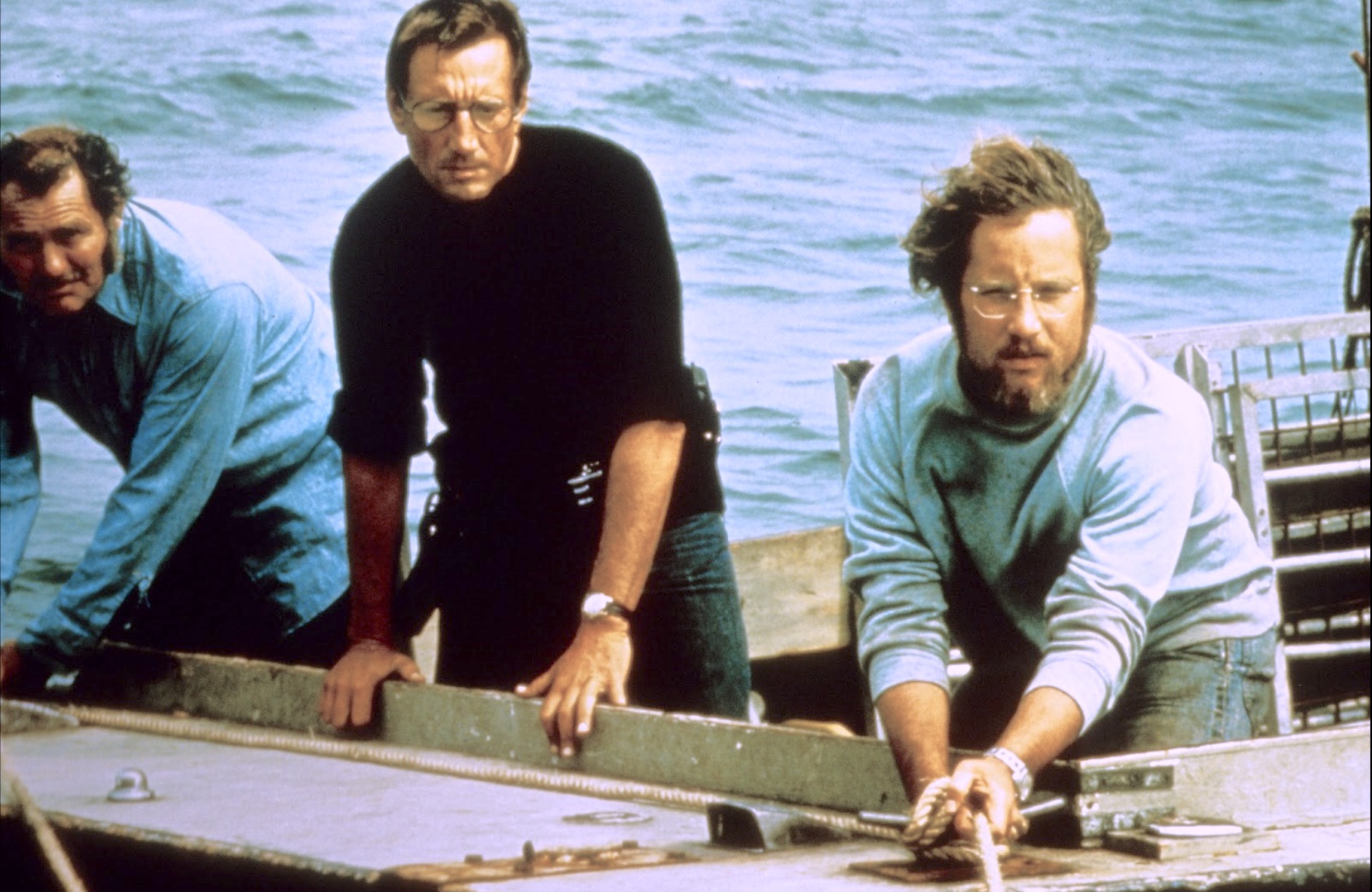
It struck me watching the film this time how it is really split into two sections. There are the scenes in the island getaway town of Amity where Police Chief Martin Brody (Roy Scheider) is introduced as a New York City transplant (Coincidentally, it’s convenient to read The French Connection as a bit of backstory). We soon get a sense of his family life, his happy marriage with his better half (Lorraine Gary), and the small-time responsibilities that come with the incoming tourist trade. He also hates the water…

These are the throes of summer, on the verge of the July 4th weekend, and a town like this thrives and even relies on out-of-town business. The first inkling of a shark attack comes when the mangled body of a young woman is found washed up on the shore.

Then, there’s the moment for all time when Brody tries to relax in the arms of his wife on the seashore, only to see an ominous creature emerge from the water and confirm all his worst fears.

A friend pointed out how Spielberg pays homage to Hitchcock with the “Vertigo Effect” or dolly zoom, which gives us as an audience such a perturbing sensation as we are physically reeled into the moment. From then on, it’s not just a threat, but a battle that Brody must wage, dealing with the local repercussions, backroom politics, and general hysteria that gets dredged up in the face of such a news story. As the police chief, it feels like the weight of the whole fiasco falls on him, and what’s worse is that he has so little support.

It all comes to a head when a grieving mother (Lee Fierro) confronts him with a public slap to the face: She found out he knew about the shark threat, and he still kept the beaches open. We know what actually happened, but still, as a beacon of safety, it falls on him, and he internalizes the outrage. Because he has a conscience and a family, too. 

Then there are the later scenes where three men go out on a mission to hunt down the Great White terrorizing the town. It is an elemental story of man vs. nature. The cast thins out with the three primary stars and a big shark playing out a game of cat and mouse on a boat against a vast ocean. It’s an isolating, harrowing undertaking.

Put in these terms, and it feels like an entirely different movie, and yet there’s not a moment when they don’t feel anything but intimately related. A lesser film would have simply shot the second part — extended it — added some more sharks, guts, and explosions, and made it the movie (I haven’t seen the Jaws sequels, so I’m not sure if this formula applies). Although I’m sure this is what drew Spielberg to Peter Benchley’s source material. 

However, this movie is made better by how it builds out an entire world, and we see how it develops the context and creates the stakes and emotional resonance for the entire story.

Scheider is also the only one who can kill that shark in the end. He moved away from the urban jungle to have a quieter life. But the movie calls for him to face this threat head-on, and he does it in an extraordinary way, aided by Richard Dreyfuss and Robert Shaw’s characters.

They both provide two sides of an ethos appeal that lend credence to the evolutionary brutality of this underwater leviathan. Because one represents youthful intellect and scientific know-how of an oceanographer, while the other is a veteran of the sea, grizzled and tenacious. But we know intuitively that the trajectory of the story revolves around Scheider coming face to face with his own fears. It’s inevitable. No one else can save him. 

These words don’t always go together, but Jaws has some delightfully effective expositional scenes. I think of the opening hook where a bunch of young people are on the beach mingling together. The eyes of a young man and woman meet. Then, the camera pulls away as they have their meet-cute. We understand everything without hearing, and the next thing we know, they’re racing off toward the water to skinnydip… 

There’s also the scene where oceanographer Matt Hooper (Dreyfuss) pays a house call. It’s been a tumultuous day, and the police chief has grown introspective, jaded by the day’s events. Hooper awkwardly has two bottles of wine, and he’s wearing a tie. It becomes a scene with the wife talking to the young man, and we learn about both of our leads with this lovely sense of organic humor. 

Then there’s Quint’s moment on the boat one evening, recounting his harrowing experience on the U.S.S. Indianapolis in 1945 on a mission related to the atomic bomb. Ultimately, they were sunk, and many of the survivors were picked off by swarms of sharks in the ensuing hours. An event like that forms a man for life. 

Moments like these are chilling and give the moments of levity even more import. It’s like an escape valve for the tension. Spielberg does an admirable job of choreographing the hubbub of the town with frantic conversations and characters speaking over one another in a manner mirroring real life.

In another scene, Brody is deep in his thoughts, obviously distressed, then, right next to him at the dinner table, his little boy mimics his every move. It’s such an endearing moment of childlike warmth and affection. Or later, a drunken Shaw and Dreyfuss partake in some one-upmanship as they trade tattoo stories gaily after being at one another’s throats for most of the journey. 

Spielberg, at such a young age, already feels adept at creating a total immersive experience in film (You only have to look at his work on Columbo and Duel to see the work he put in before Jaws).

The underwater POV shots from below as human bodies tread above the waterline draw us in, and the notes of John Williams’ score never cease to cause my feet to tense up in my shoes. There are even jump scares I had forgotten about. The cumulative effect is still overwhelming. 

There’s an extraordinary blending of visual compositions that tell us the story succinctly, sprinkled with the kind of humor, exposition, and personal conflict that give the broader drama of Jaws a genuine meaning. Because we are not animals; we are not evolutionary machines. We are embodied creatures. We have hearts, limbs, eyes, voices, and feelings that make us who we are. It’s difficult to extricate ourselves from these realities, and what kind of unfeeling Social Darwinism would that leave us with? 

The Mayor (Murray Hamilton) is a character who is easy to dislike. He does come off as a kind of irrefutable sleaze, and yet when he visits the hospital to give his condolences and reluctantly sign off on Quint’s hunt, he finally makes an admission. His kids were on the beach too, where the attacks happened. For a moment, he is as human as anyone else. 

Because he’s emblematic of a story about locals trying to protect a way of life, and outsiders trying to maintain their own lives somewhere new. It’s a pleasure to watch Jaws and see it not simply as a historical lodestar in the blockbuster age, but 50 years on, it still remains a captivating saltwater thriller showing a young up-and-coming filmmaker on the ascendancy. 

I’ve rarely seen my dad set foot in the ocean during my lifetime. It’s probably coincidental, although Steven Spielberg (and John Williams) might have something to do with this, too. 

5/5 Stars

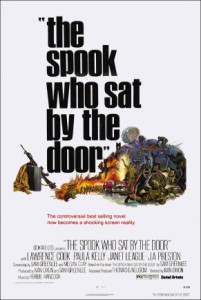
The Spook Who Sat by The Door (1973)

Any chance I get to champion Ivan Dixon, I do my best because he’s such a groundbreaking individual who rarely gets the credit he’s due. Ostensibly, he’s known for playing Kinch on Hogan’s Heroes, a part that was pioneering and ahead of its time, if mostly a thankless role. I love him dearly as an old friend, but I never begrudge him not playing the supporting role in the 6th and final season of the show.

Because Dixon had roots in a rich tradition of stage and film he came by honestly from his formative years in the cultural hub of Harlem.

His early film career is littered with interesting parts including Raisin in The Sun, Too Late Blues, and Patch of Blue. However, his finest hour, showing what he was truly capable of given the right opportunity came in Nothing But a Man, a criminally underseen film with Abbey Lincoln. It feels like an unsung masterpiece of the 1960s.

Although he was never allowed to reach the superstardom heights of Sidney Poitier in the film industry, Dixon was a compelling, intelligent actor in his own right and given the dearth of great roles for black actors, he parlayed his occupation into a career as a director behind the camera.

Beyond showing up in a cult classic like Michael Schultz’s Car Wash, he directed more than a handful of episodes of The Rockford Files and numerous other high profile programs of the ’70s and ’80s, The Waltons and Magnum P.I. among them.

The Spook Who Sat by The Door might have budgetary constraints and, therefore, simple means, but it stands as one of his most visceral achievements behind the camera, especially when he was given worthwhile material.

The film was adapted from Sam Greenlee’s novel of the same name about a man who climbs the ranks of a CIA training regimen as a token black man only to utilize his espionage skills to empower grassroots black power movements in his community.

In this way it plays as a startling and satirical subversion of clandestine counterintelligence activities of the 1970s found in the contemporary moment. It has the packaging of an exploitation film and yet the writer, director, and actors are primarily black. They give the picture a different point of view that runs against the grain and feels ripe for rediscovery by willing aficionados in the 21st century. Because its depictions feel almost like the antithesis of a traditional, innocuous potboiler.

The opening scene in a Senator’s office is a barometer for the rest of the movie; this tone deaf civil servant looks at possible ways to gain the negro vote (after an ill-advised speech on law and order) so he shifts blame to the CIA.

There’s a complete dearth of Black agents within the organization. They respond rapidly to rectify the situation and add some token minorities to their ranks. If it’s not evident already, the satire is blatant and all the white characters feels like wonderfully buffoonish marks.

Dan Freeman (Lawrence Cook) is an exemplary candidate if a bit standoffish. He also becomes the last one standing among his peers. Even if he’s called an Uncle Tom, he knows the primary way to get ahead is to play the white man’s game…

He’s highly-educated, courts a beautiful girl (Janet League), and has the kind of model life broader society extols. Except it might all be a charade because he has far more sinister intentions.

Under the banner of law and order, he runs a parallel operation. He commandeers a radio station to preach his message of revolt against the city, and they’ve taken on guerilla tactics. As part of their righteous war they take over local military arsenals cloaked by night and create a cell of revolution to do battle with the establishment. They bide their time and build up their chain of command reminiscent of The Battle of Algiers.

One of the statement moments involves Dan’s associates capturing their primary adversary, neutralizing him, and leaving him as a black sambo in tar, strung-out on acid and left for dead. It’s such a jarring image one doesn’t soon forget by repurposing black stereotypes in a new perturbing context.

Jules Dassin’s Uptight feels more thematically rich in the wake of Dr. King’s death while pushing the boundaries of reality, but The Spook Who Sat by The Door presages something like Do The Right Thing. It captures the turmoil of the cultural moments like Watts or the Democratic National Convention with a visceral immediacy. It feels like the images could be ripped from the headlines as we watch the world quake and seethe with rage. It’s hard not to feel queasy.

You can easily understand how why the establishment would want to bury a film like this. Now it feels prescient, even dangerous, poking and prodding our nation’s fault lines with a gleefully stark abandon.

While I’m more easily attuned to more sincere cinema — Nothing But a Man is a good example — it’s difficult not to commend Dixon and company for their steely-eyed vision. Because The Spook Who Sat by The Door feels like an uncompromising, unfettered work that shocks us out of our day to day status quo.

Sometimes when people won’t listen or can’t hear, it doesn’t help to whisper politely. You need a resounding gong to shock them out of their reverie. It stings but then that seems like a small price to pay for a fraught history, especially if it leads to some kind of change. The most horrifying reality is a preconceived future where nothing changes…

Sadly, Ivan Dixon didn’t get many more good opportunities to showcase his directorial talents in film. It says more about the industry than anything else. But for the rest of us, his career is filled with work reflecting a persistently compelling actor-director. He made the most out of what he was given with an impressive career. It’s a shame he wasn’t given more, but that makes a film like this all the more important.

3.5/5 Stars

Enter The Dragon (1973)

Turner Classic Movies came out with a podcast to give Pam Grier her plaudits and bring her out of the shadows so she might regain her rightful place as one of the unsung icons of the 1970s.

It occurs to me Bruce Lee occupies a similar cultural place. Because among his devoted fanbase, he’s revered and there is a cult following around him. Still, it’s hard to know if he’s totally understood beyond a superficial appreciation as a martial artist and thrilling symbol of Asian masculinity.

Both stars were either relegated to the periphery of mainstream entertainment or given the lead in the kind of potboilers that would never garner any critical acclaim. And still over the years, they have maintained a steady audience. What they have in common is a kind of “It Factor” born of charisma and an incomparable presence on screen.

Bruce Lee, for one, became the image of the Asian to the broader world with his prowess in martial arts and hint of religious mysticism. This is no fault of his own but rather indicative of a culture that did not totally allow for the proliferation of Asian talents in the ’60s and onward.

He became one of the token archetypes of Asianhood and although the vehicles he was given were not always the best, somehow, like Grier, he seemed capable of wholly transcending the form. It’s easy to be transfixed by his every move.

Previously I didn’t have the vocabulary to recognize how similar Enter The Dragon is to the concurrent Blaxploitation movement of the ’70s. In giving the cinema screen a broader cross-section of society for a new type of action hero, the films nevertheless lean into all the accepted stereotypes one could imagine.

What’s evident is how the movie coalesced as a cauldron of martial arts movies, James Bond influences, and Blaxploitation. It relies on a plot that’s an obvious Bond movie knockoff as Lee is sent to take part in a prestigious martial arts competition on a remote island as a pretense to snoop around the base of a man named Han.

The only other things you need are shoddy dialogue, obvious dubbing, and pretty girls with a lot of punching, kicking, and general brutality. Enter The Dragon has them all. Some of it gets especially gruesome as the story progresses and the stakes rise. The score cycles between Bond-like guitar riffs, blaxploitation funk, and the stringed twangs of “orientalism.”

Lee is not the only man who is invited to the prestigious affair. It might feel like token casting, but it also makes the ride a lot more engrossing. Jim Kelly with his afro and imposing build showcases a prowess in martial arts as an emblem of what black power can look like on the screen. Cool, disaffected, and a ready-made hero.

Former matinee idol John Saxon does well in a role that feels made to evoke a B-grade Burt Reynolds or Sean Connery. He brings some wry good humor to the movie to go with his many appetites and preeminent abilities in the ring. He also loves to gamble on anything. While he might be mercenary, he’s not entirely heartless.

They all make the ferry ride across to Han’s private stronghold. He’s a martial artist in his own right and the perilous embodiment of Fu Manchu villainy replete with a claw for a hand and courts full of all the exotic Asian diversions one might imagine. He’s flanked by a row of shuriken-throwing maidens and a ready-made army including the hulking O’Hara. Han even strokes his cats with the self-assured menace of Blowfeld.

Now that we have the pretense for their introduction, it’s a joy to get down to business watching Bruce Lee take on the whole island after he surreptitiously climbs around the base looking for answers. The scenery and the sets seem totally disposable but that makes it all the better for beating up baddies and tossing them every which way.

To the very last sequence, as he’s bare-chested and sliced up, Lee’s still ready to vanquish his enemy whatever it takes. The production does well to pinch Lady from Shanghai‘s stylish hall of mirrors sequence for some easy atmosphere and a kaleidoscopic showdown.

I had the pleasure of seeing the film in a packed house in celebration of 50 years of the film. Enter The Dragon is clunkier than I remember around the edges. People in front of me looked a bit befuddled with the dubbing, then laughed at some of the primal screams from the heat of battle.

But the whole theater erupted with every showing of Lee’s inimitable dominance. If anyone entered that theater looking only for a cheap action flick, I think they came out appreciating one of the great action heroes of the 20th century.

Given the limited resources at his disposal, it’s still amazing to consider the headway Lee made in the cultural consciousness. I’m not from Hong Kong (he was actually born in California too), but I am quick to claim Bruce Lee as a star who changed the perceptions of what Asians could be.

4/5 Stars

La Piscine (1969): Alain Delon & Romy Schneider

On a superficial even subliminal level, La Piscine (The Swimming Pool in English) shares some nominal similarities with The Swimmer and The Graduate. Certainly, drawing the connections isn’t too difficult.

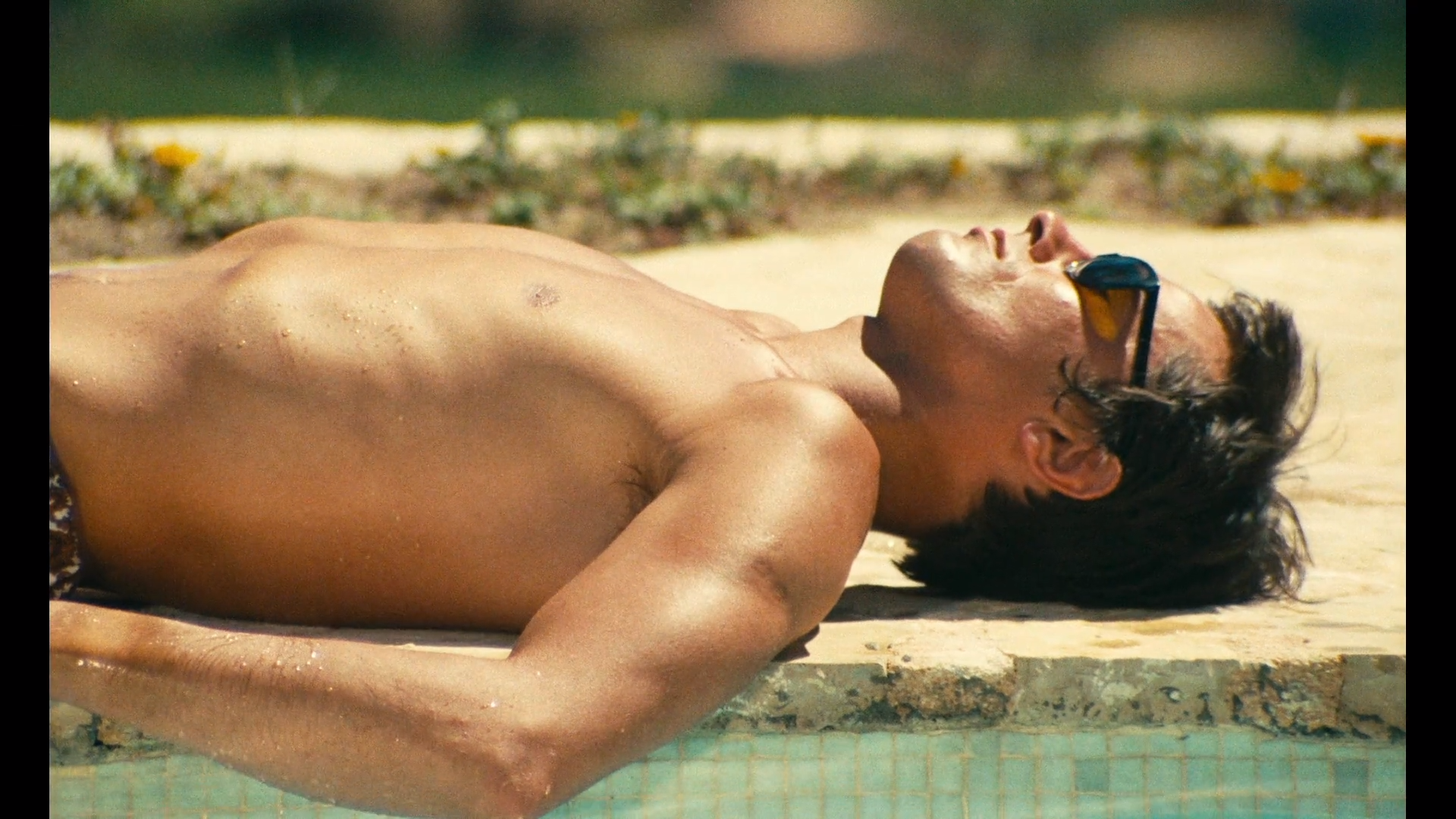
It’s a mood and a feeling as much as it is subject matter. We open on a rural villa in the French countryside with a veranda and a swimming pool. Perfect for lounging. There we find France’s great Adonis-turned-action hero Alain Delon.

He already gave his audience a taste in glimmering fare like Purple Noon, but he’s the personification of disaffected cool, and it’s little different in Jacques Deray’s film.

What’s developed in the first idle moments of the movie is this splendorous sun-soaked aesthetic. It’s akin to Benjamin Braddock floating in his parent’s pool or Burt Lancaster in his short cutoffs journeying from pool to pool in East Coast WASP country.

Jean-Paul (Delon) is at the tranquil getaway with his current lover Marianne (Romy Schneider), and it’s apparent they are in the frisky honeymoon stage full of delirium and amour. Viewed from the outside, the two stars feel like a European “It” couple though they hadn’t been officially together since the beginning of the decade.

Their auras are too big not to still associate their scintillating stardom. The movie relies on it heavily, and it’s quite effective. Because they are effective as the definition of intercontinental movie stars. You’d be hard-pressed to find two more photogenic people than Delon and Schneider.

Within the film, there’s no sense of how they came to own this property, but it’s a non-factor in the story. We come to accept their idleness, the fact that their housekeeper brings them breakfast on trays, and they have the complete freedom of the place be it sleeping in, languishing in the noonday sun, and really doing whatever they please. It’s a state of mind for the movie.

In such a space it becomes a question of what can happen and what will upend and break through the reverie. Our first signs of life come in the form of an old friend named Harry (Maurice Ronet) who makes an auspicious entrance.

He’s a bit of a ne’er-do-well, likable, but roguish, and difficult to pin down. He hardly seems the domestic type, and there’s a sense that he’s always on the run, chasing after the next adventure and fling.  Maintaining his personal freedom at whatever the cost. What’s the most surprising is he’s brought his aloof teenage daughter Penelope (Jane Birkin) along.

As someone always trying to hang onto the capriciousness of youth, he’s not the kind of person you expect to have a child; there’s some mention of her mother being a British girl he had relations with, but he’s not so much a parental influence as he is a companion. Mostly he just seems proud that she’s beautiful, and it’s fun to brag to his friends about her.

Critical to the film, he also had a past relationship with Marianne. How could he not, but then again, that was many years ago, and she’s now in love with Jean-Paul. It doesn’t take radar to recognize what might conceivably happen since it’s the ’60s and beautiful people are involved. It’s no coincidence Bob & Carol & Ted & Alice came out the same year.

True to form, Harry is the life of the party, and he always races off in his Maserati and comes back whenever he pleases; one night he comes with a gang of young bohemians in tow. He terms them his “bosom buddies,” and they dance the night away.

It becomes a point of friction watching who everyone spends most of the night with.  We see potential trouble from a mile away as they link up and an inkling of jealousy begins to seethe under the surface.

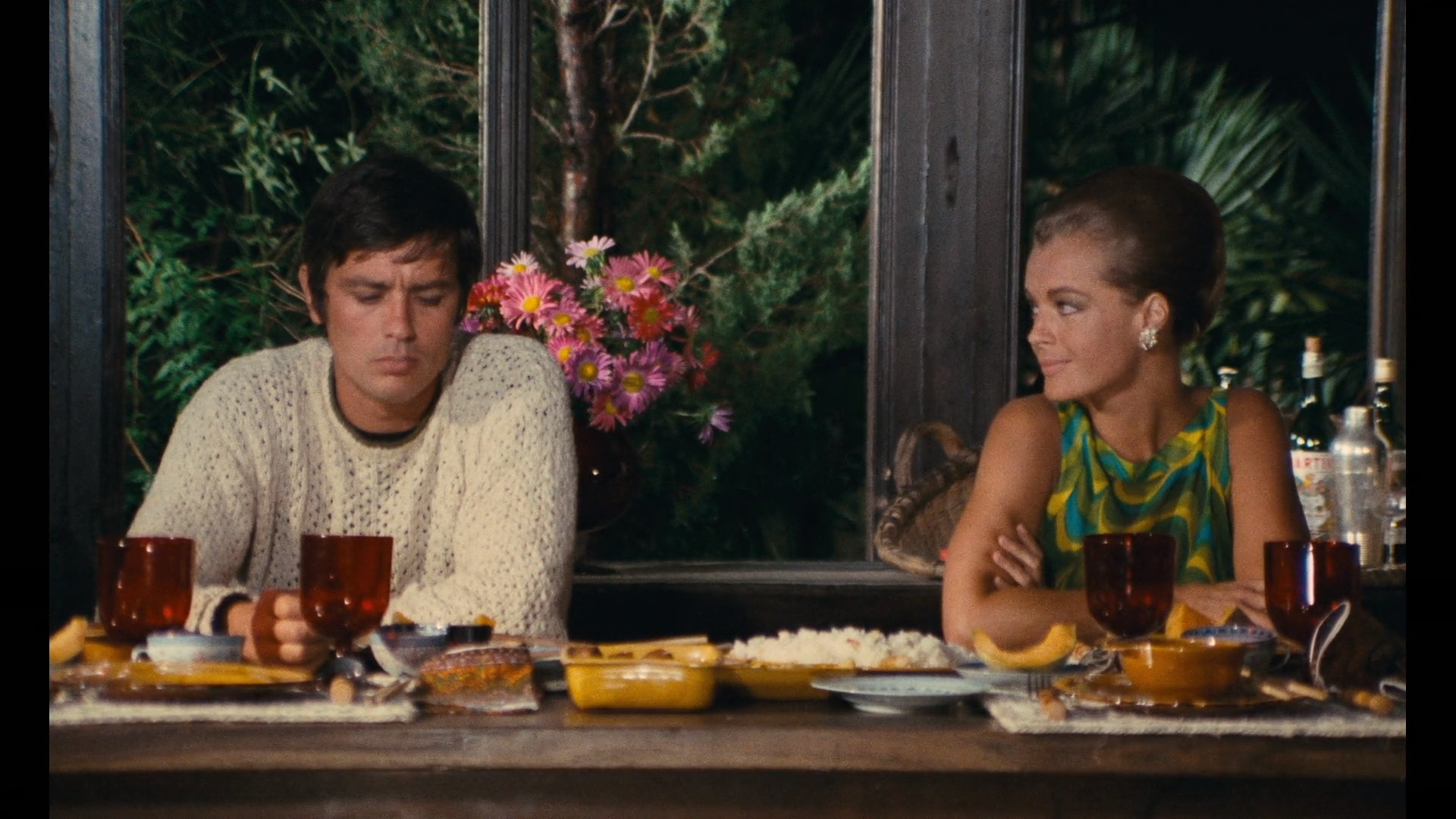
What a strange little family they make. One evening they sit down for a dinner of Chinese food of all things. Marianne and Harry went to town together — a perfectly romantic getaway — and Jean-Paul took Pen away to the sea.

Whether or not it’s an act of retaliation or not, it’s easy to perceive it as such. They sit around working their chopsticks, fidgeting, and trading glances. If the movie is about something it would be this. The elephant in the room as it were.

However, there is a lack of an interior when you break the film open and that’s part of what puts it below its contemporaries, at least in my estimation. There are gorgeous exteriors with gorgeous people, fabulous sartorial style, and not much else.

It’s a testament to the performers and their innate charisma because they make it compelling. But it lacks the kind of commentary or wit of The Graduate or even the fabular qualities of The Swimmer.

The final act of La Piscine takes it into the territory of a true thriller. For the first time, something happens that might have its place in a Henri-Georges Clouzot picture or even Jean-Pierre Melville. Until this dramatic inflection point, it’s a work of latent psychology and desire. I’m not sure if the shift is warranted or not.

However, there is something else worth noting. As of 2024, Alain Delon was still with us, but all his primary scene partners are all gone. Birkin died most recently in 2023, and both his friends, Romy Schneider and Maurice Ronet, were lost to us too soon.

This realization adds a different kind of knowing austerity to the proceedings, though it’s hardly required. Even without this insider information, we leave the film mostly empty, and it’s difficult to know whether this is a statement or merely a formalistic reality.

3.5/5 Stars

Note: This review was written before Alain Delon’s passing on August 18, 2024. 

Man Hunt (1941): Fritz Lang vs. The Nazis

I feel like few filmmakers understood the menace of the Nazis as well as Fritz Lang. Perhaps it’s because he had firsthand experience, and he knew their schemes and what they were capable of — at least to a degree. But he does not make them total fools nor distant adversaries. They are cold, calculating purveyors of evil.

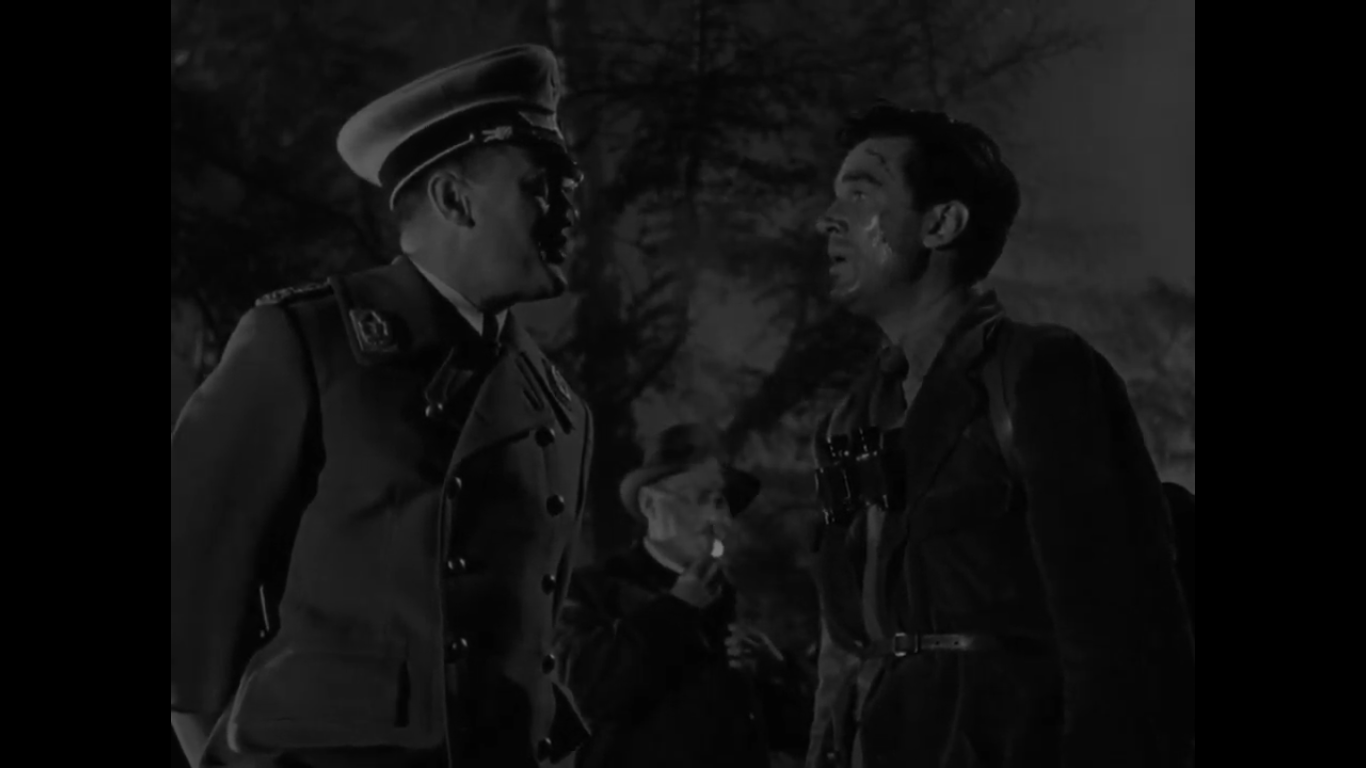
We open in a forest laden with the footprints of a hunter. Walter Pidgeon is the man stalking his very contentious prey. You see, he’s looking to assassinate Hilter! As he gets the Fuhrer in his sights, we’re almost willing him to succeed. But of course, this is not an alternate history. Hitler survives and we are led on an entirely different narrative train wrapped-up with a far more treacherous arc.

Captain Thorndike, a famed big game hunter, is foiled in bagging his target and dragged back to the offices of a local Nazi grunt, Major Quive-Smith (George Sanders).

It’s a compromising position to be in and the Englishman tries to plead his case. It was all part of a “sporting stalk.” He never planned to pull the trigger; it was all part of a game because he’s no nationalist and England’s yet to be embroiled in war. Times were very different and yet Thorndike is still taken in as a killer. There’s no recourse to see him as such and torture him until he confesses to his crimes.

This undercurrent of big game hunting humans can’t help but bring comparisons to The Most Dangerous Game and as Thorndike makes his own escape from the German hounds, we are caught up in his primal instincts of fight or flight. Lang is gifting us entertainment that feels like Saturday morning serials pitting the decadence of the English against the primitive barbarism of the Nazis.

Like Night Train to Munich or Lang’s own Ministry of Fear, the peril doesn’t desist with a return to the homeland. Instead, it increases by the hour as he’s trailed back to England and tracked from a cargo boat into the foggy streets. Roddy McDowall is a charmingly precocious ally and even in a small role, you remember why the plucky lad became such a fine star at such a young age.

Joan Bennett is a personal favorite although Man Hunt does her few favors. Jerry is a spunky lass who injects a level of almost screwball levity into the equation thanks to the mish-mashing of social class. Between a shadowy meet-cute and her grating cockney, there’s quite an outcome.

She’s not exactly a creature of breeding and when Thorndike pays a visit to his hotsie-totsie relatives, it’s quite the meeting of the minds: he must share his adventures and his uncle gives him some urgent news from abroad. He leaves Jerry with a token of his appreciation: a straight-arrow hatpin and she bawls her eyes out in the sniveling kid part that feels mostly unbecoming of Bennet. It’s her schoolgirl infatuation setting in.

John Carradine, ever-adaptable to any part he’s called upon to play, sits behind newspapers, sends off homing pigeons, and colludes with other murky agents infiltrating the country all while speaking German freely on the streets. In Lang’s submerged world, heroes and villains alike must skulk around in shadowy interior sets half-hidden by the London mist. It’s as much movie atmosphere as anything else.

Some of the best chase sequences take them through the Underground. We feel this lingering peril afoot as Thorndike is forced to disappear down deserted tunnels and winds up embroiled in the tube murder mystery slapped on the tabloid sheets the following day.

If the threat of Man Hunt eventually burns off, then perhaps it comes with a lessening of the pace and then purpose. We also ditch the darkened tones of lonely, shadowy evenings for Throndike’s hideaway in the country, which feels positively idyllic in comparison.

Although we swap out one German forest in the beginning for a British one in the end, what we really seem to lose out on is the metaphor of a man stalking his prey because the whole picture has become a reversal of that opening image. Except Thorndike spends a great deal of it stuck in the Nazi huntsman’s trap. There’s tension, but it doesn’t make for the most thrilling visual exploration.

The off-kilter moralizing at the end is not unexpected, but it hinders the drama as Pigeon gains his senses and sees Hitler for who he really is. We’re also bludgeoned over the head with a raucous montage superimposing current events and Joan Bennett’s doe-eyed face. The fight must continue!

But taken in the cultural landscape of the time, no matter its theatrical shortcomings, Man Hunt still bears the mark of a prescient picture that dared decry the merciless evil of Hitler and his Nazis when America was still disengaged from what was going on across the world. Appeasement and isolationism seemed like the easiest roads; not necessarily the right ones. That’s a lot easier to affirm in hindsight. In the moment, it was bold.

What’s more, Fritz Lang would follow up Man Hunt with more pictures like Hangmen Also Die and Ministry of Fear as if to make certain no one could ever mistake Nazis for innocuous patriots or forget how destructive they actually were. It’s a propaganda picture, but it doesn’t totally lose sight of good old-fashioned entertainment value even if it’s unsustained.

3.5/5 Stars

Orson Welles: Mr. Arkadin (1955) and Compulsion (1959)

Mr. Arkadin (also known as Confidential Report) has the abundance of canted angles and striking visual flourishes one usually attributes to the films of Orson Welles. It also boasts his ever more disorienting sense of space and shot-reverse-shot even as the international cast, financing, and locales outside the prying eyes of Hollywood map his labyrinthian journey to continue making movies.

His entry into this particular story is a small-time smuggler, Guy Van Stratten. There’s something abrasive and unplaceable about Robert Arden. It’s rather like when non-English-speaking filmmakers will cast an American, and it sounds tone-deaf in a picture that otherwise feels normal. Regardless, he receives a tip-off from a dying man, and it sends him in search of something…

Arkadin, an aristocratic Russian, as played by Welles, is really another version of Harry Lime from The Third Man with everyone talking about him and wanting to meet him as he remains just out of reach and hidden behind a mask at a masquerade party.

Stratten has ambitions to get in with the daughter of the enigmatic Arkadin. Welles casts his wife Paola Mori to play his carefree young daughter (albeit dubbed). In the end, the gruff answer-seeker winds up globetrotting after Arkadin, hired by the man himself to see if he can dig up any dirt on him. It feels like the ultimate act of paranoia if in fact a double-cross isn’t in order.

While his accomplice Mily (Patricia Medina) is out on her own, he crosses paths with the likes of Michael Redgrave, an eccentric pawnbroker providing some leads, and then Akim Tamiroff who is also somehow implicated in a web of conspiracy.

Plot notwithstanding, Mr. Arkadin feels increasingly emblematic of what Welles’s cinema became after his earlier successes. He was scrounging around for funding, cobbling together films all across Europe with a cadre of international talent, and increasingly drastic creative choices.

It’s evident in a picture like The Other Side of the Wind generations later, which historically took years to be completed long after Welles’s death. It does feel like every subsequent picture after Kane continued to be a monumental struggle, and it’s some small marvel that each one got made for any number of reasons. Add Mr. Arkadin to the list.

It’s not explicitly Shakespearian, but it has a certain gravitas blended with the cheap smuttiness of noir street corners and pulp novels. We are treated to a Wellesian Christmas party. The focal point is a rather perturbing visual carousel full of jocund gaiety and lurking menace capped off by a band playing “Silent Night.”

Ask me to say exactly what we’ve watched with all the various plot details, and I don’t dare try. But it bears the markers of Welles, full of flourishes and at one time both mystifying and inexorable. It’s easy to criticize the flaws, but Orson Welles hardly makes mediocre pictures. There’s always a gloriously messy vision behind them. It’s the same with Mr. Arkadin.

3.5/5 Stars

Compulsion (1959)

I never thought about it much until his passing but there’s something about Dean Stockwell in his young adult years and even his later roles that’s reminiscent of James Dean. He’s not emotive in the same way as the method actors; he’s a button-upped clean-cut version with his own neuroses.

They have some facial similarities, true, but it comes down to something more difficult to pin down when it comes to actors, whether eccentricities or the bits of business that draw in your gaze so you can’t help but watch them at work. With Stockwell, it’s something he was able to draw upon later in his career when he had a reemergence and a renaissance; acting seemed fun again.

In 1959, James Dean was gone for a few years already and Stockwell was still closer to the beginning of his career than the end. He plays one two young men who have read too much about Nietzsche’s superman believing themselves to be above the law.

Bradford Gilman is his counterpart a disingenuous sociopath who knows how to throw his charisma and influence around. Both Arthur and Judd are different than normal college students, but Arthur knows how to play the game. Then, when they’re alone in each other’s company he’s able to dominate the other boy as they play out their sick fantasies.

In one moment, stirred by his accomplice Judd takes a girl to observe some birds — it happens to be near where a boy was killed — the bird calls in the distance play against the increasingly uncomfortable conversation. He plans to force himself on her, and though he tries he cannot bring himself to go through with it. There’s a sliver of decency still left inside of him.

Soon enough he and Artie are brought in for questioning by E.G. Marshall, a calm and collected beacon of authority. I’ve never seen The Defenders, but I could see him carrying it off with a level of pragmatic stability. Artie’s the one who walks in the room and tries to flip all the power dynamics. He pointedly stays standing as Marshall questions him sitting down. He’s confident enough not to be thrown off his game though he implicates them soon enough. They must vie for their lives in the courtroom.

Jonathan Wilk shows up sooner or later. Orson Welles hardly needs a great deal of time to put his mark on the picture. His haggard magnetism holds its own against anyone as he takes in this most harrowing case defending two privileged boys who were unquestionably implicated in murder.

The ensuing case comes with a myriad of perplexing caveats. Judd was coerced into trying to attack the girl, Ruth Evans. She later takes the stand in his defense. Martin Milner is an up-and-coming newshound who at one time was classmates with the boys and soon desires to watch them hang. His feelings toward Ruth are very protective.

Wilk is a bit of a moral cypher: He’s atheist who has the KKK showing up on his lawn blazing a cross as an act of intimidation. He also flips the case on its head with a rather unorthodox and risky decision.

He looks to appeal to the so-called Christian community of the court reminding them that cruelty breeds cruelty, and charity and love are what they have devoted their lives to. When he admits to a lifetime of doubt and questioning, it doesn’t necessarily mean he’s reached any final conclusions. It makes me appreciate him more for his moral transparency

Given the fact Welles was probably playing his version of Williams Jennings Bryant, a man who was also featured in Inherit The Wind portrayed by Spencer Tracy, it’s hard not to connect the two pictures. Their subject matter is very different and yet they both dwell on these ideas of religious beliefs and how narrow-minded societies can use them to stubbornly maintain their agendas. However, they can also be exploited.

For this reason, Compulsion is a fairly perplexing courtroom drama for the 1950s; between the performances of Stockwell and others it offers up something persistently interesting.

3.5/5 Stars

House on Telegraph Hill (1951): Valentina Cortese and Richard Basehart

Like many of the directors of his day and age, Robert Wise cut his teeth on noirish material on his way up the industry totem pole toward more prestigious projects. House on Telegraph Hill supplants a Belsen Concentration Camp survivor named Karin Dernakova (Valentina Cortese) who emigrates to San Francisco on the prospect of a better life.

This might have felt like a very prevalent narrative in a post-war world, but what makes her story unique is her secret: She’s not actually Karin Dernakova. Her real name is Victoria Kowalska but her feeble friend Karin shares the hope of her distant relatives in America. Although Karin doesn’t live to see it, in a moment of decision, Victoria decides to don the life of her friend. It’s a risk but one she is willing to take as it promises more than she would ever have otherwise.

The Allied liberators are decent, enlightened people who handle her with a human touch. They aren’t looking to find her out, instead intent on helping her assimilate back into society. Her first stop is a displaced person’s camp and then her relatives who live in San Francisco.

Richard Basehart is one of the men watching over the assets of her late “aunt.” In fact, he’s a little more closely involved as guardian of a child and his estate. The lady she was meant to stay with is dead, and her young son doesn’t remember his mother very well; Alan does what he can to make her feel welcome. The attraction between them is also of convenience to her as she’s driven by fear and a desire to realize her American dreams. Ultimately, they get wed.

As House of Telegraph Hill settles and finds itself as it were, what becomes apparent are these varied strands coming together. Because it shares elements we see in innumerable films of the same period. The first is the gothic home and the woman in danger noir. At first, it’s not altogether explicit, but there’s an eery sense about the place.

An imperious portrait of a deceased relative sits prominently in the middle of the parlor. There’s something slightly unnerving about it like it might somehow catch her in the lie. Likewise, their governess Margaret (Fay Baker) is built out of the Ms. Danvers prototype, making Karin feel thoroughly unwelcome in her own home. Though this is the undercurrent of the entire movie, isn’t it? It actually isn’t hers to have.

There is this general sense of unease bubbling up from the surface from any number of nooks and crannies. Although Rebecca is a better mood piece and its actors are probably more prominent in their evocations, House on Telegraph Hill not only has an illusory housekeeper and a specter of a proprietress but also a man of the house with dubious intentions.

In order to offset the perceived menace, there must be an escape valve and Marc Bennet (William Lundigan) is just the man. Although Alan is reproachful of his old school chum, he has the kind of good-hearted, easy charm to provide Karin with a much-needed ally — someone to let her know she is not crazy. For that matter, there’s her son, and Gordon Gebert is just about one of the best child actors of the era if we’re basing our criteria solely on spunky adorableness. Playing baseball with his mother is one of the most humanizing activities you might imagine for a young boy.

This general malaise displaces the hope and prosperity brought on by the end of the war and happiness is extinguished by this unnerving sense of unease. It seems the horrors of the Holocaust are given a very real form and expression. We have a paranoia-filled framework perfect for a noirish tale of distress brimming with psychological torment and underlining duress.

There’s a mysterious drop-off in the rickety old playhouse caused by a sudden explosion, and later faulty breaks causing her car to careen violently through the hills. Somehow she survives, and it feels like it could all be an illusion — not just back projections of a studio lot — but also a manifestation of the pervasive mania she finds herself stricken by.

Basehart doesn’t necessarily have a cushy headliner role. Still, he’s good at playing bad with his charming manner and dashing good looks. And yet this becomes a glorious noir portrayal because it provides such a contradictory projection of truth and falsehoods that we must reconcile as an audience alongside Cortese. In other words, the ominous scoring says one thing, while his demeanor says another. We’re always kept in this state of uncertainty. It doesn’t help since we have the contradiction of the budding love affair between Basheart and Cortese in real life.

In Suspicion, Hitchcock was forced to pull Cary Grant away from the brink and if there is one thing in this picture’s favor, it’s that we can still have our villain. True, it resorts to wildly histrionic melodrama in its final moments, stewing in all its gothic glory. There are strings and drums pounding away, as orange juice, not milk, is ingested. If it’s not altogether satisfying, at least it delivers on the kind of cinematic delirium we expect from a movie like this, wearing all its many facets right on its sleeve.

3.5/5 Stars

Le Petit Soldat (1963)

“Photography is truth, and cinema is truth 24 times a second.”

Although Le Petit Soldat was released in 1963 — no thanks to the censors — it was actually filmed in 1960. This context is all-important because Jean-Luc Godard is still fresh off the sensibilities of Breathless, and they pervade this film as well.

Its plot follows the aftermath of a professor killed in a terrorist attack and a young journalist in Geneva, who is enlisted by French intelligence to assassinate a man named Palivoda. This is in the age of the Algerian War; the young man, Bruno Forestier (Michel Subor), has avoided the draft, and the man he’s assigned to kill is a National Liberation Front sympathizer.

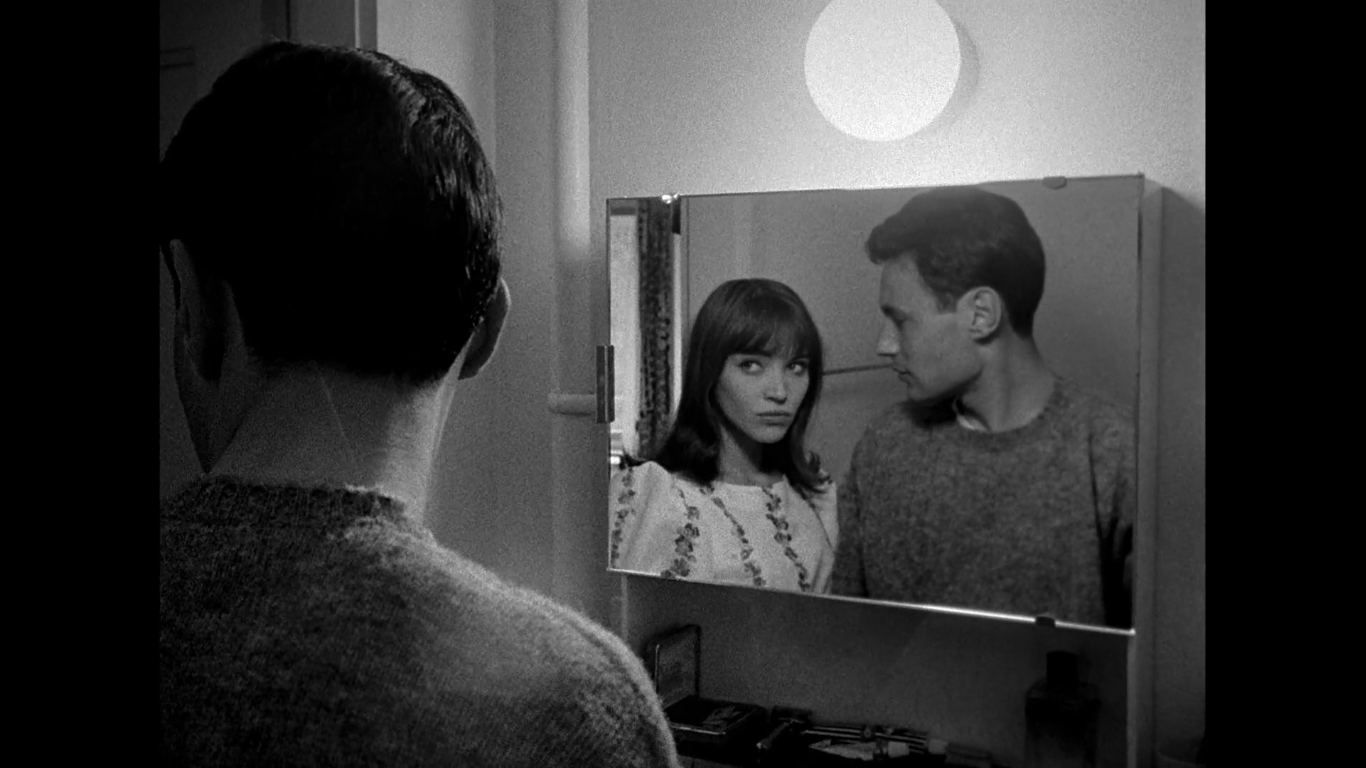
If it’s not apparent already, the groundwork has been set for a political spy thriller. While balking at murdering the man in a drive by, Bruno simultaneously falls in love with Veronica (Anna Karina), a dark-haired beauty in a trench coat. His friends bet him he’ll fall in love the first time he sees her on the street. He sheepishly shells over the money after only a brief introduction. He’s instantly smitten.

Le Petit Soldat is such a literary film thanks in part to its voiceover. Bruno, as Godard’s stand-in and cinematic conduit, references a myriad of things. He asks rhetorically about Veronica, “Were her eyes Velasquez gray or Renoir gray?”

It’s as if Godard is contemplating the muse in his own art. Still, he continues with a steady stream of namedrops including painters, authors, and composers. Van Gogh and Gauguin. Then, Beethoven and Mozart. Anna Karina prancing around to Joseph Haydn is definitely its own mood.

It occurs to me this is a distillation of Godard as a filmmaker. It’s a visual style wedded with these deeply mined traditions of literature and art.  Both cutting edge and steeped in the culture of the past before thenceforward going off and creating its own unique vocabulary.

Godard gleefully inserts himself all over the movie on multiple occasions where we see him in the flesh. It’s a spy movie as only he can conceive it totally deconstructed and aware of itself while simultaneously taking most of the thrills out of the genre.

Soldat remains a precursor to Alphaville by effectively turning the contemporary world around him into the environment for his latest genre picture. Whereas Breathless‘s jazz-infused contemporary aesthetic is accentuated by the black and white streets of France, here they are repurposed. Though it’s as much a film about driving around the city philosophizing as it is about any specific dramatic action.

Because Francois Truffaut, while not always disciplined, could spin stories with a narrative arc and genuine emotion. Godard is at his best as a philosopher and cinema iconoclast where his style doesn’t totally get bogged down by ideas, and he uses the medium in ways that would become the new standard. Or at least his own standard, before he decided to upend them again.

But in order to make the case for Anna Karina as more than Godard’s Pygmalion, it’s necessary to consider her screen image in depth. Whatever Godard gave to Anna Karina in terms of iconography or legacy, Karina gave that much back, and they will be inextricably linked for all times. Because if there was ever a reason to fall in love with her, it’s right there in Le Petit Soldat.

His alter ego riffs about God and politics, political left and right, quotes Lenin, and unravels his entire worldview (ie. about a man who loves ideas, not territories). When he asks his girl why she loves him, she shrugs her shoulders and says I don’t know. I don’t think she’s dumb, but whereas here we have one character who is in their head, she seems to be a creature who is real and present in the moment. She has a heart.

Whatever the digressions and despite the perplexing way Bruno interrogates her during their impromptu photoshoot, she is undeniable. If cinema is truth 24 frames a second, she somehow makes Godard’s cinema more accessible and real — she takes his theorizing on truth and gives it a pulse.

The movie is still a thriller, and it follows its own version of narrative beats. Bruno is framed, he continually has second thoughts about his assignment; he gets the gun, but things always get in his way. His heart is not in it — killing a man mercilessly — because this is not who he is.

Instead, he wishes to run away to Brazil with his girl. He’s locked away and tortured as a double agent for his troubles. These sequences are simplistic — contained in a hotel bathroom — and yet as they light matches near his fingertips and dunk him for minutes on end in the water, there’s a definite heartless menace about it.

We have the political bent of Godard’s cinema detected early on before his other overt efforts later in the 60s. It comes in the guise of his story as it unpacks current events, ideologies, and even controversy around torture.

True to form, he has the audacity to cram the final act of an entire movie into one minute of celluloid. He shows us some things and just as easily explains away the rest with voiceover.

It feels like he leaves just as he emerged. He’s totally singular. At times, maddening and bombastic, and yet always prepared with his own take and alternative approaches to convention. Godard will always challenge the viewer and make you reconsider how much you appreciate cinema even as he continually helps to redefine how we conceive things.

1960 or 63. It makes no difference. Le Petit Soldat has a young man’s malaise acting as a film for the coagulating disillusionment of the ’60s. This isn’t your father’s war nor one of his films — not the “cinema du papa” as Truffaut put it. If Godard’s style was coming into its own, with Karina cast front and center, then the propagation of his ideas is equally evident. Cinema would not be the same without his distinct point of view.

3.5/5 Stars

Note: This review was written before the passing of Jean-Luc Godard on September 13, 2022.

Dishonored (1931): Marlena Dietrich, The Sultry Spy

Screenshot 2020-07-10 at 7.47.31 PM

The premise is established in broad strokes. It’s 1915 and the remnants of the Austrian empire are caught up in war. This can only have meaning if we see some of the chaos in front of us. In this case, a prostitute lies dead in the street — with a host of onlookers crowded around — a mysterious mustachioed man eavesdropping and poking about. He’s looking for someone, listening to their conversation.

As the people walk through the streets, the sensation of rain sounds almost tinny and fake but this is part of the marvelous illusion. Because this is Joseph Von Sternberg, the famed spinner of bounteous tales offering so much to their audiences in the form of sensations and palpable milieu.

Eventually, the clandestine man — actually the chief of Austrian secret police — settles on a woman, but not just any woman. It is Marlene Dietrich in all her glory. They settle on a romantic rendezvous.

Not only does Dietrich give us so much, as is her habit, but her apartment itself is cluttered with all the sorts of trinkets that allow us to make sense of a person or at the very least appreciate them more fully.

There’s the piano. Sketches up on the walls. The place where she stashes her shoes. The little dancing figurines suspended from the ceiling. The empty bottle of wine. However, more crucial than anything else she proves her own character — she might live a meretricious lifestyle, and yet she’s a staunch loyalist and a war widow. Her allegiances are unmistakable.

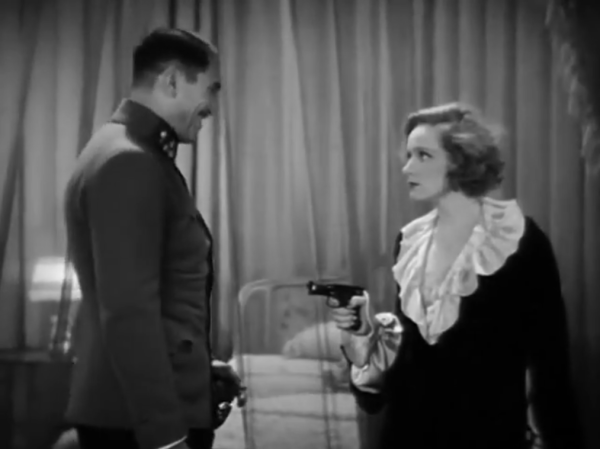
It’s immediately evident Marlene is a woman in a man’s world, but she sure has her pick of the litter. Because everyone is bending over backward to escort her, to be with her, to get to know her. Her new superior is well aware of her assets supplying her a new alias — X-27 — and an assignment of vital importance to her homeland.

There’s a casual nonchalance to her when being propositioned spy work. But this only works if there’s a brazenness in the face of certain danger. She has both in equal measure. It’s true the subject matter plays as surprisingly lithe and modern for Von Sternberg as he casts his muse as a Mata Hari-inspired spy with steely poise and a touch of class. She’s an inscrutable beauty fit to play the game.

What’s lovely is how everything is delivered in between the lines. Heroes. Villains. Friends. Enemies. What’s the difference? For these people, it’s their business and so they find time for romance whatever the scenario might be. There are no hard feelings because the current climate has bred this kind of immediacy. Nothing beyond the here and now can matter. One must make the most of the moment.

Dietrich is brilliant at the masquerade party. It’s our first chance to see her in her new regalia — plumed and sequined, teeth smiling from under her disguise — and she’s only one of a myriad. It’s the most gloriously decadent party I’ve ever seen. You’ll have to see for yourself if it’s hyperbole or not.

However, X-27 has other business to attend to. Her first mark is Warner Oland a high-ranking General who’s also subsequently purported to be a turncoat. She must use the art of seduction to implicate him. But he’s not the only one.

dis

Captain Kranau (Victor MacLagen) was also present at the party and equally taken with the woman’s allure. He’s a Russian Agent playing the same game of cat and mouse she is. In the service, of Ford, MacLagen always felt broadly Irish. Here he seems toned down and well-fitted for the role if only for the fact he hardly tries to upstage Marlene. It’s better not to have Coop. She needs no equal in this picture and it’s true no one can outdo her. This is her story more than anyone else’s.

What more can be said as they joust back and forth globetrotting across borders and meeting under all varying degrees of circumstances? X-27 does her finest impression of a cleaning woman and a kitty cat all in one sequence. He finally has her cornered. We think this spells the end and yet she riggles free. Her wealth of secrets transcribed into music and memorized. She wins another round.

This is what becomes so riveting because the movie is constructed out of these kinds of jocular bits of leisure, but they are a pretense or a visual projection or smokescreen over a very harsh even cutthroat subject matter. He tells her in one interchange, “the more you cheat the more you lie, the more exciting you become.” It’s like a harbinger of Bond decades later.

However, lest anyone misconstrue his intentions, Von Sternberg is vehemently critical of unyielding military protocol. In fact, in a gut-wrenching final scene, it makes a young soldier blubber. He witnesses the utter cruelty of war when it comes to the rule of spy and counter-spy. Still, Marlene takes it with her usual poise — stalwart to the end — and frankly, she’s unforgettable. As she waits out her final days, her last requests are authentic to her character from the beginning. She requests her piano and the black dress she used to wear in her previous life. These are her identity. This is her uniform.

The ultimate irony of the movie is its title. Against the vociferous objects of Von Sternberg, the studio settled on “Dishonored.” But this cut-and-dry analysis of her station in life fails to understand the intent of the entire film. It’s tantamount to saying Sophie Scholl was dishonored in standing up to the Nazis or that the figure of Christ was dishonored for standing up for what he believed in, what he was called to. In X-27’s case, her guiding light was love — even love precipitated in momentary encounters — it can still be a driving source behind any human heart.

We have a fair amount of modern spy movies now anchored by female stars. Their main objective seems to be an exhibition in showing women as powerful entities, capable of kicking butt. This is fine, but sometimes there is no illusion left. No added depth of character. Dietrich is unparalleled, feeling exciting and aloof until the very last frame. We want more of her not less, but she leaves us while she’s still ahead. What a run she had with Von Sternberg, in her third picture following The Blue Angel and Morocco, with still more to come.

It’s less heralded but might just be the best of the lot. It comes quietly and then ambushes you with all its many assets — thoroughly exquisite to look at and also thematically resonate. What’s more, it has a genuine sense of fun and intrigue which isn’t always the easiest combination to come by. Its range of surprises is the kind you relish as a moviegoer. They stay with you.

4.5/5 Stars

Stage Fright (1950): Hitchcock and Dietrich

wyman and dietrich

It’s true that “All the world’s a stage, and all the men and women merely players.” However, dress it up with murder and life becomes a series of stages and varying performances you’re putting on for different audiences — trying your best to play your audience — while not giving yourself away.

Stage Fright feels very much like Hitchcock getting back to his roots; there’s something simpler and yet still charming about the milieu he’s able to drum up evoking the British Isles. In reality, it was a convenient excuse to spend more time with his daughter Patricia currently away at school in the U.K. She even earned a small role. It’s also propitious he seems to be having good fun with the conceit: the combination of play-acting and murder with actors trying their hands at amateur sleuthing.

We are thrown into an almost instantaneous thriller. It dispenses with the lead-up altogether by showing a couple on the run in a car. A fledgling actress, Eve (Jane Wyman), is the complicit accomplice and Richard Todd is a man fleeing the authorities. Through an extensive flashback, he relates how he was pulled into the web of murder spun by his lover — the famed and gorgeous prima donna Charlotte Inwood (Marlene Dietrich).

He tries to touch up the crime scene she’s left behind only to get spooked by her maid turning up on the scene. The murder investigation commences in earnest including a respectable detective named Smith (Michael Wilding).

Eve sets the fugitive up with her father, out of harm’s way, before turning right around and hatching a plan to get to the bottom of the whole thing. One minute she’s trying to get close to the aforementioned policeman to somehow pump him for information with her damsel in distress act. The next moment, she’s putting her thespian training to good use posing as a cockney maid (and temporary replacement) for dame Charlotte herself.

It has some of the dynamics of an All About Eve between actresses though it’s admittedly hinging on cloak-and-dagger antics opposed to true backstage drama. Because it’s on this plane of performance that Hitch seems most intrigued — where acting becomes a conduit for understanding the mystery at the core of this movie.

sim and wyman stage fright

If there were any undisputed secret weapon, my bet is up for Alistair Sim. He was always a mirthful co-conspirator if I’m to recall a movie like Green for Danger. He’s eminently likable, though the spark in his eye suggests he’s ever prone to mischief. This accords him all the prerequisites to play a fine father figure opposite Wyman if only for the primary reason they both seem to relish the game and being a part of it together.

They have the most instantly vibrant relationship within the picture, and they give it the comic underpinnings one comes to expect from the director. Sim himself meets the macabre of Hitchcock thanks to a bloodstained dress on a carnival doll used to shock Dietrich out of her performance of “La Vie en Rose.” It mirrors the ugly token of her secret transgression.

In another sequence, the wanted man shows up during her performance — a particularly saucy rendition of Cole Porter’s “The Laziest Gal in Town.” Before this interruption, the scene is pulled out of the Hitchcockian world momentarily. It’s an individual moment where an auteur like Hitch gets totally overpowered by Dietrich or, in many ways, he acquiesces allowing her to be her scintillating self in the golden limelight before the mechanisms of the plot are meant to take over once more.

Stage Fright feels perfectly comfortable being so theatrical. However, the ideas never feel fully wrought; it’s a bit scattered and inconceivable — nor is Jane Wyman the most compelling Hitchcock lead. Mind you, I’m not expecting her to be a Hitchcock blonde or Ingrid Bergman, but she’s not quite on par with even someone like Teresa Wright in Shadow of a Doubt.

Likewise, the theater finale is terribly abrupt though it functions on the tenets of many of Hitchcock’s grandest set pieces by taking a novel environment and turning it into a thrilling locale for drama (Donen would rehash a similar sequence in Charade). The scenes in the build-up are of all shapes and sizes as Wyman rather coincidentally juggles a double life. It’s all highly circumstantial.

As it turns out, the lynchpin scene is right at the very beginning. Of course, we don’t realize that until the end, but right there is Hitchcock’s point. To see it any other way is a mistake. Because obfuscation and chicanery are the building blocks of not only acting but murder as well. Perceptions can change so quickly, and he was one of the greats at visual audience manipulation. In Stage Fright he takes it a step further. He lies to us outright on the screen.

3/5 Stars