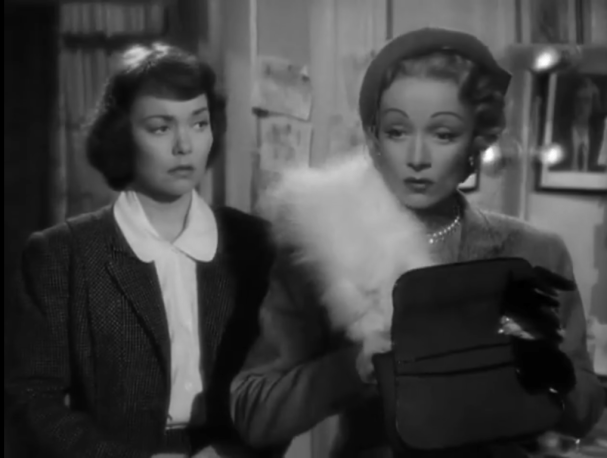
True Confession (1937) Carole Lombard, Fibber Extraordinaire

true confession

“Must we submit to this three-ringed circus in the guise of drama?” – Porter Hall

Carole Lombard is a comedienne of unequivocal talents. My guess is that it lies in that extra special dial she had. Yes, she was a Hollywood glamour girl and stylist of the 1930s — married to the King of Hollywood himself — but she also was totally at ease being absurdly silly. She would become frenzied and unhinged in a manner that feels rather groundbreaking for her generation. She was a very special performer.

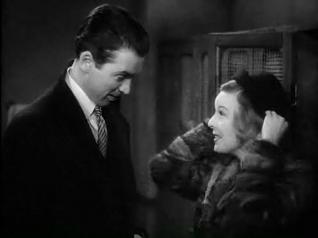
True Confession deserves to be acknowledged as a truly satisfying screwball for how it uses Lombard’s talents. Because, you see, her Helen Bartlett is a woman plagued by tall tales. Her fibs take on outrageous proportions. She’s the girl who cries wolf. Quite literally, tongue in cheek. We see it in full effect early on where she tells a string of increasingly wacky fibs to keep a man from impounding her typewriter.

However, the movie wouldn’t stand up if not for her husband. Ken Bartlett (Fred MacMurray) is tirelessly honest which, in the lawyering racket, isn’t always the most lucrative. He won’t represent anyone who’s guilty and that includes the referral of their local butcher who swiped some hams.

But he has that aching desire to exert his manhood and be the sole breadwinner of the house. He wouldn’t dream of having his wife work. No, she spends her days plinking away at the typewriter trying to finish her latest story. She’s got the personality but perhaps not the prose to be a successful writer.

So she conspires with her best friend Daisy (Una Merkel) over what she might do. Her plan is to take a job as a secretary. What of it that she’s never done shorthand or that her husband will have a fit? These are small potatoes and so she takes the job. Unfortunately, sleazy Mr. Krayler is a serial philanderer and as she skips and back peddles to avoid his advances, Helen realizes she has to get out of the secretarial racket.

This might very well be the end of it. But True Confession is forever altered by what happens next. Depending on the outcome it would end up a mystery drama. Thankfully for us, it remains a comedy.

Because she returns to the office to pick up a forgotten handbag only to find the dead weight of Krayler sprawled on the carpet. Soon the police are on the scene — their bald, hoodwinked leader (Edgar Kennedy) suspects her instantly. After all, she has motive. Soon they’ve drummed up a whole story supposin’ how she fled the crime scene.

But we know she is innocent so if the wheels of justice are actually just, there shouldn’t be a problem. A happy ending is easy enough to foresee. Instead, proceedings get strung out. Helen ends in prison suspected of murder and there’s an ensuing trial in front of a judge. Her husband is going to defend her.

Here’s the real screwball wrinkle. Wait for it. She decides to plead guilty. It’s the biggest lie she’s ever told, but if it pays off, then her hubby will be the talk of the town in the courts with a fledgling career to boot. She wants to give him his biggest stage to prove his acumen even if she has to risk perjury to do it. If it doesn’t work, well, the movie never really makes us consider the alternative.

We’ve alluded to the majority of the players, but one would be remiss not to mention two more. Porter Hall is one of the mainstays of Classic Hollywood entertainment and here he turns in a fine performance as a bellicose prosecutor on the prowl.

Then, who can forget John Barrymore hitting the eccentric heights of his career (and also the skids)? Because “The Great Profile” and titan of the great acting family, was now more of a caricature.

As Charley Jasper, he’s giggling maniacally with his ready collection of balloons, his hair rather unkempt, like a mad professor in the courtroom. Why is he here anyway? Why does the story need him? It seems quite thin. I would never dare spoil this little untouched secret.

Instead, the floorshow takes center stage. Mr. and Mrs. Barlett reenact events for the courtroom crowd in a highly irregular manner, but there is something giddy and glib watching Lombard and Macmurray break into playacting in the middle of the trial. It won’t let us forget for a moment this is a comedy, and it stays true to its roots.

I have to admit there’s an unsettling irony in the comedy’s main conceit: a white woman fighting to plead not guilty for a murder that everyone assumes she committed (though she hasn’t). Of course, there’s a historical precedent in antiquity for a woman’s testimony would not be taken.

Even watching something recently like Just Mercy, a different kind of courtroom drama in tone and content, it’s a reminder of how many people, whether black or marginalized in some way, find themselves in much the same predicament, and in their cases, there’s rarely a screwball plotline to conveniently spring them out of their misfortunes.

Social critiques aside, True Confessions is an underrated screwball gem, and it does itself a service thanks to Lombard and Kennedy, Merkel, and Barrymore. However, in our current context, as we seek a renewed sense of justice in the civil space, it must also give us pause.

3.5/5 Stars

Notes: This post was originally written in June 2020

I Walk Alone (1948) with Lancaster and Douglas

i walk alone

“All the songs sound alike these days.”

The title of this movie inadvertently made me think of the Dinah Shore number “I’ll Walk Alone.” Granted, the title is slightly different, and it was birthed out of the WWII context where soldiers left their sweethearts behind to wait it out.

I Walk Alone could have easily made a play for this type of story. Instead, it replaces traumatic military experience with a long stint in prison and so our protagonist comes back to the outside world with a slightly different mentality. So there’s really no connection out all, and yet somehow music holds a crucial place in this movie because it comes to represent something about the characters. We hear, among other standards “Isn’t It Romantic?” and “Heart and Soul.”

Each of these classics plays as odd counter music to an otherwise rough and tumble story that might yield descriptions ripe with gangsters and noir imagery. When Dave meets Frankie at the train station, we understand the score instantly: 14 years behind bars and now he’s on the outside. Lancaster and Corey are holdovers from the previous year’s Desert Fury (along with Lizabeth Scott).

Ill-will has built up over the same period because back in the days of prohibition, Dave (Lancaster) used to be in cahoots as a rum runner with Noll “Dink” Turner (Kirk Douglas), who has now made a name for himself on the outside. After taking the rap, Dave feels slighted by his old partner, and true to form, his partner is trying to feel him out so he might know how to counteract him. It’s an instant conflict.

Coincidentally, it’s the first crossing of the dynamic wills belonging to Lancaster and Douglas who would continue a storied cinematic partnership over seven pictures. Even at this early date, they have fire in their bellies to drive their dramatic inclinations.

Having the two of them together is a singular delight in a way Desert Fury from the previous year could never deliver. Because in a sense they are on equal footing in terms of cinematic clout and charisma. Not that they’re the same person by any means, but it’s rather like Mitchum and Douglas sparring in Out of The Past. It makes for a far more absorbing picture.

Before he won the privilege to be an irascible hero, Douglas excels at being the cool and calculating criminal type. His voice is almost high-pitched and strung tight giving him an unnerving quality with pointed fury behind his eyes — as dark as ever. Still, he gladly maintains the pretense of friendship; it’s good for business.

When Frankie makes his way to the Regent club, he sees all the old crowd is still around, Dan the hulking doorman, then Ben behind the bar. It’s a bit like old times, but times have changed.

The veiled threats in their first meeting are an extraordinary barrage from the opening warning “Don’t move,” to the insinuations about his health on the outside, and the final flash of flame from a cigarette lighter. Intensions are made very clear.

True to form, Dink uses every resource at his advantage to defuse and exploit his old friend if possible. He’s the consummate businessman even when it comes to women. Lisabeth Scott, the club’s resident torch singer, is a whole-hearted sentimentalist who believes in love and in people — the fact they just don’t make songs like they used to. In this regard, she shares a conviction with Frankie. But she’s supposed to be Dink’s girl; at least she works for him.

However, there’s also Alexis Richardson (Kristine Miller) a refined beauty with a name “spelled in capital letters” and a cigarette pinched between her feminine fingers. She’s also filthy rich and she doesn’t mind her men philandering; for her romance is as much a business transaction as it is for Dink.

The script has its moments of lively snappiness especially leaving the lips of Lancaster who exerts himself as the brusque, no-nonsense tough operator. He’s not about to let other’s knock him off balance or get too far into his confidences.

However, I Walk Alone charts the changes that went into organized crime while Frankie was in the slammer. Whereas he represents the brawn of the old days, Dink is an emblem of the wily business practices necessary to get ahead currently. He’s able to cast off his old partner’s stake in the company with a convenient signature on a piece of paper.

What has developed is an age where big business steamrolled the olden days of hoods and backstreet gangsters calling the shots. Where three corporations can only be understood and operated through board meetings, diagrams, and dizzying bureaucracy. This web feels like a conspiracy to Frankie while only reiterating the helplessness found in a story like The Grapes of Wrath where modernity has overwhelmed the old ways.

He piles into his old buddy’s office with a posse of thugs including the smart-mouthed Skinner (Mickey Knox), the heavy Tiger (Freddie Steele), and the ubiquitous Dewey Robinson. What he realizes only too late is it’s not a matter of bringing knives to a gunfight. They are mostly outdated tokens just like him. As the brassy one quips he’s “swimming in it.”

What happens next is not unforeseen. There’s a manhunt and the man finds himself a woman who brims with his same spirit; someone who stands by the standards and sentiments of the past. To coin a paradox, they can walk alone together.

Beginning to end, what truly holds I Walk Alone together is the slimy impudence of Kirk Douglas struggling for dominance over Lancaster’s inherent tenacity. Without them, and then everyone else, including Scott, ably orbiting around them, it feels like the story might fall apart. Still, film noir aficionados should have more than enough to gorge themselves on.

3.5/5 Stars

Desert Fury (1947): Small Town Melodrama in Technicolor

desert fury 1.png

The draw to Desert Fury must begin with its intriguing cast running the range of personalities. John Hodiak and Wendell Corey (in his film debut) are driving into town. There’s this sense that their relationship is familiar but they feel like out-of-towners, somehow bringing a ting of noirish sentiment into what might otherwise be a straight-laced picture from director Lewis Allen.

The town was doubled by Piru in Ventura County and the colors of Charles Lang are grand if a tad on the campy side. All the better to serve the visual melody of the film. Burt Lancaster is Tom Hanson, the sheriff in the small town where he happens upon Lizabeth Scott on Main Street, a rambunctious creature of trouble nosing around for romance in her wood-paneled Chrysler New Yorker Town and Country. He warns Paula Haller to watch herself, which she easily laughs off before driving home.

Part of her disposition must be genetic because while they couldn’t seem different, her mother is a very independent-thinking, straight-talker who lays it out like she sees it. Fritzi feels like the toughest dame Mary Astor has ever played — the cocksure proprietor of the local gambling joint — used to throwing around money and being on top of everything, and well-liked by everyone if she can help it.

That being said, she’s hardly the maternal type — in fact, she hardly feels like a mother at all — even as she’s vehemently against Paula following in her footsteps. Because hers is a tough life doing her best to shield the impressionable girl from the same trajectory. Surely, that must be it…

The Purple Sage proves its own self-contained world for the characters to lose themselves in. Our primary players are thrown together again and it never ceases until the final exhale.

Because out of everything Desert Fury can possibly offer, the relational dynamics are one reason to latch onto the film and stick around just to feel out what’s going on and where it possibly could be heading with each character exerting their own pressures on the story.

desert fury 4

Lizabeth Scott could be simpering but with her smoky voice and youthful looks, she always managed to be an enigma. Not always the most engaging performer but somehow she fits the curious makeup of a picture like this. As her mother observes with an inflection of eros, she’s “nice and fresh and alive.”

John Hodiak is generally curt, with an abrupt delivery and whether it’s his performance or his own nature seeping into the part, there’s no nuance or finesse to what he puts out. But as Eddie, he’s allowed the benefit of a past — a past that makes Fritzie wary of any advances on her daughter. It attributes menace to him regardless of what he is capable of offering.

Johnny is his lifelong companion since their youth, protective of him, even jealous for his affections playing as an inversion of Fritzie — as both housekeeper and bodyguard to his longtime associate. But the secrets run deeper still.

What A.I. Bezzerides and Robert Rossen’s script evolves into is this kind of tug-of-war with Paula acting as both the object of desire and the token with which to play out these feuds and affections. She gladly honks and smiles her way into all sorts of conflicts, driving her town car with a cavalier daring from the very beginning. Her sheer impetuousness propels the story.

She’s drawn to Hodiak, and he’s enchanted by her, showing her the door in another instance only to instantly revert back again to his charmed infatuation. It’s a tumultuous if moderately intriguing bedrock for romance.

Because Lancaster is invested in her too, warning against association with such a character. Whether it’s on account of her personal safety or his own guarded affections feels immaterial. Even as Fritzie offers a pact — land for the hand of her daughter — the proud lawman balks at the offer because he wants romance on his own terms.

desert fury 2

Fritzie knows where he stands but even she doesn’t get it. One evening Lancaster walks into her office searching and yet keeping his cards close to his chest. It’s as if he’s letting her try and figure it out.

Meanwhile, Paula and Johnny have their own strange war playing out over Eddie colored with its share of passionate kisses, flying fists, and slaps of disdain. The incendiary couple ignites most of it.

However, what’s even more important is what is alluded to not simply off-screen but from each individual’s past personal dosier and shared history. They know one another out of the confines of this hour and a half. The ensuing array of heightened dramatics and supposed revelations are nothing unusual or unforeseen on their own.

It’s the observable action speaking in the final stretch (along with the theatrical Miklós Rózsa accompaniment) with cars barreling down the desert highway in hot pursuit of one another.

It’s a Hollywood denouement — hardly a reinvention of themes from love triangles to shadowy pasts — but the melange of performances and the slight subversions teased out speak to something. Where the final kiss is not between Lizabeth Scott and her alpha male but with her mother.

While not a moral tale,  it’s a movie voicing the tangled, clouded, dysfunctional relationships plaguing a small town — and the world at large. The guise of  Technicolor melodrama is a fitting pretense.

3/5 Stars

The Threat (1949): Starring Charles McGraw

ThreatPoster.jpgThe beauty of a picture like this comes with the efficiency of the drama with a prison breakout occurring under the opening credits. Soon we learn a notorious, shadowy criminal named Kluger has broken out of Folsom prison.

The convict once vowed to kill both the detective and district attorney who worked to put him away and he doesn’t take the threat lightly. He means to carry it out.

When he finally does show his face, Charles McGraw, makes an indelible entrance almost bursting the seams of such a lowly movie. He’s so imperative to the movie’s meager claim at success destining him for thug greatness for all posterity (and a few hardboiled heroic turns once he’d paid his dues).

Felix Feist’s latest thriller is at its best putting forth its claustrophobic kidnapping scenario strung out with tension and genuine terror. Our so-called heroes are a fairly drab bunch including a career cop and family man, Ray Williams (Michael O’Shea).

In contrast, McGraw maintains the film’s gruff core more than willing to throw his weight around as he plans the rest of his getaway and subsequent revenge. To the movie’s credit, he’s liable to do anything he deems advantageous to his plans, doling out orders to his cronies, and forcibly throwing around anyone he wants. He doesn’t care about others. They’re disposable goods.

It starts with the old moll (Virginia Grey) he thinks has double-crossed him, then his two old adversaries, and finally the unwitting delivery truck driver who proves integral to his proposed plan to weasel his way past the police dragnet and network of roadblocks.

However, the tension is borne in the intervals in-between where they must wait around. First, at a house and then out at an old shack in the desert, until their buddy, Tony, drops in with his plane. Both sides are hanging on edge, either for fear of being killed or the threat of being captured.

There’s one shot, in particular, slyly setting up the dynamics of the film’s finale to come as the camera peers down into the shack they’re holding up in. With time running out, our drama must escalate. Red coaxes the gun away from one stir-crazy housemate just to turn around and use it in the next. There’s no prevailing mercy or level of sentiment, whether it’s a man or woman. It’s this continual unpredictability making for a sweaty, nasty little climax.

The plot’s breakthrough revolves around a long shot — a nice bit of circumstance — and it is by any stretch of the imagination.  I’m not sure if the logic exactly checks out, narratively speaking, though it’s easy enough to turn a blind eye for the sake of the action. You don’t necessarily seek out The Threat to feed your desire for taut scripting.

My only real qualm is how this film ends like so many others I’m seen recently where a happy ending is only obtained through a wife’s pregnancy. It is a bit of shorthand to say something about the American Dream circa the 1940s and 50s — and new life is such a precious thing — but it seems like such a tiresome trope when it’s used as a crutch so often.

Up to this point, The Threat genuinely lives up to its title mostly in part to Charles McGraw. If you’re a fan of the minor film noir icon, it’s a must-see. Otherwise, it’s best to look elsewhere for diversions of a higher caliber.

3/5 Stars

The Devil Thumbs a Ride (1947): Starring Lawrence Tierney

the devil thumbs a ride.png

Felix Feist is a relatively obscure figure today and the only reason I’ve come to him has to do with two B films he was attached to, The Devil Thumbs a Ride and The Threat released two years later.

As a Southern Californian, I might obtain more glee out of name recognition than other viewers. It comes, quite literally, with the territory. These types of second-bill features hit the ground running. In this case, The Bank of San Diego gets its pockets picked by a thug.

So much is evoked stylistically, and we are reminded how integral signs become as a shorthand and cost-effective device for these quickie B-movies. Feist scripted the movie as well as directing, and we might sum it ups as a Hitchhiker’s Guide to Hell courtesy of garble-mouthed tough guy Lawrence Tierney. He certainly doesn’t skimp on his brand of scowling, unrepentant, hard-ball, and the picture is indebted to the cloaked menace he provides.

Because he’s the forger-turned-bank robber now on the lamb from the rousing authorities. Not unlike Detour (1945), it’s some fateful or cinematic force landing him in the car of a happy sap and devoted family man (Ted North) just off a joint birthday/anniversary with his best buds in San Diego. It looked to be a real gas, and he’s grinning from ear to ear. He might still be feeling the buzz from the merriment, but he’s sane enough to drive. The contrast is set up immediately, and they develop a fairly easy-going rapport since they cancel one another out.

They make a pit stop at a gas station as “Fergie” calls in on his adoring wife telling her to synchronize her watch for “3 hours and 26 minutes and 42 seconds.” Doing my own mental calculations, freeways (and automobiles) must have been a lot slower because today you could probably be doing San Diego to L.A. in 2 and a half hours (without traffic). When one of the passengers notes the driver is almost pushing 70 MPH, that might give us some indication.

Even as we eavesdrop on his conversation and Morgan snaps at the fresh-faced gas station attendant (Glen Vernon), the movie exudes the rudimentary pleasures of seeing mundane aspects of life circa 1947. The telephone. The music playing on the radio. The garb the gas station clerk wears. Each detail, whether only a studio embellishment or an authentic accent, adds something to the picture. Because elements of it are familiar to me and yet so far removed from the world I know.

the devil thumbs a ride 2

In the process, they pick up two dames looking for a lift — one of them a husky-voiced blonde (Betty Lawford) the other a diffident brunette (Nan Leslie), again juxtaposed for dramatic effect. Now our story on wheels is loaded up not unlike Arigato-san (1936) or Stagecoach (1939), albeit to a lesser degree.

In the ensuing moments, the slighted and eagle-eyed station attendant calls up the police because he thinks he’s spotted the man they’re looking for. Of course, he has. On the other end of the line, the dogged but good-natured police break their perpetual off-duty poker game to jump back into action. Roadblocks are set up all over the coast and the veteran detective on the beat (Harry Shannon) takes along the overzealous youngster to apprehend the criminal.

Staying true to actual geography, they make their way up the California coast from San Diego. First, Oceanside, then San Clemente, and then placing roadblocks at both “Capistrano” (San Juan Capistrano) and near “Laguna” (Laguna Beach). What’s more, the carpoolers set their course for a friend’s place in Newport — Newport Beach that is — and they wind up hitting all the local hot spots from my childhood. Santa Ana even gets a mention.

They set up shop in the bachelor pad in the harbor, although there’s no Bogey or Duke Wayne to be had riding the waters. All we get is a doddering night watchman (Andrew Tombes), a wild array of near-screwball antics, murder, and then ensuing hostage situations. Come to think of it, based on what we were promised, it pretty much measures up.

While the characters are cliched to the max and their reactions are a bit wonky, especially after rolling over a cop in pursuit, it’s easy to take delight in the cumulative effect. A title like The Devil Thumbs a Ride should be some kind of tip-off and between Tierney’s minacious countenance and the sheer shoddiness behind many of the lines of dialogue, there’s an odd tone developed. It can be near-screwball one minute, and then instantly plunged back into thriller territory.

The family man gets in hot water with his wife thanks to the conniving blonde jumping on the hone extension. The Devil still has his eyes on the other girl even as he’s anxious to wait it out and let the situation die down. Even as the cops start closing in, there’s a sense something explosive is going to happen. Because when agitated and cornered, outlaws have a habit of lashing out in a desperate struggle to survive. They don’t much care who gets in their way.

Much of The Devil Thumbs a Ride feels mediocre, but if you’ve never been acquainted with Lawrence Tierney or you’re game for a bit of post-war time capsule filmmaking, there are a few modest delights crammed into its 62 minutes.

3/5 Stars

Woman in Hiding (1950) and Worrying About Ida Lupino

Woman in hiding 2.png

Woman in Hiding doesn’t waste any time. A car races down a twisting highway only to go careening through the side rails into the drink. The car and its occupant look to be obliterated. Yet we have the dead talking, Ida Lupino whispering to us from the grave. Could this be a situation akin to Joe Gillis in Sunset Blvd (1950)? We’re forced to wait before making any prognostication.

The story is set in North Carolina and as such, you have this lingering undercurrent of southern glory and heritage wrapped up in the wounds of secession and racial prejudice. There’s even reference made to the deep lurking traditions of the South with its pitchforks and rocks, of people who wouldn’t give up and wouldn’t allow their way of life to die. It’s actually rather unnerving rarely seeing an African-American character in this Hollywood tableau almost as if they’ve been erased.

Still, the locals go about their business dredging the local waters for the automobile and the missing Mrs. Deborah Clark (Lupino), even calling on the assistance of an old cannon, yet another relic from the aforementioned lineage. This is the backdrop against which Woman in Hiding plays out.

Because Seldon Clark IV (Stephen McNally) came out of this pedigree — tall and handsome, but proud and driven with maintaining the family standing, even to the point of delusion. He’s worked in the mill of a Mr. Chandler making many unwanted passes at his daughter Deborah.

For the time being, nothing comes of it because her father gives the boy a stern talking to, seeing right through the arrogant creep and the rest of the buffoons who beget him. In fact, it is at this point Lupino feels sorry for him — trying to defend him.

The story takes its most drastically abrupt turn on a single cut, when, in a matter of seconds, it comes out the forthright and perceptive old man died in a freak accident. Who was by his side unable to help him? Seldon Clark of course. It’s an obvious equation of two plus two, but, again we must wait until everything unfolds.

Marriage is proposed the day of the funeral, thus tying the knot (and the mill) between Deborah and Seldon. Their subsequent honeymoon at a cabin getaway is rudely disrupted by a former girlfriend. Peggy Dow debuts as a conniving southern belle on equal footing with her darkly vindictive suitor. It instantly rips away any pretenses we might have from her more widely remembered turn in Harvey (1950) as she gets backhanded for her many scandalous insinuations.

Could she, in fact, be the victim of the scenario? Doubts creep in? The first of many as Seldon’s colors become more and more obvious even to his wife. One of the most generous compliments that can be offered to Woman in Hiding is how it wears its melodrama brazenly on its sleeves.

It evokes a helpless world akin to Road House (1948) where nature is a trap — a place in which to be hunted like an animal, in this case, confined to a nightmarish marriage. The narrative does fold over itself and we realize where we find Deborah.

She is a woman caught in a state of matrimonial helplessness, in a society where she has little agency to do or say anything to free herself. It’s the same anxiety film noir of the post-war era gorged itself on, for both men and women. Because it becomes apparent the dividing line between victim and femme fatale is razor-thin. Really all that matters is the point of view provided.

From Deborah’s flustered perspective, there is a vague sense of searching out Patricia Monahan (Dow) because maybe together their corroboration might be able to put Seldon away. Just maybe someone might listen to the truth then.

woman in hiding 1.png

For the time being, staying dead is the most auspicious decision. Deborah takes to the road to disappear for a while and make some money on the side waitressing. But there must always be a foil and in this case, it’s a man named Keith Ramsay (Howard Duff).

He’s the genial man behind a newspaper stand striking up a conversation with a woman on the run. He seems like just the type of character who might provide a shoulder to lean on, whether solicited or not. In a world where everyone’s overstimulated with get-rich-quick schemes and radio giveaways, he seems decidedly unconcerned with the rat race as he works at his pop’s shop.

However, he does become a shoulder to lean on — offering comfort — but he’s also a part of the problem. Because this tale gets its punch from a woman being hunted, when she should, in fact, be a victim. In this regard, it’s a precursor to the same problem at the core of Blue Gardenia (1953) as the newspapers start treating her as a fugitive.

Because even as the local hotel is overrun by a traveling convention of drunken out-of-towners and conga lines, darkness can still find its way back in down the stairwells. The most excruciating development comes with the connection between our favorite fellow and the dastardly husband. He has no idea what’s he’s doing when he makes the identification.

Even as Deborah is taken back by her husband and Monahan turns up again only to be stepped on, the story must culminate where it began. In the same small town, at the dead of night, inside the mill. There’s something to knowing what’s going to happen and still having a potboiler raise the pulse. It comes down to the old adage, it’s not the destination but the road taken.

It also comes from actually genuinely caring for a character and as one of the best — some might even say an underrated actress — Ida Lupino plays the victim with an inbred resiliency, making the audience strive for her safety even as we sit powerlessly in the theater seats. It’s not some monumental derivation of the tried and true formulas, but audience identification goes a long way.

3.5/5 Stars

Lust For Gold (1949): Biography of a Deathtrap

lust for gold 1.png

The movie opens with a score raging with dramatic tones fit for a title like Lust For Gold. The resulting narrative ploy is not a new one either, suggesting the details of this “unusual situation” were substantiated by historical records and legends of Arizona. It’s meant to provide this obvious sense of real-world ethos.

We find ourselves at Superstition Mountain. A severe voice, strung out with the same dramatic intensity of the music, paints a wild portrait of this horrible place — Satan’s art gallery in the rocks.

His name is Barry Storm (William Prince) — a real figure — and yet for all intent and purposes, conveniently fictionalized to narrate the tale for us. Unfortunately, the man isn’t able to pull off the voiceover like a Bogart or Mitchum. It lacks the hardboiled lip or the inherent sense of noir malaise.

It’s possible to mention noir, even when our prerequisites are more aligned with a western because we are dealing in terms of avarice and the greed found within the human heart. These are the building blocks for any respectful film noir of old where humanity runs amok with murder and deceit. In any regard, this is what the hope is.

Still, Prince comes off lacking from the outset because as an actor he’s a bit of an innocuous blank slate. Even if this is purely how he is meant to function, there’s nothing impressionable about him. But it also falls partially to the anatomy of a faulty story with dialogue practically regurgitated to us to get our pulses going. The effect is moot.

Still, this version of Barry Storm does serve one solitary purpose if only to toss us headlong into this narrative. He’s part unwitting victim, part fresh-faced raconteur and adventurer looking to dig up the famed treasure once belonging to his distant relation “The Dutchman.”

He crosses any number of people among them cocksure explorer Floyd Buckley (Hayden Rorke) and two fellows who act as deputies under the local sheriff: a relaxed fellow named Covin (Will Geer) and the quietly observant Walter (Jay Silverheels).

To their credit, they are the first people who bring some color of any sort to the picture. However, even Geer’s own recounting of the Dutchman legend — delivered in a casual, conversational manner — isn’t able to rescue the dialogue which feels just as straightforward and didactic as before.

The real meat and potatoes of the movie come with a substantial flashback moving the action to 1880, and it couldn’t come soon enough. Because it’s at this juncture we are reminded Lust for Gold has a surprisingly stellar cast, and the best patches of drama come with the biggest stars. Regrettably, they’re never able to assemble in full force spread out across the years as they are.

Glenn Ford is reteamed with Edgar Buchannan from Framed, although this time they’re a bit more dubious and hardened, following the trail of a mythical gold mine. If you were to fashion an approximate reference point the movie, functions a bit like Treasure of The Sierra Madre Lite with everyone gold crazy and opportunistic.

Glenn Ford is not much of a Dutchman. His accent or lack thereof could have used some sharpening if he was really looking to commit, but perhaps, more importantly, he shows himself capable of some vindictive fury before the days of The Big Heat. This is what the story must rely on.

He’s the man who ends up the victor with all the gold to himself and no one else left alive to challenge him when he checks his wealth in the nearest outpost. The whole town’s envious of his cache, and the news spreads rather hilariously through the local gossips. They want a piece of the action because it’s far too much wealth for one man, but he clings to its with near-violent secrecy. There’s not one male or female who’s going to get him to open up about it.

That doesn’t keep them from trying. The best bet is one Julia Thomas (Ida Lupino), an educated woman who nevertheless runs the local mercantile and doesn’t have much hope of going anywhere. Her useless husband (Gig Young), hasn’t done anything to alleviate their situation. So, much to his chagrin, she’s prepared to slip off her wedding ring and weasel her way into the miner’s affections.

It works quite well and as with any of these old star vehicles, the movie is most enjoyable when we have Ford and Lupino together. They were both seasoned performers in all the grungy corners of the genre pictures even if this is a hybrid. But what sets them apart is how they both have desires. Sometimes opposing, sometimes convening, and their feelings for one another do become complicated.

To her credit, Lupino plays a far more nuanced part than a simple seductress. She is tired of her life. She is tired of her husband. She’s ready to take things into her own hands, and yet there is some amount of feeling dwelling within her. The Dutchman, for one, is happy to find someone to hold, someone to share his native tongue with. It’s the human face slipped in with the pervading moments of avarice.

Because in the end all parties are pitted against each other in a testy competition for the goods — both in the past and present — weathering seismic avalanches and showdowns up in the rock crevices. Some of these moments, especially crammed within the middle of the story have the pulse of compelling action. It’s only a shame this hybrid noir offering must be so hampered by its own plotting device.

3/5 Stars

I Love Trouble (1948): Enter Roy Huggins

800px-I_Love_Trouble_(1948)_1.jpg

In the days before they were known as film noir, the melodramas of the 1940s have such evocative titles, which now verge on the edge of camp. One can imagine the plethora of quality bumper stickers noir aficionados could plaster on their jalopies and Cadillacs. Try these on for size: Kiss Me Deadly, Murder My Sweet, Touch of Evil, In a Lonely Place. You get the idea.

I’ve become so conditioned to hearing them — to referencing the actors and directors within their frames — sometimes it’s easy to forget how strange they sound. Well, you might as well add I Love Trouble to the bunch. Of course, it means absolutely nothing, but that’s the point isn’t it, stirring something volatile up within the viewer. It suggests a vivid mental picture and this is somehow equally important.

I Love Trouble is generally forgotten today, as is its director-producer, S. Sylvan Simon, and yet the movie is a swirling labyrinth capable of going toe to toe with anything Marlowe ever faced. The dividing line between tautness and plot holes or logic and absurdity almost ceases to have credence. If this will fluster you as a viewer — enrage your logical sensibilities — it’s best to look somewhere else for your two-bit entertainment.

The true pleasures come with getting swept up in the world with all its additions and misdirects courtesy of a neverending conveyor belt of characters riffing off snappy bits of repartee. It fills in fairly nicely between the confrontations and beatings, smoothing over any major issues.

The opening is simple. A man is trailing a woman and she confronts him. It turns out he’s a private eye in the service of one Ralph Johnston (Tom Powers), looking for the other man’s missing wife. So it’s a bit of a Vertigo set-up, except the woman he’s already confronted wasn’t her. Well, it was, but it might as well be somebody else. Because she altogether vanishes from the film.

What follows is as expected. Stuart Bailey (Franchot Tone) makes the rounds being his charming, slightly ingratiating self in order to dig up the facts at the behest of his employer. Tone is a dashing lead prone to cheekiness, but this is most of the fun, played in the vein of the best P.I. work of Bogart and Dick Powell if not quite as iconic.

No matter. It leads him to run around Los Angeles and take a venture to Portland, Oregon. The facts start unveiling themselves bit by bit but never in a clear, definitive manner. There must always be further convolutions and new moments of sheer incomprehensibility.

In a picture like this, every single Dick and Jane might as well have a motive and the cast just keeps on coming. To explain how all the characters fit together siphons off a bit of the gamesmanship of the drama. It’s safe to say John Ireland is a brooding heavy. Steven Gerray, though graced with pleasant features, somehow contrives them, along with his accent, into something vaguely sinister.

Then, there’s the bald-pated cafe staffer Buffin (Sid Tomack), who knew the dame in a former life when she was making the move to Los Angeles. There’s a Chauffeur who seems oddly invested in the whereabouts of Mrs. Johnston and his enigmatic employer Mrs. John Vega Cabrillo (Janis Carter).

Others might be far more astute than me, but upon a single viewing, it’s easy to admit never quite getting one’s head straight on which woman is which, and maybe that’s the point of it all. Regardless, it hardly seems necessary to avail oneself of the details.

Janet Blair has near-top billing and drifts into the story almost haphazardly on the pretense of finding her sister. Janis Carter is suitably brooding with that imperious allure of hers. Adele Jergens is just another pretty face who jousts with our protagonist because what would such a picture be without her? Finally, there’s Glenda Farrell with a bit of lovable fortitude as Hazel Bixby, Bailey’s hapless secretary.

It actually proves to be a fine asset, having so many female characters all of varying degrees of importance, but all getting a piece of the pie. Because granted some are more cursory than others, and yet I’m even disposed to remember the two waitresses (Karen X Gaylord and Roseanne Murray) at the sidewalk cafe. It says something about the characterizations, where the bit players get to leave an impression.

These whirling, abstruse brands of noir often work best on this level. I Love Trouble can generously be christened a lesser disciple of The Big Sleep but nevertheless a decent go at the gumshoe genre. Because it has the peculiarities — small pockets of interest — placed within the befuddling signposts of the plot.

Roy Huggins would be remembered much later for his work in television for shows like 77 Sunset Strip, coincidentally starring Efrem Zimbalist, Jr. as Stuart Bailey, and then The Rockford Files, which owes more than a small debt to the hardboiled procedurals of the olden days with a James Garner twist for the 70s.

The final moments of I Love Trouble could play out as a male dreamscape. Our protagonist is surrounded by a myriad of women, and yet since the threat is abated, he’s taken in by the calls of matrimony. For being such an obscure entry in the noir canon, it’s quite a surprising piece of diversion if you go for such things.

3.5/5 Stars

The Locket (1946): Laraine Day and Splintering Psychology

the locket 1.png

“Have you ever done this before?” – Robert Mitchum as Norman Clyde

“No. I’ve never stolen anything in my life.” – Laraine Day as Nancy

We’re met by a wedding with all the trimmings. It’s a well-to-do affair and Laraine Day looks quite dazzling. Her groom (Gene Raymond) is high on his good fortune in finding such a spectacular bride, introducing her to the aunts and uncles. Taken at face value, it’s a suitable development for a drawing-room comedy.

However, the perceptive viewer will note the presence of two very telling names in the opening credits. They are director John Brahm (The Lodger & Hangover Square) along with Nicholas Musuraca, who helped define the shadowy compositions of RKO Studios all throughout the 40s.

If anything, it suggests that what we’ve seen up to this point is mere pretense, an ebullient calm before the storm, until the past comes crashing through to wreak havoc. Sure enough, a grim, well-spoken psychiatrist (Brian Aherne) walks into the man’s study for a quick word. He’s comes bearing some doom to drop on the deliriously happy groom’s lap.

It lends the injection of noir sentiment we’ve been waiting for with bated breath supplying a flashback to go with it. Dr. Harry Blair recounts how, in his distant more jovial past, he wound up crashing bicycles with Nancy (Day). From then on, they were all but destined to be lovers.

It’s in these interludes where it becomes apparent Nancy is not altogether unlike Laura (Gene Tierney’s character) not because of her mental state so much as this perfectly bewitching aura she is allowed to cast over the frames of the film. Although this makes it sound too manicured; still, it’s true between the scoring, photography, and Day’s own vibrant, fully alluring performance, it’s difficult not to be swayed by the captivating energy.

The cute buoyancy carrying the opening replicates itself in this prelude as Nancy and the good doctor plan a deliriously happy future together. And yet screenwriter Sheridan Gibney brazenly interrupts the gaiety again. This time it is none other than Robert Mitchum interrupting the matrimonial euphoria with his own futile warning — yet another couched deja vu moment to follow the others.

As a matter of fact, in a spectacular move, The Locket utilizes no less than three couched flashbacks involving the three men, layered on top of one another, and each making the same mistakes as the man before them, caught in a deadly cycle…I wouldn’t recommend it to budding screenwriters, but here the commitment’s rather impressive.

This is one of the first great Mitchum performances establishing his world-wearied embodiment of the noir hero — smoking a cigarette, coat upturned in the falling snow — and he’s only one of the supporting figureheads.

the locket 3

Norman Clyde (Mitchum) is a fairly successful artist, not a sterling success but talented and proud; he’s not about to take flak from anyone. After he gets off on the wrong foot with a woman in his studio, he starts obsessing over the girl. He can’t get her out of his head and wouldn’t you know, she’s holed up in the same Italian restaurant he always frequents. They make amends, of course, and their resulting relationship looks eerily similar to the glimpses we’ve already been granted. Nancy’s deliriously happy with her man of choice. There are no visible blemishes in sight.

However, the fragments and wisps of story keep on fading into one another. It’s so exquisitely rendered by the camera, in particular, when Mitchum and Day go into the recesses of their own personal recollections.

The striking similarities with Laura or even Woman in the Window become even more obvious due to the art angle — the enchanting portrait of a woman — because it does create this meta sense of the woman in the art both painted and photographed on celluloid. It allows her this sense of being out of body — almost otherworldly to the viewer — existing in this illusory state we must come to terms with. In one sense, it’s hard to shake the image of her. Nancy is no different.

One turning point is at a fancy dinner party. Shots ring out and Clyde sees Nancy exit a room frantically. A maid comes, and they hide down the hallway slinking away. Musuruca captures the instantaneous decisions with a fluid ease. We don’t realize it at the time, but it’s a crucial moment teasing out a bit more about Nancy — about her past secrets — and who she is as a person.

My only qualm is with Mitchum’s exit. It serves the story best, otherwise, he would continue to steal the show, but it certainly does not gel with his soon-to-be cultivated image. Alas, it is what it is.

Next, remember the doctor also had his chance with Nancy. They go off to England to stay at a stately manor to get away from the intensity of the Blitz. However, the accusations he’s heard about his wife start to burrow into his mind, so much so he can’t get rid of them.

Surely the rumors can’t be true! Because Nancy is so warm and genial, hardly begrudging or showing malice toward any of her past suitors. In fact, she downplays every interaction she’s ever had with any of them. As if they were nothing. As if the man she’s with right now is the only man she’s ever loved.

the locket 5

The extraordinary nature of Day’s character is how she is not a femme fatale — at least not in the traditional sense. They’re always two-timing and deceitful. With Nancy, at face value, you get none of that, and yet it’s not to say she’s not without her flaws. In a strange way, there are two sides to her as well.

She calls others out for being guarded, cynical, and suspicious, and yet she can often be found doubting everyone else’s motives even as she’s retroactively smoothing over her own. There’s the convenient compartmentalization of all the prior relationships into their individual spaces and the projecting of her issues onto others. It hints at something. Still, there must be a tipping point.

Then, we’re whipped back to the present. The wedding march in all its pomp becomes offset and infiltrated by the tinkling of a music box, like the memories slowly overtaking Nancy’s psyche. These latter moments turn into some of the most evocative sequences of montage in recent memory with all the weight of memory, trauma, and guilt flooding Nancy in the form of all the people she knew. There is no space to keep them apart and so they crush her under the weight, her mind totally fractured as she tumbles to the floor.

In a fit of irony, I couldn’t help but continually be reminded of the contemporary Frank Sinatra tune, “Nancy (With the Laughing Face).” It’s a startling juxtaposition with what we’ve just witnessed, a swelling, unnerving, engrossing exhibition in splintering psychology.

Laraine Day gives an absolutely unforgettable performance — easily the best of her career — and Brahm continues his run of moody melodramas with suffocating environs. The Locket doesn’t hold an instant appeal from the outside looking in, but once you get inside, it’s a bedeviling little gem of a film — as tantalizing as the trinkets so enrapturing to Nancy. There’s one major difference: we can enjoy this one without debilitating consequences.

4/5 Stars

The Undercover Man (1949): Starring Glenn Ford

the undercover man 1.png

The Undercover Man gives off an early vibe akin to Anthony Mann’s T-Men thanks to a disclaimer reading something like this: Behind the big headlines are stories of ordinary men and women with extraordinary courage. This picture concerns one of those men.

However, the title is a bit of a misnomer. It is about government treasury agents, among them Frank Warren (Glenn Ford) and George Pappas (James Whitmore in his debut), but the real “undercover man” is the stoolie looking to spill the dope on the Big Fella — a stylized, faceless take on Al Capone.

As is, Joseph H. Lewis’s picture plays as more of an updated (or out of date) riff on the Untouchables and the Capone story. Instead of guns constantly blazing, they’re trying to get to the mob kingpin another way: His taxes. Thus, it relies on the persistence of our protagonists to see the story to completion.

While the characterizations are worthwhile — Glenn Ford was born to play these types of stalwart tough guy roles — the documentary-styled drama itself feels mostly stodgy and uninspired. Especially given the B mavericks pedigree for punchy and rather unnerving material with unconventional flourishes, it’s rather disappointing to admit this one feels quite run-of-the-mill — at least content-wise.

Lewis still develops engaging scenes from the outset including the botched rendezvous staged at the train station. After their crackerjack chomping canary gets it unceremoniously, Warren finds himself back at square one and growing testy by the minute. Because the mob has a hand in everything, and they’re leaning on everyone.

It goes beyond police corruption or paying everyone off. Even as they run around looking for leads, there are tight lips all around, because everyone’s scared. They have good reason to be. They’re suspicious of authority as much as organized crime. What assurance do they have their lives will not be impinged upon.

One of the movie’s most inspired figures is lawyer Edward O’Rourke (Barry Kelley), a paunchy, beady-eyed besuited fellow who oozes sliminess from his generally sociable demeanor.

While he’s not an out-and-out criminal type, he also has no morals. One foot is planted in the good citizens league and the other gladly helps the gangsters keep their stranglehold by wheedling out of all signs of trouble. He seems to also glean great delight by watching the government agents stand down, their hands normally tied. He always has a smart response for them.

Still, Frank’s latest mark, Salvatore Rocco (Anthony Carus) — an AWOL husband who is currently courting a showgirl (Kay Medford) — looks like his exorbitant greed might provide a bite. He’s willing to squawk for adequate compensation. Purely a two-bit opportunist. There’s only one way to deal with him…It’s one of the movie’s best set pieces as the informant races off, his daughter, Warren, and his assailants, all sprinting after him through the midday crowds.

For Warren, the job always gets in the way of his lovely marriage, and he and his wife (Nina Foch) especially suffer for it. They barely get any time together, and the rest of the time he’s crammed in a lousy hotel room bickering with his colleagues. Back amid the tranquility of his home life, he resolves to give up the whole business because the safety of his wife seems like too high a price to pay in the pursuit of justice. The visual dichotomy between the two spheres is especially evident due to Burnett Guffey’s characteristically stark photography

His decision could be the unceremonious end to the picture, but we get a bit more — a nighttime visit. It is the obvious entreaty for him to consider the crusade. He’s not one to see evil and run away with his tail between his legs.

None of this is much of a surprise as we cycle through yet another bookkeeper, this time one Sydney Gordon (Leo Penn), who is on the lam with his newlywed wife (Patricia Barry). The question is whether or not they can convince him to talk and if he does agree, can they even protect him?

The last few minutes are worth seeing through to the end specifically because the action falls on the two most compelling characters in the whole story. For the first time, our hero has O’Rourke on the back foot forcing his hand. He really is the crucial piece since, with the sides drawn up between the good guys and bad, he plays like the wild card. The ending is a foregone conclusion, although, on the road, there are several tense confrontations predating the more action-dominated days of Robert Stack’s Untouchables.

3/5 Stars