House of Strangers (1949)

house of strangers 1.png

Joseph L. Mankiewicz will always hold the prestige of a writer over a director and yet working off a script by Phillip Yordan, he guides the picture with an assured hand. House of Strangers manages to be intermittently stylish and deeply evocative highlighted by fiery performances. Ironically, it begins like a good many of his most well-known works with an extensive flashback.

It stems from a story that has deeply familiar roots in the American experience full of the old vs. new world dichotomy, immigrant lives, love, and hate. The expansive Italian family rendered so memorably in The Godfather films comes to mind most plainly and there’s little doubt House of Strangers sows some of the same seeds cropping up again over 20 years later in Coppola’s classic.

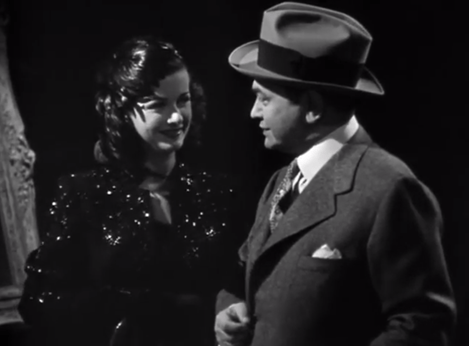
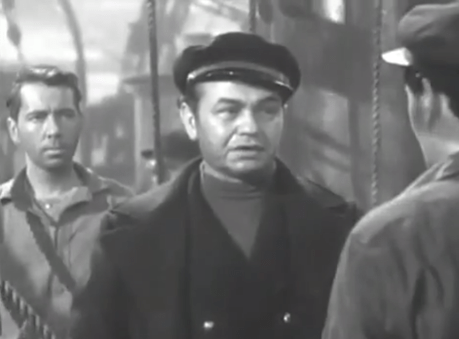
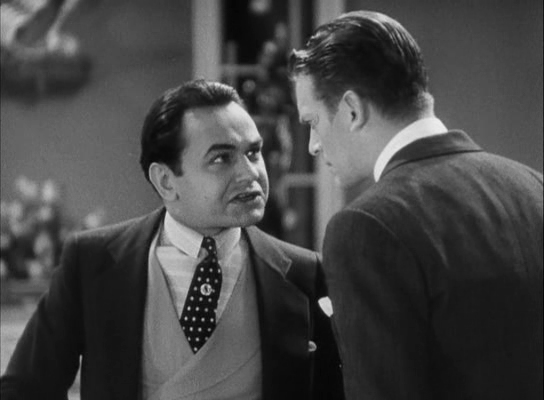
Thematically, it’s about a culture that is extremely family-oriented but also hierarchical. It’s right there in the title. With how he runs his household, Gino Manetti (Edward G. Robinson) has tended a “house of strangers” by picking favorites and alienating his other sons. They are tired of constantly being ridiculed and doing his bidding, while their ambitious brother Max (Richard Conte) gets their father’s full attention, going so far as to herald his upcoming marriage to his sweetheart (Debra Paget). The other Manettis never get such fanfare.

As might be expected within this context, the story relies on powerhouse performances and Robinson is astoundingly effectual as the patriarch. It never really feels as if he’s playing at something (the same cannot be said of Hope Emerson unfortunately) but he takes on the persona of someone who does only what they see fit to do. His mode of thinking and acting is very straightforward. There’s nothing diplomatic about his dealings and that garners him many friends but also plenty of ill feelings.

Joe (Luther Adler), the oldest Minneti brother, is discontent with the way his father takes him for granted, keeping him as a bank teller with little responsibility in the family business. He’s worried about his image with his wife and the neighborhood. Their father’s favoritism only makes it worse.

Then, there’s Pietro (George Valentine) the brawny brother who doesn’t have the greatest brains and so his father keeps him on as a security guard. The boy’s also been moonlighting in the boxing ring but he receives his father’s disdain for having a soft belly. So he’s got his own burning grudge, that and the fact Gino is always making him change the records at family dinners. Tony (Efrem Zimbalist, Jr.) is the pushover and it’s easy for dad to keep him in his place.

In a sequence that could almost be plucked out of It’s a Wonderful Life, the bank is closed down in the throes of The Depression and there are riots in the streets broken up by the police force. But in the aftermath, Gino is put on trial for his loose business practices that more than likely bent numerous federal regulations. He never did care much for them.

If his sons were behind him it would be easy enough to beat the rap but with only Max in his corner, it becomes an increasingly strenuous battle. In the end, the beloved son shields his father but ends up being disbarred and served a prison sentence for jury tampering.
house of strangers 2.png

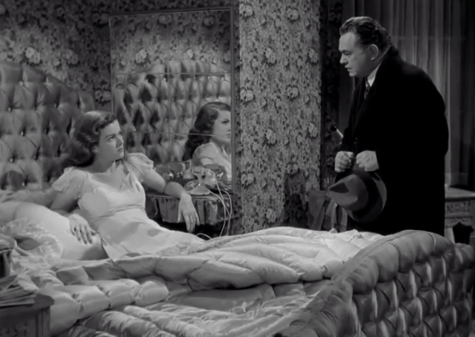
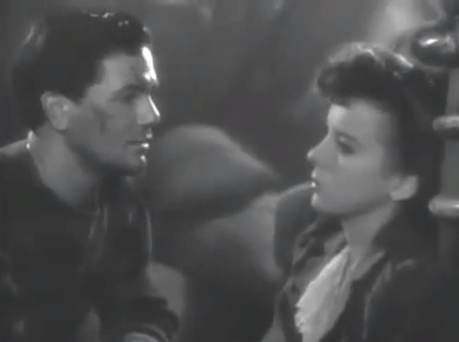
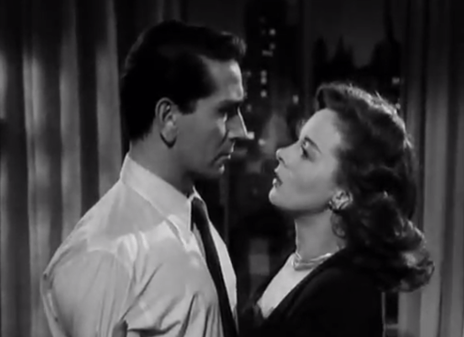
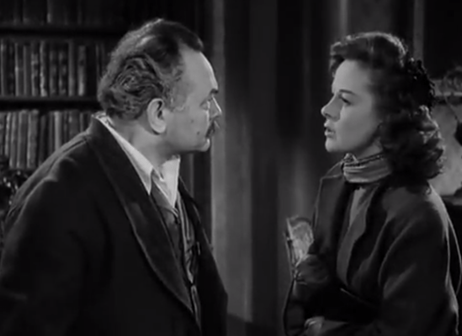
Waiting for him on the outside is the former client that he’s come to love, Irene Bennett (Susan Hayward), and out of love she confronts the old man and berates him for what he has unwittingly done to his sons, worst of all Max. Hayward’s performance is poised, at first sultry and then full of fight as she battles for what’s hers. She’s one strong woman in what seems a sea of benevolent ones.

The inevitable finally happens and Gino dies but he has left behind residual bitterness that still seethes between the siblings. The other three remain jealous of Max’s hallowed place at their father’s right hand and he sees their takeover of their father’s bank as seditious.

Conte seems often criminally underappreciated and best-remembered as a casualty of Michael Corleone. But do a survey of his career and you realize how crucial he was to the film noir movement serving up a versatility that found him in sympathetic roles as well as villainous turns running the gamut from Call Northside 777 (1947), Thieves Highway (1949), and Whirlpool (1949) to Cry of The City (1948) and The Big Combo (1955).

On a side note, this picture would once again briefly pair Conte with Debra Paget romantically though, oddly, she was only about 16 at the time. The studio’s executives must have seen something…

However, with House of Strangers Conte straddles the line between most of his other roles. Ruthless when he needs to be, capable of a grudge even, and still generally affectionate of the ones he loves. It’s arguably his most far-ranging and nuanced performance of the whole lot and he does a sterling job.

Because to drag The Godfather comparison out further, if Robinson is Vito, in some regards, the most prominent figure in the film, then Conte’s Max is Michael, the son who soon comes into his own and becomes the new center. He owns the picture just as Pacino ultimately became emblematic of The Godfather as a dynasty.

The repercussions of brother pitted against brother are evident. The forces of their father are still working on them almost unconsciously now. It’s been built into how they perceive family. But in a single shining moment, Max wrenches his clan out of this self-destructive horror that their dear old departed dad seemingly cultivated. Instead, he lays the foundation for something more substantive even if the healing comes in incremental baby steps.

Old habits die hard but that doesn’t mean they can’t be eradicated…Maybe. More importantly, he hears the impatient honk of that same horn out on the adjoining street. He’s still got his girl. The film’s happy ending deserves a noirish asterisk. Some amount of loss must come with any gain.

3.5/5 Stars
The Red House (1947)

the red house 6.png

What Delmer Daves has gathered together is an oddly compelling mix of rural drama with undertones of horror somehow merged into what we might be able to pass off as a strain of noir. What I find particularly intriguing is not so much the mysterious Red House at the core of the story, as the impending pandora’s box of doom and personal revelation, but it’s the curious character dynamics that stay with me.

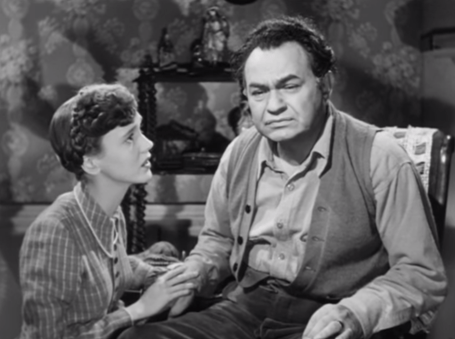
Edward G. Robinson stars as Pete, a man with a wooden leg who has long lived in seclusion with his sister and adopted daughter. He’s been content with this lifestyle remaining self-sufficient and living off the bounty of their farm. He hasn’t needed anyone else for a long time and he’d generally like to keep it that way.

Perhaps by this point, I simply take his skill for granted but it was the performances around Robinson that were the most engaging for me. Judith Anderson plays a surprisingly compassionate and maternal woman who has sacrificed a lot and is more sympathetic than most roles I can recall within her body of work.

But this is a young person’s story as much as it’s about the adults. That’s where much of the heart lies. The local high schoolers ride to and from school on the bus and in the back row is where the story’s main romantic relationship of interest is conceived in one of the most visually awkward setups imaginable. We meet a young man with his girlfriend with another girl sitting in the frame uncomfortably.

the red house 3.png

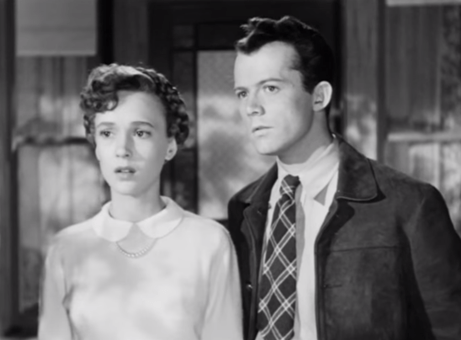
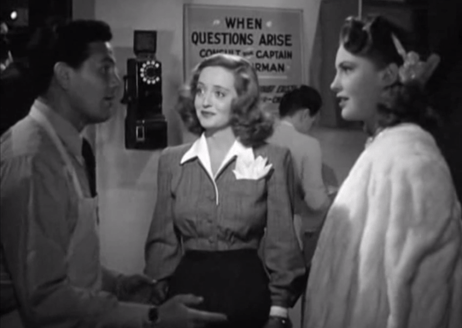
Lon Mcallister returns with the same bright and boyish countenance from Stage Door Canteen bringing a kindly spirit to the screen that’s wholly unassuming and morally upright. Likewise, Allene Roberts proves reminiscent of the demure Cathy O’Donnell while her eyes are imbued with a near doleful innocence. She is the girl who sits on the bus, the awkward third wheel. As Nath and Meg, they are two young folks exuding an utterly sincere candor.

Meg earnestly wants the young man to help her uncle out on his farm. She thinks he will be of great help and she excitedly goes to her aunt to share the good news that he’s accepted the offer. It’s even more curious that Nath so quickly accepts the job offer knowing it will mean long hours, a mile walk out of his way, and time spent in close proximity to this earnest young girl.

Because they aren’t a couple. This privilege goes to Julie London as his sultry and slightly entitled beau Tibby. Think about it too long and they don’t seem to fit each other but since it is already, we buy into it; she might just like a nice guy like him. Because in this slice of America, the boy-next-door speaks to something desirable still.

However, there’s also Rory Calhoun as Teller, the dark and imposing stud who Pete has made the keeper of the forests near his farmhouse for some undisclosed reason. That in itself is a strange setup but if anything it gives the dashing man free license to lord over the mysterious territory and keep others off the woodlands by any means possible. He’s been sanctioned by Pete to undertake any measures necessary and he does.

Just as we have two kind, innocent people to lend an underlying decency to our picture, we have their foils in two beautiful people who look to be out for themselves. Surely, they must get together and such a scene is instigated when the broodingly handsome fellow waits to intercept Tibby on her way home. He carries her across a stream and snatches a kiss from her as due payment. She doesn’t seem to mind too much.

the red house 2.png

But that is hardly the calamitous heart and soul of the picture, the dark underbelly of Middle America hidden away in isolation. For that, we must look to Robinson harboring a secret bubbling ominously beneath the surface. His niece is intent on finally visiting the house that he has continually forbidden her to see. She wants to know why. She has the right to know even if it hurts her.

But again, I never cared too much about the deep dark secret buried there because I think most of us have a general inclination of what it might be about. The anticipation comes in the created experience, not the forthcoming outcomes.

In some regards, The Red House shares some commonalities with the noirish western thriller Pursued, also released in 1947. Aside from featuring Judith Anderson, the other picture also concerned itself with psychological issues and a murky past laden with all sorts of trauma. But The Red House is more straightforward and clear-cut making the interpersonal relationships between characters paramount over any sequence of action.

The narrative is capped with a picturesque final shot worthy of such a peculiar movie. Framed with its idyllic beginnings and equally peaceful panoramic endings, it’s nearly possible to forget what we’ve just seen. All the rough edges have been smoothed out and the dark recesses of rancor replaced with young love.

It’s this startling dichotomy that gives the film’s its allure; that and the strength of its performances. Everyone plays their types exquisitely from the established stars like Robinson and Anderson to the winsome newcomers. Allene Roberts left a striking impression most of all. To read about her life story is to fall in love with her even more. She seems like a lovely person. God bless her.

3.5/5 Stars

Note: Since originally writing this review, Allene Roberts passed away on May 9th, 2019.

Review: Scarlet Street (1945)

scarlet street 2.png

Scarlet Street is an obvious reunion picture bringing together Fritz Lang, Edward G. Robinson, Joan Bennet and Dan Duryea among others from the prior year. Dudley Nichols’ story, while taking elements from La Chienne, which had already been made into a film by French master Jean Renoir in 1931, is elevated by its own unique elements.

A party is being held for one Christopher Cross (Robinson) in appreciation for his many years of faithful service at his company. As a gift, he is bequeathed a fine watch. That’s what he has to show for the last 25 years. However, he has two unfulfilled dreams from when he was young. The first was to be an artist and well, the second, was to have a beautiful woman look at him with love in her eyes. He’s never experienced that warm sensation before.

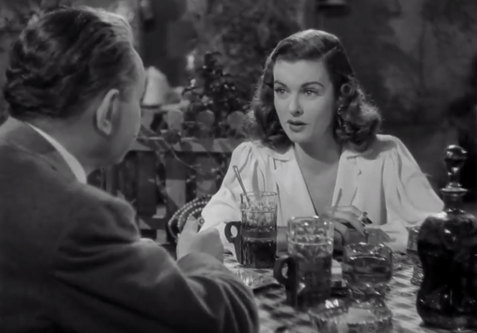
It happens the way it always does with a single moment of instantaneous decision. He intervenes when a thug is beating up a lady and he’s pleasantly surprised to find the lady to be quite ravishing. There sits Joan Bennett unlocking her jaw and surveying the damage to make sure she can flaunt her face another day, dolled up in her raincoat. In these initial interludes, she’s playfully provocative and endearingly colloquial (“Jeepers”). In fact, she’s utterly charming when you first get to know her. But that’s not to say she takes her latest conquest too seriously. She’s already got herself a man.

Oblivious and lonely, Chris begins to open up gushing about all the things about art and love that’s he’s always kept bottled up. But Kitty makes him feel like a happy schoolboy again because she seems to take a genuine interest in him as a human being. You see, Chris is a model of that inherently human desire. He is hardwired like all of us to crave some form of intimacy or better still to be fully known by someone else in a way that is complete and vulnerable

Little does he know that not everyone is so trusting and sincere as him. Sometimes people are only looking to get something out of you — to use you — and that’s much of what this story is about. That’s what makes it a noirish film at all. Certainly in the hands of Lang reteamed with cinematographer Norman Krasner they paint enough in darkness and billowing smoke. But anyone will tell you film noir is not just a look but a sensibility, a worldview, and an outlook.

Chris Cross begins so innocent and unperturbed by the world even as he feels something is missing in his life. But, when it’s all said and done, he gets absolutely decimated and crushed into the ground unmercifully.

scarlet street 4.png

She has another love; he’s abusive and knocks her around but she doesn’t seem to mind. He’s got something she likes that her roommate Millie (Margaret Lindsay) rolls her eyes at. They probably deserve each other. At any rate, in Kitty’s eyes, Johnny’s a real man whereas Chris is a piddling old fool, at first a plaything, then a cash cow, and finally a nuisance. Johnny coaxes his “lazy legs” to see how much she can weasel out of him. She’s oh so charming and he’s a light touch. Chris would literally go to the moon and back for her if possible.

His home life is continually suffocating him. Rosalind Ivan is tasked with the same nagging wife role from The Suspect (1944) this time torturing a meek Robinson instead of an angelic Charles Laughton. The results are very much the same. A man can only take so much flack

But the other angle has to do with Chris’s art. He’s maintained the hobby even as his wife considers it a waste of time and threatens to throw away all his work as it clutters up her house. However, Kitty gets ideas that Chris is some bigshot artist. Knowing nothing of painting, she tells Johnny about it and he convinces her to let him try to sell the pieces.

They wind up stumbling on something outstanding rather incredulously. John Decker’s idiosyncratic and still striking compositions fill in for the amateur painter’s style. Soon, Kitty’s fronting for Chris’s work without his knowledge to make a profit and suck him dry. By now she’s even got enough of a reservoir of his monologues to repurpose his sincere words for monetary gain. Soon she has a prestigious art collector interested and a local critic eating out of her hand. Meanwhile, Chris still has nothing simply a lingering devotion to Kitty that will only break his heart.

scarlet street 1.png

A galvanizing moment, where Chris’s delusion or his innocence comes to bear, occurs during a chance visit to Kitty’s apartment to announce his marriage is terminated and he’s a free man. She turns away from him and he tries to comfort her in her despair. Saying that they’ll go away together, make a new life, and start anew. But then she turns around and those tears instead turn out to be derisive laughter. The one person he thought he could trust betrays his emotions and wounds him to his core. Because this relationship too, proves to be an utter lie as she tears him down in the most humiliating fashion. It’s more than he can bear.

One can gather that everything else happening to Chris is all but a blur as the trajectory of his life soon finds him spiraling into the gutter. As one convenient commuter on the train puts it, “We each have a courtroom in our heart, judge, jury, and executioner.” It’s this sense of conscience that is shown to tear Chris apart in totality. He can never return to be his former self.

Here we see once more thematic elements common to Lang involving the complex and often flawed wheels of justice. But it’s only a mechanism for the most perplexing elements as Chris is haunted by the specters of his tormenters, trapped in his own private hell.

Robinson was probably just as aware as anyone the similarities between this and Woman in The Window (1944) and he was no doubt looking forward to moving on to something different. One could wager a bet that Bennett and Duryea are the real standouts because there sliminess is what makes the picture take.

They linger over its frames and they do so much to ruin Chris. In this day and age, I don’t know if we’re as appalled by their activities as in the 1940s where the picture was even banned locally. Now I think we see it and we’re overly conditioned to what seems mild fare or we’ve come to terms with the fact humanity has much evil within them. You cannot witness something like Scarlet Street, however ludicrous it might seem and think for one moment human beings are inherently good. It just doesn’t work.

What I appreciate about this picture more than anything is how it has the gumption to never pull a punch. Woman in the Window (1944) had a conceit and ending that worked given its psychological underpinnings. The way Scarlet Street resolves itself is no less fitting in choosing to be so very conflicted and ambiguous. If Chris was not a pitiful specimen before, he certainly is now.

4/5 Stars

Peggy Carter From Captain America: The First Avenger

peggy carter.jpg

This is my entry in the 2019 Reel Infatuation Blogathon hosted by Silver Screenings and Font and Frock. Minor spoilers for Captain America follow…

Let’s just get this out of the way. It’s the last thing I want to do to rehash The Avengers because my most appreciative remark about Endgame was the fact that it brought closure.

But this is an entirely different matter. I want to acknowledge my affections for Peggy Carter. While my interest in the series has admittedly waxed and waned over the course of almost a decade, my fondness for Peggy has never faltered.

It began with The First Avenger because that was her coming-out party — the first chance she was brought before a cinematic audience in a meaningful way — and Hayley Atwell killed the portrayal. By the end of it, I was sold on one of the central stories of Marvel because it rang with a real shard of truth: wartime lovers separated.

Yes, the extenuating circumstances were plucked out of a future-inspired sci-fi comic book but this was hardly material. The separation of Peggy and Cap was what mattered most.

As the years continued onward and the Marvel machine grew larger and more unwieldy, the one Marvel tie-in show I was actually excited about was Agent Carter. In fact, I followed its syndicated progress quite dutifully because I was devoted to learning more about Peggy. I was intrigued by her world and how she would play a part in it.

At the time, the only comfort I could think of was humming the consoling wartime refrains of Dame Vera Lynn’s “We’ll Meet Again.” Because even with the companionship of Jarvis, Howard Stark, and her fellow police officers, there was this ongoing sense that someone was missing in her life. Still, she pushes dutifully on with her work.

Later in The Winter Soldier when we saw Peggy Carter on her deathbed it took the wind out of my sails. This was not what I wanted. It felt unnatural and strange but the emotions were still there; they did not waver for an instant.

Thanks to time, I finally forgot about her funeral until word of Endgame circulated again and my unrealized romance still hung suspended in limbo. There was lingering hope of some form of supernatural closure outside of the confines of the story already told.

But none of this touches directly on why I was smitten with her character. For that, we must go back to Captain America The First Avenger in 2011. First, let’s consider the world…

Peggy Carter and Classic Hollywood

I’ve realized since having a bit of a classic movie renaissance in my own life over the last 6 years or so, it’s been the stars of the 1940s who became some of my personal favorites.

I’m talking about the likes of Teresa Wright, Ann Sheridan, Deanna Durbin, Eleanor Parker, Ella Raines, and even Rosalind Russell. They dressed up films of the 1940s with a certain girls-next-door-appeal, working girl pluckiness, and the traditional conventions of the so-called “Greatest Generation.”

In the case of Russell, especially in her iconic portrayal as a newswoman in His Girl Friday, she all but proved she could be one of the boys and beat them all to the scoop.

I know Hayley Atwell is a contemporary British-American actress but for me, she is closely tied to the nostalgia of the past decades in part to her lengthy characterization as Peggy.  Because Peggy feels like a product of the 1940s, of the mores driving people at that time, but she’s also quietly countercultural.

Did anyone else think of Heddy Lamar’s joint patent on frequency hopping during the height of World War II? Her work got all but dismissed but history has stood by her, proving how integral her work was for future technological advancement. For these types of reasons, Agent Carter has obvious shades of reality while quietly subverting the common narrative.

agent carter show

The Many Facets of Her Character

There is a certain amount of 1940s propriety about her. She has manners but she does not acquiesce when other’s try to discriminate against her. There’s nothing flashy about her yet she gets the job done with efficiency and grit when it’s called for. She’s not a squeamish individual.

Fittingly, I read in an interview that Hayley Atwell took Ginger Rogers’ words to heart, doing everything her colleagues do except in heels. One can even imagine — in spite of her obvious opulence onscreen — Peggy might have taken Ginger as a bit of a role model in real life. In a purportedly “man’s world” she was able to excel to the highest degree.

But she is resilient and grounded standing up for what is fundamentally right. This goes for her relationships outside of mere military protocol. Because while Steve Rogers, in his original form, is a bit of a pipsqueak by the world’s standards, again, she sees the inherent worth in him — the tenacity and heart, not unlike her own.

In fact, Peggy is anchored by a heart. There is hardly a superficial bone in her body and it makes her all the more appealing. She has the capacity to carry herself with class without ever truly feeling arrogant or dismissive — at least in the way the world might. She disregards the pickup lines and mere masculine shows of machismo for more subtle qualities.

When others bully Steve and knock him down, she’s there to encourage him to continue the fight with warmth and kindness. These were the seeds of affection for me. Someone who is capable to see the interior goodness in someone else going beyond physical appearance is worth having in your life.

She even has the gumption to call Steve out when he gets shallow or feels sorry for himself. It’s tough love but it’s love that nevertheless sticks by his side with a deep-seated loyalty. It goes beyond superficial attraction.

Certainly, there’s an underlining discreetness and reserve to her demeanor, which is one sense old-fashioned but in still another sense feels deeply appealing. Case and point is their final interaction while he is facing mortality and she has him on the radio (a la Stairway to Heaven).

first avenger

We know he’s hurtling toward his death. She knows it too but doesn’t want to admit it outright. They talk about a date to an upcoming dance they’ve been planning together. Obviously, it’s the subtext of a screenwriter writing a scene playing out but it also speaks to the culture of the characters. Keeping the stiff upper lip, keeping calm and carrying on, and all that. You more often than not keep your emotions in check to be strong for your significant other. 

It’s simultaneously one of the most heart-wrenching scenes precisely because of this understatement with the vulnerability still coming through. I wouldn’t always say it’s the best way in life to keep emotions couched in this manner but it certainly rings with core truth. Because this is what people did and what people still do now. The key is knowing their love speaks out in different ways.

It’s Been a Long Long Time

Putting the absurd plotline aside, the core romance and relationship of Captain America: The First Avenger sold me because it brought us back to a bygone time and place. Yes, I am a sucker for this kind of nostalgic setup but still, somehow it resonated with me on a deeper level than I can remember from similar period pieces. The chemistry was there.

Flashforward to the improbable reunion at the closing of Endgame and my heart was a flutter. Finally satisfied and satiated. All was right with the world. The sun was shining. The birds were singing. Kitty Kallen’s knowing “It’s Been A Long Long Time” was ringing out on the Victrola. Most important of all, Cap and dear Peggy were brought together again. If this wasn’t my highlight from the movie I’m not sure what was.

Absence makes the heart grow fonder and reunions have rarely felt so sweet. As we say in this generation: All the feels. In that generation, a record and an embrace were enough. It was a long time coming (over 70 years) but Peggy Carter got the happy resolution she deserved. I can finally say Peggy and Cap really did meet again one sunny day and it was good.

captainamericafirstavenger.jpg

4 WWII Home Front Movies

World War II gave rise to a whole cottage industry of war films during the conflict and for generations to come. There are, of course, so many facets of the war to explore whether it’s Europe, The Pacific, North Africa, and any number of elements.

However, something that always fascinated me was life on the Home Front. Now wars feel like proxies. They rarely affect us first-hand. During the 1940s the war was a concerted effort on all fronts. It affected not only soldiers but civilians living miles away.

Mrs. Miniver (1942) chronicles the exploits of a fearless mother who holds her family together during The Blitz and the threat of German invasion. More The Merrier (1943) takes a comical look at the housing crisis that plagued Washington D.C. and other metropolis areas. Even the likes of Stage Door Canteen (1943) and Thank Our Lucky Stars (1943) give a picture into the USO and entertainment efforts put on for soldiers.

Here is a list of four other films from the World War II years that function as time capsules giving us some element of what life was like during those impactful years in history.

hail the conquering hero 3.png

Hail The Conquering Hero (1944)

Certainly, The Miracle of Morgan’s Creek is another uproarious wartime comedy from Preston Sturges. But this other offering is equally memorable in how it takes on small-town jingoism and hero worship to outrageous proportions. Whereas most old war pictures look moth-bitten with age and overly saccharine, somehow this effort strikes a phenomenal balance between absurd satire and lucid sentimentality.

It’s not making fun of our war heroes as much as it lampoons how we try to exalt them in our own well-meaning blundering. There’s no doubt some of this was certainly acknowledged during the war although I’m not sure how the general public would have felt about the movie in that context. Now it looks prescient. Eddie Bracken, William Demarest, and company are absolutely hilarious

hollywood canteen 1.png

Hollywood Canteen (1944)

Actors Bette Davis and John Garfield of Warner Bros. famously set up the Hollywood Canteen as a haven for soldiers on leave. The perks were free and included dances with the most beautiful starlets and entertainment provided by the brightest comedic and musical personalities of the day. You could even win a raffle to kiss Hedy Lamarr.

Although the film is slight, sentimental propaganda, it does give at least a hint of what this group endeavor was all about. For old movie aficionados, it also provides a convenient opportunity to see just about every person Warner Bros. had on the lot in 1944. They all come out to the party to pitch in on the morale-boosting effort.

the clock 1.png

The Clock (1945)

Whirlwind romances feel almost commonplace in the war years. Imagine the scenario. You’re longtime beau or the eligible man or woman you just met is going off to war. Miles will separate you. All you have are letters. There’s an uncertainty of whether or not you will ever see them again. The only thing that does seem permanent (even if it’s not) is love.

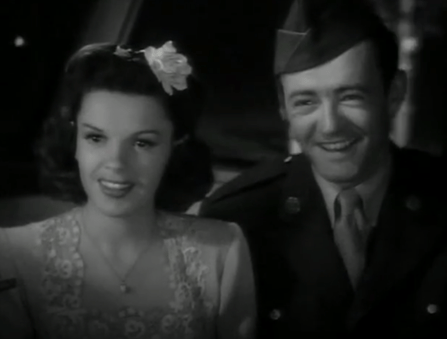
The theme would crop up in any number of pictures from The Very Thought of You to I’ll Be Seeing You as the situation undoubtedly resonated with a contemporary audience. However, another favorite is The Clock, starring Judy Garland and Robert Walker. It encapsulates the moment in time so well with heightened emotions, an unceremonious courthouse wedding, and the open ending. We don’t know what the future holds.

best_years_of_our_lives.jpg

The Best Years of Our Lives (1946)

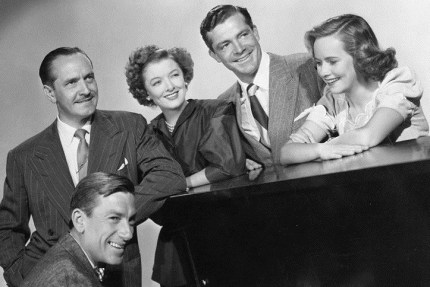
If Since You Went Away was David Selznick’s WWII epic, this was certainly Samuel Goldwyn’s entry. Its title plays with this ironic ambiguity. The best years of our lives would seem to be ahead of us. The war is over. The Allies have won. The soldiers return home victorious. And yet even in their victory, there is so much to navigate in the civilian world.

Wyler’s effort is such a perceptive picture in how it makes us feel the growing pains and relational tribulations of an entire community. It might be the fact you barely know your wife because you’ve been away for the majority of your marriage. Maybe your kids have grown up in a different world and there’s a corporate job waiting for you to reacclimate to. It might be PTSD or tangible physical injuries totally changing your day-to-day existence. As such the movie is indicative of a certain time and place and a tipping point in American society.

What is your favorite WWII film, whether it depicts the war or some aspect of the home front?

Review: The Woman in The Window (1944)

woman in the window 1.png

The first time I ever saw The Woman in The Window it always struck me as odd. Here was the fellow who was known as a gangster through and through and yet he was playing a bookish professor buried in his work and obsessed about psychoanalytic theory. His idea for a fine time is conversing with his intellectual friends (Raymond Massey and Edmund Breon) at the Stork Club. He’s the epitome of middle-aged solidity and stodginess as he so aptly puts it.

But in confronting these very things, you realize Robinson might have enjoyed any opportunity to get away from what everybody seemed to peg him as — to exercise a certain amount of elasticity as an actor — to be the antithesis of his image. This is all mere conjecture, mind you, because as the story progresses, you realize the character is a bit mundane.

Regardless, veteran Hollywood screenwriter Nunnally Johnson spins a story of psychological intrigue as his first showcase for his newly founded production firm International Pictures. This Fritz Lang effort along with a handful of others would instigate the stylistic categorization of “film noir” by French critics in the post-war years. There’s little doubt it fits many of the fluid conventions of noir. Though overshadowed by the even more sinister Scarlet Street from the following year, it is a genre classic in its own right.

As alluded to already, it’s also steeped in psychology. In fact, it gets knee deep in it from the opening moments in such a fashion that we know it will remain all but integral for the entire run of the narrative. Professor Wanley is enraptured by an image, a portrait of a woman to be exact, and it elicits the same spell Gene Tierney would have in Preminger’s Laura (1944). But of course, it is the woman being animated for real that brings true life to the movie and it’s no different here.

This brings us to the part that’s actually the most gratifying and probably would have been the most enjoyable to play. That of the eponymous woman staring back through the window. Joan Bennet is positively bewitching and grouped with Scarlet Street (1945), it remains some of the defining work of her career, which is hardly something to be dismissive of.

As best as it can be described, she has a pair of those coaxing, inviting eyes. Bennett, to a degree, seems to play up her Hedy Lamarr appeal with jet black hair but her looks are her own as is the spellbinding performance and it works wonders starting with the man on the screen opposite her.

He foregoes a burlesque show to engage in some “light” after dinner reading of Song of Songs. Though he’s probably looking at it from a purely academic perspective, one can gather that between his psychological theories and the fairly explicit poeticism of his reading, he’s got quite the cocktail brewing in his mind.

He gives the portrait another look as he’s about to head home, as is his normal tendency. In this particular instance, the woman is present in the flesh and they share some complimentary words. That leads to drinks and then a venture to her apartment to wind down the evening perfectly innocently.

However, instantly his life is transformed into a living nightmare as they are interrupted by a scorned boyfriend with a horrid temper going at Richard who has no recourse but to strike his adversary down in a frantic attempt at preserving his own life. It was self-defense but the damage has been done and the results are not-so-conveniently lying on Ms. Reed’s carpet.

Even with these turn of events, the professor takes them in stride, systematically and semi-rationally coming to a decision that while risky just might be the most beneficial plan of action, at least in theory. There is much that needs to be done. He enlists Alice to clean up the crime scene by both getting rid of blood and incriminating fingerprints. Any evidence that would implicate either of them must be done away with methodically.

He puts it upon himself to dispose of the body, which is no small task as the dead man has a massive frame. It takes up a lot of space and causes him some grief. He gets rid of it but not without incurring a cut and a rash of poison ivy while also leaving behind some clues that indubitably will have a bearing on the case.

However, he also has the rare privilege of being so close to the district attorney and the head of the homicide department to see first hand how they’re getting on with the case. If anything it unnerves him more assuming he will soon incriminate himself with a minor slip of the tongue or worse yet be found out in his clandestine activities due to the thorough investigation underway.

Dan Duryea has a small-time role playing what he was best at, a sleazy enforcer looking for blackmail or any other dishonest way to make a buck. Thankfully his part would be expanded upon in Scarlet Street as he came back for a second helping. His career is composed of an interesting trajectory even earning him a few starring spots in his later efforts like Black Angel. He’s an underrated talent who made classic Hollywood and noir in particular that much more engaging. One could wager it’s Bennett and Duryea who really clean up shop as they would do again the following year.

To mollify the production codes, Fritz Lang settled with the ultimate cop-out ending. While it would normally disgruntle me, the sheer lunacy of it all and the fact the picture is so embroiled with themes of the human psyche makes it marginally okay. If anything, the fact there was a superior followup the next year takes the sting out of it. Still, there’s no downplaying that Woman in The Window was crucial in laying the groundwork of what we now consider film noir, complete with murder, femme fatales, fatalistic heroes, and shadowy extremes courtesy of cinematographer Milton Krasner. What’s not to love? It’s certainly worthy of a second dose.

4/5 Stars

The Sea Wolf (1941)

sea wolf 1.png

“Better to reign in hell than serve in heaven” – John Milton in Paradise Lost

Though some noir film layered in London fog is probably up for contention, otherwise, there’s arguably no movie murkier than this atmospheric sea-faring delight from Michael Curtiz. But what puts it above and beyond some of its contemporaries, especially swashbucklers like a Black Swan, has to do with a variability and surprising depth of characterization for what feels like such a minor vehicle.

From the framework of Jack London’s novel, screenwriter Robert Rossen has cleverly repurposed the material and made it thoroughly well-suited for the cast at hand, expanding the roles for his stars. For most of its running time, in fact, the story is aboard the ominously named vessel, “The Ghost,” while maintaining an unwavering level of intensity.

Certainly the aforementioned climate plays into it because it can exude a level of impending menace. Still, you can only get so far on that. There needs to be legitimate emotional resonance and some amount of real even complex conflict at the core if a glorified chamber piece like this is to stay afloat. Thankfully, due to its characters, it does. At any rate, we are provided several fascinating figures to try and comprehend.

John Garfield is one of them, a fiery sailor named George Leach who is on the run and he doesn’t care where he ends up. In his case, he winds up a lowly cabin boy. Again, he doesn’t care.  Meanwhile, Ida Lupino is escaped from a woman’s reformatory and seeks the corroboration of a fiction writer named (van Weyden) as it ends up, their voyage is ill-fated following a collision that sets off a deluge of water leaving them hopelessly shipwrecked.

In the aftermath, they are picked up by the schooner “The Ghost,”  its tyrannical captain Wolf Larsen (Edward G. Robinson) leading a crew of no-good and hard-bitten seamen. Barry Fitzgerald excites as the knife-toting cook who’s as ornery as you’ve ever seen the plucky Irishman. The writer is brought on as cabin boy given the rude awakening that the captain has no designs to drop him off onshore. His vocation and unwavering monotone are perfect for conveying this impartial point of view for the benefit of the audience. Meanwhile, John Garfield embittered with a chip on his shoulder is forced to take on harder labor and his anger smolders against everyone.

sea wolf 2.png

The girl, Ms. Webster (Lupino) is deathly sick and the swacked and constantly unstable doctor (Gene Lockhart) seems to be of little help. His nerves as a physician look completely shot. By some miracle, he’s able to get sober enough to nurse the lady back to health, of course, when she makes her first public appearance looking to be the picture of propriety, the seafaring men are quick to see through her. She’s another unwanted sea rat just like all of them.

It’s plain to see she’s not about to earn any favors and the same goes for the other newly acquired deckhands. They have few rights as the sea captain runs the ship with a dictatorial hand. In all affairs he controls everything and he can be a ruthless taskmaster with his boys carrying out his every order with a rowdy mania, even turning against their own when given a chance.

However, although Wolf is a tough man, he nevertheless has an inscrutable side well-read in Milton and knowing a past of innumerable hardship. It’s these very traits that make van Weyden crucial as someone who is able to get closer than the others in order to try and tease out who Larsen really is.

A mass of contradictions, with a brain and a need for dignity in a harsh world but he also has a vengeful brother hanging over him, avowing to blow him to smithereens. If there is any regret in Larsen, he’s resolutely set his course and rarely looks back, making sure to maintain his supremacy over his men in all circumstances. His philosophy is purely self-serving.

But even he begins to crack. The film is laden with claustrophobic and seasick-inducing interiors depicting living hell on the waves with Larsen lording over it with an iron fist. Of course, with mutiny afoot instigated by Leach, finally able to exercise his lust for authority, there’s bound to be drama, even as he begins to carry a torch for Ruth.

Because later he, Ms. Webster, and van Weyden look to escape only to have their provisions sabotaged by Larsen, and “The Ghost” is ultimately ambushed by its mortal enemy. The hourglass is running out. But even as the captain goes down with his ship, a near pitiful figure now, he looks to take as many others down with him as he can. In opposition to such selfishness, a contrasting force of sacrifice is called for.

4/5 Stars

Note: The cut I watched was the shortened 1947 cut. The restored cut was reissued in 2017 at its full length of 1 hour and 40 minutes. This was the theatrical cut before it was edited to fit on a double bill with another Curtiz picture The Sea Hawk (1941).


Barbary Coast (1936)

barbary coast 1.png

The production itself was fraught with some turbulence thanks to the contentious relationship between Miriam Hopkins and Edward G. Robinson. The latter actor was irritated how his costar was constantly trying to increase her part and keep him off balance with frequent dialogue changes. Regardless, the talent is too wonderful to resist outright.

How Howard Hawks ended up directing Barbary Coast is anyone’s guess, somehow getting involved as a favor to his screenwriting buddies Ben Hecht and Charles MacArthur who spent numerous rewrites crafting something that the production codes might actually condone, overhauling the original novel’s plot points immensely.

Hawks has no major stake in the production and as such it hardly stands up with his most engaging works. Still, it does hold some merit demonstrating from the outset it’s a fast-moving, thick-on-atmosphere, period adventure set out in 49ers era California. That environment is enough to make a generally engaging yarn even if the narrative threads run fairly thin.

But the world is fully animated. Alive with honky-tonk pianos, crooked roulette wheels, and hazy city streets paved in mud. Just about what you envision gold country to be like, at least viewed through the inspired dream factory of old Hollywood. The blending of genre is a fine attribute as the picture is a mixture of historical drama, romance, comedy, adventure, and western themes sharing some relation to San Francisco (1936) and The Sea Wolf (1940), along with the lawless towns in Destry Rides Again (1939) or even The Far Country (1954).

A ship lands in the notorious San Francisco Bay, among its passengers a strangely out of place lady (Miriam Hopkins) and a gentlemanly journalist, Marcus Aurelius Cobb (Frank Craven). They are met with quite the reception committee of local undesirables.

Walter Brennan is a standout as the scrounging, toothless, eyepatch-wearing Old Atrocity preying on unsuspecting outsiders who happen to make their way to the streets of San Fransisco. Mary Rutledge is in town to join her fiancee who messaged her to come out and meet him as he’s struck it rich. She promptly finds out her man is dead, no doubt knocked off by the crooked Louis Chamalis (Edward G. Robinson).

With his restaurant the Bella Donna and adjoining gambling house, the ruthless businessman rakes in the profits by robbing prospectors of their hard-earned caches and getting tough when they object to his dirty practices.

Miriam Hopkins, both radiant and sharp, isn’t about to snivel about her lost prospects and heads straight away to the Bella Donna to see what business she can dig up for herself. There’s little question she causes quite the stir because everyone is taken with this newly arrived white woman — including Louis. As Robinson’s character puts it, she has a pretty way of holding her head, high falutin but smart. That’s her in a nutshell as she earns the moniker “Swan” and becomes the queenly attraction of the roulette wheels.

It’s there, an ornery and sloshed Irishman (Donald Meek in an uncharacteristic blustering role) gets robbed blind and causes a big stink. Louis snaps his figures and his ever-present saloon heavy Knuckles (Brian Donlevy) makes sure things settle down.

He’s sent off to do other jobs as well. In one such case, he shoots someone in the back but with a mere Chinaman as an eyewitness in a kangaroo court presided over by a drunk judge, there is little to no chance for legitimate justice. Then there’s the manhandling of free speech by forcibly intimating Mr. Cobb in his journalistic endeavors and nearly demolishing his printing press for publishing defamatory remarks about the local despot. Swan is able to intercede on his behalf as Cobb resigns himself to print droll rubbish and it seems Louis has won out yet again.

barbary coast 2.png

Joel McCrea has what feels like minuscule screentime and achieves third billing with a role casting him as the romantic alternative, a good guy and yakety prospector from back east who is as much of an outsider as Ms. Rutledge. He’s eloquent and strangely philosophical for such a grungy place. He’s also surprisingly congenial. It catches just about everyone off guard. First, striking up a serendipitous friendship with the woman and gaining some amount of rapport with Chamalis for his way of conversing.

Though the picture stalls in the latter half and loses a clear focus, the performances are nonetheless gratifying as Robinson begins to get undermined. Vigilantes finally get organized using the press to disseminate the word about Louis and simultaneously battle his own monopoly with an assault of their own.

One man must die for the right of freedom of speech to be exercised while another man is strung up like an animal. Our two lovebirds get over the lies they told each other looking to flee the ever-extending reach of a jealous lover. Chamalis is not about to let them see happiness together. The question remains if they can be rescued in time from his tyrannical clutches. The dramatic beats may well be familiar but Barbara Coast still manages to be diverting entertainment for the accommodating viewer.

3.5/5 Stars

Little Caesar (1931)

Little_Caesar.JPG

When I was a kid we had an old VHS of Bugs Bunny shorts and one of the caricatures in a gangster-themed storyline — although I didn’t know it at the time — was undoubtedly Edward G. Robinson. That voice. That mug. That smug self-assuredness. They’re inimitable. Even then I knew the image without knowing who this garbled-mouthed gangster actually was. Watch Little Caesar and it’s all right there. In fact, without Little Caesar, one could step out on a limb and say that Bugs Bunny cartoon would never have been made. Though, Robinson was an indomitable personality. One way or another he would have broken through.

As it was, Robinson made a lasting impression in his big break, the picture that would make him a star just as its contemporary The Public Enemy (1931) did the same for James Cagney also at Warner Bros. True, it served as both a blessing and a curse typecasting the stars with their audiences. Still, both men led impressive careers which, at least on occasion, allowed them to break out of the mold and really show who they were as actors. And the beauty of their successes had nothing to do with an imposing physical frame but rather a sturdiness and commanding tenacity that made them into electric performers full of captivating stage presence.

With an opening quotation from Matthew, “All who take the sword will perish by the sword,” we are immediately tipped off this will be a moral tale right from the outset, an act of condemnation not glorification. However, that cannot completely neutralize the unadulterated gangsterism of Litte Caesar. Far from it.

With all these early Warner Bros. crime films we can define the arc of the story by an ambitious lug who’s willing to do whatever it takes to rise to the top, showcasing both guts and gats when necessary. It takes both to get ahead. Rico (Robinson) is a little guy who’s not content with his lot in life so he resolves to change things. He heads to Chicago with his buddy Joe (Douglas Fairbanks Jr.) to see what they can make of themselves.

Already they are on diverging paths as Joe looks to return to his first love of dancing, even finding a capable ally and love interest at a local club. Olga (Glenda Farrel) makes a new lease on life possible for him. But such a life would never do for Rico. He’s already set his sights on big-time crime, moving up the ranks with local mobster Sam Vettori.

Joe is roped in for a job as the inside man and reluctantly he goes along with it. But on the same night, New Year’s Eve, Rico guns down the crime commissioner during an otherwise straightforward hold up of the Bronze Peacock. It has heady implications as the local authorities look to clamp down.

As best as I can describe it, there is a stripped-down unsentimental bent to the action line going through the movie. The talking pictures still feel like a new phenomenon recorded on Vitaphone — a bit rigid and visually unimaginative — but in some respects, it aids in the characterization of the gangster underworld. It’s hard-edged, lacking any sense of freedom of movement or ideals. They play by a “you’re either with us or against us” mentality and they are not about to let you forget who your friends are. Rico and Joe provide the diverging alternative lifestyles available as one tries to go straight and the other becomes more crooked by the hour.

The character of Tony is another convenient case study for the movie as the local mob’s getaway driver who begins to lose his nerve and have remorse for his part in it all. It is his saintly mother who not offers him spaghetti but tries to remind him of his former life when he was a good boy. Convicted to the very core of his being, he goes to the priest for confession. But Rico will have none of this blubbering. His retribution is sure and swift as it’s always been, culminating in an OG drive-by shooting.

A gang war erupts when a failed hit is instigated on Rico. Instead, he and The Big Boy are able to consolidate power and he continues to rise up the ranks. All throughout his ascension, Rico lives by streetwise slogans like, “I ain’t afraid of nobody.” “The resident bosses are getting so they can dish it out but can’t take it anymore.” And of course, “the bigger a man becomes, the harder he falls.” It’s all but inevitable.

His words are prophetic because at some time Rico’s got to face the music and he does. Like The Public Enemy and Scarface, what sets these pictures apart is not necessarily that they glorified crime because you can make the case each tries to hammer home the moral crime doesn’t pay. And yet with the exhibitions in violence and the uninhibited pursuit of power by antiheroes like Cagney, Muni, and Robinson, the public latched onto them and propelled them into being big stars. Without the pre-code era, we would lack some of the legendary mystique of Rico.

In the end, riddled with Tommy gun fire, he looks up into the heavens, exclaiming those now immortal lines, “Mother of Mercy, is this the end of Rico?” With that, he breathes his last. But the miracle of celluloid means that now 85 years onward Edward G. Robinson’s performance lives on.

3.5/5 Stars

Eighth Grade (2018)

Eighth_Grade.pngIt’s not exactly The Godfather but in its opening monologue, using the awkward tween, like-laden mouthpiece of Kayla, Bo Burnham re-exerts his creative voice on the media landscape. What is more, in a world becoming continually more obsessed with relevance, shareability, and trends, Eighth Grade promises something of actual substance.

Because it dares to do what few films have done (or done well), which is enter the perilous trenches of middle school plagued by all the anxiety, bodily changes, and nervous stuttering that goes with such turbulent territory.

Looking into Kayla’s face for as long as we do — every painful tick and averted gaze — we realize this message to “Be Yourself” on her channel is as much of a rallying cry for her than for anyone else. But that’s precisely the point, isn’t it? We live life for affirmation and to know we are not alone.

I can still recall when I was in middle school (10 years ago now), which must feel like eons for middle schoolers right now. But the big new gizmo was the iPhone. MySpace was just becoming a thing of the past as the Facebook storm began to creep in. By the time of my final year in high school, Instagram was on the scene.

Now people (even me) don’t really use Facebook. We’ve moved onto Instagram, Snap Chat, and new uncharted frontiers. In the social media age proliferating with Instagram stories, Youtube vlogs, podcasts, snap stories and whatever else that is new and novel, there is a hyper-awareness of technology, surpassing anything we have yet to see.

Our daily brand — how we showcase ourselves to the public — is so important as is second-guessing every text and emoji to make sure they make us come off in the right light. In fact, even by the movie’s conclusion, we feel saturated. But the truly sobering aspect is seeing how it so directly overlaps with my own life and the lives of friends as we navigate this age. It’s not too far removed from us.

Eighth Grade is also a film that greatens my resolve to go on a technology detox in some shape or form. Kayla, constantly scrolling, plugged in with earbuds, is not so much a bygone figure but a mild reflection of many of us — even those of us who are older.

But on the Middle School front, there are also instantly recognizable vignettes from rubber bands on braces to health class and superlatives within the student body. It is these relatable elements causing Eighth Grade to mirror Boyhood in how it capably recalls a certain time and place.

And like Edge of Seventeen, there’s a fascination in the bad boy who by any subjective standard is arguably the most uninteresting specimen of the opposite gender in the entire pack. It’s the way our adolescent brains function causing us to channel people through a very specific filter.

Initially, the movie feels more low key and less edgy than aspects of middle school I remember around the fringes. However, there also manages to be ample truth. Though everyone has diverse experiences, there are other elements proving themselves universal.

There’s the invitation to the pool party which is in itself ripe with so many potential humiliations. The over the shoulder slow track as Kayla plods along tentatively is one of Burnham’s favorite tricks to get inside her character — epitomizing just how much of an unconfident, introvert she is among her peers.

It turns out to be a bit like a three-ringed circus but not in some outrageous way — in the everyday idiosyncratic, cringe-worthy way we no doubt experienced in our own lives. We are allowed to observe the silly flirting rituals of the genders. How a girl’s mother invites her 50 “best friends” to the party thereby netting a veritable lode of presents.

Then we are reminded of how fledgling teenagers coexist (or don’t) with their parents. What follow are the well-established angsty, taciturn evasion tactics. It’s one of the strange mysteries of the universe. Everyone else’s parents are fine but the moment we hit a certain age our own parents find a way of wheedling under our skins and our own issues and insecurities meets head-on with these people who love us and often try our patience.

In the darkness, in front of a glowing screen — not only the circadian rhythms are thrown out of whack — but with technology literally when we wake up (phones as alarm clocks) and web surfing before bed, there’s room for concern. There is little space left over for quiet. We are never alone. Never allotted time to simply exist, undistracted.

In one moment Kayla utters the cutest prayer about the first day of her high school “audition.” If we were to take it seriously, her prayer is answered in the form of Olivia, a bubbly high schooler, who instantly puts her shadow at ease. But while Olivia is easy and kind and inclusive, her friends are a shoddy bunch.

Between them, we have the confrontation of this idea of micro generations — how quickly things change now — and how we are “wired differently” based on when we grew up. Middle schoolers versus high schoolers, then college students, and now an old fogey like me out of college.

An awkward interaction becomes progressively creepier in the darkened back seat of a car when she is getting driven home by a boy. In fact, it turns into a traumatic experience. No young woman should have to deal with something like that in an already harrowing world. It breaks the heart because we know there is a truth to it.

Kayla gratefully finds another worthy friend in Gabe — who is the dork to trump all dorks — but he’s also a person of quality because he’s never destructive or narcissistic. There is an authentic warmth to him which makes him worth having in your corner. When he asks Kayla if she believes in God, munching on fries and chicken nuggets it’s matter-of-fact, if not candid.

The conversation feels so forced and awkward but they are both on equal footing, worrying and concerned and so it makes every weird observation or odd behavior part of the new, accepted status quo. None of it matters. They are friends.

These moments trigger brief wisps of memories where I wish I could go back to those days armed with a few of the things I learned now. Being content in my own skin enough to take leaps of faith, being bold, and making an idiot of myself more often. It works when you have people in your circle who aren’t trying to play a superficial popularity contest with you. They’re the definition of what a friend actually is if you look it up in the dictionary, instead of a convenient social conception.

In the end, I couldn’t help wishing Eighth Grade was a television program instead of a film. I’m not sure if this is a negative conclusion to come to. All I can consider are my warm memories for The Wonder Years and then Freaks and Geeks, which both gave us such meaningful articulations of a certain time in life. Kevin Arnold’s voiceovers as his adult self are a thing of legend. And Kayla gives us a similar entry point through her vlog. But it doesn’t feel as visually cinematic as it does episodic.

Burnham’s finest scene is probably the pool party because like other films before it, he’s able to use that arena to give us something about our main character. To some degree though, the film is full of astute and highly personal insights, there is something tiring about montage, vacuous pop music paired with voiceover.

Then again, if there was anyone qualified to look at this material in this manner, it probably is Burnham who himself began as a YouTube personality. There is an instantaneous bit of truth he can inject into the movie and even if this was all it was, there is something to it. If it connects with some kid on a meaningful level, I would consider it to be an unequivocal success.

Elsie Fisher is a name I recall from Despicable Me but in this live-action performance, she brings the crucial unassuming charm to push the role into a believable world. A connection is made thanks to her and when the credits roll we want Kayla to be herself knowing full well how special she is. Mr. Rogers isn’t in vogue with middle schoolers or high schoolers and yet there is such lasting veracity in one of his most famous affirmations.

“You make each day a special day. You know how? By just your being you. There’s only one person in this whole world like you. And that’s you. And people can like you exactly as you are.”

I think we could all use more words like these in our lives. Replacing Twitter feuds with uplifting words of praise seems like a worthwhile tradeoff. It only takes one voice to start a movement.

4/5 Stars