The Return of the Jedi (1983)

ReturnOfTheJediPoster1983If you’ve read any of my reviews on the original trilogy, you undoubtedly know that Star Wars had a tremendous impact on my childhood. That’s true for many young boys. It was the film franchise of choice, and it wasn’t just a series of movies. The beauty of Star Wars is that it encompasses an entire galaxy of dreams beyond our own. It’s a world that reflects ours in many ways — the difference is that they have lightsabers. But not just lightsabers. Aliens. Spaceships. Planets. The Force. Characters who for all intent and purposes live like us. Good, that is in constant conflict with the evil in the world. It’s a struggle that is constantly evolving.

As a boy, Return of the Jedi always appealed to me the most, and I can still understand that even to this day. This film is the conclusion to the story. It enacts the happy ending that all of us desire as human beings who have an inherent love for storytelling. This film continues the saga of these characters that most everyone has grown to love.

The set pieces are a great deal of fun from Jabba’s Palace to the sail barge where Luke shows off his newfound skills and Boba Fett earns a trip to the Sarlacc Pitt. Then the forest moon of Endor where the cute little Ewoks dwell in full force ready to combat the Empire. In fact, there are numerous heart-wrenching cinematic experiences, but few things are worse than the moment when that Ewok shakes his friend only to find him dead — never to move again. Is there no justice in the galaxy?

There’s the assault of the ragtag rebel fleet against the overwhelming firepower of the Imperials and their newly constructed Death Star where Lando Calrissian, Wedge Antilles, and Admiral Ackbar become standouts in their own right.  Finally, there’s the showdown between Luke and Vader, father and son, as the Emperor looks on in wrathful glee. On multiple fronts the action takes place and each one is a thoroughly engaging piece of this fuller, grander narrative.

There’s something so satisfying about seeing all the many planets in the galaxy celebrating simultaneously when evil has been quelled and peace is fully restored. Because, again, there is something inside of each of us that seems to desire that type of fellowship and joy. You might say that this is only a Star Wars movie, but then again the reason so many people followed this story was not so much for the action, but for the characters because we cannot help but love them.

The dynamic between Han, Luke, and Leia is wrought with conflict but also great love and affection. C3P0 and R2 beep and bicker like an old married couple, and yet there’s so much concern there. Even as Han is freed from his carbonite prison, a helpless corpse, Chewie is always by his side to watch out for his buddy. Ultimately, most importantly of all is the central narrative of Luke and his father. Return of the Jedi is coming full circle as Luke returns to face his father. But he finally understands that this is not about vanquishing this villain or even confronting his fear. It’s more than that. It’s about teasing out the good that still dwells inside of this shell of a man formerly known as Anakin Skywalker. And when that relationship is renewed all the other relationships are made better.

Thus, Return of the Jedi will forever be spellbinding, because I feel like a young boy once more watching this sci-fi mythology unfolding in front of me in glorious majesty. There is a suspension of disbelief that envelops this story for all the aforementioned reasons. There is no question in my mind about the logic or the way things tick or so on. I accept them for what they are and truly and fully allow myself to be immersed in a world, “A Long Time Ago in a Galaxy Far Far Away.” There certainly are better films, but few films have gripped me time and time again like Return of the Jedi. I will hold onto it proudly for as long as I watch movies.

4.5/5 Stars

Review: The Awful Truth (1937)

theawfultruth2The Awful Truth came out of a trend that was in vogue during the 1930s. It’s called a comedy of “remarriage.” During the Hays Code era, it allowed films to nimbly skirt the whole issue of divorce and extramarital romance. We would see it again in the more remembered screwball His Girl Friday and various other forms as My Favorite Wife and The Lady Eve.

However, when I first saw this film I was floored by its pure comic fun that pushed Cary Grant’s persona into the public eye for the first time and made me consider Irene Dunne one of the most underrated actresses that I can possibly conjure up. I try not to use the Oscars to define the greatness of a film or star, but for her, I’ll break the rule. She got nominated for Best Actress 5 times and never won.  To call her a Jean Arthur-type is rather condescending given both stars’ magnitude, and I will say she easily gives Katharine Hepburn at least a run for Cary Grant’s best romantic partner. She was an unexpected joy of beauty perfectly wed with comedic wit.

I was afraid that with that element of surprise gone the film would lose some of its mystique. True, perhaps it was not as magical this time around, but I will still acknowledge the merit of The Awful Truth as an often under-appreciated gem of a comedy. Director Leo McCarey came into his element in 1937 with this film and Make Way for Tomorrow. They are starkly different pictures, but here he embraces the tension, the awkwardness, and everything else that makes comedy transcendent. And there is hardly anyone more transcendent than Cary Grant.

His smirks, which would be recycled for His Girl Friday and numerous other films, are universal. His adeptness with pratfalls and physical comedy are fully on display, and he simply had smashingly good chemistry with Dunne. Every time they throw a jab and the sparks begin to fly you know how much they care for each other, just like two of Ralph Bellamy’s chickens madly in love. A great deal of their success could undoubtedly be attributed to McCarey who gave them very little actual script to work with and forced them into ad-libbing scenes. The results speak for themselves.

In truth, the film begins quite innocently enough before evolving into an utterly acrimonious divorce proceeding, ending with a bitter fight for their prized pooch Mr. Smith (Asta of Thin Man fame). The second round goes to Grant as he plays third wheel with Lucy’s new air-headed, Texas beau Dan (Ralph Bellamy). He makes a new acquaintance of a southern belle who just happens to be a nightclub singer. Her performance is an awkward affair crossing Gone with the Wind with Marilyn Monroe‘s antics in The Seven Year Itch. We could take or leave her little ditty, but the reactions from our stars are priceless. On top of that, Grant shows his tumbling prowess a couple times, while also having a lark with Mr. Smith in the home of his old love and hiding behind doors at all the inopportune times. Lucy can’t seem to get rid of him and by the end of it all, she doesn’t quite want to.

Round three goes to Dunne as she tries to find a way to weasel her way back into Jerry’s life. He’s about to be wed to a high-brow socialite, but Lucy gets into the mix by masquerading as Jerry’s screwy sister. It’s an inspired bit of ditziness that Dunne plays to a tee, being the remarkable comedienne that she is. Meanwhile, the whole well-to-do family looks on rather stink-eyed, as Grant and Dunne spar back and forth. She’s trying to mess things up, he’s trying to keep all the plates from toppling as he attempts to maintain all his covers stories. It’s fit to be a disaster.

The final act is the most wistful because time is winding down and we know what that means. Jerry and Lucy won’t be married anymore. But they both still love each other, they just won’t say anything for fear that this is a one-way street. Happy endings abound in an old cabin in the woods. There, creaky doors, kitty cats, and cuckoo clocks spell wedding bells. And they go out on top, together again, in one bed. Grant and Dunne remained a phenomenal screen couple for a couple more films, but this original offering from McCarey was undoubtedly their best.

4.5/5 Stars

Brooklyn (2015)

Brooklyn_FilmPosterWe are definitely in the age of the well-wrought period piece and Brooklyn has all the trappings you could want. Adapted from Colm Toibin’s novel the film showcases a pure, noble heroine in Eillis Lacy who like many others makes the journey from her homeland of Ireland to the golden-paved streets of New York.
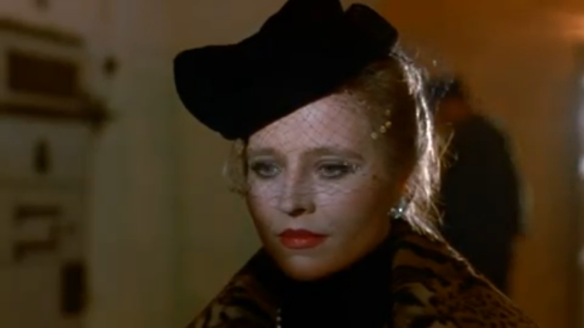
It’s important to note that the year is 1952 and so being an immigrant is not quite the same as it used to be. Eillis certainly must get used to a foreign land, but it’s more civilized and manageable than years gone by. An Irish father named Father Flood (Jim Broadbent), already living in America, became her savior because her sister Rose had asked him to help her little sister. In a new land, she must get accustomed to the boarding house lifestyle and work at a high-end department store. It’s difficult. She’s homesick. There’s so much to adapt to. But the bottom line is that Eillis succeeds because she is a pleasant, hardworking girl of great individual intelligence.

She gels with her landlady and fellow residents enough to gain their respect. And Her life continues as follows: lively gossip at the dinner table, dance halls become the local watering holes, and the daily revolving door of the department store greets her every day. Meanwhile, while helping the Father, he gets her access to night classes so she can take up bookkeeping. She is making something of herself, but greatest of all, she finds a man!

He’s an Italian plumber with an extensive family, but most importantly he’s conscientious and kind. Young love buds and begins to blossom between Tony (Emory Cohen) and Eillis. They go to the pictures to Singin’ in the Rain and Tony acknowledges his deep appreciation for the Brooklyn Dodgers. More than that he confesses his love for Eillis and she returns his feelings.  They could not be happier and they certainly deserve to be happy together. However, as often happens in life, our pleasant times are often rained on by tragedy. Eillis receives news that her dear sister Rose has died, leaving their mother alone. Eillis must make the journey back home, leaving Tony, but not before making a major vow to him.

Back home Eillis sees old friends, takes up her sister’s old job as a favor to the company, and finds herself getting set up with a gentlemanly local boy named Jim Farell (Domnhall Gleeson). It’s a little slice of paradise that quietly calls to Eillis. Coaxing her to stay in the land of her kith and kin. It’s a tantalizing offer, but the inviting lights of Brooklyn still wait for her.

While Brooklyn lacks the rough-hewn edge of many other narratives that spring to mind, it’s a wonderfully emotive film that becomes a hauntingly beautiful portrait of immigrant life. It’s a story where oceans separate people like solitary beacons standing on the shoreline. Eillis has a fissure cutting through her existence with the two sides slowly drifting apart. She must make a choice. The key to the film’s dramatic tension is that all roads feel inherently good, all the main players seem agreeable. With all that to mull over, what is the right choice? It becomes a task of parsing through her own identity, what it means to be Irish, what it means to be a woman, and what it means to be a person of two lands.

That rich, mellifluous Irish brogue of Saoirse Ronan is a beautiful melody that brings a wide-eyed sincerity to Brooklyn’s leading role. But just as importantly both Emory Cohen and Domhnall Gleeson carry their own degrees of charm that nevertheless set them apart from each other. Although Brooklyn does have it’s dramatic moments, it has enough grace for lightness and laughs and it really profits from that. These characters are generally good, as often funny as they are serious. They feel natural.

Brooklyn has the technicolor tones that have come in fashion for denoting a bygone era, and that era is worth at least acknowledging. It’s an age with Ebbetts Field and The Quiet Man. The deep, forgotten depths of handwritten letters and more richly religious overtones. It also reflected different gender expectations and expectations of class and race. But this love story grabs hold of all that is upright and pure about young love and waves it like a banner. It’s about the little things. Learning how to eat spaghetti to impress the parents. Sharing your feelings in the tunnel of love, meet-cutes in dance halls, and reunions on lonely street corners. It’s beautiful and stirringly romantic — even unabashedly so — and in this day and age, that’s not something to take lightly.

4.5/5 Stars

“I see now that giddiness is the eighth deadly sin” ~ Landlady


The Marriage of Maria Braun (1979)

marriageofmaria1The Marriage of Maria Braun opens with a bang and a thud, literally, as bombs rain down on Germany in the waning hours of WWII. It’s perhaps the most chaotic wedding ceremony ever put to celluloid. And the story ends in an equally theatrical fashion.
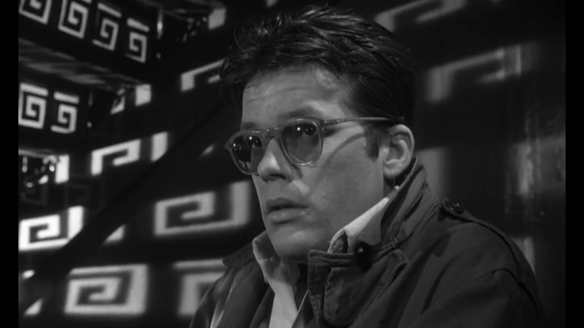
But although the beginning and the end do speak volumes, it’s the in between that we must , try and piece together if we ever want to make sense of the eponymous Maria Braun. In all honesty, it’s extremely difficult to know quite what to do with her.

However, to understand her a little context is in order. Germany is in ruins. The allies have swept in victoriously and now the German people must learn how to survive with the new order. Husbands who are as good as dead, black market goods, and scrounging around just to make ends meet.

Maria Braun carries on such an existence to watch over her widowed mother and grandfather who depend greatly on her. She begins working at a bar often frequented by American soldiers and there she meets her first conquest Mr. Bill dancing the night away to “Moonlight Serenade.” Aside from being big and strong, Mr. Bill has resources to support her and there’s a happily symbiotic relationship of romance. Except Hermann returns and he catches the two lovers together. But the strangest thing occurs. In a moment Maria drops all prior activities and rushes to her husband. It seems she still truly loves him, but then what was she doing with this other man?

What follows is the next stage of her life as Maria must play the waiting game as Hermann is relegated to a life in prison. But he is still her husband so she agrees to faithfully wait for him. On a train one afternoon, she bumps into an industrialist named Mr. Oswald. He becomes her next conquest as she first gives him industry advice and then gains a position in his company slowly becoming more affluent. Her spell as Oswald’s mistress begins simultaneously and yet she seems willing enough to be with him, if not for the financial capital to be gained. It’s followed by a strikingly familiar moment of intimacy that looks almost identical to a previous sequence if it were not for the varying skin tones. Maria continues basking in her success.

The fateful day that Hermann returns comes and goes as he informs Maria that he will take a leave to Canada to get his life in order. What she doesn’t know are all the workings behind the scene, not until a major dramatic reveal. Whether you view Maria’s life as success is purely based on point of view. In the audience’s eyes, her story feels quite sad, but we have a feeling Maria never felt that way. She was too strong and self-assured for such a thought.

To its credit, Fassbinder’s drama utilizes language well between German, English, French, and so on with characters dancing between all with a rudimentary skill that helps to paint the post-war canvas with all sorts of dialects. But amidst all the white noise Hanna Schygulla is most obviously the main attraction. What are the words to describe Maria Braun? Provocative, icy, sneering, vindictive, a cynical terror of a woman?

Except, in the beginning, she’s not like this, at least not yet. There are some indications, but they’re only slight signs of what is to come. She uses and abuses but in such a way that her male conquests want to be manipulated. She’s so tantalizing that they don’t mind it in the least.

Could we call Maria a female counterpart to Charles Foster Kane? Yes, except it’s not simply that she’s accrued wealth, power, and influence without love by the end of the film. She has all the love she could ever want. All the attention, all the eyes of any red-blooded man, but she doesn’t seem to know what to do with that love. She compartmentalized her life in such a way where she holds onto her matrimonial bond to Hermann an entire lifetime. When Hermann’s left for dead, when Hermann’s in prison when Hermann takes leave in Canada.

Still, Maria holds onto the fact that she is married to this man she loves, while simultaneously freely being involved with other men. Does she really love him? I think it’s all too probable, and yet she doesn’t know how to function in that singular capacity. These other men hold a purpose in her life. Is it a coincidence that Hermann and Maria barely share any screen time together? It doesn’t seem like it. Not with someone as engaged as Fassbinder. He, like Maria Braun, knew what it was to be loved, but perhaps he did not know what it was to love others in a normal, healthy way without undermining it with his own inner demons. He died back in 1982 of a drug overdose at the ripe young age of 37. His genius was realized, but in the wake of such genius lay innumerable tragedies.

4.5/5 Stars

Ashes and Diamonds (1958)

ashesanddiamonds1We’re used to getting our hands dirty in the thick of World War II, whether it is in the European theater or the Pacific, but very rarely do we consider the consequences that come in the wake of such an earth-shattering event. Things do not end just like that. There must be periods of rebuilding and rehabilitation. There is unrest and upheaval as the world continues to groan in response.
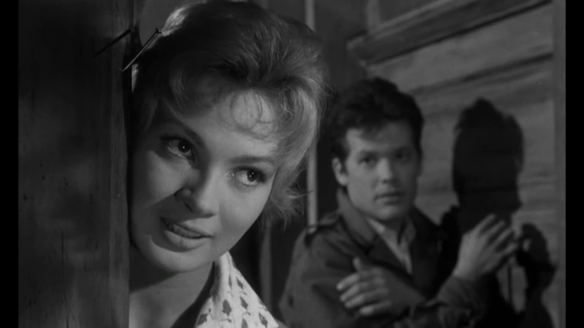
Ashes and Diamonds is one of these stories. It’s a film that rumbles from its core depicting a post-war wasteland in Poland that has been trampled by the Germans and overrun by the Soviets. People want peace and there’s seemingly none to be found. At least not at the present.

The film’s main attraction, Zbigniew Cybulski, plays the nationalistic soldier Maciek, who along with his superior Andrzej are charged with assassinating an incoming Communist commissar named Szczuka. Cybulski’s exhibits the hesitant, insecure movements of James Dean similarly hiding behind a persona overflowing with palpable coolness. In one sense we want to be this guy, but we also feel sorry for him.

From its opening notes, Ashes and Diamonds proves to be a dynamic piece of realism as our two protagonists start off with guns blazing before inconspicuously leaving the scene of the crime. But their work is not done, in fact, their mission has been bungled, and so they must wait around tensely for another chance. They take up refuge in a local hotel which also happens to be awaiting the arrival of the most esteemed guest, comrade Szczuka.

This is not solely some political drama either. Andrzej  Wajda’s final film in his WWII trilogy certainly has roots in Poland’s historical past like the Warsaw Uprising and the changing of the guard as the Germans surrender and the Soviets move in. However, Ashes and Diamonds is woven together by a human component — a romance that is at odds with all things political. Because while he plays the waiting game at the hotel, smoking cigarettes and lounging, Maciek begins to fall for the woman on the other side of the bar named Krystyna. You assume from their initial flirting and Maciek’s come-ons that this will only be something superficial, but such moments of tension seem to heighten passion and the need for intimacy. These two individuals so recently introduced become so close in a matter of hours.

ashesanddiamonds2There are love scenes that are quiet, subdued, and truly intimate. In fact, it feels rather like Hiroshima Mon Amour where the camera lingers so closely on two figures in such close proximity. There does not have to be great movement or dramatic interludes because having two people next to each other should be enough. The historical context in itself seems to be enough. For that film, it meant Japan post-1945. For this one, it’s Poland after the clouds of war have lifted.

Certainly, the film is bookended by two high-octane bangs of fiery drama, but even in the moments in between Ashes and Diamonds is ceaselessly interesting. It might be a meandering horse on a quiet road or a fire extinguisher at a gay party or even the late night impromptu improvisation by an orchestra that is slightly off key. They make for wonderfully delightful additions to the narrative being told. It feels organic and rich with the tidbits that make up everyday life. It’s just that this slice of life happens to be in post-war Poland with high stakes hanging in the balance.

As Maciek battles his own inner turmoil to match the turmoil outside, the words of a poem inscribed on the wall of a bombed-out church spring to mind:

So often, are you as a blazing torch with flames
of burning rags falling about you flaming,
you know not if flames bring freedom or death.
Consuming all that you must cherish
if ashes only will be left, and want Chaos and tempest
Or will the ashes hold the glory of a star-like diamond
The Morning Star of everlasting triumph.

4.5/5 Stars

M (1931)

mfilm1Peter Lorre has a face that will forever live in cinematic infamy, and it started with M. In truth, Fritz Lang’s drama involving a serial killer feels fresh and engaging even after all these years, maybe because humanity hasn’t changed all that much. We still murder, we still kill, we still seek justice, we still give into our base desires, and there’s not a perfect person among of us. Each one of us has our faults — our own personal downfalls.
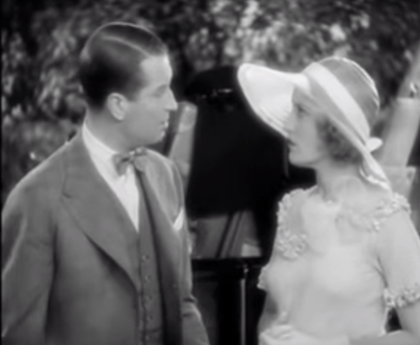
The film begins with a rash of disappearances across the city and the boulevards are plastered with Wanted posters for the mysterious culprit. The day that Elsie Beckmann disappears sets the community off, especially when the perpetrator sends a handwritten letter to the local newspaper. The media frenzy begins as every man, woman, and child begins to suspect their neighbor of being a child murderer. The mob mentality looks to overrun the scales of justice. Meanwhile, the police force looks to use empirical methods as well as frequent raids to drudge up answers. They’re far from popular in the underworld and the force is being run ragged in an effort to get to the bottom of the case. Everyone expects a resolution quickly, but real solutions are hard to come by.

Things have gotten so dire for the local mob bosses that they call a meeting, resolving to do the dirty work on their own. They begin their own search for the man who is single-handedly ruining their rackets because he’s no good. Now the chase is really on for Hans Beckert, because everyone is on high alert, in all spheres of society. The question becomes not if he will be caught, but when, because it is only a matter of time.

It’s in these latter moments that the longstanding mystery behind the film’s title finally is revealed and it is a fitting twist. Everything begins to fall into place, but the strangest thing is that Lang actually begins to make us empathize with his killer. True, we want him to receive justice, but the men on the other side of the law seem little better than he — in fact, many of them are criminals themselves.

M has a fascinating juxtaposition of silence and sound, acting as a bridge between both. Beckert’s whistling of “In the Hall of the Mountain King” is certainly integral to the plot. It’s those exact notes that trigger the memories of a blind beggar selling balloons. However, it is these hollow sounds of the whistling that feel strange ominous and distant in vast areas of open space  There’s as much tension in the lulls of silence as there is in the most tumultuous notes.

Although Lorre doesn’t say much, we get enough clues just dwelling for long spells on his face. Those big eyes full of crazed fear and psychological torment. His mind plagued by paranoia and torn apart by schizophrenic bouts of conscience. It suggests the perverse nature of man given that this story was taken from real life accounts of a German child murderer. But also the tragic nature of mankind that we are often drawn to do evil in a sense. Our flesh is too weak and we give into our animalistic urges. Of course, Lang reveals the flip side of the indiscriminate as well, that seems just as questionable including mob rule and a sort of vigilante justice that functions outside of the accepted modes of law enforcement.

It brings up questions on the cycle of crime and the rehabilitation of the criminal. Questions that still get hotly debated and thrown about even to this day. M became the measuring stick for all of the subsequent crime thrillers Lang would churn out so efficiently following his move to the United States. You could argue that although he came close numerous times, he never quite topped this crowning jewel of a crime drama.

5/5 Star

Love Me Tonight (1932)

lovemeto1This is unequivocally the age of sound! That’s what this film proclaims from the rooftops with its symphony of syncopation as the world of Paris awakens from its slumber. Its opening rhythms are pure ingenuity and the glorious unfoldings never cease for the rest of the cheery production.

In its efforts to tip a hat to Lubitsch, Rouben Mamoulian’s film manages to eclipse him or rather make a name for itself completely removed from the previous Maurice Chevalier musicals. In fact, Love Me Tonight feels like the obvious precursor to later classics like An American in Paris and the works of Jacques Demy. Whereas Lubitsch’s films almost always function as a comedy and social commentary, Love Me Tonight is first and foremost a musical and it rides on its melodies even while simultaneously driving forward its plot line.

When our humble but nevertheless jovial tailor winds up chasing after one of his notorious spendthrift customers to his relative’s aristocratic residence, things are in motion. Maurice is certainly out of his element, but his charm wins him many an admirer in the household including the Duke (C. Aubrey Smith) and his man-hungry niece (Myrna Loy). In fact, there are only two people who seem wary of this new arrival, the Duke’s skeptical daughter, Princess Jeanette (Jeanette MacDonald) and her feeble suitor.

Everybody else persuades The Baron — as he is called — to stay because his is such a magnetic and disarming personality. Of course, when the real news about him gets out following an incriminating wager for his honor, it dooms his romance. But every story needs a final epiphany of realization and, in this case, Princess Jeanette comes to her senses. She throws the utter absurdity of family rank and status out the window.

True, this is a love story, but while that could be the focal point there are wonderful sequences that fill all the nooks and crannies. Fine gentlemen walking around a tailor’s shop without their pants on or a trio of aunts who come right out of the pages of Hamlet. As a Pre-Code film, it certainly has a few risque moments including a Doctor’s visit and one or two mentions of a nymphomaniac — all played for comedic effect of course.

Meanwhile, tunes like “How are you?” and “Isn’t it Romantic” literally takes the country by storm manifesting themselves in all forms imaginable. “Mimi” is a particularly saucy number that pays homage to our main female heroine and it’s opening refrains boast some wonderful point of view shots of our fated lovers. Love Me Tonight winds up being an operetta of repeatedly and ingeniously inventive rhyme and melody all the way through. It also has brilliant sound design from head to toe.

Maurice Chevalier is as charming as ever, still melding his song with a magnetism that flows right into his role, ironically enough, as a character named Maurice. Although Myrna Loy might have become a bigger name arguably, this is Jeanette MacDonald’s film and she plays her part with the necessary aloofness that nevertheless gives way to amorousness. By the end, we like them both and we can’t help but be won over by their songs. For being lesser known on the generally accepted spectrum of classic musicals, this one is a gem.

4.5/5 Stars

Review: True Grit (1969)

truegrit1My father has always maintained that two of his favorite films are The Magnificent Seven and True Grit. The first one makes sense with its stellar cast, resplendent score, and some top rate gunslinging. The second film, well, it makes sense too, but for completely different reasons.

Director Henry Hathaway is never flashy but he is a self-assured worksmith of early film-noir and westerns such as The Sons of Katie Elder. Those are minor classics, and yet each one is gripping in its own way.

John Wayne is just John Wayne pure and simple except with an eye patch slung over his eye, but do we care? Not in the slightest. When you have such a presence in a film, it will never lack at least a shred of viewing value. He was always memorable, but he was probably never more iconic than his turn as Marshall Rooster Cogburn. He’s a gruff, tough, drinking man who is willing to take on anyone and everyone at the drop of a hair. Yet despite all of that fury, Wayne embodies him in such a way that makes him lovable all the same.

Wayne is usually a given to steal the spotlight but Kim Darby gave him more than he bargained for as the stubborn, no-nonsense Maddie Ross. Following suit, singer Glen Campbell showed he can do more than knock back a tune, playing the Texas Ranger.

Darby beautifully embodies the rational-minded young Maddie with her terse and straightforward rhetoric. She knows what she wants and she will not budge on those proclivities – whatever they might be. Glen Campbell was hardly an actor, but instead a country music superstar and yet the musician makes a handy Texas Ranger in a pinch bringing a sense of camaraderie and humor to wrangle with his counterparts.

As with many of his other great westerns, Wayne and company are surrounded by a solid group of stock characters including the likes of Dennis Hopper, Robert Duvall, Strother Martin, and even John Fiedler.

The film is adapted from the Charles Portis novel where Maddie, intent on catching the man who killed her father, hires Cogburn to track him down. They are joined by Laboeuf and thus begins their search.

Looking at the plot alone, this film is about a journey to apprehend a fugitive man named Tom Cheney, who killed Maddy’s father as well as a Senator back in Texas. But really what we’re watching is this unlikely trio joins forces to do things we would never expect from them. It’s certainly no coon hunt, but then again it’s hardly a single-minded mission. Maddy has one opinion, the Texas Ranger has another, and Rooster Cogburn’s mostly drunk when he’s not belittling his rival or poking fun at “Baby Sister.” Do we mind? Certainly not because time makes these three companions into friends. Their ribbing gives way to trust and their anger and annoyance breed mutual respect.

Nothing beats the adrenaline rush of seeing Wayne charge across a vast meadow towards Ned Pepper and his cronies, with his guns drawn and a bridle between his teeth. The sequence is enhanced by the spectacular Colorado landscape that adds another character to the entire film. You cannot witness such a scene and simply write it off as average. That’s part of the reason we go to the movies – to see men with True Grit.

The Coen Brothers brought us a darker, more dramatic interpretation of this film, but it is hard to beat the fun of Henry Hathaway’s version. John Wayne, Rooster Cogburn, whatever you want to call him, he has True Grit. Isn’t that right baby sister?

4.5/5 Stars

Review: The Magnificent Seven (1960)

themagnif1“Nobody throws me my own guns and says ride on. Nobody” ~ James Coburn as Britt

People always resonate with stories of valor, honor, and bravery. It doesn’t matter if it’s a war film, a tale of samurai, or a western. Thus, Akira Kurosawa’s Seven Samurai rather seamlessly became The Magnificent Seven, one of the most reputed westerns of the 1960s.

In theory & practice, it has everything you want in a western from a stellar cast to thrilling gunfights matched by one of the most epic soundtracks ever coming out of the annals of cinema.

But although it’s script is not exactly taut, you can hardly accuse The Magnificent Seven of being superficial. Its characters and its narrative are too satisfying for such a claim. After all, who wouldn’t want to see such a company as Yul Brynner, Steve McQueen, Horst Bucholtz, Charles Bronson, James Coburn, Robert Vaughan, and Brad Dexter? You have “The King and I,” “The King of Cool,” and about every other figure you would want in a good shoot’em up. They were seven who fought like 700.

In not completely splitting with its samurai roots, this western deals in moral codes and issues of honor perhaps more closely than even many of the best known western. The main issue here is that this laconic and sleek gang is brought together to defend a small Mexican border town made up of farmers against a bandit and his band of marauders. What causes men such as these to take on such a dangerous and in many ways such a one-sided job? For some it’s money (because they have none), some want the excitement, and for others, it’s something different. But all that matters is they all go into this together – some of the deadliest guns prepared to duke it out.

themagnif3Into the valley road the seven rather like the light brigade, at first simply preparing to train up and prepare their little village of farmers to fight back against the brutal outlaw Calvera (Eli Wallach). But there’s something that happens over time. When you spend time in close proximity with people, eating their food and sharing their shelter, it’s hard not to build a bond — a connection that holds you there. At first, it seems of little consequence when the enemy gets beaten back, but everyone knows they will return with a vengeance.

Ultimately, the seven are betrayed and are given a clear choice. They can keep moving on or turn back the way they came. It’s just a small inconsequential town, but they cannot turn their back on it, even when they were betrayed. They grapple with what’s good, what’s right, and what’s rational, and then make their decision. It goes against all reason and yet into the valley road the seven together (eventually).

themagnif2And we get the final skirmish with guns blazing, bullets flying, and lives being put on the line. Here is a film where the final body count deeply matters. Not so much of the enemy, but of our heroes, because each one chisels out a little niche for themselves. Everyone has worth and importance even as they jockey for screen time and it pays off in the end. They fight with honor just as they die with honor. Perhaps it might seem futile, but not without significance. The little village is left in peace to live out their days in tranquility. Calvera’s final words echo in their ears: “You came back – for a place like this. Why? A man like you. Why?”

Elmer Bernstein’s score is masterclass. Majestic, grand, playfully prancing about, and at the same time eliciting a grin from any boy who has ever dreamed of the Wild West. Furthermore, there are so many characters to idolize, because this film made ensemble action films the style along with the likes of The Great Escape, The Professionals, and The Dirty Dozen to name a few. This has always been one of my father’s favorite film’s and I can completely understand why. It has gunfights, bad guys, and good guys, quips, and tricks. But at the most basic level, it’s a striking parable about moral codes, personal pride, and the sacrifice that goes along with such things.

4.5/5 Stars

In the Mood for Love (2000)

inthemood2“Feelings can creep up just like that” – Mr. Chow

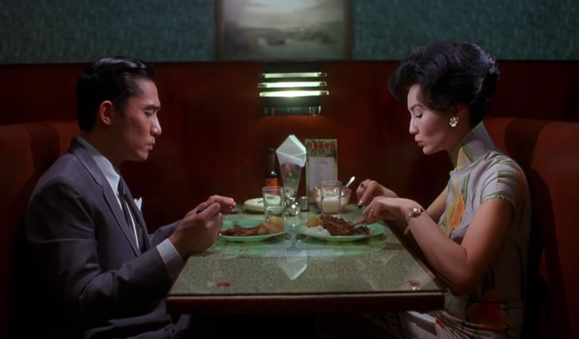
Wong Kar-wai’s In the Mood for Love is a visual exhibition in style. It has a smooth elegance that extends across its entire length. Colors mixed with 1960s nostalgia. Decadence mixed with urban depression. The perfect blending of the cinematography of Christopher Doyle and Mark Lee Ping Bin. There are brief fades between many sequences and more often than not a shot has a focal point while the fringes are out of focus, but it’s all strangely beautiful. We’re often viewing characters from behind or from the side — seeing how they interact with their environments that keep them confined in a certain space. The numerous hallways, doorways, and rooms that cohesively make up their existence.

inthemood4But enough talk about aesthetics at least for the present. The film opens in 1962 with two couples moving into an apartment complex simultaneously. There are four individuals involved obviously, but we only ever see two of them. Mr. Chow is a journalist and his wife is often away for business leaving him alone. The stunning Mrs. Chan works as a secretary and she too feels lonely due to her husband’s many trips abroad. There’s the constant passing in the hallways at times and in truth, it can be laborious at times. After all, they are both perfectly civil and respectable people, although one night they finally have a tete a tete at a cafe. It’s there where they come to understanding about their significant others. Coincidences are not so coincidental. They are both cheating with the other’s spouse.

inthemood1And of course, Mr. Chow and Mrs. Chan do not want to stoop to that level so they keep their relationship platonic worrying about what the neighbors will say, but also taking great comfort in the other’s company. Even together there is a distance, a restraint, that I suppose reflects the times — reflects the cultural expectations of that time. But the isolation and the loneliness is far too great and Mr. Chow enlists his new companion’s help in crafting a martial arts serial for the local newspaper. For once in their lives, they have the kind of interpersonal relationships they crave, and in this way In the Mood for Love shares some of the same sentiments as David Lean’s Brief Encounter.

Although Mr. Chow shows perhaps even greater restraint finally moving away from his love and relocating because he knows she will never leave her husband. Thus, it’s not worth the risk for them to stay together unless she were to come with him. But as often happens in such situations stars are not meant to cross and they constantly miss each other between Hong Kong, then Singapore, and finally Chow goes to Cambodia. And that’s where his story ends.With a detached denouement that is cryptic and in the same instance deeply melancholy.

inthemood3An important distinction to makes is that In the Mood for Love could have been a lurid drama, but with only two of the characters shown it becomes a more intimate even sorrowful portrait of forbidden love. In truth, it’s a portrait accented with spiraling wisps of cigarette smoke and the rhythmic water droplets of falling rain. The always fashionable Mrs. Chan is dressed impeccably in wonderful juxtaposition to the atmosphere behind her. “Yumeji’s Theme” is constantly pirouetting and sashaying around the images on screen combined with the sultry notes of “Quizas, Quizas, Quizas” courtesy of Nat King Cole.

It’s a mesmerizing recipe that tells of the complexities and intricacies that run through interpersonal relationships. What crosses the line? What is moral? What is fair in love and Wong Kar-wai’s universe? That’s just it. This is one of those films that has grace enough not to give us all the answers but instead, leaves us captivated by its vision. The rest is left up to us to judge as we see fit. It maintains an air of mystery, because, after all, love is far from a two-dimensional phenomenon.

4.5/5 Stars