
 While Hitchcock’s Topaz also finds its roots in the Cold War like its predecessor Torn Curtain (1966), it revolves around more intricate professional espionage which in this case pertains specifically to the Cuban Missile Crisis. The establishing shot of the film makes it clear that we are somewhere, once more, behind the Iron Curtain as we see a waving flag emblazoned with the faces of Lenin, Marx, and Engels. Interestingly enough, although the film begins with a high Russian official fleeing the country with his family and includes the deal he cuts with the Americans, Topaz really focuses on something else entirely. It plays off this idea of a man caught in the middle of the Cold War. Except this is not an everyman, but a specialized agent trained in espionage. Andre Devereaux (Frederick Stafford) is a Frenchmen who should seemingly be outside the fray of the opposing Superpowers.
But as anyone would probably try to explain, such issues of international relations and security are never so cut and dry. There is a lot more ambiguity involved and being an old friend with one of the American agents (John Forsythe), Devereux obliges to get involved with the whole affair in Cuba because he too is interested to see what the Russians are up to.
Agent Devereaux gets fully embroiled in Cold War espionage after making contact with Juanita (Karin Dor), the esteemed widow of a Cuban Revolutionary who now also happens to be a spy. Andre slips her aide a Geiger counter so that he can monitor the surrounding area to see if the Russians have nuclear warheads. And his results are conclusive. When by some lucky break Devereaux actually does get his evidence out of the country, Agent Nordstrom (Forsythe) confirms that the new information matches that from other sources including U2 plane surveillance. While the history stops there with Kennedy’s handling of the Cuban Mission Crisis, the film continues, following Devereaux back to France where he suspects a Russian mole. Since Hitchcock was always more of a showman than a political filmmaker, it makes sense that he grabs hold of the spy thriller thread in one final act. It channels paranoia very similar to The Spy Who Came in From the Cold although it is a glossier affair with intrigue crisscrossed with illicit romance.
 Whereas the previous Torn Curtain was generally concerned with life behind the Iron Curtain, Topaz is decidedly more continental moving swiftly between Russia, France, America, Cuba, including a few pitstops at international embassies. However, the film does end up spending a lot of time focused on Cuba which can very easily be juxtaposed with the East German scenes in the former film. Hitchcock once more creates an illusion of reality using the Universal backlot and the adjoining area to craft Cuba, and he makes into a place of sunshine and romantic verandas, but it also runs rampant with totalitarian militia. It’s perhaps more exotic and welcoming than East Germany, but no less repressed. In both cases, they become a perilous locale for our protagonists. Still, rather unlike the previous film, Topaz lacks a truly A-list star like Paul Newman or Julie Andrews.
It’s as if Hitch has lost a number of things that made some of his best films, a stellar cast backed by a truly inspired script, carried out with his typical ingenuity. However, this film holds a special place in my heart as my first introduction to Claude Jade. That alone made it a worthy piece of viewing, but it also stands as a historical relic.
3/5 Stars
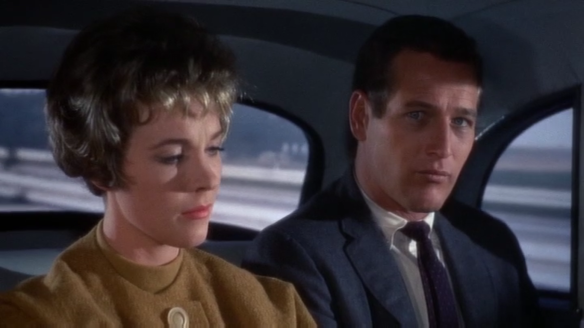 Torn Curtain was
  However, when you watch any Hitchcock film you do wait to be dazzled with some twist or trick because he was always one to bring humor and fascinating aesthetic qualities into his films. Torn Curtain has a few such moments that quickly come to mind. The most prominent has to do with the editing of the sequence in the farmhouse. It is here where Gromek is murdered by Armstrong and the housewife, but it is cut in such a fascinating way. It contrasts with Psycho’s shower sequence quite easily as they try and murder him first by strangling and then anything they can get a hold of whether it’s guns, knives, shovels. There is no score to speak of. Soon it becomes a methodical rhythm of cutting between contorted faces as they slowly but surely move towards the stove. The brutality and length of the ordeal suggest how ugly and laborious it is to kill a man. Hitchcock certainly does not glorify it in any sense.
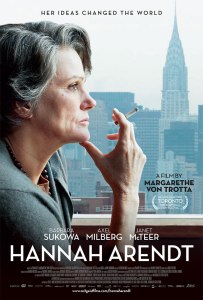 The term “banality of evil” has floated through the lexicon ever since German philosopher and columnist Hannah Arendt coined the phrase during the Eichmann trial back in 1961. In fact, the words gained so much traction that they have undoubtedly lost some impact due to overuse. However, this film takes equal interest in the backlash that she received on her remarks about the Jewish community. Her claim that the Jews were collaborators with the Nazis and privy to their own destruction, undoubtedly would be unpopular now. Back then it was a pure lightning rod for scurrilous criticism and hateful backlash.
 The Awful Truth came out of a trend that was in vogue during the 1930s. It’s called a comedy of “remarriage.” During the Hays Code era, it allowed films to nimbly skirt the whole issue of divorce and extramarital romance. We would see it again in the more remembered screwball His Girl Friday and various other forms as My Favorite Wife and The Lady Eve.
 We are definitely in the age of the well-wrought period piece and Brooklyn has all the trappings you could want. Adapted from Colm Toibin’s novel the film showcases a pure, noble heroine in Eillis Lacy who like many others makes the journey from her homeland of Ireland to the golden-paved streets of New York.
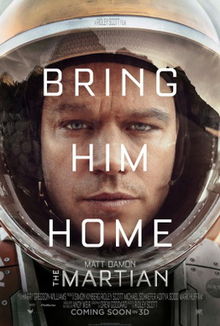 The Martian is not the film you first expect. It’s a space thriller. It has tense moments assuredly, but it also has an astute sense of humor that pulses through the film as its lifeblood. It makes Ridley Scott’s latest endeavor, based on the novel by Andy Weir, all the more palatable because it lends a fresh face to space exploration.
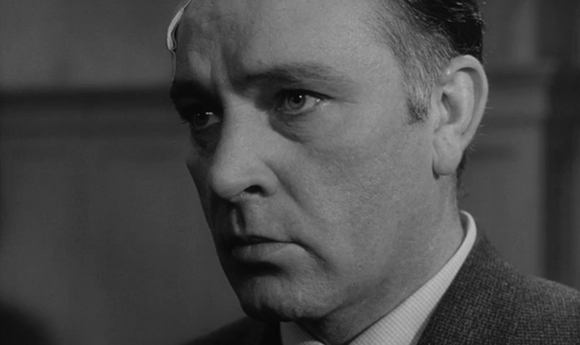 Adapted from the John le Carré novel, this is a black & white spy thriller that personifies cold war paranoia in ways that Bond never could. Richard Burton is an operative working in Berlin before being demoted to a librarian job. It looks like our narrative is heading in a direction hardly fit for a spy film. Its intentions are not so obvious at first, and it keeps its audience working for the rest of the film.
 We are brought into the world of Lew Harper with a cold open full of character. There he is.
 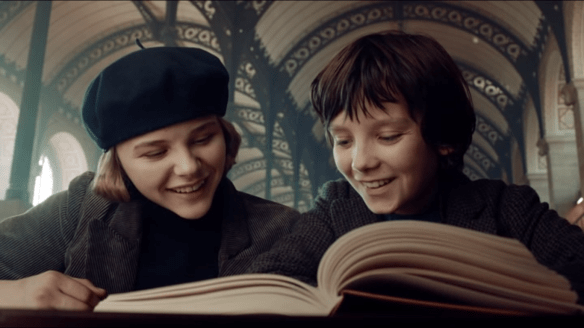 “If you’ve ever wondered where your dreams come from, look around, this is where they’re made.” – Ben Kingsley as George Melies
 Aside from the inspector, the station is full of a wide array of charming individuals who generally exhibit temperaments far more personable. However, the local toy shop owner (Ben Kingsley) is rather an odd fellow, who keeps to himself, but Hugo is wrong to cross him. He’s not a bad man, but he makes the boy work for all the things he has purloined.
 Hugo is a beautifully magical melding of the old with the new –- the mechanical and the visceral. Extravagant colors make Scorsese’s canvas pop. It works together like clockwork.
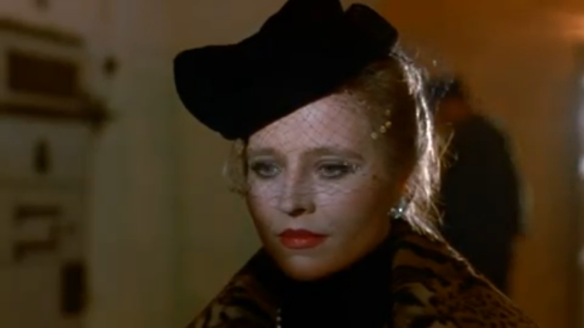 The Marriage of Maria Braun opens with a bang and a thud, literally, as bombs rain down on Germany in the waning hours of WWII. It’s perhaps the most chaotic wedding ceremony ever put to celluloid. And the story ends in an equally theatrical fashion.
 4 Star Films