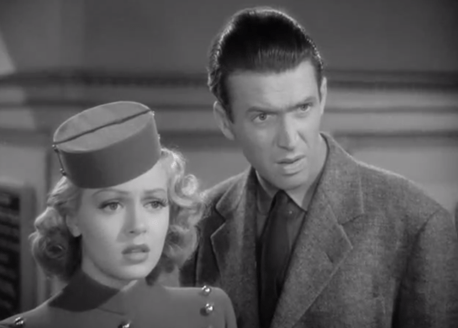
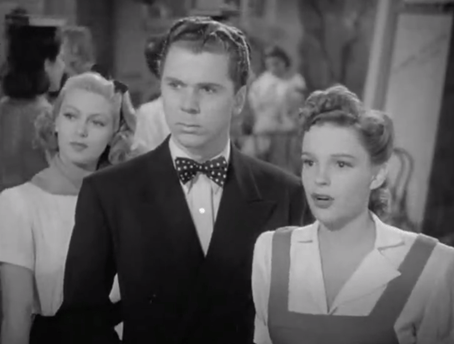
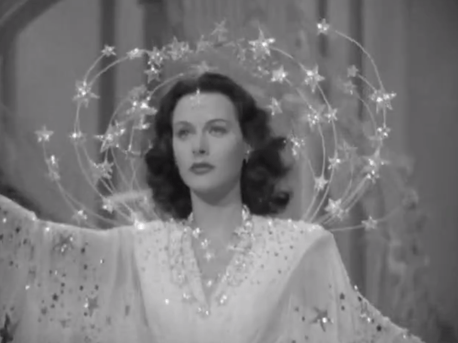
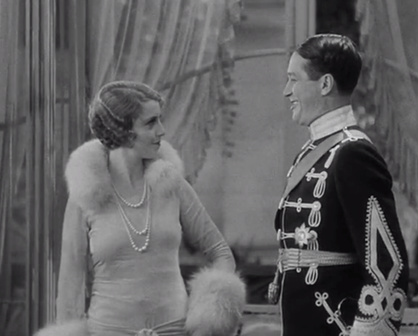
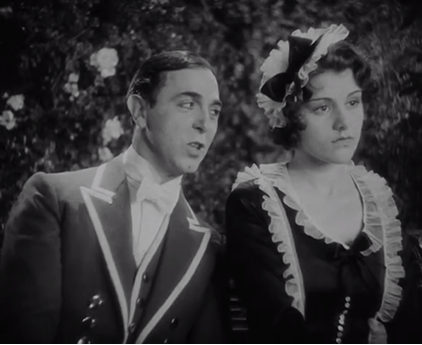
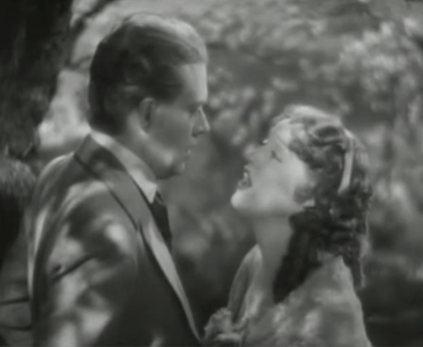
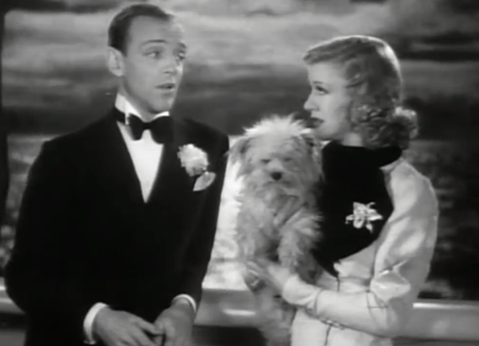
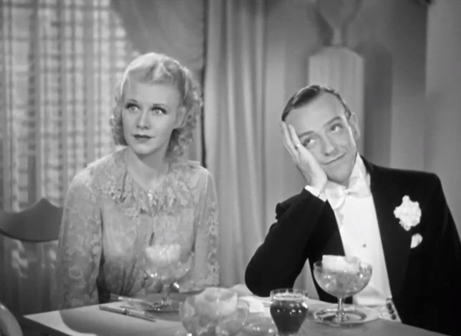
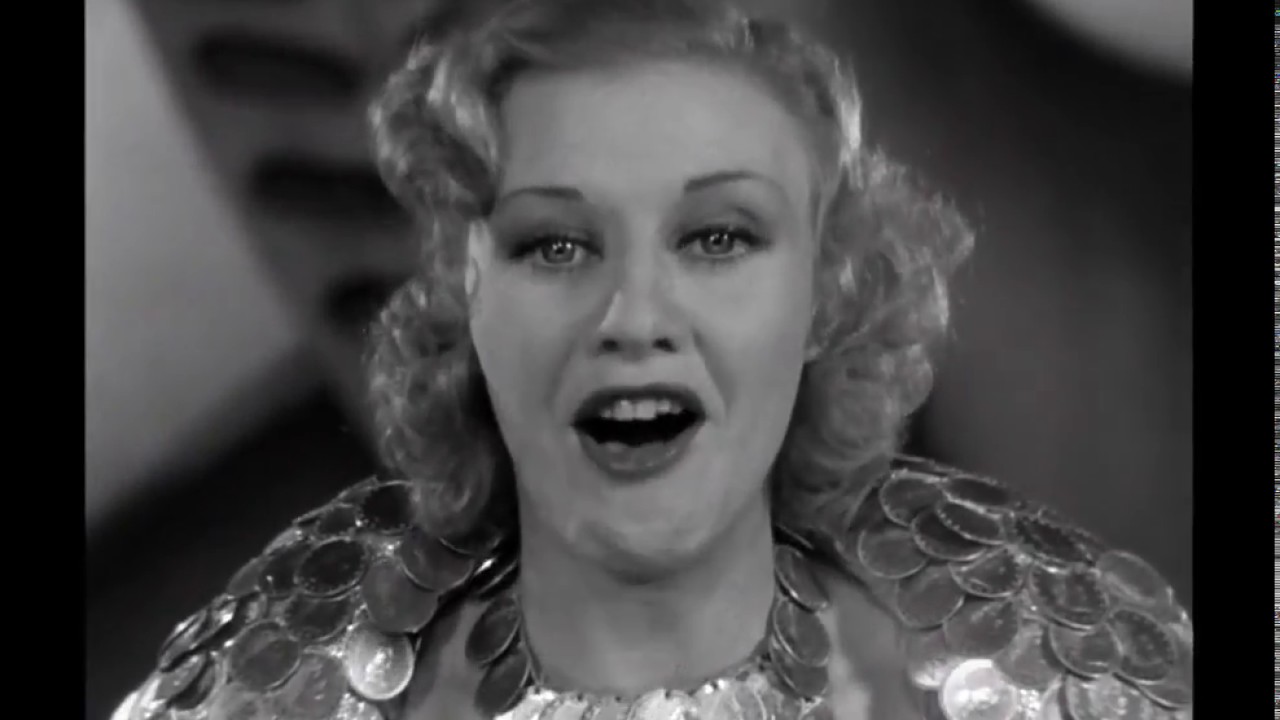
The Harvey Girls (1946): The Painted Desert Meets The Musical

Harvey_Girls_poster

It was during a pit stop along a cross-country trip through the Petrified Forest that I first became aware of The Harvey Girls. Because you see, The Painted Desert Inn is a bit of a relic of the past, and it preserves a history of the famous waitresses who helped pave the way for a certain brand of civility in the Southwest. They brought the sensibilities, respectability, fine china, and world-famous sirloin steaks from back east to forsaken lands normally ruled by saloons and brothels.

So while The Harvey Girls (1946), a cheery musical directed by George Sidney, does not have the same mythological quality in the taming of the West as a John Ford picture, the same process is being captured, albeit in more practical (and more musical) terms.

We get a taste of where all these girls come from thanks to the very catchy, “On the Atchison, Topeka, and the Santa Fe,” which suggests the vital importance that the transcontinental railroad played in such an endeavor. The recording would prove a viable hit for star Judy Garland and many others, taking on a subject akin to “The Trolley Song” out of Meet Me in St. Louis.

In that regard, Garland is out of sorts residing on the pioneering prairie with their dive saloons and floozies of ill-repute. But that’s exactly her charm. She traveled to this far-off, unknown destination as a mail order bride; her only correspondence with her future matrimonial partner is through letters.

He’s quite eloquent with a pen and yet she meets the colloquial but good-natured H. H. Hartsey (Chill Wills) and receives the shock of her life. All of a sudden they’re both a bit flustered and decide to dispense with the marriage on amicable terms.

As a result, Susan decides to join The Harvey Girls in their newly formed restaurant to bring entertainment and quality diversions to this godless territory of Sand Rock. Their main competition comes from a man named Ned Trent (John Hodiak) who runs the local watering hole replete with gambling, drinking, a whole host of dancing girls. One of them, Em (Angela Lansbury) is deeply in love with him, and it shows.

Trent conveniently has a partnership with the local Judge who has made it a practice to scare off anyone with a smidge of decency. He even ran a preacher out of town and his scare tactics include a gunshot fired into the Harvey Girl dormitory.

Though only a recent recruit, Susan soon mobilizes the women who are trained up by (Majorie Mann) ready to fight back against their opposition. Her distaste and inexperience with guns are endearing just as her plucky fearlessness gains her a certain amount of admiration.

Trent proves to be a far more complex man than he’s given credit for even as he tries to distance himself from the Judge and push the Harvey Girls out fair and square. It’s still a competition, but at least it’s honorable. Simultaneously, Em begins to see the twinkle in his eyes as he becomes enamored with Susan. Her principles and feisty nature are attractive, but Ems not about to lose him without a fight nor does Susan particularly fancy Trent. The romantic triangle is firmly in place.

In one sense, Lansbury feels poorly miscast, no fault of her own because they all but dubbed her singing voice to make her seem American. Her charm has to do precisely with the fact she is not one of us. And yet remarkably, she does a fine job as a sympathetic antagonist, if you will, that we grow to admire.

John Hodiak is easily clumped with actors of the 40s like Brian Donlevy or Cornel Wilde who are not quite buried in obscurity. However, because there is nothing that can be deemed electric about them, it’s easy for them to get lost in the fray. All that being said, I rather like Hodiak opposite Garland. He’s both slightly antagonistic but genial when he has to be.

“It’s a Great Big World” provides a fine showcase for Garland and her companions to dream together. On her own, Virginia O’Brien provides a comic aside singing “Wild Wild West” and giving the town’s jumpy new blacksmith (Ray Bolger) a capable helping hand. I must say I hardly recognized the young Cyd Charisse who earned her first speaking role to kick off a shining career in Hollywood as one of its preeminent dancers.

The most comedically gratifying scene has to be when the two rival factions resort to physical catfights to exert their dominance and show that they have a right to stay. The Harvey Girls also throw a party where Bolger’s length on taps is positively charming. It’s the old story that a dancer must be highly skilled to make their style look so very idiosyncratic, and I kept on thinking how I would never in a million years be able to pull of such a routine.

What follows is a Waltz that has everyone dancing even as the town is plagued further by arsons and a heated fistfight to right a few wrongs. We are getting down to the wire. However, with the outbound train about to leave, decisions must be made and one could wager that our leads make the right one, though fate and Em give them a helping hand in the end.

The Harvey Girls, produced by the Arthur Freed unit, and blessed with the song-smithing of Harry Warren and Johnny Mercer, delivers a repeatedly delightful western musical experience, despite the very fact that it was not initially supposed to be. However, a drama earmarked for Lana Turner got a facelift and pulled Judy Garland away from working with Vincente Minnelli and Fred Astaire to score her a low-stakes, lightweight hit.

To make things even better, she would finally get her chance to work with Astaire two years later in Easter Parade (1948). For now, let’s relish this one for the frothy pleasures it affords. My sojourning through the painted desert was almost 10 years ago, so it’s a pleasure to finally get around to see The Harvey Girls. 

3.5/5 Stars
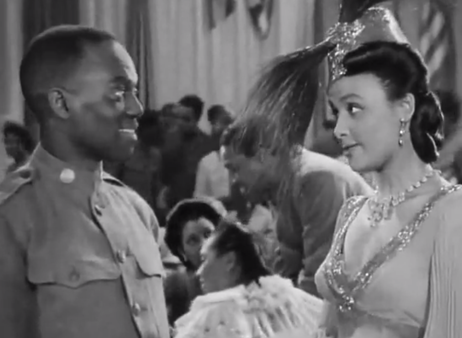
Stormy Weather (1943): Bill Robinson and Lena Horne

stormy weather 1.png

Stormy Weather, as a musical, is nearly unprecedented, and to my knowledge, there is only one other film to truly rival it as a spectacular showcase for African-American talents during this same period. That would be MGM’s Cabin in the Sky (1943).

But it’s not simply the case that this is a gathering of an all-black cast. Often we look at a film or a director based on extenuating circumstances. Sometimes it feels like we’re starved for certain types of portrayals and that can be the same for many minority representations. Thus, when you get anything passable, you’re bound to turn a blind eye to mediocrity because simply in discovering its existence, you have found a valuable cultural artifact.

If you can bear with my explanation, Stormy Weather might have been such a film since it is fairly unique among the seas of its contemporaries. But its individual uniqueness should not obscure the fact that these are some truly fantastic performers put on the stage, and they are deserving of more people singing their praises. People did back in the day, despite the racial intolerance, and they continue to deserve the recognition, so that’s what I’ll try to give them.

However, another interesting point of discussion is the production itself given the fact, behind the scenes, it was undoubtedly business as usual, with mostly whites calling the shots and pulling the strings. They have sculpted a bit of a faux reality where everything is fine and dandy in a segregated society and Bill “Bojangles” Robinson sits on a porch with all the neighborhood children regaling them with tales of his life thus far. And what a life it was!

He of course famously danced down the steps with a precocious Shirley Temple and got a dubious nod in Top Hat (1935) from Fred Astaire somewhat marred by blackface. In other words, Bojangles rightfully deserves this showcase, out of the shadow of other performers, with the limelight shining brightly on him for once.

In this highly fictitious and glossy rendition of his life story, he returns home from The Great War with his buddy Gabe Tucker (Dooley Wilson) who’s always trying to make himself out to be bigger than he is. Meanwhile, Bill looks to put his penchant for toe-tapping to good use.

He’s reunited with Selina Rogers (Lena Horne) the grown-up little sister of a childhood friend, and they hit it off. Little does he know she’s on the rise as a nightclub singer because besides having talent, she’s a class act, a first-rate personality, and really a knockout.

Somehow you lose track of the massive age difference between Robinson and Horne as they play so affably opposite one another and anyway we’re hardly hanging around Stormy Weather for the plot. It’s a musical. Let them dance.

Following suit, for the rest of the film, Robinson is bouncing around, meeting a minstrel show on a riverboat as he does a sand dance before they pogo around on their taps together. It was the first moment that feels truly electric.

Then, he’s pinch-hitting as a waiter at a little joint run by Ada Brown with the jovial Fats Waller yammering away to accompany his piano. Time has passed and Selina is doing well, calling in a favor to get Robinson a gig so he can get away from his menial existence. He gets a rousing round of applause soft-shoeing over big barrel drums only to get fired for hamming it up.

But the film goes out on top with the moment we’ve all been waiting for. Horne sings the title number, which in itself is a fine rendition, but Cab Calloway brings his scat singing, baggy pants-swishing energy into the picture followed by the apogee of it all.

The last 5 minutes or so are pure magic highlighted by one of the most spectacular numbers you’ll ever lay eyes on, and I’m trying my best not to exaggerate. The Nicholas Brothers are that extraordinary. Fred Astaire has already been mentioned due to his admiration for Bojangles, but he was equally quick to laud “Jumpin’ Jive” as the most spectacular of numbers. I won’t dare spoil it. Regardless, The Brothers do it all with their legs. Their skills are jawdroppingly dextrous. It verges on the superhuman.

Even as the comedy isn’t that hilarious and there are some jarring visuals like bonnets featuring golliwogs and the like, that’s not what this picture leads me to dwell on. More than anything, I marvel. As a viewer, I’m reminded that predominantly African-American urban centers really were places of immense culture and expression, as underrepresented as they might be on the silver screen.

Stormy Weather takes that Reinassance and a vast collection of talent from vaudeville and Broadway to Hollywood and lets it shine. Despite its share of flaws, what remains is a phenomenal array of artists, performers, and visionaries. Stormy Weather is an important remembrance and historical document, lest we forget how diverse and rich American culture really is.

4/5 Stars

Ziegfeld Girl (1941): See It For The Stars

ziegfeld girl 1.png

Thank you HOLLYWOOD GENES for having me in the Ziegfeld Blogathon!

Few would claim Ziegfeld Girl to be anything close to a landmark masterpiece, but it’s got star power in spades thanks to MGMs robust lineup during the war years and that alone, followed up with a few spunky numbers, backstage melodrama, and minor laughs, is a fine starting point.

Ziegfeld was wildly popular with Hollywood in that day and age from The Great Ziegfeld and Ziegfeld Follies, both bookending this musical extravaganza.

In this particular tale that shares beats with any number of backroom industry dramas from 42nd Street to Valley of the Dolls, three women from very different walks of life find themselves given the once-in-a-lifetime opportunity to be part of the biggest revue in the land: Ziegfeld’s Follies.

Though Ziegfeld himself goes all but unseen, he has a couple talent hounds sniffing around and more important than talent are beautiful girls. Edward Everett Horton is one of the men who follows up on a pretty elevator operator who made a striking impression.

Pretty soon Sheila (Lana Turner) goes from obscurity, living in her family’s humble home with a boyfriend (James Stewart) trying to eke by as a trucker, and all the sudden she’s hit the big time with a salary and a new class of men calling on her. At first, life seems like the best of both worlds until the glamorous one wins out and Sheila begins to be completely disenchanted with the old ways. Gilbert diagnoses her problem; she’s trying to be two places at once and winds up not being any place at all.

She watches her loving boyfriend distance himself as he joins the company of bootleggers at first to hold on to her and then just to make the money that comes with such a life. But the stakes are high, and he winds up in prison. Whether you buy Stewart taking on such a seedy vocation is slightly beside the point.

ziegfeld girl 2

Susan Gallager (Judy Garland) was born and bred on the Vaudeville circuit, trained up by her journeyman father (Charles Winninger) and part of their inseparable family act. The thought of breaking up the team plagues her even as the bright lights of the Ziegfeld Follies beckons her on. Her stirringly melodic rendition of “I’m Always Chasing Rainbows” all but seals the deal, without her father attached.

Figuring out what to do with Pop is of utmost importance to her as she knows full well he would do everything to promote her success even if it means failing out on the road by himself. Her struggle is balancing the dreams that she has always aspired to with a proud father she wants to support as best as she can.

Our final star, Sandra (Hedy Lamarr), is compelled to take a role not from want or desire but out of necessity as her husband (Phillip Dorn) is a struggling violinist who is too skilled for the gigs he’s trying to win. He needs to be in Carnegie Hall not some saucy song and dance routine with a menagerie of pretty girls. To provide for them and keep his beloved violin from being hocked she joins the Follies. Her beauty is unsurpassed and it brings with it the friendly advances of another man. It’s relative fluff. The best moment comes when she meets the man’s loving wife. They both realize they love their husbands and they leave it at that. There’s no homewrecker between them.

ziegfeld 3.png

Sheila undergoes a stunning downfall into drunkenness that finds her tipsy on stage and ultimately canned for good. It’s a decline that feels all too real because we know that the same meteoric rise and subsequent demise plagued numerous such figures.

A subsequent reunion with Gilbert follows at the family homestead. There’s something about Stewart feeding Turner soup that’s endearing with the gangly fellows textbook brand of nervous muttering called upon to fill the space. She’s just looking up into his eyes and seeing the person that she once loved — the person she still loves.

This is not an offering that will earn new converts to the glories of the classical Hollywood system but for those already firmly engaged with its stars, its nevertheless a treat. Lana Turner is perky, Judy Garland proves as sweet as ever, and Hedy Lamarr remains dazzlingly aloof masking an inquisitive brain well on the way to inventing frequency hopping which would provide the framework for WiFi. No big deal.

However, look at the real lives of each lady and there are obvious strains of personal tragedy that present themselves in each case. It’s the undeniable undercurrent to the movie that cannot be ignored.

Though it seems like it’s really the gals who own the picture, rightfully so, James Stewart still garners top billing and it makes partial sense given his latest forays included Mr. Smith Goes to Washington and The Philadelphia Story. However, he was getting WWII fever as well and after joining the military that same year, he would not be back to moving pictures until a little box office flop called It’s a Wonderful Life in 1946.

Although the nation was on the cusp of an event that would redefine human history and inject a patriotic tinge into all film productions, Ziegfeld Girl seems content to hang onto the opulent nostalgia just a little bit longer. It’s far less appealing now, but if any of the many names on the marquee catch your fancy, then give it a watch, and enjoy it heartily for what it is.

3/5 Stars

The Love Parade (1929): Ernst Lubitsch’s First Talkie

the love parade 1.png

Looking over it now, The Love Parade just might be one of the finest pre-1930s musicals, capitalizing on the rising trend thanks to the success of The Jazz Singer and Broadway Melody. Whereas many of its contemporaries are mainly interesting as historical relics, this Lubitsch comedy still has some inspiration to offer, riding on its own merits alone.

The acclaimed German director’s first sound project shows no signs of a needed learning curve all but translating his command of the medium into the sound era with ease. Yes, the set-ups appear choppy due to the editing of sequences.  True, the action is often static because the camera was yet to be truly mobile. But this is also part of Lubitsch’s deceptive skill in incisively drawing our eye to whatever will give us the clearest visual cue to the jokes that he’s staging.

It’s rarely a cluttered experience though Chevalier adds to it by breaking the fourth wall, even intermittently speaking in French and English. In fact, a separate cut of the picture was made in the French-language. Also, much of the sound design was synced afterward. Both are realities of the changing times and what talkies meant for the evolution of a global industry.

But what is most striking of all is, again, Lubitsch’s impeccable handle of the visually comic because that’s something that translates from the silent days exquisitely and far from using dialogue as a mere crutch or idle chatter, in its very best applications, it’s used to punctuate the scenes with a gag.

The same goes for noises and sounds. Far from oversaturating our ears, Lubitsch almost uses them strategically giving each more import whether a whistle, a song, or erupting cannon fire. There’s a cadence in the use of noise to underscore scenes, and it feels succinct and genuinely artful.

It’s true that it’s difficult to go backward, but sometimes you wonder if filmmakers should.  Allow me to explain. The likes of Lubitsch and Hitchcock had substantial success in the modern era of filmmaking and yet they never lost their early sensibilities. It goes allow with this innate principle suggesting moviemaking was a visual medium above all else. Of course, for Hitch that meant he was the master of staging thrillers. Lubitsch will always be remembered as the king of sophisticated comedies of manners. The Love Parade is little different.

Sylvania is a country with marriage on the mind. It seems like everyone from subjects to royal courtesans are constantly obsessing over who is to be married and when. Most important of all is their Queen Louise (Jeanette MacDonald) who has yet to tie the knot. It’s very much an unfortunate circumstance for the honor of the kingdom.

However, their savior just might come in the form of Count Alfred Renard who resides as the military attache in the Sylvanian embassy in France. But he also happens to be quite the lady’s man. It is true that the somehow deeply-rooted stereotype of Frenchmen as witty, suave romantics must at least, cinematically, start with Maurice Chevalier, before making its way through Charles Boyer and later generations.

He and the Queen gladly trade repartee in the winking song “Anything to Please the Queen” and the comic conundrum proceeds from there. He is sent before her to be reprimanded for his indiscretions, and she finds she rather likes him.

Their first dinner together carries the rapt attention of many invested onlookers from all walks of life and any number of perches, from ladies in waiting to cabinet members, and then lowly servants played uproariously by Lupino Lane and the ill-fated Lillian Roth.

the love parade 2.png

However, an onslaught of bad luck comes in full force on the wedding day including whistling, mirrors, and the piece de resistance: a cross-eyed man. Chevalier shudders at the thought until his worst nightmares come true in the form of a palace guard (Ben Turpin). The vows are spoken with a twist as the minister confirms, “I pronounce you wife and man.”

It’s summed up succinctly by one of the portly advisers (Eugene Pallette) as such, “Man is man and woman is woman. No man can be a wife.”

Perhaps it seems a silly bit of conflict and yet even now, it feels cutting-edge for the day because men still feel emasculated for such a thing. We are still so used to being the breadwinners and in positions of power almost a century later. Yes, it’s played for a certain comic effect, but the fact is MacDonald has the position of true influence as ruler of the kingdom, while Chevalier is brought up to her station in life by the title bestowed upon him when he becomes her husband.

Jacques and Lulu revel in the fact that they can get married without the complications of class in “Let’s Be Common,” backed by some stellar physical acrobatics verging on vaudeville-style slapstick. And still, marital discord exerts itself behind the palace doors. Renard is unhappy with his pointless life. Meanwhile, downstairs the male and female servants quarrel over whether or not “The Queen is Always Right.”

Is it a spoiler to admit that some concession is arrived at in the end, for the sake of love? I don’t think so, and Chevalier and MacDonald shine in the first of several pairings together. What we are left with is that unprecedented blending of sauciness and sophistication afforded to Lubitsch, particularly at this time in history, without the harsh enforcement of production codes for a few more years. What is more, the films arguably only became richer over time from The Smiling Lieutenant (1931) to Rouben Marmoulian’s Love Me Tonight (1932) and finally The Merry Widow (1934).

3.5/5 Stars

Maytime (1937): Starring Jeanette MacDonald and Nelson Eddy

maytime 1.png

The arrival of a local May Fair celebration brings back a flurry of bittersweet memories for elderly Miss Morrison (a made-up Jeanette MacDonald). She fondly recalls some past romantic dreams that we have yet to discover, which color how she sees the young lovers before her, caught in a quarrel.

There is the young woman who has aspirations for a career in the big city and the faithful boyfriend she looks to leave behind. The spat between them looks to be the end of it, but in her tranquil way, Miss Morrison finally opens up about her earlier years, setting up the flashback composing much of the picture.

Once she was living the dream as a pupil to a well-respected member of the French cultural elite Nicolai Nazaroff (John Barrymore) who was, in one sense, an exacting individual but also a highly knowledgeable mentor for her. His shrewdness quickly trains her up in the ways of the art world and soon enough an opera is being written specifically for her. Marcia is on her way to stirring success.

In truth, she’s heavily indebted to her voice teacher, grateful for everything he has done for her, and so when he proposes marriage, she excepts not out of romantic love but due to a certain amount of gratitude and platonic affection.

In another life, it’s easy to imagine that Maytime might have been a precursor to Gone with The Wind (1939). Actually, the production was meant to be shot in color initially though this was later overhauled in deference to black and white.

Still, the costuming and lavish sets carried over, and we do still have the contemporary star power of Jeanette MacDonald and Nelson Eddy, who did so much for the modern popularity of opera, channeling it through the medium of film. To put it another way,  what Astaire and Rogers did for dance, these two did for operettas.

Previously, I never gave much respect to MacDonald, but somehow the winsomely attractive appeal she exudes is more evident now, even as she wows with her vocal talents. However, part of this newfound geniality is also due to Eddy who makes a stirring impression from the get-go in a rousing role that bowls you over not only in song but with the outright fervor he takes to every moment on screen. It’s infectiously disarming.

I indubitably do our stars a major disservice because I’m no musical protege or deep opera aficionado. Regardless, they certainly have a pair of pipes. My word! Together there is something deeply affecting coursing through them (purportedly both onscreen and off). But now’s the time to mention Paul Allison (Eddy) who doesn’t show up until well into the picture.

The first time she sets eyes on him, following a restless jaunt to clear her mind, his passionate charisma sweeps her up along with everyone else in the local tavern she finds herself frequenting. Of course, she has her career ahead of her with rehearsals and the like, and he’s only a lowly singer, but he also happens to be a very persistent gentleman.

He inquires about her coming to lunch with him — a connection made between two Americans in a foreign land — and she reluctantly agrees, partially to assuage him. But that’s not the end of it. He finagles any way he can to possibly be close to her, and it earns him another outing.

Together they share in a May Day carnival conjuring up images of not only the Naughty Nineties but the Rococo confections of Fragonard. There’s certainly something lovely in the air, full of gaiety and amusement, underscoring the time spent between the two singers. They top off a glorious day with a lovely rendition of that beloved standard “Santa Lucia.”

It becomes increasingly obvious that Barrymore has a bit of a thankless part. He’s part tyrant, part taskmaster, and yet strangely affectionate and thoughtful at times. It’s at the crossroads of such a life as his where you find such individuals who prove complex characters indeed.

He is the lover scorned by the most benevolent woman who ever lived so it seems and still somehow, we cannot bring it within ourselves to hate him. Because he hardly did anything wrong and yet he is getting the short end of the stick. His reactions are understandable if not completely prudent.

It’s a heartbreaking albeit touching sentiment that the film obliges with as we return back to the present. It almost makes you forget the somehow implicit moral of the story: It seems to be saying that, for a woman, the love of a man surpasses any aspirations of career advancement. There’s a dichotomy.

One is good and the other inevitably leads to tragedy. But why get caught up in that? Maytime has some lovely moments of genuine repute. MacDonald and Eddy were a big deal during the 1930s for reasons made obvious herein. Song and romance were rarely this passionately elegant, and they make it continually rapturous, even as it ultimately turns tragic. One could wager that it, in some ways, mirrored life.

3.5/5 Stars

Shall We Dance (1937): Fred, Ginger, and The Gershwins

shall we dance 1937.png

The name Gershwin is synonymous with “The American Songbook” and part of the draw of Shall We Dance is how it included two of them: both the brothers, George and Ira Gershwin. Ira would tragically pass away that same year. However, together they provided the compositions and lyrics for the film which, in some sense, feels like an atypical Astaire and Rogers vehicle.

While Mark Sandrich is in the director’s chair once more following The Gay Divorcee (1934), Top Hat (1935), and Follow The Fleet (1936), there are some unprecedented deviations from the normal foolproof formula. Namely, Astaire plays Peter P. Peters, an American who trades in his taps for a Russian ballet company. He’s certainly will always be a hoofer in most people’s eyes, and it does feel oddly out of character.

What hasn’t changed is his instant infatuation with Rogers, a famous tap dancer in her own right, named Linda Keane. But he must contrive some sort of gimmick and thusly takes up the persona of the touchy Russian dancer “Petrov” to antagonize her on the road toward love. Meanwhile, he tries his very best to evade the flirtations of his former dance partner Denise (Ketti Gallian) who looks to snatch him up.

Of the earliest offerings, Astaire gives us the treat of his cane dancing like he did in Top Hat and then there’s a fine boiler room number, “Slap that Bass” supported by a host of African-American performers thrumming with a healthy dose of character.

The film’s most catastrophic mix-up comes when the newspapers begin promoting a secret marriage between our two stars, thanks to a cockamamie story Peters cooked up on the spot to keep his former suitor at bay as he leaves on an ocean liner.

Petrov and Keane develop some chemistry dog walking together on the deck of the ship only for the gossip swirling about to reach a fever pitch. Astaire’s bumbling boss, Mr. Beard (Edward Everett Horton) uses it as the perfect chance to get rid of her for good. Meanwhile, Eric Blore as his ever-huffy hotel clerk tries his best to figure out the marital status of Petrov and Ms. Keane when preparing their rooms. They leave him ceaselessly befuddled.

Then, a second nefarious scandal is cooked up by Keane’s road manager (Jerome Cowan feeling out of place with the screwball elements), who does his best to kill the upcoming marriage his star has embarked on.  Thanks to some late-night photography and a mannequin bearing a striking resemblance to Linda, the news spreads like wildfire. What are his motives, you ask? He’s got his own reasons.

shall we dance 2

Not surprisingly, the closest thing we get to the Astaire and Rogers numbers of old are also the film’s finest entries, including the comic tune “They Laughed at Me” sung by Rogers before being joined in a routine by Astaire. After they sneak out to get away from the publicity hounds, “Let’s Call The Whole Thing Off” proves a handy follow-up number.

The extended sequence purportedly took a plethora of takes, upwards of 100, while the final fall into the grass left Fred and Ginger with black and blue backsides. They suffered and yet as the audience, we no doubt reap the benefits, especially because Shall We Dance hardly has their traditional big numbers like a Top Hat (1935) or Swing Time (1936) so seeing them on skates together is nearly consolation enough.

They show everyone by getting married, making it easy enough to get divorced so Linda can marry the man she’s meant to. Since their movies always took a page out of screwball comedies anyway, it makes sense this picture is another riff on the comedy of remarriage, which could be a sub-genre all its own.

Ultimately, two shows are merged in an instance of inspiration and yet that doesn’t mean that Petrov’s got the girl. An oddly disconcerting final number follows as Astaire dances with a host of gals all donning Ginger Roger’s face, disrupted by a shushing war instigated by our favorite misfits Blore and Horton. Though the picture could have used a feisty female like a Helen Broderick or Alice Brady, there’s also never enough of Blore and Horton to suit their faithful fans. They make every film a little more colorful, and it would hardly be an Astaire-Rogers picture without a stellar supporting cast of veteran jokesmiths.

Surveying Shall We Dance, it’s certainly not at the top of the pantheon of the movie musicals that these two icons made together, but it’s ripe with some of the usual delights in spite of a laborious plot and a different brand of dancing than we’re used to. It’s hard to complain too much about the results. There’s no doubt the entertainment value for true aficionados still remains.

3.5/5 Stars

The Gay Divorcee (1934): The Astaire & Rogers Foolproof Formula

the gay divorcee.png

The plots to the Astaire and Rogers musicals are usually deceptively simple. Thus, thanks be to their dancing transcending it all. The affair opens in some posh corner of Europe where the always dithering Edward Everett Horton is sitting with Fred Astaire who has to prove his identity to get out of paying a check. They’ve both conveniently misplaced their wallets. After a routine complete with pretty girls and dancing fingers, he gives an impromptu performance of his own bringing down the house and proving he really is world-renowned performer Guy Holden.

Later on, at the docks, a fellow American, arriving in England (Ginger Rogers), is meeting her lovably fatuous aunt (Alice Brady) only to have her dress accidentally caught in a travel trunk. The man who comes to her aid and subsequently rips her garment is, of course, Astaire. Being a gentleman and genuinely taken with her, he gives her his coat to cover up, but the damage has already been done. She finds him a bit bothersome. You can tell it instantly by every look of disdain she throws him. Meanwhile, he eats up any pretense to talk with her, though she dismisses his advances. It’s how the story always goes.

He turns his resolve to find the girl, matched with the everyday occurrence of getting dressed to go out on the town, into the number “Needle in a Haystack,” which has Astaire exuding his typical elan on taps. Of the millions of women around, he’s looking for one very particular needle, and he’s not above canvassing the streets, even if it’s an insurmountable task, made increasingly apparent through montage. It goes to all this trouble only to very coincidentally rear-end her as he’s rubbernecking (adding yet another reason for her not to like him much).

Meanwhile, Egbert (Horton) is looking to make his father proud of him in the family law firm, though he’s never seemed to have much gumption or stomach for the trade. His worst nightmare, Hortense (the same Alice Brady) comes back into his life also bringing with her the proposition of a case that just might be his opportunity to assert himself. Mimi, the same woman constantly harried by Holden, is looking to get out of a loveless marriage and so the inept lawyer suggests setting up a rendezvous with a professional gigolo to end the union for good.

He invites Guy along for the ride knowing the sunshine, gaiety, and girls might do him good as a distraction for his lovesickness. He needs to forget this girl he’s so taken with. However, they’ve failed to compare notes. It doesn’t take extra-sensory perception to read where the picture will go from here, in fact, there’s hardly a need to continue. The human mind might do a finer job in its vivid imagination to derive what complications will arise from such a premise.

It’s a pleasant surprise to see Edward Horton doing a little saucy jig, “K-nock K-nees,” which also proves an early showcase for 40s wartime superstar Betty Grable if you’re able to recognize her. Likewise, in the subsequent scenes, Eric Blore is delightful as ever, this time as a waiter with his typical crisp & snooty delivery, ably sparring with the comic foibles of Horton.

Fortuitously, he turns up in several more instances to serve up the tea things along with idle chatter to anyone who will lend an ear. Astaire and Rogers’s first number together is the Cole Porter standard “Night and Day,” only to birth further misunderstands thanks to one ironic code phrase, “Chance is the fool’s name for fate.” Don’t ask for an explanation.

“The Continental” is an impressively glossy number that until Gene Kelly conjured up his American in Paris (1951) dream sequence, clocked in as the industry’s longest continuous dance number. Some of it involves our leads, but not the whole thing. It feels much more like a Busby Berkeley extravaganza.

And yet right there you understand the exquisite nature of Astaire and Rogers because they made dancing into something intimate and personal. It was between two people as much as it was a lavish production number, and that’s what resonates with us even after the curtain falls and we’ve been wowed by the expansive nature of the staging.

Yes, the geologist husband finally makes his token appearance as expected and the hired romancer Tonetti (Erik Rhodes) continues to bumble along in an effort to play his raffish role. Of course, Astaire proves far more convincing in the part of the lover finally getting the girl as expected.

Does any of this matter? Hardly. But it’s one final opportunity to get Astaire, Rogers, Blore, Horton, and everyone else in a room together. That’s surely enough to recommend this frolicking trifle of gaiety starring everyone’s favorite couple on taps. There’s nothing better to lift your spirits than Astaire and Rogers.

4/5 Stars

Classic Movie Beginner’s Guide: Ginger Rogers

As we continue to look at musicals our recent beginner’s guides have been focusing on stars at the center of some of the best films of the era. Today let’s focus on Ginger Rogers.

Aside from being part of the incomparable dance partnership with Fred Astaire, Ginger Rogers was also an accomplished comedienne and a tested dramatic actress who showed surprising elasticity throughout her varied career. Here are just a handful of her best movies.

Gold Diggers of 1933

Image result for gold diggers of 1933 ginger rogers

Some might forget Busby Berkeley started to choreograph a new syntax for the movie musical and crucial to one of the industry’s most successful Depression_era backstage dramas was Ginger Rogers. Joining forces with Joan Blondell and Aline Macmahon, among others, they build on the success of 42nd Street.

Top Hat (1935)

Image result for top hat 1935

For some people, this is the ultimate Astaire and Rogers movie featuring some of the most extravagant sets and career-defining numbers together. The cast is rounded out by old favorites like Edward Everett Horton and Eric Blore. However, of course, the main attraction amid the screwball foibles are our shimmering leads, Rogers sporting her iconic feathery ensemble.

Swing Time (1936)

Image result for swing time 1936

Others will say this George Stevens-directed feature is actually the greatest Astaire-Rogers pairing and who would blame them? The dancing is phenomenal and the songs equally amicable including standards like “The Way You Look Tonight.” Surprise, surprise, Ginger and Fred are magical together yet again.

Vivacious Lady (1938)

Image result for vivacious lady 1938

So many films could earn this spot but Vivacious Lady is buoyed by the real-life chemistry and friendship of Ginger Rogers and James Stewart. The material is fairly light, but they handle it with ease. In a turning of the tables, Stewart was yet to be a big star and Ginger Rogers vouched for him. Greater things were yet to come for both of them.

Worth Watching

Flying Down to Rio, The Gay Divorcee, Roberta, Follow The Fleet, Shall We Dance, Stage Door, Bachelor Mother, Kitty Foyle, Major and The Minor, I’ll Be Seeing You, Monkey Business, etc.

Close Encounters of The Third Kind (1977): Sci-Fi, Spielberg, and Truffaut

close encounters of the third kind 1.png

Close Encounters is built on a mystery and Steven Spielberg’s follow-up to Jaws starts off in a jarring fashion challenging us to stay with him. Because he quickly throws us into the action and suggests this is a sci-fi tale on a global scale.

Bob Balaban, a cartographer-turned-French translator, speaks for all of us trying to figure out what’s going on, yelling out against whirring old WWII fighter engines, “I don’t understand!” Two lines of juxtaposed dialogue are all we need. The planes were reported missing in 1945. But they look brand new! It takes a moment to tease out the dramatic situation, but there we are. The question is how did this happen? As this is a Spielberg creation, we must point our gaze heavenward or more precisely to the outer reaches of the galaxy.

Francois Truffaut somehow feels like a special piece of casting. The Nouvelle Vague director and hero of Spielberg is cast as Lacombe, a French scientist leading a surprisingly cooperative international team.

It’s not simply because this is the only film he acted in that he didn’t also direct. It has to do with his temperament and the subject matter. There’s something serene and utterly profound about Truffaut. He’s deeply human and engaged and yet feels implacable even as everyone else — the Americans especially — seem frantic and harried. He’s a calming force in a literal maelstrom.

Because Spielberg immediately sets the picture up as not only a national but a global storyline with implications for the entire world. It’s not just higher-ups and government officials covertly working on the issue. Extraterrestrial life would mean potential hysteria, especially for the common man. In this regard, he introduces a few stand-ins.

One is Roy Neary (Richard Dreyfuss). He loves to tinker, isn’t a particularly devoted father or husband, and he’s a staunch believer his kiddos should grow up with the quality entertainment he had as a kid like Pinocchio, instead of vacuous putt-putt games.

If we are to be honest, Dreyfuss can be a perfectly genial hero in something like American Graffiti or even Jaws, but within this narrative, reflected by his family life, he often comes off whiny and obnoxious, and it hurts his rapport with the audience.

In this particular instance, there’s some difficulty in feeling a true human connection with him even as we are drawn and fascinated by what forces he might have witnessed because that is the million-dollar mystery propelling the picture and keeping humanity agog with visions of UFOs and the great unknown of outer space.

Yes, we are planted in the ’70s so if you want to blame his wife (Terri Garr) for not being a particular understanding or his children for being exasperating you can, but today it just makes him out to be a selfish dolt. This isn’t the same whimsy of some of his cinematic predecessors; it just feels like immaturity.

Sadly, without a substantial protagonist, a Hollywood blockbuster like this can feel intermittently detached and impersonal. It’s not based on lack of effort by the director or the actor. We simply don’t like the man.

It’s much more agreeable to stick with the sci-fi elements because this is where the film really has its deepest successes. Special effects hardly feel like a detriment. They are simple and practical casting just enough of a spell to hold up. But they are not there to do all the heavy lifting.

The first encounter happens when Roy is driving down a country road in his truck only to be ambushed by the most spellbinding sight he’s ever witnessed in his life. It’s greater than any Aurora Borealis and sends his car into a state of zero gravity. The only indication he has after the fact of what he’s just seen is a burning sunburn across the side of his face.

From that point on Roy is doggedly firm in his resolve. It’s almost a primordial urge. He has to see the beautiful lights again, he has to understand them, he needs everyone to appreciate them as much as he does.

One person who does is a single mother, Jillian Guiller, whose little boy Barry has some transcendental encounters in the evening hours, drawn to forces outside of himself — the same forces pulling Roy to something unnameable. In fact, they are the same forces Lacombe is so intent on learning more about. It leads his team traipsing around Mexico, India, Mongolia, etc. all on the trail of this great unexplainable mystery.

For Roy, unadulterated obsession sets in. He can’t get the image out of his head. His wife is frightened. His kids think he’s crazy, and they have every right to. He drags all the family out to stare at the sky. He loses his job. He starts shoveling dirt through the kitchen window with the whole neighborhood watching the spectacle.

With his wife driving off in a tizzy, trying to rescue her family from a maniacal husband who needs mental health, he goes back inside. They fail to see the final destination, the symbol so many people have subconsciously remembered. It’s a clue of where our story must travel.

That leads us to a family road trip — at least one my family took while I was in high school. One of the stops was Devil’s Tower, christened the first National Monument by Teddy Roosevelt in 1906. Like Mt. Rushmore in North By Northwest — which I coincidentally saw on the same vacation — Devil’s Tower is an iconic American symbol. Natural and still somehow mystifying even otherwordly. The perfect seat for our finale.

It’s a mesmerizing experience sitting atop Devil’s Tower taking in the bright lights, the musical patterns of communication putting John Williams’ talents to the best possible use. Though it would be lying to say it didn’t verge on monotony in patches, at its very best, Spielberg has an unabashed appreciation for the wide-eyed spectacle and his stroke of genius is taking a very concrete relic and making it so integral to this encounter.

There’s something totem-like, it is a monolith in its own right, and suggests something as ancient as time itself. His other choice is to make the creatures on the other end the most amiable beings imaginable. Years of watching The Thing from Another World and Body Snatchers taught a different paradigm, but Spielberg is an optimist at heart. It shows through and through as the story is carried away by the exponential magic of the final climactic moments.

In many regards, it is a taste. For those still capable of awe where special effects or time or comprehension don’t get in the way of enjoyment, those final moments can indeed be spellbinding. It’s true their trance-like grip reached out to me. The only regret is some of the momentary distractions leading us on this road. It takes a whole lot of roadblocks and digressions to finally get us to our close encounter.

There’s something else nagging inside me. Dreyfuss fulfilled his unerring obsession like an angelic pioneer sent off to the great unknown. He reached the apex as he conceived it. There is nothing more for him to do. Still, one must wonder how exactly are the wife and kids doing at his sister-in-laws? It seems Spielberg has conveniently left the problematic issues of earth behind for the extraterrestrial. Too bad we are not afforded the same luxury.

4/5 Stars


Note: I viewed the Director’s Cut although there is also the previous theatrical cut and the special edition featuring an extended “mothership” scene.

Small Change (1976): A Story of Love and Adolescence

Argent_poche.jpgFrancois Truffaut has a knack for understanding children in all their intricacies. One suspects it’s because he’s never really grown up himself. He is a child at heart with even his earliest films of the Nouvelle Vague channeling the joy and the passion of a younger individual.

First, there was The 400 Blows, most literally, as an autobiographical docu-drama of youth and then Jules et Jim brimming with the freneticism to tell a historical romance with frolicking verve. I feel much the same energy as the boys hurtle through the streets of their little town of Thiers against the opening credits.

He accents it with the scoring of Maurice Jaubert and later on applies the crooning of Charles Tremet to give it an unmistakably French spirit. It’s a different time, a different generation even, but Truffaut has not lost any of his passion or lust for life, once again managing to tap into the exuberance of youth.

It’s nothing spectacular mind you. Small Change is mostly vignette-driven. It subsists off minor pieces of observation and scenes that might easily have a place in real life. Truffaut takes interest in the daily activities of kids and the important business that takes up their time. We are afforded the opportunity to sit back lazily and appreciate the mundane aspects of the community as they happen.

The local school is a humble place, but its admirable pursuits in the name of academics are as old as the Greeks. Resources are one thing certainly. It helps to have means and yet more crucial is a safe space for incubation where young minds can lean into their curiosities. Mediator thy name is teacher, and what a delight to find some of these individuals are more than up for the task.

Boys struggle to memorize and offer the proper feeling to their assigned passages until Ms. Petit ducks out and one of their members can be heard out of the second story window giving a rendition that would make future thespians everywhere proud. It’s moments like these that surprise us magnificently.

If you will, they’re like anti-400 Blows moments or more exactly triumphant answers to the earlier film. Where teachers aren’t authoritarian tyrants all the time nor kids untethered hooligans. Sure, there’s some of both intermittently, but Truffaut finds time to make both factions gel and feel human.

Mostly it comes with living in a neighborhood where everyone knows everybody else. Patrick gladly takes a neighbor’s young son back home and stops by to say hello to the teacher Mr. Richet and his wife, who live down the hall.

Movie theaters are communal spaces where everyone shows up. Ms. Petit’s even there in the back with her boyfriend. It’s a reminder to all the younger generation, adults — even teachers — are real people too.

There is one new boy in town whom nobody knows and his personal life is all but invisible. He doesn’t talk much, his personal hygiene leaves something to be desired, and he seems to lack all the materials they’re supposed to bring to class. He’s one of those kids some might term a “bad influence,” but even he can get in on the latest episode of Columbo making its round through the corridors of the school the night after.

Julien, with his shaggy mop of black hair, is one of them even as he plays at the outsider and shows signs of a tumultuous home life. Youth can be tender even as it’s also shown to be mean-spirited and crude at times. What’s joyous about Small Change is how affection and quality relationships are allowed to take center stage. They are present with teachers and parents too.

But there’s space for humor too. A single mother scrimps as she takes care of her baby and looks eagerly for love. Her little boy is a precocious one wandering into all the open doors, terrorizing the cat and such trifles. In one death-defying stunt, he takes a fall and comes away from it giggling while leaving his mother with a near-heart attack.

Sylvie is a little girl who uses the water from her fishbowl ( inhabited by Plic and Ploc) to brush down her favorite bag, dirtied with age and similar means of upkeepI’m reminded of a hilarious incident where the resourceful little girl balking at going to dinner with her parents commandeers her father’s bullhorn and manages to have an all-included dinner pullied to herself through the open window.

In a concerted effort to save some pocket money, the rambunctious De Luca boys go into the haircutting business, maiming their friend’s head in the process with the most grotesque results.

Meanwhile, Patrick is smitten with the mother of a classmate, Madame Riffle. The lavish advertisement of a man and woman on the wall of a shop fills his mind with dreamy ideas (Comfort on the rails). Still, unlike one of his cocksure peers, he’s tentative when it comes to necking in the theater with their classmates. It’s not the right environment for puppy love. He doesn’t know the girls they’ve met up with. There are too many people around. It’s all forced.

He gets his chance later on with a pretty girl at camp named Martine who causes his heart to go pitter-patter. They only have eyes for one another even amidst the teasing of their peers. You can tell how genuine and sweet it is in the clumsy, bright-eyed manner of youth.

With Truffaut’s own views of adolescence, trauma, and innocent love, one is reminded of descendants like Wes Anderson’s Moonrise Kingdom. This is where he gets it from. There is not one without the other. What makes Small Change intermittently wonderful is how it captures the specificity of its unique time and place. In its own way, it’s an unadulterated descendent of The 400 Blows from a brighter, happier time.

It’s as if Truffaut and the rest of the world has found the love they’ve been craving.  At the very least, they have enough hope to keep on trying. That’s one of the beauties of youth: indefatigable naivete, at times, yes, but more so, relentless optimism.

On the last day of school, before the bell rings for summer, Mr. Richet gives his attentive pupils one final rallying cry:

“Time flies. Before long, you will have children of your own. If you love them, they will love you. If they don’t feel you love them, they will transfer their love and tenderness to other people. Or to things. That’s life! Each of us needs to be loved!”

4/5 Stars

Note: The film is also known as Pocket Money in English-speaking countries, although due to the release of a Paul Newman movie of the same name a few years prior, Steven Spielberg suggested the alternative title for the American release.