Bill Forsyth’s Films: Gregory’s Girl, Local Hero, Etc.

Bill Forsyth is a director who has flown under my radar, and yet only after a week’s time and a handful of films, he’s quietly become a new favorite. Now I heartily understand why he’s one of Scotland’s most beloved directors. Part of his appeal is because he wrote and directed his own projects, but it also comes down to how he imbues his films with a certain sensibility that’s thoroughly disarming.

That Sinking Feeling (1979)

That Sinking Feeling was his debut, a microbudget caper about a pack of eccentric Glasgow youth who alight on a plan to make a buck stealing sinks. It follows the beats of a heist while straining them through a very specific experience.

What Forsyth brings out of his youthful troupe of actors are the lovely idiosyncrasies his films are all utterly replete with. It’s the kind of humor that feels honest in its truth and the good nature behind it. Many of the faces that show up throughout would crop up in some of his later works as well.

Comfort and Joy (1984)

For some, Comfort and Joy might be a new Christmas tradition. It’s a low-key movie finding its footing by focusing on a disc jockey (Bill Patterson) who’s a kind of local celebrity thanks to his good humor, jingles, and the fact he’s in people’s homes just about every day.

There’s a curious streak to the movie as Dicky becomes a kind of mediator between two rival families in the local ice cream racket. I’m not sure where these premonitions come from, but the way Dicky gets caught up in the late-night escapades in the feud between ice cream vendors, I couldn’t help but think of the milieu of After Hours. It’s probably because the situation escalates into this quirky absurdity with a touch of doom.

It has a few fanciful dreams and feels like it could be a sick nightmare. Still, Forsyth never allows any of this to totality derail the prevailing good nature of his characters.

Housekeeping (1987)

In 1987, he alighted on another journey, writing and directing an adaptation of Marilynn Robinson’s Housekeeping. Although it was his first American production, it also brought him together again with his fellow countryman, producer David Putnam.

It’s a film rather reminiscent of Jonathan Demme’s Swing Shift and it’s not simply due to the inclusion of Christina Lathi. It’s the way Forsyth hones in on a story of keenly observed moments and distinct characters rather than a fierce adherence to form and structure. Yet again, there’s a clear-eyed authenticity to it that feels far from being fabricated. It maintains this ethos, and time and time again succumbs to these quietly profound moments that are all too easy to disregard.

I’d like to take the rest of my time to highlight Forsyth’s two most noteworthy films because they all but embody my newfound appreciation for the director.

Gregory’s Girl (1980)

The opening tag immediately feels like the opening moment in any number of cringe coming-of-age films. A group of prepubescent peeping toms gape at a beautiful woman hidden behind glass. Gregory’s Girl looks destined to join the trashy, smutty cadre of ’80s locker room movies. And yet around every turn as I kept expecting the worst, here is a film that constantly surprised and left the dorkiest, most curious, and strangely poignant impressions.

Gregory (John Gordon Sinclair) is one of those iconic coming-of-age protagonists, meaning he’s a spindly dork with the most atrocious head of hair imaginable, and we’re already talking about the ’80s. Still, in a word that could easily be harsh and unfeeling, he makes it genial and a tad innocent.

He doesn’t have a killer instinct out on the football pitch. He loses his coveted striker spot only to bump his best friend, another loser named Andy, out of goal. They hardly seem to mind. Because they’ve made way for the school’s latest talent: the athletic blonde Dorothy (Dee Hepburn).

Again, this brings with it all sorts of potential problems. The male population is quick to rally around her — cheering her on ardently — though it could be a lot worse. It suggests girls can excel in many facets. However, it does run the danger of turning her into a regressive object where the girl is a trophy to be won.

On more than one occasion, it bends away from the expected gauntlet of crude jokes giving us something lighter, more agreeable. It comes with how it conceives of a very particular version of adolescence: small-town Scotland outside the urban decay of the big city. It feels quieter and more hopeful, even if the world itself and the time in life is incredibly transient.

Gregory’s Girl is nothing like what I expected. It was far better. Yes, it’s a slight film, but this plays to its strengths because it gives us these characters and these moments — observations we can appreciate — and then we get to leave them with a wealth of affection. It’s easy to see my estimation of this one rising after future viewings. Even as I ruminate on the title Gregory’s Girl, it has new meaning, and it makes me smile. It’s a pleasure to have expectations subverted and then exceeded.

4/5 Stars

Local Hero (1983)

Local Hero is bolstered by a simple premise being subverted. A colossal American oil company looks to gobble up land in and around an idyllic Scottish village. However, there’s no malevolent corruption and their eccentric benefactor, Mr. Happer (Burt Lancaster), would much rather chart the stars than deal with any amount of oil refineries.

Likewise, it’s never a story of the little guys trying to hold out against progress. The locals are delirious about the money coming their way. Instead, we come to appreciate what this kind of life has to offer as does our stand-in Mac (Peter Riegert).

It hearkens back to an era — the days that made my parents fall in love with the U.K. –where there were still pockets of the world seemingly untouched by modernity and true western influence. The Texas businessman and his Scottish sidekick (Peter Capaldi), pay a visit to the small town and set up shop in the B&B. The local pub is where the whole town pools their funds to make change for an intercontinental phone call.

At first they look rather out of place: two suits walking across the beaches with their briefcases. But then we get a passing sense of who they are as people. They are romantics even friends of passing rabbits. We come to like them. The same might be said of the town and why not? Wow, is the countryside breathtaking. I miss it so.

This is never a movie about board rooms or business, but the bits of business happening in a community. There are all sorts of people, and the quaint elements prove utterly charming.

What a lovely connection between Star Wars and Local Hero to have Wedge Antilles be the town’s main accountant and hotelkeeper prepared to cut a deal with the man from America. Though any amount of haggling or conflict never materializes and they quickly become best buds.

If there was any conflict, it all but evaporates and what is left is warm humor and the forming of lasting relationships. There are the cultural differences, the manifold eccentricities, but there’s also the congeniality. It’s part of what makes this unassuming movie such a pleasure.  Local Hero is gentle cinema, and it’s exactly what we need.

4/5 Stars

Vincente Minnelli Films (1958-62)

Gigi (1958)

Lerner & Loewe’s adaptation of Colette’s Gigi is a picture accentuating the France of Hollywood’s most opulent dreams and confections frequented by the consummate French people of the movies: Maurice Chevalier, Leslie Caron, and Louis Jordan.

Whether it’s Ernst Lubitsch or Billy Wilder or Vicente Minnelli, Chevalier doesn’t change much. He’s convivial with the audience existing just on the other side of the camera. He gives off his usual cheeky, harmless charm that doesn’t always play the best seeing as his first tune is about the litters of girls who will grow up to be married and unmarried young women in the future.

Gigi (Caron) is one of their ilk, a carefree gamine who lives under the auspices of her Grandmama’s house, a startling domicile touched by Minnelli’s charmed palette of deep red.

In some manner, Gigi seems to represent the worst of Minnelli. Yes, it was wildly popular in its day, but all of its manicured embellishment and immaculate set dressings feel mostly fatuous and merely for their own sake. While one can easily appreciate the pure spectacle of the thing, the director’s best pictures show a deep affection for characters.

Here all manner of songs and tête-à-têtes are cheery and bright, while never amounting to something more substantive. It’s easy to suggest the movie revels in its own frivolity. Gaston (Jordan) is a ridiculously wealthy young man and Eva Gabor is his companion, though the gossips get ahold of them. They’re not in love.

Another primary reservation with the picture is how Leslie Caron is summarily stripped of most of her powers. At times, dubbing feels like an accepted evil of these studio-era musicals or a stylistic choice of European maestros. However, in Caron’s case, not only is she not allowed to sing, she can’t talk for herself either (dubbed by the cutesy Betty Wand). I might be missing something, but this seems like a grave misfortune.

You can add to this fact the further grievance she never really has a traditional dance routine, and there’s nothing that can be appreciated about the picture in comparison to the crowning achievements of An American in Paris. All that’s left is to admire is her posture and how she traipses across the canvasses Minnelli has devised for the picture. This alone is hers to control, and she just about makes it enough.

My favorite scene was relatively simple. Gigi and Gaston are at the table playing cards, and they exude a free-and-easy camaraderie. If it’s love, then it’s more like brother and sister or fast friends who like to tease one another. It isn’t yet treacly with romance. Instead, they break out into a rousing rendition of “The Night They Invented Champagne,” which distills its point through an exuberant melody.

The lingering power of the film is how it does its work and grows on me over time. It considers this not totally original idea of trying to become who you are not in order to please others. Gigi must learn the breeding and the etiquette, acquire the clothes, and in short, turn herself inside out in order to fit into rarefied society.

Gaston doesn’t want her to be like that, attempting to replace all the elements of her character that make her who she is. This is what he likes about her. If it never turns to eros, then at the very least, it’s shared affection. Caron and Jordan make their auspicious entrance at Maxim’s and, it feels like a precursor to Audrey Hepburn’s introduction in My Fair Lady. It’s not a bad comparison since most of the film is filtered through speak-singing.

Does it have a happy ending? In a word, yes, but Chevalier singing about little girls doesn’t make me any less squeamish the second go around. Thankfully, Minnelli is no less of a technical master with Gigi. Still, film was not meant to live on formalistic techniques alone.

3/5 Stars

Bells Are Ringing (1960)

The title credits are so gay and cheery with so many admirable names flashing by on the screen, it almost negates the sorry realization that this is the last go-around for the famed Arthur Freed Unit at MGM. Pick out any of the names and there’s a history.

Say Adolph Green or Betty Comden for instance; they were the architects of some of the era’s finest. Anyone for Singin’ in the Rain or The Band Wagon? The movie spells the end of the era, though there would be a few later holdouts.

Like It’s Always Fair Weather, Will Success Spoil Rock Hunter?, or Pillow Talk, Bells Are Ringing is well aware of its cultural moment, and so it reminds us about the necessity of telephone answering services. Actually, one in particular called Susanswerphone.

It’s easy to love Judy Holliday from the outset as she’s playing crazy gymnastics on the telephone lines because automation hasn’t been created yet. Originally, she was a comedienne best remembered for a squeaky voice and a ditsy brain. Bells Are Ringing, which she originated on the stage, allows us to see a different contour of her movie personality, one that might as well hewn closer to the real person.

She does her work ably only to suffer through a dinner date from hell (with her real-life boyfriend Gerry Mulligan). However, we couldn’t have a movie without a dramatic situation.

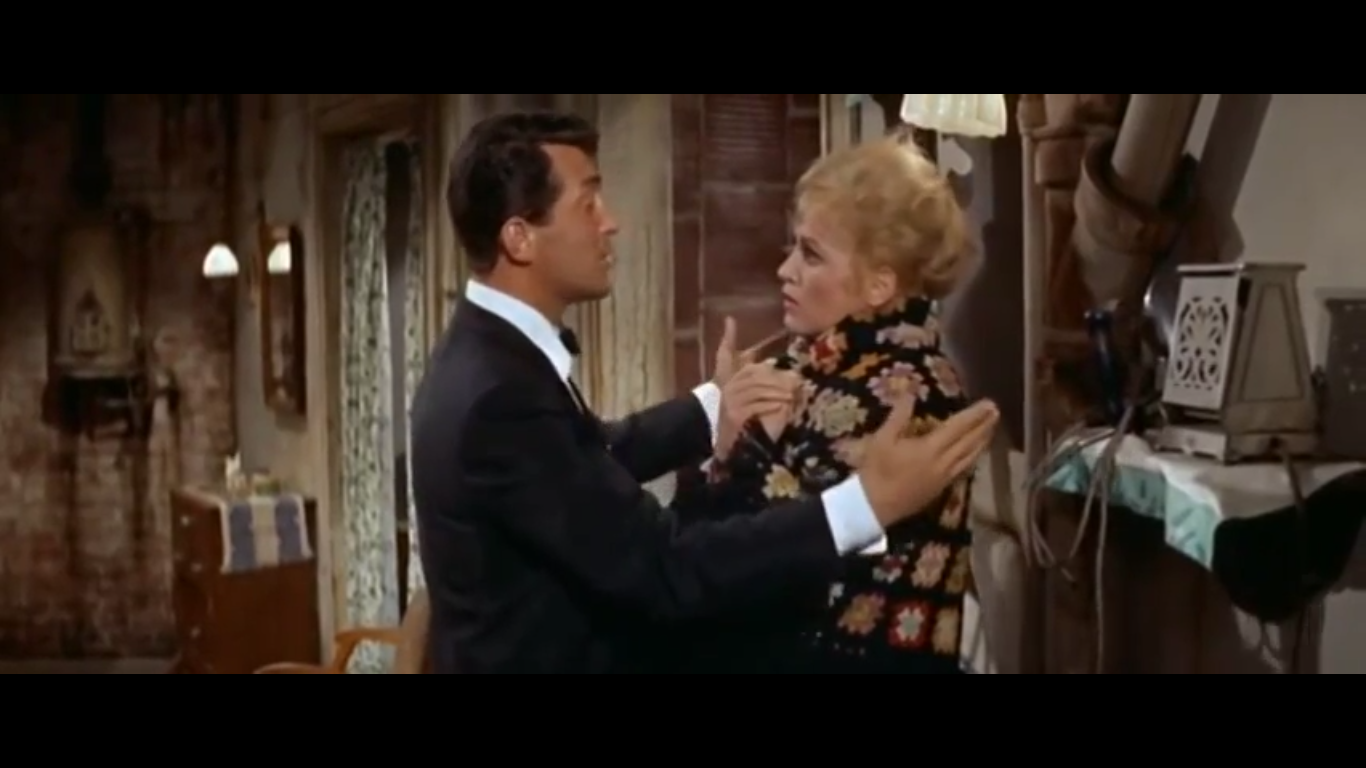
The staff are forewarned never to cross the line to “service” their clients. But she breaks the cardinal rule, overstepping the bounds of a passive telephone operator and becoming invested in the lives of those people she communicates with over the wires. Not least among them, one Jeffrey Moss (Dean Martin).

She’s just about lovesick over his voice. It’s no mistake that she puts on her lipstick before ringing him up to remind him about a pressing engagement, as if he can take in her appearance intravenously. Alexander Graham Bell never quite figured out the science behind that.

It’s not much of a mystery to us what Moss looks like. Because if you read the marquee, you know it’s Dino. But she doesn’t know that and scampers up to his room to save him. Surely there’s a Greek tragedy trapped in here somewhere. If it’s not about falling in love with a reflection or her own work of art, then it’s about the sound of a man’s voice. She wants to help him gain confidence in his own abilities as a writer.

But first please allow me one self-indulgent aside. Dean Martin had a point in unhitching himself from Jerry Lewis. Sure, Lewis had a groundbreaking career as an actor-director, but Dino was so much more than The Rat Pack and his TV program.

The string of movies he took on throughout the 50s and 60s never ceases to intrigue me. He could go from The Young Lions, Some Came Running, and Rio Bravo to pictures like Bells Are Ringing and Kiss Me Stupid. For someone with such a distinct professional image, he managed a steady array of parts.

The number “Just in Time” in the park is made by Holliday in striking red and Dino crooning through the night air. There’s a goofy brand of showmanship between them that we were lucky to see in many of the old MGM pictures. It’s their own rendition to complement Astaire and Charisse from Band Wagon showcasing Minnelli at his best and brightest as we are brought into a moment of fluid inspiration where all facets of the production look to be working on high cylinders.

At the nearby party, Holliday becomes overwhelmed by the Hollywood glamour scene, as all the folks jump out of the woodwork and start smooching as Martin descends down a spiral staircase. This only happens in the movies, and yet it’s a summation of her blatant otherness. She doesn’t fit in this crowd where everyone is on first name basis with the biggest names in the business (“Drop That Name”). It seems like their worlds are slowly drifting apart as her secret life is about to totally unravel.

However, Martin joins forces with a musical dentist and Mr. impressionist himself, Frank Gorshin, who puts on his best Brando impression as they bring the movie to a striking conclusion. The same woman has changed all their lives for the better. Now they want tot return the favor. Moral of the story, get yourself an answering service, especially one with someone who cares like Judy Holliday.

3.5/5 Stars

Two Weeks in Another Town (1962)

It might play as unwanted hyperbole, but when I look at Two Weeks in Another Town, it almost feels like a generational predecessor to Heaven’s Gate. Although Vincente Minnelli’s picture is well aware of the old hat and the emerging trends of cinema, it’s raging against the dying of the light, as it were. He subsequently bombed at the box office, and we witnessed the cinematic death knell of an era.

The director makes the transition from b&w to color well enough as you would expect nothing less from him. Kirk Douglas has what feels like a standard-issue role seething with rage thanks to a career hitting the skids. He’s bailed out of his sanitarium by a collaborator from the old days and shipped on-location to Rome.

There we get our first taste of a demonstrative Edward G. Robinson playing the tyrannical old cuss Maurice Kruger. He’s right off the set of the latest Cinecitta Studios big screen epic with George Hamilton, an Italian screen goddess, and Vito Scotti working the action.

But Two Weeks in Another Country is just as much about what is going on behind the scenes of the production. Robinson and Claire Trevor together again have a far from congenial reunion after Key Largo generations before. They’re part of Hollywood’s fading classes, though they’re far from relics.

Minnelli takes the personal nature of the material a step further. In a screening room watching The Bad and The Beautiful, the self-reflexivity has come full tilt as Douglas wrestles with his image onscreen from a decade before.

Meanwhile, Cyd Charisse makes her entrance on a jam-packed road flaunting herself in the traffic. She’s charged with playing Carlotta — Jack’s former wife — she’s bad and if her turn in Singin’ in the Rain is any indication, she’s fairly accomplished in this department. It’s almost a novelty role because she’s rarely the focus of the drama, only a sordid accent.

The pieces are there for a truly enrapturing experience as only the olden days of Hollywood can offer. I’m thinking of the days of Roman Holiday, sword and sandal epics, and La Dolce Vita. The movie is a reaction to all of them in the flourishing TV age with its glossy romance in beautiful cars, glorious rotundas, and luscious beaches.

It’s not bad per se, and yet it seems to reflect the very generational chasm it’s readily trying to comment on. George Hamilton utters the movie’s title and it’s all right there — utterly temporal and disposable in nature.

These moments and themes feel mostly empty and, again, while this might be precisely the point, it goes against our human desires. Either that or the movie is begging the audience to connect the dots. We want the critique wedded with entertainment. Because most of us are not trained to watch movies from a objective distance. Our mental wiring does not work like that especially when it comes to epics.

Jack is taken by a young starlet (Dalia Lavi) he meets by chance, thanks to her proximity to the troubled production. His and Veronica’s relationship becomes one of the focal points and one of the few deeply human connections in the picture.

Later, Jack’s bellicose benefactor, Maurice, falls ill. The added melodrama is to be expected along with raucous slap fights and the scramble to get the picture in under budget before the foreign backers try and pull out. The old has-been comes alive again — momentarily he has a purpose and companionship — until he’s besieged by new pressures.

Although it was purportedly edited down, it’s not too difficult to observe Minnelli doing his own version of Fellini’s earlier movie from 1960 with the dazed-out remnants of an orgy and a young Leslie Uggams singing her torch songs.

The apogee of the entire picture has to be Douglas and Charisse tearing through Rome in a mad fury. It’s the craziest, most chaotic car ride that can only be conceived in Hollywood; it’s so undisciplined and wrenched free of any of the constraints of realism. The back projections up to this point are totally expressionistic.

And as the car lurches and jerks around we realize we are seeing the film crossover: What we see behind the scenes and on the screen are one and the same, merely facades, and little more. It’s the kind of unbridled moment that could easily earn derisive laughter or genuine disbelief. There’s no way to eclipse the moment.

Instead, what follows is a cheery denouement out of a goofball comedy. Jack resolves to put his life back on track opting to leave behind his young leading man on the tarmac with a girl until they meet again. Hollywood, as is, was not totally dead — there was still some light in the tunnel — but if the box office receipts are any indication, tastes were changing.

3/5 Stars

The Reluctant Debutante (1958): Rex Harrison and Kay Kendall Together

If Royal Wedding started off the decade with the auspicious coronation of Queen Elizabeth II, then The Reluctant Debutante depicts another cultural milestone in its own right: the last “Season” before the newly-instated Queen decided to officially disband the social tradition.

There’s hardly anything pointed about either of these pictures and so historical events serve as only a twee and oh-so-mild evocation of a totally bygone era. It’s a bit refreshing to have them back again even for an hour or so.

Front and center, we must acknowledge Rex Harrison. Harrison comes off as a generally innocuous figure from my childhood with his monologue songs in Doctor Doolittle and My Fair Lady (in that order). He’s mostly amicable if a bit dry and witty.

Personally, his biography is a bit more complicated. When he was a younger man, he was famously attached to blonde bombshell Carole Landis whose career was ended tragically by an untimely death. Harrison’s part in her final days remains mostly obscured. I won’t pretend to know the details.

Then, after their comedic foray in The Constant Husband, Harrison and Kay Kendall got married and made The Reluctant Debutante together portraying husband and wife onscreen. It would be their only film together while they were married and Kendall’s last film, period. She would die at age 32 of Leukemia.

It’s another shocking tragedy and so only some solace can be gained from the frothy goofiness making up Vincente Minnelli’s picture. Because it feels totally antithetical to this entire biography laid out thus far. This is cinema at its most dorky and feel-good.

We must also take a moment to acknowledge Sandra Dee: she was America’s quintessential ingenue for a generation thanks to pictures like this and Gidget. Her persona falls quite easily into a story like this as we are dropped in London, circa 1958 during “The Season.”

There’s a delightfully playful jauntiness to The Reluctant Debutante from the outset, and it comes down to the character types bouncing off one another to great effect. All that’s left to do is watch where they lead us.

Husband and wife rush off to the airport to pick up their daughter. It’s easy enough to explain away the relationship between Jim Broadbent (Harrison) and Jane (Dee) rather quickly with a mention of her American mother back in the States. Kendall is the well-meaning, if a bit ditzy, stepmother, Sheila, and we’re off.

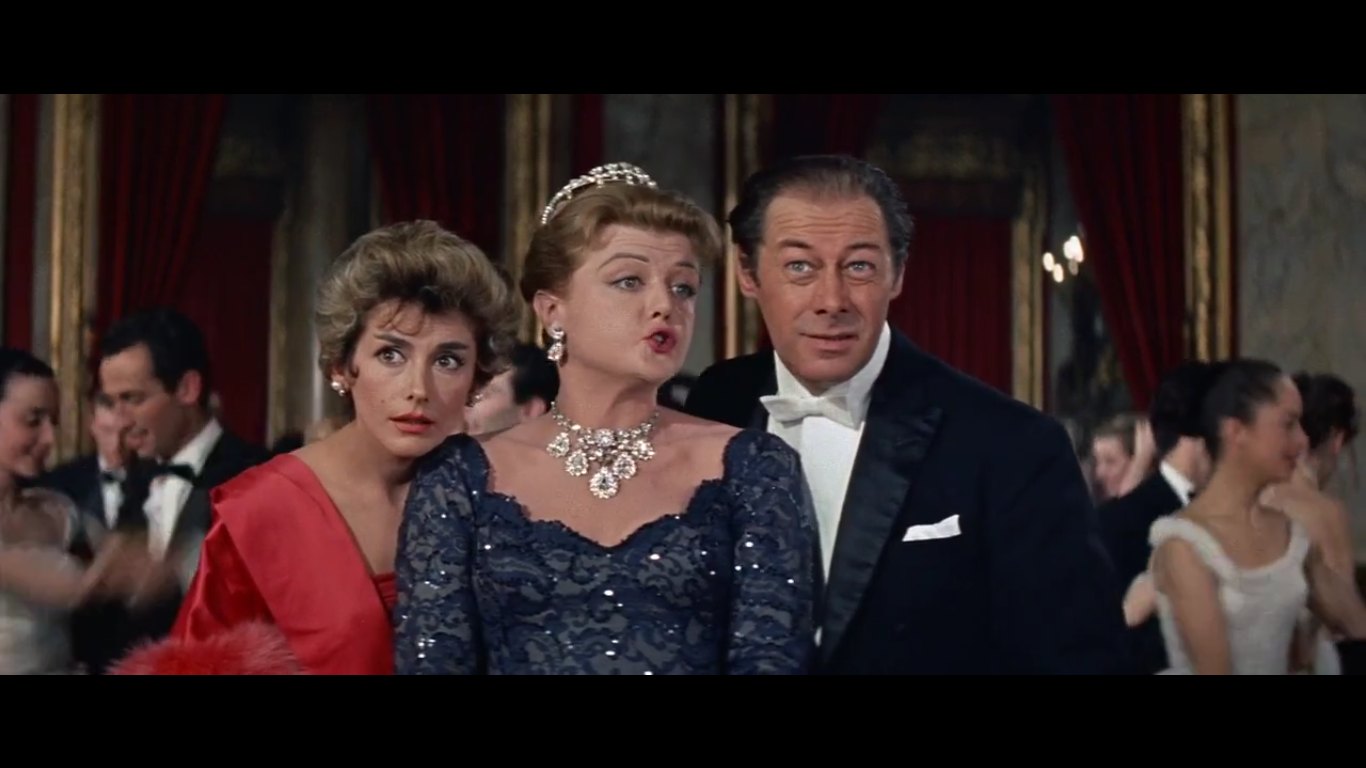
Soon they’re crammed into a taxi with chattering Mabel (Angela Lansbury). She and Kendall form the film’s most antagonistic relationship as dueling mothers trying to set their young daughters up with the finest prospects in well-to-do society.

Because a debutante’s “coming out” is of grave social importance — at least to mothers — it’s not just like breaking a bottle over a ship; this will launch them into the social elite! Sheila’s intent on creating an extravagant charade out of Jane’s coming out ball because she must keep up appearances and outdo Mabel at all costs. This is war and wars require stratagems, if not slings and arrows to do battle with.

Father and daughter couldn’t care less. Sheila’s not interested in any of the prospects, and Mr. Broadbent seems far more interested in the buffet. In fact, it’s the mothers going gaga over the same distinguished young man, David Henner (Peter Meyers). He’s a royal guardsman with quite the handle on diction and London geography.

Kendall whisks Harrison away from the bar and his sardines and potato salad to win an introduction with the fellow. He’s a dutiful husband, but it’s little more. In comparison, he has the most delightful time sharing a moment with the drummer playing with the band; it used to be an aspiration of his as a young man.

This turns out to be a bit of an unexpected but serendipitous rapport because the young Italian-American, David Parkson (John Saxon), will soon be catching his daughter’s eye. For the time, their instrumental rendition of “Rock Around the Clock” has a buoyant joy all but epitomizing the picture at its best. We’re in for some good fun.

The story starts to sing as we get comfortable with the movie’s rhythms with all the pieces in place. Harrison the walking ulcer in evening dress. Lansbury diabolically switches wires with them — giving her “friend” the number of the wrong David on “accident.” Wink, wink.

Harrison and Kendall form the perfectly in-sync comedy duo; they play wonderfully off one another. They’re flying around the ballroom, heads on a swivel going every which way in their evening duds, keeping tabs on Jane’s perfectly innocent activities. It matters to them very deeply which David she fraternizes with. But only one David matters to her.

If it’s not obvious already, Kay Kendall should be lauded as an unsung comedienne because there are unimaginable pleasures in watching her tug everyone around like a dizzying hurricane all out of a place of good-natured maternity. Harrison gets on by pleasing his wife and feigning convention and doing his best to love his daughter in spite of it all.

Heaven forbid Jane go out to the nightclub with the wrong David because she looks all but destined to. It has Sheila in a tizzy. When they finally arrive home, husband and wife hang around trying to spy on them and figure out what they’re doing, but the adults are not very adept at faking a search for lost earrings or fiddling with hot water bottles right within earshot. One can only imagine the obligatory kissing scene. It’s as awkward as one might expect, but also sweet.

It’s in these ways we can see the similarities between Father of the Bride, The Courtship of Eddie’s Father, and The Reluctant Debutante. There’s no denying the full-blown comedic elements, and yet Minnelli never lets these totally envelope the interpersonal relationships at the core of his movies. This is to their benefit. We genuinely care about Spencer Tracy & Liz Taylor, Glenn Ford & Ronny Howard, etc.

I might easily attribute it to a quirky mood or a generous spirit, but The Reluctant Debutante caught me on the right day. Minnelli’s forays in comedy usually have a dash of goodwill, but this one struck a chord immediately. Harrison still had some of his most prominent performances ahead as did Sandra Dee. You might come for one of them, but stay for Kay Kendall. We lost her impeccable talents far too soon.

4/5 Stars

Afire (2023): A German Summer Movie a la Rohmer

Christian Petzold is a filmmaker I was introduced to over a decade ago, and I would consider myself a passionate fan. I’ve seen every one of his films since then, and I would gladly share him with anyone who might listen. There’s some pleasure in championing a director who’s not as much of a household name as one might hope. 

The other wonderful thing about Petzold is what an ardent cinephile he is, but he’s also quite loquacious and charismatic. Obviously, English is not his first language, but he always does wonderfully candid and thoughtful interviews all across the festival circuit. I can imagine he would be quite the person to grab a coffee with. He’s shared on multiple occasions how he crossed paths with Abbas Kiarostami in New York City under such circumstances. 

Forgive me for burying the lede, but I appreciated Afire because, like many of the director’s earlier films, it does feel like it’s deep in conversation with the vast annals of cinema. 

This one in particular feels like a paler, pudgier version of an Eric Rohmer movie. Something in the vein of La Collectionneuse, Pauline at the Beach, or even A Summer’s Tale. I felt vindicated hearing that Petzold was in fact consuming some Rohmer films during the pandemic, but that was only part of his inspiration. 

Reading an interview he cited a significant reference point for his latest effort in People on Sunday. It’s not a film I would have considered in a million years because it’s well, almost 100 years old. But in regard to this allusion, he makes a fascinating observation. 

Unlike Hollywood, Germany doesn’t have a lineage of summer movies about the last day of school or hanging out at the beach with no adult supervision. There’s also no Summer with Monica or Eric Rohmer. 

With men like Billy Wilder, Edgar G. Ulmer, Fred Zinnemann, and Robert Siodmak — all creative collaborators in People on Sunday, they were forced to leave Germany. And when they moved to Hollywood in the wake of the Nazi scourge, their work got harsher with the likes of Detour, Lost Weekend, and more film noir.

The summer had vanished not only from their filmographies but from Germany as a whole. The nation rarely got this opportunity with the ascension of the Nazis and this historical backdrop gave rise to many of the specters which have haunted most of Petzold’s oeuvre.

If you wanted to make a case, Afire is actually Petzold’s most comedic film to date and his closest to romantic comedy. Leon (Thomas Schubert) is staying at his friend Felix’s idyllic summer home out in the forest near the Baltic Sea. They think it’ll be a great place to get away: Leon needs to finish a manuscript and Felix (Langston Uibel) has an art portfolio to complete though he seems far more at ease and prepared to make the most of the tranquil surroundings. 

It starts out as the vacation from hell we might all be familiar with to different degrees. First, their car breaks down, they get lost taking a shortcut, and it looks like Leon might be stranded out at night in the forest with no cell signal. Felix goes off to make his way to the family cabin. 

Eventually, they get there. Except it turns out they won’t be alone. A co-worker’s daughter has set up shop; we don’t know for how long or why. We just know Leon’s plan for an uninterrupted getaway is catastrophically ruined. Strike two. 

The walls are thin and you can hear everything…It makes sleeping very hard and Leon’s even grouchier than he was before. The incessant bugs and the impending fires don’t do much to lighten the mood. 

Leon also seems genetically predisposed to be a moody, pretentious misanthrope of the first degree. Felix is good-natured and thoughtful. He would never think to impose himself on others or make a stink. It comes naturally to Leon. 

The camera takes on his surreptitious gaze which makes me uncomfortable as he spies on their housemate out in the yard before ever officially meeting her. Still, nothing he does can negate Paula Beer. In her work with Petzold, she always comes off as such a charming and intelligent performer who gives so much to the camera. 

Between her last film Undine where she played a modern-day mermaid, and Afire with its landscape ablaze, there’s this pervasive sense of the classical elements permeating the collaboration. It’s this lovely amalgamation of the deeply modern with the primordial. It makes one wonder where Petzold and Beer might go next. 

In the previous film, she was a docent focused on Berlin’s history of urban planning. Here Nadja works at an ice cream stand doling out flavors of “Smurf” sherbet. She’s disarmingly straightforward, cutting through any pretense. It makes her immediately attractive as a personality.

Whereas Leon’s a perpetual excuse machine. He never swims or takes anyone up on anything. He’s the kind of person you try to be nice to by inviting them to stuff even if you don’t want to, and then they decline so many times, you feel exasperated. They’re too blind to recognize you’re trying to do them a favor.  

Leon should be a lost cause, and yet even if we don’t particularly like him, we can empathize with him, and I think all his acquaintances in the movie make us appreciate him a little more. 

Later, at an open-air dinner, he lashes out at the rescue swimmer Devod. He feels like a stereotypical beefcake, and yet belies the image making Leon all the more uncomfortable. Because their new acquaintance was sleeping with Nadja, but he seems like a genuinely nice guy. These don’t have to be mutually exclusive. 

At first, Leon’s defensive about sharing his work; I recognize what a private and vulnerable thing it can be, and still, I wouldn’t give him that much credit. After Nadja asks to read Club Sandwich, he eventually relents. One suspects it becomes a mechanism to try and get closer to her and into her good graces — a way of covering his growing insecurities.

Leon’s also made a big deal of setting up time with his bespectacled editor (Matthias Brandt) to review his new work. He’s an older veteran, not unkind, but extremely busy. It turns out the full weekend they were meant to have together has been whittled down to one full day and some change. After Nadja invites Helmut to dinner, Leon grows jealous when it seems like everyone else gets a piece of him too. 

He takes great interest in Felix’s art portfolio – the one that Leon either didn’t get or totally disregarded. Then, Helmut trades poetry with Nadja; she recites her favorite poem, “The Asra.” It comes out she is working on a Ph.D. in Literature on Heinrich von Kleist’s The Earthquake in Chile (What she terms the “quake of representation”). 

Leon’s pettiness feels like a symptom of his own making. He knows Club Sandwich is crap. Nadja was honest enough to tell him as much. But he tried to dismiss her criticism; she’s only an ice cream seller. 

He never thought to ask her about what she might be studying. And now with the recognition that not only is this girl better looking than him but also perhaps smarter as well, it’s more than his fragile ego can take. 

Everyone else seems casual and comfortable, enjoying the throes of what summer has to offer. He’s the only one in obvious crisis, slowly imploding until the world around him joins in. 

The fire which was always hinted at continues to rage ever closer. Ash falls over their world like a ruinous dusting of snow. The boys go to tow their car with a tractor. Helmut starts to convulse on the lawn and Nadja takes charge to rush him to the hospital.

I noticed one particular jump cut in the editing involving Leon. He realizes he’s made a huge mistake; he’s been selfish and incapable of doing almost anything. What’s more, what will Nadja think of him? 

The raging conflagration brings with it human tragedy that strips away any remnant of sun-soaked vibes and focuses our story on its purest elements. As we should expect, it goes darker, but there’s another turn in the story. Our perspective changes subtly.

Nadja and Leon are called into the hospital again. There’s pensive voiceover narration to go with the images, and we realize intuitively even as the actions happen in front of us, somewhere in the present or future Leon is writing a new novel. 

I’m led to question if it’s still callous that he seems to be writing the story as the events seem to be happening or is it the most authentic thing he’s ever done? I’m not sure.

Later, he sees Nadja again from a distance. Some time has passed. We’d like to think he’s changed, and we know he’s wracked with guilt. Their eyes lock in recognition. Petzold cuts before there’s anything else, and it feels like the quintessential ending. We can fill in the rest with whatever we want.  

I’m still trying to get my feelings in order, but it delivered like Petzold always seems to. It’s deeply observed and engaging with its perceptive vision of humanity and interpersonal relationships. But what makes it richer comes with how the writer-director takes a simple premise and simultaneously imbues it with all this intertextual meaning. 

His references are not always overt, but couched within his stories are the echoes of his nation’s films as well as literature and mythologies – many of his projects over the years have been adaptations of much older work. In our current age of cursory knowledge and vapid fads, he’s a refreshingly thoughtful filmmaker. I’m still holding out for that coffee someday, preferably at Berlinale. 

4/5 Stars

1930s Screwball: Love is News, Double Wedding, Young in Heart

I normally try to focus on a theme to better curate my viewing. This post will encapsulate 3 films whose primary players don’t have much in common. However, if you wanted a loose point of connection, all three are comedies from 1937-38.

It all happened when I was on the lookout for some underrated screwball comedies and though some of them are more innately screwball, I was pleasantly surprised by what they had to offer. If you haven’t seen them already, consider this a hearty recommendation to check out some underrated films:

Love is News

Love is News (1937):

Although it traverses the same worlds of pictures like The Front Page, Platinum Blonde, and Libeled Lady, there’s something rather lustrous about getting Tyrone Power in his first headlining role with his leading lady being such a fine rival as Loretta Young.

In the 1930s the prevalence of newspaper movies makes them a workplace subgenre all their own. Love is News is made by this sense of good-natured ribbing and antagonism found end-to-end. In the office, Tyrone Power and Don Ameche feud incessantly, always buzzing the intercom to pull one another off the payroll. And this comic fodder continues when Steve Leyton (Power) finagles a scoop from the “Tin Can Heiress” (Young), sidestepping all the red tape and effectively gaining her confidence.

The piece de resistance is (no, not George Sanders playing a jilted French lover), but the fact the heiress hatches her own scheme as an act of revenge. She calls in a story to say she and Leyton are to be married!! She’s used to the publicity hounds, but he is pummeled by his newfound notoriety without a moment’s peace.

What makes the movie is the kind of rambunctious reunion you would expect given such a scenario. A podunk Judge (Slim Summerville), with a jailhouse falling apart at the hinges, locks them both up: She receives a speeding violation, and he’s apprehended in the middle of grabbing, err “stealing” her vanity case.

By now the last place he wants to be is stuck right next to her — anything else would do — but she orchestrates everything just so. There’s an exuberance because now the game is afoot as Young playacts her way to her desirable conclusion.

Even if the enemy-to-lover romantic arc is something we see so often, it’s the leads who make it spark, and there’s enough chaos to make it more than palatable. I couldn’t help thinking about how bright-eyed Power and Young both feel at this point in their careers, and it gives a kinetic vitality to their chemistry.

3.5/5 Stars

Double Wedding (1937)

Double Wedding feels like it banks on all the best characteristics of William Powell. He’s witty, at times churlish and juvenile, but boy does it make for goofy, ever-contentious comedy. This was one of his prevailing gifts as a film actor. We have a fine time messing about with him, and he never quite relinquishes his charm.

I’ve previously mentioned how I’m partial to The Thin Man movies because it plays off the amenable chemistry of Powell and Myrna Loy; not on their antagonism. It’s more about their repartee as comedic and matrimonial equals than it is watching them quarrel and make up.

But enemy-to-love arcs must cast Loy in some other way. In movies like Double Marriage or I Love You Again (1940), she must seem unreasonable from the outset or at least chafe against the wisecracking good humor of Powell.

In this story, she’s the fastidious businesswoman and older sister, who effectively runs her younger sister Irene’s life. It makes her an easy target for Charles Lodge, a man who’s probably a bit slap-happy and far too bohemian for the ’30s, living out of a trailer and putting on his own stage productions.

He scorns this kind of buttoned-up oppression and though Irene and her wet-noodle of a fiancee are charmed by his influence, they’re also not brave enough to stand up to Margrit. It’s so easy to sink back into tedium as she begins to set about planning their future wedding.

Powell feels like the lynchpin of the movie as he rebuffs Irene’s newfound advances, tries to help the dreary Hugo reclaim his manhood, even as he tries to woo Margrit under the most unconventional circumstances. It hardly seems material that the title gives something away. It feels like more of a signpost for us to aim for.

The escalated chaos of the finale exceeded my expectations as folks crowd in and around Powell’s mobile home for the wedding proceedings overseen by the ever-handy Donald Meek. It just keeps on going and going, but then again, I should expect nothing less from a Powell/Loy comedy. John Beal and Edgar Kennedy are other personal standouts to keep an eye out for.

3.5/5 Stars

Young in Heart (1938)

Without any preconceived knowledge of Young in Heart, it actually positions itself with an intriguing premise. It’s built out of a family ensemble of con artists who are always looking for ways to get ahead with varying degrees of success.

Their esteemed patriarch and matriarch are played by Roland Young and Billie Burke respectively. Father is constantly ingratiating himself as a distinguished Colonel who fought with the Bengal Lancers. The grown kids (Janet Gaynor and Douglas Fairbanks Jr.) are out on the prowl for eligible suitors, who also happen to be loaded. The French Rivera has more than a few prospects though the authorities are especially vigilant.

The whole movie comes into its own after they’re unceremoniously kicked out of the country and then stuck aboard a train trying to figure out their next angle. George-Anne (Gaynor) meets a kindly old lady, “Miss Fortune,” who has her own compartment. She gladly shares it to stave off her loneliness and the family is quick to oblige. She’s just another mark they can perform for.

She welcomes them into her home, glad to have the company, and they realize if they’re nice to her, she could very easily credit them in her will. For modern audiences, it has the ring of Bong Joon-ho’s Parasite albeit without the social commentary. Instead, this family secretly unearths their soft hearts finding that as they model goodness, they find it suffusing throughout their lives.

The Colonel becomes a revered car salesman of “Flying Wombats” to the wealthy.  Richard stumbles into an engineering firm because of the pretty girl behind the desk (Paulette Goddard) and soon learns the edifying nature of an honest day’s work. They also fall in love.

If we see the progression from a mile away, it’s still a pleasure to watch this family evolve in front of us, and it feels like each member gets their individual moments to shine. Gaynor feels like the undisputed focal point, and though I don’t necessarily buy her in a skeevy role, we like her already, which is half the battle.

Young and Burke might be known for a single role each (in Topper and The Wizard of Oz), but they always can be counted on with a highly specific brand of comic eccentricity. There’s something wonderful about watching their charms bubble over. Although we could have easily had a Fairbanks-Goddard rom-com on its own, it might have been a bit bland. The ensemble brings the best out in everyone.

3.5/5 Stars

Abbott and Costello Films: Naughty Nineties, Time of Their Lives, A&C Meet Frankenstein

The Naughty Nineties (1945)

The next genre Abbott and Costello took on in The Naughty Nineties was the show boat-style musical. Henry Travers fits as a kindly old ship captain who promises family-friendly entertainment headlined by his daughter and a very familiar leading man (Bud Abbott).  Costello crops up in a local band pounding his drum with a parade off the beaten path. Soon enough he’s getting up to all kinds of his usual shenanigans as the lone stagehand for their stage production.

Comedy like this must have a rightful antagonist: Rita Johnson and Alan Curtis lead a trio of shady malcontents. They’re getting brushed out of town, but they set their sites on the naive Captain. His one vice is gambling, and they know how to bend the odds. Soon he has no recourse but to work with them by their rules. They commoditize and taint all he’s worked so hard to build.

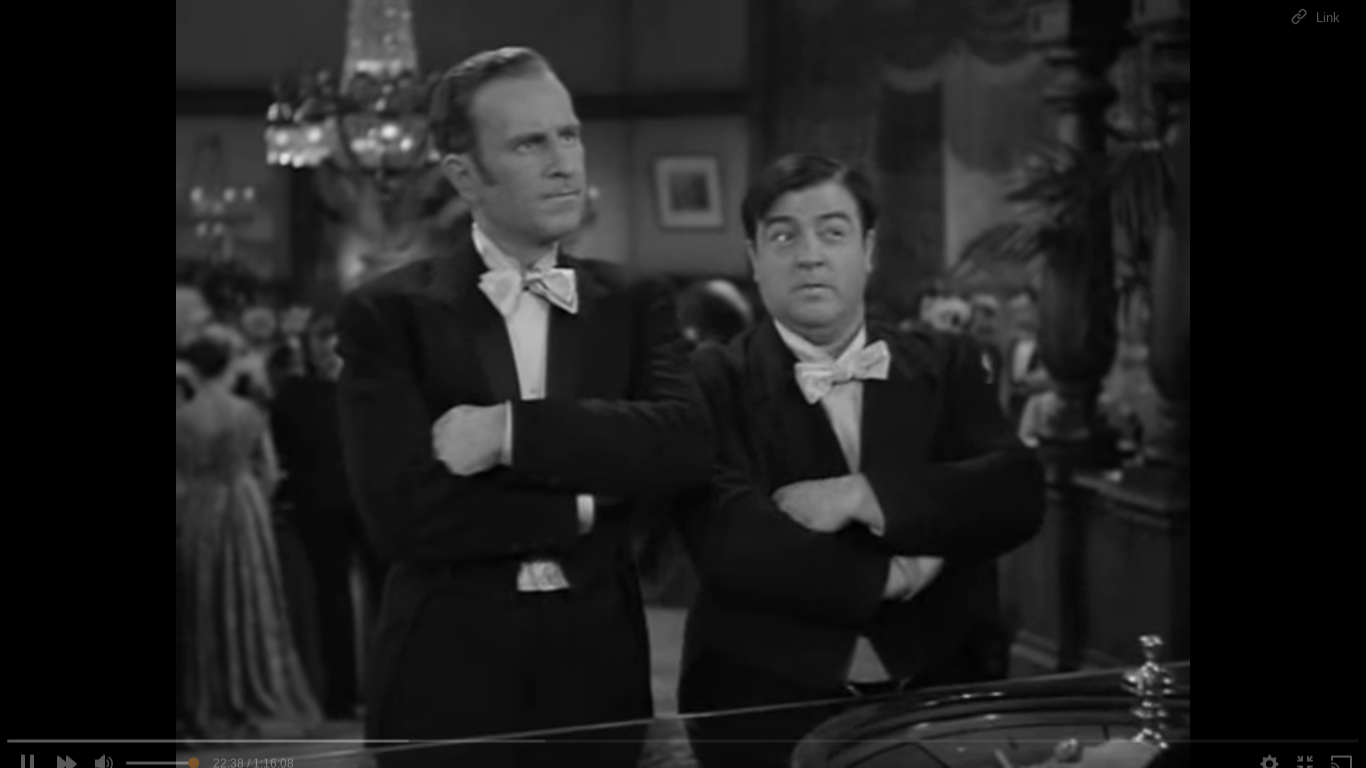
Enter Abbott and Costello. They take on a crooked roulette wheel with the hiccups using a wad of chewing gum. Lou makes himself useful in the kitchen whipping up a feather-filled cake though he gets his comeuppance with a cat burger routine that has him cringing over his dinner after every mew.

Although it’s not very organic and feels like the most shoehorned gag in the story (because it was), we do get one of the recorded versions of “Who’s on First?” standing in the halls of comedy as one of the most revered routines of all time. Partially because it only works with the duo. You need the straight man, you need the comic, and then the situation to put them at odds. Few have done it so cleverly as this one.

The rest of the movie isn’t so lofty and that’s okay. Costello’s running around the deck being chased and chasing. It’s puerile entertainment, but not the worst we could have. If nothing else, his ever-present wheezing, warbling sound effects feel reminiscent of Stan Laurel though Costello’s portly frame makes him feel a little more like a man-child. This too became the bedrock of Abbott and Costello’s comedy.

3.5/5 Stars

Time of Their Lives (1946)

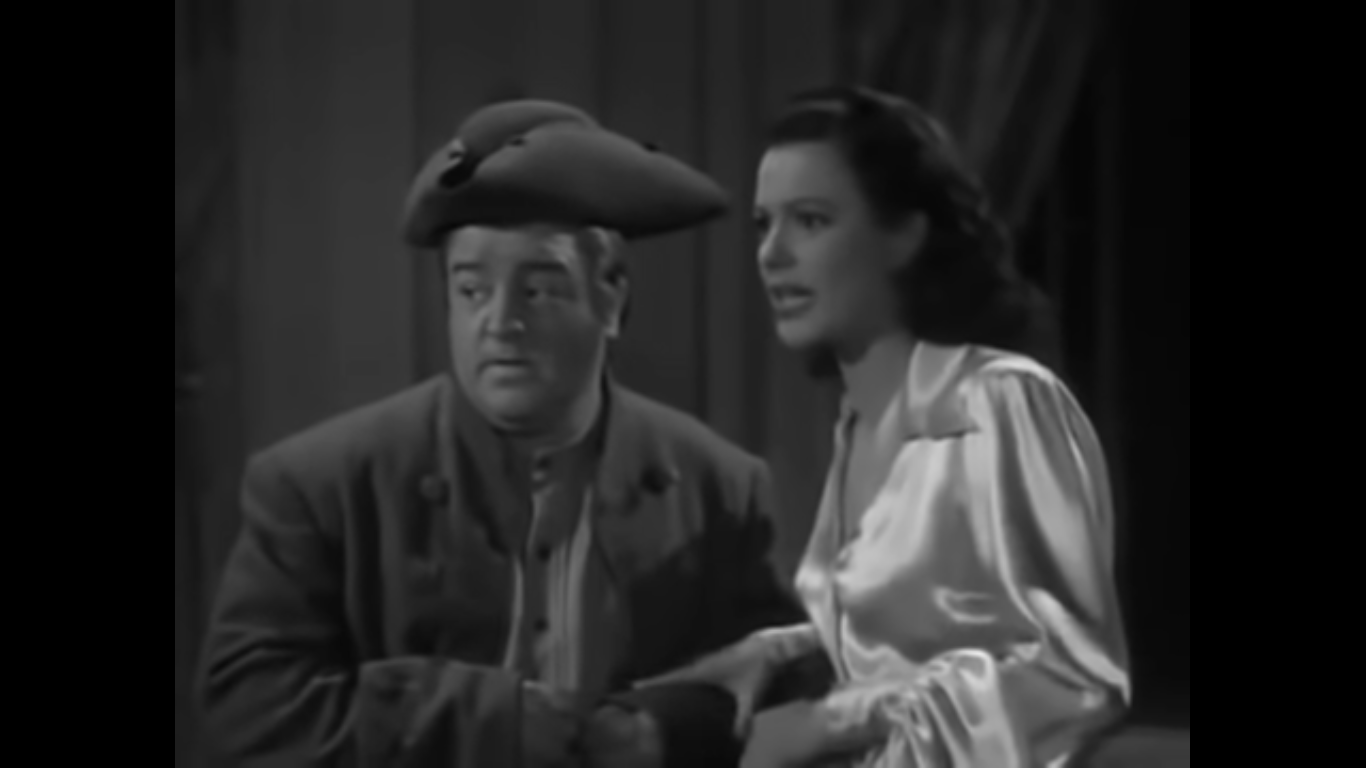
Time of Their Lives feels like an obvious departure for the team. We found ourselves planted in a colonial drama with a spritzing of the usual comedy. Box office woes or not, I’m not quite sure I’m amenable to how they retooled the Abbott and Costello formula. This movie begins as a straight period piece. It can be done well with something like The Court Jester, but it does feel like the boys rarely get enough time together. Perhaps this was by design.

Still, like many of the great comedians of their day and age, they seem to work best when they can break away from the rigors of plot and the confinement put on them by a narrative arc even if it’s for the sake of a few throwaway gags. Because this is what their entire reputation is founded on, and it’s these moments in between where they lose the plot and we gain laughter.

Time of Their Lives is certainly in danger of becoming moldy pretty fast if not for a quick change of direction leading into an entirely different movie. The ghost angle is something — Mr. Topper redux if you will — but it feels a bit uneven and not quite in the vein of what we’re used to. What it does morph into is a bit of the Costello and Marjorie Reynolds show, which isn’t an entirely bankrupt proposition. In comparison, Abbott as a straight-laced and tormented psychiatrist doesn’t provide much in the way of genuine laughs. He functions best in conjunction with his able partner.

I’ve already made it painfully apparent, I’m not an admirer of haunted house films with seances and the like, but Abbott and Costello probably give us the funniest version (although I need to rewatch I Love Lucy to make doubly sure). I especially appreciated when Costello the apparition made his presence fully known by rapping his comedy partner over the foot. There’s not a great deal of this kind of interplay in the picture, but it seems telling these are still among the most noteworthy moments.

3.5/5 Stars

Abbott and Costello Meet Frankenstein (1948)

Between the animated credits and their pairing of some historically lucrative stars, Universal does well to promote their assets. Abbott and Costello Meet Frankenstein also shows an understanding of the continued shelf life of IP. If that was true in the 1940s, it’s even more of a buzzword in the modern media landscape.

At its best, we get Abbott and Costello trading off their impressions of some of the most iconic monsters. But more important than that is how our team is back together again. All is right within their world with their patented antagonism restored along with their attempts at menial labor.

Abbott’s bossing Costello around even as he’s somehow managed to nab the pretty girl. It’s really a reversal of the Hope & Crosby dynamic where Bing always seems to get the girls. Here it’s the lovable pudgy nincompoop Costello. Though both his pretty ladies have ulterior motives.

They also have ample opportunity to bump heads with a belligerent businessman. It’s only the beginning of their troubles. McDougal’s House of Horrors is a personal showcase for the traditional gags where Lou crosses paths with Dracula who is very much alive, though he’s never around when Bud comes back to investigate.

Lou can’t catch a break, but of course, that’s the gag. Bela Lugosi’s Dracula, Frankenstein’s Monster, Lon Chaney Jr.’s Wolf Man, he unwittingly has run-ins with them all, and somehow comes out on the other side still intact. This is the ultimate joke that can only work with a foundation of laughs. It’s his absurd invincibility in the face of all of this supernatural threat and menace that seems bent on destroying him time and time again.

It’s also one of the first movies in their catalog with a dramatic turn — Abbott must believe his buddy for once — he knows he’s not just seeing things. It does disrupt the situational irony fundamental to their brand of comedy, but it comes late enough, we’re ready for our resolution, and the movie pays it off in the most melodramatic Hollywood form.

But it is a glorious crescendo of scaredy-cat comedy, and it seems to suggest to forthcoming generations just what can be done if you successfully meld these genres together. Because it doesn’t merely trivialize them. By weaving together the mythology of the Universal monsters from their own standalone entries, this addition effectively built on all their legacies. 

3.5/5 Stars

Abbott and Costello Films: Buck Privates, Hold That Ghost, Who Done It?

Buck Privates (1941)

Service comedies almost feel like a rite of passage for comedy teams, and it’s no different with this early success from Abbott and Costello. Against their hijinks, there’s a blatantly obvious love triangle (Lee Bowman, Jane Frazee, and Alan Curtis) meant to lend some balance to the drama. It feels reminiscent of what studios tried to do by domesticating all the Marx Brothers’ later works with “plot.”

The Andrew Sisters — at the height of their powers — also sing a couple of their best toe-tappers including “Boogie Woogie Bugle Boy” and “Bounce Me Brother, With a Solid Four.” There’s a certain amount of buoyant jingoism about them. This is a staple of their appeal.

Still, it’s strange to think Pearl Harbor had not yet occurred when the film was shot. The country was on the cusp of something but not yet plunged into the abyss of World War. For now, Abbott and Costello can live their charmed comedic life.

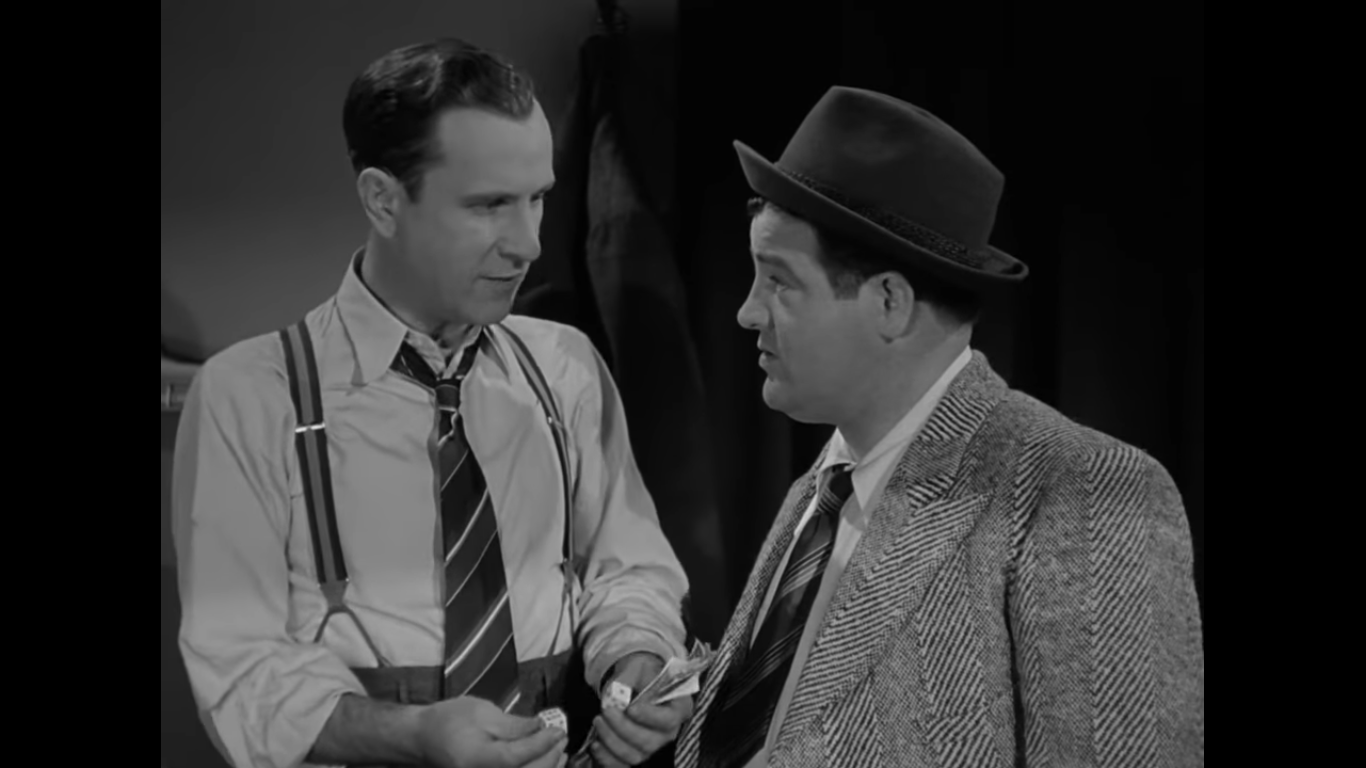
This is the picture that transitioned them from the vaudevillian circuit and really made them lucrative movie stars. It’s all about the bits from playing craps to army physicals and a bumbling drill regimen as only Abbott and Costello could pull it off. They do have a mark and easy rival who goes from police officer to hulking company officer (Nat Pendleton), but just as often the comic tension is borne out of their own self-made antagonism.

Costello is always a hapless victim and Abbott always has a way of either berating his ineptitude or egging him on. This was the crux of their not-so-secret formula. Again, like the Marx Brothers, it’s not like they were an overnight success trying to come up with their personas as they went along. They already feel like a well-oiled machine we can thoroughly enjoy without any reservations.

3.5/5 Stars

Hold That Ghost (1941)

Hold That Ghost finds Abbott and Costello perfectly in rhythm. First, they’re bumbling waiters at a fancy restaurant. Then, they’re gas station attendants and in both places, they find themselves unwittingly linked with a local gangster named Moose, who’s tangled up with a blackmailer and the D.A.

All of this is a set-up because the majority of the picture takes place in a haunted house. Even if the studio added these earlier scenes to capitalize on the musical success of Buck Privates, it does feel like the perfect entree.

Our hapless heroes are piled into a jalopy full of a menagerie of mostly second-rate character players and then dropped off in front of a dark and haunted tavern. There’s a ridiculously handsome professor with his head buried in his work, and the pouting blonde just waiting for him to notice. The third member is a jovial radio actress who’s more than game to make Lou’s acquaintance. I was gleeful when the cast took to the floor of the haunted manor for some after-dinner dancing with some raucous choreography courtesy of our portly twinkle toes.

The dark and stormy night elicits all the typical scares especially because Costello is the king of the yellowbellies (and for good reason). Because while his partner chides him for being a lily-liver, gangsters commit murders, detectives show up unannounced out of nowhere only to disappear, and of course, there are the ghosts.

The way Costello sounds off like a little kid taps into his shtick at its best. He’s known for being hoodwinked and demonstrative in some of their most well-known skits (ie. Who’s on First?), but the dynamic works when he’s totally nettled his straight man with his utter idiocy. One can only work with the ire of the other. The same goes for any of the sleights of hand or deception gags they pull.

They work on this spectrum of perceived intelligence. Costello sees things and protests. We know he’s speaking the truth, but to any objective outsider (in this case Abbott), he’s being unreasonable.

Like Stan Laurel, he’s a bit of a charmed character, and the world in all its many lunacies is observable only to him. His hat is swiped from his head, a bedroom turns into a gambling joint, and dead bodies fall on the floor only to disappear into thin air.

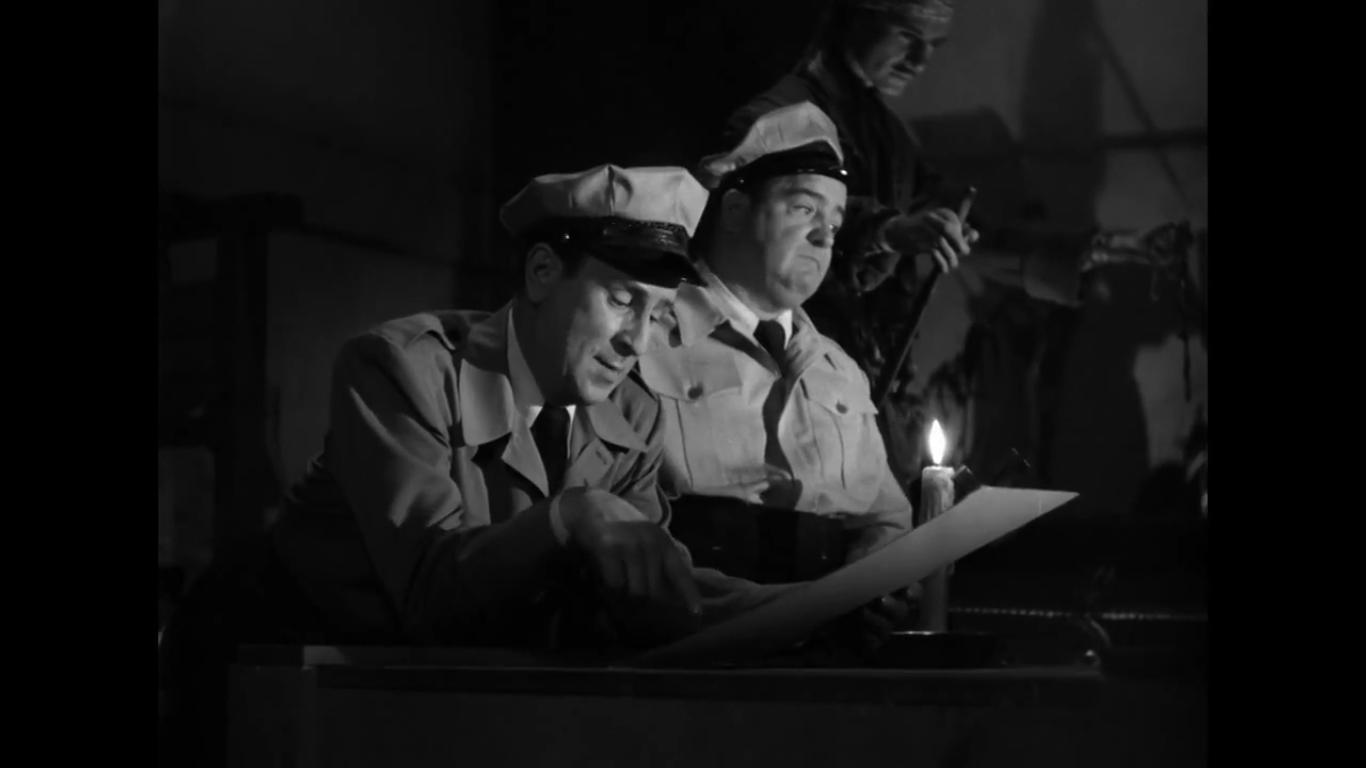
The ongoing candle gag only works due to this same principle predicated on timing. Abbott’s out of view and yet standing just off stage so he comes back into frame at the most inopportune (or opportune) time for the visual gag to take. Abbott and Costello pretty much built a career on this, and why not? I find it delightful even after all these years.

4/5 Stars

Who Done It? (1942)

It wouldn’t be an Abbott and Costello picture without them taking some menial job ripe with some humor to show off their usual conflicting ineptitude. They display perfectly out-of-sync, synchronicity if you will. You have to be working together to be so visually discordant.

Costello’s behind a cafe counter cutting a piece of cheese — Linberger cheese — and he’s about to suffocate from the smell. The customer’s grousing for his food and Abbott’s barking after his pal, who has no recourse to bring out a gas mask…

Again this feels like the appetizer whetting our appetite for coming attractions as Costello keeps on getting fleeced by a kid bellhop. But they’re on to better things because our boys are aspiring radio talents moonlighting as soda jerks.

They meet another professorial fellow, who might be their inroad to a career in radio murder mysteries. However, when the network president (Thomas Gomez) gets murdered mid-program, they have a chance to prove just how good they are at solving crimes. Most of the movie takes place in these stationary interiors, inside the radio set, and yet the boys tumble all over the place as per usual.

What sets the movie a cut above some of the other A & C pictures comes with the supporting cast. Who Done It is bolstered by some well-remembered talent of the era falling into their readily available parts.

Patric Knowles and Louise Albritton are well and fine as the prospective young lovers caught in the drama after losing the good colonel. Mary Wickes brings her ever-wry wit to play up her own fledgling romance with Costello.

William Gargan and Bendix can be called upon in a pinch to lampoon their typically hardboiled cops plucked from just about any noir you’ve ever seen. There’s Jerome Cowan in another role. This familiarity helps carry the lulls when our heroes aren’t front and center.

All the rest of the time they’re hard at work filling us with belly laughs. There’s a familiar-sound “watts and volt” bit. Then, with a killer on the loose, Costello gets beset by transcription machines, stage acrobats, and sound effects; it feels like a comedic jungle gym with so many possibilities for his elastic talents. I’ve rarely considered halitosis so funny.

But just about everything is superseded by the finale kicked off by the anxiety-inducing phone gag I knew in another iteration during my childhood. Every person and his brother is able to patch through their calls in an instant — the world over — and yet the operator tells poor Lou his line is busy.

It doesn’t matter if he has thousands of dollars on the line or if there’s still a murderer to be apprehended. Because he constantly reminds us these pictures are about the means, not the ends. This one’s a lively ride hyping up the melodrama and leaning into chaotic bits of slapstick in all the best ways.

4/5 Stars

My Name is Nobody (1973): Terence Hill and Henry Fonda

For those familiar with the tales of Odysseus, My Name is Nobody earns its name from the witty trick the Greek hero uses to escape the Cyclops. However, the movie should draw more comparisons to the works of Sergio Leone than Homer.

It’s difficult not to immediately calibrate the film’s first scene against something like the opening of Once Upon a Time in the West; it’s as much about the stretching and manipulation of time as it is the near-wordless actions. There’s even a clock ticking in the background.

We have a callback to Fonda getting a shave at the Tonsorial Parlor in My Darling Clementine (feet even propped up) however, here the scene is done up with this new sense of impending dread, and we can’t quite fathom why. We just feel it.

Again, getting a shave, milking a cow, brushing a horse, are mundane activities undertaken by three strangers, and yet the scene imbues them with this uneasy energy. They could be Jack Elam, Woody Strode, and Al Mulock biding their time at the creaking train depot for Charles Bronson.

Although Leone’s not the director; he conceived the original idea, and Tonino Valerii, who was Leone’s assistant director on some of his most prominent films, knows what it means to milk the moment through images and sound.

It’s not even the heart and soul of the movie, but like the earlier picture, it gives us the essence of the style and certainly Jack Beauregard. Because after giving the public a shock by turning Henry Fonda into a bad man, Leone’s done the western icon one last favor by canonizing his legacy for a final time.

Before any of this gets perilously high-winded and overly contemplative, it should be mentioned forthright that My Name is Nobody remains an unadulterated comedy on multiple accounts. Given what I’ve said already, I’m not sure if this comes as a shock or not. But what’s even more imperative is how it’s intended to be this way.

The dialogue is pure pap. It feels generally tone-deaf and totally out of sink with some of the best images of the movie, but this is all very much in the tradition of the Spaghetti western no matter the language, locale, or subject matter. It’s telling the only actor who actually dubbed himself was in fact, Henry Fonda. Again, he’s given the ultimate deference and his audience probably expects nothing less.

I’m also no music man, but there are elements of Ennio Morricone’s compositions here — the man who wrote the book on the Spaghetti soundtrack — seeming to gleefully parody himself. The interludes during the title credits are merry and gay literally popping with an almost sickening buoyancy. Later, it devolves into a melding of Wagner and chanting chorale arrangements that can only hearken back to The Good, The Bad, and The Ugly.

Here we get our first look at Terence Hill. He’s a vagabond who catches fish with his bare hands. This too builds off the same persona he had in They Call Me Trinity. He’s the anti-Eastwood if we can call him that — bearing a convivial manner — though equally adept when it comes to gunslinging.

Since there is no Bud Spencer, he gets Henry Fonda as his main partner in crime. Nothing against his most prolific friend and countrymen, but you’re definitely getting a different kind of picture with this change in personnel.

True, it’s hardly Fonda’s best work, but he feels strangely at peace with his surroundings and coolly confident since he’s done this so many times before. He’s not capable of going into parody in the same manner as Morricone’s score. Or if he does, it only aids in burnishing his already established legend.

Because he has a pedigree with forging the West you never had in a movie like They Call Me Trinity, though it shared some tonal similarity thanks in part to Terence Hill’s quick drawing ne’er do well. Fonda manages some amount of grandeur in a movie that otherwise is happily preoccupied with slapstick and scatological humor. There’s Sam Peckinpah’s name listed on a tombstone for goodness sake! And yet Henry Fonda, that is Jack Beauregard, provides a certain level of enduring gravitas to the proceedings.

It functions relatively effectively because Nobody (the name of Hill’s character) idolizes the older gunslinger so much. He makes us believe in him even as many of us bring our own history with Fonda to the movie already. The younger gun can best be described as a historian of Jack Beauregard and better yet a fanboy. He knows all about his exploits and has followed him from his earliest days.

He’s a peculiar sort of figure. At once, seeming to jostle for the spotlight and dog the renowned fighter, and at the other end, trying to grow his acclaim. He wants people to remember Beauregard as the larger-than-life figure he was in real life on countless occasions. But he also wants the man to go out by living up to his expectations. He can only do this by facing off with The Wild Bunch, a pack out of outlaw roughriders at least 100-strong.

The fun and games of the movie happen at a bustling carnival. Nobody takes the time to shoot a stilt walker down to size and pie a fat-headed vendor. He’s equally game for some gunplay in the saloon showcasing both his tolerance for alcohol and his uncanny sharpshooting.

All of this feels like an audition for a bout with Beauregard. Because the whole movie they toy with their adversaries, whether it’s in a funhouse, over bombs, or dynamite. Nobody ably turns some of his playthings into bobo dolls and runs off with a train filled with gold after staring down the engineer in a urinal. Yes, this really happens.

But of course, the movie is never about rivalry and this is how it sidesteps the usual trope others will remember from The Gunfighter or I Shot Jesse James, et al. In the final stand we have The Wild Bunch kicking up a dust storm in a face-off against a solitary, bespectacled Henry Fonda at the ready with his shotgun. He’s kept his part of his bargain, for the sake of his legacy and his ever-present shadow has provided him a fitting piece of assistance.

Although I have little call to cast aspersions on the picture, it feels like My Name is Nobody strives to be both comedy and elegy. It can never fully succeeds at either, but there are distinct elements to be appreciated. One of these is Fonda, and he goes out as a “national monument” rightfully so.

It’s not his greatest western by a long shot, but his last round in the saddle puts a fitting denouement on Fonda’s career adding its own addendum to the kind of Liberty Valance mythos or the cyclical lineage of toxic gunfighters. The pronouncement “Nobody shot Jeff Bearegaurd” maintains its double meaning. Sometimes myths aren’t bald-faced lies. They can also be acts of willful preservation and frankly, peace of mind.

In My Name is Nobody, there’s a warm jocularity to it all, down to the very last shot. It’s an accommodating movie, and although this keeps it from being totally profound, that’s okay.

3.5/5 Stars

They Call Me Trinity (1970)

When I was living abroad it was one of my European friends who first introduced me to Terrence Hill and Bud Spencer. I had never heard of them and was anxious to learn something about the duo. Regardless of what their names imply, both men are Italians with aliases befitting American action heroes.

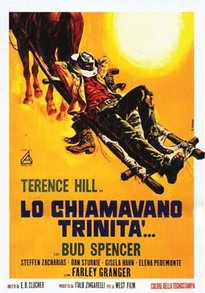
They Call Me Trinity is one of their most lucrative pairings together, and it fits into the historical narratives I know well. It is a spaghetti western a la Leone or Corbucci, but it was made with deeply comic inflections.

We all know the laconic heroes: Eastwood’s “Man With No Name” or Bronson’s “Harmonica.” Hill seems to be one of their ilk, although he can be found lounging lazily on a litter pulled by his horse. He proceeds to get up and walk into the nearest cantina looking half-naked as he scarfs down a skillet of beans and drains a bottle of booze with a hearty belch. It’s the kind of showing that draws the curiosity of all bystanders. He represents a different kind of temerity — totally comic in nature. It helps he’s also ludicrously fast on the draw.

If he’s one source of easy laughs, the other is his brother played by Spencer, a sheriff in a nearby town at odds with some of the locals. It doesn’t help he’s got one of their buddies held prisoner. Bambino, as he’s called, showcases some farcical gunplay and superhuman brawn, wiping the floor with anyone who dares challenge him. Also, he’s not too pleased to see his blood relation, who quickly turns the showdown into a spectator sport.

Beyond their sibling rivalry, Trinity is just the man who could let everyone know Bambino is actually an escaped convict and not a true sheriff; he stole the job from the real man while he bides his time waiting for his cronies. None of this is of great importance

It must be said that the sense of reality is always strained to the nth degree in these Italian western pieces, normally shot in Europe with international casts, copious amounts of dubbing for various audiences, and any number of anachronistic flourishes. The dubbing is so prevalent it becomes an artistic decision more than a purely merchandising one. It’s part of the charm of the Spaghetti western and Trinity gladly soaks in this tradition.

The eponymous hero calls on his brother’s sense of propriety to help a clan of defenseless Mormons, whose pious hospitality is brutalized by Mexican marauders who might as well be under the commission of a corrupt landowner (purportedly Farley Granger) intent on pushing the migrants out.

Trinity is rallied to their cause by two bodacious Mormon daughters (Gisela Hahn and Elena Pedemonte) and Bambino reluctantly takes part thanks to their fine stock of horses. He might be able to gain something out of the arrangement. When his friends do arrive, they start instructing the righteous people on how to defend themselves and fight their battles.

They make their final stand, and it’s full of kinds of cathartic poundings and pummelings of the enemy. The good guys put up a valiant fight. It’s not quite The Magnificent Seven, but it has an ending worthy of its own characters.

From time to time, it’s a pleasure having heroes like these who feel a bit like a reincarnation of Laurel & Hardy for the buddy, western, action movie era. Bud Spencer as a bit of an indestructible hulk with an irascible temper. Hill as the handsome rapscallion who’s more than easy to root for.

They would follow up this success with many more — some westerns and then other pairings taking advantage of all the crazes taking over the international movie industry. I was introduced to them in Miami Supercops, which indubitably ripped off a handful of Miami Vice episodes and any number of cop shows being released in the ’70s and ’80s.

Here you have a great deal of the charm in Hill and Spencer. The Spaghetti Western was a hit in how it took the American conventions and gave them a facelift through pastiche and violent homage. It sounds like a formalistic mess and in many ways, it is, but that’s also part of the charm.

3/5 Stars

Cat Ballou (1965)

When the Columbia statue whips off her toga and comes out with western wear and six shooters, the movie’s intentions are made quite clear. And if that’s not enough Nat King Cole and Stubby Kaye appear on the scene, decked out, strumming their banjos. They become the accompanying bards relating the ballad of Cat Ballou.

To my mind, it’s one of the only moments in Nat King Cole’s movie career where his talents seem used in a more robust way, and it seems like he’s genuinely having a ball sending up the story. He and Stubby have an open line of communication going with the audience becoming one of the film’s primary conduits for comedy.

And of course, the world itself is ripe with screwy antics easily sharing a world with the likes of Support Your Local Sheriff if not Blazing Saddles. It feels like the West is a place filled with all sorts of oddball characters and idiosyncrasies worthy of laughs and a myriad of double-takes.

Jane Fonda was still ascending on her way to becoming one of the ’60s and 1970s most visible performers, and she teems with an undeniable pluckiness in the title role. In its own likable and goofy way, it becomes a picture of empowerment for female heroines.

If hardly a feminist screed, it nevertheless has the kind of charm you might find in an episode of That Girl. It’s Hollywood not quite coming to terms with the full brunt of counter-culture (Ann-Margret was even earmarked for the role).

But if Fonda proves her mettle as a “wanted” outlaw destined to be hung and the leader of a “nefarious” gang of desperados, it’s Lee Marvin who becomes the film’s undisputed attraction. Kid Shelleen is an inspired western hybrid: the restless gunslinger crossed with the town drunk.

He’s got hair like Harpo Marx coiffed under his beat-up hat, hands twitching, married to a bottle, with his disheveled buckskins hanging down to put his long john undergarments on full display. It’s this whole package making Lee Marvin’s performance such a crowd pleaser, but this is only true because it flies in the face of so much of what he made a name for himself doing. He was tough guys, psychos, and henchmen. Here he’s more than game to lie prostrate in the street, falling over his horse, in fits of comedic inebriation.

However, it’s the scene before his auspicious introduction that really brings the picture together. The square dancing sequences become a wonderfully visual merging of characters and arcs all in one place as Cat formulates a plan to help her daddy out: enlisting the help of a gunslinger, or at least a man with a gun. It devolves into glorious chaos as all the men who have been thrown into her life (Michael Callan, Dwayne Hickman, and Tom Nardini) vow to protect the elder Ballou (John Marley) to the best of their abilities.

Cat Ballou is mostly corny, and it works best leaning whole hog into this sentiment. When it tries to be something with the semblance of drama, it doesn’t quite work as if it’s grasping for something outside its comfort zone. Cat loses her father, faces a town complicit in the killing perpetrated by a rival gunman — a silver-nosed murderer (also played by Marvin). Even a storied hero like Butch Cassidy (Arthur Hunnicut) has stuck himself behind a mercantile counter.

Jane Fonda exerts herself pouting and throwing a rock tantrum to get her three male companions to see it her way. The Hole-in-the-Wall gang is revived to acquire their much-needed funds, and they do quite a job of it without a Superposse to chase after them.

These exploits are how Cat Ballou earns notoriety across the Old West although she finds herself before a scaffold for quite a different reason. The gallows humor of the noose going around her gorgeous neck feels like another unbecoming scenario until we slip back into a much-preferred gear of silliness.

Cat Ballou is at its finest as a goofball western, a bit dorky around the edges but no less lovable. It does mystify me how it became such an award-season darling, though it’s not without a few unremitting charms. Its impact on the western mythos feels minor at best if only for Fonda’s spirited heroine in a genre otherwise replete with male heroes.

3.5/5 Stars