Woman in Hiding (1950) and Worrying About Ida Lupino

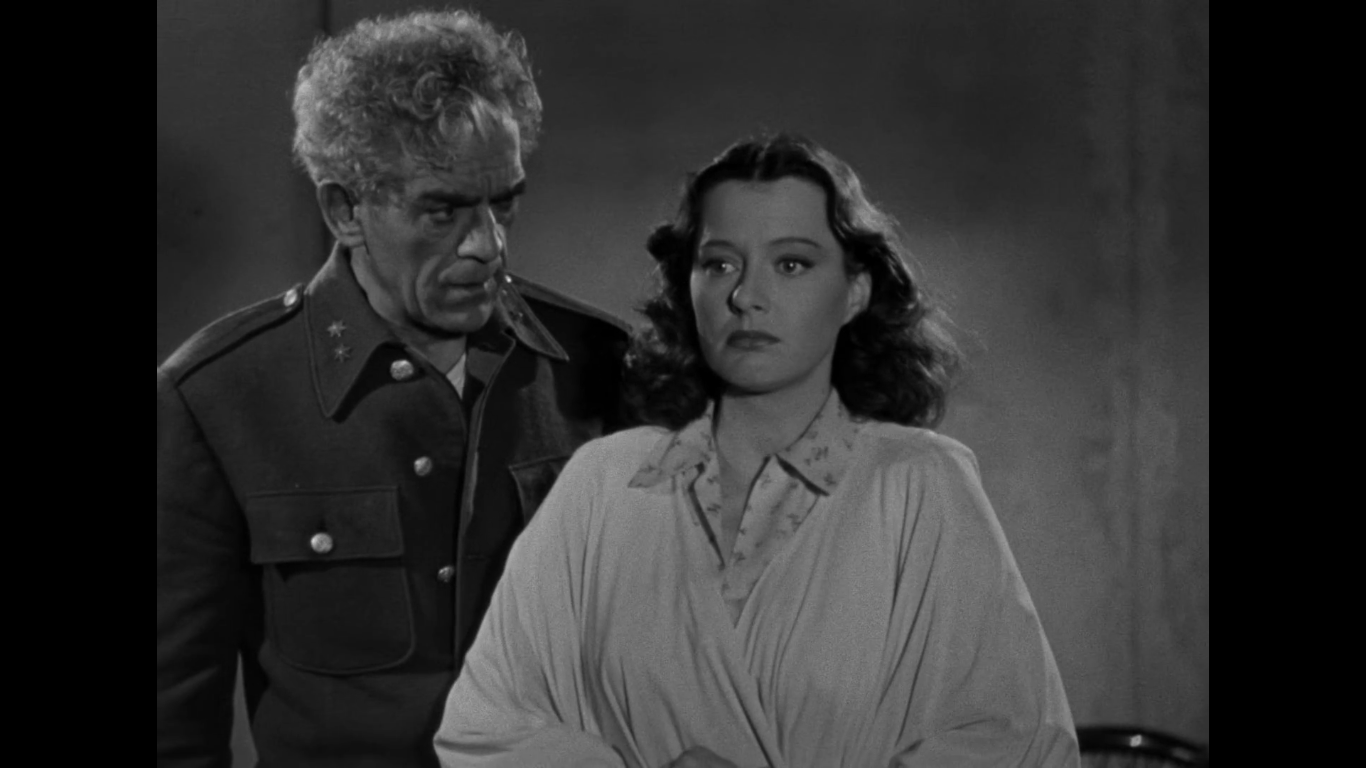
Woman in hiding 2.png

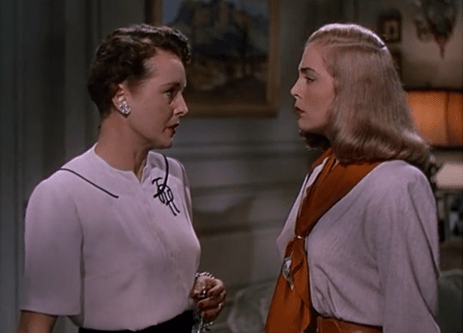
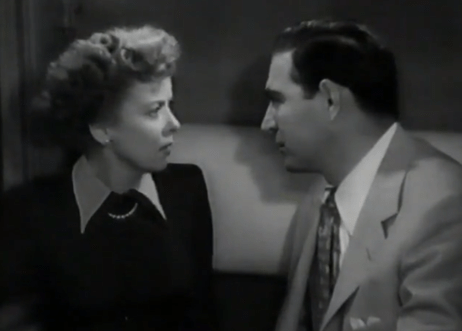
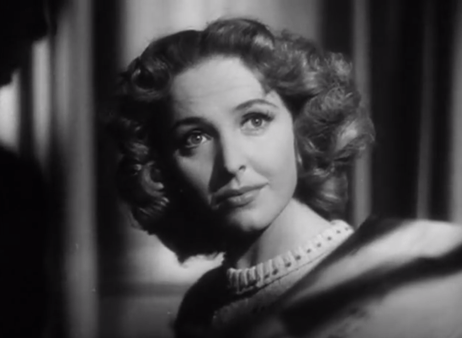
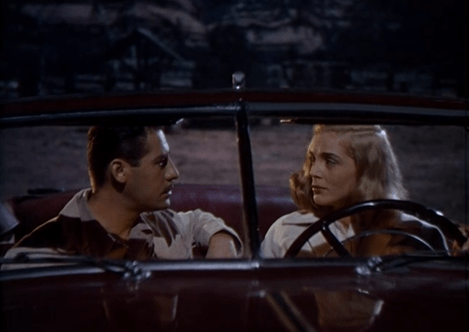
Woman in Hiding doesn’t waste any time. A car races down a twisting highway only to go careening through the side rails into the drink. The car and its occupant look to be obliterated. Yet we have the dead talking, Ida Lupino whispering to us from the grave. Could this be a situation akin to Joe Gillis in Sunset Blvd (1950)? We’re forced to wait before making any prognostication.

The story is set in North Carolina and as such, you have this lingering undercurrent of southern glory and heritage wrapped up in the wounds of secession and racial prejudice. There’s even reference made to the deep lurking traditions of the South with its pitchforks and rocks, of people who wouldn’t give up and wouldn’t allow their way of life to die. It’s actually rather unnerving rarely seeing an African-American character in this Hollywood tableau almost as if they’ve been erased.

Still, the locals go about their business dredging the local waters for the automobile and the missing Mrs. Deborah Clark (Lupino), even calling on the assistance of an old cannon, yet another relic from the aforementioned lineage. This is the backdrop against which Woman in Hiding plays out.

Because Seldon Clark IV (Stephen McNally) came out of this pedigree — tall and handsome, but proud and driven with maintaining the family standing, even to the point of delusion. He’s worked in the mill of a Mr. Chandler making many unwanted passes at his daughter Deborah.

For the time being, nothing comes of it because her father gives the boy a stern talking to, seeing right through the arrogant creep and the rest of the buffoons who beget him. In fact, it is at this point Lupino feels sorry for him — trying to defend him.

The story takes its most drastically abrupt turn on a single cut, when, in a matter of seconds, it comes out the forthright and perceptive old man died in a freak accident. Who was by his side unable to help him? Seldon Clark of course. It’s an obvious equation of two plus two, but, again we must wait until everything unfolds.

Marriage is proposed the day of the funeral, thus tying the knot (and the mill) between Deborah and Seldon. Their subsequent honeymoon at a cabin getaway is rudely disrupted by a former girlfriend. Peggy Dow debuts as a conniving southern belle on equal footing with her darkly vindictive suitor. It instantly rips away any pretenses we might have from her more widely remembered turn in Harvey (1950) as she gets backhanded for her many scandalous insinuations.

Could she, in fact, be the victim of the scenario? Doubts creep in? The first of many as Seldon’s colors become more and more obvious even to his wife. One of the most generous compliments that can be offered to Woman in Hiding is how it wears its melodrama brazenly on its sleeves.

It evokes a helpless world akin to Road House (1948) where nature is a trap — a place in which to be hunted like an animal, in this case, confined to a nightmarish marriage. The narrative does fold over itself and we realize where we find Deborah.

She is a woman caught in a state of matrimonial helplessness, in a society where she has little agency to do or say anything to free herself. It’s the same anxiety film noir of the post-war era gorged itself on, for both men and women. Because it becomes apparent the dividing line between victim and femme fatale is razor-thin. Really all that matters is the point of view provided.

From Deborah’s flustered perspective, there is a vague sense of searching out Patricia Monahan (Dow) because maybe together their corroboration might be able to put Seldon away. Just maybe someone might listen to the truth then.

woman in hiding 1.png

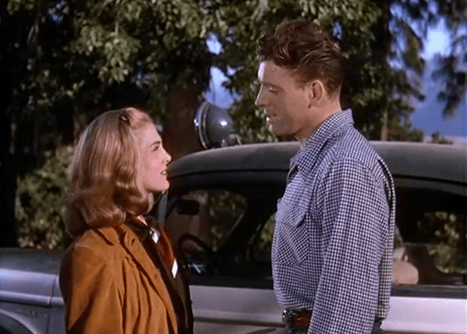
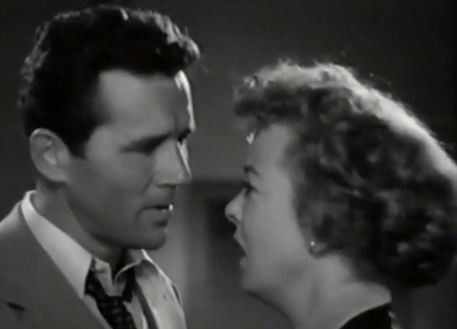
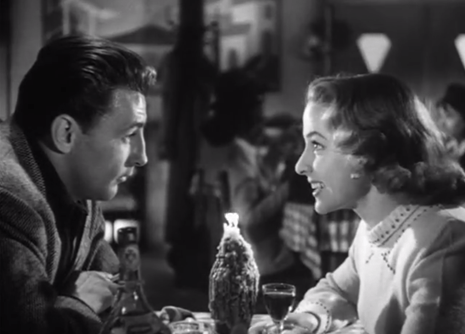
For the time being, staying dead is the most auspicious decision. Deborah takes to the road to disappear for a while and make some money on the side waitressing. But there must always be a foil and in this case, it’s a man named Keith Ramsay (Howard Duff).

He’s the genial man behind a newspaper stand striking up a conversation with a woman on the run. He seems like just the type of character who might provide a shoulder to lean on, whether solicited or not. In a world where everyone’s overstimulated with get-rich-quick schemes and radio giveaways, he seems decidedly unconcerned with the rat race as he works at his pop’s shop.

However, he does become a shoulder to lean on — offering comfort — but he’s also a part of the problem. Because this tale gets its punch from a woman being hunted, when she should, in fact, be a victim. In this regard, it’s a precursor to the same problem at the core of Blue Gardenia (1953) as the newspapers start treating her as a fugitive.

Because even as the local hotel is overrun by a traveling convention of drunken out-of-towners and conga lines, darkness can still find its way back in down the stairwells. The most excruciating development comes with the connection between our favorite fellow and the dastardly husband. He has no idea what’s he’s doing when he makes the identification.

Even as Deborah is taken back by her husband and Monahan turns up again only to be stepped on, the story must culminate where it began. In the same small town, at the dead of night, inside the mill. There’s something to knowing what’s going to happen and still having a potboiler raise the pulse. It comes down to the old adage, it’s not the destination but the road taken.

It also comes from actually genuinely caring for a character and as one of the best — some might even say an underrated actress — Ida Lupino plays the victim with an inbred resiliency, making the audience strive for her safety even as we sit powerlessly in the theater seats. It’s not some monumental derivation of the tried and true formulas, but audience identification goes a long way.

3.5/5 Stars

Lust For Gold (1949): Biography of a Deathtrap

lust for gold 1.png

The movie opens with a score raging with dramatic tones fit for a title like Lust For Gold. The resulting narrative ploy is not a new one either, suggesting the details of this “unusual situation” were substantiated by historical records and legends of Arizona. It’s meant to provide this obvious sense of real-world ethos.

We find ourselves at Superstition Mountain. A severe voice, strung out with the same dramatic intensity of the music, paints a wild portrait of this horrible place — Satan’s art gallery in the rocks.

His name is Barry Storm (William Prince) — a real figure — and yet for all intent and purposes, conveniently fictionalized to narrate the tale for us. Unfortunately, the man isn’t able to pull off the voiceover like a Bogart or Mitchum. It lacks the hardboiled lip or the inherent sense of noir malaise.

It’s possible to mention noir, even when our prerequisites are more aligned with a western because we are dealing in terms of avarice and the greed found within the human heart. These are the building blocks for any respectful film noir of old where humanity runs amok with murder and deceit. In any regard, this is what the hope is.

Still, Prince comes off lacking from the outset because as an actor he’s a bit of an innocuous blank slate. Even if this is purely how he is meant to function, there’s nothing impressionable about him. But it also falls partially to the anatomy of a faulty story with dialogue practically regurgitated to us to get our pulses going. The effect is moot.

Still, this version of Barry Storm does serve one solitary purpose if only to toss us headlong into this narrative. He’s part unwitting victim, part fresh-faced raconteur and adventurer looking to dig up the famed treasure once belonging to his distant relation “The Dutchman.”

He crosses any number of people among them cocksure explorer Floyd Buckley (Hayden Rorke) and two fellows who act as deputies under the local sheriff: a relaxed fellow named Covin (Will Geer) and the quietly observant Walter (Jay Silverheels).

To their credit, they are the first people who bring some color of any sort to the picture. However, even Geer’s own recounting of the Dutchman legend — delivered in a casual, conversational manner — isn’t able to rescue the dialogue which feels just as straightforward and didactic as before.

The real meat and potatoes of the movie come with a substantial flashback moving the action to 1880, and it couldn’t come soon enough. Because it’s at this juncture we are reminded Lust for Gold has a surprisingly stellar cast, and the best patches of drama come with the biggest stars. Regrettably, they’re never able to assemble in full force spread out across the years as they are.

Glenn Ford is reteamed with Edgar Buchannan from Framed, although this time they’re a bit more dubious and hardened, following the trail of a mythical gold mine. If you were to fashion an approximate reference point the movie, functions a bit like Treasure of The Sierra Madre Lite with everyone gold crazy and opportunistic.

Glenn Ford is not much of a Dutchman. His accent or lack thereof could have used some sharpening if he was really looking to commit, but perhaps, more importantly, he shows himself capable of some vindictive fury before the days of The Big Heat. This is what the story must rely on.

He’s the man who ends up the victor with all the gold to himself and no one else left alive to challenge him when he checks his wealth in the nearest outpost. The whole town’s envious of his cache, and the news spreads rather hilariously through the local gossips. They want a piece of the action because it’s far too much wealth for one man, but he clings to its with near-violent secrecy. There’s not one male or female who’s going to get him to open up about it.

That doesn’t keep them from trying. The best bet is one Julia Thomas (Ida Lupino), an educated woman who nevertheless runs the local mercantile and doesn’t have much hope of going anywhere. Her useless husband (Gig Young), hasn’t done anything to alleviate their situation. So, much to his chagrin, she’s prepared to slip off her wedding ring and weasel her way into the miner’s affections.

It works quite well and as with any of these old star vehicles, the movie is most enjoyable when we have Ford and Lupino together. They were both seasoned performers in all the grungy corners of the genre pictures even if this is a hybrid. But what sets them apart is how they both have desires. Sometimes opposing, sometimes convening, and their feelings for one another do become complicated.

To her credit, Lupino plays a far more nuanced part than a simple seductress. She is tired of her life. She is tired of her husband. She’s ready to take things into her own hands, and yet there is some amount of feeling dwelling within her. The Dutchman, for one, is happy to find someone to hold, someone to share his native tongue with. It’s the human face slipped in with the pervading moments of avarice.

Because in the end all parties are pitted against each other in a testy competition for the goods — both in the past and present — weathering seismic avalanches and showdowns up in the rock crevices. Some of these moments, especially crammed within the middle of the story have the pulse of compelling action. It’s only a shame this hybrid noir offering must be so hampered by its own plotting device.

3/5 Stars

The Locket (1946): Laraine Day and Splintering Psychology

the locket 1.png

“Have you ever done this before?” – Robert Mitchum as Norman Clyde

“No. I’ve never stolen anything in my life.” – Laraine Day as Nancy

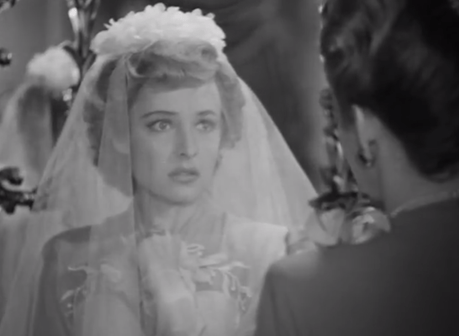
We’re met by a wedding with all the trimmings. It’s a well-to-do affair and Laraine Day looks quite dazzling. Her groom (Gene Raymond) is high on his good fortune in finding such a spectacular bride, introducing her to the aunts and uncles. Taken at face value, it’s a suitable development for a drawing-room comedy.

However, the perceptive viewer will note the presence of two very telling names in the opening credits. They are director John Brahm (The Lodger & Hangover Square) along with Nicholas Musuraca, who helped define the shadowy compositions of RKO Studios all throughout the 40s.

If anything, it suggests that what we’ve seen up to this point is mere pretense, an ebullient calm before the storm, until the past comes crashing through to wreak havoc. Sure enough, a grim, well-spoken psychiatrist (Brian Aherne) walks into the man’s study for a quick word. He’s comes bearing some doom to drop on the deliriously happy groom’s lap.

It lends the injection of noir sentiment we’ve been waiting for with bated breath supplying a flashback to go with it. Dr. Harry Blair recounts how, in his distant more jovial past, he wound up crashing bicycles with Nancy (Day). From then on, they were all but destined to be lovers.

It’s in these interludes where it becomes apparent Nancy is not altogether unlike Laura (Gene Tierney’s character) not because of her mental state so much as this perfectly bewitching aura she is allowed to cast over the frames of the film. Although this makes it sound too manicured; still, it’s true between the scoring, photography, and Day’s own vibrant, fully alluring performance, it’s difficult not to be swayed by the captivating energy.

The cute buoyancy carrying the opening replicates itself in this prelude as Nancy and the good doctor plan a deliriously happy future together. And yet screenwriter Sheridan Gibney brazenly interrupts the gaiety again. This time it is none other than Robert Mitchum interrupting the matrimonial euphoria with his own futile warning — yet another couched deja vu moment to follow the others.

As a matter of fact, in a spectacular move, The Locket utilizes no less than three couched flashbacks involving the three men, layered on top of one another, and each making the same mistakes as the man before them, caught in a deadly cycle…I wouldn’t recommend it to budding screenwriters, but here the commitment’s rather impressive.

This is one of the first great Mitchum performances establishing his world-wearied embodiment of the noir hero — smoking a cigarette, coat upturned in the falling snow — and he’s only one of the supporting figureheads.

the locket 3

Norman Clyde (Mitchum) is a fairly successful artist, not a sterling success but talented and proud; he’s not about to take flak from anyone. After he gets off on the wrong foot with a woman in his studio, he starts obsessing over the girl. He can’t get her out of his head and wouldn’t you know, she’s holed up in the same Italian restaurant he always frequents. They make amends, of course, and their resulting relationship looks eerily similar to the glimpses we’ve already been granted. Nancy’s deliriously happy with her man of choice. There are no visible blemishes in sight.

However, the fragments and wisps of story keep on fading into one another. It’s so exquisitely rendered by the camera, in particular, when Mitchum and Day go into the recesses of their own personal recollections.

The striking similarities with Laura or even Woman in the Window become even more obvious due to the art angle — the enchanting portrait of a woman — because it does create this meta sense of the woman in the art both painted and photographed on celluloid. It allows her this sense of being out of body — almost otherworldly to the viewer — existing in this illusory state we must come to terms with. In one sense, it’s hard to shake the image of her. Nancy is no different.

One turning point is at a fancy dinner party. Shots ring out and Clyde sees Nancy exit a room frantically. A maid comes, and they hide down the hallway slinking away. Musuruca captures the instantaneous decisions with a fluid ease. We don’t realize it at the time, but it’s a crucial moment teasing out a bit more about Nancy — about her past secrets — and who she is as a person.

My only qualm is with Mitchum’s exit. It serves the story best, otherwise, he would continue to steal the show, but it certainly does not gel with his soon-to-be cultivated image. Alas, it is what it is.

Next, remember the doctor also had his chance with Nancy. They go off to England to stay at a stately manor to get away from the intensity of the Blitz. However, the accusations he’s heard about his wife start to burrow into his mind, so much so he can’t get rid of them.

Surely the rumors can’t be true! Because Nancy is so warm and genial, hardly begrudging or showing malice toward any of her past suitors. In fact, she downplays every interaction she’s ever had with any of them. As if they were nothing. As if the man she’s with right now is the only man she’s ever loved.

the locket 5

The extraordinary nature of Day’s character is how she is not a femme fatale — at least not in the traditional sense. They’re always two-timing and deceitful. With Nancy, at face value, you get none of that, and yet it’s not to say she’s not without her flaws. In a strange way, there are two sides to her as well.

She calls others out for being guarded, cynical, and suspicious, and yet she can often be found doubting everyone else’s motives even as she’s retroactively smoothing over her own. There’s the convenient compartmentalization of all the prior relationships into their individual spaces and the projecting of her issues onto others. It hints at something. Still, there must be a tipping point.

Then, we’re whipped back to the present. The wedding march in all its pomp becomes offset and infiltrated by the tinkling of a music box, like the memories slowly overtaking Nancy’s psyche. These latter moments turn into some of the most evocative sequences of montage in recent memory with all the weight of memory, trauma, and guilt flooding Nancy in the form of all the people she knew. There is no space to keep them apart and so they crush her under the weight, her mind totally fractured as she tumbles to the floor.

In a fit of irony, I couldn’t help but continually be reminded of the contemporary Frank Sinatra tune, “Nancy (With the Laughing Face).” It’s a startling juxtaposition with what we’ve just witnessed, a swelling, unnerving, engrossing exhibition in splintering psychology.

Laraine Day gives an absolutely unforgettable performance — easily the best of her career — and Brahm continues his run of moody melodramas with suffocating environs. The Locket doesn’t hold an instant appeal from the outside looking in, but once you get inside, it’s a bedeviling little gem of a film — as tantalizing as the trinkets so enrapturing to Nancy. There’s one major difference: we can enjoy this one without debilitating consequences.

4/5 Stars

Boris Karloff at RKO: Body Snatcher, Isle of The Dead, Bedlam

In our current climate, it almost seems like an oxymoron to have a shoestring-budget period piece, but many of Val Lewton’s best movies were founded on this formula.

His three-film partnership was beneficial for all parties involved and we would like to consider how he was able to fashion Karloff into a new kind of monster.

In honor of the spooky season, let’s talk about Karloff at RKO:

The Body Snatcher (1945)

Robert Louis Stevenson is an auspicious literary figure for anyone raised up on fiction like Dr. Jeykll, Treasure Island, or Kidnapped. Much of this might have come from any of their many adaptations. Thus, it seems fitting to know his work also received the Val Lewton treatment in the form of his short story, “The Body Snatcher.”

The year is 1831 in Edinburgh, Scotland, a place I reminisce about fondly. This is not a world of invading pod people; it’s actually a much more arcane movie with a gothic mood and style of the Victorian Age.

There’s a practicality to its premise and the origin of the horror. Not unlike Doctor Frankenstein, these doctors need cadavers — specimens on which to learn their trade. They have a bit of a silent agreement with a local coachman named Gray (his eminence, Boris Karloff), who is also a “Resurrection Man” by night. In other words, he digs up dead bodies.

The Doctor Macfarlane (Henry Daniell) has an empty callousness in his face and voice, like a shell of a former man who probably had ideals in his youth. Now he’s shackled by something, either vocational obsessions or something far more sinister.

The character dynamics are mostly intriguing as it’s hinted that “Toddy” and Gray shared a slightly sordid past together long before their current business arrangement. The Doctor’s housekeeper is also closer than she appears, chiding him to let the past go and with it the callow boy he’s brought on as his assistant.

Russell Wade is perfect as the naive Fettes, who only sees the altruistic good in their profession and his mentor. The young student vows to a pretty young mother that her invalid daughter might walk again if only the doctor might operate on her. Macfarlane’s less inclined to make such a rash promise.

Because of these clouded histories, much of the movie is about the specters of the past with Gray constantly at the ready to hound the man of reputation. He aims to keep their lucrative partnership going by any means necessary.

One of the film’s most visually arresting scenes is in the dead of night. There’s a haunting street singer done up in a shawl with a small bowl for alms. Her gorgeous brogue pierces through the evening lamplight and the all but silent cobblestone streets as she sings “When Ye Gang Awa Jamie.” Soon even she goes quiet…

Another definitive moment comes later upon entering the cabby’s quarters with the camera turning right into his horse resulting in a genuine jump scare. Bela Lugosi feels almost unrecognizable to me and by that I mean he hardly speaks, mostly slinking about in the periphery of the story. When he finally does speak that’s the giveaway.

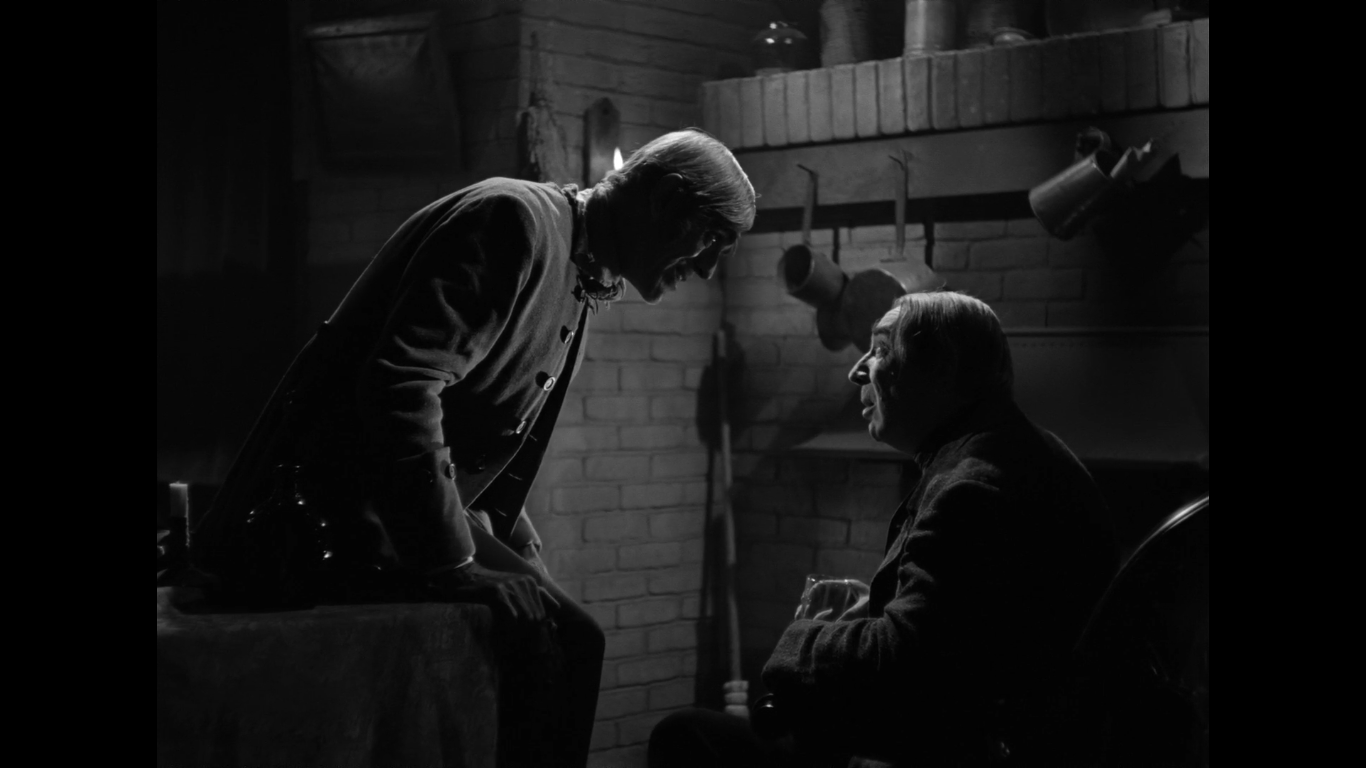
Joseph pays a visit to gray with a mind to blackmail, but he’s not half as cunning. They share a drink in the firelight. Karloff’s propped on the table grinning lasciviously as he leans over the oblivious man. Who’s in control of the situation is plainly apparent, and it’s such a stunning composition honoring two of the greatest horror showcases Universal ever had.

Now they are with RKO, certainly older, but Val Lewton pays them his utmost respects. Although Karloff’s the biggest name, this is a new generation of films removed from his earlier persona. Lewton effectively allows him to rebrand himself as a new kind of villain, a new kind of monster to be feared. The extraordinary thing is how it’s hardly makeup or special effects-driven but performative in nature. It’s also chilling.

There’s a jolt of ambiguity into the ending of the movie as the Doctor is haunted by his sins, but Karloff’s just as agonizing. Maybe it’s because he seems to represent past sins reincarnated. I’m curious if contemporary critics hailed it as a return to form for Karloff. Even with the passage of time, it seems to show a startling range I’ve appreciated more with time. He gets to show another side of himself.

4/5 Stars

Isle of The Dead (1945)

Isle of The Dead begins with an unbelievable scenario with no forewarning as Karloff’s General intimates for a disgraced officer to commit suicide in order to maintain the company’s reputation. Minutes later he takes a journalist (Marc Kramer) for an amble through no man’s land in the First Balkans War as if nothing has happened.

There’s something uncanny and manufactured about how this General brings this other man along with him as he goes to visit his wife’s crypt on a nearby deserted island. Just saying it now sounds outlandish. But this is what happens. I’m not saying it’s naturalistic, but that’s hardly the reason for watching this movie. It’s as if we have entered this transitory world that operates outside of our accepted logic.

It is a bit of a surprise because Lewton normally worked very hard to create the baseline world and the logic of his stories, so we might be fully committed as an audience. Although this might be partially lacking in Isle of The Dead, what’s not absent is his signature sense of foreboding atmosphere adding a shroud of horror-worthy darkness to all his pictures. Their eeriness cannot be shaken off easily.

Then, again perhaps I spoke too soon. The story still works in ample amounts of mythology including Vrykolakas: undead, vampire-like creatures that haunt the living. Some believe they have been sent as punishment by the gods, there are pagan rituals to Hermes, prayers are sent up regularly, and belief is a powerful force.

Although the opening premise is suspect, it’s this added context creating the foundation for the rest of the movie as it sends Karloff deeper into this Grecian abyss of darkness and shadow. In no moment is this more clear than the glorious sequence when Ellen Drew walks the hallways at night, candle in hand. It encapsulates the entire movie in a few successive shots of stylized pitch-blackness.

Our protagonist says, “I put my faith in what I can feel and know and see,” and yet his rationality must do war with the steady barrage of wind and shadow. Many of the island’s inhabitants are stricken with the plague. It seems like a silent killer born out of voices calling out from the night and a fleeting apparition in white.

Lewton hasn’t lost his touch in conjuring up such mysterious environs to assault our senses. It’s never about out and out shock value, but this pervasive sense of the inevitable. This must all come to some end. We all die be it from war, plague, or something equally as sinister.

3.5/5 Stars

Bedlam (1946)

It’s curious and rather extraordinary that two of Karloff’s films with RKO were inspired by paintings. Bedlam came out of William Hogarth’s series A Rake’s Progress. It occupies itself with Bethlehem Asylum in 18th century London. Although this is the so-called “Age of Reason,” treatment of the mentally ill is hardly benevolent.

All the “loonies” are kept in their cages like sideshow attractions for the public to gawk at for a tuppence fare. We’re privy to one of its present tragedies: a man falling to his death from the asylum rooftops with a little assistance. If we want to get to the bottom of the callous hell hole, we must look no further than Master George Sims.

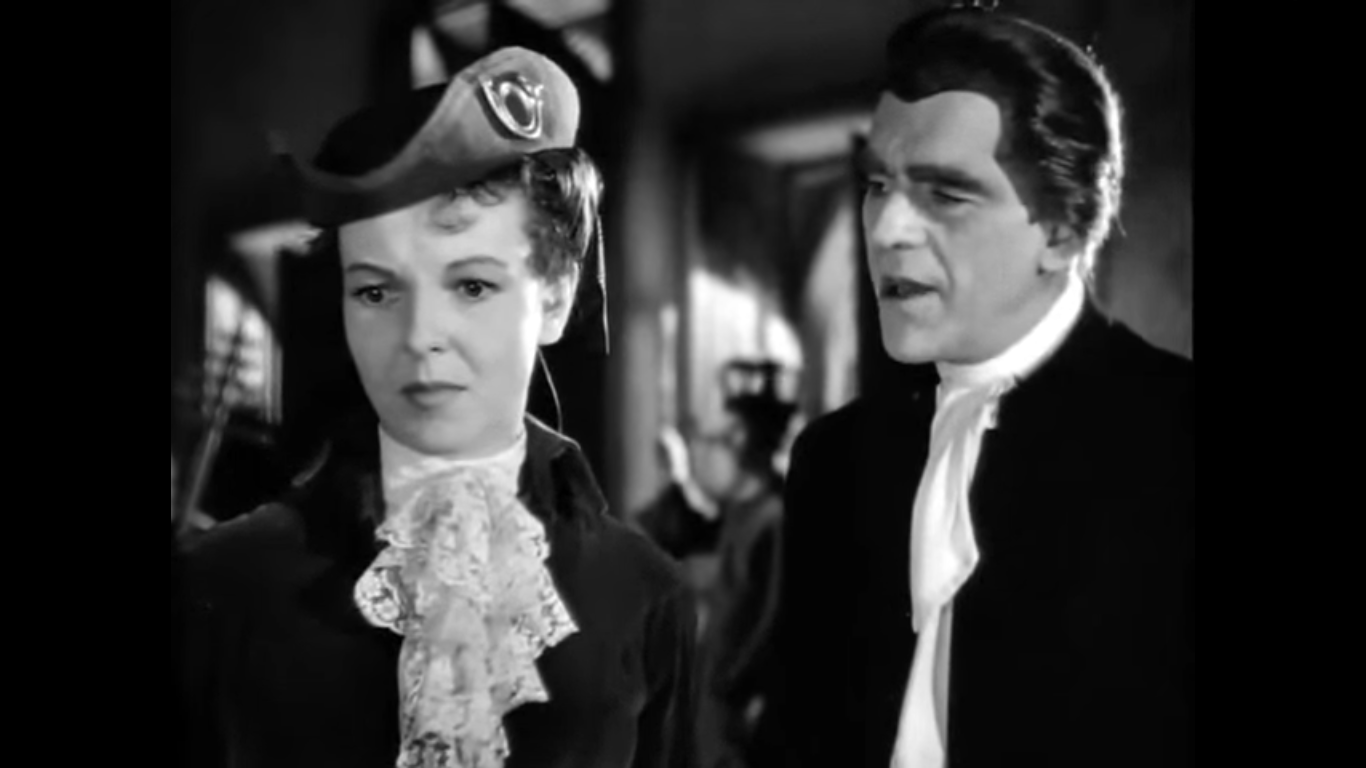
There he is: Boris Karloff done up in a wig and the attire of the age. Here’s another joyous occasion to see him take on yet another century of English history through the period lens of Hollywood. It’s a deliciously unctuous performance, and he proves himself just as skeevy as he’s ever been.

He’s called in for a stern talking to — the corpulent Lord Mortimer (Billy House) and his lady protege (Anna Lee) have some words for him. He’s taken mild dissatisfaction on losing some of their entertainment.

Always quick to ingratiate himself and despite having sent Mortimer’s poet to his demise, he vows to put on a frivolous performance to tickle the patron’s fancy. It’s so easy for him to use and degrade his tenants for monetary gain because what worth are they to the world outside?

The moment Anna Lee enters the inner sanctum of the asylum and sees the tenants in their own world she’s momentarily surprised even moved by their fate. Though she tries to mask it on the outside with words and a riding crop, she does harbor pity for them.

It is a perceptive quaker (Richard Fraser) who notices her reaction and rouses her to some form of Christian action. She is more sympathetic than the rest of the idle masses because she is self-made. Without the luxury of personal wealth or power, she knows intuitively how hard it is to find self-preservation in an often heartless world.

In some way, it feels like a call for tolerance and sympathy by reaching into the past to inform the present. Because although it is a story in the guise of 18th-century horror — Karloff’s presence makes sure of that — there is something more to the picture.

Like all Lewton’s work, there’s a deceptive depth and substance to Bedlam that is at one time both intriguing and generally commendable. Because he doesn’t just make entertainment. It entertains, yes, but you can watch the RKO films and there are supplementary thematic interests to them.

Karloff is the standout in all three pictures — no one else comes close — though I am fond of Lee here because she actually has spirit and stands for something. She’s willing to do battle with him. It’s a collision of dueling philosophies.

He snarls that men are not brothers — they are not good and kind — but savages that must be ruled by force and his worldview plays out in how he governs Bedlam. With the saintly quaker speaking into her life, she looks to reform the asylum as she is trapped on the inside vowing not to give in and cave to Sims’s merciless conception of the world.

Karloff obviously relishes his subtle insinuations and well-placed comments to stir pots and get what he wants while pushing back against those who wronged him. Namely, gaining the good graces of Lord Mortimer and spurning the impudent, proud lady.

Is he evil? Not exactly — at least not at first — but he has a steady mean streak which proves to be utterly Machiavellian and maniacal. It’s villainy at its finest because it slinks so easily under the radar of societal convention. He’s despicable and still oddly droll making for a fine antagonist.

4/5 Stars

Targets (1968): Orlok Makes You Scream

targets karloff bogdanovich

The story goes Peter Bogdanovich met Roger Corman sitting in a screening of Bay of Angels (1963). What came out of that was an apprenticeship of sorts on Wild Angels (1966) in the Corman Film School where Bogdanovich did everything you could possibly imagine from script doctoring to location scouting etc. What he got for his troubles was hands-on experience but also the chance to direct his first feature…with a couple stipulations.

Corman gave him full control of his own movie as long as he reused some footage from an earlier Boris Karloff picture, The Terror, as well as utilizing the veteran actor’s two days of service he still owed Corman. There you have the birth of Targets, which manages to amount to far more than these contrived beginnings might suggest.

Because Bogdanovich found a way to make these haphazard pieces work — where it feels more like a meditation than a constraint — and the movie uses this to its advantage. It’s like a ’60s rendition of the poverty row pictures of the ’40s where necessity is truly the mother of invention. Sometimes you get a diamond in the rough.

The irony is while the big pictures were giving us entertainment that would become emblematic of the times like The Graduate, Bonnie & Clyde, or 2001: A Space Odyssey, it’s a movie like Targets placing us in the times themselves. In this way, it functions more like contemporary television.

What we are provided is a very concrete sense of Reseda in 67-68. There’s the “Real” Don Steele on the radio waves. Otto Preminger’s Anatomy of a Murder is a modern classic featured as the Saturday night movie on channel 7. A family sits down in the evening together to take in Joey Bishop and sidekick Regis Philbin. And, of course, there are drive-ins.

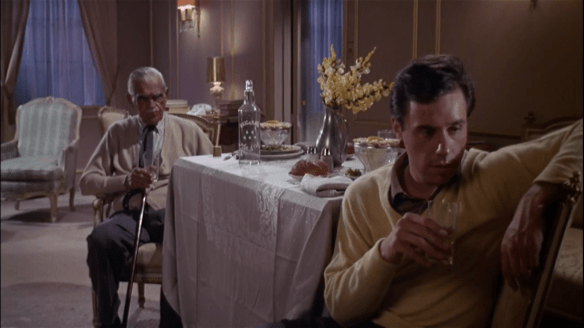
If this sets the stage and places Bobby Thompson (No, not the ballplayer) in a vaguely familiar landscape, the movie itself comes flowing out of the persona Boris Karloff provides free of charge.

Looking at them without context, there are so many elements of Targets that might leave one mystified. For instance, this white-haired gent with the booming voice. If you put the movie in a time capsule, those who find it probably wouldn’t know this is Boris Karloff. His Byron Orlok isn’t an anagram, but it feels like one.

Although he’s an acclaimed name, he’s resigned himself to a sorry fate. In his own words, “I’m an antique, out of date — an anachronism. The world belongs to the young. Make way for them, let them have it.” He might have seen Bonnie and Clyde and The Graduate too.

Still, he’s continually in dialogue with his own personal legacy and very aware of it. Just as he watches a version of himself on TV. His character recalls a tagline from his heyday, “The Marx Brothers make you laugh. Garbo makes you swoon. Orlok makes you scream.” It’s all part of this persona closely mirroring Karloff’s past.

Likewise, Sammy — that guy’s not much of an actor — although it changes instantly if we know this is Bogdanovich himself. The young screenwriter walks in, sees the TV, and right on the nose says, “It’s Criminal Code. I saw this at the Museum of Modern Art. Howard Hawks directed this. He really knows how to tell a story.”

They become these dueling pawns, partly fiction, partly reality, as Orlok bemoans the fact he has become high camp; he can hardly play it straight anymore, and Sammy coaxes him that the role is something he can do (Targets?). Otherwise, he’ll offer it to Vincent Price.

It’s as if the director beat Orson Welles to the punch with this kind of intratextual dialogue between the medium and its real-life players. Surely history helped out because Targets was just his beginning followed by a whole slew of classics, albeit disrupted and undermined by his own turbulence and troubles replicating his most supernal successes. All these things and more are what make Targets so riveting when it has little right to be.

Targets Boris Karloff and Nancy Hseuh

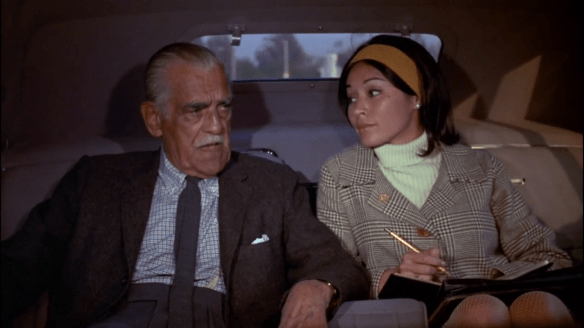
Orlok’s secretary Jenny (Nancy Hsueh in a charming role) is romantically attached to Sammy, but also has a staunch devotion to Orlok. She doesn’t want the old man to just give up and she feels slighted when he lashes out at her — one of the few people who genuinely cares for his well-being.

He’s ready to turn his back on it all only to reluctantly agree to make a public appearance. He’s fallen to the low of the Drive-in Theater circuit, living off the residual celebrity of his waning fame.

Meanwhile, Bobby has gone through his daily paces. He seems like an All-American boy. He’s married but lives with his parents. He likes guns, and he’s been taught a healthy (or unhealthy) sense of competition. There’s an underlying angst supplied by this deceptively pristine life.

He stakes out on top of an oil well, brown bag and a soda pop in hand, as he sets up overlooking the freeway, prepared to pick some people off. Bogdanovich captures the evolving sequence with a Sam Fuller sense of grab-and-go photography, on the side of the freeway, with a brazen even outlandish sense of drama.

This is real traffic and real places and the director plucks out his shots from these pregnant moments of simulated reality. Between the crosshairs, gunshots, swerving vehicles, and flailing bodies. The scene evokes the Texas tower shooting of 1966 where killing becomes this indiscriminate force of violence.

The Sniper (1952), from over a decade prior, was a picture that, no matter its effectiveness, was meant to elicit a social response. Stanley Kramer’s movies can be strongly identified by this sense of responsibility toward the viewer. Targets hardly feels like a political statement of any kind, but its themes are no less intriguing — probably because it never feels like it’s preaching something. Instead, it allows us to consider its various digressions and still be gripped.

The drive-in finale actually does a solid job of reconciling the two disparate story strands. Bogdanovich had watched enough Hitchcock, heck, he’d interviewed the Master of Suspense, and put in this position calling for such a set piece, he seems to know intuitively what he has to do.

What’s more, it signaled the young director’s ascension as a New Hollywood darling. What’s so striking is how it marries Classic Hollywood with the contemporary climate and does it with a startling sense of command. If you needed a picture to try and sum up Bogdanovich himself, then there is no better lodestone.

He wants to revel in the days of Karloff and Hawks of old — when violence meant monsters and gangsters — and yet he brings it into the 60s. Because violence still existed but in a different form. In the age of social tumult and assassinations, the landscape of the 1960s feels a lot more futile and incomprehensible.

And the images make you shutter as we are implicated in this alongside a killer even as we sympathize with Orlok trying to bow out gracefully. I’m not sure which aspect is more telling. The power is that we need not pick between them. We are presented horror in its various forms, old versus new, and the person who unifies them so evocatively for us is Peter Bogdanovich. It’s quite a stunning feat of ingenuity.

4/5 Stars

The Stunt Man (1980): The Show Must Go On!

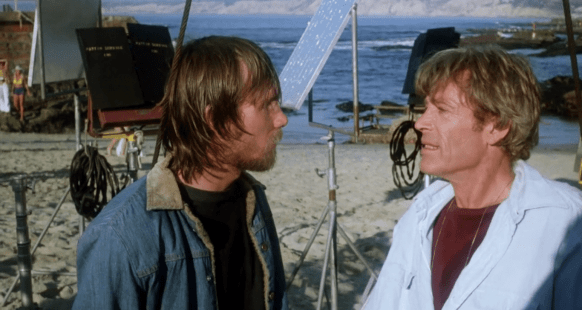
the stunt man

From its initiation in the opening shots, The Stunt Man is built out of a comic serendipity allowing it to execute its own sense of narrative rhythm. It leans into coincidence, cinematic logic, and what really necessitates reality. Consequently, all these themes lay the bedrock for what the film is as it blithely blends genre into a fluid creature with a penchant toward action, drama, romance, and the darkest most absurd sense of humor.

For a little bit of backdrop, Richard Benjamin was slated to direct the film in the early 1970s. Before him, two very telling directors were considered. The first was Francois Truffaut who made Day for Night (1973), a film that shares many of the same thematic elements as The Stunt Man. They both enter a full-fledged dialogue with the medium of film itself and the creative process behind it. At one time, Arthur Penn was also tapped. This seems uncanny as he would later helm Night Moves (1975) another movie involving a subplot of stuntmen flying planes and the like.

All said and done, this production was labyrinthian even by Hollywood standards. Filmed in 1978, it was finally released in 1980 at the dawn of a new decade. But given the subject matter, it somehow feels like a fitting representation of the industry.

The Stunt Man, after all, is quite simple before it gets crazy. A fugitive (Steve Railsback) flees from the police utilizing his agility and Vietnam training to evade capture. Cameron breaks himself free from his handcuffs and then tries to blend into the beach scene at a nearby tourist trap in La Jolla. The ethereal theme music hums along, “Reality is your to define” and “What good are dreams in a world where nothing is at it seems.” The lyrics prove to be a portent.

Because they also just happen to be filming a movie — a WWI period piece led by the incomparable Eli Cross (Peter O’Toole) — and it’s drawn quite the crowd. The use of blood capsules at once leaves the audience gasping with horror and then the next cheering with adulation. It’s the magic of the movies in bodily form.

Where a woman peels off her facade to become someone else — a stunning leading lady (Barbara Hershey) for the scraggly-haired young man to carry off to safety like a knight in shining armor. However, the masses aren’t privy to some of the drama behind the scenes. A stunt man was tragically killed trying to get a crucial shot.

So the fugitive becomes a convenient figure, and Eli quickly pulls him into his production in a calculated move of madness. With the local police breathing down his neck about his filming schedule, he covers up the setback, keeping the ship aloft by turning the wanted man into their perished stunt man. It serves them both, and so they agree to the ludicrous alliance.

Thus, The Stunt Man takes the themes of Truffaut’s Day for Night to preposterous ends by cultivating this illusion of a patched-together reality played out on screen. Spurred on by a maniacal director, it creates a whole plot out of a dead man who is replaced by a stand-in.

the stunt man peter o'toole heliocopter

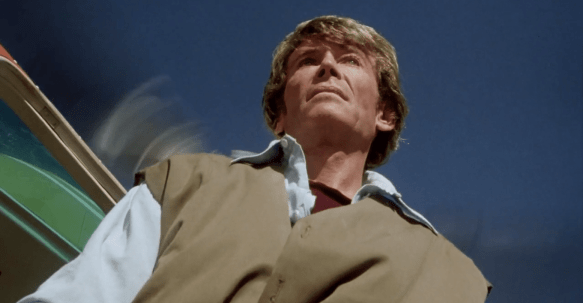
As he fluctuates between his chopper or his levitating crane, Eli blithely proclaims, “If God could do the tricks that we can do, he’d be a happy man.” It’s true there’s something powerful and deceptive about him. If he’s not the devil’s incarnate in a helicopter, then he might have at least made a deal with the fallen angel. He is symbolic of the director as madman — someone who likes spontaneity — and he will go to great lengths to preserve his art.

To the degree possible, the picture goes through the paces of an action movie and there are stakes, just not what we normally expect. Because there are payoffs and yet we know in some self-reflexive way they are all an illusion, more so than usual. What’s not false is the threat of death.

If Truffaut was fascinated in the artifice — this sense of relishing the reflection to life itself — then The Stunt Man gives it a sick twist. Where fiction and reality are like death-defying bedfellows. We rarely know when scenes are going horribly awry or strictly according to plan.

There’s this razor-thin line between stunt and sleights of hand and then disaster. Hence the reason this fugitive got his gig in the first place. It’s utter lunacy, and yet it’s a bit like watching a car wreck. Who’s going to turn away? We want to be wowed. And yet Cameron’s life hangs in the balance. He feels trapped inside the madness and Eli’s not about to let him escape.

Initially, he is taken in out of necessity and eventually disillusioned by the monster, even as he is driven toward his fateful conclusion. It’s inevitable. In none too many words, the show must go on, and Cross will go to the greatest lengths to make darn sure that it does. The script calls for it.

The ultimate joke is how it slaloms so fluidly between the heights of chaotic drama to this kind of absurd humor, sinking back into an uneasy equilibrium once the darkest devolutions have boiled over. This is what’s the most unsettling.

How the movie can be feel-good and joyous with a stunt man and leading lady embracing in a triumphant moment of euphoria. Likewise, the irascible, gargantuan personality of the director still comes off as strangely charismatic (thanks to O’Toole), but it drips with the delusional insanity of something like Apocalypse Now. In other words, you cannot marvel at the movie without shuddering and laughing rather uneasily at what movie magic entails.

Because The Stunt Man is not just about the art of being a stand-in and doing the impossible. It functions as an extension of the moviemaking process in its most harrowing iterations. We have to be a little mad. First, to make something like this, and then to sit in the dark and let it affect us so forcibly. Regardless, it’s an evocative and deeply unnerving ride. But isn’t that what we go to the movies for?

3.5/5 Stars

The Big Chill (1983): Banking on The Nostalgia Factor

Big_chill_ver1

When a little baby boy is singing “Jeremiah was a bullfrog” in the bathtub — Larry Kasdan’s son — it’s the perfect introduction to this film. In fact, you always hear rumblings about The Big Chill. It’s a touchstone for a generation: For my parents’ peers.

Moments later “I Heard it Through the Grapevine” plays over the credits as all our main characters are introduced wordlessly. They all converge at a funeral to mourn the loss of their college friend Alex, who took his own life and seemed to be on a road to nowhere. He had so much promise and then seemingly wasted all his potential.

Without trying to sound too glib, this seems an apt diagnosis for the movie itself. The premise throws together a group of friends with a storied history already set in place. There’s a troubling inciting incident to dictate the parameters of the story, providing reasons and space for characters to dialogue with their individual anxieties. Each car in the funeral procession is like a conveniently contained capsule of drama.

However, despite, the fairly high-profile cast, it merely dabbles in substantial conversations on life and the existential questions that hit us in mid-life crisis moments. Is it wrong to say we never truly get to know these people aside from a few pleasantries? Because even if they know each other so well, we are never able to break the ice in the same way. We are outsiders never allowed in from the cold.

In scenes of mild interest and concern, they never amount to much aside from detached observation. Nick Carlton (William Hurt) has become the hardened cynic in years gone by (Fortune cookies have followed suit). Sarah Cooper (Glen Close) is especially emotional when she thinks of their deceased friend. Sam (Tom Berenger), a celebrated Television actor, drudges up old feelings for the dissatisfied housewife Karen (JoBeth Williams). Jeff Goldblum — who is one the most visible still, of all the ensemble — is probably the best source of comic relief. I wish there was more to be said about their relationships, but I don’t have much.

Likewise, The Big Chill is understandably lauded for its soundtrack. It’s true the music is the perfect ambient backdrop for the storyline. However, there’s one immediately apparent issue. It has no meaning in the moment, at least in a way that we can comprehend. These iconic tunes do not create a greater appreciation for the world or complement the storytelling.

Instead, it is the ubiquitous backbeat to the Baby Boom generation — a kind of audio comfort, even now. If you wanted to be cynical like Nick, you could suggest it’s all about getting a certain subset of the viewing public into the seats by banking on the nostalgia factor. It works even in the opening moments, first Three Dog Night, then Marvin Gaye, and later the casket leaving the church to the vocals of Mick Jagger in “You Can’t Always Get What You Want.”

However, gradually the pervasive montages and the shameless use of music feel less and less discreet, never feigning any kind of purpose or meaning. This is fine. Still, it’s not quite a unified and eclectic wall of sound like American Graffiti, nor does it come to highlight the shared experience of the characters, like The Commitments harnessing of Wilson Picket’s R&B.

For that matter, “A Whiter Side of Pale” feels far more alive in the hands of Alan Parker. And instead of hearing “The Weight” as a sprawling road anthem in Easy Rider, it becomes kitchen table music as characters busy themselves with breakfast. Now totally rid of all its glory.

In full transparency, these are songs I adore. I’m protective of them, and I couldn’t even tell you how many thousands of times I’ve heard “Good Lovin’,” “Wouldn’t It Be Nice,” and some of Motown’s best singles. They too are like friends and many of them feel stripped of any substance or meaning in the context of the movie.

The same might be said of the plotline. These are harsh words, but to my mind, they’re warranted. Because The Big Chill has the potential to be something of genuine heart — pregnant with meaning and lessons about life — how we band together with our friends to get through together.

But it always feels a bit like an impostor or at least a pale imitation. I don’t doubt this movie has resonance to Larry Kasdan or else, in a world of Stars Wars and Raiders of the Lost Ark and Body Heat, he wouldn’t have made a movie like this.

The problem is there’s nothing left in the movie where the characters strike a chord or feel altogether meaningful to me. I would argue this doesn’t fall on not being of a certain stage in life. After all, in 5 years, maybe 10, I will be exactly like these people. That’s still a stretch of time, but I have a feeling this is not what’s getting in the way. Their issues, the malaise they feel saddled with, and any number of other issues are not my own. And so I look at them, and I see no reflection of who I am or what I care about.

My mind goes to my parents. In 1983 they were just getting married. A few years later they had their first child. Then more children. It strikes me they probably never had time for this kind of self-reflection. Maybe they would have been grateful for it. But I do know they are not people to regret the road life has led them down together. At the very least, they would not be ones to overanalyze it; this dubious honor would fall on me. They were people who were too busy living life for this to ever be an issue.

It also strikes me when Nick notes friendship is tough in the real world. It’s true. The bubble of college easily insulates you from a lot. We get busy and distracted, spread out by geography, and people change and drift away. But the inevitable — at least for me — makes it all the more imperative that I cling to the friendships that mean the most to me. And I do my darndest to invest in them.

They are imperfect, but I like to think they are genuine. I’ve had the misfortune to attend funerals of friends already, and I’ve been even more fortunate to celebrate weddings and other such auspicious events. The music was good, but the time spent with my people was far better. With or without “Jeremiah was a Bullfrog.”

3/5 Stars

Something Wild (1986): Happy is a Yuppie Word

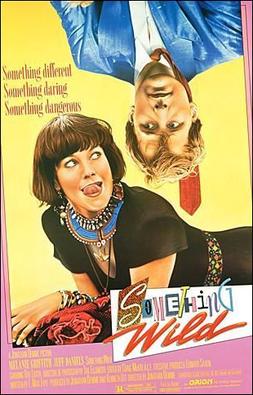
SomethingWildPoster

One of my favorite bands penned a song called “Happy is a Yuppie Word.” I never spent much time dwelling on the meaning of the statement, but as I grow older, it somehow takes on more pertinent meaning. If I remember correctly, Bob Dylan gave an interview with Rolling Stone magazine where he said essentially the same thing. In fact, I wouldn’t be at all surprised if the song took its cues from one of America’s foremost bards. I start here because Something Wild comes at us ready to bulldoze the Yuppie conventions we come to attribute with the 80s and 90s. That is Happiness as this quantifiable qualifier for the richness of one’s life.

Look at Charlie Driggs (Jeff Daniels). He’s the picture of middle-class success and respectability. He’s rising up in a formidable firm. He’s always reasonably dressed in a suit and tie. He has his pager on hand for important reminders. And yet there are inklings of chinks in his armor. After all, he is human.

He still wears his wedding ring, but his home life isn’t quite as idyllic as he would like the world to believe. Likewise, sitting at a perfectly conventional cafe, he has an urge to do something really, incredibly outrageous! He steps out without paying his check!

Except no one seems to notice…aside from one pair of perceptive eyes. They belong to the one person who will change his life forever. Meet Lulu (Melanie Brooks). Her look is unmistakable with a Luise Brooks-inspired bob and sunglasses — an air of self-assured confidence. She could rat him out. Instead, she offers to take him for a little ride.

From here on out Something Wild becomes a road comedy-screwball hurricane propelled by a giddy soundtrack and Lulu’s total rejection of Charlie’s middle-class monotony. They go careening down streets and racing down the highways and byways blasting The Troggs “Wild Thing.” What follows are scenarios replete with shenanigans, handcuffs, amorousness, and more unpaid checks.

And yet if Lulu comes off as a glitzy, laissez-faire call girl, she slowly begins to show more of herself, including her real name: Audrey. She proves herself to be far more three-dimensional and far more of an innocent human being. She takes Charlie to visit her mother where they masquerade as a married couple in front of mom. But there is no malintent. The charade is purely out of a desire to please the good-natured woman. Then, Audrey brings him to her high school reunion — celebrating the spirit of ’76 — complete with performances by The Feelies.

If anything, these series of scenes hint at where the film might be going as it slowly sheds its craziest inclinations. In fact, the film takes its major tonal shift with the introduction of Ray Liotta as Ray Sinclair — Audrey’s former love. But there’s more. Previously the movie was frisky with a dollop of lunacy. Now Something Wild stands poised to takes a bitter turn.

We suspect it from the moment Liotta enters. He’s handsome and charismatic, but there’s an instant menace to him — behind his eyes and his cajoling tone — the way he handles the part in a kind of underhanded way. Reference to his prison sentence gives a bit more heft to his reputation. But it really comes to a head when he robs a gas station.

Of course, Lulu and Charlie did much the same before. This isn’t to totally absolve them, but Ray’s brutal brand of reality plays in stark contrast to the carefree mad-dash infractions Daniels and Griffin were accustomed to before.

This is a stone-cold crime with consequences, and there’s no longer anything left to laugh at. Crime, all of the sudden, isn’t a lark; it’s something callous. And with its ugliness, all the leisure and fun is siphoned out of the picture. It’s given up its roots in pure, zany screwball to be something else — less warm and fluffy in conception.

Charlie gets shoved around, beaten up and bloodied, and Ray ultimately goes off with Audrey — to take her back as his own — threatening that he’d better stay away if he knows what’s good for him.

Even though my education in Demme is brief, my inclination is a desire for him to go toward the film’s initial tone. Because it’s the idiosyncratic touches that function best for me. They do not alienate my sensibilities. For instance, Charlie proves himself to be the most conspicuous trailer when it comes to the art of the tail.

He sets up on a street corner with a new wardrobe across from Ray and Audrey’s hotel room. For me, it’s scenes like these where Demme really shines; he has a sense of geography and how to use it to build a full-bodied world around our characters. He captures his hero in his car snoozing or peering out from behind a pair of binoculars.

But the church behind him, the store across the way, even the folks lounging at the pool make this feel like vibrant pieces of humanity albeit in a fairly relaxed town. He uses this same motif later when they finally have their fated confrontation at a genial family restaurant. The only reason Charlie gets enough gumption to actually face Ray and Audrey has to do with the reassurance that some local policemen are sitting at the table just across the way. These are the quotidian joys of the film at its very best.

However, this is a story that never quite rests on what is easy or comfortable. Because in itself this would be the antithesis of what it is looking to shoot down in the form of yuppie culture and all its signifiers. There must be another fanatical reverse in fortune. It’s genuinely terrifying. Far from spoiling it, I will leave you to it so that you might experience it for yourself.

Instead, my mind goes to this. For how merciless and scummy Liotta feels throughout the picture, Demme extends him the ultimate courtesy. The climactic moments are unnerving in a way. I hope I haven’t said too much already.

But in a single moment, Liotta is allowed to look into the camera his eyes full of surprise — a sign of weakness for the first time — and that one shot nearly single-handedly makes us feel sorry for him. It’s a hard sell, but we’re almost there: Having compassion on a seemingly irredeemable man.

The movie settles into a new normal. The moral, if we can call it that, seems obvious. To grab life by the horns — with warmth and spontaneity — within some framework of reason. Something Wild lives up to its name even tonally as it seesaws around. It wasn’t quite what I expected or what I might have wanted, but this could easily play in its favor for someone else.

Demme still shows himself to be a genuinely humane director. He likes people and with comic verve and music, he’s capable of whipping up something quite enjoyable. What is more, he shows himself willing to go somewhere else with characters.

I am slowly learning more and more about his oeuvre, but Something Wild suddenly makes a film like Silence of the Lambs feel less and less like an outlier. The jump is not too far to make, and we come to understand his movies even a little bit better. If you humanize a gangster, could it be the next step is to connect us with a serial killer? Wild Thing, indeed.

But I started out by talking about Bob Dylan, and it’s as good a place to end as any. Happy is a Yuppie word. It’s something fleeting — momentarily attainable — and then stripped away from us.

Dylan suggests a change in paradigm: between blessed and unblessed. Could it be that Charlie would agree? Because whatever assails Audrey and him, they are no longer dictated by the world’s measures of happiness. They can live by a new standard — a standard that is not dispositional or material. It’s based on us and whether or not we are prepared to search out the joys and blessings of life no matter the turmoil. That’s something wild. It can flip your world upside down.

3.5/5 Stars

Swing Shift (1984): Underrated Classic with Caveats

Swing_shiftAside from films actually produced during the war years, I’m not sure if I can think of a film that highlights the homefront to the degree of Swing Shift. The soundtrack is also perfectly antiquated (sans Carly Simon) fitting the era and mood to add another definite dimension. It effectively takes us back with the auditory cues of Glenn Miller, Hoagy Carmichael, and the rest.

We read in our history books about Rosie the Riveter and women gaining a newfound freedom as they fell into work formerly held only by men. But here this reality is put into practice in a manner that makes tangible sense.

The events of the war happen to them as they walk along the pier, sit in their living rooms, or do their work. Instantly they become current events.

We understand the certain amount of independence women would have been allowed in this time, where they were given a part to play in the struggle against the Axis powers. War can simultaneously cause deep wells of tragedy and bring us the greatest joys.

Our relationships become entrenched with a profound camaraderie and yet we can hurt the ones we love. We change and they change. Things very rarely remain the same after something so cataclysmic.

There are several intentional and formative relational dynamics in Swing Shift. It is about two working women: Goldie Hawn and Christine Lathi. They are by each other’s side through the thick and thin of friendship. Putting in a solid day’s work and then getting dolled up to go out on the town. They’re inseparable. However, sometimes it’s relationships like these that can suffer the most.

It is about a husband (Ed Harris) and a wife (Hawn): one going off to war and the other staying behind — prepared to walk alone. This isn’t what they were planning, but it’s happened and they move forward through the paces of it the best they can. And yet life gets in the way — where time and space separates them — and makes the waiting and the worry all the more difficult.

It’s about a woman and a man who cannot contain the genuine feelings they foster for one another (In real life Kirk Russell and Goldie Hawn fell in love and never looked back). Because he is present, in the flesh, good-natured and available in a way her husband never was — even when he was around. And yet Lucky (Russell), when he’s not riding his motorbike or playing the trumpet, is a wounded soul in his own right. War only works to exacerbate the clouded emotions of the day and that goes for all these relationships. They are interconnected issues.

But I think this is the best compliment that can be paid to the story. Because sometimes it looks a bit like a TV soap, and the story doesn’t always fall together, and yet there is a broader sense of what this movie is and what the focal points must be. This I believe we can attribute to Jonathan Demme. It’s meant to be more than conventional romance and we get tastes of that.

I say tastes because Swing Shift also has to be one of the most notorious cases of artistic tampering, right up there with The Magnificent Ambersons or Terminal Station. Warner Bros., at the behest of Goldie Hawn, edited the movie and reconstructed the story after Demme had finished principal photography.

Aside from story or continuity questions causing a few head scratches, the issues seem to go deeper still. I am by no means an insider, but from what I can gather, Hawn’s version tried to center the story around her and Russell. There’s an obvious reason for this. They have more than chemistry. They have romance. However, it also attempted to simplify her image and rectify any conflict we might have with her character. In essence, the goal was to make her more likable.

It causes her to maintain some sense of moral dignity and still the movie ends on an unfulfilling, empty note. It’s as if some kind of greater catharsis was possible, and we are robbed of it all with a final tear and a whimper. The resolution is not quite a cop-out as it is an exercise in indecision. The picture dissolves when something more complex, something more evocative, was probably called for and just waiting to be excavated.

Someday I hope the Demme version might go back into circulation, not just so we can see the movie as it was meant to be seen, from the untarnished vantage point of its creator. That’s part of it. But there’s also a sense Demme attempted to develop something more full-bodied and well-contoured.

Hollywood is always obsessed with primary action — the characters at the center of the story — but so often what is most interesting is what remains on the periphery. The supporting characters or the elements of the world that make it come off the screen and feel real.

One is reminded of the moment a smartly dressed soldier boy comes up to one of the swing shift members (Holly Hunter). He’s there to give her the horrible news, and she knows it before the words leave his lips. She falls onto him and he apologizes — he’s never done this before. How horrible and pitiful and lovely it is because it feels so innocent and honest.

Moments like these are a testament to a movie with so much to offer, bubbling up under the surface. It’s a shame it was so badly mangled. We must be thankful for what we have and hold out that someday we might get to see the cut that kept to Demme’s vision. Here’s to hoping. For what, it’s worth, Swing Shift might well be an underrated classic with a couple substantial caveats to include.

3.5/5 Stars

Parenthood (1989): It’s a Mess and That’s Okay

Parenthood_(film)_posterThere’s something apropos about baseball having such a central spot in the storyline of Parenthood because this is a movie wrapped up in the American experience from a very particular era. Yes, the euphoric joys and manifold stressors of parenting are in some form universal, but Ron Howard’s ode to the art of childrearing is also wonderfully indicative of its time.

What is more relatable than wrangling the whole family to go to a ball game together?  Gil (Steve Martin) and Helen (Mary Steenburgen) Buckman corral their family together, gathering all the stuff, and making sure the little ones don’t get run over by oncoming traffic as Randy Newman drawls his theme song. Piling into the family van and loading up to head home is a process unto itself. In one way, it’s a treat and an ordeal all rolled into one. A lot like parenting.

In fact, with its subject matter considered, this is not your prototypical Ron Howard movie, and by that I mean it feels more overtly personal in nature. Certainly, Clint Howard gets his usual cameo, but the story speaks more about experiences — experiences of the worries and the joys that overtake you.

They become a focal point of this story as the adults try to navigate life together with three kids and a large extended family.  To a lesser degree, Little League baseball also becomes an integral part of life with Gil coaching his son Kevin’s team. It’s a different indicator of life as his boy is constantly made fearful of messing up.

He’s hardly the next Ozzie Smith or Ryne Sandberg. And when you’re a kid, the respect of your peers makes or breaks everything. You don’t want to be the one to let your team down. Could this all be part of the issues Kevin has according to his teachers?

However, as the roving ensemble is introduced with a patchwork of interrelated stories stitched together, you begin to appreciate the problems visible everywhere. This is imperative. They are part of what makes us human, and the full-bodied cast is what makes the relational dynamics sing.

Helen Buckman (Dianne Wiest) is a single mother just trying to get close to her kids with a distant son (Joaquin Phoenix) who won’t talk to her and a daughter (Martha Plimpton) who’s gone and got shacked up with a real airhead (Keanu Reeves). It’s like her life is crumbling all around her, and she must learn to hold it together, the best she knows how. This is her life.

Nathan Huffner (Rick Moranis) and his wife Susan (Harley Jane Kozak) are raising their daughter to be some sort of savant and her IQ runs circles around her cousins. She’s also simultaneously missing out on all the joys of being a kid. Her mother becomes overwhelmed by their strict parenting regimen, and it begins to leave a toll on their marriage. It’s so very easy to forget your priorities — how you ever fell in love in the first place.

Then, there’s the rather cantankerous Jason Robards. He’s fond of his youngest child Larry (Tom Hulce), the black sheep of the family because he’s lively and fun. Even dad is surprised when his boy returns home with a young son named Cool and a raging gambling problem; it’s got him in bad with some dangerous thugs.

Can you imagine the family dinners that these people have? There’s so much going on and yet they’re probably not all that far removed from our own family holidays. At least the spirit is there — something we can latch onto — and probably relate to.

However, it’s the party scenes allowing Steve Martin to showcase his comic chops as he takes on his cowboy persona to captivate all the kids and earn their appreciation while upholding his son’s reputation. It’s an emotional high in the bipolar ride you go through as a parent. Like any parents, they dream their little darlings will be valedictorians, and other times they fear that they might just as easily turn into a shooter. Often reality strikes a middle ground.

It’s far from flawless in its narrative, but that’s the point. It gets so bad Martin is going batty lashing out at his wife and everyone else. His son’s emotional anxieties have him worried. He’s stressed by a workplace that feels totally opportunistic and callous. Now, his wife’s supposed to have a baby and the news feels more like a burden than a gift.

If life doesn’t radically change, then perspectives certainly do. Robards and Martin have a surprisingly poignant conversation while sitting in the Little League dugout. Father talks to son about how there is no end zone in life. Your children and the people around you are there for good. And you’ll love them no matter what. It’s one significant moment of sentiment among many others.

In this way, Parenthood confidently modulates between drama and pathos, humor and romance, then circling back again. If little has changed from the beginning to end, then certainly their perspective evolves. It has something to do with embracing this beautiful chaos of life. Enjoying the ride as opposed to fearing every jolt of turbulence.  Sometimes the simplest wisdom can be the most profound if you let it.

Grandma says she’s always appreciated the rollercoaster to going round and round on a merry-go-round. Parenthood is the rollercoaster and that’s a compliment. It feels alive and idiosyncratic in a way one does not usually attribute to Ron Howard’s more recent work. It’s a refreshing take and probably a high point of his directorial career. I am not a parent myself, but I can only imagine how its observations would take on new resonance after becoming one.

3.5/5 Stars