Bitter Rice (1949)

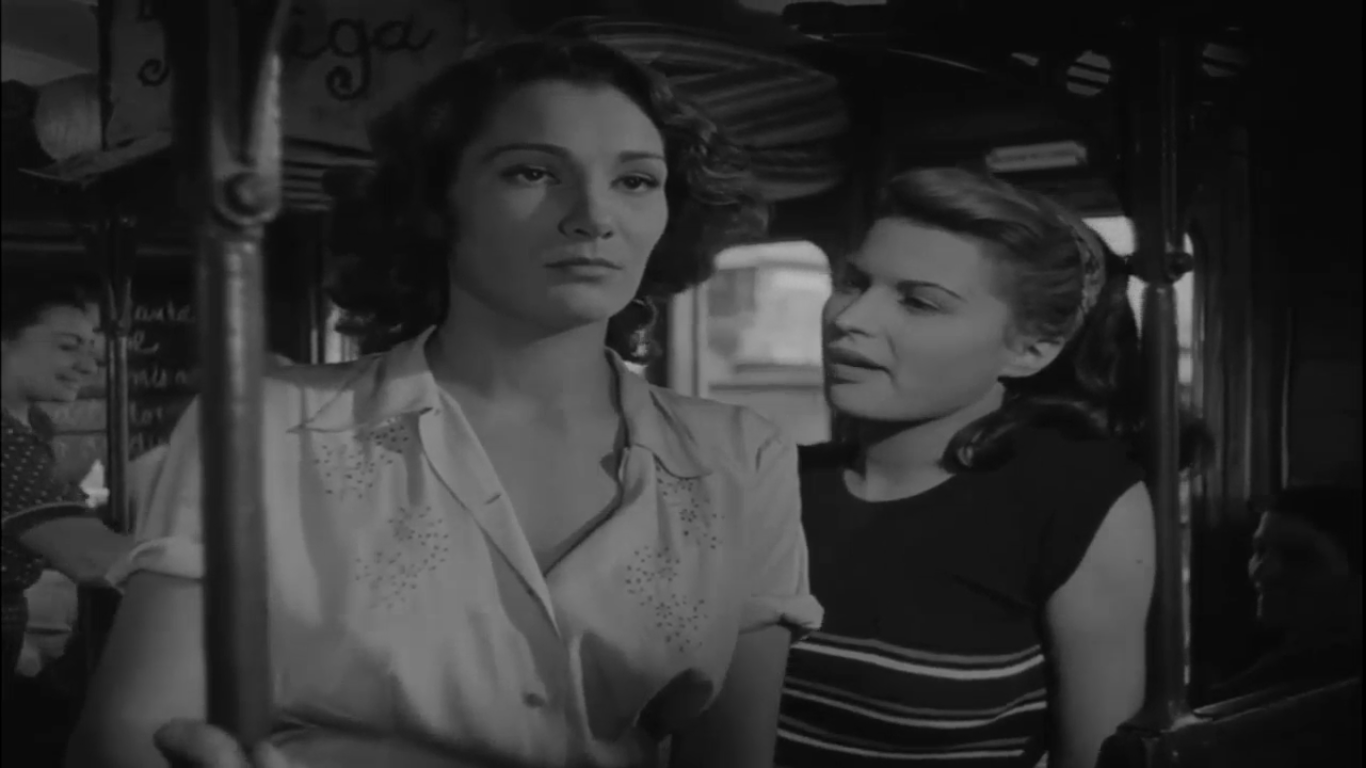
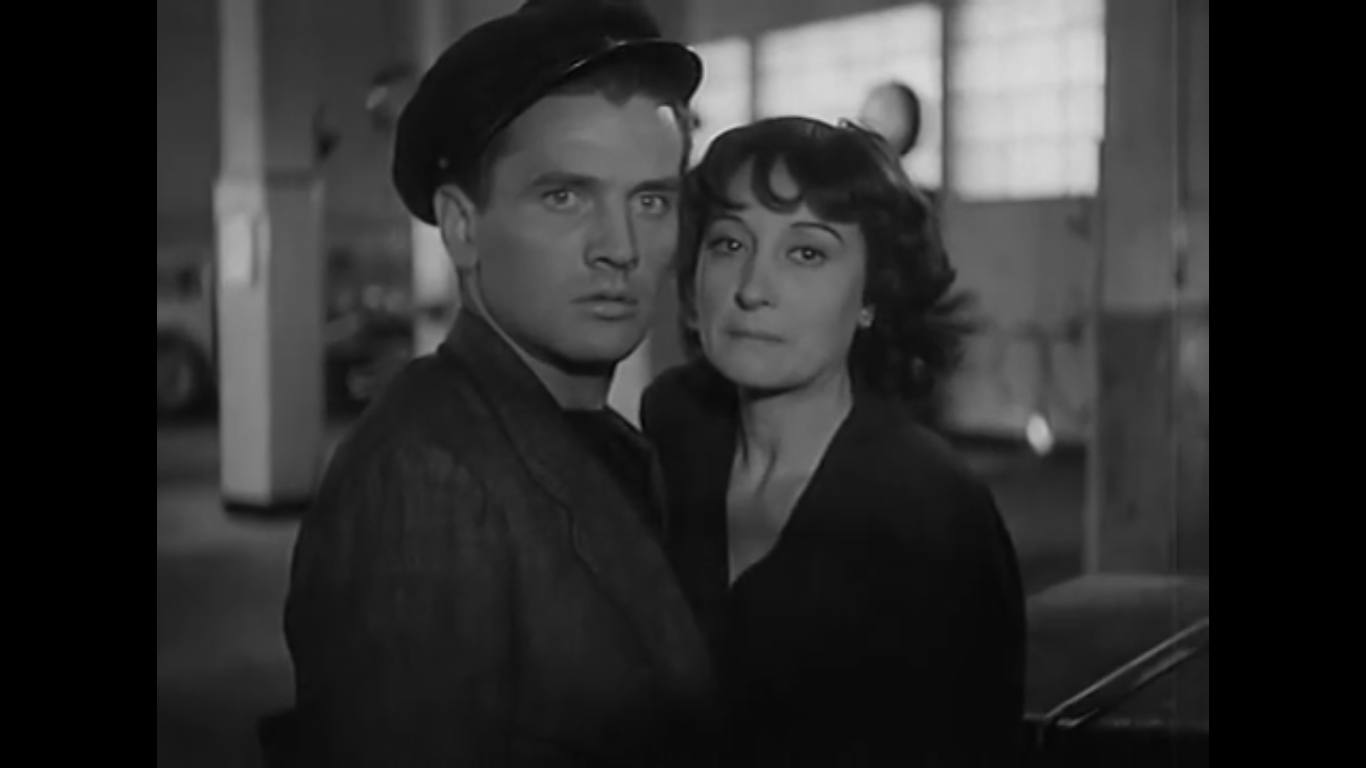
Doris Dowling has a name that sticks out in the opening credits for the very reason she was an American actress and she offered up a particularly memorable role as Alan Ladd’s vitriolic wife in The Blue Dahlia. Here she’s an Italian playing the moll of a two-bit hoodlum wanted by the police.

Bitter Rice opens with a curious kind of introduction. A man stares straight at the camera, breaking the unwritten contours of the fourth wall while providing some explanation of how rice harvesting is a bumper crop not only in China and India but in Northern Italy as well. A moment later, the camera pulls away revealing this presentation is all part of Radio Turin and suddenly the circumstances of the film are instantly placed in a palpable setting.

The lithe even upbeat nature of the picture allows us to fall into the world almost immediately. We have a milieu of migrant workers crossed with bustling train stations, lovers, policemen, and wanted fugitives all playing out in front of us as we try to take in the stimuli and come to grips with everything. The wanted man, named Walter (Vittorio Gassman), tries to mask himself by dancing with a pretty young field worker (Silvana Mangano). She gladly flaunts her dancing in exchange for attention as she’s accompanied by her portable gramophone.

In the aftermath of a chase, Francessca (Dowling) disappears into the crowd of workers to lay low with their cache while her boyfriend flees in order to stay out of the clutches of the police. If it’s not apparent already, a passing street vendor lets us know some priceless jewels were stolen from The Grand Hotel.

If it’s not apparent already, this opening gambit has the kind of thrust we might expect from Hollywood, not a backcountry Italian film, and it’s evident Giuseppe De Santis is well aware of the mechanisms of a thriller. However, he also allows his picture to sink back into rhythms that one would feel much more accustomed to with neorealism and a movie set in the province of Vercelli.

Suddenly a tale of illegals and registered workers is given a new context but timeless relevance to this very day. Francesca does not have a license, but she befriends the saucy young dancer, Silvana, who does her best to assuage the foremen and get her new companion on the ever-crucial list of approval. Her chances are tenuous at best, but Francesca, like so many others, has no other choice.

I couldn’t help thinking, with her chewing gum and sizzling hot music, Silvana is bred out of the same world that supplied movie posters of Gilda in Bicycle Thieves. It’s this influx of American product in its many modes — a new form of cultural dominance — steamrolling the former fascism into submission to good ol’ American capitalism.

The way she flaunts herself and becomes the focal point of the picture, I couldn’t help but compare her to Virginia Mayo in some of her saucier roles like Best Years of Our Lives or White Heat — down to the gum chewing. If it were an American film, Bitter Rice would fit somewhere within the landscape of The Grapes of Wrath or maybe Border Incident.

There’s little doubt it has a kind of collective political philosophy to present — its own vein of social commentary — and it delivers it not only through narrative, but visual depictions of the life these people are subjected to.

In one breathless comment, Silvana tells a soldier (Raf Vallone) posted nearby, “In North America everything is electric!” He’s informed enough to know “even the chair is electric…” As a side note, the Italian constitution completely abolished the death penalty for all common and civil crimes starting in 1948. Already it presents a kind of ideological chafing that must be contended with.

Upon their arrival, the rice workers receive a hero’s welcome, and we are reminded this is a yearly ritual with its own unique patterns. There’s something marvelous about taking part in these seemingly familiar habits even as we see them for the first time as an audience.

The packing of mattresses with straw, the throwing of hats to all the field hands who catch them out of the air en masse. It’s strangely riveting. Or there are the mating customs played out year after year with men yelling over the wall to the fair maidens below, searching for former flings and future partners.

We come to realize it’s built on its own kind of ecosystem. You have the foreman’s, the lines of workers bent over in the muck and the mire every which way, and they sing their river ballads to pass news along the line.

With the jewels to get between them, Francesca and Silvana find themselves positioned among the two factions of documented and undocumented workers. It’s not a simple task, and then Walter turns up again. He can only bring trouble.

Like their opening foray, there’s something about the dance scene between Silvana and Walter burning with a palpable sensuality. But what it also does quite effectively is pluck the film out of its neorealist roots and make it even momentarily something more. It’s like a precursor to the passionate sashaying in Picnic. It feels like very much a Hollywood creation and yet it’s simply De Santis’s version of it.

Likewise, the film is not totally averse to forging its own version of a love triangle (or diamond) with Francesca and Silvana finding themselves attracted and repelled by the conman Walter and another character, the soldier Marco. These see-sawing relational dynamics are the fodder for unadulterated melodrama exemplified by violent pursuits in the pouring rain, passionate embraces in mountains of rice, and a great deal more.

While the rest of the harvesters get overtaken with merriment in the wake of a wedding and subsequent beauty contest, there’s something much more catastrophic going on in the background. Silvana becomes the self-destructive queen of it all.

By the end, I stand totally astounded. Bitter Rice jumps off the deep end going from Italian Neorealism toward gut-busting, blistering drama with the dark tinges of noir. This is what it borrows from Hollywood quite effectively, reminiscent of a picture like Border Incident or even Cape Fear. In tight quarters, violence becomes especially animalistic. When a beast feels cornered, he must lash out.

Also, I still am fascinated to know why Doris Dowling was cast in a film that was otherwise completely Italian, and yet there’s something rather ironic and bewitching in her and Magnano becoming cultural foils for one another. It becomes a far more complicated portrait of the corrupting forces of greed and capitalism.

Dowling, as the quintessential, steadfast Italian girl, and the Italian actress as a poisoned vessel of sensual pop culture materialism. What’s more, it leaves a truly incisive impression and that’s most important of all. You won’t soon forget a film like this, and it just might have the power to captivate viewers on both sides of the globe with its pulpy sensibilities.

4.5/5 Stars

Ossessione (1943): Luchino Visconti Does James M. Cain

You half expect cinema to have remained dormant in wartorn Europe during the 1940s. That’s part of what makes Ossessione such a fascinating curio within this context. In fact, the film almost never made it out of the decade alive. One can only imagine how unpopular the picture might have been with the reigning government.

It doesn’t exactly preach good old-fashioned fascist values and Mussolini looked to exterminate the picture completely. Legend has it that Visconti, who had also joined the communist party, managed to salvage a copy so that his film debut could live on and he got out of the war as well with a sprawling career still to be determined ahead of him.

I learned only very recently that Visconti started out as an assistant on the films of Jean Renoir of all people. Not only does that seem like the most propitious of apprenticeships, but it’s also easy to trace the lineage of the Italian from the Poetic Realism of the French Master that would eventually coalesce into Italian Neorealism.

The films of Renoir and Michel Carne are fully present in this early work with the opening images of a train evoking something like Le Bete Humaine or Toni. Gino Costa (Massimo Girotti ) is the kind of working-class hero you’d expect in one of those earlier pictures or even some of John Ford’s work.

He’s an itinerant bum who used to be a soldier and then a mechanic in a former life. Now he’s hitched a ride on a truck bed only to be dumped outside a roadside tavern. And Visconti proceeds to introduce his primary couple through the visual synecdoche of two pairs of legs.

Finally, we see their faces together. They’re in a kitchen. Although Anna Magnani was originally meant to have the role, Clara Calamai channels the sultry come-hither coquettishness quite well even when it’s impossible to unsee the platinum blonde of Lana Turner in the part. But they have their own instant spark, like flint — burning with a consuming passion tantamount to spontaneous combustion.

If you’re well aware of the story already, she is a young woman married to a chubby misogynist named Bragana (Juan da Landa), who thinks he’s more than deserving of the marital comforts afforded by such a wife. He calls on her to rub him down after a long day, and she can’t bear to touch him. She has designs for someone else.

While her husband goes off with the local priest to do some duck hunting, in an early example of a bike-and-talk, Giovanna is quick to stoke the flames of romance with her much more desirable confidante. Visconti’s unauthorized rendition is purportedly more faithful to its source material although it’s hardly as streamlined as MGM’s later adaptation, essentially leaving more space for narrative asides.

When Giovanna clings to the security of her current life, Gino sets off on his own alone soon falling in with a hospitable street salesman, “The Spaniard,” who entertains the crowds. In what can only be expressed as noir sentiment, the tides of the narrative bring the couple together quite by chance.

Bragana is pleased to see their old friend and Gino gets pulled back into the whirlpool taking in some opera at a local tavern. This more than anything betrays Visconti’s affections for the stage.

Consequently, it’s also a film where arguably the biggest moments play out off-screen. I’m thinking of the illicit couples’ first rendezvous and then the fatal accident altering the course of the entire picture. Not all of this is due to content concerns either, but it does highlight how Visconti and his scripting compatriots, Mario Alicata, Giuseppe De Santis, and Gianni Puccini, conceived the story.

It offers another kind of dissonance because we don’t get to see what actually happened even if we’re well aware of their mutual intentions. We must wait for events to play out to see how the canker and unrest reveal themselves in due time. The most explicit response comes when Gino peels off  some bandages and then a violent struggle over a trinket ends in a passionate kiss. This might be the movie summed up in visual terms.

They must reckon with an unsettling state of limbo: freedom that feels more like purgatory as they stew in their infidelities. A man of the cloth suggests that they part ways because people do talk about their situation, real or imagined, and of course, it is very real.

Instead of detonating the story to be a full-blown melodrama like The Postman Always Rings Twice, Ossessione maintains these high levels of human intimacies. Gino reunites with his old pal again beyond delighted to see a familiar face, and yet it ends in fisticuffs because his fellow traveler is able to put words to everything he’s currently tormented by.

Then there’s a demure “ballerina.” Gino meets her knitting on a park bench, and they share an ice cream. I had to acclimate myself, thinking only momentarily that she was Giovana, but the emotions in the scene are enough to give this away. Because being around her Gino feels different; it’s as if, ironically, her purity is able to cover all his sins or at the very least help him forget them.

But the digressions only aid in leading him back to Giovana. If they aren’t totally a destructive pair, frolicking on the beach together, having rekindled their chemistry, then there’s some kind of fatalism that needs to be satiated.

In passing, Ossessione might earn the labels of Italian neorealism for its striking, ever austere imagery emblematic of the post-war working class. But it’s also often designated as film-noir for its sordid details and futile finale. However, I can’t stop but marvel at how Visconti was able to make the picture to begin with. Even after its initial release, it was hit with so many roadblocks of censorship and copyright problems only to gain a second life.

What an auspicious way to start a career, especially under such tumultuous circumstances. Much of the finest pieces of art are born out of the burnishing fires of the furnace and, for that matter, a certain level of creative obsession.

4/5 Stars

Il Tetto (1956)

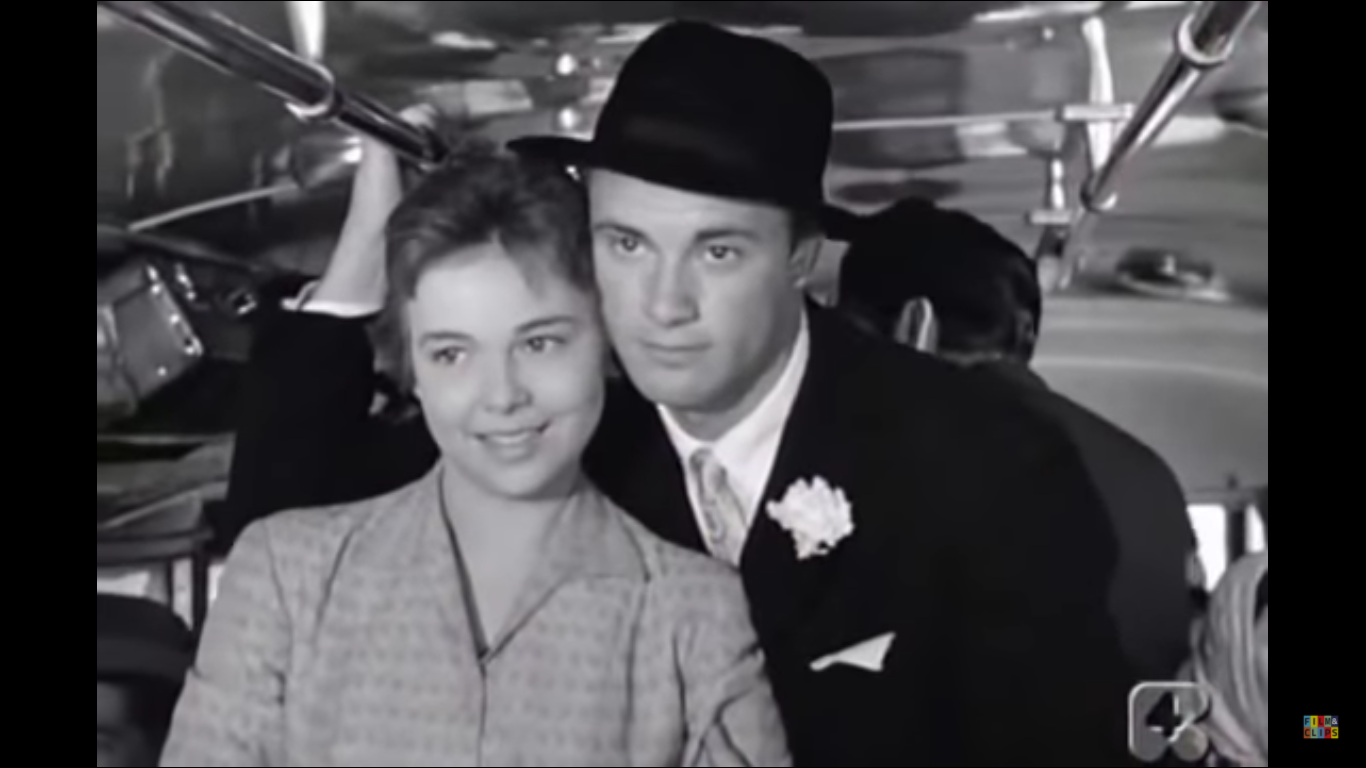
A lot of memorable films are instigated with a jubilant wedding. A couple takes a photo out in front of the church and ride off triumphantly, leaving friends and relations in their wake. Like most of its brethren, Il Tetto falls back to earth with a more sobering reality.

The wife takes the bus with her new husband back to their hometown. It’s a version of The Graduate after the euphoria has burnt off, and they have to make sense of the future. Now they must come to terms with their decisions. They must cope with a father-in-law who won’t speak to them. It’s not even about unyielding conflict. They don’t get a chance to mollify him. The chance never comes so they go back from whence they came.

They seem fairly well-adjusted as a couple in spite of their youth. Although they are young, without many prospects or money to speak of, the bond between them is undeniable. Because it’s the story of many people, to get married and then become inundated by poverty.

However, these newlyweds are looking to make a life together built on the foundations of the war years with a youthful optimism for future prosperity. For the time being, they must stay crowded in the family house until they can get a leg up and a place of their own.

But anyone who loves their family to death (and sometimes wants to strangle them), knows this cannot last. Between Natale’s elderly parents and little kids bustling around, the sister-in-law Giovanna is about to have a baby and her agitated husband Cesare is always complaining about the lights being left on. He’s not particularly simpatico about the new arrangements. It reaches a tipping point when he and Natale grow chippy and discontented.

It’s sooner than expected, but they realize they need to go out on their own and find a place. The barriers up against them are obvious. They need the funds in order to swing it, and it’s still an issue finding quality housing in the city with buildings coming down as much as they’re going up.

Husband and wife make a pact to split up so they can try and find leads. Natale puts his fledgling skills to use getting a job at a construction site as Luisa calls upon her friend to get work as a housemaid.

This isn’t quite Mr. Blandings Builds His Dream House, but the young bricklayer mobilizes all his work buddies and scrounges around for all the money he can get for materials and labor. What’s more, they’re tasked with putting up a livable structure in the course of one evening. It feels like an act of desperation, an unsurmountable task, but he seemingly has no other choice.

Like an utter numbskull, it didn’t strike me what the core resonance of the title was until the movie was over. I was under the impression that there would be some scene on the roof — that it was a metaphor for their existence — of getting away together as a couple and starting their new life. I’ve listened to too much of The Drifters and vividly recalled a rooftop moment in A Special Day.

But De Sica makes this story even more elemental. This is about the roof over their heads — a home to call their own — and the right to a certain amount of dignity to work and raise a family.

He turns such a premise into a kind of neorealist thriller as the young husband races to literally put that roof over their heads before the local police can reach the premises and condemn them for whatever infractions. It’s a tense round of nail-biting in the final minutes as they race against time. We know what might happen; we’ve seen it already, and now it’s all up to the fates.

Il Tetto is not talked about with the most high-profile De Sica dramas nor, does it have the warm buoyancy of his later comedies as he came upon a new facet of his career.  But even as the neorealist movement was waning and beget future progeny like the French New Wave and other movements, there’s little denying the impact of this kind of cinema championed by the likes of Rossellini, Visconti, and De Sica.

It’s taken a more personal note for me because as I’m writing this, I’m in the process of moving. A lease was terminated, I was forced to rush around trying to find a place of my own, and then there’s the first-world problem of cleaning out all your excess junk.

My situation is different; it’s privileged compared to what this couple have to endure. If anything, it’s a reminder for me to stop my griping. It could be worse. Still, more so, I’m reminded we all have these same urges: for shelter and a place we can live in peace. I empathized with these folks even more than I was expecting.

4/5 Stars

The Mouse That Roared (1959)

There’s something illuminating about getting a movie from our neighbors across the pond that offers a winking look at American society. The movie takes its title quite literally, scaring off the Columbia lady with a critter who subsequently carries away the animated title sequence. Because the U.S. might be the prototypical lion, but Grand Fenwick is the mouse that roared.

The minuscule duchy of Fenwick — a measly nation if there ever was one — remains stagnated in the medieval ages, economically and otherwise. Their major exports are wine, particularly popular on the West coast, though competition in the form of copycat businesses proves steep competition.

Teetering on the brink of bankruptcy, the Fenwick leaders resolve to declare war on America. It’s really all part of their contingency plan expecting that their quick and inevitable defeat will lead to American rehabilitation and, thus, newfound prosperity for their little principality. They no doubt are well aware of the Marshall Plan and the U.S.’s undying interest in any floundering nation, they can look to capitalize on. Better us swoop in than have the Soviets socialize them, right?

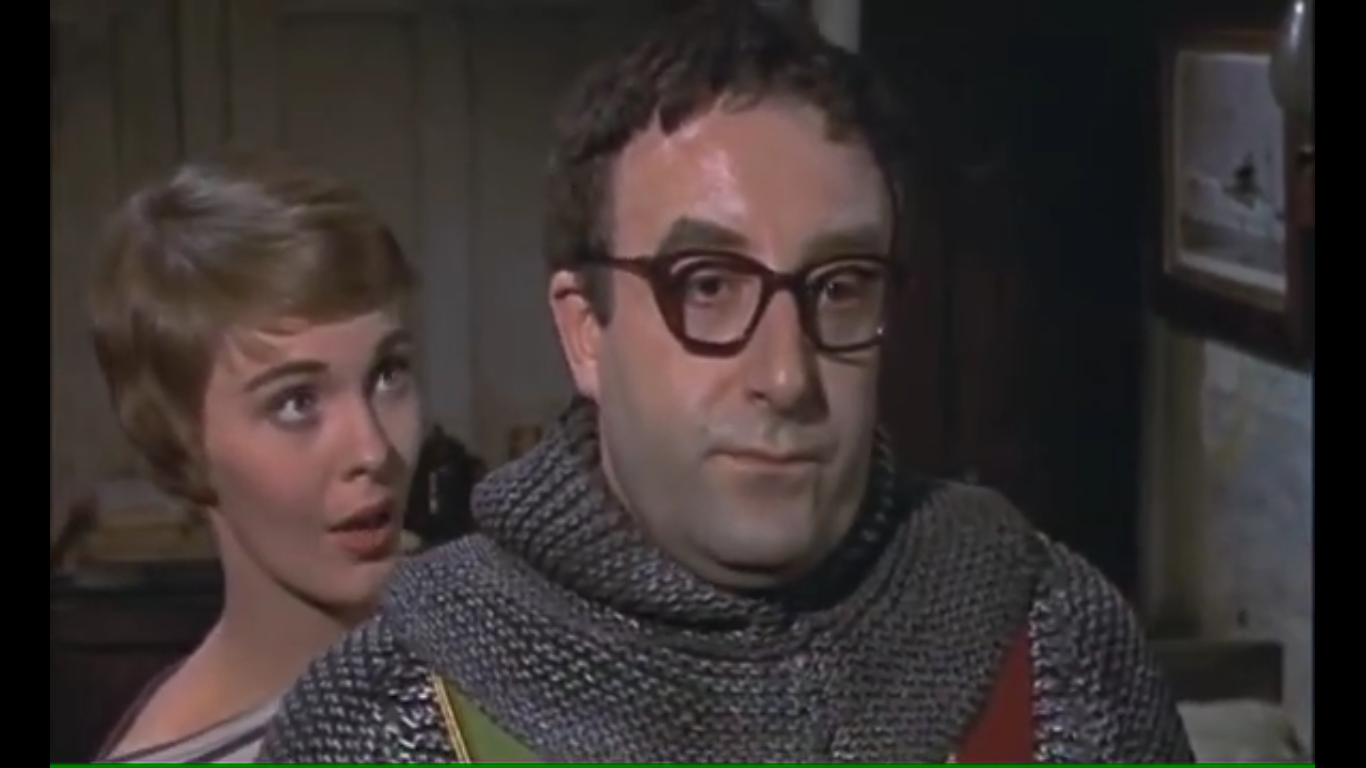
Regardless, all this poppycock and tomfoolery is made even more palatable thanks to the talents of Peter Sellers. He hasn’t reached Clousseau status nor the apex of his stardom in the 1960s, but he would be an international icon soon enough. For now, we get to sit back and witness him in dialogue with himself. First as the Machiavellian prime minister Mountjoy, then the Queen Victoria knockoff, Duchess Gloriana, and finally, the ultimate Sellers hero, Tully Bascomb.

Because it is this meek and unassuming game warden, who is called upon to lead the charge across the sea onto enemy territory. Armed with their bows & arrows, chainmail, and Fenwickian pluck, their force, 20 men strong, sets off. I mention Bascomb as the prototypical Sellers hero because he’s such a small character, and yet since he is lacking in much, it works impeccably well with the utter outrageousness of the comedy blowing up around him.

Before Monty Python and even before Dr. Strangelove, there was The Mouse That Roared, and not simply due to the trio of roles carried by Sellers. Like its future scion, it takes no umbrage about trampling over Medieval iconography in all its antiquity and finding wells of humor therein. It’s also an atomic bomb-conscious comedy. Surely, you could say almost all comedies of the 50s and 60s were informed by this reality — this pervasive fear — but Mouse takes these themes to heart.

For what generally feels like a humble picture, the moving parts are rather extraordinary. Beyond Sellers, we have director Jack Arnold remembered mostly for his Sci-Fi and monster movies of the 1950s. The marriage sounds less outrageous than it is (or maybe it’s just outrageous enough) because this is meant to be a farce. There are no creatures from the black lagoon or incredible shrinking men, but there is some extraterrestrial hysteria.

It plays with all the alarmist tendencies of the age when the Fenwick contingent prey on a passing truck and punctures its tires, leaving the victims thinking the nation’s being invaded by men from outer space. This streak of nuclear age anxiety with a distinct message is more than enough to wedge it into the rest of Arnold’s canon.

But we have yet to mention Jean Seberg. She’s no doubt at her most childish — she’s only 20 or 21 years old, after all — playing the peeved daughter of a famed scientist. It hardly accentuates her talents nor her playful mystique like Breathless or even Bonjour Tristesse, but it is something different. Because it’s her father’s Q Bomb, which could eat an H Bomb for breakfast, that is currently being tested and is accidentally discovered by the Fenwickians.

In a serendipitous act of lunacy, they instantly become the aggressors ready to take advantage of the situation and bring America to its knees by kidnapping some of its most fundamental assets. It’s the kind of goofy, lightweight stuff taking the edge off. Although there’s an agenda, no matter what implications it might have in the nuclear age, The Mouse That Roared is the perfectly tame goofball comedy we expect to see when we visit sitcoms of the 50s and 60s.

The fish out of water commentary about America dries up when the prisoners are carted back across the pond. Tully and his men make a triumphant return only to be met with some chagrin from the hoodwinked cabinet. They’ve mucked things up. Not only have they not surrendered, they’ve gone and taken hostages and ran off with the most dangerous superweapon in the world!

By this stage, the heart of the comedy has mostly dried up too, though there are a few passing gags relating to the hot potato bomb that wheezes and sizzles to the touch just waiting to annihilate mankind. Likewise, Tully finds himself smitten with feisty young Helen in a love affair that could be telegraphed from miles away. Ultimately, it plays the best when its intentions are made clear with the goofball inanity of it all before didacticism and treacly romance are allowed to give their final stamp of approval on the story. For what it’s worth, I’m one Yank who enjoys being invaded in such a manner as this.

3.5/5 Stars

Bonjour Tristesse (1958)

Otto Preminger famously combed through headshots and plucked Jean Seberg out of her Iowa hometown to be groomed as his latest star. St. Joan was far from a stunning ascension for the young starlet, but her follow-up with Preminger, Bonjour Tristesse, showcases her incandescence.

Adapted from Francoise Sagan’s novel about youth set on the French Riviera, I cannot think of a better environ to augment Seberg’s talents. Her Cecile is a carefree spirit and rather noncommital when it comes to anything like marriage, but Seberg imbues her with a poise well beyond her years.

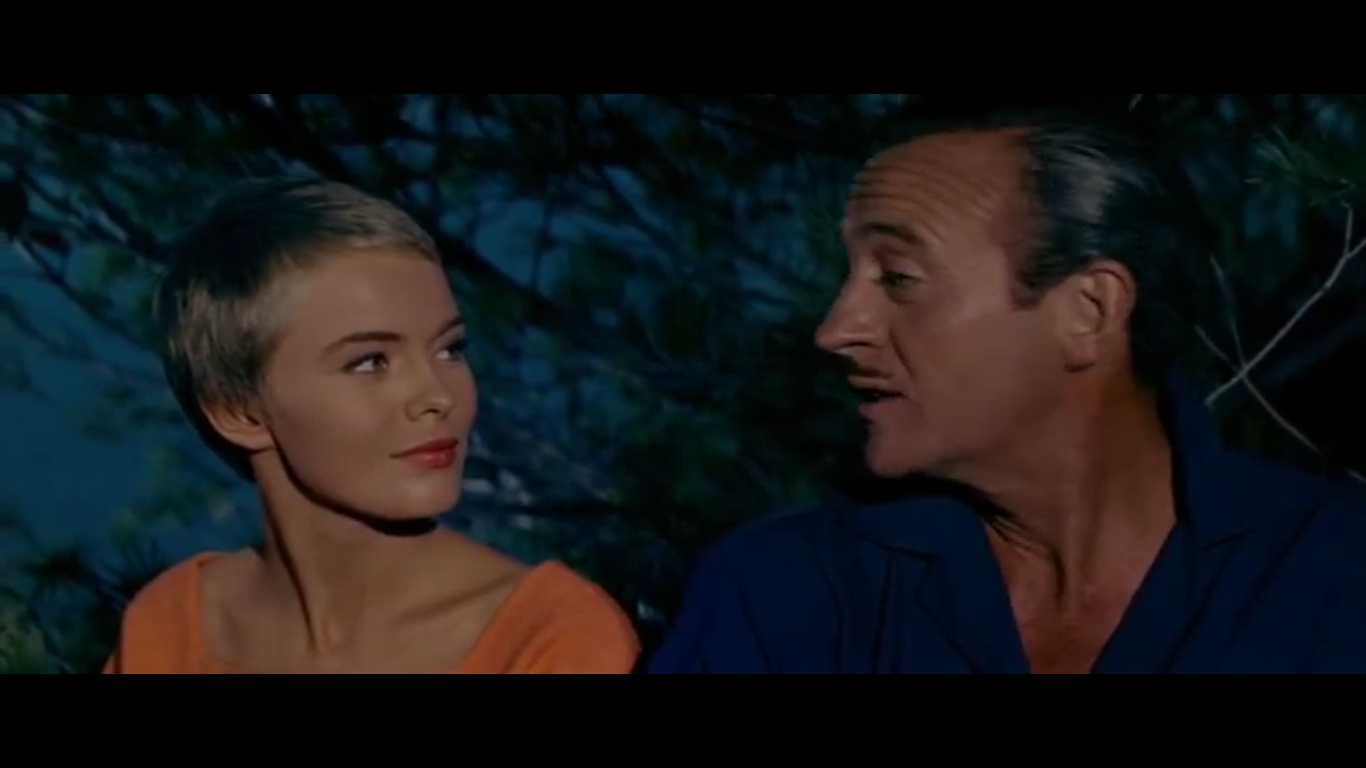
The fact that the picture is positively cascading with ritzy, sun-soaked opulence more than suits a jaunty David Niven and the pixie-haired Seberg — they’re a father and daughter duo — who know no other existence than utter extravagance. Preminger more than matches his stars with gorgeous tones drifting from black and white to vibrant color.

They feel all but compelled to recline on the veranda to soak up the sunbeams with a cool beverage or take a refreshing dip in the water. Who can blame them?  The audience is allowed to live vicariously through all their pleasures, and it makes the interim portions of Bonjour Tristesse both light and luscious in content.

If you haven’t gotten the idea already, Preminger’s picture conjures up ample comparisons to Hitchcock’s To Catch a Thief or Demy’s Bay of Angels sharing much of the same world. What happens exactly? That is and it isn’t easy to say because it’s the mood and the time spent with the characters in their environs that’s both scintillating and charming. Some characters almost evaporate between the beaches, casinos, and champagne bubbles. The most important ones give the film buoyancy and a dash of substance sprinkled in.

However, to hone on any sort of plot, it begins rather simply as a comedy of the situation with father and daughter pulling off shenanigans together. They have such a cultured camaraderie, that it’s second nature to refer to each other by their first names. Romantic dalliances are also expected, between Elsa (Mylène Demongeot) the pretty young thing Raymond traipses around with and Cecile’s latest fling, a strapping young man named Phillippe (Geoffrey Horne). He’s one out of a laundry list of past suitors. They’re contented enough with their free-flowing lifestyle.

Then, follows the auspicious day when Anne (Deborah Kerr) arrives. She’s been invited for the summer holiday as a friend of Raymond’s late wife. She’s not of their ilk with a sense of propriety that they’ve never taken much time to worry about or even consider. One can only imagine what she will think of the laissez-faire romantic lifestyles of Cecile and Raymond. The tensions in the fresh sea air from the outset.

However, we must take pause because there is also a sense of deja vu in the atmosphere. Surely Niven and Kerr have played these characters before in other movies — their dashing playboy and refined prude — this time falling in love with each other. Even Seberg with her iconic pixie cut looks utterly familiar if only due to the ubiquitous iconography of Breathless a few years later.

Whether totally conscious or not, it does feel like Bonjour Tristesse is totally in dialogue with the onscreen personas of its three stars. This feels very much like a component of Old Hollywood where stars were built around their types and somehow instead of disappearing into roles, they brought their own individual sense of authenticity and emotional truth to whatever part they played. For the best ones, it’s like each subsequent role was built on the foundation of their previous work.

Jean-Luc Godard even acknowledged, “The character played by Jean Seberg [in Breathless] was a continuation of her role in Bonjour Tristesse, I could have taken the last shot of Preminger’s film and started after dissolving to a title: “Three years later.”

In the latter half of the film, it’s the character’s youth that becomes strikingly apparent as she grows jealous of their new houseguest who has tamed her father and taken away some of her long-held freedoms in an attempt to make her a more traditional young lady.

And yet the happy-go-lucky gaiety remains up until the very brink of devastation. Otherwise, we watch with rapt interest as she goes darting after her lady oppressor like the epitome of her gamine self ready to watch her fall into the emotional trap orchestrated by her girlish ploys. Suddenly all the merriment isn’t so merry after all and it’s terrifying in its incisive cruelty. We are reminded of the selfish vindictiveness of youth. C’est la vie.

For garnering such a tepid response in its heyday, Bonjour Tristesse represents much of the allure of Old Hollywood though it rarely gets the plaudits of some of its brethren. Somehow, between Preminger and Seberg, Niven and Kerr, and sweeping Cinemascope, it’s easy for the picture to get lost in the shuffle because the four of them have innumerable other productions of note.

This one deserves at least a second chance for its mise en scene alone. Preminger actually does something with it to the point that the final moments of the movie mean something. It’s not the same film we thought we were signing up for.

It’s gorgeous, vain, at times, even superficial, but we would be remiss not to pick up on the inherent melancholy played in sharp contrast to the vibrant palette. Suddenly, it makes complete sense why their present is in black and white and only the past can remain in color.

4/5 Stars

A Patch of Blue (1965)

I hope my analogy does not get misconstrued, but A Patch of Blue plays like a sublime fairy tale. It’s set in New York, a city that often feels as much of a visual fabrication made out of magic and myth as it is a real place anchored in time and space. Here is the very same world that exists in the Breakfast at Tiffany’s or other such pictures.

Shelley Winters is at her nastiest and most acerbic as a street tramp Rose-Ann. An evil “stepmother” if you will, because she and her daughter are on a first-name basis. Aside from that, you’d hardly realize they’re kith and kin. Because you see our cinematic cinderella, Selina D’Arcey (Elizabeth Hartman), is blind thanks to a violent altercation in her childhood and is now resigned to spending most of their time locked up in the shabby apartment.

Wallace Ford, bless his soul, is Ole Pa, and though his heart might be in the right place, he’s not much used to the world because he spends most of his waking days home from work, griping at the insufferable Rose-Ann or going out on the town to get royally plastered. 

When Selina’s not slaving away at chores, she’s stringing beads together for mere pennies. Otherwise, she’s considered useless. She’s blind after all. It’s hardly a life at all. At least, that’s what the world around her seems to suggest, and any minor pleasure like an afternoon in the park feels more precious to her than gold. 

It’s in this said park where she first meets Gordon Ralfe (Sidney Poitier). If we wished to describe him, you could highlight any number of salient characteristics. He’s tall, handsome, and intelligent. He works the night shift, and he has a brother (Ivan Dixon) who’s training to be a doctor. He’s also black…

But Selina cannot recognize or know any of this during their first encounter. Instead, she learns about him through his actions and words. Rather than being an impediment to their connection, somehow it provides the most sincere indications of human affection. She finds him to be kind and patient in a manner she has rarely experienced.

In this first encounter, she’s dumped her precious beads all over. She can’t possibly gather them together again, and so we have an effortless meet-cute. For all we know, Gordon appears at her tree, but whatever the means — fate or happenstance — the film is never the same again. The metaphor of this movie is evident even for those who’ve never seen it. The cliche that “love is blind” is made quite literal because, for young Selina, that’s what happens. She falls in love for the first time. 

Guy Green does not employ altogether flashy filmmaking notwithstanding some fitting match cuts, but this leaves ample space for his narrative focal points. There’s something undeniable blooming between Hartman and Poitier making this movie a tender slice of romance brimming with sincerity. 

Poitier empowers her in a way no one has bothered to before, and it’s an awakening of the world around her even as her sense remain attuned to everything. Though Poitier isn’t necessarily stretched beyond his limits — he’s perfectly at ease being a benevolent guide — his customary affability and charm feel infallible at this point. 

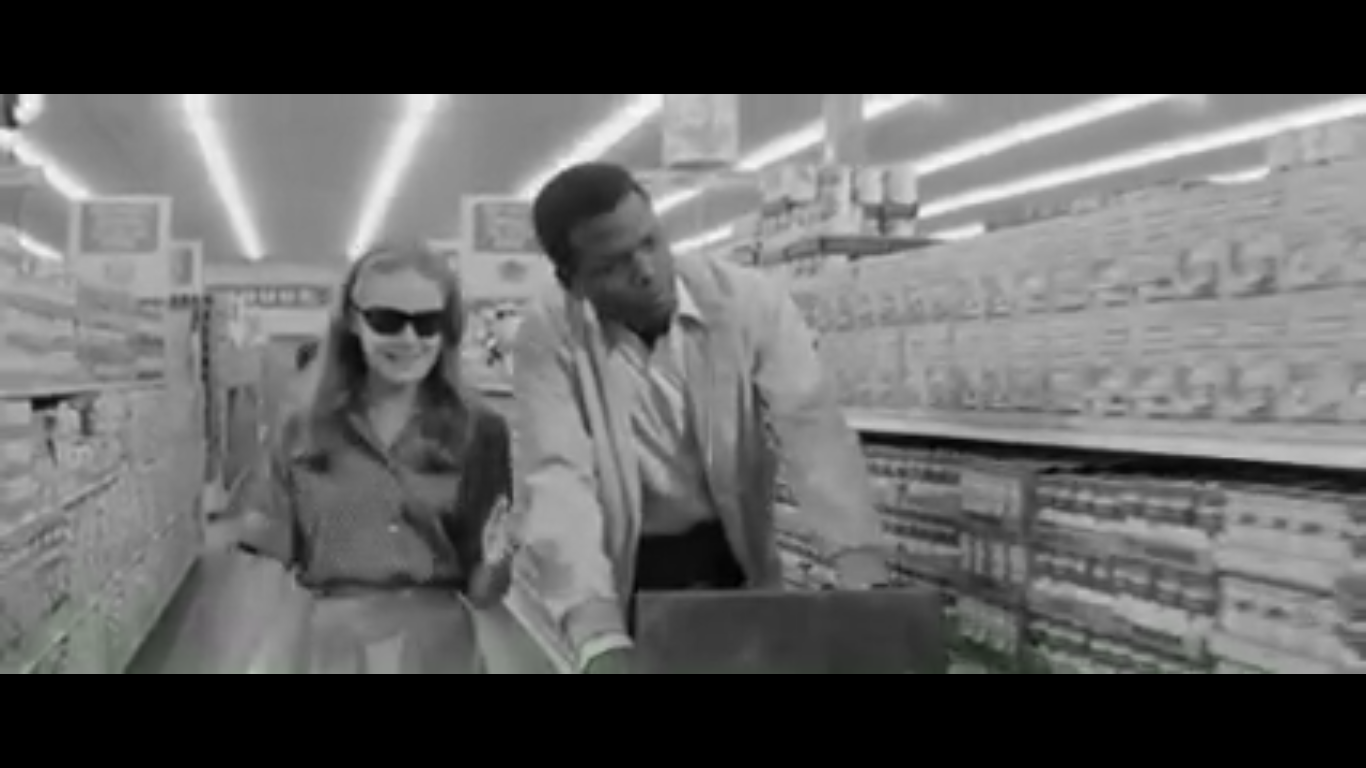
True to form, he comes back in subsequent days to check in on Selina, providing her sunglasses to cover the scars on her face. Another day he offers her a can of pineapple juice, which she takes with relish. He broadens her horizons further by traveling together on the crosswalk for pastrami at the local delicatessen and then to pick up his groceries.

To us, these seem like mundane tasks, and yet for Selina, these are such generous acts because someone has taken the time for her. And though she is mostly unawares, there is a sense that in 1965, just there being together, existing in the world, and taking part in life together, is a meaningful act of solidarity if not total rebellion against prejudicial behavior. At its most fundamental level, it courts these ongoing themes of friendship and tolerance.

 Most importantly, it is Gordon who rescues her from the pit of despair and the vengeful jowls of Rose-Ann once and for all. Remember, it is a fairy tale — Poitier acts as the fairy godmother whose job never has enough contours for us to really know what he does; he appears when he is needed most. His performance is matched by the agreeable whimsy of Jerry Goldsmith’s score dancing softly in the background. It can end no other way even as this adolescent girl’s life still hangs in the air, partially unresolved. 

Although the words have been echoed many a time, it does seem like Selina comprehends Dr. King’s incomparable words in their totality. Because in her mind’s eye and in their day-to-day actions, she has no difficulty judging Gordon, not by the color of his skin, but by the content of his character.

It’s another sentimental picture, and you can rail against it, although I’m predisposed to enjoy its quiet bounties. Even compared to a more high-profile option like Guess Who’s Coming to Dinner, there’s something unostentatious and rather attractive about this movie. It has Poitier’s sense of decency, and there’s a message of tolerance, but the scale feels wonderfully mundane. So, perhaps it’s a realist fairytale. 

4/5 Stars

Nothing But a Man (1964) and Human Dignity

I know Ivan Dixon from Hogan’s Heroes and I’m hardly ashamed of that. He is a lifelong friend forged out of days poring over episodes on classic television stations. Whether he was satisfied with the work is an entirely different conversation, but I am thankful for what he brought to the ensemble in terms of humor and his reliable presence.

Then, recent viewings of Too Late Blues and A Raisin in The Sun, introduced Dixon into my life again in a renewed context. It was a new way to appreciate him even as I’ve become more aware of his prolific work behind the camera in more recent years.

However, in Nothing But a Man, he showcases a depth of character and a facet of the human experience, that frankly, was never accessible in a zany half-hour CBS comedy about American prisoners in a German Luftstalag or any of the smaller film roles he was bequeathed.

The images open with jackhammers as a gang of black section hands help lay down the railroad tracks. It’s hardly breezy work. In return for their sweat and middling conditions, they get a wage and a certain amount of freedom. In the evenings they can be found playing cards or frequenting the local beer parlors with “Heatwave” jamming away in the background. It’s lo-fi instant ambiance and Motown proves to be the perfect soundtrack for this film.

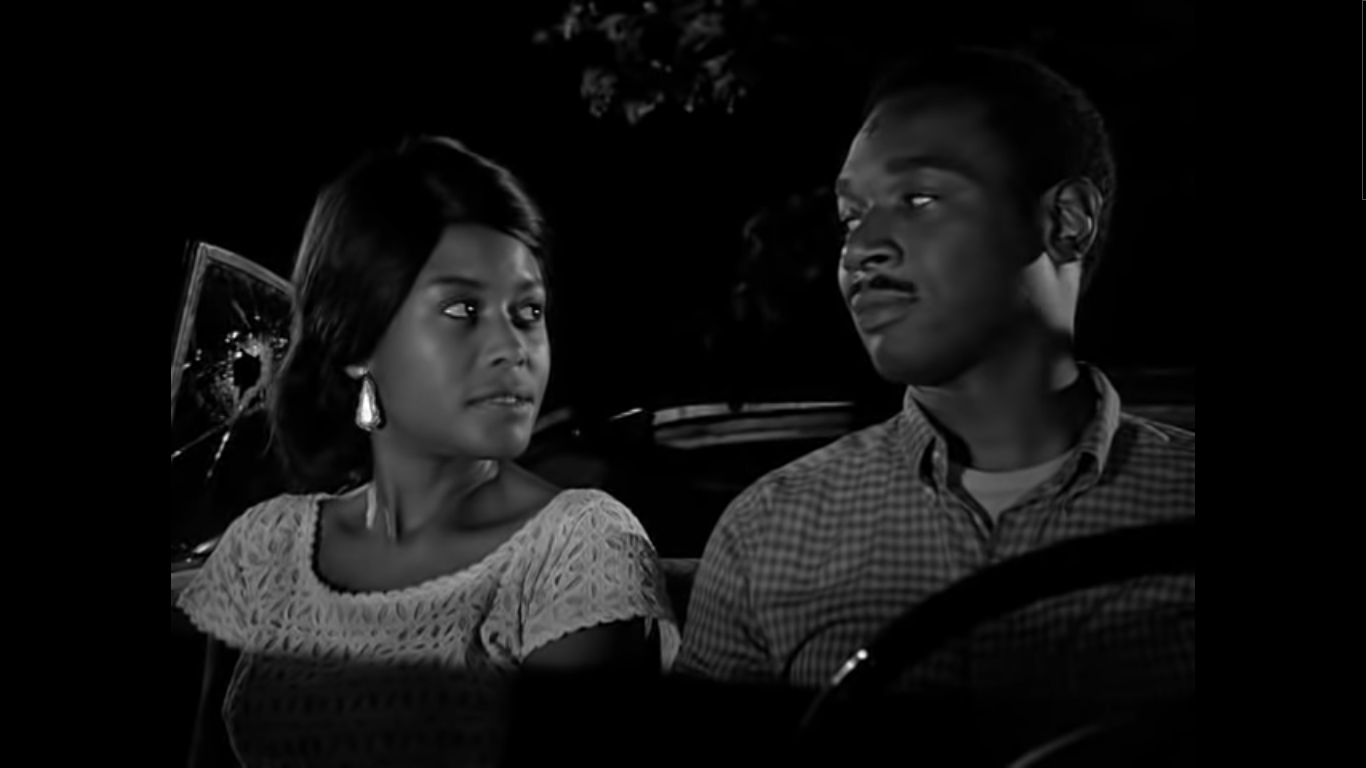
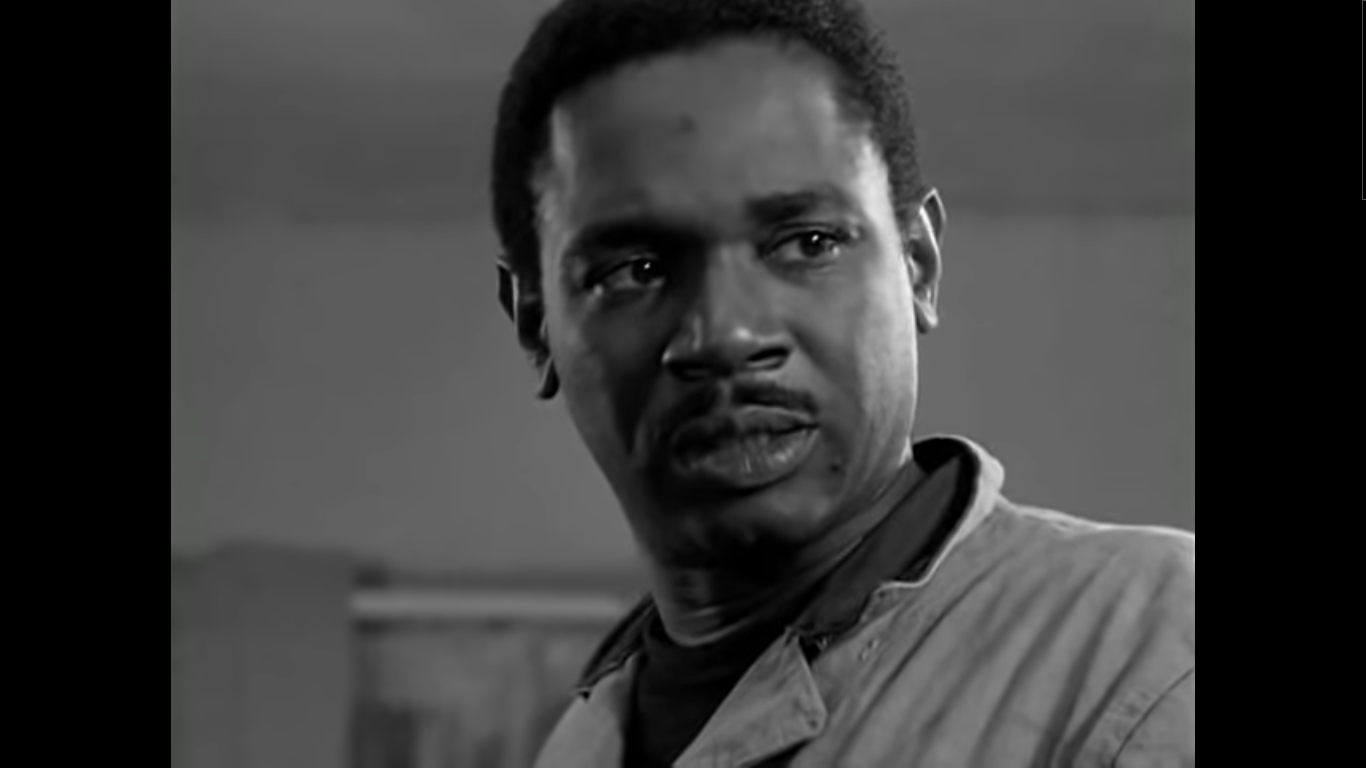
Although he’s not much of a churchgoer, Duff Anderson does show up at a local church meeting in Alabama for some food and southern hospitality. The girl dishing out the meal catches his eye. Josie Dawson (Abbey Lincoln) is the local teacher and the preacher’s daughter. This feels like an instant red flag. Anderson’s not exactly a moral saint, but he relishes her company.

There’s a modest kinship rapidly blooming between them. Even so, Nothing But a Man is a film that feels attentive to the thoughts and feelings of its characters spoken not simply through their words but the expressions on their faces and their actions. Dixon has such classically handsome features, and there’s something unequivocally lovely and unassuming about Abbie Lincoln’s smile. They bring the best out of each other as their romance strengthens.

However, there are other underlying issues to contend with. He has a young son, although he’s never been married before. The reverend looks at him with suspicion. He’s not the marrying kind. Even he knows it, but as a bastion of society, and a mediator between the black and white communities, Josie’s father is not welcoming of any disruption to his moral standing. It’s easy to feel for him even as the gravitational pull of empathy drags us in other directions.

Duff tells the preacher, “Us colored folks got a lotta churchgoing. It’s the white folks who need it real bad.” Of course, the irony of the words can’t be lost on us. Most if not all the white folks have their own churches to go to on Sunday, but it has no positive impact on their lives. I’m sure neither race has a total monopoly on this lukewarm reality. It’s human nature.

But there’s still another question to be answered: How did two Jewish men from up North hone in on such a resonating story of a black community, by taking New Jersey locales and fashioning them into the Deep South? It has to begin with this same kind of personal identification — some form of shared empathy — because they could not get close to the material any other way.

One thing that comes with watching films en masse is how they have the ability to inform one another. Take Pressure Point about a black psychiatrist treating a white neo-Nazi. He espouses vitriolic rhetoric about turning Blacks and Jews into the world’s scapegoats. He never uses the exact words, but it’s plain he believes them to be subhuman. I’m no expert, but it’s difficult for me to think of any group that has been more oppressed than these two.

However, this is not Stanley Kramer at work. It’s not a film about messages or social significance. Instead, we are allowed the privilege to walk alongside this man and woman, and even for a few moments become privy to their circumstances as depicted on screen.

It becomes apparent how the specter of racism dwells over every element of daily life. It cannot be conveniently compartmentalized or ignored because it always has a way of rearing its ugly head. White co-workers try and whip up “friendly” small-talk couched with subtle belittling and microaggressions. And you cannot have a quiet car ride without being accosted.

For whatever his negligible crimes against humanity might be, Duff is considered a troublemaker and standoffish. He won’t be cowed. The next stage in the systematic onslaught is bodily threats — he’s chastised mercilessly as a gas station attendant —  only to be laid off out of fear of retaliation.  And it doesn’t stop there as he’s totally blackballed and all the work propositions mysteriously dry up all around him. There is no deliverance from such a sphere of existence.

His primary problem is that he’s a proud man in an environment that is not ready to give him the respect he requires. What’s striking about Dixon’s portrayal is how it never feels combative or confrontational. That’s never his M.O., but he also will not degrade or ingratiate himself as a basic act of survival. There are some things that run deeper still, and he knows no other way than to be true to himself.

Self-proclaimed experts always talk about the problem with families is the lack of a father figure. But fathers need work and here you see the issue in its totality. It plays out throughout this movie. There’s hopelessness, then desperation, and a lashing out at all those close at hand — wives and children. However, while all this looks to be another portrait of dissolution and a man’s restlessness in a world that won’t let him be, it actually rings with a final note of hope.

I would never accuse Sidney Poitier of grandstanding, but there is a sense Dixon has the same substance as his peer, but this story feels even more mundane than the bulk of Poitier’s Hollywood work. The canvas and the drama are distilled to these very humble forms, and yet there is something powerful in these simple building blocks.

And if there is not a Hollywood happy ending, since this picture shuns everything that is expected by contemporary conventions, Duff does maintain his sense of human dignity. It’s all right there in the title. He was never asking much of others. Never looking for trouble. He just wants to be given the inalienable right to be a man.

For some, that’s easier than it is for others. Let us strive tirelessly for the day when all can claim that they really and truly are created equal. Nothing But a Man is a poignant reminder that this is still far from a reality.

I always knew Ivan Dixon was special, but I will never look at him the same way again. Abbey Lincoln also won a new fan today. I wish I had been aware of her career and her music sooner. But there’s no time like the present to rectify the situation. Let’s not live under the lie that says otherwise.

4.5/5 Stars

Too Late Blues (1962): Art and Commerce

It’s hard not to instantly think of Too Late Blues as a historical curio. Here’s a studio film from John Cassavetes that seems fully aware of the context of Shadows. Shadows, of course, was his independently-made directorial debut that took improvisation and a jazz-like mentality to the streets of New York and the beat generation.

The images here are sleek, but they feature much of the same world carried over from the previous film with a young black audience watching as a group of white musicians play their set. We come to know the boys through their daily rituals: they hang out, shoot pool, drink beer, and play music in parks and beer hauls for pennies. It’s not much of a life, but they seem generally content with what they’re doing.

Cassavetes originally wanted Montgomery Clift and his wife Gena Rowlands in the leads. I would definitely have paid to see that film, but there’s still more than enough that’s intriguing about what he ended up with. Bobby Darin doesn’t sing a lick and it’s a daring career decision because it rests on the bearing of performance.

His Ghost Wakefield is at his best as one of the boys because they function together as a mirthful and inspiring unit. As was thinking when they show up at a local gather how I dig a John Cassavetes party. It’s lively and a packed room, but there’s a cool, relaxed ambiance to it as the boys get greeted by their host and Bobby Darin makes his way up the spiral staircase to mingle.

Cassavetes feels like he’s giving us so many great perches to watch and observe the social experiment going on around us. There are optimal spaces from which to focus on the actors, whether through close-ups or a camera that constantly seems to be following them from the hilt with grave interest.

It’s a bit cleaner, it has the bangles, the bells, and the whistles that give off Hollywood, and yet there are still elements of his directorial debut and future works that bleed into this picture. If you’ll pardon the term, it’s “tainted,” but it still fits fluidly into Cassavetes’s body of work even as it functions at its best as a group effort. It wouldn’t work without the many voices and faces who are more than ready to oblige.

Rupert Crosse as Baby is one such figure as is Seymor Cassel, beginning his own auspicious collaboration with the writer-director. If you’re like me, you also get a private satisfaction in seeing Ivan Dixon even for the briefest of moments.

However, we have yet to mention our heroine: Stella Stevens. We meet her stationed by a piano accompanied by a lively crowd. She’s a flustered young singer and as parties such as these are not for the faint of heart, it’s an excruciating moment to watch her try to perform.

In the aftermath, her eyes flutter like a beautiful deer caught in the headlights. Ghost watches her and compliments her. It seems genuinely sincere. Instead of sticking around, they set up in a booth at a local bar. If it doesn’t sound like Too Late Blues is about anything consequential, at least in theatrical terms, then we’ve come to an understanding of why the movie was never a box office smash.

The sinews of the story are all an examination of characters as only Cassavetes might be fascinated in documenting, and the narrative gladly moseys along at its own predetermined pace. The wheeling-dealing agent Benny with his crewcut wears a crooked smile, though he generally means well. He does his best to scrounge up work for Ghost and the boys as well as Jess with varying degrees of success. The bottom line is that Benny tries and he really is tender at heart.

With all this groundwork, what’s really appealing about Too Late Blues are individual scenes or ideas that have been assembled together to create something else. Take, for instance, the interludes where Jess goes from self-loathing to loving Ghost, even lusting after him. They head to her apartment and on the way take a detour onto the diving board.

She lets him in. Coaxes him to keep the lights low and to wait on the bed. She’s prepared to make his evening as it were, but that’s not what he’s looking for. He wants her common, everyday unadulterated love. It flips the script even slightly as she becomes the aggressor.

However, if Ghost’s masculinity is ever in jeopardy, it’s during a bar room brawl. Vince Edwards gets the most prominent cameo as a rowdy pool player who stirs up trouble after a line of drinks. He gives everyone the business, but as he’s got the pianist in a helpless headlock, his girl looking on, it’s like his dignity has been snapped like matchwood. If she is a fragile human being, his ego is more fragile still, and he lashes out. They are actions he cannot take back.

The one false step might be the arc of Ghost. He’s not altogether the most interesting part of this picture. It’s an endeavor functioning in the crowd and the ensemble — him paired with Princess or the barman or his agent together — living out their lives in these standalone moments strung together. The luster is gone when we start seeing a version of A Star is Born or Limelight. We hardly need another. Time flashes forward and we see he’s just another phony. There is no revelation here.

Thrown back together with Jess, they have a renewed moment of rage. For once the camera shakes, and it feels telling. We are aware of the movie again, and in one glorious bathroom drain shot, there is a cinematic directness of Hitchcockian proportions. The camera cuts to the core of the moment, this final act of drama and duress. Graciously we are allowed an exhale afterward.

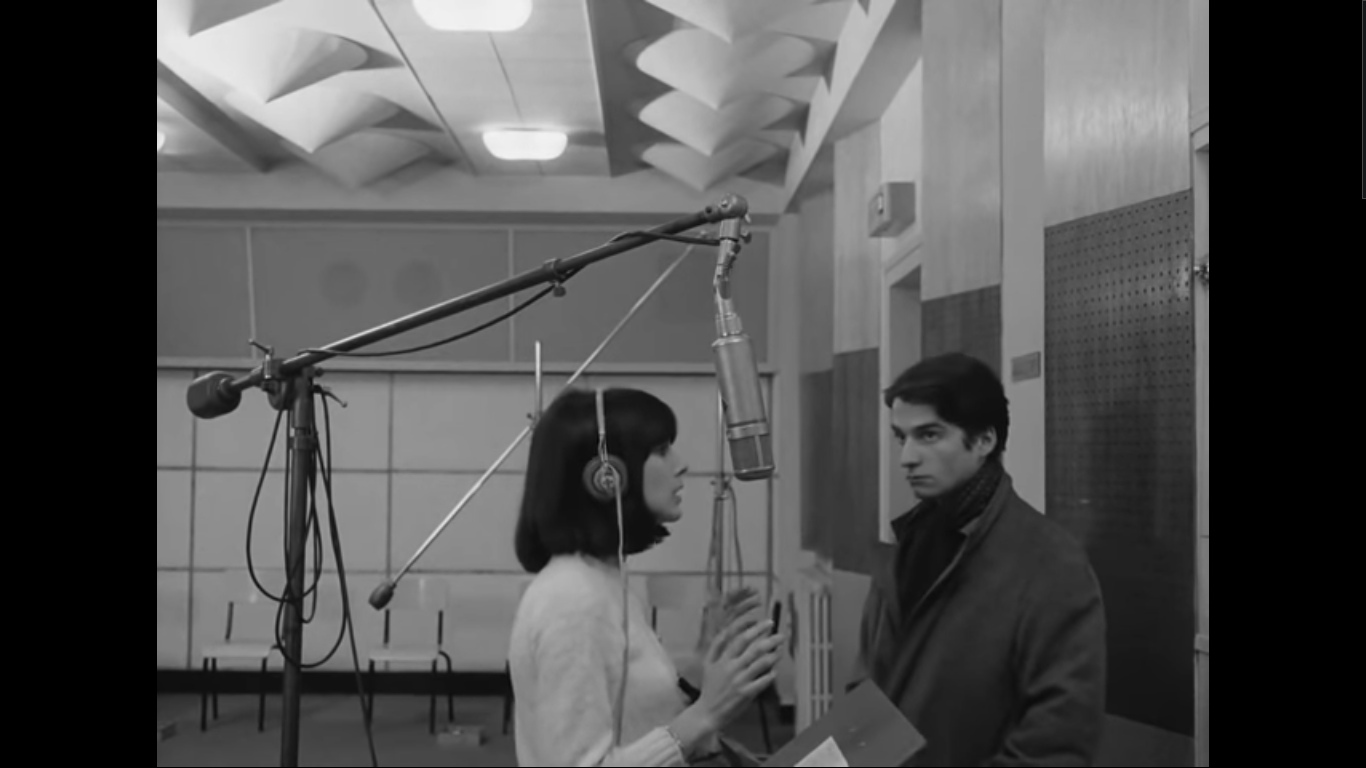
It occurs to me this movie is a lovely bit of metanarrative. During their recording session, when Ghost charges into the sound booth vowing to play the music his way, it’s like a switch has been flipped. He intimates that he thought the financier wouldn’t tell him how to play his music — that the Man would just listen. He’s rebuffed. This is not the way the world works; it’s not what people want. Commercialism is what makes the world go round.

Whether there’s more than an ounce of truth in the analogy, it’s easy enough to cast Cassavetes as the jazzman fighting against the constraints around him to make his art as he sees fit. Like Ghost, he’s trying to navigate an industry trading in commerce and art.

To his credit, it seems Cassavetes never became totally beholden to one or the other straddling the line between both quite spectacularly and even holding together some semblance of a personal life. By that I mean he had a wife and family and of course, it helped that his wife Gena Rowlands was an actress, and they remained on the same wavelength for most of his career. In the end, he didn’t fulfill the destiny of Ghost. He found a way to live his own life.

3.5/5 Stars

Cesar et Rosalie (1972)

It occurs to me that the title Cesar et Rosalie is a rather peculiar choice for this movie. However, it’s also very pointed. If Jules et Jim was about two friends caught in a ceaselessly complicated love affair with one woman (Jeanne Moreau), then here is a story shifting the focus just slightly. This time it is Romy Schneider caught between two suitors.

It opens with two men who both were coupled with the unseen woman named Rosalie. Formerly she was with a handsome comic book artist, but before they could ever get around to marriage (what would have been her second), she ended up with a middle-aged scrap metal man (Yves Montand). He’s quite successful in his trade while maintaining a penchant for gambling.

Whether it’s solely because they are represented by creative types, it feels like there’s a kind of vacuity about the younger generation. Yves Montand, now there is a man with something interesting about him. After doing some digging, I found out he was actually Italian by birth though thanks to his music and acting, he became synonymous with French cinema. Films like Wages of Fear and Le Cercle Rouge work in a pinch. He’s one of France’s indelible faces, and here he is another character with a lumbering larger-than-life posture.

Both a bit of an overgrown baby and a gregarious teddy bear. He can be found smoking his cigars and establishing himself as the life of the party. He loves to vocalize, and in contrast to his rivals, there’s something refreshing about his blustering style. You know what you’re getting.

In comparison, I’m less inclined to be infatuated with any semblance of the bourgeoise milieu as embodied by David (Sami Frey). This might be a poor descriptor because he’s only a comic book artist, albeit a very successful one. But there’s a detached, casual air about him that feels far more refined. It lacks all of the volatile personality exhibited by Cesar. If I speak for myself, Cesar seems like one of the common men.

However, right about now it’s worthwhile to acknowledge a handful of his shortcomings. He’s quite petty and jealous for the affection of Rosalie. In one instance, his childish antics and brazen show of bravado leave them idling in the underbrush at the side of the road. In the aftermath of a convivial wedding party, a game of chicken ensues between him and David becoming a portent for future drama.

Although he and Rosalie have been together for some time, and they have a contentment between them, there is still this lingering sense of individuality. Rosalie is a mother. She has been married before and maintains her own independence. She remains with Cesar mostly because she wants to be, at least for now. That could easily change, and, eventually, it does. Her whims make her alight once more for David because his quiet charms have not atrophied with time. She feels the electricity between them still.

At the midpoint, the picture hits the skids. Cesar’s ugly underbelly comes alive as his transgressions and jealousy take over. He acts as if he owns Rosalie and in one harrowing scene practically throws her out the front door. He’s a wounded brute prone to violence. There’s no way to condone his behavior even as it reflects the toxic social mores of the era (or many eras).

But of course, he can never forget her. He feels lost without her and so he resolves to find her with David. He tracks them out to their beach getaway but instead of coming to have it out once and for all, Cesar returns sheepishly with his tails between his legs. He’s paid for the damages he inflicted, and Rosalie looks over his sorry figure and can hardly contain her amusement.

It’s moments such as these where it becomes apparent how the movie is mostly able to coast on the goodwill of its stars and their various romantic dalliances. Initially, it feels like Romy Schneider spends a great deal of time in the kitchen grabbing drinks and making coffee for her man. However, she’s also a keen observer of male anthropology.

Like Moreau before her, she really does play the deciding part in this film. As much as it seems framed by the male perspective, though our title subjects have shifted slightly, Rosalie does hold a great deal of sway in the story. It does feel like these men need her more than she needs them or, at the very least, she is not willing to settle into this kind of relaxed equilibrium where they exist in a menage a trois without the intimacy.

Is it wrong to consider this the most French of romantic setups? It becomes plainly apparent that this is never just a film about Cesar and Rosalie. There must be parentheses or ampersand including David tacked on the end (or any other love interest for that matter). The film is far more crowded and complicated than a mere romance actuated by two solitary human beings with Sautet crowding the canvas and relational networks of the film with so many ancillary swatches of life.

Although it feels like it’s not about very much, Sautet is able to hone in on this core relationship and tease out both the comedic eccentricities found therein while still leaving us with this kind of wistful resolution. It’s not a tragedy in the same way Truffaut managed when he detonated Jules et Jim, but it leaves us with that sense of regret that love often conjures up in the human heart.

All these characters could have done things differently to patch things up, to stay together, and earn the Hollywoodesque ending. However, what leaves an impression is this kind of pensive anticlimax. It’s a lighter touch than The Things of Life or Max and The Junkman, even as it might owe something to Lubitsch.

3.5/5 Stars

Les Choses de la Vie (1970)

I’m not sure if director Claude Sautet was just never esteemed enough by the cineastes of his day to receive his due, but the string of pictures he made with the likes of Michel Piccoli and Romy Schneider feel worthy of further, more stringent consideration.

What becomes evident is this kind of prevailing melancholy about his films with fated lovers or destined tragedies all but ready to be searched out. Les Choses de la Vie opens with a scenario that would be quick to tap into the minds of any filmgoer wary of the Nouvelle Vague’s most prominent iconoclast. By that, I mean the living legend, Jean-Luc Godard.

Here a rolling tire sets the stage for a Weekend-like pileup. This one was caused by a collision: a man blazing down the country road doing everything in his power to miss a stalling truck. While this event might provide what feels like an excuse for a dramatic movie, the core of The Things of Life is far more intimate. Some might say it’s stereotypically French: a movie concerned with amour. So be it.

We get a sense of Pierre’s life, past and present, without everything being conveniently spelled out for us. It’s made plain by how people look at one another — how they fill up the space with a shared familiarity. He is now with Helene Haltig (Romy Schneider). You can see the affection with which he gazes at her as she taps away at her typewriter after getting out of bed.

All the allure of Schneider is right there on her face, tucked behind her glasses, as if an instant reminder of why she’s remained such a lasting icon in cinema the world over. A premature end often has a way of canonizing people for posterity, but we cannot sell her short. This has little relevance here. Her vibrancy is undeniable on its own merit.

Pierre loves Helene even as he maintains an amicable, if aloof, relationship with Catherine, his former wife. Over a lifetime, they have shared and shared alike in business, with their kids, and through a vacation getaway on Re Island. There’s still a sense that they are fond of one another. Perhaps time has moved on or maybe they regret their choices. For now, it is what it is.

If Pierre is the protagonist, one would be remiss not to mention the palpable distances between father and sons, be it real or imagined. He grapples with his own father, a spirited fellow who hardly seems like the paternal type, and then there’s his own boy who’s growing up fast into a man with his own ambitions. As much as he wants to rekindle their relationship, it does feel like he hardly knows him now.

It’s this very same inkling, a longing for connection that causes him to agree to a trip to the family isle. Of course, it conflicts with his business arrangements in Tunis and the future plans he already worked out with Helene. Their romantic dinner together becomes deflated having lost all the life that was there before. The wine is spilled.

What’s next can only be a wordless car ride. He rolls down the window to toss out his latest cigarette and to keep from suffocating in the silence. Then, he clicks on the radio to fill the void between them. That too gets thwarted. They look to be doomed.

If it’s not evident already, time is allowed a level of fluidity rather reminiscent of Stanley Donen’s Two For The Road even as we motor toward the inevitable — a car wreck and what feels like romantic dissolution. Like its predecessor, the musical accents accentuate the mood. This time it’s not Henry Mancini but Philippe Sarde’s languishing score that is always available, softly plinking away in the background

In fact, it has its own wedding scene — Piccoli observes the giddy guests as they scramble toward a white banquet table set for a feast. He’s a man who’s been all but consigned to his car, smoking cigarettes, and this one exuberant display, far from earning his contempt, provides a seedling of hope…

Then it happens. I need not systematically go through all the gory details. However, in the end, there Pierre is lying on the ground thrown from his decimated automobile at the side of the road in the grass somewhere. It’s an almost out-of-body experience as the world swirls by him, and he exists in his thoughts and his memories.

The motion of the world around him carries on, whether it’s onlookers coming to see the wreckage or the body, then an ambulance comes to rush him to the hospital as the rain starts pouring down. Catherine gets the news and Helene comes rushing to his side too…

The Things of Life is constructed in such an inevitable way, but somehow it’s still entrancing, this sense of moroseness and the elasticity of time in the service of one man’s romantic memories. It’s built around melodrama, yes, but with a very specific bent, totally mechanized, and stylized in such a way as to supply the desired effect. And rather than the Sirkian school of high camp, it seems to hewn closer to the path of John Stahl.

In other words, Sautet, in some ways sucks much of the typical theatrics out of the storyline, or at least they do not seem to be his primary concern. What we are left with is this pervasive sense of lasting melancholy, and it’s a powerful emotive force that would hold over to his next picture together with the same primary players: Max and The Junkmen.

4/5 Stars