
 Why do you watch me? -Magda
Because I love you – Tomek
Early on it becomes evident that Tomek is a very lonely young man. He lives in Warsaw in a room belonging to the elderly mother of his best friend, who is off deployed by the U.N. There is also some brief suggestion that Tomek’s parents left him when he was very young. Look at him now and this taciturn lad of 19 is all alone. He has no true friends.
Every evening his routine involves waiting for his alarm clock to go off at precisely 8:30. He pulls out his telescope from under its covering and readies himself for another evening of people watching. Except he is interested in one person, in particular, his strikingly beautiful neighbor across the way. So, yes, he’s a peeping tom and his voyeurism is a bit reminiscent of Rear Window without the pretenses of a murder mystery.
 And despite the clandestine nature of his activities he still somehow remains innocent in the eyes of the beholder. Daily he works at the post office behind the glass and in the evening he studies languages. But he’s continually drawn to this lady across the way. He feels like he knows her. He wants any pretense to meet her and so he creates a bit of fate anytime he can.
It means sending her fake money orders just so she enters the post office and he can interact with her. It means calling her home at night and hearing her voice over the telephone or taking on a job as an early morning milkman just so he can get another chance encounter with her. It even strays into the territory of purloining her mail and calling the gas company just to disrupt her life a little bit.
All these facets easily push Tomek over the line and his bit of obsession could easily be seen as creepy, in fact, it is creepy. However, when he runs after a distraught Magdelena leaving the post office and discloses his activities, everything changes.
He is ashamed. She is repulsed by his admissions. And that looks to be the end of it. But she ultimately realizes the innocence in his eyes, the sincerity in his voice. He says in the most genuine way possible that he loves her.
Intrigued she pries more. What is it he wants? To kiss her, to make love, to run away together? His answer? Tomek wants nothing, nothing. This surprisingly tender conversation leads to several more encounters. First, she willingly masquerades in front of his telescope and then they meet for ice cream in a cafe.
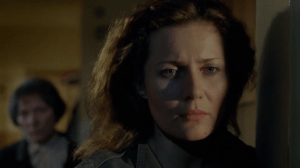 However, often times sex and love become synonymous terms and that is the underlying tension between Tomek and Maria Magdelena’s relationship. Though innocent, he wants true love, a love that transcends a simple physical act and is summed up with affection, intimacy, and an inherent closeness. He is taken with her beauty certainly but even more so he is invariably alone. Meanwhile, she is so enraptured with sex and denigrating such a grand (and admittedly messy) thing as love, to a simple physical act. She can’t understand this wide-eyed boy and his delusions. She’s ready to open him up to the way the world actually turns. And her callousness ultimately crushes Tomek’s tender heart. She broke it not by simply rejecting him, because this is a ludicrous love story, but truly obliterating any of the naive aspirations he had for love.
The final act is executed with pristine restraint because Kieslowski does not sink into melodrama but the twinges of emotion begin to overcome Magda as she comes to realize how much she devastated her young admirer. Now she looks out her window every night for any sign of his return. She tries calling him up to acknowledge her mistakes and even goes to see his Godmother.
In the final contemplative moments, Magda is finally given a view into Tomek’s perspective — seeing exactly as he had seen — envisioning the scene from across the way. As is his nature, Kieslowski’s film is insightful and thought-provoking, a fuller examination of his work in the Decalogue. It’s a rather perturbing parable in some respects, but that is only due to the perversity and desires that dwell within the human heart. It’s a telling Biblical allusion that the main female heroine is named after Mary Magdelena, a woman who was historically known for her dubious reputation and promiscuous ways. But it was the exact same woman who went to a redemptive transformation in the Biblical narrative.
Kieslowski leaves his film essentially open-ended but the character’s name is a powerful one because it somehow suggests even to the tiniest degree that these characters too can be redeemed. There is still hope. It’s certainly a tall order to make a short film about love that still manages to leave its mark and yet Kieslowski does it with immense grace. He employs brevity while still succeeding in delivering a thoughtful study on one of the world’s most perplexing mysteries: Love.
4/5 Stars
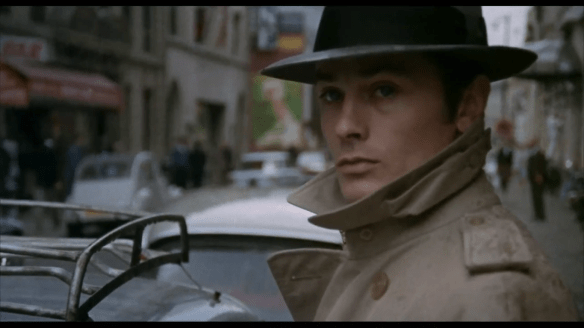 There is no solitude greater than that of the samurai unless it be that of a tiger in the jungle… perhaps…
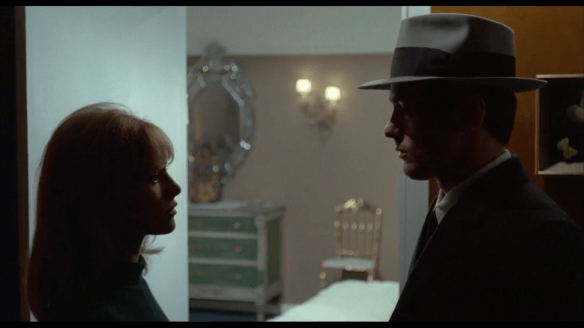 And though he does call on his lovely girlfriend (Nathalie Delon), who is absolutely devoted to him, as well as making eyes at the nightclub pianist who is the main eyewitness to his hit, Jef for all intent and purposes, is alone. It’s a kind of forced solitude, a self-made exile created by his trade. After he goes through with the hit, he must shut himself off more and more. That is his job.
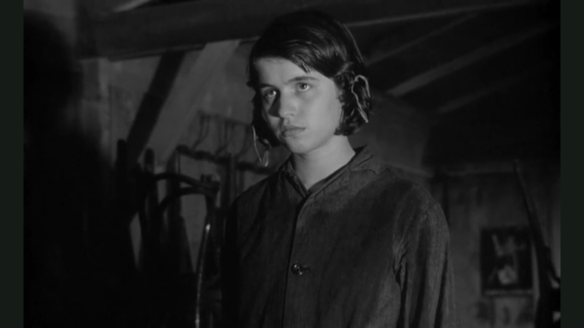 Robert Bresson’s film is an extraordinary, melancholy tale of adolescence and as is his customs he tells his story with an assured, no-frills approach that is nevertheless deeply impactful.
 I’ve heard people like director Jean-Pierre Gorin say that there is little to no distinction between documentary and fiction. At first, it strikes us as a curiously false statement. But after giving it a moment of thought it actually makes sense, because no matter the intention behind it, the medium of film is always subjective. It’s always a created reality that’s inherently false and even in its attempts at realism — that realism is still constructed.
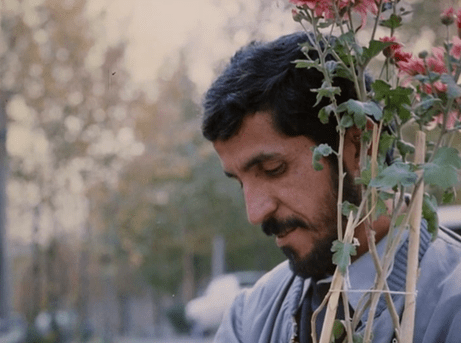 The beauty of Close-Up that not only does it feature the real individuals involved in this whole ordeal: There’s Sabzian playing himself, the Ahankhah family who brought the case to court, and Kiarostami appearing as well. But it blends the actual footage from the trial with reenacted scenes set up by the director as if they are happening for the first time.
 At face value, Model Shop is an ordinary film of little consequence but look a little deeper and it’s actually a fascinating portrait of the L.A. milieu in 1969. Part of that is due to the man behind it all.
 John Donne is noted for writing that no man is an island, but if this film is any indication, there might be a need to qualify that statement to suggest that some women are islands — at least when portrayed by the elegiac Monica Vitti. Red Desert begins with blurred images and a high-pitched piercing melody playing over the credits. From its opening moments, two things are evident. It gives off the general sense of industry and it features one of the most extraordinary uses of color ever with the blues and grays contrasting sharply with the brighter pigments.
 However, even if this word does reflect its share of beauty, it is Monica Vitti’s character who still embodies paranoia and disorientation with the modern civilization. In other words, she is the one out of step with the contemporary world that she finds herself in, due in part to an auto accident and a subsequent stint in a hospital. She is struggling to readjust to reality.
 As per usual with Antonioni, his film invariably feels to be altogether more preoccupied with form over content and that’s what is most interesting. It’s fascinating some of the environments he develops. Atmospheres full of billowing fog, wispy trees, stark alleyways, gridiron structures, and all the while the color red pops in every sequence. There’s no score in the typical sense, instead, the dialogue is backed by foghorns, machinery, and an occasional electronic sound effect.
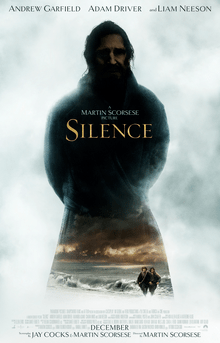 If we can take Martin Scorsese’s varied film career as a reflection of the human experience, then his completion of his long-awaited passion project Silence is not all that surprising. He’s crafted numerous classics, countless cultural touchstones, some spiritual, some historical, and some incredibly honest. But at this point in his career it seems like he has nothing left to prove to us as his audience and maybe at this point in life, if nothing else, we could do well to try and learn from someone like him. Because given the climate with funding and the like, Scorsese could not have made such a film just for other people or money or acclaim. He must have made it, at least partially, for himself.
 There’s something inherently striking about the title Mustang. It signifies something about the title girls, their free-spirits, billowing brown locks, continually running in a type of a herd, constantly full of life, movement, and motion. But with a mustang and any other creature full of life and vitality, there’s always an opposite force looking to impede, tame, and prod the spirit into some sort of submission. Because being free, being wild is constantly challenged in the world that we live in and this story is a prime example.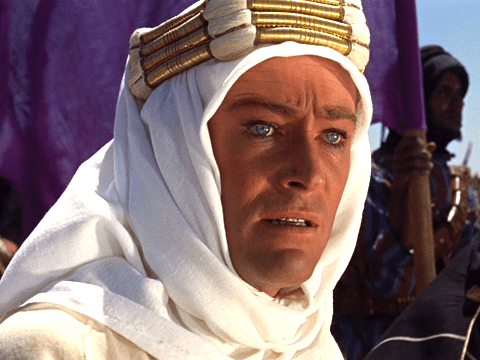

 4 Star Films