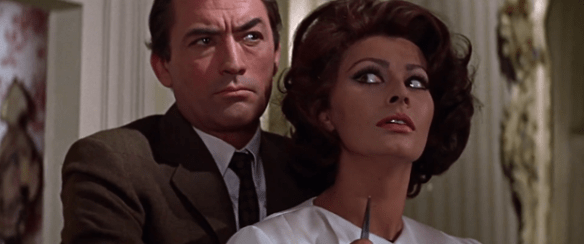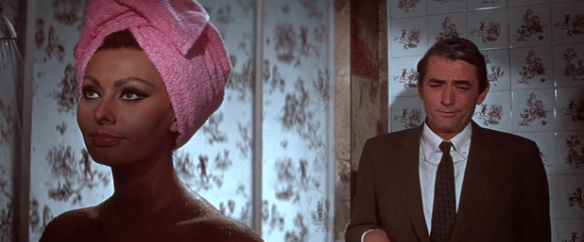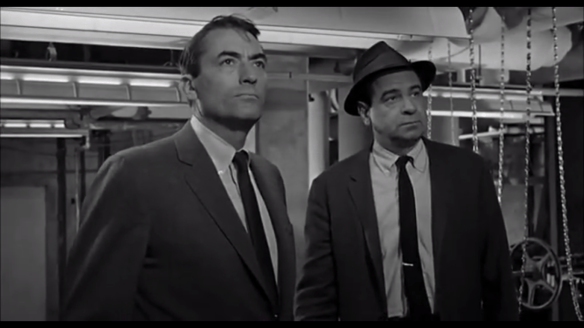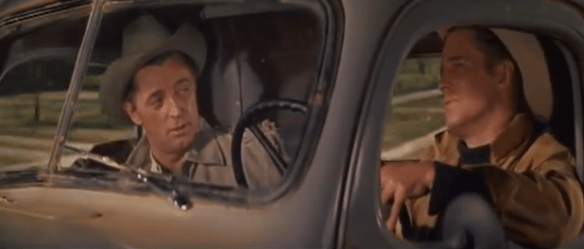
Home from The Hill (1960): Underrated Vincente Minnelli Family Drama

home from the hill 1.png

“They just live in the same house and kill each other a little at a time, and I’m in the middle.” – George Hamilton

The beauty of Home from The Hill is how it systematically works against our preconceived notions of what it will be, repeatedly asserting itself in new and dynamic ways. In the opening moments, Wade Hunnicut (Robert Mitchum), a local with major sway in the community, is out hunting with his entourage only to have someone take a shot at him.

The culprit is dragged out into the open. We expect it’s part of a feud, and it is, but he’s a jealous husband fighting for the honor of his wife. The implications are Hunnicut slept with her, and he in no way denies the accusations. Instead of doing anything rough to the boy, he simply sends him away with his rifle. There’s really nothing else to be done.

We already have a line on our main character. He is a hunter of animals and women with a blatant disregard for property lines where either is concerned. It’s an open secret in the community, and his wife Hannah (Eleanor Parker) certainly knows his reputation, so he hardly tries to lie about his “hunting accident.” She knows him too well for there to be any kind of pretense.

The script is another impeccable early offering from writing duo Irving Ravetch and Harriet Jacobs, so well remembered for their lifelong collaboration with director Marty Ritt. Their works are instilled with an appealing plainness — in every way American and in a manner that continues in the traditions of The Long Hot Summer. Mitchum and Orson Welles are different figures, but they both ably play gargantuan men with far-ranging celebrity.

The cadence and rhythm of the southern patois play to a vaguely familiar tune capturing the essence of authenticity. And mind you, these are before the days of Hud and yet somewhere in between Hunnicut and his right-hand Rafe (George Peppard), we find some of the rough shapes and edges of Newman’s later character.

As Home from The Hill comes into its own, the story progresses as a sprawling melodrama with a husband and wife battling over the future of their son Theron (George Hamilton). The only reason Hannah’s stayed in his house was the solemn word of honor that their son would be hers.

She has sheltered him from the ways of his father and as a result, he’s unquestionably a mama’s boy. It’s a territorial war as Wade suddenly takes an interest in him. Father and son forge a relationship founded on imparting his image of masculinity. Is it mixing metaphors horribly to say it’s part Shakespearian with Machiavellian strains?

Because Hunnicut wants a hand at sculpting his boy into a real man who can maintain his legacy. The first test he passes along as a rite of passage into manhood is the killing of a wild boar terrorizing his tenants. It’s a harrowing hunt taking him through briar and bramble with his pack of dogs. But his hand is sure and his grit resolute.

Soon the Hunnicut grounds are packed out with a large scale gathering, the delectable centerpiece amid the clamor and gaiety is a roast boar on a spit. Hunnicut is making strides to gain back his wife’s affections, which she has kept locked away from him. Meanwhile, their poor boy gets rejected by the father of his date (an unrecognizable Everett Sloane). We have an inkling it has something to do with the notoriety of Theron’s own father.

home from the hill 2.png

As George Hamilton goes through the arc of his story, I couldn’t help but compare him to Anthony Perkins. They not only share nominally similar boyish features, but Hamilton is also able to pull off a certain flightiness around women and an insecurity around everyone else.

One of the most curious scenes comes by way of the cemetery where all the locals are very merrily cleaning up the grounds of their kin. These are the burial grounds for the “Good Christians”, and then hidden away overgrown at “Reprobates Field,” Rafe cares for his own.

It hints at something only revealed in one of the film’s few scenes that fully oversteps its boundaries. Parker and Hamilton have it out in an impassioned back and forth that can only be described as histrionic. Even as he grows into manhood, he becomes increasingly disillusioned by the family of privilege he has been born into.

He thinks he loves Libby (Luana Patten), but how is he suppose to progress knowing the past indiscretions of his own flesh and blood? It crushes him.  The second overt moment of theatrics comes when his beau’s father comes to call on Mitchum trying to churn up a shotgun wedding. It feels peculiar within the sequence of events thus far. Still, it’s all part of small-town protocol, whether or not it relies on truth or merely local gossip.

Mitchum is hardly ever caught in such a state, nor George Peppard for that matter. The veteran actor is low with grounded core strength in every interaction, while Peppard is self-possessed in his own right. To their credit, they remain tempered and really stay ever steady in their roles. The patriarch exhibiting his unabashed egotism and the latter character embodying a necessary pathos in the film. He keeps it from cycling into a downward spiral of pure despondency.

While I have to admit it does feel like on a few crucial occasions Eleanor Parker overdoes her performance, most of her scenes opposite Mitchum are equally measured and beautifully layered with feeling. The history between them is rich even as their present is so resentful. However, the greatest accomplishment of the picture is how they hardly steal the movie.

home from the hill 3.png

As events progress, the brunt of the family drama falls equally on the shoulders of George Hamilton and George Peppard who capably carry the load placed on them. In fact, considering the trajectory of Peppard’s career, in particular, it amazes me his clout as a film star was never larger. Perhaps he arrived on the scene half a generation too late after the likes of Clift and Newman.

When we think of Vincente Minnelli at his most quintessential, it always entails musicals with lavish set designs and costumes. But more generally, he was fully adept at examining familial relationships and two of his best, and subsequently underrated efforts, are Some Came Running and Home from the Hill. What becomes apparent in this one is a sensitivity pervading even the potentially callous material.

Rafe is one vehicle, so pleasant and loyal — completely void of the malice or entitlement others are clouded with. His life is never defined by his bad breaks, but by the contentment he finds in his current reality, gradually carving out a fine life for himself.

Minnelli takes care with all his characters cultivating their romances on the screen into quantifiable entities even as it ties your guts in knots by the end. Because it goes out with some sense of family and a reaffirmation of relationship even on the rocky Texas soil of this picture.

There are so many avenues of rancor cropping up on all sides, it almost seems unbearable. Yet when it’s all said and done, with the drama and hate and killing, Home from The Hill hints at some semblance of peace.

4/5 Stars

On The Beach (1959): Peck, Gardner, Astaire, Perkins, and Apocalypse

on the beach 1.png

I recall my dad sharing a recollection about On The Beach. Back when it came out he went to the drive-in with his family, and they took in the movie. He fell asleep part of the way through only to wake up and the movie was still going. While not necessarily a profound observation, the film is unequivocally long. For some, it will verge on the doldrums, especially for a story about the end of the world.

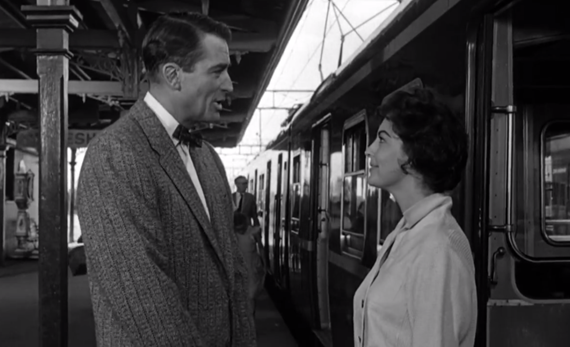
However, I am tempted to like it for some of the creative decisions it chooses (and in my father’s defense, he never said he outright disliked the movie). It acts as one of the first prominent films detailing the aftermath of a nuclear war. Also, unlike many of its contemporaries, it leads with a cold open closeup on Gregory Peck’s face as he commands a submarine. The camera is quick to maneuver through the space showing us all the levers and nobs with shipmen scurrying around carrying out their various duties.

It’s already a different feel than something like Run Silent, Run Deep (1958). We can actually breathe because there is no suffocating atmosphere to speak of. That’s what makes the emptiness of the space on the outside so startling. It’s almost too open; it’s all but void of meaningful life except for small envoys existing far enough away from the disaster zones.

Conceptually, the apocalyptic near-future is an intriguing world to come to terms with, just as it is frightening. Because it’s a hybrid society still existing in the world and only time will tell if it can subsist.

We familiarize ourselves with a segment of humanity now living in Australia, and America seems to be decimated. Everyone refers continually to “These Days” — it implies the allowances made in such extreme circumstances. People cannot go on living the way they always did, and things formerly unheard can happen without so much as a bat of an eye.

Shortage leads to a random assemblage of old and new technology to get by. For transportation, electric trains and horse-drawn carriages have a function. And yet for amusement, folks still have beach days soaking in the sun as if nothing is awry. It seems like small consolation for the 5-month expiration date being put on the world.

At first glance, On The Beach doesn’t seem to be about much. It’s really about one major event scattered with the residuals of human relationships. One of our main players is Commander Dwight Towers (Gregory Peck), a widower who lost his family to the catastrophe while he was on duty. Currently, he has come to Melbourne to receive a briefing from Admiral Bridie (John Tate) on what they might possibly do next.

Struggling with survivor’s guilt, Towers strikes up an intimate relationship with one Moira Davidson (Ava Gardner). A radio signal originating in San Diego calls him back to the sea, and he heads out, unsure if he will ever see her again — yet another person he must reluctantly say au revoir to.

on the beach 3.png

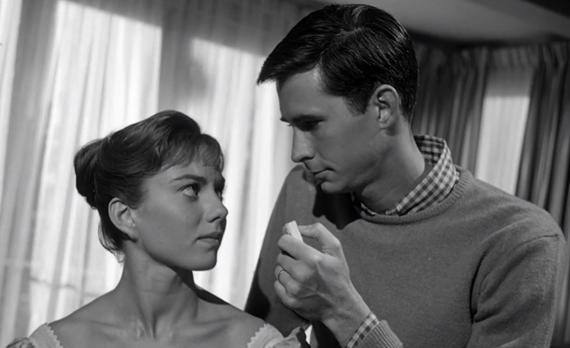
Anthony Perkins fits into the story as a younger version of Towers, Lieutenant Peter Holmes. He still clings onto his young family while worrying about what might happen to their slice of marital bliss. Because she is less-remembered, I am apt to especially be interested in Donna Anderson who gives a sincere performance as his wife (though it starts to unravel as the clock ticks). Mary cannot bear the implications of their society, as they have a newborn and with her husband away, there will be no telling what will happen to them. It unhinges her.

The most ominous shot during the voyage is an eerily empty Golden Gate Bridge, indicative of the entire West Coast. It’s literally dead. When they finally arrive in San Diego, it proves to be a near ludicrous dead-end involving a window shade and a coke bottle. Even Yankee know-how wasn’t able to avoid utter destruction.

It occurs to me On The Beach is not trying to exploit the situation, but it is using the backdrop to say something as Stanley Kramer always tried to do with his pictures. While he’s not the most virtuoso of filmmakers, his intentions are always upfront, which is admirable.

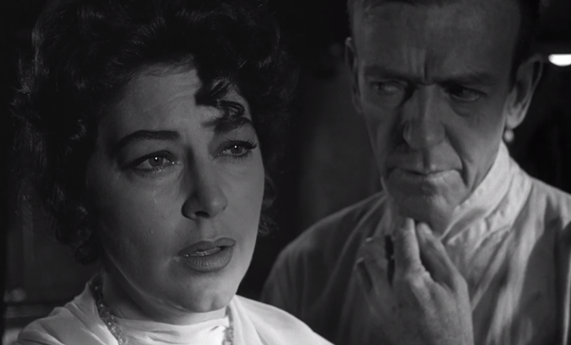
The director always aligned himself with fine acting talent even affording a trio of former musical stars shots at dramatic parts to reshape their prospective images. That in itself takes unwavering vision. In this one, Fred Astaire gets his chance as the hard-drinking, chain-smoking, acerbic scientist Julian Osborn. You’ve rarely seen him this way before. Whether it entirely suits him is relatively beside the point. Gene Kelly and Judy Garland would follow in a pair of uncharacteristic departures in Inherit the Wind (1960) and Judgment at Nuremberg (1961).

on the beach 4.png

Whereas the source novel apparently laid out who was to blame, the film develops a level of senselessness because no one — even those holding the highest clearance levels — seems to know how the tripwire was set off. They can only speak to their current reality. It makes an already disturbing situation a little more unsettling since there is a sense of universal ambiguity.

The questions linger. Might it have been an accidental mistake leading to the annihilation of our entire world, people all but expunged from the surface of the earth? It’s a chilling thing to begin admitting. Julian (Fred Astaire) is forced to acknowledge he doesn’t know.

It could have been some bloke who thought he saw something on a radar screen knowing if he hesitated his people would be obliterated. If this were the case, he would have only succeeded in setting off the dominoes. In fact, this nearly happened in real life one fateful day on September 6, 1983, to Stanislav Petrov, though he chose to wait, and it proved to be a faulty signal from his equipment.

It’s evident mutually assured destruction is a horrible system to wager on. And once you are past the point of no return, the apocalypse is a horrifying entity if there is no sense of hope. Most films must choose between inevitable doom versus some kind of hope.

In the waning days, we are antsy for finality, and it makes you realize just what the circumstances bring out. Waiting around for the end of the world sounds awful. And yet On The Beach manages to land the dismount even if the interim is slow-moving. True, there aren’t a flurry of events and there are a few asides — like Astaire winning the Grand Prix — which feel slightly superfluous to an impartial observer.

However, again, some kind of statement is being put to the fore, more nuanced than we might initially give it credit for, if not altogether succinct. It’s not simply an alarmist diatribe but there is a sobering urgency to it. The film foregoes the austere religiosity of the street preachers for something perceived to be much warmer.

Ava Garner standing on the shore, kerchief waving in the breeze, watching the receding figure of Gregory Peck on the deck of his sub is the movie’s indelible image. We need people around us to love and be loved by. Of course, some ill-advised individuals (myself included) live their everyday lives just waiting around for something. Hopefully, it doesn’t take nuclear devastation to kick our lives into overdrive.

3.5/5 Stars

Transit (2018): Casablanca in The Modern Day

Transit_(2018_film)Ever since the days of his James Cain-infused Jerichow, it’s been apparent German writer-director Christian Petzold is indebted to the written word when it comes to his brand of filmmaking. However, this time around he takes an oddly unnerving stroke of brilliance by setting his usual period piece in a version of the present, or is it a version of the present trapped in the past? Regardless, outside police cars — sounding eerily similar to Gestapo automobiles — rush through the streets while a pair of men have a hushed conference at a bar.

The scenario could nearly be mistaken for a dystopia if it weren’t for the cold hard facts the story was adapted from Anna Seghers eponymous wartime novel from 1944. What drives it forward is this compelling simplicity in the manner Petzold always seems so capable of. It’s part of the reason it’s so easy to be drawn into his films once you’re accustomed to the cadence.

The men bandy about talk of a letter and papers giving the hush-hush feel of a Casablanca, but Transit has the same restraint as Barbara (2012) and the wartime malaise of Phoenix (2014), albeit without the inimitable Nina Hoss. Georg (an unadorned yet haunting Franz Rogowski) is our protagonist, and we surmise soon enough he is on the lam from the authorities. Like many others, he has experienced the unknowable horrors of mechanized oppression.

He lives in a constant state of police-fueled paranoia brought on by the occupation, the details of which are kept purposefully murky. What we note are the resulting factors. The hotels are crammed with displaced folks trying to get out of the country, clinging to the faint wisp of hope in escaping to some far off place: the port of Marsellaise then Mexico or maybe America.

He is one of the displaced even as he’s aided in fleeing by cattle car and has a wounded colleague huddled next to him. It gives rise to the kind of pulse-pounding life or death scenarios reliant on both ingenuity and bouts of good fortune. It’s also perturbing to watch them unfold in the present.

His flight leads him to an abandoned roadside where he’s nevertheless invited to play football (soccer) with a precocious neighborhood kid named Driss. They build an instant rapport and their connections run deeper still, as we soon find out.

Whenever Georg stays within the confines of the city limits, he’s subject to the related police raids casing each room. If you don’t have your papers, you’re unceremoniously dragged away. By now it’s a daily occurrence. What becomes apparent is the rising sense of shame among the onlookers who watch and do nothing. What power do they have in such a world?

Georg lends a reluctant ear to fellow sojourners telling him their stories. Everyone seems weighed down by worries and troubles brought on by the tribulations of the times. They’re surprisingly forthcoming or rather they seem vociferous compared to individuals in Petzold’s previous movies. Although another distinction must be made.

His hero is fairly guarded as are a couple of the other central figures. It is the supporting characters who gladly use them as sounding boards to cast their thoughts on in this restless age. Even the narrator — an uncommon device for Petzold’s brand of restrained observational filmmaking — has his own insights to bring to the events.

The key again is how those central characters carry a bit of this pervasive despondency — this enigmatic nature holding us off but not completely alienating us. On the contrary, we want to know more about them as viewers transfixed by the fateful decisions they make and the encounters that befall them.

To begin with, Georg falls into a bit of luck donning the identity of a deceased writer and with it, the coveted opportunity at transit out of the country. The deceased man’s wife (Paula Beer) is a woman who drifts uncannily through his life throwing him glances as she motors on about her dutiful pursuits. What they are we have no idea. Although, with time, it’s easy enough to imagine.

That’s just it. Petzold is always toying with the arcane both in plot and characters because it’s in the ambiguities where his stories seem to come alive. It could be the first glance of the smartly dressed young woman on the street who touches Georg’s shoulder when the whole rest of the passing world seems not to pay him any heed. He’s invisible. And yet for some inexplicable reason — some cinematic kismet — she reaches out to him.

True, for the majority of the picture, it feels like she spends the movie walking in and out of places to build this air of mystique. Is she more of an object than a person? It’s easy to cry foul if only for the comfort of Petzold’s earlier collaborations with Nina Hoss. A mystifying woman put front and center can still stump us. What’s more, in the final act Marie becomes a living, breathing human being of fears and passions that turn strikingly palpable.

After she lost contact with her husband, she never gave up hope checking the consulate every day for any sign of news. Along the road, she was given a kind turn by an altruistic physician (Godehard Giese), and in a bedeviling world, they looked to one another for some amount of solace.

Their Rick’s Cafe becomes a corner pizzeria. Georg would always eat a Margherita there and find Marie stopping by. Later it becomes a meeting place with Richard — so mundane and typical, and yet it fits the context of the story.

As we find out, noble decisions aren’t so cut and dry here; they’re not capable of making our heart swell in the same romantic manner of Casablanca. We are constantly left questioning. What if the matrimonial ties aren’t so strong and beholden to the Hays Codes? What if Ilsa or Laszlo decided to stay behind at the last minute, making a grand sacrificial act null and void. What if the plane crashed en route? After all, the very thing happened to Glenn Miller over the English channel in 1944…

Speaking of music, it’s been so very long since I’ve seen Phoenix. Aside from the Vertiginous thematic elements and this same lingering sense of malaise, it seems I remember very little. It’s the impression that lasts and one scene — the scene where Nina Hoss sings “Speak Low” to her husband — imbued with so much subtext and bewitching power.

Down the road, years from now, the same lapses might happen with Transit. But I will remember the mood, this very concrete Casablanca-like mentality, and then another song. In a similar manner, the normally delphic Georg has a breach in character and shares the lullaby his mother used to sing to him. Hearing it on the radio brings the memory flooding back.

Or perhaps I will recall the other moment when, impersonating another man, he tells the consulate officer he’s done writing after all he’s seen. He wrote too many essays in school about vacations, holidays, and experiences to totally quash and trivialize everything substantive about those times.

To write about the atrocities he faced would be akin to that same sin. He’s not about to write another school essay. Even as the lines are spoken under an assumed identity, the words once more ring with an underlying resonance to denote a shared world.

The chilling edge of Transit is how it brings these obvious markers of the Holocaust into this out of body representation of our certain present. They feel poles apart until that creeping voice whispers doubts in the back of our minds. This is what I will remember. This is what will stay with me.

4/5 Stars

Slacker (1991): Richard Linklater’s Ultimate Independent Film

Slackerposter.jpgKudos must be extended to Richard Linklater for actually being proactive and going out to shoot the movie countless of us have doubtlessly tossed around in our mind’s eye. Taking our town — the places we know intimately — and building a portmanteau out of it with a group of friends.

There’s nothing flashy or that original about this universal concept per se, but it always strikes one as more than just a straightforward story. There is a bit of artistry to its execution, while still functioning on the most shoestring of budgets.

Even one of my favorite bands in high school, Reliant K made their own rendition involving a soccer ball. But again, Linklater has time and history on his side, because he was the one who actually got it made. Few others would have the wherewithal to get it off the drawing board.

What’s more, Slacker actually has some genuine life to it by capturing a very specific subculture and locale like a time capsule of 1990s Austin, Texas. It takes pieces of the world he knows and promotes them to a wider audience, which is one of the cool perks of cinema. It’s able to take a localized image and globalize it, despite how humble the reach might have been, to begin with.

Better yet, the up-and-coming director dares to open the picture with his own monologue, musing about his dreams and alternate realities to his uninterested taxi driver. He teases a hypothetical scenario where he was invited into a beautiful girl’s hotel room just for standing at the bus stop. He matter-of-factly curses to himself that he should have stayed behind, before picking up his bags to go, effectively choosing a different fate.

From thenceforward, the camera is on the move as well. Because this isolated sequence is only one among a whole bunch of other asides helping to predict the conversing integral to The Before Trilogy or even a more communal vision like Dazed and Confused. Though the characters nor the dialogue builds that same type of rapport with the audience, one could easily argue they are not supposed to.

This is a near stream-of-consciousness exercise with the camera following its whims, roving around, and taking an almost bipolar interest in everything. You get the sense Linklater knew full-well what he wanted to capture; still, he makes it look organic. There’s this constant mixture of intellectualization and socializing going on.

A mother is run over by a car. A husker sings his tune on a street corner. People run into each other serendipitously. Handheld walk-and-talk scenarios make the action simple and fast.

Some of the characters are definitely “whack,” but that’s all part of the fun. The dialogue grabs hold of any weird quirk or a bit of oddness it can from conspiracy theories, aliens, television, the JFK assassination, anarchy, literally anything at all.

This one is an important landmark of indie filmmaking right up there with Cassavetes works or Soderbergh’s Sex, Lies, and Videotape (1989), paving the way for everything from Clerks to the wave of indies that came to fruition in the mid-90s and early 2000s.

While I don’t find it quite compelling in this given era, there’s no way to underplay what it means for movies. Many are indebted to Linklater, and the beauty is that the director is still churning out quality work, both personal and commercial.

In fact, I’m a little in awe of him, because it seems like he’s constantly managing to make the projects he wants. He will not give up on his own artistic aspirations. In the age of the blockbuster, those are admirable motivations.

3/5 Stars

Garden of Evil (1954): Starring Gary Cooper and Richard Widmark

garden of evil 1.png

It does feel like one of the grand old westerns we left behind in more recent years. It’s a big picture in the horizontal majesty of widescreen, Glorious Technicolor, backed by the only score Bernard Hermann would ever arrange for the West. There’s little doubt we are in for a spectacle of the highest order.

Maybe Richard Widmark doesn’t look as good in color as the shrouds of noir, but he can act. Here he’s a poker player who fancies himself a poet on the side. As he gets off at an isolated Mexican outpost, he’s yakking away to the typically taciturn Gary Cooper. The taller fellow plods by his side quietly amused by everything coming out of Widmark’s mouth.

They are joined by a third man (Cameron Mitchell) biding their time en route to the goldfields of California by listening to the floor show (Rita Moreno) at the local cantina. I do relish films that take place in multiple languages; perhaps it humbles me. Because as I’m no longer living near a Latino community and I haven’t studied in a long time, my Spanish is rusty, so I can only pick up bits and pieces. I am at the mercy of others.

But it also means Gary Cooper can pay a major service to the audience. He translates for us and with that comes an added depth to his character. He’s knowledgeable and must have been around. How does he know the language? We don’t know right off so it teases us to stick around in order to find out.

It’s quite relaxing until Susan Hayward bursts in on the men, effectively dropping the whole reason for the picture right in their laps. An adventure is afoot, and they take it up with few reservations. It doesn’t seem to cross their minds to question any of it; the compensation waved in front of them is high enough. Maybe they maintain their own private reasons. Soon they’re journeying through a mountain pass in order to help save the woman’s stranded husband (Hugh Marlowe).

A perfect moment on the road — making sure we’re aware of the stakes — features a dislodged frying pan clattering down below, ricocheting off the rock faces, and echoing through the canyon as it makes its descent.

As things progress, it becomes apparent the fine line between brooding and dull is a difficult one. It certainly is, more often than not, a slow burn with Widmark waxing philosophical and Cooper projecting an air of constant clear-sightedness about the world. He never loses his head. The rest of the time we’re waiting for something.

The confrontation between Hooker (Cooper) and the hothead Daly (Mitchell) is a particular sequence to relish as the young gun not once, but twice, is sent somersaulting on his back — his butt nearly putting out the fire and getting singed as a result. By the end of his drubbing, he’s practically rolling in it, and he’s been made to look terribly foolish.

But like Way of The Gaucho, the on-location shooting is what the movie can boast about the most. The action is middling and dull at best, because it’s a long haul to get a payoff.  We are waiting for things to come to a head and while Indians are said to be brewing up in the hills, they only show themselves briefly.

Oddly, Susan Hayward is thanklessly cast as the villain-turned-hero. Maybe it has to do with the time the picture came out since she hardly gets the delicious part of a femme fatale. More often than not, she feels like a scapegoat, that is until everyone realizes how faithful she is. It’s too little too late.

By the end of the story, the emotions lack resonance, because they haven’t built up into anything truly believable with continuity we can easily trace. It does feel a bit like running through the paces just to get to the marks, and it’s difficult to say given the talent on hand. They are a fine host of actors.

It’s possible to cast a bit of the blame on Frank Fenton’s script, which has fun with some dialogue — getting a bit profound about male avarice and passion — while supplying the actual plot little meat.

Gary Cooper and Richard Widmark too were always men of action, but there’s not enough here for them to accomplish. By the time they have chances to do what is purportedly brave and heroic, the deep recesses of meaning looking to be excavated are hollow — even strangely so, because we truly want there to be more, and there isn’t.

3/5 Stars

Rawhide (1951): Tyrone Power and Susan Hayward

220px-Poster_of_Rawhide_(1951_film).jpgThough it’s easy for this film to be overshadowed by Clint Eastwood’s Rowdy Yates, in retrospect, Rawhide is a spare outpost western nevertheless loaded with tension and talent. It is set against the backdrop of a network of stagecoaches transporting mail across the continental United States.

Rawhide Station is one such spot looked after by old-hand stationmaster, Sam Todd (Edgar Buchannan). He has been entrusted with training up young Easterner Tom Owens (Tyrone Power), whose father is division manager of the overland mail. This is a bit of on-the-job training before he moves back to the comfort of the East.

Power is slightly past his matinee idol prime, but he can still pretty nearly fake it with his dashingly handsome good looks. Meanwhile, Buchannan is always ready to be called upon, in a pinch, to play such a scraggly type, aided by his gravel-filled throat. It gives him instant credibility.

For whatever reason, Henry Hathaway is rarely remembered as a director, but when you take stock of his work, both in westerns and noir films, he really does have quite the catalog to his name over a very prodigious career spanning decades. Scriptwriter Dudley Nichols had a prominent career of us own as did cinematographer Milton Krasner. Thus, the technical credentials on the film are quite an impressive array.

But what makes Rawhide actually take as a contentious tale of the West is the rest of the cast. My, oh my, is the cast good. It’s stacked with a steady, reliable group who know their parts and play them handily. It’s tough to choose a standout.

Because Owens finds himself being held hostage by a pack of escaped convicts on the trail for gold. It just so happens a feisty young woman (Susan Hayward), toting a child back east, also has the unpleasant fortune of getting caught in their crosshairs.

This man, still fresh-behind-the-ears, is forced to grow up right quick in the face of such a dubious bunch. Hugh Marlowe plays an exceptionally perceptive bandit calling the shots, saddled by the trio of incompetents he broke out of prison with.

Jack Elam, with that wall-eyed stare of his, made a living for himself as one of the great heavies of all time, right up there with Lee Van Cleef. Because their eyes say it all. He’s the most lascivious of the bunch, prone to violent acts and leering at pretty women. Zimmerman has his hands full because while his other two cronies are older and more obedient, they’re no less dumb. Dean Jagger plays a near grandfatherly old coot while George Tobias is the scruffy foreigner Gratz.

As we settle in for the long hall, Rawhide becomes a game of survival in pursuit of incremental victories like trying to sneak S.O.S. notes to incoming travelers. Then, they manage to swipe a knife from the kitchen to begin chiseling an exit out of their room on the road to escape. All the while, in the back of their mind, they’re thinking about staying alive so they can find the gun dropped out by the corrals. It’s the faintest of hopes

They are further concerned with protecting the young progeny Vinnie has vowed to take care of ever since the passing of her sister in California. It all matters because each individual piece is a single entity in this entire patchwork of cat and mouse — a chess match playing out on all sides. What hangs in the balance are the lives of all those involved. When those are the constant stakes, it’s extremely difficult to have a tedious story.

In a single instance, the tripwires start going off, and the bodies start tumbling. We hold our breath to see who will make it out alive in such a precarious showdown. It plays its hand well. Power readily accepts the challenge at hand with grit and determination, while Susan Hayward has nerves of iron packing a shotgun to finish the job.  The harrowing adventure gives us two stalwart heroes in the end.

In considering our leads, it does feel as if Power is making a concerted effort to maintain his box office pull, while Rawhide feels more like a stepping stone for Susan Hayward as her career progressed to continually more interesting parts in the 50s. But in neither case does it feel like we’re dealing with preening stars. They ably claw and fight for survival with the pack of criminals in their stead.

I will admit the way the story is bookended as just another tale along the “jackass mail” line from San Francisco to St. Louis, “Oh Susannah” playing in the background, somehow cheapens what we’ve witnessed. It seems to momentarily lose its credibility as a grind-it-out western. Maybe we can just say it’s faulty advertising and leave it at that. Otherwise, Rawhide has more in common with the lean constructions of Budd Boetticher than any kind of superficial high-adventure cowboy picture. It comes with real guts.

3.5/5 Stars

Classic Movie Beginner’s Guide: Gene Tierney

In our ongoing series of selecting 4 films to help newly-minted classic movie fans get their bearings, we’re going to look at one of my personal favorites when it comes to the 1940s, Gene Tierney.

If you’re not familiar with her, she filled out a lot of film noir and romances throughout the 40s into the 50s although her career slowed down a bit due to some difficulties in her personal life. Regardless, her impressive filmography speaks for itself with a number of classics to her name.

Laura (1944)

You only need one film to become a cinema icon. Laura is the role of a lifetime for Gene Tierney and she casts a spell as the quintessential doe-eyed noir gal who never meant to entangle anyone. It just so happens that all the men in her life fall in love with her even after her death. Her portrait and the legacy she casts is just that enchanting in this Otto Preminger top-rate noir. The Preminger and Dana Andrews partnership would prove a fruitful alliance in Tierney’s career.

Leave Her to Heaven (1945)

If there was any doubt Gene Tierney could play bad and play it well, Leave Her to Heaven shoots any naysayers out of the water. It’s an obsessive, vindictive noir love story made all the more unsettling by its picture-postcard color cinematography. She’s a deadly beauty who more than earns the title of femme fatale after only a few minutes on a lake, her eyes shaded by sunglasses. You’ll never look at her the same.

The Ghost and Mrs. Muir (1948)

Sometimes we need the warmest sort of romantic comedies and this one is tied together by a gentle fantasy story as the title would suggest. When the ghostly suitor opposite Gene Tierney’s Mrs. Muir is Rex Harrison, what we are granted is such a genteel love affair plucked out of a different time and place. For that matter, a different world.

Whirlpool (1949)

This final spot is a hard choice. Where The Sidewalk Ends and Night and The City are probably more well-received film noir, but Whirpool is the one with the juiciest opportunity for Gene Tierney. Instead of playing the doting girl of someone else, she’s a kleptomaniac. Well-meaning but it gets her in heaps of trouble thanks to her husband’s reputation and the manipulative quack played by Jose Ferrer.

Worth Watching:

Shanghai Gesture, Heaven Can Wait, Where The Sidewalk Ends, Night and The City, The Mating Season, Advise & Consent

Silver Lode (1954): More Noir on The Range

silver lode.png

“It looks like Ballard’s past has come to town!”

A brood of leery guns lumbers into the town of Silver Lode. We have an instant clash of temperaments. Because this outside force is menacing and foreboding. Meanwhile, the townsfolk are getting everything together for their Fourth of July bash. They’re downright neighborly. They don’t hardly think twice when it comes to sharing the whereabouts of one of their locals: Dan Ballard (John Payne).

Though that’s not quite right because Ballard is a relatively recent addition to the community having arrived only two years prior and settled down as a pillar of Silver Lode’s community — well-liked by just about everyone. In fact, when the purported U.S. Marshall Fred McCarty (Dan Duryea) starts asking for him, Dan is in the middle of his marriage ceremony to Rose Evans (Lizabeth Scott) who comes from a highly respected family.

There’s no doubting the gunfighters are out for blood though. Although they are stopped in their stride by the even-keeled, rational-minded sheriff (Emile Meyer), they nevertheless have enough pull to burst into the matrimonial bubble.

Because, of course, Ballard knows this man. He killed his brother in California. It was a fair fight; the other man drew first, but McCarty calls it murder. He’s out for his brand of justice, “An eye for an eye and a tooth for a tooth.” The reverend fires right back with the prerogative to “turn the other cheek.”

silver lode 1.png

The thugs crash the ceremony regardless, the biggest wrinkle is the fact they represent law & order as marshals with a warrant for Ballard’s arrest. Though Dan greatly suspects the validity of the man who knew only as a cattle rustler, he willfully gives himself up. After all, the town is still standing by him. However, that can change.

They begin a grim procession, sullying the cheery proceedings around town, as they make their way to the Judge’s quarters. Dan keeps his buddies at bay even as he voluntarily follows McCarty. The sheriff is put in an uncomfortable position and yet he agrees to form a posse to join the contingent to make sure Dan remains safe in protected custody.

However, things heat up as the decks stack against him. The telegraph lines are conveniently down so there’s no way to verify the marshal’s credentials. There’s also a dichotomy between the respectable, God-fearing hypocrites and other folks, which hasn’t dissipated since the dawning of time.

The saloon matron, Dolly (Dolores Moran), is ever ready to help Ballard — because they had a history once. He doesn’t know who else he can trust. Already the resident Pharisees, with their up-turned noses, are clamoring for Ballard’s removal due to his pedigree as a hardened criminal. They don’t trust him. Dolly’s best retort is aimed at the Reverend, “I think some of your flock needs delousing.”

So she runs interference as Ballard tries to seek a meeting with one of McCarty’s brood. Harry Carey Jr., ever the brittle westerner looks to play the stooge in return for $5,000 and protection. He’s willing to rat, of course. There is a momentary glimmer of light that McCarty promptly snuffs out.

silver lode 3.png

A barn standoff could conceivably tie up the film in a minute if the sheriff wasn’t conveniently gunned down and the stoolie Johnson follows suit. It seems like the whole town is present, witnessing the guns in Ballard’s hands, again, the obvious criminal. Though winged, McCarty lives to fight another day — maintaining his lie in the process — all but damning Ballard for good.

Twists of wicked fate just keep on coming and McCarty now can wield the townsfolk against their former neighbor, turning them against him outright. It gets so bad he feels no recourse but take on the mantle of the hunted fugitive in order to survive and vindicate himself. Circumstances certainly look dire.

One of John Alton’s best setups is probably when Ballard dashes across town crouching and then sprinting a bit further to reach his destination — pursuers scurrying after him as he returns fire — executed in one uninterrupted dolly shot sweeping left to right across the compound.

We also have the ticking clocks of High Noon, metaphorically speaking. If we mention that film, there is no way we cannot mention HUAC and The Hollywood Blacklist. Because the parallels in the allegory are too apparent. We have good men who are turned upon and likened to criminals for past sins or beliefs that diverge from the pack.

It gets ugly when mob-like hysteria takes over, and there is no wisdom to guide the ensuing actions. Everything is dictated by fear and hate.  Mob violence is the death of any town as McCarty (Joseph McCarthy anyone?) plays on the fears of the people.

Ballard ultimately seeks asylum in the church as the horde almost breaks the doors down. In the end, it’s a showdown between the two men who always had a beef to pick. One defenseless, the other armed and ready to get his revenge and if not revenge, then something even better. In the end, it’s another serendipitous moment, worthy of a Mythbusters episode, that closes the action and allows us to breathe again.

silver lode 2.png

With every passing movie, I am always astounded by the obvious overlaps between the West and film noir, and it starts with personnel. John Alton was already mentioned. He is nearly as accomplished in color as black & white. Then, John Payne, not usually a western hero, nevertheless spent plenty of time roughhousing in the underworld. Even Lizabeth Scott and Dan Duryea are given a bit of a reunion after Too Late for Tears.

Duryea unequivocally steals the show again with a blistering, continually conniving performance. He truly has a monopoly on these roles, since he pulls them off with such conviction. Unfortunately, Scott while a  dazzling, toxic femme fatale, has a fairly flat and monotone part to play here.

Both the western and noir are also both innately American genres. They have the opportunity to take elements that ring true about our society and really subject them to scrutiny. What are our ideals? How do we treat one another? What dictates our standards of truth and our sense of good versus evil?

There’s nothing that says you need to consider any of these themes to thoroughly enjoy Silver Lode as an incisive, high-intensity showdown, but it’s a testament to movies that work on multiple levels. It still boggles the mind Allan Dwan made as many films as he did. I haven’t seen many of them. Still, this one shows an indubitable competency in the craft. After all, he had a lot of practice.

3.5/5 Stars

Station West (1948): Starring Dick Powell and Jane Greer

station west 1.png

First impressions suggest Dick Powell doesn’t fit the boots of a western hero as he did the fedoras of noir. Like Bogart or even Cagney, his physique isn’t imposing and yet he makes up for it with a wry wit. Running off his mouth as he often does fits the cynicism of noir.

Not that it can’t have a place in the old west as well, but with other actors, it feels like second nature and yet when he gets off the stagecoach, it really does feel like he has just entered western country for the first time.

As the film evolves, it plays a bit in his favor because this is a version of the West suited for his talents. Granted, The Tall Target (1951) is not a western, but in that film, Anthony Mann made a bit of a Civil War-era noir with a similar milieu. However, unfortunately, by reputation, Sidney Lansfield is no Mann so I’m not sure the material is ever injected with a similarly visceral and engaging energy.

Events simply happen, characters interact, and there is a resolution. Thankfully Station West serves up one major plot twist, suggesting there is more than meets the eye in this out-of-towner who all but picks a fight with a soldier boy in the local saloon.

Maybe Haven is more Phillip Marlowe than we were initially led to believe. Regardless, he’s immediately taken by the local lounge singer, since the quizzical look of Jane Greer does that to people. He is quite forward in looking to make her acquaintance and ends up having a run-in with the local muscle (Guinn Williams).

There are moments where the fighting between them feels genuinely frenetic blended with hokey shots that look horribly fake. I’m not sure what to feel but for the sake of the story, Haven is now a big shot and news gets around about him. It’s all just a smokescreen; he wants to investigate a suspiciously missing shipment of gold.

Still a few years away from his much-deserved starring stint on Perry Mason, Raymond Burr plays a relatively uncharacteristic Lilly-livered loser. I love Burl Ives as much as the next fellow, however, his ballad singing feels forced and frankly, inorganic. It breaks up the scenes in a strange way as he keeps his guitar handy, welcoming guests to his very stingy hotel.

What remains to be seen is the identity of Charlie, the person who has their hand in all the town’s major dealings. Our snooping hero has a feeling discovering this information along with staging another gold run might get him some much-needed leads.

It’s not quite a black pool forming around him, but he does get whacked over the head in the middle of a gold run. It’s another added complication in the mystery to settle who is masterminding these robberies. It might be a testament more to the cut of the picture I saw. Regardless, Station West winds up a bit disjointed.

The payoffs are barely satisfying, and there’s never much of a motor to the picture’s action even amid the burning of a warehouse and some gunfire. Qualms about Powell’s performance aside, the greatest disappointment was Jane Greer. It just never feels like she has anything interesting to do even as her part has inherent possibilities. The opportunities afforded feel wasted. Then again, it could come down to chemistry, and it’s hard to top what she was able to conjure up with Robert Mitchum in not only Out of The Past but The Big Steal as well.

3/5 Stars

Blood on the Moon (1948): A Robert Mitchum Horse Noir

blood on the moon 1948.png

This is admittedly nitpicky, but the title cards of Blood on the Moon are a bit jarring as the white-lettered names all but disappear into the sliver of light stretching across the otherwise black canvas of the screen. Thus, I missed out on about a fourth of the names in the cast.

Opening credits aside, entering the world itself is an unmitigated pleasure as we are submerged straight into a rainstorm meeting us with a near tactile sense of tone. Against the dark slopes, a solitary rider sits aloft in wet hat and poncho. He’s seeking cover from the downpour.

Though he finds it,  his nice, warming fire essentially gets stampeded by a pack of steers, and a man with a gun comes to oust him. He comes in contact with a not too neighborly outfit led by a man name Lufton who is a part of a longstanding feud between two factions. The age-old animosity kicked up between cattlemen and homesteaders. Lufton is on the side of the cattle.

However, we have yet to know where this stranger — Jim Garry (Robert Mitchum) — falls along the gradient, if anywhere. He has his first run-in with a lady (Barbara Bel Geddes) and sends her packing into the adjoining stream with some nifty shooting. Then, he drifts into a town, which seems cloaked in a dubious conspiracy of its own.

A host of characters sit around a poker table — among them Walter Brennan and Charles McGraw — shooting the bull about the new man. They want to get a read on him through a bit of deception. He reads them like a book, and it still seems like all the thugs are coming out of the woodwork just to take a shot at him.

Finally, he reconnects with his old comrade Tate Riling (Robert Preston). Their past is all but unspoken yet we understand they’ve been through some times together. Thus, it’s no less jolting to learn this man Tate is on the other side of the feud. He has sided with the local ranches and a government agent (Frank Faylen) to push Lufton’s cattle off the land. An awfully crooked Preston is girded by that age-old charisma of his. He somehow still gives off an aura of likability in a not too trustworthy sort of way.

So Garry has been unwittingly been called upon as a de facto gunman to help make the transition stick. He initially goes along with it, because Tate used to be his pal. What makes the story an interesting one relies on the fact Garry has that age-old deficiency — a human conscience.

The plucky rancher he shot at before was one of Lufton’s daughters, Amy, who though sore at him, eventually warms up when his integrity becomes apparent. She realizes he is a different breed than the rest. However, her sister Carol (Phyllis Thaxter), as fearful as Amy is fierce, falls for another man, making for the most intriguing foil in the movie.

Walter Brennan’s place as one of the ranchers taken in by Tate’s promises remains relatively understated and minor next to all the greats he’s played (especially given my last picture of his was The Westerner). Likewise, Charles McGraw isn’t given much to do aside from being gruff though he was still in the nascent stages of his career.

The stakes have been set for a surprisingly complicated interplay even as the cursory beats of Lillie Hayward’s script look all too familiar. It seems Robert Wise has the right pedigree for the material as does cinematographer Nicholas Musuraca because whether deliberate or not, this 40s oater is cloaked by film noir sensibilities through and through.

While not the cleanest of prints, there’s no denying the scope of the terrain nor the layers of atmosphere they’re able to draw out of the scenery, between shadows and light. If it sounds familiar, these are the shades of noir embodied as much in the character of Robert Mitchum as any of the mise en scène. The iconic lazy-eyed indifference of Mitchum transfers seamlessly from Out of the Past (1947) — coincidentally, also photographed by Musuraca.

Again and again, we must fall back on Mitchum and in all the RKO pictures he made, the onus usually landed on him because fewer resources meant more was asked of him. Aside from being a workhorse, Mitchum has the gumption and the unflinching enigmatic cool to bear the story upon his shoulders. It relies on precisely this quality dwelling within him, shifting so easily between attributes of self-service and integrity.

As far as psychological westerns go, I find the compact punchiness of Blood on the Moon far more appealing than Pursued (1947), starring Mitchum and Teresa Wright whom I adore. However, this story is not simply an excuse for deep-suited psychological issues. What the picture doesn’t skimp on are fairly complicated human relationships. There it finds a heady weight to carry it through to the end even if it does falter a little.

Mitchum has it out with his old pal in a deserted bar with near Anthony Mann level fighting, verging on the fanatically crazed. It’s a beautiful piece of stylized brutality. There’s disheveled and then there’s Robert Mitchum’s appearance after the altercation.

He was never one to be an untouchable white knight, preferring shades of gray. It’s a brilliant moment of pitch dark adrenaline. The film never quite regains this same energy, but there is still work to be done.

Garry, Amy, and the rancher Kris Barden all have a personal reason for wanting to get rid of Tate for good. The inevitable showdown occurs after a snowcapped chase, leading to a shootout in a forest with a wounded Mitchum and his two compatriots looking to hold down the fort.

I already mentioned this picture heavily relies on Mitchum so what would the final moments be without him going after his adversary systematically, injured though he may be, to finish this business for good? A happy ending lightens the impact, but it’s a small price to pay for this underrated horse noir from Robert Wise. He surely could make a gripping movie.

4/5 Stars