The Holly and The Ivy (1952): More Than a Christmas Tune

holly and the ivy.jpgGrowing up in a household indebted to British everything, you get accustomed to certain things. Numerous everyday knickknacks and antiques imported from The U.K. Muesli Cereal in the pantry with copious amounts of English Breakfast Tea. Beatrix Potter, P.G. Wodehouse, and Postman Pat become household favorites.

Particularly at Christmastime, this meant, no, not figgy pudding, but British Christmas Carols on record. Some of my personal favorites are probably “Sussex Carol,” “Ding Dong Merrily,” “Past Three O’Clock,” and of course, “The Holly and The Ivy.”

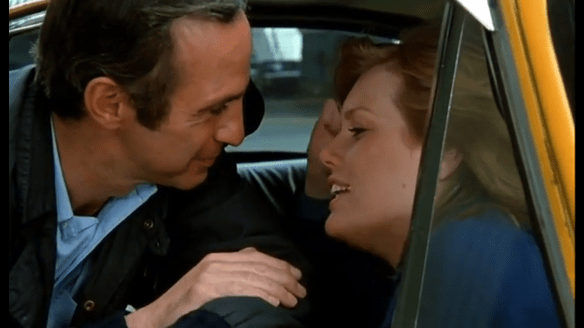
This is where the film gets its namesake as it follows the Gregory family during the holidays. It’s that time of year with everyone convening for Christmas at a vicarage in the cozy town of Wyndham, nestled in Norfolk.

It sounds like a delightful experience, and it gains even more prominent meaning for a lonely old matron — airy and grandiose of tone — as she’s grateful for the letter from her brother-in-law confirming she will not have to spend the holidays alone. Cue the swelling music.

At this point, if you assured me The Holly and The Ivy wasn’t a sentimental movie I probably would have disregarded you. This is before the rug is literally pulled out from under us. For now, we still have a ways to go.

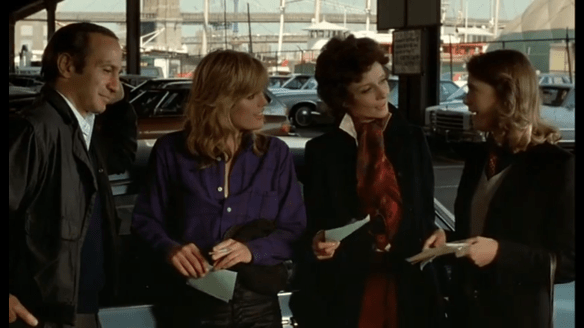
Quite by chance, during the pilgrimage aboard a train, she bumps into the other aunt, the acerbic and proud Aunt Lydia a world-class misanthrope. Despite they’re differences, they do well to cancel each other out. You can only imagine what might happen if you put them with others.

Sure enough, there’s a philandering young soldier who is caught by his superior with a girl and winds up in a whole lot of hot water. However, by some curious circumstance, he’s able to worm his way out and get leave to see his family for Christmas. This rapscallion is, of course, Michael Gregory (Denholm Elliot). It is his father who runs the local vicarage in Wyndham.

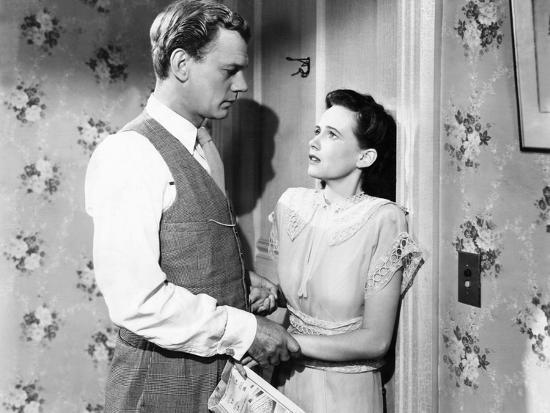
Jenny Gregory (Celia Johnson) is the devoted daughter who runs her father’s home and takes care of all his affairs. She feels this is her duty while he is still working and his other sister lives away in London all but detached from the rest of her family. The main complication is the man Jenny loves is about to realize his lifelong dream of working in South America. It will be five long years and though Jenny is dying to go with him, her hands are tied.

When we finally meet Reverend Martin Gregory (Ralph Richardson), it becomes apparent he’s a bit absent-minded and quite the chatterbox. He goes on and on about his fascination with the Incas and their ingenuity in using Guano (bird droppings). He, of course, knows nothing about his daughter’s situation because no one has told him anything and so he remains oblivious going off to view the nativity play at his church (a fine precursor to Charlie Brown’s Christmas).

This is one of the great tragedies running through the story. The reverend himself bemoans the fact parsons are set apart and isolated because of their vocation. There is an inherent awkwardness going out into the world as a man of the cloth. People don’t want you around. It makes them feel uncomfortable and yet in the same breath, they hold you to a different standard because you are meant to represent religious piety for all.

But there is also an undercurrent in his home. His children never tell him how they are really doing. They equivocate and keep things hidden in order to not upset him or receive his scorn. Because that is how they see him. He is a killjoy, someone put in their life to chide them and scold them for every one of their individual sins. The fear is if he actually knew what his children were like, he would be unbearable. It certainly is a problem in conservative environments where exteriors don’t mesh with interior issues.

It comes to a head when the sister Margaret straggles in late to the festivities. They made up a lie about why she wouldn’t be able to come and yet the real truth is she did not want to see her father. But the wounds and the hesitance run deeper still. She is an alcoholic and something else happened to her. Those who love her, note she crackles like ice — a frozen ice queen out of a Hans Christian Andersen story.

Reverend Gregory has reason to be dismayed that Christmas in merry ol’ England is now ruled by the boars and the retail traders who have gotten hold of the season. He laments, “It’s all eating and drinking and giving each other nicknacks…No one remembers Jesus Christ.” It teeters along the precipice of righteous indignation.

Because he looks at the same people and sees how little use they seem to have for him even when he sees, what he deems to be, great need. He’s there to marry and bury them only. His church is only an architectural center, not a spiritual one. This right is reserved for the local movie house with all its enticing bells and whistles.

While he might have a point, he is just as implicated in the problem; he has exasperated society. The case study is found in his family. We see it in so many cases. The religious figure is measured by a separate set of principles and yet because of what we place on them, they feel distant and unreachable. They make us feel dirty and ashamed of our improprieties.

David blasts his father telling him, “You can’t be told the truth. That’s the trouble!” It’s films such as these that make me realize how difficult it would be to be a religious leader. Likewise, it’s just as difficult to have to live life alongside them — at least in a case like this.

Where “every conversation goes back to the creation of the world” and our only way to keep up appearances is lies and concealment — a life of false pretenses just in time for the holidays. The holidays only serve to magnify the tensions brooding for so long.

Because sons find the faith and fairy stories antiquated. Fathers are vexed that everything must be seen and touched in this generation before it can be believed (Can you touch the wind?)

The beauty of the exploration is in how both sides are given some credence. How can parsons expect to be told the truth when one can’t even talk to them like ordinary human beings? How can common, everyday people who make mistakes be free from guilt and shame when the most common judgments are full of condemnation?

While not of the same technical prowess, it nevertheless reminded me of Ordet another film based on a stage play with deep recesses of spirituality. There are a myriad of relationships undone by doubts and perceived areas of incompatibility. In fact, it falls somewhere between Ordet and Calvary because it has a dose of empathy for both the parson and his family.

The miracles revealed are ultimately conversational and sweet, reviving family relationships and salvaging the season through reconciliation. Wounds and secrets so long harbored and festering are finally allowed into the light. The extraordinary thing is, far from sowing more discord, the honesty gives way to the first true peace they’ve had for years.

My only qualm is I rather am curious to hear Ralph Richardson’s sermon. Like David Niven in The Bishop’s Wife, there’s a sense it might have been something magical and deeply impactful to behold. More powerful still, his words live on in the imagination.

The ending comes rapidly but it is reassuring to get one final image of the church with the newly minted couple destined to be together — most everything restored. Because filling in the ending, especially under such jocund circumstances, is often one of the greatest gifts that can be extended to the audience.

4/5 Stars

A Christmas Carol (1938) and The Meaning of Humbug

achristmascarol1938In viewing the 1951 version of the Christmas classic, I took particular interest in the name of our protagonist Ebenezer Scrooge, attempting to redeem it for the masses. For this picture, I was curious in considering another integral term in our lexicon: Humbug.
The term is so ubiquitous and elicits such an explicit connotation, one surmises it loses much of its inherent meaning. What is humbug exactly? To put it simply: hypocrisy. And it’s telling coming from the lips of Scrooge.

It suggests, in his contorted world, he believes himself to be the only honest soul in Britain because he is not taken in by this pipe dream of Christmas. Of celebrating when you have nothing and giving when it probably won’t do any good anyway. He cannot understand how joyous his nephew manages to be, despite being no better than a pauper. In fact, Scrooge holds scorn for just about everyone.

There are actually some prominent revisions to the traditional story that generally succeed in adhering to the tone this picture is searching out. An opening connection is made between Scrooge’s merry nephew Fred and the Cratchit boys. They have quite a time of it sliding across the ice together — even crippled Tiny Tim — riding on the young man’s back.

Fred finally makes it to the offices of Scrooge and Marley paying his yuletide greetings to the jovial yet flighty Bob Cratchit (Gene Lockhart). Years in the service of Mr. Scrooge have taught him to always keep on his toes and never push the envelope. Because Scrooge is the sort of man who invests his money in such eminent institutions as the local prisons.

For him, charity is, again, humbug. Altruism is all a put-on to make people feel good and make the world out to be a nicer play than it is. Of course, he would never tell you that. The only way to get at this conclusion is by the most roundabout manner.

It’s true this version of A Christmas Carol works in swift, impressionistic strokes of the past. Before we know it, Scrooge has awoken at night and begins his fateful journey. The narrative zips along telling his story through the visitations of Jacob Marley (Leo G. Carol) and the three Christmas spirits. First, he’s being fetched from school by his ebullient little sister for Christmas away from his boarding school.

Then, he’s back at the old warehouse where he worked for the generous soul Fezziwig and first met his curmudgeonly partner Marley. The church chapel is full of the merry intonations of “O Come All Ye Faithful,” not to mention a few furtive slides on the ice by Fred and his lovely fiancee. Of course, there is the final vision as well featuring a world with Tiny Tim (the marker of wide-eyed innocence) dead and gone.

Because it never attempts to go into the gothic depths of despair (nor does it have ample time), there is not the same rapturous payoff, but then again it manages to be quite cheery from beginning to end. Cratchit loses his job only to go home to his family, arms stacked high with food and happy as ever. Why he even levels a snowball at his good master on accident, resulting in his dismissal.

Promoted from his minor spot, Scrooge’s nephew adds dollops of his own charm to the mix supplying a few good slides across the icy streets. All parties involved contribute to the holiday cheerfulness such that even Scrooge seems unable to douse the gaiety, although there is hardly enough screentime for him to manage the task.

When I was in middle school, I once saw the eminent Hal Landon Jr. in his own stage interpretation of Scrooge, his most famous feat being his somersault on the bed to put on his hat. Meanwhile, Alistair Sim manages to be giddy with delirious delight as the utter despair of Christmas Yet to Come is stripped away from him fortuitously. Upon hearing Lionel Barrymore was meant to star and performed the role countless times on the radio, I am even more curious to hear him. Thanks be we have Mr. Potter.

Reginald Owen is a sterling Scrooge in his own right, even a yuletide archetype of the old crusty miser. Though a respectable performance, it’s no doubt overshadowed by Sim’s, among others, for the simple fact it feels conventional. There’s little wrong with this and the 1938 version of A Christmas Carol is nothing if not sentimental and streamlined for annual holiday viewing with the whole family. There’s time yet for other entries to sink into the depths of woe in order to reach the zenith of Christmas cheer. The final word is to not live a humbug life. Christmas is meant for so much more. Where jaded cynicism is replaced with radical generosity and even child-like faith.

3.5/5 Stars

Marriage Story (2019) and Being Alive

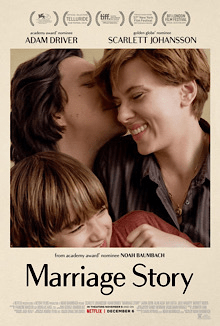
MarriageStoryPoster.pngIn full transparency, I’ve often considered Noah Baumbach as heir apparent to Woody Allen and a lot of this attribution falls on their joint affinity for New York City. It is the hub of their life and therefore their creative work even as the broader art world often finds itself seduced by the decadent riches of Los Angeles.

Allen most famously set up the dichotomy between the two places in Anne Hall (1977), where Annie and Alvy ultimately part ways because the woman he liked decided she likes L.A.; he loathes it above all else.

It’s hard to get these elements out of my head even as this film features two former Allen collaborators in Scarlett Johansson and Alan Alda. And yet, to his credit, Baumbach has allowed for a more robust dialogue between two people. It’s not merely a humorous juxtaposition, it becomes indicative of so much more.

Audiences should be forewarned Marriage Story is about the messiness of divorce full of hurt, troubled communication, and explosive moments of lashing out. It also features some of the most substantive and sustained pieces of fearlessness you’re probably going to see this year in terms of acting.

Scene after scene is carried by one or two performers in tandem. In fact, with the extended takes, fluidity, and intimate interiors, the relationship between film and the stage is close, going so far as to break up sequences with curtain-like fade-outs.

Yes, this makes Marriage Story unwieldy as it ranges all over the place. It somehow strikes this agreeable adherence to Baumbach’s intuitions as both writer and director, while still relying wholeheartedly on what Adam Driver and Johannson bring to their respective roles.

Right at the center of it all are their soulful performances lithely running the gamut from devoted affection to bitter resentment. But it’s the notes in between which become so crucial. Because it goes beyond mere technical ardor; there’s another kind of palpable investment present.

Their story is set up exquisitely by the words they use to recount one another. Perfect trailer fodder in fact. What they provide are observational affirmations of each other’s characteristics. Nicole is an actress. She is a mother who plays. She’s brave, knows how to push her husband, and she’s competitive. Charlie is a theater director. He really likes being a dad. He’s driven, neat, and always energy conscious. He’s also very competitive.

However, they never get to share these words because now they currently sit in the therapist’s office drifting apart. It looks like they’re already too far gone to salvage the thing. What could have been the passionate musings of love letters exchanged in a bygone era, instead find them at the precipice of separation.

The point of no return is dropped in Charlie’s lap in an oddly hilarious scenario of dramatic irony — somehow worthy of a Hitchcockian time bomb — where Nicole enlists the help of her good-natured mother (Julie Haggerty) and sister (Merritt Weaver) to help her serve notice. As can be expected, it unfolds in the most cringe-worthy and somehow the most perfect manner to suit the story.

It’s one showcase among a plethora of long takes supplying a formidable framework for the script to rest on. As such, it relies so heavily on its stars to be up for the task and to any degree we might adjudge as an audience, they come at it with impeccable aplomb.

Soon what looked to be an amicable dialogue between two rational human beings is being overhauled with lawyers. We begin to see how what started as a riff, between two solitary individuals, soon becomes complicated by well-meaning legalese, fees and the aggravation incurred from the middleman now bargaining between the former couple.

It gets to the point the relationship feels so far removed from where it began. You begin to question if any of it was worth it. Words get twisted. Feelings get hurt. They’re doing things because their lawyers say to and they become suspicious of motives. I was reminded of how our language makes it so arguments are literally equated to a war. There are winners and there are losers as the two sides become further alienated. The void in the courtroom never felt greater.

Laura Dern has an impeccable pulse for the kind of cajoling attorney with business acumen and bedside manner to get what she wants. Namely, the best for her clients. She’s ruthless yes, but it’s all within the confines of the game. There’s still a person there who has a life outside the 9 to 5.

Ray Liotta seems equally built for this cutthroat business-minded artificiality. We despise him even as we realize — much like Charlie does — he’s very good at his job. If you want to get out with you’re shirt, you’ve got to put up and buy into the game.

Alan Alda gets a bit as a sagacious saint of a man who plays as the antithesis of a lawyer (or any of his rivals). His spot feels like a hallowed place in a film filled with other prominent names who probably get to do more. He gets to be warm and wise, reminding us why he is such a dear soul to us all.

I came into Marriage Story expecting callbacks to Kramer Vs. Kramer (1979). Certainly, this is a film about parents and divorce and how they must tiptoe around their issues for the sake of their kids. But this is a bit different than the Hoffman picture where Meryl Streep at times feels non-existent. At least I always remember it as a father-son film.

This rendition is meant to provide equal footing two both parents with the onus of victimhood and blame distributed. Because that’s just it. You can’t draw it up so easily. Everyone contributes to the problem in some way.

There are also no clean breaks because time has a curious way of working on the human psyche. When you’re used to spending time with someone, you know all their quirk, and it’s hard to let them go. They drive you up the wall, and they fill you with that electrifying energy sending your heart aflutter. Their family becomes your family. You can’t snap that wishbone without some residual effect. Try as you might, it’s impossible to totally obliterate the memory.

It feels as if Scarlett Johansson has laid herself bare, extending herself like never before, and we see the flaws coursing through Adam Driver to go with his finest everyman attributes. Their urgency and honesty become brutally transparent and that is the utmost of compliments.

I couldn’t stop thinking about Contempt (1963) — Jean-Luc Godard’s film about moviemaking that famously documents the dissolution of a marriage (between Brigitte Bardot and Michel Piccoli), taking place within their house in one extended scene. These are the lengths Baumbach reaches towards in his own way through blocking and the relationship between his stars and the camera.

In one climactic confrontation among so many corkers, Driver and Johansson have it out in a fully ballistic, double-edged assault unearthing every wound and targeting every sore spot imaginable. Hurting each other in ways only they know how because they’ve been so intimate for so long. It ends with them red-eyed and huddled together on the floor totally spent. This is never what they wanted nor what they expected.

Where is the ending exactly? Because the film is substantial; it covers so much territory and the themes are wide-ranging from parental devotion to lingering love under new parameters. But with everything the movie allows us to be privy to, it’s obvious there is no easy resolution. Thus, with so many disparate reference points thanks to 80s icons like Julie Haggerty, Wallace Shawn, and Laura Dern, why not mention something altogether different.

In Hirokazu Koreeda’s After The Storm (2012), you have a vagrant husband trying to win back the affections of his wife even as they figure out how to raise their kid. They’ve entered a new chapter of existence, and sometimes that’s hard to cope with. So when they walk off into the sunset it’s hopeful, but something’s inexplicably altered. There is reconciliation and yet they cannot undo everything. This movie, again, is also about moving forward from the most painful fission imaginable: between two human beings. It’s a work in progress.

To this point, I’m fascinated by the choice to have the movie called Marriage Story. Because if we wanted to, we could look at it purely from the point of view of divorce. After all, surely this is the all-important final outcome. How could we see it any other way? And yet it becomes so difficult to break two human beings apart from one another.

Interrelated is the impassioned statement made by Nora in one of her sole lapses in composure. Within an otherwise irreligious picture, she says the following:

“The basis of our Judeo-Christian whatever is Mary, mother of Jesus, and she’s perfect. She’s a virgin who gives birth, unwaveringly supports her child, and holds his dead body when he’s gone. And the dad isn’t there…God is the father, and God didn’t show up. So you have to be perfect, and Charlie can be an f—-up and it doesn’t matter.”

The misunderstandings in her statement feel immaterial, and I’m not invested in pulling them apart now. Instead, it teases some private hurt we cannot hope to know, but it also triggers ideas some might recall from the Judeo-Christian texts, which are pertinent to the conversation.

In discussing the union of marriage, it says, “A man leaves his father and mother and is united to his wife, and they become one flesh.” This is both mentally, spiritually, emotionally — in every way imaginable. People are meant to be together. But if Marriage Story is a reminder of anything, it’s that pride, pettiness, and imperfection get in the way of our joy.

For Charlie, for Nicole, for all of us. It also cannot completely quell the love we breed in our hearts. Yes, our love is imperfect; still, it can see us through a lot. It can be a beautiful even an extraordinary entity. It’s part of being alive.

4/5 Stars


Someone to hold me too close.
Someone to hurt me too deep.
Someone to sit in my chair,
And ruin my sleep,
And make me aware,
Of being alive.
Being alive.
Somebody needs me too much.
Somebody knows me too well.
Somebody pull me up short,
And put me through hell,
And give me support,
For being alive.
Make me alive.
Make me alive.
– Being Alive

Yellow Submarine (1968): The Beatles Vs. The Blue Meanies

yellow submarine 1.png

Like all the great fantasy stories, this one begins with “Once upon a time…” The world is Pepperland, 80,000 leagues under the sea, where people live in harmony frolicking across the hills with music wafting through the air.

But there must be villains and there are no cartoonish baddies more nefarious and reviled than the Blue Meanies. They come from the outskirts of Pepperland with an arsenal of dastardly weapons at their disposal, among them Projectile Gloves, Three-Headed Hounds, and Anti-Music Fishbowls.

Soon the melodious world is overrun by their chaotic cacophony of blueness. One can only guess what they would have thought of the likes of B.B. King, Muddy Waters, and Howling Wolf. But as this is a Beatles adventure, the intrepid Young Fred (with graying hair) escapes on the Yellow Submarine as the refrains of Ringo’s iconic tune overtake the screen. It’s our first sense that this is a picture about the Fab Four. Beatlemania, as a zeitgeist of screeching girls, might have cooled but their music and personas still made them rock royalty of the late 60s.

To return now, functions as an all-expense paid nostalgia trip because Yellow Submarine as an animated movie is something I knew from a VHS that my dad brought home one day from work. I had no idea what LSD or an acid trip was, much less acid. Consequently, my 6th-grade school report on the Beatles was entirely lacking this information too. More so, I distinctly remember presenting about their music and how these lads from Liverpool were able to captivate the world. Because their music had always resonated with me from an early age.

Up to this point, the movie was the most whimsically inventive exploration in animation I had ever seen. Without fully comprehending the psychedelic overtones, I was taken with the utter fanciful nature of it all. The dividing line is thin between a drug trip and a childlike imagination simply accepting all things as fact. There need not be any deliberate explanation.

Collages of song and image become second nature. Eleanor Rigby playing over snippets of footage with little rhyme or reason — the submarine motors along — it’s penny-plain as the Brits might say (Not to be confused with Penny Lane). Meanwhile, the cartoonish anatomy of the figures is outrageous in not only their mechanics but general proportions. The world they reside in is even screwier.

Eventually, the yellow submarine follows Ringo home and Fred leaps from its hull ranting incessantly, barely cognizant, about explosions and BLUE MEANIES. So we go from Pepperland to an equally trippy mansion the Beatles reside in followed by a labyrinthian sea filled with the most curious creatures imaginable. It never stops with the wonkiest bits of invention. As a child it is brilliant. As an adult, it’s a bit bewildering.

But George, always the calming force, reassures with his ever available mantra, “It’s All in The Mind.” As they get a move on, the boys strengthen their camaraderie underwater with “All Together Now” one of the best new additions to the soundtrack. There’s a liberal amount of grace provided, as the plotline seems to evolve out of the songs. For instance, the ensuing “Sea of Time” makes an obligatory rendition of “When I’m 64” all but imperative.

Then, the “Sea of Science” births the organ-propelled new-age rhapsody of “Only a Northern Song.” Even an early Rubber Soul track like “Nowhere Man fits in a pinch to obliquely describe the rhyming, rolly polly alien furball Jeremy, going by any number of names (Jeremy, Hillary, Who?). The Sea of Holes (a nod to “A Day in the Life”) gets us closer to Pepperland and finds Ringo picking up a souvenir from their adventure (I’ve got a hole in me pocket). Really you could choose any of these tie-dyed realities as emblematic of the entire experience but for my money, “Lucy in the Sky with Diamonds” is the film at its height of kaleidoscope psychedelia.

When we finally do return to the monotone Pepperland from The Sea of Green, the juxtaposition is stark. We see to what extent the Blue Meanies repression of song has drained the landscape. Without any musical expression, all color has gone out of life quite literally, and it’s the lad’s job to put it back where it belongs.

They don disguises, casting them as the spitting image of the members of the Lonely Hearts Club Band, currently encased in a giant fishbowl. Not for long. It is this final assault that somehow captures the magic of all the great adventure stories childhood’s have thrived on. The boys go into the heart of the enemy territory only to come prepared for a showdown and take back what is theirs. The only difference is their weaponry is a killer soundtrack to bring the Meanies to their knees.

It really is a tour de force in the final stretch stacking tracks like “Sergeant Pepper’s Lonely Hearts Club Band,” “With a Little Help from Friends,” “All You Need is Love,” and “Hey Bulldog” one after another. It’s an agreeable onslaught of tunes exploding over the screen and revitalizing the world, flushing Pepperland with a cornucopia of colors as one might expect.

We reached the apex of the concept album, paying heavy dividends in this animated film with a world loaded up on background whimsy and filled out by content from the Beatles’ hit records. Much to the Meanies chagrin, the hills are alive (with the sound of music) and in battle, two pairs of Beatles are better than one. Three pairs really.

Because we hardly realize till the very end but the Beatles — John, Paul, George, and Ringo in human flesh — barely appear. It comes with a minute-long cameo tacked on for good measure. In other words, they didn’t actually voice their cartoon selves. As a kid, I didn’t care and now it doesn’t make much difference to me either. Because we still have the music exerting its presence over the story. As is, their moment of screen time is a final capstone on a doozy of a film.

Lifelong Beatles enthusiasts, lapsing hippies, and kids with fledgling imaginations can all wholeheartedly join in on the communal Yellow Submarine experience. Yes, the title song is the most overplayed of all the Beatles canon but who cares? This movie is ceaselessly entertaining with bad puns to boot. If quotability is any indication, this might be one of the most seminal movies of my childhood.

4/5 Stars

The Westerner (1940): Made by Walter Brenna and Gary Cooper

the westerner 1.png

I do appreciate older films running their credits at the beginning, and I make a habit of perusing them for familiar names. More often than not, I’m rewarded in some small regard. However, The Westerner features a rather unusual notice:  “This story is legend founded on fact and, with the exception of “Judge” Roy Bean and Lily Langtry, all the characters are fictional.”

It seems a curious statement to make, but upon actually viewing this western, it makes complete sense. Not simply because the genre thrives off of myths, legends, and larger-than-life heroes, but the story is as much a testament to its characters than the offbeat movements of its plot. To a varying degree, it precedes thematic elements found in pictures like Shane (1953), The Far Country (1954), and Day of The Outlaw (1959).

Judge Roy Bean is one of the eccentric and notorious “hanging” judges of the Old West who supposedly lorded over the Texas territories. It’s difficult to think of a better man to play the ornery son of a gun than Walter Brennan. It’s even harder to think of a better part for Brennan. He’s got his name all over it.

Because he’s part of the local crowd of cattlers who are ready to do everything in their power to get the miserable sodbusters off the land they deem to be rightfully theirs. After all, they got to the land “first” so dibs should obviously go to them, no matter how much land is available.

The animosity is already fierce when the film opens with the cattle ranchers looking to scare off and gun down any of the opposition. Meanwhile, the homesteaders are intent on protecting their own with guns if they have to, continuing to grow their crops and fence off their territory.

But one brazen individual isn’t so lucky as he’s tracked down and brought before the “Judge” who holds court in his own bar and sentences the man be “hung.” It’s one of the grimmer moments in a western offering otherwise ripe with jocular even humorous interludes.

Because the inevitable occurs and the prototypical saddle tramp, Cole Harden (Gary Cooper) is drifting his way to California. It wouldn’t mean much except for the fact he’s accused of riding a stolen horse belonging to one of the cattlemen.

As is typical in the territory, he’s about to be tried and strung up right there in the bar. The Judge is all ready to throw the book at him. But Gary Cooper is not your typical man. Normally we would say he’s a stellar gunfighter or a fierce personality, but what he’s armed with, in this picture, is a quick wit.

We see his eyes gazing up at the wall above him as his mind works coolly to make up a story to save his own skin. It’s quite obvious that Bean has a special admiration for one dancehall performer Lilly Langtry and so, of course, Cole’s story goes something like this…

He once met Ms. Langtry while she was touring the states and struck up a friendship with her. Why he even asked for a lock of hair to hold onto as a keepsake. And of course, he doesn’t have it on his person. He would have to call for it. By this point, Bean is licking his lips with relish; the jury concurrently convening on whether or not the out-of-towner should be strung up.

We see Harden has gained a very influential admirer and he and the Judge strike up an uneasy partnership that we might tentatively call friendship. Conveniently, another horse thief — the real one — is found to take his place. Thereafter, the story is injected with subsequent comic undertones following a real bender, leading into a chase on horseback as Brennan tries to catch up to Cooper. He really wants that lock of hair for himself!

They both end up rolling around in the dirt conducting a meeting of the minds to decide if he will stay. In a perfect follow-up, the camera switches angles with Brennan’s back to the camera as they continue to converse and Cooper nonchalantly slips the other man’s gun into his boot.

It’s interludes like these that continually assert the film as a wholly idiosyncratic take on the western genre, which, by all accounts, wasn’t much to Gary Cooper’s liking. Because The Westerner lacks the classical elements we’ve come to expect, and there you have part of what makes it a good-humored time.

the westerner 2.png

But this blissful note strikes too soon. There is an inferno of drama ready to envelop the film leaving behind charred remains and pained relationships. One of the most integral people is plucky Jane Ellen Matthews (Doris Davenport) who spoke up on behalf of Cole and subsequently castigated the judge for his corruption.

In the end, she feels betrayed by Harden in his attempts to play mediator between both sides. One questions whether or not this is the last straw. Surely he will ride on to leave behind all the trouble at hand.

Still, with any Gary Cooper hero, there must be an inherent decency to be abided by. It’s little surprise he sticks around to cross wills with Bean one last time. They meet indoors waiting for Ms. Langtry’s stunning debut at a local theater. For some reason, it feels like we are sitting in on Ford’s Theater with some unnamed tragedy about to occur.

What goes down thereafter feels a bit like an anti-payoff after all we have gone through. Although it does come with a wide array of bullet holes. There must be more to this story. Then again, maybe it is just the right resolution for a rare oater such as this. At any rate, the film is at its best not as a wide-ranging epic but on a micro-scale. This is a story owned first and foremost by our two leading men.

Taken as it is, the story is uneven even subpar, but it gives us enough that is unorthodox and set alongside the incandescent performances of Cooper and Brennan with Gregg Toland’s ever superb compositions, there’s too much to like here to disregard it outrightly.

While William Wyler was never synonymous with the West like a John Ford, he nevertheless delivered on several occasions. The Westerner was one and The Big Country another. It comes from stellar character dynamics and cinematography more than anything else. However, when put together compellingly, they do make a sterling combination. For this one, we could not envision the West without the likes of Gary Cooper and Walter Brennan.

Walter Brennan leverages his role to become one of the most endearing of antagonists. And if it’s pushing it to say he’s lovable, then at least there’s something tragically inane about him so agog over a lady, even to the point of renaming his town after her. Since actors like Chill Wills and Dana Andrews are mere blips on the screen, Cooper is the only character coming close to his equal.

There’s only one final thought left. It really is a shame Gregg Toland never shot more westerns, especially with John Ford (his collaborator on two contemporary pictures). Some of the most captivating images in The Westerner come from sunlight glistening through the cornfields as the homesteaders thank the Lord for their bounty. What could he have done with Monument Valley as his playground?

4/5 Stars

Beau Geste (1939): Brotherly Love in The French Legion

beau geste 1.png

“The love of a man for a woman waxes and wanes like the moon…but the love of brother for brother is steadfast as the stars, and endures like the word of the prophet.” ~ Arabian Proverb

No matter what Joseph Von Sternberg thought of such a proclamation, we can concede his Morrocco was a film concerned with the former. Von Sternberg’s dalliances with Marlene Dietrich behind the scenes and then Dietrich and Cooper in front of the camera are a living testament.

Beau Geste stakes its claim early to being a film of undying brotherly love. It brings to mind the words of scholar and author C.S. Lewis when talking about philia as a “side by side, shoulder to shoulder” appreciative love. It comes not by looking at each other but having a vision of something in front of us.

“Every step of the common journey tests his metal; and the tests are tests we fully understand because we are undergoing them ourselves. Hence, as rings true time after time, our reliance, our respect and our admiration blossom into an Appreciative love of a singularly robust and well-informed kind.”

I think this is a perfect illustration to begin to understand why Beau Geste is an initially compelling hero’s journey because it relies on a joint adventure to bring out expressions of deep-rooted love.

Admittedly, William A Wellman’s film is a close remake of the 1926 silent Ronald Colman vehicle. One element this film borrows from its predecessor are intertitles, and they’re too many of them for a talking picture.

But soon enough a cold open places us within the ranks of some French Legionnaires who come upon a fortress only to find the stronghold littered with the bodies of their comrades propped up against the walls. Something dreadful must have happened to them. For now, we get no more explanation as the story quickly fades back into the past, 15 years prior.

There we meet five children, three of them named Geste, one of them named Isobel, and the fifth a bespectacled killjoy named Augustus. You see, the others are still enraptured with adolescent imaginations that find them gallivanting around on the most glorious adventures as soldiers or possibly members of King Arthur’s court.

Their exploits are to be remembered with a Viking’s funeral with a dog lying at their feet. The beauty of their temperaments is the fact they hold on to a bit of their youthful exuberance when they grow into young men.

It always is a bit of a start when you jump from child actors to their corresponding adult selves. In the picture, I couldn’t quite make the jump seamlessly but no matter. All I know is I do have an appreciation for our leads — that is the three Geste brothers. They really are rather like the three Musketeers with Gary Cooper, Ray Milland, and Robert Preston making a jocund company.

Also, on a side note, this is too perturbing for me not to mention. I double-checked records multiple times and our three stars were born in 1901, 1907, and 1918 respectively. I’m still trying to figure out why Robert Preston hardly looks any younger than his costars or at least Milland. Maybe it’s his mustache. At any rate, age differences aside, the chemistry is present.

What is not present is the priceless jewel “The Blue Water” that was stolen one evening from the home of their adopted aunt Lady Patricia. The same evening Beau runs off to the Foreign Legion followed soon thereafter by Digby (Preston) and finally John (Milland) who gives one parting embrace to Isobel (Susan Hayward) before leaving on the grand adventure. Hayward is exquisitely beautiful and though her ingenue role is in no way groundbreaking, we have the solace of many meaty performances to come.

The film’s true standout is Brian Donlevy as an unscrupulous tyrant in charge of new recruits. He eventually finds himself commanding the entire outpost with the whole outfit threatening insubordination. His hunger for power verges on the deranged.

My expectations were more of the rip-roaring adventure variety but as the previous commander’s remarks on his deathbed, “Soldiers die as much from fevers as they do battles.” Meanwhile, Digby is unceremoniously pulled away from his brothers on a work detail and subsequently, misses out on most of the final act.

beau geste 2.png

I would say wholeheartedly the film is salvaged in its last push as we are granted the spectacle we have been waiting for as the remaining men hold down the fort against incoming marauders. It makes one nearly cry out “Remember The Alamo!” The sentiment is there anyway.

It seems a horrible thing to say, but Cooper affected me more when he was on the verge of death than when he was alive. The all but wordless finale plays particularly cryptically as Digby sneaks around the compound to carry out his oldest brother’s wishes.

I must admit to dismissing Beau Geste‘s storytelling prematurely as it evoked greater complexities than I would have expected. The mechanisms of the opening and overlapping moments are more intricate than I might have given them credit for. The mysterious words spoken once upon a time, while Beau was hiding in the suit of armor, come to fruition as do the opening moments, neatly folding back into the tale.

The reunion of John with Isobel and his Aunt arrives in the nick of time to satiate audience wish-fulfillment. It almost elevates the film wholeheartedly, but the pacing and where the story chooses to focus its efforts feel scattered. Had they come together more succinctly we might be hailing Beau Geste one of the great actioners.

While Gary Cooper in a foreign legion kepi is nonetheless iconic, I am apt to remember him more so for Morocco (even if that picture belonged to Dietrich). Although if one is sentimental enough to forgive the faults, it’s painless enough to say Beau Geste belongs to three devoted brothers. Coop, Milland, and Preston maintain a spirited solidarity throughout.

3.5/5 Stars

The Lives of Bengal Lancers (1935): Colonial Camaraderie Sullied by Hitler

the lives of a bengal lancer 1.png

In the imperialist traditions of the likes of Tarzan The Ape Man (1932), Gunga Din (1939) and even Lawrence of Arabia (1962) comes The Lives of Bengal Lancers. We cannot take the era or the colonial sentiments for granted like the contemporary viewer did since we must reconcile with the complicated filter hindsight lends.

It’s a bit like an old Cowboy and Indians picture except instead we have lancers and Indians. In theory, our allegiances lie solely with the dominant sides, and the rebels have our ire because revisionist filmmaking had yet to be created. This is the victor’s myth.

Director Henry Hathaway in later years would be remembered as a veteran of both crime pictures and classic John Wayne westerns including True Grit. The Lives of Bengal Lancers was his first formidable success, and the action and adventure itself are frankly quite thrilling.

Gary Cooper, as one of American’s dashing action heroes of the day, plays our protagonist MacGregor, a rough-edged soldier who nevertheless conceals the age-old heart of gold. A prime example comes when he makes up some excuse to send a new recruit to call on his father so they can talk in confidence. The boy has yet to see his flesh and blood face-to-face without constant rules and regulations getting between them.

Actually, we have two new recruits who come aboard: Forsythe (Franchot Tone) a glib sportsman who finds great relish in crossing wills with MacGregor and then dashing Lieutenant Stone (Richard Cromwell) still wet behind the ears. His father is the commander of the entire outpost. A journeyman soldier, “Old Ramrod” Stone (Guy Stander) is an incorrigible stickler for duty and discipline.

the lives of a bengal lancer 2

But the task at hand is the apprehending of a charismatic gunrunner and local outlaw Ahmad Khan (Douglass Dumbrille), who subsequently holds great power over the territory. The favored sport of “Pig Sticking” provides a handy cover for snooping around.

Most delightful of all is the one-upmanship fostered between our two manly specimens played by Cooper and Tone. The constant friendly competition between the blunt Canadian straight-arrow and the more polished and tempered “Blues Man” brought up in Britain is one of the film’s finer assets.

But of course, the inevitable happens and our heroes get captured by Khan. The famed line misstated on numerous occasions is actually, “We have ways to make men talk.” However, it feels anticlimactic considering.

It’s also difficult to decide if it’s to the film’s credit or not, but the villain, played by the white actor Douglas Dumbrille, is not trying to hide it. He is educated and resists playing up some savage image. He leaves that to all his underlings who do his every bidding.

While imprisoned, our heroes spend their idle time, outside of being tortured, playing at cockroach races and letting their stubble grow out. Once again, it represents the very best of the film instilled by the performances of Cooper and Tone opposite one other. Because everyone else we can easily see in any of these old adventure epics. It feels like standard stuff. They are not.

Certainly, the story teases out this issue between the duties of a soldier and the scruples of a man with inbred common decency. Should the family be sacrificed for the sake of the outfit? Is a man who has poured everything into his military career because he believes in regulation fit to be praised and venerated? The commander’s appreciative colleague (C. Aubrey Smith) lauds his actions acknowledging, “Love or death won’t get in the way of his duty.” Whether that is an entirely good thing remains to be seen.

Of course, we see analogous themes in even some of John Ford’s pictures like Fort Apache and specifically Rio Grande. The latter film has the same father-son dynamic playing out, except inside of conveniently killing off the spouse to streamline the conflict, that film actually digs into the themes more definitively. Anyone who has seen the film will agree Wayne and Maureen O’Hara’s relationship is the most interesting dynamic. A close second is the camaraderie of the soldiers.

In The Lives of Bengal Lancers, again, we have no such relationship, so the film is at its best with the soldiers sharing their lives together. One must note while the western might be dead, these old adventure yarns feel even more archaic. This brings up a host of other issues to parse through.

Watching the film unfold we cannot know for sure if we are on the right side of a righteous or unjust war; the underlying problem is the film does not leave it open. It’s already accepted who the conquers and heroes will be. I have nothing against the likes of Gary Cooper and Franchot Tone. I rather like them. But I can’t help but feel their team is playing a bit unfairly. The deck is stacked in their favor.

This ties into another notable caveat to make the viewer wary because Lives of a Bengal Lancer was purportedly a favorite of Hitler. In its digressions, he saw agreeable conclusions to inspire his own empire — the Third Reich — namely an unswerving duty to country along with elements of racial superiority.

Because it is these Brits with their bravery and know-how who are able to hold off the hordes of enemies. Their valor in itself is not an issue but placed up against their enemy, it is slightly troubling. The fact Hitler made it compulsory viewing to members of the SS is another level of bone-chilling. It’s hard to look at the picture in the same light after such a revelation.

3.5/5 Stars

Design For Living (1933): An Atypical Lubitsch Comedy

design for living 2.png

“Immorality may be fun but it’s not fun enough to take the place of virtue and three square meals a day.” 

All director Ernst Lubitsch has at his disposal is a train compartment and three actors. Yet the opening scene of Design for Living positions itself as one of the most delightful moments in this entire picture. It’s a pure testament to bold visual filmmaking with nary a word spoken for at least 4 or 5 minutes. Few modern filmmakers would have the gumption to attempt it.

Lubitsch knows exactly what to do with such situations, and he was bred not only in sophistication but silent comedy. Because you see, the ultimate joke is when they actually start conversing with one another these three very familiar faces open their mouths and French comes out (Gary Cooper apparently was fluent).

Simultaneously, the director has also set up the relational dynamic of the film without a peep of dialogue. It really is a superb opener. However, this opening scene is almost too delectable for its own good. The film cannot possibly sustain such a  level of perfection. But more on that later.

When the three expatriates finally switch over to their native tongue, we have an uproarious discussion on art versus commercialism, Napoleon wearing a coat, and Lady Godiva riding a bicycle. Don’t ask for any explanation. In the parry and thrust of their conversation, we find out one is a painter (Cooper), the other is a playwright (Fredric March), and both are failures for the time being.

We are instantly reminded by a certain level of sauciness this is the Pre-Code era, though we are on the cusp of harsher censoring to come. For now, the picture is able to nonchalantly hang its hat on a central plot point involving our leading lady (Miriam Hopkins) and her two men embroiled in a menage a trois — a so-called “Gentlemen’s Agreement.” Her conundrum is very male and libertine in nature. She has different men to try and she likens them to hats she wants to put on.

Yes, there is innuendo and some contemporary audiences might have shuddered at the admission they mention the word “sex” out loud on multiple occasions. And yet none of this titillating attraction speaks to much of the underlying allure of this picture.

design for living 3.png

Look at who we have assembled on top of the acting talent. It sounds too good to be true. If the name Noel Coward doesn’t carry emphatic weight in your life, you might as well cross it out and consider this a Ben Hecht picture. He was, of course, one of the great purveyors of Americana through aphorisms and pervasive wit.

He famously scrapped all of Coward’s play aside from a single line of dialogue. Leaving a mark on the material in a way that was far more suitable to not only Lubitsch but an American audience.

All the gloriously tantalizing pieces are in place but the question remains, Is comedic cohesion possible? Understandably, Hopkins and Edward Everett Horton take up their allotted positions with ease invariably suiting them. Though their own personas aren’t on par with Chevalier or Herbert Marshall, the two American lads do their darnedest. The fact Cooper always feels so awkward in comedy somehow even plays a bit to his favor.

Unfortunately, it just doesn’t take. Again, we are putting it up rather unfairly against the likes of Trouble in Paradise or even The Smiling Lieutenant. Those are high benchmarks indeed. Put simply, the buoyancy is not there frequently enough.

Instead, we have a residual wistful melancholy that feels atypical for your usual Lubitsch drawing-room comedy. Cooper and March become a pair of “Gloomy Gusses” as Hopkins winds up marrying Horton to save them all grief. Even before that, the trio has their share of disagreements simply sorting out their inevitably complicated relationship.

If anything, it suggests in more rational terms that such an existence, as bohemian and open-minded as it may be, also becomes one of the most emotionally taxing. Not to mention relationally murky. In real life that is.

But when you expect something effervescent and gay, Design for Living is a bit of a letdown as a movie. After such a strong charge out of the starting gates, the storyline feels wanting in the middle, sluggishly rolling into the final act. One could wager whether or not plucking more out of Coward’s play might have been the most prudent choice. It’s possible it might have made the setup even droller. I can’t say.

Then again, maybe my own comic proclivities range toward screwball and the overtly visual far too much. It is true it often takes finer sensibilities to appreciate ironies and an astute sense of perception to read between the lines. An appreciation for wit and not solely physical comedy is key.

At least in my estimation, the movie is aided by a final party crashing in an attempt to get their girl. These bookends at the front and back half of the picture are vitalized by our stars being brought together. In such close quarters, there’s this inherent possibility for inspiration.

Lubitsch or not, if you have Gary Cooper, Miriam Hopkins, Fredric March, and Edward Everett Horton together in a room, it’s infinitely better than watching grass grow. The same might be said of Design for Living because if it speaks to anything, the final notes impart a lightness of camaraderie and lithe romance rather than any morose confusions. As it should be. Though it winds up being too little too late.

3/5 Stars

Classic Movie Beginner’s Guide: James Stewart

I’ve been trying to help people out who might just be getting started with classic movies. It can be admittedly overwhelming to know what to watch so here are 4 films to aid you in your quest. The man of the hour is none other than Jimmy Stewart.

First things first, if you haven’t seen It’s a Wonderful Life at some past Christmas gathering, you should watch it! Really, you should go watch all his movies, but here are 4 more to start you off.

Mr. Smith Goes to Washington (1939)

Image result for mr. smith goes to washington

There some good ones before namely, After The Thin Man, Vivacious Lady, and You Can’t Take It With You, but for all intent and purposes, this is where James Stewart’s career really took for battling for the everyman out on the floor of the Senate. It cemented the partnership between Stewart and director Frank Capra.

Winchester 73′ (1950)

Image result for winchester 73 movie

Due to the diversity of his career, Jimmy Stewart had quite the run of a western hero and it was his work with director Anthony Mann that not only revitalized his career but also subverted his gee-shucks image. His portraits proved they could become fiercer and more unhinged starting here and going to Bend of The River, The Naked Spur, The Far Country, and Man From Laramie!

Harvey (1950)

Image result for harvey 1950 movie

There are better overall Jimmy Stewart films, but this just might be one of his most disarming performances playing opposite an invisible rabbit. It exudes an undeniable warmth, while simultaneously encapsulating much of his charm as a performer.

Rear Window (1954)

rear window 1.png

I wanted to share the love and only have one Hitchcock movie on here. This just isn’t fair! Go watch Vertigo right now if you can. Give it a couple viewings if you need it.

But Rear Window is one of my all-time personal favorites. Stewart gives a wonderful performance from the constraints of a wheelchair. So much of a mystery is played out on the reactions written on his face. It’s a thrilling exhibition of the highest order.

Worth Watching:

Most of them including Destry Rides Again, Shop Around The Corner, The Mortal Storm, VERTIGO, Anatomy of a Murder, and The Man Who Shot Liberty Valance

Party Girl (1958): Sumptuous Visuals for a So-So Gangster Flick

party girl 1.png

Party Girl is yet another sumptuous Metrocolor feast from Nicholas Ray though the circumstances were admittedly less conducive for another masterpiece. In need of money, Ray took the job but instead getting his accustomed input on the script, he found himself being partnered with a producer he had no history with (Joe Pasternak) and two musical numbers he had little control over.

For someone like Ray, used to taking such middlebrow fare and making it inherently more interesting, the only plane he could really play on was the visual. So Party Girl is a minor success continuing his forays in expressionistic color schemes.

The film sets the scene in 1930s Chicago falling a few tiers under the Warner Bros. gangster flicks of the 30s or a hilarious homage like Some Like it Hot (1959). In this particular scenario, worldly-wise dancing girl Vicky Gaye (Cyd Charisse) is always ready to impart wisdom, and she’s too tough to get hurt by love.

While it can’t necessarily keep company with Ray’s most captivating works in terms of personified emotion or intensity, there are still elements to be thoroughly enjoyed. Cyd Charisse for one is as sultry as ever and if it weren’t for their almost abrupt nature, crammed into the story as they are, her two dance numbers do immense justice to her iconically svelte form. She’s still extraordinary.

Robert Taylor for another is compelling as a defender of criminals, capable of getting mobsters off the hook and willingly working for a big-time kingpin named Rico (Lee J. Cobb). Tommy Farrell’s major calling card is a debilitating limp that forces him to use a cane. But it never feels like a mere gimmick.

Ray consequently praised Taylor’s commitment to the role, gladly studying up on his part so he could convincingly play a cripple. The director even said the older man was on par with any of the Method adherents he had ever had the pleasure of working with. There you have commendation enough.

In trying to categorize Party Girl, you quickly realize it’s a bit of a disconcerting hybrid of a film. Some might say discombobulating more than anything, as it plays at the crossroads of different genres, not to mention different eras.

Taylor and Charisse were purportedly the final two contract players signed to MGM in 1958 and so more than anything, the picture was a justified excuse to put them to use before their contracts expired. But all things considered, their chemistry isn’t bad per se, and they both look lovely under the gaze of the camera.

Meanwhile, Lee J. Cobb is capable as a thinly-veiled Al Capone facsimile. He’s not uninteresting, but the part seems to have nothing surprising to boast. By the finale, the story has run its course and most of the air has left its sails. Aesthetically, the harsh colors somehow don’t play against onslaughts of gunfire the way black and white did in the days of yore.

Maybe unfairly it’s easy to criticize the film because it doesn’t quite stand up to the gangster flicks of old and yet, there’s no way to call it a full-fledged musical. But for any aficionados of the director or his starring players, they might be reason enough to revisit this minor cult favorite. Be assured, it’s by no means a cardboard, cookie cutter piece of work.

3/5 Stars