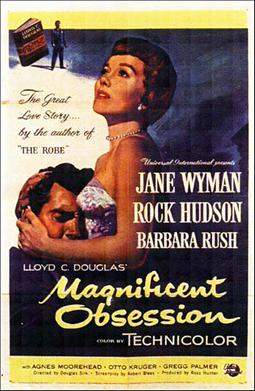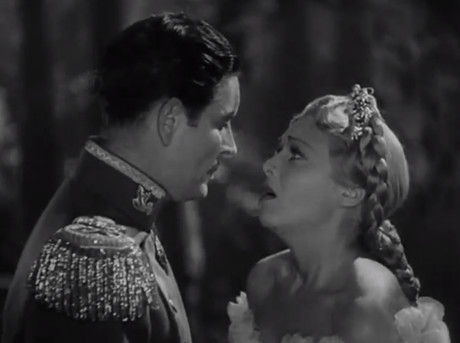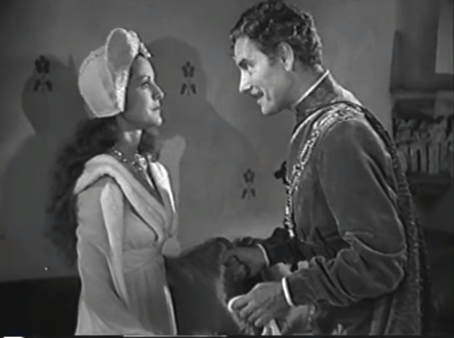
Sleep My Love (1948)

sleep my love

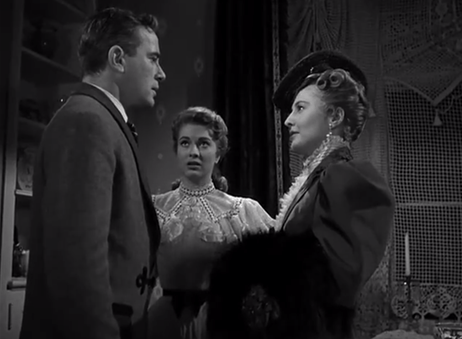
It’s an alarming cold open. Allison Courtland (Claudette Colbert) wakes up on a train to Boston with a gun in her purse and no recollection of how she got there. It drives her into a fit of hysterics that riles up the whole train, though a fellow passenger (Queenie Smith) attempts to steady her nerves. We can’t blame her much since she’s been through quite the ordeal. Still, Courtland spends the entire picture trying to figure out what’s happening as does the audience.

Her concerned husband is played by Don Ameche that suave and charismatic heartthrob. It’s easy to see how he could be absolutely charming in comedy fare (ie. Midnight). Here he’s not so enjoyable. Perhaps in attempting drama, he comes off as too flat. There’s not enough definition there to be compelling. He’s just another handsome face.

Meanwhile, Allison’s evenings are haunted by a specter of a man (George Colouris) who keeps her under psychological duress with broader implications that tie him to a sultry and sulking siren and an entire plot to discredit Allison’s sanity through hypnosis and mind games. If it sounds ludicrous it is but Hollywood was mesmerized by the powers of such forces in the post-war years.

Because you see, she conveniently is the holder of a large inheritance and it seems like a lot of people want a piece of the pie and they’ve gone to great lengths to get it. Hazel Brooks continues in the same mode as Body and Soul (1947) providing the film’s femme fatale, Daphne, sizzling with avarice.

Most people are probably not accustomed to Douglas Sirk and film noir together but this movie proves it to be so, unfolding as an eery paranoia-filled drama that is very much brethren with Hitchcock thrillers like Suspicion (1941) or even Notorious (1946) along with George Cukor’s Gaslight (1944). And some of the broad aspects of psychological conspiracy are akin to I am Julia Ross (1945). However, Sleep My Love does enough to carve out its own unique path even if it’s not as prominent as these earlier titles.

Because Claudette Colbert far from going it alone finds a formidable ally in Bruce Elcott (Robert Cummings), a friend of one of Courtland’s old acquaintances the bubbly Barby (Rita Johnson). Elcott becomes quite the sleuth and a character of tremendous integrity who seems a far better fit for our leading lady than her actual husband. He’s also falling for her.

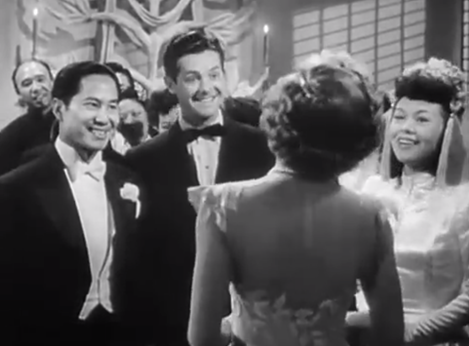
A high water mark of the film is an extended wedding sequence that is surprisingly fascinating. First off, it’s rather remarkable because it shows a wedding between a Chinese-American couple (Keye Luke and Marya Marco) and it plays it straight and true without any stereotypical sentiment. It feels like a real wedding and an authentic portrayal of this union without the necessity of needless bigotry to sully the moment.

The evening festivities prove equally joyous for our stars who form a quality bond and what feels like it could have been an unfortunate aside becomes one of the film’s most diverting sequences choosing to forego dime a dozen drama for a bit of depth.

In subsequent scenes, Keye Luke, Bruce’s “brother” from his extended time in China becomes his right-hand man as he tries to get to the bottom of Mrs. Courtland’s curious situation that turns perilous very, very quickly. It blows up in the end with a domino effect of dramatic trip wires that set off all sorts of outcomes that came hurtling to their conclusions as quickly as they began. It’s over the top certainly but no less a gripping finale if the film is given leeway in the areas of realism.

If this film is not what we would come to think of in Douglas Sirk there’s no doubt that it feels less dated than most, anthropologically speaking, coming from an intellectual man who seems to carry an open-minded and forward-thinking approach.

Likewise, the intense interest in the human psyche might have matured in the years since, but there’s little doubt that it still holds a prominent place in our modern world with its ceaseless intricacies. One could say psychological complexity is one of the reasons movies still get made today. That and a craving for romance.

3.5/5 Stars

Kings Row (1942)

kings row 1.png

Kings Row is apparently a good place to live. The billboard in town says as much. It’s the goings-on in the community that tells a different story — providing a conflicting more subversive view of small-town America.

The story starts out with 5 children. It feels like we hardly get to know them before they are already grown. For some, it feels like we hardly get to know them, period. Robert Cummings is Parris, a fresh-faced polite young man who still exudes a naive innocence and he manages it at 31 years of age. He certainly doesn’t look it.

Those qualities are precisely what is called for in Kings Row, a film directed by Sam Wood (The Devil and Miss Jones) that feels like an enigma — a sprawling coming-of-age drama that dares to show the dark underbelly of society in a very patriotic time.

Despite being hampered by the Hays Codes and its gatekeeper Joseph Breen, Casey Robinson’s script is still a fairly adequate adaption. It comes off surprisingly frank for a mainstream success during the war years even if it can’t quite cover all the vast territory the book undoubtedly expounded upon. But it was a notable forerunner of such pictures as Peyton Place (1957) or even Blue Velvet (1986) years later. It does not shy away from cancer, death, suicide, psychological duress, and all sorts of malice.

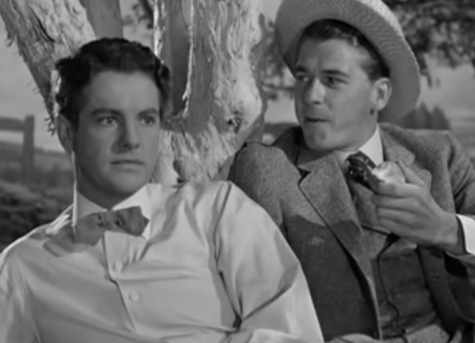
Cummings is joined by Ronald Reagan playing his best buddy Drake McHugh, an affable straight shooter with that winning Reagan charisma. Reagan and Ann Sheridan prove to be a great delight with undeniable chemistry if not for the fact that they don’t actually share a scene until well into the picture. In normal circumstances, you would say they’d make a happy couple.

Meanwhile, Cassandra Towers (Betty Field) and Lousie Gordon (Nancy Coleman) seem at the fringes of the narrative if not all but forgotten. Cassandra was formerly Parrises sweetheart when they were kids. But her family is ostracized in town because her unseen mother has mental problems and her father (Claude Rains) pulls his daughter out of school. Parris doesn’t get to see her until years later when he’s under the doctor’s tutelage. He learns to admire the man but that doesn’t make the family dynamic any less disconcerting.

Likewise, before setting his sights on Randy Monaghan (Sheridan) from the other side of the railroad tracks, Drake had his eye on Louise but her parents, Dr. Gordon (Charles Coburn) and his wife (Judith Anderson), were vehemently against such a union. They believe Drake to be unscrupulous, fearing what others will say about his nighttime buggy rides.

Not to be outdone, Drake gets over his first love and moves on with his life. It’s one of the most satisfying parts of the picture. He seems genuinely content. Though he is miles away in Vienna, Parris is continuing his aspirations of becoming the first psychiatrist in his hometown.

But Kings Row remains a coiled spring of melodrama quickly catapulting from romance to drama back to passion then darkness and romance again. Drake’s life back home turns morosely tragic giving rise to the line that would define Reagan’s career, “Where’s the rest of me!”

James Wong Howes’ photography is A-grade as per usual. The shades of melodrama are his to dictate and he does it exquisitely suggesting tonalities with every composition. The well-remembered score by Erich Wolfgang Korngold has an undisputed majesty which seems to be echoed in some of John Williams most resplendent works from Superman to Star Wars.

There is so much that goes as unspoken subtext in the movie, simultaneously helping and hindering the final outcome. Easily forgotten are the troubling parent-daughter relationships with brokenness at the seams. Claude Rains appears in a very severe role as Dr. Towers who seems like a good man but in the same breath, he still has some lifelong demons he cannot contend with.

Charles Coburn is positively acerbic, channeling every bit of malevolence he can muster. It’s another small but markedly different role than his usual cantankerous or avuncular comics. The trifecta of supporting talent is rounded out by Judith Anderson who only has a couple scenes but they paint a picture of yet another strained mother-daughter dynamic. These issues provide an alternative unnerving layer to the drama but there are so many other subjects to be broached so these feel muddled.

Kings Row barrels towards a lightning fast conclusion that looks to resolve the film’s entire length in a matter of a few moments and that proves to be a heady proposition. An almost unnaturally joyous ending cannot quite tie up all the loose ends and the questions we may still have as outsiders trying to come to grips with this world. But there is one that does become evident and one thread of morality that shows itself.

Humanity was not made to live paralyzed by gossip, hearsay, and secrets that can never be completely rectified. Instead, what we can do is bring all that is in the darkness into the light and do our best to hold on dearly to our relationships.

Because strains of hypocrisy, sickness, and pernicious intent will look to undermine our happiness until the end of time. One of the keys is striving for a life that takes the hardship and comes out of it with a continued zeal for life. Battling all that is depressed and despondent with a spirit of pure integrity.

So while there’s still something unspeakably unsatisfying about Kings Row that’s not to take away from its positive outcomes. Just seeing a smile cross Ronald Reagan’s face once more almost feels like it’s enough. I still remember going to the Reagan Library and watching some clips from Kings Row, a film he likened to his best work. Now many years later I can finally say I’ve seen it for myself.

3.5/5 Stars

Will Success Spoil Rock Hunter? (1957)

will success spoil rock hunter.png

From a corny title comes a  wonderfully corny opening complete with Tony Randall playing the opening notes of the 20th-Century theme and reading off a few cue cards to introduce the film.

What follows is much in the same vein. I sense this is all the doing of Frank Tashlin — the man who found his origins in the animated shorts of the 1940s and subsequently partnered with Jerry Lewis as well as Bob Hope in some of their best pictures.

Here he creates a zany world indeed. I feel inclined to play the comparison game: It’s part Bye Bye Birdie (1963), part Doris Day-Rock Hudson Rom-Com (contemporary numbers like Lover Come Back or  The Thrill of It All both spring to mind), and yet it manages to be a cut above of all of those subsequent contenders.

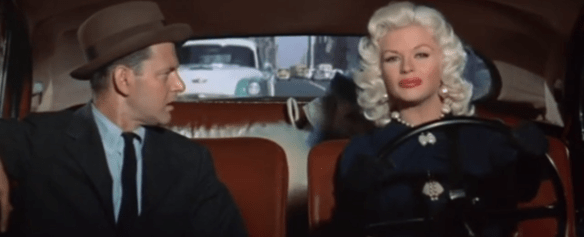
Tashlin in writing the script and directing has given the film a truly inventive lifeblood which is part satire, part romance, and all comedy in the traditions that he knows best — namely visual comedy. There’s the pomp and circumstance of getting a key to the executive washroom or the appalling unsightliness of some of the garish interiors, not to mention Jayne Mansfield’s prized poodle.

It seems important to start with Rock Hunter since his name is in the title of the picture. Rock (Randall) is a middle-range partner in a New York advertising agency. His aspirations aren’t too grand. He’s in love with his secretary and hopes to be wed soon and his niece lives with him. That’s important.

But everything changes the day that this little man has a big idea that could propel La Salle Agency to the top of the game. Why not get that beloved bodacious personality Rita Marlowe (Mansfield) to promote their “Stay Put Lipstick” brand with her trademark “Oh so kissable lips” and shrieking sigh?

The only problem is getting in contact with the clandestine star who has gone into hiding following a nasty breakup with her latest boyfriend. Although it doesn’t prove overly difficult as Rock has a key in — his niece is the president of the Rita Marlowe fan club and that means something.

Soon he finds himself face-to-face with the superstar lounging in the bathtub on the telephone with her old beau. At the behest of Rita, Rock masquerades as her boyfriend over the phone (as the first living, breathing male who walks through the door). Then she proceeds to give him a smooch on the lips that causes the already popped popcorn in his back pockets to pop again. Amazing.

Rock Hunter’s a little woozy from the experience bringing traffic to a standstill as if he’s just seen a goddess or something. Tabloids get a hold of it and the media frenzy kicks up the dust once the news breaks out about “Lover Doll” aka Rock Hunter who watches his stock skyrocket overnight. What makes it even funnier is the fact that this is no Conrad Birdie. This is a nobody middle-aged executive played by the always lovable often despondent-looking Tony Randall.

His new life involves being accosted in back alleyways by teenyboppers and a row of new public appearances with Rita in order to get her involvement in backing the company’s product. It’s all in a day’s work but to say it strains things with Jenny is putting it lightly.

The narrative is chock full of shameless plugs and bits of self-referential commentary be it Jayne Mansfield’s own The Girl Can’t Help It (1956), Elvis’s “Love Me Tender,” and the romantic hit Love is a Many Splendored Thing (1955). Meanwhile, Rita reads lurid Peyton Place in the bubble bath and the inimitable Groucho Marx makes a prominent cameo as Rita’s long lost love. The best phrase by far is the liberal use of “The poop!” It pretty much sums up what you are in for.

Undubitably this is Mansfield’s most notable role and it works because she’s really playing a version of herself, the tabloid icon that she was and one of the purported answers to Marilyn Monroe’s movie stardom. As such she does a fine job with the wacky comedy and it’s true that she too exudes that certain brand of innocent sexuality though she never was in the high caliber films that Marilyn could claim.

Wisecracking Joan Blondell is at it as well as Marlowe’s assistant who still finds a moment or two to wax philosophical about lost love. Tony Randall is just as enjoyable as he’s ever been except he’s a lead instead of a third wheel which proves to be a delightful change of pace.

Possibly the best gag involves an extended intermission or commercial break with Randall lauding the remarkable invention of television which subsequently turns him black and white and cuts off most of his face in its limited 21 inches before readjusting and being overtaken by static.

In just a few seconds of film Tashlin effectively shreds the industry that was slowly taking over for sheer convenience and making the picture shows of old a near dying breed. And of course, not to be outdone there has to be some lip service paid to radio enthusiasts who in themselves were all but dead. Here is a movie that doesn’t take itself too seriously and that plays to its strengths.

3.5/5 Stars

It Started With Eve (1941)

it started with eve 1.png

We enter a newsroom that feels like it could be ripped out of His Girl Friday (1940). The editor is lining up his copy for the following day with a big front-page spread on the renowned millionaire Jonathan Reynolds (Charles Laughton). They just need him to die and they can print it.

Of course, at this point, it looks like it’s all but in the books. He’s a very sick man, on his deathbed, straining at what look to be his final gasps of air. His son (Robert Cummings) is rushing away from his vacation to be at his father’s side before it’s too late. The doctor fears the worst but his son makes it back from Mexico City in time to catch his father.

They share some tearful exchanges. Then, comes the fateful moment where his dad asks to meet his new fiancee. Wanting to honor his father’s last wish, Johnny goes pell-mell to his fiancee’s hotel but she can’t be found anywhere and he tries everything.

In a frantic moment of duress, the man makes a decision that will forever alter the course of his life. A hatcheck girl at the hotel (Deanna Durbin) becomes the perfect stand-in for his fiancee on a dime.

Frantic, he promises her 50 bucks and takes her to his father’s bedside. They share a poignant exchange and Johnny thanks her for her services and thinks that is the end of it — of his father and his relationship with this woman — but he’s terribly mistaken on both accounts.

Against all medical opinions of the family doctor (Walter Catlett), Mr. Reynolds makes a miraculous recovery and is back to his old ways craving cigars and steak for breakfast. It’s joyous news until he wants to have breakfast with Gloria Pennington whose actual name is Anne Terry.

Now his son is in a jam and he pulls Anne away from her train to Ohio to keep his father happy by maintaining the charade. Now he’s in deeper than he wants with one “fiancee” hitting it off with his father and the other with her mother waiting to be introduced to Mr. Reynolds. Needless to say, the local bishop (Guy Kibbee) gets the wrong idea about the boy he has known from youth who has become a degenerate philanderer supposedly keeping company with two different women.

Johnny could care less. He’s still in a bind and his main goal is to get everything patched up by paying off this girl again and enlisting the help of the doctor to introduce his fiancee into their home very naturally before the big party his father is throwing. It’s easy enough to tell his father that they have a lover’s quarrel and the “engagement” is off.

And yet, Anne doesn’t let it go that easily and she returns to profess the error in her ways and make up. Because now she has a larger stake in this new relationship. She’s a struggling musician who has heaps of talent. It’s just that she’s never gotten a chance to share it with someone important. This is her one shot at a big break. But far from being an opportunistic girl, she also adores this man and to some extent likes his son for a certain amount of sensitivity that he has.

Durbin and Laughton are brilliant fun together because he remains the crazy glue that holds this “romance” together. While things look like they have run their course and Johnny has salvaged everything the way they were originally meant to be, Mr. Reynolds goes off script and does the unanticipated, he drops everything at his gathering to see Ms. Terry.

But of course, we already know they aren’t a real couple and so it makes for an initially awkward and then a surprisingly jovial evening, finished off with a lively round of the conga. Mr. Reynolds succeeds in almost giving his good doctor a heart attack and sends his son for a real loop. In another fit of Deja Vu, Johnny races after Anne’s departing train to catch up with her once more. This time for good.

Charles Laughton is undoubtedly the M.V.P. of the picture providing a delightfully grouchy yet lovable turn hidden behind a mustache and a happy old boy persona which channels a bit of a naughty schoolboy at that.

Cummings has a knack for the clumsy, flustered comedy that comes as a result of his initial bumblings. He and Durbin work through the hilarious miscommunications that ensue beautifully as standard procedure in such a screwball musical. Instead of kissing like normal people they giggle, cackle, pinch, bite and do about everything else including play fight around the interior study. But if that isn’t love then I don’t know what is.

4/5 Stars


Three Smart Girls Grow Up (1939)

Three_Smart_Girls_Grow_Up_poster.jpgThe Universal dream team of Deanna Durbin, producer Joe Pasternak, and director Henry Koster are back at it again in this follow up to the wildly popular comedy that propelled Durbin to international stardom.

The Craig sisters are back too and this one begins with a unique and rather hilarious opening title sequence as our three girls now grown up, as the title suggests, prepare their salutations for meeting the governor.

Most things haven’t changed as Penny (Durbin) is precocious as ever. The family seems joyous given the previous film reunited their estranged parents once more. But for some reason, it seems the men they were engaged to didn’t remain (conveniently for the sake of the sequel).

So the film proposes another slightly maudlin very straightforward problem that Penny puts it upon herself to solve: Her big sister is in love with one man, the young man who is just recently engaged to be married to their other sister. There’s nothing for it but to find another man who will be a distraction. Never one to be outwitted, Penny introduces an eligible man into the equation, an older musician (Robert Cummings) from the conservatory she practices at under her teacher (Felix Bressart).  But her concerned parents get the wrong idea with her bringing an older man around the house for dinner.

They forbid their daughter from going to her music lessons now. By the time she figures out what has happened, the fateful day of the wedding is almost upon them and so she does the only thing she can think of — go to her father — the same father who has been drowning in work as of late. Like any good father, he comes in clutch when it counts. The happy ending kept fully intact.

Ironically, Robert Cummings makes a passing remark about how he has no girlfriend and he’s waiting for Penny to grow up. Funny because he and Durbin would be paired in It Started With Eve (1941) just two years later as romantic interests.

Durban, on her part, was christened “Little Miss Fix-It” for these roles and though she was beloved for such fare there’s no begrudging her for wanting more meatier and mature parts. By and large, she wasn’t all that successful in getting the type of roles she wanted and it led to her retirement from acting in 1949. She would never make another picture after that and proceeded to live a life of relative seclusion with her husband in France.

It’s easy in this specific instance to make parallels with Greta Garbo’s own trajectory from top of the world to self-prescribed anonymity.  Except Durbin did it at an even younger age. There’s no overstating her importance to an entire generation of filmgoers. There’s no greater compliment than the attributed fact that Winston Churchill so loved Durbin’s films he would play them following British victories during the war years. She certainly does give you something to stand up and cheer about with her voice and a sparkling countenance alone.

3/5 Stars

Three Smart Girls (1936)

three smart girls 1

Here is a comedy born of a certain time and age when they made such trifles. It’s the kind of plot where you can read it off in a single sentence but it’s further cushioned by cutesy moments and musical asides. Where growing girls say “Mummy” and “Daddy,” always fussing and screeching and bickering over this or that.

It could all get tiresome and too sugary if it weren’t redeemed by how very pleasant it is in reflecting adolescence. Yes, you could even call it absolute claptrap but there’s something special thrown into the concoction: Her name is Deanna Durbin.

Perhaps I am overstating her significance and making her stake larger than it possibly could be but I’d like to think on the contrary. Deanna Durbin is presented as “Universal’s newest discovery” and what a find she was. Beginning a run of many successful box office hits continuing up on through the war years, she was a beloved part of Americana.

Here was a teenage girl who with a voice and a carefully groomed persona helped salvage an entire studio and became so well-known and admired that by 1941 she would be the highest paid woman in America and the entire world, bar none, at the age of 21 (Look it up for yourself but don’t quote me).

Three Smart Girls is a film that means the very best and Henry Koster guides it along this path of sunshine and cheerfulness. There are numerous moments that say as much as Penny (Durbin) floats along with her two sisters (Barbara Read and Nan Grey) on a lake riding lazily on their sailboat in Switzerland while she knocks out a tune. Maybe it’s the girls squealing as they make use of their father’s exercise equipment and we watch Durbin repeatedly swing toward the camera until her face completely fills up the frame.

But I’ve put it off long enough. Here is my one sentence of exposition. The Three Craig girls make it their mission to go to New York and break of their father’s (Charles Winninger) engagement to a young gold digger so he can get back with their mother (Nella Walker). It’s a noble project and it also has the touches of an early Parent Trap (1961) which takes obvious inspiration from this picture.

The girls bring their flurry of teenage drama into their father’s bachelor lifestyle as well as subsequent heartbreak and tears that do finally give way to marital bliss (of course they do).

There seems to be a paradox to Deanna Durbin’s appeal. She had the feisty sass of a younger girl and the voice of an older one that sweeps you off your feet. It’s the kind of voice that I must admit sounds dubbed at times. That cannot conceivably be her singing!

She makes a line of hardened cops do a double take when she breaks out into an opera number in the police station trying to pull off a little white lie that’s she’s a Parisian songstress. It almost works too.

Ray Milland is wonderfully witty as the rich young gentleman who finds himself pulled into the girl’s charade on a miscommunication. In fact, it’s easy to prefer him in these lighter roles to his more dramatic turns that sometimes leave him looking like a stuffy cad. He can be quite charming actually. Mischa Auer also shows up but unfortunately isn’t given much to do.

But in the end, this evolved very much into Durbin’s film anyways and she does well to oblige the audience while her sisters are happily saddled with eligible young men and her parents get back together. They’re all a happy family again and there Penny is standing at the center of it all smiling broadly.

3.5/5 Stars

My Favorite Blonde (1942)

my favorite blonde

Bob Hope was one of the 20th centuries greatest personalities but sometimes his pictures weren’t always up to par. The most obvious exceptions would be the majority of the Road pictures with Bing Crosby, The Paleface films with Jane Russell, and this fun addition pairing our beloved funnyman with the divine Madeleine Carroll.

It’s not quite a Hitchcockian thriller but Madeleine Carroll provides an icy blonde secret agent while Bob Hope is in usual form with his typical smart-mouthed nitwit characterization that garners our love.

Carrying over some of the world from The 39 Steps (1935), enemy agents are looking to intercept invaluable secrets that are needing to make their way to America in the hands of Karen Bentley (Carroll). Her partner has already bought it and she has two tails observing her every move.

The place she chooses to hide away at is the backstage of a vaudeville joint where Larry Haines (Hope) is just finishing up with his penguin partner Percy who has a big contract coming in Hollywood. Larry has been included on the bill as an afterthought.

But all that is put on hold when this beautiful, mysterious woman wanders into his life. He gladly entertains her company and yet he doesn’t know what else comes with that proposition. In typical fashion, Hope’s character always bites off more than he can chew whether it be villains or women. He’s got no answer for either.

A near wordless confrontation occurs on a train as the girl hides and Hope sits with some leering thugs in the club car, filling the moments with nervous comedy bits.

His answer for Ms. Bentley isn’t much better. It’s the same type of patter that would be recycled in My Favorite Brunette (1946) or other Hope sketches where the woman plays it straight, seducing him and he’s outright oblivious from the first advance. He has no defenses to speak of. A few strands of cajoling baby talk and he’s putty in their hands.

But the gal gives him so many mixed signals he’s libel to run out on her cockamamie ways or let her have it (Yeah the little man is hurt and if the little woman doesn’t watch it she’s going to get a little hit in the head). Still, they somehow keep winding up in the same places. Perhaps it’s because she’s conveniently hidden vital international secrets under the lapel of his coat.

He somehow feels like the only normal fellow in a screwed up world but if everyone else is playing cloak and dagger games, that becomes the new normal and he begins to look all the crazier turning increasingly more paranoid due to the various antics around him. Maybe he doesn’t have all his buttons after all. If he’s our new archetype for the man-on-the-run, then I’m Cary Grant.

Some throwaway expositional dialogue over the film’s MacGuffin gives Hope ample time to retort with a joke about his ring being filled with Benny Goodman and his band (They had to drop a clarinet player. It was a little crowded). That exact moment exquisitely sums up why the film works. There’s the spy thriller arc that is continuously deflated and lampooned by Hope’s particular brand of comedic zingers.

An ingenious ploy to escape an apartment complex crawling with baddies leads to a rampage to trash the joint while drumming up some marital pandemonium that’s bound to bring some police. It’s sheer comedic chaos and…it works. Ironically, Cary Grant would reuse a similar gag in North by Northwest (1959).

Another moment Hope is taking on the mantle of a baby specialist, Doctor Higbie, much in the way that Robert Donat joins a political rally in The 39 Steps. Both men pull quips out of their backsides to stirring results on their way to their next juncture on their ever-changing itinerary.

Thanks to an absolutely nefarious move by that criminal mastermind Gale Sondergaard, a murder is called in by the real culprits and pinned on our heroes. But Hope continually proves his faithfulness or at least how much he likes the blonde with the face and a certain je ne sais quoi. And that’s part of Carroll’s allure but far from being a glamorous Brit, she proves just how much she can pull off the more screwball elements that Hope already seems at home in.

The home stretch leads to California with the murder rap still hanging over their heads and a funeral parlor in their sights. To get there it took them a bus, a plane, a winking Bing Crosby cameo, and a few watermelons a piece.

Like the best classic thrillers it’s not so much the outcome but the road it takes to get there that we relish the most. This one has a lot of lovely inane speed bumps that perfectly accentuate the utter contrast between Madeleine Carroll and Bob Hope’s character types. They actually end up making a witty romantic couple and Hope as always gets the last laugh in on camera.

4/5 Stars

Here Comes Mr. Jordan (1941)

here comes mr. jordan 1.png

I’ll lay my cards right on the table. I’ve never been a huge fan of Robert Montgomery. He just doesn’t have a charisma or a delivery that I much care for so as far as carrying a whole picture I’m not quite sold.

Still, with Here Comes Mr. Jordan, it all seems to work and it’s funny and clever in ways that would cause Hollywood to strive for storytelling that looked to think outside the box. Of course, the irony is, a new box gets created for people to work inside — a new style or sub-genre — but there’s little question that Here Comes Mr. Jordan feels very much the first of its kind. If not, I stand corrected.

It’s a story effortlessly built around quirky inventiveness. There are fantasy elements here that feel very much akin to the likes of Stairway to Heaven (1946), Random Harvest (1942), and Heaven Can Wait (both films from 1943 and 78).

Heaven is depicted as a kind of celestial processing center where human beings are plucked away from their life on earth to begin a new afterlife. Through intervention, by angelic beings, lovers can all but forget one another only to have some deja vu feeling that they’ve been together before.

And further still, the ideas of the heavenly and angels entering into everyday life soon became a staple of 40s and 50s Hollywood much in part to this picture. Without it, there’s a possibility that classics such as It’s a Wonderful Life (1946) and the Bishop’s Wife (1947) would not have been conceived in their most remembered forms. After all, what would those films be without Clarence or Dudley? Or what would this one be without Mr. Jordan for that matter?

Elaine May must have thought the story was ripe for more exploration too when she penned Heaven Can Wait which expanded a great many of these ideas only in a different context.

Unequivocably this rendition proves to be far from a one trick pony, taking a main conceit that admittedly seems absurd at first — even gimmicky — and turning it into a fantastical comedy with continual possibilities.

Imagine just for one moment that a feisty boxer, Joe Pendelton (Montgomery), preparing for his next big bout flies to the site of the fight only to have his plane malfunction en route. He looks like a goner but he’s pulled from the aircraft too soon by 7013 (Edward Everett Horton). In fact, it’s 50 years too early, his date with the afterlife is not until 1991 (In case you were wondering, Montgomery actually passed away in 1981). Being the bullish personality that he is, Joe’s not going to sit by when he had such a good thing going on earth.

The genial Mr. Jordan (Claude Rains) grants his wish and inserts Joe back into life but they must find him a new body — you see his previous one has already been cremated which makes for added complications.

We plot his journey between two distinct individuals and their bodies and aside from the opening plane crash, a few puffs of smoke, and a few parlor tricks, the film doesn’t rely too heavily on any amount of special effects. For all intent and purposes, things are normal as they’ve always been. It’s just the parameters that have changed. Namely the fact that Joe can see Mr. Jordan and no one else can. First, he’s Bruce Farnsworth formerly a crooked magnate who was murdered in his bathtub by his wife and her lover.

Boy, are they surprised when he turns up again. Mr. Jordan and the audience see Montgomery but the others see and hear the man that they think they’ve done away with. Still, coaxed by Mr. Jordan, Joe or Farnsworth, turns this man’s life around, taking ownership of his past indiscretions and helping the father of a young woman (Evelyn Keyes) who was accused of fraud.

here comes mr. jordan 3.png

Meanwhile, Joe, err, Farnsworth still has his sights on his previous shot at the boxing ring. It all comes off rather odd to those who used to know his alter ego but he calls up his old coach Max Corkle (James Gleason) and he’s finally able to convince him of his true identity due to his beloved saxophone always in tow.

Finally, it looks like he’s on the road that he wants but alas complications ensue. He finds himself falling for Ms. Logan and circumstances are such that he must find another body. He settles on a straight-arrow named Murdoch and subsequently gives the fighter a second chance in the ring while hiring on Max to be his coach so he can still actualize his dreams.

Mr. Jordan leaves Joe in this moment, seeing he has a version of the life he always wanted and the celestial being conveniently removes all of Joe’s memories of a previous life. Of being a man named Joe Pendleton. It makes for some goofy comedy with Corkle and supplies one budding meet-cute with Ms. Logan.

While the theology is probably sketchy at best, it’s a good-natured, comic interpretation of the afterlife that serves the world of the film well. The only thing in question is the ethical nature of angels removing human memories but surely Claude Rains knows what he is doing.

James Gleason is an absolute riot as the one human privy to the whole gag only to look like a complete nutcase when questioned by anyone else who is “normal.” He easily puts you in stitches and Edward Everett Horton has his flustered indignance down pat. He made a career out of it after all.

4/5 Stars

Imitation of Life (1959)

220px-Imitation_of_Life_1959_posterWhen I was watching the film I distinctly remember one instance I threw my head back in the air and just smiled to myself. How I love Douglas Sirk. He gives us something seemingly so superficial and decadent that plays so perfectly into those expectations and simultaneously steamrolls them with a not-so-veiled indictment unfurled on multiple fronts.

This was Douglas Sirk’s final film in his U.S. career. It’s another gorgeously rendered picture. A harsh social satire of the ambitions of an American Dreamer but also the inherent fissures that run through our society to its very roots. These issues have hardly changed with time or if they have changed, it’s simply the same problems given a facelift. The core wounds remain the same.

Imitation of Life is a story that starts in New York, of all places, at the beach. For the first time, Lora Meredith (Lana Turner) crosses paths with the kindly, God-fearing Annie Johnson (Juanita Moore) who looked after Lora’s daughter when she got lost in the crowd of vacationers.

In less than a comfortable position herself, Lora nevertheless offers her home up to Annie and her fair-skinned daughter Sarah Jane who strikes up a fast friendship with Susie while showing early signs of vehemently despising her African-American identity.

Those are the core aspects of the story as the glamorous single mother follows her aspirations to star on Broadway first with commercials and then small parts that lead her to something more. She finds an agent (Robert Alda) and ultimately earns the respect of a noted playwright (Dan O’Herlihy) who soon writes all her roles. The demands on her time mean that a fledgling romance with a photographer  (John Gavin) falls to the wayside and she hardly sees Susie.

Meanwhile, Annie remains a faithful friend by her side who keeps her house in order and looks after the girls as they slowly begin to mature into womanhood. And as they grow into women their own personal crises come to fruition. Sarah Jane (Susan Kohner) continues to try and pass as white while denouncing her mother. It gets so bad that she leaves home and changes her name to perform at dive bars where her mother hopefully won’t follow.

Susie’s (Sandra Dee) problems are of a different nature. She feels so alienated from her mother, the lady so often absent in her life, that she decides to attend college far away in Colorado. When Steve Archer (Gavin) drifts back into Lora’s life things are complicated by Susie’s obvious crush on him.

On both fronts of mother-daughter relationships, the film showcases its many themes playing out in vivid fashion. In fact, Imitation of Life feels all too resonate given the state of affairs in Hollywood and our world right now.

There’s this ongoing temptation to cheapen who you are for the sake of success. In this case, it applies to the theater and the career of Lora Meredith (Turner) but it could be in, let’s say, Hollywood or the corporate sector or any other endeavors. The jobs change but the people do not. Where you are forced to feel awful for not lowering yourself to other people’s level of sleaze and impropriety.

It’s a film about the fame monster and the industry dominated by a patriarchy where you are coaxed into making certain concessions so that people will like you and give you what you want. Just to maintain a career and your ambitions, your familial relationship, in this case, with a daughter is led to the point of deterioration. To this day, money and opulence, nice things and social standing, do not make up for an actual relationship. There’s no contest.

Ironically, only after the good fortune strikes and you have years of success do you begin to realize amidst the rush that the pinnacle has been reached and still something is missing.  That’s Lora’s realization. But just as fervently this can be a film of idealism and dreams. Seeing things the way they are and making them more and more into what you want them to be. Being the change. That’s Annie’s part.

It is also a film about racism — a fixture of society — and a troubling one that is still opening up innumerable wounds in the fabric of our society and they are wounds that must be acknowledged. There is a painful scene that while a girl is being berated and slapped by her alleged boyfriend a playfully jazzy score dances in the background and it’s this disconcerting contradiction — the kind of contradictions that are often easy to pick up on if you’re willing to see them.

People loathe themselves for the color of their skin and the stigma society puts on their personal identity. Someone’s life is driven by shame instead of an unswerving pride in who they were created to be. And whether we like to admit it or not, we’re all part of the problem where being white is seen as being normal or the status quo or what have you.

One of the most striking moments in the film for me is when Annie is recounting the Christmas story to the girls and they ask a very honest question. “Was Jesus White?” or “Was Jesus Black?” Because it seems like a question that devises some way of relating to this historical figure. But it also forces you to see the astronomical error in such ideologies of a  “white savior” or a “white man’s burden.” It simply cannot work. Nor does it work the other way.

Of course, as Annie sees so clearly, neither of these distinctions matter or any type of distinction because this was not a figure concerned with race or wealth or gender or respectability or any of that, at least in the sense that it holds importance to us. For him, as she sees it, it seems to have no negative effect on the relationship you could have with him. It doesn’t seem to matter and yet simultaneously it does immensely. Because it reflects our unique human identity.

Annie reflects those same types of ideals all throughout the film. You might take aim at her for being subservient or have qualms with something she does but it’s hard to question her sincerity or goodness. She has a prodigal daughter but just like the parable her maternal arms are always open and her daughter is never too far away for her to love Sarah Jane unconditionally even unto death.

I must admit it rubbed me the wrong way because Annie felt like yet another iteration of the mammy stereotype. One of Sarah Jane’s colleague even notes, “You had a mammy,” led to believe that the woman was simply an old housekeeper. But that’s the key. Annie Johnson is actually her mother. Aside from adding a searing undercurrent to the scene, it confirms she is not just a sideshow attraction for some southern charm. She is a parent and a friend and a person. In fact, the best scenes in the entire film belong unequivocally to Juanita Moore and Susan Kohner.

The original story the film is based on came out of a very different time in American history during the 1930s. Here it is updated and aware of the changing mores and difficult roads still to traverse thanks to the likes of Thurgood Marshall and his landmark case Brown v. Board in 1954 and the increased rumblings of the Civil Right Movement with the Bus Boycott and other peaceful initiatives spearheaded by Dr. King.

In the film’s closing moments Mahalia Jackson brings down the Lord’s house with her mournful dirge for Annie. And it is a bitter, heartwrenching moment of agony but that is not the final word. Because Annie was a tremendous person with an extravagant capacity for love.

Like Dr. King once orated in vivid Biblical imagery, “[I have gone] up to the mountain. And I’ve looked over. And I’ve seen the Promised Land. I may not get there with you. But I want you to know tonight, that we, as a people, will get to the promised land!” That is the hope. Even in this embittered world of ours there is still something to be longed for.

4.5/5 Stars

Tarnished Angels (1957)

tarnished angels 1.png

With the name Douglas Sirk, Technicolor opulence no doubt springs to mind but his black and white pictures are no less diverting and still extremely attractive to look at with photography once more courtesy of longtime collaborator Russell Metty.

The cinematography is crisp monochrome filmed in voluptuous cinemascope. It’s hardly as flamboyant as we are accustomed to but then again, The Great Depression was far from a decadent time and the visuals suggest that malaise especially in the film’s latter half when the cracks and the dirt begin to show a little more.

The inspiration for the narrative’s morality play comes from a William Faulkner story, Pylons, an aptly chosen title if it weren’t true that “Tarnished Angels” is more in line with Sirk’s oeuvre and the director glides forward with his usual flair.

The year is 1932 and Mardi Gras festivities seem to be taking over the town as a traveling airshow makes its latest pitstop headlined by those intrepid barnstormers WWI flying ace Roger Shumann (Robert Stack) and his wife LaVerne (Dorothy Malone). Subsequently, the stars involved make this picture a reunion of the previous year’s success Written on the Wind (1956).

Tarnished Angels is a picture that documents the morbid curiosity that often overcomes humanity with such feats of insanity as Shumann does crazy eights in the sky and his wife performs perilous stunts as a daredevil parachuter. The locals eat it up until it all goes terribly awry and then they want nothing to do with it.

A horrendous crash during the gripping race sequence is captured in surprisingly graphic fashion as the planes zoom around the course and from that point on the film goes into a tailspin that the characters can never really recover from.

The sheer pandemonium is underscored by the fact that the announcer continues to entreat the viewing audience to stay off the field and yet in the mayhem no one pays him any heed. It’s their gut emotions that are driving them now, not their rationality.

But despite the tragedy, Shumann is desperate to have his wings back and he reluctantly goes to veteran backer Matt Ord to pilot his plane. His wife agrees to go to the man’s apartment. Although it’s never explicitly stated, we know what it is for. It’s written on the faces of every man who is complicit or privy to the incident and stands by complacently.

Newsman Burke Devlin (Rock Hudson) finds himself enthralled by Roger’s story as a fallen man while faithful mechanic Jiggs (Jack Carson) is about fed up with all that Roger puts LaVerne through and yet she goes to Ord and they do little to stop her.

But it’s true that Devlin also finds himself falling for the other man’s wife after she gives him insight into her life thus far. An intimate moment is burst in upon by a drunkard in a skeleton mask. You have to see it to understand the utter tension that is felt and the collected sigh of relief because we are part of this.

But this is far more than a film about an illicit affair or a man who doesn’t know how to love his family. It gets far more tragic than that and Sirk dramatizes it with a pair of images. A boy helplessly trapped on a carnival ride, a mother restrained by local bystanders, one disconcertingly still wearing a mardi gras mask. And tragedy strikes again with a second crash landing.

Shumann was a  man so obsessive with flying that it literally drives his entire life. He cannot love his wife and child as much as he relishes being in the air performing daring feats of aerial acrobatics. Take away his wings and it’s like a man addicted needing his fix. Driven to such levels of indelicacy he willingly sacrifices family or, more specifically, his wife for a flying machine. But in his final moments for a brief instant perhaps he rises above his past failings to shed his former self and show something else.

Rock Hudson gives a drunken monologue in the newsroom that silences any dissenters and naysayers at least for a minute because he developed an almost intimate relationship with this man’s life.

I can’t help but draw up comparisons between this picture and Billy Wilder’s Ace in the Hole (1951). Distinctively both films use journalism and a member of the profession to get at the material but their actions couldn’t be different.

Certainly, both are interested in stories. They are drawn to the spectacle. In the earlier film a miner is trapped in a mine shaft and in this picture Devlin is intrigued by that crummy carnival of death as it is so eloquently christened. But Hudson character hardly seems to be taking advantage of the situation because he offers up his home and proves himself a stalwart defender of children and women.

If he’s interested in a mere story at first, ultimately the whole ordeal takes hold of him so personally that it transcends any of that and proceeds to overshadow everything else. Kirk Douglas in his role might provide a harsher indictment of journalism’s capacity for creating a media circus. Sirk’s film is an equally telling portrait of human frailty as much as it chronicles callous indiscretion.

4/5 Stars