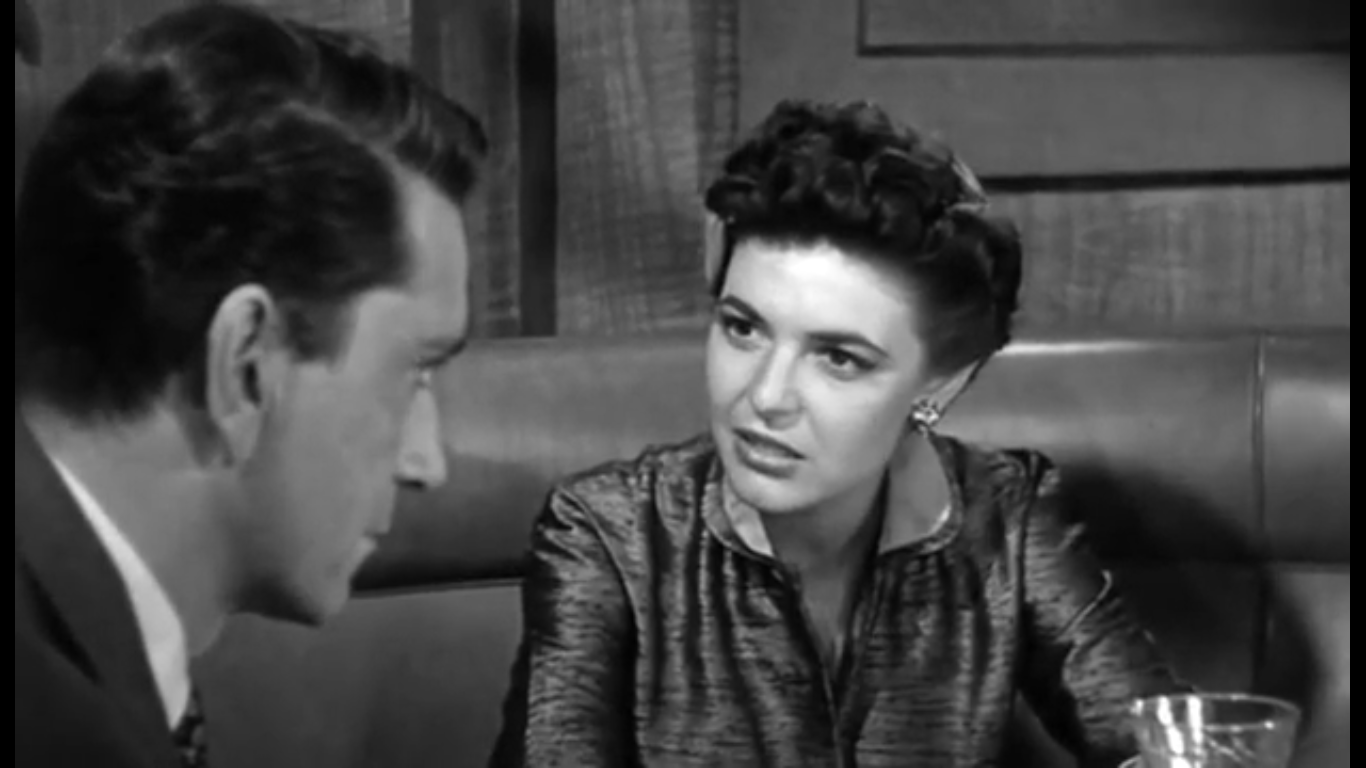
Shield For Murder (1954): Edmond O’Brien Gone Bad

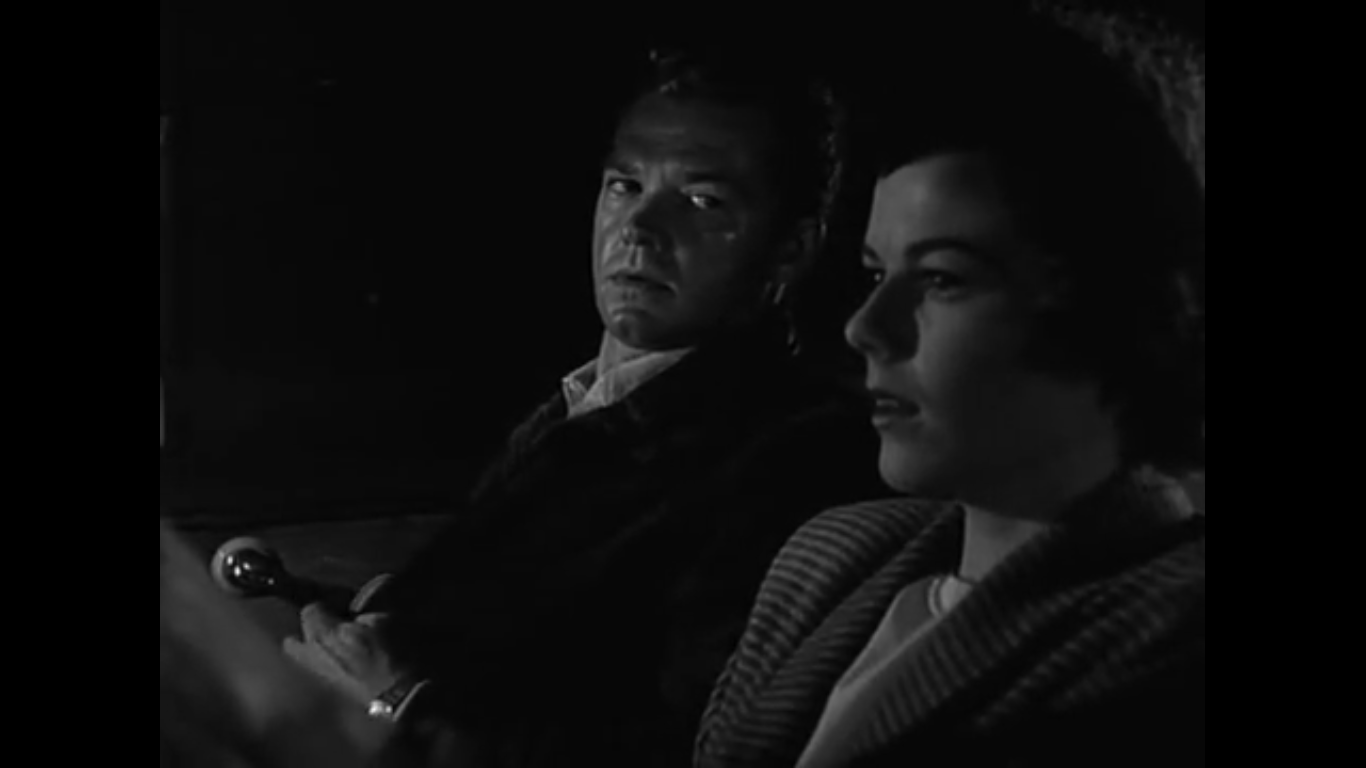
In a movie like 711 Ocean Drive, Edmond O’Brien proved himself capable of being a cad over the course of his performance. With Shield for Murder, there’s no buildup or pretense. He establishes himself as a stone-cold killer right from the outset before we even get a peek at the credits. It’s a tough, uncompromising introduction and to his credit, he sells out to make his role of Barney Nolan one of his most memorable.

Having seen a decent number of his performances, I consider this a compliment because more often than not, he turned in spirited even gamely performances. Whether starring in B-grade features or supporting in A-listers, he had a knack of bringing something enviable to his parts — something you don’t soon forget.

In Shield for Murder, he’s a veteran cop with 16 years on the payroll. One of his colleagues (John Agar) is the first to the crime scene, and he gives Barney the benefit of the doubt because he owes the man his life. In truth, he idolizes him, and for very good reason. Barney’s the man who picked him off the street as a boy and straightened him out. You can’t just overwrite that history in a matter of minutes.

For the time being Barney is in the clear. After all, he’s on the side of law and order. At the police precinct, Emile Meyer brings a level-headed, no-nonsense stability to the role of the police chief. An in-office journalist provides a worm’s eye view of life inside the station’s walls. Being a veteran on the beat, he holds a jaundiced eye and remains skeptical of the crooked cop when everyone else believes in his integrity.

If noirish pictures require corruption and duplicitous activity in the shadow hours, then there also seems to be a prerequisite for female counterparts. The way the camera lingers over a scantily-clad Marla English looking herself over in the mirror almost feels indecent. It’s like another leering face.

What it does do so effectively is create a kind of instant juxtaposition. Because Patty Winters is the picture of innocence. English who was only 19 at the time, has such a warm face and this moment suggests a hint of insecurity more than any amount of vanity.

When we find out that she’s Barney’s girl, suddenly, their attraction fits together, and we can understand how they gravitate toward one another. They both hold something that the other does not. Even as her jealous beau orders her to give up her spot as a cigarette girl, he whisks her away to a model home.

Barney shows it to her proudly. It’s pre-furnished and the kitchen is full of all the latest appliances for modern living. They go to the master bedroom. It’s almost scandalous again, but they are so genuine and happy. This is the very evocation of the 1950s American Dream in suburbia. While he’s not rich, he’s a proud man. The money he acquires and buries on the premises are so he can take care of her. Never mind how he got it.

And yet that’s just it. If the pre-credits are like a violent sock to the gut, providing a first impression of this man, then all the humanizing events that follow cannot totally redeem his character. Surely there is a sliver of good in him. He hasn’t always been this way, but there’s also a sense it cannot make up for his sins.

First, it’s the bookmaker he shoots in the back. Then, it’s the deaf and mute witness left for dead on the stairs. These moments punctuate the story, and they act as staves between Barney and his friends. He’s driven away from them — holding secrets from them out of necessity.

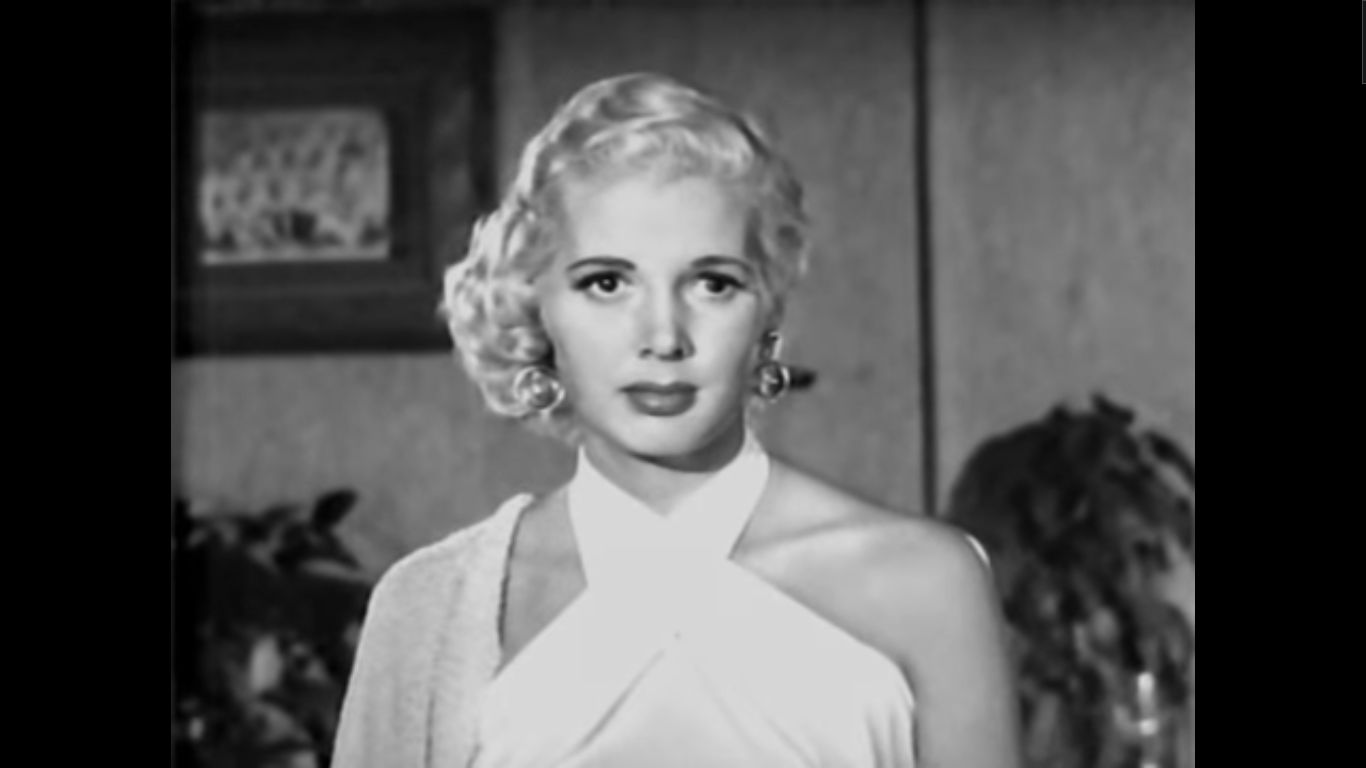
In one memorable extended scene that feels a bit like an aside, Barney sits at the bar downing drinks. There’s a platinum blonde sitting nearby, who doesn’t speak for a moment. Carolyn Jones plays the woman, and she’s an effective foil for Patty — an alternative for the moment. They share a Spaghetti dinner, except Barney isn’t hungry. Instead, he pummels the two tails a local kingpin has set loose on him and leaves the family joint in a shambles.

The final act can only go one direction, and it’s the road of devastation. He becomes a wanted man on the run from his own colleagues, and the man leading the investigation is his best friend; no matter how uncomfortable the current situation , it cannot be any other way. It’s too late. Out of desperation and fear Barney wants to take Patty away. She doesn’t recognize the gravity of the situation. She becomes emotionally traumatized as he flees the scene.

Everything choice going forward only buys him more time. He dons his old policeman duds as a disguise. He seeks refuge with Richard Deacon, who’s hardly the criminal type. He’s busy poring over his academic textbooks as the desperate cop looks to broker a trip out of the country.

I’m pleased to say the finale actually works a bit better than the crescendo of 711 Ocean Drive, if only for the fact it localizes the action and makes it more accessible to all of us. We are able to understand the threat of the gunfight in such an intimate and ordinary setting. He has it out with a gunman at the Union Heights indoor swimming pool in a sea of shrieking bystanders.

But he must make it to his money at all costs. These final solitary moments we have with him totally crush any idealistic notions of the great American dream in post-war society. It blasts a hole right through the entire thing.

While Shield for Murder is blunt in its symbolism, there’s something rather poetic, even fitting, in how it chooses to wrap up the tragic trajectory of a cop who’s gone sour. He’s the good man — formerly a straight arrow — who watched his dream crumble around him. We see it firsthand. It’s brought on by his own aberrant desires.

However, thanks to O’Brien, it has everything you expect, nay demand, in a gritty crime picture totally immersed in murder and corruption. When the end titles come, they feel earned like the movie has delivered on the fatalism we want. There’s little that pretty or polished about it, and in the annals of noir that’s more than a good thing.

The star makes it more than worth the price of admission (especially in the 1950s). There’s probably not a sweatier protagonist, and in a noir film that plays like yet another compliment. He makes us feel his anxiety as well as his deceitfulness.

3.5/5 Stars

711 Ocean Drive (1950): Joanne Dru and Edmond O’Brien

It serves the filmmakers to begin with an opening crawl about how organized crime tried to halt production of the movie, and they would have succeeded too if not for the bravery of the police on set. Whether or not it’s true, it plays as easy publicity for the film to feed off of. Today it feels needlessly trite.

Regardless, there is no movie without Edmond O’Brien. He’s more than up to the task as an electric wiz who works for the local telephone company. Mal Granger is a fairly likable guy; he’s free and easy with his money when a pal needs some help. In fact, he’s maybe a bit too free. His one vice is the horses, and he and his bookie know each other on a first name basis.

It’s Chippy (I wish we had more movies with Sammy White) who gives him big ideas: he can take his know-how and really go places. He’d be in high demand! Soon the connection is made, and he’s doing a lot of electrical work for Vince Wallace. Barry Kelley was made and no doubt typecast for playing seedy, slightly paunchy shysters. In this picture, he has an army of men relaying all the info from the race tracks.

Granger helps amplify their reach as they build a vast network that radiates out across Southern California. As purely a historical lesson, it is intriguing to watch O’Brien as he unfurls the latest technological gadgetry circa 1950.

They get so successful that the gangster’s legitimate business, Liberty Finance, catches the attention of the police. Soon enough one ambitious telephone repairman will be on their radar as well. Because he’s beginning to realize how important he is — he starts getting ideas of his own — he wants his due.

Although he has some faithful stalwarts around him like Chippy and Trudy (Dorothy Parker), it’s not a benevolent business. Because with every stride he makes, there’s always competition. The film’s next invention is an eastern syndicate run by a slyly imperious Otto Kruger. He moves all the chess pieces without taking part in any of the dirty work. He manages it all quite well with Palm Springs business meetings on the West Coast when needed.

For having prominent billing, and why not, Joanne Dru is quite tardy to the picture. We meet her in a nice hotel bar. She’s waiting for her husband (Don Porter), another underling in the syndicate, who has the task of wooing Granger. Their offer to cut him into their operation also comes with a veiled threat.

He’s not dumb, but he also sees the path of least resistance and with it exponential dollar signs. The pretty girl doesn’t hurt his eyes either. It hardly matters to him if she’s married. He starts shouldering in on the territory with his usual tenacity. It’s what sets him apart and simultaneously never leaves him satisfied.

The most sympathetic characters in the movie, Chippie, Trudy, and Gail, all have a threshold for contentment. Mal will never be satiated, and it’s his undoing. I didn’t note the parallel until this very moment, but he’s rather like King David if only for the fact he covets after another man’s wife and looks to end him. There is no going back.

Taking a page from Hitchcock, we are given a climax at a novel location. Granger tries to flee with his woman while the police pin them down near Boulder Dam. It’s a rather run-of-the-mill conclusion with running around, chasing hither and thither, and plenty of gunfire. It’s been done more expressively, but it gets the job done.

More than anything, we can appreciate the movie as a vehicle for O’Brien, as he was always an integral even ubiquitous noir character rather like Richard Conte. Here he’s given a different angle. We see his ambitions, his avarice, and ultimately, the corruption that overtakes him.

He’s still got a geniality about him and Dru surely helps to bring that out. Still, you’ve probably never seen him like this — at least if you were an audience member in the early ’50s. While it’s not top drawer, for those fond of O’Brien and Dru, it’s worth a look. Within the context of a fairly staid framework, you have characterizations drawing out the most enjoyable elements.

3.5/5 Stars

Killers of the Flower Moon (2023), Martin Scorsese, and Robbie Robertson

We just lost Robbie Robertson and being an avid fan of The Band, I was genuinely affected by the loss. The relationship between Martin Scorsese and Robertson is hardly a secret from The Last Waltz to their many film score collaborations, but Robertson also has Native American heritage through his mother.

He’s not Osage — his mother was Cayuga and Mohawk — and yet there is a sense he’s as close to this material as anything his friend has ever made. The film is instigated by oil gushing out of the Osage land instantly making them the wealthiest people per capita in 1920s America. Robertson’s composition punctuates the moment taking center stage with a driving blues riff. It announces the introduction of the movie onto the scene and Robertson’s influence is felt over the entire picture.

The Osage murders have never been a focal point of history, but thanks to David Grann’s book and Martin Scorsese’s subsequent film hopefully more people become aware of this searing chapter of American history.

I heard Scorsese talking about coming at the story from the inside out, and I think what he means by this is finding the core of the story. He was not interested in an FBI procedural from the point of view of the good guys, although Jesse Plemons shows up about 2 hours in to help rectify the miscarriage of justice.

There’s something more fundamental here. You see it in many of Scorsese’s movies from Goodfellas, Wolf of Wall Street, or any of his gangster pictures showing the traditional villains in an intimate if not entirely sympathetic light. He always seems to return to this because this was his childhood — he grew up in a neighborhood with these sorts. By the world’s standard are they corrupt? Yes, but they aren’t personified evil. They act as complicated characters full of charisma, humor, and whatever else.

It feels like this is his gift as a filmmaker. Because we don’t always like these people, but he was never interested in a black hat and white hat morality. Perhaps that’s why he did not make Killers a more traditional Western because this would not be true to the ethos he’s had since the very beginning.

We meet Ernest Burkhart (Leonardo DiCaprio) as he comes to live with his uncle (Robert De Niro) who encourages him to get close and marry into an indigenous family so he might gain access to their oil head rights. Soon after Burkhart develops genuine feelings for the local Osage Mollie (Lily Gladstone). It’s this weird dance — this strange tension — between a traditional love story and people who seem to be taking advantage of a situation, whether it be a paternal influence or just a twisted, morally bankrupt constitution.

Also, I was considering how the movie does become a kind of woman-in-peril movie like we used to see in Old Hollywood albeit with a slight wrinkle. Because of course, the dramatic question revolves around how all of Mollie’s family members become sick or die under dubious circumstances.

There is nothing to stop the onslaught, and there’s an inclination that Ernest is bringing her downfall even as he seems to want to insulate his wife from harm. He also has no qualms about admitting his weakness for money or further capitulating to his uncle’s bidding whenever he’s called upon. If that sounds needlessly ominous, that’s because it is.

Watching DiCaprio is an experience. I was trying to figure out if he was chewing up the scenery, and yet he makes up for any moment that feels like acting through his utter lack of vanity. He could have played the white knight Texas Ranger, and yet here he is as this money-grubbing ignoramus who fumbles his way through criminal activities while still resolutely loving his wife in his sad and dismal way.

Certainly, it’s richer with subtext, but it requires someone prepared to eschew glamour and Hollywood masculinity. Ironically DiCaprio represents all these things and still manages to upend them so we forget them even momentarily. His hair frames his head like Alfalfa and his lips are almost permanently in a downward pout. We don’t know what WWI did to him only that he has a busted gut, and he’s looking to his uncle for work.

De Niro is such an unsettling figure with his insidious brand of charity-turned-malevolence. King is one of those individuals who claims to love these people and is set up in their community doing nice things for them while simultaneously taking advantage of them at every turn.

He’s not purposefully evil; instead, he feels a God-given justification to acquire their wealth because he is spiritually and racially superior — at least this is what he’s deluded to believe. It’s not spoken so much as felt with every undertone of his being.

It strikes me that Scorsese had Joe Pesci in The Irishman go softer and quieter and he thus became menacing in an altogether new light after years of being mercurial and bellicose. Here De Niro does much the same, toning down his usual fire or even the anger of his and Marty’s youth into something more subtle and still equally effective. It’s a role for an actor who is fully confident in his instrument and his abilities.

It’s this kind of villainy that’s so unsettling because it feels so real and present. It lives in the ambiguity, and it does feel like Scorsese has made a wise film for the 21st century. However, don’t think for a minute that I’m saying that this evil is ambiguous. Much of what we witness is abhorrent, and yet how these people in the same breath can commit murders and somehow live in community becomes the queasy soil we must contend with. There are the active transgressions that feel the most egregious, but there’s something equally pernicious about complicity, sins of omission, if you will.

Lily Gladstone is such a powerful emotive force in this movie because if Leo’s performance is one way, she is his perfect scene partner by maintaining such a calm equilibrium; there’s a regality to her that’s not easy to break and yet she’s not an unknowable stoic. She loves deeply and with Ernest and her family, we see both her affection and her deep sorrow when they are ripped away from her one by one. The movie requires her strength to hold it together and instill it with resonance.

On a side note, there’s a scene early on where Mollie shares a moment talking with her sisters — they’re laughing and observing her man Ernest from a distance. She affectionately nicknames him a “coyote,” but through the whole scene, they laugh and chitchat in their native tongue. There’s something so meaningful about it.

Oddly enough, it reminded me of how John Ford hired the Navajo as extras in The Searchers — a film with an incisive and controversial reputation. I have no way of corroborating this, but apparently, they cursed and made jokes in their native language on camera. Of course, the primary audience in 1950s America wouldn’t know this. Killers of the Flower Moon is a very different sort of movie, and here the Native actors are brought closer to the center (if not entirely) so we all can be in on the joke.

There is an uneasy joke of a different kind when the film’s epilogue is summed up by an old-timey stage production out of the age of serialized radio shows. Normally we see these moments played out in stunted lines of courier text over black, and yet Scorsese and screenwriter Eric Roth make them visual and somehow native to the film’s world.

Until this moment we’re still invested in the story, and it’s difficult to recognize what Scorsese is doing, but he uses the meta moment to comment implicitly on framing such tragedy as entertainment. Isn’t that what he’s doing after all in so many words? If you wanted to be pragmatic, you could make the case he’s created a $200 million project to sell tickets.

However, it becomes more than a technique or an intellectual treatise when he steps out on the stage in the flesh. It’s not merely a cameo, but a cornerstone of the picture as Scorsese himself utters its final lines. There he stands in all sincerity letting the studio audience and all of us know that Molly died in 1937 and no mention of the murders was ever made. They were effectively erased from historical memory by the dominating culture. We’re so good at doing this.

The final shot feels like a Busby Berkeley aerial, but it focuses on the Native Americans pounding their drums in an emphatic ceremony. It’s a drum for Robbie Robertson. A drum for Mollie. And a drum for all the Osages who lost their lives in utter anonymity without justice. I will miss Robbie Robertson dearly, but it’s a fitting film for him to take a bow on. He receives a remembrance in the credits.

If Killers of The Flower Moon is not Scorsese best then it is still a film rich with emotion and deeply important stakes. I’m not sure I’ve ever seen a story put to screen like this on this kind of scale. In his hands, you can sense the care and this means a lot. Somehow he always finds this imperceptible line between the profane, violence, and some core truth. The first two repulse me, and yet in his films, their depiction often leads to an inherent awareness of our broken natures as human beings.

He never asks easy questions and I believe that comes with honesty, and it’s part of the reason he’s still one of our premier filmmakers. He’s still curious and the questions he asks with his films are ones he’s still wrestling with now 80 years on. They’re universal.

4/5 Stars.

Vincente Minnelli Films (1958-62)

Gigi (1958)

Lerner & Loewe’s adaptation of Colette’s Gigi is a picture accentuating the France of Hollywood’s most opulent dreams and confections frequented by the consummate French people of the movies: Maurice Chevalier, Leslie Caron, and Louis Jordan.

Whether it’s Ernst Lubitsch or Billy Wilder or Vicente Minnelli, Chevalier doesn’t change much. He’s convivial with the audience existing just on the other side of the camera. He gives off his usual cheeky, harmless charm that doesn’t always play the best seeing as his first tune is about the litters of girls who will grow up to be married and unmarried young women in the future.

Gigi (Caron) is one of their ilk, a carefree gamine who lives under the auspices of her Grandmama’s house, a startling domicile touched by Minnelli’s charmed palette of deep red.

In some manner, Gigi seems to represent the worst of Minnelli. Yes, it was wildly popular in its day, but all of its manicured embellishment and immaculate set dressings feel mostly fatuous and merely for their own sake. While one can easily appreciate the pure spectacle of the thing, the director’s best pictures show a deep affection for characters.

Here all manner of songs and tête-à-têtes are cheery and bright, while never amounting to something more substantive. It’s easy to suggest the movie revels in its own frivolity. Gaston (Jordan) is a ridiculously wealthy young man and Eva Gabor is his companion, though the gossips get ahold of them. They’re not in love.

Another primary reservation with the picture is how Leslie Caron is summarily stripped of most of her powers. At times, dubbing feels like an accepted evil of these studio-era musicals or a stylistic choice of European maestros. However, in Caron’s case, not only is she not allowed to sing, she can’t talk for herself either (dubbed by the cutesy Betty Wand). I might be missing something, but this seems like a grave misfortune.

You can add to this fact the further grievance she never really has a traditional dance routine, and there’s nothing that can be appreciated about the picture in comparison to the crowning achievements of An American in Paris. All that’s left is to admire is her posture and how she traipses across the canvasses Minnelli has devised for the picture. This alone is hers to control, and she just about makes it enough.

My favorite scene was relatively simple. Gigi and Gaston are at the table playing cards, and they exude a free-and-easy camaraderie. If it’s love, then it’s more like brother and sister or fast friends who like to tease one another. It isn’t yet treacly with romance. Instead, they break out into a rousing rendition of “The Night They Invented Champagne,” which distills its point through an exuberant melody.

The lingering power of the film is how it does its work and grows on me over time. It considers this not totally original idea of trying to become who you are not in order to please others. Gigi must learn the breeding and the etiquette, acquire the clothes, and in short, turn herself inside out in order to fit into rarefied society.

Gaston doesn’t want her to be like that, attempting to replace all the elements of her character that make her who she is. This is what he likes about her. If it never turns to eros, then at the very least, it’s shared affection. Caron and Jordan make their auspicious entrance at Maxim’s and, it feels like a precursor to Audrey Hepburn’s introduction in My Fair Lady. It’s not a bad comparison since most of the film is filtered through speak-singing.

Does it have a happy ending? In a word, yes, but Chevalier singing about little girls doesn’t make me any less squeamish the second go around. Thankfully, Minnelli is no less of a technical master with Gigi. Still, film was not meant to live on formalistic techniques alone.

3/5 Stars

Bells Are Ringing (1960)

The title credits are so gay and cheery with so many admirable names flashing by on the screen, it almost negates the sorry realization that this is the last go-around for the famed Arthur Freed Unit at MGM. Pick out any of the names and there’s a history.

Say Adolph Green or Betty Comden for instance; they were the architects of some of the era’s finest. Anyone for Singin’ in the Rain or The Band Wagon? The movie spells the end of the era, though there would be a few later holdouts.

Like It’s Always Fair Weather, Will Success Spoil Rock Hunter?, or Pillow Talk, Bells Are Ringing is well aware of its cultural moment, and so it reminds us about the necessity of telephone answering services. Actually, one in particular called Susanswerphone.

It’s easy to love Judy Holliday from the outset as she’s playing crazy gymnastics on the telephone lines because automation hasn’t been created yet. Originally, she was a comedienne best remembered for a squeaky voice and a ditsy brain. Bells Are Ringing, which she originated on the stage, allows us to see a different contour of her movie personality, one that might as well hewn closer to the real person.

She does her work ably only to suffer through a dinner date from hell (with her real-life boyfriend Gerry Mulligan). However, we couldn’t have a movie without a dramatic situation.

The staff are forewarned never to cross the line to “service” their clients. But she breaks the cardinal rule, overstepping the bounds of a passive telephone operator and becoming invested in the lives of those people she communicates with over the wires. Not least among them, one Jeffrey Moss (Dean Martin).

She’s just about lovesick over his voice. It’s no mistake that she puts on her lipstick before ringing him up to remind him about a pressing engagement, as if he can take in her appearance intravenously. Alexander Graham Bell never quite figured out the science behind that.

It’s not much of a mystery to us what Moss looks like. Because if you read the marquee, you know it’s Dino. But she doesn’t know that and scampers up to his room to save him. Surely there’s a Greek tragedy trapped in here somewhere. If it’s not about falling in love with a reflection or her own work of art, then it’s about the sound of a man’s voice. She wants to help him gain confidence in his own abilities as a writer.

But first please allow me one self-indulgent aside. Dean Martin had a point in unhitching himself from Jerry Lewis. Sure, Lewis had a groundbreaking career as an actor-director, but Dino was so much more than The Rat Pack and his TV program.

The string of movies he took on throughout the 50s and 60s never ceases to intrigue me. He could go from The Young Lions, Some Came Running, and Rio Bravo to pictures like Bells Are Ringing and Kiss Me Stupid. For someone with such a distinct professional image, he managed a steady array of parts.

The number “Just in Time” in the park is made by Holliday in striking red and Dino crooning through the night air. There’s a goofy brand of showmanship between them that we were lucky to see in many of the old MGM pictures. It’s their own rendition to complement Astaire and Charisse from Band Wagon showcasing Minnelli at his best and brightest as we are brought into a moment of fluid inspiration where all facets of the production look to be working on high cylinders.

At the nearby party, Holliday becomes overwhelmed by the Hollywood glamour scene, as all the folks jump out of the woodwork and start smooching as Martin descends down a spiral staircase. This only happens in the movies, and yet it’s a summation of her blatant otherness. She doesn’t fit in this crowd where everyone is on first name basis with the biggest names in the business (“Drop That Name”). It seems like their worlds are slowly drifting apart as her secret life is about to totally unravel.

However, Martin joins forces with a musical dentist and Mr. impressionist himself, Frank Gorshin, who puts on his best Brando impression as they bring the movie to a striking conclusion. The same woman has changed all their lives for the better. Now they want tot return the favor. Moral of the story, get yourself an answering service, especially one with someone who cares like Judy Holliday.

3.5/5 Stars

Two Weeks in Another Town (1962)

It might play as unwanted hyperbole, but when I look at Two Weeks in Another Town, it almost feels like a generational predecessor to Heaven’s Gate. Although Vincente Minnelli’s picture is well aware of the old hat and the emerging trends of cinema, it’s raging against the dying of the light, as it were. He subsequently bombed at the box office, and we witnessed the cinematic death knell of an era.

The director makes the transition from b&w to color well enough as you would expect nothing less from him. Kirk Douglas has what feels like a standard-issue role seething with rage thanks to a career hitting the skids. He’s bailed out of his sanitarium by a collaborator from the old days and shipped on-location to Rome.

There we get our first taste of a demonstrative Edward G. Robinson playing the tyrannical old cuss Maurice Kruger. He’s right off the set of the latest Cinecitta Studios big screen epic with George Hamilton, an Italian screen goddess, and Vito Scotti working the action.

But Two Weeks in Another Country is just as much about what is going on behind the scenes of the production. Robinson and Claire Trevor together again have a far from congenial reunion after Key Largo generations before. They’re part of Hollywood’s fading classes, though they’re far from relics.

Minnelli takes the personal nature of the material a step further. In a screening room watching The Bad and The Beautiful, the self-reflexivity has come full tilt as Douglas wrestles with his image onscreen from a decade before.

Meanwhile, Cyd Charisse makes her entrance on a jam-packed road flaunting herself in the traffic. She’s charged with playing Carlotta — Jack’s former wife — she’s bad and if her turn in Singin’ in the Rain is any indication, she’s fairly accomplished in this department. It’s almost a novelty role because she’s rarely the focus of the drama, only a sordid accent.

The pieces are there for a truly enrapturing experience as only the olden days of Hollywood can offer. I’m thinking of the days of Roman Holiday, sword and sandal epics, and La Dolce Vita. The movie is a reaction to all of them in the flourishing TV age with its glossy romance in beautiful cars, glorious rotundas, and luscious beaches.

It’s not bad per se, and yet it seems to reflect the very generational chasm it’s readily trying to comment on. George Hamilton utters the movie’s title and it’s all right there — utterly temporal and disposable in nature.

These moments and themes feel mostly empty and, again, while this might be precisely the point, it goes against our human desires. Either that or the movie is begging the audience to connect the dots. We want the critique wedded with entertainment. Because most of us are not trained to watch movies from a objective distance. Our mental wiring does not work like that especially when it comes to epics.

Jack is taken by a young starlet (Dalia Lavi) he meets by chance, thanks to her proximity to the troubled production. His and Veronica’s relationship becomes one of the focal points and one of the few deeply human connections in the picture.

Later, Jack’s bellicose benefactor, Maurice, falls ill. The added melodrama is to be expected along with raucous slap fights and the scramble to get the picture in under budget before the foreign backers try and pull out. The old has-been comes alive again — momentarily he has a purpose and companionship — until he’s besieged by new pressures.

Although it was purportedly edited down, it’s not too difficult to observe Minnelli doing his own version of Fellini’s earlier movie from 1960 with the dazed-out remnants of an orgy and a young Leslie Uggams singing her torch songs.

The apogee of the entire picture has to be Douglas and Charisse tearing through Rome in a mad fury. It’s the craziest, most chaotic car ride that can only be conceived in Hollywood; it’s so undisciplined and wrenched free of any of the constraints of realism. The back projections up to this point are totally expressionistic.

And as the car lurches and jerks around we realize we are seeing the film crossover: What we see behind the scenes and on the screen are one and the same, merely facades, and little more. It’s the kind of unbridled moment that could easily earn derisive laughter or genuine disbelief. There’s no way to eclipse the moment.

Instead, what follows is a cheery denouement out of a goofball comedy. Jack resolves to put his life back on track opting to leave behind his young leading man on the tarmac with a girl until they meet again. Hollywood, as is, was not totally dead — there was still some light in the tunnel — but if the box office receipts are any indication, tastes were changing.

3/5 Stars

The Reluctant Debutante (1958): Rex Harrison and Kay Kendall Together

If Royal Wedding started off the decade with the auspicious coronation of Queen Elizabeth II, then The Reluctant Debutante depicts another cultural milestone in its own right: the last “Season” before the newly-instated Queen decided to officially disband the social tradition.

There’s hardly anything pointed about either of these pictures and so historical events serve as only a twee and oh-so-mild evocation of a totally bygone era. It’s a bit refreshing to have them back again even for an hour or so.

Front and center, we must acknowledge Rex Harrison. Harrison comes off as a generally innocuous figure from my childhood with his monologue songs in Doctor Doolittle and My Fair Lady (in that order). He’s mostly amicable if a bit dry and witty.

Personally, his biography is a bit more complicated. When he was a younger man, he was famously attached to blonde bombshell Carole Landis whose career was ended tragically by an untimely death. Harrison’s part in her final days remains mostly obscured. I won’t pretend to know the details.

Then, after their comedic foray in The Constant Husband, Harrison and Kay Kendall got married and made The Reluctant Debutante together portraying husband and wife onscreen. It would be their only film together while they were married and Kendall’s last film, period. She would die at age 32 of Leukemia.

It’s another shocking tragedy and so only some solace can be gained from the frothy goofiness making up Vincente Minnelli’s picture. Because it feels totally antithetical to this entire biography laid out thus far. This is cinema at its most dorky and feel-good.

We must also take a moment to acknowledge Sandra Dee: she was America’s quintessential ingenue for a generation thanks to pictures like this and Gidget. Her persona falls quite easily into a story like this as we are dropped in London, circa 1958 during “The Season.”

There’s a delightfully playful jauntiness to The Reluctant Debutante from the outset, and it comes down to the character types bouncing off one another to great effect. All that’s left to do is watch where they lead us.

Husband and wife rush off to the airport to pick up their daughter. It’s easy enough to explain away the relationship between Jim Broadbent (Harrison) and Jane (Dee) rather quickly with a mention of her American mother back in the States. Kendall is the well-meaning, if a bit ditzy, stepmother, Sheila, and we’re off.

Soon they’re crammed into a taxi with chattering Mabel (Angela Lansbury). She and Kendall form the film’s most antagonistic relationship as dueling mothers trying to set their young daughters up with the finest prospects in well-to-do society.

Because a debutante’s “coming out” is of grave social importance — at least to mothers — it’s not just like breaking a bottle over a ship; this will launch them into the social elite! Sheila’s intent on creating an extravagant charade out of Jane’s coming out ball because she must keep up appearances and outdo Mabel at all costs. This is war and wars require stratagems, if not slings and arrows to do battle with.

Father and daughter couldn’t care less. Sheila’s not interested in any of the prospects, and Mr. Broadbent seems far more interested in the buffet. In fact, it’s the mothers going gaga over the same distinguished young man, David Henner (Peter Meyers). He’s a royal guardsman with quite the handle on diction and London geography.

Kendall whisks Harrison away from the bar and his sardines and potato salad to win an introduction with the fellow. He’s a dutiful husband, but it’s little more. In comparison, he has the most delightful time sharing a moment with the drummer playing with the band; it used to be an aspiration of his as a young man.

This turns out to be a bit of an unexpected but serendipitous rapport because the young Italian-American, David Parkson (John Saxon), will soon be catching his daughter’s eye. For the time, their instrumental rendition of “Rock Around the Clock” has a buoyant joy all but epitomizing the picture at its best. We’re in for some good fun.

The story starts to sing as we get comfortable with the movie’s rhythms with all the pieces in place. Harrison the walking ulcer in evening dress. Lansbury diabolically switches wires with them — giving her “friend” the number of the wrong David on “accident.” Wink, wink.

Harrison and Kendall form the perfectly in-sync comedy duo; they play wonderfully off one another. They’re flying around the ballroom, heads on a swivel going every which way in their evening duds, keeping tabs on Jane’s perfectly innocent activities. It matters to them very deeply which David she fraternizes with. But only one David matters to her.

If it’s not obvious already, Kay Kendall should be lauded as an unsung comedienne because there are unimaginable pleasures in watching her tug everyone around like a dizzying hurricane all out of a place of good-natured maternity. Harrison gets on by pleasing his wife and feigning convention and doing his best to love his daughter in spite of it all.

Heaven forbid Jane go out to the nightclub with the wrong David because she looks all but destined to. It has Sheila in a tizzy. When they finally arrive home, husband and wife hang around trying to spy on them and figure out what they’re doing, but the adults are not very adept at faking a search for lost earrings or fiddling with hot water bottles right within earshot. One can only imagine the obligatory kissing scene. It’s as awkward as one might expect, but also sweet.

It’s in these ways we can see the similarities between Father of the Bride, The Courtship of Eddie’s Father, and The Reluctant Debutante. There’s no denying the full-blown comedic elements, and yet Minnelli never lets these totally envelope the interpersonal relationships at the core of his movies. This is to their benefit. We genuinely care about Spencer Tracy & Liz Taylor, Glenn Ford & Ronny Howard, etc.

I might easily attribute it to a quirky mood or a generous spirit, but The Reluctant Debutante caught me on the right day. Minnelli’s forays in comedy usually have a dash of goodwill, but this one struck a chord immediately. Harrison still had some of his most prominent performances ahead as did Sandra Dee. You might come for one of them, but stay for Kay Kendall. We lost her impeccable talents far too soon.

4/5 Stars

Tea and Sympathy (1956): Are You Masculine?

The 1950s saw director Vincente Minnelli continually evolving from mostly musicals — a pleasing genre he never totally forsook — into a period of his career ripe with luscious Metrocolor dramas.

Movies such as Tea and Sympathy, Some Came Running, and Home from the Hill, don’t get too much coverage in broader circles, especially compared to Oscar darlings like An American in Paris or Gigi. However, in many ways, they’re equally interesting, if not more so.

As the story opens on a  prep school green, it proves the world still had class reunions generations before and if the content was different, the people aren’t all that dissimilar. Tom (John Kerr) is someone we get to know quite well over the next two hours.

However, we are only introduced to him because Minnelli’s camera cycles to him as he traverses his former stomping grounds. While not prototypically Hollywood handsome like John Saxon or George Hamilton, Kerr is incessantly interesting and easier to project our own insecurities onto. He’s a bit severe, more awkward, but able to imply a certain sensitivity.

He ventures into his old dorm and all the memories come flooding back. Minnelli doesn’t go with a dissolve or a fade-out, but he moves his camera through the window down to the grass below as if we are entering into an entirely different world, and in a sense we are.

The space is the same but the years have gone and faded back into the past for us. Deborah Kerr works away cultivating her garden as John Kerr (no relation) eagerly looks to offer her any assistance. It’s plainly apparent he has a major crush on the teacher’s wife.

Those unfamiliar with the play might think they already have an inkling of what this picture is about, young unrequited love, adolescence blooming into adulthood. There are elements of this, but Tea and Sympathy becomes far more groundbreaking and pressing in turns.

Because Tom Robinson Lee is totally ill at ease around girls; he can’t dance, and he’s slated to wear a dress in his school’s latest stage production. Don’t try and explain to his peers what the Greeks and Japanese used to do on stage. He’s a sorry excuse for a man; that’s what he is.

It’s an equally awkward situation when he makes fast friends with the faculty wives — Mrs. Reynolds among them — and she tries to be gentle and kind to him. Because he’s really a decent boy. He gladly shares among this company that he can sew and cook showing them his skills with a needle and thread.

The jocular Mrs. Sears (Jacqueline DeWitt) jokes, “You’ll make some girl a good wife.” These are all tiny barbs of cinematic emasculation that cannot go totally unnoticed. It’s difficult for them not to have a cumulative effect.

Sure enough, he’s found out when some of the boys playing football along the beach see him, and he’s quickly in danger of being labeled. Because Tea and Sympathy is a movie totally immersed in the mores of the 1950s. These are issues of masculinity and gender roles altogether intensified by the furnace of contemporary societal pressure.

Because further down the shoreline, the boys toss around a football, roughhouse, and read off questions in an “Are You Masculine” quiz led by Mrs. Reynolds’s he-man husband (Leif Erickson). The news of Tom spreads like wildfire, and he earns his ignominious name “Sister Boy.” It’s the kind of reputation that does not die easily. His bedroom door is marked and he’s roughed up all in the testosterone-induced fun of boys both raucous and cruel.

You would think he could regain some respect out on the tennis court the following day, routing his opponent, but even this is hardly enough to burnish his reputation. It’s made more awkward by a visit from his dad, who can sense that the “regular guys” are against him. Of course, “regular” becomes code for being complicit in this debilitating sense of peer pressure ruling the school and its generational legacies.

Edward Andrews has a kind of easy southern charm both somehow outwardly genial and still riddled with so much dysfunction. He chides Tom that you’re known by the company you keep. He should get a crewcut and take part in the pajama fights which are like a rite of passage. There’s something to be said for conformity — becoming one of the boys as it were.

Still, the town has changed since he was a boy. They sit at the counter of the local watering hole as the long-suffering waitress Ellie is kidded and harassed incessantly as she tries to work the tables. His dad feels some amount of vicarious humiliation seeing how much of a social pariah his son seems to be. It makes him uneasy.

It’s a bit of a visual cheat, but it’s also one of the most effective set-ups in the movie as Mrs. Reynolds goes in to grab the drinks in the kitchen, and she hears the conversation coming quite freely through the window as the two men talk about the young men. Mr. Lee and Mr. Reynolds were mates in the old days and they aren’t above speaking plainly about him — how different he is. It’s obvious their words burden Laura’s heart; we see the empathy building over her face because the men don’t understand.

If it’s not apparent already, the whole system they are devoted to is broken to its core. For this boy sewing is his sin. In retaliation his peers take a stance. Since he’s not one of them, one of their tribe, he must become the scapegoat to reaffirm their shaky position.

Keeping in line with this, faculty wives are supposed to remain bystanders providing only a little tea and sympathy. A giant pyre is lit in the middle of the commons setting the stage for a pajama fight — something that has been passed from generation to generation.

From a cinematic standpoint, there’s this underlining tension to the event reminiscent of the Chickie Run from Rebel Without a Cause. It suggests something fated and inevitable about what they do — what they subject themselves to. Isn’t it in the earlier film where one boy says, “You‘ve gotta do something. Don’t you?” Here it’s institutionalized.

For a time, Al (Daryl Hickman) is Tom’s roommate and his only advocate. Mrs. Reynolds speaks to Al in admiration; he showcases physical vs. moral courage, and yet it’s lonely pushing against the social currents. Even his father admonishes him. He must be a nail hammered back into place — a place of conformity.

Mrs. Reynolds acknowledges to her husband that they don’t seem to touch anymore. There’s a distance between them, and it only grows darker and colder as the picture progresses. As we find out, her first husband died during The War: “In trying to prove himself a man, he died a boy.”

Tom is stricken by the same path. He vows to meet up with Ellie, the town’s tramp to prove his mettle as a misogynistic boy’s boy. Surely this is the only way he can prove himself and meet their standards — the standards of his own father. It’s not worth documenting the whole sorry affair. It’s garish, unseemly, and pitiful. Production Codes or not, Tom wants real love and affection. This isn’t it.

His father shows up again puffed up with pride for the first time in a long while. Because his boy has gone and got himself expelled for being off-campus with an undesirable woman. It’s like a badge of honor — being out of bounds — and showing off the extent of his masculinity, whether real or imagined. It doesn’t matter to Mr. Lee as long as he can imagine his boy being made in his own contorted image.

However, the picture suddenly does something remarkable. It seeks refuge resorting to its only comfort.  The scene where Laura comes upon Tom kicked back, lounging in the forest leaves the scholastic world behind altogether for the ethereal and the sublime.

It loses any semblance of ’50s hothouse and forsakes the visible emotions of Metrocolor for something intimate and serene. Laura’s final charge to the boy is plain — be kind.

I wasn’t sure what I thought about Tea and Sympathy as it dissolved back into the present. Of course, the way the film was structured, it was necessary, and yet it seemed like the import was already made evident in an embrace between two people. What more did we possibly need?

But as Tom finds the letter and reads its contents, what looks to totally ruin the movie with moralism is augmented by two aspects. Minnelli’s camera begins to move, capturing the wind rustling through the trees and floating through the open spaces giving them a sense of pensive reverie of a different kind.

Deborah Kerr’s line reading is spot on. No one else could deliver it in such a way making it bear all the warmth and truth in a manner that feels entirely genuine.

Her character reframes everything we have seen and instead of simply placating the production codes, it feels like she is delivering some sagacious bit of nuance Tom might only understand with the passage of time.

She is so important to this picture, and she blesses it with her usual poise and grace helping to fill the void in a movie lacking a great deal of goodness. She becomes its primary beacon even as she looks for goodness for herself.

Given its themes, it would be easy for the film to become a totally salacious, opportunistic bit of illicit love. But in part thanks to Kerr and Minnelli’s care, it never becomes relegated to such status. It represents something much more.

I couldn’t stop thinking about this idea of moral courage. Tea and Sympathy somehow exhibits how one goes about it. It’s not simply about being counter-cultural or going against the tides of the times or being progressive. There is such a thing as goodness, as kindness, as gentleness — fruit we can see in our lives.

It has nothing to do with signaling our virtues, how positively or negatively others will perceive us, or the identity we look to embody. My hope is that even while our society evolves, growing further enlightened, fickle, and oppressive in various turns, we might learn what it is to have unwavering moral courage.

It’s a struggle, but it’s simply the best way to love others well, providing something more than merely tea and sympathy. Because this is not a healthy formula to help assuage the world’s ills. We require something far better.

4/5 Stars

Lust for Life (1956) and Van Gogh’s Starry Night

“I don’t care about being respected. I’m trying to live as a true Christian.” – Kirk Douglas as Van Gogh

It seems the world over has remained transfixed by the life of Vincent Van Gogh, which is rather ironic since he failed to gain much traction in his own lifetime. For many, he remains one of the obvious prototypes of the tragic artist — the man who cut off his ear — driven to personal and psychological anguish.

I was lucky enough to see an exhibition of his work in Japan charting one of his most unlikely sources of inspiration. The documentary Loving Vincent committed to his style completely to tell his story in the most visually honoring way possible. Don McLean penned a stirring ballad for him on his American Pie record. Van Gogh even garnered his own Doctor Who episode with a very poignant appearance by BIll Nighy. Lust for Life can be added to the varied lineage of cultural artifacts looking to make sense of his career.

I’m always looking for individual ways in which to enrich the staid biopic with something vibrant and singular. Lust for Life starts off promising by hardly acknowledging Van Gogh’s art at all. Instead, he’s a failed minister eventually sent off to help the unfortunate mining classes because it’s the only vocation worthy of him. It’s dreadful work, both dirty and unimaginably dangerous. What makes it worse is the many children forced to labor in the underground mining shafts.

He’s soon inspected by two pompous “God-fearing” men who are scandalized by the life he’s keeping. His impoverished, unkept lifestyle degrades the reputation of the church and lacks a sense of decency in their eyes. They fail to see he takes the claims of Jesus profoundly serious by loving the orphans and widows.

On a later occasion his brother Theo (James Donald) comes to check on him and reason with him. He’s also a well-respected man, but there’s a difference here. They share a deep bond of brotherhood and every time they talk, Theo, who’s so soft-spoken in nature, shows how deeply he cares for his brother.

Eventually, Vincent is persuaded to return to his parents’ home. While it’s a positive progression, he still feels like an unkept out-of-touch outsider on so many levels.

It’s a far fiercer portrait of spiritual conflict and crisis than I was expecting because Kirk Douglas makes Van Gogh burn with something — it’s not just some mundane sense of art and ideas — this is his entire being pushing back against a Christian society and clergymen who don’t understand what they preach.

They live by propriety and rules rather than the authentic humanity that they have been blessed with. However, in the same breath, Van Gogh’s a deeply flawed hero, and though he means well, he struggles with all sorts of ills.

At the same time he’s wildly passionate about love, desperately yearning for someone even when the other person is not drawn to him. It’s painful to witness. He also still kicks against the goads of societal convention. Because those around him deem Christian ministry to be a higher vocation than the common laborer or any tradesman or artist.

He takes a radical philosophy: There are many ways to serve, one man from the pulpit and another from a book or a painting. This is his vision, but he needs guidance and a benevolent mentor advises Van Gogh, “You need skill as well as heart.” About now Malcolm Gladwell might mention the great master gaining his 10,000 hours.

However, he’s still a deeply compassionate creature finding another soul at rock bottom and for a time they comfort one another though bitterness and disillusionment slowly finds their relationship souring. There are other crucial events in his life. The Impressionists Exhibition not only shakes up the art world, it flips his own paradigm upside down.

He lodges with Theo in Paris and brings his usual strife to bear. Later, he makes the acquaintance of Paul Gauguin (Anthony Quinn), an outsider of another kind. This and other inspirations lead to a frenzied output thereafter. One of the noted moments has Van Gogh slumped on a table with a mostly empty bottle. The camera pulls back and we see one of his most famous images before us: The Night Cafe.

I realized that although it serves Minnelli’s tendencies well, there is a literalism in the set design that is at once a simple way for recognition and also leaves little space for the colors inside of the painter himself to bleed into the world.

And yet by the same token, I recognize you could easily make the case that there is some form of empathy in all of this. Whether we realize it or not, perhaps Minnelli has colored the world as Van Gogh sees it and not the other way around. We are seeing his surroundings precisely as the painter does (or Minnelli as well).

I may be wrong, but if I have any conception of the man, it was not that he painted the world as it was in a physical sense. He saw the world like no one else with this fire and passion — this lust — and it was made wholly manifest in his paintings. Not just realism or impression but something more, alive with what only he could offer.

Although the picture begins with intriguing themes of religious faith and the struggles of uncompromised artistic vision, it does seem to boil over into a more simplified narrative of the troubled artist with psychological duress. It’s never able to consider all of its various strands as we watch Van Gogh capitulate.

Douglas’s performance is made by his usual tenacity — this innate weightiness he provides — whether entirely real or partially imagined. At its very best it matches our sense of Van Gogh and his art, not that this is realism or mere mimicry (though Douglas looks pretty convincing); it comes down to this very basic ability to exude passion. I’m not sure it is enough and most of the picture’s other characters are flat in comparison.

However, this too could very easily be by design. Theo is as good and decent a man as they come. Everyone else seems unable to understand Vincent. They can’t cope or appreciate his ardent vitality. Gauguin is closer and even their camaraderie turns into a feud. They come to represent a dichotomy between the artist bankrolled by his brother and the artist who must support himself to keep up with his work.

There’s too much spirit in Lust for Life to get totally hung up on any of its inadequacies as yet another Hollywood-style biopic. It moved me more than might be expected, and it’s easy to see Minnelli’s kinship with Van Gogh, both in their devotion to evocative mood and color and their personal vision as creative minds.

No one dashes splotches of color on a canvas like Van Gogh. It almost feels hurried and unkempt, but there is an unbridled ferocity and energy to them even as paint swirls around and the perspectives unnerve us.

Minnelli seems far more straightforward, and yet there are very few directors with such a prominent eye for all manner of tone and texture. When it comes to the canvas of cinema, he was a luminary in his own right.

I only wish we had gotten a bit more of the famed painter’s existential struggle, but then again, maybe the fact that we don’t know speaks volumes in itself. Because I am fascinated by what the artist Mako Fujimura christens the “mearcastapa.” These are the border-walkers of Beowulf, and he argues artists function much the same way in cultures.

Van Gogh was a man born into a Christian society, sincere in his pursuits, and yet never completely welcomed into the inner ring. Likewise, in the art world, his works along with those of Gauguin and Monet were scoffed at — tantamount to scandalous finger painting compared to the great masters of old.

But if Lust for Life doesn’t answer all the myriad of existential doubts floating around in Van Gogh’s legacy, it’s only necessary to look at his work for further elucidation. Fujimura pointed out something fascinating I had never fully considered. “Starry Night” is one of Van Gogh’s most prominent works, where the world and the terrestrial beings above seem to be untethered and totally erratic, and yet at the center of it all like a lightning rod to ground the whole painting is the spire of a church. It’s not about the building but what it comes to represent.

The painting moves me even more so because there’s this inherent sense that while Van Gogh lived within the chaos — of his own demons and personal struggles — he still had a manner of making sense of the world. It seems to me that this is the calling of artists regardless of color or creed. We seek out beauty and ask questions but we also try and find some semblance of order out of the entropy. Lust for life must be mediated by something greater than ourselves.

4/5 Stars

Brigadoon (1954): Cyd Charisse and Gene Kelly

I have fond memories of traipsing across the Old Course in St. Andrews and attending the Military Tattoo near the Royal Mile in Edinburgh. There’s something untamed about that landscape remaining austere and beautiful, perfectly suited for tartans, bellowing bagpipes, and the rat-ta-tat of drums. The country feels wild and free and still imbued with years of ancient history.

Brigadoon is hardly an authentic look at highland life. It was based on a Broadway play after all. They traded out the actual highlands for a studio backlot to save money. But as such, the world feels like a total Hollywood confection from Vincente Minnelli. I hardly mind just as I barely mind the California heather of National Velvet for a stand-in.

It comes down to representing a place that is more mythic than a concrete place we know firsthand. It exists in our memories and recollections. Now, this is dangerous: It can lead to a myriad of stereotypes and misconstrued truths. I’m not sure how cultural appropriation or even “whitewashing” ties into this tale, but it’s true Hollywood has borrowed from the Scotts and spun their own version.

However, the film itself couldn’t be more pleasant. Gene Kelly and Van Johnson are lost up in the fogs of the highland in the midst of their pheasant hunting expedition. Meanwhile, we get acclimated to the village of Brigadoon. There’s a charming number, “Waiting for My Dearie,” with Cyd Charisse surrounded by all the fair maidens of the town as she dances with a gal with a pot for a helmet and a mustache on her lip. They all prepare for the marriage of Fiona’s sister to a local lad.

Johnson and Kelly are soon integrated into the community through a moment of gaiety as the tune “Bonnie Jean” becomes emblematic of the merry way of life these people live where song and dance are the only conceivable way to express themselves. In this way, it seems to suit the parameters that the musical inherently provides.

However, something else happens: Tommy (Kelly) falls for Fiona (Charisse) almost at first site. What else would you expect because every character he ever played must fall hopelessly in love with the girl. This is what Fred Astaire did a generation before them.

He’s pleased to find it is the younger Campbell lass who is getting married and not the elder. “The Heather on The Hill” feels like the lynchpin number. We saw something similar in “Dancing in The Dark” with Astaire playing opposite Charisse in The Band Wagon. Because this is the moment where all other distractions momentarily subside, and we are able to distill this movie down to its core relationship. What other emotion could dance hope to convey but the rapturous, ineffable palpations of romantic joy.

It’s enchanting to watch their forms move so fluidly through the space where they become an extension of the world around them. Where a limb of a tree or a basket is part of their movements and the dance that they are undertaking together. It says all the things they feel for one another not in word but in deed and action, and it feels all the more evocative for this very reason.

It occurs to me that dance often comes in two distinct forms: there’s the utterly communal and then the strikingly intimate. They bring people together, reflect their woes, and put a voice to their romantic elation. Sometimes they’re even comic. Johnson more than provides his share of sardonic wisecracks, and he’s quite good in the role.

However, my main qualm with the picture is in the story department. Now the film is based on a stage production, and that’s where the initial weakness lies. Because this is yet another tale of transcendent love. We learn something telling about Brigadoon midway through the movie, which would have been helpful for setting the stakes early on.

It’s hardly an “I See Dead People” revelation, but it tries to give some context to why these folks live so isolated from mankind — all but forgotten — and so Fiona takes them to the village schoolmaster to tell the tale. Salient or not, the movie slows down to explain itself and thus loses some of its luster in the process. They don’t even try and use song and dance to save it from the horrors of over-exposition.

Likewise, the ending feels all crammed together and while we have the tent pole moments one might expect from a Golden-era MGM musical, the narrative cohesion simply is not simpatico. The two travelers leave Brigadoon behind for the urban hysteria back in New York. The juxtaposition is obvious and Tommy’s having none of it; he vows to return to the one place he’s ever truly been happy.

It’s dubious that a wise guide in one moment can explain the mysterious nature of Brigadoon, and then still later can announce with a grin how grand romance can supersede all manner of hindrances between two lovers. It’s like the most convenient cop-out explanation — the path of least resistance.

There’s the expected reunion. It’s what the story is meant to build up to — there’s this sense of appreciation, after all, Gene and Cyd are back together as they should be. But something else nags at us. It feels hollow because the story doesn’t gel — it doesn’t feel earned — and we wanted this reunification more than anything. It’s a shame because otherwise I’m a big fan of what Brigadoon represents and no matter its flaws, it still remains an underrated musical.

I’m not surprised Charisse voiced it as her favorite picture with Gene Kelly. Their scene together in Singin in Rain is a provocative showstopper, and It’s Always Fair Weather blooms with a melancholy and timeliness in the television age. In Brigadoon, you could easily argue they share some of their finest individual moments together regardless of your verdict of the overall film.

3.5/5 Stars

Vincente Minnelli’s Films (1946-1955)

Undercurrent (1946)

Undercurrent hardly holds a substantial place in any noir conversations partially because Vincente Minnelli’s reputation in part seems antithetical to the dark style born out of chiaroscuro and German Expressionism. His background was squarely in luscious art design and stage productions.

Likewise, the combo of Katharine Hepburn and the two Roberts: Taylor and Mitchum, is not one that quickly springs to mind. However, there are some merits to it simply for the sake of it being different; not dramatically, these types of psychological women’s pictures were very much en vogue during the ’40s.

It’s the pieces assembled that feel unique if somewhat ill-suited. Still, the curious hybrid of tones and talents certainly is a historical curio more than intriguing to the invested party.

I almost have trouble buying Hepburn as a reticent, uncomfortable outsider among the D.C. elite her new husband Alan (Taylor) knows, a woman holding drinks in hand just waiting for someone to talk to. But if I don’t completely believe it, she does earn my empathy.

Mitchum, the legendary mule of RKO was simultaneously earmarked for 3 or 4 pictures at the time, and so he doesn’t show up in Undercurrent until much later. Still, he has the benefit of casting a Rebecca-like influence over the picture.

After an hour of building him up, we finally get sight of Mitchum, and we know where this story is going. Because he’s a real human being and fairly innocuous to the eye. As the presence of Mitchum begins to exert itself on the picture, the marital bliss of newlyweds grows more and more harrowing by the minute. We have a picture in the same vein as Suspicion and House on Telegraph Hill.

Despite choosing the part, the constraints of the role don’t feel totally in line with Hepburn’s talents. She isn’t a shrinking violet or the kind of timorous beauty befitting Joan Fontaine or even Ingrid Bergman. Robert Taylor is mostly adequate in the vengeful husband part. He flip-flops efficiently between these stints of gracious charm — a perfect husband and lover — then, becomes clouded by these perverse streaks of jealousy and rage.

3/5 Stars

The Pirate (1948)

It’s plain that The Pirate is born out of the traditions of the 1940s Hollywood lineage like Blood and Sand or Black Swan, even Gene Kelly’s own Three Musketeers. However, between the bright evocative staging of Vicente Minnelli and the instant performance-driven rapport of Garland and Kelly, it works quite splendidly with what it has to offer.

Today it doesn’t hold much of a reputation, and I would stop short of saying it’s a minor masterpiece. What we do have is a picture banking on the charisma of its leads and a certain pictorial opulence supplied by its primary mastermind.

Kelly, taking all the niñas of the town by storm, is full of allure and his usual magnetism as he twirls, leaps, and bounds between all the pretty girls. It’s all about the patter between the stars as he plays the foxy street performer, and Garland is the put-upon maiden who is betrothed to another man. His vocation gives the director license to use these elements of theatricality and faux drama to tell the story.

What do I mean? It could be a story of tragic, unrequited love. It might just as well be a tale of marauding pirates, and yet somehow, between the song and dance, it becomes a kind of tongue-in-cheek comedy of two lovers perfectly suited for one another being thrown together.

There are moments where Garland and Kelly seem to be playing in a separate movie, or at least they are in on the joke with the rest of us, even as they mess with each other. Trashing his apartment feels like the highest form of romantic tension only for the drama to become slightly heady again: Kelly is set to be hung as the dreaded pirate Macoco. Is it a first to have a musical number performed under a hangman’s noose? I’m not sure.

Thankfully, he gets some stellar support. While I’ll be the first to admit “Be a Clown” feels like a less funny prototype for “Make em Laugh,” if you’ve never seen the Nicholas Brothers, it’s a small recompense to see them join Gene Kelly and get some commendation in the spotlight as his momentary equals. It feels like a flawed but heartfelt apex to a picture that could be described in much the same terms.

3/5 Stars

Madame Bovary (1949)

Madame Bovary is the kind of trenchant literary work the Production Codes would go to all costs to declaw. In one manner, it’s somewhat remedied by James Mason’s framing by providing a mostly blase narrative device to enter the story.

Even as something leaner in budgeted black & white (one could hardly confuse The Pirate with Madame Bovary), it’s still the same Minnelli. The ball sequence spelling the ascension of Emma (Jennifer Jones) as a society darling, while somewhat compact, exudes an impressive opulence.

The director makes sure to follow Jones’s incandescent form as she prances and waltzes her way across the dance floor with great distinction. Her gown alone is enough to make the upper classes stand up and take note. The dashing Louis Jourdan is certainly more than aware of her. It’s totally taken up by the kind of swirling euphoria also holding a place in the oeuvre of Marcel Ophuls — Letter from an Unknown Woman and Earrings of Madame Despring instantly to mind.

It becomes more and more of a gothic drama as things progress, overtaken by gales of wind, thunder, lightning, and an incessant downpour of rains to go with the equally tumultuous score of Miklos Roza.

However, more importantly, Emma becomes possessed by all of her own ambitions and preoccupations. She is emotionally distant from her husband (Van Heflin), absent from her child, and totally involved with other men. She entreats them to take her away from such a dreary life, constantly prone to these histrionic gestures of love and loss at the hands of her suitors and husband. They hardly know how to respond to her.

If the terminology was present at the time, she is cut out of the cloth of some kind of femme fatale, albeit born out of the annals of classic literature. Moreover, she is a woman who never seems to know what she truly wants. She sends out an array of mixed signals — living a life made up of so many contours and emotions — and never settling on anything honest.

It’s as if she’s fashioned a kind of fantasy life for herself woven out of her own personal whims though she remains self-destructive to the very last iota of her being. There’s something unnerving about her and Jones plays her as such; it’s easy to understand how society was scandalized by her because she does not live by societal norms. Mason’s concessions for her character aren’t enough to totally wipe out the harrowing impact of the performance.

3.5/5 Stars

The Cobweb (1955)

“What happens if you go into town to the movies? You start screaming or something? They’d think you’re a critic, that’s all.” – John Kerr as Steven

If it’s true you can make a screwball comedy like Easy Living (1937) about a fur coat falling from the sky, then it’s equally possible to make a portrait of psychological horror about drapes. The Cobweb busies itself with the vast array of interpersonal relationships taking place on the grounds of a psych ward. Richard Widmark does his best to aid his patients in their recoveries as he juggles familial and boardroom responsibilities. It’s no easy balancing act.

For a film that is mostly disregarded, it’s easy to clump it together with something like Executive Suite (also produced by John Houseman) with one of the most phenomenal assortments of players one could hope to cobble together during the golden era of Hollywood.

Lilian Gish is at her most ornery but lest we forget, she truly is the queen of the movies. Charles Boyer and Lauren Bacall are equally crucial touchstones of film history, playing two respective love interests as Widmark struggles to connect with his wife, Gloria Grahame. Even ’30s scream queen, Fay Wray, has a brief appearance in a picture that boasts Oscar Levant and then the up-and-coming talents of John Kerr and Susan Strasberg.

In one scene with all the various folks blocked throughout the room, it’s almost difficult to distinguish who’s a patient and who’s not, but if we are to appreciate this drama, it doesn’t half matter. Widmark falls for another woman. Grahame flaunts her charms and goes looking for love from Boyer, who is now mentally compromised. Gish is incensed about having her opinions disregarded. Some of them are petty and others are stricken with loneliness and actual psychoses.

The palette becomes such an evocative way to color the emotional undercurrent and elements of suburban life, not unlike some of Nicholas Ray‘s work or something like Strangers When We Meet. The visual world is beautiful; still, it lets loose an environment full of pain and inner turmoil. Although Minnelli handles his characters deftly, there’s no place for the film to go but toward a hysterical fever pitch.

3.5/5 Stars

Cabin in The Sky (1943), Georgia Brown, and Lucifer Jr.

Like Stormy Weather, it’s a slightly unnerving form of mimesis as Cabin in The Sky sets about depicting the lifestyle of Blacks. There’s not a white folk to be seen, and yet there’s no doubt they have been integral in developing this musical fantasy out of a Faustian-like folk tale.

It’s telling that two of the only other mainstream films with prominent onscreen representation of Blacks were the religiously-tinged musicals Hallelujah and Green Pastures. Whether real or imagined, there was this perceived sense that Blacks were only identified with these limiting salient features. This was their only utility onscreen and thus, Hollywood kept on representing them in a narrowly defined manner.

It’s not like this is simply a modern observation with renewed enlightenment of the 21st century. First-time director Vincente Minnelli noted it too in a later interview, “If there were any reservations about the film, they revolved around the story, which reinforced the naive, childlike stereotype of blacks…If I was going to make a picture about such people, I would approach it with great affection rather than condescension.”

The eponymous Cabin in the Sky number is a perfect example of how Minnelli subtly develops the cinematic space, in this case expanding the intimate moment of his leads into a much broader chorus of singers. At least pictorially, the director seems to have his performers’ interests in mind.

In the opening moments, a booming minster calls upon two of his local parishioners: the devout housewife Petunia (Ethel Waters) and her backsliding husband Little Joe (Eddie Anderson), a hapless man prone to worldly vices like gambling. He wrestles with the devil on the daily while his bright-eyed wife prays ardently for the Lord to look with disfavor on his gambling and sure enough, he never wins a plugged nickel.

Be it box office repeatability or plain ignorance, there is no contest. Blacks had very few outlets in movies. But the talents are undeniable. It’s intriguing to think that while Jack Benny was performing in a Nazi satire like To Be or Not to Be, Rochester was finally getting out of his shadow, albeit playing a role that pretty much stayed true to his usual characterization. In both cases, it might be difficult to teach old actors new tricks, harder still is getting an audience to accept them as such.

In its day, the NAACP lauded the film. Most of the performances have a jaunty affability; it’s not about a lot of bells and whistles, the wall of orchestral sound notwithstanding, but it’s an agreeable diversion. One cannot help but see Ethel Waters as emblematic of the film: all smiles while she belts out “Taking a Chance on Love.” She brims with pious candor even as the actress looked to punch up her rather thankless role and give it more substance (and religious morality).

Somewhere between Hellzapoppin’ and Stormy Weather, we have a Faustian struggle done up with the musical trimmings and the stereotypical religious leanings of the time. The film can be considered using the same paradigms as a film like Here Comes Mr. Jordan or even A Matter of Life and Death, in this case, exemplified by a chorus of Black angels and Black demons doing a bit of spiritual jousting.

Little Joe is a simple fellow. His only aspiration, when he’s not lounging in a hammock, is to become a hotel elevator operator much to his wife’s delight (The picture makes a constant punchline out of his illiteracy).

At his wife’s behest he’s busy with the process of “getting saved,” and he has an appointment with repentance, but some of his gambling partners show up on the steps of the church ready to collect their outstanding debts.

God’s General and Lucifer Jr. (Rex Ingram in a particularly gleeful performance) use Little Joe as a spiritual battleground. I’ve known it for some time but haven’t had a reason to acknowledge Rex Ingram of late. It’s a pleasure watching him because he seems in on the joke more than he is a victim of the scenario like so many Black performers.

His Idea Men in Hotel Hades include none other than Louis Armstrong and two of the most troubling figures in 20th-century representation of African-Americans: the googly-eyed Mantan Moreland and bubble-headed Willie Best. They deserve more care and nuance than I can provide, so for the time being I’ll defer to others.

While there scenes in the hellacious office are talky and promote more dubious theology, they spin a couple of webs to entangle Little Joe. First, there’s sweet Georgia Brown. Lena Horne dons her best perfume and polka dots to knock his socks off.

She’s introduced with a sultry jazz motif, moseying along as Ingram plays the serpent kicked back on her bed, whispering little intimations into her ear as if by chance. Horne positively melts the celluloid as she coaxes Rochester toward the path of vice in “Life is Full of Consequence.” It becomes a marvelous dueling duet between the two performers forming one of the core conflicts of the film as Little Joe yowls, “I’ve been burnt more than twice.”

It hardly matters that a bubble bath scene deemed too racy for the era was totally excised. Horne leaves her mark, and it’s a memorable role. However, she deserved better in her career going forward.

Lucifer Jr. is surprised by the human’s steadfast fidelity to his wife and so Louis Armstrong dreams up a new scheme (“Give a man money. Watch him act funny”). An Irish Sweepstakes engenders consequences and misunderstood intentions of its own. It seems secular society has won out as represented by the blasphemous (and ridiculously fun-looking) halls of Jim Henry’s. It’s a hangout full of exuberant snapping, swinging, and Duke Ellington himself.

The overwhelming, overflowing of the moment is a joy to be a part of highlighted by the dapper dancing extraordinaire John Bubbles (John William Sublett). In his hat and cane tap dancing ensemble, ostensibly, it’s hard not to see echoes of Fred Astaire and in truth, in the early days the famed white hoofer was taught and no doubt patterned his style after his Black contemporary.

When Bubbles and Horne get these glorious close-ups to sum up a couple of their numbers, it feels deserved like a resounding show of recognition of careers that were never going to garner the plaudits of their white counterparts.

While not everyone will likely appreciate jazz being equated with worldly debauchery, it serves as a convenient metaphor. In contrast, religion seems regressive and prudish, anti-fun, with a God who is a cosmic killjoy.

The musical’s catastrophic ending is some humdinger. It doesn’t seem like typical Minnelli until we’re met with the aftermath, and we see how wonderfully conceived this smoke-filled, jagged-edge pile of rumble is as a newfound visual labyrinth.

Again, it’s not to be taken too seriously, but Little Joe’s life is reflected as a mission to balance the books in order to get through the pearly gates. After all, the heavenly ledger must be rectified. It’s mostly Hollywood hokum.

Instead, I feel compelled to end with something that moves me. Rock and Roll pioneer Sister Rosetta Tharpe sang the gospel spiritual “Journey to The Sky,” which conjures up a similar metaphor and begins like so:

There’s only one thing that I long for
When I reach that heavenly land
To see my Jesus in His glory
As I go from land to land
There’s only one thing that I long for
When I reach that heavenly land
And I know, I know we shall see Him
In that sweet, oh My Lord, peaceful rest

3.5/5 Stars