Pilgrimage (1933): A Mother’s Journey of Reconciliation

pilgrimage

It’s a private fascination of mine to consider the sanctity and sheer awesomeness of human life in a very particular context. How parents pass on their genes — a package of habits and physical phenotypes to their kids — that we can then witness before our very eyes. And this is even true of those who are dead and gone. Their children remain as a testament to who they were and still remain in our hearts and minds. By no means a carbon copy, but you can look into their eyes or see a photo and observe a brief glimpse of the person you knew before who is there no longer.

In some circuitous way, Pilgrimage becomes a story partially about this type of lingering memory. It is a journey and it involves certain people, but it evolves into something quite different than what I was expecting and this is to its credit. Allow me to explain.

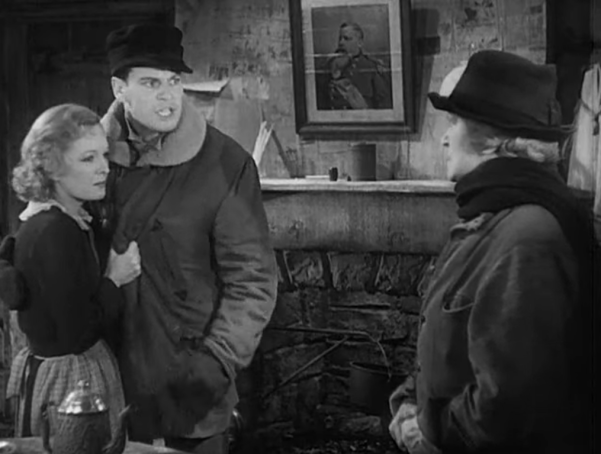
It’s one of those rural tales set in Three Cedars, Arkansas on the farmland of Hannah Jessop (Henrietta Crosman). The dynamic is simple. She’s a hard-bitten mother who’s lived a rugged life running her farm. Her son (Norman Foster) is a strapping, fresh-faced man in love with the girl (Marian Nixon) down the road and remains discontented with a life in the fields. There’s a chafing between mother and son.

She’s not going to let him marry a “harlot,” though there’s a distinct possibility she would never agree to any girl he chose to marry. Furthermore, she can’t understand how her boy can be so ungrateful and would willfully defy her. It’s a generational divide opening between them.

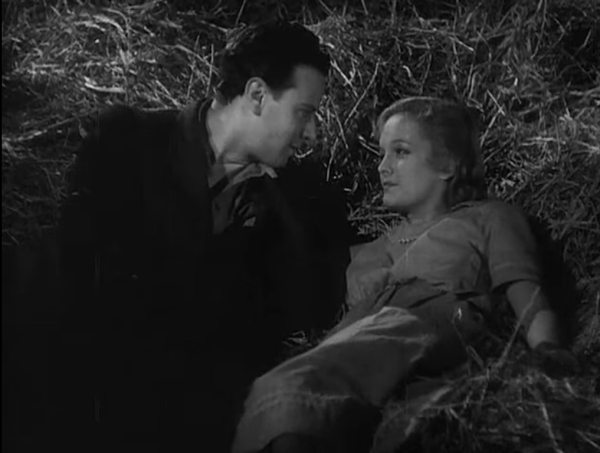
Watching a Ford picture, you’re waiting for those individual moments you can take with you. I’m thinking of Henry Fonda leaning up against the post in My Darling Clementine. John Wayne trotting off into the foreground at the end of The Searchers. In Pilgrimage, I’m reminded of a man sitting on his bed as he plays around with his dog — playfighting and having the animal crawl through his open arms.

It’s actually a mechanism for biding time because he waits for his mother to fall asleep so he can drop out of his second-story window and race off to be with his love. Earlier, during their first official meeting in the movie, there are a pair of memorable subjective camera shots when the two lovers come upon one another with a pond between them.

I’m adding my own emphasis, but it’s as if to say this is supernal love — love supreme — and its not meant to be torn asunder. It has some of the poeticism of Sunrise and the pastoral imagery of The Southerner.
Screenshot 2020-07-05 at 6.07.04 PM

Still, ornery Mrs. Jessop vows to get in the middle of their marriage, and she does it quite handily. She signs her boy up for war — not out of any sacrificial heart and love of country — but purely out of selfish indignation. This act seems so egregious and totally indicative of her character.

What’s curious is how it is not so much dwelled upon as it becomes a reality in front of us. Perhaps her boy really wanted to go off to war and serve his country. We have some indication of that even as he only has a couple minutes with his betrothed before he ships out. It’s the first inclination that this is not about the lovers at all. Who does this event affect the most but Hannah herself?

It provides the needle in Hannah’s heart, and she has to live with her decision now for a lifetime. One of the film’s finest transitions comes with shots of enemy artillery caving in the trenches only to cut to a ferocious downpour at the Jessop farm. It’s two forms of chaos, one man-made and the other natural, but equally thunderous. In fact, the soundtrack is the same. They bleed into one another seamlessly.

Now the man we thought was one of our central characters is gone. It’s 10 years later and his mother is still there holding down her home. This might be when the lightbulb goes off. This was her story all along.

Soon a woman from the war department or some such organization shows up on her porch with the mayor to coax her to follow all the other Gold Star Mothers over to France bidding their sons one final tearful adieu. She surmises, “How reconciling it would be to stand beside the grave of one’s heroic death.” Of course, she’s doesn’t understand Hannah. It’s the bitterness and buried guilt still gnawing at her. She’s a proud woman, after all, and she’s adamant about not going. She very nearly doesn’t. However, if she never boarded that ship there would be no final act.
pilgrimage shooting gallery

Ford’s sense of war is exhibited in how he’s able to cast it as both this swelling, deeply patriotic thing and still something troubling. He is aware of the dissonance of the horrors of war. The most touching sense of it all comes with a procession around a grave inlaid in the ground and the ladies all lay their flowers down on the grave, even Hannah.

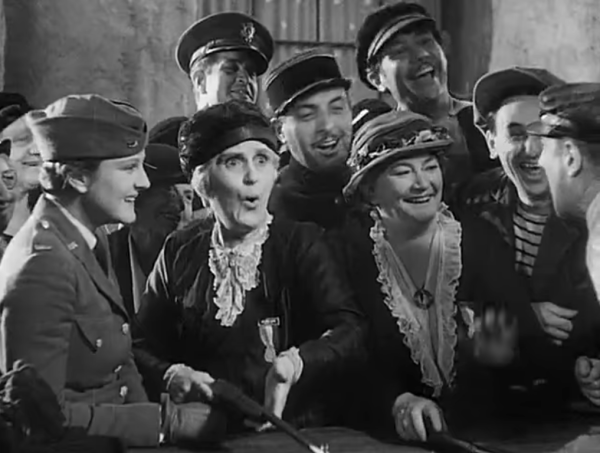
True, they do the tour of the whole place and build a kind of maternalistic camaraderie touring around the Bastille, and Hannah and one of her newfound companions (Lucille La Verne) even tear up a local shooting gallery for kicks. It’s a sign of Ford’s penchant for broad humor, and he can never totally mask it.

But the subject feels different. For one thing, Henrietta Crossman’s performance feels like one for the ages and deeply impactful even today in a medium where stories of the elderly often feel dismissed or invalidated. In her time, she was a giant talent on the stage and you cannot watch the picture without gaining an appreciation for her.

Because this is about her evolution more than anything else — this is her story — and she carries it with the kind of aplomb that’s capable of moving mountains. By that, I mean the audience’s heart. We eye her watchfully for the majority of the film, and she’s righteously stubborn and outright vindictive in her jealous affections. Although it takes time, she melts, and this progression is key. It becomes evident within her very being.
pilgrimage

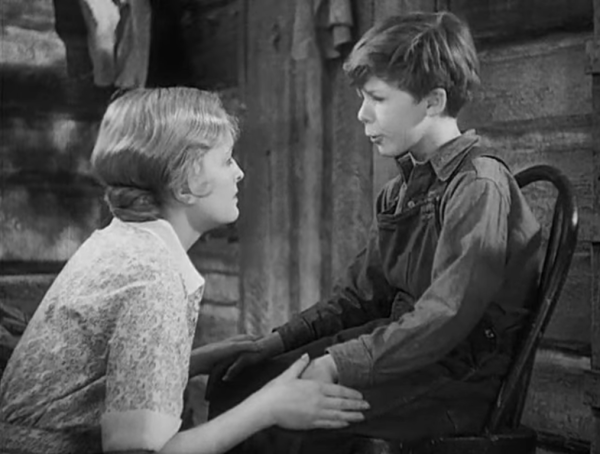
The mode isn’t altogether subtle. She meets a boy on a bridge. Thoughts of suicide or something else might be swirling around in his half-drunken mind. She grabs him by the arm and by some force of compulsion takes charge of him. She feels a need to take care of him rather like with her own boy.

It’s true it’s a different actor and a different girl, but it becomes clear enough that they (Maurice Murphy and Heather Angel) are little different than her own boy and his girl a generation before. What has changed is her outlook. She sees their warmth, their fears, the hopelessly passionate affection they have for one another, and she sympathizes. Did she stop being a parent? Certainly not. Rather, her eyes have been opened just as she has been filled up with a far more benevolent spirit.

Finally, she comes to terms with being cruel. Finally, she realizes she had a convenient name for her attitude as “a God-fearing, hardworking, decent woman.” She talks some sense into another mother (Hedda Hopper of all people) in the straightforward manner she wished someone would have talked to her. It bears an incisive truth that’s hardly unloving. And it’s as if this is her slice of redemption because it is something we can see; Hannah sutures the wounds so they can heal. Both of another mother and her own.

She goes out to the Argonne somewhere and kneels before the grave of her son falling prostrate on it. For the first time, it feels she is actually able to grieve. It’s a cathartic release for a woman who has guarded her heart and buried her feelings and failures for years. What a glorious outpouring it is. All I could think of was that Pilgrimage has a sense of death Saving Private Ryan can never quite understand. The pain and relief of seeing this gravestone are so closely tied to our character. She is being made new in front of us.

There is only one thing left to do and as a final outward expression of her reconciliation and renewed heart, she reunites with the only family she has left on earth. Her estranged daughter-in-law and quizzical grandson. She overwhelms them and grabs her boy up in her arms. Because that’s what he is of course. Little Jimmy is a stand-in for his father and so Hannah smothers him with her love. It was a Pilgrimage to be sure. Hannah traveled across the sea only to come back home a revitalized human being. Now she can look into Jimmy’s eyes and know full-well she is forgiven and loved.

4.5/5 Stars
Rocco and His Brothers (1960): An Epic Family Drama

Screenshot 2020-07-12 at 8.02.52 PM

One immediate takeaway from Luchino Visconti’s Italian epic Rocco and His Brothers is its gorgeous, swoon-worthy black & white that’s absolutely magnificent. It shares hallowed ground with films such as The Grapes of Wrath or The Godfather where the palette does yeoman’s work when it comes to informing the drama.

At its most essential level, the movie is about a poor rural family from the South journeying to Milan to make a new life for themselves. Their patriarch is dead and now his wife (Katina Paxinou) heads up north with her four boys to reconnect with the oldest brother.

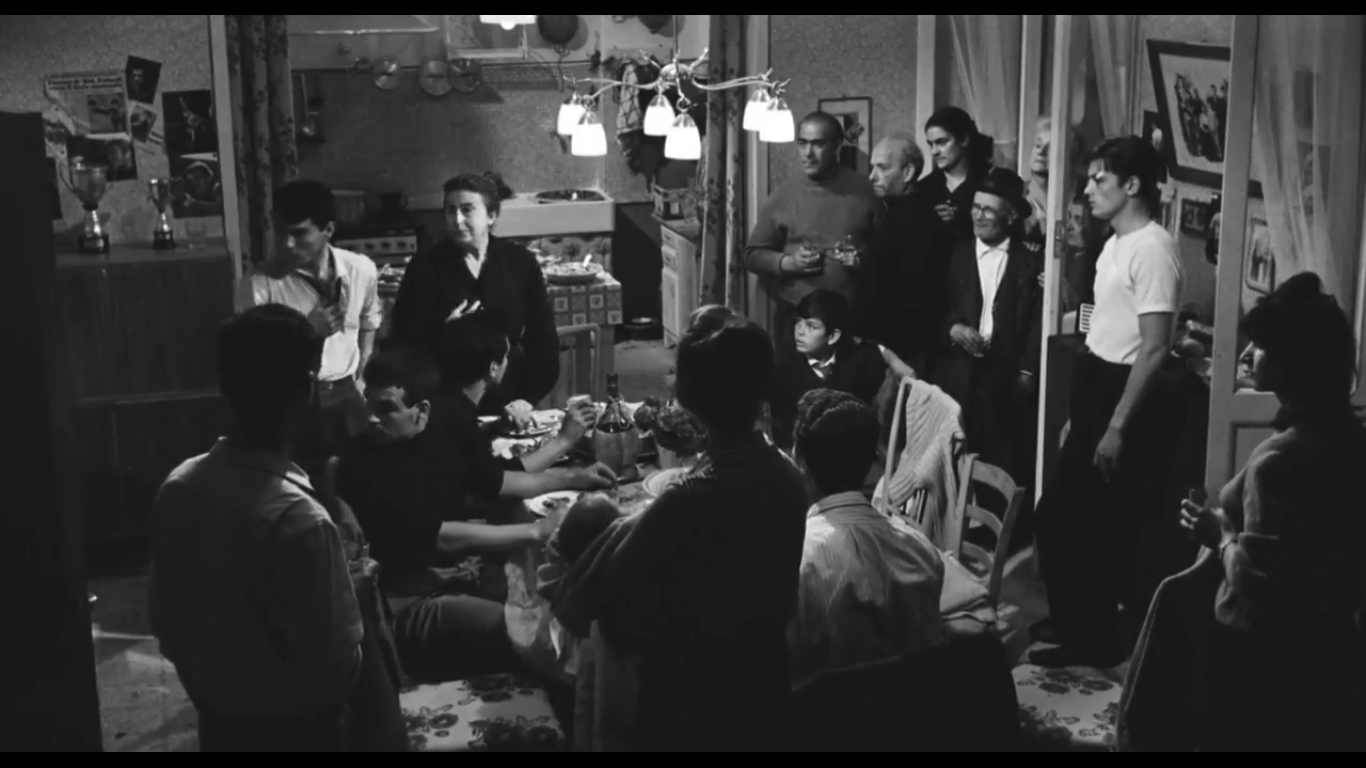
Vincenzo (Spiros Focás) is courting a dark-haired beauty (Claudia Cardinale) with thoughts of marriage once he gets steady work. Their home feels gay and bright with the roving camera capturing the full expanse of their household. It’s positively overflowing with family, and we expect nothing less.

I think some contemporary critics were disappointed by its sheen which is very un-neorealist. But it does boast its own brand of truth about family and life and love and all the constellations of emotions that we grapple with every day whilst living with other people. In this way, it shares a brand of authenticity with those earlier generations of films.

Francis Ford Coppola was certainly influenced by the picture, not only based on his hiring of composer Nina Rota but also in a more general sense in courting themes about family. It makes for a compelling ensemble telling their stories in a manner that feels totally immersive and honest to who they are as human beings. And yet it’s destined for heightened tragedy akin to Rebel Without a Cause or West Side Story.

Screenshot 2020-07-12 at 9.21.48 PM

What a raucous opening it is; it’s spectacular with the families pitted against one another and by families, I mean the mothers butting heads, while their children are left to pick up the pieces and play peacemakers. It feels all too real. Vincenzo quickly finds himself with an angry mother and a whole pack of brothers he has to find lodging for, no wife, and still no job. Everything goes to hell in a matter of moments.

Despite its sheer expanse, Rocco and his Brothers feels simultaneously well-organized and still free to follow the whims of life. Each brother gets a chapter of sorts and yet each one bleeds into the next. They’re never obvious sections and so it feels more like poetry woven throughout a story than hard and fast rules that must be adhered to.

For the time, Vincenzo lands them a temporary place to live, somewhere they can stay on until they get evicted. It’s not a promising life, but the family does receive a couple propitious bits of luck. Newly fallen snow means work shoveling snow, and the boys wake up early, downing their mom’s piping hot coffee, as they scramble out into the early dawn to bring home some bacon as it were.

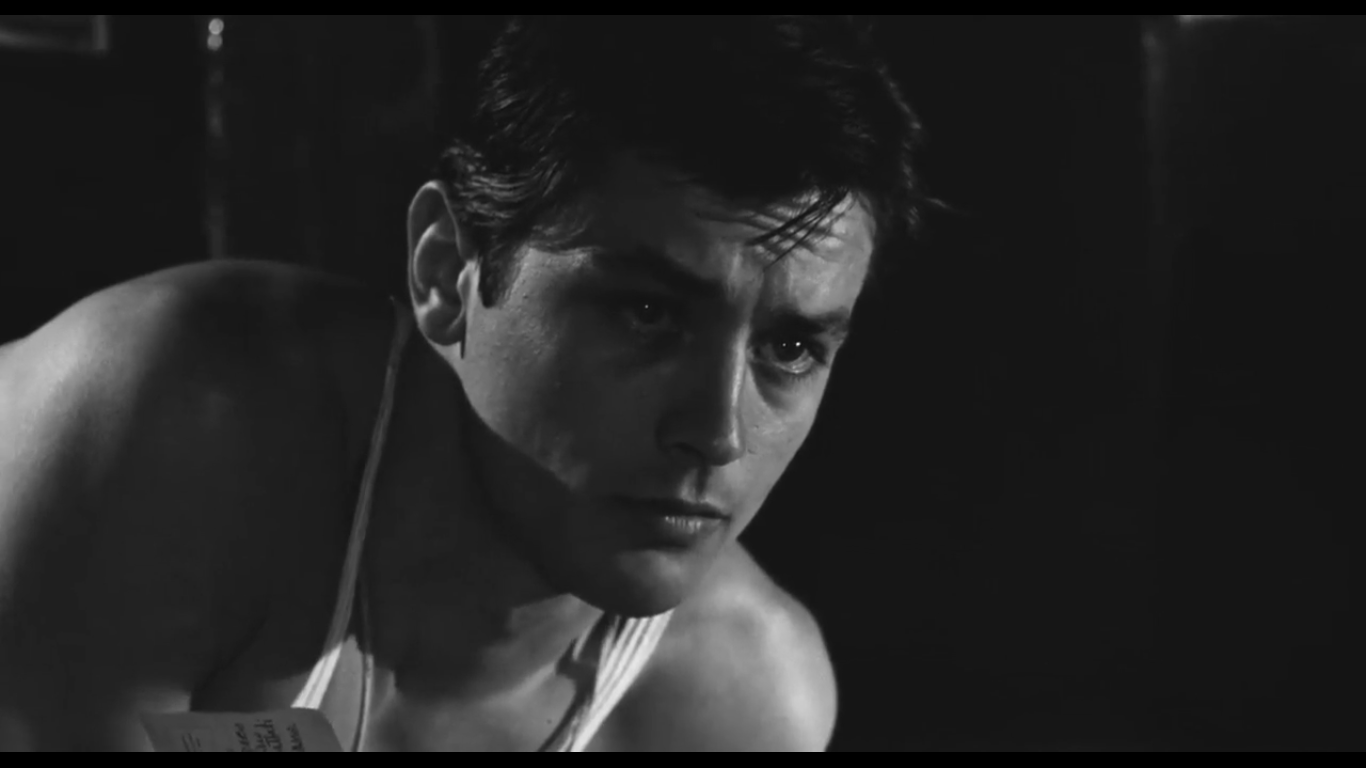
Because it becomes a story of each brother exercising their worth. They are valued by the manner in which they are able to provide bread money to the family unit. Rocco (Alain Delon) bumbles his way around a dry cleaner weathering all the young ladies teasing with a good-natured stoicism. Ciro goes the sensible route, conducting his schooling so he can land a suitable job at the local Alfa Romeo factory.

Simone (Renato Salvatori) fancies the idea of joining the local boxing gym as a chance at some easy dough, and he gets the biggest break out of all of them. A trainer takes a chance on him, and he wins his first fight, despite a belligerent temper.

If these scenes are only preliminary, they provide the framework to understand our characters going forward. Simone presumably lacks the moral prerequisites for a lengthy boxing career: a rejection of drinking, smoking, and women. Rocco is called upon to be his sparring partner and his guardian.

After his glorious showing for the home crowd, the brothers proceed to get embroiled in a street fight only to wander off with the pretty streetwalker Nadia (Annie Girardot). Simone’s behavior doesn’t bode well. Life roles onward and with few prospects, Rocco pursues his military service. It’s far from a digression. Instead, it reflects the passage of time

Screenshot 2020-07-12 at 8.06.38 PM

Rocco is one of those enigmatic figures who watches the world and seems to see everything. Those who think he’s quiet or unfriendly, over time, come to realize he’s perceptive, carrying deep reservoirs to make the most of life and have faith in everything around him. There’s a dashing nobility to him. This becomes even more true when he returns home.

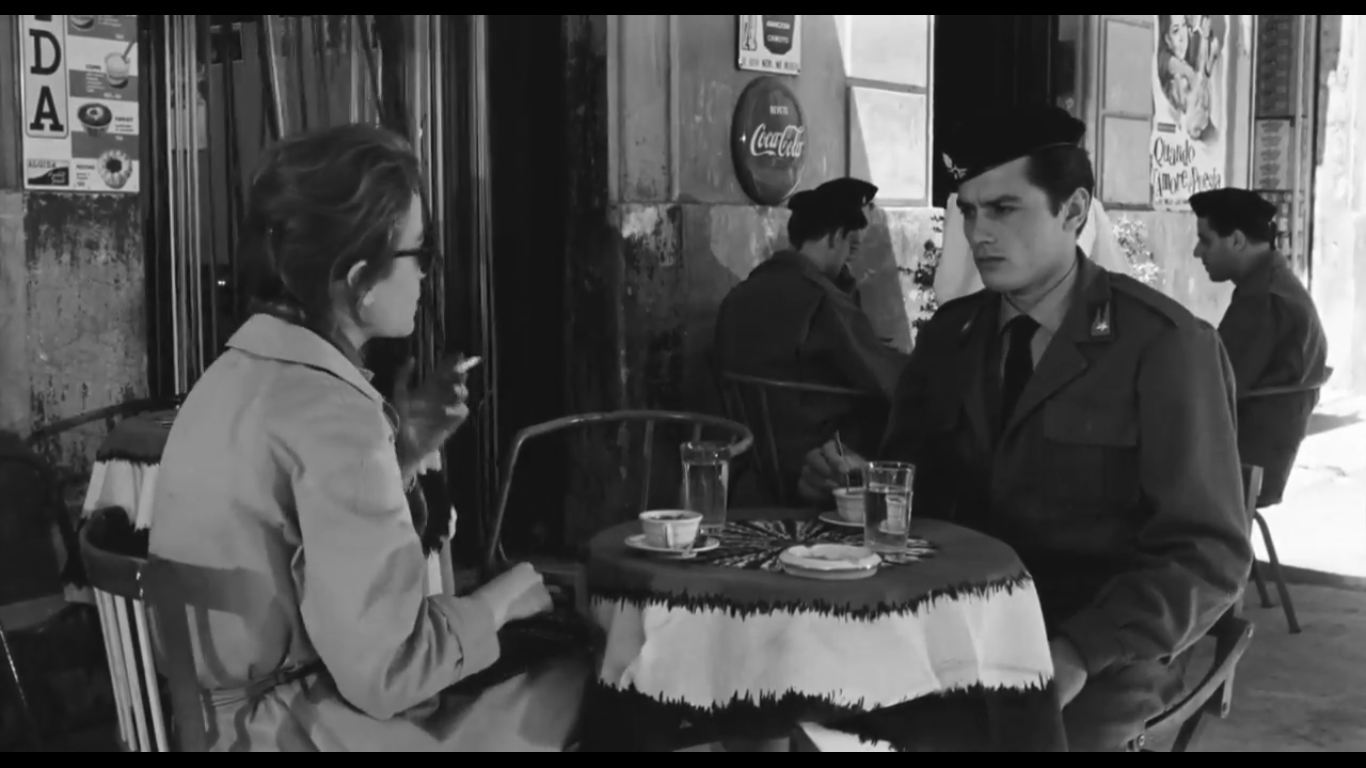
The first person he meets at a sidewalk cafe is a face from his past: Nadia. He, smartly dressed in his uniform. Conservative. She, in her sunglasses looking him over. She’s no longer with Simone — at least they drifted apart — because she was serving a prison term. In Rocco, she finds someone understanding and kind who never demeans her. She feels understood in his company. Pretty soon a subtle romance blooms between them, warm and tender.

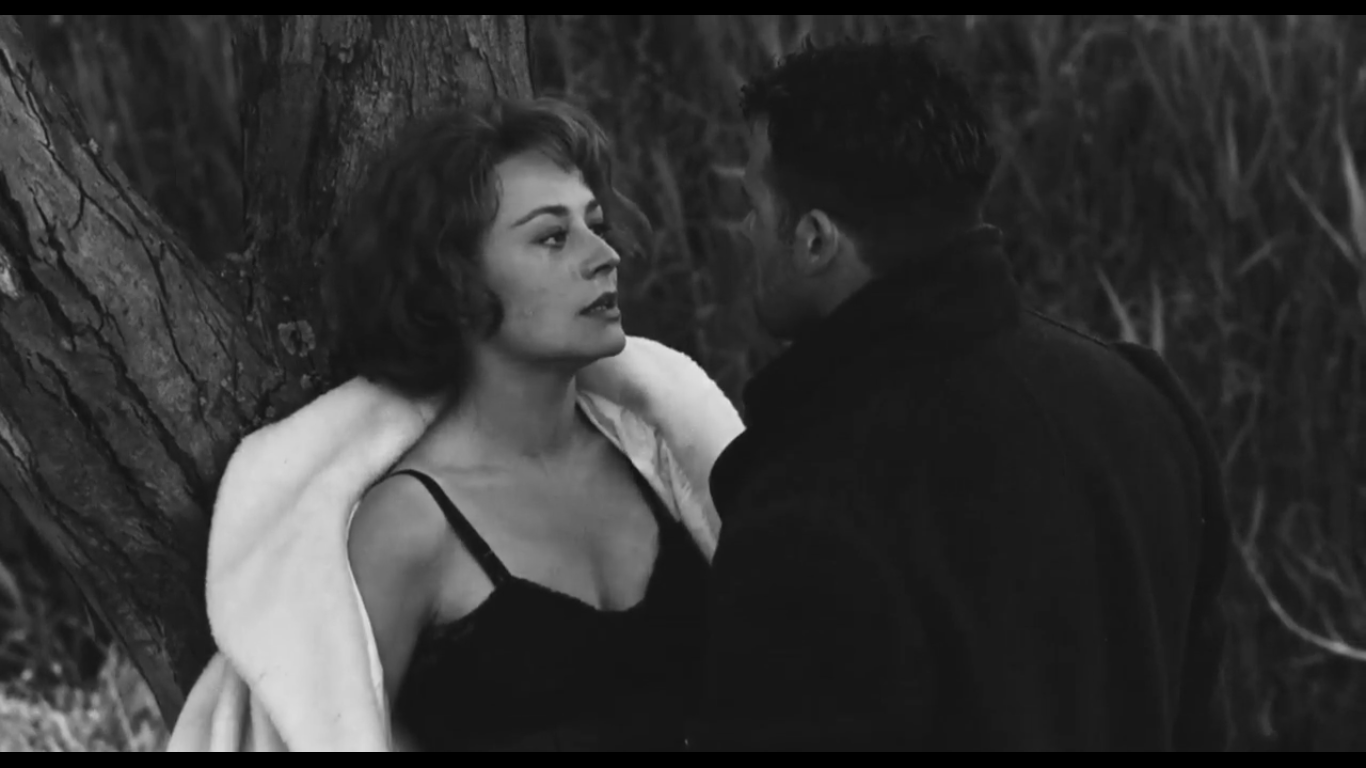
What we haven’t taken into account is Simone. The time has changed him as well. Now he’s hardened, disgruntled, and disillusioned with his boxing career. He dedicated himself to smokes, drinks, and pool with the boys. But he’s also intent on ripping Rocco and Nadia apart. Jealousy takes hold, and it’s the stuff of melodrama. To detail it all now would be rote and a disservice.

You need to see it as he brings them down to his level with a wounded tenacity nearly as electric as anything Dean or Brando managed in East of Eden or Streetcar. Suddenly, everything that was so blissfully and right between the two lovers is besmirched. And they cannot get it back. The way the camera clings to them violently as Simone tries to advance on Nadjia feels convulsive. It’s the film’s cataclysmic event.

Screenshot 2020-07-12 at 9.14.36 PM

In its wake, Rocco ascends in his own boxing career channeling his hatred into his rounds in the ring and shedding tears for how the harshness of the world has changed him. 

As Vincenzo settles into his own familial life, it is Ciro’s turn to respond to the fracture between his other brothers. He confronts both on his mother’s behalf, entreating Rocco, “A seed gone bad must be weeded out. After all, trees are meant to bear fruit.” However, the well-meaning boy doesn’t quite know how to apply this teaching into practice.

Rocco continues on the rise in his singular objective. Simone’s sunk into the gutter as not only a malcontent but the laughing stock of the community — his debts piling up and Nadia staying with him, partially out of malice and a promise to Rocco. It is here where the film’s editing comes front and center as the two brothers go their separate ways.

My mind is drawn to a curious interchange between mother and son as they dialogue on the self-destructive nature of the black sheep of the family:

“It’s not for us to judge him but to save him.” – Rocco

“Christ will regret the suffering he visited upon us.” – Mother

“We’re no longer under God’s grace. We’re our own enemies.”

Rocco proves himself again to be this near-otherworldly figure. He has an almost unfathomable amount of grace for others, and yet he’s prepared for penance and to take the burden and sorrow on his back. He is Christ-like and yet unable to be their savior.

It makes for a dismal denouement drained of all hope. Still, the family must pick themselves up out of the muck and the mire and make a way in life — each brother on his own path. Rocco finds his face plastered all over the news kiosks for his latest exploits. Simone has fallen into disarray. Ciro represents a certain hopefulness — what his brothers used to be, and Vincenzo is what they could have been — both settling down with families. Little Luca’s fate is yet to be decided. He’s indicative of the fight still left to be forged.

But I am left to return to my opening metaphor. Whether it’s Tom Joad or Michael Corleone, and in this case, Rocco, these are young men who made irrevocable choices in their lives from which there is no turning back.

The chasm between who they were and who they become couldn’t be more disparate and in all accounts, it has heady implications on their family unit. What they do, they do for their loved ones, and they still see everything they love crumble around them. It’s not a new concept — it’s not novel — but there’s something distinctly profound in this. Because we all experience something of the same.

My final thought is only this. It occurs to me that the Parondi brothers might all represent the seeds in the parable, falling all along the road. I’ll leave it up to you which ones will make their way through the straight and narrow and which ones will bear fruit. Because human beings are often resilient, and they are often granted second chances in life if they accept them. Perhaps they can remain under God’s grace after all or maybe it’s not for us to know.

4.5/5 Stars

The Shop Around The Corner (1940): A Christmas Love Story

The_Shop_Around_the_Corner_trailer

The Shop Around The Corner samples a Hollywood-style Hungary that nevertheless establishes it as a much humbler, quieter picture than seasoned Lubitsch aficionados might be accustomed to. It’s subsequently one of his best efforts for this very reason. There’s an intimacy to it, recalling his own upbringing working in his father’s tailor shop based out of Berlin, during his youth.

Initially, it feels like curious casting — James Stewart playing a Hungarian is absurd and he makes no attempt at an accent — and yet Lubitsch had the foresight to understand his appeal. He lacks all the suavity and urbanity normally associated with the director’s creations. In fact, for an American audience beginning to grow used to Stewart’s own steadily rising star, they connected with his disposition since it was very much the antithesis of stereotypical Hollywood or the highbrow of 1930s Lubitsch pictures. But it is the tone that matters most.

Because, again, this is not Hungary in the flesh — it is out of the mind of Lubitsch, a creation of nostalgia, warmth, and sentimentality — and on its streets, Stewart is more than at home. He fits the spirit of what The Shop Around The Corner cordially represents.

It is not a place right in front of us but just out of reach in the near-beyond of our memories and our imaginations. It represents our hopes and high ideals, even the sentiments of hope wrapped up in the Christmas season. Stewart as a figure — a token — is somehow able to stand in for so many things.

But there is more to it. Stewart delivers something a bit more substantial than his “aww shucks” persona, which was continually teased out leading up to the days of Mr. Smtih Goes to Washington. There’s also a stern assertiveness present, ready to come out; it just needs a spark, some point of instigation.

Enter Margaret Sullavan, his perfect counterpart and sparring partner. Her breathy delivery is quiet and understated, while still somehow implying this spunky resilience residing inside her character. This is what Sullivan brings to the part herself, earning a reputation as a demanding and “difficult” performer who sent shivers down the spines of major studio magnates, knowing full-well what she wanted. As a result, she found initial success though she’s mostly forgotten today.

Accordingly, her Klara Novak turns out to be a crackerjack saleswoman, at first pleading for a job, then proving Mr. Kralik’s rebuttals wrong by turning right around and earning employment. This sets the stage for their prevailing antagonism from which a love story must bloom. 

But that comes a bit later. The movie opens with all the staff of Matuschek and Co. congregating outside before the workday commences waiting for the front door to be opened by their employer.

Frank Morgan is Mr. Mathuchek, a blustering and a demanding fellow who can never quite make up his mind about the shop’s inventory. For that, he trusts his most faithful and pragmatic right-hand man Kralik (James Stewart), who has been the company’s longest-serving employee. If there are any decisions to be made, he’s the man to make them.

Felix Bressart is a fine family man and friend who always has a habit of fleeing the scene when the boss is requesting personal opinions. What he provides is quiet stability and an encouraging ear to Kralik.

Among the other current employees is the brownnoser with fine threads Vadas and the precocious errand boy Pepi (William Tracy) who does everything in his power to get ahead. With their communal workspace, a number of things come to pass. The relationship between Kralik and Ms. Novak continues turbulently as she manages to sell one of their useless purchases to an unsuspecting customer — a cigarette box that plays “Ochi Chernye.”

Simultaneously, Mr. Kralik is maintaining letter correspondence with an unknown paramour who engages his intellect on ideas of art, culture, and literature. One is reminded how The Shop Around The Corner extrapolates the axiom of not judging a book by its cover. Closely related is the fallacy of getting caught up in books such that you fail to see and comprehend the reality playing out right in front of your nose.

You read Anna Karenina, Madame Bovary, Dostoevsky, only to realize the people living and breathing right beside you are not only more than what’s meets the eye — they are simultaneously writing their own stories. We can’t always mold them to fit the narratives we know. Both Ms. Novak and Mr. Kralik seem to know these issues intimately without realizing it.

Because this is a Lubitsch picture, irony comes into play quite early; although it’s difficult to know if Stewart or the audience come up with the answers first. Maybe it hits us at the same time. If you don’t already know what it is, I’m not licensed to say. Allow it to happen to you.

Meanwhile, for some unseen reason, Mr. Matuschek grows cold and distant — going so far as relieving Kralik of his post in an uncharacteristic move. It’s the film at one of its lowest points. This was the fountain of all Kralik’s joy until he is so unceremoniously plucked from his position. Because we realize this job is his life, these people his extended family. Even Ms. Novak feels sorry that they must say goodbye, though patching things together might be altogether too little too late.

Sampson Raphaelson’s story kindly reconciles this conflict as Kralik and Mr. Mathuschak smooth out the situation. What still remains is the meeting with his mysterious correspondent. The Christmas season is upon the shop, and they work tirelessly to have the biggest sales in Christmas Eve history. They succeed. It’s punctuated by holiday bonuses for everyone, a soft powdering of snow, and genial celebrations all around — even for lonely Mr. Matchuchek.

This could be the end, but of course, we cannot forget the main reason Lubitsch has cast his eye on this inauspicious shop. Among many other things, it’s to unpack themes of love. The lights are low in the backroom, and Kralik is trying to get the words out, playing up the piece of jewelry he bought for his unseen beau.

Ms. Novak tries to accept her own fate with fortitude as her former rival tramples over her dreams with a reality check. Their words meet midsentence as she recites the recitations from her own dream suitor:

“True love is to be two, and yet one.”

“A man and a woman blended as angels.”Heaven itself.” That’s Victor Hugo. He stole that.”

“I thought I was the inspiration for all those beautiful thoughts. Now I find he was just copying words out of a book. He probably didn’t mean a single one of them.”

“I’m sorry you feel this way about it.”

She’s been led to believe he’s a balding, chubby fellow playing at a great romantic. As it turns out, he’s lanky and bowlegged, but not without his charms; he meant every single word. He says to her, “Take your key and open the post office box and take me out of my envelope and kiss me.” His proclamation of love stops her cold as the recognition comes over her face. She follows suit soon enough, and there you have it…

No more fanfare is necessary. We have the cathartic moment as a romantic tree-topper that Stewart and Sullavan more than earn. Even right here, it’s the same old Lubitsch with an unequivocal knack for finding the most satisfying conclusion, whether in drawing room comedy or backroom romance.

4.5/5 Stars

Note: I wrote this in conjunction with a series of reviews on the films of Margaret Sullavan released earlier this year.

Black Narcissus (1947): Another Archers Masterpiece

Screenshot 2019-12-22 at 65652 PM

Under their collaborative umbrella, The Archers, Michael Powell and Emeric Pressburger formed one of the most mystifying and extraordinary partnerships within the annals of British cinema history. Black Narcissus is just one of the many enchanting jewels in their collective crown.

Part of the acclaim must be heaped on Jack Cardiff because there’s little doubt; his compositions are absolutely stunning front to back. It starts with this gorgeous even intoxicating brand of Technicolor mingling the real and artificial in a manner on par with anything Hollywood was cranking out at the same time.

Whether through miniatures, grandiose matte paintings, or Pinewood Studio sets, it creates a spectacular illusion as a cinematic representation of the Himalayas. In perfect juxtaposition are the sculpted interiors with columns and facades bathed in this equally mesmerizing patchwork of glowing light and meticulous shadows. Not in the sleazy low-grade setups of film noir, but rather like the Rembrandts and Carravagios might have done it in their Baroque works.

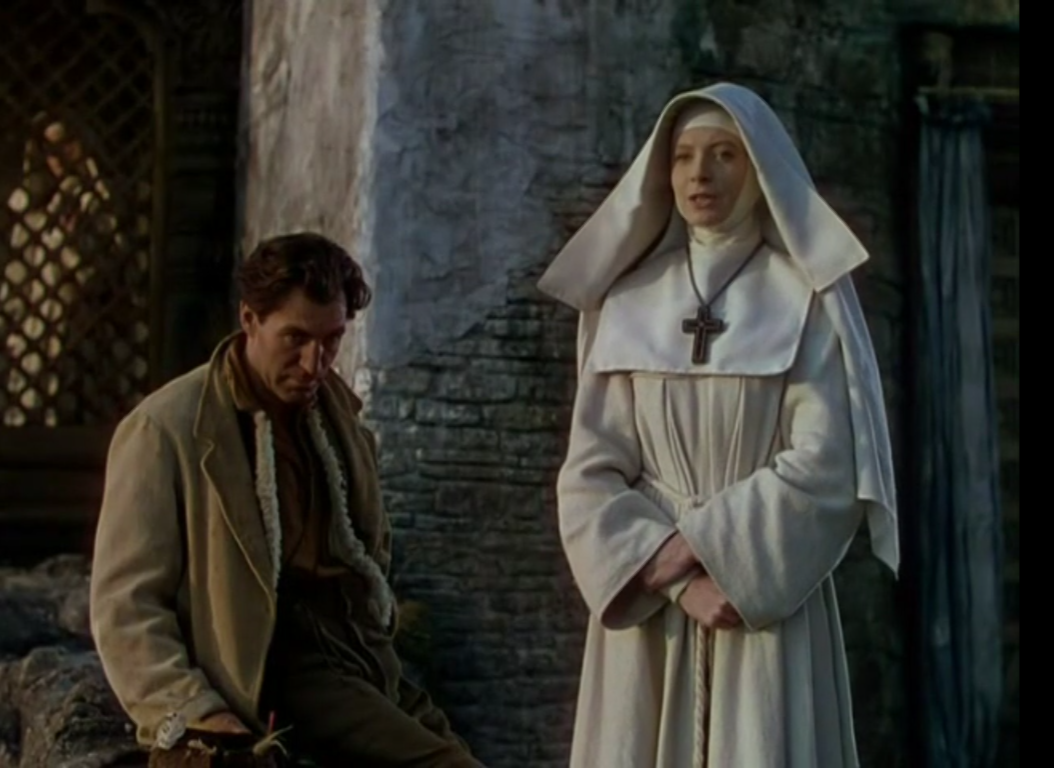
One of the earliest images to leave an impression comes from the POV of two nuns as they gaze down at a cruciform table with nuns moving about for their daily meal.

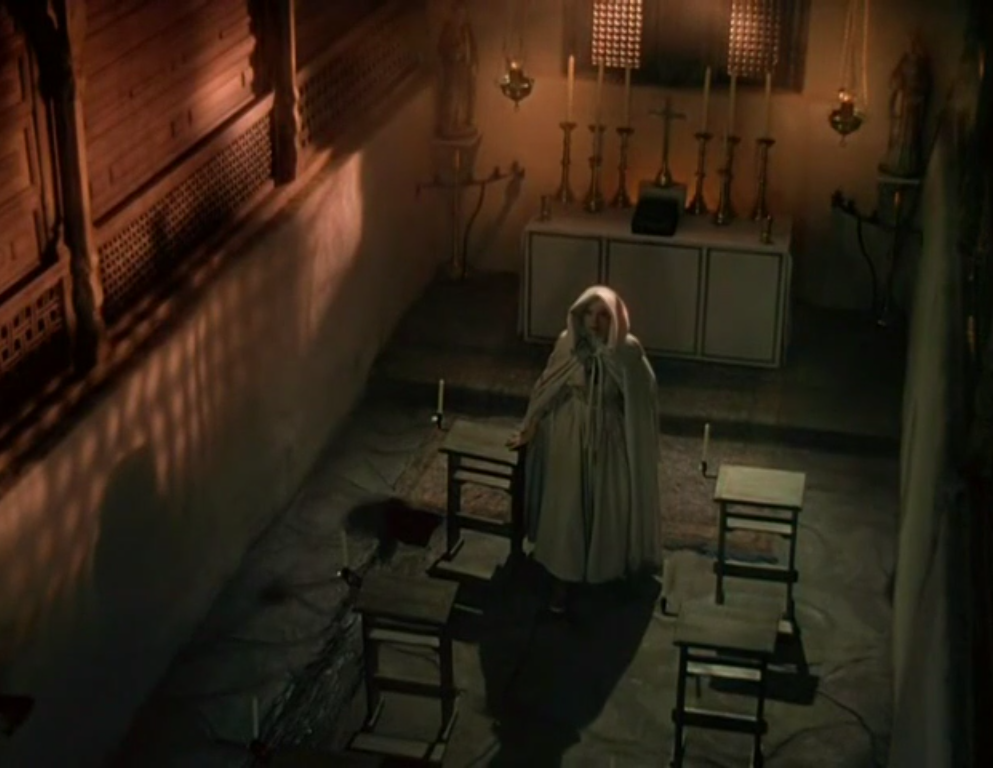
Deborah Kerr as Sister Clodagh comes off somehow regal in her white habit, proud and imperious, even as she sets out assiduously to manage the task at hand. The Sister Superior divvies out her allotted help scrounging up a task force of sorts, within the convent walls, to send out into the world and form a community.

Admittedly, the veteran sister has her doubts about the youthfulness of her counterpart, chiding her pupil, “The superior of all is the servant of all.” This is her word of admonition as they head off to face the unknown set before them.

I’ve never fully considered the methodology of the habit and yet purely from a cinematic perspective, what it does is put all the focus on an individual’s face — their features and, thus, their emotions speak for them. Then, of course, hidden under the garb is their heart and this is the seat of all their actions whether sympathetic or callous. Otherwise, they might all look the same. But of course, the head and the heart are what set us all apart.

While they are nestled in the Himalayas, there is some mention of Darjeeling, India as a stepping stone to civilization, and yet otherwise they are quite secluded. Still, they make it clear they are not merely looking for a place of solitude to live out a reclusive existence.

Mr. Dean (David Farrar), the knowledgeable yet resident cynic, is meant to be their point of contact to help them settle in, but his brusque often insinuating comments lingering in the air don’t begin the relations in a cordial manner. The fact he’s a handsome, strapping young specimen creates yet another layer of unspoken tension.

He explains the local General used to keep his women there — his concubines and wives — in a place where the nuns have plans to turn into a medical dispensary with a school and a space to minister to the needs of the local populations.

But there are numerous reasons to be uneasy. The people pile into their compound with their sick and old overwhelming the newly installed outpost. There’s also the wind, altitude, and disease which have a curious joint effect on the new transplants still trying to gain their legs.

Screenshot 2019-12-22 at 65153 PM

The sisters find everything distracting, even disturbing, and Sister Clodagh, for the first time in ages, finds her mind clouded by past memories — triggering flashbacks from her former life. Could it have been a mistake to join the order? Are these her nagging regrets come back to haunt her? She yearns for the liberation of a normal life, and she’s not the only one.

Likewise, the best encouragement she can muster against the elements and spiritual forces working against them is to, “work hard, work until you’re too tired to think of anything else.” She hasn’t been equipped by any other means, and it becomes obvious she will not be able to succeed with such a plan.

At the same time, they receive requests to take in a local outcast Kanchi (a bedazzled and brown-skinned Jean Simmons) known for her meretricious ways. Also, a young prince (Sabu) inquires about being a pupil within the establishment, which normally only caters to women and children.

We see the remnants of imperialistic disdain especially in Sister Ruth (a wildly manic Kathleen Byro). Far from being all marked with the image of a higher being, she sees the indigenous people around her as lesser beings whom she deigns to help in all their ignorance. It is this relationship between the enlightened few on Christian mission and the impoverished heathens.

We must come to terms with this complicated relationship even with Sabu playing opposite the Anglo Jean Simmons in brownface. Effectively a cross-cultural attraction forms between them even as he is her social and patriarchal superior within the storyline.

The aftermath of WWII also meant many displaced people groups were readily available to serve as extras in the picture, and in this regard, the film is blessed with some genuine sense of authenticity around the edges to counteract the whitewashing represented by Simmons, Edmond Knight, and May Hallat.

The film implicitly dances around these ideas. One moment the fiery-eyed Sister Ruth dismisses the young general as vain and black like a peacock. Although she does seem utterly tantalized by his lavish clothes and his pervasive scent: the titular black narcissus.

He’s also the one who on Christmas night says with all candor, ” I am very much interested in Jesus Christ.” Sister Clodagh extends him some leniency for speaking of their Lord and Savior with such familiarity. Ironically, it is the half-drunk Mr. Dean who chastizes her in the very same moment: “He should be casual and as much a part of life as your daily bread.” Truthfully, she doesn’t like it; it hits far too close to home, especially from a man of such ill-repute.

Screenshot 2019-12-22 at 63158 PM

While not quite the same sentiment as Luis Bunuel, there is something about the movie that proves unsettling in a religious context. There’s some unseen force, whether merely ill-fortune or closer still spiritual warfare, taxing them and splintering their meager enclave apart.

The two defined poles have been made obvious. Either you give yourself up to the world like Mr. Dean or live like the Holy Man. Neither will do for the Nuns who are stuck in the middle as the emblem of Christ in this far-off land.

After, the locals are scared off by the death of one of their infants and leave the Sisters all alone, hysteria sets in. With time, the impending psychological drama fills the world with unease. It has all these unnerving undercurrents accentuated by Cardiff’s own striking palette bursting with this vibrant even violent color scheme.

Mr. Dean matter-of-factly notes there is “something in the atmosphere that makes everything feel exaggerated.” The comments feel strikingly self-reflexive of the film’s own art direction burning images deep into our retinas.

Screenshot 2019-12-22 at 63518 PM

Still, the sisters are left drifting and dreaming through the world. It matches the, at times, hypnotic often queasy psychological torment in Hitchcock’s Vertigo to the point it pulls you in and wears on the psyche. That’s before even getting to the climax, which coincidentally also relies on a bell tower. It manages so much out of the very fact it is being manufactured to create a heightened impression of reality by manipulating the audience.

Even in the final scene, as the clouds envelop the castle high above and the Nuns are led off dejectedly in their little caravan, there’s nothing but this residual innervation. They must give up their mission and be humbled knowing they will be sent to other lowly assignments having failed by the world’s standards.

While India isn’t central to this story there is this lingering sense of colonialism as missionaries were often tied up with this since they were such a staple of the British Empire. There are enough movies to suggest this is true including The Bitter Tea of General Yen, Keys of The Kingdom, and 7 Women.

The rain starts to pour down in sheets as if signaling the end of something — something being totally overrun. Could it be the British Empire collapsing right in front of us? If you were curious like me, India officially gained independence in August 0f 1947. This was after Black Narcissus‘s release in the U.K. and during its run in the U.S.

Somehow they feel interlinked even as this story bursts out of the confines of reality under the exhilarating vision of The Archers. It remains an astounding feat in cinematic magic verging on the otherworldly, positively possessed by color. Like all the most enduring films, it stays with you long after the credits roll like a bewitching fragrance.

5/5 Stars

Ikiru (1952): Loving and Living

ikiru takashi shimura

“This man bears a cross called cancer. He’s Christ.”

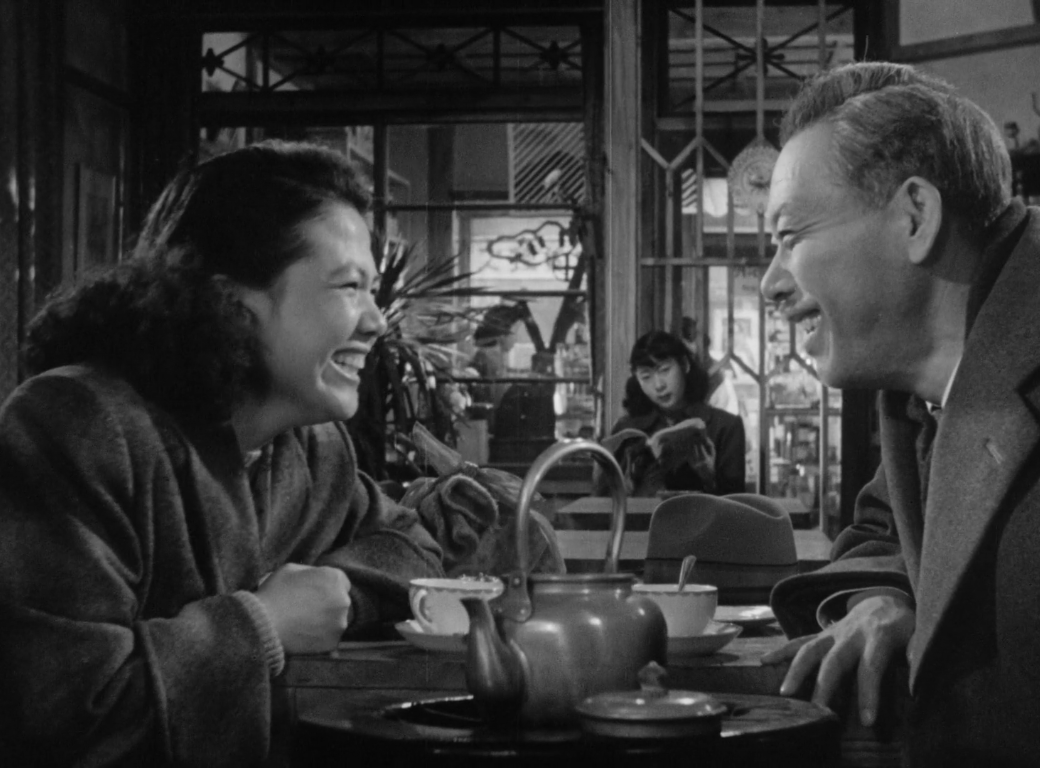
Ikiru is instantly a tale of dramatic irony as we see x-ray footage and an omniscient narrator tells us matter-of-factly the signs of cancer are already obvious. Our protagonist’s work life hits hard as he’s a public affairs section chief — dangerously close to my own title — thoroughly buried in the bureaucracy of Japan.

The great tragedy is how he’s never actually lived. He’s killing time, stamping documents with his inkan (official seal). I know it well because I sat at a desk in Japan watching others doing much the same. There were fewer teetering paper mountaintops around me, but the sentiment holds true. All his will and passion evaporated over the past 20 years. How this happened is made quite clear. We are once again privy to the dizzying circular bureaucracy that I’ve been subjected to in my own lifetime, from college campuses and also living abroad in Japan.

Even as he portrays a man of such a sorry constitution, there’s something instantly endearing about Takashi Shimura. In fact, he has been a friend of mine for quite some time. Aside from Toshiro Mifune and Setsuko Hara, he might be one of Japanese cinema’s most instantly recognizable icons. There’s a glint in his eyes of warmth that so quickly can turn to melancholy. It serves him well in Ikiru as do his distinguished features and graying hair. The dejectedness up his posture, the glumness in his being, verges on camp but it never loses its purpose.

The greatest revelation is the composition of the film itself in the hands of Akira Kurosawa and his editor Koichi Iwashita. I never recalled the editing of the picture, cutting and shifting between time periods. The delight in his son Mitsuo’s athletic prowess only for it to be crushed seconds later on the basepaths. Then, there was the boy’s appendix operation, an event he was not able to stay around for. It paints the relationship with his son, drifting through time, as the world spins around him, and Kurosawa follows the motion to find the heart of his picture.

As Watanabe sinks lower, taking an unprecedented leave from work, leaving all the underlings to surmise the reason, he meets a lowly fiction writer in a bar. The man’s occupation gives him a bit of license to wax philosophical, and he’s more forthcoming, more whimsical than we’re accustomed to coming across, especially in Japanese culture. He tries to empower the dying man to live it up.

After all,  greed is a virtue, especially greed in enjoying life, and so they take to the night scene with reckless abandon blowing Watanabe’s savings in the process. For a night he tries on the life of a profligate and a drunkard with middling results. There are light-up pinball machines, rowdy smoke-filled beer halls, and lively streets overrun by women of the night. They proceed to make their way to every conceivable bar imaginable. As the montage and music roll on and on, I couldn’t help but recall The Best Years of our Lives.

It was a celebration under very different circumstances. A soldier comes back from V-J Day ready to live it up. But much like Watanabe-san, Al (Fredric March) is looking to put off the inevitable for a bit longer. It’s a lot easier to face this heightened reality than the morning after. It’s a diversion tactic.

In one space the two merrymakers totter up the stairs as couples dance cheek to cheek. Their destination seems to be the lively piano bar jumping with tons of western-infused honky-tonk rhythm and blues. But Watanabe-san subsequently brings the mood to a standstill as the house stops to watch him sing a melody born out of the melancholy of the past — reminding us life is brief.

To this point, he feels pitiful almost laughable, laid prostrate by his very drunkenness, and gallivanting around the streets to the sidewalk symphony of honking taxi cabs and the distinct notes of “Bibbity Bobbity Boo.”

The morning after is what we expect. Not only a hangover but real-life sets in and the baggage that comes with it. He realizes his son and daughter-in-law are completely absent. Not only absent; they are indignant about his behavior. Because of course, they don’t understand. He hasn’t told them anything.

Screenshot 2020-04-03 at 65225 PM

Instead, he gravitates toward the youth of his garrulous young colleague (Miki Odagiri) bursting with untapped spunkiness. The key is how she makes up for his lack of both humor and energy. She somehow uplifts him with her very spirit — teaches him what it means to really live — what it is to have giggle fits. From the outside looking in, without his context, it looks like a sordid romance or some odd preoccupation. It’s more innocent than that.

He recounts how when he was a little kid, he was drowning in a pond; everything was going black as he writhed and thrashed around in the deep void around him. He felt the very same sensation when he found out about his illness — all alone in the world — his son as distant as his mother and father were when he was in the water. Full stop.

Ikiru and the act of living life are split into two distinct segments. Much of it is expounded upon after the inevitable happens and Watanabe-san has passed away. It’s one of the most abrupt deaths in film history. But that was never the point. Death was inevitable. What mattered is how he used the time before. How he lived it out. This tangles with the existential questions of life itself with all its subjectivities.

It sounds callous to say Kurosawa uses the motif, but what unfolds, in narrative terms, is like Rashomon meeting an abridged Citizen Kane. It’s artful and extraordinary taking the recollections of all the observers in his life to try and make sense of this man’s final hours.

The extended scene that follows almost plays out like a parable for me; it makes the dichotomy so apparent even as it expresses so much about these human beings. His fellow bureaucrats shed no tears at his wake. They have no gifts or kind words for him. And yet a host of working-class women, women who only knew him for a very few hours, anoint his burial with tears and burn incense for him.

The rich and well-to-do have no humility, no need, no appreciation because they’ve allowed themselves to be insulated — they believe they’ve brought every good thing on themselves. Revelation falls to those who are less fortunate, who have spent their whole lives impoverished and low. They can appreciate how a simple action by a simple man can be ripe with the kind of profound meaning these men sitting around idly by will never comprehend (much less believe).

It’s admittedly out of left field, but one of the songs I was taken with last year was COIN’s infectious pop record “Cemetery.” Its most gutting line goes, ” Never made time for the family but he is the richest man in the cemetery.” The words terrify me to death, and they inform how I think about Ikiru — its purpose — the meaning of Mr. Watanabe-san’s final act of unswerving resolve.

It’s a warning and a cry, a pronunciation and a prayer for all those who are willing to pay it heed. What is life but to be lived out? There are only a finite amount of hours and days between “In the beginning” and “The end.” There’s no hitch on a hearse. All we can take away from this life is that which is given away. Ikiru must only be understood out of this profound paradox.

Because these men — these acquaintances sit on their duffs partaking of his family’s hospitality — trying as they might, to make sense of the mystery of his transformation. How could this be? What would cause a man to be so radically different even cavalier with both his time and his resources? They quibble about it incessantly as Watanabe-san’s actions make fools of the wise.

It’s really very simple. He says it himself even as he’s half doubled-over with pain, his voice on its last rasping legs, constantly being humiliated. “I can’t afford to hate people. I haven’t got that kind of time.” What if that was our mentality? When I look around me, who is my neighbor? It is anyone and everyone. Not just my friends but the ones who ridicule me — the ones who are hard to live with. What if spent less of my time criticizing and hating and more time loving and living. After all, aren’t they one and the same?

5/5 Stars

Ruggles of Red Gap (1935): An All-American Gentleman’s Gentleman

Screenshot 2020-04-01 at 82751 PM

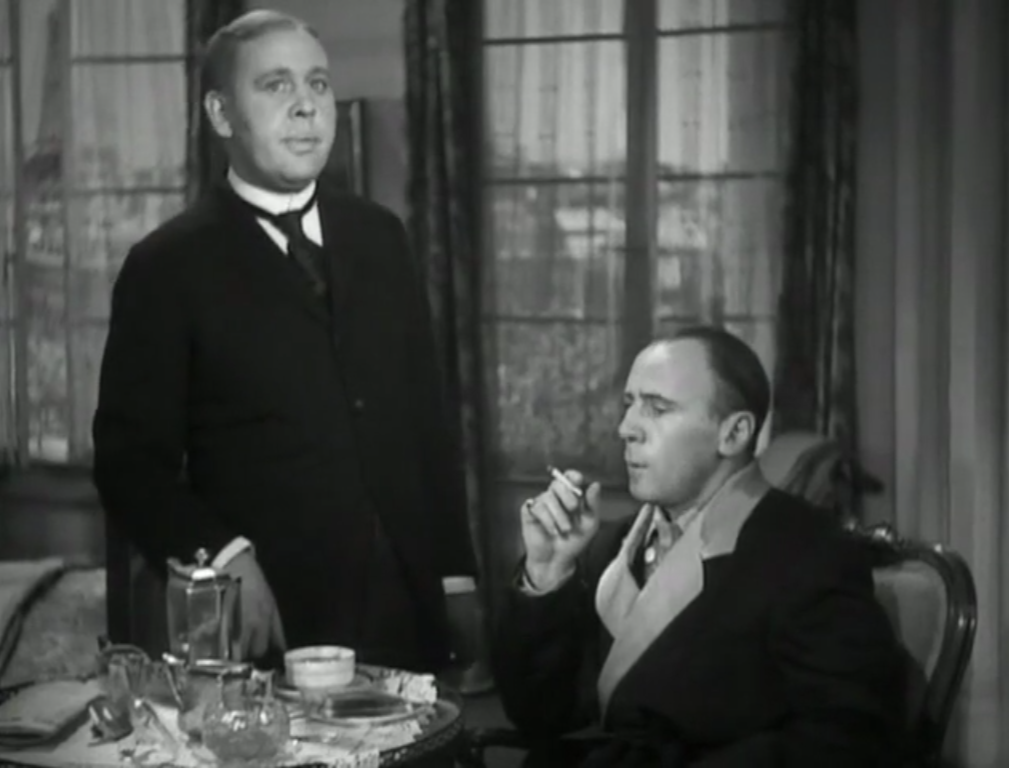
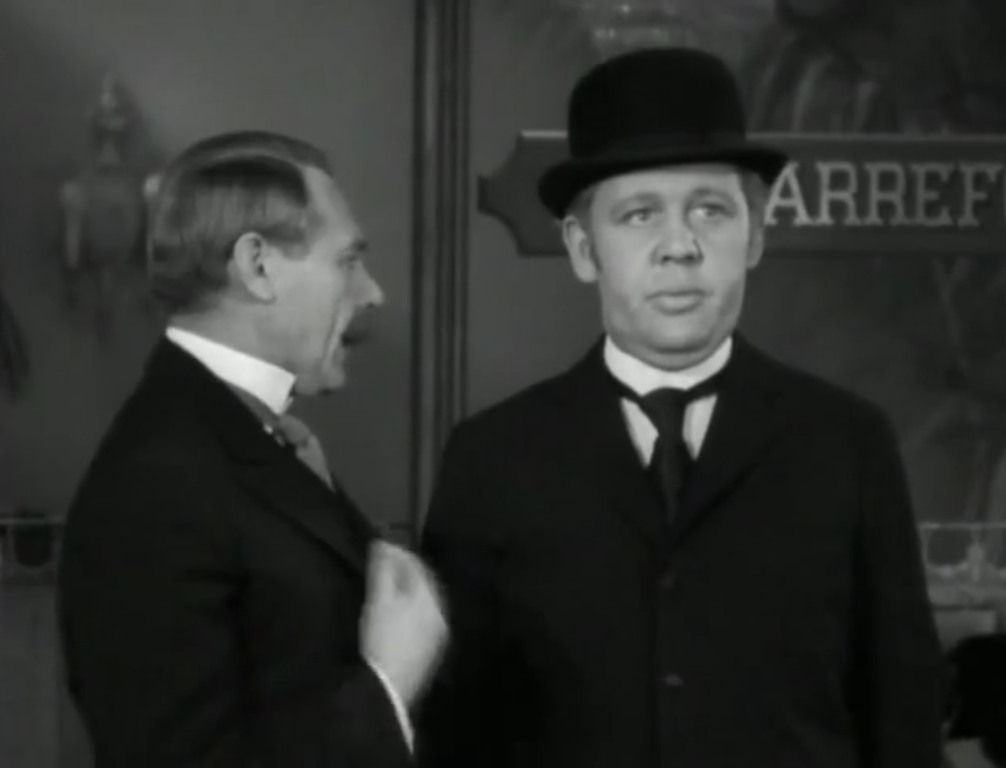
It’s Paris in the spring of 1908. The mumble-mouthed, rather sheepish Roland Young admits to his manservant Ruggles (Charles Laughton) he’s gone and lost him in a poker game. He was terribly good at the art of bluffing. A little too good as it were.

The kicker is the folks he’s handing him off to, vacationers from rural America! Ruggles does a deadpan double-take upon hearing he might be sent to the United States: the land of slavery. His former lord helpfully interjects a fellow named Pocahontas helped put an end to that.

The husband, played by Charlie Ruggles (Coincidentally, sharing his name with one of our characters), is Egbert Floud, a man of the land, totally at odds with hoighty-toighty Parisian high society. He has no qualms about his heritage. In fact, he’s darn proud of it. Handlebar mustache and all.

His wife (Mary Boland) is positively obsessed with social status — tone and Joyeux de vie — and acquiring Ruggles so they might gain a new sophistication. When her husband learns they are about to have a servant, his voice is exasperation personified.

She makes him go off to get some culture, and he proceeds to drag his new manservant along to the nearest gin joint. He’s not a man beholden to any kind of hierarchy. Everyone is a neighbor and a friend. It’s quite unsettling to Ruggles at first, if not a totally novel concept. He’s never had cause to fraternize with Americans before.

Charles Laughton, eyes lolling about in his head, makes it one of the funniest situations I’ve been privy to in some time. To call him robotic is doing him a discredit. He’s so stiff it emphasizes his propriety and his station in life. He’s quietly beside himself performing his duties with these fits and starts. Then, he’s subsequently crawling inside his skin at the cavalier indecency of what he’s being subjected to; he’s too well-mannered to dissent of course.

Except the punchline is how easily he mellows in the company of Egbert and one of his buddies. The alcohol flows, they take to a carousel and wind up crashing Effie’s grand dinner party royally swacked, Ruggles most of all. Mrs. Floud attempting to apologize to the guests with her infantile French. It signals a change and the mistress of the house starts to disdain her help for leading her husband astray — even if it’s decidedly the other way around.

Screenshot 2020-04-01 at 83747 PM

But the great departure happens and with it comes Ruggles fateful arrival in Red Gap, a place he’s no doubt been dreading for some time. For him, it’s a distant incarnation of America and their antediluvian ways.

What a surprise it is that he makes a striking first impression. Everyone seems to take an instant shining to him as Egbert walks him around to introduce him to all his pals, bestowing him the good-natured nickname “Colonel Ruggles.”

He catches the eye of Mrs. Judson (Zasu Pitts) after complimenting her meat sauce. Meanwhile, the editor of the local paper takes an interest in this regal gentleman with military rank, ready to write an entire spread about him on the spot. Almost instantly he’s become a local celebrity.

He is quite taken with the life and the normally raw, rough and tumble lifestyle takes a genuine shine to him, at least the good honest folk who still have a love of the land and earthier ways. Ironically it’s the aspiring elites — like Effie Flowd — who are turned off by him, whether through misunderstanding or jealousy. He has breeding they can never hope to have.

The best part of Laughton’s performance is how he’ll slyly “break character” as it were, getting drunk on the town in Paris, stirred on by his jovial company, and then later giving a particularly aggravating man named Belknap-Jackson a kick in the seat of the pants in retaliation (the other man did it to him first). It’s these wildly conceived digressions making the movie for me because Ruggles suddenly breaks out of the convenient archetype we have for him as a gentleman’s gentleman.

I grew up watching (and reading) a lot of Jeeves and Wooster after all, where the comedy is born out of the continually failed plans and romantic miscues of the dopey protagonist. It’s his man Jeeves who must use his acumen to rescue his master from inevitable social suicide.

The beauty of this narrative is how it poses one obvious scenario before devolving into something else. Far from being a story of class clashes, it is a fish-out-of-water tale turned on its head. Ruggles is gradually transformed into a new man, exercising unheard-of freedom over his own life. He becomes a man whose future is entirely in his own hands, and he’s totally taken with the ideology of America.

One day he is unceremoniously fired by his rival just as he was sitting down with an improving book on the 16th president of the United States. At first, you think nothing of it — the book he’s reading. However, most crucially he rectifies his former historical blunder. It was not Pocahontas who had a part in freeing the slaves but Abraham Lincoln.

In the local saloon, he is reminded of who his friends really are and he, in turn, reminds them what their country is really about. What’d Lincoln say at Gettysburg? Everyone’s asking everyone else and nobody knows. Even in 1935, arguably in earshot of someone who could have been there, it’s still a fickle generation far too easily forgetting the past.

It’s easy to feel a bit tentative about themes of Lincoln as a white savior. That he single-handedly fixed the problems of America. That he was a martyr for a cause. But the movie never quite says any of this. I’m putting words into its mouth. What it does suggest is the egregious sin slavery engendered on American soil. Thus, it’s not totally Pollyanna.

Instead, Ruggles stands up and evokes the words of the great emancipator. I need not recite them and could not, but they instill in the people of Red Gap what are nation is called to — exemplifying the principles meant to set this land apart.  It’s a sober reminder that it’s sometimes those on the outside who recognize the great luxuries we are afforded and must give us pause.

Screenshot 2020-04-01 at 92857 PM

The final act keeps on riding these same waves with the grand opening of Ruggle’s new restaurant, offering two major developments. First, there is the return of the Earl of Burnstead — honored guest of the Flowds — who shows up late to announce his marriage to a local girl. Ruggles, having quite enough of the conceited Belknapp-Jackson, boots him soundly out of his establishment with added relish.

However, as a result of his unseemly behavior, Ruggles thinks his reputation and his business are finished for good. And yet he goes out the kitchen’s swinging doors to hear “He’s a Jolly Good Fellow,” not for the Earl but for him! If the Gettysburg address is the first moment of immense pathos, this is the crescendo — the camera turning to the reactions of all the town — these folks who all are part of his adoring crowd. They sing and smile and clap for him.

In my own sentimentality, I couldn’t help but think of George Bailey’s own serenade as all his friends gather around him to lift him up. There’s the same kind of communal exultation and the joy of being beloved by the company around you. It leaves Ruggles almost speechless. So Egbert pushes him through the swinging doors so he can snatch a kiss from his best girl.

I’m not sure I believe in love at first sight, regardless, I was positively charmed by this picture. The cast feels impeccably crafted to fit together, teasing out the comedy and making the story develop into a full-bodied piece of humor and All-American tenderness. It takes caricatures and stereotypes and somehow molds them into the most honorable and lovable ideals.

However, in the context of the times, Leo McCarey’s comedy — his first removed from the very particular influence of The Marx Brothers — feels more like a precursor to Preston Sturgess than a Capra picture. There’s the influence of the pure zaniness of the scenario, with the social elites being brought down a few pegs. Moreover, it feels like there’s a sense, this hope and hankering for America and humanity as a whole to still be something we can believe in.

The farce is of the most good-natured variety. Far from being vitriolic, we laugh with those we were meant to laugh with and laugh at all others who more than deserve it. It might be a simple, idealistic world, but sometimes it’s nice to believe that a gentlemen’s gentleman can make something of himself — like a  well-respected pillar of society in Red Gap, Washington. It works because the gags give way to something more.

For a first-time comedian, Charles Laughton is superb. But he’s hardly a one-man show. That’s the beauty of it. There’s a kind of genial comedic utilitarianism to the proceedings where all can be involved — audience included.

4.5/5 Stars

It Happened One Night (1934): Carrots and The Walls of Jericho

it happened one night 1934

When I was growing up we had a VHS of Warner Bros. Bugs Bunny cartoons and like any lad my age, he was an immediate sensation. Casual, mischievous, and yet generally good-natured and out-and-out hilarious. I had no concept of cartoon logic and what made him so memorable as a cartoon character; you didn’t have to tell me. I knew he was because he made me laugh.

Well, it turns out I must attribute some of this childhood entertainment to It Happened One Night because, without the inspiration of its own fanciful whimsy, Bugs Bunny as we know him might never have been born.

But let us rewind for a moment. The movie itself is conceived with one of the great screwball openings as spoiled Ellie Andrews (Claudette Colbert) quarrels with her protective father (Walter Connolly) about being held against her will on his yacht. Not to be outdone, she dives off the side of the boat and swims away ready to join her suitor.

Meanwhile, Clark Gable is Peter Warne, a man of the people — drunkards, vagabonds, and newspapermen — recently fired from his paper and looking for a way to get back in his editor’s good graces.

There’s a sense he would not have gotten this kind of rounded, contoured part at MGM, which was more intent on casting him as their ever-reliable, hard-edged he-man keeping all the hearts of their leading ladies palpating. It has to do with audience supply and demand. It Happened One Night allows him to live a little — to burst out of the mold created for him at his home studio — and the results are a divine departure.

Today the night bus circuit feels like an antiquated or at least a bygone segment of society. Not that Greyhounds don’t exist, but the world’s been proliferated with commercial air travel made available to the economy classes over the past 80 years.

In It Happened One Night, it’s a convenience only to be utilized by those affluent enough to afford such luxury. Hence, the reason Ellie’s father goes searching for her by aeroplane.

What the road trip becomes is a kind of universal equalizer where everyone is on the same playing field, low on money and just getting by. As an audience, for the majority of time, we are resigned to view life from the cheap seats with everyone else. It breeds this kind of communal rapport that only builds over time. Because, of course, two of our co-passengers wind up being Colbert and Gable.

So we have an element of class injected into the action as Ellie is forced off her high-horse. She gets a reality check of how real people live and what life’s like with moderate inconveniences and discomforts. These are sensations she has never experienced. They are foreign to her world. She’s also an easy target getting her suitcase swiped from under her nose.

Being on the lam, it’s not like she can wire dear old dad for more funds. Likewise, lowlifes like the skeezy Roscoe Karns, one-on-the-side Shapely, with an accent on fun, are on the prowl for a pretty dame to annoy. However, it’s Karns portrayal giving the world one of its other foremost cultural icons. That’s right, doc. Bug Bunny!

In the end, Gable dreams up a farfetched gangster plot to keep him quiet sending the spineless sot fleeing for his life. Because this is the role of Peter. He’s a real person; he’s seen the world and knows how to take care of himself. So despite their initial antagonism, Ellie sheds her ignorance and grows to appreciate the man’s watchful eye verging on moments of brusque thoughtfulness.

He sets them up with two separate beds at Dyke’s auto camp when they are forced to take a rainy evening detour. For Ellie, she has the unpleasant sensation of playing his wife, and it adds the tension to the preempted romance.

Gable dominates the evening when he strips down to his bare chest and supposedly helped increase the mortality rates of male undershirts all across the country. You can’t say people didn’t notice, Ellie included. So she joins the Israelites on the other side of “The Walls of Jericho,” the blanket keeping them at a respectable distance.

This scene is a lynchpin moment based on what happens the following morning. Ellie wakes up, and it’s like a switch has gone off. She meets the day disgustingly cheerful as if a screwball dame has replaced her formerly socialite self. We’ve entered the role reversal.

Screenshot 2020-03-27 at 90331 PM

At first, it’s all fun and games as we witness the utter lunacy of their escapades, maintaining the charade for a couple of detectives nosing around for dear old dad. Peter teaches his travel companion about a real piggyback ride — a pastime for the humble and the poor. Low on money, they hitchhike and gnaw on raw carrots by the roadside (like a certain looney tune).

It turns into the Indianapolis speedway as he attempts unsuccessfully to hail a ride. His thumb proves ineffective. Claudette Colbert has a far more viable solution. It’s yet another turn in the story — from helpless waif to resourceful daytripper.

The joy of the movie is how there is a pace to it because we all know intuitively we need to get to New York with Claudette. Capra mimics the continual movement of the film from town to town with his camera set on a crane to follow his couple on their road together. And yet as she begins to soften and warm to her co-companion, some of the urgency is lost but not the delight of the film.

Because we’ve already had time to grow with the characters, appreciate what they’ve drummed up together, and desire to spend the rest of our time with them. Anything else would feel like an early and highly disagreeable end to our time together. What’s marvelous is how Claudette doesn’t want it to end either. The three hours to New York never felt more infinitesimal.

Peter’s exclusive story feels immaterial; he’s certainly not taking any notes to develop copy, and the nightly rituals, The Walls of Jericho et al. feel rote at this point. Where might they go from here? It calls for some kind of emotional response.

Colbert obliges. The love is there. He just needs to respond — to understand there really is something fundamentally different about who she is as a person. Still, fate gets in the way as it always has a habit of doing in rom-coms. There would be no final act otherwise.

The most glorious discovery is not solely our leads but Walter Connolly who is granted a change of heart, one that the final act requires, I might add. Suddenly, we have a new screwball wrinkle: a father who is benevolent and understanding nudging his daughter on to ditch convention and the foregone wedding march for someone she really loves.

Why does this change happen you ask? Much like Colbert’s evolution, I’m not sure we can pinpoint it specifically, nor do we care. The only thing that matters is the inevitable: The Walls of Jericho come tumbling down. Ellie and Peter are finally allowed to know one another in the Biblical sense.

5/5 Stars

To Be or Not to Be (1942): Lubitsch Vs. The Nazis

Screenshot 2020-03-21 at 75752 PM

“What he did to Shakespeare, we are doing now to Poland.” – Ehrhardt about Josef Tura

Our story begins in Warsaw during peacetime. In some sense, this is a period piece because the gulf between the Nazi invasion of Poland in September 1939 and the comparably idyllic years prior could not be more starkly different. The world still maintains its innocence.

And yet, what’s this! A stir in the streets. Taxis stop. Heads turn. What are they gaping at? It’s none other than Adolf Hitler walking down Main Street! How in Hades did he get there? It catches the audience off guard, though not as much as seeing Jack Benny in a Gestapo uniform.

Of course, this sequence is all part of a performance as the stage elements fall away. The story focuses on a theater troupe trying to carry on with Europe in an uproar. From a purely theatrical perspective, this allows To Be or Not To Be license to literally lift Hamlet’s own play within a play (or in this case a movie) structure. So now with the framework set in place, there is ample space for meta qualities, breaking of the fourth wall, and with it, satirical commentary.

Joseph and Maria Tura are an acting power couple with dueling vanities headlining Hamlet. Carole Lombard, in ravishing dress, is elegance personified. Imagine, this was my first impression of her before dipping into her screwball filmography. It suits her in her final screen performance.

What an odd choice Jack Benny seems for this picture. Even today, he’s far more well-known for his radio show, violin playing, and his public persona as the hand-to-cheek comedian. He was a contemporary of Bob Hope and Bing Crosby but never managed the same share of the box office. Regardless, Lubitsch saw something in him no one else was willing to consider. He’s not exactly Laurence Olivier, but that’s precisely the point.

However, we are also reminded how theater is communal. The hammy Lionel Atwill is always pushing the envelope, both in life and reality. It takes his colleagues to rein him in. The spear holders Greenberg and Bromski, meanwhile, dream of roles that might one day actually utilize their talents. Their exacting director Dobosh (Charles Halton in one of his more animated performances) keeps the egos in check and the performances grounded in the material.

Circumstances always seem to get in the way of the best-laid plans. Maria has a handsome admirer (Robert Stack), who repeatedly visits her backstage, much to her husband’s chagrin. No, he doesn’t know about their private meetings. It’s the fact the young man gets up repeatedly during his “To Be or Not To Be” soliloquy; he doesn’t take kindly to the insult. Yes, he’s a jealous husband, but his whiny, puffed-up ego is the first thing to be affronted.

Screenshot 2020-03-21 at 75157 PM

Another slap to the face comes when their new play, “Gestapo,” gets nixed because it might offend Hitler, so they keep Hamlet going instead. It signals a change. It means War! The Nazis roll into Poland, and the city takes a hit. Bressart looks on glumly, uttering a fitting observation, “There was no censor to stop them.”

The embodiment of evil — in all its grotesque idiocy is Colonel Ehrhardt (Sig Ruman) — his orders posted up all around the city. We don’t get the fine print, but we get the gist: concentration camps, the death penalty, and being shot on sight are frank enough.

But the roots of Nazism are even more insidious. They have snuck behind enemy lines. Stack is among those who band together in the Polish branch of the RAF freedom fighters. In good faith, they pass on goodwill to loved ones to a Professor Siletsky — only for his wires to get crossed. They must eradicate the mole.

This is no goofy charade and Lubitsch sells out to tell the story. In this regard, he lends his players an amount of dramatic integrity. The menace is overt throughout the picture. For instance, when Stack parachutes back into Poland and flees into the night as a patrol of German fan out to intercept him.

In her own harrowing arc, Maria Tura is taken by the Gestapo. However, there’s nothing quite so sinister about it — at least in terms of her person — they offer a proposal for her to become a spy. She has to think about it.

Her husband, Joseph, has his own conundrum in the form of a befuddling Goldilocks moment, finding a young man sleeping in his bed. He does one of his iconic double-takes followed by others in quick succession as he makes his way around the room leaning over the bed. It couldn’t possibly be his soliloquy defector, could it?

For the entire acting troupe, their greatest performances are called upon to intercept the Nazi spy with his incriminating cache of papers. They rebrand their theater as Gestapo headquarters with Tura cast as their irrepressible lead, struggling to originate such an uncharted role. He’s eventually relieved of his ad-libbing responsibilities when he can take on a more biographical role — based on, shall we say, previous experiences.

The petty feud and marital jealousies between Mr. and Mrs. Tura remain an undercurrent to all their valorous acts. One of their constant marks is the oaffish tyrant portrayed by Ruman and his bumbling underling Captain Schultz. In fact, with Rugman later playing a joking barracks guard in Stalag 17 (1953), it’s hard not to see the origins of Hogan’s Heroes own roly-poly Sergeant being conceived.

There’s an obvious issue at the core of the story. Because, despite their best efforts, there are now two Siletskys running about. It leaves a lot of explaining to do, and the Nazis are reasonably suspicious.

Screenshot 2020-03-21 at 84615 PM

The final act is the finest. They make the most solemn Nazis out of the bunch the night of the show. Even if it is fiction, it still makes the hair on my arms stand on edge — all the men in Nazi uniforms streaming into the theater, standing in unison to salute.

Felix Bressart finally gets his chance to play Shylock in the most crucial turn of his career, and he brings every ounce of pathos he has into the performance. The recontextualization of the passage takes on new import pregnant with so much meaning. It is an assertion of such dignity in the face of such an egregious and ugly juggernaut as the Nazi war machine.

Truthfully, one of the hardest elements to appreciate about To Be or Not to Be is just how layered and multifaceted it remains. Being bred on Hogan’s Heroes and knowing a bit of the Lubitsch repertoire, there are some preconceived notions about what we might be exposed to. And the film certainly has wit, but we must be careful here lest the indignant get the wrong idea.

It’s quite alright to not like the film. I can only gather there are many detractors because this history is so deeply devastating. It carries so many wounds and grievances for the atrocities committed against not only Poland, but the Jews, and anyone else who was considered a target of the Nazis. The controversy is founded for these reasons. Rightfully so, I might add. Perhaps the picture is making light of this.

In my earlier days, I even believe I tried to defend this and other earlier films suggesting they could not have known the extent of the Nazis. This too seems a weak argument. And yet when I watched the film this time, I was reminded just how sincere even profound it is in-between the lines.

Yes, Benny at the center seems vain and conceited — this American comedian known for a very particular shtick — but then I look to Carole Lombard. Never has she been more majestic and extraordinary. Then the likes of Felix Bressart and Tom Dugan are forlorn while still carrying a quiet dignity about them. They get the laughs but with a straight face. They understand the gravity of what they are taking part in.

It’s too convenient to say To Be or Not To Be was ahead of its time. Certainly, there was controversy and the resolution to WWII was far from a foregone conclusion. Thus, it makes Lubitsch’s perceptiveness all the more startling. Likewise, there’s the defense he made of his work even going to the papers to do so. This is an excerpt of what he said:

“What I have satirized in this picture are the Nazis and their ridiculous ideology. I have also satirized the attitude of actors who always remain actors regardless how dangerous the situation might be, which I believe is a true observation. It can be argued if the tragedy of Poland realistically portrayed in To Be or Not to Be can be merged with satire. I believe it can be and so do the audience which I observed during a screening of To Be or Not to Be, but this is a matter of debate and everyone is entitled to his point of view.”

Ironically, here the touch of Lubitsch is not so much a comic fingerprint or sophisticated implementation of visual or even sensual comedy. What I am left with is the veracity and the bravery of his humanity. Not many men would be bold enough to make this film and then double down on what they had created.

4.5/5 Stars

Paterson (2016): Poetry in Everyday Rhythms

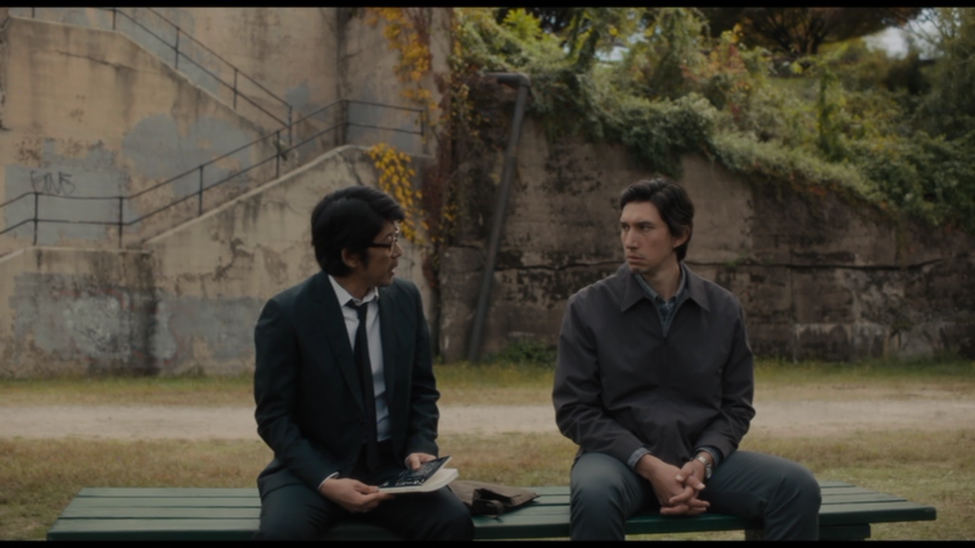
paterson 1

“Awesome. A bus driver who likes Emily Dickinson.”

This sincere pronouncement comes from a young girl — a fellow poet — as she leaves to go off with her mother and sister. She leaves behind Paterson (Adam Driver), a pensive bus driver, sitting on the brick wall, having gifted him one of her poems. Theirs is an instant connection. One of appreciation for observation, for words, for beauty.

Paterson is ripe with moments like this ambushing us with an understated resonance. Scenes of kindred spirits seeking each other out and finding some meaningful common denominator that they can relish together.

Jim Jarmusch feels like a man born of a different era — the last bastion of the old way. There are other directors who are older and more storied like Martin Scorsese or Clint Eastwood perhaps, but he is learned and the disciple of some of the great cinematic artists of the 20th century. We’re talking about titans as diverse as Robert Bresson, Nicholas Ray, and Sam Fuller.

He understands space and framing, how they define a composition. He’s not afraid of time or silence and how they can build into something revelatory. Normally, his creations might be defined as off-kilter and individual. He was very much at the epicenter of the indie film movement that revamped in the 80s. In fact, the true glory of Paterson is how pedestrian and how plain, how ordinary, and how pleasant it feels.

It’s actually not Emily Dickinson but William Carlos Williams who is Paterson’s favorite poet. There’s a self-reflexive nature to it. I know little about Williams work aside from the fact he has an epic poem called “Paterson.” And it’s true our story takes place in Paterson, New Jersey, where our main character acts as a stand-in for the town (and the poem) he shares a name with.

It’s an observational film just as Paterson is a man who watches the world passing by, existing all around him, as he drives his usual route. He is not someone the world normally esteems as an artist; he is a humble blue-collar poet. He fills up his days listening to conversations about Hurricane Carter or between a pair of high school anarchists (a nod to Wes Anderson’s youthful lovers in Moonrise Kingdom).

There’s not an antagonistic bone in the man’s body, and the movie happens to deliver a particularly warm portrait of marriage. As he spends his days working and nights tucked away writing or walking the dog, his wife (Golshifteh Farahani in a marvelous piece of casting) is swept up by dreams of cupcakes and country singing, even as she supports his writing. She is both the antithesis and the utter complement to Adam Driver.

Laura coaxes him to share his work and get it out so people can enjoy it as much as she does. Her palette and interior decorating are dominated by black and white, and she revels in her side hustles. Whether or not she becomes some great culinary or country music star seems immaterial. Paterson gently reciprocates the encouragement abounding in their household and what remains are modest joys.

The story is not beholden to typical structures of narrative. Although it does have something in common with the creation poetry of Genesis, working in the rhythms of the week in an unflustered, unhurried manner. There’s a tranquility to it all, displaying the innate power of habit and routine

Like clockwork, he goes out to walk the dog, a bothered bulldog named Marvin. We never ask to know why he does it. It’s become a kind of established fact. Just as the nightly stop at the bar to chew the fat happens. The conversations cover local heroes like Sam & Dave or Lou Costello. It feels inconsequential but somehow pertinent to the kind of syntax and meter the story is looking to evoke.

The poems read throughout the movie by Adam Driver in a deliberate, partially stunted diction are much the same, exhibiting this kind of straightforward, no-frills lucidity. He rehashes and molds them methodically before jotting them down in his hidden notebook. In fact, they are penned by Ron Padgett, a writer deeply admired by Jarmusch himself.

As someone who has dabbled in the art, you respect people who are brazen enough to become untethered from something so comforting as rhyme. Because rhyme gives you some sense that you are creating something beyond prose. It takes a braver, more audacious soul to strip it down and make it so closely reminiscent of normal everyday language and yet articulated and manipulated just enough that there is no recourse but to call it poetry.

Likewise, the dialogue throughout the movie is not realistic in nature. The words feel specifically chosen — very particular — not always right or real but given to their own cadence. There’s something so refreshing and freeing about it because it allows us to live our lives and feel they have meaning and significance in their very ordinariness.

Akin to the security guard in Museum Hours, here is a man living for more than a paycheck, and they both seem to see beyond the normal things that distract us — to somehow come to terms with beauty in the most extraordinary of places. And by this, I actually mean the ordinary places where others fail to look or cannot see.

I realized halfway through, Paterson has no cell phone; it’s part of what plants him into an altogether different era and makes him feel like a man Jarmusch might admire and heartily identify with. He lives a simpler, some might say, purer life without white noise and distractions.

However implausible, the moment that feels like a climax truly does burn deep, speaking as someone who has devoted a lot of time to writing — much of it unseen by the external world. To lose your work is a horrifying thought, but it also serves as a reality check.

It’s not so much devoting time to writing but having enjoyed the process — being able to uncover and appreciate and put words to what you have been so privileged to experience as a living, breathing human being. If we write and create merely to be remembered, it will never satiate. How much more can we relish the process if we enjoy every rhythm?

Because it’s exactly that: a process. As another character who traverses a tough world of his own admits to Paterson, “The sun still rises every day and sets every evening. Always another day.” It’s inevitable and a bit of a final exhortation — to Paterson and to all of us.

paterson 2
The final scene is the kind of cinematic loveliness you find in a certain brand of movie — the Museum Hours and the Columbuses of the world. Where there are interactions that are amicable, pensive, and beautiful.

They need not be rife with conflict or gargantuan stakes. They are found compelling for the mere fact they drink deeply of the wells of mankind and speak to who we are as people. Crossing cultures and borders and time and space to fuse human beings together.
It could be art, it could be architecture, it could simply be the need for human contact.

Here it’s poetry. A Japanese sojourner (Masatoshi Nagase) sits down at a bench with Paterson, and they share what can only be described as a moment — albeit a cinematic one — and it’s exquisite in all its unadorned subtleties.

We need one another and we can light the fire under others providing inspiration, hope, and subtle encouragement. Far from entertaining angels unawares, it might just as easily be that we can give a lift to a burgeoning artist or at the very least an unassuming one.

If nothing else, Paterson is a stirring reminder and a quiet call to appreciate and cultivate the beauty around us. We are in it together. Art need not always be a profession. Sometimes it fills the spaces in between bleeding out of people’s lives because they know no other way. They cook for sheer passion. They play music because they have to. They write out of some otherworldly compulsion.

This is art at its most elemental form, and we are all better for it. Paterson reminds us about the rhythms of life and how everyday ordinariness can be magnificent and more than worthy of our creative energies.

4.5/5 Stars

Steamboat Bill Jr. (1928): Buster Keaton The Human Tumbleweed

steamboat bill jr.

Whatever your thoughts on silent movies, be it based on misinformation, overt loathing, or verging on utter veneration, one has to admit there’s something to the simplicity of these films. And by simplicity, I’m referring to the construction of their stories. They rarely seem to get bogged down by detail. In fact, one could argue they’re at their best on this relatively basic plane. If you’re skeptical, you can call them tropes, maybe archetypes. Regardless, they tap into something universal, even primal.

Steamboat Bill Jr. is a prime case study for what I’m considering. It’s a riverboat tale setting up a conflict between two families overlaid by a Romeo & Juliet romance and spiced up all together by its secret weapon and the main attraction: Buster Keaton.

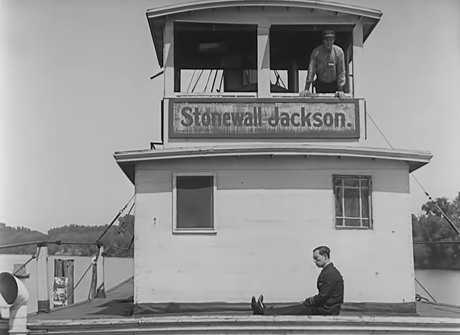
The shoddy but well-loved Stonewall Jackson is another relic of the Confederacy, not unlike Keaton’s prized train in The General. In this case, it’s run by a grizzled veteran of the waters who is about to be pushed out by steep competition. His rival, too, is symbolic as the industrial-era magnate taking over the waterways to go with his hotels and other ancillary attractions. There’s also nothing subtle about his name: King.

The next development is about as absurd as you can get. The steamboat’s captain gets word his son is arriving from boarding school to assist him. He hasn’t seen the lad since infancy and expects a big strapping fellow — not unlike himself. Set up by a prolonged “white carnation gag” full of misidentification, he winds up with timid, squat Buster Keaton to call son. This shrinking schoolboy is a far cry from what he hoped for, and he’s a bit begrudging.

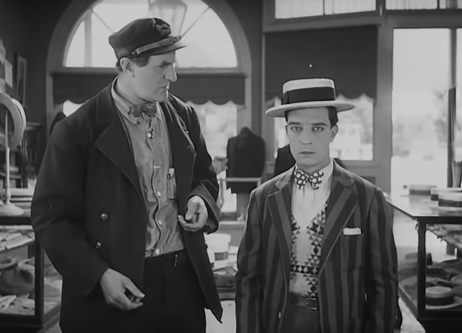
Their ensuing trip to a hat store not only records the contemporary culture’s affinity for a different brand of headwear but also manages to sneak in a nod to Keaton’s ubiquitous pork pie. He slips it off quickly as if afraid someone might recognize him and cause him to break character.

The paces to follow are not surprising. His beautiful and vivacious school chum is the daughter of King. They hold a puppy-like love for one another even as their fathers continue to feud. Just to make ourselves clear, none of this matters all that much.

steamboat bill jr. 2

The secret to Keaton is his innate understanding of the visual gag that could make his brand of comedy funny and, as a result, his stoic everyman too. Stretched out on a plank between two boats — trying to cloak himself in darkness — there’s a shot of King’s boat, and we know they will be lurching forward as they tug at the ropes. He’s going to end up in the drink.

But of course, that doesn’t happen. At least not immediately — his weight perfectly balanced so he juts out on the board like a cantilever, seemingly oblivious of how close he came. So unaware in fact, he tumbles in seconds later. It plays with our perceptions in the most fundamental ways. With irony at his disposal, he milks the laugh and makes it something more compelling and lasting, even to the point of its foregone conclusion.

Later, he raids the rival riverboat in pursuit of his love as his father’s own pride and joy is subsequently decommissioned. His feud with King is exacerbated, and he gets slammed with time in the clink for defying the law.

All these beats are again mundane. They don’t tell us much nor surprise our expectations. Fortuitously, inclement weather comes and Keaton is once more provided a whirling dervish of natural disasters to carry him away in the throes of comedy. Again, this all continues functioning in spite of the story.

Because I’ve dealt with typhoons before first hand — umbrellas upturned in an instant — but this is ridiculous. It defies logic, mass, and normal feats of human ingenuity, but those are the riches of the moviemaking industry and Keaton’s comedy, as facades of entire buildings topple around the human tumbleweed.

He’s whisked away on hovering beds, which might as well be a transplanted flying carpet from Arabian Nights, leading into one of his most iconic and death-defying setups. Again, the visual has primacy, and it works on principles as old as time. We crave security. We fear harm and dismemberment. In all his pluckiness, Keaton takes them on and somehow prevails.

There are a couple moments where it’s like he’s literally suspended in air, fighting against the wind to stand upright, until he’s forced to split the difference. Also, true to form, he uses what feels like a few vaudevillian sleights of hand, supplied by curtains, trapped doors, and a nack for all things physical.

What I admire about Keaton is how he manages to do things that still take the breath away even if only for an instant. He is a bit of a magician and yet he lets us in on the tricks, and he lets the audience take part in them with him — to think we know more than him — and then he proceeds to still pull one over on us.

Even if his character is unwitting, somehow his body and he, as an entity, always seem to know just the right step or movement; it’s just idiosyncratic enough to work in the scenario so he comes out on the other side all in one piece.

When he finally takes command of the ship hopping to and fro, scurrying there, yanking this cord here, it feels like Buster Keaton at the height of his powers, and it shows how this scrawny little guy could be so resourceful on his feet.

Mind you, it’s not just a matter of our story’s hero coming into his own, but it’s a practical expression of the actor’s own prowess — he is an unswerving force of nature packed into what might seem to be a slight frame. He really and truly is a marvel. Because “The Great (Wet) Stone Face” transcends Steamboat Bill Jr. In fact, he is Steamboat Bill Jr. The movie as well as the man.

4.5/5 Stars