Hiroshima Mon Amour (1959)

72bd9-hiroshima_mon_amour_1959This film is not only a seemingly early form of the French New Wave, it also has many qualities of a documentary, and it is certainly an international film. The film opens with a one night stand between a French actress and a Japanese architect who rendezvous one night in Hiroshima. In the short time they spend together, she reflects on her memories of the city that was not too long ago devastated by the atomic bomb. He often rejects her recollections but nevertheless, he cannot bear for her to leave and he continues to pursue her. Eventually in the course of their time together she relates her days back in the town of Nevers in France. During the occupation, she had a beau who was German and was eventually killed. The events and aftermath haunted her even many years later. They spend some of their time together walking the streets of Hiroshima and with their time running out they vow to remember each other by Hiroshima and Nevers respectively because their real names are never mentioned. This film begins very much like a documentary on Hiroshima but very quickly it turns into a character study focusing on ideas of love, memory, and personal identity. This film is more about art and expression and it uses quick flashbacks to replicate the past with voice-overs bringing the audience back to the present. That being said it should be treated as such because it truly is a masterpiece from Alain Resnais.

4.5/5 Stars

Rome, Open City (1945)

Directed by Roberto Rossellini this Italian neorealist film depicts the harsh realities of life in Rome during WWII during Nazi occupation. We are given an inside look at the bravery and everyday lives of these people. We become familiar with a fugitive engineer and resistance leader. He gains assistance from a kindly and collected priest who also runs a church. Their stories intertwine with a widowed woman who is just about to be remarried, a beautiful girlfriend, and a Gestapo office who is intent on stopping the resistance. After one tragic event everything continues on a downward spiral. The fugitive Manfredi and the priest, are both betrayed. Don Pietro must look on as the other man is brutally tortured to the point of death. Next, the Gestapo try to use the priest’s own beliefs against him and yet he will not yield either. He too then faces a fate just as horrible. This film at times was brutally realistic and it is perhaps one of the most moving films I have seen. We do not normally think of the struggles of Italians during WWII since Mussolini was allied with Hitler, however much like the French or even Germans, they faced tremendous danger and hardship. Furthermore, it humanized the Italians in my mind a great deal. This is the first film of the war trilogy that I have seen and now I want to see the other two. As you can see I’m still a little fuzzy on my Italian history and I would love to learn more.

5/5 Stars

The Leopard (1963)

Directed by Luchino Visconti and starring a stellar cast including Burt Lancaster, Alain Delon, and Claudia Cardinale, this Italian film revolves around a Prince and Patriarch during a period of social change in Italy in the 1860s. 

His Excellency the Prince of Salina (Lancaster) is a highly respected noble, who lives with his family on a large estate in Sicily. In his own life, the Prince is annoyed with his marriage and perturbed about the company his nephew Tancredi (Delon) is keeping. However, a revolution led by a man named Garibaldi means great change for the nation and finally following the lead of his nephew, who joins the rebel redshirts, the Prince sides with the new way and supports the plebiscites that are set up. His nephew falls for the beautiful daughter (Cardinale) of an aristocrat, and despite the fact that his own daughter has an eye on Tancredi, Don Fabrizo fully supports the marriage knowing it is good for the family. Because of his title and the respect he has garnered, the Prince is offered a position as a senator in the new government. But he courteously turns it down feeling he is too old and too attached to the old ways. Tancredi and Angelica are to be engaged and they are presented together at an extravagant ball. Over the course of the evening, Don Fabrizo has time to talk, dance with the young beauty Angelica, and reflect on his own life. As the lavish evening begins to dwindle the Leopard walks off to clear his head. 

In some respects, I saw this as an Italian equivalent to Gone with the Wind, and I could see some precursors to The Godfather here because the Italians portrayed are very religious and chivalrous people who can also be ruthless. However, I think it is fair to say that The Leopard is its own film entirely, and it should be taken as such. Tancredi and Angelica are no Rhett and Scarlett and the Prince is not the Godfather. They are their own unique characters. In my personal opinion, I would recommend the Italian version because that is the way the director meant it to be seen and Lancaster’s normal voice seems out of place in the film. Some may say that this detracts from his performance, but I think his presence and acting ability show through even if he is dubbed.

4.5/5 Stars

Le Cercle Rouge (1970)

LecerclerougeDirected by Jean-Pierre Melville and starring a cast including Alain Delon and Yves Montand, this crime film hearkens back to heist films such as The Asphalt Jungle, back in the 1950s.

In a cold open, two storylines are introduced. One man, Vogel, is in custody and is handcuffed to a policeman as they board a train. At the same time, a man named Corey is let out of prison, on good behavior, and he is tipped off on a possible heist job. In both cases, we have little background information to go on. Then, Corey pops in unexpectedly on an old mob boss and forcibly “borrows” some money from the man, who has also stolen his girl. He buys a new car and throws off a couple of thugs who were sent after him. As the morning dawns, the captive on the train makes a daring escape and flees into the nearby forest. Soon roadblocks are set and the manhunt begins. He desperately gets into an open car trunk to hide, ironically it is the same car of the man, who was recently released.

However, he was noticed and Corey tells him to get out of his hiding place.  Vogel is tense but his cool and collected acquaintance helps him sneak through a checkpoint noting that Paris is his best chance of escape. Corey is chased down once again by Rico’s henchmen, but Vogel sneaks out and comes to his aid. They head to Paris and find a sharpshooter to case the jewelry store and help them with their plan. The police detective is still searching for his quarry, and he tries to enlist the help of a crooked club owner. Meanwhile, the plans are made, and the heist is pulled off with great precision and efficiency. They get away with the jewels smoothly enough. However, the marksman settles to take no part of the plunder, and their initial buyer falls through. Relatively quickly there is a new person interested, so Corey takes the goods to him. Only too late Vogel comes to warn him, and just like that, they must flee the premises with police all around.

Much like Le Samourai, this film gives off an extremely cool vibe, and it makes it all the more enjoyable to watch. Alain Delon is such a smooth operator, and whether it is the way he dresses, talks, smokes, or pulls off the heist, it cannot be easily dismissed. However, the other main players give serious and nuanced performances of their own, which cannot be overlooked. Melville makes all of his scenes so interesting, through the setup and the fashion in which his characters go through the world of the film. His characters act in the mode of behavior that they believe is correct and most are rather taciturn and guarded. I cannot decide if I like Le Samourai or Le Cercle Rouge better, but it must be said they are in a special class of crime films.

4.5/5 Stars

Le Samourai (1967)

2858d-lesamouraiStarring Alain Delon as the title character and with direction by Jean-Pierre Melville, this film pulls from the French New Wave as well as Hollywood Noir and Crime films making something entirely distinct in its own right. Jef Costello is Le Samourai, an expressionless and cold professional hit man who can be seen in his trench coat and hat with a cigarette. He executes a hit on a nightclub owner and he is seen leaving by the female piano player. His girlfriend gives him an alibi and the eyewitness accounts do not line up but the investigator still suspects Costello. The hit man is let off and goes to pick up his payment only to be shot instead. He gets away and fixes himself up only to return to the night club later. He returns to his room knowing something is up because the canary is agitated and he finds a bug. The police keep on his girlfriend as well but she will not retract her statement. Costello is confronted by his assailant from before only to be offered a new contract, but they struggle and Costello gets the name of the boss behind it all. Jef is on the move again and he says a goodbye to his girlfriend before going to Rey’s home to knock him off. One last time he returns to the night club piano player and in view of everyone he walks up to her a pulls out a gun. With all eyes on him he explains his new target is her, but before he can do it, Le Samourai is gunned down. The police are relieved to have got there in time, but then they realize Jef never meant to kill her. 

Delon plays such a delightfully deadly killer with a moral code. In a sense he is a tragic hero we ultimately respect because he lives a life full of solitude and honor as is the code of the samurai. I must admit that I cannot wait to see more Melville or Delon for that matter.
 
5/5 Stars

My Neighbor Totoro (1988)

7eaa5-my_neighbor_totoro_-_tonari_no_totoro_movie_posterFrom the famed Japanese animator Hayao Miyazaki, this enchanting film is about two little girls and their very unusual neighbor Totoro.

The film opens with Satsuki and her little sister Mei arriving at a new home out in the country with their father. They are two energetic and rambunctious girls, who are excited by this new adventure. Their father is a kindly man, who spends a great deal of time with them when he is not working. Several other characters play a part including the elderly lady Nanny, the young boy Kanta, and of course the girls’ mother who is in the hospital. First, the girls chase dust creatures through their supposedly “haunted house.” Then, one day Mei follows a strange furry little creature under their house and then into the depths of the woods nearby.  She takes a tumble and all of a sudden she finds herself in the dwelling of a big fluffy Totoro spirit and falls asleep on its belly. When she tries to show Totoro to Satsuki and her father she cannot find him.

However, one evening as they wait for their father’s bus, Totoro comes to the stop, and this time Satsuki is introduced to the spirit who leaves them with a gift. After they spend another magical night with Totoro a few days later, the girls learn to their dismay that their mother is not coming home as planned. An annoyed Mei decides to take some corn to the hospital many miles away. Her disappearance causes a panic in the town, especially with Satsuki. She searches tirelessly for her little sister until her feet are sore. Her only other option is to plead with her neighbor Totoro to help her. Thanks to Totoro Mei and Satsuki are reunited and they see to their delight that their mother is in high spirits at the hospital.

This is certainly a film for children, but it would be unfortunate to call this a childish film. I must take a brief moment to praise the animation led by Miyazaki too. Every single image could almost be a painting they are so beautiful.  In my limited knowledge of anime, it is far above anything I have seen before. It was great to see this film in the original Japanese because it seemed more authentic, but what really struck me was the realistic nature of these young girls. Perhaps they speak a foreign language (to me) but their moods are universal. They can be extremely loud, they pout, share moments of laughter, and they love their parents.

Furthermore, this story does not need some major conflict to drive the plot. Their father is a loving open-minded man who does not even briefly doubt their adventures. I was even thinking that the obvious turn of events was that their mother would die and yet that is not the case. What this film really has is a wonderful innocence which can be appreciated by all ages. Instead of creating some major pathos we are simply able to enjoy this magical friendship between this remarkably cute fluffy spirit Totoro and these two girls. I certainly cannot wait for more from Studio Ghibli and I’m sorry that such an artist is retiring soon.

 
4.5/5 Stars

Amelie (2001)

Amelie is one of those films that you will either love it or you won’t because the fact is, it marches to the beat of a different drum. It is a unique, whimsical Parisian world full of a quirky cast of characters headed by Audrey Tatou. 

The ever present narrator opens the film by relating Amelie’s childhood as a young girl who was forced to occupy her time with fantasy and her imagination. Soon we are introduced to this quirky little girl and all the other figures who take up space in her life. She was isolated and her mother died when she was very young leaving her to live with her father. When she is older, Amelie moves on and begins to work in a café. Then in 1997 the death of Princess Di and a bit of fate cause her to devote her life to bringing happiness to other people. She plays matchmaker, reunites an old man with boyhood treasures, guides a blind man through the city, spurs her father to travel through use of his beloved gnome, gives renewed hope to a widowed landlady, and puts an abusive grocer back in his place. Amid her many good deeds Amelie makes friends with as solitary and brittle painter as well as Lucien, the kindly assistant at the corner grocery. Most importantly Amelie begins to realize she is falling for an unknown man after she accidentally retrieves a scrapbook of his. She tries to deliver it back to him anonymously and it becomes a wild goose chase all across Paris, full of arrows, flyers, notes, and rendezvous. However, her shyness makes it difficult for her to approach him, but with a little prodding she finally goes after Nino Quincampoix and he finally meets his mysterious girl. 

This film had me in stitches at times,  attempting to catch up at times, and completely mesmerized in other moments. This film has wonderful characters and such an idiosyncratic, and often abrupt way of telling their story. It was a change of pace that I enjoyed and I believe that Amelie is an enjoyable albeit eccentric romantic comedy.

4.5/5 Stars


The Virgin Spring (1960)

19cfc-jungfrukc3a4llanDirected by Ingmar Bergman and adapted from a Swedish ballad, this film revolves around a Christian Medieval family. Their only child is a beautiful, care free girl who they cherish. They sned her off to church with a maid servant. Along the way the two of them must pass through the forest. The girl leaves her servant behind to rest and then she goes on, meeting some herdsman on her way. She shows them hospitality by sharing her food, but the two men brutally rape and kill her. Ironically, that night they seek shelter with the girl’s family unknowingly. By accident the parents discover what became of their daughter and they must then decide what action to take. Bergman’s films certainly bring up questions about morals, religious faith, and evil. None of the characters were perfect but instead human, because they all make mistakes and must ask for God’s forgiveness

4/5 Stars

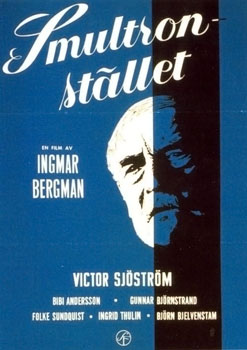
Wild Strawberries (1957)

Directed by Ingmar Bergman and starring Victor Sjostrom, the film follows an elderly doctor who travels by car to receive an honorary degree. Over the course of the day the old man has strange dreams and he also reminisces about his summers as a child with his family. He travels with his daughter in law and along the way they pick up energetic young people, deal with an unhappy married pair, stop at a gas station, and visit the old man’s lonely mother. The days events force him to face his past and realize his various faults. He also recognizes soon enough he will die. However, he finally comes to terms with it all and as a result he treats his daughter in law, son, and housekeeper differently. As with many Bergman films, this one is thought provoking. Some of the dream sequences were a bit odd but many of the characters and scenes were enjoyable.

 
5/5 Stars

Playtime (1967)

67d66-playtimeoriginalposterStarring and directed by Jacques Tati, this film is his most ambitious work yet. The film opens in a Parisian airport with droves of tourists. Then the audience ends up looking into an office high rise full of glass, cubicles, elevators, and escalators. All throughout we observe many characters including Mr. Hulot who seems strangely out of place in this modern, suburban city. He ends up at an international expo, visits a friend’s home in the evening, and then ends up taking part in the disastrous opening of a night club. Hulot becomes acquainted with an American tourist before she returns home from her Parisian adventure. At times this film is almost like a giant ballet, with often subtle humor, and a stream of events only connected by the characters they involve. The architecture picks up where Mon Oncle left off, the sets are on a grand scale, and even the clothing of  most of the people seem to fade into this world. This film is also international as well as universal because it is more about the image and sound than dialogue. After it all I was left with a satisfied smile. It may not be for everyone but for me personally it was a joy to watch.

5/5 Stars