Unknown's avatar

About 4 Star Films

I am a film critic and historian preserving a love of good movies. Check out my blog, 4 Star Films, and follow me on Twitter @FourStarFilmFan or Letterboxd. Thank you for reading!

Lust for Life (1956) and Van Gogh’s Starry Night

“I don’t care about being respected. I’m trying to live as a true Christian.” – Kirk Douglas as Van Gogh

It seems the world over has remained transfixed by the life of Vincent Van Gogh, which is rather ironic since he failed to gain much traction in his own lifetime. For many, he remains one of the obvious prototypes of the tragic artist — the man who cut off his ear — driven to personal and psychological anguish.

I was lucky enough to see an exhibition of his work in Japan charting one of his most unlikely sources of inspiration. The documentary Loving Vincent committed to his style completely to tell his story in the most visually honoring way possible. Don McLean penned a stirring ballad for him on his American Pie record. Van Gogh even garnered his own Doctor Who episode with a very poignant appearance by BIll Nighy. Lust for Life can be added to the varied lineage of cultural artifacts looking to make sense of his career.

I’m always looking for individual ways in which to enrich the staid biopic with something vibrant and singular. Lust for Life starts off promising by hardly acknowledging Van Gogh’s art at all. Instead, he’s a failed minister eventually sent off to help the unfortunate mining classes because it’s the only vocation worthy of him. It’s dreadful work, both dirty and unimaginably dangerous. What makes it worse is the many children forced to labor in the underground mining shafts.

He’s soon inspected by two pompous “God-fearing” men who are scandalized by the life he’s keeping. His impoverished, unkept lifestyle degrades the reputation of the church and lacks a sense of decency in their eyes. They fail to see he takes the claims of Jesus profoundly serious by loving the orphans and widows.

On a later occasion his brother Theo (James Donald) comes to check on him and reason with him. He’s also a well-respected man, but there’s a difference here. They share a deep bond of brotherhood and every time they talk, Theo, who’s so soft-spoken in nature, shows how deeply he cares for his brother.

Eventually, Vincent is persuaded to return to his parents’ home. While it’s a positive progression, he still feels like an unkept out-of-touch outsider on so many levels.

It’s a far fiercer portrait of spiritual conflict and crisis than I was expecting because Kirk Douglas makes Van Gogh burn with something — it’s not just some mundane sense of art and ideas — this is his entire being pushing back against a Christian society and clergymen who don’t understand what they preach.

They live by propriety and rules rather than the authentic humanity that they have been blessed with. However, in the same breath, Van Gogh’s a deeply flawed hero, and though he means well, he struggles with all sorts of ills.

At the same time he’s wildly passionate about love, desperately yearning for someone even when the other person is not drawn to him. It’s painful to witness. He also still kicks against the goads of societal convention. Because those around him deem Christian ministry to be a higher vocation than the common laborer or any tradesman or artist.

He takes a radical philosophy: There are many ways to serve, one man from the pulpit and another from a book or a painting. This is his vision, but he needs guidance and a benevolent mentor advises Van Gogh, “You need skill as well as heart.” About now Malcolm Gladwell might mention the great master gaining his 10,000 hours.

However, he’s still a deeply compassionate creature finding another soul at rock bottom and for a time they comfort one another though bitterness and disillusionment slowly finds their relationship souring. There are other crucial events in his life. The Impressionists Exhibition not only shakes up the art world, it flips his own paradigm upside down.

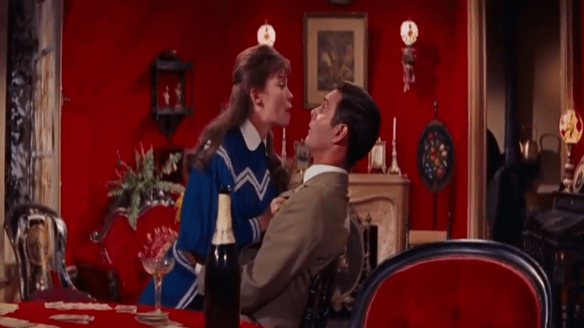
He lodges with Theo in Paris and brings his usual strife to bear. Later, he makes the acquaintance of Paul Gauguin (Anthony Quinn), an outsider of another kind. This and other inspirations lead to a frenzied output thereafter. One of the noted moments has Van Gogh slumped on a table with a mostly empty bottle. The camera pulls back and we see one of his most famous images before us: The Night Cafe.

I realized that although it serves Minnelli’s tendencies well, there is a literalism in the set design that is at once a simple way for recognition and also leaves little space for the colors inside of the painter himself to bleed into the world.

And yet by the same token, I recognize you could easily make the case that there is some form of empathy in all of this. Whether we realize it or not, perhaps Minnelli has colored the world as Van Gogh sees it and not the other way around. We are seeing his surroundings precisely as the painter does (or Minnelli as well).

I may be wrong, but if I have any conception of the man, it was not that he painted the world as it was in a physical sense. He saw the world like no one else with this fire and passion — this lust — and it was made wholly manifest in his paintings. Not just realism or impression but something more, alive with what only he could offer.

Although the picture begins with intriguing themes of religious faith and the struggles of uncompromised artistic vision, it does seem to boil over into a more simplified narrative of the troubled artist with psychological duress. It’s never able to consider all of its various strands as we watch Van Gogh capitulate.

Douglas’s performance is made by his usual tenacity — this innate weightiness he provides — whether entirely real or partially imagined. At its very best it matches our sense of Van Gogh and his art, not that this is realism or mere mimicry (though Douglas looks pretty convincing); it comes down to this very basic ability to exude passion. I’m not sure it is enough and most of the picture’s other characters are flat in comparison.

However, this too could very easily be by design. Theo is as good and decent a man as they come. Everyone else seems unable to understand Vincent. They can’t cope or appreciate his ardent vitality. Gauguin is closer and even their camaraderie turns into a feud. They come to represent a dichotomy between the artist bankrolled by his brother and the artist who must support himself to keep up with his work.

There’s too much spirit in Lust for Life to get totally hung up on any of its inadequacies as yet another Hollywood-style biopic. It moved me more than might be expected, and it’s easy to see Minnelli’s kinship with Van Gogh, both in their devotion to evocative mood and color and their personal vision as creative minds.

No one dashes splotches of color on a canvas like Van Gogh. It almost feels hurried and unkempt, but there is an unbridled ferocity and energy to them even as paint swirls around and the perspectives unnerve us.

Minnelli seems far more straightforward, and yet there are very few directors with such a prominent eye for all manner of tone and texture. When it comes to the canvas of cinema, he was a luminary in his own right.

I only wish we had gotten a bit more of the famed painter’s existential struggle, but then again, maybe the fact that we don’t know speaks volumes in itself. Because I am fascinated by what the artist Mako Fujimura christens the “mearcastapa.” These are the border-walkers of Beowulf, and he argues artists function much the same way in cultures.

Van Gogh was a man born into a Christian society, sincere in his pursuits, and yet never completely welcomed into the inner ring. Likewise, in the art world, his works along with those of Gauguin and Monet were scoffed at — tantamount to scandalous finger painting compared to the great masters of old.

But if Lust for Life doesn’t answer all the myriad of existential doubts floating around in Van Gogh’s legacy, it’s only necessary to look at his work for further elucidation. Fujimura pointed out something fascinating I had never fully considered. “Starry Night” is one of Van Gogh’s most prominent works, where the world and the terrestrial beings above seem to be untethered and totally erratic, and yet at the center of it all like a lightning rod to ground the whole painting is the spire of a church. It’s not about the building but what it comes to represent.

The painting moves me even more so because there’s this inherent sense that while Van Gogh lived within the chaos — of his own demons and personal struggles — he still had a manner of making sense of the world. It seems to me that this is the calling of artists regardless of color or creed. We seek out beauty and ask questions but we also try and find some semblance of order out of the entropy. Lust for life must be mediated by something greater than ourselves.

4/5 Stars

Brigadoon (1954): Cyd Charisse and Gene Kelly

I have fond memories of traipsing across the Old Course in St. Andrews and attending the Military Tattoo near the Royal Mile in Edinburgh. There’s something untamed about that landscape remaining austere and beautiful, perfectly suited for tartans, bellowing bagpipes, and the rat-ta-tat of drums. The country feels wild and free and still imbued with years of ancient history.

Brigadoon is hardly an authentic look at highland life. It was based on a Broadway play after all. They traded out the actual highlands for a studio backlot to save money. But as such, the world feels like a total Hollywood confection from Vincente Minnelli. I hardly mind just as I barely mind the California heather of National Velvet for a stand-in.

It comes down to representing a place that is more mythic than a concrete place we know firsthand. It exists in our memories and recollections. Now, this is dangerous: It can lead to a myriad of stereotypes and misconstrued truths. I’m not sure how cultural appropriation or even “whitewashing” ties into this tale, but it’s true Hollywood has borrowed from the Scotts and spun their own version.

However, the film itself couldn’t be more pleasant. Gene Kelly and Van Johnson are lost up in the fogs of the highland in the midst of their pheasant hunting expedition. Meanwhile, we get acclimated to the village of Brigadoon. There’s a charming number, “Waiting for My Dearie,” with Cyd Charisse surrounded by all the fair maidens of the town as she dances with a gal with a pot for a helmet and a mustache on her lip. They all prepare for the marriage of Fiona’s sister to a local lad.

Johnson and Kelly are soon integrated into the community through a moment of gaiety as the tune “Bonnie Jean” becomes emblematic of the merry way of life these people live where song and dance are the only conceivable way to express themselves. In this way, it seems to suit the parameters that the musical inherently provides.

However, something else happens: Tommy (Kelly) falls for Fiona (Charisse) almost at first site. What else would you expect because every character he ever played must fall hopelessly in love with the girl. This is what Fred Astaire did a generation before them.

He’s pleased to find it is the younger Campbell lass who is getting married and not the elder. “The Heather on The Hill” feels like the lynchpin number. We saw something similar in “Dancing in The Dark” with Astaire playing opposite Charisse in The Band Wagon. Because this is the moment where all other distractions momentarily subside, and we are able to distill this movie down to its core relationship. What other emotion could dance hope to convey but the rapturous, ineffable palpations of romantic joy.

It’s enchanting to watch their forms move so fluidly through the space where they become an extension of the world around them. Where a limb of a tree or a basket is part of their movements and the dance that they are undertaking together. It says all the things they feel for one another not in word but in deed and action, and it feels all the more evocative for this very reason.

It occurs to me that dance often comes in two distinct forms: there’s the utterly communal and then the strikingly intimate. They bring people together, reflect their woes, and put a voice to their romantic elation. Sometimes they’re even comic. Johnson more than provides his share of sardonic wisecracks, and he’s quite good in the role.

However, my main qualm with the picture is in the story department. Now the film is based on a stage production, and that’s where the initial weakness lies. Because this is yet another tale of transcendent love. We learn something telling about Brigadoon midway through the movie, which would have been helpful for setting the stakes early on.

It’s hardly an “I See Dead People” revelation, but it tries to give some context to why these folks live so isolated from mankind — all but forgotten — and so Fiona takes them to the village schoolmaster to tell the tale. Salient or not, the movie slows down to explain itself and thus loses some of its luster in the process. They don’t even try and use song and dance to save it from the horrors of over-exposition.

Likewise, the ending feels all crammed together and while we have the tent pole moments one might expect from a Golden-era MGM musical, the narrative cohesion simply is not simpatico. The two travelers leave Brigadoon behind for the urban hysteria back in New York. The juxtaposition is obvious and Tommy’s having none of it; he vows to return to the one place he’s ever truly been happy.

It’s dubious that a wise guide in one moment can explain the mysterious nature of Brigadoon, and then still later can announce with a grin how grand romance can supersede all manner of hindrances between two lovers. It’s like the most convenient cop-out explanation — the path of least resistance.

There’s the expected reunion. It’s what the story is meant to build up to — there’s this sense of appreciation, after all, Gene and Cyd are back together as they should be. But something else nags at us. It feels hollow because the story doesn’t gel — it doesn’t feel earned — and we wanted this reunification more than anything. It’s a shame because otherwise I’m a big fan of what Brigadoon represents and no matter its flaws, it still remains an underrated musical.

I’m not surprised Charisse voiced it as her favorite picture with Gene Kelly. Their scene together in Singin in Rain is a provocative showstopper, and It’s Always Fair Weather blooms with a melancholy and timeliness in the television age. In Brigadoon, you could easily argue they share some of their finest individual moments together regardless of your verdict of the overall film.

3.5/5 Stars

Vincente Minnelli’s Films (1946-1955)

Undercurrent (1946)

Undercurrent hardly holds a substantial place in any noir conversations partially because Vincente Minnelli’s reputation in part seems antithetical to the dark style born out of chiaroscuro and German Expressionism. His background was squarely in luscious art design and stage productions.

Likewise, the combo of Katharine Hepburn and the two Roberts: Taylor and Mitchum, is not one that quickly springs to mind. However, there are some merits to it simply for the sake of it being different; not dramatically, these types of psychological women’s pictures were very much en vogue during the ’40s.

It’s the pieces assembled that feel unique if somewhat ill-suited. Still, the curious hybrid of tones and talents certainly is a historical curio more than intriguing to the invested party.

I almost have trouble buying Hepburn as a reticent, uncomfortable outsider among the D.C. elite her new husband Alan (Taylor) knows, a woman holding drinks in hand just waiting for someone to talk to. But if I don’t completely believe it, she does earn my empathy.

Mitchum, the legendary mule of RKO was simultaneously earmarked for 3 or 4 pictures at the time, and so he doesn’t show up in Undercurrent until much later. Still, he has the benefit of casting a Rebecca-like influence over the picture.

After an hour of building him up, we finally get sight of Mitchum, and we know where this story is going. Because he’s a real human being and fairly innocuous to the eye. As the presence of Mitchum begins to exert itself on the picture, the marital bliss of newlyweds grows more and more harrowing by the minute. We have a picture in the same vein as Suspicion and House on Telegraph Hill.

Despite choosing the part, the constraints of the role don’t feel totally in line with Hepburn’s talents. She isn’t a shrinking violet or the kind of timorous beauty befitting Joan Fontaine or even Ingrid Bergman. Robert Taylor is mostly adequate in the vengeful husband part. He flip-flops efficiently between these stints of gracious charm — a perfect husband and lover — then, becomes clouded by these perverse streaks of jealousy and rage.

3/5 Stars

The Pirate (1948)

It’s plain that The Pirate is born out of the traditions of the 1940s Hollywood lineage like Blood and Sand or Black Swan, even Gene Kelly’s own Three Musketeers. However, between the bright evocative staging of Vicente Minnelli and the instant performance-driven rapport of Garland and Kelly, it works quite splendidly with what it has to offer.

Today it doesn’t hold much of a reputation, and I would stop short of saying it’s a minor masterpiece. What we do have is a picture banking on the charisma of its leads and a certain pictorial opulence supplied by its primary mastermind.

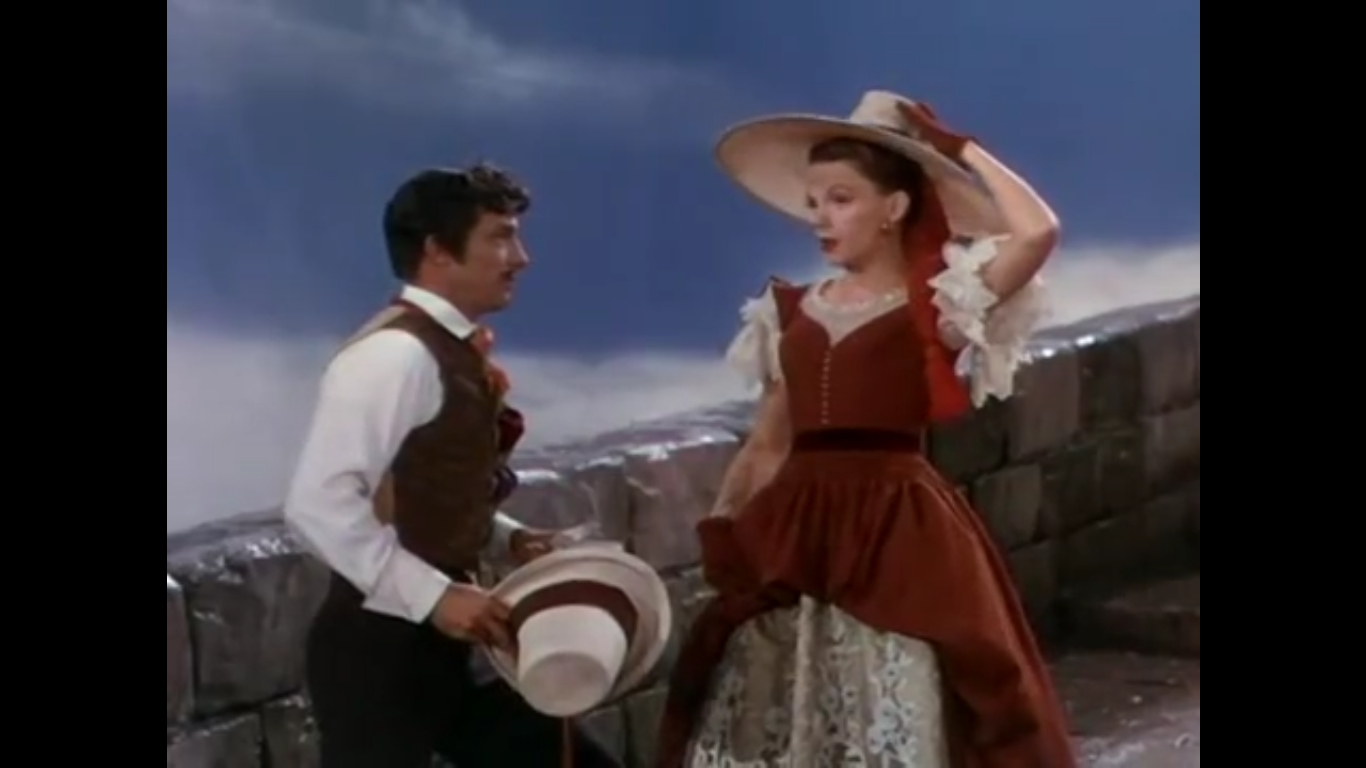
Kelly, taking all the niñas of the town by storm, is full of allure and his usual magnetism as he twirls, leaps, and bounds between all the pretty girls. It’s all about the patter between the stars as he plays the foxy street performer, and Garland is the put-upon maiden who is betrothed to another man. His vocation gives the director license to use these elements of theatricality and faux drama to tell the story.

What do I mean? It could be a story of tragic, unrequited love. It might just as well be a tale of marauding pirates, and yet somehow, between the song and dance, it becomes a kind of tongue-in-cheek comedy of two lovers perfectly suited for one another being thrown together.

There are moments where Garland and Kelly seem to be playing in a separate movie, or at least they are in on the joke with the rest of us, even as they mess with each other. Trashing his apartment feels like the highest form of romantic tension only for the drama to become slightly heady again: Kelly is set to be hung as the dreaded pirate Macoco. Is it a first to have a musical number performed under a hangman’s noose? I’m not sure.

Thankfully, he gets some stellar support. While I’ll be the first to admit “Be a Clown” feels like a less funny prototype for “Make em Laugh,” if you’ve never seen the Nicholas Brothers, it’s a small recompense to see them join Gene Kelly and get some commendation in the spotlight as his momentary equals. It feels like a flawed but heartfelt apex to a picture that could be described in much the same terms.

3/5 Stars

Madame Bovary (1949)

Madame Bovary is the kind of trenchant literary work the Production Codes would go to all costs to declaw. In one manner, it’s somewhat remedied by James Mason’s framing by providing a mostly blase narrative device to enter the story.

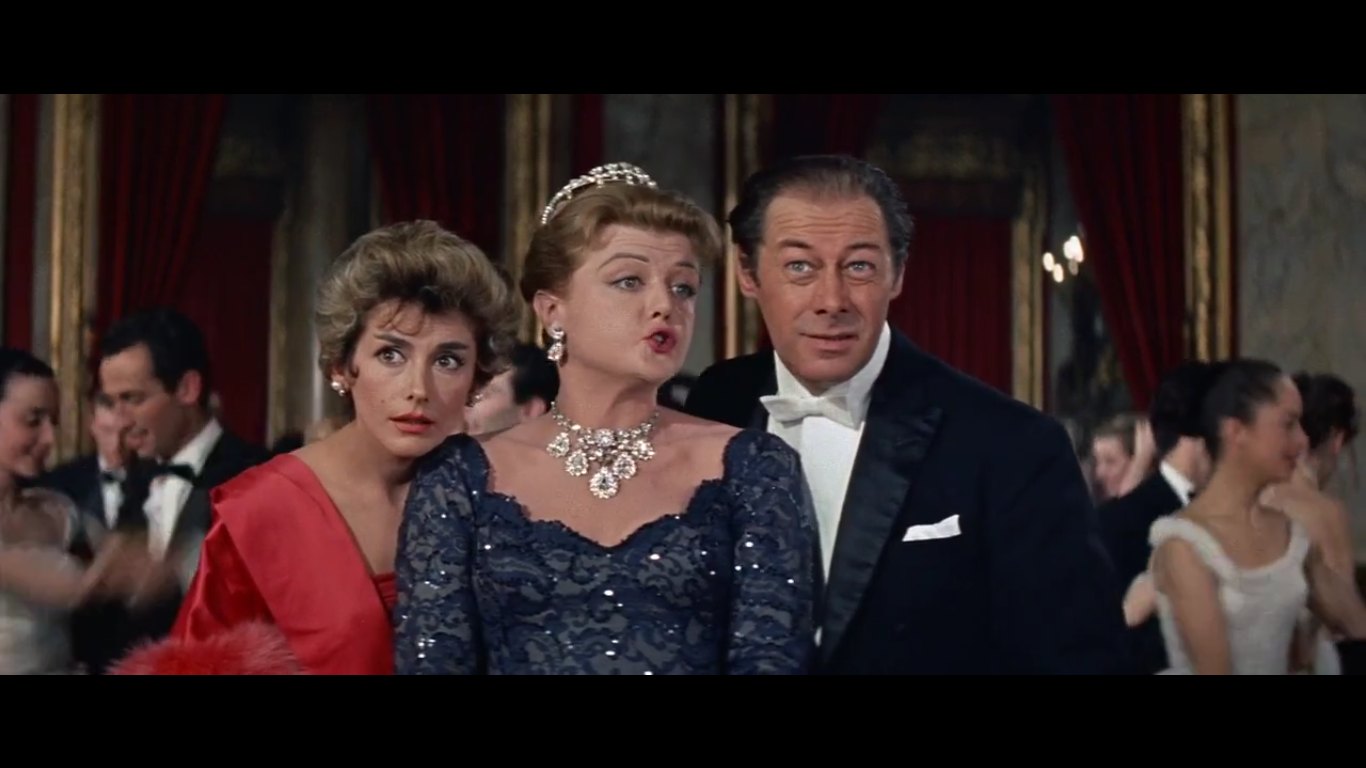
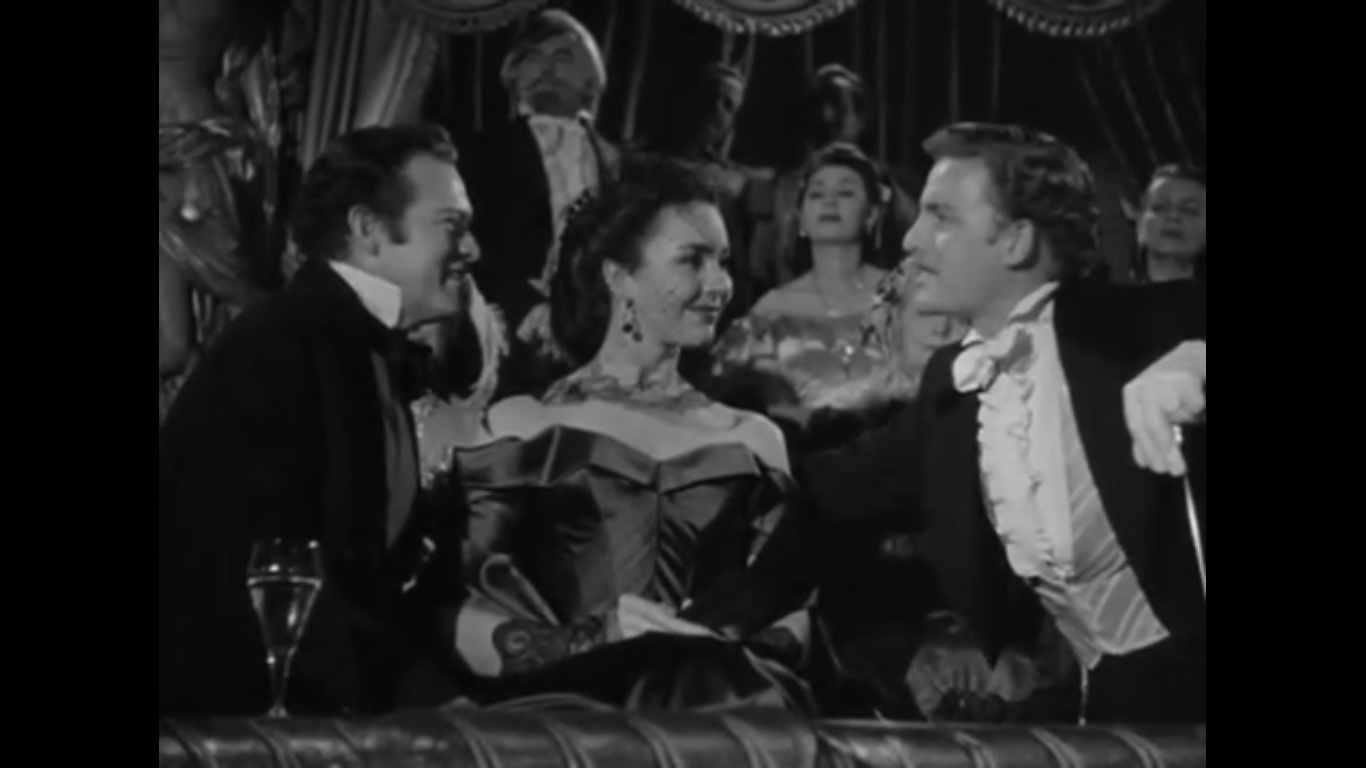
Even as something leaner in budgeted black & white (one could hardly confuse The Pirate with Madame Bovary), it’s still the same Minnelli. The ball sequence spelling the ascension of Emma (Jennifer Jones) as a society darling, while somewhat compact, exudes an impressive opulence.

The director makes sure to follow Jones’s incandescent form as she prances and waltzes her way across the dance floor with great distinction. Her gown alone is enough to make the upper classes stand up and take note. The dashing Louis Jourdan is certainly more than aware of her. It’s totally taken up by the kind of swirling euphoria also holding a place in the oeuvre of Marcel Ophuls — Letter from an Unknown Woman and Earrings of Madame Despring instantly to mind.

It becomes more and more of a gothic drama as things progress, overtaken by gales of wind, thunder, lightning, and an incessant downpour of rains to go with the equally tumultuous score of Miklos Roza.

However, more importantly, Emma becomes possessed by all of her own ambitions and preoccupations. She is emotionally distant from her husband (Van Heflin), absent from her child, and totally involved with other men. She entreats them to take her away from such a dreary life, constantly prone to these histrionic gestures of love and loss at the hands of her suitors and husband. They hardly know how to respond to her.

If the terminology was present at the time, she is cut out of the cloth of some kind of femme fatale, albeit born out of the annals of classic literature. Moreover, she is a woman who never seems to know what she truly wants. She sends out an array of mixed signals — living a life made up of so many contours and emotions — and never settling on anything honest.

It’s as if she’s fashioned a kind of fantasy life for herself woven out of her own personal whims though she remains self-destructive to the very last iota of her being. There’s something unnerving about her and Jones plays her as such; it’s easy to understand how society was scandalized by her because she does not live by societal norms. Mason’s concessions for her character aren’t enough to totally wipe out the harrowing impact of the performance.

3.5/5 Stars

The Cobweb (1955)

“What happens if you go into town to the movies? You start screaming or something? They’d think you’re a critic, that’s all.” – John Kerr as Steven

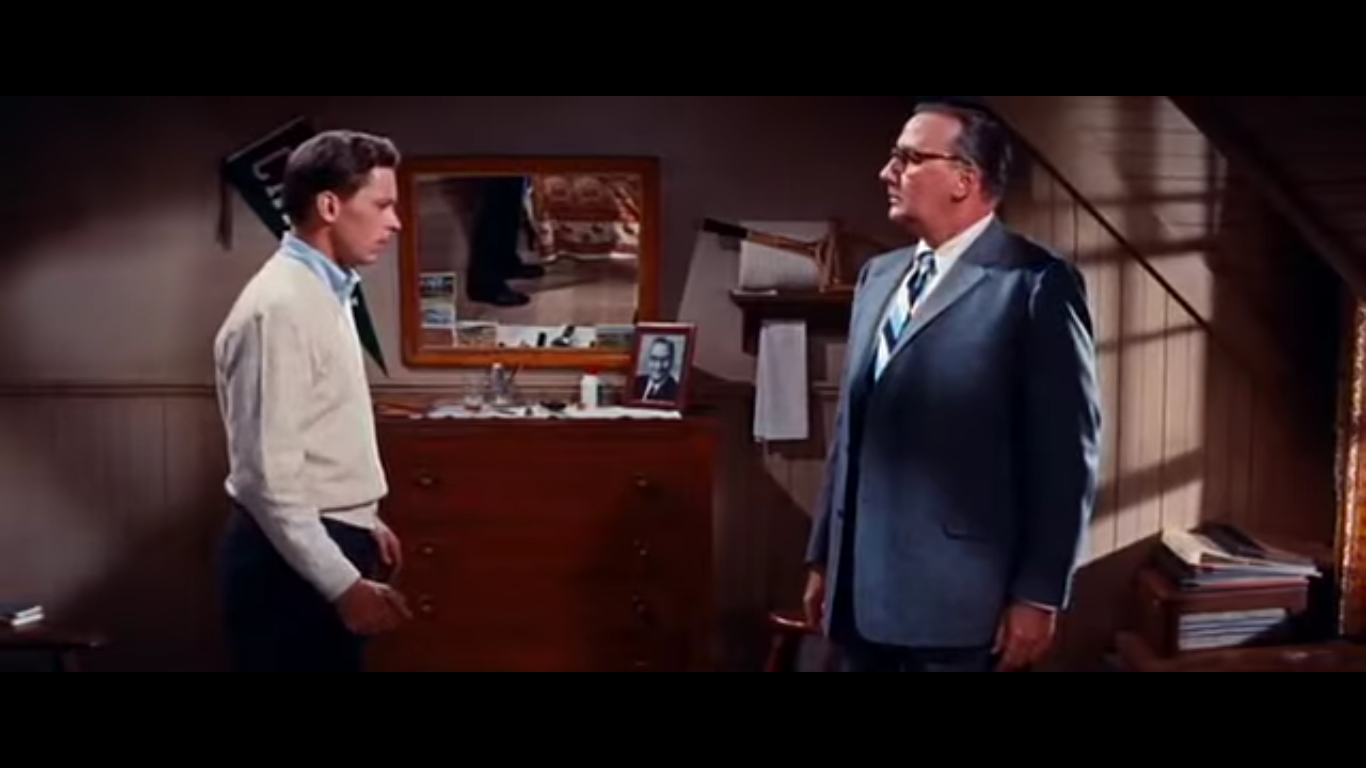
If it’s true you can make a screwball comedy like Easy Living (1937) about a fur coat falling from the sky, then it’s equally possible to make a portrait of psychological horror about drapes. The Cobweb busies itself with the vast array of interpersonal relationships taking place on the grounds of a psych ward. Richard Widmark does his best to aid his patients in their recoveries as he juggles familial and boardroom responsibilities. It’s no easy balancing act.

For a film that is mostly disregarded, it’s easy to clump it together with something like Executive Suite (also produced by John Houseman) with one of the most phenomenal assortments of players one could hope to cobble together during the golden era of Hollywood.

Lilian Gish is at her most ornery but lest we forget, she truly is the queen of the movies. Charles Boyer and Lauren Bacall are equally crucial touchstones of film history, playing two respective love interests as Widmark struggles to connect with his wife, Gloria Grahame. Even ’30s scream queen, Fay Wray, has a brief appearance in a picture that boasts Oscar Levant and then the up-and-coming talents of John Kerr and Susan Strasberg.

In one scene with all the various folks blocked throughout the room, it’s almost difficult to distinguish who’s a patient and who’s not, but if we are to appreciate this drama, it doesn’t half matter. Widmark falls for another woman. Grahame flaunts her charms and goes looking for love from Boyer, who is now mentally compromised. Gish is incensed about having her opinions disregarded. Some of them are petty and others are stricken with loneliness and actual psychoses.

The palette becomes such an evocative way to color the emotional undercurrent and elements of suburban life, not unlike some of Nicholas Ray‘s work or something like Strangers When We Meet. The visual world is beautiful; still, it lets loose an environment full of pain and inner turmoil. Although Minnelli handles his characters deftly, there’s no place for the film to go but toward a hysterical fever pitch.

3.5/5 Stars

Cabin in The Sky (1943), Georgia Brown, and Lucifer Jr.

Like Stormy Weather, it’s a slightly unnerving form of mimesis as Cabin in The Sky sets about depicting the lifestyle of Blacks. There’s not a white folk to be seen, and yet there’s no doubt they have been integral in developing this musical fantasy out of a Faustian-like folk tale.

It’s telling that two of the only other mainstream films with prominent onscreen representation of Blacks were the religiously-tinged musicals Hallelujah and Green Pastures. Whether real or imagined, there was this perceived sense that Blacks were only identified with these limiting salient features. This was their only utility onscreen and thus, Hollywood kept on representing them in a narrowly defined manner.

It’s not like this is simply a modern observation with renewed enlightenment of the 21st century. First-time director Vincente Minnelli noted it too in a later interview, “If there were any reservations about the film, they revolved around the story, which reinforced the naive, childlike stereotype of blacks…If I was going to make a picture about such people, I would approach it with great affection rather than condescension.”

The eponymous Cabin in the Sky number is a perfect example of how Minnelli subtly develops the cinematic space, in this case expanding the intimate moment of his leads into a much broader chorus of singers. At least pictorially, the director seems to have his performers’ interests in mind.

In the opening moments, a booming minster calls upon two of his local parishioners: the devout housewife Petunia (Ethel Waters) and her backsliding husband Little Joe (Eddie Anderson), a hapless man prone to worldly vices like gambling. He wrestles with the devil on the daily while his bright-eyed wife prays ardently for the Lord to look with disfavor on his gambling and sure enough, he never wins a plugged nickel.

Be it box office repeatability or plain ignorance, there is no contest. Blacks had very few outlets in movies. But the talents are undeniable. It’s intriguing to think that while Jack Benny was performing in a Nazi satire like To Be or Not to Be, Rochester was finally getting out of his shadow, albeit playing a role that pretty much stayed true to his usual characterization. In both cases, it might be difficult to teach old actors new tricks, harder still is getting an audience to accept them as such.

In its day, the NAACP lauded the film. Most of the performances have a jaunty affability; it’s not about a lot of bells and whistles, the wall of orchestral sound notwithstanding, but it’s an agreeable diversion. One cannot help but see Ethel Waters as emblematic of the film: all smiles while she belts out “Taking a Chance on Love.” She brims with pious candor even as the actress looked to punch up her rather thankless role and give it more substance (and religious morality).

Somewhere between Hellzapoppin’ and Stormy Weather, we have a Faustian struggle done up with the musical trimmings and the stereotypical religious leanings of the time. The film can be considered using the same paradigms as a film like Here Comes Mr. Jordan or even A Matter of Life and Death, in this case, exemplified by a chorus of Black angels and Black demons doing a bit of spiritual jousting.

Little Joe is a simple fellow. His only aspiration, when he’s not lounging in a hammock, is to become a hotel elevator operator much to his wife’s delight (The picture makes a constant punchline out of his illiteracy).

At his wife’s behest he’s busy with the process of “getting saved,” and he has an appointment with repentance, but some of his gambling partners show up on the steps of the church ready to collect their outstanding debts.

God’s General and Lucifer Jr. (Rex Ingram in a particularly gleeful performance) use Little Joe as a spiritual battleground. I’ve known it for some time but haven’t had a reason to acknowledge Rex Ingram of late. It’s a pleasure watching him because he seems in on the joke more than he is a victim of the scenario like so many Black performers.

His Idea Men in Hotel Hades include none other than Louis Armstrong and two of the most troubling figures in 20th-century representation of African-Americans: the googly-eyed Mantan Moreland and bubble-headed Willie Best. They deserve more care and nuance than I can provide, so for the time being I’ll defer to others.

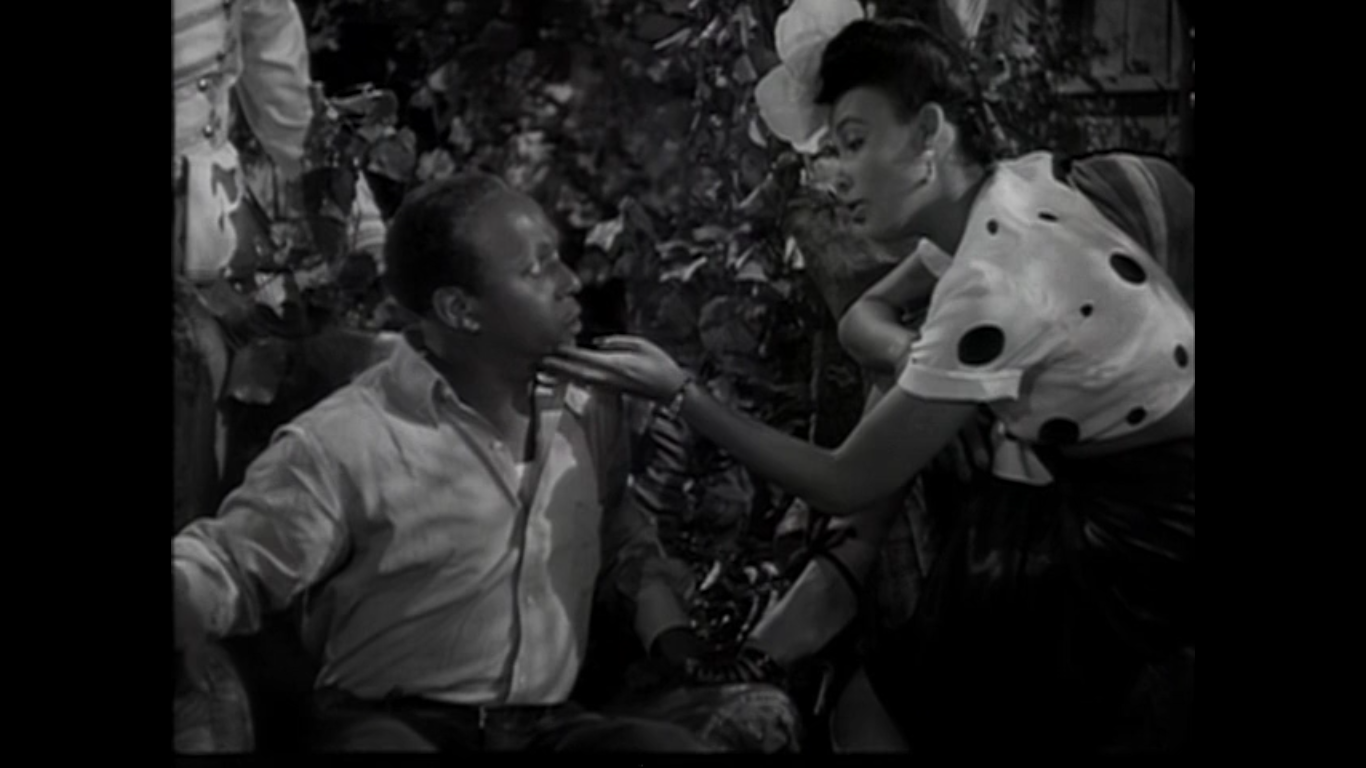
While there scenes in the hellacious office are talky and promote more dubious theology, they spin a couple of webs to entangle Little Joe. First, there’s sweet Georgia Brown. Lena Horne dons her best perfume and polka dots to knock his socks off.

She’s introduced with a sultry jazz motif, moseying along as Ingram plays the serpent kicked back on her bed, whispering little intimations into her ear as if by chance. Horne positively melts the celluloid as she coaxes Rochester toward the path of vice in “Life is Full of Consequence.” It becomes a marvelous dueling duet between the two performers forming one of the core conflicts of the film as Little Joe yowls, “I’ve been burnt more than twice.”

It hardly matters that a bubble bath scene deemed too racy for the era was totally excised. Horne leaves her mark, and it’s a memorable role. However, she deserved better in her career going forward.

Lucifer Jr. is surprised by the human’s steadfast fidelity to his wife and so Louis Armstrong dreams up a new scheme (“Give a man money. Watch him act funny”). An Irish Sweepstakes engenders consequences and misunderstood intentions of its own. It seems secular society has won out as represented by the blasphemous (and ridiculously fun-looking) halls of Jim Henry’s. It’s a hangout full of exuberant snapping, swinging, and Duke Ellington himself.

The overwhelming, overflowing of the moment is a joy to be a part of highlighted by the dapper dancing extraordinaire John Bubbles (John William Sublett). In his hat and cane tap dancing ensemble, ostensibly, it’s hard not to see echoes of Fred Astaire and in truth, in the early days the famed white hoofer was taught and no doubt patterned his style after his Black contemporary.

When Bubbles and Horne get these glorious close-ups to sum up a couple of their numbers, it feels deserved like a resounding show of recognition of careers that were never going to garner the plaudits of their white counterparts.

While not everyone will likely appreciate jazz being equated with worldly debauchery, it serves as a convenient metaphor. In contrast, religion seems regressive and prudish, anti-fun, with a God who is a cosmic killjoy.

The musical’s catastrophic ending is some humdinger. It doesn’t seem like typical Minnelli until we’re met with the aftermath, and we see how wonderfully conceived this smoke-filled, jagged-edge pile of rumble is as a newfound visual labyrinth.

Again, it’s not to be taken too seriously, but Little Joe’s life is reflected as a mission to balance the books in order to get through the pearly gates. After all, the heavenly ledger must be rectified. It’s mostly Hollywood hokum.

Instead, I feel compelled to end with something that moves me. Rock and Roll pioneer Sister Rosetta Tharpe sang the gospel spiritual “Journey to The Sky,” which conjures up a similar metaphor and begins like so:

There’s only one thing that I long for
When I reach that heavenly land
To see my Jesus in His glory
As I go from land to land
There’s only one thing that I long for
When I reach that heavenly land
And I know, I know we shall see Him
In that sweet, oh My Lord, peaceful rest

3.5/5 Stars

Hallelujah (1929): Daniel L. Haynes and Nina Mae McKinney

Hallelujah (1929) is one of those films that takes some leg work in order to grapple with what it fully represents. But like some of King Vidor’s broadest, most humane portraits, it has moments pregnant with all sorts of residual meaning.

We begin with iconography that feels troublesome even as it feigns authenticity. Happy-go-lucky Blacks sing a joyful chorus of “Swanee River” as they labor in the cotton fields. We are still on the cusp of the sharecropping generation — Blacks who lived resolutely poor — where Jim Crow regulations prolonged the Antebellum-era oppression.

Zeke (Daniel L. Haynes) is a stout-hearted man with broad shoulders, who exudes a jovial spirit. Life is hard, but his family is close-knit, and they find ways to glean contentment out of every day. This is Vidor’s glorified nostalgia for the cotton fields and spirituals from his childhood.

It brings to mind an excerpt from Frederick Douglass’s autobiography that frames these images quite differently. He says the following:

“I have often been utterly astonished since coming to the north, to find persons who could speak of the singing among slaves as evidence of their contentment and happiness. It is impossible to conceive of a greater mistake. Slaves sing most when they are unhappy. The songs of the slaves represent the sorrows of his heart, and he is relieved by them only as an aching heart is relieved by its tears.”

Later, Zeke is confronted with human urges; in one solitary moment, he’s overtaken by the devil, kissing a young Black woman as she plays the wedding march for the ceremony right outside. Far from simply being a warning peal of drama, it suggests an inherent predilection toward lust in the man’s heart. It has nothing to do with race, but the insinuations are clear.

Now it’s easy to cast King Vidor as another southern boy in the mold of D.W. Griffith and though Hallelujah feels a fair bit more palatable and life-giving than Birth of a Nation (that’s not too difficult), there’s no doubt it still caters to an archaic and paternalistic view of Black culture.

There is a Mammy character, and she sings the children to sleep, rocking away, after a long, hard day in the fields. Then, she gives her oldest grandchild a playful smack on the rear. He’s too big to be cradled in her arms.

The world is saturated, even inculcated by prayer and song because these are the sinews that keep families together in a harsh life of daily toil and systemic oppression. And yet the movie remains as an almost one-of-a-kind relic chock full of the kind of recorded history we can imbibe no other way. At the very least, Vidor’s intentions seem sincere.

However, we must also acknowledge Nina Mae McKinney, who became one of the pioneering Black film stars of the 1920s no matter how brief her time in the spotlight was. Her Chick is frisky and full of joy in the dance hall, but she’s also in cahoots with a gangster, duping drunks out of their hard-earned cash.

McKinney, a mere teenager during filming, lights up the screen in a way that feels incandescent, acting as a precursor to other musical talents like Lena Horne and Dorothy Dandridge — women who were only allowed a small amount of cultural currency in Hollywood’s landscape.

As she seduces Zeke, we come to realize, that it is from her role we get other saucy street tramps like Georgia Brown and Carmen Jones. Again, we must reckon with archetypes being propagated in front of us that were simultaneously groundbreaking and injurious.

With Zeke caught in a war over his soul and the casting off of his lusts, he gravitates back toward the church, devoting his life to becoming a preacher, and we are reminded of what a seminal force the Black Church and gospel music was and still remain.

When Zeke rides a donkey into a town for a religious revival, only to be accosted by two very familiar figures, the biblical imagery is not lost. No matter how besmirched he was in the past, his zealous transformation sculpts him into a Christ-like figure mocked by the sinners in his stead.

The latter half of the picture is enveloped by these scenes of euphoric, clamoring, overwhelming spiritual revival. What’s striking about them is how they don’t feel done up in a Hollywood fashion. They feel raw and real, where the music is organic and not merely a musical aside to spruce up a broader narrative. Otherwise, Hallelujah finds itself wallowing in morally inflected melodrama punctuated with quite the surprising chase scene through the muck and mire of a swamp.

Of course, it must settle back into its contented status quo brought about through the continued power of song and the lasting stability of the family. It is a happy ending, although for Blacks living and working in 1929, on the eve of the depression, you wonder if such a thing was even possible.

It’s not meant to be a judgment on anyone, but I do find it intriguing that for all the lasting stereotypes and any of the elements that might ruffle modern sensibilities, there’s something stirring about seeing these performers burgeoning with joy and emotion.

Mind you, it’s not something found in the construction of the plot. These are the made-up faux realities that stink with the stereotypes of the time. But when we’re able to get away from that, even momentarily, it feels like there’s still something lasting about Hallelujah because suddenly it becomes about irrepressible humanity — people, resolute and proud — and it’s not something foisted upon them for the sake of an audience.

There are moments in Vidor’s picture where his performers get to be vessels of dignity before sinking back into the dated rhythms of the narrative. For better and for worse, this film would beget many progeny and be one of the foremost purveyors of Black representation moving forward.

For that, it is a landmark and that’s not an entirely auspicious distinction. Movies like Green Pastures (1936) and Cabin in the Sky (1943) are built right out of this tradition making Black culture a sometimes overly simplistic amalgamation of religiosity and fervent song.

There seems no better place to end than with the words of the film’s mostly-forgotten star Daniel L. Haynes: “I cannot say what our race owes King Vidor and Metro-Goldwyn-Mayer — there are not words forceful enough for that. Hallelujah will, as Moses led his people from the wilderness, lead ours from the wilderness of misunderstanding and apathy.”

These words feel simultaneously deeply optimistic and effusive in their praise while underlining some of the lasting issues endemic to the film and the historical moment. We must deal with it all in kind.

3.5/5 Stars

Afire (2023): A German Summer Movie a la Rohmer

Christian Petzold is a filmmaker I was introduced to over a decade ago, and I would consider myself a passionate fan. I’ve seen every one of his films since then, and I would gladly share him with anyone who might listen. There’s some pleasure in championing a director who’s not as much of a household name as one might hope. 

The other wonderful thing about Petzold is what an ardent cinephile he is, but he’s also quite loquacious and charismatic. Obviously, English is not his first language, but he always does wonderfully candid and thoughtful interviews all across the festival circuit. I can imagine he would be quite the person to grab a coffee with. He’s shared on multiple occasions how he crossed paths with Abbas Kiarostami in New York City under such circumstances. 

Forgive me for burying the lede, but I appreciated Afire because, like many of the director’s earlier films, it does feel like it’s deep in conversation with the vast annals of cinema. 

This one in particular feels like a paler, pudgier version of an Eric Rohmer movie. Something in the vein of La Collectionneuse, Pauline at the Beach, or even A Summer’s Tale. I felt vindicated hearing that Petzold was in fact consuming some Rohmer films during the pandemic, but that was only part of his inspiration. 

Reading an interview he cited a significant reference point for his latest effort in People on Sunday. It’s not a film I would have considered in a million years because it’s well, almost 100 years old. But in regard to this allusion, he makes a fascinating observation. 

Unlike Hollywood, Germany doesn’t have a lineage of summer movies about the last day of school or hanging out at the beach with no adult supervision. There’s also no Summer with Monica or Eric Rohmer. 

With men like Billy Wilder, Edgar G. Ulmer, Fred Zinnemann, and Robert Siodmak — all creative collaborators in People on Sunday, they were forced to leave Germany. And when they moved to Hollywood in the wake of the Nazi scourge, their work got harsher with the likes of Detour, Lost Weekend, and more film noir.

The summer had vanished not only from their filmographies but from Germany as a whole. The nation rarely got this opportunity with the ascension of the Nazis and this historical backdrop gave rise to many of the specters which have haunted most of Petzold’s oeuvre.

If you wanted to make a case, Afire is actually Petzold’s most comedic film to date and his closest to romantic comedy. Leon (Thomas Schubert) is staying at his friend Felix’s idyllic summer home out in the forest near the Baltic Sea. They think it’ll be a great place to get away: Leon needs to finish a manuscript and Felix (Langston Uibel) has an art portfolio to complete though he seems far more at ease and prepared to make the most of the tranquil surroundings. 

It starts out as the vacation from hell we might all be familiar with to different degrees. First, their car breaks down, they get lost taking a shortcut, and it looks like Leon might be stranded out at night in the forest with no cell signal. Felix goes off to make his way to the family cabin. 

Eventually, they get there. Except it turns out they won’t be alone. A co-worker’s daughter has set up shop; we don’t know for how long or why. We just know Leon’s plan for an uninterrupted getaway is catastrophically ruined. Strike two. 

The walls are thin and you can hear everything…It makes sleeping very hard and Leon’s even grouchier than he was before. The incessant bugs and the impending fires don’t do much to lighten the mood. 

Leon also seems genetically predisposed to be a moody, pretentious misanthrope of the first degree. Felix is good-natured and thoughtful. He would never think to impose himself on others or make a stink. It comes naturally to Leon. 

The camera takes on his surreptitious gaze which makes me uncomfortable as he spies on their housemate out in the yard before ever officially meeting her. Still, nothing he does can negate Paula Beer. In her work with Petzold, she always comes off as such a charming and intelligent performer who gives so much to the camera. 

Between her last film Undine where she played a modern-day mermaid, and Afire with its landscape ablaze, there’s this pervasive sense of the classical elements permeating the collaboration. It’s this lovely amalgamation of the deeply modern with the primordial. It makes one wonder where Petzold and Beer might go next. 

In the previous film, she was a docent focused on Berlin’s history of urban planning. Here Nadja works at an ice cream stand doling out flavors of “Smurf” sherbet. She’s disarmingly straightforward, cutting through any pretense. It makes her immediately attractive as a personality.

Whereas Leon’s a perpetual excuse machine. He never swims or takes anyone up on anything. He’s the kind of person you try to be nice to by inviting them to stuff even if you don’t want to, and then they decline so many times, you feel exasperated. They’re too blind to recognize you’re trying to do them a favor.  

Leon should be a lost cause, and yet even if we don’t particularly like him, we can empathize with him, and I think all his acquaintances in the movie make us appreciate him a little more. 

Later, at an open-air dinner, he lashes out at the rescue swimmer Devod. He feels like a stereotypical beefcake, and yet belies the image making Leon all the more uncomfortable. Because their new acquaintance was sleeping with Nadja, but he seems like a genuinely nice guy. These don’t have to be mutually exclusive. 

At first, Leon’s defensive about sharing his work; I recognize what a private and vulnerable thing it can be, and still, I wouldn’t give him that much credit. After Nadja asks to read Club Sandwich, he eventually relents. One suspects it becomes a mechanism to try and get closer to her and into her good graces — a way of covering his growing insecurities.

Leon’s also made a big deal of setting up time with his bespectacled editor (Matthias Brandt) to review his new work. He’s an older veteran, not unkind, but extremely busy. It turns out the full weekend they were meant to have together has been whittled down to one full day and some change. After Nadja invites Helmut to dinner, Leon grows jealous when it seems like everyone else gets a piece of him too. 

He takes great interest in Felix’s art portfolio – the one that Leon either didn’t get or totally disregarded. Then, Helmut trades poetry with Nadja; she recites her favorite poem, “The Asra.” It comes out she is working on a Ph.D. in Literature on Heinrich von Kleist’s The Earthquake in Chile (What she terms the “quake of representation”). 

Leon’s pettiness feels like a symptom of his own making. He knows Club Sandwich is crap. Nadja was honest enough to tell him as much. But he tried to dismiss her criticism; she’s only an ice cream seller. 

He never thought to ask her about what she might be studying. And now with the recognition that not only is this girl better looking than him but also perhaps smarter as well, it’s more than his fragile ego can take. 

Everyone else seems casual and comfortable, enjoying the throes of what summer has to offer. He’s the only one in obvious crisis, slowly imploding until the world around him joins in. 

The fire which was always hinted at continues to rage ever closer. Ash falls over their world like a ruinous dusting of snow. The boys go to tow their car with a tractor. Helmut starts to convulse on the lawn and Nadja takes charge to rush him to the hospital.

I noticed one particular jump cut in the editing involving Leon. He realizes he’s made a huge mistake; he’s been selfish and incapable of doing almost anything. What’s more, what will Nadja think of him? 

The raging conflagration brings with it human tragedy that strips away any remnant of sun-soaked vibes and focuses our story on its purest elements. As we should expect, it goes darker, but there’s another turn in the story. Our perspective changes subtly.

Nadja and Leon are called into the hospital again. There’s pensive voiceover narration to go with the images, and we realize intuitively even as the actions happen in front of us, somewhere in the present or future Leon is writing a new novel. 

I’m led to question if it’s still callous that he seems to be writing the story as the events seem to be happening or is it the most authentic thing he’s ever done? I’m not sure.

Later, he sees Nadja again from a distance. Some time has passed. We’d like to think he’s changed, and we know he’s wracked with guilt. Their eyes lock in recognition. Petzold cuts before there’s anything else, and it feels like the quintessential ending. We can fill in the rest with whatever we want.  

I’m still trying to get my feelings in order, but it delivered like Petzold always seems to. It’s deeply observed and engaging with its perceptive vision of humanity and interpersonal relationships. But what makes it richer comes with how the writer-director takes a simple premise and simultaneously imbues it with all this intertextual meaning. 

His references are not always overt, but couched within his stories are the echoes of his nation’s films as well as literature and mythologies – many of his projects over the years have been adaptations of much older work. In our current age of cursory knowledge and vapid fads, he’s a refreshingly thoughtful filmmaker. I’m still holding out for that coffee someday, preferably at Berlinale. 

4/5 Stars

Past Lives (2023)

A version of this review was published on Film Inquiry.

I’ll admit that in our modern world and hyperactive lifestyles full of constant distractions and competing spectacles, I’m thankful I was able to watch Past Lives the old-fashioned way. I sat there in the dark with other strangers uninterrupted by the chaos of the day. It was an uneventful weekday after work with no baggage or preconceptions. And I sat there prepared to imbibe what it had to offer.

The movie is the epitome of contemplative, meditative cinema. In a different context, under different circumstances, I can see the spell of the movie being neutralized and the surrounding chaos. As is, I was met head-on by what it had to offer.

The opening scene almost feels like a mini Godfather moment a la Gordon Willis. The golden hue of the lighting, the camera slowly moving toward a subject in the foreground as voices offscreen speak so we can hear them. It’s a brilliant device to set up the scenario. A male and a female voice chat back and forth. They’re people watching from the opposite side of a bar as a Korean man, a Korean woman, and another white man sit together in quiet conversation. What a strange trio they make.

It’s true that in such moments there are so many stories you could draw up to try and justify the scenario. Celine Song takes an entire movie to explain it to us. The heart of her story opens with two young kids in South Korea. They’re competitive when it comes to their grades, always dueling between being 1st and 2nd in their class. Hae Sung makes Na Young cry by beating her out one day, but regardless, they always walk from school together. They haven’t quite figured out what romance is, but there’s a closeness between them. They’re fast friends.

However, when her dad decides to immigrate overseas, “Nora” must relinquish this friendship for whatever the future holds. In camera, we watch their diverging paths as they trudge their separate ways. She will go first to Canada, and then America to seek out her dream of winning the Nobel Prize. He will stay behind in Korea.

Song’s use of time is self-assured and brazen. She’s loose and elastic with it bravely allowing her story to cut 24 years into the past before fast-forwarding 12 years and then 12 years again. But these jumps in time feel subtle and right with the perfectly applied sense of space and context. We never feel like we’re being rushed. The elliptical nature of a single cut is imbued with so much power.

They reconnect by chance 12 years later, thanks to Facebook, and rekindle a friendship over Skype. This specific moment in time feels intentional. Long-distance friendships or even relationships are hampered by the shoddy technology. What we have now cannot totally replace in-person interaction — we all know that — but it’s lightyears ahead of what we had even 10 years ago.

Nora’s life is taking her into the literature circles of New York including a writer’s retreat for up-and-coming talent. He is attending a good school in Korea. They’re amazed to see each other: they’re changed and yet nothing has changed. If you’ve ever had a similar experience you know this paradox to be true.

Song conjures up this idea of In-Yun or destiny which infuses Korean culture and implies something between people in their past lives together. In modernity, it might only be utilized as a pickup line, but for sincere, starry-eyed lovers it might just carry some weight and lend a sense of comfort. Any interpersonal connection may apply.

There is a sense that Hae Sung and Nora are in their very specific orbits and they are not prepared to fight the inertia around them. Nora takes the first step and asks to stop their online rendezvous. It’s too painful to live in the uncertainty with little hope of change. She takes a leap of faith in her career meeting fellow writers with similar ambitions. One of them is named Arthur (John Magaro). Their orbits are leading them in the same direction and so eventually they get married.

Lying in bed together having one of those late-night conversations on the edge of consciousness Arthur asks her one of those what-if questions about where she ended up. She responds matter-of-factly, “This is my life.” She seems satisfied with that. Her husband admits something else to her. Sometimes he hears her talk in Korean while she’s sleeping. It’s heartbreaking to hear him admit that she dreams in a language he can’t understand…It’s not wrong nor does it mean they can’t make their way together, but it matters to him. Because he wants to know her intimately. It’s important to him.

I have issues with Lost in Translation, but there is something about that film that sticks with me — the loneliness and malaise — as much as the Tokyo streets I dearly love. As best as I can describe it Past Lives, is born out of this same tradition. There’s a delicacy and dignity to these people. It could bend so many directions — choose so many roads — and in the end, somehow it chooses the bravest one.

In another film, in another world, maybe in a past life, there could be a passionate love affair between two people who seemed to be destined to be together. These are the stories our culture seems to eat up because they make us feel good and vindicate our desires to live out our best lives — the lives that make us feel the most validated regardless of others. Or it could be a sordid melodrama where the Korean couple cross time and space and the white spouse is cast off like the cultural patriarchy readily pulling them apart. The movie wryly acknowledges this narrative trope. Of course, none of this is true.

Past Lives foregoes all of these ideas while simultaneously tapping into the longings many of us have deep in our hearts and still allowing them to play out in meaningful reality. It feels true and right, like things are meant to be. We can see this story occurring naturally with genuine people. And the emotions engendered feel beautiful.

Of course, 12 years after they broke off their internet relationship Hae Sung finally comes to the U.S. — to New York. Ostensibly it’s for some rest and relaxation, but everyone knows his only reason for being there is to see Na Young again. Their reunion is pregnant with all sorts of import, and they visit the Statue of Liberty together surrounded by a sea of couples. Just imagine how it is when he finally meets the man Greta ended up marrying. Uncomfortable doesn’t even begin to describe it. There’s so much more here.

I could write a whole exploration of code-switching and cross-cultural communication, international dialogue, and subtitles in film. However, I will only say Past Lives replicates the joys and genuine struggles of existing in this world in-between cultures and languages.

Greta Lee is such a phenomenal conduit of this drama, and she takes every scene with a self-assured composure full of warmth and feeling. Teo Yoo has a forthright candor morphing from a boyish heartthrob to a man still grappling with unresolved feelings.

John Magaro could easily be a whiny-voiced annoyance — the white evil of the movie — and yet it’s a credit to his humanity that we like him and even empathize with him (especially if we don’t speak Korean like this viewer). It’s almost like we’re there sitting at the bar in what feels like a private conversation that we don’t understand. It feels a bit awkward, but there can also be a connection there. If you will, it’s in-yun.

Nora cries at the end of the movie. Her husband takes her in his arms as they walk back up the steps to their apartment. The perceptiveness of this moment cannot be simply attributed or articulated. I don’t have the capacity to totally explain what emotions have come to the fore. All I know is that they are there. It’s perplexing, but in the way I like my movies to be.

In Lost in Translation, I’ll never know what Bill Murray whispered to Scarlett Johannson. Here we’ll never know what could have happened or why she’s crying exactly. Maybe she doesn’t even know herself. But living out that ambiguity feels key and ultimately true to the human experience.

We’re always looking to discern what our future will be. Religious people question God’s plan for their lives. And often we have the nagging thoughts of what-ifs and how things could have been. Perhaps I’m the only one who thinks like this. But Past Lives seems to suggest this is not the case. I’m still mulling over the movie, but I’m glad I saw it. Hopefully, you will be too.

4.5/5 Stars

Hiroshima, Mon Amour (1959), Nevers, and Casablanca

“Like you I know what it is to forget.”

Recently I’ve been meditating a lot on the impact of the atomic bombs in part because of the resurgence of the life and work of Robert Oppenheimer; he will be inextricably tied to Hiroshima and Nagasaki for posterity’s sake. Thanks to Alain Resnais’s film, Hiroshima and Nevers will always have a connection in the minds of cinephiles everywhere. 

Although I have walked the streets of Nagasaki and been to the memorial museum there, most of what I know of Hiroshima is gleaned from John Hersey’s journalistic account. The documentary footage from this film never ceases to scald my senses. I have to avert my gaze when the images grow harsher than any horror film imaginable. 

Hiroshima, Mon Amour gets much of its thematic resonance out of filming in Hiroshima itself because it comes with an abundance of inbred meaning; it will be ground zero of devastation and a beacon of peace for perpetuity now, ever since that day on August 6, 1945. 

This lays the groundwork for the film’s first half as we consider Hiroshima – the images primarily being juxtaposed with two bear bodies of a couple intertwined. 

It slaloms so effortlessly through time and space like few films before or after. Although as it progresses, the way the film and its characters are set adrift by the editing is increasingly unnerving. This in itself feels honest to where our characters find themselves. 

There’s something rhythmic, repetitive, and still poetic about their questions and responses conjured up by the voiceover penned by Marguerite Duras. It builds this contrast between the French actress filming an international movie in Hiroshima and the Japanese Architect that she’s having an affair with on-location. They only have one day together before time and space will pull them apart, potentially forever. 

In truth, once you know a little bit more about Resnais, it gets harder and harder to separate his film from this kind of relativism of the age where truth seems to be subjective and everything we seemed to take for granted before, from absolute truths to morals, seem to have totally eroded around us. 

Even with this perplexing development denoted by Resnais’s fairly oblique style, brought to even greater fruition in Last Year at Marienbad, it’s hard to discount the swaths of beauty in his film. And if it is mostly an agnostic film, one cannot totally dismiss this point of view in a world coming to terms with carnage and the brutality of the atomic bomb. Because this disillusionment does have an amount of warrant, arguably more than any other time in modern history. 

The movie becomes this roving portrait involving a want of intimacy and closeness in a world ravaged by so much pain and suffering. Is it any wonder that in the post-war years plagued with the atomic threat, the world hit its baby boom. Couples coming together to start their nuclear families as a balm to the hysteria in the world at home and abroad. 

They both say they are a happily married man and a happily married woman, but even this I read almost ironically seeing the connection they form. If they are culturally worlds apart, somehow they share in the same traumas of a post-war, post-atomic generation coming to terms with all that entails. 

He has the specter of Hiroshima to contend with and she was castigated for loving the enemy during wartime: imprisoned, her head shaved, while also seeing her lover die in her arms. They’re different experiences and still share something endemic to both their realities. Thus, they gladly share a real-world romance on the edge of the apocalypse as time is slipping away from them. For now, they have tangible passion and meaning that they can caress in their arms. 

There is a passage in the movie that felt reminiscent of the jaded pessimism of the ancient wisdom literature of Ecclesiastes: 

He: Maybe it’s possible for you to stay.
She: You know it’s not. Still more impossible than to leave.
He: A week
She: No.
He: Three days.
She: Time enough for what? To live from it? To die from it?
He: Time enough to know which.
She: That doesn’t exist. Neither time enough to live from it. Nor time enough to die from it. So I don’t give a damn.

There’s a fluidity to the night and their relationship as the clock ticks and they know they will be pulled apart. Eventually, they make their way to a late-night cafe called Casablanca. The name carries with it all these connotations: Rick & Illsa, “As Times Goes By,” “La Marseillaise,” and even bits of your favorite dialogue.

Of course, one of the finest remembrances is “We’ll always have Paris.” Nothing can strip these memories away from the Casablanca couple regardless of sacrifice. Somehow there’s something honest about Hiroshima, Mon Amour in that it recognizes all these things are transient – these memories of love will pass away. They are already dissipating, and not as eternal as we would like to believe. 

More and more I see the shared vision of Agnes Varda’s La Pointe Courte and Hiroshima, Mon Amour – finding their form as part documentary, part romantic treatise. It’s the blending of the two giving them body and making them sublime. 

Here the performers also work wonders. Emmanuelle Riva has the most vibrant eyes in the cinema. They are a delight to look at in the light of the camera both glassy and at times equally melancholy. It’s her film debut and you would never know it. She’s youthful and lithe, yes, but there is so much depth to her. Call it self-confidence with the prerequisite vulnerability. 

Eiji Okada seems ruggedly handsome, but not without the capacity for gentleness. It feels as if he’s experienced an entire lifetime during the war years which in part was true. The only reason he foregoes the horrors of Hiroshima is that he was off fighting in the war with the Imperial Army. 

I read that all his French dialogue was memorized phonetically and if that is the case, although I don’t always have an ear, it came together splendidly, never pulling me out of the story. It felt real and believable to have these two people relate in such a way. 

What’s more, as someone who grew up in a culturally mixed environment, Hiroshima, Mon Amour stands as a groundbreaking depiction of a couple who plow through the societal conventions of the times.

When I watch this film it’s about so much more than the bomb. On the surface, it’s about an illicit affair that cannot be, it’s about two people coping with the fallout of war, and one woman’s struggle to hold onto her memories and cling to the love that’s still there in her life before it evaporates before her. How she cannot forget this man in Hiroshima or that man in Nevers because they are tied to emotions and specific moments in time – times when she felt something.  

Somehow it parallels what the film itself represents. Because it is a document as much as a piece of art. It came out about 14 years after the bombs were dropped. Somehow still fresh and a minor lifetime away from the fallout. These people have living memories to contend with. 

Someone like me does not and so the film is as much about these character’s memories as it is the visual representation of the film itself so we might never forget what those places represent in the cry for universal peace. 

Watching it in a theater I could sense a level of perplexity in the air. It’s not an easy film. Not everything makes sense, and there’s some troubling conclusions that you can come to. Also, one earth-shattering slap in a cafe is hard to deal with. Still, in the wake of all of this, it’s hard to reject the moments of beauty present here. I don’t think this is a mere justification. 

Rather I watch a movie like Hiroshima, Mon Amour where not everything is summed up or painted in full. We must leave with the impressions, the maddening anti-literalism of the piece that has no point-for-point attributions we can easily plug in. Nothing comes out in a nice bow nor do we get a true emotional resolution. It just kind of hangs in the air for us to consider in full.

But sometimes this hard work when something is perplexing feels all the more worthwhile because it provides something worth going back to so we might cull for something new. I’m never going to understand every grain of this film, and that’s okay. 

The distinction is having something to fall back on. When memories fade and we forget and the world seems to be fragmenting around us, it helps to have some standard or reference point outside ourselves to mediate the chaos. 

Otherwise, what’s the point if there’s no time to live and no time to die? What hope is left in such a debilitating landscape? On top of that, there’s a bomb that might just easily blow us all to smithereens. We require something more. 

4.5/5 Stars

Oppenheimer (2023)

Being a history aficionado I pored over American Prometheus by Kai Bird and Martin Sherwin, which provided the inspiration for Christopher Nolan’s latest film on J. Robert Oppenheimer.

So many ideas were swirling around my brain when I entered the theater, but the first is obvious and it’s where Nolan begins: In Greek mythology, Prometheus took fire from Zeus, gifted it to humanity, and then was castigated for it.

Obviously, it’s easy to cast Oppenheimer as one of the most important figures of the 20th century since he was the “Father of the Atomic Bomb,” but he was also one of its greatest tragedies. There’s a scale and scope to this narrative woven right into the very fabric of history.

My other thought is a far more intimate detail but equally telling. Although he spent much of his time teaching at Berkeley and Cal Tech, Robert had a deep abiding love for the wide-open New Mexico territory where he kept a ranch and often went horseback riding. It was the first time I realized that Los Alamos and the outpost for the Manhattan Project was not some arbitrary place chosen by the government. It held such deep ties to who he was as a human being and what he held dear.

American Prometheus is a vivid and fascinating historical tome, but one can imagine the difficulties in adapting such a massive work. Nolan comes at it ferociously turning the historical details laid out before him, into something unequivocally cinematic.

A whole movie could be borne on Cillian Murphy’s face and it is. Between his vivid eyes, gaunt contour, the porkpie hat, and pipe, there’s something instantly iconic about him. He’s haunted and profound even before he says or does much of anything.

It’s dizzying watching Nolan develop the rich world around Oppenheimer packed with substance — a real world of real people and events we get to experience firsthand. This immediacy is key and although I’ve read the book, I don’t think you’re required to keep it in your back pocket.

The movie creates a complex constellation of relationships. These include important people in his life personally like Jean Tatlock (Florence Pugh) and his future wife Kitty (Emily Blunt) or his intellectual heroes such as Niels Bohr (Kenneth Branagh) living before us. I appreciated how we are thrown into his existence without true introductions or pretense.

He also punctuates the drama with mid to minor cameo parts taken on by notable actors like Josh Hartnett, Casey Affleck, Gary Oldman, and Rami Malek. This punch of celebrity does yeoman’s work in creating recognition in his audience regardless of historical knowledge.

Oppenheimer’s early life comes whizzing by us with so many stimuli and swirling jumps in location and setting that it feels like the cross between a globetrotting action movie and the roaming panoramas of late-period Terrence Malick. Nolan trusts the audience and expects them to pick up the pieces.

What differentiates Nolan’s work from his source material partially comes down to the visual flourishes at his disposal but also the ingrained structure he uses to mold it to his own vision. He effectively creates a narrative tension between fusion and fission as denoted by the alternating scenes of color and black & white framed by the two contrasting hearings.

The director has noted Amadeus (1984) among his reference points for his latest project because it is a character study functioning in a kind of duality. Mozart’s exasperating genius is framed by the point of view of his rival Salieri. Albeit our “Mozart” feels far more sympathetic, and our “Salieri,” well, you must make up your own mind.

Nolan does something narratively brilliant by providing us Strauss’s perspective juxtaposed with our protagonist. Lewis Strauss was a member of the U.S. Atomic Energy Commission and played a crucial role in Oppenheimer’s government clearance being stripped in 1954.

I read the book and despised Strauss as well as the prosecutor Robb (Jason Clarke) because of what they had done to Oppenheimer. But Nolan for a time strings me along even with this pre-existing knowledge so I begin to empathize and even get inside the interior life of this man. The doubts set in. Perhaps I misconstrued the facts as I remember them. He’s not all bad.

And yet when the vindictive pettiness that was there the whole time comes out again, it was somehow a shock and also an affirmation of everything I thought this man to be. Still, Nolan was able to encapsulate and still obfuscate this strange dynamic between these two men.

Robert Downey Jr. also must be given credit in a role that relies on his acting chops more than his wry charisma. I’m not always a fan of actors aging into roles like this, but I’m sure he’s going to surprise more than a few folks in the audience.

As the movie hurtles toward the apex of the Trinity test with the race against the Nazis at full tilt and Oppenheimer shouldering this massive project alongside General Leslie Groves (Matt Damon), we all know innately where we are going. These moments speak for themselves. I wouldn’t dream of trying to distill this suspended moment in time with a few inadequate lines. You must contend with it yourself.

However, with all that happens in Oppenheimer, I’m still trying to figure out if the structure works exactly because we spike with the Trinity test and still must witness the hearings and Oppenheimer’s gradual martyrdom.

It certainly maintains a breakneck pace that kind of overwhelms you in a way that’s never boring. The lengths of scenes, the cross-cutting, and the non-linear jumps through time and space are probably the writer-directors greatest attributes.

Ultimately the meeting between Einstein and Oppenheimer that Strauss only caught the tail-end of becomes a kind of lynchpin moment plucked out of time. In some ways, it does feel like a continuation of Dunkirk and Nolan’s deep commitment to the manipulation of time. Chronologically this is relatively early in the story and yet he somehow builds it to be the beginning of the end exploding into our current modernity.

There they stand on Princeton’s campus together meeting again. Oppenheimer reminds his elder of his biggest fear: That the construction of the bomb would conceivably set off a chain reaction destroying the world.

“What of it?” Einstein asks.

Oppenheimer responds, “I believe we did.”

It’s a sobering ending as nuclear imagery engulfs the screen once more. Because as an audience in the 21st century, we must reckon with a changed future imparted to us by Oppenheimer and his colleagues. Although the atomic bomb didn’t actually blow up the world as some feared, it birthed a reality in the wake of The Cold War and McCarthyism hysteria we are still coming to terms with today.

The film feels more grotesque and shocking than I’m accustomed to in Nolan’s oeuvre or perhaps I just blocked out the grimmer corners of his work. He’s certainly not squeamish about the darkness.

When “Oppie” is beset by a gymnasium full of cheering people and the horrors building up around him or he faces interrogation and his intimate trysts with Jean Tatlock merge and all but play out for everyone to see, I was perplexed, even disturbed. I didn’t want this and I go so far as to say I didn’t need the explicit nature, though Nolan probably has his reasons.

I’m not sure if it can be hailed as his magnum opus, but in some ways, Nolan has done the unthinkable by making a potentially stodgy historical piece into a gripping blockbuster. In the age of superhero movies, studios have mostly assumed historical genres are dead. Likewise, by shaking up a prosaic biopic form, the director alights on something that’s narratively audacious even when it falters.

That’s why he’s remained one of our most beloved filmmakers over the last decades. He makes big movies for thinking people, and if nothing else, I hope Oppenheimer acts as a clarion call for more thoughtful tentpoles in the industry. The audience seems to be more than rewarding his efforts.

4/5 Stars

Personal Shopper (2016)

It’s not a groundbreaking observation, but the French seem predisposed to have a less dismissive posture toward genre fare. I’ve written ad nauseam about how Jerry Lewis has lasting appeal overseas (befuddingly I know).

In the ’50s and ’60s, The Cahiers du Cinema gang did their best to champion Howard Hawks, Nicholas Ray, and Hitchcock among others — all capably genre-orientated — “smugglers” as Martin Scorsese called them. Because these were filmmakers who worked within the tropes and constraints of genre to share their personal vision with an audience through popular entertainment.

Here, jumping forward into the 21st century, we have a director in Oliver Assayas intent on casting the girl of werewolf acclaim — Kristen Stewart — in his movies. Many of us have a myopic view and would never consider this, but again, something about our colleagues across the sea, they can see inspiration where we cannot.

First, Stewart showed up in Clouds of Sils Maria with Juliette Binoche and then as Personal Shopper becoming a focal point unto herself. Personal Shopper is a modern-day ghost story.

I’m not particularly fond of the genre of apparitions and haunted houses so I’m predisposed not to appreciate the movie. However, it’s self-evident Assayas is not content in making a conventional ghost story. He wants to use it for alternative purposes — to consider human themes — and his ready muse is Kristen Stewart.

If you take a cursory survey of Personal Shopper, it feels like disparate worlds melding ideas of 19th century spiritualists and theosophy with the modern landscapes of high-end fashion and personal assistant-driven celebrity.

Because Maureen (Stewart) is a personal shopper and general grunt for a narcissistic fashion model even as she spends her off hours looking to make contact with a presence she feels. She lost her twin brother Lewis; he left behind a wife in Paris, and Maureen is driven to search for signs from the deceased. In a deserted home, she meets a mercurial spirit later recounting the event matter-of-factly to her sister-in-law (She vomited this ectoplasm and left…).

It’s only subsequently that we realize how the personality she slaves for and the spirit of her brother she searches for feel eerily similar. They exist on the outskirts and hinterlands of her life mostly disembodied from their physical selves by technology or the great beyond. And practically this has deep implications.

There are minor special effects throughout the film, but it relies on the performative aspect of Stewart and her bearing herself in front of the camera. She mostly does a single as she drifts through the film, rides her motorbike through the city, and frequents spaces with a moody despondency we can all appreciate.

She begins getting mysterious text messages; it feels like she’s being catfished by a ghost — or is the correct term ghosted? I don’t have the vocabulary to describe it, but it happens and never shatters what we deem to be reality. Assayas seems fine even pleased to have his film come off as a blend of horror and psychological thriller with the aforementioned specters and a stalker playing mind games with Stewart.

Later, there’s a conversation Maureen has with her sister-in-law’s new boyfriend (the trusty Anders Danielsen Lie), setting up arguably the most crucial scene in the movie. Because eventually he leaves and we see a glimmer of something — a figure, there’s a glass — and then a smash! This triggers her attention and she goes to investigate and clean up the debris. It’s the most overt sign in the movie thus far. Only we see it for what it is. The veil is pulled back for us momentarily, and then it’s gone.

Eventually, she decides to leave Paris behind and visit her boyfriend in Oman — another disembodied presence we never see again. Instead, she arrives at their mountain getaway and has a different encounter…It’s like a tantalizing breadcrumb, but any of us who live in a mortal world predicated on faith knows there are few easy answers. Any tap might be the supernatural speaking to us or the rustle of the wind blowing wherever it pleases.

While I appreciate the yeoman’s work Stewart does with her listlessness and also the distinctive take on the contemporary ghost story, Personal Shopper does not satiate me. I appreciate the ambiguity and the open-mindedness. Still, it’s unclear if Assayas’s means for all the pieces to fit together or if he’s only giving vague shades and strands of impressions and allowing us to fit them together as we so desire — hoping we will attribute it to some deeper meaning.

It’s possible he’s compelling us to make a judgment of faith or otherwise suggesting there is no definitive truth in the story a la Antonioni. We’ll never know. It’s a film that deserves further consideration. This time around my gut wasn’t entirely convinced. Because it doesn’t quite pass the litmus test of genre entertainment even if it does pass the intellectual grade.

3/5 Stars