Unknown's avatar

About 4 Star Films

I am a film critic and historian preserving a love of good movies. Check out my blog, 4 Star Films, and follow me on Twitter @FourStarFilmFan or Letterboxd. Thank you for reading!

To Kill a Mockingbird (1962)

Adapted from the famous novel, this film holds its own thanks to a stellar portrayal of Atticus Finch by Gregory Peck who embodied one of the most heroic screen personas because of his humility, his quiet strength, and his ability to understand others. Furthermore, this film covered the issue of prejudice when it was still a very explosive subject to many people.

*May Contain Spoilers

Adapted from Harper Lee’s classic, this film has a lot of things going for it. This includes a touching story and on of the greatest heroes of all time. It follows the recollections of Scout (Mary Badham) as she remembers her childhood with her older brother Jem and their widowed, lawyer father Atticus. The plot revolves most importantly around the trial of a black man for an accused rape of a white girl . The only man willing to defend Tom Robinson is Atticus because he feels it is the right thing to do. In probably his greatest performance, Gregory Peck portrayed a quiet yet courageous man, Lee had likened to her father. Instantly we are drawn to this well-grounded person who is not always liked or successful for that matter, but who always does what is ultimately right.

5/5 Stars

Who’s Afraid of Virginia Woolf? (1966)

Starring Elizabeth Taylor and Richard Burton with director Mike Nichols, this taboo-breaking adaption of the stage play revolves around a middle-aged couple. George is a professor and he and his wife Martha have a love-hate relationship. Urged by her influential  father, Martha invites a young couple to their home. Because of the late hour and lots of alcohol, the rest of the evening becomes a wild war full of nasty insults, hurtful games, and manipulation. Martha and George use their guests and go as far as physical violence. However, in the end secrets are uncovered and they realize that they truly are afraid of Virginia Woolf. What began as a joke became all too true. At points this film seemed to elude me but I will say the acting was intense and powerful. There were moments where you disdain these people, then you feel pity for their plight, and other times you may even be able to relate to them in some ways.

4/5 Stars

Cape Fear (1962)

a05ec-387px-cape_fear1960sStarring Gregory Peck, Robert Mitchum, and Polly Bergen, the film is an ominous and intense thriller.Peck is an attorney in a small town and he has a beautiful wife and young daughter. However, Max Cady (Mitchum), a man he helped put away, is now out. He makes it clear he wants revenge and he will bide his time to get what he wants. He constantly torments, stalks, and plays mind games with Peck and his family. All the police and private investigator can do is keep him under surveillance. Desperate, Peck decides to set a trap, moving his wife and daughter to a house boat on Cape Fear river. Sure enough Cady comes and shows his animalistic and brutal side. In the final showdown, Peck and Mitchum face off in a tense confrontation. Cady gets what is coming but not without doing damage. Following the Night of the Hunter, Mitchum plays an even greater villain here because he fills you with anxiety without doing anything.

4.5/5 Stars

The Naked City (1948) – Film-Noir

58f41-nakedcityposterDirected by Jules Dassin and starring Barry Fitzgerald, Howard Duff, and Don Taylor, this documentary-style police procedural is an intriguing film. It begins with an omniscient narrator explaining the setting in New York. Soon we witness the aftermath of a murder. Then, we are following the detectives in Homicide as they try to follow the case. A beautiful model is dead and the suspects are few. Furthermore, they must figure out how stolen jewelry and a drowned man fit into the case. As Lieutenant Muldoon suspects, everything leads to an unknown culprit, a McGillicuddy. Little does the perpetrator know the police are closing in on him and it is only a matter of time. I found this film to be unique because of it’s narrator, semi-realistic approach, and relatable characters. On top of that the progression of the story was interesting and the ending sequence was entertaining. There truly are 8,000 stories in the Naked City. Enough to make a TV show.

4.5/5 Stars

The Big Country (1958)

230bc-big_country833Directed by William Wyler and starring Gregory Peck, Jean Simmons, Charlton Heston, and Carroll Baker, this pacifist western revolves around a feud between two ranching families. A gentleman sea captain comes out west to be with his fiancée on her father’s ranch. After his arrival, he encounters a jealous farmhand (Heston), the beautiful schoolteacher friend of his fiancée, and of course the Hannasseys, who are sworn enemies of the Terills. In a sense he is a fish out of water because he never feels a need to try and prove his bravery to others. The schoolmarm is caught between the two families since she owns the vital watering hole “Big Muddy.” Mckay buys the land as a wedding present but when the wedding ties are cut now he is the one in the middle of it all. In order to stop the imminent bloodshed, he bravely rides into the Hannassey’s territory in order to get both sides to reason. Whether it be the score, the cinematography, or the dialogue, you will certainly come to realize that this is a Big Country.
 
4/5 Stars

The Gunfighter (1950)

da568-the_gunfighterStarring Gregory Peck, this enjoyable western is about Jimmy Ringo, a gunfighter who has gained notoriety over the years. He rides his horse into a town and enters a saloon for a quiet drink. A cocky kids eggs him on and Ringo kills him with the boys brothers soon on his tail. He scares them off and heads to the town of Cayenne to see his estranged wife. Most of the film has Ringo resting in the saloon where the bar tender waits on him and the whole town crowds outside to peek at the legendary killer. Ringo is met by the marshall who turns out to be an old friend. He tries to help Ringo, including contacting his wife who is now a schoolteacher. Finally, Ringo is able to see his wife and their young son. Exuberant, he is about to leave town when his assailants are spotted. In the end his name was too big. This film had a striking opening score, good characters, enjoyable dialogue, and some major plot twists.
 
4.5/5 Stars

Twelve O’Clock High (1949)

Starring Gregory Pb181c-twelve_oeck, the film follows a strict brigadier general who takes command of a group of bombers who fly precision daytime missions during WWII. Frank Savage is sent to relieve his friends because the group has suffered a great deal of poor luck. From the get go this tough leader is at odds with his men. They all want to be transferred and yet with the help of the camp adjutant, Savage is able to lead them effectively. His touch tactics lead to success in the air and a pride in his men develops. However, after one good mission Savage is incapable to go up the next day. He becomes a lifeless man and only when his men return does he revert back to normal. All this is remembered by Major Stoval as the film concludes. Peck and Dean Jagger were both very good and the bombing mission was certainly exhilarating to watch. It is more about the people then the war and that still makes it a good film.


4.5/5 Stars


Frequently Asked Questions (2014)

Why is the name 4 Star Films?

I am a film enthusiasts but I try and focus on high quality films that are commonly rated 4 Stars and above. There is such a thing as a bad film, so I try and focus on ones with good reviews, entertainment value, artistic merit and a lens into humanity. 

What is the purpose of this blog?

Initially the site was just so I could catalog what films I had seen. Now I would like to think that the purpose is to talk about great films, stars, directors and other movie related news for the fun of it. I especially want others to appreciate Classic Hollywood as much as I do!

What is your Favorite Movie?

It’s a tough question so here’s my tough answer. When I was younger I would have said Star Wars. That is still good but now I would probably say Rear Window. I love Alfred Hitchcock. I love Jimmy Stewart. I love Grace Kelly and I love mysteries. 

Who is your Favorite Leading Man?

I would have to go old school and say Jimmy Stewart. He was the perfect every man and he was in a plethora of classics all over the board. It’s awesome impersonating him too.

Who is your Favorite Leading Lady?

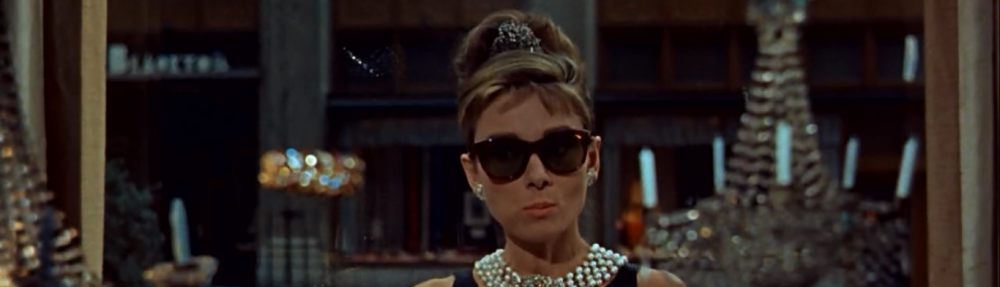
Again I would have to go Classic Hollywood and pick Audrey Hepburn (although Grace Kelly is a close second). Both were so memorable in their film roles thanks to their beauty, poise and “grace” on screen.

Who is your Favorite Director behind and in front of the Camera?

It has to be Alfred Hitchcock. He’s the Master of Suspense for good reason and his string of cameos make his films even more memorable. The balance of entertainment and art in his films is what has allowed him to remain popular all this time. There’s something for everybody.

Favorite Movie Quote?

Maybe something from Up (2009)?

Favorite Scene from a Movie?

That’s another tough one, but I’d probably have to say the ending of It’s a Wonderful Life. When they start singing Auld Lang Syne it gets me every time. 

Favorite Film Hero

It might be a tie between Indiana Jones and George Bailey from It’s a Wonderful Life. They are both awesome characters for very different reasons.

Favorite Film Villain?

The Joker (Heath Ledger) from The Dark Knight. Another one who is fun to imitate. Why so serious?

Favorite Song in a Movie?

Moon River, composed and written by Henry Mancini and Johnny Mercer for Breakfast at Tiffany’s (1961). Instrumental version, Audrey Hepburn or Andy Williams version. Doesn’t matter. I would seriously have it play at my wedding. Seriously. 

Spartacus (1960)

91a01-spartacus_sheetaIn this epic film starring Kirk Douglas and directed by Stanley Kubrick, a slave turned gladiator leads a revolt against the Roman empire. Spartacus leads his fellow plebeians in a sacking and burning of the countryside while slowly gaining followers. Along the way he is reunited with his love (Jean Simmons). However, soon all hope of triumph or escape is gone and Spartacus must face the Roman legions in one final battle. Utterly overwhelmed by the other forces, his followers are slaughtered and taken prisoner. With all hope gone he must kill his friend (Tony Curtis) and then face death himself by crucifixion. But all is not lost because his wife and child do get away allowing his legacy to remain. Overall this film is good but it does have flaws, one of them being the casting of Tony Curtis with his New York accent. Laurence Olivier, Charles Laughton, and Peter Ustinov all have important roles in this film as well.

5/5 Stars

The Man Who Shot Liberty Valance (1962)

Starring both John Wayne and Jimmy Stewart, with Lee Marvin, Vera Miles, and direction by John Ford, this is certainly a moody western. Stewart, now a successful politician returns to a small town with his wife to pay his respects to an old friend. In the ensuing flashback he retells his story beginning as a young lawyer who had a run in with Liberty Valance (Marvin). After he got well he strove to bring justice and education to the land. Despite their differences, Stewart finds a friend in Wayne who has his eye on Miles. However, everything eventually goes awry when Stewart agrees to face Valance out in the street. He appears to be a goner because he is wounded, but miraculously a shot hits Valance and he falls dead. Stewart now a hero gets the girl and agrees to represent the town. Wayne fades into the background also a hero. The supporting cast includes Woody Strode, Edmond O’Brien, Andy Devine, and John Carradine. With two great icons and a great director, this western is certainly a classic. Although it did not end up making it into the film, Gene Pitney’s western ballad deserves to be acknowledged nonetheless.

4.5/5 Stars