The Lost Patrol (1934): A Tale of Survival

Screenshot 2020-07-03 at 11.12.23 PM

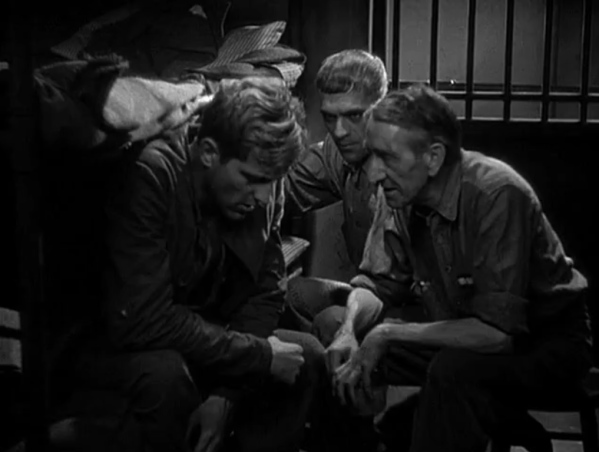
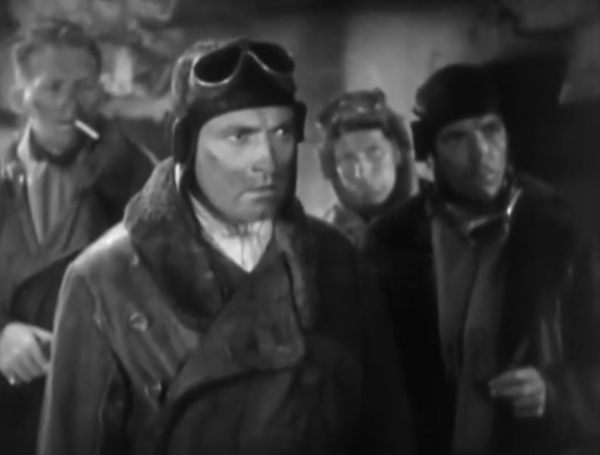
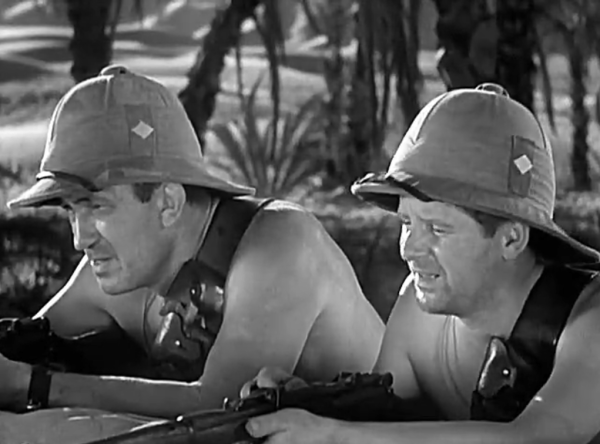
The Lost Patrol comes out of the colonialist traditions of the era with the white soldiers in Mesopotamia doing battle with an Arab enemy who strike like ghosts. They are phantoms and rarely seen in the flesh. It’s an unwitting bit of commentary but it also simultaneously becomes one of the story’s most unnerving assets. There’s a tension born in an adversary who is all but invisible and still has a deadly sway on the story.

The film’s opening images are telling in establishing setting and the man behind the camera. Because this is a John Ford movie. It’s a fairly early offering, but there are elements that feel unmistakably relevant to his oeuvre. There’s the shadow of horses trotting across the sand, and then a line of riders snaking their way across the wide-open vistas of the dunes. It’s a variance on the western form or at the very least a transplant.

During this journey, their thick-skulled commanding officer is knocked off unceremoniously. He also never thought it prudent to tell his second-in-command what their orders were. With him gone, the remaining contingent is left wandering through the desert wasteland without any kind of direction.

The Lost Patrol is an expeditious drama with little time to waste and so survival becomes its primary focus. It’s not searching out a destination or looking to vanquish the foe as much as it’s about these men living to fight another day. It’s a windswept character piece more than anything.

We see Victor McLagen at his most restrained and sensible. His wealth of experience has taught him to keep his head, and he makes darn sure that all his men stay on high alert. Take, for instance, the euphoric scene where the mirage is real, and they finally settle on a spring of water. The men are satiated by a cool drink — a lifeline in the midst of such an arid and desolate terrain — and they fall into it with joyous elation. Their Sergeant is the one man who holds back, chiding them to take care of their steeds.

If McLagen is one of the stalwarts, Boris Karloff is uncharacteristic as Sanders, a jittery and spiritually inclined fellow clinging to his belief although he seems ever ready to spout off jeremiads. For him, their latest discovery is tantamount to The Garden of Eden.

It is an oasis, but they’re also stuck there. Instead of being excommunicated, they might as well die where they stand if they can’t get support. Much of the film at this juncture comes from digging in and waiting it out. We get to know the band of men and at the time same are brought into the tension of their prolonged campaign of survival.

A young lad, wet behind the ears, is crazy about Kipling and the glories of war. Whereas he’s woefully ignorant of the tough side of the life he’s chosen. Morelli (Wallace Ford) is a bit more jocular blowing off some steam with his harmonica even as he brushes off his own bad luck, calling himself the Jonah of their expedition. Still, their leader doesn’t see fit in tossing him overboard. They’re only going to prevail if they stick together.

Because this is a Ford picture, there also have to be a couple token Irish old boys to round out the company. They’ve seen much of the world thus far, and they have more or less willed themselves to fight another day. It’s baked into their stock.

By far the most intriguing has to be Boris Karloff as he’s taken over by his religious fanaticism. And he’s not the only one to totter toward the precipice of insanity or unrest. There are others. In fact, how does one not lose their mind under such dire circumstances?

Their situation is laden with the kind of dread of a who-done-it murder mystery. Men get knocked off or become lost to the elements, one by one, until their mighty group is dwindling with the unseen enemies still lurking just beyond the sand dunes.
Though the parameters of the drama come out of a bygone era that we have left far behind, somehow Ford’s film maintains some amount of its mystique. He’s already well-versed in capturing the panoramas around him in striking relief. He’s actually aided even more by hardly showing his villain at all. Time honors this decision because it falls away, and we forget the stereotypes as much as we feel the specters hanging over the patrol.

To the very end, McLaglen is a stalwart and you can see how Ford is able to fashion him into a reputable even idealized champion. He’s not unlike a John Wayne or other figureheads Ford found ways to fashion into his personal visions of inimitable manhood. There’s something admirable about them — found in their mettle and loyalty — even as they exude a persistently evident humanity.

3.5/5 Stars
The Criminal Code (1931): Howard Hawks in The Big House

Screenshot 2020-07-03 at 4.26.44 PM

Although this is still a very early talkie, you can already see Howard Hawks developing a more intricate sense of dialogue which he would be known for in his pictures — most notably His Girl Friday. In the opening scene at the police station, we have dialogue piled on top of each other between pinochle and the lastest crime being called in over the telephone.

It’s a wonderful melding of both character and exposition being delivered fluidly in a manner that supplies us so much in such a short amount of time. Soon the two quarreling cops are on the scene at a nightclub where a fellow was knocked off.

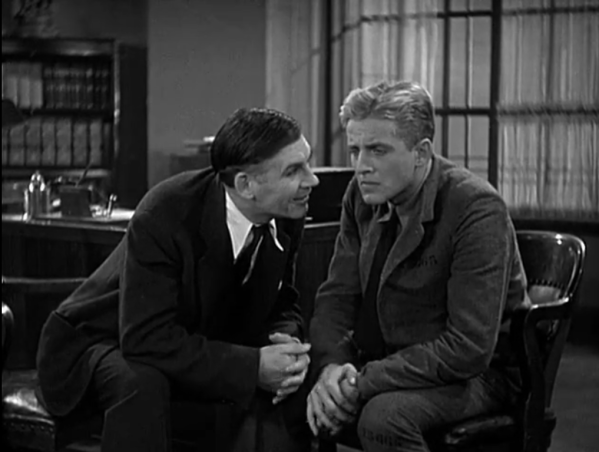
The by-the-book incumbent district attorney, Mr. Brady (Walter Huston), sees an open and shut case, although it’s a rotten break involving a kid and a girl, and another man is dead. He concedes this and yet the law is his Bible — an eye for an eye, somebody’s gotta pay mentality — going back as far as the precepts of Hammurabi in ancient times. He’s not willing to budge an inch.

He unceremoniously consigns a young man (Philips Holmes) to 10 years in prison as penance for his wrongdoings. Even it if was only one false step, the law says he has to pay for his deeds. There is no other recourse. Time passes and prison life has gotten to him, left him stir-crazy and ragged. He’s no longer the fresh-faced kid he once was and news of his dear mother’s passing is yet another blow.

His bunkmates try and watch out for him and settle his nerves, but they’re not totally sympathetic. How can they be? Some of the men put in there by Brady feel duped. There’s this pervasive sense of restlessness and unease.

This prevailing mood only grows worse when Brady takes on the role of the new warden in the prison. The incarcerated mob ignites with yammering in the jail yard because the new man has come to town, and he was instrumental in putting so many of them away.

Brutal law and order are maintained by Gleason, the paunchy head prison guard, who’s not above threats and psychological intimation. There’s one in every big house, and he has a standing appointment with Boris Karloff’s Galloway.

In fact, Galloway is loaded with the kind of menace Karloff thrived on throughout his career, and he becomes a stellar conduit throughout the movie even as Gleason represents all that’s wrong with authoritarian power trips. They have a mental duel going on that takes a while to come to fruition.

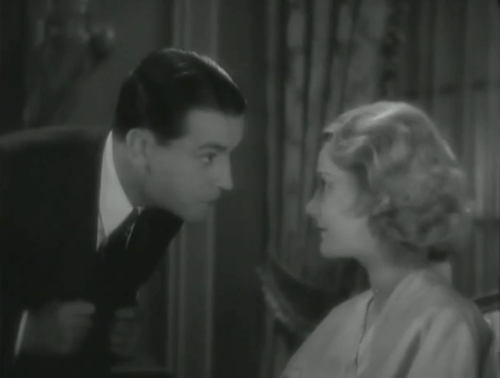
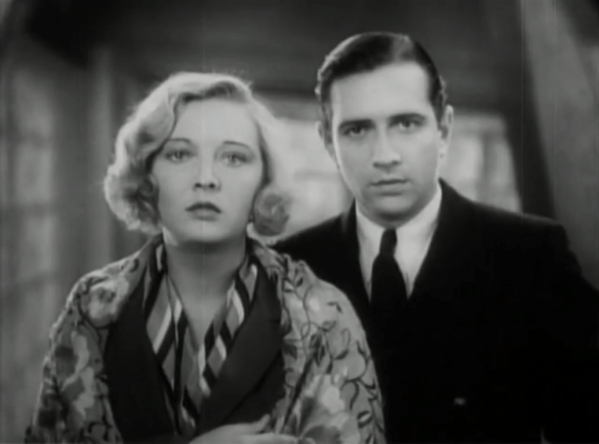
One bright light is Constance Cummings, a genial countenance of stylish propriety and beauty. Her very presence comes to represent so much in the movie, and it’s true she represents both a beacon and a sliver of hope for Robert. If nothing else, he wants to be in her presence — just to see her and talk with her — because she makes him feel human again.

Screenshot 2020-07-03 at 3.52.46 PM

The narrative wouldn’t be complete without a botched escape attempt, but what’s more intriguing are the consequences. Because the stool pigeon, a sniveling squealer named Runch gains the ire of the entire compound and there are rumblings of unrest. Retribution is brewing in some form.

Robert does his best to stay out of it, but he’s also not prepared to help the canary. In the resulting drama, he’s implicated while maintaining his innocence. It also puts him wholly at odds with the warden who looks to get him parole. Still, he’s beholden to the law in all things. It’s guided his entire life, his entire career. Leniency is not in his vocabulary.

Whereas Robert has become beholden to the other side and the honor among thieves, if we can call it that. You don’t rat and you keep promises because what good is it if you can’t keep your word? It shows his personal integrity. For his reluctance to speak he’s put in “the hole” and subjected to the malevolence of Gleason.

Although there is a standoff and the kind of finale we expect, the crux of the story — all its thematic ideas — come in this earlier portion. Because Mary returns from her time away and what it does is provide perspective. She loves this man, Robert, even though he’s never said it outright. She knows he is the one, and it causes her to confront her father with the truth.

Father and daughter have it out in civil discourse in the first moment where they aren’t pals and actually stand up for their personal prerogatives and what they believe to be right. While it’s not exactly Scarface, Hawks does a stellar job of grounding a tale of crime and punishment once again with a familial relationship. Phillips Holmes isn’t a particularly enthralling actor, but between the likes of Huston, Karloff, and Cummings, there’s a fine array of color. It more than deserves a spot as an unsung Howard Hawks picture.

3.5/5 Stars

The Last Flight (1931) and The Lost Generation

the last flight

The Last Flight could conceivably be tacked onto the end of The Dawn Patrol. Although there is only one full scene of aerial combat, it informs everything that’s to follow because this shared experience colors the lives of the men who pushed through it. Some of them have been pushed through irreparable change. They are men with PTSD before we ever had a diagnosis.

As two of them (Richard Barthelmess and David Manners) are ushered out of the hospital there is a sense of foreboding. The physician and the audience seem equally aware of it. The doctor likens them to a pair of fine Swiss watches crushed on the pavement. The question remains how do you assimilate them back into society? As he grows didactic or at least waxes poetic, he marks them as spent bullets; his prognosis comes very near to the sobering Korean drama Aimless Bullet a couple generations later.

In fact, The Last Flight could be an equally heavy and laborious affair given the context. These are men who must face something even more difficult than war. War is something they were trained for. Life afterward is uncharted territory. It’s not something that can easily be prepared for; it’s more daunting and laden with consequences.

This is another installment in the men returning from war sub-genre, and it’s no less striking every time I see it done well or at least in a new manner. Under the circumstances, the normal response is to seek to delay the future for as long as possible. These fellows take it to the extreme.

From a technical standpoint, talkies still feel new, and the dialogue is initially a bit stunted and awkward pushing the obvious wounds of its characters. This could be tepid going. Instead, The Last Flight bubbles with its own brand of lithe and breezy effervescence. This is the mood accorded by its main players because they are looking for a life far away from their war-torn experiences up in the air. Trauma is best remedied by drink and trivial conversation so they set flight for Paris.

By entertaining all the frivolous diversions they can manage and hardly acknowledging the war again, the film says so much about these characters (as does their idle talk). Their evening progress full of drinking, dancing, and more drinking.

One of the people they happen upon and make a part of their entourage is Nikki (Helen Chandler). She’s a ditzy girl and a bit like a forlorn little puppy so they absorb her into their group. She’s got money and doesn’t quite know how to take care of herself. They take it upon themselves to do just that, which includes guarding her against the advances of a conceited nincompoop (Walter Byron).

There’s not a whole lot to it, but it comes into its own spilling out of the confines of your typical fare much like the drinks they’re constantly consuming. They let their inhibitions go giving way to a giddy even laissez-faire attitude.

Among other diversions, Cary tells Nikki the tale of the world’s most famous lovers Héloïse and Abelard, and starts to fall for her, only to have his feelings hurt over a misunderstanding. Because she’s an unwitting girl who couldn’t hurt a fly. And so the gang and Nikki follow Cary to his train to Lisbon and cram into his compartment.  They’ve stayed together thus far, and there’s no reason for breaking up the team.

If you’re waiting for the bottom line of the movie, know that it never comes. Not really. There’s hardly a point to it, but then again that’s the point right there. It encapsulates the very existence of these men. One of their buddies gets mixed up in the bullfighting ring, another gets into a skirmish at a carnival shooting gallery. In both accounts, there are lasting consequences.

the last flight

All Quiet on The Western Front might be chosen as the emblematic film in considering the plight of WWI and how war is such a futile endeavor. It strips men of their youth, of their vitality, and of their very lives. And numerous films of different eras reiterated these themes with their own nuances. Take The Eagle and The Hawk as another fine example or even La Grande Illusion, or the aforementioned Dawn Patrol (also with Bartholmess).

However, The Last Flight might stand in what seems like a class of its own. It’s not about how men die in the morass of the battlefield or how they get crippled by the gross delusions of war. Because the whole film is built out of the interim period, the delay of going home. This reading of The Last Flight is so crucial to appreciate what it is. Most post-war films are about the return and coming to terms with life and transition.

These men never get that far. They make it to a kind of purgatory — they get out on the other side — and yet this is never a movie about acclimating back to home. It’s built out of the peregrinations and distractions of men who are completely listless.  They are the so-called “lost generation” of Hemingway and Fitzgerald.

For some, it’s almost a merciful end not having to touch down on American soil. Hence, this being their last flight together as comrades-in-arms. There was never a life for them outside of what they had already experienced, and they could never return home and hope to be the same people they were before. It’s just not possible.

If we’re instilled with anything, it is that The Last Flight is a film of brotherhood and a shared experience above all else. Simultaneously, its brand of freeform, invariably crude narrative is rather invigorating, since it cuts against the accepted grain of the times. It plays as a very singular time capsule speaking to the age like few other films I can think of.

3.5/5 Stars

Dawn Patrol (1930) and The Numbing Cycle of War


dawn patrol

Taken in the context of his entire career, Dawn Patrol becomes a prototype for a plethora of later Howard Hawks pictures involving aviation and male bonding, including the likes of Ceiling Zero, Test Pilot, and certainly, Only Angels Have Wings. As a WWI pilot, Hawks has more than a passing interest in flying. He seems totally invested in its depiction. But despite its inadequacies, Dawn Patrol has more to offer than a mere technical exhibition.

This one opens with a telling note about WWI and the nations “entrusting salvation to youth.” It’s a sobering thought, but the phrase makes more and more sense as the film progresses.

We meet Major Brand (Neil Hamilton) as he’s forced to pass hours at his desk. He goes out on the limb for his men with superiors having the gall to suggest over the phone that they’re not doing enough. It’s a thankless job that only gets worse when he listens to the planes touching down. He knows by the sound of the engines how many boys have come back unscathed (and how many have perished).

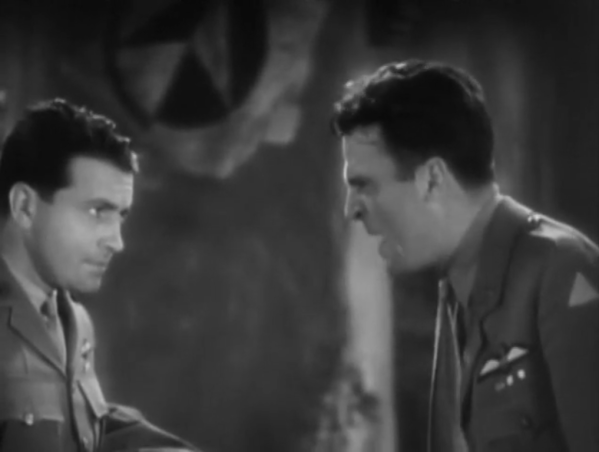
It’s a fine representation of how Hawks is able to indicate exposition through what is off-screen. Soon, the head of the flyers, Captain Courtney (Richard Barthelemess), checks in to give his report. He and Brand have a contentious relationship and every one of their conversations devolves into a yelling match.

The men standing outside, by the bar, give some suggestion it might be over a girl they both knew in France. All we have is the here and now, and that seems heated enough. We don’t envy either of their posts: The one giving the orders and the one obediently carrying them out.

Barthelemess never had much range, but this blandness does serve the picture well. He doesn’t need life. He needs to evoke the emptiness, the tiredness, the deadly monotony of his station. With every new mission, bright-eyed inexperienced kids arrive like lambs being readied for slaughter. It’s utter insanity, and we are there to witness it.

The chalkboard in their headquarters becomes one of the most sobering markers of the film. Because as the names come off and get replaced by a fresh batch, there’s something inevitable and terrifying about it. This suggests the impermanence of life with each name so easily wiped away from that board as each life is snuffed out.

His best friend, the affable Scott (Douglas Fairbanks Jr.), is one of the few pilots with enough skills, tenacity, and good fortune to survive their regimen of harrowing missions. He’s someone you can count on through thick and thin.

Similar to John Ford’s movies, songs become such an integral part of their community, banding together and joining their voices in an act of unity during their off-hours. It also settles their nerves.

dawn patrol

However, Dawn Patrol simultaneously considers the absurdity of war where you can share a drink, a laugh, and a hug with the man who shot you down out of the sky and was trying to kill you. How can it be? It only works if you can compartmentalize the experience and keep your feelings contained.

But this is only a temporary salve. Soon there’s a new villain on the rise — he’s a German ace named Von Richter — and more kids are called in to counter the havoc he’s wreaking on the allies. Although the chain of command changes with Courtney being promoted, the flaws and unyielding shackles of leadership become even more apparent. Soon friends are pitted against one another, fighting over the life of a hapless younger brother: one of the latest recruits. He knows not what he’s signed up for. They know only too well.

It causes a rift between the two men. In fact, it’s uncanny how much it’s like the row between Court and his Major before them. He’s become the distraught leader made callous and mercurial with daily stress and drink. But this is his best friend on the other side of the desk and the life of Scott’s kid brother is in the balance. Surely this should be different. What a horrible institution war is and what a terrible position to be in.

You survive long enough, and they stash you behind a desk so you get the unsavory job of sending men off to their deaths. What makes it worse is the sheer eagerness that all these fresh-faced lads take to their assignments. They brim with enthusiasm ready to do their part on behalf of the war effort and their country.

What a horrible cycle it is, and it seems ceaseless. The only way Court sees a way out of it means taking matters into his own hands — breaking the chain — and making the ultimate sacrifice on behalf of his best friend.

Because there is a suicide mission to be done. A volunteer is needed. Scott jumps at the opportunity, wanting to get out of that vile place and knowing full-well Court will be happy to see him go. Of course, this isn’t the case. There’s still a beating heart in there somewhere, and he takes on the bombing assignment himself.

In one of the last scenes, in the dark of night, they wait nervously ready to light fires on the runaway for Court’s return. Surely, he will come back! He always has before…They never see him. There’s only the faint motor of the plane and what a brilliant piece of exposition because the full import of the significance only hits us moments later.

If this scene is one of the most affecting, the last one is equally telling. No, the war is not over. That would be too clean, too easy. Instead, the chain of command has continued. The faces ready to take to the skies have changed just as new names get wiped off the chalkboard. What an abhorrent thing this is. What’s more terrifying is how numb we become to it.

3.5/5 Stars

Wild Boys of The Road (1933): Another Wellman Micro Epic

wild boys of the road

We’re always told that teen culture was an invention of the 1950s and the post-war boon. To a certain extent this is true and yet watching something like Wild Boys is eye-opening. We open at the Sophomore Frolic. It suggests there were elements of this lifestyle generations before. Dances, girls, cars: they’re all still common hallmarks of youth.

But if this is the first realization, then the second reality is the extent of the depression. It’s also an ever-present reality in movies of this era, and here it’s no different. It affects all people no matter their station in life.

Wild Boys is at its best functioning in shorthand — scenes telling us the whole story in as little time as possible. Take for instance, when Eddie returns home. He reaches into the icebox pulls out a bottle of milk and a tin of pie. It’s a ritual many boys know. He’s getting himself a midnight snack. He carefully cuts off a sliver and then proceeds to leave the sliver and take the rest of the pie. This could be the end of it.

Instead, he sees his parents burning the midnight oil. They are somber, and he senses it immediately as they go over their finances. They do their best to downplay the moment, but it comes out. They’ve been hit hard. His father’s been laid off after years of faithful service, and it’s not easy for a man of his age to come by work.

If Eddie is introduced as your average, everyday youngster with the typical diversions, it’s in a quieter interlude like this where he shows a depth of character. He doesn’t completely comprehend the moment, but he’s still prepared to sacrifice and do his part, whatever that might be. We catch him going off to bed with his milk and the smaller piece of pie. What a lovely turn of significance where this incidental throwaway gag comes to represent the whole story moving forward.

Soon his buddy  Tommy and he are saying goodbye to their pride and joy: a rickety jalopy. It’s a genuinely heartbreaking ordeal. He’s put his blood sweat and tears into its upkeep, and it’s just as easily sent off to the scrap heap for spare parts. This is just the beginning.

Their next move is even more drastic. They take to the road not wanting to be an undue burden on their parents. It’s a kind of noble act of fortitude blended with their boyish enthusiasm for adventure out in the great unknown. After all, these are only young lads. They’ve never been introduced to the full gamut of hardships and human experiences. The world is their oyster.

As they set off, Wellman makes it fully apparent he’s the king of the micro epics. There’s Heroes for Sale for one and then Wild Boys of The Road for another. It somehow manages to be this sprawling tale stuffed with so much in such a finite amount of time.

Like any good pair of peripatetic vagabonds, they form a band of freight hoppers. A lass named Sally joins their rowdy company with a sweet smile and a funny way of scrunching up her nose as she masquerades as one of the boys. It’s somehow fitting actress Dorothy Coonan would become William Wellman’s wife, and they would remain married until her death. The only other name I could tell you from the cast is Sterling Holloway.

What becomes evident is how their blistering journey is stripped of any Hollywood illusions. Take, for instance, the scene where Tommy is barely able to get out of the way of an incoming train. It’s emotionally devastating. However, it’s not merely a ploy to manipulate us. To say he lives is hardly a spoiler. The movie goes the extra mile and does the harder work of showing what he must do to press on in life.

While it is a different era, the conflict between the police and the populous is still a difficult one to reconcile. Frankly, it tears my heart apart to watch it. The lads function in a kind of ragtag pack mentality as they live as fugitives fleeing the onslaught of railroad dicks until they finally get it in their heads to retaliate and hold their own.

Although they break the law and squat on land, there’s never a sense that this is a pure portrait of total chaos and the youthful generation railing against law and order. It’s akin to The Grapes of Wrath where you see and witness what poverty looks like and how widespread it was, decimating so much of the economy and the livelihood of so many people.

In the end, out of sheer desperation, Eddie gets suckered into a deal that makes him an easy target of swift and sure justice. But this is not the final word. There’s a touch of moralizing at the end.

I feel inclined to grant it the ending because one must remember the times were different. Yes, the world had gone through the war to end all wars, the economy was in dire straights, but people still maintained a dogged hopefulness. Post-modern pessimism had yet to breed so rampantly.

Is it too naïve to say, as a nation, we still trusted our leaders? Men like FDR could pull us out. Judges could be benevolent and kind. Greater still, we believed that America was the greatest land anywhere and that we could get out of the throes of the depression if we all did our part. If it’s not exactly preaching the fundamentals of capitalism, then it is buoyed by American idealism, and it’s beating in the hearts of all the youth in Wild Boys of The Road.

Ultimately, what lingers is a persistent reminder that this is not how life should be. Kids should be allowed to be kids. But sometimes life calls for them to grow up fast. Without dismissing the injustice, Wellman’s film does bring out the resiliency of his actors with uncompromising aplomb.

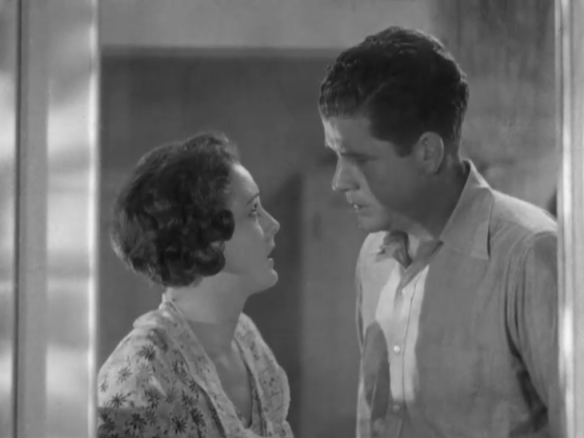
Frankie Darro’s not a household name, but he’s quite an apt avatar for an entire adolescent generation. After everything he’s gone through, he somersaults down the street, only to see his friend limping behind with his crutch.  It’s the exuberance and the tragedy encapsulated in a single moment. The movie is a friendship between both these feelings, and it is better for it. The joy leaves his face and it is replaced by duty — duty to his friend — and a desire to help each other along the road ahead.

4/5 Stars

Frisco Jenny (1932): Remembering Ruth Chatterton

frisco jenny

Pre-earthquake San Francisco was ripe for the Hollywood treatment, and there were a number of films to tackle this era including San Francisco or Barbary Coast. Frisco Jenny is more than at home in the same company. In the opening moments, the camera follows a constable into the local watering hole alive with song, dance, and the general gaiety one comes to expect in such places.

It’s like an ecosystem unto its own with certain laws. The female floozies know how to dip into men’s wallets while avoiding customers with chalk marks like the plague. They have already been picked dry, and thus the women help each other navigate the nightly circuit.

Preachers espouse their tirades from the bar counter on deaf ears. Conservatory-trained pianists hammer out second-rate compositions and some people get socked around. You get all types.

I recall being fairly impressed by the gravity of San Francisco‘s earthquake scenes from 1936, and I assumed Frisco Jenny might pale in comparison. But the fact the disaster goes on and on for several substantial scenes, made them harrowing with an all but palpable scope. It felt like genuine destruction was taking place, and the world was thoroughly disposable, even if it was only a movie world.

As we grow into the movie, Three on a Match becomes another reference point along with a touch of Stella Dallas and other such maternal dramas. Because the narrative is simultaneously all over the place — expansive in scope — and yet extremely elliptical in the story it sets out to tell. Time is so easily manipulated with years whittled down to moments and so on.

It’s thoroughly melodramatic, but it mostly works because it’s fully committed to the story being told. With her livelihood decimated and a young son to care for, Jenny turns her back on street corner spirituality and goes off on her own. She does it out of a deep-seated maternal affection, but it comes with consequences.

The only permanent fixture in her life, among the men like her first love (James Murray) and a dubious lawyer (Louis Calhern), is the faithful but utterly ridiculous Ahmah (Helen Jerome Eddy), the picture’s most unfortunate blind spot. But greater than its roving structure or any of the blemishes that come with age, it’s so emphatically contrived that it works for this very reason. It knows full-well what it’s setting out to accomplish, and it pays off.

Because now her son has grown up to become a district attorney avowing to get tough on crime. Unbeknownst to him, his mother is the notorious harpy Frisco Jenny. She won’t tell him lest it ruins his career. She finds her way into the courtroom. In fact, it’s this foremost scene that is seared into my mind.

Is Wellman whip panning around the courtroom again and again? It’s so unique as a way to reintroduce all his characters, and it stays with me. But this is a mere distraction to dress up the moment. We know why we’re here. We know what’s inevitable.

Soon Jenny Frisco is in prison. But Ruth Chatterton is fearless. The whole movie she’s made-up, attractive, and exuding a movie star ethos even as she suggests the rough existence of her character. Here there’s no pretense. She looks sorry and defeated. Stripped of everything and there she stands before us.

The true ending would have more relevance if not for yellowface. And even then, we hardly need this final moment. The movie was made in Ruth Chatterton’s final scene just as Cagney made Angels With Dirty Faces in those final moments. Their reactions are diametrically opposed and yet in both scenarios how they conduct themselves speaks volumes of who they are as human beings. We learn so much about people in moments of immense duress. On the doorsteps of death, there are many ways to respond.

Chatterton is galvanized as much by what she doesn’t do as much as by what she does. Before I knew her only mildly for Dodsworth, a picture that hardly puts her in a good light even if her performance is quite candid. Frisco Jenny is simpler, but it gives her the prime spotlight, and if you are mostly unaware of her, you need only look here.

In an industry mostly ruled by youth, she manages to exude both beauty and dignity as a woman over 40. We shouldn’t have to make a big deal out of this. Still, even today although the industry has changed, age can catch up with actors. Thus, it’s pleasant to be reminded of Chatterton. My esteem for her has grown even if this isn’t the most exemplary picture.

3/5 Stars

Safe in Hell (1931): Greater Than Pre-Code Expectations

safe in hell

“Have a little faith will yuh? There’s a great big plan that we don’t get. But the fella that’s made the plan knows what it’s all about.”

Safe in Hell leans into its title as fire literally crackles behind the opening credits.  The story’s origins begin on the back alcoves of New Orleans at the Claybridge Apartments. For those familiar with the reference, Dorothy Mackail’s Gilda Karlson feels like she just might be a Baby Face prototype.

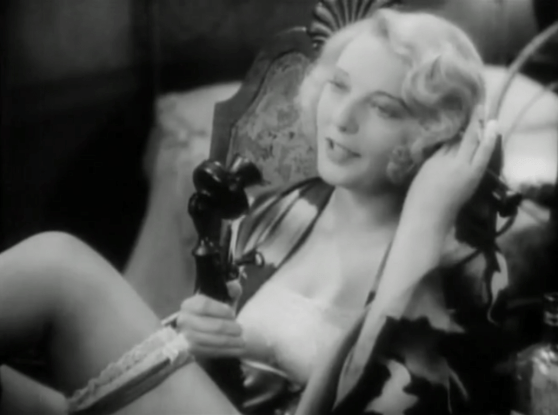
She is a woman strong and independent. She’s seen the seedy side of the street — knows what it means to survive in a man’s world — and she’s done precisely that. Even as the camera admires her slinking form, she sits propped up seductively in her room, speaking into the receiver of the old-fashioned telephone. This says everything that needs to be known about her character. At least at face value.

Mackail is not a remembered talent at least not to the extent of a Barbara Stanwyck or a tragic case like Jean Harlow, but she fits the bill here. If her eyes aren’t exactly sultry they are disaffected by the rotten world she’s grown accustomed to. Cynicism breeds everywhere like rats. It’s become a part of her life.

One of those rats is a man named Piet (Ralf Harolde). He’s supposed to be a picture of the average All-American working man. But he’s a philanderer formerly involved with Gilda while he was married and simultaneously getting the girl fired from her desk job. Now she works out of her hotel room, and he’s back for more.

But she lashes out. Wellman zooms in on her face for dramatics before she races down the stairs to make a frantic getaway. The place goes up in flames another inferno-inspired allusion.  Now she’s wanted guilty or not.

However, we get the benefit of witnessing another facet of Gilda’s personality. She has a hardened shell meant to protect her from the onslaught of a callous world. With her real man, the sailor named Carl (Donald Cook) there’s a skittishness even a sensitivity cloaked about her like the shawl he’s bought for her on his many travels. The way she says his name casual and smooth with a soft-hearted affection.

She deeply loves him and doesn’t want to hurt him by divulging how low she’s sunk. He doesn’t know what she’s been subjected to. It’s another stellar visualization as they stare right at the camera simulating a mirror, but it builds this instantaneous connection with the audience. It’s arresting and difficult to forget moments after. But there is no time to linger.

Carl almost feels Pollyannaish with an overt belief in Providence, but this undoubtedly is part of what makes him attractive to Gilda. He still maintains his optimism. Also, he does provide her a lifeline. With his connections he helps her flee the county as a stowaway, their destination is an island off in the Caribbean where fugitives cannot face extradition.

Far from fire and brimstone, it’s a man-made death trap. Nevertheless, it’s a haven run afoul with murderers and thieves — the lowest of the low from every segment of society.  The isle is ruled rather nonchalantly by the resident despot Mr. Bruno (Morgan Wallace) and it’s swarming with lusty-eyed suitors starved for a little female company.  There are slimy worms in the water and lounging in the hotel lobbies.

safe in hell mirror

They aren’t frequented by many white women and as Carl leaves her nervously in a local hotel, there’s an uneasy feeling, he’s leaving her to the wolves. They lounge in the downstairs chewing the fat, chewing on nuts, sinking down in their chairs, and kicking back in an odd community ritual. They wait for even a glimpse of her and she keeps them waiting — at arm’s length as much as possible — rebuffing each and every advance.

In the rogue gallery, the hotel clerk Leonie (Nina Mae McKinney) and the hotel bellman (Clarence Muse) stand out not just due to the strength of their characters in such a seedy milieu; they feel like genuine people rather than the stereotypical submissive blacks often propagated by Holywood with their ignorance and minstrel dialect. There’s none of that here and as a result, they feel positively modern placed opposite some of their brethren even decades later even as they become two of Gilda’s most sympathetic allies.

It’s when the wolves start circling we remember that when she wants to be, she feels like the female equivalent of James Cagney. Why should he have all the fun slapping and shoving faces in and dousing with water? It proves a universal pastime in Pre-Code cinema and Mackail gets in on the action with a plucky relish.

In fact, the movie is a battle for her propriety in some thematic sense. Carl and she pronounce their wedding vows in the only church on the island, ending with a fitting line out of the Lord’s Prayer, “Lead us not into temptation but deliver from evil.” This is the seat of her entire existence laid bare.

She resolves to remain steadfast and chaste for her sailor until he returns, but you can only play so much solitaire. She finally blows off steam with the boys who gladly oblige though she cuts it short of any monkey business. That doesn’t mean temptation or, closer still, her lingering demons don’t come back to haunt her. It’s a deja vu moment if there ever was one complete with another murder. And if we have learned anything, we know each act must come with a consequence. It’s all the more certain on an island of miscreants.

The ending of Safe and Hell precedes One Way Passage in its emotional heft conjured up in a moment of dramatic irony — all the unspoken feelings imbued through a kiss and an embrace meant to last a lifetime. Once again Carl heads off again on another voyage even as Gilda marches off to her own foregone conclusion.

The picture isn’t everything its title suggests; it’s actually more, and it gives its heroine the benefit of the doubt with multifaceted contours highlighting the fragmented, complicating factors of life.

What a delightful find it is and not for any amount of happiness or goodwill it supplies, but quite the opposite. It feels skeezy and despicable at times, but there’s also a surprising amount of virtue bursting forth. It meets our Pre-Code expectations and still somehow supersedes them to give us something even ampler — all packaged into 73 swift minutes of entertainment.

4/5 Stars

Other Men’s Women (1931): Moving Pictures are Alive

mary astor grant withers

There’s an underlying sense that The Other Men’s Women was a primitive picture and yet it has a plucky energy as if it doesn’t know any better. Warner Bros. was at the cutting edge of talking pictures and Vitaphone wasn’t exactly old hat. The medium was still in its relatively latent stages.

Given this backdrop, William Wellman seems to take to the amount of freedom he has with a maximum amount of relish. The camera already feels slightly more versatile. With the shackles gone and a new amount of mobility, he moves his camera all over the place conducting dialogue scenes in any manner of places we would normally take for granted.

But he also slices the conventional 180-degree line to smithereens. It’s off-putting given our filmgoing sensibilities, and yet there’s something equally raw and frenetic about it that gives it a very appealing flavor. His camera is atop trains or out in the garden by the sweet peas. Moving pictures are alive!

Part of this may have been out of necessity because in 1931 alone Wild Bill churned out 6 movies for Warner Bros! That’s an insane amount of output. But this same rapid-fire outpouring of movies included the likes of Public Enemy, Night Nurse, and Safe in Hell, just for starters.

If we were to scour this movie for a conventional throughline, it would start with our protagonist, a cheeky railroad hand (Grant Withers), bright-eyed and generally contented with the life he leads. His best friend in the engine room is Jack (Regis Toomey), and they have an inseparable camaraderie together. In what world is Toomey lifted out of the periphery and promoted to a primary role? Here he is as living proof.

He brings his good friend home to his wife Lily (Mary Astor). She’s playful and warm. There’s a lovely affability filling up the spaces and planted in the gardens with the flowers. Their next-door neighbor is a kindly man with a peg leg, and they have built for themselves a fine slice of tranquility. It’s innocent until it’s not. In the kitchen Withers and Astor alone. And they don’t realize it until it’s too late.

They look and they kiss — almost on accident it seems — but they love each other. It’s irrevocable. There’s no taking it back, and it pains them both. If this is the film’s menage a trois, it’s the most devastating of outcomes. They never meant to hurt anyone. But then nobody ever does.

The two friends wind up slugging it out on their locomotive overturning their friendship and livelihood in one fell swoop. A stake is forever driven between them. But there’s more. Jack’s life is beset with personal tragedy. Bill is ridden with the ensuing guilt. He never wants to see either of them ever again. It’s too much to take, looking them in the face — especially knowing he can never have Lily.

Whereas the amended title looks to capitalize on the more scandalous element, the original title: The Steel Highway might fit the picture equally well. These are before the days of Le Bete Humaine or Human Desire, but there’s something elemental about a man and the railroad. Like the western, there’s a mythos attached — a historical shorthand — evoking something of expansion and progress.

As such it flits back and forth between its two spheres. That of the man’s working world out on the rails where life feels itinerant. There’s a danger but also a freedom and a mystique about it. The home life is sweet and domestic until it’s not.

The picture also boasts some of the best rain sequences I remember in recent memory. They are worth mentioning in how they augment Wellman’s film in its latter stages. It becomes expressionistic not merely through the illusions of light and dark, smoke and shadow, but the sheets of raindrops showering down. It adds yet another contour, another layer of emotional atmosphere to this film’s final act.

Jack sloshes around in the downpour helplessly as Bill hurtles toward his resolved conclusion. The climax is fated and fittingly catastrophic. Then, days later, he’s back in the old haunts, sitting at the same cafe pit stop, with a different waitress behind the counter, only to cross paths with an old friend…They share a smile, a few words. Does it really matter for us to have this? I don’t think so. It’s spelled out on their eyes.

Then, Jack does something unexpected. He hops back on his train and begins sprinting over the top. Where is he going? He’s got to get to the engine room — to bring it to a halt. We never see it, but we know he’s staying put. My thoughts linger on Wellman again with his camera perched in such a place where he captures his hero sprinting off into the distance. Yes, movies are alive thanks to people like him.

What a curious wrinkle it is to have James Cagney and Joan Blondell off-center with supporting assignments. That very same year they would be spotted together as leads but such is the studio system they could pull duties in a 70-minute railroad thriller like this. Cagney showing off his dancing and that swell-guy charisma of his. Blondell’s got that spark and spunk in spades. They’re equally delightful, and this isn’t even their movie. They provide yet another reason to enjoy the fundamental pleasures of Other Men’s Women.

3.5/5 Stars

True Confession (1937) Carole Lombard, Fibber Extraordinaire

true confession

“Must we submit to this three-ringed circus in the guise of drama?” – Porter Hall

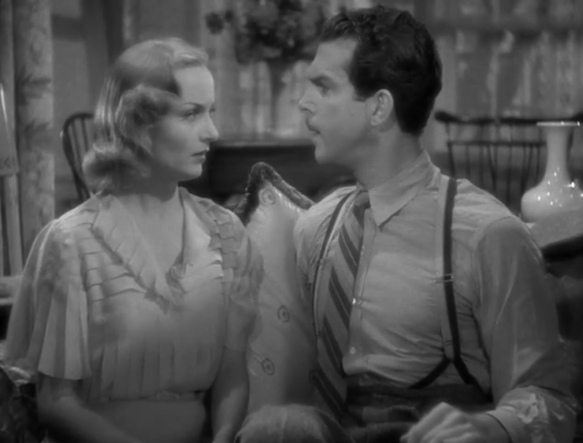
Carole Lombard is a comedienne of unequivocal talents. My guess is that it lies in that extra special dial she had. Yes, she was a Hollywood glamour girl and stylist of the 1930s — married to the King of Hollywood himself — but she also was totally at ease being absurdly silly. She would become frenzied and unhinged in a manner that feels rather groundbreaking for her generation. She was a very special performer.

True Confession deserves to be acknowledged as a truly satisfying screwball for how it uses Lombard’s talents. Because, you see, her Helen Bartlett is a woman plagued by tall tales. Her fibs take on outrageous proportions. She’s the girl who cries wolf. Quite literally, tongue in cheek. We see it in full effect early on where she tells a string of increasingly wacky fibs to keep a man from impounding her typewriter.

However, the movie wouldn’t stand up if not for her husband. Ken Bartlett (Fred MacMurray) is tirelessly honest which, in the lawyering racket, isn’t always the most lucrative. He won’t represent anyone who’s guilty and that includes the referral of their local butcher who swiped some hams.

But he has that aching desire to exert his manhood and be the sole breadwinner of the house. He wouldn’t dream of having his wife work. No, she spends her days plinking away at the typewriter trying to finish her latest story. She’s got the personality but perhaps not the prose to be a successful writer.

So she conspires with her best friend Daisy (Una Merkel) over what she might do. Her plan is to take a job as a secretary. What of it that she’s never done shorthand or that her husband will have a fit? These are small potatoes and so she takes the job. Unfortunately, sleazy Mr. Krayler is a serial philanderer and as she skips and back peddles to avoid his advances, Helen realizes she has to get out of the secretarial racket.

This might very well be the end of it. But True Confession is forever altered by what happens next. Depending on the outcome it would end up a mystery drama. Thankfully for us, it remains a comedy.

Because she returns to the office to pick up a forgotten handbag only to find the dead weight of Krayler sprawled on the carpet. Soon the police are on the scene — their bald, hoodwinked leader (Edgar Kennedy) suspects her instantly. After all, she has motive. Soon they’ve drummed up a whole story supposin’ how she fled the crime scene.

But we know she is innocent so if the wheels of justice are actually just, there shouldn’t be a problem. A happy ending is easy enough to foresee. Instead, proceedings get strung out. Helen ends in prison suspected of murder and there’s an ensuing trial in front of a judge. Her husband is going to defend her.

Here’s the real screwball wrinkle. Wait for it. She decides to plead guilty. It’s the biggest lie she’s ever told, but if it pays off, then her hubby will be the talk of the town in the courts with a fledgling career to boot. She wants to give him his biggest stage to prove his acumen even if she has to risk perjury to do it. If it doesn’t work, well, the movie never really makes us consider the alternative.

We’ve alluded to the majority of the players, but one would be remiss not to mention two more. Porter Hall is one of the mainstays of Classic Hollywood entertainment and here he turns in a fine performance as a bellicose prosecutor on the prowl.

Then, who can forget John Barrymore hitting the eccentric heights of his career (and also the skids)? Because “The Great Profile” and titan of the great acting family, was now more of a caricature.

As Charley Jasper, he’s giggling maniacally with his ready collection of balloons, his hair rather unkempt, like a mad professor in the courtroom. Why is he here anyway? Why does the story need him? It seems quite thin. I would never dare spoil this little untouched secret.

Instead, the floorshow takes center stage. Mr. and Mrs. Barlett reenact events for the courtroom crowd in a highly irregular manner, but there is something giddy and glib watching Lombard and Macmurray break into playacting in the middle of the trial. It won’t let us forget for a moment this is a comedy, and it stays true to its roots.

I have to admit there’s an unsettling irony in the comedy’s main conceit: a white woman fighting to plead not guilty for a murder that everyone assumes she committed (though she hasn’t). Of course, there’s a historical precedent in antiquity for a woman’s testimony would not be taken.

Even watching something recently like Just Mercy, a different kind of courtroom drama in tone and content, it’s a reminder of how many people, whether black or marginalized in some way, find themselves in much the same predicament, and in their cases, there’s rarely a screwball plotline to conveniently spring them out of their misfortunes.

Social critiques aside, True Confessions is an underrated screwball gem, and it does itself a service thanks to Lombard and Kennedy, Merkel, and Barrymore. However, in our current context, as we seek a renewed sense of justice in the civil space, it must also give us pause.

3.5/5 Stars

Notes: This post was originally written in June 2020

Ruggles of Red Gap (1935): An All-American Gentleman’s Gentleman

Screenshot 2020-04-01 at 82751 PM

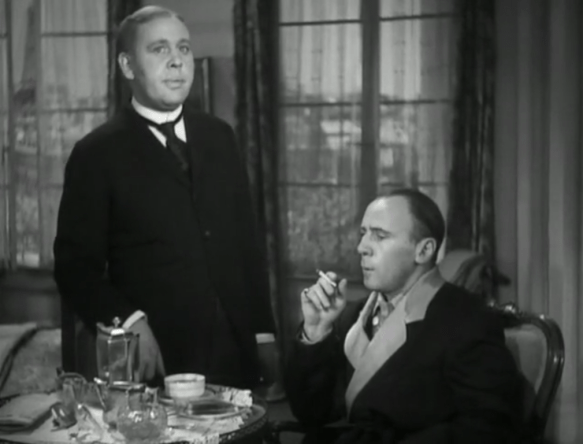
It’s Paris in the spring of 1908. The mumble-mouthed, rather sheepish Roland Young admits to his manservant Ruggles (Charles Laughton) he’s gone and lost him in a poker game. He was terribly good at the art of bluffing. A little too good as it were.

The kicker is the folks he’s handing him off to, vacationers from rural America! Ruggles does a deadpan double-take upon hearing he might be sent to the United States: the land of slavery. His former lord helpfully interjects a fellow named Pocahontas helped put an end to that.

The husband, played by Charlie Ruggles (Coincidentally, sharing his name with one of our characters), is Egbert Floud, a man of the land, totally at odds with hoighty-toighty Parisian high society. He has no qualms about his heritage. In fact, he’s darn proud of it. Handlebar mustache and all.

His wife (Mary Boland) is positively obsessed with social status — tone and Joyeux de vie — and acquiring Ruggles so they might gain a new sophistication. When her husband learns they are about to have a servant, his voice is exasperation personified.

She makes him go off to get some culture, and he proceeds to drag his new manservant along to the nearest gin joint. He’s not a man beholden to any kind of hierarchy. Everyone is a neighbor and a friend. It’s quite unsettling to Ruggles at first, if not a totally novel concept. He’s never had cause to fraternize with Americans before.

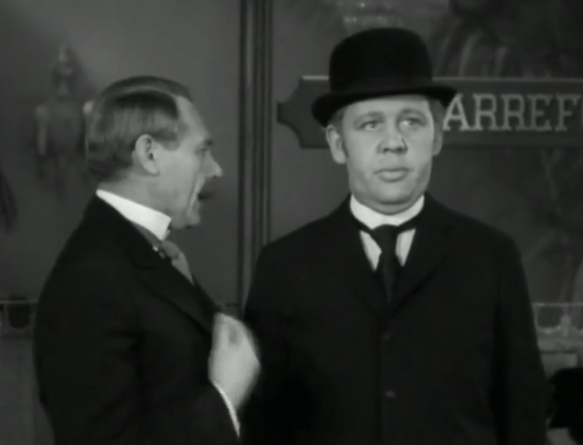
Charles Laughton, eyes lolling about in his head, makes it one of the funniest situations I’ve been privy to in some time. To call him robotic is doing him a discredit. He’s so stiff it emphasizes his propriety and his station in life. He’s quietly beside himself performing his duties with these fits and starts. Then, he’s subsequently crawling inside his skin at the cavalier indecency of what he’s being subjected to; he’s too well-mannered to dissent of course.

Except the punchline is how easily he mellows in the company of Egbert and one of his buddies. The alcohol flows, they take to a carousel and wind up crashing Effie’s grand dinner party royally swacked, Ruggles most of all. Mrs. Floud attempting to apologize to the guests with her infantile French. It signals a change and the mistress of the house starts to disdain her help for leading her husband astray — even if it’s decidedly the other way around.

Screenshot 2020-04-01 at 83747 PM

But the great departure happens and with it comes Ruggles fateful arrival in Red Gap, a place he’s no doubt been dreading for some time. For him, it’s a distant incarnation of America and their antediluvian ways.

What a surprise it is that he makes a striking first impression. Everyone seems to take an instant shining to him as Egbert walks him around to introduce him to all his pals, bestowing him the good-natured nickname “Colonel Ruggles.”

He catches the eye of Mrs. Judson (Zasu Pitts) after complimenting her meat sauce. Meanwhile, the editor of the local paper takes an interest in this regal gentleman with military rank, ready to write an entire spread about him on the spot. Almost instantly he’s become a local celebrity.

He is quite taken with the life and the normally raw, rough and tumble lifestyle takes a genuine shine to him, at least the good honest folk who still have a love of the land and earthier ways. Ironically it’s the aspiring elites — like Effie Flowd — who are turned off by him, whether through misunderstanding or jealousy. He has breeding they can never hope to have.

The best part of Laughton’s performance is how he’ll slyly “break character” as it were, getting drunk on the town in Paris, stirred on by his jovial company, and then later giving a particularly aggravating man named Belknap-Jackson a kick in the seat of the pants in retaliation (the other man did it to him first). It’s these wildly conceived digressions making the movie for me because Ruggles suddenly breaks out of the convenient archetype we have for him as a gentleman’s gentleman.

I grew up watching (and reading) a lot of Jeeves and Wooster after all, where the comedy is born out of the continually failed plans and romantic miscues of the dopey protagonist. It’s his man Jeeves who must use his acumen to rescue his master from inevitable social suicide.

The beauty of this narrative is how it poses one obvious scenario before devolving into something else. Far from being a story of class clashes, it is a fish-out-of-water tale turned on its head. Ruggles is gradually transformed into a new man, exercising unheard-of freedom over his own life. He becomes a man whose future is entirely in his own hands, and he’s totally taken with the ideology of America.

One day he is unceremoniously fired by his rival just as he was sitting down with an improving book on the 16th president of the United States. At first, you think nothing of it — the book he’s reading. However, most crucially he rectifies his former historical blunder. It was not Pocahontas who had a part in freeing the slaves but Abraham Lincoln.

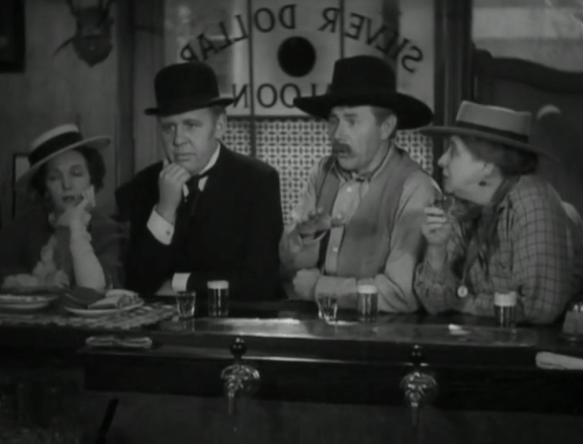
In the local saloon, he is reminded of who his friends really are and he, in turn, reminds them what their country is really about. What’d Lincoln say at Gettysburg? Everyone’s asking everyone else and nobody knows. Even in 1935, arguably in earshot of someone who could have been there, it’s still a fickle generation far too easily forgetting the past.

It’s easy to feel a bit tentative about themes of Lincoln as a white savior. That he single-handedly fixed the problems of America. That he was a martyr for a cause. But the movie never quite says any of this. I’m putting words into its mouth. What it does suggest is the egregious sin slavery engendered on American soil. Thus, it’s not totally Pollyanna.

Instead, Ruggles stands up and evokes the words of the great emancipator. I need not recite them and could not, but they instill in the people of Red Gap what are nation is called to — exemplifying the principles meant to set this land apart.  It’s a sober reminder that it’s sometimes those on the outside who recognize the great luxuries we are afforded and must give us pause.

Screenshot 2020-04-01 at 92857 PM

The final act keeps on riding these same waves with the grand opening of Ruggle’s new restaurant, offering two major developments. First, there is the return of the Earl of Burnstead — honored guest of the Flowds — who shows up late to announce his marriage to a local girl. Ruggles, having quite enough of the conceited Belknapp-Jackson, boots him soundly out of his establishment with added relish.

However, as a result of his unseemly behavior, Ruggles thinks his reputation and his business are finished for good. And yet he goes out the kitchen’s swinging doors to hear “He’s a Jolly Good Fellow,” not for the Earl but for him! If the Gettysburg address is the first moment of immense pathos, this is the crescendo — the camera turning to the reactions of all the town — these folks who all are part of his adoring crowd. They sing and smile and clap for him.

In my own sentimentality, I couldn’t help but think of George Bailey’s own serenade as all his friends gather around him to lift him up. There’s the same kind of communal exultation and the joy of being beloved by the company around you. It leaves Ruggles almost speechless. So Egbert pushes him through the swinging doors so he can snatch a kiss from his best girl.

I’m not sure I believe in love at first sight, regardless, I was positively charmed by this picture. The cast feels impeccably crafted to fit together, teasing out the comedy and making the story develop into a full-bodied piece of humor and All-American tenderness. It takes caricatures and stereotypes and somehow molds them into the most honorable and lovable ideals.

However, in the context of the times, Leo McCarey’s comedy — his first removed from the very particular influence of The Marx Brothers — feels more like a precursor to Preston Sturgess than a Capra picture. There’s the influence of the pure zaniness of the scenario, with the social elites being brought down a few pegs. Moreover, it feels like there’s a sense, this hope and hankering for America and humanity as a whole to still be something we can believe in.

The farce is of the most good-natured variety. Far from being vitriolic, we laugh with those we were meant to laugh with and laugh at all others who more than deserve it. It might be a simple, idealistic world, but sometimes it’s nice to believe that a gentlemen’s gentleman can make something of himself — like a  well-respected pillar of society in Red Gap, Washington. It works because the gags give way to something more.

For a first-time comedian, Charles Laughton is superb. But he’s hardly a one-man show. That’s the beauty of it. There’s a kind of genial comedic utilitarianism to the proceedings where all can be involved — audience included.

4.5/5 Stars