Other Men’s Women (1931): Moving Pictures are Alive

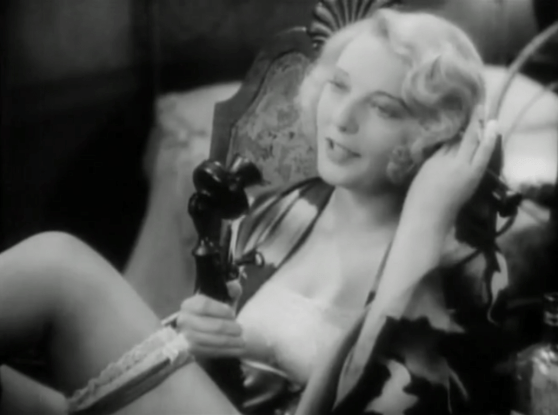
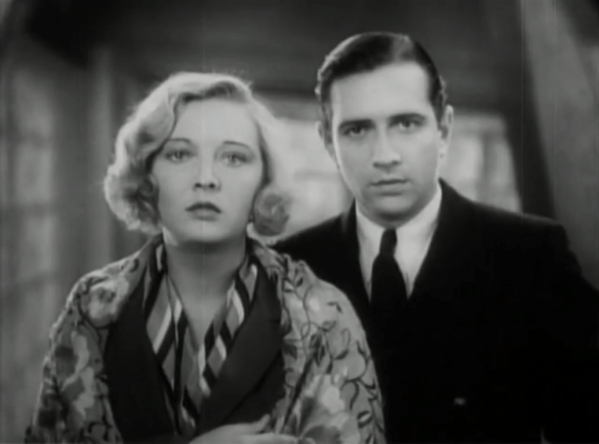
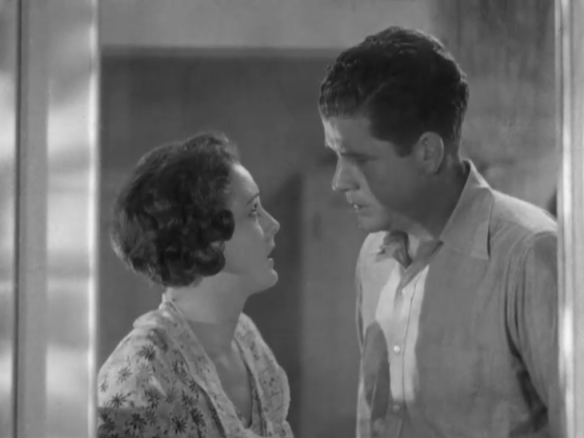
mary astor grant withers

There’s an underlying sense that The Other Men’s Women was a primitive picture and yet it has a plucky energy as if it doesn’t know any better. Warner Bros. was at the cutting edge of talking pictures and Vitaphone wasn’t exactly old hat. The medium was still in its relatively latent stages.

Given this backdrop, William Wellman seems to take to the amount of freedom he has with a maximum amount of relish. The camera already feels slightly more versatile. With the shackles gone and a new amount of mobility, he moves his camera all over the place conducting dialogue scenes in any manner of places we would normally take for granted.

But he also slices the conventional 180-degree line to smithereens. It’s off-putting given our filmgoing sensibilities, and yet there’s something equally raw and frenetic about it that gives it a very appealing flavor. His camera is atop trains or out in the garden by the sweet peas. Moving pictures are alive!

Part of this may have been out of necessity because in 1931 alone Wild Bill churned out 6 movies for Warner Bros! That’s an insane amount of output. But this same rapid-fire outpouring of movies included the likes of Public Enemy, Night Nurse, and Safe in Hell, just for starters.

If we were to scour this movie for a conventional throughline, it would start with our protagonist, a cheeky railroad hand (Grant Withers), bright-eyed and generally contented with the life he leads. His best friend in the engine room is Jack (Regis Toomey), and they have an inseparable camaraderie together. In what world is Toomey lifted out of the periphery and promoted to a primary role? Here he is as living proof.

He brings his good friend home to his wife Lily (Mary Astor). She’s playful and warm. There’s a lovely affability filling up the spaces and planted in the gardens with the flowers. Their next-door neighbor is a kindly man with a peg leg, and they have built for themselves a fine slice of tranquility. It’s innocent until it’s not. In the kitchen Withers and Astor alone. And they don’t realize it until it’s too late.

They look and they kiss — almost on accident it seems — but they love each other. It’s irrevocable. There’s no taking it back, and it pains them both. If this is the film’s menage a trois, it’s the most devastating of outcomes. They never meant to hurt anyone. But then nobody ever does.

The two friends wind up slugging it out on their locomotive overturning their friendship and livelihood in one fell swoop. A stake is forever driven between them. But there’s more. Jack’s life is beset with personal tragedy. Bill is ridden with the ensuing guilt. He never wants to see either of them ever again. It’s too much to take, looking them in the face — especially knowing he can never have Lily.

Whereas the amended title looks to capitalize on the more scandalous element, the original title: The Steel Highway might fit the picture equally well. These are before the days of Le Bete Humaine or Human Desire, but there’s something elemental about a man and the railroad. Like the western, there’s a mythos attached — a historical shorthand — evoking something of expansion and progress.

As such it flits back and forth between its two spheres. That of the man’s working world out on the rails where life feels itinerant. There’s a danger but also a freedom and a mystique about it. The home life is sweet and domestic until it’s not.

The picture also boasts some of the best rain sequences I remember in recent memory. They are worth mentioning in how they augment Wellman’s film in its latter stages. It becomes expressionistic not merely through the illusions of light and dark, smoke and shadow, but the sheets of raindrops showering down. It adds yet another contour, another layer of emotional atmosphere to this film’s final act.

Jack sloshes around in the downpour helplessly as Bill hurtles toward his resolved conclusion. The climax is fated and fittingly catastrophic. Then, days later, he’s back in the old haunts, sitting at the same cafe pit stop, with a different waitress behind the counter, only to cross paths with an old friend…They share a smile, a few words. Does it really matter for us to have this? I don’t think so. It’s spelled out on their eyes.

Then, Jack does something unexpected. He hops back on his train and begins sprinting over the top. Where is he going? He’s got to get to the engine room — to bring it to a halt. We never see it, but we know he’s staying put. My thoughts linger on Wellman again with his camera perched in such a place where he captures his hero sprinting off into the distance. Yes, movies are alive thanks to people like him.

What a curious wrinkle it is to have James Cagney and Joan Blondell off-center with supporting assignments. That very same year they would be spotted together as leads but such is the studio system they could pull duties in a 70-minute railroad thriller like this. Cagney showing off his dancing and that swell-guy charisma of his. Blondell’s got that spark and spunk in spades. They’re equally delightful, and this isn’t even their movie. They provide yet another reason to enjoy the fundamental pleasures of Other Men’s Women.

3.5/5 Stars

Rocco and His Brothers (1960): An Epic Family Drama

Screenshot 2020-07-12 at 8.02.52 PM

One immediate takeaway from Luchino Visconti’s Italian epic Rocco and His Brothers is its gorgeous, swoon-worthy black & white that’s absolutely magnificent. It shares hallowed ground with films such as The Grapes of Wrath or The Godfather where the palette does yeoman’s work when it comes to informing the drama.

At its most essential level, the movie is about a poor rural family from the South journeying to Milan to make a new life for themselves. Their patriarch is dead and now his wife (Katina Paxinou) heads up north with her four boys to reconnect with the oldest brother.

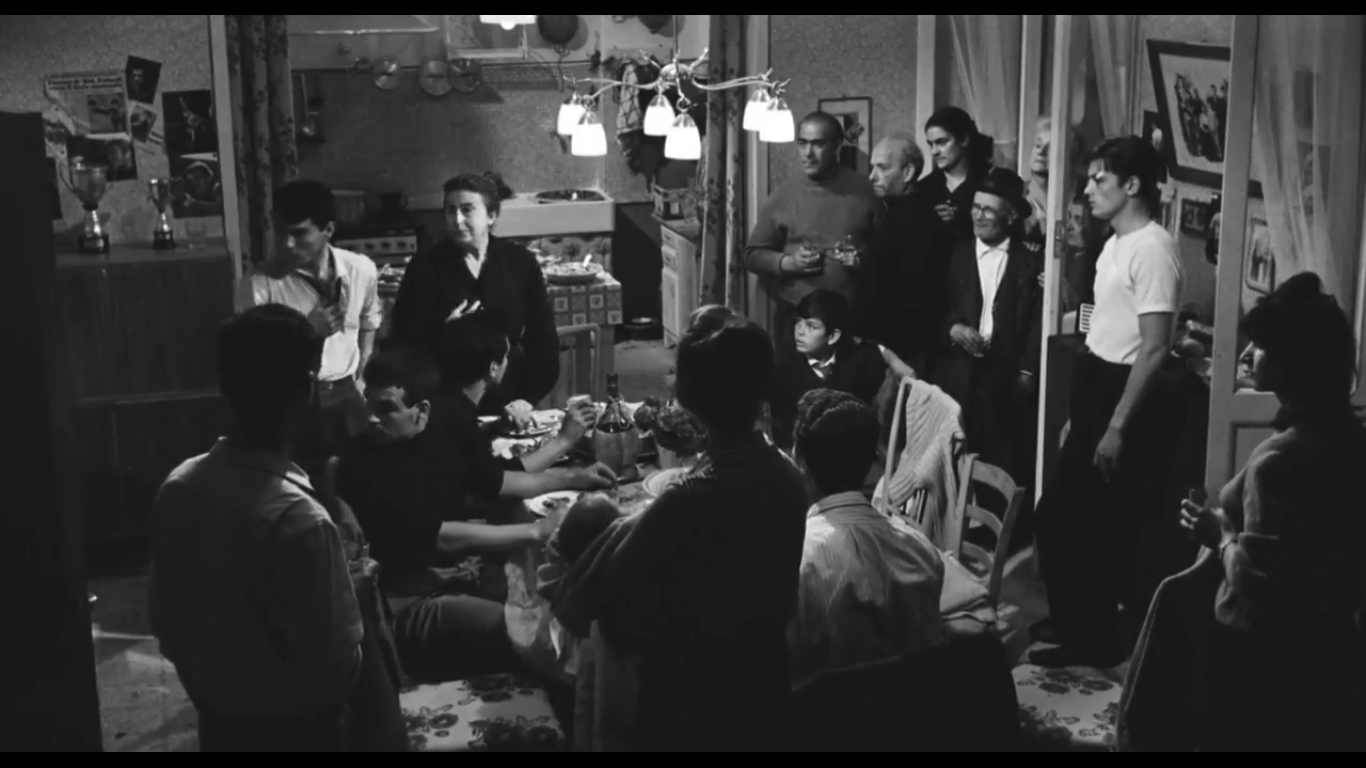
Vincenzo (Spiros Focás) is courting a dark-haired beauty (Claudia Cardinale) with thoughts of marriage once he gets steady work. Their home feels gay and bright with the roving camera capturing the full expanse of their household. It’s positively overflowing with family, and we expect nothing less.

I think some contemporary critics were disappointed by its sheen which is very un-neorealist. But it does boast its own brand of truth about family and life and love and all the constellations of emotions that we grapple with every day whilst living with other people. In this way, it shares a brand of authenticity with those earlier generations of films.

Francis Ford Coppola was certainly influenced by the picture, not only based on his hiring of composer Nina Rota but also in a more general sense in courting themes about family. It makes for a compelling ensemble telling their stories in a manner that feels totally immersive and honest to who they are as human beings. And yet it’s destined for heightened tragedy akin to Rebel Without a Cause or West Side Story.

Screenshot 2020-07-12 at 9.21.48 PM

What a raucous opening it is; it’s spectacular with the families pitted against one another and by families, I mean the mothers butting heads, while their children are left to pick up the pieces and play peacemakers. It feels all too real. Vincenzo quickly finds himself with an angry mother and a whole pack of brothers he has to find lodging for, no wife, and still no job. Everything goes to hell in a matter of moments.

Despite its sheer expanse, Rocco and his Brothers feels simultaneously well-organized and still free to follow the whims of life. Each brother gets a chapter of sorts and yet each one bleeds into the next. They’re never obvious sections and so it feels more like poetry woven throughout a story than hard and fast rules that must be adhered to.

For the time, Vincenzo lands them a temporary place to live, somewhere they can stay on until they get evicted. It’s not a promising life, but the family does receive a couple propitious bits of luck. Newly fallen snow means work shoveling snow, and the boys wake up early, downing their mom’s piping hot coffee, as they scramble out into the early dawn to bring home some bacon as it were.

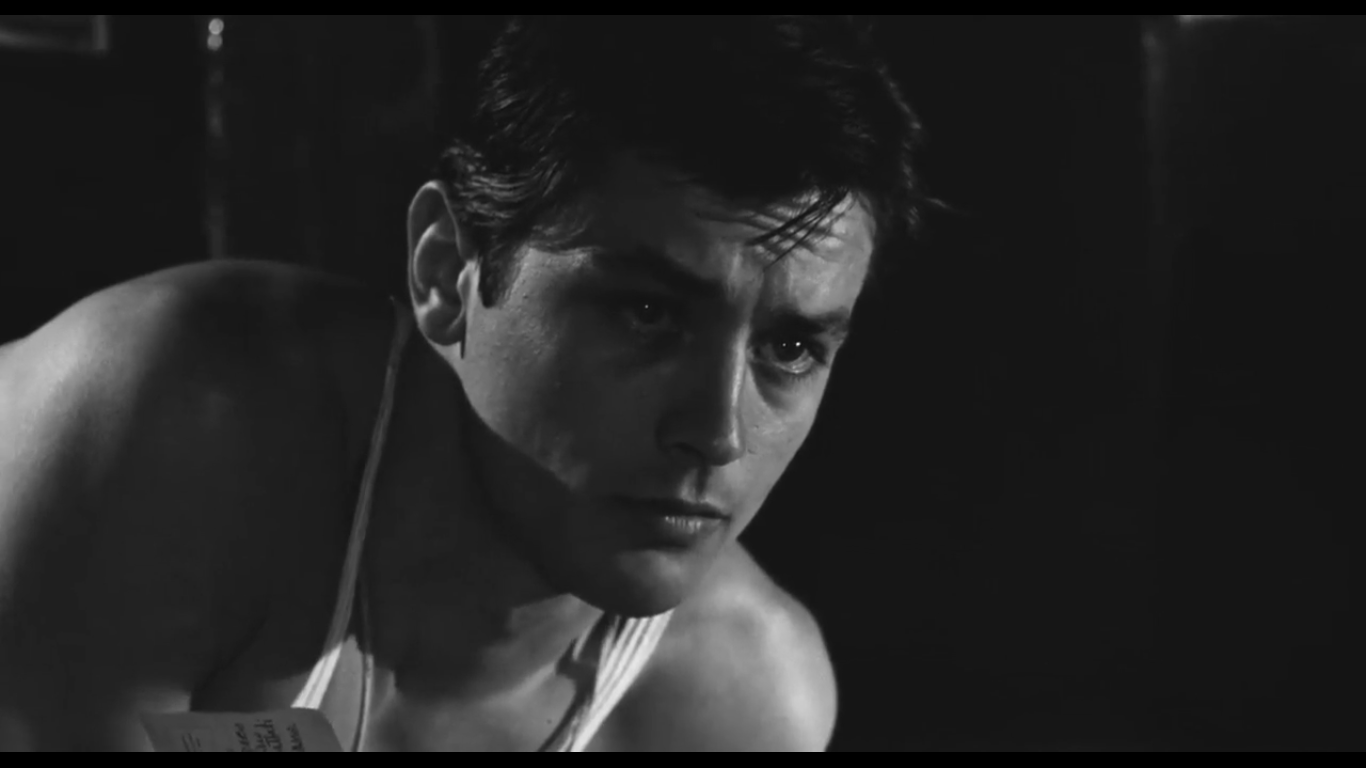
Because it becomes a story of each brother exercising their worth. They are valued by the manner in which they are able to provide bread money to the family unit. Rocco (Alain Delon) bumbles his way around a dry cleaner weathering all the young ladies teasing with a good-natured stoicism. Ciro goes the sensible route, conducting his schooling so he can land a suitable job at the local Alfa Romeo factory.

Simone (Renato Salvatori) fancies the idea of joining the local boxing gym as a chance at some easy dough, and he gets the biggest break out of all of them. A trainer takes a chance on him, and he wins his first fight, despite a belligerent temper.

If these scenes are only preliminary, they provide the framework to understand our characters going forward. Simone presumably lacks the moral prerequisites for a lengthy boxing career: a rejection of drinking, smoking, and women. Rocco is called upon to be his sparring partner and his guardian.

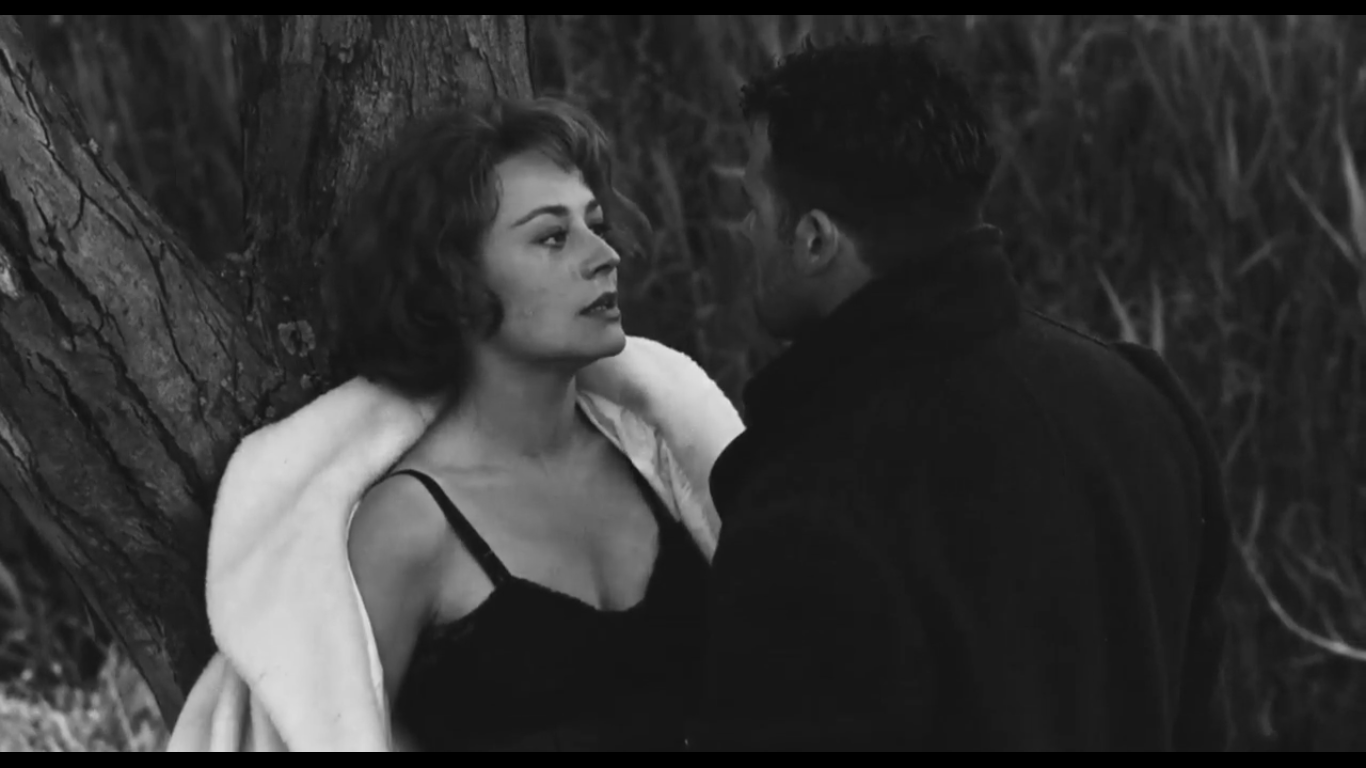
After his glorious showing for the home crowd, the brothers proceed to get embroiled in a street fight only to wander off with the pretty streetwalker Nadia (Annie Girardot). Simone’s behavior doesn’t bode well. Life roles onward and with few prospects, Rocco pursues his military service. It’s far from a digression. Instead, it reflects the passage of time

Screenshot 2020-07-12 at 8.06.38 PM

Rocco is one of those enigmatic figures who watches the world and seems to see everything. Those who think he’s quiet or unfriendly, over time, come to realize he’s perceptive, carrying deep reservoirs to make the most of life and have faith in everything around him. There’s a dashing nobility to him. This becomes even more true when he returns home.

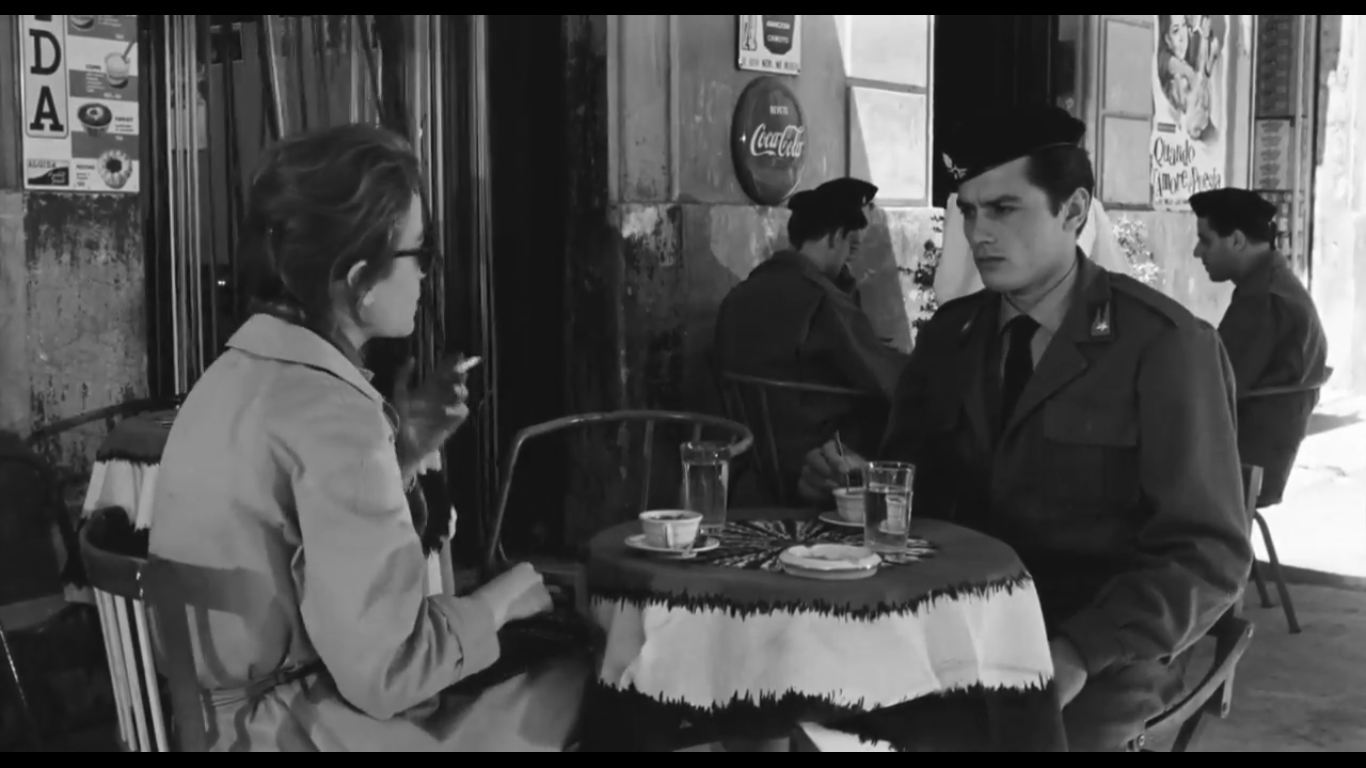
The first person he meets at a sidewalk cafe is a face from his past: Nadia. He, smartly dressed in his uniform. Conservative. She, in her sunglasses looking him over. She’s no longer with Simone — at least they drifted apart — because she was serving a prison term. In Rocco, she finds someone understanding and kind who never demeans her. She feels understood in his company. Pretty soon a subtle romance blooms between them, warm and tender.

What we haven’t taken into account is Simone. The time has changed him as well. Now he’s hardened, disgruntled, and disillusioned with his boxing career. He dedicated himself to smokes, drinks, and pool with the boys. But he’s also intent on ripping Rocco and Nadia apart. Jealousy takes hold, and it’s the stuff of melodrama. To detail it all now would be rote and a disservice.

You need to see it as he brings them down to his level with a wounded tenacity nearly as electric as anything Dean or Brando managed in East of Eden or Streetcar. Suddenly, everything that was so blissfully and right between the two lovers is besmirched. And they cannot get it back. The way the camera clings to them violently as Simone tries to advance on Nadjia feels convulsive. It’s the film’s cataclysmic event.

Screenshot 2020-07-12 at 9.14.36 PM

In its wake, Rocco ascends in his own boxing career channeling his hatred into his rounds in the ring and shedding tears for how the harshness of the world has changed him. 

As Vincenzo settles into his own familial life, it is Ciro’s turn to respond to the fracture between his other brothers. He confronts both on his mother’s behalf, entreating Rocco, “A seed gone bad must be weeded out. After all, trees are meant to bear fruit.” However, the well-meaning boy doesn’t quite know how to apply this teaching into practice.

Rocco continues on the rise in his singular objective. Simone’s sunk into the gutter as not only a malcontent but the laughing stock of the community — his debts piling up and Nadia staying with him, partially out of malice and a promise to Rocco. It is here where the film’s editing comes front and center as the two brothers go their separate ways.

My mind is drawn to a curious interchange between mother and son as they dialogue on the self-destructive nature of the black sheep of the family:

“It’s not for us to judge him but to save him.” – Rocco

“Christ will regret the suffering he visited upon us.” – Mother

“We’re no longer under God’s grace. We’re our own enemies.”

Rocco proves himself again to be this near-otherworldly figure. He has an almost unfathomable amount of grace for others, and yet he’s prepared for penance and to take the burden and sorrow on his back. He is Christ-like and yet unable to be their savior.

It makes for a dismal denouement drained of all hope. Still, the family must pick themselves up out of the muck and the mire and make a way in life — each brother on his own path. Rocco finds his face plastered all over the news kiosks for his latest exploits. Simone has fallen into disarray. Ciro represents a certain hopefulness — what his brothers used to be, and Vincenzo is what they could have been — both settling down with families. Little Luca’s fate is yet to be decided. He’s indicative of the fight still left to be forged.

But I am left to return to my opening metaphor. Whether it’s Tom Joad or Michael Corleone, and in this case, Rocco, these are young men who made irrevocable choices in their lives from which there is no turning back.

The chasm between who they were and who they become couldn’t be more disparate and in all accounts, it has heady implications on their family unit. What they do, they do for their loved ones, and they still see everything they love crumble around them. It’s not a new concept — it’s not novel — but there’s something distinctly profound in this. Because we all experience something of the same.

My final thought is only this. It occurs to me that the Parondi brothers might all represent the seeds in the parable, falling all along the road. I’ll leave it up to you which ones will make their way through the straight and narrow and which ones will bear fruit. Because human beings are often resilient, and they are often granted second chances in life if they accept them. Perhaps they can remain under God’s grace after all or maybe it’s not for us to know.

4.5/5 Stars

The Shop Around The Corner (1940): A Christmas Love Story

The_Shop_Around_the_Corner_trailer

The Shop Around The Corner samples a Hollywood-style Hungary that nevertheless establishes it as a much humbler, quieter picture than seasoned Lubitsch aficionados might be accustomed to. It’s subsequently one of his best efforts for this very reason. There’s an intimacy to it, recalling his own upbringing working in his father’s tailor shop based out of Berlin, during his youth.

Initially, it feels like curious casting — James Stewart playing a Hungarian is absurd and he makes no attempt at an accent — and yet Lubitsch had the foresight to understand his appeal. He lacks all the suavity and urbanity normally associated with the director’s creations. In fact, for an American audience beginning to grow used to Stewart’s own steadily rising star, they connected with his disposition since it was very much the antithesis of stereotypical Hollywood or the highbrow of 1930s Lubitsch pictures. But it is the tone that matters most.

Because, again, this is not Hungary in the flesh — it is out of the mind of Lubitsch, a creation of nostalgia, warmth, and sentimentality — and on its streets, Stewart is more than at home. He fits the spirit of what The Shop Around The Corner cordially represents.

It is not a place right in front of us but just out of reach in the near-beyond of our memories and our imaginations. It represents our hopes and high ideals, even the sentiments of hope wrapped up in the Christmas season. Stewart as a figure — a token — is somehow able to stand in for so many things.

But there is more to it. Stewart delivers something a bit more substantial than his “aww shucks” persona, which was continually teased out leading up to the days of Mr. Smtih Goes to Washington. There’s also a stern assertiveness present, ready to come out; it just needs a spark, some point of instigation.

Enter Margaret Sullavan, his perfect counterpart and sparring partner. Her breathy delivery is quiet and understated, while still somehow implying this spunky resilience residing inside her character. This is what Sullivan brings to the part herself, earning a reputation as a demanding and “difficult” performer who sent shivers down the spines of major studio magnates, knowing full-well what she wanted. As a result, she found initial success though she’s mostly forgotten today.

Accordingly, her Klara Novak turns out to be a crackerjack saleswoman, at first pleading for a job, then proving Mr. Kralik’s rebuttals wrong by turning right around and earning employment. This sets the stage for their prevailing antagonism from which a love story must bloom. 

But that comes a bit later. The movie opens with all the staff of Matuschek and Co. congregating outside before the workday commences waiting for the front door to be opened by their employer.

Frank Morgan is Mr. Mathuchek, a blustering and a demanding fellow who can never quite make up his mind about the shop’s inventory. For that, he trusts his most faithful and pragmatic right-hand man Kralik (James Stewart), who has been the company’s longest-serving employee. If there are any decisions to be made, he’s the man to make them.

Felix Bressart is a fine family man and friend who always has a habit of fleeing the scene when the boss is requesting personal opinions. What he provides is quiet stability and an encouraging ear to Kralik.

Among the other current employees is the brownnoser with fine threads Vadas and the precocious errand boy Pepi (William Tracy) who does everything in his power to get ahead. With their communal workspace, a number of things come to pass. The relationship between Kralik and Ms. Novak continues turbulently as she manages to sell one of their useless purchases to an unsuspecting customer — a cigarette box that plays “Ochi Chernye.”

Simultaneously, Mr. Kralik is maintaining letter correspondence with an unknown paramour who engages his intellect on ideas of art, culture, and literature. One is reminded how The Shop Around The Corner extrapolates the axiom of not judging a book by its cover. Closely related is the fallacy of getting caught up in books such that you fail to see and comprehend the reality playing out right in front of your nose.

You read Anna Karenina, Madame Bovary, Dostoevsky, only to realize the people living and breathing right beside you are not only more than what’s meets the eye — they are simultaneously writing their own stories. We can’t always mold them to fit the narratives we know. Both Ms. Novak and Mr. Kralik seem to know these issues intimately without realizing it.

Because this is a Lubitsch picture, irony comes into play quite early; although it’s difficult to know if Stewart or the audience come up with the answers first. Maybe it hits us at the same time. If you don’t already know what it is, I’m not licensed to say. Allow it to happen to you.

Meanwhile, for some unseen reason, Mr. Matuschek grows cold and distant — going so far as relieving Kralik of his post in an uncharacteristic move. It’s the film at one of its lowest points. This was the fountain of all Kralik’s joy until he is so unceremoniously plucked from his position. Because we realize this job is his life, these people his extended family. Even Ms. Novak feels sorry that they must say goodbye, though patching things together might be altogether too little too late.

Sampson Raphaelson’s story kindly reconciles this conflict as Kralik and Mr. Mathuschak smooth out the situation. What still remains is the meeting with his mysterious correspondent. The Christmas season is upon the shop, and they work tirelessly to have the biggest sales in Christmas Eve history. They succeed. It’s punctuated by holiday bonuses for everyone, a soft powdering of snow, and genial celebrations all around — even for lonely Mr. Matchuchek.

This could be the end, but of course, we cannot forget the main reason Lubitsch has cast his eye on this inauspicious shop. Among many other things, it’s to unpack themes of love. The lights are low in the backroom, and Kralik is trying to get the words out, playing up the piece of jewelry he bought for his unseen beau.

Ms. Novak tries to accept her own fate with fortitude as her former rival tramples over her dreams with a reality check. Their words meet midsentence as she recites the recitations from her own dream suitor:

“True love is to be two, and yet one.”

“A man and a woman blended as angels.”Heaven itself.” That’s Victor Hugo. He stole that.”

“I thought I was the inspiration for all those beautiful thoughts. Now I find he was just copying words out of a book. He probably didn’t mean a single one of them.”

“I’m sorry you feel this way about it.”

She’s been led to believe he’s a balding, chubby fellow playing at a great romantic. As it turns out, he’s lanky and bowlegged, but not without his charms; he meant every single word. He says to her, “Take your key and open the post office box and take me out of my envelope and kiss me.” His proclamation of love stops her cold as the recognition comes over her face. She follows suit soon enough, and there you have it…

No more fanfare is necessary. We have the cathartic moment as a romantic tree-topper that Stewart and Sullavan more than earn. Even right here, it’s the same old Lubitsch with an unequivocal knack for finding the most satisfying conclusion, whether in drawing room comedy or backroom romance.

4.5/5 Stars

Note: I wrote this in conjunction with a series of reviews on the films of Margaret Sullavan released earlier this year.

Black Narcissus (1947): Another Archers Masterpiece

Screenshot 2019-12-22 at 65652 PM

Under their collaborative umbrella, The Archers, Michael Powell and Emeric Pressburger formed one of the most mystifying and extraordinary partnerships within the annals of British cinema history. Black Narcissus is just one of the many enchanting jewels in their collective crown.

Part of the acclaim must be heaped on Jack Cardiff because there’s little doubt; his compositions are absolutely stunning front to back. It starts with this gorgeous even intoxicating brand of Technicolor mingling the real and artificial in a manner on par with anything Hollywood was cranking out at the same time.

Whether through miniatures, grandiose matte paintings, or Pinewood Studio sets, it creates a spectacular illusion as a cinematic representation of the Himalayas. In perfect juxtaposition are the sculpted interiors with columns and facades bathed in this equally mesmerizing patchwork of glowing light and meticulous shadows. Not in the sleazy low-grade setups of film noir, but rather like the Rembrandts and Carravagios might have done it in their Baroque works.

One of the earliest images to leave an impression comes from the POV of two nuns as they gaze down at a cruciform table with nuns moving about for their daily meal.

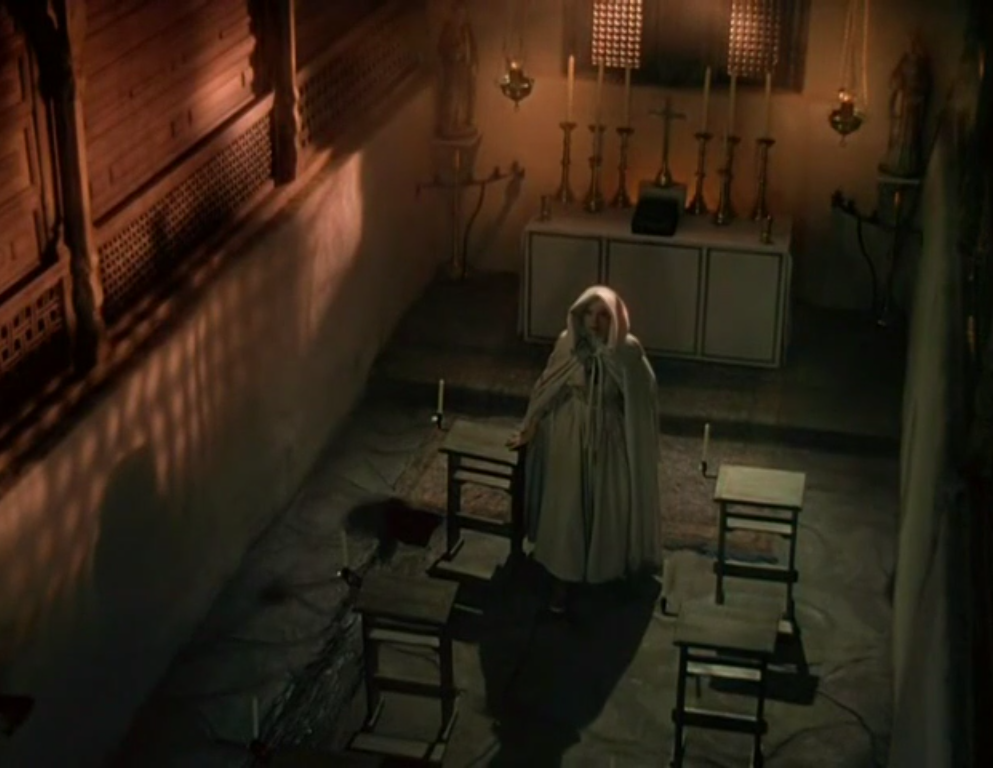
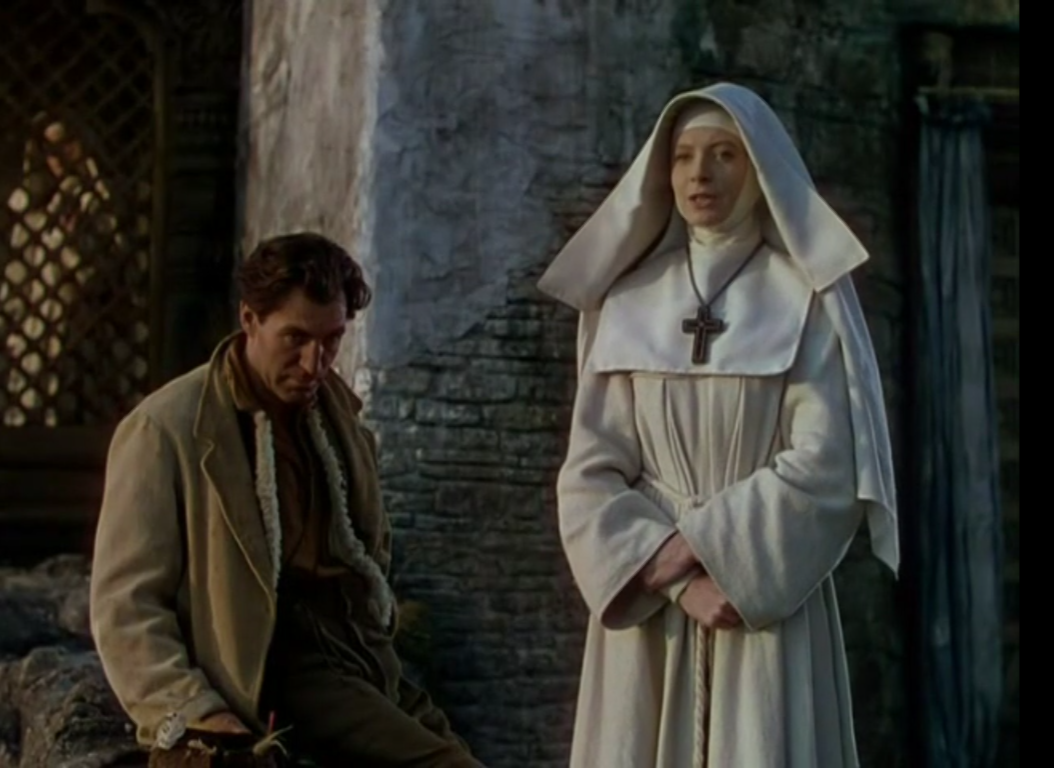
Deborah Kerr as Sister Clodagh comes off somehow regal in her white habit, proud and imperious, even as she sets out assiduously to manage the task at hand. The Sister Superior divvies out her allotted help scrounging up a task force of sorts, within the convent walls, to send out into the world and form a community.

Admittedly, the veteran sister has her doubts about the youthfulness of her counterpart, chiding her pupil, “The superior of all is the servant of all.” This is her word of admonition as they head off to face the unknown set before them.

I’ve never fully considered the methodology of the habit and yet purely from a cinematic perspective, what it does is put all the focus on an individual’s face — their features and, thus, their emotions speak for them. Then, of course, hidden under the garb is their heart and this is the seat of all their actions whether sympathetic or callous. Otherwise, they might all look the same. But of course, the head and the heart are what set us all apart.

While they are nestled in the Himalayas, there is some mention of Darjeeling, India as a stepping stone to civilization, and yet otherwise they are quite secluded. Still, they make it clear they are not merely looking for a place of solitude to live out a reclusive existence.

Mr. Dean (David Farrar), the knowledgeable yet resident cynic, is meant to be their point of contact to help them settle in, but his brusque often insinuating comments lingering in the air don’t begin the relations in a cordial manner. The fact he’s a handsome, strapping young specimen creates yet another layer of unspoken tension.

He explains the local General used to keep his women there — his concubines and wives — in a place where the nuns have plans to turn into a medical dispensary with a school and a space to minister to the needs of the local populations.

But there are numerous reasons to be uneasy. The people pile into their compound with their sick and old overwhelming the newly installed outpost. There’s also the wind, altitude, and disease which have a curious joint effect on the new transplants still trying to gain their legs.

Screenshot 2019-12-22 at 65153 PM

The sisters find everything distracting, even disturbing, and Sister Clodagh, for the first time in ages, finds her mind clouded by past memories — triggering flashbacks from her former life. Could it have been a mistake to join the order? Are these her nagging regrets come back to haunt her? She yearns for the liberation of a normal life, and she’s not the only one.

Likewise, the best encouragement she can muster against the elements and spiritual forces working against them is to, “work hard, work until you’re too tired to think of anything else.” She hasn’t been equipped by any other means, and it becomes obvious she will not be able to succeed with such a plan.

At the same time, they receive requests to take in a local outcast Kanchi (a bedazzled and brown-skinned Jean Simmons) known for her meretricious ways. Also, a young prince (Sabu) inquires about being a pupil within the establishment, which normally only caters to women and children.

We see the remnants of imperialistic disdain especially in Sister Ruth (a wildly manic Kathleen Byro). Far from being all marked with the image of a higher being, she sees the indigenous people around her as lesser beings whom she deigns to help in all their ignorance. It is this relationship between the enlightened few on Christian mission and the impoverished heathens.

We must come to terms with this complicated relationship even with Sabu playing opposite the Anglo Jean Simmons in brownface. Effectively a cross-cultural attraction forms between them even as he is her social and patriarchal superior within the storyline.

The aftermath of WWII also meant many displaced people groups were readily available to serve as extras in the picture, and in this regard, the film is blessed with some genuine sense of authenticity around the edges to counteract the whitewashing represented by Simmons, Edmond Knight, and May Hallat.

The film implicitly dances around these ideas. One moment the fiery-eyed Sister Ruth dismisses the young general as vain and black like a peacock. Although she does seem utterly tantalized by his lavish clothes and his pervasive scent: the titular black narcissus.

He’s also the one who on Christmas night says with all candor, ” I am very much interested in Jesus Christ.” Sister Clodagh extends him some leniency for speaking of their Lord and Savior with such familiarity. Ironically, it is the half-drunk Mr. Dean who chastizes her in the very same moment: “He should be casual and as much a part of life as your daily bread.” Truthfully, she doesn’t like it; it hits far too close to home, especially from a man of such ill-repute.

Screenshot 2019-12-22 at 63158 PM

While not quite the same sentiment as Luis Bunuel, there is something about the movie that proves unsettling in a religious context. There’s some unseen force, whether merely ill-fortune or closer still spiritual warfare, taxing them and splintering their meager enclave apart.

The two defined poles have been made obvious. Either you give yourself up to the world like Mr. Dean or live like the Holy Man. Neither will do for the Nuns who are stuck in the middle as the emblem of Christ in this far-off land.

After, the locals are scared off by the death of one of their infants and leave the Sisters all alone, hysteria sets in. With time, the impending psychological drama fills the world with unease. It has all these unnerving undercurrents accentuated by Cardiff’s own striking palette bursting with this vibrant even violent color scheme.

Mr. Dean matter-of-factly notes there is “something in the atmosphere that makes everything feel exaggerated.” The comments feel strikingly self-reflexive of the film’s own art direction burning images deep into our retinas.

Screenshot 2019-12-22 at 63518 PM

Still, the sisters are left drifting and dreaming through the world. It matches the, at times, hypnotic often queasy psychological torment in Hitchcock’s Vertigo to the point it pulls you in and wears on the psyche. That’s before even getting to the climax, which coincidentally also relies on a bell tower. It manages so much out of the very fact it is being manufactured to create a heightened impression of reality by manipulating the audience.

Even in the final scene, as the clouds envelop the castle high above and the Nuns are led off dejectedly in their little caravan, there’s nothing but this residual innervation. They must give up their mission and be humbled knowing they will be sent to other lowly assignments having failed by the world’s standards.

While India isn’t central to this story there is this lingering sense of colonialism as missionaries were often tied up with this since they were such a staple of the British Empire. There are enough movies to suggest this is true including The Bitter Tea of General Yen, Keys of The Kingdom, and 7 Women.

The rain starts to pour down in sheets as if signaling the end of something — something being totally overrun. Could it be the British Empire collapsing right in front of us? If you were curious like me, India officially gained independence in August 0f 1947. This was after Black Narcissus‘s release in the U.K. and during its run in the U.S.

Somehow they feel interlinked even as this story bursts out of the confines of reality under the exhilarating vision of The Archers. It remains an astounding feat in cinematic magic verging on the otherworldly, positively possessed by color. Like all the most enduring films, it stays with you long after the credits roll like a bewitching fragrance.

5/5 Stars

Marnie (1964): An Inflection Point in Hitchcock’s Career

marnie red

“You don’t love me. You just think I’m some kind of animal you trapped.”

Forgive me if you disagree, but Marnie has wrapped around it the full confidence of Alfred Hitchcock with all his trick and thematic ideas. Its use of visuals to cue the action. The intensity of both color and the swirling score of Bernard Hermann (indeed, his final with Hitch), creating this almost obsessive fever dream.

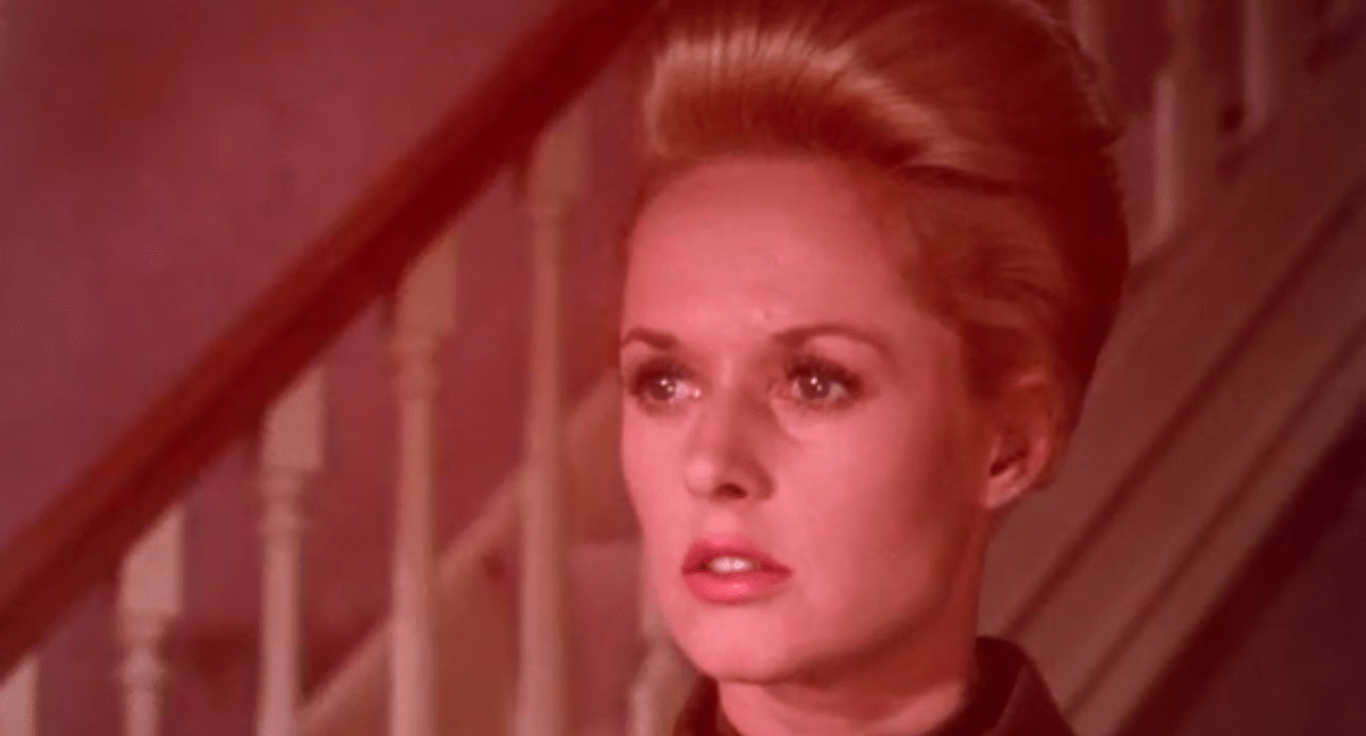
Tippie Hedren returns as an icy, calculated blonde more like Vertigo than The Birds, and it feels like with the talents at his disposal and his harnessing of all the studio system has to offer, he’s able to make it sing like a finely wrought orchestra. While not his best film, it stands proud and tall next to his most identifiable works.

If we are to tinker with the auteur theory, we must also acknowledge cinematographer Robert Burks, who had worked on over a dozen Hitchcock pictures. This would be his last. Then, editor George Tomasini, who had a stellar run with “The Master of Suspense” in his own right, would die in 1964. One could see how you could easily situate Marnie as the end of one of the most fertile periods of filmmaking and also the most terrifying.

These words are chosen purposefully. Because Marnie is not another man on the run thriller or even a game of romantic cat-and-mouse like To Catch a Thief. It fits into the lineage of the Vertigos and Psychos where it feels like Hitchcock is dipping into perturbing territory, partially because it feels self-reflexive, and it deals in the potentially grotesque and unseemly sides of humanity.

Marnie opens on a bag. The back of a woman walking to a train station. We don’t see a face before we cut to a man who bemoans a bank robbery. His secretary ran off with some of his funds.

Eventually, we learn this woman is prone to such behavior. She’s taken many such jobs and undoubtedly committed many such infractions under different aliases. However, her true name is Marnie and like a dutiful daughter, she turns up on her invalid mother’s doorstep to check in on her, give her gifts, and try to earn more of her affection.

Because it becomes immediately apparent this woman has attachment and mother issues; she’s an independent woman yes, who is also independent of men, but she hangs onto her mother’s love. Even covets after it and clings to it jealously when maternal affections are directed towards a neighbor’s little girl. And then, she leaves as quickly as she arrives.

marnie connery and hedren

Her cycle begins again when she’s up for a new job at Rutland & Co. The exchange during her interview would be banal if not for a certain undercurrent, the dissonance at the core of the entire picture. They’ve done business with her former employer, but she has no way of knowing that.

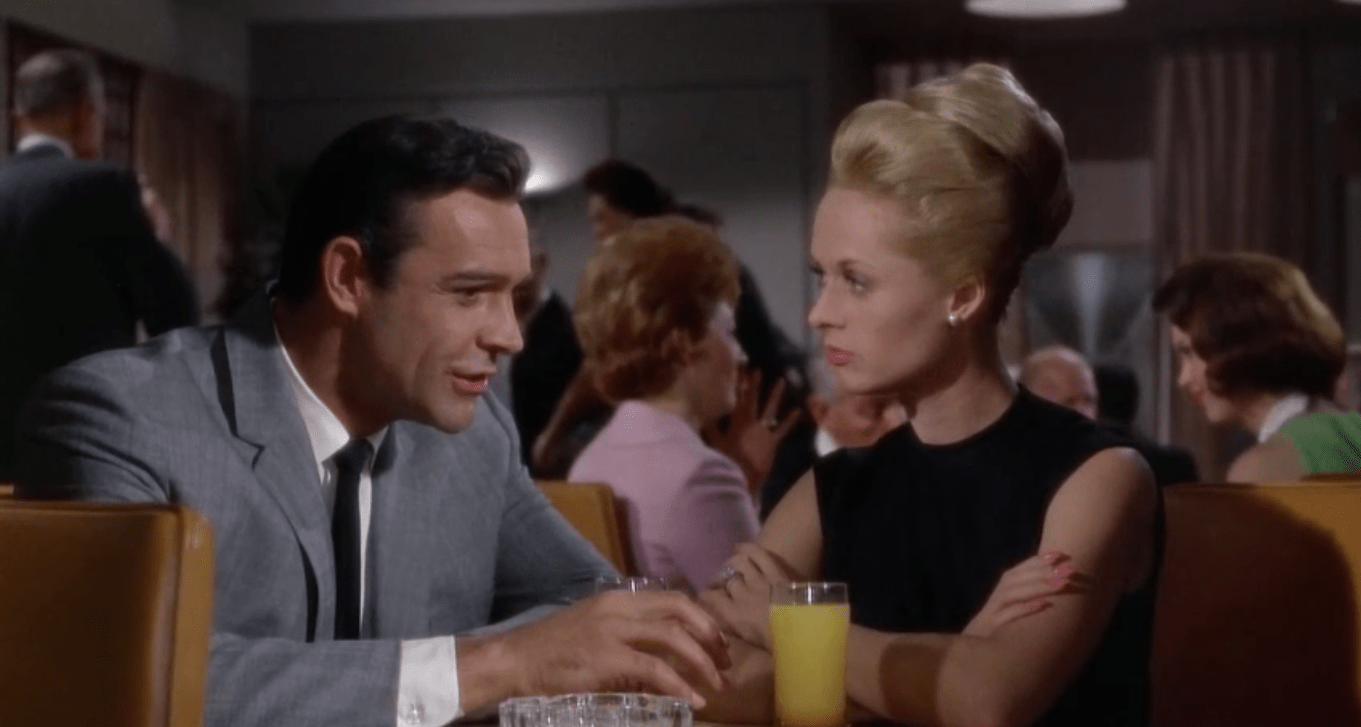
The one man who knows her secret is there too. His name is Mark Rutland (Sean Connery). He looks on rather bemusedly as she explains her backstory to her interviewer. Something about a deceased husband and leaving Pittsburgh behind for more demanding, interesting work. As Rutland watches her, it serves a kind of dual-purpose, giving rise to our conflict while also highlighting this kind of queasy sexism in the workplace. Where women are hired as objects and often viewed as such.

He knows and still hires her out of curiosity — is that the case? However, there’s something more — a kind of kleptomania — and Hitchcock funnels the entire movie through Marnie’s private obsessions. So as a secretary drones on about some HR forms, we are busy watching the office manager pull out his key and unlock the safe. We vicariously take on the obsessions of Marnie — caught in the same vortex thanks to Hitchcock’s camera — a camera that enters a fevered frenzy whenever she sees the color red. It’s akin to Jimmy Stewart’s Vertigo in how it totally usurps the picture in an instant.

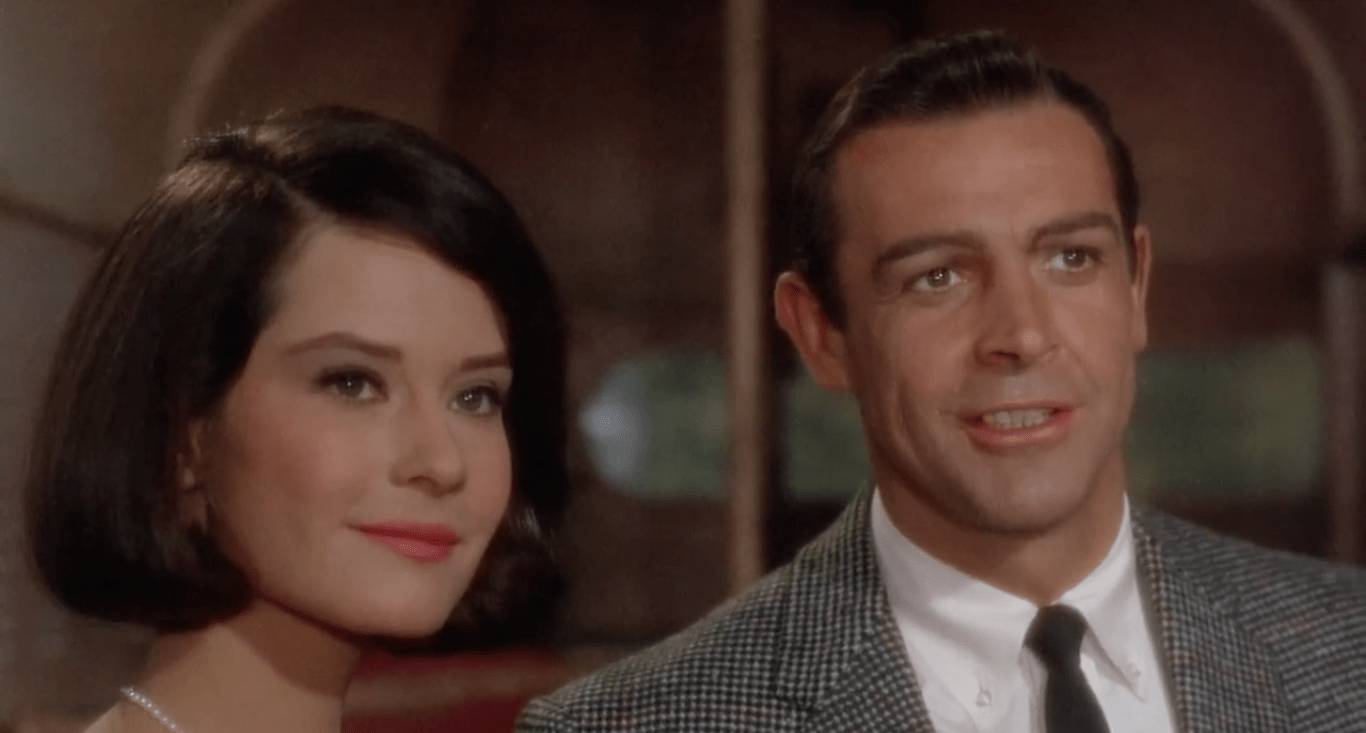
On a very different note, it’s always a pleasure to see Mariette Hartley, a personal favorite in TV reruns, and assuredly in Ride The High Country. But it is Diane Baker who might be the unsung hero of the movie and Hitchcock, if anything, sets her up as an integral figure to cement the film’s core drama. She is Marnie’s foil and ready to protect Mark even as she’s intent on winning him over.

But the relationship between Rutland and Ms. Edgar continues to vacillate, exemplified by very pointed snatches of dialogue. Take for instance, Rutland’s training in Zoological science or as he puts it “instinctual behavior.” He likens predators out on the Sahara to “the criminal class of the animal world,” and he’s as fascinated by Marnie as he is passionate about her.

They go to the races and then to see his father’s stables maintaining these implicit themes of husbandry and animalistic desires raging through Marnie’s core. She cannot help these impulses.

It’s true the film boasts some phenomenal wide shots: The first I’m thinking of is inside the stable before cutting to a close-up to the passionate embrace of our romantic leads. The second is an exercise in irony. Marnie is in the midst of her first burgle of the company safe. She snuck out of a bathroom stall after hours. Just around the partition, the night cleaning lady goes about her duties. To each her own.

For several minutes it is a silent movie. No music. I don’t think Hedren makes a sound. Because of course, Hitchcock is milking the moment only to magnify it seconds later. It reminds us how marvelous he was at punctuating the drama, lest his filmmaking ever be mistaken for realism.

Marnie continues in its duplicity as Rutland first accuses his employee of her theft and then comes right back around with the proposal of marriage. It drudges up the unseemly realities of sexual harassment and powerlessness as Marnie cries out about how she can’t bear to be handled by men. She doesn’t want to get married. It’s degrading. Even animal.

“You say no thanks to one of them and then bingo, you’re a candidate for the funny farm.” It breaks my heart even as I feel implicated in the issues. No, I wasn’t born then, but the indiscretions against women have not totally been expunged at least while men still have lust in their hearts. Hitch is part of the problem. I am part of the problem by any sin of omission or even passivity.

Before there was a mystery plot to hang its hat on in Vertigo or the money propelling Psycho. With Marnie, it hardly feels as if there’s a pretense to the often demented predilections of humanity. Husband and wife are “playing doctor” and free association with Marnie feeling as if she’s continually being needled by her spouse’s callous analysis. Is this love or torture?

diane baker and sean connery marnie

We mentioned Diane Baker before and it’s worth acknowledging her again. She is slightly impetuous and a bit impish — ready to go to war for her man. Hitchcock even gives her a line to mirror Norman Bates from Psycho as she offers observation on Marnie (A girl’s best friend is her mother). But she also eavesdrops because it’s this that allows her to know the film’s main secret and look to bring it to the surface.

The next sequence opens with that unmistakable Hitchcock high angle, at the party. It’s Notorious rehashed and yet instead of a key in the hand, it is the front door because through it will come a very important person: Someone who can implicate Marnie and unravel the stasis Mark has willingly corroborated for her. They must find a way to get out of this, to come to a mutual agreement, or else Marnie is sunk.

I must admit, this and the sense of suspense anticipated by the climax, are of the most intriguing since the psychology the final flashback relies upon feels too convenient. Maybe Hitchcock does not really care about any of this. It is a bit like Spellbound, but now it feels even more antiquated, whereas the moments leading up to the reveal of the trauma are contorted and alive, horrifying and convicting all at once.

Others could do it better, but I would be remiss not to mention the storyline of Hedren and Hitchcock, who harassed her all through the shoot. It’s an unsettling reminder of how he would control women and beyond that, how toxic masculinity has fueled our society and industries like Hollywood. It reveals the underlining brokenness in many of us that come out compulsively. It’s almost like we do what we do not want to do or we give ourselves over to them entirely. And what a nightmare that is.

Psychology cannot completely dispel our fears nor does it warrant a society and social spheres where men take advantage of women and where women feel fearful and scandalized. Forget his films. Hitchcock himself is emblematic of problematic fissures in society. That’s a great deal of what makes his film’s so disconcerting.

However, just as he tanked Tippi Hedren’s career, Hitchcock would never quite be the same. Not because of this mind you, unless there was some force of karma working against him I’m unaware of. Instead, the industry was changing and also the structures around him that he had to work with.

Torn Curtain and Topaz are passable films with glimpses of his cinematic eye, but they never amount to the same kind of intoxicating, bewitching drama we would see during his high point during the 1950s and early 60s. Of course, Frenzy was what some called a return to form, but it was, again, back in his native England so it’s obviously laced with a different flavor. His final film was in 1976 — Family Plot — and if it wasn’t evident already the industry had changed.

By then, he was a revered master but more of a relic than an up-and-coming auteur. No, Marnie feels like an inflection point as if it’s catching his very particular genius in a moment in time. It’s also a startling caveat to the career of one of the most lauded directors Hollywood has ever known. We cannot fully speak about one without reflecting on the other.

3.5/5 Stars

Stage Fright (1950): Hitchcock and Dietrich

wyman and dietrich

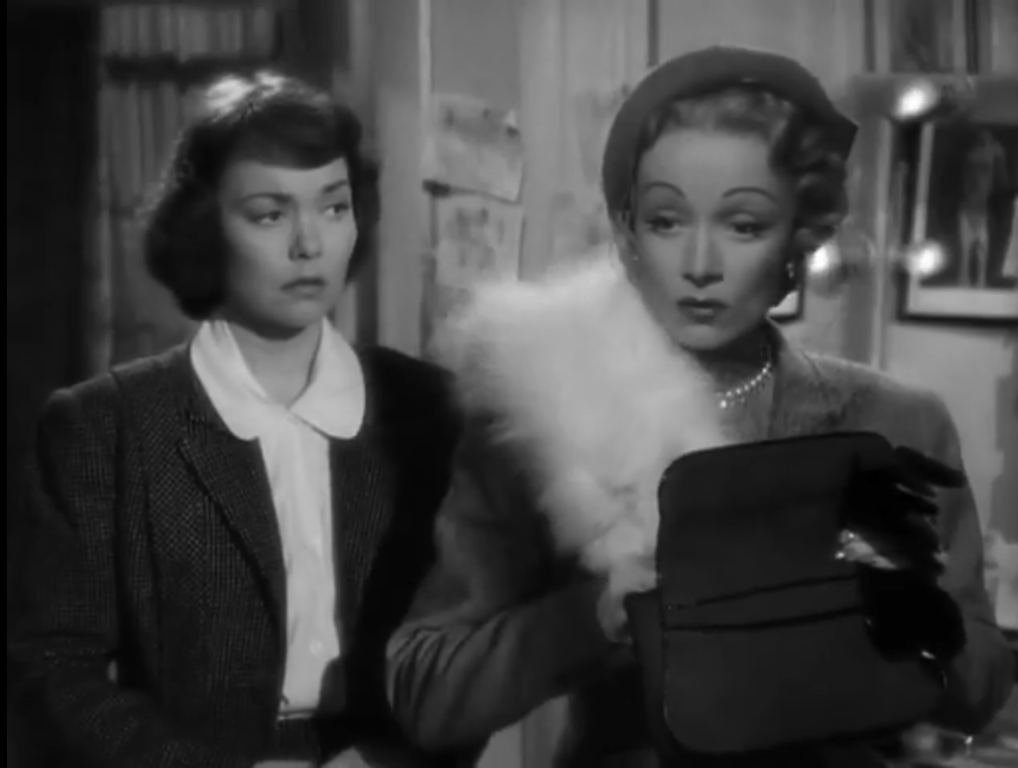
It’s true that “All the world’s a stage, and all the men and women merely players.” However, dress it up with murder and life becomes a series of stages and varying performances you’re putting on for different audiences — trying your best to play your audience — while not giving yourself away.

Stage Fright feels very much like Hitchcock getting back to his roots; there’s something simpler and yet still charming about the milieu he’s able to drum up evoking the British Isles. In reality, it was a convenient excuse to spend more time with his daughter Patricia currently away at school in the U.K. She even earned a small role. It’s also propitious he seems to be having good fun with the conceit: the combination of play-acting and murder with actors trying their hands at amateur sleuthing.

We are thrown into an almost instantaneous thriller. It dispenses with the lead-up altogether by showing a couple on the run in a car. A fledgling actress, Eve (Jane Wyman), is the complicit accomplice and Richard Todd is a man fleeing the authorities. Through an extensive flashback, he relates how he was pulled into the web of murder spun by his lover — the famed and gorgeous prima donna Charlotte Inwood (Marlene Dietrich).

He tries to touch up the crime scene she’s left behind only to get spooked by her maid turning up on the scene. The murder investigation commences in earnest including a respectable detective named Smith (Michael Wilding).

Eve sets the fugitive up with her father, out of harm’s way, before turning right around and hatching a plan to get to the bottom of the whole thing. One minute she’s trying to get close to the aforementioned policeman to somehow pump him for information with her damsel in distress act. The next moment, she’s putting her thespian training to good use posing as a cockney maid (and temporary replacement) for dame Charlotte herself.

It has some of the dynamics of an All About Eve between actresses though it’s admittedly hinging on cloak-and-dagger antics opposed to true backstage drama. Because it’s on this plane of performance that Hitch seems most intrigued — where acting becomes a conduit for understanding the mystery at the core of this movie.

sim and wyman stage fright

If there were any undisputed secret weapon, my bet is up for Alistair Sim. He was always a mirthful co-conspirator if I’m to recall a movie like Green for Danger. He’s eminently likable, though the spark in his eye suggests he’s ever prone to mischief. This accords him all the prerequisites to play a fine father figure opposite Wyman if only for the primary reason they both seem to relish the game and being a part of it together.

They have the most instantly vibrant relationship within the picture, and they give it the comic underpinnings one comes to expect from the director. Sim himself meets the macabre of Hitchcock thanks to a bloodstained dress on a carnival doll used to shock Dietrich out of her performance of “La Vie en Rose.” It mirrors the ugly token of her secret transgression.

In another sequence, the wanted man shows up during her performance — a particularly saucy rendition of Cole Porter’s “The Laziest Gal in Town.” Before this interruption, the scene is pulled out of the Hitchcockian world momentarily. It’s an individual moment where an auteur like Hitch gets totally overpowered by Dietrich or, in many ways, he acquiesces allowing her to be her scintillating self in the golden limelight before the mechanisms of the plot are meant to take over once more.

Stage Fright feels perfectly comfortable being so theatrical. However, the ideas never feel fully wrought; it’s a bit scattered and inconceivable — nor is Jane Wyman the most compelling Hitchcock lead. Mind you, I’m not expecting her to be a Hitchcock blonde or Ingrid Bergman, but she’s not quite on par with even someone like Teresa Wright in Shadow of a Doubt.

Likewise, the theater finale is terribly abrupt though it functions on the tenets of many of Hitchcock’s grandest set pieces by taking a novel environment and turning it into a thrilling locale for drama (Donen would rehash a similar sequence in Charade). The scenes in the build-up are of all shapes and sizes as Wyman rather coincidentally juggles a double life. It’s all highly circumstantial.

As it turns out, the lynchpin scene is right at the very beginning. Of course, we don’t realize that until the end, but right there is Hitchcock’s point. To see it any other way is a mistake. Because obfuscation and chicanery are the building blocks of not only acting but murder as well. Perceptions can change so quickly, and he was one of the greats at visual audience manipulation. In Stage Fright he takes it a step further. He lies to us outright on the screen.

3/5 Stars

The King of Comedy (1982): Celebrity or Notoriety

Kingofcomedy

“Better to be king for a night than shmuck for a lifetime.”

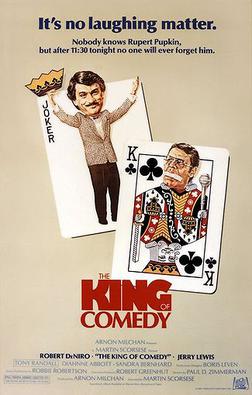
The opening moments of The King of Comedy, as iconic star Jerry Langford (Jerry Lewis), is ushered to a waiting car surrounded by the chaotic frenzy of thrill-seekers, capture the essence of celebrity in the modern age.

Jerry gets shoved about and manhandled as an obsessive young fan sneaks into his car and nearly squeezes him to death. The freeze-frame credits capturing her outstretched hands on the windowpane of his car has Scorsese’s sense of the cinematic. As Ray Charles’ “Come Rain or Come Shine” plays, we become increasingly aware of film’s ability to capture time and halt it completely.

The punchline comes in the form of one Rupert Pupkin (Robert De Niro). He’s an avid admirer of Jerry Langford in his own right, and he just happens to sneak into the car with Jerry as it drives away, leaving the hordes behind. Now he has his chance to consort with his agitated hero.

Rupert lets him know how he’s biding his time until he gets his big break. He’s trying not to be pushy, but he still manages to cross some invisible like as he uncomfortably follows Jerry all the way up to the steps of his apartment.

Lewis builds his performance out of playing it straight and a bit harried and belligerent. He feels much more close to home than one of his prototypical clowns. The buffoonery is mostly left for Pupkin. What Jerry Lewis brings is true-blue Hollywood pedigree and celebrity.

Meanwhile, Rupert has his own private delusions. For example a lunch with Jerry Langford where the old guard is positively begging him to take over the show for 6 weeks. This is the scenario he plays out in his head.

He also shows up at the bar presided over by a pretty girl — Rita (Diahnne Abbott), who he knew from school — and they wind up going out to dinner together (probably). Because at first, we question whether this is an illusion as well. Does it matter?

Because Rupert is enveloped in a world of hero-worship, although he takes it a step further. He wants to get to the top of the mountain with his heroes — to be one of them — with the same kind of praise and adulation. He’ll be the new king of comedy.

And yet we get a sense of how ludicrous this is. He is a man who’s done of up his living room with cardboard cutouts of Liza Minnelli and Jerry Langford (Lewis) to look like his own personal talk show. In the day before mobile phones, he clings to a payphone like a security blanket hoping to get a callback. Jerry’s going to call him back. He just knows it.

It functions as an extension, or a further perfection, of Taxi Driver‘s melding of fantasy and reality. What sets it apart is De Niro’s truly unprecedented performance; it feels more off-kilter and oaffish than we’re accustomed to seeing from him. He’s an alienated outsider, yes, but also a shmuck.

The scenes between Jerry and Rupert somehow are the richest for me because they remain at the heart and soul of his fantasy — his desire to be well-liked and accepted as a comedian — this want to actually break bread and be buddies with his hero. Haven’t we all been there? But for Rupert, it is a legitimate obsession.

There’s an imaginary marriage sequence presided over by his old high school teacher with the wedding march supplied by none other than Victor Borge. In another sequence, he gets thrown out of Jerry’s office after the umpteenth time only to show up at Jerry’s house with his girl in tow.

How did we get from one moment to the other? In the brain of Rupert Pumpkin, it’s not difficult to extrapolate. As this prolonged agony gets strung along, it becomes more and more uncomfortable and cringe-worthy with each passing minute. The servants let them in. They make themselves at home. Only for Jerry to return from the golf coursed miffed.

Because it becomes more and more apparent how unsubstantiated any relationship between Jerry and Rupert actually is. For the actors, it is par excellence with De Niro and Lewis riffing off each other for minutes on end — keeping this grating sense of conflict going.

It’s already been alluded to that The King of Comedy is about this kind of idolizing and super fandom, but it also examines what happens when fellow lunatics clash or worse yet join forces. In this picture, Rupert has Masha (Sandra Bernhardt). He makes every effort to differentiate between the two of them, but who else would hatch a nefarious scheme to kidnap Jerry Langford?

Of course, that’s what they do. There he is duct-taped in his chair — and they really do a job on him — he’s practically mummified, stuck to the seat of his chair. It’s the first phase in Rupert’s plan to get his face in front of the biggest audience possible. Forget about guest host Tony Randall. He’s going to be the new talk of the town, at least for an evening. If not for his middling standup, then certainly for kidnapping one of America’s most beloved public figures.

The key to The King of Comedy is how Scorsese seems to understand what it is to be the TV generation and to be raised on the medium of the small screen. Although he is considered one of the great cinematic directors of our times, he also understands the world a film like this engenders. Case and point is Rupert Pupkin’s climactic monologue.

He cuts away before we ever see it live. Instead, it is shown later from a bar over the fuzzy frequency of a television screen as it was meant to be. In this augmented reality of canned laughter and studio audiences, people can become like family, and they are household names. But there’s also something phony and uncomfortable about it if it’s done poorly.

Because it’s become more and more apparent there are people out there who are not looking to accumulate a currency of trust with their audience. They only want their 15 minutes of fame.

I’m not sure if The King of Comedy always works, but it does leave a lasting impression with its meandering road of awkwardness where Pubkin is a man who seems delusional, shrewd, and overwhelmingly conventional all at the same time. The final punchline is how he gets his wish and becomes a celebrity. Notoriety might be a better word for it, but in our modern landscape aren’t they really one and the same?

3.5/5 Stars

Dune (2021): The Archetype for Modern Sci-Fi

For being such an influential piece of Science Fiction storytelling, I must admit I have very little history with Frank Herbert’s Dune. I was aware of David Lynch’s adaptation, and I’ve recently been dipping my toes into the impressive mythos of the original novel. 

It works in archetypes that feel exceedingly familiar because they’ve helped lay the groundwork for modern sci-fi as we know it. In a contemporary landscape that’s shifted toward stories highlighting the universality of heroism, there’s something intriguing about a story willing to dig into the ancient monomyths that have remained foundational for many cultures. 

There’s the tradition of the chosen one – in this case, young heir apparent Paul Atreides (Timothee Chamalet) – who has untapped potential as well as pedigree that might make him the Messiah who has been prophesied about for generations. 

This overtly spiritual language would certainly inform the worldbuilding of Star Wars and the hero’s journey of Luke Skywalker, conceived by George Lucas and ultimately captivating the world over. This is how Dune indirectly affected my entire childhood and I see it so clearly now. 

Because Dune’s reputation precedes it and for people like director Denis Villeneuve, the passion for this material is palpable. Obviously, his aspirations are to do justice to a piece of literature while giving it a visual resonance for a new generation. 

As this is the man who gave us the worlds of Arrival (2016) and Blade Runner 2049 (2017), Dune is hardly an aesthetic surprise. I know, since he is an avid cinephile, Lawrence of Arabia is a major touchstone for his latest film, and given the indelible desert locales, the comparison seems inevitable. After all, both of these films aspire for vast grandeur with the kind of scope other films merely dream of. 

Villeneuve’s sleek metallic drabness serves him again. It’s at one time immaculate and sometimes a bit soulless. However, this is less a full-on criticism and more so indicative of epics in the 21st century. In other words, it doesn’t have the vibrancy of Lawrence or the golden hues. Still, there’s a vague kind of wonder when we watch it blending real-life locations with digital magic while also underlining this ominous sense of oppression.  

My mind drifts easily to the oddly bewitching bagpipe and drum-infused score of Hans Zimmer. Like the organ in Interstellar, this rather unique choice does wonders in providing a layered soundscape to evoke the ever-expanding world in front of us. Zimmer’s work takes the individual images and transforms them into a full-bodied experience, lending some drama and emotion to a mise en scene otherwise running the risk of aloofness. 

Equally important is how famed elements like the sandworms or bits of technology are realized onscreen. Oftentimes this can be a detriment because these visions no longer live in the mind’s eye, once a creator has brought them into reality. However, that doesn’t mean we can’t marvel both at Herbert’s imagination and also how they have been brought to us. 

Although Timothee Chalamet is not my favorite actor, he functions as a fine avatar throughout this movie. Because he is the character Villeneuve identifies with, and he is our way into a story. Paul’s father (Oscar Isaac) and his family are displaced and called upon to govern the planet of Arrakis vacated by the Harkonnen, a brutish people who gained exorbitant wealth, but not without repercussion. 

Like all the grandest stories, it has this galactic scale but maintains a level of relational intimacy. It could work in no other fashion. It’s a pleasure to see Rebecca Ferguson given such a striking role that at first glance feels so subordinate but is almost covertly imbued with so much power. Because she is a member of the line of female Truth Sayers, even going so far as to pass down their sacred abilities to her adolescent son. In some fashion, Paul is a two-culture kid, different from others, and situated to be a priestly king, blending his two unique bloodlines. This pervasive biblical language is hard to totally dismiss. 

Stellan Skarsgaard and Charlotte Rampling show up almost unrecognizably and since I have no context for their characters, I appreciated their level of menace. It makes no difference whether they are good or bad. They are not to be trifled with. Jason Momoa arguably has an easier role, but still, he must be a likable mentor figure and a formidable warrior. He handles both with casual aplomb bringing a refreshing lightness to the movie which could otherwise be a completely dour affair. 

It is these characters against this backdrop who begin to suggest the primary thematic ideas passed down from Herbert and taken up by Villeneuve. There are themes ranging all over the spectrum from familiar social and political dynamics, wars of cultural influence, and certainly religious omens. There’s is something somehow Medieval and Machiavellian about it. It is a world of royals, serfs, and fiefdoms, and stratified hierarchies jockeying for survival. 

As alluded to before, one of the most overt representations has to do with the Fremen, a people native to the desserts of Arakkis who called the sand-swept world home long before their captors came to rule it. The Fremen, identified with a mostly illusory Zendaya, are rather reminiscent of the Tusken Raiders, although they are more charismatic and given a human face. They are fierce, loyal, attuned to the desert, and they know the treachery that comes with betrayal and the fundamental struggle to survive. 

The most unsurprising spoiler might be that this is, in fact, only part 1 of what’s envisioned to be a long saga. I’m hopeful that it might lithely move through the imminent films ahead instead of totally obliterating everything in its wake like a giant sandworm. Because this is the perpetuated fallacy of many serialized blockbusters. Hopefully Herbert’s work won’t suffer the same grisly fate signified by bloated runtimes and oversaturation. If you remember, David Lean only ever made one Lawrence of Arabia, and somehow I’m content with that.  Star Wars is a slightly different story, but that’s a subject for another time.  

4/5 Stars

Desert Fury (1947): Small Town Melodrama in Technicolor

desert fury 1.png

The draw to Desert Fury must begin with its intriguing cast running the range of personalities. John Hodiak and Wendell Corey (in his film debut) are driving into town. There’s this sense that their relationship is familiar but they feel like out-of-towners, somehow bringing a ting of noirish sentiment into what might otherwise be a straight-laced picture from director Lewis Allen.

The town was doubled by Piru in Ventura County and the colors of Charles Lang are grand if a tad on the campy side. All the better to serve the visual melody of the film. Burt Lancaster is Tom Hanson, the sheriff in the small town where he happens upon Lizabeth Scott on Main Street, a rambunctious creature of trouble nosing around for romance in her wood-paneled Chrysler New Yorker Town and Country. He warns Paula Haller to watch herself, which she easily laughs off before driving home.

Part of her disposition must be genetic because while they couldn’t seem different, her mother is a very independent-thinking, straight-talker who lays it out like she sees it. Fritzi feels like the toughest dame Mary Astor has ever played — the cocksure proprietor of the local gambling joint — used to throwing around money and being on top of everything, and well-liked by everyone if she can help it.

That being said, she’s hardly the maternal type — in fact, she hardly feels like a mother at all — even as she’s vehemently against Paula following in her footsteps. Because hers is a tough life doing her best to shield the impressionable girl from the same trajectory. Surely, that must be it…

The Purple Sage proves its own self-contained world for the characters to lose themselves in. Our primary players are thrown together again and it never ceases until the final exhale.

Because out of everything Desert Fury can possibly offer, the relational dynamics are one reason to latch onto the film and stick around just to feel out what’s going on and where it possibly could be heading with each character exerting their own pressures on the story.

desert fury 4

Lizabeth Scott could be simpering but with her smoky voice and youthful looks, she always managed to be an enigma. Not always the most engaging performer but somehow she fits the curious makeup of a picture like this. As her mother observes with an inflection of eros, she’s “nice and fresh and alive.”

John Hodiak is generally curt, with an abrupt delivery and whether it’s his performance or his own nature seeping into the part, there’s no nuance or finesse to what he puts out. But as Eddie, he’s allowed the benefit of a past — a past that makes Fritzie wary of any advances on her daughter. It attributes menace to him regardless of what he is capable of offering.

Johnny is his lifelong companion since their youth, protective of him, even jealous for his affections playing as an inversion of Fritzie — as both housekeeper and bodyguard to his longtime associate. But the secrets run deeper still.

What A.I. Bezzerides and Robert Rossen’s script evolves into is this kind of tug-of-war with Paula acting as both the object of desire and the token with which to play out these feuds and affections. She gladly honks and smiles her way into all sorts of conflicts, driving her town car with a cavalier daring from the very beginning. Her sheer impetuousness propels the story.

She’s drawn to Hodiak, and he’s enchanted by her, showing her the door in another instance only to instantly revert back again to his charmed infatuation. It’s a tumultuous if moderately intriguing bedrock for romance.

Because Lancaster is invested in her too, warning against association with such a character. Whether it’s on account of her personal safety or his own guarded affections feels immaterial. Even as Fritzie offers a pact — land for the hand of her daughter — the proud lawman balks at the offer because he wants romance on his own terms.

desert fury 2

Fritzie knows where he stands but even she doesn’t get it. One evening Lancaster walks into her office searching and yet keeping his cards close to his chest. It’s as if he’s letting her try and figure it out.

Meanwhile, Paula and Johnny have their own strange war playing out over Eddie colored with its share of passionate kisses, flying fists, and slaps of disdain. The incendiary couple ignites most of it.

However, what’s even more important is what is alluded to not simply off-screen but from each individual’s past personal dosier and shared history. They know one another out of the confines of this hour and a half. The ensuing array of heightened dramatics and supposed revelations are nothing unusual or unforeseen on their own.

It’s the observable action speaking in the final stretch (along with the theatrical Miklós Rózsa accompaniment) with cars barreling down the desert highway in hot pursuit of one another.

It’s a Hollywood denouement — hardly a reinvention of themes from love triangles to shadowy pasts — but the melange of performances and the slight subversions teased out speak to something. Where the final kiss is not between Lizabeth Scott and her alpha male but with her mother.

While not a moral tale,  it’s a movie voicing the tangled, clouded, dysfunctional relationships plaguing a small town — and the world at large. The guise of  Technicolor melodrama is a fitting pretense.

3/5 Stars

The Devil Thumbs a Ride (1947): Starring Lawrence Tierney

the devil thumbs a ride.png

Felix Feist is a relatively obscure figure today and the only reason I’ve come to him has to do with two B films he was attached to, The Devil Thumbs a Ride and The Threat released two years later.

As a Southern Californian, I might obtain more glee out of name recognition than other viewers. It comes, quite literally, with the territory. These types of second-bill features hit the ground running. In this case, The Bank of San Diego gets its pockets picked by a thug.

So much is evoked stylistically, and we are reminded how integral signs become as a shorthand and cost-effective device for these quickie B-movies. Feist scripted the movie as well as directing, and we might sum it ups as a Hitchhiker’s Guide to Hell courtesy of garble-mouthed tough guy Lawrence Tierney. He certainly doesn’t skimp on his brand of scowling, unrepentant, hard-ball, and the picture is indebted to the cloaked menace he provides.

Because he’s the forger-turned-bank robber now on the lamb from the rousing authorities. Not unlike Detour (1945), it’s some fateful or cinematic force landing him in the car of a happy sap and devoted family man (Ted North) just off a joint birthday/anniversary with his best buds in San Diego. It looked to be a real gas, and he’s grinning from ear to ear. He might still be feeling the buzz from the merriment, but he’s sane enough to drive. The contrast is set up immediately, and they develop a fairly easy-going rapport since they cancel one another out.

They make a pit stop at a gas station as “Fergie” calls in on his adoring wife telling her to synchronize her watch for “3 hours and 26 minutes and 42 seconds.” Doing my own mental calculations, freeways (and automobiles) must have been a lot slower because today you could probably be doing San Diego to L.A. in 2 and a half hours (without traffic). When one of the passengers notes the driver is almost pushing 70 MPH, that might give us some indication.

Even as we eavesdrop on his conversation and Morgan snaps at the fresh-faced gas station attendant (Glen Vernon), the movie exudes the rudimentary pleasures of seeing mundane aspects of life circa 1947. The telephone. The music playing on the radio. The garb the gas station clerk wears. Each detail, whether only a studio embellishment or an authentic accent, adds something to the picture. Because elements of it are familiar to me and yet so far removed from the world I know.

the devil thumbs a ride 2

In the process, they pick up two dames looking for a lift — one of them a husky-voiced blonde (Betty Lawford) the other a diffident brunette (Nan Leslie), again juxtaposed for dramatic effect. Now our story on wheels is loaded up not unlike Arigato-san (1936) or Stagecoach (1939), albeit to a lesser degree.

In the ensuing moments, the slighted and eagle-eyed station attendant calls up the police because he thinks he’s spotted the man they’re looking for. Of course, he has. On the other end of the line, the dogged but good-natured police break their perpetual off-duty poker game to jump back into action. Roadblocks are set up all over the coast and the veteran detective on the beat (Harry Shannon) takes along the overzealous youngster to apprehend the criminal.

Staying true to actual geography, they make their way up the California coast from San Diego. First, Oceanside, then San Clemente, and then placing roadblocks at both “Capistrano” (San Juan Capistrano) and near “Laguna” (Laguna Beach). What’s more, the carpoolers set their course for a friend’s place in Newport — Newport Beach that is — and they wind up hitting all the local hot spots from my childhood. Santa Ana even gets a mention.

They set up shop in the bachelor pad in the harbor, although there’s no Bogey or Duke Wayne to be had riding the waters. All we get is a doddering night watchman (Andrew Tombes), a wild array of near-screwball antics, murder, and then ensuing hostage situations. Come to think of it, based on what we were promised, it pretty much measures up.

While the characters are cliched to the max and their reactions are a bit wonky, especially after rolling over a cop in pursuit, it’s easy to take delight in the cumulative effect. A title like The Devil Thumbs a Ride should be some kind of tip-off and between Tierney’s minacious countenance and the sheer shoddiness behind many of the lines of dialogue, there’s an odd tone developed. It can be near-screwball one minute, and then instantly plunged back into thriller territory.

The family man gets in hot water with his wife thanks to the conniving blonde jumping on the hone extension. The Devil still has his eyes on the other girl even as he’s anxious to wait it out and let the situation die down. Even as the cops start closing in, there’s a sense something explosive is going to happen. Because when agitated and cornered, outlaws have a habit of lashing out in a desperate struggle to survive. They don’t much care who gets in their way.

Much of The Devil Thumbs a Ride feels mediocre, but if you’ve never been acquainted with Lawrence Tierney or you’re game for a bit of post-war time capsule filmmaking, there are a few modest delights crammed into its 62 minutes.

3/5 Stars