 “Things are only as meaningful as the meaning that we allow them to have.” ~ Beverly
How can Sisyphus and baseball be connected? Budding lovebirds Jake (Blake Jenner) and Beverly (Zoey Deutch) tackle this question as they float contentedly in inter-tubes with college just beginning. Sisyphus is, of course, the mythical figure who tragically spent his entire existence pushing a boulder up a hill. How does that relate to baseball? Just like anything, if it becomes our sole focus, it takes on immense meaning. Looking at it one way or another it can either be seen as a blessing, a curse, a chance at a singular purpose or even an obsession. But without question, each individual person has a chance to latch onto what they find meaning in as they float through life fluctuating between contentedness and discontentedness. That’s not only what college but, what life in general, is all about.
But that’s enough waxing philosophical because as Richard Linklater has the penchant for doing, Everybody Wants Some is a romanticized, idyllic visual collage, of what it is to be in college, what it is to be a baseball player, what it was like to do all those things in the 1980s. Some will look at it disinterested because it seems to be a pretty narrow lens but as we already acknowledged, Linklater’s films always carry a fondness for their subjects — oftentimes capturing moments, little snapshots of time and space, the building blocks of life really.
We can even look at Richard Linklater, his past, his pedigree and there’s no doubt that this is another meaningful film for him. For some, there will be a similar meaningfulness to this time capsule of his. However, even for those who are not quite sold, there’s something deeply personal and heartfelt about his work that’s hard to take away from him. In that respect, his work is always universal.
In truth, Linklater follows in the tradition of many of the great European filmmakers where Plot is certainly not king. Because anything in screenwriting 101 or out of the Hollywood milieu emphatically declares that conflict is key. Watch most anything from the Texas native and the normal plot conventions go out the window since that’s not where his interest lies. And yet Everybody Wants Some still remains diverting during its entire run.
It follows in the footsteps of Dazed & Confused over 20 years its elder and it’s a film similarly ripping at the seams with song and dance. It’s another one of the vignette movies basking in nostalgia whether it’s Van Halen, Twilight Zone anecdotes, Gilligan Island punk music or any number of other things. These boys spend, not the last night after high school, but the waning days before college sitting around their house talking about who knows what, getting sky high, hitting golf balls off rooftops and taking part in endless competitions in ping pong, knuckles and anything else that can be needlessly turned into a game.
But to a lesser extent, Linklater’s latest film also has ties to Boyhood because although it might take place decades before, it picks up where the other film left off. It’s easy to forget but a big part of Everybody Wants Some!! is about a boy meeting a girl in the first days of college.
There’s still so much to be done and the film only briefly brushes on what it means to be in college but that’s not its main objective. Anyone who has played sports or went to college can identify with the camaraderie of being part of a team or the elation of all the excitement laid out in front of you the next four years.
Everybody Wants Some!! uses the typical Supers onscreen to denote the countdown until reality hits and school and sports begin for real. There’s a brevity to the moment that this film captures. Sure, in many ways, it’s filled with raunchiness and raucous fun but it also signifies a carefreeness that is very rarely realized at any other time in your life. It brings to mind one of the ballplayers Willoughby. It comes out that he faked his transcripts and is actually well over the playing age. Why would he do such a thing? We would think it’s for some competitive advantage, but no, he just wanted to prolong this little piece of paradise. Partying and playing baseball with the world as your oyster.
Because whereas this is the beginning for some like Jake, it’s also nearing the end for others. That’s the scariness and in some senses the beauty of life. All of us are walking along our own roads like passing ships in the night but that does not mean we have to go it alone. The key is finding community and honing in on a purpose that gives our lives meaning. We have to live for the moment because those moments are transient and before you know them, they’ll be gone. Make the most of them. Enjoy them. This year as well as next.
3.5/5 Stars
 The fact that Miracle on 34th Street and this film came out the same year seems to suggest that there was something special in the air of New York City that year. It was a magical place, specifically during the Christmas season with Santa Claus going on trial and winning, while tramps helped reform millionaires. Admittedly, It Happened on Fifth Avenue is one of those films that could easily come under fire for its implausible plot, its unabashed sentiment, and any number of other things.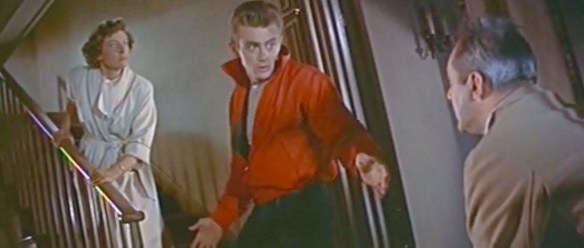
 Rainbows, the soft misting of waterfalls, and honeymooning couples going through the tunnel of love. It hardly feels threatening at all, but that’s what makes film-noir so delicious. As the film style most reflective of the human condition, it proves that the dark proclivities and jealousies of the human heart can crop of anywhere–even a gorgeous tourist trap like Niagara Falls.
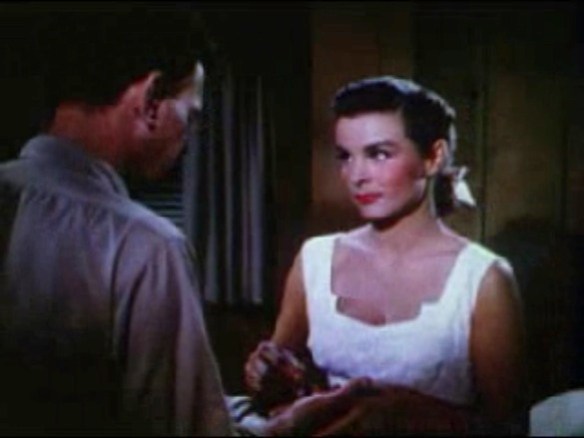 Without a question, Jean Peters becomes our favorite character as Polly, and it was an eye-opening for me personally to see her in a role so vastly different than Pickup on South Street. I had pigeon-holed her, rather erroneously as such a character, but Niagara shows a more tempered side to her persona that felt more representative of her as an actress. Max Showalter plays her husband, the genial and oblivious Ray Cutler, who takes his lovely wife on a long overdue honeymoon, only to have it totally ravaged thanks to the Loomises.
 I find that many of the best Christmas movies aren’t really about Christmas at all — at least not in the conventional sense that we’re so used to. Not trees or presents or lights or even holiday sentiment although those might all be there.
 “Heathens are not always low just as Christians are not always high.” – Gregory Peck as Father Chilsum
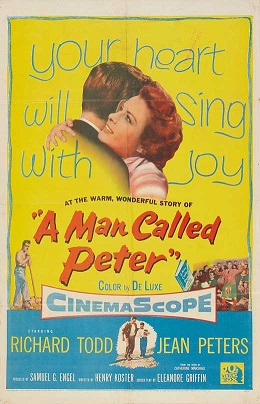 The film’s tagline reads, “Your heart will sing with joy” and that about sums up A Man Called Peter.
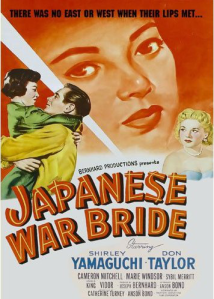 Much like Sam Fuller’s Crimson Kimono (1959), Japanese War Bride’s title carries certain negative stereotypes, however, its central romance similarly feels groundbreaking, allowing it to exceed expectations.
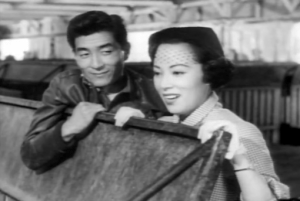 Jim looks to build up a happy life with her as he looks to take some of his father’s land to keep a home of his own and raise crops. Tae begins to acclimate to her new life and gains the respect of the Taylor family while making a few friends including the kindly Hasagawa siblings (Lane Nakano and May Takasugi) who work at a factory nearby. The icing on the cake is when Tae announces she’s pregnant and Jim could not be more ecstatic.
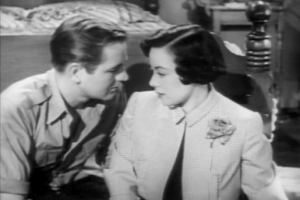 Japanese War Bride is continuously fascinating for the presence of Japanese within its frames. First, we have a rather groundbreaking and relatively unheard of interracial romance between the always personable average everyman Don Taylor and stunning newcomer Shirley Yamaguchi. Their scenes are tender and hold a great deal of emotional impact. It’s the kind of drama that has the power to make us mentally distraught but also imbue us with joy.
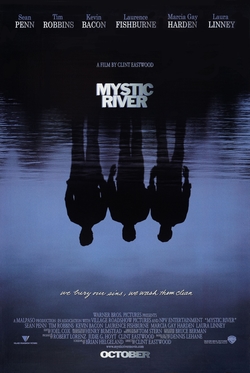 When you enter into the world of a film you often expect it to be perfect in your own minds-eye, following your own rationale to a logical conclusion. In that sense, Mystic River is invariably imperfect in how it ties up all its loose ends, but then again, what film really can bear that weight — and it’s all subjective anyhow. Instead, Clint Eastwood’s Boston-set drama builds off a story about three young boys and evolves into an engaging police procedural intertwining the lives and events of these three individuals. But it all starts with a game of street hockey.
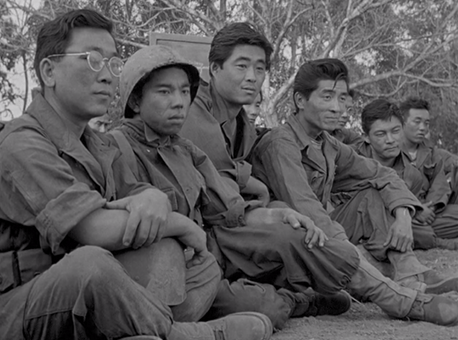 WWII is always a fascinating touchstone of history because it has some many intricate facets extending from the Pacific to the European Theater to the American Home Front and so on, each bringing with it unique stories of everyday individuals doing extraordinary things. One of the best-kept secrets is the 442nd Infantry Division later joined with the 100th and effectively making the first all Japanese-American fighting unit which served over in Italy and France.
 4 Star Films