Europa ’51 (1952)

Europa ’51 is one of those films butchered by time and yet eventually, it was stitched back together to resemble how it was intended to be viewed by its director. Its serpentine history to restoration hints at its subversive elements, although on the surface, it seems like a fairly common breed of drama about a middle-class family.

It reminds me somewhat of De Sica’s The Children are Watching Us purely because it provides a striking reminder neorealism is not only an exploration of those in abject poverty. It can be about those who have a relational or familial deficit too.

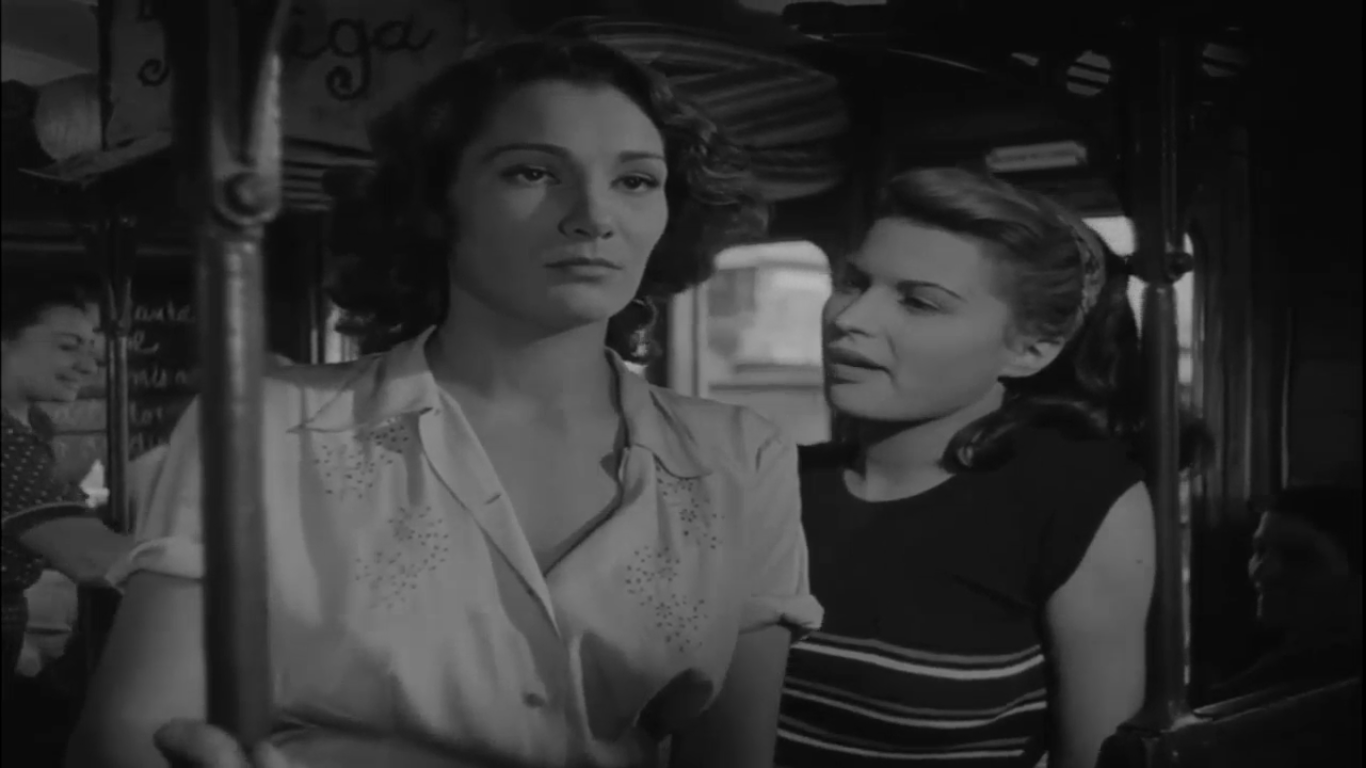
In this case, we begin with the one and only Ingrid Bergman. She returns home to the bustling preparation for a dinner party. A strike is tying up the local roads, and it’s only a minor inconvenience. The same might be said of her misanthropic son.

She hardly has time or patience for his concerns because there’s so much to do. She treats him with the kind of shortness and insensitivity you can hardly begrudge parents. It feels like a momentary lapse in priorities more than a callous act of neglect. Soon enough she’s with her husband and guests — one of them brings the conversation to politics and “leftists” — and it’s easy to leave childish trivialities behind.

Then, a catastrophic event shocks her, and the dormant maternal side reveals itself — one of warmth and affection. She racked with the kind of guilt you can never hope to placate. With the movie being so weepy at such an early juncture, there’s a question of where it might go, but Bergman remains the driving force. She goes searching for something…

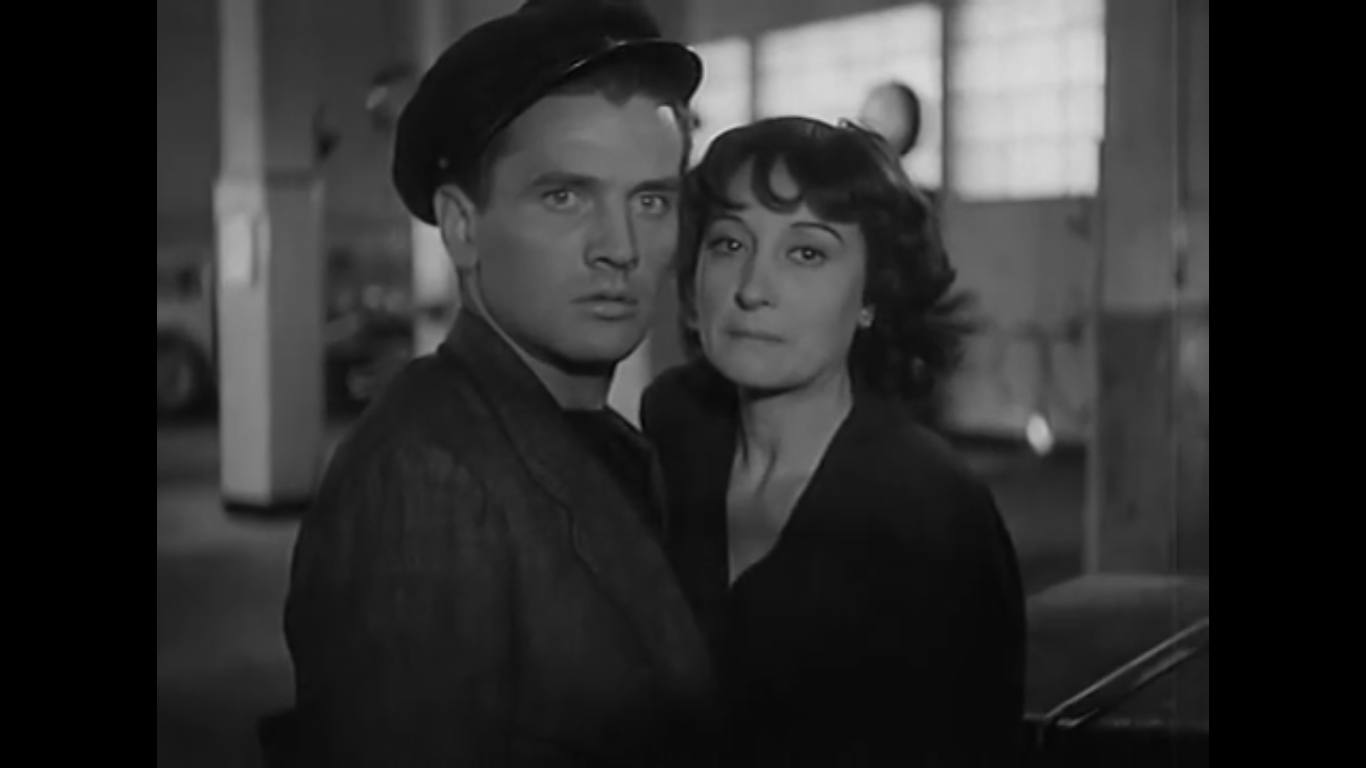
On her pilgrimage, one of the people she finds is Giulietta Masina, playing a mother to all with a generous spirit and a heart of gold. She’s taken on far too many children, only some of them her own, but she loves them dearly, fussing over them and getting so much joy in providing for them. There’s a frantic charm to her as she busies herself and makes the household run in spite of her meager means. It’s appealing to Irene.

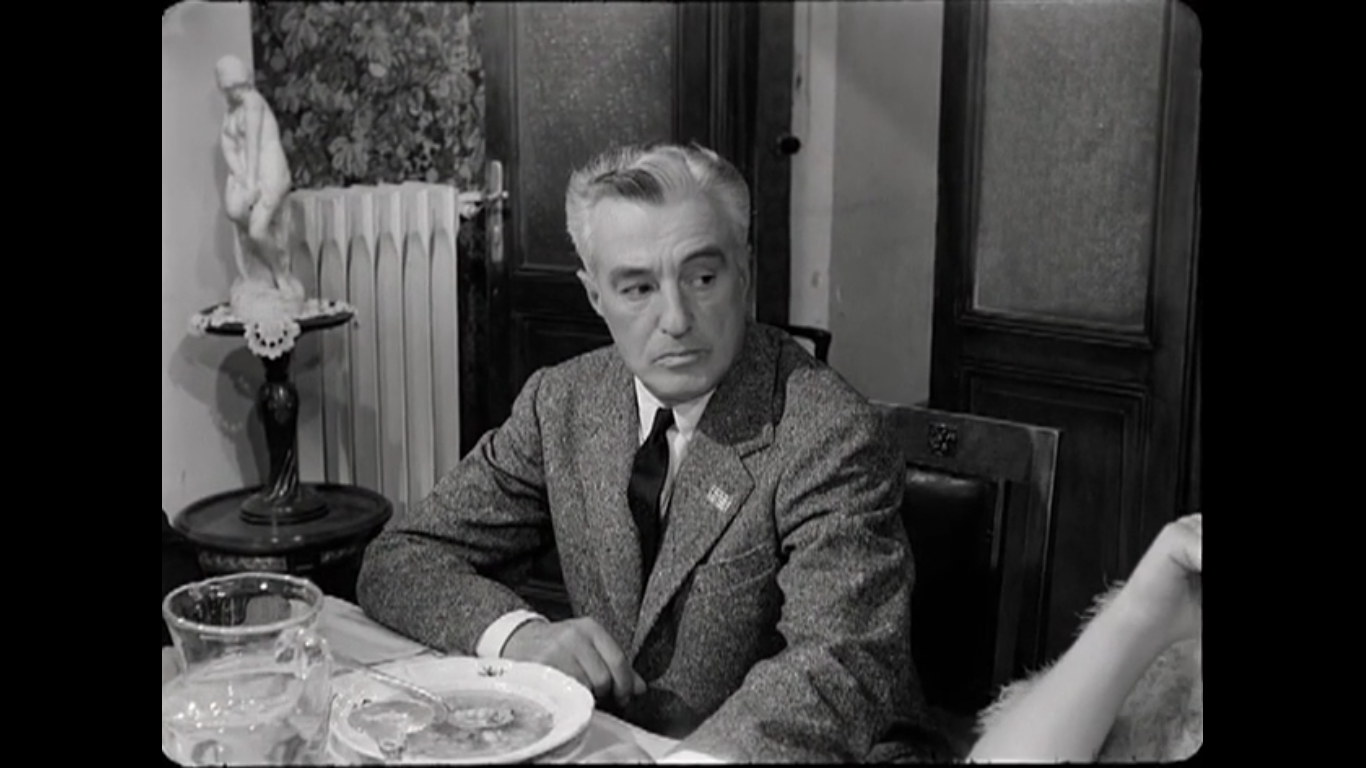
Meanwhile, her husband (Alexander Knox) remains mostly unfeeling, blowing his top when he perceives another man in her life. He fails to recognize this is the only man who has extended her any human kindness and understanding. For this and other sins, she winds up in a psych ward. Remember, we are trading in melodrama.

Irene comforts her tearful housekeeper with a newfound poise. She receives a visitation from the ward’s priest, and they share their mutual philosophies. Experience has led her to discover her own distinctive on what life is about: Love for ourselves feels too narrow; she feels compelled to reach out to others. Love has no limits. Evil is born from the fact we never give all our love to those who need it most.

Irene avoids questions from the priest about a God and his grace stating we must be filled with love for all so that all might be saved through love. The words ringing with the most resonancy go like this, “I came to earth not to lose sinners but to win them — the miracle of Christianity.”

Suddenly, I liked the movie more and more as Bergman’s developing character is revealed, and I learned Rossellini envisioned her out of the tenets of St. Francis of Assisi.

For the majority of my life, I’ve lived in a western, predominantly Christian society, where these core truths pervade the mindset in thought and word, if not entirely in our deeds. There continues to be a shift; many more people are unaffiliated with organized religion or don’t identify with a specific faith. Much of this makes sense as hypocrisy becomes more and more visible in the social media landscape.

I’m left curious. Instead of being swayed by the political or social movements of the day and age or their specific tribes and subcultures, either to fit in or to rage against the status quo, what if people decided to stand out in a far more radical way?

What if they actually took to heart the teaching to love their neighbors and God with all their heart, mind, and strength. Bergman feels a bit crazy, she is countercultural, and impossible to categorize: an exceptional anomaly.

She would play Joan of Arc later, but this is her first foray into the part of a modern-day saint who eschews and then slides beyond the conventions of her age. These kinds of characters fascinate me namely because they challenge my own convictions and hypocrisies.  “How many men condemned by their society and burned at the stake in their day were right?” It’s a sobering question…

3.5/5 Stars

Stromboli (1950): A Probable Film Starring Ingrid Bergman

“I was found of them that sought me not; I was made manifest unto them that asked not after me.” – Romans 10:20 (taken from Isaiah)

Isabella Rossellini gave an interview where she posited her father was not so much a neorealist but a maker of “probable films.” In other words, they were built out of reality and its probable outcomes while never having the pretense of a true documentary. They were invented yet plausible.

Stromboli is not a type of food but a remote Sicilian island. Rossellini conceived the film thanks to two auspicious events. First, came the famed letter from Ingrid Bergman acknowledging her desire to work with the Italian filmmaker. Then, there was a drive from Rome to Naples past a refugee camp where a blonde-haired, blue-eyed woman made eyes at all the passersby. I have no way to substantiate this anecdote, but it all seems to gel with the movie we have before us.

As in an earlier picture like Paisan, Rossellini is content to live in the linguistic ambiguities of the moment, and it makes for something striking and different. We’re constantly trying to make sense of the world and navigate it as if it were real life.

Ingrid Bergman’s part is shaded by her roles in Casablanca and Notorious just as Rossellini has the likes of Rome, Open City and Paisan behind him. The war years left such an impression on that entire generation and the cinema was equally marked.

She plays Karin, the aforementioned woman who woos the man on the other side of the barbed wire. They have little in common. They can hardly communicate with one another; she’s trying to get her Visa to immigrate to Argentina, and her secondary option is to marry this lovestruck P.O.W. It seems like she has no choice but to accept.

The foundation of their marriage is built on sand instead of hearty bedrock, but it’s hardly the only one you could imagine during the war years.  A certain level of convenience outweighed many other cares. And so they set out on a life together back in his rural hometown.

Not only is Karin an obvious outsider, but she’s also unnerved by the new environment — it’s a humble fishing village — lorded over by an active volcano! What a strange and otherworldly film it is as we are whisked away with Bergman to a land that we do not know using a language that we do not speak. It’s at both times mesmerizing — a world full of curiosities — and perplexing.

Bergman notes it’s a “Ghost Island.” For Antonio (Mario Vitale), it’s all he’s ever known as home and so immediately we have a blatant disconnect. His wife tries to reach out and grab hold of anything reassuring.

It feels less like Rossellini is trying to shoehorn the film into English and more so that he is building a story out of what he has at his disposal. Where language comes in bits and pieces. Shared spaces must be navigated in ways where people can meet in the middle and English is the language of mediation. You never know who knows what or how they learned it. I had this experience on many occasions, and it never ceases to fascinate me. Isn’t it true so many people have intriguing histories if you only get to know them?

Stromboli showcases Bergman at her most disdainful, telling her husband how very different they are — born of separate classes — and she is a “civilized” person. Granted, most of her criticism is out of fear. Whether or not all the words are clear, he understands the emotions behind them, and they wound his pride as he looks to find work to eke by a living to support her. She spends her first days moping around the house and bawling her eyes out, always reacting to the circumstances around her. It’s rarely the other way around.

One man who becomes a kind of confidante is the local Father (Renzo Cesana) simply because he speaks English immaculately. He recounts to her how those who have gone away help those who have stayed behind. He’s an amicable figure, exhorting Karin to be patient.

But the relationship changes as she becomes more standoffish and unadorned in a way you would have never witnessed under the watchful eye of Classical Hollywood. And although she seems to find solace in his company, it crosses a line, and he becomes uneasy. He cannot provide the kind of comfort she requires even as she cries out, “”Your God won’t help!”

If it’s not entirely a movie about self-reflexivity, then at least you have the parallelism between real life and dramatized events. Rossellini and Bergman stirred controversy because although both were married, they set off on an affair together. It became the topic of scandal and derision across the U.S.

Similarly, the women of the town become scandalized by her immodesty in herself and perhaps her interior decorating. She hangs out with women of ill-repute and other men without the presence of her husband. It’s yet another injury to Ingrid’s image, both real and imagined.

But with the rougher edges of human drama, there’s something pensive and even gorgeous about all the fishing sequences. They loom some kind of unknown danger or foreboding. Maybe this is my own projection. Because like Bergman’s character, when I look at this life I see the perceived ugliness. There’s no better indication than the moment he shows her why he bought a ferret: so it might catch rabbits for them.

For her, this is violent and repulsive. For these people, it is their way of life and their individual comfort. It’s what they know most intimately. After all, didn’t God provide people the earth and the sea so they could seek sustenance from them?

The climactic moment when the fishermen bring up the nets has something so satisfying about it even as there is a kind of real thrill in the air pulsing through all the men on screen. Water spraying everywhere, yells, and hands busying themselves with spears to bring in their catch.

This is only topped by a volcanic eruption in full force. Bergman vs. a Volcano is not something I ever thought I’d see, and yet here it is. She flees and seeks refuge up in the hills, totally crushed by her own fear and doubt. And then in a moment, she wakes up and this desolate world around her almost feels like a visitation from God — the beauty — the mystery, it’s all there finally speaking to her.

Rossellini isn’t a deeply pious filmmaker; nor did he seem ardently religious, but in pictures like The Flowers of St. Francis and Stromboli, he does show a fascination with faith and humanity’s relationship with a God. Here it’s not so much meditative as it is a struggle. Karin, like Job before her, cries out to God in anguish on innumerable occasions.

Could it be the passing birds overhead are a reminder? That God through his common grace watches over the birds of the air and all the more so his other creatures. Or is this all wishful thinking with the volcanic deathtrap soon to be overtaken by hellfire and brimstone?  Where is God and if He is there, why does He hide his face? These are the existential questions percolating in the human heart, and Karin feels the full brunt of their weight as she lashes out into the void.

The movie cuts out before we get a response. Going back to the opening quote, is this Rossellini reaching for an answer?

“I was found of them that sought me not; I was made manifest unto them that asked not after me.” Of course, the director leads us to a state of existential dissonance between what we read and what we witness. Meanwhile, he alighted on a tumultuous road with his greatest muse.

4/5 Stars

My Name is Nobody (1973): Terence Hill and Henry Fonda

For those familiar with the tales of Odysseus, My Name is Nobody earns its name from the witty trick the Greek hero uses to escape the Cyclops. However, the movie should draw more comparisons to the works of Sergio Leone than Homer.

It’s difficult not to immediately calibrate the film’s first scene against something like the opening of Once Upon a Time in the West; it’s as much about the stretching and manipulation of time as it is the near-wordless actions. There’s even a clock ticking in the background.

We have a callback to Fonda getting a shave at the Tonsorial Parlor in My Darling Clementine (feet even propped up) however, here the scene is done up with this new sense of impending dread, and we can’t quite fathom why. We just feel it.

Again, getting a shave, milking a cow, brushing a horse, are mundane activities undertaken by three strangers, and yet the scene imbues them with this uneasy energy. They could be Jack Elam, Woody Strode, and Al Mulock biding their time at the creaking train depot for Charles Bronson.

Although Leone’s not the director; he conceived the original idea, and Tonino Valerii, who was Leone’s assistant director on some of his most prominent films, knows what it means to milk the moment through images and sound.

It’s not even the heart and soul of the movie, but like the earlier picture, it gives us the essence of the style and certainly Jack Beauregard. Because after giving the public a shock by turning Henry Fonda into a bad man, Leone’s done the western icon one last favor by canonizing his legacy for a final time.

Before any of this gets perilously high-winded and overly contemplative, it should be mentioned forthright that My Name is Nobody remains an unadulterated comedy on multiple accounts. Given what I’ve said already, I’m not sure if this comes as a shock or not. But what’s even more imperative is how it’s intended to be this way.

The dialogue is pure pap. It feels generally tone-deaf and totally out of sink with some of the best images of the movie, but this is all very much in the tradition of the Spaghetti western no matter the language, locale, or subject matter. It’s telling the only actor who actually dubbed himself was in fact, Henry Fonda. Again, he’s given the ultimate deference and his audience probably expects nothing less.

I’m also no music man, but there are elements of Ennio Morricone’s compositions here — the man who wrote the book on the Spaghetti soundtrack — seeming to gleefully parody himself. The interludes during the title credits are merry and gay literally popping with an almost sickening buoyancy. Later, it devolves into a melding of Wagner and chanting chorale arrangements that can only hearken back to The Good, The Bad, and The Ugly.

Here we get our first look at Terence Hill. He’s a vagabond who catches fish with his bare hands. This too builds off the same persona he had in They Call Me Trinity. He’s the anti-Eastwood if we can call him that — bearing a convivial manner — though equally adept when it comes to gunslinging.

Since there is no Bud Spencer, he gets Henry Fonda as his main partner in crime. Nothing against his most prolific friend and countrymen, but you’re definitely getting a different kind of picture with this change in personnel.

True, it’s hardly Fonda’s best work, but he feels strangely at peace with his surroundings and coolly confident since he’s done this so many times before. He’s not capable of going into parody in the same manner as Morricone’s score. Or if he does, it only aids in burnishing his already established legend.

Because he has a pedigree with forging the West you never had in a movie like They Call Me Trinity, though it shared some tonal similarity thanks in part to Terence Hill’s quick drawing ne’er do well. Fonda manages some amount of grandeur in a movie that otherwise is happily preoccupied with slapstick and scatological humor. There’s Sam Peckinpah’s name listed on a tombstone for goodness sake! And yet Henry Fonda, that is Jack Beauregard, provides a certain level of enduring gravitas to the proceedings.

It functions relatively effectively because Nobody (the name of Hill’s character) idolizes the older gunslinger so much. He makes us believe in him even as many of us bring our own history with Fonda to the movie already. The younger gun can best be described as a historian of Jack Beauregard and better yet a fanboy. He knows all about his exploits and has followed him from his earliest days.

He’s a peculiar sort of figure. At once, seeming to jostle for the spotlight and dog the renowned fighter, and at the other end, trying to grow his acclaim. He wants people to remember Beauregard as the larger-than-life figure he was in real life on countless occasions. But he also wants the man to go out by living up to his expectations. He can only do this by facing off with The Wild Bunch, a pack out of outlaw roughriders at least 100-strong.

The fun and games of the movie happen at a bustling carnival. Nobody takes the time to shoot a stilt walker down to size and pie a fat-headed vendor. He’s equally game for some gunplay in the saloon showcasing both his tolerance for alcohol and his uncanny sharpshooting.

All of this feels like an audition for a bout with Beauregard. Because the whole movie they toy with their adversaries, whether it’s in a funhouse, over bombs, or dynamite. Nobody ably turns some of his playthings into bobo dolls and runs off with a train filled with gold after staring down the engineer in a urinal. Yes, this really happens.

But of course, the movie is never about rivalry and this is how it sidesteps the usual trope others will remember from The Gunfighter or I Shot Jesse James, et al. In the final stand we have The Wild Bunch kicking up a dust storm in a face-off against a solitary, bespectacled Henry Fonda at the ready with his shotgun. He’s kept his part of his bargain, for the sake of his legacy and his ever-present shadow has provided him a fitting piece of assistance.

Although I have little call to cast aspersions on the picture, it feels like My Name is Nobody strives to be both comedy and elegy. It can never fully succeeds at either, but there are distinct elements to be appreciated. One of these is Fonda, and he goes out as a “national monument” rightfully so.

It’s not his greatest western by a long shot, but his last round in the saddle puts a fitting denouement on Fonda’s career adding its own addendum to the kind of Liberty Valance mythos or the cyclical lineage of toxic gunfighters. The pronouncement “Nobody shot Jeff Bearegaurd” maintains its double meaning. Sometimes myths aren’t bald-faced lies. They can also be acts of willful preservation and frankly, peace of mind.

In My Name is Nobody, there’s a warm jocularity to it all, down to the very last shot. It’s an accommodating movie, and although this keeps it from being totally profound, that’s okay.

3.5/5 Stars

They Call Me Trinity (1970)

When I was living abroad it was one of my European friends who first introduced me to Terrence Hill and Bud Spencer. I had never heard of them and was anxious to learn something about the duo. Regardless of what their names imply, both men are Italians with aliases befitting American action heroes.

They Call Me Trinity is one of their most lucrative pairings together, and it fits into the historical narratives I know well. It is a spaghetti western a la Leone or Corbucci, but it was made with deeply comic inflections.

We all know the laconic heroes: Eastwood’s “Man With No Name” or Bronson’s “Harmonica.” Hill seems to be one of their ilk, although he can be found lounging lazily on a litter pulled by his horse. He proceeds to get up and walk into the nearest cantina looking half-naked as he scarfs down a skillet of beans and drains a bottle of booze with a hearty belch. It’s the kind of showing that draws the curiosity of all bystanders. He represents a different kind of temerity — totally comic in nature. It helps he’s also ludicrously fast on the draw.

If he’s one source of easy laughs, the other is his brother played by Spencer, a sheriff in a nearby town at odds with some of the locals. It doesn’t help he’s got one of their buddies held prisoner. Bambino, as he’s called, showcases some farcical gunplay and superhuman brawn, wiping the floor with anyone who dares challenge him. Also, he’s not too pleased to see his blood relation, who quickly turns the showdown into a spectator sport.

Beyond their sibling rivalry, Trinity is just the man who could let everyone know Bambino is actually an escaped convict and not a true sheriff; he stole the job from the real man while he bides his time waiting for his cronies. None of this is of great importance

It must be said that the sense of reality is always strained to the nth degree in these Italian western pieces, normally shot in Europe with international casts, copious amounts of dubbing for various audiences, and any number of anachronistic flourishes. The dubbing is so prevalent it becomes an artistic decision more than a purely merchandising one. It’s part of the charm of the Spaghetti western and Trinity gladly soaks in this tradition.

The eponymous hero calls on his brother’s sense of propriety to help a clan of defenseless Mormons, whose pious hospitality is brutalized by Mexican marauders who might as well be under the commission of a corrupt landowner (purportedly Farley Granger) intent on pushing the migrants out.

Trinity is rallied to their cause by two bodacious Mormon daughters (Gisela Hahn and Elena Pedemonte) and Bambino reluctantly takes part thanks to their fine stock of horses. He might be able to gain something out of the arrangement. When his friends do arrive, they start instructing the righteous people on how to defend themselves and fight their battles.

They make their final stand, and it’s full of kinds of cathartic poundings and pummelings of the enemy. The good guys put up a valiant fight. It’s not quite The Magnificent Seven, but it has an ending worthy of its own characters.

From time to time, it’s a pleasure having heroes like these who feel a bit like a reincarnation of Laurel & Hardy for the buddy, western, action movie era. Bud Spencer as a bit of an indestructible hulk with an irascible temper. Hill as the handsome rapscallion who’s more than easy to root for.

They would follow up this success with many more — some westerns and then other pairings taking advantage of all the crazes taking over the international movie industry. I was introduced to them in Miami Supercops, which indubitably ripped off a handful of Miami Vice episodes and any number of cop shows being released in the ’70s and ’80s.

Here you have a great deal of the charm in Hill and Spencer. The Spaghetti Western was a hit in how it took the American conventions and gave them a facelift through pastiche and violent homage. It sounds like a formalistic mess and in many ways, it is, but that’s also part of the charm.

3/5 Stars

The Hired Hand (1971)

It’s true that Peter Fonda comes out of a western tradition of sorts, which is merely an indication of his family’s presence in the film industry. Obviously, one of his father’s identifying genres was the western, and he worked with some of the greats from John Ford to Sergio Leone.

Films like My Darling Clementine have become the bar with which to evaluate future generations. Then, Peter’s older sister, Jane, of course, tried her hand with the wildly popular Cat Ballou. It’s not high art, but there’s a great deal to appreciate between her gallivanting around and the drunken histrionics of Lee Marvin.

However, with The Hired Hand, Peter starred and directed a western of a very different breed. There’s a hallucinatory quality to the movie suggesting it’s not too far removed from Monte Hellman’s acid westerns of a few years prior. It’s composed mostly of images swimming in the restless score of Bruce Langhorne.

We already have Warren Oates and Peter Fonda, and it’s obvious the genre is funneled through the vision of the counter-culture that brought us pictures like Easy Rider and even Two-Lane Blacktop. In some of his earliest feature film work, Vilmos Zsigmond provides a casual, unsentimental sense of the landscape fitting the overall canvass developed by both the editing and score.

In their passing dreams, floating just out of reach, the California coast acts as a kind of far-off oasis for the three drifters staked out by a river bed. I couldn’t help thinking of generations before. Peter’s father as Tom Joad headed to California and faced his own brand of disillusionment with the dream packaged for him. Expectations didn’t meet reality.

Peter Fonda is besieged by the discontentment and malaise of his generation, but if we recall The Grapes of Wrath maybe this youthful sense of Sehnsucht, while morphing and evolving, is not totally lost or forgotten. It’s only reimagined in new forms and under new banners.

After days without bathing and nights without a warm bed, they roll into a town. But it’s not much better than the backcountry they’ve been frequenting. At any rate, it’s hardly the picture of civilization.

The film remains mostly a sullen affair plagued by death, but not just physical death, the death of joy or adulation in any sort of quality life. It starts grappling with the life of a drifter — the camaraderie of saddle buddies — and the solace of a settled home life. Because Harry Coilings didn’t always live this peripatetic existence. Once he was married. Funny how he never mentioned it before to his companions, but then again, the overwhelming emptiness in his heart has made him crave something different. So he and Arch pay a visit to his former missus.

Warren Oates has gained some welcomed acclaim since his death as a kind of cult favorite, but in The Hired Hand there’s something especially welcomed about him. He’s congenial and faithful, a source of affability in a movie that is mostly lacking in any kind of generosity toward its audience. Fonda gives us nothing. Verna Bloom has nothing to give because her character has learned to insulate herself. And there’s really no one else to offer any kind of condolence.

The film’s barely a meditation on marriage. There’s hardly time to build this into something substantive nor entirely profound, but we do have a sense of this male camaraderie. And suddenly it gives the movie a central question. Fonda must reconcile this relationship, one that has stayed with him for years on the lonely roads, with that of a distant wife who never expected him to show his face again. Whether he totally acknowledges them, they are both of great importance to him.

At first, I mistook the finale — a giant bloody shootout — for a pointless exercise. What good does it do? Very little aside from bludgeoning us with a bleak view of the world. However, it does speak to a man’s vow of friendship. While other elements of this western are irrevocably different from the past, there’s some small amount of stability in such a simple trait as this. Is this stupid courage like the screenwriter Bill Goldman enthused about? Probably.

It’s also a glimmer of something laudable speaking to the exact same listless despondency an entire generation was looking to grapple with from Easy Rider to Five Easy Pieces. This alone doesn’t make it a superior western, simply by having a muddied, unadorned sense of the world. But Peter follows in the footsteps of his dad and sister to leave his own impression on a deeply American genre.

3/5 Stars

Cat Ballou (1965)

When the Columbia statue whips off her toga and comes out with western wear and six shooters, the movie’s intentions are made quite clear. And if that’s not enough Nat King Cole and Stubby Kaye appear on the scene, decked out, strumming their banjos. They become the accompanying bards relating the ballad of Cat Ballou.

To my mind, it’s one of the only moments in Nat King Cole’s movie career where his talents seem used in a more robust way, and it seems like he’s genuinely having a ball sending up the story. He and Stubby have an open line of communication going with the audience becoming one of the film’s primary conduits for comedy.

And of course, the world itself is ripe with screwy antics easily sharing a world with the likes of Support Your Local Sheriff if not Blazing Saddles. It feels like the West is a place filled with all sorts of oddball characters and idiosyncrasies worthy of laughs and a myriad of double-takes.

Jane Fonda was still ascending on her way to becoming one of the ’60s and 1970s most visible performers, and she teems with an undeniable pluckiness in the title role. In its own likable and goofy way, it becomes a picture of empowerment for female heroines.

If hardly a feminist screed, it nevertheless has the kind of charm you might find in an episode of That Girl. It’s Hollywood not quite coming to terms with the full brunt of counter-culture (Ann-Margret was even earmarked for the role).

But if Fonda proves her mettle as a “wanted” outlaw destined to be hung and the leader of a “nefarious” gang of desperados, it’s Lee Marvin who becomes the film’s undisputed attraction. Kid Shelleen is an inspired western hybrid: the restless gunslinger crossed with the town drunk.

He’s got hair like Harpo Marx coiffed under his beat-up hat, hands twitching, married to a bottle, with his disheveled buckskins hanging down to put his long john undergarments on full display. It’s this whole package making Lee Marvin’s performance such a crowd pleaser, but this is only true because it flies in the face of so much of what he made a name for himself doing. He was tough guys, psychos, and henchmen. Here he’s more than game to lie prostrate in the street, falling over his horse, in fits of comedic inebriation.

However, it’s the scene before his auspicious introduction that really brings the picture together. The square dancing sequences become a wonderfully visual merging of characters and arcs all in one place as Cat formulates a plan to help her daddy out: enlisting the help of a gunslinger, or at least a man with a gun. It devolves into glorious chaos as all the men who have been thrown into her life (Michael Callan, Dwayne Hickman, and Tom Nardini) vow to protect the elder Ballou (John Marley) to the best of their abilities.

Cat Ballou is mostly corny, and it works best leaning whole hog into this sentiment. When it tries to be something with the semblance of drama, it doesn’t quite work as if it’s grasping for something outside its comfort zone. Cat loses her father, faces a town complicit in the killing perpetrated by a rival gunman — a silver-nosed murderer (also played by Marvin). Even a storied hero like Butch Cassidy (Arthur Hunnicut) has stuck himself behind a mercantile counter.

Jane Fonda exerts herself pouting and throwing a rock tantrum to get her three male companions to see it her way. The Hole-in-the-Wall gang is revived to acquire their much-needed funds, and they do quite a job of it without a Superposse to chase after them.

These exploits are how Cat Ballou earns notoriety across the Old West although she finds herself before a scaffold for quite a different reason. The gallows humor of the noose going around her gorgeous neck feels like another unbecoming scenario until we slip back into a much-preferred gear of silliness.

Cat Ballou is at its finest as a goofball western, a bit dorky around the edges but no less lovable. It does mystify me how it became such an award-season darling, though it’s not without a few unremitting charms. Its impact on the western mythos feels minor at best if only for Fonda’s spirited heroine in a genre otherwise replete with male heroes.

3.5/5 Stars

Cowboy (1958)

In Cowboy, Delmer Daves and Glenn Ford continue their fruitful partnership by examining the life of a different sort of cattleman. The movie opens on a grand mid-century establishment soon to be frequented by a  cowboy named Reece. Everything is colorful and ornate in the Spanish style with gaudy curtains and wood interiors.

Thus, it begins as a hotel drama that switches out a sulking Garbo and destructive John Barrymore for a gang of cowhands and a hotel clerk’s romance. The movie would not be the same without Jack Lemmon. He is Frank Harris, a lowly clerk with the unenviable task of moving some guests to make way for Mr. Reece. It runs deeper still. He’s fallen in love with the gorgeous daughter (Ann Kashfi) though her father dismisses the young man’s affirmations of love.

Soon enough, they will return to their native Mexico, and Maria will be a distant memory to the impressionable boy. Before he can sort out his feelings, Reece’s contingent comes pouring in and takes over the hotel.

The whole movie is built out of these two men coming together and what a glorious juxtaposition of characters it is. The dreamy-eyed idiot and a veteran cowboy, pragmatic and hard-bitten. Ford and Lemmon have been created on their most fundamental level to chafe with one another. Still, the tinge of comedy is not entirely imperceptible in the setup.

In their introduction, you have Lemmon sidling up to Reece’s bath to get in with his gang while Ford shoots stray cockroaches with some relish. Equally important is how real life intersects with film fiction because Glenn Ford built a storied career in westerns, even if you only count his films with Delmer Daves. Lemmon was always the common, everyman schmuck. Now he’s a tenderfoot barely prepared to place his backside on a horse.

Screenwriter Dalton Trumbo explores a modern mode of western calling for a different brand of star. Lemmon could easily be built into the City Slicker archetype, lovelorn and ready to prove himself. The first time Harris gets tossed from his horse it feels like a kind of initiation. He’s begrudgingly allowed to ride along, but there’s not going to be any concessions for him. He better toughen up or get out.

As their journey together begins, Daves does remind us about the austere beauty out on the range. It’s a tough life certainly, there is no Sabbath; you must learn to sleep in the saddle and pick yourself up when you fall. And yet there’s a newfound appreciation watching the cowboys at work against nature’s grandeur all around them. It feels like a noble profession out on the land using your heads and working hard each and every day.

Brian Donlevy was a minor icon of the 1940s, once he overcame his relegation as a tough guy, but almost 20 years later, there’s a modicum amount of joy seeing him still up to the task at hand along with such disparate figures as Dick York and Richard Jaeckel, each prone to their own sins, whether drink or violence.

It becomes apparent as a long-form almost classical tale, Cowboy can easily be compared with other cattle movies a la Red River. Because while we have Jack Lemmon and Ford’s not totally averse to humor, there must be hardship and conflict stirred up. They take up the mantles of John Wayne and Montgomery Clift, vying for control as they exorcise personal demons and hone in on their priorities.

Later there’s a strangely poignant funeral sequence after one of the trailhands (Strother Martin) is killed in a rattlesnake attack instigated by a practical joke. These unfortunate circumstances lend a troubling undercurrent to the sober congregation. It’s Frank’s first lesson in the cruelty of the trail.

In another moment, one of their group is drinking it up at a Mexican Cantina and is obviously about to be jumped by some jealous locals. Harris is intent to help him, but they live by the credo: if a man’s old enough to get himself into trouble, then a man’s old enough to get himself out of trouble. There’s no sentimentality or loyalty as far as they are concerned. You do your work and look out for your own hide.

These events are not completely isolated, but they put the newest trailhand over the edge. We know he’s naive about what it takes to survive out on the road, but he also highlights the callous code these men are willing to live by. He barks at Reece, “I thought I would be living with men, not a pack of animals.” It changes him thereafter. He won’t allow it to affect him anymore.

Cowboy hints at Jack Lemmon’s substantial chops as an actor. And I use the term in the sense it is often used. Sometimes comedy is not considered true “acting” to the same degree as drama, but it seems comedic actors are capable of some of the best drama. Perhaps they can see one in the other or vice versa.

Because the movie begins as a kind of comedy on the range. At least this is what it hints at and what we know Lemmon can offer. And then it builds into a story with greater ferocity and also emotional depth. It’s not just about a jilted romance, but a disillusionment in this admiration he had for a certain brand of masculinity. There’s something inwardly thrilling in this transformation even as we see the change projected over Lemmon’s character.

With grit and determination, Harris gets below the border to see his girl once more, but he’s been made callous and her circumstances are different. It feels like a betrayal. In these specific scenes, Dalton Trumbo, who was currently an exile in Mexico due to the Blacklist, calls upon a locale not far removed from him or even his earlier bullfighting effort, The Brave One. Also, he would go into a further deconstruction of the cowboy archetype in Lonely Are The Brave only a few years later. It’s difficult not to view these films across the same continuum.

True, it is a tale about cowboys — their lifestyle, whether real or imagined — and both the toxicity and mythos that comes with such a life. I couldn’t help thinking, like The Magnificent Seven, it fashions itself into something greater — a broader exploration of morality. Masculinity in the West takes on many facets be it survival, gunplay, or getting the girl, but it’s movies like these making it about a kind of stalwart integrity.

Like The Magnificent Seven, it starts out as a mission — representing a job with specific utility — and becomes a parable of doing right by your fellow man. Lemmon must mature and Ford must soften until they both settle on a newfound prerogative. The movie reverts back to the cycles these men know best, and yet not without changing them.

Cowboy is easily the most unheralded picture in Delmer Daves’s western trilogy with Glenn Ford, but it’s held together by some more stunning imagery and two truly complementary performances. Now as they lounge side by side in their bathwater picking off cockroaches, there’s a mutual respect between them along with a newfound parity.

3.5/5 Stars

Germany Year Zero (1948)

Roberto Rossellini famously dedicated Germany Year Zero to the memory of his son Romano. After such personal forays into Italy’s own tumultuous relationship with the war years in Rome Open City and then the interwoven portraiture of Paisan, the final picture in the trilogy feels a bit like an outlier.

And yet in connecting his own recent tragedy with the hopelessness of the German experience, it does feel like he’s alighted on something that feels personal and honest. At the very least providing emotional truth if not always point-for-point docudrama.

The premise is very simple even childishly so staying with the neorealist attitude. Edmund (Edmund Moeschke) is a little boy scrounging around for work, sustenance, and anything else that might be of use to his family in the rubble of the bombed-out nation. It begins feeling out the world, not settling in on one story as much as the mood and milieu of the times. Because it is a very particular moment.

There’s a sense that the film is on the ground floor of something. Since The Thousand Year Reich terminated prematurely, it becomes an unprecedented moment in history — a time to rebuild and put their world back together again — although the day-to-day struggle remains real. You get bits and pieces in The Third Man or The Search and A Foreign Affair, but Germany Year Zero feels like a different perspective on the same events. 

It’s an important film for the sake of challenging our perceptions. Not exactly in the same way as Jean Pierre Melville’s Le Silence de la Mer, and yet it’s about empathy and upending our assumptions. We see the common markers of humanity laid before us.

Edmund returns home to his family in an apartment complex running perilously over on their bills. His older brother Karl-Heinz (Franz-Otto Krüger) is fraught with turmoil over turning himself into the authorities due to his military past. His invalid father (Ernst Pittschau) is a principled man, but in such dire times, his weakness feels like a familial curse. Eva (Ingetraud Hinze) becomes the maternal figure in the house, and after caring for her father, she spends the nights accompanying foreigners for the evening…

With the spiking black market prices, the Kohler’s are just trying to eke by a living. This is not the way people were meant to live, and it’s a misnomer that the war has a finite end. The repercussions of WWII on Germany continue long after the surrender sounded.

The viewpoint of a boy is, in one sense, youthful and resilient but also impressionable and malleable, shaped by all the people and things he comes in contact with. These are the most formative days of his life thus far.

Edmund takes up the company of other street vultures as they scavenge for survival, some stolen potatoes here, some fake soap there for duping unsuspecting victims. Kohler is callow, but he soon learns this pack mentality through how his friends model certain behaviors.

His former teacher has a charming manner and a dubious reputation, while he uses his former pupils to peddle goods on the black market, espousing a philosophy of survival of the fittest. He’s either a closeted supporter of the Führer and if not him, then Friedrich Nietzsche. It’s this kind of pernicious ideology leading to ungodly Holocaust.

Edmund returns home to the scolding of his sister and with his father’s health being far worse. He’s vitamin deficient and needs a hospital though they’re overflowing as is. The elder Mr. Kohler bemoans the fact that like many in his generation, he wasn’t bolder — seeing the calamity of Hitler, and doing something to stem the tide (“We saw the disaster coming and did nothing to prevent it”).

Germany Year Zero also exhibits a cynical side and not just in the satirical way of Billy Wilder. This feels like real tragedy before us without the happy ignorance of glutted Allies come to vindicate the Germans from their sinful past. There’s no comparison between their lives. It seems indecent to even try and equate the two.

Some might note that the film is not true neorealism, with interiors shot outside of Germany, nor can you very easily call it purely “Italian” neorealism for obvious geographical reasons. Somehow this rarely pulls us out of the experience.

There’s this underlying sense that very little performance is going on in Germany Year Zero. Because these are not actors. They are merely people, and there is a confident sense that almost every strewn rock or portrait of degradation is not set dressing, but something with a natural story all its own we may never know.

We get one final glimpse of the rubble-filled streets, a train cutting through the foreground as a woman’s form kneels in front of the desolate backdrop of total annihilation. It feels like a canvas — the woman an image of the Pieta — with Rossellini crying out into the bleakness of the world. Suddenly, we realize why this movie was dedicated to his son.

It’s no wonder Germany Year Zero was hardly a popular attraction in its day; it’s not a crowd-pleaser. But with the gracious gift of time, we can look at it as a crucial counterpoint. For those back home in the U.S., these were the best years, full of prosperity and endless possibility. At ground zero, it felt very much like the pit of despair, and there were no easy fixes. They have to rebuild from the bottom up. One must beg the question, does mass catastrophe occur at the end or at the beginning of an era? Perhaps it’s both.

4/5 Stars

Paisan (1946)

“Paisan” feels like a ubiquitous term. At the very least, it seems to have entered into a shared vernacular most Americans understand. And of course, this is part of the reason Roberto Rosselini’s follow-up to Rome Open City employs the word.

His newfound audience would be able to appreciate its very simple meaning with some amount of recognition. But it hardly seems like a ploy because it illustrates the core themes of the picture. And this is not done through an epic narrative stretched out over a couple hours time. It is built out of these mini-scenarios coming to represent a breadth of WWII experience between Italians and Americans.

We open in 1943 in Sicily with a group of American soldiers making their way through the villages for recon. As has a habit of happening in these cross-cultural pictures, the English language sounds like tin to the ear, but when they meet our first Italian characters and the dialogue is interspersed, we immediately get something richer and more intriguing because we have both languages dancing off one another and fighting for some primacy over the scenes.

Much of the movie is negotiated in these spaces in-between what is understood and what must be inferred and left only to the imagination. The benefit of subtitles gives us a privileged position, but not all of these characters have the same luxury.

Even when one soldier is called upon to keep watch over their guide in the caves — a young Italian girl looking for her family — we settle on something so basic. It’s their lack of communication and it can invoke fear and conflict, but it can also remind us of our most basic commonalities.

Conversation about cows and milk progress as the soldier reminisces about his family back home in photos. This pleasant interchange is really only a momentary flame, quickly snuffed out. Because we are reminded there is a war at hand and conflict comes from the outside and kills their moment together.

Before we are left to dwell too much on the present, we march ever onward toward Naples. Here is a tale we might see from De Sica and later in Germany Year Zero. It’s a story of youthful vagrants — one named Pasquale — who lives on the streets buzzing around G.I.s like a misquito looking to suck them dry out of pure necessity. It’s an extraordinary scene to watch the young boy latch onto a drunken black MP (Dots Johnson).

Their saga drags them all across town and, again, they hold two-sided conversations that are totally at odds with one another. As they sit on a pile of rumble together, it strikes me how this little boy sees the man for what he has. Yes, he’s black, but he’s American, and what a privilege that is. He runs off with his boots with a kind of fatalistic inevitability and that could be the end of it.

Instead, they meet again in another chance encounter. The soldier seeks restitution and yet Joe’s attempt to get back his stolen property feels almost inconsequential when he recognizes the desolation around him. This disparity is especially complicated when you put it next to the hypocrisy of racial discrimination back home.

He represents wealth and prosperity and still must feel some relegation to second-class citizenship in his own right. In 1946 Harry Truman had yet to integrate the military and, at best, even this felt like a symbolic victory at best.

The way Paisan links together these individual studies in character and relationship means the movie offers up this extraordinary breadth while still maintaining a hypersensitive level of intimacy. Because it takes a single interaction between disparate people and allows them to play out in such a way they come to represent something so much broader.

Later, it’s June, 1944. There’s a voice in the darkness shouting about American cigarettes ready to smoke. Glen Miller’s “In The Mood” is instant shorthand, and it coincides with a dance hall packed with folks. This is a new Rome from the one in Rosselini’s original film, until the military police soon shake up the joint and send the locals into a tizzy.

A fugitive in furs (Maria Michi) evades the authorities and picks up a soldier boy (Gar Moore) on the street over cigarettes. Remember, this is the era of Now Voyager and Bogey and Bacall. They are the cultural tastemakers. It’s a portrait of how even a short span of time — 6 months — can change people drastically, where the hopeful optimism and jubilation of the liberation can quickly be displaced with rowdy opportunism and disillusionment. And with it, a final reunion is precluded in a turn of events that might as well be anticipating the wistful fates of Jacques Demy over 15 years later.

The movie continues in Florence along the Arno River. Here a young Allied nurse (Harriet Medin), who knows the area intimately from time abroad, sets off on a singular mission to find an artisan friend, who is currently in the midst of the local skirmishes. The streets are full of firefights playing out in unsentimental terms.

In one way it feels ludicrous watching this woman and a fellow searcher streaking through the treacherous zones of no-man’s-land, and yet we cannot turn away. In a Hitchcock movie, we might term the arbitrary goal they are pursuing the Macguffin. It makes no difference.

I’ve come to realize that Italian Neorealism has come to signify a kind of emotional truth paired with authentic visuals. It’s not documentary, but it takes the layers and contours of the real world to tell what feels like mini tragedies wrapped up in these individual segments.

Paisan keeps on offering up these nuggets that intrigue me. I think of the next story, which feels like a more peaceful, mundane tale about three American chaplains who rest at the local monastery. There’s so much benevolence even as we are reminded the vocation they follow is unified the world over.

One of the visitors tells his peer, “I think one can really be at peace with the Lord without removing themselves from the world. After all, it was created for us. The world is our parish.” These words feel like they come straight from Martin Luther, a man who looked to democratize the Christian faith and break any vocational dichotomies.

Sure enough, he’s a Protestant and another man is a Jew. This revelation causes a wave of worry to come over the local Holy Men. Surely these guests are lost. They have not found the path because their beliefs are marred by inaccuracies and flaws (possibly even heresy). Rather than digging into this spiritual discourse, it settles for a kind of moral stability, not quite an inclusive gospel but certainly a call for tolerance and appreciation across the religious ranks.

In the final chapter, Italian Partisans and American OSS fight a desperate guerilla war against the impending Germans. It’s not a chapter of history we consider in detail, but we are placed in the moment so we forcibly comprehend the exhausting futility of their tactical battles. They live day to day constantly striving to stay out of reach of a tireless enemy. The only thing keeping them alive is their fierce camaraderie. They fight for something larger than themselves.

The ending of Paisan is matter-of-fact even as the imagery is bleak, and it feels like a callback to the opening story. We are reminded of the utter inhumanity of war, but Paisan was obviously meant to be used as a tool of mutual healing between the U.S. and Italy. Because it’s the humanity bleeding out of the movie coming to the fore, more than any amount of tragedy.

4.5/5 Stars

Il Tetto (1956)

A lot of memorable films are instigated with a jubilant wedding. A couple takes a photo out in front of the church and ride off triumphantly, leaving friends and relations in their wake. Like most of its brethren, Il Tetto falls back to earth with a more sobering reality.

The wife takes the bus with her new husband back to their hometown. It’s a version of The Graduate after the euphoria has burnt off, and they have to make sense of the future. Now they must come to terms with their decisions. They must cope with a father-in-law who won’t speak to them. It’s not even about unyielding conflict. They don’t get a chance to mollify him. The chance never comes so they go back from whence they came.

They seem fairly well-adjusted as a couple in spite of their youth. Although they are young, without many prospects or money to speak of, the bond between them is undeniable. Because it’s the story of many people, to get married and then become inundated by poverty.

However, these newlyweds are looking to make a life together built on the foundations of the war years with a youthful optimism for future prosperity. For the time being, they must stay crowded in the family house until they can get a leg up and a place of their own.

But anyone who loves their family to death (and sometimes wants to strangle them), knows this cannot last. Between Natale’s elderly parents and little kids bustling around, the sister-in-law Giovanna is about to have a baby and her agitated husband Cesare is always complaining about the lights being left on. He’s not particularly simpatico about the new arrangements. It reaches a tipping point when he and Natale grow chippy and discontented.

It’s sooner than expected, but they realize they need to go out on their own and find a place. The barriers up against them are obvious. They need the funds in order to swing it, and it’s still an issue finding quality housing in the city with buildings coming down as much as they’re going up.

Husband and wife make a pact to split up so they can try and find leads. Natale puts his fledgling skills to use getting a job at a construction site as Luisa calls upon her friend to get work as a housemaid.

This isn’t quite Mr. Blandings Builds His Dream House, but the young bricklayer mobilizes all his work buddies and scrounges around for all the money he can get for materials and labor. What’s more, they’re tasked with putting up a livable structure in the course of one evening. It feels like an act of desperation, an unsurmountable task, but he seemingly has no other choice.

Like an utter numbskull, it didn’t strike me what the core resonance of the title was until the movie was over. I was under the impression that there would be some scene on the roof — that it was a metaphor for their existence — of getting away together as a couple and starting their new life. I’ve listened to too much of The Drifters and vividly recalled a rooftop moment in A Special Day.

But De Sica makes this story even more elemental. This is about the roof over their heads — a home to call their own — and the right to a certain amount of dignity to work and raise a family.

He turns such a premise into a kind of neorealist thriller as the young husband races to literally put that roof over their heads before the local police can reach the premises and condemn them for whatever infractions. It’s a tense round of nail-biting in the final minutes as they race against time. We know what might happen; we’ve seen it already, and now it’s all up to the fates.

Il Tetto is not talked about with the most high-profile De Sica dramas nor, does it have the warm buoyancy of his later comedies as he came upon a new facet of his career.  But even as the neorealist movement was waning and beget future progeny like the French New Wave and other movements, there’s little denying the impact of this kind of cinema championed by the likes of Rossellini, Visconti, and De Sica.

It’s taken a more personal note for me because as I’m writing this, I’m in the process of moving. A lease was terminated, I was forced to rush around trying to find a place of my own, and then there’s the first-world problem of cleaning out all your excess junk.

My situation is different; it’s privileged compared to what this couple have to endure. If anything, it’s a reminder for me to stop my griping. It could be worse. Still, more so, I’m reminded we all have these same urges: for shelter and a place we can live in peace. I empathized with these folks even more than I was expecting.

4/5 Stars