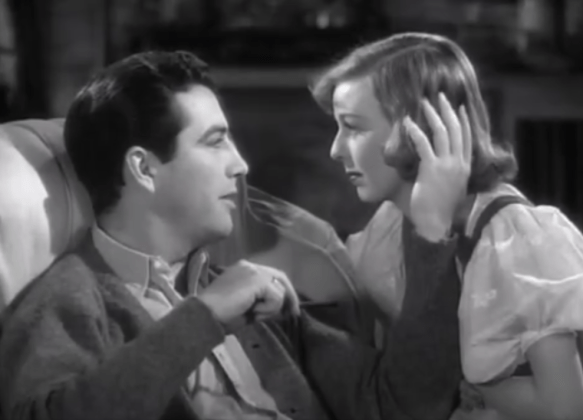
La Visita (1963): Commedia all’italiana and The Human Heart

the visitor 1.png

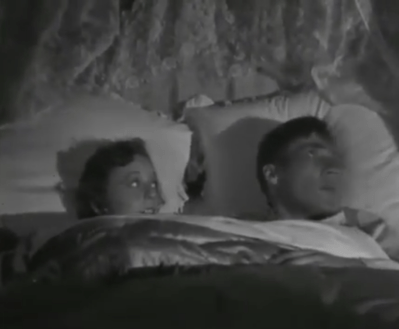
The premise of The Visitor is born in a rapid succession of images and shots. It’s a meet-cute correspondence so-to-speak as an attractive young woman venturing into her 30s looks to find an eligible man to invite into her home on some kind of ill-defined get-to-know-you basis.

It would not be possible without an advert in a newspaper fishing for a husband who meets certain basic qualifications. It’s not quite a blind date, but it might as well be. It somehow feels akin to the hook-up, internet, online dating culture we are awash in during the 21st century. At least, this is the 1960s alternative.

But lest one gets the wrong impression, it also feels a bit like 84 Charing Cross Road, except there is no pretense of books. They’re two lonely people looking to get together with someone for the sake of companionship. If they’ve read the Good Book, they know it’s not good for man (or woman) to be alone.

The pretty single woman, Pina, waits for the train from Rome bringing her mystery man. Sandra Milo though still her beautiful self all but transforms into a different woman than most are normally accustomed from her in anything from the director’s earlier Adua or Fellini’s 8 1/2.

If you’ve seen anything from Divorce Italian Style to Two Women, you might not be totally surprised (or scandalized) by the misogyny, but somehow it never feels right because it reflects the lustful intent in the collective hearts of men. It’s not the actions that are most troubling; it is what they suggest about society-at-large. When the colloquial name for someone is “Miss Booty,” you realize the seat of the issue.

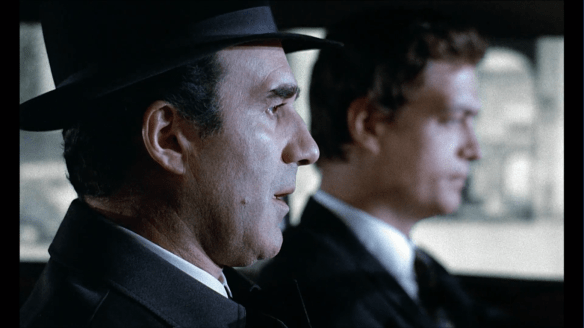
Because as Pina brings this bookish-looking fellow named Adolfo (Francois Perier) back to her humble abode, the cringe-worthy gaze of the camera — his gaze — continues to dictate the picture. What we have before us is obviously in the mode of so-called “Commedia all’italianaor “comedy the Italian way.”

It’s the Italian spin on the sex comedy, which in Hollywood would look a bit more like Pillow Talk or at the very least Buona Sera Mrs. Campbell. And yet unlike Hollywood, there seems to be little narrative drive. The picture is contented to amble along, which can be both its greatest blessing and a defining curse.

At its best, it casts a sardonic eye at the fragilities and flaws running deep within Italian culture and certainly all its romantic dalliances. But there is a fine line between reveling in the passionate desires and simultaneously trivializing this pervasive trend in society.  There’s an effort to try and smooth it over with humor.

The quirks are present in full force. A parrot sounding unmistakably like Donald Duck and a turtle named Consuelo. Local weirdos abound including an oafish peasant ready to throw jealous temper tantrums and get any sort of rise out of the visiting Roman that he can.

Throughout their courtship, recollections coming stream back whether it’s work — the purportedly well-off bookkeeper is actually hated by his boss. They’ve also maintained relationships in a laundromat and with an itinerant truck driver, respectively, never quite finding time to talk about their former lovers. Perhaps it just slips their minds…

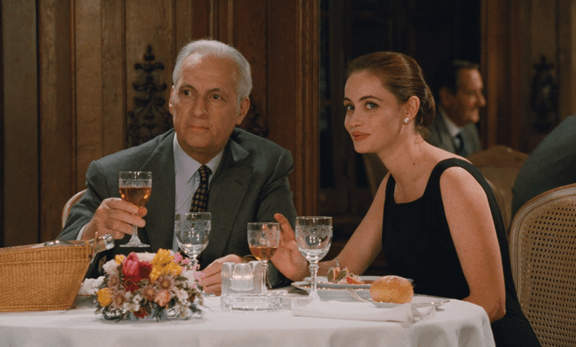
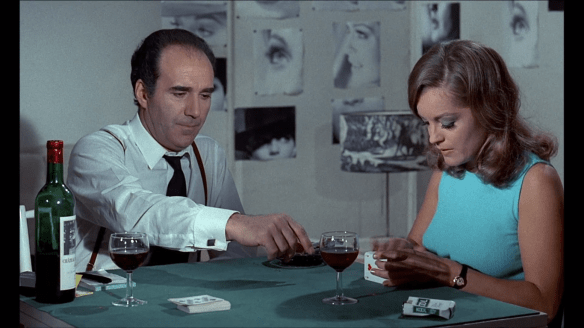
Dinner provides another telling arena. As the man gets more comfortable with himself, we begin to see a bit more of who he is, especially piggish, gobbling away at her dinner and relishing in all the gluttony before him to satiate his appetite. Likewise, there’s the youthful siren (Angela Minervini) tugging at him, reminiscent of Marcello’s desires for Stefania Sandrelli in Divorce Italian Style.

the visitor 3.png

Except there’s no lacquered pretense of suavity or manners —  not really. The pudgy face, bespectacled lout is precisely that and his interactions with the flaunting girl prove painful to watch. This relationship with Chiaretta comes to a head at a gathering outdoors where all the teens and adults mingle over dance. The wheels fall off the cart. Pina is hurt and feels betrayed by her now uninhibited man. It doesn’t come out immediately. Still, it’s there.

Eventually, she lashes out at him, for his arrogance, his treatment of animals, and of people, including herself. She has a point, and don’t get me wrong; he’s completely deserving of her wrath. But if he gets berated, I might be deserving of a few choice words along with most everyone else. He woefully admits that this is what happens to one living alone. We cannot condone his behavior. It’s a sorry excuse and yet…the harrowing thing is how mundane he is in his substandard treatment of others.

Can we conveniently write them off as lonely, insignificant people trying to get by in the world? I’m not sure. Will we enter the insidious gray area of writing off his behavior or condoning it? It’s possible. I didn’t enjoy being subjected to the utter pitifulness of it all and I’m not sure if I’m ready to admit seeing some of their qualities reflected right back at me. We are not immune to the loneliness they feel. We see all their defects.  Can we acknowledge our own?

This final question remains: Will they find their happiness or live a life weighed down by this sense of miserable drudgery? Redemption begins with not simply a change of actions but a change in heart. It always strikes me Italian-style comedy rarely seems possible without some manifestation of human tragedy. There’s no more human way to grapple with our own boorishness, our own misapprehensions, and our own inadequacies.

3/5 Stars

Adua and Her Friends (1960): Starring Simone Signoret

adua and her friends 3.png

It’s movies like Adua and Her Friends from director Antonio Pietrangeli that remind me of the elemental joys of watching movies you’ve never heard of before. It’s a humbling experience to acknowledge how much of cinema there still is to explore and how names like his sometimes arbitrarily get past over.

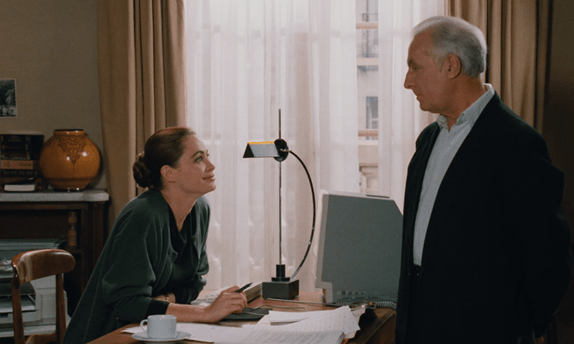
Because the only reason I ever made my way to the picture was on the merits of the cast alone and taking stock of the names, it is quite the epic ensemble. Simone Signoret anchors with her typically self-assured beauty. Sandra Milo is frisky and if not for her brunette locks, certainly a dumb blonde archetype. Then, Emanuelle Riva, stretching her own range, is angsty and cross with the world that women such as they are subjected to. The three actors are a trio of standouts along with one very special guest to be mentioned later.

Our opening image is a telling one with peppy jazz playing against the brick buildings and cobblestone streets. These exterior shots give us some sense of the adjacent world: the caverns of a local brothel. We learn they have been shut down by the Merlin Law (1958) and must find some new way to subsist.

With no real prospects, four of the women set out to make their own future. They buy up a run-down property partially secluded from town, to turn it into a restaurant, strictly on the level. This is no Risky Business. I could see them remaking this film generations later only for it to lose all of its flavor and charm in translation.

Because they hit every single roadblock imaginable along the way. The nightmares of going into business with starkly different personalities chafing against one another. Managing to get off the ground with the exorbitant amount of startup costs thanks to a deal with the devil. Having your soft open for a handful of customers only to run out of ingredients and any amount of things to feed them. You name it and they have the issue.

But the impediments don’t feel obvious nor the humor madcap and over the top. It finds a happy medium in a perceptive often nuanced equilibrium fluctuating between hardship and laughter. The jazz and sunny countryside neutralize any hint of a dramatic outbreak and though the picture is a tad long, it does allow a certain width and breath to cycle through all sorts of scenes.

Thus, the buildup of the restaurant from a fledgling even flimsy enterprise into a bustling, highly lucrative undertaking, is all the more believable. We see it happening and get to relish the process. This is the movie at its most delightful. It’s not as purely comedic, but even for the briefest of moments, you cannot help but recall Playtime’s own bungled restaurant opening. The difference for these women is their very livelihoods are more obviously at stake.

It plays best as scenarios and momentary interactions. The Father from the local convent drops in, trading conversation and well wishes for the secondhand scraps to serve as slop for his pig. The first customers start trickling in, enticed by the “restaurant” sign over the arch, which leads to an all but empty pavilion lined with tables.

adua and her friends 4.png

Each woman has a man in their life, whether physically present or generally absent. Milly hooks the nicest beau of the bunch, smitten with both her and her cooking. Marilina courts the most demons and tries to steady her tumultuous personal life by bringing her young son to live with them. His upbringing causes some squabbles, which ultimately culminate in his baptism.

It’s a poignant moment reflecting the women entering a realm of religious piety. It’s not so much that they have been radically changed, but the way they are perceived and how they make their living gives them a new lease on life. The goodness and inherent decency in them are given a chance to shine through. One is quickly reminded they are not defined by the men who drift in and out around them. The cornerstone of the entire film is their female camaraderie — the affection they hold onto — even when they bicker amongst themselves.

All the villains in the picture are of the opposite sex, and it makes sense given the cultural framework and their past profession. They’ve been relegated to a specific caste of society and in their efforts to break free, they meet the hegemonic forces that be. The most blatantly obvious antagonist is the peremptory Doctor Ercoli (Claudio Gora), who bankrolls them and requests 1 million lire a month for his recompense. When he actually inspects their premises, it reflects just how pitiless he is and how powerless they remain. It still feels like they are owned.

The rest of the louts are more like abject scoundrels and losers. Lolita’s purported beau has all but run off with their money and when he does show his ugly face again, he has the gall to try and pump her for more, spinning tall tales of going on the road again where he’s a big name.

adua and her friends 1.png

Their love is not lasting nor their promises secure. Of course, Marcello is charismatic as a car salesman; he always seems to be in all his pictures. There is something pathetically despondent about him at times, but it only serves to mask his swings in infidelity.

Signoret’s moment of ultimate realization is a bitter turning point. She recognizes who he really is and leaves him to his own devices. In the moment, she’s deeply hurt and yet she has an unassailable resiliency to take every beating with poise. Not that she’s unemotional, but she will not be totally trampled by the world around her even as she is wounded.

They reach their lowest point, completely destitute and scandalized, despite everything they did striving to make an honest living for themselves. Instead, they get their pictures plastered all across the pages of the red hot Il Tempo.

Their final act of rebelling is a cathartic one as they go out on their own terms. However, there’s more. Even at its most abysmally low, Signoret soaked head to toe in the rain, jeered by the ladies on the streets, she still maintains her composure.

She’s fallen far but like another French icon, Jeanne Moreau, she captures the screen and even if she’s been toppled, there’s no way to totally crush her. If nothing else, she commands our undivided attention and makes Adua and her Friends worthy of its title. They are a force to be reckoned with no matter what the tabloids might read.

4/5 Stars

Les Cousins (1959): Chabrol Takes on Paris

Screenshot 2019-12-16 at 90447 PM.png

“A girl and an exam aren’t the end of the world.”

Most anyone can probably tell you Les Cousins is a fine companion piece to follow-up Le Beau Serge, and it’s true. It features much the same cast — specifically Jean-Claude Brialy and Gerard Blane, in a kind of role reversal. However, instead of pervasive talk about Brialy’s health, this picture is occupied with their familial connection. Otherwise, the action has been transported from the rural to the jazzy street corners of Paris.

Regardless, it doesn’t play like your typical or atypical Nouvelle Vague film, but that’s not to say it’s conventional. Instead, there’s a crispness to it and a composure to the filmmaking.  Truffaut arguably didn’t get there until The Soft Skin, and I don’t know if Godard ever aspired to that. What connects them truly is Cahiers du Cinema and the shared affinity for a new form to upend the preferred traditions of their contemporary French cinema.

Paul is a flamboyant prodigal who, with his goatee, might have been a beatnik if France was lucky to have the craze. They certainly have soiree and cafe culture, and he might as be their elder statesman because he’s not one to fritter his time away on anything so insignificant as studying.

The other primary player, Charles, is a square milquetoast with commendable tact, both proper and reticent, eyes often flooded with shy embarrassment. Whereas Brialy gets to fill up every scene and fly all over the place with hyperbole and a clever line to enter and exit every conversation he throws himself into, Blain easily acquiesces to the story. Somehow the dynamic seems to favor Le Beau Serge and yet there is some mode of fascination to see the roles reversed in a new environment.

Because it’s true Paul’s flat is quite the bachelor pad, laden with a cluttering of artwork and frequented by the gregarious creep Clovis, a sly reprobate who likes a good party, a pretty face, and stirring up trouble. We get a mild suggestion of what might be afoot when a girl from last winter is mentioned to be on the way up. It’s very serious — very cryptic — but when Paul slips her the wad of money, and she slips out again rarely to be seen, it says more than enough.

But it’s quickly lost among the new stimuli and if we are to share the place of Charles, naivete clouds his perceptions. Taking to the streets in the real world as it were, Les Cousins momentarily taps into the New Wave’s invigorating on-location energy. Certainly, the jump cuts of Breathless happened on the streets of Paris, and here we have two fellows taking to the streets and sightseeing with a flurry of abandon.

Next on the agenda, Paul takes his cousin to the local hangout, what is jokingly referred to as “the bowels of hell.” Whatever it is, the tavern is a lively place frequented by people who all seem to know Paul on a friendly basis. The one who sticks out to Charles is Florence; he grows impetuous, immediately taken with the girl.

Between classes, he wanders into a bookstore where the proprietor bemoans the modern generation’s reading habits. They’ve given up Balzac and Dostoevsky for detective fiction and racier fare. Reading is relaxation and nothing more. He effectively acts as a barometer for Paul and his ilk.

That same evening, they hold quite the gathering effectively, playing as the complete antithesis to the humble dance thrown together in Le Beau Serge. This is livelier, full of bubbles, and glamour. Eventually, it devolves into a raucous affair driven by alcohol and the frisky amorousness in the air — a superficial portrait of the debauchery of the idle bourgeoisie. Fellini’s La Dolce Vita is not too far off albeit with an influx of Parisian youthfulness.

The scenes of two lovers on the street are a gorgeous fixture within the picture, looking sleek and stylish in the patchwork of shadows and moonbeams. Again, it’s an obvious compliment, although it seems to set it apart from some of its Nouvelle Vague brethren.

Screenshot 2019-12-16 at 84938 PM

It’s the beginning of something we can’t quite judge right off. She’s somehow taken with the idea of trying to love him; this at least is genuine enough. Whether it’s his utter devotion — the lovestruck sincerity of his words — or some idealized vision of her own mind, we can’t be sure.

Her friends think it’s a lark and a laugh attempting to serve her with their idea of a reality check. After all, she’s a girl who’s slept around. Why try and play at something inauthentic to who she already is? She and Charles are not from the same walk of life nor the same standards — moral or otherwise. It’s the same old story and as an impressionable girl of 20, she seems to believe them easily enough.

Soon the two young men are warring for the affections of the same girl. Their arrangement is verging on a menage a trois, though they remain admittedly good-natured on the surface. One suspects heartbreak lies dormant. In the follow-up gathering, there’s something more tenuous in the air as Wagner’s “Valkyrie” begins to pick up.

Paul sombers up in a curious change in mood as the movie somehow switches gears. Even as the merriment commences outside, Charles castigates Florence for getting in the way of his studies. He spends the entire evening in the adjoining room feverishly attempting to work in preparation for his impending exam.  Based on my own proclivities, it’s easy to empathize with him and in this roundabout way, it has a pulse on much of the college experience.

However, the most curious of the melodramatic crescendos ramps up out of nothing. This darkly cynical undercurrent begins to exert itself rather insidiously, but it enters in too late to really gel with everything Chabrol has crafted thus far. It feels like an incongruity in its final act — the progression is illogical and at the same time too cleanly resolved. Florence all but dissolves from the story like a phantom as Paul listens to the empty chambers of his gun click, utterly dumbfounded. I’ve let something slip here, but I will leave you to consider the results.

Les Cousins plays as a weaker, less whizz-bang rendition of Jules et Jim, nor can it quite justify its ending. But at this earlier juncture, it feels as if Chabrol already has a better grasp of traditional filmmaking compared to his compatriots, while injecting the picture with mood and artistic flourishes that feel far from conventional. He’s tapping into some still-to-be-exploited reservoirs and even if it doesn’t quite land the finish, Les Cousins offers up something with prolonged interludes of intrigue. This would be a springboard for a prolific career ahead.

4/5 Stars

Le Beau Serge (1959): The New Wave Goes Provincial

Screenshot 2019-12-12 at 81146 PM.png

Claude Chabrol was looking to shoot his first film in Paris but for budgetary reasons, he decided to set his first picture in the village of Sardent where his mother grew up. Le Beau Serge could not occur in any other place.

True, the opening shots are universal. Francois (Jean-Claude Brialy) riding the bus into town, there to be met by his relations, or actually someone who turns out to be a childhood friend, the amicable baker Michel (Michel Creuze). He’s seems made for a sleepy, humble town such as this — content with the life he has around him.

That this might be the beginning of the New Wave in the rural countryside is a curious conclusion. Because it’s true Chabrol was one of the boys at Cahiers du Cinema, soon followed up the more well-remembered works of Truffaut and Godard.

However, it’s also a timeless tale you might see out of any year if you were to pick it out of a hat. Because coming from a small town or returning to a place you haven’t seen in some time are touchstones many of us resonate with. I’ve never dug very much into Claude Chabrol’s filmography aside from a couple stray diversions like Les Biches, but it’s some comfort starting at the beginning.

The title gives us some minor inclination. Even as Francois and then Michel are introduced initially, we know Serge (Gerard Blain) is a person of great interest, and it’s true he represents something elemental to the story. He is plagued by demons Michel will never know. When we first get a glimpse of him, he’s quite royally soused, and it catches Francois off guard. He knows him from a different time and is worried about his boyhood chum.

What becomes evident are the themes of duality due to the character foils Chabrol posits. The one point of criticism is how the picture gets carried away with the mood music as if in his youth the director’s not brave enough to be still; he still needs some pulse going through the story. Although perhaps we must temper this because although cinematically you can witness some of the same verve of Truffaut — the type of energy that would come to define the Nouvelle Vague — this movie is generally quite reserved.

Still, it does have these latent vigours of youth on its side ready to be tapped into. There are brief moments where Blain gives off the angst and bellicose of James Dean even as Brialy plays his prim and proper counterpart, Francois, who has returned to his childhood town to reclaim his health. He’s sickly and the country air is meant to do him good. In fact, it seems like every 10 or 20 minutes someone is inquiring yet again about his well-being.

But he’s also the last person Serge wants to see in his ignominy. He’s married out of guilt, a drunk, and an utter nobody. Instead of Jim Stark’s desks, he takes a slug at granite walls, driven by this same reckless, at times feeble, animal magnetism.

Screenshot 2019-12-14 at 93527 PM

It’s curious to note Chabrol takes on religion more in the bent of Eric Rohmer even as Francois makes a visitation of the local priest (Claude Cerval) and begins an ongoing dialogue on the state of the local community.

They are themes replayed in the likes of Winter Light and Calvary where the man of the cloth bemoans the fact the adolescent generation, who are still around, no longer believe in anything — even themselves, as Francois interjects. It’s yet another lens to put on not only Serge but possibly Francois and then Marie (Bernadette Lafont).

She’s the town’s harlot, slinking around with a new boyfriend on any given Sunday and reconnecting with Francois on his return. But she too is humanized by the peripheral presence of her alcoholic old man Gomaoud.

Meanwhile, Serge totters through the cemetery spouting off garbled exposition except, this isn’t what immediately stands out; there’s something engaging about the whole scenario. Chabrol does well throughout the entire film to utilize the real, honest contours of the entire town in a seamless manner, and it’s in a moment like this where it really comes to bear. The same cemetery plays into a confrontation between Francois and Glomoud when he accosts the old man for his behavior.

The personal comes to a head at the local dance hall — the most humble of spaces plucked out of a simpler age. Francois and Serge end up fighting over a girl at a party with Serge expressing the violence we always knew him capable of. It almost feels like he has left his friend for dead, whether or not that’s entirely the case.

This might have been the end, with Francois leaving on the same bus dejected, going back to the city, never to see his pal again. Yet he refuses to leave for some inexplicable reason. Soon their world is ensconced in a layer of snow, making for a gorgeous final act. It’s nature’s way of suggesting — and Chabrol’s too — maybe our sins can be wiped away or at the very least forgotten.

Francois is paid a visit by the local priest entreating him to leave for the sake of his health. But he’s resolved to stay — to be an example — and hopefully help his old friend find his way somehow. It’s the idealism shining through again, believing he can help, that he can be an answer and a savior in some sense.

Once more we must attribute these feelings to the bull-headedness and the pride of youth. It can be both a blessing and a curse. It’s what makes Serge resent his friend, and it’s why his friend thinks Serge still needs him. His act of charitability involves extending a hand of support to Serge’s stoic and increasingly pregnant wife Yvonne (Michele Mertiz). Francois can’t be Serge’s ultimate savior and maybe a newborn child cannot right his life, but in a human sense, it’s still a sign of hope just like new-fallen snow.

By the time Le Beau Serge is over, it’s elementary enough to realize why it’s been overshadowed by the freneticism of Breathless or even the exuberance of 400 Blows and Jules et Jim. In its own way, it’s a fine entry onto the cinematic stage for Chabrol. While it offers youth, it also supplies a deep, even surprising, thoughtfulness.

4/5 Stars

Go West (1925): Keaton & His Cow

320px-Keaton_Go_West_1925“Go West Young Man. Go West.” – Horace Greeley

I had to refresh my memory on Horace Greeley because he’s as much a mythic figure — supreme champion of manifest destiny — as he is a mere historical figure. During the mid-19th century, he was a sometime political statesman and most famous as the founder of The New York Tribune, a purveyor of public consciousness in its day.

Thus, it’s not too big of a hop, skip, and jump into Buster Keaton’s latest feature indebted to Greeley, if only for these very few words. Because the opening image gives a summation of our hero’s lot in life, tugging his heap of personal belongings into The General Store in order to hock them for all they’re worth.

A hunk of bread and a stick of salami are all he has to show for his possessions and armed with such measly goods, he hitches aboard a train to seek his fortune. The Big City isn’t much good to him, where he’s literally trampled by the sheer mass of humanity or almost being run over by automobiles.

So he pulls himself back into his train car with his meager morsel of bread, this time buried in barrels of potatoes all but taunting his cravings for further sustenance. But the cinema fates take control and send him flying down the hillside so he might come face-to-face with The West, no doubt fashioned more by nascent Hollywood than any orations of Horace Greeley.

The juxtaposition of the typically diminutive Keaton as a cowhand is a hilarious image in itself, both mentally and in the flesh. He takes the most hands-off approach to milking a cow, waiting for the gal to do her business only to sit idly by, perplexed by the lack of results.

I couldn’t help thinking of Keaton as the first city slicker, and yet what sets him apart is the fact he’s not quite adjusted in the city either. He’s just universally out of place because every place has new obstacles to handily trip him up. And he makes sure to play them up so we comprehend exactly how inadequate and outmatched he seems compared to his contemporaries.

The greatest piece of inspiration found within the usual western tropes is Buster’s dearest friend, “Brown Eyes,” the lady cow. In actuality, the actor trained with the bovine extensively to build an authentic rapport, and it’s true his love has easily attributed anthropomorphic qualities. After all, as human beings, we are able to do it with almost anything.

She waits outside for him like a trained puppy dog and even wanders into the bunkhouse to look around. The film might even be prefaced as a love story between a man and his cow. Still, it’s not merely a comic point of departure. Is it corny to admit Keaton does honestly and resolutely love that cow? I think not.

He’s dwarfed by everyone, be it man or beast, but he’s got his typical fortitude and surprisingly plucky ingenuity. The little pipsqueak with a pea shooter, perpetually tripping over his chaps, brings his unorthodox form to all facets of livestock and farming. Meanwhile Go West gladly takes on all manner of tropes. You have elements of The Virginian (originally a book from 1902 and a film in 1929), The Great Train Robbery, and undoubtedly a host of other passable references I’m unaware of.

Likewise, the trail of cattle following him into the town’s center predates the brides from Seven Chances. It turns out he’s more of a cow whisperer than a cow wrangler, and the little man takes it upon himself to herd the stock to get them to his boss’s appointment on the other side of town.

The crowning moment occurs when he dresses up in a devil’s suit, even forsaking his beloved pork pie hat, knowing the red will lead the cattle away from the terrified humanity toward their final destination. It’s his final act of sacrificial bravery for his best gal. Staying true to its own internal logic as opposed to genre convention, Buster winds up with his true love — two peas in a pod, driving off into the sunset, as it were.

It’s common to consider the big three of silent comedy in tandem because it provides some litmus for differentiating their individual personalities. Chaplin makes us sympathetic to his poverty, Lloyd to his nerdish looks, but Keaton just might be the most fundamental in many ways. He’s always the slightly-built, mess-up, and outsider. He gains our sympathy by always being physically (and visually) outmatched. To evoke a biblical allusion, he is carved out of the small-but-mighty David archetype.

I won’t say the film is totally without its visual innovations — as per usual — but it probably dips more into the pathos trough than we are accustomed to with “The Great Stone Face.” There’s no confusing Robert Bresson and Buster. Still, I couldn’t help but be reminded of Au Hasard Balthazar. For those who recollect, it’s about the life of a donkey in the French countryside, who almost becomes a Christ-like sacrificial lamb even as he strikes up a meaningful human friendship.

In fact, I’m inclined to think in this case that Buster Keaton never had a better costar. With Chaplin, it’s easy to recall the likes of Paulette Goddard, Edna Purviance, even Eric Campbell, but Keaton always strikes me as a solitary figure. Certainly, there are girls and female companionship (take Our Hospitality or Seven Chances, etc.), but he never feels tied to someone else. Even in these aforementioned offerings, the romance feels more like a function of the plot than actual bona fide romantic drama. Because that is his lot in life.

Thus, when he gets to ride off happily with someone who might intuitively understand him better than any human companion, it’s a surprisingly resonate happy ending, going beyond perceived comic value. Somehow, with Buster Keaton’s conception of comedic narrative space, it makes perfect sense that Greeley’s entreaty to “go west” would manifest itself in a romance with a cow, but in the most sincere manner. This is the key.

4/5 Stars

Steamboat Bill Jr. (1928): Buster Keaton The Human Tumbleweed

steamboat bill jr.

Whatever your thoughts on silent movies, be it based on misinformation, overt loathing, or verging on utter veneration, one has to admit there’s something to the simplicity of these films. And by simplicity, I’m referring to the construction of their stories. They rarely seem to get bogged down by detail. In fact, one could argue they’re at their best on this relatively basic plane. If you’re skeptical, you can call them tropes, maybe archetypes. Regardless, they tap into something universal, even primal.

Steamboat Bill Jr. is a prime case study for what I’m considering. It’s a riverboat tale setting up a conflict between two families overlaid by a Romeo & Juliet romance and spiced up all together by its secret weapon and the main attraction: Buster Keaton.

The shoddy but well-loved Stonewall Jackson is another relic of the Confederacy, not unlike Keaton’s prized train in The General. In this case, it’s run by a grizzled veteran of the waters who is about to be pushed out by steep competition. His rival, too, is symbolic as the industrial-era magnate taking over the waterways to go with his hotels and other ancillary attractions. There’s also nothing subtle about his name: King.

The next development is about as absurd as you can get. The steamboat’s captain gets word his son is arriving from boarding school to assist him. He hasn’t seen the lad since infancy and expects a big strapping fellow — not unlike himself. Set up by a prolonged “white carnation gag” full of misidentification, he winds up with timid, squat Buster Keaton to call son. This shrinking schoolboy is a far cry from what he hoped for, and he’s a bit begrudging.

Their ensuing trip to a hat store not only records the contemporary culture’s affinity for a different brand of headwear but also manages to sneak in a nod to Keaton’s ubiquitous pork pie. He slips it off quickly as if afraid someone might recognize him and cause him to break character.

The paces to follow are not surprising. His beautiful and vivacious school chum is the daughter of King. They hold a puppy-like love for one another even as their fathers continue to feud. Just to make ourselves clear, none of this matters all that much.

steamboat bill jr. 2

The secret to Keaton is his innate understanding of the visual gag that could make his brand of comedy funny and, as a result, his stoic everyman too. Stretched out on a plank between two boats — trying to cloak himself in darkness — there’s a shot of King’s boat, and we know they will be lurching forward as they tug at the ropes. He’s going to end up in the drink.

But of course, that doesn’t happen. At least not immediately — his weight perfectly balanced so he juts out on the board like a cantilever, seemingly oblivious of how close he came. So unaware in fact, he tumbles in seconds later. It plays with our perceptions in the most fundamental ways. With irony at his disposal, he milks the laugh and makes it something more compelling and lasting, even to the point of its foregone conclusion.

Later, he raids the rival riverboat in pursuit of his love as his father’s own pride and joy is subsequently decommissioned. His feud with King is exacerbated, and he gets slammed with time in the clink for defying the law.

All these beats are again mundane. They don’t tell us much nor surprise our expectations. Fortuitously, inclement weather comes and Keaton is once more provided a whirling dervish of natural disasters to carry him away in the throes of comedy. Again, this all continues functioning in spite of the story.

Because I’ve dealt with typhoons before first hand — umbrellas upturned in an instant — but this is ridiculous. It defies logic, mass, and normal feats of human ingenuity, but those are the riches of the moviemaking industry and Keaton’s comedy, as facades of entire buildings topple around the human tumbleweed.

He’s whisked away on hovering beds, which might as well be a transplanted flying carpet from Arabian Nights, leading into one of his most iconic and death-defying setups. Again, the visual has primacy, and it works on principles as old as time. We crave security. We fear harm and dismemberment. In all his pluckiness, Keaton takes them on and somehow prevails.

There are a couple moments where it’s like he’s literally suspended in air, fighting against the wind to stand upright, until he’s forced to split the difference. Also, true to form, he uses what feels like a few vaudevillian sleights of hand, supplied by curtains, trapped doors, and a nack for all things physical.

What I admire about Keaton is how he manages to do things that still take the breath away even if only for an instant. He is a bit of a magician and yet he lets us in on the tricks, and he lets the audience take part in them with him — to think we know more than him — and then he proceeds to still pull one over on us.

Even if his character is unwitting, somehow his body and he, as an entity, always seem to know just the right step or movement; it’s just idiosyncratic enough to work in the scenario so he comes out on the other side all in one piece.

When he finally takes command of the ship hopping to and fro, scurrying there, yanking this cord here, it feels like Buster Keaton at the height of his powers, and it shows how this scrawny little guy could be so resourceful on his feet.

Mind you, it’s not just a matter of our story’s hero coming into his own, but it’s a practical expression of the actor’s own prowess — he is an unswerving force of nature packed into what might seem to be a slight frame. He really and truly is a marvel. Because “The Great (Wet) Stone Face” transcends Steamboat Bill Jr. In fact, he is Steamboat Bill Jr. The movie as well as the man.

4.5/5 Stars

The Tale of Princess Kaguya (2013): Takahata’s Swan Song

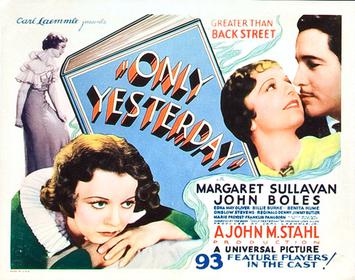
The_Tale_of_the_Princess_Kaguya_(poster).jpgDuring the period of time I lived in Japan, I became acquainted with the works of Isao Takahata, and by that I mean I watched both Grave of The Fireflies (1988) and Only Yesterday (1991). This was all that was required because these two films on their own left a profound impact on me.

While Hayao Miyazaki is, rightfully so, the benevolent poster boy of Ghibli Studios, you might say Takahata was, in his own way, a visionary and the hidden engine behind the company. He was rarely as prolific as his counterpart, but the films he left behind are thoughtful masterpieces — even more pensive in nature — while arguably boasting headier themes. In fact, you might say the partnership between the two directors exerted an influence on Miyakazi’s films specifically.

While living in Tokyo, the news Miyazaki would come out retirement had the world in a tizzy of excitement. About a year later his colleague would pass away, and I’m not sure as many folks were aware, but those who’ve admired his films took note and quietly pondered the glorious oeuvre he left behind.

Today I can finally say Tale of Princess Kagura is more than worthy of joining the company of his best films, sharing his usual affinities while bursting forth with an altogether new leaf — a lifetime in the making. Whether it’s serendipity or not, it seems like an impeccable summation of the director’s work, still so vibrant and serenely mesmerizing at this, the tail end of his career.

In full transparency, as someone who knew next to nothing about The Tale of The Bamboo Cutter (this film’s ancient inspiration), it’s easy to come at the material a bit wary. But soon enough, this guardedness begins to fade away. Because like any of the great tales — Aesop’s Fables, The Brothers Grimm, The Odyssey, even Biblical parables — this story is equally built out of the archetypes of humanity. In some way, it speaks to universal themes we can imbibe on some deeper human level.

The initial jumping-off point is unfamiliar and yet it bears some resemblance to what we might know somewhere deep down in our being. Because on one auspicious day, the Woodcutter happens to cut down a bamboo shoot and when it breaks open, with radiant light, a tiny creature is birthed into the world; he christens her a princess sent from the heavens.

So he and his wife act accordingly, taking this small yet significant creature as their own to raise up so that she might one day earn a status far beyond their humble origins. It begins as a story about how Providence can smile down upon the most unremarkable of souls.

The Woodcutter is a doddering man even hilariously so, devoted as he is to his new daughter. Whereas his wife is more tranquil and a comforting maternal figure. As their new daughter is taken in, she rapidly grows by the moment, earning the name “Bamboo Shoot” from the local pack of children, although her father is adamant she’s a princess, and he resolves to do everything in his power to make this vision a reality.

It’s in these earliest interludes, set in the meadows and forests of God’s green earth, where we realize what a hallowed place nature will hold in this story as the words of a ubiquitous tune about “birds, bugs, beasts, trees, etc.” keeps on being repeated — a song that feels as old as time.

While The Tale of Princess Kagura is about so much and it’s lengthy, especially for a hand-drawn piece of animation, there’s something very primordial about it — again, going back to the base tenets of our very existence and our collective consciousness.

The child joins the company of a strapping woodsman named Sutemaru who is admired by all the youth, despite his own common origins. Our heroine shares their mutual affection for him.

Meanwhile, her father continually invests in the life he’s vowed to give her — sending her to the city, setting her up under the tutelage of an eminent woman of etiquette, and promoting her to all the surrounding nobles. Kagura is bestowed with the blessed new name, and her renown grows.

However, this is the juncture where her old life — one of humble means, communing with nature, and Sutemaru — ceases to exist as it formerly did. She must try and acclimate to a new life at first glorious, then constricting, and ultimately devastating.

She’s pursued by five prominent suitors, all vowing to bring her glorious treasures to consummate their love. Instead of taking their proposals subserviently, she boldly asks for them to prove not only their resolve but their true affections. There’s something utterly modern about this young woman navigating her way in a world dominated by men. Where she willfully challenges convention as dictated by traditional patriarchy with the ultimate symbol being the emperor, a man accustomed to getting whatever he so desires.

The story readily evokes numerous elements of Japanese culture, and they inform the folklore, whether unfurling scroll paintings, virtuoso koto-playing, and the antiquated customs of nobility. But Takahata’s film works on an even more basic level.

Beyond all else, at it’s very best, The Tale of Princess Kagura is blessed with breathtaking visuals, making full use of the format. Mystifying developments are brought to the screen with a matter-of-fact immediacy we come to accept. It’s the kind of film where you must let it happen to you. If you relinquish your doubts and come to accept everything generously, you stand to be rewarded. Only then are you allowed to revel in its intricacies, simplicities, and the marvels it puts forth in any number of ways.

The palette breaks with so much of what we’ve come to expect from animation, both the western status quo with the proliferation of computer-driven images and also Japan’s own distinct stylings. It’s the epitome of sartorial splendor and in an era where animation — both western and eastern — is easily earmarked and pigeon-holed,  it’s very rare to view something so singular. In fact, it’s an unassuming revelation in terms of harnessing the art form in an altogether definitive manner.

It’s bold in its willingness to be spare, recalling the impressionistic recollections featured in Only Yesterday. And yet the style readily evolves, waxing and waning amid the seasons, the changing plot points, and subsequent emotions that overtake our heroine.

The watercolor-like sensibilities and bursts of colors demand a fearlessness when it comes to using white space and minimalism. Because what it really does is continuously impress upon us a particular mood, a feeling, or sensation.

I am reminded of one scene that totally overtook me as the Princess zoomed off into the night as a blur of charcoal and color, the score hitting staccato notes to capture the pace in which she darts off into the night — grieved and agonized by the current world she’s being subjected too.

Then there’s the other moment amid the cherry blossoms that feels like swirling, whirling euphoria under the falling pink petals. For an instant, we get lost up in the moment with our heroine. And because this is a Takahata movie, there has to be an element of this mystical realism where the film’s world and the medium of animation afford this fusing of the every day with the supernatural. Sure enough, it comes with the same magical flourishes we would come to expect from Ghibli. We watch our protagonists soar through the air with a visceral abandon personifying their overflowing joy.

Later, we are caught up in the awe of an ethereal decension bringing the gods down to us on a cloud from the luminous moon above. This is what we come to expect from Ghibli — this swelling exhilaration — although each moment feels fresh as if seen with new eyes.

However, and this is no slight on Miyazaki whatsoever, it feels like Takahata has a greater stake in depicting both the somberness and the elation. He reminds us sometimes it takes one to bring out the other. But in the end, as he suggests time and time again in his story, it’s all part of this cycle. It’s the tale of nature and life — the birds, the bugs, and all the creatures. That includes us.

The film subtly evokes Buddhist, perhaps even some Shinto traditions — this inbred environmentalism — and the relationship between humanity and nature. Though we might see the same themes echoed in many slightly different forms. There is the Christian mandate to “Be fruitful and increase in number; fill the earth and subdue it. Rule over the fish in the sea and the birds in the sky and over every living creature that moves on the ground.”

There were later generations of Romanticists kicking against the goads of the Industrial Revolution, looking to salvage nature from the soot-filled pyres of modernity. Then the Transcendentalists who called for finding meaning in the solitude of nature while also finding a spiritual presence in all things. Even now there is the ever-current fight in the war against climate change, in spite of a sea of skeptics.

Thus, if we do this admittedly cursory run-through of history, it reminds us this is not really a matter of Eastern vs. Western thought at all. Surely, there are differences, but our struggles, questions, and hopes are not totally dissimilar. They are wrapped up right there in our elemental narratives. Isao Takahata gifted us with one final revelation executed with his usual care and thoughtfulness. It’s a delight to proclaim it good. It’s even better to say it’s not just for Anime aficionados. I want to believe it’s for everyone who will give it a chance.

4.5/5 Stars

When a Women Ascends The Stairs (1960): A Prescient Portrait of Japan

When_a_Woman_Ascends_the_Stairs

A version of this review was first published in Film Inquiry

If director Mikio Naruse’s Floating Clouds is a film about making peace with the war years, then When a Woman Who Ascends The Stairs is a far more forward-thinking endeavor. In fact, I would say it’s a near-prescient portrait of where Japan has ventured now over 60 years onward.

One lady comments you can still see the old Tokyo but it’s obvious — even the classy scoring and the generally sleek compositions suggest as much — modern society is upon us in full force.

It’s the 1960s built on the bedrock of a post-war economy. In a highly fashionable area like Ginza — renowned even today for its shopping and glamour — the western influence is undeniable. Most of the film doesn’t take place on the main streets, however, but in the back alcoves in the lines of bars hidden away. Even here the American influence is felt with many of the bar names deriving from English.

What’s presented is a different type of life, even as it presents its own fashionable conception of the world.  Mama-san (Hideko Takamine), as she is known by all, is one of the women living in this world. She is a kind of hostess. If it’s a euphemism or not, I can’t entirely say.

Still, her entire existence can be summed up by one early shot. The daunting stairs winding up in front of her toward her work. In a practical sense, they lead up to the bar she frequents every evening dutifully, but Naruse’s shot comes to represent something far more.

I’m not sure if we could call it the stairs toward the glass ceiling exactly, but it is true she enters a new world when she steps into work every day. She must fortify herself. She has an untenable veneer built up over the years.

It braces her to be the perfect hostess to all, balancing her customers’ entreaties and come-ons with the utmost ease and floating from each conversation with impeccable tact. Meanwhile, behind the scenes, she works with her longtime manager and bill collector (Tatsuya Nakadai) trying to eke by paying off the creditors they must rent from.

It’s never a sustainable life. Trying to keep customers happy while getting by on only the smallest of margins. Even a regular, named Minaboe, has started frequenting another place. His absence hurts her business. Thankfully, there is other clientele to work on and so she does her best to keep them happy while never quite acquiescing to their wishes. For 5 years in this tawdry business, she’s kept strong in this regard.

Because this is a film all about sex really, though we never see it outright. And if it is about sex, then it’s only as a commodity, a tool, a bargaining chip to be used. Despite being a story about women giving companionship to men on their business trips and away from their wives, for the longest time, no notion of actual love is developed. This should not catch us by surprise.

It is business first. Mama-san is expected to supply small talk and the girls that work under her flirt with the patrons over drinks. But as Keiko later admits, when she returns to her humbler roots, it’s all a created fabrication. They wear kimonos, buy perfume, and pay for taxis and apartments they can barely afford, way above their paygrade just so they can maintain the fantasy for their obliging audience. Meanwhile, there’s another side, a lot more disheartening and downright heartbreaking.

It’s the undercurrent of Tokyo if you wander into the red district or happen to step outside the confines of the beautifully cultivated exterior. It’s not a lie — all the things in front — but there is so much more to contend with. Love hotels, geishas, and hordes of hostesses to go with them. What do they beget? Among many things suicide, loneliness, and helplessness.

If there is any other film I found myself cycling back to it was actually Imitation of Life, directed by the master of luscious American melodrama Douglas Sirk. It also was about a strong single woman trying to make her way in a world all but dominated by men. If it was true in America, it was even more so in an albeit modernized Japan.

Hideko Takamine faces much of the same struggles as Lana Turner in the movie from a year prior when it comes to her own dreams — in this case, gathering enough funds to open her own bar. The only way to get ahead seems to be settling and giving in to the constant implicit or explicit demands of men. Because they hold the power. Society has certain set expectations. So they must play the game or live a life like hamsters on a wheel, in a constantly spinning wheel of survival.

Turner’s life is equally complicated by her relationship or lack thereof with her daughter (Sandra Dee). But in a manner indicative of Japanese culture, Reiko must deal with a nagging mother and a timid brother who are constantly dependent on her for money. It’s the tug and war between familial duty and what she aspires to.

It starts being a film about love once Mama-san finally relents and opens herself up to be hurt. She’s finally human and loves, and the scenes that evolve out of this development are the film’s most devastating. What makes them even more impactful is how they just keep building off one another, scene after scene. There is no relief in this barrage of pain, rejection, and heartbreak that our heroine is taxed with.

There was a certain continuity created between Hideko Takamine and Masayuki Mori thanks to their work together in Floating Clouds and yet the relationships go still further. She’s proposed to and berated and lied to and loved. And yet at the end of the day, she must put a cap on her emotions and saunter up those same solitary steps and put on the genteel facade expected of her. The final action, the smile on the face, and then the token salutation, a last touch of irony.

Even with its touches of humor, in an expression or a line of dialogue, it’s nowhere close to the campy, technicolor crescendo Sirk cooked up for Imitation of Life. But as Sirk was capable of dissecting American life, I would wager Naruse is equally perceptive and adept when it comes to Japan.

Satire and sarcasm infused in drama do not function in the same manner in Japan. In its place, Naruse commits irrevocably to his story and consequently provides another moving examination of his culture. It has a lot to say about a Japan that still seems to exist to this very day in ever-evolving forms.  Loneliness, suicide, and patriarchal ways are not just specters out of the past; they are alive and well to this day.

My last thought is only this. Setsuko Hara was the first Japanese actress I truly recognized across a body of the work; she was a luminary personality, and Hideko Takamine might be right below her, proving herself to be incomparable in her own right.

The performance she gives her yet again is so potent with the range and verisimilitude to all but carry the picture. She’s spellbinding, beautiful, and simultaneously breaks our hearts with the depth of her vulnerability. I won’t be forgetting it any time soon. Because in one go she effectively represents an entire subset of human beings and imbues them with unmistakable pathos.

4.5/5 Stars

Hell to Eternity (1960): The Story of Guy Gabaldon

Helltoetpos.jpgAs someone of Japanese-American heritage, it’s become a personal preoccupation of mine to search out films that in some way represent the lives of my grandparents and their generation. This means the rich Issei and Nisei communities of Los Angeles, the subsequent internment camps, and even the famed 442nd Infantry Battalion.

Obviously, Hollywood has always had a complicated history with minorities, mirroring broader historical context. Thus, the opening images of Hell to Eternity feel like a bit of a surreal pipe dream — something I’ve looked for a long time and finally discovered. You almost have to pinch yourself into believing the industry actually made this movie.

A young punk (Richard Eyer) and his friend (George Matsui) stare down a trio of thugs who look ready for a fight. Its fitting proof Phil Karlson’s bloody knuckles aesthetic can enter the schoolyard as the two battling adolescence are pulled apart by their physical education instructor (George Shibata)

Japanese-Americans and their culture play a rich and integral part in this biography of celebrated war hero Guy Gabaldon. No, he was not one of them, but he might as well be. Coming from a broken home, his only place to turn is the Une family who gladly welcomes him into their home.

In some small regard, these scenes play out quaintly if not altogether conventional. Guy begins to pick up Japanese quickly and even teaches his benevolent “mama-san” a few terms by pointing to objects around the house. Despite, the stilted acting and out-and-out authenticity aside, the images themselves are powerful. And some background is in order on multiple accounts.

We have George Shibata who was the first Japanese-American graduate out of West Point. Then, Tsuru Aoki was one of the premier stars of the Silent Era even before Sessue Hayakawa. But the connections run deeper still because due to their Hollywood roots and the anti-miscegenation laws at the time, Aoki and Hayakawa wedded and remained married until her death in 1961.

The slightly older George is played by an extremely youthful George Takai. Meanwhile, there’s further Japanese-American representation in Papa-san, Bob Okazaki, and the likes of Reiko Sato and Miiko Taka.

It should be noted the Unes are some sort of amalgam of the real-life Nakano family whose son Lane fought in the 442nd and later become a short-lived actor in the likes of Go For Broke! and Japanese War Bride (1953). All of these basic details are based on fact.

However, with this necessary context in tow, it’s about time to turn our attention to the man himself who held such a unique background in his own right. Because make no mistake, Guy Gabaldon is certainly worthy of the biopic treatment even if a picture like this can’t quite do the man justice. That’s fine.

Although what it develops into is an unwieldy drama and having Jeffrey Hunter portray Gulbadon is one of the most hilarious examples of overstated Hollywood casting.  It feels like having John Wayne play Audie Murphy. However, what Hunter lacks in similar likeness and physique, he more than makes up for by capturing the resiliency of his subject. He offers believable candor and the embodiment of American exceptionalism.

Allied Artists was a B movie mill and Hell for Eternity was their wealthiest, most expansive undertaking to date, with their number one moneymaker on assignment: industry workhorse Phil Karlson. In one sense, Karlson seems well-equipped for some elements and then woefully disadvantaged for others.

Hell to Eternity proves itself to be wildly uneven because without jumping the gun, the opening scenes are quietly revolutionary and truly unprecedented when you consider Hollywood’s track record. Then, there’s a shift as his family is unceremoniously shipped out to internment camps, and you have Guy rushing to every branch of the service only to be rebuffed at every turn. Still, his remarkable qualifications — namely his Japanese abilities — gain him an in-road.

We also have the introduction of his buddies. Despite getting off on the wrong foot, Sergeant Bill Hazen (David Janssen) proves himself to be an intense adversary and an even fiercer companion. As they foster mutual respect and camaraderie, it becomes evident he’s the type of buddy you want in your corner. And if he’s too intense, the swinging, snapping, undulating lady’s man, Junior (Vic Damone), more than brings the party.

It’s around this time where the film reimagines itself as what could easily be considered an entirely different movie. The midpoint in Hawaii has them left entirely to their own devices with one glorious night of freedom out on the town before they ship out. Not to be disappointed, they are treated to a titillating striptease show, courtesy of Sato, with the steamy hot jazz cutting through the night. The men cheer on the women with a rueful round of inebriated leering.

Where does this all end? How does this tie into Guy Gulbandon’s story; in short, it doesn’t. What does happen is the softening of the so-called “Iron Petticoat,” a woman journalist, who has gained notoriety for her prudish ways. It’s by far the most cringe-worthy sequence as Ms. Lincoln (Patricia Owens) lets her hair down, as it were.

What follows is a barrage of lingering shots over heels, tights, legs — you get the salacious idea — and from a distance, we can admit to it being fairly risque for the 1960s. It becomes amusement for their entire company. The woman’s impregnable defenses have finally been conquered. Whatever that means.

However, with a few abrupt cuts the whole meaning of these scenes is almost salvaged. Effectively, there is no interim. We get thrown directly into the campaign and their wild bender of an evening is only a distant memory as they cut their way across the shores toward the enemy embankments.

Even as Karlson isn’t able to make every crosscut of action fundamentally compelling, he’s far more in his element amid the volatility and constant barrage of bullets and bodies. What felt initially so quietly groundbreaking and devolved into needless exhibitionism, finally settles into his forte.

Here he can dig knee-deep into the nitty-gritty and give us something that packs a wallop. Hell to Eternity is a lot less sanitized than I would have surmised, especially given its era. However, there is no mincing when it comes to what we are privy to on the simulated battlefield. He capably mobilized thousands of extras from Okinawa for some of the most spectacular scenes where the large scale is matched with tumultuous elements of very intimate trauma.

And even as the skirmishes settle into a kind of chaotic equilibrium, Galbadon — using his Japanese skills — earns his moniker as the “Pied Piper of Taipei.” Using the talents he’s been gifted by his incredible upbringing, he does his best to coax the already cowed but testy enemy to surrender using their native tongue.

The one figurehead emblematic of the proud foe is portrayed by Sessue Hayakawa, emulating his similar role from Bridge on the River Kwai as a derisive Japanese officer. Once Galbadon can conquer him, he’s all but won the fight behind enemy lines. More than anything, I’m disappointed in the fact that we never circle back around to his adopted family nor the exploits of his brothers. Still, for more context, Go For Broke! plays as a decent companion piece about the 442nd.

So although it’s an imperfect and often befuddling vehicle, Guy Gulbadon was a hero more than worthy of a biopic. Regardless of any faults, Hell to Eternity is bristling with not only action but specific depictions of a historical time and place that often remain overshadowed in Hollywood to this day. It’s been one of my missions to discover more representations of Japanese-Americans in American cinema, and in this regard, Hell to Eternity is a stirring success. It can’t help but be groundbreaking even in spite of its unassuming nature. I look up at the screen and there’s a personal connection.

3.5/5 Stars

Winchester 73 (1950): James Stewart The Western Antihero

Winchester_73.png

Winchester 73 has the initially dubious reputation of being a portmanteau western. Whether or not this is a one-of-a-kind distinction, any number of popular culture vehicles have employed the device in often gimmicky fashion. It makes for a La Ronde-esque sitcom episode in a pinch.

However, this James Stewart-Anthony Mann collaboration succumbs to no such fate. It’s positively stuffed with quality talent and vignettes woven quite closely together. There is a compounding weight to them even as characters both minor and substantial all but stand on their own two feet.

Equally compelling is Anthony Mann’s usual dynamism — continued from his film noir days — and also the very specific mise-en-scene he develops. The opening shot behind the credit is an exquisite first impression with a pair of silhouettes trodding along the ridge in a perfect arc off into the distance. It’s a type of instant exposition in the most primal sense: two men riding toward their unseen destination.

The two strangers sidle into town, the hard-bitten gentleman Linn McAdams (Stewart) and his trusty sidekick (Millard Mitchell), who takes a calculated stance on just about everything. We know they’ve seen a lot of the world together and all sorts of people…

One of them just happens to be Dutch Henry Brown (Stephan McNally, who they happen on in the local watering hole. In another western, guns at the ready, they would have obliterated each other on the spot. However, in this picture, where a fairly obstinate rein of law and order rules, they are forced to bide their time outside the watchful eye of the city limits.

Will Geer does surprisingly well as a wry and affable Wyatt Earp. His characterization is just personal enough to take some of the mystique out of the legend and make him into a real human being we can appreciate in relatable terms.

But these scenes are a mere setup for a whole slew of encounters. It’s as if we lose our characters for a time as McAdams and High-Spade ride along the trail. However, Mann has a lot of fertile material to work with.

It transcends the simple conceit and builds into a genuine story rife with conflict, both personal and circumstantial. The story obliges by rolling over on itself as it continues to introduce new players at its own leisure.

In one roadside establishment, an insouciant horse trader (John McIntire) sits at the table playing solitaire. He sits by ready to play middle man to the Indians emboldened by Crazy Horse’s victory at the Little Bighorn, while gladly supplying Dutch Henry and his cronies desperately-needed weapons of their own.

It just so happens a Winchester becomes a fine bargaining piece. And yet even a secondary character like him is provided subtext. A man like him — a purported half breed — is deemed as an outsider by two nations.

Certainly, the Indians always carry the subjugated and degraded station in the western. Winchester 73 has its own issues assuredly, starting with Rock Hudson playing a Native American. However, the one equalizer is the universal avarice for the Winchester Rifle. Everyone wants it; some even to the point of death.

Other involved parties are a couple fleeing for their lives — a forthright woman with a gleam in her eye (Shelley Winters) and her craven man (Charles Drake). Alongside our heroes, they find some shelter in the company of a cavalry unit pinned down by the same Indians (a youthful Tony Curtis among them). Their leader, a crusty old vet (Jay C. Flippen), is astute enough to take advice from the men around him, and they make a valiant defense of their position to live another day.

It’s about this point in time where a viewer might realize we still have yet to see that perennial sleazy scene-stealer Dan Duryea and he makes his auspicious entrance as his usually snide gunman, the left-handed Waco Johnnie Dean pinned down in a farmhouse with his gang. There’s more hell to pay.

The glorious fact is how the film peaks at so many points. We have the battle over the rifle’s rightful owner in town, first, through competition then treachery. What follows is a Custer-like resistance with far better results, a homestead hostage standoff against authorities, the makings of a bank robbery, and, of course, the ultimate showdown on a craggy rock face.

These moments are easy to acknowledge because they are so prolific but what makes these exclamation points are the very fact the script knocked out by Borden Chase and Robert L. Richards and as executed by the actors and its director, finds the time for conversation, lulls, and lit cigarettes.

By no means does it search out the utterly stylized extremes of Sergio Leone, but it understands the same dramatic gradient. Action means so much more if we have time and space to truly appreciate its impact.

What also matters are the stakes at play. Thankfully, Winchester ’73 makes itself about more than just a gun. A gun is a stand-in and indication of any number of grievances and human vices. It brings out all the issues already in play.

James Stewart was still fairly fresh off WWII. He was a different man from the gee-shucks everyman — more complicated and torn than he had ever been before. The films he made upon his return had yet to truly catch fire until Winchester ’73. It was a portent and signaled a true resurgence for the actor. Joining with the likes of Mann and Hitchcock, he very effectively redefined his image in a fundamentally intriguing way.

He became a man of vengeance with goodness soured by hate and desires tainted by darkness. When you look into his eyes in any of the number of pictures he made with Mann and Hitch, you begin to recognize something else. It’s not unadulterated innocence or even indignance. His eyes now burn with fury and genuine malice. His hands are calloused, comfortable cramming bullets into the stock of his gun. Because he’s not afraid of using it.

Reconsidering the mise-en-scene, it’s a joy to watch how Mann handles shots in such a blistering manner. But there is also a closeness and with it a violent intimacy to his direction. One scene might have a sleepy-eyed cowboy all but stretched out in the foreground as the camera peers over him into a cabin as two men converse.

Then, we have a bar room mauling in the most claustrophobic manner. Foreheads sweating, bodies writhing in palpable pain, and blood-vessels bulging with rage. It’s astounding how the man’s films almost inevitably feature such images and yet, despite their prevalence, I never grow tired of them.

They put many more technical or cashed-out sequences to shame because what is not scrimped on is the very transparent humanity in its most righteous and ugly iterations. Mann understands that there is not only primacy in the images of the West — we often think rolling plains and panoramas — but the western would mean nothing without morality. Hard unyielding codes, or a lack thereof, warring against each other. Where do these originate from if not the hearts and souls of men?

What Winchester ’73 hints at is how even a man like James Stewart can be consumed by demons. Over the course of a film, a story of a mere rifle, repeatedly develops character until it settles on something splitting right to his core identity. The beauty is in how swatches of dialogue, interweaving character arcs, and splashes of light and dark help in illustrating his singular journey.

This was the first in a thoroughly distinguished partnership between the western’s newfound antihero, Stewart, and one of the genres unsung mavericks in Mann. It just might be the best of the batch, which is saying something.

4.5/5 Stars