Unknown's avatar

About 4 Star Films

I am a film critic and historian preserving a love of good movies. Check out my blog, 4 Star Films, and follow me on Twitter @FourStarFilmFan or Letterboxd. Thank you for reading!

A Colt is My Passport (1967)

Nikkatsu studio’s reputation for these kinds of down and dirty pieces of noir pulp employed action and gangster plots to entice the youth market. Obviously, the influence of the American canon cannot be disregarded, and yet the films came into their own given Japan’s own turbulent history with syndicated crime.

However, A Colt is My Passport does something more with the genre archetypes. It starts with this mythical weapon, not traditionally of mobsters and hitmen, but western heroes and villains dueling out on the range. Wherever the firearm might have progressed, it always carries this mythos about it.

As such, the movie is introduced with a whistling, stringed, and partially staccato score that might as well be plucked out of a  spaghetti western. Further strengthening the ties is Quick Draw Joe, a movie Joe Shishido starred in that was also directed by Takashi Nomura. Now half a dozen years they meet again to build on their collaboration.

The initial beats are familiar if you’ve seen any of these types of pictures. There’s a target to knock off. His name’s Shimazu, and when he’s not constantly being shadowed by a bodyguard, he’s stashed away behind bulletproof glass. It’s a tough job with only one day to see it out.

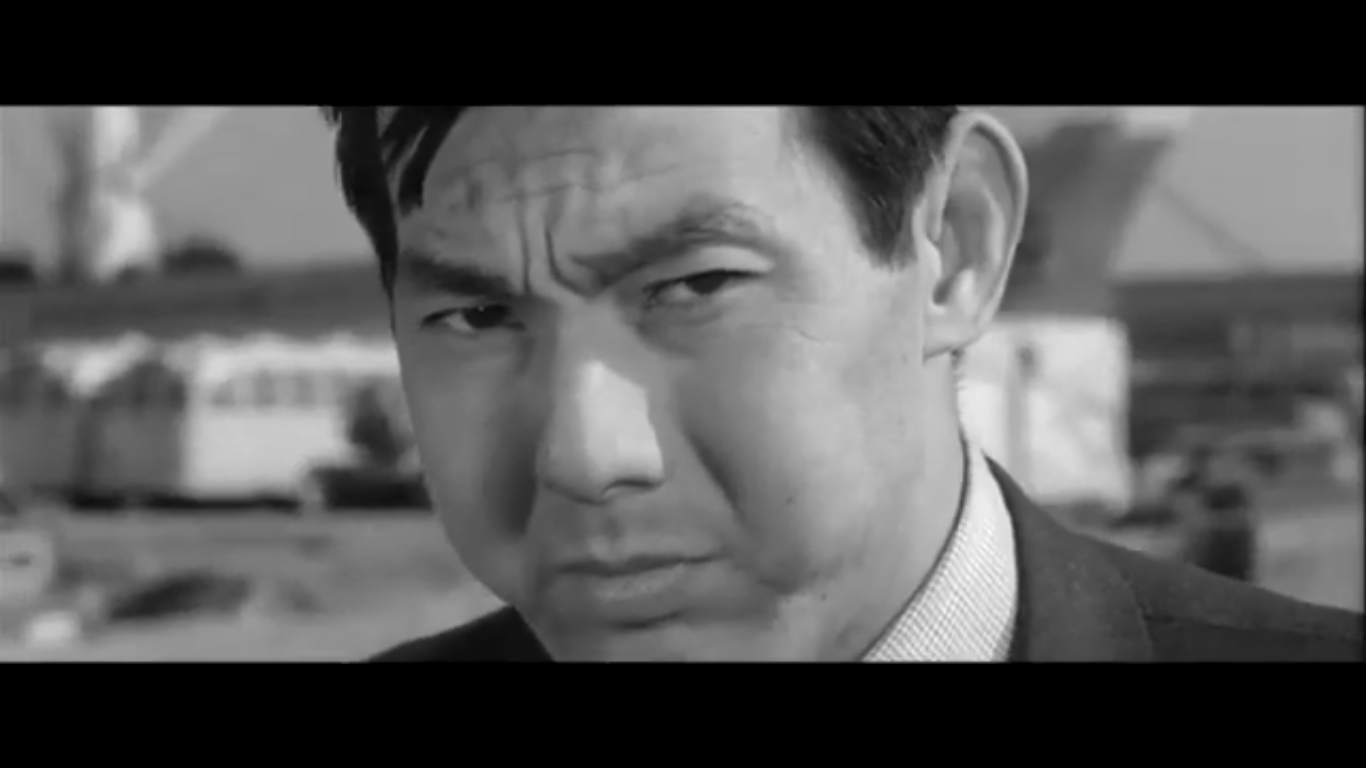
In this world of guns and souped-up automobiles, Shishido, the chipmunked-cheeked cult hero of cool, somehow feels right at home. It’s all part of his work as he studies his target, sets himself up with a hotel room, and then prepares to get in and get out with surgical precision behind his sniper rifle.

If there’s a methodology here it suggests how Colt is a film built out of a regimen and the setting of its protagonist in an architectural world. He is always completely cognizant of his location and how he functions in relation to the spaces around him. Thus, it becomes as much about mood and milieu as it is focused on action and violence.

Take for instance, how the story is constantly switching contexts. It’s in a car, about getting to a plane at the airport, holding up in a hotel, then fetching a barge out of the country, and when that fails, commandeering a big rig to retaliate against the enemy.

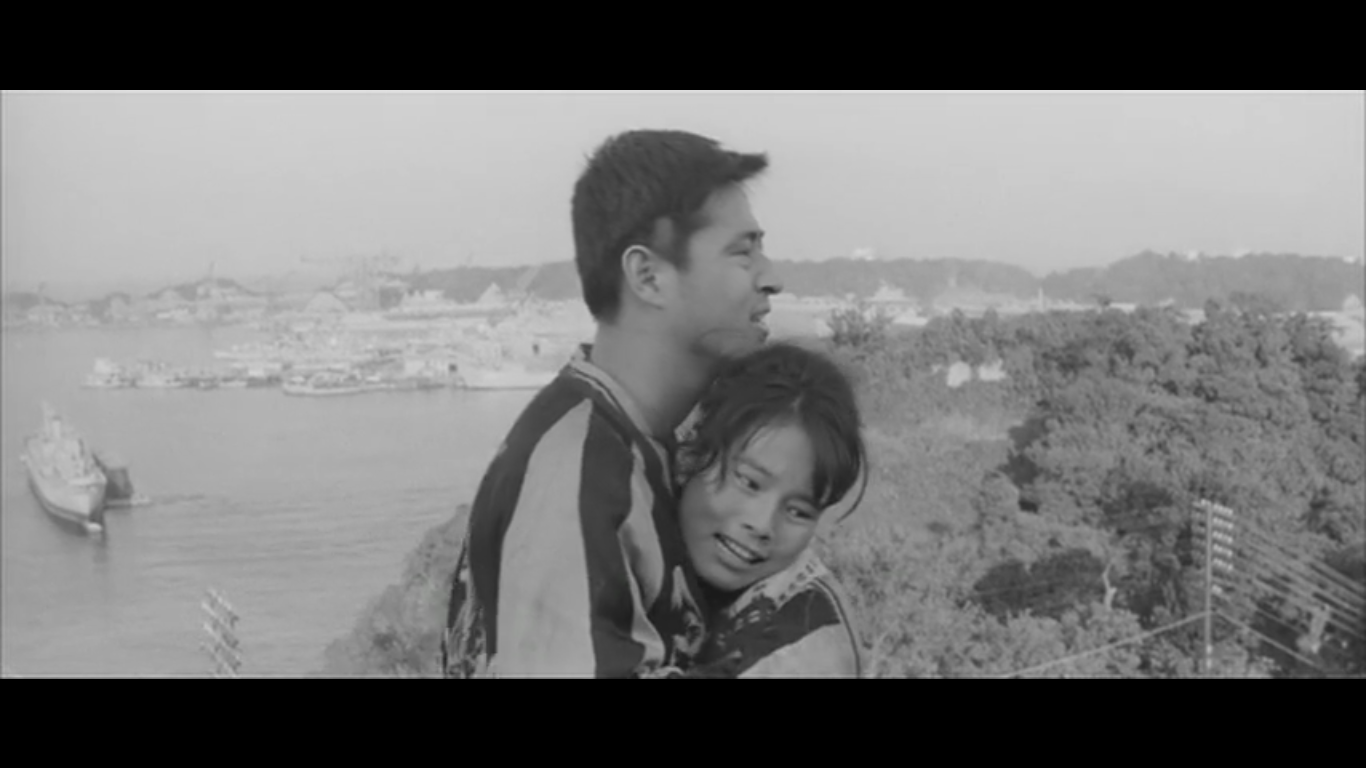
Of course, there must be a love interest. In the subplot, Mina, a young woman who works at the Nagisakan hotel, offers them asylum from their pursuers. What draws her to them? She says the god of death follows in her wake. Her former beau must have been like them, and as she spends her days serving the riffraff and sewer rats always loitering around, she looks to take back her life in some way. This is her form of rebellion in a world generally dominated by men.

However, even with the proliferation of gangster imagery and this kind of masculine bravado, the contours are the film consistently emulate the West with its own recurring motifs. There’s a musical aside of guitar not unlike Ricky Nelson or Dean Martin might knockback in Rio Bravo (Your star is a lonely little star…but now your face is a ghost town in the mist”).

It’s a way to bide the time before inevitable showdowns while also distilling this sense of male camaraderie in such a way as to make it palpable. It evokes the loyalty forged between two men, one mentor and his pupil, who have been through so much together. He shields his partner by giving himself up.

He knows where he must go. Where else would we end up but a deserted, windswept landfill where we half expect to see a tumbleweed roll by? Instantly the urban world and streets, even the maritime port of Yokohama, all but evaporate and fade into the periphery. The entire film culminates in one definitive moment where the sides are drawn up all but prepared to have it out in an instant. While the final showdown is fairly spare, it still manages to blow the lid off the picture with its gritty cross-pollination of the noir, western, and yakuza inspirations.

It’s hardly drawn out — finished in what feels like a few suspended moments of chaos — and yet it might be one of the most monumental standoffs you’ve ever seen. As Shishido digs a hole (what might as well be his grave), then sets a charge of dynamite, which might as well be a self-destruct mechanization, and then finally fights for his life, we are inundated by the full brunt of the impact.

There’s hardly any mistaking who came out victorious, but then again it might be just as difficult to claim a hero as a man totters away from the wreckage.  I’m not altogether familiar with the etymology of “borderless action” cinema as marketed by Nikkatsu, but here it feels like one meaning is about this unabashed melding of genre and inspirations.

Shishido channels hitman, gunslinger, and jaded antihero all rolled into one. He’s got a dash of Eastwood, maybe a bit of a Melville assassin, but also a distinctly Japanese sensibility. It creates this pleasing amalgamation that finds something rather gripping in its myriad of influences. There’s an indiscriminate and still somehow an artful freedom to it drawing me in all the more. 

4/5 Stars

Pigs and Battleships (1961)

If you want to make some sense of the rise of Shohei Imamura, it’s convenient enough to fit him into the context of two of Japan’s foremost filmmakers. During his time as a university student at the prestigious Waseda University, he saw a screening of Akira Kurosawa’s Rashomon, which not only became a catalyst for Japanese film worldwide but also for young men like Imamura.

However, upon arriving in the film industry he found himself working with another acclaimed master, Yasujiro Ozu. The only problem is that Imamura’s own sentiments played in stark contrast to his elder’s fairly sedate albeit meticulous style. Imamura wanted to get into the issues and the conflicts of the times. He feels like both a  nonconformist with a bit of a rebellion in his blood and someone with an acute appreciation for humanity.

Here he positions himself as a Japanese New Wave iconoclast having some fun at the expense of his countrymen and their most prominent post-war ally: the United States. In his own words, he was an anthropologist using his films to analyze humanity in all its foibles and messier predilections.

This might be as good a place as any to provide a jumping-off point for Pigs and Battleships. It plays as the antithesis of his elder Ozu by readily showing Japan at its most pathetic with a host of men who might well be a circus of dim-witted ignoramuses in a comedy of errors.

In the opening frames, you get an instant impression of the backstreets and alleyways frequented by American sailors, bums, and pretty girls with their come-hither looks. Vagrants of all sizes can be found scampering around town messing with sailors — swiping their hats — and generally causing mischief. Some of this is organized.

This is the unruly underbelly of Japan as represented by the seaport of Yokosuka and those with a certain perception of civilized Japanese society, would do well to avert their eyes. Imamura has no intent to present some idealized or cloying sense of his homeland

Kinta is one of the ilk of street trash gaining our attention for whatever reason. He’s a lowly gangster yet to earn his stripes.  Hiroyuki Nagato plays him in such a way that his movements come off as those of a callow, entirely overgrown child. While he tries to make a name for himself among the local gangsters, he has an on-and-off fling with a local girl named Haruko.

She’s not a glamour queen, but there’s something good and decent about the naivete found in her eyes. However innocent she might be, she still chides Kinta to get out of the racket and take up a steady factory job out of town.

Whether he meant to or not, you begin to see how the Japanese New Wave was carried on the shoulders of filmmakers such as Imamura. He accentuates a certain world through a particular methodology.

Where hoodlums feel more like snickering hyenas in baggy clothing ready to pound the populous for a good laugh. These aren’t criminals given any amount of deference or import. It feels like we should scorn them even in their hijinks trying to make some money off a drove of pigs.

However, the movie is not without a shock factor. You know when a man’s head is dunked in a tank of gasoline and a thug waves a lighter in front of him ominously, he’s making the threat count. It’s easy to see the director pushing back against any post-war American tokenism. Because Kinta is found right in the crosshairs.

Where being American is king and if you can’t be white Anglo-Saxon — victors of WWII and wooer of Japanese women — at least with the gangs you get to do something cool with your life. You belong to something bigger than yourself. Anything honest and menial is frowned upon. There’s a self-contained scene when a little boy reads out loud how refined and highly cultivated Japan has been able to fluidly integrate aspects of other nations, the irony is not lost.

You only must watch what happens before and after to have a good laugh. The hiccups keep on coming. The mobsters have their hands full disposing of a body, and it feels like a bout derivative from The Trouble With Harry than any hardened crime drama. Try not to giggle with morbid glee when they find a false tooth inside the pig they’re chowing down on!

Even, the yakuza boss, that symbol of towering and lethal villainy is a sorry figure. He’s dying of cancer — looking pitiful when his little brother comes to visit him — the gang gathered around his bedside. He thinks he only has days to live and there are so many affairs to get in order. Namely, all the debts he still needs to collect!

We also meet the man known only as Sakiyama at a bar talking with a Chinese fellow. They’re involved in this pork deal between the Americans and the locals. Although the “Japanese-American” man speaks English, it’s easy enough to tell in a moment it’s not his native tongue. This actor is Japanese and so the illusion is broken, but given the carnivalesque bits of business we’ve already been privy to, it’s not completely out of place.

Because things just keep on falling apart in this ever-changing state of fateful narrative entropy. For most of the film, Imamura remains an observer, but in one specifically pointed setup, he inserts himself into the action. It happens in the aftermath of a row between Kinta and Haruko. They’re probably not getting back together, and she vows to get drunk and party with American seamen as an act of spite.

Instead, she ends up in an empty hotel room with three brawny men prepared to overpower her in their stupor. The overhead shot of Haruka and the three boisterous sailors might be the pinnacle of the film’s hysteria in this intersection of worlds and toxic schemes of life. It breaks the moment down to its most pointed elements as we spin toward oblivion and a horrible outcome that cannot be undone.

Going with its prevailing tone, Pigs and Battleships owns a final act built on total futility. However, there’s something about seeing pigs roaming in the streets that made this feel like Pamplona for porkers. It’s a hilarious image even as the film comes to terms with its own human tragedies. Ozu would never make this movie; not even Kurosawa with his more dynamic proclivities. No, this is something new.

Most important is the implicit message found in the title and much of the comedy. In the post-war landscape, Japan was very much subjugated to America, and they too became conduits of Capitalism.  However, in case it’s not already apparent, our way of life and systems come with their share of flaws. Pigs and Battleships begins to suss out the complexities of this relationship. We’d do well to consider it.

3.5/5 Stars

Tiger Bay (1959)

Horst Bucholtz has always held a soft spot in my heart. There are several very simple reasons. My father’s favorite movie might be The Magnificent Seven, and I grew up watching this young raffish upstart join forces with Yul Brynner and Steve McQueen against the forces that be. Then, years later, there he was again as an old man in La Vita è Bella. Somehow it served the movie and my own history with him well, to see him this way. A mere 5 years later he would be gone.

Of course, Tiger Bay, if you’ve never been acquainted with it before, is the picture that really put him on the map, at least for English-speaking audiences. And it’s easy to see why. He was advertised once upon a time as Germany’s James Dean, and if the comparison makes a modicum of sense at all it has to do with how masculinity can be at one time violent and then sensitive. There would be no other way for him to hold the movie together with Hayley Mills so well. More on that in a moment.

I must take a moment to acknowledge my growing esteem for J. Lee Thompson in recent days because although I am a fan of Cape Fear and not so big an admirer of The Guns of Navarone, it was earlier in his career where he showed his capability with material like Yield to the Night and here in Tiger Bay. The world is easy to place, especially in England with a working-class port town acting as a window to the world. One of the men fresh off one of these ships is the youthful sailor Bronislav Korchinsky, who looks to be reunited with his lover.

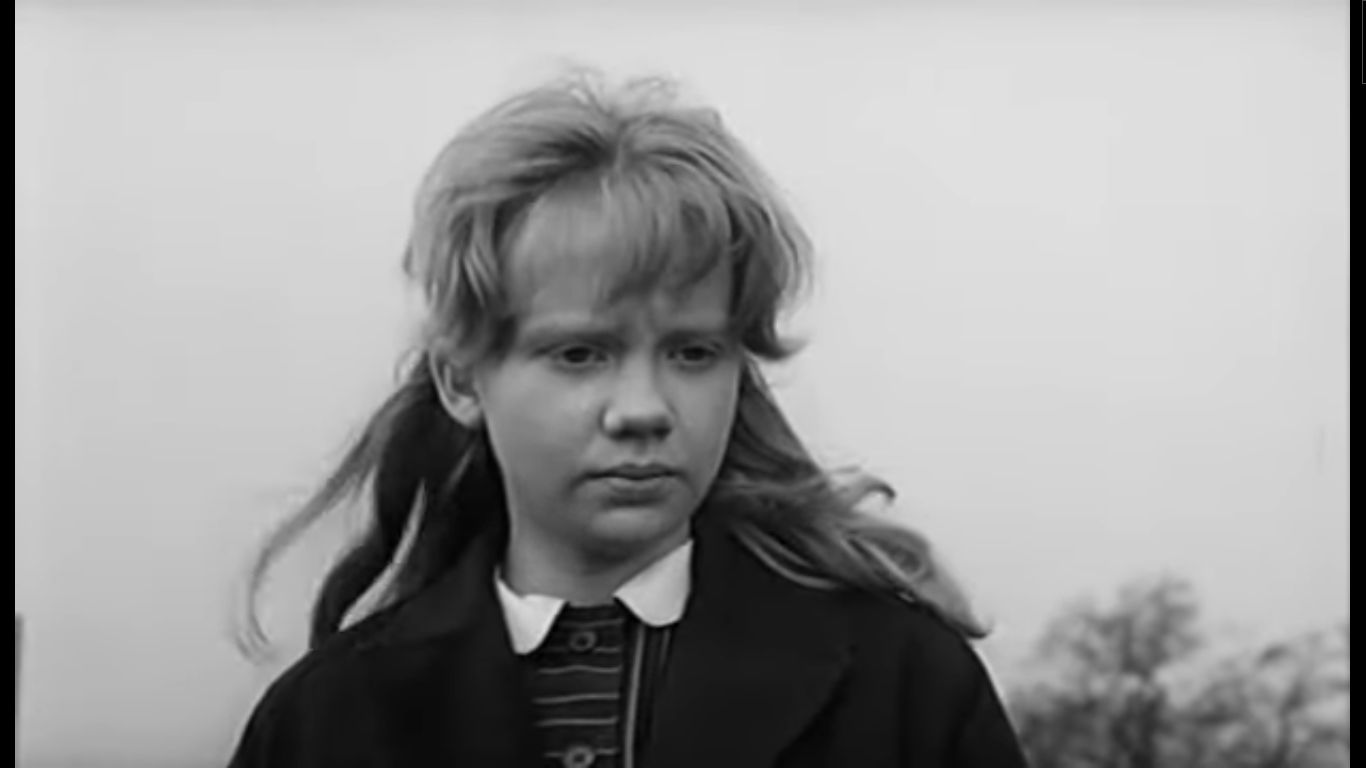
Hayley Mills makes her screen debut moments later as a feisty tomboyish pipsqueak ready to roughhouse with all the other street rats. She gleams with a delightful impudence, those large searching eyes of her projecting curiosity and at times rebellion. Her aunt is always scolding her and she always scampers around bumping into neighbors on the stairs or eavesdropping on conversations she has no business in.

One of them is between Korchinsky and his girlfriend Anya. But the scene before us is hardly bliss. It comes seething with angst and vindictive daggers you feel like would hardly have been in vogue across the pond at the same time — at least in mainstream Hollywood. As the woman scoffs at the money he sent home and lets him have it in their native tongue, it becomes apparent this kind of gritty vitriol might only seep into an American noir picture.

In fact, if there is any immediate reference point, it’s possible to find Tiger Bay reminiscent of The Window. However, in this case, Gillie Evans (Mills) is not so much a “kid who’s cried wolf” as a serial annoyance no rational-minded adult looks to take seriously. Still, she’s an eyewitness to what looks to be a shooting. A woman’s dead and the man is on the lam. What’s more, in the moment of initial tumult they crossed paths as he streaked away, and she nicked the evidence to bring back to her aunt’s apartment. For her, this entire scene feels like a novel curiosity, but she thinks little of the consequences in the moment.

Instead, she dodges the inspector’s gentle interrogations (John Mills) before rushing off to drop into church service late, taking up her spot in the choir while still packing the purloined pistol.

It’s fitting that in one moment they seem to be singing a hymn out of Psalm 23 and suddenly the spiritual journey through the valley of the shadow of death becomes all too real. There stands a familiar face in the crowded pews and suddenly her self-assured nonchalance drops off in the middle of her solo. There’s the man!

It feels like a showdown set up for Hitchcockian dread as the church clears out and she’s left to fend for her own against the crazed young man. This can only end poorly. And yet Tiger Bay works because the villain in this equation is not a horrible human being. There are moments he could press his advantage, whether it’s pushing her to her death or doing away with her with the gun, but this is not his character.

In fact, in its best and brightest moments, Buckholtz and young Mills become the welcomed nucleus of the movie, at first as wary adversaries and then companions and finally friends capable of playacting in the morning light. For a few moments, they are able to shed all the worries of the world and enjoy being in one another’s company.

In the latter half, it takes on a different tilt altogether as a little girl, now beholden to her new friend, looks to buy him time as he looks to sneak off on a ship out to sea. We have ticking clocks and stakes, all those storytelling tricks of the trade, but the core of the entire story is the relational capital that we build. It becomes a new, far more compelling kind of movie. Because now a child must live in the ambiguity of the moment and how are they to decipher the difference between right and wrong and what those terms even mean?

The ending feels a bit prolonged and drawn out for its own good though it’s kept afloat by this underlying relational tension. A man’s life hangs in the balance as Mills drags his real-life daughter out to sea to identify the purported killer before he can get away for good.

John Mills feels generally flat and uninteresting if a mostly benevolent authority representing a prevailing moralism. Otherwise, this picture has much to offer and a colorful perspective on the world circa 1959.

Suddenly, British society, cinematography notwithstanding, doesn’t look quite so monochrome. Because of course, it wasn’t. It’s a world of Polish immigrants, vibrant Calypso music on the street corners, and foreign sailors who are not totally subservient to the British powers. It’s a reminder that ports really can be windows to the world even as they can also bring disparate people together.

3.5/5 Stars

Whistle Down The Wind (1961)

Whistle Down The Wind feels like it employs the “kitchen sink” aesthetic in step with British film of the day, bleak and tough around the corners with working-class folks coping with all kinds of toilsome drama. However, if the mantle of that zeitgeist was normally carried by the likes of Albert Finney and Richard Harris, then effectively we have the “angry young men” of the subgenre replaced by children.

It gives the picture a slightly different if altogether refreshing perspective on these same issues. At its center is young Kathy Bostock (Hayley Mills); she lives on a farm with her father (Bernard Lee), an aunt, and the aunt’s two children.

They are three rambunctious little farmhands but not altogether wicked, mind you. They come home with three discarded kittens in tow, looking to sneak past the prying eyes of their betters, so they might raise them in the barn. As such, it provides a safe haven and becomes an even more sacred space given what happens next.

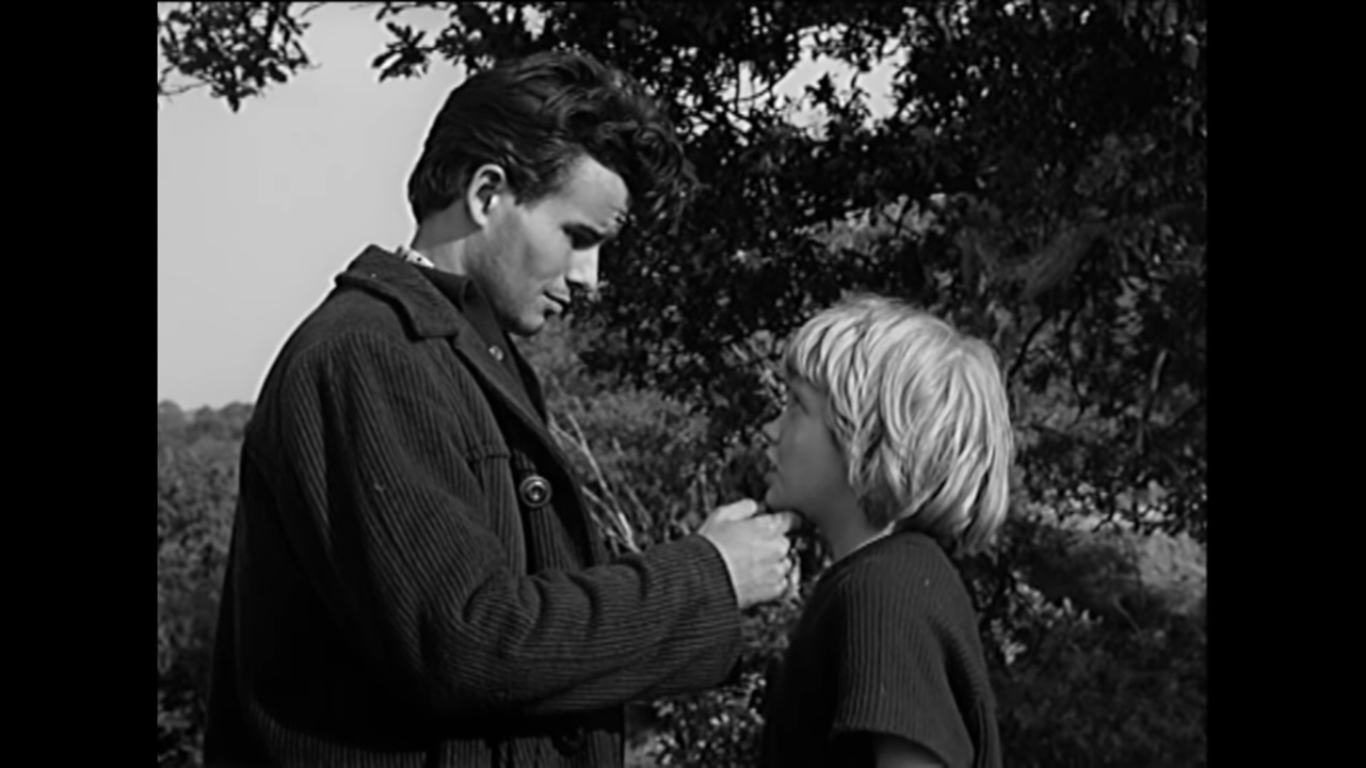
Young Kathy is alone busying herself with their charges, and then she sees a stranger (Alan Bates), rather haggard and disoriented. Both man and child are shocked and as she inquires who he is, he utters the words, “Jesus Christ.”

Now many an adult could tell you lots of people exclaiming the Lord’s name are using it in vain, but this never crosses Kathy’s mind. Whatever you might think of her, whether foolish or otherwise, she takes the name very seriously.

This naive misunderstanding is what the entire movie turns on, and it’s a lovely bit of irony. It takes all our cynical assumptions about these people and their world and completely turns them on their heads. Suddenly, we have this glorious portrait of child-like faith set before us, and this only works because Bryan Forbes’ picture allows children to hold such a central place in the story from the outset.

They are funny and mischievous and yet so very sincere in spirit. A cat can be named Spider, and it’s completely honest to gripe and groan about everything little thing. There are these sublime closeups sprinkled through that, even momentarily, allow us to be in their place and empathize. I think of one where the little boy Charlie (Alan Barnes), always at odds with the girls nevertheless, peers over at the man in the hay, and his face lights up. Curiosity getting the better of him, he asks if it’s really Him? He too wants to believe this is the Christ.

This comparison might be tenuous, but rather like the internal logic of It’s a Wonderful Life and The Bishop’s Wife, there’s something pleasant and powerful about the spiritual reaching into our human environments. We want to believe in their benevolence — that they are able to redeem our families and hardships, with a bit of divine intervention.

There’s still a sense that the spiritual world enters into our lives of its own accord. In fact, there is no true distinction between one and the other, whether they be kindly angels or guests in the haystack. They have the capacity to invade the everyday and breathe new life into it while still feeling almost mundane.

If you’re like me, sometimes religious allegory can feel too on point and obvious. It’s not exactly subtle here, but there’s something about the context that still makes it delightful. After receiving further spiritual insight from their Sunday school teacher, we have the procession of three little kings returning into the presence of their visitor, complete with a musical cue to send them on their way.

The hypothetical question of what to do if Jesus came back takes on very concrete meaning for them because of course, he’s lying right there in their barn waiting for them. And so, with all sincerity, they bring their gifts to place before him. They want him to feel welcome. They want to find favor with him.

It’s a striking allegory — not quite to the degree of Flannery O’Connor’s gothic gallows as it were, but there’s something moving in this picture. Rich in content and meaning, but never in a way that makes one feel put upon or totally scandalized. We watch their visitor become the subject of ensuing pilgrimages of all the local children.

As we’re privy to both worlds, we know this man is actually wanted by the authorities. He’s no Christ; he’s not even a saint, and we must watch and wait for their expectations to be utterly crushed. Because there will always be persecution and unbelief in some form acting in constant opposition. Although they conveniently keep their secret from the grown-ups, it cannot last forever.

A local bully tries to intimidate them all back into the status quo. One small boy on the playground all but recants a visitation with “Jesus,” which in his mind is tantamount to Peter’s denial. There’s personified devastation on his youthful face as he gets a reprieve from earthly torment, but at what cost? It sounds almost silly to speak of these things in such weighty terms, but I’m only treating them with the same gravity as these little children.

If this is the case, we must always return to our protagonist. Hayley Mills shows off all her most extraordinary traits as a young performer, buoyant and yet defiant and determined in the face of naysayers. There’s an assurance she holds onto that guides much of the movie, and it must lead to the inevitable.

The final juxtaposition of Charlie’s boisterous birthday party full of hearty squeals and blind man’s bluff plays against the more ascetic sense of the outdoors as the wanted man tries to escape the local dragnet. He gets cornered in the barn with the police flying to the scene and the whole town hot on their heels. It looks like the children’s faith is bound to be dashed right before their eyes.

What a difference a point of view makes and the intention behind it. Instead of churning up the local rumor mill with clamoring gawkers and gossipers, it feels more like one final act of belief with all the masses set to pay their respects and catch a glimpse of the man. Certainly, the masses are mostly children and that says something in itself.

Because you can take its parable in two ways: either it’s a pragmatic lesson that children must learn how the real world works — with sin, moral ambiguity, and heartbreak. Still, maybe it’s actually a reflection of the Christ’s sacrifice, coming into the world for the humble and the downtrodden, those who would willingly put their trust in him. If we consider these children, their trust is such that they believe he will come back again someday. It’s similarly arresting.

The extraordinary nature of the ending comes with the revelation that this sense of reverence is never broken, keeping with the film’s guiding light from start to finish. This is far from the norm, and it’s rather refreshing that hope is never completely quelled. It’s up to the viewer to decide what to do with this.

4/5 Stars

Top Gun: Maverick (2022)

Although it might seem like I’ve sworn off all sequels, I realize there are a select few that are able to garner my affections. A movie like Top Gun: Maverick cares about its lineage, grappling with the past, and building an even more exhilarating future. In other words, it doesn’t feel like a myopic cash grab begetting movies that are soulless with their brand of easily merchandised fan service. Its primary intention seems to be galvanizing its legacy.

The care and concern are felt all throughout this movie, and it’s filtered from Tom Cruise all the way down to the last frame. He really is a marvel of cinema. A friend likened him to the Tom Brady of action movies, and while this is true in a sense, he seems to stretch the comparison to its limits. In an age where just about everyone seems to proclaim that the movie star as a box office entity is dead, he still manages to live on like a running, jumping, flying, motorcycle-riding freak of nature.

In truth, Maverick feels like the archetype for all his most iconic heroes, and if he came of age in a movie like Risky Business, almost 40 years ago, Maverick propelled him into another stratosphere of stardom.

But it’s Cruise’s own history as much as the character’s that bleed together in giving him such a rich and contoured backstory. Because how do you begin to separate the two? And Cruise’s gift to us is not only donning those aviators and jumping back into the cockpit; it’s far more ambitious than that.

I almost feel like I’m writing the same review I did for Mission Impossible: Fallout, but he’s always aiding our suspension of disbelief by submitting himself to all sorts of rigors in order to give us the most authentic experience. In Top Gun: Maverick he all but outdoes himself by filming in actual fighter jets and subjecting all his costars to a lot of Gs.  It’s just one example of something that cannot be fabricated for the screen. He’s giving us a palpable experience augmenting the cinematic reality and totally immersing us in the action.

But beyond its technical endeavors, it also feels like a well-balanced movie. Sure, we expect action, and Top Gun: Maverick provides that in ways its predecessor never could. We have callbacks to the same San Diego milieu, motorcycles, fast planes, and obligatory beach scenes. it’s all present and accounted for. However, its emotional poignancy feels equally important if not more so.

We’re provided some opening backstory to remind us of the man’s reputation lest we forget. He’s a rash hothead, who, despite all his exploits, has never broached the rank of Captain, but he also cares deeply about others. It’s the throughline of the entire movie.

When he is called upon by his old buddy Iceman (Val Kilmer), there is an obvious objective laid out before him. He must train up the best up-and-coming pilots in preparing for a suicide mission to destroy a holding of uranium in 3 weeks’ time. The parameters are set, and Maverick’s direct superior (Jon Hamm) makes it very clear that he was hardly the first choice for the job. Let’s just say his reputation proceeds him, and again, that is a very complicated thing to contend with.

While the man calling the shots only has eyes for this tangible objective, it’s Maverick who sees the end game.  He wants to bring these fighters home. And so when they fail in their training, it’s not merely a failed assignment, it represents the death of copilots and friends. Future uncomfortable conversations with loved ones. This is his bottom line. And why?, because Maverick knows precisely what it’s like to lose someone. As we all probably know by now, he lost his best friend.

While the original Top Gun felt mostly like a cultural curio — I never grew up with the original, and I appreciated the movie most for its San Diego locales — this movie has a newfound resonance.

Jennifer Connelly shows up as Penny Benjamin, a once-mentioned flame of Maverick. It feels like the token part of a love interest, but between its ties to the original movie and Connelly’s own confident candor, it creates an added dimension. Although Connelly came of age a bit later than Cruise (Career Opportunities springs to mind), she still seems to orbit in the same spheres, and she falls seamlessly into the part.

What is time if not a way to tap into memories and an audience’s goodwill toward characters? They have a history built into the earlier film, and it’s a pleasure to see it explored.

The same might be said of the reintroduction of Iceman Kazansky. Val Kilmer, who has famously struggled with throat cancer and lost most of his vocal abilities, is venerated with a hero’s welcome throughout the movie. By now, he’s become an admiral while remaining a stalwart ally of Maverick.

There’s something meaningful about tying Kilmer’s real life into his part because his backstory begins to become all the more real in our eyes. He and Cruise have a shared history together, both real and imagined, and when he entreats his good buddy to “let it go,” the simple words he types out feel like lasting pearls of wisdom.

I’ve all but failed to mention it thus far, but Top Gun and Top Gun: Maverick could not exist without the relationship of Maverick and Goose (Anthony Edwards) or Maverick and Rooster (Miles Teller). They are inextricably linked to the core dilemmas of the franchise.

The movie provides several pivotal choices for Maverick. It’s these decisions that the whole emotional axis of the movie turns on. Confiding in Penny, he says he either has a choice to send Goose’s son on the suicide mission or not allow him to go. Rooster would never speak to him again so either way, he loses.

But what makes this movie something more is the genuine outpouring of feeling. The final act has something special because it ties the movie together through its most profound relationship. If you’re like me, you realize Top Gun would not be what it is without the death of Goose, and it is this wound at the heart of two main characters: his best friend and his son.

Now they must reckon with the aftermath. What a spectacular thing it is to see. Full of sparks and bitterness and anger. Then fear, tough decisions, and the kind of sacrificial love that speaks to us in the deepest ways possible. It’s quality storytelling taking this central relationship echoed down through a generation and making it all the more impactful.

I was thinking throughout Top Gun: Maverick, we are never given an exact enemy. Pilots on the other side are faceless. There is no consequence to them other than how they affect the pilots we come to know and love. You could say this is a commentary on a world that’s more ambiguous than even the hard-bitten Cold War days of the ’80s. However, it’s also a reminder that this is a story ultimately about these pilots. They have a mission, yes, but the movie does its best work by tying these outcomes back to its characters on their most fundamental level.

Thus, any kind of resolution yields tenfold because it means far more than a target getting hit or some other seemingly arbitrary objective. If you’ve seen the original Star Wars (or Force Awakens), it’s nothing new.

But Tom Cruise — we like him. We want to see Maverick be Maverick against all odds. And he’s that and then some. Miles Teller has been under the spotlight for more than a decade now; he’s still got the same baby face, and I have to say I’m fond of him. Even a hotshot like Glen Powell, whose entire purpose is to make a nuisance of himself, proves his inestimable worth in the end.

I couldn’t help thinking when they touch back down on that aircraft carrier — having gone through the gauntlet — there’s a euphoria there that’s almost hyperbolic. It’s built out of close-ups, swirling music, and characters embracing who we grow to care about. But rather than get pulled out of the moment, we imbibe their joy and get stirred up because we want to be a part of their success and live vicariously through it. You could feel the energy surging in the audience.

And when it was all said and done, Top Gun: Maverick made me oddly patriotic and proud of my country. In recent years, we have learned how unchecked nationalism can become perverted and made into a far cry from what it was meant to be. Then, on the other extreme, patriotism is often scoffed at in the face of our societal sins.

But this Top Gun never feels like a trumped-up showcase of American exceptionalism. It’s not that superficial. All you have to see are those photos of Maverick and Goose or Maverick and Rooster. That’s what it should mean to be American. It can be fun, yes, but there’s also an import and a magnitude to our humanity. Caring for others well, risking our well-being for the sake of loved ones, and rising out of the ashes with mutual trust only to make us stronger.

I’d like to believe these tenets represent us at our finest and this film at its best. So please go and enjoy Top Gun: Maverick with your father, with your family, or with your friends. And whether you recognize it or not, perhaps it will move you in unexpected ways even as it offers up one of the best full-blooded action movies in recent memory.

4/5 Stars

Cesar et Rosalie (1972)

It occurs to me that the title Cesar et Rosalie is a rather peculiar choice for this movie. However, it’s also very pointed. If Jules et Jim was about two friends caught in a ceaselessly complicated love affair with one woman (Jeanne Moreau), then here is a story shifting the focus just slightly. This time it is Romy Schneider caught between two suitors.

It opens with two men who both were coupled with the unseen woman named Rosalie. Formerly she was with a handsome comic book artist, but before they could ever get around to marriage (what would have been her second), she ended up with a middle-aged scrap metal man (Yves Montand). He’s quite successful in his trade while maintaining a penchant for gambling.

Whether it’s solely because they are represented by creative types, it feels like there’s a kind of vacuity about the younger generation. Yves Montand, now there is a man with something interesting about him. After doing some digging, I found out he was actually Italian by birth though thanks to his music and acting, he became synonymous with French cinema. Films like Wages of Fear and Le Cercle Rouge work in a pinch. He’s one of France’s indelible faces, and here he is another character with a lumbering larger-than-life posture.

Both a bit of an overgrown baby and a gregarious teddy bear. He can be found smoking his cigars and establishing himself as the life of the party. He loves to vocalize, and in contrast to his rivals, there’s something refreshing about his blustering style. You know what you’re getting.

In comparison, I’m less inclined to be infatuated with any semblance of the bourgeoise milieu as embodied by David (Sami Frey). This might be a poor descriptor because he’s only a comic book artist, albeit a very successful one. But there’s a detached, casual air about him that feels far more refined. It lacks all of the volatile personality exhibited by Cesar. If I speak for myself, Cesar seems like one of the common men.

However, right about now it’s worthwhile to acknowledge a handful of his shortcomings. He’s quite petty and jealous for the affection of Rosalie. In one instance, his childish antics and brazen show of bravado leave them idling in the underbrush at the side of the road. In the aftermath of a convivial wedding party, a game of chicken ensues between him and David becoming a portent for future drama.

Although he and Rosalie have been together for some time, and they have a contentment between them, there is still this lingering sense of individuality. Rosalie is a mother. She has been married before and maintains her own independence. She remains with Cesar mostly because she wants to be, at least for now. That could easily change, and, eventually, it does. Her whims make her alight once more for David because his quiet charms have not atrophied with time. She feels the electricity between them still.

At the midpoint, the picture hits the skids. Cesar’s ugly underbelly comes alive as his transgressions and jealousy take over. He acts as if he owns Rosalie and in one harrowing scene practically throws her out the front door. He’s a wounded brute prone to violence. There’s no way to condone his behavior even as it reflects the toxic social mores of the era (or many eras).

But of course, he can never forget her. He feels lost without her and so he resolves to find her with David. He tracks them out to their beach getaway but instead of coming to have it out once and for all, Cesar returns sheepishly with his tails between his legs. He’s paid for the damages he inflicted, and Rosalie looks over his sorry figure and can hardly contain her amusement.

It’s moments such as these where it becomes apparent how the movie is mostly able to coast on the goodwill of its stars and their various romantic dalliances. Initially, it feels like Romy Schneider spends a great deal of time in the kitchen grabbing drinks and making coffee for her man. However, she’s also a keen observer of male anthropology.

Like Moreau before her, she really does play the deciding part in this film. As much as it seems framed by the male perspective, though our title subjects have shifted slightly, Rosalie does hold a great deal of sway in the story. It does feel like these men need her more than she needs them or, at the very least, she is not willing to settle into this kind of relaxed equilibrium where they exist in a menage a trois without the intimacy.

Is it wrong to consider this the most French of romantic setups? It becomes plainly apparent that this is never just a film about Cesar and Rosalie. There must be parentheses or ampersand including David tacked on the end (or any other love interest for that matter). The film is far more crowded and complicated than a mere romance actuated by two solitary human beings with Sautet crowding the canvas and relational networks of the film with so many ancillary swatches of life.

Although it feels like it’s not about very much, Sautet is able to hone in on this core relationship and tease out both the comedic eccentricities found therein while still leaving us with this kind of wistful resolution. It’s not a tragedy in the same way Truffaut managed when he detonated Jules et Jim, but it leaves us with that sense of regret that love often conjures up in the human heart.

All these characters could have done things differently to patch things up, to stay together, and earn the Hollywoodesque ending. However, what leaves an impression is this kind of pensive anticlimax. It’s a lighter touch than The Things of Life or Max and The Junkman, even as it might owe something to Lubitsch.

3.5/5 Stars

Les Choses de la Vie (1970)

I’m not sure if director Claude Sautet was just never esteemed enough by the cineastes of his day to receive his due, but the string of pictures he made with the likes of Michel Piccoli and Romy Schneider feel worthy of further, more stringent consideration.

What becomes evident is this kind of prevailing melancholy about his films with fated lovers or destined tragedies all but ready to be searched out. Les Choses de la Vie opens with a scenario that would be quick to tap into the minds of any filmgoer wary of the Nouvelle Vague’s most prominent iconoclast. By that, I mean the living legend, Jean-Luc Godard.

Here a rolling tire sets the stage for a Weekend-like pileup. This one was caused by a collision: a man blazing down the country road doing everything in his power to miss a stalling truck. While this event might provide what feels like an excuse for a dramatic movie, the core of The Things of Life is far more intimate. Some might say it’s stereotypically French: a movie concerned with amour. So be it.

We get a sense of Pierre’s life, past and present, without everything being conveniently spelled out for us. It’s made plain by how people look at one another — how they fill up the space with a shared familiarity. He is now with Helene Haltig (Romy Schneider). You can see the affection with which he gazes at her as she taps away at her typewriter after getting out of bed.

All the allure of Schneider is right there on her face, tucked behind her glasses, as if an instant reminder of why she’s remained such a lasting icon in cinema the world over. A premature end often has a way of canonizing people for posterity, but we cannot sell her short. This has little relevance here. Her vibrancy is undeniable on its own merit.

Pierre loves Helene even as he maintains an amicable, if aloof, relationship with Catherine, his former wife. Over a lifetime, they have shared and shared alike in business, with their kids, and through a vacation getaway on Re Island. There’s still a sense that they are fond of one another. Perhaps time has moved on or maybe they regret their choices. For now, it is what it is.

If Pierre is the protagonist, one would be remiss not to mention the palpable distances between father and sons, be it real or imagined. He grapples with his own father, a spirited fellow who hardly seems like the paternal type, and then there’s his own boy who’s growing up fast into a man with his own ambitions. As much as he wants to rekindle their relationship, it does feel like he hardly knows him now.

It’s this very same inkling, a longing for connection that causes him to agree to a trip to the family isle. Of course, it conflicts with his business arrangements in Tunis and the future plans he already worked out with Helene. Their romantic dinner together becomes deflated having lost all the life that was there before. The wine is spilled.

What’s next can only be a wordless car ride. He rolls down the window to toss out his latest cigarette and to keep from suffocating in the silence. Then, he clicks on the radio to fill the void between them. That too gets thwarted. They look to be doomed.

If it’s not evident already, time is allowed a level of fluidity rather reminiscent of Stanley Donen’s Two For The Road even as we motor toward the inevitable — a car wreck and what feels like romantic dissolution. Like its predecessor, the musical accents accentuate the mood. This time it’s not Henry Mancini but Philippe Sarde’s languishing score that is always available, softly plinking away in the background

In fact, it has its own wedding scene — Piccoli observes the giddy guests as they scramble toward a white banquet table set for a feast. He’s a man who’s been all but consigned to his car, smoking cigarettes, and this one exuberant display, far from earning his contempt, provides a seedling of hope…

Then it happens. I need not systematically go through all the gory details. However, in the end, there Pierre is lying on the ground thrown from his decimated automobile at the side of the road in the grass somewhere. It’s an almost out-of-body experience as the world swirls by him, and he exists in his thoughts and his memories.

The motion of the world around him carries on, whether it’s onlookers coming to see the wreckage or the body, then an ambulance comes to rush him to the hospital as the rain starts pouring down. Catherine gets the news and Helene comes rushing to his side too…

The Things of Life is constructed in such an inevitable way, but somehow it’s still entrancing, this sense of moroseness and the elasticity of time in the service of one man’s romantic memories. It’s built around melodrama, yes, but with a very specific bent, totally mechanized, and stylized in such a way as to supply the desired effect. And rather than the Sirkian school of high camp, it seems to hewn closer to the path of John Stahl.

In other words, Sautet, in some ways sucks much of the typical theatrics out of the storyline, or at least they do not seem to be his primary concern. What we are left with is this pervasive sense of lasting melancholy, and it’s a powerful emotive force that would hold over to his next picture together with the same primary players: Max and The Junkmen.

4/5 Stars

The Paleface (1948)

As a kid, I was fond of Frank Tashlin’s Son of Paleface for a myriad of reasons. Thanks to that esteemed institution known as the local library I was well-versed in the Hope & Crosby Road Pictures by an early age and Roy Rogers was probably second-only to Gene Autry as king of the Singing Cowboys. Jane Russell wasn’t too bad herself.

More recently, coming to understand Tashlin himself — his background in animated comedy and his partnership with Jerry Lewis — gives greater context to his place as a creative visionary. Because it’s true he blends the gray area between live-action and the cartoon logic of animation better than almost anyone else.

In an interview with Peter Bogdanovich, Tashlin had these unsavory words for The Paleface and its director:

“After seeing the preview of it, I could’ve shot Norman Z. McLeod. I’d written it as a satire on The Virginian (1929), and it was completely botched. I could’ve killed that guy. And I realized then that I must direct my own stuff.”

While it’s true the original movie doesn’t have the same outrageous commitment to comic gags that its successor did, if Tashlin was not so close to the material, he might be able to appreciate some of its elements.

However, before we go there, it seems necessary to introduce a caveat. The Paleface is a film out of a different era. If you’re an immediate impression of the movie is one of distaste, there aren’t any surprises here. Particularly jolting is when they are taken in by the local Natives to die some gruesome death only to be saved by Hope’s masquerading as a medicine man armed with the black magic of dynamite.

But if you have a sense of nostalgia, can look past the blind spots, or have a reservoir of goodwill toward Bob Hope, it delivers alongside the best of his comedies by providing a genre and allowing him to bend it to his will, courtesy of his usual feckless, smart-aleck shtick.

It works by first introducing all the western tropes Tashlin was mentioning. Russell, the feisty female outlaw, Calamity Jane, is enlisted by the government to investigate clandestine operations supplying the Indians with firearms. She joins a wagon train after outsmarting some adversaries in the ladies’ showers. It allows her to do some recon and she uses a first-class boob as her cover.

Bob Hope (as Painless Potter) is showcased with a row of dentistry gags including his canister of laughing gas, which becomes a recurrent plot point throughout the picture. When he’s not getting them lost in the woods, he knocks back “Buttons and Bows,” a tune that has remained a lasting relic of the movie, thanks to renditions by the likes of Dinah Shore, and its reintroduction in the sequel.

Every kiss he shares with his costar is like a rap over the head with the butt of a pistol. But along with being the aggressor, Russell also does his shooting for him on multiple occasions. In fact, when he is goaded into a shoot-out over the hand of a woman in a saloon, the outcomes prove surprisingly close to The Man Who Shot Liberty Valance (Paleface was released over a decade earlier). Could it be John Ford was influenced by Paleface? I’ll let you be the judge.

As for Norman Z. Macleod, I’m inclined to give him my good graces given his pedigree with Marx Brothers and screwball-like comedies of all sorts. While he might not commit to gravity-defying visual gags as Tashlin would have — we understand how he would be able to expand and punctuate them — Macleod always seems intent on zipping the pace along and keeping the tone zany.

This suits Hope even as Russell and the other characters allow the story to still stay true to many of the western tropes of cowboys, Indians, and western towns needing to be tamed. This melding of the usual beats with the wacky subversions instigated by Hope is the crux of the movie and blended with its color photography and the antagonistic chemistry of its stars, it’s more than enough to garner a watch. My own biased nostalgia still makes me partial to The Son of Paleface.

3.5/5 Stars

Scaramouche (1952)

Like many of the archetypal tales of literature or film, Scaramouche is a story of the aristocrats warring against the common man or closer still the common man throwing off the shackles placed upon him by his oppressor.

The dynamic is spelled out in an early scene as that ill-fated debutante (Nina Foch) enlists the help from behind parlor room doors of her dear cousin, the Marquis de Maynes (Mel Ferrer), to find the infernal insubordinate “Marcus Brutus.” The vagrant had the unthinkable gall to litter her very own palace with his pamphlets.

It’s easy to get distracted by the period elegance leftover from the MGM of the late 30s and 40s. The movie wears its opulence well and thankfully there’s a worthy story to prop it up and give it the heartbeat of humor and substance. Although we are on the eve of The French Revolution, this acts as merely a backdrop. As is usually the case, the story is made far more personal.

This could very easily be the story of a rebellious pamphleteer and his loyal compatriot sticking it to the bourgeoisie. However, the young upstart Philippe (Richard Anderson) is killed by the sword at the hands of the lethal Marquis, and now his companion Andre Moreau (Stewart Granger) vows to seek revenge. In fact, his story from thenceforward is driven by an all-consuming personal vendetta.

Janet Leigh, on her part, is a virginal beauty brimming with a poised elegance. She’s crucial to this story as the queen’s ward and a chosen companion for the Marquis. However, kismet means she also shares a fondness for Andre after a chance encounter by the roadside. Suddenly our two men are tied perilously close together.  Still, there must be time for amusement.

Stewart Granger takes to the part with ease, and it plays to his finest attributes as a leading man. But he’s also able to have a bit of fun donning the visage of Scaramouche the masked jester, a perfect disguise and also a way to cast himself in the likeness of all the great vagabond heroes of Hollywood lore, whether they be Robin Hood or Francois Villon.

Eleanor Parker is vivid and fierce with fiery red hair and passionate jealousies befitting a person of her ilk. She bursts on the screen with an untameable beauty trampling after her love on stage, with all manner of blunt instruments, and malice in her heart. However, he’s the one who plucks her out of the arms of matrimony only to receive her continual ire and consternation in return. It’s only one of the fires lit under the movie.

The bursting palette of the picture and its sense of comic pageantry onstage cannot help but elicit comparisons to Kiss Me Kate. The adaptation of Taming of the Shrew was a musical, yes, but also directed by the very same George Sidney.

Sidney himself felt this material was ready-made for musical treatment. I’m not too familiar with Granger’s singing prowess, but I’m rather partial to how the story develops and part of that might be the dearth of modern swashbucklers. There’s something so invigorating about them even to this day, and the spectacle of the film fails to disappoint. And if Sidney was at all disappointed by the results, he only had to wait a year to get his musical.

What becomes apparent about Scaramouche is how it ably fluctuates between two tones to fit its two divergent worlds. At one time, Andre finds himself dabbling in the royal courts as a traitor and wanted man, sharing covert rendezvous with the pure-hearted Aline de Gavrillac (Leigh). Then, in subsequent moments, he’s the larger-than-life theater vagabond caught up in a perpetual game of stagebound slapstick and ferocious cat and mouse with his most favored acting partner.

However, he also has time to take on a new hobby as he endeavors to become a master swordsman, man enough to take on the Marquis. When the time comes, he takes the troupe to the big stage and bright lights of Paris though he maintains his ulterior motives.

In the name of his good friend, he takes up the mantle of the common man in the national assembly. He handily whittles down the list of deputies who all insult his character for the chance at a duel. Of course, there’s only one name he waits to cross swords against — and it’s the one name he has yet to face.

You see, the two women in his life conspire to keep them apart and, for the time being, keep Andre safe. Alas, they cannot stave off the confrontation forever; it’s an inevitable development. They meet at the theater of all places.

The final rousing show of swordplay has to be one of the finest displays I’ve witnessed in some time. Between Granger’s moderate background and Ferrer’s grace as a dancer, they make the choreography pulse-pounding and totally enthralling while their venue brings in a novel element.

All the spectators rush around as haphazard collateral damage as they thrust and parry their way across the balcony, down the steps, into the first-floor theater seats, and then finally up on the stage. It’s not just a sword fight; it feels like a whole movement with a beginning, middle, and end that plays out in front of us.

It ends with almost an anticlimax and a twist that initially seems to take away from the story, although it just might add one more feather in the movie’s cap. The only matter left to parse through is probably the most important or at least the most troubling. Which leading lady shall our leading man choose? Although they come from two different strata of society, they both boast an embarrassment of riches. In the end, he takes Janet Leigh.

It’s easily forgivable and Eleanor Parker gets the last laugh on him, not to mention a new man on her arm, all but waiting in the wings to tear France a new one. Who needs a strapping vagabond swordsman, when she winds up with one of the greatest military minds of all time? This touch of conclusive irony summarizes Scaramouche at its very best. It manages to harness the drama while never losing its romantic sense of adventure and unadulterated good humor.

4/5 Stars

Anne of The Indies (1951)

“What should it trouble a man to gain the whole world but lose his soul” – Herbert Marshall

There’s not a finer prospect I can think of than a Jacques Tourneur-helmed swashbuckler starring Jean Peters as a swarthy pirate who terrorizes the high seas. At this point in her career, Peters had yet to garner a starring role. Pictures like Pickup on South Street and Niagara were still in her future, but she more than proves her salt, taking to the role ferociously. The best part is that regardless of its humble running time, this is the kind of material an actor can really sink their teeth into.

Her Captain Providence proves fierce and stout-hearted in a sea of growling seafarers. Despite being one of the few women on the landscape, she’s a domineering captain of the ship who wears her sea legs well; there’s a believable pitilessness about her.

It’s the only way one survives such a climate. In their opening takeover of a ship from the British fleet, we get a perfect showcase for their merciless treatment of any foe. It primes our expectations going forward.

However, there is one uncharacteristic move our protagonist makes by pardoning a man they find shackled in the brig. He is a Frenchman (Louis Jourdan). Her right hand man is distrustful of such a rogue, but the enigmatic fellow becomes an addition to the crew after appealing to the captain’s judgment.

If she has anything close to a resident conscience, it would be the jaded doctor (Herbert Marshall), who cares for the crew’s ailments while also keeping her apprised of the words of scripture and what scrupulous men might do. This is very much the war playing out within the character. She tries to maintain her mastery of the sea while also grappling with love, opening herself up, and risking an admission of weakness.

For instance, femininity is not something to be flaunted, but Jourdan’s La Rochelle manages to coax it out of her. Like other wenches, she’s fallen for a man. He effectively comes between her and the only mentor she’s ever known.

Thomas Gomez takes on the larger-than-life task of Black Beard. He is both mentor and partial antagonist worthy of all the scurvy legends and tall tales that have been spun about him over the years. He’s armed with an agreeable bluster full of throaty good humor but also the edge of prickly menace. It makes him more threatening as the story progresses because he doesn’t forget a grudge easily.

Their initial fight is everything we could ask for in a rousing duel between a pair of boisterous daredevils. However, if this is what they do in a jocund company, you can only imagine what it will look like when animosity is stirred up between them.

Debra Paget is hardly a flash in the pan and for all the solid pictures she was a part of, more often than not it seems like she’s given very little to do. Once again she shows up as a pretty albeit sympathetic face. In this picture, she’s a fitting contract to Anne, if little else. She was rarely allowed anything more substantial.

It’s easy enough to summarize the latter half of the picture as a game of successive feints and parries back and forth with several lovely offensive thrusts from both sides. They’ll see it through to the end hell or high water, cannonballs raining down, masts crashing, fires burning all over. If it’s not obvious already, there can only be one victor in the fight to the death and the total subjugation of the sea.

The ending is another twist of romanticism. To me, it does twinge with the feelings of a cop-out, but it brings back Black Beard to fight it out with his old yard arm. They were meant to meet one final time. Except for this time, his old accomplice has been stricken with a momentary conscience. She takes her furious grit and puts it to use in one final stand of sacrificial defiance. Still, the famed pirate goes out much the way she came in as a titan among men.

There are few things I abhor more than a bloated picture where the scenery and the running time get away from the filmmakers. While Tourneur’s not anti-epic, he takes shorter, more compact material and still manages to give it the scale and import of much larger pictures. He did it with horror, westerns, and certainly swashbucklers like this one. Because genre pictures have the auspicious opportunity to offer their spectators atmosphere — all kinds of atmosphere — and we see it in spades with Tourneur. This surely is one of his finest attributes as a director.

Part of me still marvels that they actually made a movie like this in the early 1950s. But that quickly dissipates in lieu of a total appreciation for what this cast and crew are able to conjure up onscreen. It’s like they had the key to rousing swashbucklers that we’ve all pretty much forgotten. For a picture that very few people seem to remember today, Anne of the Indies is a good time, and a novel one at that.

3.5/5 Stars