Ossessione (1943): Luchino Visconti Does James M. Cain

You half expect cinema to have remained dormant in wartorn Europe during the 1940s. That’s part of what makes Ossessione such a fascinating curio within this context. In fact, the film almost never made it out of the decade alive. One can only imagine how unpopular the picture might have been with the reigning government.

It doesn’t exactly preach good old-fashioned fascist values and Mussolini looked to exterminate the picture completely. Legend has it that Visconti, who had also joined the communist party, managed to salvage a copy so that his film debut could live on and he got out of the war as well with a sprawling career still to be determined ahead of him.

I learned only very recently that Visconti started out as an assistant on the films of Jean Renoir of all people. Not only does that seem like the most propitious of apprenticeships, but it’s also easy to trace the lineage of the Italian from the Poetic Realism of the French Master that would eventually coalesce into Italian Neorealism.

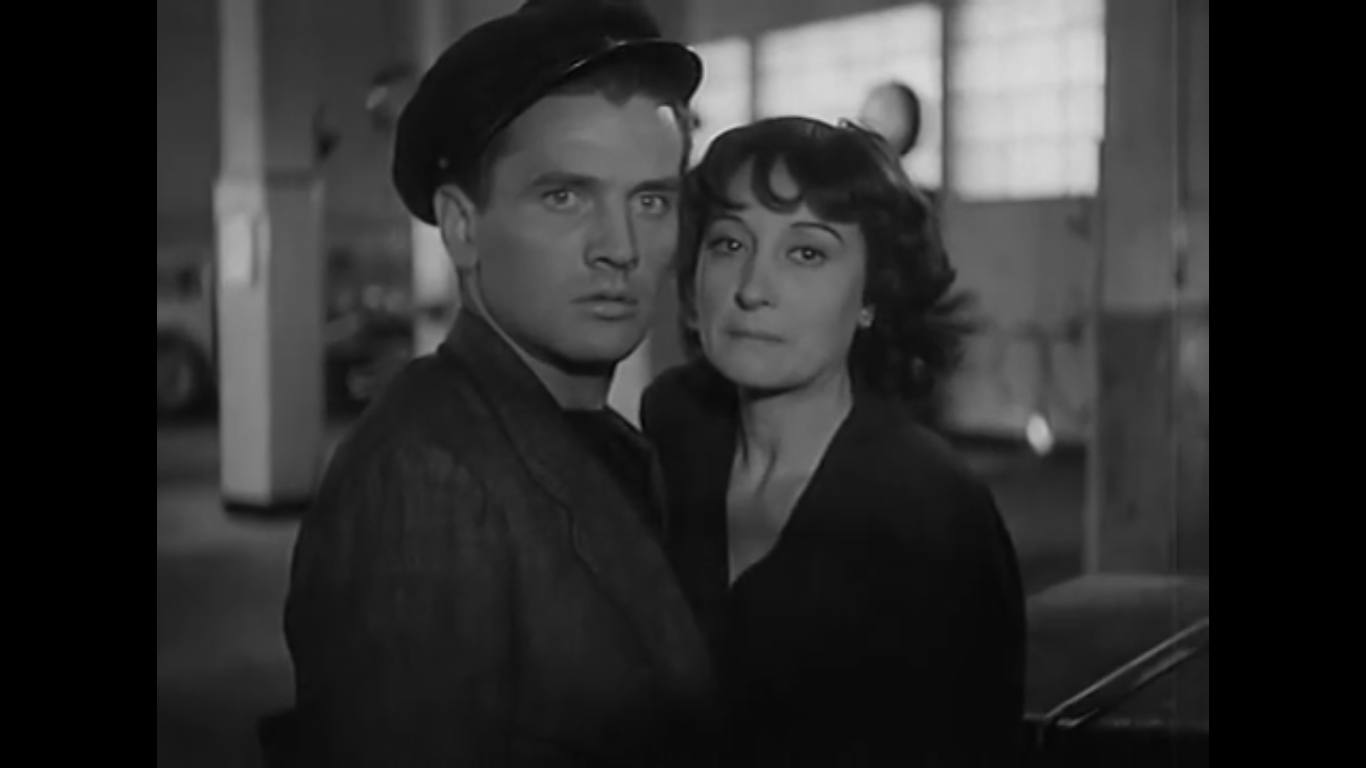
The films of Renoir and Michel Carne are fully present in this early work with the opening images of a train evoking something like Le Bete Humaine or Toni. Gino Costa (Massimo Girotti ) is the kind of working-class hero you’d expect in one of those earlier pictures or even some of John Ford’s work.

He’s an itinerant bum who used to be a soldier and then a mechanic in a former life. Now he’s hitched a ride on a truck bed only to be dumped outside a roadside tavern. And Visconti proceeds to introduce his primary couple through the visual synecdoche of two pairs of legs.

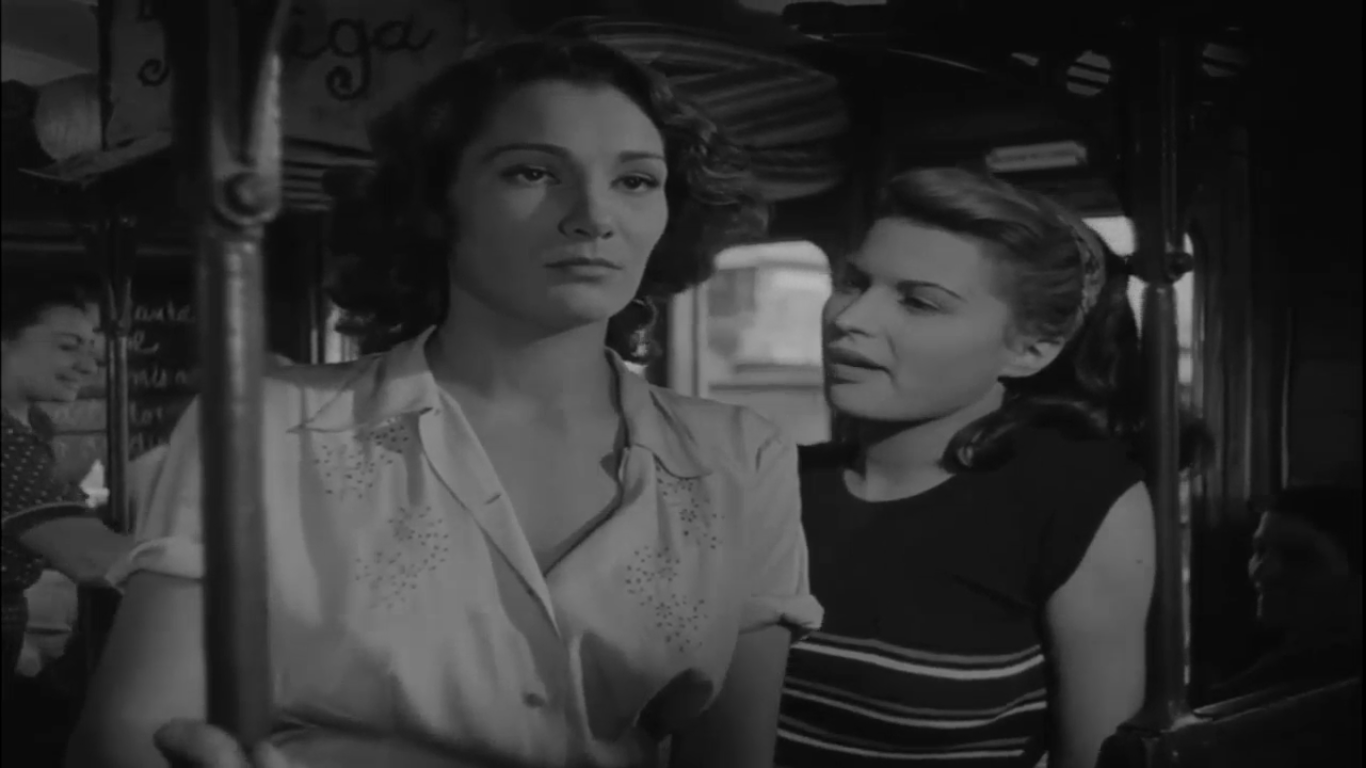
Finally, we see their faces together. They’re in a kitchen. Although Anna Magnani was originally meant to have the role, Clara Calamai channels the sultry come-hither coquettishness quite well even when it’s impossible to unsee the platinum blonde of Lana Turner in the part. But they have their own instant spark, like flint — burning with a consuming passion tantamount to spontaneous combustion.

If you’re well aware of the story already, she is a young woman married to a chubby misogynist named Bragana (Juan da Landa), who thinks he’s more than deserving of the marital comforts afforded by such a wife. He calls on her to rub him down after a long day, and she can’t bear to touch him. She has designs for someone else.

While her husband goes off with the local priest to do some duck hunting, in an early example of a bike-and-talk, Giovanna is quick to stoke the flames of romance with her much more desirable confidante. Visconti’s unauthorized rendition is purportedly more faithful to its source material although it’s hardly as streamlined as MGM’s later adaptation, essentially leaving more space for narrative asides.

When Giovanna clings to the security of her current life, Gino sets off on his own alone soon falling in with a hospitable street salesman, “The Spaniard,” who entertains the crowds. In what can only be expressed as noir sentiment, the tides of the narrative bring the couple together quite by chance.

Bragana is pleased to see their old friend and Gino gets pulled back into the whirlpool taking in some opera at a local tavern. This more than anything betrays Visconti’s affections for the stage.

Consequently, it’s also a film where arguably the biggest moments play out off-screen. I’m thinking of the illicit couples’ first rendezvous and then the fatal accident altering the course of the entire picture. Not all of this is due to content concerns either, but it does highlight how Visconti and his scripting compatriots, Mario Alicata, Giuseppe De Santis, and Gianni Puccini, conceived the story.

It offers another kind of dissonance because we don’t get to see what actually happened even if we’re well aware of their mutual intentions. We must wait for events to play out to see how the canker and unrest reveal themselves in due time. The most explicit response comes when Gino peels off  some bandages and then a violent struggle over a trinket ends in a passionate kiss. This might be the movie summed up in visual terms.

They must reckon with an unsettling state of limbo: freedom that feels more like purgatory as they stew in their infidelities. A man of the cloth suggests that they part ways because people do talk about their situation, real or imagined, and of course, it is very real.

Instead of detonating the story to be a full-blown melodrama like The Postman Always Rings Twice, Ossessione maintains these high levels of human intimacies. Gino reunites with his old pal again beyond delighted to see a familiar face, and yet it ends in fisticuffs because his fellow traveler is able to put words to everything he’s currently tormented by.

Then there’s a demure “ballerina.” Gino meets her knitting on a park bench, and they share an ice cream. I had to acclimate myself, thinking only momentarily that she was Giovana, but the emotions in the scene are enough to give this away. Because being around her Gino feels different; it’s as if, ironically, her purity is able to cover all his sins or at the very least help him forget them.

But the digressions only aid in leading him back to Giovana. If they aren’t totally a destructive pair, frolicking on the beach together, having rekindled their chemistry, then there’s some kind of fatalism that needs to be satiated.

In passing, Ossessione might earn the labels of Italian neorealism for its striking, ever austere imagery emblematic of the post-war working class. But it’s also often designated as film-noir for its sordid details and futile finale. However, I can’t stop but marvel at how Visconti was able to make the picture to begin with. Even after its initial release, it was hit with so many roadblocks of censorship and copyright problems only to gain a second life.

What an auspicious way to start a career, especially under such tumultuous circumstances. Much of the finest pieces of art are born out of the burnishing fires of the furnace and, for that matter, a certain level of creative obsession.

4/5 Stars

Germany Year Zero (1948)

Roberto Rossellini famously dedicated Germany Year Zero to the memory of his son Romano. After such personal forays into Italy’s own tumultuous relationship with the war years in Rome Open City and then the interwoven portraiture of Paisan, the final picture in the trilogy feels a bit like an outlier.

And yet in connecting his own recent tragedy with the hopelessness of the German experience, it does feel like he’s alighted on something that feels personal and honest. At the very least providing emotional truth if not always point-for-point docudrama.

The premise is very simple even childishly so staying with the neorealist attitude. Edmund (Edmund Moeschke) is a little boy scrounging around for work, sustenance, and anything else that might be of use to his family in the rubble of the bombed-out nation. It begins feeling out the world, not settling in on one story as much as the mood and milieu of the times. Because it is a very particular moment.

There’s a sense that the film is on the ground floor of something. Since The Thousand Year Reich terminated prematurely, it becomes an unprecedented moment in history — a time to rebuild and put their world back together again — although the day-to-day struggle remains real. You get bits and pieces in The Third Man or The Search and A Foreign Affair, but Germany Year Zero feels like a different perspective on the same events. 

It’s an important film for the sake of challenging our perceptions. Not exactly in the same way as Jean Pierre Melville’s Le Silence de la Mer, and yet it’s about empathy and upending our assumptions. We see the common markers of humanity laid before us.

Edmund returns home to his family in an apartment complex running perilously over on their bills. His older brother Karl-Heinz (Franz-Otto Krüger) is fraught with turmoil over turning himself into the authorities due to his military past. His invalid father (Ernst Pittschau) is a principled man, but in such dire times, his weakness feels like a familial curse. Eva (Ingetraud Hinze) becomes the maternal figure in the house, and after caring for her father, she spends the nights accompanying foreigners for the evening…

With the spiking black market prices, the Kohler’s are just trying to eke by a living. This is not the way people were meant to live, and it’s a misnomer that the war has a finite end. The repercussions of WWII on Germany continue long after the surrender sounded.

The viewpoint of a boy is, in one sense, youthful and resilient but also impressionable and malleable, shaped by all the people and things he comes in contact with. These are the most formative days of his life thus far.

Edmund takes up the company of other street vultures as they scavenge for survival, some stolen potatoes here, some fake soap there for duping unsuspecting victims. Kohler is callow, but he soon learns this pack mentality through how his friends model certain behaviors.

His former teacher has a charming manner and a dubious reputation, while he uses his former pupils to peddle goods on the black market, espousing a philosophy of survival of the fittest. He’s either a closeted supporter of the Führer and if not him, then Friedrich Nietzsche. It’s this kind of pernicious ideology leading to ungodly Holocaust.

Edmund returns home to the scolding of his sister and with his father’s health being far worse. He’s vitamin deficient and needs a hospital though they’re overflowing as is. The elder Mr. Kohler bemoans the fact that like many in his generation, he wasn’t bolder — seeing the calamity of Hitler, and doing something to stem the tide (“We saw the disaster coming and did nothing to prevent it”).

Germany Year Zero also exhibits a cynical side and not just in the satirical way of Billy Wilder. This feels like real tragedy before us without the happy ignorance of glutted Allies come to vindicate the Germans from their sinful past. There’s no comparison between their lives. It seems indecent to even try and equate the two.

Some might note that the film is not true neorealism, with interiors shot outside of Germany, nor can you very easily call it purely “Italian” neorealism for obvious geographical reasons. Somehow this rarely pulls us out of the experience.

There’s this underlying sense that very little performance is going on in Germany Year Zero. Because these are not actors. They are merely people, and there is a confident sense that almost every strewn rock or portrait of degradation is not set dressing, but something with a natural story all its own we may never know.

We get one final glimpse of the rubble-filled streets, a train cutting through the foreground as a woman’s form kneels in front of the desolate backdrop of total annihilation. It feels like a canvas — the woman an image of the Pieta — with Rossellini crying out into the bleakness of the world. Suddenly, we realize why this movie was dedicated to his son.

It’s no wonder Germany Year Zero was hardly a popular attraction in its day; it’s not a crowd-pleaser. But with the gracious gift of time, we can look at it as a crucial counterpoint. For those back home in the U.S., these were the best years, full of prosperity and endless possibility. At ground zero, it felt very much like the pit of despair, and there were no easy fixes. They have to rebuild from the bottom up. One must beg the question, does mass catastrophe occur at the end or at the beginning of an era? Perhaps it’s both.

4/5 Stars

Paisan (1946)

“Paisan” feels like a ubiquitous term. At the very least, it seems to have entered into a shared vernacular most Americans understand. And of course, this is part of the reason Roberto Rosselini’s follow-up to Rome Open City employs the word.

His newfound audience would be able to appreciate its very simple meaning with some amount of recognition. But it hardly seems like a ploy because it illustrates the core themes of the picture. And this is not done through an epic narrative stretched out over a couple hours time. It is built out of these mini-scenarios coming to represent a breadth of WWII experience between Italians and Americans.

We open in 1943 in Sicily with a group of American soldiers making their way through the villages for recon. As has a habit of happening in these cross-cultural pictures, the English language sounds like tin to the ear, but when they meet our first Italian characters and the dialogue is interspersed, we immediately get something richer and more intriguing because we have both languages dancing off one another and fighting for some primacy over the scenes.

Much of the movie is negotiated in these spaces in-between what is understood and what must be inferred and left only to the imagination. The benefit of subtitles gives us a privileged position, but not all of these characters have the same luxury.

Even when one soldier is called upon to keep watch over their guide in the caves — a young Italian girl looking for her family — we settle on something so basic. It’s their lack of communication and it can invoke fear and conflict, but it can also remind us of our most basic commonalities.

Conversation about cows and milk progress as the soldier reminisces about his family back home in photos. This pleasant interchange is really only a momentary flame, quickly snuffed out. Because we are reminded there is a war at hand and conflict comes from the outside and kills their moment together.

Before we are left to dwell too much on the present, we march ever onward toward Naples. Here is a tale we might see from De Sica and later in Germany Year Zero. It’s a story of youthful vagrants — one named Pasquale — who lives on the streets buzzing around G.I.s like a misquito looking to suck them dry out of pure necessity. It’s an extraordinary scene to watch the young boy latch onto a drunken black MP (Dots Johnson).

Their saga drags them all across town and, again, they hold two-sided conversations that are totally at odds with one another. As they sit on a pile of rumble together, it strikes me how this little boy sees the man for what he has. Yes, he’s black, but he’s American, and what a privilege that is. He runs off with his boots with a kind of fatalistic inevitability and that could be the end of it.

Instead, they meet again in another chance encounter. The soldier seeks restitution and yet Joe’s attempt to get back his stolen property feels almost inconsequential when he recognizes the desolation around him. This disparity is especially complicated when you put it next to the hypocrisy of racial discrimination back home.

He represents wealth and prosperity and still must feel some relegation to second-class citizenship in his own right. In 1946 Harry Truman had yet to integrate the military and, at best, even this felt like a symbolic victory at best.

The way Paisan links together these individual studies in character and relationship means the movie offers up this extraordinary breadth while still maintaining a hypersensitive level of intimacy. Because it takes a single interaction between disparate people and allows them to play out in such a way they come to represent something so much broader.

Later, it’s June, 1944. There’s a voice in the darkness shouting about American cigarettes ready to smoke. Glen Miller’s “In The Mood” is instant shorthand, and it coincides with a dance hall packed with folks. This is a new Rome from the one in Rosselini’s original film, until the military police soon shake up the joint and send the locals into a tizzy.

A fugitive in furs (Maria Michi) evades the authorities and picks up a soldier boy (Gar Moore) on the street over cigarettes. Remember, this is the era of Now Voyager and Bogey and Bacall. They are the cultural tastemakers. It’s a portrait of how even a short span of time — 6 months — can change people drastically, where the hopeful optimism and jubilation of the liberation can quickly be displaced with rowdy opportunism and disillusionment. And with it, a final reunion is precluded in a turn of events that might as well be anticipating the wistful fates of Jacques Demy over 15 years later.

The movie continues in Florence along the Arno River. Here a young Allied nurse (Harriet Medin), who knows the area intimately from time abroad, sets off on a singular mission to find an artisan friend, who is currently in the midst of the local skirmishes. The streets are full of firefights playing out in unsentimental terms.

In one way it feels ludicrous watching this woman and a fellow searcher streaking through the treacherous zones of no-man’s-land, and yet we cannot turn away. In a Hitchcock movie, we might term the arbitrary goal they are pursuing the Macguffin. It makes no difference.

I’ve come to realize that Italian Neorealism has come to signify a kind of emotional truth paired with authentic visuals. It’s not documentary, but it takes the layers and contours of the real world to tell what feels like mini tragedies wrapped up in these individual segments.

Paisan keeps on offering up these nuggets that intrigue me. I think of the next story, which feels like a more peaceful, mundane tale about three American chaplains who rest at the local monastery. There’s so much benevolence even as we are reminded the vocation they follow is unified the world over.

One of the visitors tells his peer, “I think one can really be at peace with the Lord without removing themselves from the world. After all, it was created for us. The world is our parish.” These words feel like they come straight from Martin Luther, a man who looked to democratize the Christian faith and break any vocational dichotomies.

Sure enough, he’s a Protestant and another man is a Jew. This revelation causes a wave of worry to come over the local Holy Men. Surely these guests are lost. They have not found the path because their beliefs are marred by inaccuracies and flaws (possibly even heresy). Rather than digging into this spiritual discourse, it settles for a kind of moral stability, not quite an inclusive gospel but certainly a call for tolerance and appreciation across the religious ranks.

In the final chapter, Italian Partisans and American OSS fight a desperate guerilla war against the impending Germans. It’s not a chapter of history we consider in detail, but we are placed in the moment so we forcibly comprehend the exhausting futility of their tactical battles. They live day to day constantly striving to stay out of reach of a tireless enemy. The only thing keeping them alive is their fierce camaraderie. They fight for something larger than themselves.

The ending of Paisan is matter-of-fact even as the imagery is bleak, and it feels like a callback to the opening story. We are reminded of the utter inhumanity of war, but Paisan was obviously meant to be used as a tool of mutual healing between the U.S. and Italy. Because it’s the humanity bleeding out of the movie coming to the fore, more than any amount of tragedy.

4.5/5 Stars

Shoeshine (1946)

Shoeshine was penned by a whole host of people: Sergio Amidei, Adolfo Franci, Cesare Giulio Viola, and Cesare Zavattini. However, it’s quite easy to focus on Zavattini due to his longtime partnership with De Sica dating back to The Children Are Watching from a few years prior. Their lucrative collaboration would produce a string of well-remembered works, not least among them The Bicycle Thief, Umberto D, and even Sunflower in the 1970s.

Together they created stories out of deceptively simple scenarios that always find a way to be imbued with raw emotional truth. We are quickly reminded of how many of De Sica’s greatest films were pictures of youth. In this one, two shoeshine boys are infatuated with a beautiful horse they wish to buy for their own.

When they return to the city we get an immediate roving sense of the post-war world on the streets, not unlike The Bicycle Thief. Giuseppe and Pasquale feel fully integrated and familiar with their world, chatting up their acquaintances as they work away shining shoes.

We soon come to realize how they are a part of the postwar economy (“Shoeshine Joe!”) and they even manage to unwittingly get themselves into the thriving black marketeering racket. It’s usually people like them who end up paying their dues on the inside in place of others. They aren’t exactly innocent bystanders, but their crime certainly doesn’t fit the punishment.

They end up in a boy’s prison, clamming up to protect a no-good older brother who we never see again. He’s not of primary importance. Instead, we witness how two friends who weather thick and thin together are forced to separate — resigned to separate holding cells.

However, there has to be a moment of reversal where the narrative locks in on a dramatic question ripping the story to its core. This is the mother fleeing for her lover in The Children are Watching Us or the man choosing to steal in The Bicycle Thief. Sure enough, Shoeshine introduces such a moment of its own. Because the one element not in doubt throughout the movie is the camaraderie between these two boys. Until it is…

Giuseppe receives a tearful visit and learns his older brother was taken in; immediately, he knows Pasquale squealed, and regardless, of the circumstances, he feels totally betrayed. He doesn’t realize his buddy has been played for a fool as the policeman tricked him into a speedy confession. But the means make no difference. Now there is an irrevocable wedge between the friends because a sacred vow of silence has been broken. The very bedrock of the friendship has been spurned.

Whether merited or not, one betrayal reaps another in the form of a planted file and the rival factions form around their cellmates only serving to escalate the animosity. There is no other way to settle matters than a bloody fistfight in the shower rooms. But this can never solve the hurt; it only pushes them farther apart.

Still, despite the wave of spite between them,  the veil of naivete and a vow to truthfulness is not totally lost on these boys. In the proceeding court case where they are both brought before a judge, the defense attorney looks for a scapegoat — the boy without a family — but his young defendant cannot understand how personal utility (for himself and his brother) trumps telling the truth. It’s a foreign concept to him. Kids are not made for the mercenary games of bargaining in the courtroom. Their moral codes are of a different kind.

Later, during an in-house movie screening, there’s the inevitable escape attempt because it’s not natural for anyone (boys included) to be caged and so a few of them make a unified break for it. It feels reminiscent of some of the old Cagney movies or other prison noir, but of course, it was a contemporary if not a predecessor to some of the greats like Brute Force and White Heat.

However, if you look at the picture in terms of genre conventions, what sets it apart is the youthful perspective because we see something so precious — that of friendship — get crushed as hearts grow cold with bitterness. Again, we find our two boys in compromising positions, their rocky friendship put under one last round of duress.

The ending is nothing short of devastation where all the dreams and innocence of youth are summarily crushed in one tragic act of inhumanity that can never be undone. One can barely imagine the film after “Fin” comes up on the screen because it feels like De Sica’s story is so thoroughly engaged with the present moment and when it dissipates there’s nothing left. All we have to go on are our feelings of anguish for these boys and the broken system that has no capacity to get better any time soon.

I think this part of what Orson Welles meant when he says of Shoeshine, “the camera disappeared, the screen disappeared; it was just life.” In a deeply profound way, you very rarely consider the tenets of filmmaking at work while watching the film. Perhaps like Chaplin or some of the classical masters, De Sica speaks to us through resounding images we can understand intuitively, suffusing them with the most honest of emotions, and allowing the scenes to wash over us.

Suddenly, time has passed and the full breadth of an emotional arc is realized. You get totally lost in the moment — overtaken by the pure, overwhelming force of cinema. I’m no expert when it comes to describing the main facets of neorealism as embodied by the works of De Sica, Roberto Rossellini, and others. However, beyond any kind of post-war malaise and on-location shooting with untrained actors, it seems like it comes down to this intimate frequency of resonance. We realize that we too share in their story and their experiences by just being human.

4.5/5 Stars

The Children Are Watching Us (1944)

What begins as a day out at the cinema turns into an excursion out to the local park watching a Punch and Judy show with all the kiddies. A mother (Isa Pola) is out in public with her boy (Luciano De Ambrosis) and his scooter — sharing is hard whatever generation — though her mind is on other things aside from parenting.

Because we also have the core dramatic situation playing out only meters away unbeknownst to the little boy. His mother comes across a man — a lover — and he vows to take her away for good. They can have a life together, and the boy catches the end of it, though he probably cannot fully comprehend that more is going on than a few pleasantries. Why should he? Because children are not normally predisposed to distrust people’s intentions. Especially their parents. That only comes with time.

This sense of a child’s perspective framing adult situations is very much a precursor to Fallen Idol and its own dilemma involving a kind of heartbreaking, illicit romance. In this iteration, she seems to make her choice once and for all.

You can see it in her face and through her actions; she loves the boy dearly and then the door closes and her face is gone. So too is her presence in the household. We are conditioned and still hardly believe this could be happening.

They are a middle-class family nevertheless packed into a building with nosy neighbors and landlords — it’s the kind of environment where gossip spreads like wildfire. We have a father (Emilio Cigoli) holding down a job while trying to figure out what to do with his son. First, he’s looked after by the housekeeper, and then a sister-in-law who works as a tailor with a host of other women.

They become Prico’s surrogate babysitters. But the division of responsibility end there as the boy is sent out to the country to live under his imperious grandmother, cared for by his older cousin Paolina. Though few of these people are callous, it’s evident how quickly abandonment issues arise with everyone passing the buck. Still, there is a certain amount of care depicting all involved.

Because what sets its impressions apart from Brief Encounter or even Fallen Idol is how the “other spouse” in this case is not asinine or tyrannical but a person of dignity who wants the best for his boy and does not want his wife to be spoken poorly of.

De Sica is considered one of the formative figures in Italian Neorealismb and yet the movie has several sequences that are cut to the emotion. Aboard a rumbling train, the passing dreams flow through the boy’s feverish, listless mind culminating with his mother departing into the recesses of his memories. It’s a near-premonition while simultaneously speaking to his longings. I mean this sincerely; sometimes a boy’s best friend is his mother.

Sure enough, she comes to pay a visit when her little darling is in bed and his father is away. But she doesn’t take off her hat. Prico begs her to take it off — to stay with them — and it’s a prolonged moment of agony. Because she is not a heartless woman. She cannot bear to break from her family completely. Thus, she came back and makes the reparations of these relationships all the more difficult. Where can they go from here?

I never feel like I am being played like melodrama because the situations ring with a very core and incisive truth flowing out of the characters. In these adult situations between husbands and wives, children are very real and present collateral damage caught up in the middle.

They might be innocent bystanders but they are crucially affected. It’s irreparable and there’s no denying it feels like an uphill climb to repair the relationships. How helpless the little boy is and how oblivious he remains about the situation. There can be two levels of understanding going on in one scene and De Sica allows us to be privy to both.

Part two of the film offers a change of location and with it a change of tone. It’s an understandable decision because what it does is provide a reprieve. The family seems nominally happy again frolicking at the beach on their vacation. They are making a valiant effort to pick up the pieces and come together again.

Alas, we already know it cannot last. The flirtatious beachcomber Dada seems like another portent as she holds court with her amorous friends. Eventually, Andrea leaves and his wife and son stay behind. They’re both vulnerable. She to a visit from her former lover, and Prico because his mother is not around; he tries to run away. It’s the habitual cycle of infidelity and resulting fear and abandonment that cannot be broken.

Later in the film, the little boy shares a POV similar to that found in Fallen Idol peering down at the world below him although in this case, it’s watching his tearful father leave him behind at his new boy’s school. Again, it’s a scene injected with the most sincere of emotions, and they only build from there. Because for one final moment Prico must reunite with his mother. He’s already beside himself, and he feels so totally betrayed.

He goes toward the reliable arms of his housekeeper, then, looks up at his mother’s solemn face and tentatively backs away. She’s done so much to hurt him and his response is valid, and yet regardless of what words you put to the moment, it still sears the heart.

Obviously, the movie takes place in a specific era, but there is an air of timelessness about it. Because one cannot help but consider the war years and what impact they might have had on the production. In truth, the picture was shot in 1942 and not released in 1944. During that time De Sica was offered a position by the fascist film industry, which he purportedly refused.

Hardly a pro-Fascist diadem, it would become a stunning prototype for a new kind of cinema that would take the international world by storm in the post-war years. It still astounds me I had never heard of this early De Sica work. Part of the reason is due to how it moves me like some of his finest works do. It’s hard to leave a movie like this and not feel changed.

4.5/5 Stars

The Paleface (1948)

As a kid, I was fond of Frank Tashlin’s Son of Paleface for a myriad of reasons. Thanks to that esteemed institution known as the local library I was well-versed in the Hope & Crosby Road Pictures by an early age and Roy Rogers was probably second-only to Gene Autry as king of the Singing Cowboys. Jane Russell wasn’t too bad herself.

More recently, coming to understand Tashlin himself — his background in animated comedy and his partnership with Jerry Lewis — gives greater context to his place as a creative visionary. Because it’s true he blends the gray area between live-action and the cartoon logic of animation better than almost anyone else.

In an interview with Peter Bogdanovich, Tashlin had these unsavory words for The Paleface and its director:

“After seeing the preview of it, I could’ve shot Norman Z. McLeod. I’d written it as a satire on The Virginian (1929), and it was completely botched. I could’ve killed that guy. And I realized then that I must direct my own stuff.”

While it’s true the original movie doesn’t have the same outrageous commitment to comic gags that its successor did, if Tashlin was not so close to the material, he might be able to appreciate some of its elements.

However, before we go there, it seems necessary to introduce a caveat. The Paleface is a film out of a different era. If you’re an immediate impression of the movie is one of distaste, there aren’t any surprises here. Particularly jolting is when they are taken in by the local Natives to die some gruesome death only to be saved by Hope’s masquerading as a medicine man armed with the black magic of dynamite.

But if you have a sense of nostalgia, can look past the blind spots, or have a reservoir of goodwill toward Bob Hope, it delivers alongside the best of his comedies by providing a genre and allowing him to bend it to his will, courtesy of his usual feckless, smart-aleck shtick.

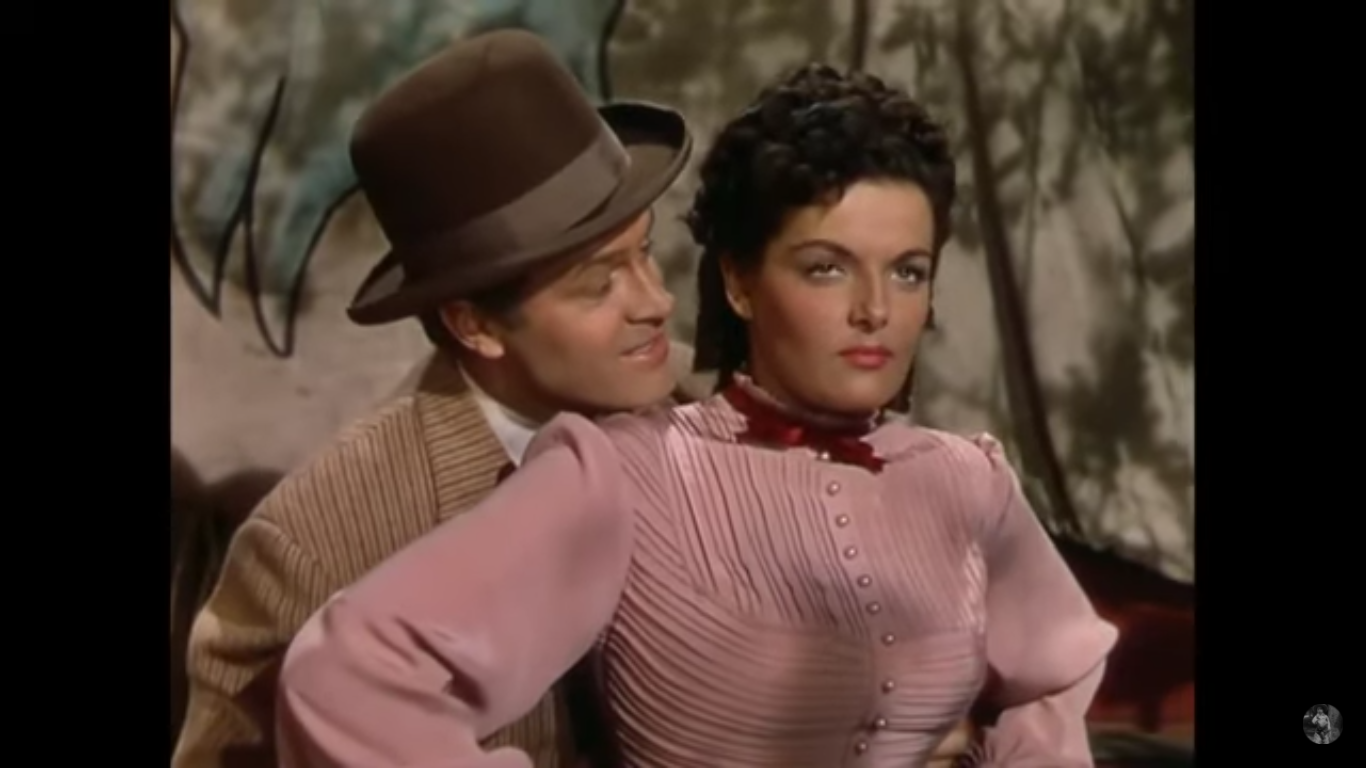
It works by first introducing all the western tropes Tashlin was mentioning. Russell, the feisty female outlaw, Calamity Jane, is enlisted by the government to investigate clandestine operations supplying the Indians with firearms. She joins a wagon train after outsmarting some adversaries in the ladies’ showers. It allows her to do some recon and she uses a first-class boob as her cover.

Bob Hope (as Painless Potter) is showcased with a row of dentistry gags including his canister of laughing gas, which becomes a recurrent plot point throughout the picture. When he’s not getting them lost in the woods, he knocks back “Buttons and Bows,” a tune that has remained a lasting relic of the movie, thanks to renditions by the likes of Dinah Shore, and its reintroduction in the sequel.

Every kiss he shares with his costar is like a rap over the head with the butt of a pistol. But along with being the aggressor, Russell also does his shooting for him on multiple occasions. In fact, when he is goaded into a shoot-out over the hand of a woman in a saloon, the outcomes prove surprisingly close to The Man Who Shot Liberty Valance (Paleface was released over a decade earlier). Could it be John Ford was influenced by Paleface? I’ll let you be the judge.

As for Norman Z. Macleod, I’m inclined to give him my good graces given his pedigree with Marx Brothers and screwball-like comedies of all sorts. While he might not commit to gravity-defying visual gags as Tashlin would have — we understand how he would be able to expand and punctuate them — Macleod always seems intent on zipping the pace along and keeping the tone zany.

This suits Hope even as Russell and the other characters allow the story to still stay true to many of the western tropes of cowboys, Indians, and western towns needing to be tamed. This melding of the usual beats with the wacky subversions instigated by Hope is the crux of the movie and blended with its color photography and the antagonistic chemistry of its stars, it’s more than enough to garner a watch. My own biased nostalgia still makes me partial to The Son of Paleface.

3.5/5 Stars

I Shot Jesse James (1949): A Sam Fuller Western

i shot jesse james

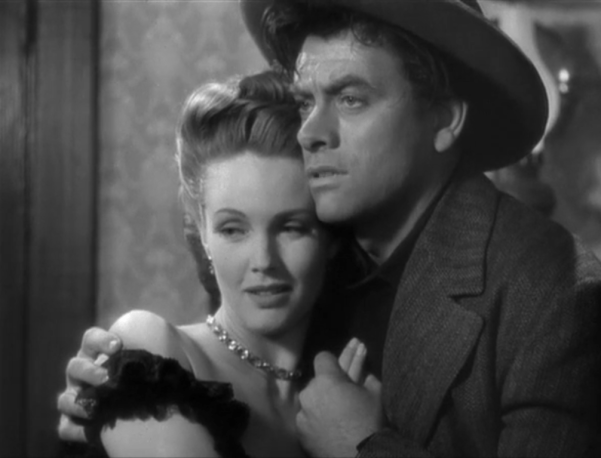
I Shot Jesse James is an off-center western as only Sam Fuller could possibly conceive it. At the very least it brings a journalistic eye and a shift in perspective. Because distilled down to its most basic elements, it’s a psychological character piece with John Ireland at the heart of it as Robert Ford: the man who shot Jesse James.

It’s not quite as punchy as Sammy Fuller would establish himself to be, but there is a slew of compelling ideas, and it’s not as straightforward as the western genre often suggests itself to be. Sure, the opening scene feels like quintessential Fuller, prepared to rap us over the head with the brunt of his movie. Bank robberies can never be easy; they’re always contentious. Guns drawn and bank tellers intent on sounding the alarm.

The picture is also about as noirish as they come out on the range — part of this is indebted to the conflicted character psychology — as expectations fluctuate wildly and scenarios happen not as we expect, but as they are meant to in a dismal landscape where everything comes out to its pessimistic worst.

People are poison to one another. The cruel hand of fate is inevitable. The lynchpin moment where a frankly, conventional Jesse James (Reed Hadley) is gunned down by his best friend is hardly imbued with the mythical glory the tabloids would have you believe. It’s almost matter-of-fact, totally unsentimental.

Fuller’s script acts as an examination of mythos and the pariah-like celebrity that engulfs the man. It makes for a far more perplexing exploration when you consider Jesse James died a hero — a Robin Hoodesque legend — while Ford is totally disgraced in society. He shot his best friend. If not for money, at least for a girl.

His desires are normal. He wants to get a ring so he can marry her and settle down. The question remains whether this kind of humdrum life is available to someone in his station.

The thematic ideas of legends on the range are dissected in many other westerns, and there’s always a sense of notoriety catching up with a protagonist. He has a target on his back. They might not have modern technology but papers, telegraph, and word of mouth have more pull than we might imagine. Word gets around and, if anything, legends grow larger with every town dispelling their own half-truths about the man and the myth.

Every gunshot potentially has Ford’s name on it. And yet he doesn’t want to give up his name. He’s too proud for that. He does take to the stage circuit reenacting how he shot Jesse James, and yet he can’t bring himself to pull the trigger. The audiences watch with a kind of morbid curiosity. It’s another nail in the coffin. Surely they comprehend this is simply one pitiful man shooting another — not some gargantuan duel of ruinous proportions.

In an equally telling interlude, Ford offers to trade a drink for a troubadour’s ballad and gets an ode to the coward Robert Ford who laid Jesse James in his grave sung back in his face. You can imagine his chagrin when he finds out he’s been memorialized in such a manner and then the jovial performer’s surprise when he learns he’s singing to the craven legend himself.

i shot jesse james

In a flat western, Barbara Britton’s part would be tepid. Here she gets at least two moments in close-up where her face comes alive with a crazed expression you don’t soon forget. It’s fit for a femme fatale, but she’s not evil or psychotic. At worst, she’s torn apart by love, and it’s a force she can’t cope with.

If Ford is still madly in love with her, there’s another character who drifts through and vies for her affections. Whether real or imagined, it doesn’t really matter. Ford has it in his head that the genial prospector, John Kelley (Preston Foster), is his bitter rival.

As mankind follows the trail of prospective wealth, both Ford and Kelley wind up in Colorado in the midst of a silver boon. For the time being, Cynthy is out of the picture. Far from fighting, they share a room, right neighborly.

The final act doesn’t feel much like a western at all. It’s shed all the traditions long ago. Again, it is a character piece. It could be any genre. This one just happens to be set around saloons and hotels, mining towns, and grubstakes.

But there are two men and one woman, and she can only end up with one of them. Perhaps she only actually really loves one of them. Frank James comes back into the story — you might remember him too — but he’s only another mechanism, like Wanted Dead or Alive posters or climactic showdowns between good and evil. Here they always carry the persistent inevitably we attribute to noir. There can only be one conclusion…

To the very last iota, it feels like textbook Fuller as he announces himself on the cinema landscape. On top of writing and directing the picture, he purportedly shot it over 10 days on rented sets from Republic Pictures. What’s most extraordinary is how the movie hardly seems to suffer from these constraints. If anything, it set a template for how Fuller would maintain a degree of creative autonomy while still managing to create a wide array of compelling projects in years to come.

Although his visual style would continue to grow and sharpen, there’s a killer instinct proving a lightning rod for stories. As a journalist and a journeyman, there’s this sense Fuller had the “don’t get it right, get it written” mentality. However, this very rarely seems to harm his output, which somehow always manages to find a worthwhile point of view to grab hold of.

I Shot Jesse James is little different. Its inadequacies often wind up making it all the more intriguing. You’ve never seen Jesse James spun in this manner, and way back in 1949 Fuller had a kind of prescience in suggesting where the West would go after the 1950s.

3.5/5 Stars

The Shop Around The Corner (1940): A Christmas Love Story

The_Shop_Around_the_Corner_trailer

The Shop Around The Corner samples a Hollywood-style Hungary that nevertheless establishes it as a much humbler, quieter picture than seasoned Lubitsch aficionados might be accustomed to. It’s subsequently one of his best efforts for this very reason. There’s an intimacy to it, recalling his own upbringing working in his father’s tailor shop based out of Berlin, during his youth.

Initially, it feels like curious casting — James Stewart playing a Hungarian is absurd and he makes no attempt at an accent — and yet Lubitsch had the foresight to understand his appeal. He lacks all the suavity and urbanity normally associated with the director’s creations. In fact, for an American audience beginning to grow used to Stewart’s own steadily rising star, they connected with his disposition since it was very much the antithesis of stereotypical Hollywood or the highbrow of 1930s Lubitsch pictures. But it is the tone that matters most.

Because, again, this is not Hungary in the flesh — it is out of the mind of Lubitsch, a creation of nostalgia, warmth, and sentimentality — and on its streets, Stewart is more than at home. He fits the spirit of what The Shop Around The Corner cordially represents.

It is not a place right in front of us but just out of reach in the near-beyond of our memories and our imaginations. It represents our hopes and high ideals, even the sentiments of hope wrapped up in the Christmas season. Stewart as a figure — a token — is somehow able to stand in for so many things.

But there is more to it. Stewart delivers something a bit more substantial than his “aww shucks” persona, which was continually teased out leading up to the days of Mr. Smtih Goes to Washington. There’s also a stern assertiveness present, ready to come out; it just needs a spark, some point of instigation.

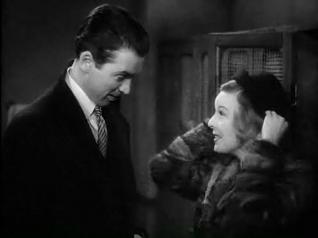
Enter Margaret Sullavan, his perfect counterpart and sparring partner. Her breathy delivery is quiet and understated, while still somehow implying this spunky resilience residing inside her character. This is what Sullivan brings to the part herself, earning a reputation as a demanding and “difficult” performer who sent shivers down the spines of major studio magnates, knowing full-well what she wanted. As a result, she found initial success though she’s mostly forgotten today.

Accordingly, her Klara Novak turns out to be a crackerjack saleswoman, at first pleading for a job, then proving Mr. Kralik’s rebuttals wrong by turning right around and earning employment. This sets the stage for their prevailing antagonism from which a love story must bloom. 

But that comes a bit later. The movie opens with all the staff of Matuschek and Co. congregating outside before the workday commences waiting for the front door to be opened by their employer.

Frank Morgan is Mr. Mathuchek, a blustering and a demanding fellow who can never quite make up his mind about the shop’s inventory. For that, he trusts his most faithful and pragmatic right-hand man Kralik (James Stewart), who has been the company’s longest-serving employee. If there are any decisions to be made, he’s the man to make them.

Felix Bressart is a fine family man and friend who always has a habit of fleeing the scene when the boss is requesting personal opinions. What he provides is quiet stability and an encouraging ear to Kralik.

Among the other current employees is the brownnoser with fine threads Vadas and the precocious errand boy Pepi (William Tracy) who does everything in his power to get ahead. With their communal workspace, a number of things come to pass. The relationship between Kralik and Ms. Novak continues turbulently as she manages to sell one of their useless purchases to an unsuspecting customer — a cigarette box that plays “Ochi Chernye.”

Simultaneously, Mr. Kralik is maintaining letter correspondence with an unknown paramour who engages his intellect on ideas of art, culture, and literature. One is reminded how The Shop Around The Corner extrapolates the axiom of not judging a book by its cover. Closely related is the fallacy of getting caught up in books such that you fail to see and comprehend the reality playing out right in front of your nose.

You read Anna Karenina, Madame Bovary, Dostoevsky, only to realize the people living and breathing right beside you are not only more than what’s meets the eye — they are simultaneously writing their own stories. We can’t always mold them to fit the narratives we know. Both Ms. Novak and Mr. Kralik seem to know these issues intimately without realizing it.

Because this is a Lubitsch picture, irony comes into play quite early; although it’s difficult to know if Stewart or the audience come up with the answers first. Maybe it hits us at the same time. If you don’t already know what it is, I’m not licensed to say. Allow it to happen to you.

Meanwhile, for some unseen reason, Mr. Matuschek grows cold and distant — going so far as relieving Kralik of his post in an uncharacteristic move. It’s the film at one of its lowest points. This was the fountain of all Kralik’s joy until he is so unceremoniously plucked from his position. Because we realize this job is his life, these people his extended family. Even Ms. Novak feels sorry that they must say goodbye, though patching things together might be altogether too little too late.

Sampson Raphaelson’s story kindly reconciles this conflict as Kralik and Mr. Mathuschak smooth out the situation. What still remains is the meeting with his mysterious correspondent. The Christmas season is upon the shop, and they work tirelessly to have the biggest sales in Christmas Eve history. They succeed. It’s punctuated by holiday bonuses for everyone, a soft powdering of snow, and genial celebrations all around — even for lonely Mr. Matchuchek.

This could be the end, but of course, we cannot forget the main reason Lubitsch has cast his eye on this inauspicious shop. Among many other things, it’s to unpack themes of love. The lights are low in the backroom, and Kralik is trying to get the words out, playing up the piece of jewelry he bought for his unseen beau.

Ms. Novak tries to accept her own fate with fortitude as her former rival tramples over her dreams with a reality check. Their words meet midsentence as she recites the recitations from her own dream suitor:

“True love is to be two, and yet one.”

“A man and a woman blended as angels.”Heaven itself.” That’s Victor Hugo. He stole that.”

“I thought I was the inspiration for all those beautiful thoughts. Now I find he was just copying words out of a book. He probably didn’t mean a single one of them.”

“I’m sorry you feel this way about it.”

She’s been led to believe he’s a balding, chubby fellow playing at a great romantic. As it turns out, he’s lanky and bowlegged, but not without his charms; he meant every single word. He says to her, “Take your key and open the post office box and take me out of my envelope and kiss me.” His proclamation of love stops her cold as the recognition comes over her face. She follows suit soon enough, and there you have it…

No more fanfare is necessary. We have the cathartic moment as a romantic tree-topper that Stewart and Sullavan more than earn. Even right here, it’s the same old Lubitsch with an unequivocal knack for finding the most satisfying conclusion, whether in drawing room comedy or backroom romance.

4.5/5 Stars

Note: I wrote this in conjunction with a series of reviews on the films of Margaret Sullavan released earlier this year.

Christmas in Connecticut (1945): Yuletide Cheer and The War’s End is Here

Barbara_Stanwyck_in_Christmas_in_Connecticut_trailer.jpeg

Christmas in Connecticut functions as a fine way to cap off 1945, a year full of jubilation and relief for the American public. The war was finally over! Given this context, the setup might feel familiar. A sailor who was shipwrecked out at sea in the Pacific was rescued. Now he’s seeing the war from the sidelines in a hospital.

Because in the mind of the viewer the war is already won, it feels like a relief. Jefferson Jones (Dennis Morgan) is an American hero, and all he has to worry about are building his strength and getting to know the pretty southern belle nursing him back to full health. Still, with the holidays approaching, he can’t help yearning for a little bit of good old-fashioned Americana, the down-home comfort and hospitality he’s missed out on overseas.

A letter of request gets sent on his behalf and the old battle-ax, famed magazine publisher, Alexander Yardley (Sydney Greenstreet) catches wind of it. The idea is to serve up the soldier a meal in the home of famed columnist Elizabeth Lane, known for her idyllic farm, snow-covered nostalgia, and domestic tips and tricks. (The character was based on real-life Gladys Taber of Family Circle Magazine who actually lived on a farm in Connecticut)

As he could use a bit of comfort and home cooking himself, Yardley thinks it’s a fine suggestion, and he’s prepared to invite himself and the soldier out to the country for the holidays. He has no thought that it might be an inconvenience.

But of course, this is hardly the problem. It’s worse than that. Elizabeth Lane does not exist, at least not as vividly as she does on the pages of Yardley’s magazine captivating nationwide audiences coast to coast.

In truth, she lives in a drafty apartment overlooking the outside laundry as she knocks away at her typewriter eating sardines for breakfast. Because she’s no cook nor a wife with a baby and a farm. She’s more of a city girl living off a diet of independence and mink coats. Of course, no one knows about the sham aside from her and her editor.

What makes it worse is the fact Mr. Yardley is a very principled fellow and a stickler for printing the truth. If he ever caught wind of this charade, it would be the end. So to take stock of the damage, her boss is about to show up on her doorstep (one which she doesn’t have) for Christmas eve with an unwitting soldier who believes in what she comes to represent.

Barbara Stanwyck dons this kind of part with ease as the street-wise lifestyle columnist. She rides out the comedy with her usual aplomb, but she can play romance and the sentimental in a manner that doesn’t totally rob them of their import.

Men vying for her affection will be an ongoing theme throughout the picture and why not because Barbara Stanwyck is the picture of self-confident beauty with an undisputed vivacity.

The film is salvaged — from solely a narrative perspective — when she impulsively accepts the routine marriage proposal from her suitor, the wealthy businessman John Sloan. He’s been trying to get her hand in marriage for a time. This time she acquiesces and accepts. Might as well have some stability.

However, it’s also the decision leading the shambles around her to all slide into place. It gets to the point where they might have a fighting chance making the impression stick at least for a weekend. John will be her husband because he is, isn’t he? They’ll conveniently use his farm. Check. Uncle Felix (S.Z. Sakall) will come along to cook the meals. Now there’s just the issue of the baby…

They assemble everything to make a go at the charade. They call out a judge to perform the marriage before their arrivals show up. There’s one hitch. Jefferson shows up early! It’s a scramble to pull everything together but the game is on whether they like it or not!

Morgan is an old star I always find to be a bit blah if generally genial. Thankfully, the film is replete with a formidable supporting cast to round out the holiday household. Not least among them Sydney Greenstreet (in a rather uncharacteristic role), then S.Z. Sakall, and Una O’Connor.

Felix and Norah go to war in the kitchen with their equally pertinacious attitudes. After all, Sakall is the king of the kitchen and catastrophe while subsequently becoming the film’s most lovable secret weapon when the story gets convoluted and a savior is called to bring it back around.

The many scenarios are easy to list off: bathing the baby with company on hand, flipping flap jacks at the behest of Mr. Yardley, putting the cow to bed, and the most calamitous of all, the baby swallowing a watch! It’s the actual unraveling of the scenes which become most delightful because Stanwyck rides them out with her typical flair for situational comedy.

A major turning point comes at a festive dance where love blooms though it does give a strange impression to outsiders looking in. The “married” Mrs. Sloan looks to have taken a shining for the tall man in uniform and the feelings are mutual. But that’s quite out of the question. Think of the scandal. This would never do totally dousing the prevailing happiness brought on by the cessation of war.

Still, they take a magical sleigh ride together. Because one of them knows they are unattached and Morgan’s character is just naive and self-effacing enough for us to believe he would never have presumptuous intentions.

However, everything must come to a head as this is tantamount to Murphy’s law in cinema. In this movie, it’s thanks to a miscommunication and a kidnapped baby. One of the highlights of the movie is observing the subtle antagonism of Sakall toward Greenstreet. He mutters “Fat Man” which might be a fairly blatant reference to his incorrigible part in The Maltese Falcon.

However, they also go at it in the kitchen because Sakall is the glue and the matchmaker — everything required to hold the story together and see it to the desired ending. It means stopping Yardley in his tracks. In fact, these scenes are only topped by Stanwyck laying into the Fat Man of her own accord and then falling for Dennis Morgan as it’s meant to be. They really are 1 and 2 on the film’s list of greatest attractions.

In a movie such as this with snow, sleighs, a warm hearth, and friends and family, not to mention the end of WWII, what would the ending be without our protagonists wrapped up in each other’s arms? If you’re like wartime audiences with generous spirits, it’s excusable to find Christmas in Connecticut to be agreeable holiday entertainment as the mood strikes you.

3.5/5 Stars

Black Narcissus (1947): Another Archers Masterpiece

Screenshot 2019-12-22 at 65652 PM

Under their collaborative umbrella, The Archers, Michael Powell and Emeric Pressburger formed one of the most mystifying and extraordinary partnerships within the annals of British cinema history. Black Narcissus is just one of the many enchanting jewels in their collective crown.

Part of the acclaim must be heaped on Jack Cardiff because there’s little doubt; his compositions are absolutely stunning front to back. It starts with this gorgeous even intoxicating brand of Technicolor mingling the real and artificial in a manner on par with anything Hollywood was cranking out at the same time.

Whether through miniatures, grandiose matte paintings, or Pinewood Studio sets, it creates a spectacular illusion as a cinematic representation of the Himalayas. In perfect juxtaposition are the sculpted interiors with columns and facades bathed in this equally mesmerizing patchwork of glowing light and meticulous shadows. Not in the sleazy low-grade setups of film noir, but rather like the Rembrandts and Carravagios might have done it in their Baroque works.

One of the earliest images to leave an impression comes from the POV of two nuns as they gaze down at a cruciform table with nuns moving about for their daily meal.

Deborah Kerr as Sister Clodagh comes off somehow regal in her white habit, proud and imperious, even as she sets out assiduously to manage the task at hand. The Sister Superior divvies out her allotted help scrounging up a task force of sorts, within the convent walls, to send out into the world and form a community.

Admittedly, the veteran sister has her doubts about the youthfulness of her counterpart, chiding her pupil, “The superior of all is the servant of all.” This is her word of admonition as they head off to face the unknown set before them.

I’ve never fully considered the methodology of the habit and yet purely from a cinematic perspective, what it does is put all the focus on an individual’s face — their features and, thus, their emotions speak for them. Then, of course, hidden under the garb is their heart and this is the seat of all their actions whether sympathetic or callous. Otherwise, they might all look the same. But of course, the head and the heart are what set us all apart.

While they are nestled in the Himalayas, there is some mention of Darjeeling, India as a stepping stone to civilization, and yet otherwise they are quite secluded. Still, they make it clear they are not merely looking for a place of solitude to live out a reclusive existence.

Mr. Dean (David Farrar), the knowledgeable yet resident cynic, is meant to be their point of contact to help them settle in, but his brusque often insinuating comments lingering in the air don’t begin the relations in a cordial manner. The fact he’s a handsome, strapping young specimen creates yet another layer of unspoken tension.

He explains the local General used to keep his women there — his concubines and wives — in a place where the nuns have plans to turn into a medical dispensary with a school and a space to minister to the needs of the local populations.

But there are numerous reasons to be uneasy. The people pile into their compound with their sick and old overwhelming the newly installed outpost. There’s also the wind, altitude, and disease which have a curious joint effect on the new transplants still trying to gain their legs.

Screenshot 2019-12-22 at 65153 PM

The sisters find everything distracting, even disturbing, and Sister Clodagh, for the first time in ages, finds her mind clouded by past memories — triggering flashbacks from her former life. Could it have been a mistake to join the order? Are these her nagging regrets come back to haunt her? She yearns for the liberation of a normal life, and she’s not the only one.

Likewise, the best encouragement she can muster against the elements and spiritual forces working against them is to, “work hard, work until you’re too tired to think of anything else.” She hasn’t been equipped by any other means, and it becomes obvious she will not be able to succeed with such a plan.

At the same time, they receive requests to take in a local outcast Kanchi (a bedazzled and brown-skinned Jean Simmons) known for her meretricious ways. Also, a young prince (Sabu) inquires about being a pupil within the establishment, which normally only caters to women and children.

We see the remnants of imperialistic disdain especially in Sister Ruth (a wildly manic Kathleen Byro). Far from being all marked with the image of a higher being, she sees the indigenous people around her as lesser beings whom she deigns to help in all their ignorance. It is this relationship between the enlightened few on Christian mission and the impoverished heathens.

We must come to terms with this complicated relationship even with Sabu playing opposite the Anglo Jean Simmons in brownface. Effectively a cross-cultural attraction forms between them even as he is her social and patriarchal superior within the storyline.

The aftermath of WWII also meant many displaced people groups were readily available to serve as extras in the picture, and in this regard, the film is blessed with some genuine sense of authenticity around the edges to counteract the whitewashing represented by Simmons, Edmond Knight, and May Hallat.

The film implicitly dances around these ideas. One moment the fiery-eyed Sister Ruth dismisses the young general as vain and black like a peacock. Although she does seem utterly tantalized by his lavish clothes and his pervasive scent: the titular black narcissus.

He’s also the one who on Christmas night says with all candor, ” I am very much interested in Jesus Christ.” Sister Clodagh extends him some leniency for speaking of their Lord and Savior with such familiarity. Ironically, it is the half-drunk Mr. Dean who chastizes her in the very same moment: “He should be casual and as much a part of life as your daily bread.” Truthfully, she doesn’t like it; it hits far too close to home, especially from a man of such ill-repute.

Screenshot 2019-12-22 at 63158 PM

While not quite the same sentiment as Luis Bunuel, there is something about the movie that proves unsettling in a religious context. There’s some unseen force, whether merely ill-fortune or closer still spiritual warfare, taxing them and splintering their meager enclave apart.

The two defined poles have been made obvious. Either you give yourself up to the world like Mr. Dean or live like the Holy Man. Neither will do for the Nuns who are stuck in the middle as the emblem of Christ in this far-off land.

After, the locals are scared off by the death of one of their infants and leave the Sisters all alone, hysteria sets in. With time, the impending psychological drama fills the world with unease. It has all these unnerving undercurrents accentuated by Cardiff’s own striking palette bursting with this vibrant even violent color scheme.

Mr. Dean matter-of-factly notes there is “something in the atmosphere that makes everything feel exaggerated.” The comments feel strikingly self-reflexive of the film’s own art direction burning images deep into our retinas.

Screenshot 2019-12-22 at 63518 PM

Still, the sisters are left drifting and dreaming through the world. It matches the, at times, hypnotic often queasy psychological torment in Hitchcock’s Vertigo to the point it pulls you in and wears on the psyche. That’s before even getting to the climax, which coincidentally also relies on a bell tower. It manages so much out of the very fact it is being manufactured to create a heightened impression of reality by manipulating the audience.

Even in the final scene, as the clouds envelop the castle high above and the Nuns are led off dejectedly in their little caravan, there’s nothing but this residual innervation. They must give up their mission and be humbled knowing they will be sent to other lowly assignments having failed by the world’s standards.

While India isn’t central to this story there is this lingering sense of colonialism as missionaries were often tied up with this since they were such a staple of the British Empire. There are enough movies to suggest this is true including The Bitter Tea of General Yen, Keys of The Kingdom, and 7 Women.

The rain starts to pour down in sheets as if signaling the end of something — something being totally overrun. Could it be the British Empire collapsing right in front of us? If you were curious like me, India officially gained independence in August 0f 1947. This was after Black Narcissus‘s release in the U.K. and during its run in the U.S.

Somehow they feel interlinked even as this story bursts out of the confines of reality under the exhilarating vision of The Archers. It remains an astounding feat in cinematic magic verging on the otherworldly, positively possessed by color. Like all the most enduring films, it stays with you long after the credits roll like a bewitching fragrance.

5/5 Stars