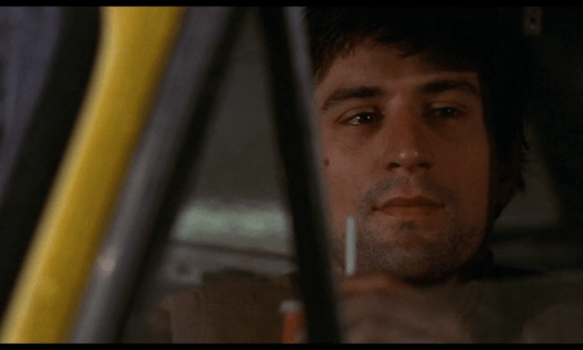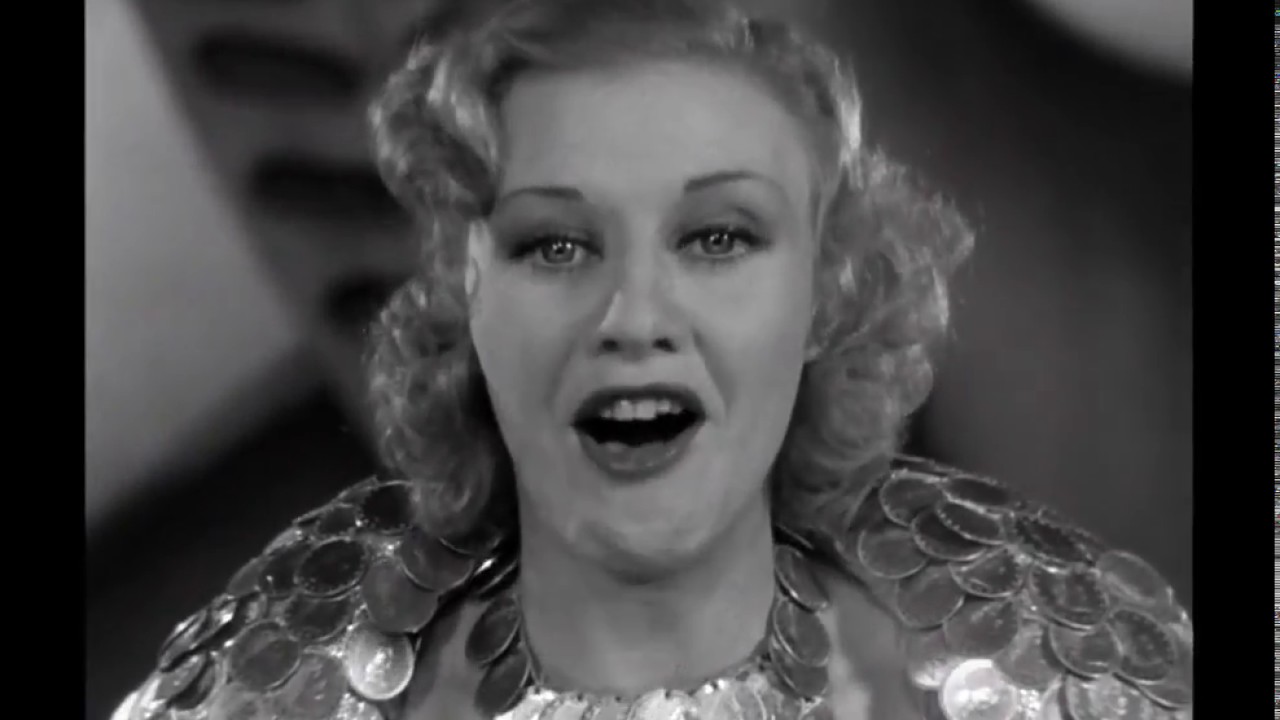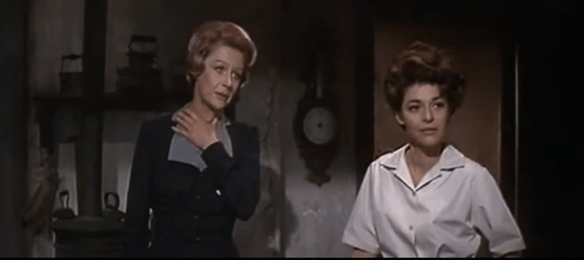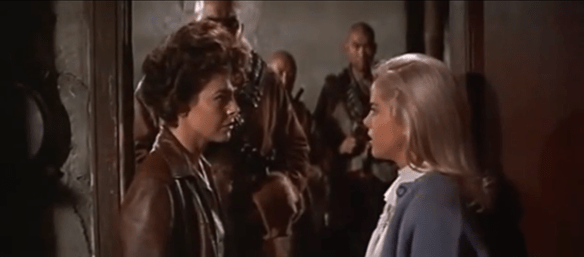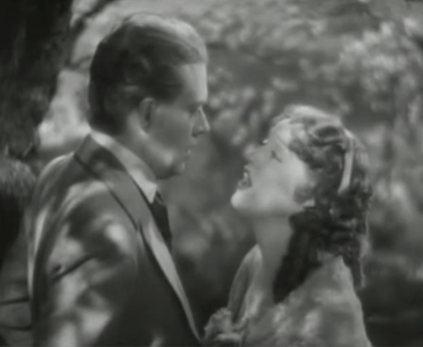
The Story of Adele H. (1975): Starring Isabelle Adjani

L'histoire_d'Adèle_H.I didn’t think about it until the movie began, but the only person I’ve ever known to only go by the initial of their last name was for the sake of keeping their anonymity. If you’re a nobody, it doesn’t matter who knows your name.

In this case, if you’re the great Victor Hugo’s daughter, they stand up and take notice. Especially if you run off to Halifax Nova Scotia to pursue a British soldier named Albert Pinson of some dubious repute. Hence Adele H.

This is her story based on the diaries she left behind. It’s during the American Civil War. It’s still left to be seen if the Confederacy will be able to succeed. Adele’s father is currently exiled from his homeland, and she is intent on receiving the invitation of marriage from the man she once rebuffed.

When she lands in the new environment, there’s a timidity furled about her to go with her obvious affluence. She picks up a coach and converses in impeccable English with the driver looking for adequate lodging for someone like herself.

The place settled upon is a boarding house run by a Mrs. Saunders, and there she finds a welcoming albeit humble abode, the perfect home base to begin her inquiries. It seems a noble mission in the service of love.

I’ve come to like Francois Truffaut’s brand of economical period piece. Because usually we come to equate them with ballooning budgets and grand narratives, but Truffaut seems more interested in the character studies. If The Wild Child and now The Story of Adele H. are any indication, it’s the personal relationships he’s invested in and this allows the director to step into the cultural moment and still somehow make them highly resonate with us in an altogether different era.

Isabelle Adjani is the portrait of youthful innocence and she is so young, so beautiful, and full of emotional fervor. It’s hard not to be carried away by the passion of her performance.

Her first meeting with her beloved Lt. Pinson (Bruce Robinson looking like a British incarnation of Alain Delon) blooms with this candor even as it becomes obvious he’s moved on — he no longer has feelings for her, if he ever did — and what’s even more heartbreaking is how madly she still desires to be with him.

Even as the film cuts back and forth between French and English, one is reminded how French really is a romance or romantic language. English sounds so blunt and harsh, at times, in comparison. Maybe as a native French-speaker Truffaut’s not attuned to his actor’s tones in English. Maybe he’s playing off these very elements. No matter, the French is quiet, melodious, and even rapturous in the most passionate declarations.

I don’t understand the literal translation (without subtitles) but the underlying feelings are crystal clear and devastatingly powerful. Her zealousness, the pleading professions of love, met by a soldier whose stoic aloofness only draws out her urgency even more.

One is reminded of a scene where she enters a party — dressed in the hat and tails of a gentleman — but she doesn’t seem to bother hiding the fact she’s incognito, and she gets inside. We see in through the glass as someone goes to fetch Pinot, and he’s forced to make a show of the whole thing by pulling Adele outside and trying to make her listen to reason. Through Nestor Almendros’ fluid cinematography and Truffaut’s intentionality, we understand the whole dynamic without hearing the words spoken.

Or there’s another instance where Adele is presented with a couple volumes of her father’s works by a bookkeeper who is more than a bit smitten with her. But her eyelashes flutter in the most mesmerizing manner, and she proceeds to lash out at him. She doesn’t want to be reminded of who she is and where she comes from.

By now Adele has crossed over to the point of desperation, tears, and, ultimately, obsession. The story begins to sink and devolve into something else entirely. For the first time, we realize what might really be going on.

This might be the most propitious time to insert a morsel about the real Adele Hugo. She most certainly would have been diagnosed with schizophrenia. Truffaut doesn’t actually make his film about mental illness per se, and that is problematic if we are clamoring for a wholly authentic biopic.

Instead, we must watch Adele’s descent without much explanation. At night she’s overtaken by terrors and during the day she doggedly pursues any means to bring her eternal back to her. First its vague thoughts of hypnotism, then deceit, and character assassination, effectively besmirching her lover’s reputation with anyone else who tries to wed him.

It’s these interludes which somehow evoke the possessiveness of Ellen in Leave Her to Heaven and yet far from being vindictive, Francois Truffaut casts them in the most pitiful of lights. The film is spellbinding for much of the outset, and Adjani remains steadfast through it all. She carries it along based on her immense graces alone.

However, as the dirge-like rhythms drag on, it can hardly maintain its running-time, following Adele through events that feel like foregone conclusions as she becomes more dismal and delusional. It feels like most of the ideas have been expressed to their full potential, and now we must wallow in her trail of unrequited love.

Finally, she follows her man to Barbados only to be left as a shell of her former self escalated by her complete and utter deterioration. When the film ends it feels like a courtesy to all parties. To Adele because she needn’t suffer anymore and for the audience because we could hardly be more woebegone.

If anything, The Story of Adele H. touches on the darker caverns of Truffaut’s creativity, and yet maybe it’s simply because we always remember the youthful giddiness in his pictures instead of the forlorn aspects. More than anything it makes one appreciate how eclectic his body of work is and the through-line connecting every picture is authentic humanity — even humanity unhinged — in some way, shape, or form.

It just so happens Adele Hugo’s humanity was a bit more depressing. The sad thing is, probably few people actually know her name or, frankly, care about it. In spite of this, Truffaut manages to cast her as a creature of unwavering love on the scale of Wuthering Heights or other comparable works.

At 20 years of age Adjani already had completed a role for a lifetime. If you didn’t get the impression already, she has a magnificent aura about her, half spectral beauty, half tragic heroine.

4/5 Stars

The Wild Child (1970) and Truffaut’s Empathy

Wild_child23.jpgThe Wild Child (L’Enfant Sauvage in French) is based on “authentic events,” as it says because Francois Truffaut became fascinated by a historical case from the 1700s. A feral boy was discovered out in the forests and then taken under the tutelage of a benevolent doctor.

Although he had initially wanted to adapt The Miracle Worker, Arthur Penn got to it first and released the rendition of Helen Keller’s story to much acclaim. Instead, Truffaut pored over the medical observations of one Dr. Jean Marc Gaspard Itard relating to the curious case of the aforementioned Victor of Aveyron. Somehow this effort follows in the same vein of The Miracle Worker but feels entirely organic and indigenous to Truffaut’s roots.

There are several striking elements about The Wild Child that become immediately apparent. At first, I wasn’t expecting the black & white cinematography, but somehow it makes so much sense. It’s an intuitive expression of the world and frequent Truffaut collaborator, Néstor Almendros, shoots the world with a stark, no-frills tintype aesthetic proving quite extraordinary.  The pictorial simplicity is impeccable. Meanwhile, the soundtrack is equally spare, all but scoreless, aside from interludes of Vivaldi when appropriate.

The second notable aspect was the opening dedication to Jean-Pierre Leaud. This only makes sense if you consider the lineage of Truffaut and where he has come from. Certainly his first and greatest achievement was The 400 Blows, which starred Leaud as a wayward youth — not far removed from Truffaut’s childhood or Leaud’s own.

Their relationship remained closely intertwined even as it charted the course of the Nouvelle Vague with the works of Jean-Luc Godard and the resurgence of the Antoine Doinel character in Antoine and Colette, Stolen Kisses, and the still forthcoming Bed and Board.

Of course, in following the historical discovery of a feral boy in the woods of 18th century France, the environment and context could not be farther removed. The opening moments are a striking wilderness chase scene with the naked boy living off the land and fleeing from a pack of hunting dogs, looking to smoke him out and earn the good graces of their masters.

It’s the story of civilization impinging on the natural world even if it is under unusual circumstances. The narrative isn’t an altogether novel one if you remember any historical examples of Native Americans who were shamelessly paraded through so-called “enlightened” western society, like sideshow attractions, only to be decimated by their diseases.

Still, Truffaut films are nothing if not personal, and The Wild Child fits into this personal collage. Each one of his films, individually and together, is sculpted by his ideas into vessels of art and creativity — ways in which to see the world and make sense of it.

If nothing else, somehow he seems to empathize with the circumstances. First, from the child’s perspective, to be left for dead, without parents until the age of 11, and then thrown into a world you cannot comprehend. But he has also evolved into the adult — in this case Dr. Itard — who, in a show of sympathy, makes the boy his charge, if not a pet project.

Truffaut is so invested in this role he throws off all pretense of merely being behind the camera and takes on a role in front of it. Both cinematically and practically, he is the boy’s mentor and guide without an intermediary of any kind.

You can see how deeply he empathizes with other human beings and somehow the good doctor seems like a fitting stand-in for Truffaut himself, on multiple accounts. In a society that looks down at this boy, seeing him merely as an outcast, an idiot, a pariah, Truffaut/Dr. Itard sees someone worth salvaging. He won’t give up on the creature’s intelligence nor his primal urge toward morality  — some latent iteration of the noble savage.

And yet he can still be an exacting, obsessive taskmaster. All for the creature’s own good mind you, but there you are. Whether it be the acquisition of language, intelligence, or cinema, you can easily see how any of the three could overlap. He has the end goal in mind, and he’s so unswervingly devoted to the success of his pupil, even to the point of feeling callous at times.

Was this the way it would have been with a wayward, youthful Leaud? Was this Truffaut with his mentor and father-figure Andre Bazin? All seem to be hinted at and as an audience, we can only surmise. Because you have this complicated tie between teacher, antagonist, and friend underlying this film, regardless of its period context.

Someone who opens up the world to you in their infinite wisdom, but no doubt causes you to want to rebel at other times. This is integral to our nature, not only as children but when we grow up too. Only when we’re older are we granted the full lucidity to see everything clearly with the benefit of hindsight. To see the motives behind discipline, tough love, and the implementation of rules.

If I’m to search my own heart, it is not always noble. It is not inclined toward good and has a predilection toward selfish and petty ideas. It takes some framework, some discipline to rein in, but not with the dismissiveness of the civilized elite from Paris and the learned academics. The honest-to-goodness humanity of Dr. Izard/Truffaut and the maternal affections of Madame Guerin are a fine place to start for reference.

Victor isn’t a miraculous case study during his time in their home by any means. He’s a work in progress. But isn’t he a far cry from where they found him — naked, wild, and living in a hole — self-sufficient though he may have been? As children, we are often content making mud pies in the sand when he could have something far better.

As someone who has dabbled often unsuccessfully in the field of education, you realize it’s the little victories that feel like moving mountains. Thus, when Victor begins to retain information, return home of his own accord, and spell the word “LAIT” when he wants milk, these are miraculous in themselves.

Still, it takes the adult to have the foresight to know what will be in the child’s best interest. Things get more convoluted when the dynamics change. That, folks, is what we call the teenage years. Because it’s true sometimes, what people think is in their best interest differs greatly.

4/5 Stars

AFI Corner 100 Songs: #4 Moon River

In this column, I go back to my roots with The American Film Institute’s Top 100 Lists, a good place to start for those interested in Classic Hollywood films. It’s in concurrence with #AFIMovieClub and the 10th anniversary of becoming a classic movie fan myself.  Thanks for reading.

Let me be clear about this. “Moon River” was love at first sight. The genesis is a bit unclear. Certainly, I saw Breakfast at Tiffany’s first. That must be it. Although my Grandparents had Andy Williams on record. That could have been it. I’m not sure.

The bottom line is the mellifluous tune, with its wafting nostalgic melancholy and quietly evocative tune is beautiful in all its many forms. Mancini’s composition, tailored to Audrey’s own voice, is perfectly understated for her. The lyrics of Johnny Mercer are beyond compare. Simple yet perfectly measured.

I often jest that it’s the kind of song I would want to play at my wedding, but there’s some truth to that as it touches on something that I think is wonderful. For me, it’s the embodiment of love and longing indicative of both the past and future. Huckleberry friends we’ve left behind and those at the rainbow’s end we’ve still yet to meet.

What’s more, it a melody plucked out of time. Yes, it’s the track in the opening scenes of the movie. Yes, Audrey Hepburn sings it so tenderly. But it has a life of its own.

This is part of what makes it one of the most memorable tracks on The American Film Institute’s Top 100 songs. There might be better songs, but nothing can fill the same void in me like “Moon River.” It warms the cockles of my heart.


Classic Movie Beginner’s Guide: John Ford

In our ongoing series, we try to illuminate a person in film history we believe newcomers to classic film should get to know.

This week we thought it would be a nice challenge to try and acknowledge the irrefutable career of John Ford, one of the towering giants of 20th-century cinema. Not only did his images and stories become synonymous with the myth of American West, you could take it a step further and say his films made up the fabric of America itself.

His collaborations with the likes of John Wayne and Henry Fonda boasted some of the greatest achievements in movies of all-time while his beloved Monument Valley has to be one of the most iconic filming locales there ever was. Without further ado, let’s focus in on the irascible maestro Pappy Ford.

Stagecoach (1939)

Image result for stagecoach 1939

To be quite honest, John Ford had a vibrant career well before Stagecoach including numerous well-regarded silents and critical successes influenced by his Irish roots like The Informer (1935). However, Stagecoach galvanized his partnership with John Wayne and it stands as a marker of his vast imprint on the Western genre.

My Darling Clementine (1946)

Image result for my darling clementine

Before I get ahead of myself, you should sit down right this minute and watch Ford’s Grapes of Wrath, also starring Henry Fonda and adapted from John Steinbeck’s famed novel. The images are unforgettable. Of course, the same might be said of My Darling Clementine a western that canonizes the legends of Wyatt Earp and the Gunfight at the O.K. Corral.

The Searchers (1956)

Image result for the searchers 1956

The Searchers is unquestionably John Ford’s magnum opus. The visuals are gorgeous with his usual painterly eye. Monument Valley practically leaps off the screen. John Wayne provides one of the most stunning performances of his career. And he’s surrounded by Ford’s typically robust stock company. It’s the kind of film where long passages stay with you.

The Man Who Shot Liberty Valance (1962)

Image result for the man who shot liberty valance

It would be so easy for this gritty black & white western to rely solely on star power headlined as it is by John Wayne and James Stewart. However, Lee Marvin is equally important as sadistic outlaw Liberty Valance. Ford adds another stunning entry to his Western landscape this time tackling larger-than-life men and the myths that surround them. When the legend becomes fact, print the legend.

Worth Watching:

The Iron Horse, 3 Bad Men, The Whole Town’s Talking, Young Mr. Lincoln, The Long Voyage Home, How Green Was My Valley, They Were Expendable, Fort Apache, She Wore a Yellow Ribbon, 3 Godfathers, Wagon Master, Rio Grande, The Quiet Man, The Long Gray Line, Mogambo, The Horse Soldiers, How The West Was Won, 7 Women, and more.

The Discreet Charm of the Bourgeoisie (1972): Prime Luis Bunuel

discreet charm 1.png

In school, I remember being enthralled by Edouard Manet’s “A Bar at Folie Bergerie” when it donned on me we were integrated into the piece, and the artist was messing with our preconceived notions by literally toying with our perceptions.

As an artist who came into his own a generation later with the likes of Salvador Dali, Luis Bunuel oftentimes manages the very same feat of artistic manipulation through his films. He’s the iconoclastic prince and lambaster of the bourgeoisie. He is a craftsman with an intuitive sense of how to toy with, not only his subject matter and his characters, but the audience sitting before him.

Discreet Charm of the Bourgeoisie, which we might posit as an exemplary monument to his life’s work, begins with a vaguely familiar premise. People are gathering on the pretense of a dinner party, not unlike Exterminating Angel. Except there is no invisible force holding them there. Quite the opposite. For inexplicable reasons, they keep on getting interrupted and thwarted in their attempts to sit down together for the most curious of reasons.

To their credit, the central sextet sells out to the whole charade. Fernando Rey is up to his smutty old tricks as a respected foreign ambassador with a lecherous side cultivated under the right circumstances. His frequent companions are the Thevenots, Francois and Simone (Paul Frankeur and Delphine Seyrig). Nor can one forget the Madame’s air-headed sister Florence who always seems to be perpetually tagging along.

First, they go to their dinner engagement at a friend’s home for round 1. Alice Senechal (Stephanie Audran) isn’t expecting them because she thought she invited them on a different date and her husband Henri (Jean-Pierre Cassel) isn’t at home. It’s an honest enough mistake. Except the next time, it’s more of the same as their libidos get the best of the hosts. Their maid Ines takes it all bravely with a sweet, unassuming smile as if playing dumb to all the idiocy going on around her on any given day.

It is most definitely a film of first world problems gone awry. We have a bunch of dense and pompous people of exceptional superficiality before us. However, this very easily arrived at prognostication starts giving way to more and more surrealist tinges.

The film hits the skids as Bunuel takes us into a realm all his own. Whether it’s the mind of a mad genius or a perverse old man is up for debate among the literati. But of course, he would hardly give their discourse (or mine) a thought.

Things start getting ridiculous with meal after meal stacked one on top of the other to the point of dizzying regularity. Every scene crammed together features a new dining table or a new conversation over drinks with a dash of the absurd for garnish.

Not to mention nested dreams before the days of Inception because of course, everyone, even Bunuel, seems to have some fascination with the meta, going so far as inserting his own dreams into the story purely because he can.

discreet charm 3

What becomes the guiding force is this quintessential fluid sense of absurdism accentuated through the execution of more complex shot sequences utilizing zooms and tracking shots. They maintain the continuity while helping to accentuate this Bunuelian sense of dreamscapes. Because for him that’s much of what the world is, a stream of consciousness, and there’s no necessary distinction. And yet there are times within the film he acknowledges them so explicitly as if to send a self-aware wink to the audience.

Meanwhile, he has gleeful fun forcing his characters to walk down the road together toward nothingness. One moment they’re waking up from a crazy dream. The ladies settle down for tea only for none to be available and instead they’re treated to the ghastly stories from a sad-sack lieutenant’s abysmal childhood.

All bets are off when they’re interrupted by cavalrymen winding up their maneuvers and then passing around a joint in the parlor. Another time they’re arrested for some nameless crime and another gunned down by mobsters without pretense.

I’d hardly call these moments spoilers because Discreet Charm of the Bourgeoisie is full of non-sequiturs. Anything is capable of happening at any moment. Sometimes all of dinner is a stage, and the guests merely players. Other times Vietnam seamlessly fits into the context of the scenario’s commentary (“If they bomb their own troops there must be a reason”).

In a sense, Providence is replaced by the rhythms of chance and the bizarre, laying the groundwork for the director’s implicit worldview. But of course, it stretches much further than that imprinted onto the themes and the very fabric of the characters.

The hypocrisy of the social elites is always being closely tied with religion. Bishops are to be made light of and Bunuel’s conception of their rituals can best be summarized by one telling image of a crucifix, cradled in the arms, getting dirt unceremoniously dumped on top of it. Or for that matter, the same priest gives absolution to the man who killed his parents only to think better of it.

But not for a moment would we mistake any of these abrupt outbursts for true drama; each individual instance is only a trifle, a way for Bunuel to follow his flights of fancy like he always does, trampling everything around him with wry exhilaration.

Whatever madcap visions you can imagine in their drawing-room, they basically wind up coming into being. Although Bunuel doesn’t have the same carnivalesque showmanship of Federico Fellini or the technical and spectacular panache of a Hitchcock, he nevertheless invariably keeps their company.

For better or for worse, his films and the visions they employ stay with you. What’s more, his conception of the world is quite transparent. Fellini was mirrored in the director in 8½. There are shades of the “Master of Suspense” in Scottie from Vertigo, and just about every man in a Bunuel picture bears his mark and, at the very least, his philosophy of total irreverence.

discreet charm 2

What’s striking is how volatile and relevant he feels in the modern age. I for one always find it perplexing to come at his work because not only does his filmography undermine the tenets of classical narrative convention, he also does much to play his audience as well.

“The Folies Bergere” was mesmerizing as we began to understand we are part of the piece. A Bunuel film is similar because you are brought into it as well and yet one could argue he goes a step further by making his audience the butt of the joke.

All your personal hangups and hypocrisies — social, political, religious, romantic — whatever they may be, will be ousted and laid bare. His players are easy targets as representations of the trivial social elite. But then we were tricked into spending all this time with them that ultimately went nowhere. So let me ask you, what does that make us? Be forewarned Bunuel might just get to you too.

4/5 Stars

Army of Shadows (1969) and The French Resistance

army of shadows 1.png

Army of Shadows is another film from Jean Pierre-Melville that falls back into the realm of the autobiographical, even as it’s based on a book by French journalist Joseph Kessel. Because Melville, a resistance fighter himself, had a previous history with this very same world. The names and dates were real, living history for him, and he gladly blended it all into his movie.

It’s also defined by the director’s well-established palette of choice. True to form, it leans into his typically dismal and dour canvass as an overt extension of its characters’ malaise. A rainbow proves a total impossibility in a Melville picture. Equally surprising is a smile on a face or an intonation of laughter.

In the opening interludes, a prison van takes a detour past a rural cottage to pick up a couple basket of provisions. It’s a curious juxtaposition and somehow a fitting bit of exposition about our setting. Because Army of Shadows is a modest epic if you will, ably covering all the ambiguities of an institution like Vichy while simultaneously documenting the moral gradient of good and evil Hannah Arendt so perceptively termed “banal.”

Our hero is a bespectacled, well-mannered man named Philippe Gerbier (Lino Ventura); he also happens to be a vital member of the underground. Hence his arrest and sentence to a local camp. He seems unphased by the whole ordeal as if he’s been here many times before. It’s all unextraordinary after the countless things he must have seen and done.

The subsequent inner monologues are honest if not pedestrian, perfectly in line with the world being developed. Because it’s a film as much about expressions as it is words. Reading over people, waiting, biding time, and weighing the options laid out. In these early instances, Ventura establishes himself as an apt hero, given our context.

In this unsparing portrait of the war years — at the same time both moral and unsentimental — he’s the perfect barometer of the times, rarely showing emotions. He dare not. You come to understand why, when faced with the ordeal of having to dispose of one of your own — a craven traitor — for the good of the outfit.

The zealous young recruit Le Masque (Claude Mann) is eager to do his part, but he’s quickly stripped of his illusions. What follows is a devastating death scene — implied though it may be — because it effectively takes away all pretense of heroes and villains. It sets a precedent for the entire picture and where it will dare to go in order to pay homage to those who went before. One shudders to think that this is one of the easier decisions they have to make.

It becomes a reality of wartime existence. People die unceremoniously; they’re interrogated and tortured even as this onscreen brutality remains minimal. Still, each and every time we’re well aware of the aftermath and the ensuing consequences. It doesn’t make it any easier. The one lesson the experienced pass on to the naive is to always carry a cyanide capsule on your person.

Although the film is unsentimental, it’s not altogether unfeeling. Rather there is a maintained sense of wistfulness around the frames. Mainland Europe has been sent through the wringer, and it went on so long they almost came to accept the status quo. Even the German “Heil Hitlers” feel a bit bedraggled and half-hearted by now.

Army of Shadows is built on the foundation of a profound paradox. Because in reflecting its own subjects, it remains extraordinarily aloof while still managing to be deeply personal, even intimate.

They keep their humanity guarded. To show it would be a weakness to be exploited. But in this razor-thin web of moral ambiguity and dubious decisions, it’s the one element holding them together.

army of shadows 2.png

It’s striking that while he walks down a dank corridor flanked by SS troopers to a foregone conclusion, scenes flash before Gerbier’s eyes. A pretty nurse in London. Walking in the forest with Mathilde (the inimitable Simone Signoret) amidst the calm of nature. They are glimmers of something else totally contrary to what he is experiencing at the moment. He clings to them fiercely because they offer some semblance of humanity.

The same might be said of Mathilde — an extraordinary woman of immense mettle with only one weak point — a family for whom she cares deeply about. Again, you cannot totally eradicate their hearts and souls.

This is not an action film; the events making up their days feel rudimentary and yet in each case, something might go horribly wrong. We live life right alongside them in this state of perpetual anxiety. Gerbier takes on an old acquaintance (Jean-Pierre Cassel) to run errands including transporting vital radio parts past the authorities.

They conduct a late-night rendezvous with a British submarine to evacuate P.O.W.s and some of their leaders back to the British Isles. In fact, these are some of the film’s most curious digressions.

A medal is bestowed for bravery. Gerbier and his companion Luc Jardie (Paul Meurisse ) view the raptures of Gone with the Wind in the cinema rather pensively. Even with the air raids, life is seemingly brighter in Britain, with bits of freedom still hidden away behind closed doors and in dance halls. We wonder where the film can go from here? Is it stalling? No, it’s giving us the respite we desperately need.

I deeply admire seemingly ordinary people who are unwavering in their resolve to walk into the lion’s den for the sake of liberty, knowing full-well what they are getting themselves into. I believe Willam Goldman called it “stupid courage.” There’s no more startling example than those who willfully returned to Nazi oppression.

army of shadows 3.png

In this case, it’s an easy choice as Gerbier feels beholden to rescue his comrade Felix (Paul Crauchet ) who is currently being held at Gestapo headquarters, tortured to the point of exhaustion. It spells an end of the beginning because, in these dismal days of ’42 or ’43, things would only get worse before they got better.

Army of Shadows settles on a cruel conclusion indicative of the storyline thus far. In this way, the film maintains its narrative integrity. There’s no happy-go-lucky denouement slapped on. No such luck. They are faced with the impossible problems — the “Sophie’s  Choices,” if you will. I am reminded of Mathilde masquerading as a nurse, helpless to save a friend lest she betrays her cover. Or there’s Luc breaking with precedent by showing his face in public to pay his final respects to a friend.

In its day the film was a victim of poor timing, being released in the wake of ’68 with De Gaule, the former war hero, more despised than ever for his handling of the student protests.

Thus, the film became commercial and critical collateral damage, even failing to garner wider release in American until 2006! However, now it’s easy enough to look at it and one can hardly begrudge Melville his brand of patriotism since it strikes such a resonate chord with his own experience. As such, I’m led to deeply respect the film for its uncompromising perspective. It drains you of all veneration and hero-worship from the opening shot of German soldiers clomping through the Arc de Triomphe.

The true miracles are of an ordinary nature. Survival and yes, maintaining even a shred of decency in such a compassionless world. Sometimes the ultimate act of love is the most painful. The most devastating revelation the very fact that everything you might be clinging to could just as easily be a lie. What’s more, we might never know.

Forget villainy. Heroism is not a far cry from jaded, fatalistic acts of duty by insignificant little people sadly forgotten by time. I felt compelled to believe its depiction even as they unnerve me. It leaves no pretenses about war-torn France.

4.5/5 Stars

AFI Corner: 2010 My Film Odyssey

This is the Introduction to a new column called AFI Corner for film fans who want to get to know The American Film Institute’s 100 Films lists. It’s in concurrence with #AFIMovieClub and the 10th anniversary of becoming a classic movie fan myself.  Thanks for reading.

Always in the back of my mind, I had the idea of trying to write a book or compendium on how I got into movies. If you couldn’t guess already, the highly original title of said book was to be 2010: My Film Odyssey (or some derivative).

Well, it’s never gotten off the ground and probably for good reason. The world rejoices. Who would want to read a poorly edited monolith like that? After all, I’m hardly the Stanley Kubrick of the written word. However, in the same breath, 4 Star Films would have never existed without that year and these lists.

It was in 2010 where I began to take a genuine interest in classic cinema. It really was an odyssey born out of curiosity and my own ignorance about movies. I wasn’t exactly an avid moviegoer in those days.

File:North by Northwest movie trailer screenshot (28).jpg ...

But a family vacation introduced me to TCM (my family never had cable), and I got to see a handful of respected classics. 12 Angry Men (#87), To Kill a Mockingbird (#25), and It’s a Mad, Mad, Mad, Mad World (#40 Laughs) among them. Seeing Mt. Rushmore and Devil’s Monument in the flesh, meant I rushed to my local library when I got home, so I could see North by Northwest (#55) and Close Encounters of The Third Kind (#64 Original).

From there, the details are a bit murky. Somehow I came across the American Film Institute’s lists online, the two flagship editions being released in 1998 and 2007 respectively. I was too ignorant to know how much dialogue (and controversy) came with the unveiling of these lists.

All I had was my curiosity and a desire to see more. When I started, I did my due diligence and checked off a whopping 12 out of 100 back in 2010! And if you’ll notice, almost half of the movies were ones I watched that very same summer for the first time.

So I built up some steam and started taking to the list. I took numerous more trips to the library. Had family members and acquaintances all check their progress on the well-worn paper copies I had so I could match their progress. It was evident I was still a movie novice. But I was learning.

Before I get ahead of myself, I should point out this blog came out of the handwritten notebooks of “reviews” I used to keep. After almost every movie I watched, I had a desire to try and write something down, not only as a record of what I had viewed but also to give it some meaning. I didn’t want it to be a mindless endeavor. I wanted to be invested.

Its a Mad, Mad, Mad, Mad World Trailer2.jpg

Looking back, I laugh. The writing is stunted and formulaic. It’s more plot summary, and there are very few original ideas, but, again, I was learning — growing as a movie lover and a writer.

I’m not sure how this column will evolve, but I would love to share some of those reviews, many of them buried somewhere on this very blog, and then provide some commentary on them based on the movies and my own personal experiences with them.

Because while my life stage and location have changed quite a lot in the last decade, the movies have remained a constant. What I bring to them anew is what’s so enjoyable with every rewatch.

If I was a true raconteur I would have spun a better tale about my film odyssey. That’s part of the reason my magnum opus never materialized. Instead, I’ll leave you with this. I never actually completed any of the AFI lists outright. As of last year, I have seen 99 of 100 titles from AFI’s 100 Years…100 Movies (10th Anniversary Edition)!

Yeah, in 10 years I went from 12 to 99 (The one title I haven’t seen is The Deer Hunter, I know, I know). It doesn’t sound that amazing. However, this fails to count all the countless digressions and sidetracks carrying me through all the nooks and crannies of cinema. And while I might get around to watching #100 someday, I’m actually fine not having finished.

For anyone reading this, with aspirations of going through this list or something similar, I think it’s a reminder that the journey is not just about completion. There’s something to be said for setting goals (even a dubious one like watching more movies) and then going out and enjoying the experience. I can say resolutely this hobby has given me a great deal of joy, and it continues to do so even as it increases in leaps and bounds.

I hope you join me in the AFI Corner to explore more of these lists. I also hope it’s a reminder that something like these compilations is innately flawed, but they are not an end; instead, they’re a beginning. At least that’s what they were for me, and they can be for all of us. A beginning of community, conversation, and connection. Please join me!

How many movies have you seen from AFI’s 100 Years…100 Movies (10th Anniversary Edition)?

How did you get started watching classic movies? 

A Special Day (1977) with Loren & Mastroianni

a special day.jpgThe film opens with newsreel footage delivered to us in an undoctored format effectively presenting us a view into the past. It is the momentous (some would say fateful) day Adolf Hitler made his triumphant visit to see Benito Mussolini in Italy.

The year is 1938. And it has all the pomp, circumstance, military exhibitions, and blind nationalism one comes to expect with such historical depictions. Director-screenwriter Ettore Scola elects to give us the past instead of totally constructing a version of it. Because that is not what his film is about.

Even to consider Fellini’s farcical take on fascism in Amarcord, complete with swooning beauties and talking Mussolini faces in flowers, A Special Day couldn’t be more divergent. It works and operates in a much smaller more confined space, serving its purposes just fine. As the movie itself opens, we are immediately met with the most confounding of palettes — an ugly clay-colored hue — hardly the best for drawing on fond memories. In fact, it’s utterly unappealing.

This is not a criticism, mind you, because the pervading drabness is another calculated creative decision. What it provides is a very concrete articulation of the world. Furthermore, without committing to the broader context, Scola is able to focus his attentions on one building.

So yes, there is this huge cultural event with a gravitational pull dragging everyone out of the house in droves to celebrate with patriotic fervor. Everyone wants to see the Fuhrer and Il Duce for themselves. But this is all pretense, again, serving the smaller, more intimate scale of the film. It’s for the best.

Not totally unlike Hitchcock’s Rear Window, the housing complex becomes a limiting factor, but also a creative asset. The architecture and space evolve into something worth examining in itself. Within its confines, our two protagonists are thrown together thanks to an escaped myna bird. One is a long-suffering housewife (Sophia Loren) forced to stay at home while her family enjoys the festivities. She’s a middle-aged Cinderella with all the youthful beauty sucked out of her.

Her husband (an oddly cast and dubbed John Vernon) is an arrogant party supporter and all her six children are either brats or too young to know any better. Her station as a mother and wife feels totally underappreciated, even dismissed.

The other forgotten person she happens to meet is a radio broadcaster (Marcello Mastroianni), unwittingly diverting him from an attempt at suicide. Because the current regime has no place for subversive naysayers like him on the national airwaves.

There’s a questioning of whether or not there’s enough for a film to develop. Can it hold on and keep us on board for over an hour? Given everything so far, it’s a no-frills scenario. There’s not much to work with, and success in itself seems like a tall order. Thank goodness we have the likes of Sophia Loren and Marcello Mastroianni. The promise of having them together is a worthy proposition and in this case, it hardly disappoints.

If you’ve only seen them in their star-studded, glamorized roles, prepare to be astounded. Loren could never look completely dowdy, but there’s definitely something forlorn about her. She carries it off quite well. Likewise, Marcello, normally a suave fellow, still has his prevailing moments of charm, but he too is equally subtle.

At least in the case of Loren, it seems like Hollywood only ever saw her as a screen goddess with an accent, and thus cast her in roles catering to that predetermined persona. And yet in her native Italy, in a movie like Two Women (1961) or here in A Special Day, it’s as if they gave her the freedom and the trust to stretch herself and really prove who she was as a bona fide actress.

The little doses of magic they drum up together carry scenes and if you’ve ever seen any of their movies, the intuitive chemistry coursing between them is, by now, almost second nature. Dancing steps of the rhumba to the cutouts on the floor. For one single moment, a saucy tune drowns out the choruses of a fascist regime.

Later she tries to quickly style her hair in the bathroom as he bungles grinding the coffee and sweeps it under the rug like a sheepish schoolboy. Or he makes his valiant attempt at fixing the lamp over the kitchen table that always leaves Antonietta bumping her head. These are the lighter notes.

But if these are the distinct instances of near frivolity, then A Special Day is about so much more on a broader scale. It casts an eye on a society that deems women as totally auxiliary in both intelligence and importance.

Likewise, one is reminded about the institutionalized hatred including vitriolic prejudice against homosexuals. Where people have lost their image and are merely cogs in a political, faux-religion of the state. Not everyone fits in. Gabriele even exhibits a touch of mild insurrection to the state by not abstaining from using the banned “lei” instead of “voi” when addressing others, as the former was seen as too effeminate by Italy’s fearless leader.

If not totally radical, the relationship at the core of this movie feels countercultural, even as it probably taps into the basic longings of many. In some strange, miraculous way they understand one another, unlike anyone they ever have before.

It’s how the film is able to be an empathetic portrait of humanity. Never has it been more evident that understanding can exist anywhere and between anyone in the most unusual of circumstances. So by the time the day’s festivities are winding down and the crowds rumble back in, the two kindred souls part ways to their separate ends of the courtyard, and yet there’s no way not to think about one another.

Gabriele starts packing up to be shipped off and deported because Mussolini’s regime is no place for a man like him. Antonietta puts together dinner for her family — all the normal duties required of her — existing once more as the silent life force behind the entire household. Her mind can’t help but wander to the only person who seems to know her, just as one’s eyes can help but glance at the light he helped fix only hours before.

He takes one final survey of his apartment, his room goes dark, and he’s escorted out of the courtyard, quietly, without any fanfare. The wide void between their apartments has never felt greater. It is the antithesis of a Rear Window ending.

After a few moments of leafing through The Three Musketeers — the book he gifted her — she wanders off to bed and follows suit by turning out the light. Darkness overtaking the day in the never-ending rhythms of life.

If it wasn’t apparent already “a special day” is meant to elicit two connotations. The state would have you believe the sights of Hitler, Mussolini, and grand feats of military might are the type of memories you won’t soon forget. Perhaps they’re even worthy of telling your children about someday.

However, for others, “a special day” means something far more. It has to do with empathy and truly knowing someone and being known like you’ve never been known before. For isolated people in a callous and lonely world of monotone, it’s so much more than all the bells and whistles at a parade. In its own unassuming way, A Special Day is a heart-wrenching love story to the nth degree.

4/5 Stars

Amarcord (1973): Life is a Carnival

Amarcord.jpg

The most magical moments of Federico Fellini’s Amarcord occur at the very beginning and near the end. First, when the puffballs flutter through the air as a sign of spring and then, later, when a soft layer of powder signifies the advent of winter.

It’s a reminder of nature, of seasons, of how life is made up of rhythms, from beginning to end. If you live in California you miss out on that kind of tangible expression of life. You cannot capture the lyrical quality as the Italian maestro captures them over his vignette-driven spectacle with the aid of editor Ruggero Mastroianni.

Part of the reason I loved living abroad — in Japan specifically — there was some sense of the seasons, the utter sereneness of new-fallen snow, and a word to describe the wistfulness that often goes along with nostalgia and the lasting impression of memories (“Natsukashii”).

Fittingly, “Amarcord” is a provincial Italian expression for “I remember,” and this film is full up on quaffs of nostalgia and playful observation from the always lively creative reservoirs of Fellini. You cannot acknowledge the satire of his film without appreciating the affection embedded within it. They are closely related. Because even as you see all the faults and foibles, you cannot help but cast a sympathetic eye on these imbeciles — at least the lovable ones.

If someone else did it, you would get the sense of something mean-spirited, but when it’s your own people and your own way of life, somehow it comes off as not only humorous and perceptive but surprisingly warm.

The pacing is free; the scenes as loose as can be. Our only real markers of change are the aforementioned seasons. Around them, we get to know people. Spring means puffballs but also the local burning of an effigy on a giant bonfire to bring in the new season, complete with firecrackers and festivities.

School life is a lark full of windbags and crotchety oddballs who obliviously try to impart knowledge to their pupils on the highest arts. Their study regimen includes Greek, mathematics, the frescoes of Giotto, ancient history, the relation between church and state in Mussolini’s society, and so on. Each is a lost cause.

Around the dinner table, Mama and Papa Biondi have raging fits in what we might deem typical Italian fashion. They’re constantly bickering and scolding the bambinos for every infraction. In some upside-down manner, it’s a sign of their love and concern.

It’s true the town’s adolescent population, including their son Titta, get up to all sorts of dirty tricks, languishing in their fantasies, and going to confession only out of duty to their parents. There’s nothing contrite about it. Perhaps they don’t know any better.

You can make this argument judging from more general observation. Through Fellini’s lens, a fascist nation under Mussolini is often ridiculous. Flirtatious “Bellas” like the town hairdresser Gradisca (Magli Noel) swoon with nationalistic fervor at rallies, races, Grand Hotels, and the triumphant passage of the SS Rex — a vessel of national pride. That is until it capsizes all the beaming onlookers in their dingies.

One is reminded life is simpler and full of everyday peculiarities. Take Uncle Teo who gets a day on the town, outside of the mental institution, only to spend most of it barricaded up a tree, proclaiming how he wants a woman. One can only imagine it must be a lonely, dreary place on the inside. Then, there are snowball fights in the streets with the paths carved out of the snowpack and Gradisca a perfect target for all the gamely youth.

Nino Rota’s score accentuates so much mood, so much atmosphere, adding to the visual carnival, like a jaunty march and it is, taking us through time and sending us to places all over the little town.

On this grand scale, I’m inclined to like the idea of Fellini’s carousel of images, at least more than the particulars. This whirling, lively, rendition of life in its march of time speaks to so much about existence itself. The themes of looking back at the old ways — with nostalgia — but then also picking apart where we’ve come from to see the flaws and the idiosyncrasies. Some worthwhile, others worth stripping away and dismissing.

One of the most alarming takeaways is just how bawdy Italian culture is. Now it’s nothing new, but we are reminded of uncomfortable truths. Like the fact, Gradica is the ravishing eye-candy for every leering male in town, young and old. It speaks to so much about the male heart and mind, obsessed as it seems to be with women as commodities.

Eventually, Gradisca finds a man, her “Gary Cooper,” and we don’t have much inclination if he’s worthy of her or not. Still, it signals a change. Her wedding is a joyous Italian affair, but it also signs the beginning of the end. It’s as if, when she goes, along with her goes all the trimmings of their youth.

I am reminded of one moment when Grandpa is wandering around aimlessly in the fog. He’s not exactly a saint either. Regardless, he loses his way and laments the fact there are no trees, no people, no birds, no wine. If this is death, he’s not one for it. The situation solves itself easily enough when a carriage rattles by, and he’s found to be right outside his house.

Could this be Fellini’s way to comment on the situation and then temper it so quickly? Because a lot of the characters in Amarcord seem to be caught in this oblivious sort of fog. The greatest tools at Fellini’s disposal are merriment, humor, and even vulgarity to try and defuse situations, whether about love, death, politics, religion, whatever it is. And it’s a relatively effective form of satire a lot of the time.

However, every once in a while you remember it can only get us so far. The “eat, drink, and be merry for tomorrow we die” mentality, doesn’t quite fill one up with assurance. At least it’s not lasting. Because whether we like it or not, time is always high-stepping onward regardless of whether we’ve made peace with it or not. The turning of the seasons signify life and also death. No one feels that more than Titta. That’s what he’ll remember. Only time will tell if it gets any easier.

3.5/5 Stars

The Sting (1973): Newman and Redford Reunited

the sting 3

To my mind, there’s never been a dream team quite like Paul Newman and Robert Redford — a perfect one-two punch of camaraderie and cool — it comes so easy. All the ladies wanted to swoon over them, and all the men wanted to be like them. Because what they have together is something envied by us all.

Butch Cassidy was, of course, the breakout success helping to redefine the western in 1969 while also cementing the burgeoning buddy genre. It’s amazing we only ever got one other picture in the storied partnership. Thankfully it was The Sting.

Let me be candid. It’s not as great as its predecessor. I never had the same fondness for its narrative diversions and yet even on subsequent viewings, it assuredly plays to its strengths.

The period crime film captures a strain of nostalgia that feels even more euphoric seen through a second lens. This is Scott Joplin, ragtime, old-time title cards, wipe transitions galore, fine threads, better hats, and an ode to the past — twofold. This is prohibition reintroduced by way of the 1970s.

The world of Chicago gambling rackets fits somewhere in between a James Cagney & Edward G. Robinson’s Warner Bros. gangster flicks and John Garfield’s roles over a decade later (ie. Force of Evil). However, while the world is similar, director George Roy Hill has blessed The Sting with a playfulness. It lacks a cynical even brooding edge which would have been so easy to ascribe to. This is the 1970s after all. It would have been in vogue.

But in dealing with the depression years and corruption with a jocular edge, Hill has won himself an audience. He’s made it a game rather than a drama and as such it’s a welcome vessel of entertainment. This is no Godfather or Chinatown, French Connection or Dirty Harry. The Sting gives itself license to lighten up a bit. The delightful opening gambit is a taster for coming attractions introducing grifter extraordinaire: Hooker (Robert Redford), and the old vet who’s taught him everything he knows.

Luther spins tales of “The Big Con” which in their line of business is the big leagues for every man who has ever swindled someone. He urges Hooker to shake off the dust of their crummy town and make something of his unique talents. If the young drifter got his way, he would have stayed put. Still, he has crossed someone very powerful in local racketeer Doyle Lonnegan (Robert Shaw). There’s no recourse but to shove off and begin the next stage of his training.

He must meet the man Luther spoke highly of The Great Henry Gondorf (Paul Newman). In their first encounter, he’s completely swacked only to utter his first words under a showerhead raining water down on his hungover noggin. When Newman’s grouchy voice finally rings out it’s another form of wish fulfillment we’ve been waiting for. He even soaks his head a la Harper (1966). The anticipation is beginning to set in.

The Hollywood landscape has changed in 4 years. Now Redford is the worldwide megastar. Newman is still a big draw and as good as ever. Regardless, it’s a real hoot to have veteran pros like Harold Gould and Ray Walston. Somehow they feel like television actors to me and that’s by no means a dismissal. In fact, it’s actually a seal of approval; they make The Sting more colloquial even familiar.

Things pick up aboard a train as Gondorf sinks the hook into their pray so they can begin the task of reeling him in for the catch. It’s about keeping the mark off-balance, never letting them know they’re not in control, and making a whole lot of fun for the audience because we’re in on the whole shebang.

He makes a late entrance to a gentlemanly poker game by apologizing, “Sorry I’m late guys. I was taking a crap.” It’s a portent for the entire showdown. Newman hamming it up as the steely-eyed Robert Shaw looks on as if he takes every iota of the other man’s being as a personal affront. It’s a very calculated charade getting under his skin quite effectively. The brilliance of Newman is not taking himself too seriously. He has a good time with every beat and the movie benefits.

It’s a pleasure to watch him walk all over Shaw because Newman might be smug, but we’re in his corner and that comes from his long, hard-fought badge of loyalty. He’s one of those actors we relish playing the scoundrel. Harrison Ford might be the other.

As they look to hook Lonnegan by first getting his ire up and then conveniently setting him up with an ambitious inside man (Redford), we have a game on our hands. Meanwhile, the other boys assemble the crew with a makeshift gambling joint being renovated as they speak.

Hearing Ray Walston’s voice over the action, calling the races, is somehow comforting a bit like having My Favorite Martian reruns on in the background. The film is weak in the female character department but fortuitously Eileen Brennan is able to bring something hardy to the world with her mere presence.

And yet it wouldn’t be a story without a few wrinkles would it? Shaw throwing his weight around in order to play by his rules. They must acquiesce to his demands in order to make him feel secure. Then there’s a nagging cop after Hooker for some prior infraction. Soon even the Feds (led by Dana Elcar) get involved as the whole charade continues to crumble precariously.

the sting 2.png

Through it all Redford keeps his cool and looks equally fine streaking around town in his suit — usually to keep from getting the book thrown at him. He might as well be channeling the free-and-easy charisma of Steve McQueen from The Cincinnati Kid. Fittingly, The Sting is an apt descendent of not only that film but Newman’s own stellar vehicle: The Hustler.

Aside from just creating a world of smoky nostalgia, Hill is brave enough to have wordless interludes. The music is robust enough, not to mention his stars and his setting, allowing us to appreciate everything. Sometimes more is said in these moments than in any bit of filler dialogue. We get the privilege of picking up the pieces for ourselves and sitting back to bask in the thrills. The last few minutes are the grand payoff, and it’s lightning-quick but never better.

The Sting is short of a monumental artistic achievement, but it is an experience as only movies provide. It gives laughs, payoffs, and twists in a manner that is wholly satiating. To be a part of a communal event like this is something familiar and warm.

The ultimate joy of The Sting is its ability to play the audience as much as the mark and yet still giving us the relish of feeling like we’re in on the joke. It’s a movie that willingly provides the best of both worlds. And of course, we have Newman and Redford. I’ll stand by it. There was never a better pair.

4.5/5 Stars