Random Harvest (1942)

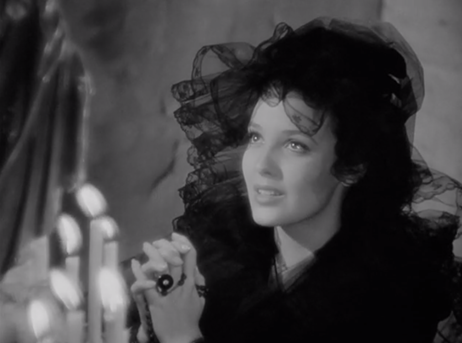
220px-Random-harvest-1942There’s not a mean bone in Ronald Colman’s body. He’s the perfect gentleman and Greer Garson is his perfect counterpart. Theirs is the story of Paula Ridgeway and Smithy, or Charles Rainier and Margaret Hanson, or closer yet, both of these stories together. But there’s need for some explanation.

A man (Colman) returned from the great war with no memory to speak of, barely able to talk, and no family to vouch for him. His life is one of isolation in an asylum. Until the day he escapes and happens to run into Paula (Garson), a compassionate stage performer who never lets him alone again. She sees it in his eyes that he’s a good man, and watches over him rather like a guardian angel. His war injuries inhibit his speech, but Paula’s vibrant personality is the best possible therapy he could ever receive. She brings him out of his shell, making him feel like a man again. Marriage comes soon after and they are deliriously happy with a child on the way soon enough.

Then comes the fateful day that “Smithy” visits Liverpool to inquire about a new job. But a street accident leaves him shook up once more, and this time around he has no recollection of his last 3 years of life. Paula is forgotten and all he can recall are the trenches and his old family name, Charles Rainier. His relatives are all in a hubbub upon his arrival with his young step-niece Kitty (Susan Peters) taking an especially great interest in her uncle. He tries his hand in the family business and finds himself very handy at the work while young Kitty continues to correspond with him as she goes through school. She pleads and coaxes him to marry her, and since he is genuinely fond of her, he agrees. It seems like ages since we’ve thought of Paula, but this is the true tipping point of the film.However, at the last minute, Kitty calls off the marriage realizing it was always a dream. It would never work out.

In this stage of his life, Ronald begins to confide in his secretary who is strikingly familiar to the audience. But he has no idea who she might be,  except for Ms. Hanson, a highly competent, very beautiful woman. She doesn’t dare reveal her identity but here lies the portion of the film that tugs at the audience’s heartstrings. Paula or Margaret (whatever you want to call her) is caught in such a delicate and maddening predicament. She wonders if her love even has the capacity for happiness now. There’s little hope of getting out of this cycle, and yet as we would surmise from the very beginning, love wins out.

This film hinges on these faint wisps of memories and near deja vu moments that Rainer encounters. They are what separate him mentally from the love of his life who he isn’t even capable of knowing anymore. Their tragedy is not of their own doing or even due to human depravity. It is fateful circumstances outside of their control that keeps them apart, reminding us that oftentimes the world is unjust for no apparent reason.

Ronald Colman is always a wonderfully restrained actor who nevertheless is a pleasant lead. He’s even more muted here, and it works beautifully in juxtaposition with the vivacious energy of Greer Garson. In her own right, Garson is photographed in such a way that is so pure and unblemished with softened features that captivate the screen with true Hollywood glamour.

You can easily toss around words like sentimentality or schmaltz with a love story like this, but sometimes it’s better to let all the emotions of the film pervade your mind and overwhelm your senses. It’s an easy film to give in to and an easy film to forgive, because it’s main players are generally so likable. If modern actors tried their hand at such a masquerade, more likely than not, we would scoff at their attempt and then throw them out with not so much as a second glance.

But not so with Ronald Colman and Greer Garson. It’s not a waste of time giving them a couple hours because in that time they make us believe in love. True, it is an over-trod cliche, but in a cynical world that edges more and more towards a worldview of self-preservation and pessimism, maybe Random Harvest is what we need. It undoubtedly pumped invigorating life into wartime viewers and if you give it a chance, it can do the same today.

4/5 Stars

Review: Shadow of a Doubt (1943)

Teresa_Wright_and_Joseph_Cotten_in_Shadow_of_a_Doubt_trailerIt is well documented that Shadow of a Doubt was Hitchcock’s personal favorite of his own films. That’s quite a telling statement when you do a quick scroll through some of the titles up for contention. Vertigo, Psycho, Rear Window, North by Northwest, Notorious, even The Birds. And yet the famed “Master of Suspense” chose the often glossed over Shadow of a Doubt.  If we take a slightly closer look it makes a great deal of sense as the film follows through with one of Hitch’s most prominent credos, “There is no terror in the bang, only in the anticipation of it.”

That’s, in fact, a great deal of what Shadow of a Doubt is. It’s the cringe-inducing anticipation for what is bound to happen. The inevitable that is plain as day, except not everyone sees it so clearly. But that’s enough ambiguity.

The story opens in a depressed urban city with Charles Oakley (Joseph Cotten) laid out pensively on his bed. Dollar bills are scattered haphazardly across his floor. Soon he learns two men want to talk with him, and he’s not about to get acquainted so he gives them the slip and heads to the one decent place he can think of. Santa Rosa, California, the peaceful abode of his older sister Emma and her family.

What we learn over time is that Charlie is known at large as the “Merry Widow Murderer,” because he has strangled three such women and taken their valuables. Hitchcock playfully alludes to the fact by opening his film with the “Merry Widow Waltz” and it will pop up throughout the entire story if you’re paying attention.

shadow-of-a-doubt-trainHis train comes barreling towards town with smoke spewing ominously. For now, his oblivious family is just happy to see his face, especially his oldest niece and namesake Charlie (Teresa Wright) who is ecstatic to have something to shake the family out of their funk of normalcy. At this point, there is little to be uneasy about, because Uncle Charlie is not about to do anything rash, but there are a few moments where he gets uneasy. Covering up a paper headline and doing his best to avoid two men taking photos for a national survey. Charlie doesn’t think much of it at first, and it feels just like old times with uncle giving gifts and receiving the royal treatment.

Except the ring he presents to Charlie is plundered jewelry with a mysterious pair of initials engraved on it. Of course, the men interviewing the Newton household are actually trailing Uncle Charlie, and Detective Graham fills Charlie in while also becoming fond of her. But it’s not the kind of news she’s willing to accept. How can she? It’s a late night visit to the local library that finally confirms all her deepest fears. Soon, the telltale signs become more apparent to the audacious girl, and Charlie simultaneously notices the changes in her as well.

This is where the film becomes fidget-inducing because it’s out in the open. Uncle Charlie knows that she knows, and still he remains in their home, in quiet little Santa Rosa, as if nothing has changed. For most of the family, nothing has, but Charlie’s demeanor is completely different. She just wants her uncle gone, away from her family, and then there’s the impending threat that her own life might be in danger. In truth, Uncle Charlie doesn’t want her around, even though it looks like he might get off scotch free.  His mind is already so twisted — so far gone — that he coolly attempts to get rid of Charlie, right under the very noses of their family.

It turns into a psychological mind game between uncle and niece, Charlie vs. Charlie. There’s no detective to save her now because he’s already left town and there’s no other direction to turn. She finally does succeed in getting dear uncle to leave town, and it looks like the living suburban nightmare is coming to a close. Then, in a final instant on the outbound train, Hitchcock’s lets off a BANG! The film’s culmination arrives and is just as quickly passed over. It’s done just like that, but it’s not really what was important. All that nerve-wracking build-up — the meat and potatoes of the drama was what was paramount.

Thus, Hitchcock delivers us a shocking nightmare of a film. It’s not anything like Psycho, existing in a far more mundane world. But Shadow of the Doubt brazenly suggests that murder can reach us even in our homes, even in the places that feel the safest. Hitch exhibits his wicked sense of humor with two characters who love to talk murder in Mr. Newton (Henry Travers) and the next door neighbor Herb (Hume Cronyn). They obsess over crime fiction and discussing ways to get away with murder. Little do they know that the man in their midst is trying to do just that.

Teresa Wright is certainly one of my favorite actresses and her role as Charlie is one of her bests highlighting her cordial charm, while also revealing her adeptness in the role of a tortured heroine. We want her to succeed more than anything, and as an audience, we worry for her well-being the entire film. Meanwhile, Joseph Cotten generally plays laconic types, but still, they usually have more goodness than baseness in their souls. Uncle Charlie is a fine role for him because he’s so sweetly cunning and at the same time sadistically twisted.

Shadow of a Doubt pic 3Unfortunately, the role of Detective Saunders feels rather shallow, but that’s hardly something to get stuck on. If that were the case, we could easily point to Charlie’s parents who seem way too old. But they are perfectly average, ordinary folks, as played by Henry Travers and Patricia Collinge. The script work of the preeminent Thorton Wilder (Our Town) and the on-location shooting in the Everytown of  Santa Rosa lend a universality to this thriller’s impending dread.

Dimitri Tiomkin heightens the film with his usually stirring, pulse-pounding approach to scoring. Hitchcock’s camera, while in black and white, is nevertheless noticeably dynamic. He always emphasizes the necessary focal points, and extreme close-ups and high angles only accentuate the drama. His use of the stairwells in the house is absolutely marvelous, implying both distance and foreboding in numerous shots. For every shot that Cotten looks menacing, there is an equal number highlighting the pure innocence of Wright. It’s the perfect juxtaposition of character, in a film that is really only your typical see-sawing struggle of good versus evil. Except it takes place in our own backyards.

5/5 Stars

Review: Red River (1948)

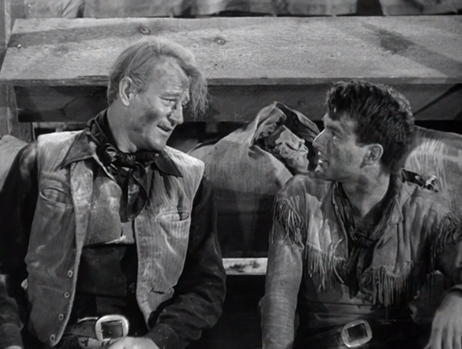
redriver1Any conversation on quintessential American Westerns certainly has to at least consider Red River. It has genre mainstay John Wayne in one of his most stirring performances, a moody precursor to The Searchers. It boasts the debut of the often criminally under-appreciated method actor Monty Clift. Moreover, it’s cinematic space is filled out by a colorful array of prominent Western stock players. You have the always ornery Walter Brennan, pudgy Noah Beery Jr., Harey Carey Jr., Hank Worden, and numerous others. For a second you can even forget that this isn’t a John Ford film, but instead, the story is placed in the ever-adept hands of Howard Hawks, who knows how to craft compelling stories no matter the genre he’s working in.

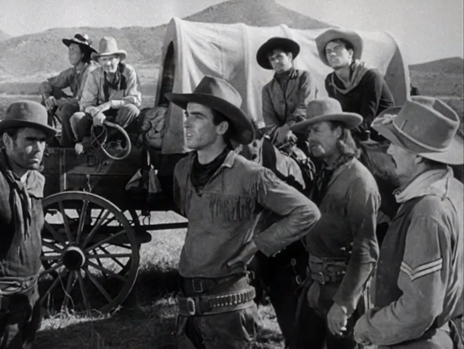
In 1851, before Tom Dunson (Wayne) settles on a new plot of land near the Rio Grande and begins to raise his cattle with the brand of the Red River D, he loses the love of his life to an Indian raid, while also picking up an orphaned boy in the aftermath. That young man, Matt Garth (Clift), would become like Dunson’s adopted son and his right-hand man when it comes to running his ranch. The rest of Red River is essentially a road film that chronicles the first cattle drive along the Chisolm Trail. It’s bound to be a gritty, sweaty, and undoubtedly smelly road ahead as Wayne and Clift take the reins on this journey. The intrigue comes with power dynamics because when you put two or more people in a confined space sparks are bound to fly at some point.

redriver2When Dunson begins the massive journey to sell his cattle in Missouri, many wranglers sign on for prospects ahead, but they don’t quite know the degree of hardship that they will face. Soon enough, a stampede leaves one man dead and the company without one of their chuck wagons of provisions. Dunson is a hard taskmaster, who expects his hired hands to finish their job. Morale in the band begins to sink from lack of food and fierce downpours that leave most everyone dejected and distraught.

Then, when Dunson prepares to hang two deserters to make an example out of them, Matt must finally step in. He’s always the subservient one, always backing Dunson with his gun, but for the first time in his life, he crosses the will of his mentor. All the wranglers are quick to continue the journey as they change course for Abilene Kansans and the prospect of the railroad. But Garth leaves a brooding Dunson behind, vowing to kill Matt if it’s the last thing he does. It’s this act of the story which brings to mind the Biblical vendetta of Esau as he pursues his kin for stealing his birthright.

red river 6Garth and his contingent do end up getting to Abilene and are met with open arms by the kindly Mr. Melville, however, perhaps, more importantly, Matt falls in love with a fiery beauty (Joanne Dru) and must leave her behind. Days later Tess Millay also meets Tom Dunson, the man she has heard so much about, and he’s far from being dissuaded from his mission.

Thus, the expected showdown comes with Dunson riding into town with his hired guns, the alarm being sounded, and Garth waiting for him. Dunson draws and Garth will not. It’s a fitting moment, but Howard Hawks develops it in a fabulous way. He fills it with tension and ultimately a hint of humor. The addition of Joanne Dru shifts the power dynamic and she says what everyone else is thinking while angrily packing a pistol.

redriver4Because if Red River was story alone, it would not be the preeminent Western that it is, and I think I made that mistake before. Hawks is a master at using all his actors to perfection in not simply the climactic moments, but also the lulls. With such a substantial ensemble, even the way he positions all his players in the scene holds importance. His scenes are continually interesting from talk of Walter Brennan’s false teeth to complaints about the abysmal quality of the coffee.

My only qualm with the film is the rather shoddy transitions, and so I am interested in getting a look at the theatrical cut with narration from Brennan. John Ford famously quipped that he never knew that Wayne could act until this film, and it’s true that he gives a darkly vengeful performance. But in many ways, Clift proves himself as a worthy co-star. There’s always a tightness, a lilt to his voice, that signals an earnestness and vulnerability. It starts coming out in this film right when he knows that he’s no longer going to follow Dunson. It took two starkly different actors to make the narrative work as well as it did, and Hawks added yet another classic to his catalog. On a side note, the music of Dimitri Tiomkin was noticeable, because the refrains can be heard verbatim in Rio Bravo. If something’s good why change it, right?

4.5/5 Stars

Stage Door Canteen (1943)

stagedoorcan2

Director Frank Borzage’s Stage Door Canteen is a gentle-handed piece of propaganda. It plays out rather like a scripted 1940s wartime reality. It’s less a film and more of a historical relic commemorating the eponymous Stage Door Canteen in New York City. Thus, any effort to give it some sort of rating almost seems beside the point, because it was meant to be a rallying cry of comfort, entertainment, and escape from the war right outside. It met the general public right where they were and inundated them with mega star power. This wasn’t the only nightclub or film to do this either. The Stage Door’s west coast counterpart was the Hollywood Canteen, and it received a film treatment of its own in 1944.

In truth, the real nightclub was still in full use every day so the next best alternative was the RKO Lot in Culver City. That’s where it all happens like a day in the life. We follow three soldiers: the perfect cross-section of white red-blooded American G.I.s. Each one gets to dance and talk their last days away with a pretty girl serving as a hostess at the canteen. Each one of them will never forget it.

The entertainment is full of partial cameos, pop-ups, and performances from a plethora of stars. For even the most well-acquainted modern viewer, it’s hard to recognize all the faces and names that show up. Katherine Cornell, Count Basie, and Yehudi Menuhin are a few such figures who come to mind.

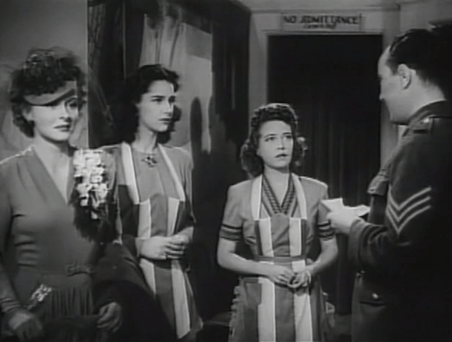
stagedoorcan1There are also strategic vignettes sprinkled throughout to boost morale and the camaraderie between allies. A few Brits can be heard taking part in the gaiety and making friends with our protagonists. A table of Hispanic soldiers takes in a floor show. One of our hostesses gets a moving letter from her older brother in the marines who is bent on returning to his family and proving that his training can outlast any “Jap” out there. There’s a last-minute marriage ceremony that we are privy to. Sam Jaffe introduces the audience to a few Russian allies, an Australian soldier has just returned from the front, and several Chinese air cadets get a rousing appreciation. Merle Oberon (the only actress close to being Asian in the film) gives them a stirring sendoff. Finally, Katharine Hepburn drops in for the premier cameo, to tie together all the loose ends and rally her fellow men and women to keep on keeping on for the sake of the country, so that the Allies might win the war.

From our modern day perspective, this might all come off like saccharine hogwash, but that’s not giving the material its due sensitivity. For that point in history, it was exactly what the American public was looking for. Today it’s a fascinating piece of remembrance. Then, it was still a story with a “to be continued” ending.

3.5/5 Stars

Jour de Fete (1949)

220px-Jour_de_fete-posterJacques Tati’s film seems like the perfect mode of expression in the post-war world. It’s boosted by lively, accordion-laden carnival music, with wry commentary from the old lady, and a bicycling postman, the mustachioed Francois (Tati himself). Use of sound becomes so integral to the comedy and the comedy is so important to the story because there isn’t much of a story. It’s populated by every type of livestock imaginable and you’re not quick to forget it because they’re constantly being heard and causing havoc, whether it’s a billy goat or a brood of chickens.  It’s a little different feel, but Tati makes me think of Britain’s own quaint Postman Pat. He’s a little more humble than the U.S. Postal Service and his customers are a simpler sort of folk. Although he becomes obsessed with the American-style of mail delivery complete with helicopters and motorbikes. This leads to a frantic race to deliver the mail with the speed of Americans. But the French countryside was not meant to function like urban America. This is Tati’s critique of not simply American culture, but more so it’s reliance on technology. But he takes off any of the edge by delivering it through his charming, bumbling brand of humor.

Amid this meager plot, Francois finds time to help put up a flagpole and enjoy the local carnival that enters the small town. Not to mention being accosted by a very industrious fly. Fittingly, Tati seems to pull off the Buster Keaton sliding stop, giving the illusion of being out of control, when in reality he was a wonderful physical comedian. Much lengthier than his predecessor, but still memorable in his own right. His bike riding antics feel reminiscent of Keaton in Sherlock Jr.

Jour de Fete is not quite as enchanting as Tati’s later works, but part of that might be due to the absence of the Mr. Hulot persona. It’s his saga that we want to be a part of, and he’s the man we want to get to know. Right now the director is still exploring the world that would become more pronounced in his later films. However, Francois does not have quite the aura that Hulot could build. Truth be told, I was slightly thrown off by the colorization. I probably would have appreciated the straight black and white of M. Hulot’s Holiday or the vibrant color of Mon Oncle. But that is not to say that Jour de Fete is not at least a mildly fun romp.

3.5/5 Stars

Review: Citizen Kane (1941)

citizenk3“That’s all he ever wanted out of life… was love. That’s the tragedy of Charles Foster Kane. You see, he just didn’t have any to give.” – Jedediah Leyland

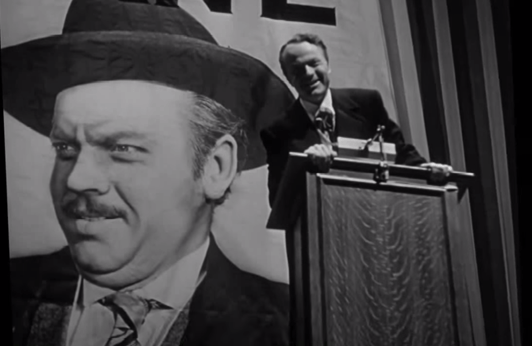
It might seem rather trite to attempt to write anything on Citizen Kane, but as someone who can admittedly be trite sometimes, there seems to be a need to give it a go. Here it goes. Citizen Kane is forever an enigma, in the sense that it was fully under the control of the independent-minded and ultimate auteur Orson Welles during the studio age. It didn’t come out of some movie making assembly line, but instead, it’s a debut that exhibits so many elements that have befuddled and fascinated audiences for generations. There’s certainly the technical and production aspect which became the watermark and inspiration for countless millions. Then you have the human aspect which also deserves some attention.

Swirling around a film with this much mythology there is always bound to be hearsay and rumors, but supposedly in later years, Welles considered Citizen Kane a comedy, in the sense that everything is over the top camp, much in the same way that Welles the man was a larger than life caricature. He played the part of an alienating artistic mastermind to a tee, and it fit the way he made this film. Grandiose in scope,  infused with inspired vision, and really an all-out war for acknowledgment.

Because of the many stories about Kane which have now become the stuff of legend, the parallels between Charles Foster Kane and news magnate William Randolph Hearst stand out. Whatever his opinions of the actual film ended up being, Hearst did his best to besmirch the film and keep it out of theaters. And so it goes Welles’ debut did not get much of an opening, ironically because of a man rather like his main character. It would be interesting to know what Welles would have thought of such a situation. Would he have been greatly incensed or taken it rather like a compliment that he had created something so volatile? Because it’s true, Citizen Kane is still smoldering today, and it retains a constant place in cinematic discussions even 70 years after its release.

There’s so much to talk about and so much that most everyone has probably already talked about. It has such an intriguing narrative structure, and it models time in such fascinating ways. Because a lot of this film is about the passage of time as it pertains to one man’s life and the memories of his life. He is dead after uttering that immortal word “Rosebud,” but his memories live on through the recollections of those around him.

We get access to the story through a newsreel, but like such a reporting device we leave it knowing very little about the man except for his material possessions and maybe a little about his career. What we really want to know is the man, and the nameless reporter becomes our stand-in.

He pieces together Kane’s childhood by sitting in a musty vault and reading over the thoughts of the boy’s caretaker and financial adviser Mr. Thatcher. With one particularly memorable match cut, we jump a number of decades in a matter of seconds as the banker speaks to a young Kane only to turn around speaking to a young man. But he’s not much help except that Kane put Thatcher under fire with his brand of yellow journalism.
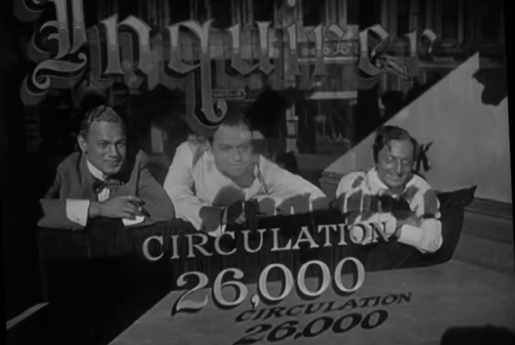
citizenk2Mr. Bernstein is a kindly fellow and an old man by now who used to work with Kane at The Inquirer when it all began. He knew the man who had a song named after him, who bought out the staff of the rival paper The Chronicle, started his own war, and married the niece of the president.

From the now elderly and slightly infirm Jedediah Leyland (Joseph Cotten), we learn of the rise and slow decline of the man along with his friendship with Leyland. There is a sequence here with Kane’s first wife that wonderfully shows the degradation of a marriage over the years as he is more devoted to the paper than his spouse. It’s tragically sad, and there’s more heartbreak in that one scene than most films can muster in their entire runtime. Because Kane could love, and he wanted love, but he also seems to love himself more than any other person. He’s married to his work and the personal independence that comes with it. Ultimately, Kane’s political career suffers from scandal and his own bullheadedness. Leyland switches branches to get away and becomes a drama critic prepared to lambaste the operatic debut of Kane’s second wife. It really is bad though Kane will never hear of it. He’s always in need of proving himself to those around him.

Our investigative journalist returns to the nightclub of Susan Kane to get the rest of the story from her, and it only becomes more depressing. After being forced into an opera career she has no ambition for, Kane finally relents and Susan spends her days in Xanadu, the fortress he built for her sake. But she wants more than the stuff that he can give her. She wants to get out, have fun, and have companionship. Kane doesn’t know how to do that, and soon after she left him.

What was left behind was a deeply troubled, isolated old man with nothing but material possessions to weigh him down in a river of loneliness. His life was a jigsaw puzzle and yet when we get the piece pertaining to his final word, it fails to help us make any headway. Because the reality is that no one word can explain a man’s life. It is interesting how Kane desperately wanted love so you would think that his last words would refer to a person. It just shows how messed up his relationships were. He thought he could get joy from possessions so it’s only fitting that his final words were another thing. It’s sad really, so if Orson Welles wants to call Citizen Kane comedy, there seems to be a need to qualify that and christen it a “tragi-comedy.”

Herman Mankiewicz’s script with Welles is the quintessential tale of the rise and fall of one man and with the ever-changing times, that archetypal narrative has remained prescient because America is still built on those sorts of individuals. It can be the nation of visionaries as well as tragedy. Wealth and loneliness.

As for the great Bernard Hermann, his score personifies the changes in Kane over the years and this was the first time I noticed the wonderful reprises of his theme song. It can be heard throughout although it seems to lose all the gaiety and luster it had years before.
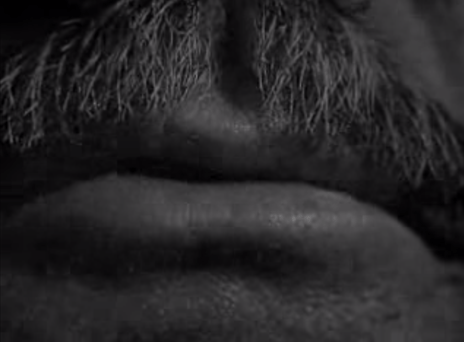
citizenk1Gregg Toland’s cinematography is strikingly beautiful utilizing the distinctly clear, deep focus to frame shots wonderfully. Background and foreground remain equally important becoming a wonderful way to convey distance. Also, the camera always seems to be making the viewer crane our necks, getting a slight view of the ceiling or it has us looking down at the figure below us. We very rarely see them head-on as they appear. Furthermore, Kane is steeped in trick shots, mirror images, and all sorts of things that I cannot even begin to do justice to. It could be a nurse walking into a room or Kane solemnly plodding through the vast corridors of his domain. It’s a veritable paradise for the eyes because we are always being met with visual marvels. Citizen Kane has grown on me every time I see it since it’s not simply narrative, or backstory, or history, but also at the most basic level, it’s one of the most prominent expressions of this highly visual medium called film.

5/5 Stars

The Strange Love of Martha Ivers (1946)

strangelove1“I don’t like anybody pushing me around. I don’t like anybody pushing you around. I don’t like anybody getting pushed around.”  Van Heflin as Sam Masterson

Lewis Milestone never quite eclipsed the heights of All Quiet on the Western Front. Still, The Strange Love of Martha Ivers is brimming with some engaging performances. Although it is, at times, more of a  melodrama than noir, there is still merit in Robert Rossen’s script. When it does not falter with didacticism, the film has a certain twisted, deep-seated emotion that runs through it. Barbara Stanwyck is the one at the center of it all, as the title suggests.

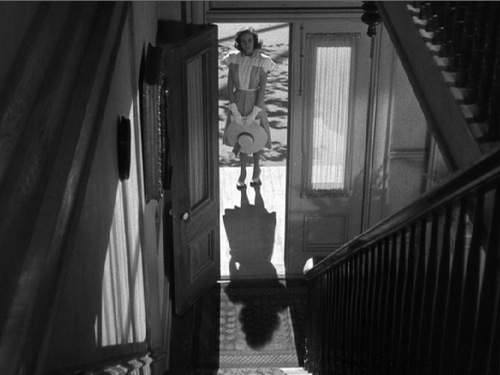
The film begins in 1928 with three children. The assumption is that these three individuals will become of greater importance later on. After that fateful evening, one would be left without any family, one would leave for good, and one would be left in the perfect position to rise up the ranks. These opening moments boasts spiraling staircases, thunder, the pounding orchestration of Miklos Rozsa, and a complete gothic set-up.

strangelove317 or 18  years later a full-grown Sam Masterson (Van Heflin) decides to return to his old stomping grounds, Iverstown, on a whim. He’s surprised to learn that the “little scared boy on Sycamore street” is now District Attorney (Kirk Douglas). And he’s now married to Martha Ivers (Stanwyck). She and Sam had something going long ago, but he’s all but forgotten it by now. He’s made a living as a gambler who has a pretty handy dandy coin trick, but really Heflin’s character could be anything.
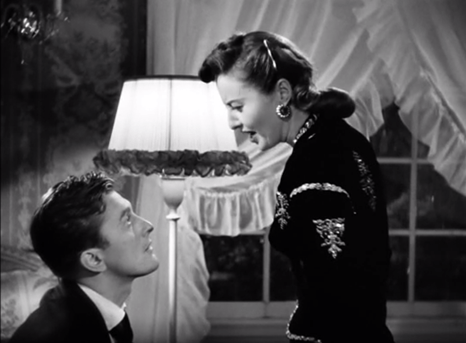
He meets a sultry, smoky-voiced Lizabeth Scott with the pouting face. For those unfamiliar, I would liken her to a Lauren Bacall-type, although she was less well-known and ultimately got typecast in noir roles. Here Scott’s “Toni” Marachek is an often despondent woman who just got out on probation.

strangelove2We don’t actually see Barbara Stanwyck’s face until 30 minutes into the film, but it doesn’t matter. She as well as Kirk Douglas (in his screen debut), leave an impression right off the bat. They are a married couple alright, but she seems to hold the keys to the kingdom, so to speak. All her power is propping him up as he makes his political rise. Perhaps there’s more going on here, however.

From its outset, Martha Ivers looks to be a tale with two threads that slowly begin to intertwine, bringing together some old pals and acquainting some new ones. When Sam wanders into the lives of Martha and Walter O’Neil, it’s putting it lightly that they’re taken aback. The district attorney is good at putting on a face for an old boyhood chum. His wife, on the other hand, is not about to hide her excitement in seeing her old flame.

However, they both think he has an agenda, misreading the twinkle in his eye as intent to blackmail, for a payoff after what he saw all those years ago. But that’s just it. Only we know that he didn’t see anything. Martha Ivers slips up, caught between love, hate, and a suffocating life. She has so much power and yet so little. So much affection and yet so much bitterness.

strangelove5Honestly, although Stanwyck is our leading lady, it’s quite difficult to decide whose film this really is. Van Heflin and Barbara Stanwyck are at its core, but then again, Scott and Douglas do a fine job trying to upstage them. There’s a polarity in the main players, meaning Stanwyck and Heflin have the power, and the other two are the subservient man and woman respectively. However, the film really becomes a constant tug-of-war. Douglas is not just a spineless alcoholic. There’s an edge to him. Scott seems like a softy and yet there’s an incongruity between her persona and that prison rap that hangs over her. Heflin seems like the one relatively straight arrow because as we find out, Stanwyck is fairly disturbed. She’s no Phyllis Dietrichson and that becomes evident in yet another climatic conflict involving a gun. But she’s still demented, just in a different way.

3.5/5 Stars

Review: Shop Around the Corner (1940)

Shop-Around-the-CornerA quaint, unassuming film, especially up against other more lavish Ernst Lubitsch works like Trouble in Paradise and Heaven can WaitShop Around the Corner still manages to be in the upper crust of romantic comedies — even to this day.
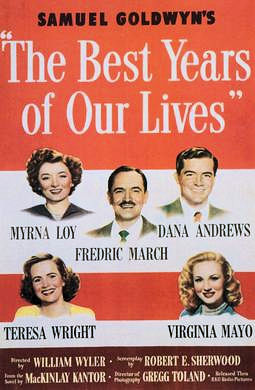
The story revolves around a little shop in Budapest run by the often curmudgeon and excitable owner Mr. Matuchek (Frank Morgan). Every morning he comes to open up shop and nearly every day he has something to complain about whether it’s his workers or the lack of business. His right-hand man is Alfred Kralik (James Stewart) who has been a diligent clerk in the store for well nigh nine years now.

He confides in his older colleague and friend Mr. Pirovich (Felix Bressart) that he has begun correspondence with a mysterious lady friend who was looking for a partner with whom to discuss culture and all the higher forms of art. Kralik is intrigued as he wants to expand his mind and he seems to have found his perfect match.

Meanwhile, the status quo gets shook up a bit when a Ms. Novak comes into the shop. At first, she gives off the sense of a flustered shopper, but in a matter of moments, she proves herself as a shop girl, acquiring a position even without a vacancy.

Over time, his relationship with Ms. Novak becomes increasingly more antagonistic, to begin with, because she wears a blouse unsuitable for the workplace. The prospect of his first meeting with his secret correspondent has Kralik on edge in expectation, but when he cannot sneak a peak, Pirovich looks for him and delivers a stunning revelation. It is, of course, Ms. Novak.

In such a way the dramatic irony begins as Kralik understands just who this girl is, and she continues to brush him off as the stiff, bowlegged man from the shop around the corner. Mr. Matuchek has unspoken problems of his own that cause him to abruptly fire Kralik, his most faithful counterpart. But their relationship is patched up and the crackerjack clerk gets his position back and then some.

There’s still the matter of Ms. Novak because he truly does feel something for her, even showing up at her home to see how she is getting on after calling in sick. It’s in this moment that she reads one of the letters in front of him. One of his letters.

Then, right before Christmas everything his bustling and busy in the little shop. All seems right as Mr. Matuchek is in good spirits with a Scrooge-like transformation for the holidays. He even winds up with someone to share a festive holiday meal with. It seems that Kralik has a fiancee and so does Ms. Novak. As it is Christmas they both try to leave the other on a positive note, and Klara goes so far as to mention her initial crush on her colleague. This then becomes the critical moment for Kralik as he still knows something she doesn’t. He frightens her stiff about her mystery man and then reveals him to be her pen pal. All it takes is a carnation in the lapel. She gets it right then. They embrace and share a kiss.

Although Stewart is far from a Hungarian clerk, he does exude a pleasant commonness, better than any other actor of his era. As such, he has the perfect demeanor and presence to portray Kralik, a man who seems altogether ordinary, although he certainly is more than meets the eye. Margaret Sullavan seems a generally forgotten leading lady, but there is an airy, almost ethereal quality to her. In real life, she proved to be difficult at times, but here she somehow fits rather remarkably with Stewart. The two leads prove to be adept sparring partners in Lubitsch’s altogether effortless romantic comedy.  It truly reconciles the lines between ideals and reality which allow two people, such as these, to fall in love for real.

4.5/5 Stars

Klara Novak: All my knowledge came from books, and I’d just finished a novel about a glamorous French actress from the Comedie Francaise. That’s the theater in France. When she wanted to arouse a man’s interest, she treated him like a dog.

Kralik: Yes, well, you treated me like a dog.

Klara Novak: Yes, but intead of licking my hand you barked.


The Best Years of Our Lives (1946): The Forgotten Counterpart to George Bailey’s Story

The_Best_Years_of_Our_Lives_film_Inherent in a film with this title, much like It’s a Wonderful Life, is the assumption that it is a generally joyous tale full of family, life, liberty, and the general pursuit of happiness. With both films you would be partially correct with such an unsolicited presumption, except for all those things to be true, there must be a counterpoint to that.

Upon watching both these films on subsequent days, that became markedly evident. George Bailey (James Stewart), of course, must go through a perturbing alternate reality where he never existed, and the consequences are catastrophic to all those he knows and loves in his community. But such a paradigm shift or new perspective, does truly revitalize his entire existence. It’s as if he sees the whole world through an unfaltering lens of hopefulness thereafter.

Although it lacks the dark fantasy that engulfs the latter half of It’s a Wonderful Life, Best Years has its own heavy dose of foreboding, that while more realistic, is no less disconcerting. All the boys have returned from the theaters of Europe and the Pacific, including our three protagonists Fred (Dana Andrews), Homer (Harold Russell), and Al (Fredric March). Upon getting back to their old abode of Boone City, sons talk about nuclear fallout in Hiroshima and men at drug store counters warn of the imminent threat of “The Reds.” Some soldiers like Fred have trouble landing work. Others struggle with getting the necessary loans from banks like the one Al works at,  or they come back to far less glamorous lifestyles. Homer copes with being a double amputee and simultaneously closes himself off to all those who love him, including his longtime sweetheart Velma (Cathy O’Donnell). He must learn not so much how to love, but the equally difficult life skill of allowing others to love him.

Derry also struggles in a loveless marriage with his superficial wife Marie (Virginia Mayo), while also battling with PTSD symptoms like recurrent nightmares. Even the subtle reality that the only African-Americans in the film work behind soda fountain counters or in nightclub jazz bands has greater implications. Theirs is a relegated status, even in a country of liberty like America. Unlike the former film, we do not see any ghoulish human cemeteries, but we do see plane graveyards like ghost towns where metal is slowly rusting just waiting to get demolished and re-purposed. At this point, it is only a sobering reminder of all those who fought and died in the war years.

Many of these topics are only mentioned for a brief moment or we can only infer them from visual cues, but still, they lurk there under the surface or better yet, right in plain view. These real-life unsettling concerns are worse than It’s a Wonderful Life because they fall so close to home even today.

Wounded veterans are still coming home to a country that doesn’t know what to do with them, or a country that seems ungrateful for their service. Married folks still struggle through marriage and divorce. Single people still struggle with figuring out if they should get married and so on.

I think part of the reason I admire The Best Years of Our Lives so much, despite its nearly 3 hour running time, is its ability to captivate my attention rather like a day in the life of someone I would meet on the street. Although Virginia Mayo and Mryna Loy seem the most Hollywood, most everyone feels rather ordinary. Certainly, Dana Andrews is handsome and Teresa Wright, as well as Cathy O’Donnell, are wonderful as multidimensional girls-next-door, but I feel like I could potentially know people like them. And of course, Harold Russell was unusual since he wasn’t a trained actor. That casting choice pays off beautifully in moments such as the final wedding scenes where in a dyslexic moment he switches up his vows. But it works wonderfully as an authentic addition.

Although Gregg Toland worked on revolutionary fare like Citizen Kane, and William Wyler dabbled in all sorts of genres from westerns to period dramas, they have all the necessary sensibilities for a perfect presentation given the subject matter. The visuals are crisp and beautiful, but never flashy or overly conspicuous. The use of deep focus concerns itself with the overall composition of the frame -never attempting to focus our attention on any singular action.  It all becomes equally important. Meanwhile, Wyler directs with a sure hand that makes the actions flow organically and at the same time his ensemble is given the space and the time to grow and evolve before our very eyes.

It’s a timeless film for what it brings to the forefront and also because of what it evokes out of the audience members themselves. There is an underlying somberness to it at times, but most importantly it rings loudly with the high unequivocal notes of hope. In the post-war years, it was a pertinent film, and it still has something to offer even now. More people need to know about The Best Years of our Lives.

5/5 Stars

Review: The Lady Eve (1941)

theladyeve3“You have the darndest way of bouncing a fellow down and bumping him up again” ~ Henry Fonda as Charles Pike

The story goes that screenwriting wunderkind Preston Sturges penned The Lady Eve with Barabara Stanwyck in mind. He promised her a great picture and he most certainly delivered a stellar screwball like only he could. It plays off the archetypal biblical temptress with comic effect, and it finds the greatest of comic couples in Stanwyck and Henry Fonda. They both are iconic stars, but the narrative works so well, due to that, but also the fact that the film constantly undermines the typical plotting. As the title suggests the woman is really the focal point of the film — she’s the one in control.

In this instance, Stanwyck is shady trickster Jean Harrington, who joins forces with her equally conniving father (Charles Coburn) to take people to the cleaners in any way possible. They’re real smooth operators with cards and any other type of con you could think of. A luxury ocean liner seems like the perfect place to set up their business. Out of all the many high profile passengers, one man stands a head above the rest. His name is Charles Pike (Henry Fonda). He keeps his nose buried behind a book, tries to avoid the gazes of all the pretty girls, and has a penchant for reptilian wildlife after getting back from a long expedition. He also just happens to be the heir to a gargantuan Ale fortune. That’s what catches everyone eye, including the beautifully sly Stanwyck.

theladyeve2In fact, we have a brilliant introduction to her as she narrates the scene unfolding in front of her with the aid of her compact mirror. She trips up the bumbling bachelor and their introduction is the first exclamation point in a bumpy relationship. She’s ready to play him and marry rich and famous, because he’s a pretty naive fellow, and stiff around the ladies. Fonda’s nervous charm proves the perfect recipe for success as he is constantly being overwhelmed by Stanwyck’s frenetic barrage. His defenses are down and he hasn’t the foggiest what has hit him. Either he was really that uncomfortable or otherwise, he does a superb job of faking it since there’s never another moment where he’s not being fondled or manipulated.

Jean is very quick to get cozy with “Hopsy” (after alcohol and not a rabbit), but something strange begins to happen. For some strange, ludicrous reason she begins to fall for her mark — this goofy guy with loads of cash. That certainly was not in her cards, yet she doesn’t seem to mind. What follows are some wonderful card playing antics between Charles Coburn and Barbara Stanwyck as she tries to stave off her father from pulling one over on her new beau. But of course, just as Pike is getting his sea legs he catches wind of the whole charade quite by chance, and he’s quick to turn off Harrington for the fraud he thinks she is.

theladyeve4The story could end there, but Sturges has set his story up perfectly for a killer second act. Jean plans a perfectly sneaky revenge plan to get back at “Hopsy” by posing as the British niece of another con man (Eric Blore). He uses his own wily charm and influence to get them an invitation to the Pike household for dinner. There we see several other great character actors in action including Horace Pike (Eugene Pallette), and the perennial sourpuss Muggsy (William Demarest). Jean shows up now as the Lady Eve and successfully convinces her “Hopsy” that she is a completely different individual. The film works wonderfully on this axle of ludicrousness because  young Pike is completely befuddled and awestruck again. He goes thudding, clanking, and crashing all evening long, a true victim of love. Pike thought he lost one girl for good and here’s another even better prospect. A whirlwind romance follows and everything is falling into place beautifully. There’s a frantic montage in preparation for the big day and then it happens. They get hitched. Afterwards, it’s all done and the two lovebirds are on a train barreling down the tracks interspersed with the long laundry list of all Eve’s beaus from Angus, to Herman, and Cecil and so on. It’s Charles’ worst nightmare, and he hopes to get out of it as quickly as possible.

But then by chance, he runs into the first girl, who is, of course, Stanwyck as well. He’s genuinely happy to see her, and they embrace like nobody’s business. Being the honorable man that he is, Pike acknowledges that he is, in fact, married now, but the joke’s on him. She is too! It’s an entirely irregular ending, but that’s screwball comedy for you.

theladyeve1What makes Sturges’ film so wonderful is all the parts making up the whole. His script is perfectly contrived mayhem. He sprinkles it with his typical slapstick, his loudmouthed stock company lends an added layer, and his typically lightning-quick repartee is brought to life by his leads. Stanwyck was the quintessential leading lady of the 1940s and in 1941 she was in fine form (Balls of Fire and Meet John Doe). She can dance so effortlessly between dynamic comedy to heartfelt drama that is positively palpable.  She overshadows Fonda in a sense, but they still work together, because he is her perfect foil, the precise innocent fool to fall into her web of feminine wiles. She can muss up his hair, manhandle him, and completely manipulate his feelings. Yet we still like both of them in spite of it. They are a hilarious match, and there’s space for some passionate canoodling as well. It’s probably one of the most perfectly wonderful, utterly dysfunctional relationships we could ever hope to see put on screen.  By continually whipping out punch line after punch line to the very last quip, Sturges makes this comedy look positively effortless.

4.5/5 Stars