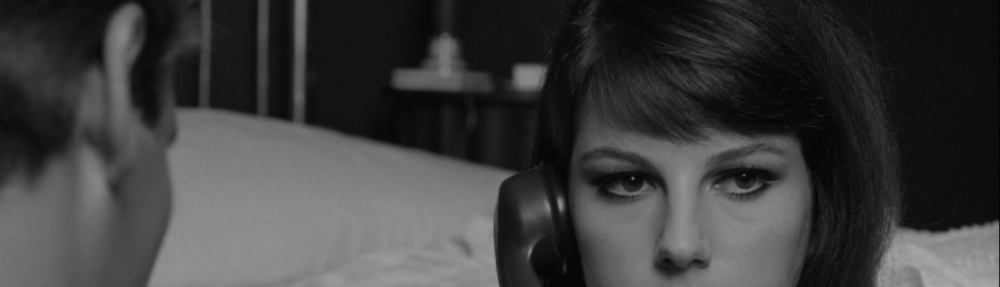
 In his opening introduction, Kumail (comedian Kumail Nanjiani playing a cinematic version of himself) explains what it was like to grow up in Pakistan with cricket and praying and arranged marriages. All those fun Pakistani traditions. There’s a bit of a matter-of-fact flippancy to how he recounts it all. Truthfully, it’s in stark contrast to much of what we’re used to. As he so rightfully points out, it also meant they got episodes of Knight Rider a lot later than everyone else. That’s before his parents made the decision to move to the States with their two sons.
America has always been a melting pot since the day of Alexis De Tocqueville and that’s part of what this film celebrates while never completely denigrating Kumail’s Pakistani roots. It so refreshingly provides a story told from a different point of view — one that we have not seen all that often — which is all illustrated so exquisitely in the opening moments.
But The Big Sick is also resonant in part because of the conflict of cultures that dwells at its core. A differing perspective usually causes chafing and it’s no different in this case. Still, at first, it must start out as a love story and it is or at least it evolves into one. This particular romance feels invariably relevant to the current world we find ourselves in. It’s a picture informed by a 21st-century worldview.
Kumail is making a go of it as a stand-up comedian in the Windy City and he makes ends meet with a bit of Uber driving. He meets a girl named Emily (Zoey Kazan) at his comedy club, a local grad student with aspirations to be a therapist. They go on a date and wouldn’t you know it, they sleep together. That is the culture after all as much as Uber, ethnic diversity, profanity, and irreligiousness.
Perhaps it’s more precisely put by Kumail who so candidly admits he hasn’t prayed for years because he does not know what he believes. That is the world that this movie occurs in, our world right here and now. They have their rounds of playful patter and time spent together watching Kumail’s favorite horror movies (he proudly has a poster of Shaun of the Dead up on his wall like any unabashed nerd). Still, they are equally noncommittal in how they never want to get too serious about relationships.
It makes sense that romances are about relationship but often those very things are also so closely tied to family. Both sets of parents play a significant role in the picture and certainly, none of them are perfect — exhibiting a wide range of idiosyncrasies — and yet the key seems to be that they are more than a pair of punch lines. It’s those very relationships too that seem to add even a greater depth and heighten the stakes. Because parental commitment more often than not is for the long haul even when their kids’ relationships don’t seem to be.
In case the title didn’t tip you off already, I’ll save you the trouble and let you know that Emily winds up sick in the hospitable. The people by her side are her mom (Holly Hunter), her dad (Ray Romano), and Kumail who feels bad even as their relationship was all but finished.
As we get to know them as people though, it really feels as if we are getting a better understanding of Emily and the same goes for Kumail. In the same way that Kumail feared telling his family that he was dating a white girl, we see another culture clash in her parent’s who fell in love years ago despite coming from two very different backgrounds, one a stiff New Yorker the other a southern belle in a football-loving family.
Kumail begins to gain a certain modicum of courage to stand up to his own parents, in particular, a mother who is always trying to set him up with a nice Pakistani girl like she did with his older brother. He’s weathered a long list of resumes and “drop-bys” by the most eligible Pakistani ladies. We sense the need for personal integrity. He needs to learn how to exercise it not only in dealing with Emily but his parents as well.
You can still be an American and embrace other cultures and that’s one of the keys to this story because navigating that can be utterly trying. Our differences far from encumbering us should bless us with life more abundant and humanity still proves that love can be a universal language that crosses many divides, cultural or otherwise.
Furthermore, could it be that this film too succumbs to that character trope formerly in vogue as the manic pixie dream girl? It’s a stretch since this is based on real events but it falls apart further still as we watch the film progress to its full conclusion. Because if you remember this fantasy character is meant to bring something out of the male character and cause a change in them. That does happen to Kumail to an extent.
The crucial development for the sake of Zoe Kazan’s character is the fact that she is allowed more growth than simply being the cause of Kumail’s growth. Thankfully she is more than a mere plot device. She is given the dignity of an actual human being meaning that she’s able to acknowledge that maybe she hasn’t changed as much as him — she’s not ready to just go back to the way things were before — and that’s okay because that feels authentic.
That’s not to say there can’t be a happy ending but as many of the greatest modern romantic comedies have managed this one leans into ambiguity and makes that a strength far more than a weakness. Kumail has gone onto to pursue his stand-up career. Emily no doubt continues her aspirations to become a therapist. Still, there’s such a thing as a fairy tale and this might be a good time to point out again that this is semi-autobiographical. Real life fairytale romances are possible. They just usually happen to be a lot messier than we’ve read about in books. A lot like this story.
3.5/5 Stars
Update: On September 16th, 2017 a man named Nabeel Qureshi passed away. And I bring up his extraordinary life because it was difficult for me not to see the parallels to this film.
Like Kumail, Nabeel was Pakistani-American. Like Kumail, Nabeel also faced the challenges of going against the wishes of his parents when it came to core aspects of his life. Like Kumail, Nabeel and his wife faced the malevolent onslaught of sickness. But in Nabeel’s case, the sickness struck him and he did not recover.
It sounds like a very sad tragedy and it is bittersweet but I reference it because Nabeel was a man who had tremendous joy and hope and he left such a lasting impact on his fellow man. It is a life worth sharing about. I enjoyed the Big Sick but even in the last few months and weeks, I have been inspired by Nabeel Qureshi’s life even more.
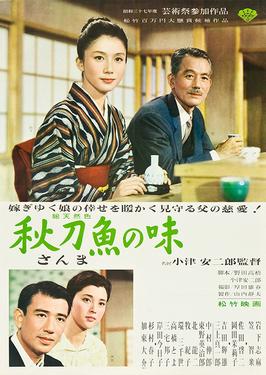 There’s something overwhelmingly soothing about Ozu, simultaneously slowing my pulse and calming my nerves. Yes, An Autumn Afternoon stands as his final film. Yes, he would sadly pass away the following year. But there’s a comfort to watching his films unfold — even his last one. The drama is everyday and somehow disarming and pleasant. We often take for granted that Ozu was not planning to end here. This was not supposed to be his last film. It just happened that way.
 Whaddya hear, whaddya say ~ Jimmy Cagney as Rocky Sullivan
 John Garfield was never the most dashing of leading men but nevertheless, he was always thoroughly compelling as ambitious working class stiffs during the 1940s. He had a straightforward tenacity about him like he had to fight his way to the top. At the same time likable and destined for trouble right out of the gates. You can cheer for him and still rue the decisions that he makes. That’s what makes his foray as boxing champ Charlie Davis all the more believable. His aspirations are of a very real nature and they give his character a genuine makeup.
 Father hear my prayer. Forgive him as you have forgiven all your children who have sinned. Don’t turn your face from him. Bring him, at last, to rest in your peace which he could never have found here. ~ Ida Lupino as Mary Malden
 Films Noir often find their hooks in lurid titles but also in metaphor. Ride the Pink Horse fits into the latter category as pulled from the pages of Dorothy B Hughes and adapted by Ben Hecht & Charles Lederer. The horse can be taken in the literal sense as one of the wooden animals that go round and round on the local carousel but there’s some symbolism in this opulent creature. In some distant way, it’s the fantasy of a different life that every man seems to crave when he doesn’t have it. But still, he strives and grinds to get closer and closer to it. More often than not he does not succeed in finding so-called contentment.
 And it’s from these opening moments that we try to get a line on Gagin by watching his every move and word. He’s brusque and abrasive with almost crazed features — constantly suspicious, demanding, and sour. He had a little too much cyanide for breakfast (although he does like fruit cocktail). Just as we watch him with interest, his probing eyes case every joint and every person he comes in contact with. Because, if it’s not obvious already, he’s not come to San Pablo for R & R. He’s come to town to avenge his dead army buddy, who was double-crossed and put out of a commission by a very big man (Fred Clark).
 Just as there is a cultured femme fatale (Andrea King), her counterpoint is the tentative Pila (played sympathetically but rather unfortunately by Wanda Hendrix), who floats in to watch over Gagin even when he doesn’t want her around. She stays anyways.
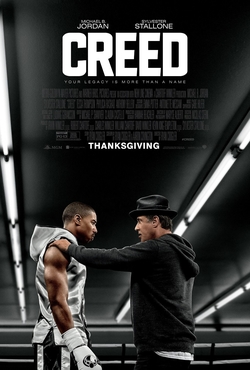 There’s a very special place in my heart for Rocky (1976) and I choose those words very carefully. The reason being, subsequent films lost the appeal of the original and I simultaneously lost interest in the franchise. Perhaps it’s because, after Sylvester Stallone’s breakthrough film, the series lost much of its unassuming charm. It was no longer an underdog story. It no longer felt as personal and intimate.
 Sophie Scholl: The Final Days is a film that people need to see or at the very least people need to know the story being told. For those who don’t know, Sophie Scholl was a twenty-something college student. That’s not altogether extraordinary. But her circumstances and what she did in the midst of them were remarkable.
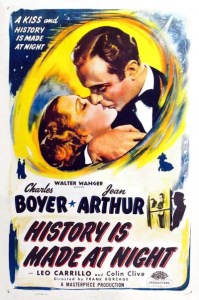 History is Made at Night molds love into the grandest of pursuits and it wouldn’t be altogether wrong in that assertion because for humanity it is one of the most euphoric, confounding, beautiful entities known to mankind. I have no qualms with saying that whatsoever.
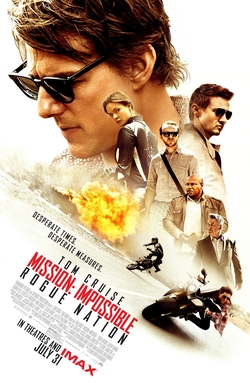 n the last decade or so arguably the greatest action/spy/thriller franchises have been Jason Bourne, James Bond, and Mission Impossible. To their credit, each series has crafted several passable films fortified by a few real stalwarts of the spy thriller genre. Although many of these series thrive on gadgetry, set pieces, and a cynical tone more at home in the modern millennium, one thing that set some of the better films apart were interesting female characters.
 4 Star Films